Introduction
Blockchain-based ticketing has burst onto the festival scene, promising to transform how admissions and tickets are managed. Non-fungible token (NFT) tickets – unique digital passes stored on a blockchain – are being lauded as a solution to scalpers, counterfeit tickets, and one-and-done fan interactions. But are NFT tickets merely the latest tech hype, or a genuine game-changer for festival admissions? This article explores the rise of NFT ticketing in festivals, weighing its real-world benefits against the pitfalls. It offers practical advice for festival producers worldwide on whether and how to implement NFT ticketing.
What Are NFT Tickets (and How Do They Work)?
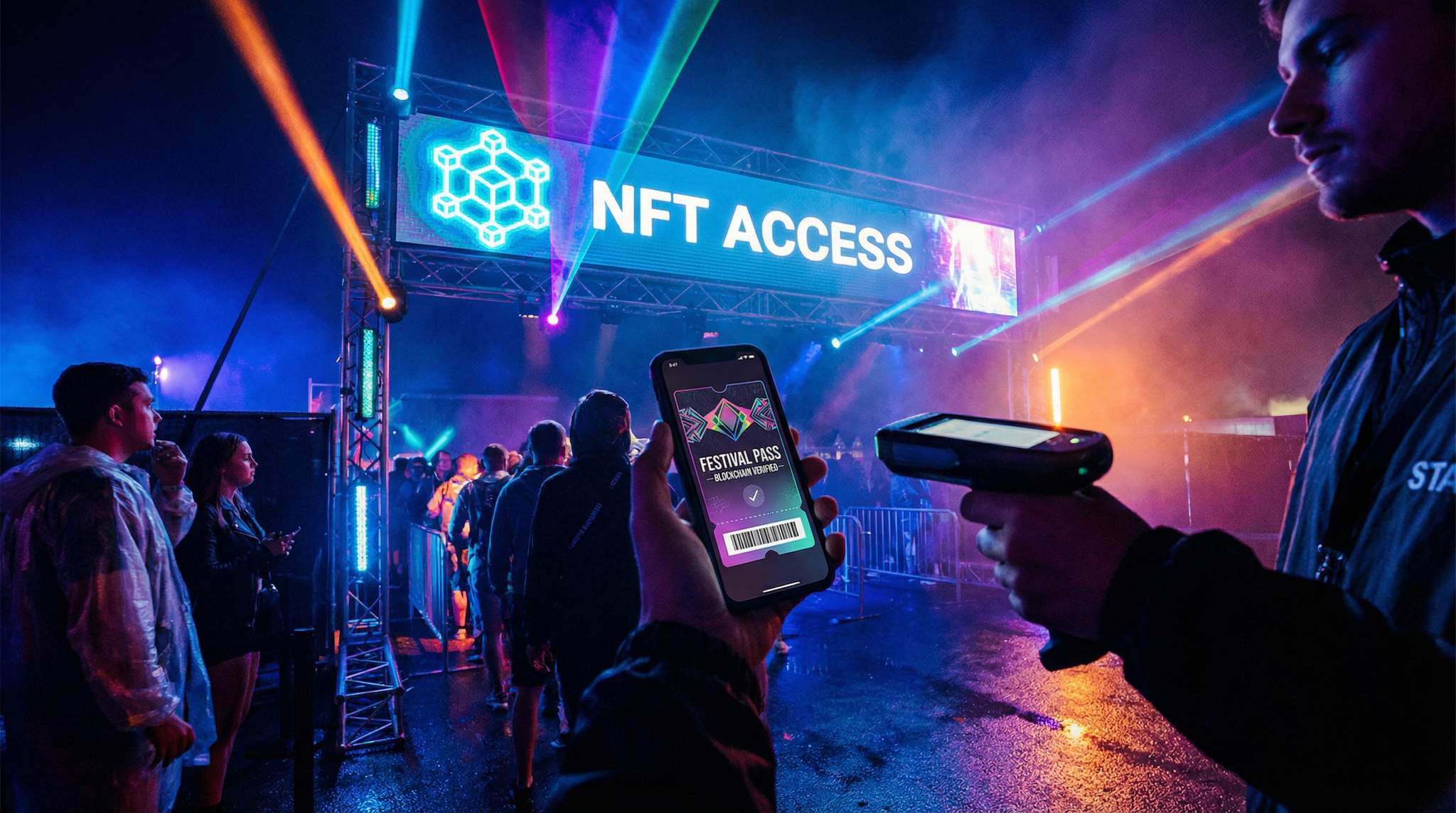
NFT tickets are essentially digital festival passes minted as unique tokens on a blockchain. Unlike standard e-tickets or QR codes that can be copied or faked, each NFT ticket is one-of-a-kind and verifiably authentic on the blockchain ledger, acting as digital certificates of authenticity and ownership. In practice, an NFT ticket is usually presented via a mobile app or wallet QR code at the gate, and scanners verify the token’s authenticity and ownership in real time. Unlike standard e-tickets, these tokens provide secure proof of access to an event. Once scanned, the NFT can be marked as used (or even “burned,” in blockchain terms) to prevent reuse, just like tearing a paper ticket stub.
How NFT Ticketing Works in Admissions: When a fan purchases an NFT festival ticket, a smart contract creates a token with their access rights. The NFT might contain metadata about the event, ticket tier (GA, VIP, etc.), and even extras like artwork or perks. At the festival entrance, attendees prove ownership of the NFT (for example, by showing a QR code from their crypto wallet or ticketing app). The verification system checks the blockchain record or a linked database to confirm this NFT is valid and unredeemed. If everything checks out, the attendee is admitted. All of this can happen in seconds with the right infrastructure, making the gate process very similar to scanning a regular e-ticket – but backed by the security of blockchain.
A Quick Example: Imagine Alice buys an NFT ticket to Global Music Fest 2025. She either receives the ticket as an NFT in her crypto wallet or through an email link that sets up a simple wallet for her. On festival day, Alice opens her festival app, which is connected to her NFT ticket, and a secure QR code is scanned at entry. The system confirms the NFT’s unique ID and that Alice indeed holds it, granting her access. If Alice sold or transferred that NFT to Bob, the blockchain record would show Bob as the new owner, and Alice’s copy would no longer be valid. This inherent traceability is what excites festival organizers about blockchain tickets.
Keep Tickets in Fans' Hands
Our secure resale marketplace lets attendees exchange tickets at face value, eliminating scalping while keeping you in control of the secondary market.
Why Consider NFT Ticketing? Benefits for Festivals
NFT ticketing isn’t just tech for tech’s sake – it’s being explored because it offers solutions to longstanding ticketing headaches and opens up new opportunities. Here are some of the key benefits festival producers are eyeing:
- Anti-Scalping and Fraud Prevention: NFT tickets can be programmed with smart contracts to thwart scalpers and counterfeiters. Because each ticket is traceable and authenticated on a public ledger, it’s virtually impossible to forge an NFT ticket, creating a new era of transparent access. Moreover, organizers can set rules like capping resale prices or requiring that resales occur through an approved exchange. In other words, you might allow fans to resell tickets but at no more than face value, or you could automatically collect a royalty from any resale, offering greater control and protection for fans. This creates a fairer, more transparent secondary market where prices and authenticity are under control. Major events from concerts to sports have started using NFT tickets to combat scalping and black-market activities. Festivals plagued by ticket scalping stand to regain control – and ensure real fans, not bots or profiteers, get the tickets.
- Security and Authenticity: Each NFT ticket is unique and verifiable, eliminating the risk of duplicate or fake tickets. Traditional QR codes can be copied or screenshots shared, but an NFT ticket’s validity is easily checked against the blockchain record. Everyone – buyers, sellers, and festival staff – can instantly verify a ticket that cannot be modified. This builds trust in the ticketing system. For instance, if a fan buys a resale NFT ticket, they can see the token’s provenance (its issue and ownership chain) to confirm it’s legitimate and not stolen. On the organizer’s side, NFT ticketing can reduce fraudulent entry attempts and the headache of dealing with counterfeit tickets.
- Revenue from Resales: In the traditional model, if a ticket is resold above face value, the festival and artists get none of that extra money – the profit goes to scalpers or secondary brokers. NFT tickets flip that dynamic by enabling programmable royalties. Organizers can embed a rule so that whenever an NFT ticket is resold, a percentage of the sale (say 5–10%) flows back to the festival, addressing the issue where artists traditionally see zero resale profits from secondary markets. This means if a ticket originally $100 is resold for $300, the festival might earn an extra $20–30 from that resale automatically. It’s a new revenue stream that can help festivals share in the upside of high demand. Additionally, by capturing resale data, festivals get insight into true market value of their tickets, informing pricing strategies (all without resorting to controversial dynamic pricing) and helping to guarantee that their tickets are not counterfeit.
- Collectible Value & Fan Engagement: One of the most exciting aspects of NFT tickets is what happens after the festival. Instead of a ticket that turns into a worthless stub, an NFT ticket becomes a lasting digital collectible that can unlock future perks for attendees. Festivals can commission beautiful artwork or dynamic designs for their NFT tickets, so that owning the ticket is like owning a piece of the festival’s art or history. For example, a festival could issue animated NFT ticket designs by a popular artist, making each year’s ticket a coveted collectible. Fans love to hold onto memories – and an NFT can serve as a verifiable “badge” of attendance that they can display online or trade. Proof-of-Attendance Protocol (POAP) NFTs have become popular at events – these are free digital badges given to attendees to prove they went, unlocking an online community or providing exclusive benefits in the future. By issuing NFT tickets or post-event POAPs, festival organizers keep the hype alive well after the gates close.
- Deeper Community Building: NFT tickets open the door to treating ticket-holders as an ongoing community, fostering a continuous relationship between organizers and fans. Because you can continue to communicate with and reward NFT holders, they become part of an exclusive club of festival alumni. Organizers can airdrop (send) special bonuses to past attendees’ wallets – for instance, discount codes for next year’s festival, access to exclusive content (like behind-the-scenes videos or live recordings), or even voting rights on certain festival decisions. For example, a festival could let NFT ticket holders vote on a theme or a minor lineup addition, increasing their emotional investment in the event. This continuous engagement turns a ticket into a year-round membership, fostering loyalty. Festivals like Tomorrowland have already explored NFTs that grant fans access to Tomorrowland prize giveaways and special minting events, as well as offering perks of access to special experiences for being part of the NFT-holder community.
- Innovation & Brand Differentiation: Adopting NFT ticketing can position a festival as forward-thinking and tech-savvy. In a competitive festival market, being known as an innovator helps attract certain audiences (and sponsors). The marketing buzz from saying “we have NFT tickets” can draw press attention and interest from the booming crypto/NFT community. For example, when Coachella announced its NFT ticket collectibles, it generated headlines globally, highlighting the push to use NFTs as passes to music festivals and associating the brand with cutting-edge trends. The initiative included granting access to Coachella future festivals in perpetuity. Likewise, tech-centric events like SXSW (South by Southwest) received kudos for integrating NFTs, such as selling artwork and photos from the event. While hype isn’t the goal in itself, the PR boost of being an early adopter can amplify a festival’s reach to new demographics.
- New Revenue Streams via Music Festival Digital Collectibles: Beyond the functional aspect of gate entry, an nft event ticket can be bundled with exclusive multimedia assets. By offering music festival digital collectibles—such as unreleased artist tracks, behind-the-scenes video clips, or 3D virtual merchandise—promoters can create premium ticket tiers. This transforms a standard e-ticket into a high-value digital asset, giving fans a compelling reason to upgrade their purchase while providing organizers with a scalable, low-overhead revenue channel.
The Broader Impact of NFTs in the Events Industry
While massive music festivals often grab the headlines, the adoption of NFTs for events is quietly transforming the wider live experience sector. Promoters and venue operators across the events industry—including those managing corporate conferences, trade shows, comic conventions, and food and wine expos—are discovering the utility of blockchain ticketing. For these organizers, an NFT event ticket isn’t just about flashy digital art; it’s a highly functional tool for issuing verifiable credentials, managing multi-day access, and facilitating secure B2B networking. By utilizing token-gated systems, event producers can seamlessly grant attendees access to specialized workshops, VIP lounges, or post-event digital resources, proving that this technology offers scalable solutions for any gathering.
Planning a Festival?
Ticket Fairy's festival ticketing platform handles multi-day passes, RFID wristbands, and complex festival operations.
Real-World Examples of NFT Ticketing at Festivals
It’s not just theory – festivals and live events across the world have begun experimenting with NFT-based ticketing and fan experiences. Here are a few notable cases, spanning from massive music festivals to niche community events:
- Coachella (USA): The iconic California music festival made waves by offering a limited NFT collection in 2022 that included lifetime festival passes. Dubbed the Coachella Keys Collection, it comprised 10 golden-key NFTs that grant the holder annual Coachella tickets for life, plus luxury perks like VIP camping and gourmet dinners. Coachella partnered with a crypto marketplace (FTX US) to mint and sell these, reflecting the industry push toward NFT passes along with thousands of collectible NFTs featuring festival photos and artwork. The NFTs sold for high prices (one reportedly over $250,000), showing that fans will invest heavily in unique festival experiences. Lesson: Coachella’s experiment demonstrated NFTs’ potential to create ultra-VIP offerings and new revenue. However, it also taught a cautionary lesson – when that marketplace (FTX) later imploded, the Coachella NFT collection went missing or became stuck in limbo. Coachella’s team has been working to honor those lifetime tickets, but the incident underscores the need to choose reliable technology partners and backup redemption methods.
- Afterparty NFT Art & Music Festival (USA): In March 2022, a festival called Afterparty in Las Vegas became the world’s first NFT-gated festival – no traditional tickets at all, only NFTs for entry, where NFTs unlock access to experiences from the metaverse to real life. The organizers (including veterans from events like Life Is Beautiful and Kaaboo) partnered with leading NFT platforms to launch the event and issued 1,500 “All-Access” NFTs on Ethereum, which buyers had to hold in their crypto wallets to get into the two-day event. These NFT tickets weren’t just passes; they doubled as lifetime memberships, similar to exclusive NFT gatherings like Art Basel. The festival featured major musical artists (The Chainsmokers, The Kid LAROI) and NFT art installations, celebrating Web3 culture. Lesson: Afterparty proved that an entirely NFT-based admission system can work — attendees simply verified their NFT at the door — and it created a tight-knit community around the festival’s brand. On the flip side, requiring an NFT purchase (which cost hundreds or thousands of dollars) meant the festival catered to a crypto-savvy niche; mainstream adoption would require lowering the tech barrier (Afterparty did provide concierge support to help less techy buyers set up wallets). The success showed NFTs can unlock new festival models, but also highlighted that educating your audience is crucial when using new tech.
- Tomorrowland (Belgium): One of Europe’s biggest EDM festivals, Tomorrowland, ventured into NFTs to deepen fan engagement. In 2022 they introduced the Medallion of Memoria NFT project – a series of digital collectibles that hardcore fans could assemble. If a fan collected all three pieces of the medallion NFTs, they could burn (redeem) them to claim an actual Full Madness Pass (a coveted festival ticket) for the following year, alongside perks of access to special festival areas. Even without completing the set, holding a Tomorrowland NFT gave perks like access to exclusive presale ticket windows, entry into special events on-site, and participation in Tomorrowland prize giveaways and minting events. Lesson: Tomorrowland’s approach wasn’t about replacing all tickets with NFTs, but about layering an Web3-powered loyalty program onto the festival. It created a gamified experience for super-fans to collect digital souvenirs with real-world rewards. The key takeaway is that NFT ticketing can be incremental – you can start by offering optional collectible tickets or bonus NFTs that enhance the fan experience, rather than making them the only way in.
- Governors Ball & SXSW (USA): Traditional festivals have also tried NFT tie-ins via partnerships. At the 2022 Governors Ball in New York, crypto exchange Coinbase set up an integration where festival-goers could claim a one-of-a-kind NFT that doubled as a VIP Lounge pass at the event, while others focused on selling artwork and photos from the festival. Meanwhile, the sprawling SXSW festival in Austin added NFT art galleries and released official SXSW NFTs, joining the trend of lifetime pass ticket NFTs and new merch for attendees. These efforts were more about adding an extra layer of excitement and value for ticket-holders. Lesson: Even if you’re not ready to commit to full NFT ticketing, collaborating with sponsors or artists on limited-edition NFTs (for VIP upgrades, digital collectibles, etc.) can be a way to test the waters and generate buzz.
- GUTS Tickets & GET Protocol (Netherlands): Outside of specific festivals, it’s worth noting the success of platforms like GUTS Tickets in the Netherlands, which have used blockchain (via the GET Protocol) to sell over 600,000 NFT-based tickets for concerts and events, creating a secure marketplace for blockchain-based tickets. These tickets tie the attendee’s identity to the NFT to prevent unauthorized resale, solving the problem of zero resale profits for artists by automatically giving them a cut of any resale that does happen. Several Dutch and European festival organizers have trialed this system to keep pricing fair. Lesson: The tech is already proven at scale in some markets. Partnering with a ticketing provider that has a solid track record with blockchain tickets can remove a lot of risk and complexity.
- Ticketmaster’s NFT Experiments: Even the industry giants are getting involved. Ticketmaster (which serves festivals globally) developed NFT ticketing features and famously rolled out NFT-gated tickets live on Ticketmaster with the rock band Avenged Sevenfold in 2023. Fans who held the band’s NFT could unlock exclusive early tickets through Ticketmaster’s system, showing how NFTs can act as fan club passes. The NFL Super Bowl has also issued NFT versions of tickets as collectible souvenirs for attendees. Lesson: When big players invest in a technology, it’s a sign that there’s real potential. It doesn’t guarantee success, but it means tools and infrastructure for NFT ticketing are rapidly improving. If you partner with major ticketing platforms or forward-thinking companies like Ticket Fairy, you may find solutions that go beyond traditional ticketing are already available. Often, built-in support for NFT tickets is available at standard ticketing rates.
- Live Nation’s Post-2022 Blockchain Initiatives: As the world’s largest live entertainment company, Live Nation has continued to explore blockchain ticketing and Web3 integrations well beyond the initial hype cycle. Their ongoing Live Nation NFT initiatives focus heavily on utility rather than just speculation. Through programs like Live Stubs—which provide fans with digital keepsake versions of their entry passes—the promoter has successfully normalized the concept of an nft event ticket for mainstream audiences. After 2022, Live Nation shifted its blockchain crypto strategy toward rewarding loyalty, partnering with Web3 platforms to offer token-gated presales and exclusive VIP experiences. Lesson: When mega-promoters invest in music festival digital collectibles and blockchain infrastructure, it signals a long-term industry shift. Organizers of all sizes should take note of how these major players are using the technology to build persistent, post-event fan communities rather than just driving short-term revenue.
Challenges and Pitfalls of NFT Ticketing
For all the promise of NFT tickets, festival organizers must approach this trend with eyes open. There are significant challenges and risks to consider before diving in:
- Technology Barriers for Fans: For the average festival-goer, dealing with NFTs and crypto wallets can be intimidating. Setting up a wallet, managing private keys, or understanding blockchain isn’t second nature to everyone. This complexity means some fans might struggle or resist buying an NFT ticket due to a lack of oversight and consumer protection. If the process isn’t extremely user-friendly (think one-click signup or custodial wallets where the platform handles the blockchain stuff), you risk turning away customers. Festivals must be prepared to offer strong customer support and education – possibly creating step-by-step guides or even “live chat” help for buyers during the ticket sale. The goal is to abstract away the tech jargon; successful implementations often let users buy NFT tickets with a regular credit card and email, while the blockchain part runs behind the scenes.
- Limited Adoption & Infrastructure: While growing, NFT ticketing is still in its early days. The infrastructure for seamless blockchain ticketing – from standardized scanning systems to secondary marketplaces – isn’t as mature or widespread, making it risky to sell them to careless customers. At a festival with tens or hundreds of thousands of attendees, any technology must be rock-solid. Questions arise like: Do entry gate devices need internet to check the blockchain? What if the network is slow? Are there enough integrations to handle transfer and verification instantly? These are surmountable issues (often solved by hybrid on-chain/off-chain systems and pre-event validation), but the reality is you may be something of a pioneer, working closely with tech partners to ensure reliability. Smaller boutique festivals have more flexibility to experiment; larger festivals might face scalability challenges if the blockchain network were to have a hiccup at peak entry time.
- Regulatory and Legal Grey Areas: The world of NFTs is largely unregulated, which can be a double-edged sword. On one hand, you have freedom to innovate; on the other, consumer protections and clear laws are lacking, as regulations are subject to rapid change and may fluctuate. For example, if an attendee loses access to their NFT ticket (say, they accidentally transfer it to the wrong wallet or get hacked), what is your legal obligation as the organizer? Can you reissue them a ticket, or is it “too bad”? Traditional ticketing usually has processes for lost tickets or fraud, but with an NFT on a decentralized network, these processes need to be defined by you. Additionally, consider refund policies – if the event is canceled, how will you refund NFT tickets? You might need to build a mechanism to invalidate tokens and pay back purchasers (perhaps via cryptocurrency or an off-chain method), which is more complex than hitting “refund” on a credit card processor. It’s wise to consult with legal counsel to update your terms of service when using NFT tickets, covering scenarios like fraud, loss, and refunds so that both your festival and your attendees are protected.
- Scams and Security Risks: Ironically, while NFT tickets are meant to combat fraud, they introduce new fraud vectors if not handled carefully. Scammers might create fake NFT ticket sale websites or phony customer support lines to trick fans. We’ve already seen cases of counterfeit NFT tickets being sold to unwary buyers who didn’t know how to verify the token, exploiting the fact that many systems are based on this technology. Phishing attacks could also target your audience (“Click here to claim your festival NFT”, leading to a fake site). As an organizer, you’ll need to be proactive in communication: clearly announce where and how tickets will be sold, how to verify an official NFT, and warn attendees about common scams. Internally, you should also bolster security – the last thing you want is your festival’s NFT contract or wallet being compromised. Working with established, reputable NFT ticketing providers can mitigate many of these risks, as they will have security practices in place.
- Technical Glitches: Relying on a blockchain means accepting that technology issues can occur. Network congestion could delay transactions (imagine ticket transfers taking hours, or worse, stalling during a crucial onsale). There have been instances of blockchain outages – for example, Solana (a popular chain for NFTs) has had periods of downtime. If your tickets are on such a network at the wrong time, it could disrupt sales or attendee verifications if the systems are based on this technology. Additionally, festival environments often strain tech systems (high mobile network usage, etc.). The solution is to have robust contingency plans: perhaps integrate an offline mode for scanning (e.g., download the list of valid NFT IDs beforehand to devices) or have an on-site “help desk” that can quickly resolve issues (even if it means issuing a temporary pass). Always run small-scale tests of the full workflow before the festival. For example, if you issue 100 NFT tickets for a VIP package, test those at a side entrance to work out kinks before scaling up.
- Public Perception and Privacy Concerns: Not all fans are enthusiastic about NFTs. The tech had a hype bubble that in some circles earned a bad reputation (some view NFTs as speculative scams or harmful to the environment). There’s also a philosophical question: Do attendees want their ticket connected to a public blockchain ledger? A blockchain’s transparency means theoretically anyone could see which wallet holds a ticket to which event – creating a permanent, public record of the list of events you have been to. For most music fans this may not matter, but consider events where anonymity is valued. Privacy-conscious attendees have raised concerns about linking personal identity to an on-chain asset. The good news is that best practices can alleviate this: you don’t need to put any personal data in the NFT itself (and you shouldn’t). A ticket NFT can be a random ID that only correlates to personal details in your secure database off-chain. Make it clear to users what data is or isn’t being recorded on-chain. And if a segment of your audience is anti-NFT on principle, gauge the sentiment before rolling out a full NFT-based system. Sometimes a gentle introduction (like optional, additional NFT perks) can win skeptics over by showing the value, rather than forcing it on everyone.
- Case Study – Coachella’s Cautionary Tale: As mentioned, Coachella’s pioneering NFT lifetime passes taught the industry a valuable lesson in pitfalls. When their NFT marketplace partner FTX collapsed, owners of Coachella’s NFT tickets suddenly found their assets in limbo when the Coachella NFT collection went missing. While Coachella is working on solutions, the scenario highlights the custody risk in NFT ticketing. Festivals must ensure that if a third-party platform is involved in issuing or storing NFTs, there are protections or backup plans. One approach is to allow attendees to move their NFT tickets to self-custody (their own wallet) rather than leaving them with the vendor. Another is to partner with more established tech providers or those with insurance/guarantees. Essentially, trust and verify – do due diligence on any NFT ticketing service you use. The fiasco hasn’t stopped NFT experimentation, but it underscores that this is still an emerging technology with real-world kinks to iron out.
Is NFT Ticketing Right for Your Festival?
With the pros and cons laid out, the big question for festival organizers is whether NFT ticketing makes sense for your event. The answer will vary. Here are some factors and scenarios to guide your decision:
- Audience Demographics: Consider your fan base. Are they young, tech-savvy, or known to be early adopters of trends? Festivals that attract a lot of crypto enthusiasts, gamers, or tech industry folks (for example, an EDM festival with a large Gen Z following, or a conference like SXSW) might find NFTs relatively well-received. In contrast, if your typical attendee is less tech-inclined or sees NFTs as a gimmick, you may need to tread carefully or invest more in education. Always gauge fan sentiment if possible – even a social media poll or small pilot program can reveal interest levels. Example: A boutique indie music festival in New Zealand polled attendees and found many didn’t have crypto wallets, so they decided to introduce NFTs slowly via optional merch rather than core ticketing.
- Festival Size and Scale: The scale of your event matters in how you implement NFT tickets. Smaller festivals (say 5,000 attendees) have the agility to experiment with new systems without massive risk – you could even do all NFT tickets for a single-day event to see how it goes. Large-scale festivals (50,000+ attendees) need robust, battle-tested systems. If you’re in the latter category, it might be wise to run a pilot program first (perhaps NFT tickets just for the VIP tier, or for one stage’s entry) before converting your whole admission system. Also, larger events tend to have more issues with scalping, so the anti-scalping benefit of NFTs could be a big draw – but only if the solution can handle high volume.
- Problem You’re Trying to Solve: Identify why you’re considering NFT ticketing. Is scalping a major pain point that existing measures haven’t solved? Are you looking for new marketing angles or revenue streams? Or do you want to cultivate a year-round community of loyal festival-goers? NFT tickets can address all of these, but you should prioritize what matters most. For example, if combating scalpers is goal #1, you might focus on the aspects of NFT tech that limit transfers and enable resale royalties. If fan engagement is the priority, you might design an NFT strategy that includes collectibles and post-event content. Clarity on your goals will dictate the right implementation approach (and whether the benefits outweigh the effort).
- Resource and Partner Availability: Do you have the technical team or a trustworthy partner to implement NFT ticketing smoothly? Some festivals lean on their ticketing platforms or third-party providers to handle the heavy lifting. Many ticketing companies are evolving to offer NFT integration – for instance, Ticket Fairy now manages the blockchain side for you at standard ticketing rates. This includes wallet integration (so attendees can prove NFT ownership via MetaMask, WalletConnect, etc.) and anti-scalping measures built-in. If your current ticketing partner doesn’t support NFTs, you might explore new partnerships or even dedicated NFT ticket vendors. Ticket Fairy provides an NFT-gated ticketing solution that goes beyond traditional ticketing. Keep in mind the learning curve: if you or your team are not very techy, ensure the partner offers hands-on support and perhaps a hybrid system (where people can still get help via normal customer service). The success of NFT tickets at your festival will depend largely on how user-friendly and reliable the system is, which in turn depends on your choice of technology partner.
- Local Regulations and Audience Trust: In some countries, cryptocurrency-related activities are viewed with skepticism or even face regulatory hurdles. Check if there are any regulations around issuing NFTs or crypto transactions in your festival’s jurisdiction (tax implications, consumer rights, etc.). Also, consider attendee trust – in markets where crypto scams have been publicized, you might need extra effort to build credibility for your NFT tickets. Emphasize the practical benefits in your messaging, rather than the tech buzzwords. For example, instead of “buy our NFT ticket!”, you might market it as a “secure digital ticket with extra perks (powered by blockchain)”. The framing can make a big difference in acceptance.
How to Create NFT Ticketing for Your Next Festival
When organizers decide to create NFT ticketing programs, the process rarely involves building blockchain architecture from scratch. Instead, the focus shifts to defining the smart contract rules and selecting the right infrastructure. To successfully launch a Web3 admission strategy, promoters must determine the token’s utility—whether it functions as a standard entry pass, a VIP upgrade, or a lifetime membership. Partnering with a specialized vendor allows you to mint these digital assets seamlessly, ensuring the technical heavy lifting is handled while you focus on marketing the unique benefits to your attendees.
Smooth Entry With Mobile Check-In
Scan tickets and manage entry with our mobile check-in app. Supports photo ID verification, real-time capacity tracking, and multi-gate coordination.
Selecting the right NFT ticket platform is arguably the most critical step in this process. As a festival producer, you need a ticketing partner that bridges the gap between complex Web3 infrastructure and a frictionless fan experience. The ideal platform should offer fiat on-ramps—allowing attendees to purchase their passes with standard credit cards without needing pre-existing crypto wallets—while handling the blockchain minting in the background. Furthermore, a robust enterprise-grade system will provide organizers with deep data analytics, customizable smart contracts for secondary market royalties, and seamless integration with your existing gate-scanning hardware.
Best Practices for Implementing NFT Ticketing
If you decide to take the plunge into NFT ticketing, planning and execution are key. Below is a roadmap of practical steps and tips to implement NFT tickets successfully at your festival:
Need Festival Funding?
Get the capital you need to book headliners, secure venues, and scale your festival production.
- Start Small with a Pilot: Treat your first foray as a pilot project. You could issue a small percentage of tickets as NFTs (for example, a VIP package or early-bird special that comes with an NFT version of the ticket). This gives you a controlled environment to test the technology and get feedback from fans. Learn from the pilot – what questions did customers have? Did the scanning at entry work flawlessly? Use these insights to refine your approach for a larger rollout.
- Choose the Right Platform: As mentioned, the choice of platform or provider is critical. Options range from mainstream ticketing platforms adding NFT support (like Ticket Fairy’s NFT-gated ticketing and others) to specialized blockchain ticketing startups. Look for a solution that abstracts complexity for the user – for instance, by providing custodial wallets or easy email-based redemption for those who aren’t crypto-savvy. Ensure the platform supports the kind of smart-contract rules you need (e.g., price caps on resale, or royalties, or non-transferable tickets if desired). Also, ask potential providers about their experience – Have they handled events of similar size? Can they handle on-site support? What’s their backup plan if something goes wrong? Don’t be afraid to request demos or even try it out as a “mystery shopper” to experience the ticket buying and entry process firsthand.
- Educate Your Team and Attendees: Well before tickets go on sale, align your internal team (ticketing staff, customer service, marketing, gate crew) on how the NFT ticket system works. Provide training sessions for staff so they know how to assist attendees (e.g., “How do I get my NFT ticket if I lost the email?” or “How do I transfer it to my friend?”). For attendees, create a simple how-to guide that covers purchasing, storing, and using NFT tickets. Use clear, non-technical language – perhaps a short FAQ on your website and some tutorial videos. During the on-sale and festival lead-up, communicate repeatedly: remind buyers to set up their wallet or account in advance, explain the check-in process, and highlight support channels. The smoother you make the experience, the more likely attendees will embrace it. Remember, NFT ticketing is new for many, so there will be more questions than usual – plan your customer support capacity accordingly (maybe even have a dedicated support line for “NFT ticket help”).
- Integrate Security and Verification Measures: Work with your tech provider to ensure that entry scanning devices or apps are ready for the NFT tickets. Test them in the actual venue environment if possible. One good practice is to have a fallback: for example, generate a secondary QR code that can be emailed to an attendee as backup, which can be scanned if, say, the blockchain verification is slow at that moment. Or maintain an offline list of valid ticket token IDs at each gate in case connectivity drops. Additionally, implement checks to prevent the same NFT being used twice – most systems will automatically record when an NFT ticket is scanned and reject any subsequent scans of the same token. Be sure this functionality is in place to avoid any attempt at one person using a ticket, then transferring or copying it to someone else. This might involve the burn or mark-used mechanism where the NFT is updated or a backend database flags it post-scan.
- Engage and Incentivize Users: To encourage adoption, highlight the extras that come with your NFT tickets. For instance, promote that each NFT ticket comes with a beautiful piece of digital art, or that NFT holders will get an exclusive piece of merch or an invite to a secret after-party. These perks can tip the scales for fans who are unsure about trying the new system. Some festivals even offer a slight discount or bonus for those opting into NFT tickets to reward early adopters. During the event, consider having a dedicated booth or staff members to help with NFT-related questions and to educate attendees about any post-event benefits (e.g., “Don’t forget to hold onto your NFT – it might get you a discount for next year!”). This shows that the festival stands behind the technology and is there to help fans navigate it.
- Monitor, Gather Feedback, and Iterate: Once your NFT tickets are out in the wild, monitor the process closely. Keep an eye on the on-sale (did transactions go through smoothly, any bottlenecks?), watch social media and support tickets for recurring issues or confusion points, and track entry times at the gates (was it slower or faster than usual, any scanner problems?). After the festival, gather feedback via surveys or community forums: ask attendees what they liked or disliked about the NFT ticket experience. This information is gold for refining future editions. You might discover, for example, that 90% of NFT ticket holders loved the collectible aspect but 10% had trouble with wallet setup – insight that could lead you to simplifying the wallet process next time (maybe auto-creating wallets for users). By iterating on the feedback, you’ll improve the system year over year, just as festivals do with any aspect of production.
- Stay Updated and Legal: The NFT and blockchain world evolves quickly. Stay informed about latest developments – perhaps join event industry groups or forums discussing NFT ticketing. New standards and tools are emerging (for example, some protocols allow NFT “rental” which could be interesting for tickets, or improvements in how QR codes for NFTs are generated). Also, keep an eye on laws (which, as mentioned, can change). Make sure your terms and conditions for ticket buyers clearly cover the unique aspects of NFT tickets. It should address things like what happens if an attendee can’t access their NFT, or if the festival needs to swap an NFT ticket for a standard one in a pinch. Transparency will protect you and give attendees confidence. And of course, ensure your plans align with any platform rules (if you use an NFT marketplace for resale, abide by their policies) and tax obligations (for example, if you raise significant revenue from NFT resales, account for it properly in your finances).
The Future: Hype or Game-Changer?
It’s time to answer the big question – is NFT ticketing just overblown hype, or is it truly a game-changer for festival admissions? The realistic answer: it can be a game-changer if implemented thoughtfully in the right context. The hype around the buzzword “NFT” has been massive, and not every promise panned out during the speculative frenzy of 2021. However, behind the hype, there is real technological innovation addressing very tangible problems in ticketing.
From our exploration, it’s clear that NFT tickets carry the potential to dramatically improve ticket security and reshape the fan experience. Solving scalping and counterfeit issues alone is a huge win for many festivals – something traditional systems have struggled with for decades. The ability to turn tickets into collectible, lasting fan assets and to engage your audience year-round is a new frontier that could deepen loyalty in unprecedented ways. These are genuine game-changing aspects. Festivals in the US, Europe, and Asia are already seeing glimpses of this future through pilot programs and unique NFT offerings.
On the other hand, the pitfalls are equally real. If implemented poorly, NFT ticketing could become a nightmare of confused customers, technical failures at the gate, or lost access, which would certainly feel like chasing hype to one’s detriment. It’s not a magic bullet that automatically makes your festival better – it takes careful planning, the right partners, and an understanding of your audience. In scenarios where the audience or infrastructure just isn’t ready, forcing NFT tickets could indeed backfire and be seen as a gimmick.
The verdict: NFT ticketing is an emerging tool in the festival producer’s toolkit – not a universal solution, but a powerful option when used for the right reasons. In the next 5 years, we can expect NFT or blockchain-enhanced tickets to become more common, likely in a hybrid form (where fans might not even realize their “digital ticket” is an NFT under the hood). As the technology matures and user experience improves, more festivals will likely adopt it, especially as success stories accumulate. Already major players like Ticketmaster, Coachella, and Live Nation have embraced NFT tickets or collectibles, proving proof of access to an event – indicating this trend is here to stay and evolve.
For festival organizers today, the advisable approach is open-minded but pragmatic. Keep an eye on how NFT ticketing develops, maybe dip your toes in with a trial, and always prioritize the fan experience over the allure of new tech. By doing so, you’ll be ready to ride the wave if NFT ticketing truly becomes the new norm in admissions, or pivot gracefully if the hype fizzles out. In either case, understanding this technology now means you’ll be prepared to make the best decision for your festival.
Frequently Asked Questions About NFT Event Tickets
What is an NFT event ticket?
An NFT event ticket is a digital admission pass minted on a blockchain. Unlike a standard PDF or e-ticket, it serves as a verifiable, tamper-proof certificate of ownership that grants the holder access to a festival or concert, while often doubling as a digital collectible.
How do music festival digital collectibles differ from standard tickets?
While standard tickets lose their utility once the event concludes, music festival digital collectibles retain value as commemorative items. They can be kept in a fan’s crypto wallet to unlock future perks, such as presale access for next year’s event, VIP upgrades, or exclusive community merchandise.
Are major promoters adopting blockchain ticketing?
Yes. Following the initial surge of interest, major industry players have continued to develop their Web3 strategies. For example, Live Nation NFT initiatives after 2022 have focused on integrating blockchain crypto technology to offer digital stubs, token-gated access, and enhanced loyalty rewards for attendees.
What is NFT ticketing and how does it benefit organizers?
At its core, what is NFT ticketing? It is a method of issuing unique, blockchain-verified digital passes that prevent counterfeiting and give promoters control over the secondary market. By utilizing smart contracts, organizers can capture resale royalties and build long-term loyalty programs that extend well beyond the event dates.
How do promoters create NFT ticketing programs?
To create NFT ticketing campaigns, festival organizers typically partner with specialized Web3 platforms rather than developing custom blockchain architecture. These vendors allow promoters to mint digital passes, set smart contract rules for secondary market royalties, and integrate wallet-scanning technology at the venue gates.
What is the role of NFTs in the broader events industry?
Beyond music festivals, utilizing NFTs for events allows organizers of conferences, trade shows, and expos to issue secure, verifiable credentials. These blockchain-based assets streamline B2B networking, prevent credential sharing, and enable token-gated access to exclusive sessions or VIP areas.
What features should organizers look for in an NFT ticket platform?
When evaluating an NFT ticket platform, festival producers should prioritize user-friendly fiat checkout options, automated wallet creation for attendees, and customizable smart contracts. A top-tier provider will also offer robust access control integrations to ensure that scanning a blockchain-based pass at the festival gates is just as fast and reliable as scanning a traditional barcode.