Introduction
High-demand festivals often turn the ticket buying process into a frantic race. Fans hammer refresh keys, websites crash under the surge, and tickets disappear within minutes – often into the hands of scalpers or bots. This chaos leaves genuine fans frustrated and disillusioned. Ticket lotteries (also known as ballots) have emerged as a fairer, more controlled approach to festival admissions when demand far outstrips supply. Instead of a first-come, first-served frenzy, a lottery allows all interested attendees to enter a draw for tickets, giving everyone an equal chance at securing a pass. It’s a strategy that has gained traction around the world as festivals seek to reduce on-sale meltdowns, curb scalping, and maintain fan trust.
Implementing a genuinely fair ticketing system is no longer just a logistical choice; it is a strategic imperative for protecting your brand’s reputation. When fans know the allocation process is equitable and secure, their lifetime loyalty to your event increases significantly.
What Are Ticket Lotteries and Ballots?
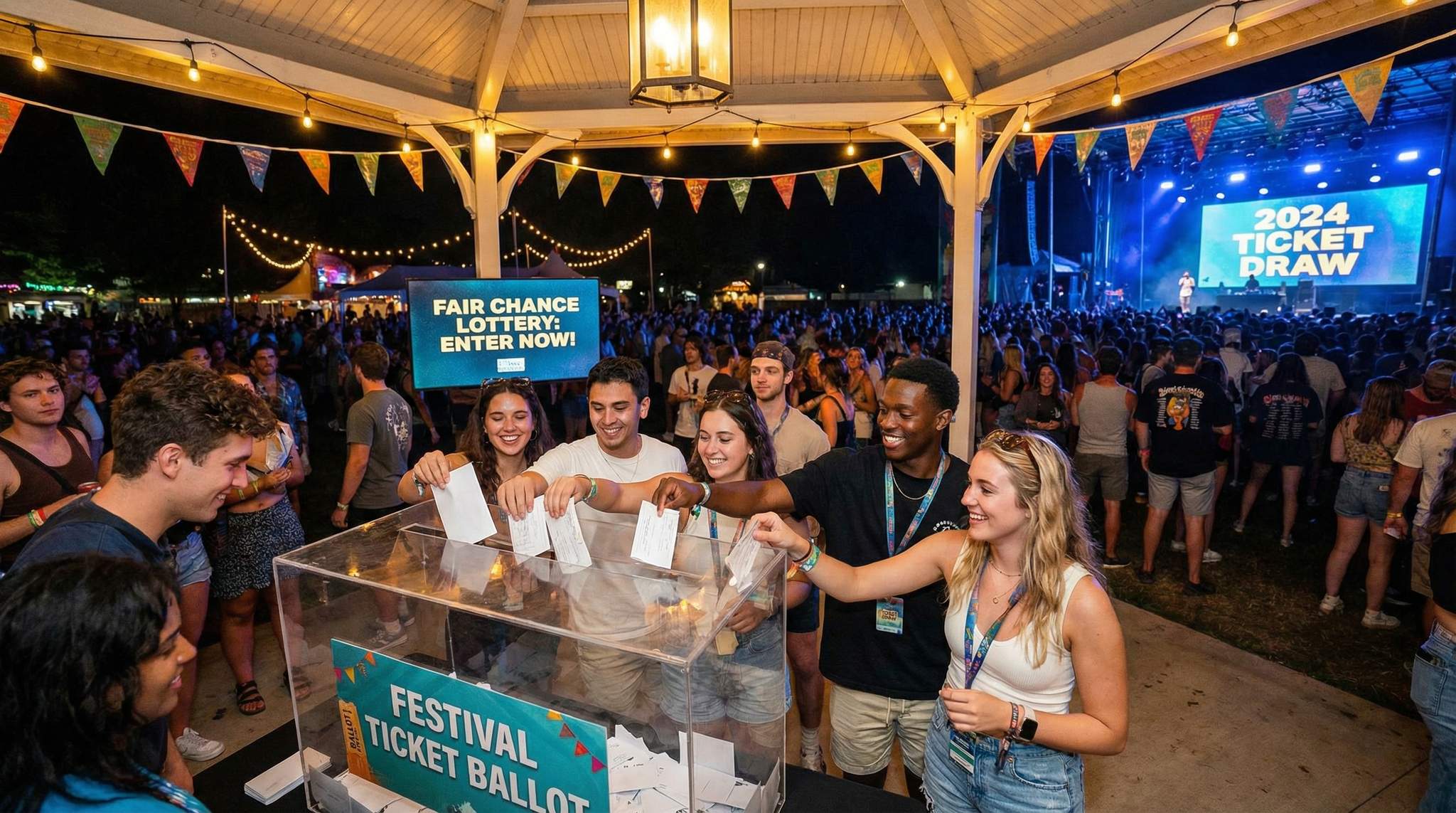
A ticket lottery or ballot is a system where tickets are distributed by random selection among those who register interest, rather than by whoever clicks fastest or pays the most. In practice, fans sign up (usually during a pre-defined registration window) for the opportunity to purchase festival passes. Once the entry period closes, the festival randomly selects a set number of winners from the pool of entries. Those selected “winners” are then given a chance – often within a set time frame – to buy tickets, usually at regular face value. It’s essentially luck of the draw, designed to level the playing field.
If you are explaining the concept to stakeholders and they ask exactly what is a ticket ballot, the simplest definition is this: it is a controlled allocation system where prospective buyers register their interest during a specific window, and a randomized algorithm selects who gets the right to purchase, rather than relying on a frantic, simultaneous on-sale.
Keep Tickets in Fans' Hands
Our secure resale marketplace lets attendees exchange tickets at face value, eliminating scalping while keeping you in control of the secondary market.
This approach stands in contrast to traditional first-come, first-served sales or dynamic pricing auctions. Lotteries have long been used in other high-demand events – from major sports tournaments like the FIFA World Cup and Wimbledon (which famously runs a public ballot for tickets) to popular marathons and concerts in Japan. In Japan, for instance, ballots are commonplace for in-demand concerts, with fans applying in advance and accepting that a random draw decides who gets to buy tickets. The goal is simple: fairness and equal opportunity. Every interested fan, regardless of internet speed or insider connections, gets the same shot, and the outcome is left to chance.
Why Consider a Lottery for High-Demand Festivals?
When a festival’s popularity means demand will vastly exceed ticket supply, switching to a lottery system can offer multiple benefits:
Planning a Festival?
Ticket Fairy's festival ticketing platform handles multi-day passes, RFID wristbands, and complex festival operations.
-
Fairness and Fan Goodwill: By giving all fans an equal chance, lotteries avoid the sense of injustice that comes when tickets sell out in seconds due to bots or when only those with the fastest Wi-Fi win. Attendees appreciate a process where their favourite festival feels like a lottery they can win, not an impossible sprint. It reinforces that the festival values all its fans, not just those with speedy fingers or deep pockets.
-
Reduced Technical Meltdowns: Instead of funneling hundreds of thousands of buyers onto an online ticketing system at once (often causing crashes and slowdowns), a lottery lets you spread out the demand. Fans can register over several days, relieving the “instantaneous” strain. The selection and purchase window can be staggered and managed in batches, dramatically lowering the risk of website crashes or payment failures. For example, one record-breaking tour presale in 2022 overwhelmed a major ticketing platform with demand and bots, leaving fans empty-handed and outraged – scenarios a lottery could mitigate by managing volume in a controlled way.
From an infrastructure standpoint, this is the most effective way to prevent ticket website crashes. When you remove the incentive for 100,000 fans to hit refresh at the exact same millisecond, you eliminate the massive traffic spikes that overwhelm server databases and payment gateways. Spreading the load over a multi-day registration window ensures your ticketing partner’s architecture remains stable.
-
Limits Scalpers and Bots: A well-designed ballot makes life much harder for ticket touts (scalpers) and automated bots. You can require each entry to be tied to a verified fan account, unique ID, or even a credit card pre-authorization – measures that are difficult and costly for scalpers to game at scale. Unlike a public sale where bots can instantly buy hundreds of tickets, a lottery can filter out duplicate entries and flag suspicious accounts before any tickets are sold. Industry experts note that a key advantage of balloting is how it “makes it very hard for scalpers and bots” since multiple applications or known scalper profiles can be proactively removed during the process. Real fans stand a far better chance of getting tickets, and opportunistic resellers are kept at bay.
Automated Waiting Lists for Sold-Out Events
Capture demand when tickets sell out and automatically notify waitlisted buyers when tickets become available through cancellations or resale.
-
Data and Demand Insights: An often overlooked benefit is the wealth of data a lottery can provide. When thousands (or even millions) of fans sign up, you suddenly have a clear picture of true demand. This can guide crucial decisions like whether to add extra festival days, stages, or future spin-off events. Promoters have found that by running a ballot, they can gauge interest by region or ticket type, helping optimize their ticket allocations and even pricing tiers. For instance, if 500,000 people enter a lottery for a 50,000-capacity festival, you’ve got tangible evidence of demand that can support sponsor negotiations or planning additional shows. Some events even ask entrants for their preferred price level or other preferences, using the lottery as a research tool to refine their offerings. In short, a lottery doesn’t just distribute tickets fairly – it also reveals your true audience reach and can inform smarter business decisions.
-
Fan-Centric Experience: A lottery takes the frenzy out of the equation. Instead of the stress of sitting in an online queue with five devices (only to see “sold out” at the end), fans can relax after entering the ballot and simply await results. This gentler pace can improve overall fan sentiment. As one ticketing executive put it, collecting all buyers into the same pot “levels the playing field and removes the intense pressure” on fans during high-demand sales. In a world where customer experience matters, the goodwill generated by a fair shot can translate into long-term loyalty.
Need Festival Funding?
Get the capital you need to book headliners, secure venues, and scale your festival production.
Of course, ticket lotteries aren’t a magic bullet for every situation. They require careful planning and they work best when demand is truly overwhelming. For smaller events or any festival that can realistically accommodate most of its interested audience, a traditional on-sale might work fine. But for blockbuster festivals (think of a Glastonbury, Tomorrowland, Coachella, or any event that could “sell out in seconds”), a ballot can be a game-changer in managing chaos and fan expectations.
Next, let’s dive into how a festival producer can actually implement a fair ticket lottery step by step, ensuring the process stays transparent, secure, and trustworthy.
Planning a Fair Ticket Lottery: Step-by-Step Guide
Introducing a lottery system for festival admissions requires more than just pulling names out of a hat. It should be structured in a way that genuine fans are prioritized, cheating is minimized, and everyone understands how it works. Below is a step-by-step guide to planning and executing a fair ticket lottery or ballot.
Step 1: Pre-Registration (Build Your Entry Pool)
Start by opening a pre-registration period well before tickets would normally go on sale. This is when fans sign up for the lottery. Keep this window open for a reasonable time (several days or even a couple of weeks) to allow word to spread and all interested fans to enter. Key actions in this phase:
-
Collect Necessary Details: Have entrants provide the information you’ll need to fulfill tickets if they win, such as full name, email, phone number, and perhaps address or ZIP/postcode (if you plan to limit entries by region). Make it clear they’ll be contacted at this info if selected.
-
One Entry Per Person: Enforce a strict rule of one entry per individual. To do this, tie entries to unique identifiers. Common approaches include requiring an email verification (each email can only register once), phone verification via OTP (one phone number per entry), or a unique customer account on your ticketing platform. Some festivals even use government ID or passport number registration for higher security, though this can create more friction. Decide the level of info that balances fairness with user privacy.
-
User Accounts or Fan Club Logins: If your festival has a fan club or prior ticketing accounts, consider making people log in. This discourages mass fake entries. For example, Japan’s music events often require fan club membership or a local address to join a ticket lottery, which helps keep entries authentic. If you don’t have a membership system, you can still use your ticket platform’s account system – requiring a login means each person can only enter once under their profile.
-
Regional or Category Ballots: Pre-registration is also the time to segment your lottery if needed. You might run separate ballots for different ticket types (e.g. GA vs. VIP), or allocate a certain number of tickets for specific groups. For instance, a festival might have a dedicated locals’ ballot for residents of the host city or country – as seen when Sam Fender’s arena show used a ballot limited to fans with North-East England postcodes, ensuring local fans got priority. Clearly label these in registration so entrants know where they qualify.
-
Communicate the Rules: Be very upfront about how the lottery works. On the registration page, explain key dates (when entries close, when draw will happen, when winners will be notified, how many tickets one person can win or buy, etc.). This transparency sets expectations and builds trust from the start. Emphasize that it’s free to enter and that winners will still need to purchase their tickets at face value.
Step 2: Verify Entries to Thwart Bots and Duplicates
One of the biggest concerns in any lottery system is keeping it fair by preventing fraudulent entries. During and immediately after the registration phase, implement measures to verify entries and eliminate cheats:
-
Email and Phone Verification: As mentioned, require entrants to verify their email (by clicking a confirmation link) and/or phone number (via a code texted to them). This weeds out a lot of casual bots using fake emails. If an email bounces or a phone number is invalid, remove that entry from the pool.
-
CAPTCHAs and Bot Filtering: Use up-to-date CAPTCHA challenges (Google reCAPTCHA or similar) on the entry form to block automated scripts. Also, monitor traffic for suspicious patterns – hundreds of entries coming from the same IP address range or using the same device/browser fingerprint could indicate a bot farm. Many ticketing platforms have built-in bot detection that can flag or throttle these.
-
Duplicate Detection: Scan for multiple entries that might belong to the same person. This can be tricky – savvy scalpers will try to use different emails and phone numbers. But sometimes there are tell-tale signs: identical names appear, or the same address used across entries, etc. If your system finds likely duplicates, you may choose to remove all but one entry (or in cases of clear abuse, disqualify them altogether). Make sure your lottery terms and conditions give you the right to do this. You might say, for example, “Multiple entries by the same person will be disqualified” to discourage anyone from even trying.
-
Pre-Registration IDs: Some festivals take verification further by issuing unique IDs to each eligible entrant. For example, Glastonbury Festival in the UK requires fans to pre-register weeks in advance with a photo ID (using a photo-ID ticket system that virtually eliminated scalping), after which they receive a unique registration number to use for ticket purchases. While Glastonbury doesn’t use a pure lottery system, its registration approach can be adapted – issuing each fan an ID ensures no one can sign up twice under different emails. It also provides a layer of identity verification (since Glastonbury checks photo IDs at the gate). For a lottery, you could similarly require a verified account or ID number per entry to uphold the “one person, one entry” principle.
-
Optional Deposit or Credit Card Authorisation: In some cases, events ask entrants to provide credit card details upfront or pay a small refundable deposit to join the lottery. This might sound extreme, but it virtually guarantees entries are genuine (a bot farm is unlikely to have thousands of real credit cards at its disposal). A middle-ground approach is to use an authorization hold: entrants input their card, and a hold (say $1 or the ticket price, depending on your system) is placed but not charged unless they win. This approach was used successfully by some high-demand events to ensure winners’ payments go through seamlessly while discouraging fake sign-ups. If you use this method, clearly communicate it and ensure robust data security for stored card info.
By the end of Step 2, you should have a clean, verified pool of entries that represents real fans, each entered only once. This is the foundation of a fair lottery – knowing that every entry is legitimate and equal.
Step 3: Randomized Winner Selection (Transparency is Key)
Now comes the moment of truth: drawing the winners. The central promise of a ticket lottery is that winners are chosen at random, so it’s crucial to execute this step with integrity and transparency:
-
Define How Many Winners (and Tickets per Winner): Decide in advance how many entries will be selected as winners and how many tickets each winner is allowed to purchase. For example, if your festival capacity is 50,000 and you’re allotting 30,000 tickets via the lottery (with the rest perhaps reserved for staff, artists, sponsors, or other sales), you might draw 15,000 winners and allow each to buy 2 tickets. Or you draw 30,000 winners and each can buy 1 ticket. Whatever the formula, it should be determined beforehand and ideally published so participants know the odds. Some organizers also select a number of “standby” or waitlist entries (see Step 5) in case initial winners don’t claim all tickets.
-
Use a Reliable Randomization Method: This could be as simple as using your ticketing platform’s built-in lottery function (if available), which will likely employ a random number generator. If you’re handling it manually, you might assign each entry an index number and use a tool (or custom script) to randomly pick numbers. Make sure the random selection is truly random – avoid any temptation to hand-pick or favor certain entrants, as that would betray trust and possibly violate laws or regulations. Many lotteries use algorithms that are audited for randomness; if your platform offers that, take advantage of it.
Some platforms utilize sophisticated queue management systems rather than a traditional post-registration draw. For instance, a Ticketmaster queue randomization code or similar algorithmic waiting room assigns a random place in line to users who log in before the sale begins. While slightly different from a multi-day ballot, this randomized queue approach still neutralizes the “speed” advantage of bots and helps throttle server traffic.
-
Consider Third-Party Oversight: For ultimate transparency, some festivals bring in an impartial third party (like an audit firm or a notary) to oversee the draw. While not strictly necessary, announcing that the draw was monitored or audited by an independent entity can boost credibility. If your draw is electronic and large-scale, having a tech auditor certify the process (or publishing the method in detail) can help skeptics feel assured it wasn’t “rigged.”
-
Document the Process: Keep logs of how the draw was conducted. If ever questioned, you want to have an audit trail. For instance, note the date/time of the draw, the randomization program or service used, and the outputs (the list of winners). You don’t publish all this raw data (for privacy reasons), but you keep it internally.
-
Be Ready to Prove Fairness: Some extremely high-demand events publish anonymized results or statistics as proof of fairness. For example, organizers might state, “Winners were drawn using [random method]. A total of 100,000 entries were received for 10,000 tickets (10:1 odds). Every entry had an equal chance, and winners came from X countries/states.” You don’t have to reveal names or emails, but sharing the scale of interest and that the process was random can reinforce trust.
Transparency at this stage cannot be overstated. Fans are putting their faith in your process. If they believe the lottery was truly random and fair, those who lose are more likely to accept the outcome gracefully (if disappointedly). As one veteran promoter noted, when demand is so great that most will miss out, placing the outcome in the hands of luck makes the disappointment easier to swallow – people might be sad they “didn’t win,” but they won’t feel cheated by an unfair system.
Step 4: Winner Notifications and Purchase Process
Selecting winners is only half the battle – next you need to smoothly convert those winning entries into actual ticket purchases. Here’s how to manage communications and sales for the winners:
-
Notify Winners (and Non-Winners): Send out emails (or SMS notifications, if you collected phone numbers and have consent) to all the winners with clear instructions on how to purchase their tickets. Personalize these messages if possible – congratulate them on “winning the ticket lottery” and reiterate any key info (for example, “You have won the chance to purchase 2 tickets to Festival X 2025”). At the same time, it’s good practice to also email those who didn’t win, thanking them for participating and perhaps offering a consolation (like a discount on festival merch, or simply encouragement to try again next year). Communicating to non-winners helps assure them the lottery happened and is now closed – otherwise, silence might breed confusion or conspiracy theories that “I never heard back, was it ever actually drawn?”
-
Set a Purchase Deadline: Winners should be given a reasonable window to claim and pay for their tickets. Common practice is anywhere from 24 hours up to a week, depending on how urgently you need to confirm attendance. 48–72 hours is often a sweet spot – it creates urgency but also allows winners some time to sort out logistics or payment. Clearly state the deadline in the winner notification: e.g. “You must complete your ticket purchase by [Date & Time]. After that, your access code will expire.”
-
Provide Unique Access Codes or Links: The best way to ensure only winners buy tickets (and only buy their allotted amount) is to issue each winner a unique, non-transferable code or a special purchase link. For example, your ticketing platform might generate a one-time code tied to that winner’s account or email. The winner enters this code on the ticketing site to unlock their purchase. This prevents someone else from using their link if it leaked, especially if it’s tied to their login. Some systems auto-link the winner’s account so when they log in, they directly see an option to purchase the tickets they won.
-
Limit Ticket Quantity: Make sure the system enforces the limit (if it’s 2 tickets per winner, they shouldn’t be able to add more). If group entries were allowed (say, a person could enter on behalf of a group of 4 friends and win up to 4 tickets), ensure those conditions are carried through to checkout.
-
Customer Support on Standby: Expect that some winners might run into issues during purchase – maybe their payment card fails, or they have questions. Set up a dedicated support line or email for lottery winners during the claim window. A prompt response to any hiccups will prevent frustration. You’ve made it this far being fair; you don’t want a tech glitch in the checkout to sour a winner’s experience.
-
Payment and Confirmation: Once a winner completes checkout (pays for the tickets), send them the usual ticket confirmation and receipts. Those tickets are now theirs, just like any normal purchase. It’s wise to reiterate in the confirmation that these tickets are non-transferable or will require ID matching (if you’re using those anti-scalping measures, see Step 2 and below in Risk Management).
At the end of this step, you will have effectively converted winners to attendees – or at least locked them in. But what about the tickets that aren’t claimed? That’s where the next step comes in.
Step 5: Second-Chance Draws and Waitlist (Handling Unclaimed Tickets)
No matter how excited winners are, in any lottery there will be some who, for whatever reason, don’t end up buying their tickets. Perhaps their plans changed, their credit card didn’t work in time, or they simply forgot. To ensure those tickets still go to eager fans (and don’t wind up as no-shows or lost revenue), plan for a follow-up:
-
Prepare a Waitlist: During the initial draw (Step 3), you might pick additional “backup” entries that are next in line if some winners don’t claim tickets. Alternatively, once the purchase deadline passes, you simply count how many tickets went unclaimed and then randomly draw that many new winners from the remaining pool. Either way can work. The key is to decide your approach beforehand. Many festivals maintain an official waitlist – people who didn’t win initially but will be notified if tickets free up. If you want to be extra transparent, mention in the rules that “a second-chance draw may occur for any unclaimed tickets, so keep an eye on your email even if you weren’t selected initially.”
-
Timeframe for Second Draw: If your initial winners’ deadline is, say, 72 hours after notification, plan to conduct the second-chance draw immediately after that window closes. Promptness is important because these folks will also need a clear deadline to purchase. You want to wrap up the whole process early enough that attendees can then make travel plans, etc.
-
Notify Second-Round Winners: The communication is similar: “Good news – you have been moved from the waitlist and now have the opportunity to purchase tickets…” Give them a deadline (likely shorter, maybe 48 hours, since these are last-minute) to act.
-
Publicly Announce All Rounds Concluded: Once all lottery-based sales are done, it’s a good idea to make a public announcement (via your website or social channels) that the ticket ballot process is complete. Thank everyone for participating, congratulate those who got tickets, and perhaps express sympathy for those who didn’t (“We know not everyone could be lucky this time, but we appreciate your enthusiasm,” etc.). This closes the loop publicly and prevents scammers from later claiming “more lottery tickets available” in any phishing attempts.
By following these steps, your lottery should fill the festival’s allocation in an orderly and fair manner. But a lottery alone doesn’t guarantee success – how you integrate it into your overall ticketing and how you communicate will determine if fans embrace the process.
Integrating Lotteries into Your Ticketing Platform
One practical consideration for festival producers is how to technically implement a ticket lottery. It can be daunting to build a lottery system from scratch, so leveraging your ticketing platform or other tools is crucial.
-
Check Your Ticketing Platform’s Features: Many modern ticketing platforms (including white-label and self-service ones) offer pre-sale registration or lottery modules. For example, some platforms allow you to set up an “invite-only” on-sale – you collect sign-ups and then issue purchase invitations to randomly selected accounts. Others, like Ticketmaster’s Verified Fan system (used for some concerts), aren’t exactly lotteries but do involve a randomized selection of who gets access codes. Ticket Fairy’s own platform supports customised on-sale strategies and has handled massive on-sales with virtual queues and reliable uptime, making it well-suited to adapt to a lottery or ballot approach. Consult your ticketing provider’s documentation or support team about lottery or ballot options; you might be surprised that the functionality is already there or can be configured.
-
Using a Lottery Tool or Plugin: If your ticketing system doesn’t natively support lotteries, you can use external tools for the draw itself. For instance, you might export the list of verified entries (emails or user IDs) from your registration form, use a randomizer script or service to pick winners, and then import those as a special list of “authorized buyers” in your ticketing system. This requires some technical legwork but is feasible. Ensure the data is handled securely and in compliance with privacy policies – you are responsible for that list of personal data when moving it around.
-
Seamless Fan Experience: Ideally, the lottery should be as frictionless as a normal ticket purchase for the fan – just with a waiting period. If your platform can integrate the ballot, fans might even enter the lottery through the same website they’d normally buy tickets. The more cohesive it feels, the better. If you have to use an external signup (like a Google Form or a separate lottery website), make sure to brand it and assure users it’s official. Nothing kills trust like a sketchy-looking form for such a critical process.
-
Payment and Authorization Integration: As mentioned in Step 2, some systems can handle pre-authorizing payments for a lottery. If your ticketing platform supports this, it can greatly streamline Step 4. Fans would input payment details when entering the lottery, and if they win, the system automatically charges them and sends the tickets. If they lose, no charge is made. This is about as seamless as it gets – winners might wake up to a “Congratulations, you got tickets!” email with the tickets already issued. Ticketing services like this exist (some event platforms and lotteries use them to avoid winners forgetting to pay). If you can integrate such a feature, it can boost the show-up rate of winners and cut down manual follow-up.
-
Testing and Backup Plans: Before launching the lottery publically, test the process end-to-end in a sandbox. Do a mock draw with dummy data. Ensure emails trigger correctly, codes work, and payments process. Have a backup plan if something fails – for example, if your automated emails glitch, be ready to use a backup email tool or have support reach out manually. Also, prepare for volume: if you anticipate 100,000 entries, make sure your registration page and email servers can handle that load. Ticketing partners like Ticket Fairy can advise on scaling up infrastructure for big on-sales, which is directly applicable to big lottery entries as well.
-
Deploying an Equitable Framework: When evaluating software partners, remember that a truly fair ticketing system goes beyond simple randomization. It requires robust identity verification, advanced bot mitigation, and transparent data handling to ensure equitable distribution. As an organizer, your goal is to deploy an allocation framework that actively protects your most loyal attendees from predatory secondary markets while maintaining a seamless user experience.
Integrating a lottery isn’t as daunting as it might seem, especially with the right partners. The key is to use technology to your advantage so that fairness doesn’t come at the cost of a clunky user experience. Ideally, entering the lottery and later buying a ticket should be as straightforward as a normal purchase – just with that intermediate “wait and see” period.
Pros and Cons of Ticket Lotteries
No system is perfect. It’s important to weigh the advantages and disadvantages of a ticket lottery approach:
Pros:
- Equity and Inclusivity: Every fan gets a shot, regardless of bandwidth, time zone, or tech savvy. This democratises access, which can be a big goodwill booster for your festival’s image.
- Prevents Instant Sell-Out Frustration: Fans don’t have to experience the heartbreak of “tickets sold out in 30 seconds” – with a lottery, sell-out happens on the back-end without inducing panic buying.
- Anti-Scalping Measures: Easier to detect and eliminate bots or bulk buyers before tickets are sold, keeping tickets in real fans’ hands.
- Controlled On-Sale: Avoids servers crashing and allows for orderly ticket fulfillment. It’s essentially crowd-control for your online box office.
- Data Collection: You gather a valuable list of interested fans (and their contact info). Even those who don’t win are potential customers for future events, after-parties, merch, etc. You can analyze entry data to glean insights about your demand geography and audience demographics.
- Flexibility to Adjust: If interest wildly exceeds supply, you might decide to add another date or stage if possible. Or if you see only 150% interest instead of 1000%, you could maybe accommodate more via other channels. A lottery gives you this insight before committing all tickets.
Cons:
- Requires More Planning & Time: Organizing a lottery is more complex than a normal on-sale. It takes more time (spanning days or weeks including registration, drawing, payment windows) and effort to manage. If your team or platform isn’t prepared, it could become a headache.
- Not Instant Revenue: With traditional sales, you might sell out and collect all ticket revenue in an hour. A lottery spreads out the purchases, perhaps over a week. This could have cash flow implications. Also, if not everyone you initially draw ends up buying, there’s a bit more follow-up to ensure all tickets are sold.
- Luck Over Enthusiasm: As Glastonbury’s Emily Eavis once noted, a pure ballot might allow in some people who aren’t die-hard fans – essentially, luck might let a casual attendee get a spot over a superfan who would have tried endlessly in a first-come sale. Some festivals worry this could affect the vibe or that the most passionate fans don’t all make it. (That said, requiring pre-registration or fan club membership can offset this by ensuring entrants have at least enough interest to sign up properly.)
- Less “Buzz” in On-Sale: A rapid sell-out often generates press (“Festival X sells out in 5 minutes!”) and social media excitement. A lottery is a quieter affair – the on-sale isn’t really an event, since it happens behind closed doors. You might lose some publicity momentum. However, you can generate buzz by publicizing how many people entered the lottery, highlighting the huge demand in a different way (“Over 200,000 fans entered for 10,000 tickets – the excitement is real!”).
- Fan Uncertainty: The waiting period can be anxious for fans. Unlike a quick sale where they know immediately if they got a ticket, a lottery asks them to be patient. Some fans might feel in limbo, which requires good communication to handle. Also, those who don’t win might be more upset at having no control at all – whereas with first-come sales, they at least felt they “tried”. Managing these emotions with clear messaging is important (for example, reminding fans that the lottery gave them a fair chance, which is better than a vast majority having no chance due to bots in a first-come scenario).
In weighing these pros and cons, many festivals determine that for extreme high-demand situations, the pros of fairness and system stability outweigh the negatives. The good news is that fans are increasingly familiar with ballots (especially younger audiences and those abroad) and often appreciate the fairness, even if it means waiting a bit longer for an outcome.
Maintaining Attendee Trust in the Process
Perhaps the most critical aspect of implementing a ticket lottery is keeping the trust of your audience. If people suspect the lottery isn’t truly fair or that it’s a ploy, it can backfire badly. Here’s how to keep everyone confident and supportive of the process:
-
Communicate, Communicate, Communicate: Right from the first announcement, explain why you’re doing a lottery and how it works at every step. For example: “We expect overwhelming demand and want to give everyone a fair chance, so we are using a ticket ballot system this year. Here’s what you need to do…” Use your website, social media, and email lists to spread the word about how to enter, deadlines, and when results will be out. During the waiting period, send a friendly update like “We’re so excited by the response, hang tight for the draw next week!” so fans aren’t left in the dark.
-
Explain the Fairness Measures: Tell fans about the steps you’re taking to combat bots and scalpers. If you’ve required registrations or implemented ID checks, let them know it’s to protect their chances. Fans appreciate knowing the festival is actively fighting to keep tickets for real fans. Being transparent about this can also deter would-be scalpers who realize it’s not worth trying.
-
Set Realistic Expectations: If you anticipate, say, 100,000 entries for 10,000 tickets, it’s helpful to let fans know the odds up front. Saying “please understand that not everyone will be able to get a ticket” in your announcements is important. This manages disappointment later. It’s a delicate balance – you want lots of people to enter, but you don’t want to falsely assure everyone they’ll get in. Being honest that “demand is huge and this is why we’re doing a lottery” prepares fans for the possibility they might not get lucky, and that’s okay.
-
Show Proof of Randomness: After the draw, consider sharing a brief report or some numbers as mentioned. Even a tweet like “Tickets were allocated via random ballot – emails have been sent to all winners. Over 75,000 entries were received for 5,000 passes. We congratulate those who got a spot and commiserate with those who didn’t this time.” This kind of transparency shows it was above board. If any notable measures were taken (like an auditor overseeing the process), mention it to reinforce credibility.
-
Have a Plan for Complaints: Inevitably, some people will be unhappy they missed out and will voice it on forums or social media. Typical accusations might be “It was rigged” or “I never got an email, this festival screwed us,” etc. Prepare a polite, factual response template that you or your community managers can use. Acknowledge the disappointment, reiterate the fairness of the process, and maybe encourage them to try the resale or next year. Often, other fans will defend the process if they understand it well, which is why all that upfront communication helps. The key is to not be defensive, but to stand by the fairness and encourage understanding that a lottery was the fairest approach for an oversubscribed event.
-
Deliver on Promises: Finally, nothing maintains trust like simply doing what you said you’d do. If you promised a draw on a certain date, hold it then. If you said winners will be notified by 10 AM, do it. Any delays or changes should be communicated immediately with an apology and explanation (just as you would in a normal ticket sale delay). A smoothly executed lottery where the festival visibly keeps its word will earn respect, even from those who didn’t win.
Remember, festivals depend on their communities of fans. Many legendary festivals – from large ones like Tomorrowland to boutique regional events – thrive because of the goodwill and loyalty of their attendees. Using a ticket lottery is a direct exercise in respecting that community by giving everyone a fair shot. If done transparently and professionally, it can enhance your festival’s reputation for fairness.
Real-World Examples of Ticket Lotteries
To put theory into practice, let’s look at a few real-world instances where lottery or ballot systems have been used (or proposed) for event ticketing, and what festival producers can learn from them:
-
Burning Man (USA): The famous arts festival in Nevada attempted a ticket lottery in 2012 when demand exploded. The initial lottery faced criticism after many long-time “Burners” missed out – partly because people registered for far more tickets than they needed out of fear, skewing the numbers. Burning Man organizers learned and adjusted their approach in subsequent years, introducing multi-phase sales with pre-registration and stricter rules. The lesson? If you introduce a lottery, clearly communicate limits and discourage hoarding behavior. Also, consider loyalty mechanisms (e.g., early access for long-time attendees or volunteers) to keep core community members happy while still being fair.
-
Glastonbury Festival (UK): Glastonbury doesn’t use a straight lottery; it’s a hybrid of pre-registration and a mad scramble. However, after tickets for the 2024 edition sold out instantly (despite a new system randomly assigning queue positions), many fans took to social media urging the festival to introduce a ticket ballot in the future. The Glastonbury team, led by Emily Eavis, have expressed concerns that a pure lottery might allow in less-committed folks, but the fan clamor for change is telling. It signals that for ultra-popular festivals, a significant segment of fans prefer the perceived fairness of a ballot, even if the organizers are hesitant. Glastonbury’s strict registration (with photo ID) is something any lottery can emulate to keep it fair, and who knows – if pressures mount, we might see a partial lottery there one day for the sake of fan goodwill.
-
Oasis Reunion Shows (UK): When the Britpop band Oasis announced reunion concerts, the initial ticket sale saw enormous demand and many fans left empty-handed. In response, the promoters held an invitation-only ballot for fans who lost out in the first round. Essentially, those who queued online but failed to get tickets could enter a second-chance draw for a few extra shows. This example shows a creative hybrid: using a lottery as a safety net to catch disappointed fans and give them another shot. Festivals can do similar – if your main sale is first-come and it crashes or oversells, a quick pivot to a lottery for remaining tickets (or for cancellations) can turn a PR disaster into a salvageable situation.
-
Sam Fender’s Hometown Concert (UK): The English singer-songwriter ran a ballot exclusively for residents of his home region for a special arena show, as mentioned earlier. Fans with eligible postcodes entered, and winners got tickets. This ensured local fans – who arguably deserved to be there – weren’t drowned out by national or international buyers. A festival could similarly reserve a portion of tickets for locals via a ballot, demonstrating community care. Many festivals in cities or towns have to balance local community relations; a locals’ lottery that guarantees some hometown attendance can generate goodwill and press.
-
Fuji Rock Festival (Japan): While not a complete lottery, this major Japanese music festival incorporates a type of lottery in its early bird sales. Fans apply for pre-sale tickets, and if applications exceed supply, winners are drawn at random to purchase the passes. Given how normal this is in Japan, it goes smoothly and fans accept it as fair. The takeaway is that cultural context matters – in markets where ballots are common, implementing one for your festival might get zero pushback. In newer markets, you’ll need more education and comms to get buy-in.
-
Wimbledon Tennis Championships (UK, Sports): This isn’t a music festival, but it’s a classic example worth noting. Wimbledon’s public ticket ballot has been running for decades as the primary way for fans to get the coveted Centre Court seats without camping in line. It’s widely regarded as fair – so much so that it’s part of Wimbledon’s identity. The event transparently announces ballot results and fans accept that not everyone will win every year. Many festivals would love their ticket buying to be seen as similarly fair. The Wimbledon example shows that if a ballot system is maintained over time with integrity, it can become an expected, even beloved tradition.
Each of these cases provides a nugget of wisdom – whether it’s how to avoid pitfalls or how to add special twists (like local-only ballots). The overarching trend is clear: as ticket demand surges and technology struggles to keep up, lotteries and ballots are becoming part of the festival producer’s toolkit for ticketing strategy.
Conclusion
In an era of unprecedented demand for live experiences, festival producers must innovate not just on stage, but also in the ticketing process. Ticket lotteries and ballots offer a compelling way to ensure admissions are handled fairly, calmly, and transparently. By adopting a lottery system when appropriate, festivals can avoid the website crashes, scalper grabs, and fan frustration that too often accompany hot ticket on-sales. Instead, they create a narrative where every fan had a fair chance – an increasingly valuable message in building loyalty and community around an event.
Implementing a ticket lottery is admittedly more involved than a standard on-sale. It requires careful planning, solid tech integration, clear communication, and a commitment to fairness at every step. But the payoff can be huge: sustained trust from your audience, a smoother operational process, and arguably a more authentic crowd since tickets end up with genuine fans rather than those who gamed the system.
As with any approach, one size doesn’t fit all. Lotteries might be overkill for smaller festivals or those not (yet) swamped by global demand. But for those “bucket list” festivals that everyone wants to attend, a well-run ballot could become the secret sauce that keeps the vibe positive and the playing field level. It’s about putting fans first, even when you can’t accommodate them all.
The next generation of festival producers will face even greater ticketing challenges as popular events grow and go viral. By sharing these insights and lessons learned from lottery-style ticketing, today’s industry veterans hope to equip tomorrow’s organizers with the tools to keep ticket sales fair and fandom thriving. It’s all part of ensuring that the magic of festivals – that sense of community and shared joy – starts from the very moment tickets are allocated.
Frequently Asked Questions About Festival Ticket Ballots
How does a ballot for tickets work from an operational standpoint?
Operationally, a ticket ballot works by separating the registration phase from the purchase phase. Organizers open a pre-registration window where fans submit their details. Once closed, a randomized algorithm selects winners from the verified pool. These selected fans are then issued unique, non-transferable access codes and given a specific time window to complete their transaction, ensuring a smooth, controlled sales process.
What is the best way to prevent ticket website crashes during massive festival on-sales?
The most reliable method to prevent ticket website crashes is to eliminate the simultaneous rush of buyers. Implementing a ballot system, utilizing randomized waiting rooms, or staggering pre-sale access codes distributes server load over hours or days rather than seconds. This protects payment gateways and database infrastructure from catastrophic traffic spikes.