The Unsung Heroes: Volunteers at the Heart of Fan Conventions
The Backbone of Convention Operations
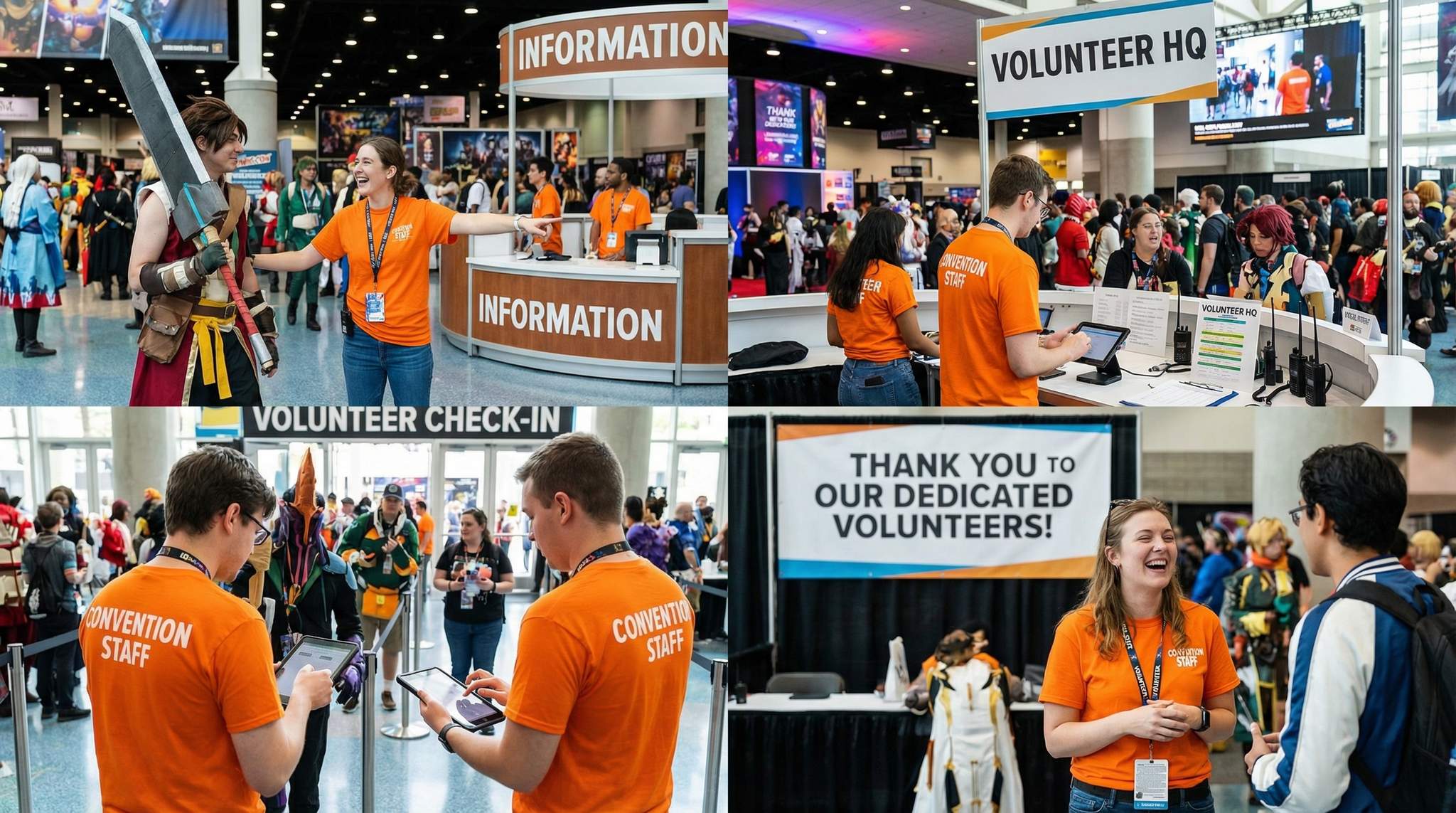
Volunteers are the backbone of fan conventions – the often unsung heroes who keep everything from registration to panel halls running smoothly. In fact, some of the world’s largest cons rely on armies of volunteer staff to function. San Diego Comic-Con (SDCC), which swells to over 130,000 attendees, is run almost entirely by volunteers each year, handling tasks like badge pickup, line management, and information desks, as detailed in essays on SDCC volunteering experiences. Major events simply couldn’t happen without these dedicated teams. Even internationally, massive fan gatherings depend on volunteer power – Japan’s Comic Market (Comiket), the world’s largest fan convention, mobilises about 3,000 volunteers each event to guide crowds and support operations, a scale discussed in interviews on the making of Comiket. From intimate 500-person sci-fi cons to mega expos with six-figure attendance, volunteers form the operational backbone that enables conventions to scale and serve their fans.
Fan Passion Fueling Service
Unlike hired temp staff, volunteers bring an infectious passion and fandom knowledge that elevates attendee service. These are people who deeply love the convention’s content – whether it’s comics, anime, gaming, or sci-fi – and they channel that enthusiasm into every attendee interaction. A volunteer who’s a lifelong anime fan can chat excitedly with attendees about the latest series while scanning badges, turning a mundane task into a moment of bonding. That genuine excitement creates a welcoming atmosphere that paid crews can struggle to replicate. As one veteran convention organizer noted, volunteers’ energy “humanizes” the event – fans helping fans, which puts attendees at ease and fosters a sense of community. At Comiket, for example, organizers specifically seek volunteers with a “tremendous sense of care” who “work enthusiastically… [and]serve with passion,” emphasizing that volunteers should do it professionally. This fan-driven dedication translates into volunteers going above and beyond – staying late to help a lost child find their parent or eagerly assisting a first-time attendee – not because they’re paid to, but because they genuinely care about the fan community.
Delivering Great Attendee Experiences
A strong volunteer team doesn’t just keep things organized; it actively improves the attendee experience. Friendly, informed volunteers at info booths, panel room doors, and show floors can turn a confusing moment into a positive interaction. Attendees remember when a volunteer personally guided them to a panel room or gave a pro-tip about the event app. These helpful moments add up to higher attendee satisfaction. On the flip side, without enough well-trained volunteers, a convention can quickly descend into chaos – imagine registration tables overwhelmed with no helpers, or unruly panel lines with no one managing crowds. As the San Diego Comic-Con Unofficial Blog quipped in their guide to volunteering at SDCC, without volunteers we wouldn’t even know “where the end of a line was… or which door to use” and basic services would devolve into “Lord of the Flies” chaos. Experienced organizers know that investing in volunteer programs directly boosts attendee happiness. Shorter lines, smoother crowd flow, and readily available help all hinge on having volunteers in the right places. Conventions famed for great “vibes” – where fans feel welcome and safe – often have an enthusiastic volunteer crew infusing that positive spirit throughout the event.
Building Community and Loyalty
Beyond operations, volunteers contribute to something deeper: a sense of community and loyalty around the event. Many convention volunteers return year after year, forming a close-knit “con family” that is passionately invested in the event’s success. This camaraderie not only makes the volunteer experience fun (many volunteers cite making new friends as a top reward), it also benefits the convention. Long-term volunteers become knowledgeable assets who mentor newcomers and uphold the event’s culture of service. Cons that foster volunteer community often see higher retention rates – familiar faces come back, reducing the need to retrain from scratch each year. Moreover, volunteers frequently transform into brand ambassadors for the con. They spread word-of-mouth buzz and rally their friends to attend, helping marketing efforts with authentic fan evangelism. According to convention marketing veterans, year-round fan engagement via passionate volunteers can be a secret weapon for growth – some events even empower volunteers as content creators or street team members to keep excitement high between editions. Strategies like revamping volunteer recruitment for new realities and deploying street team promoters for grassroots marketing can be secret weapons for growth. In short, a thriving volunteer program doesn’t just fill staffing gaps; it cultivates a loyal community around your convention, fueling its momentum in the long run.
Turn Fans Into Your Marketing Team
Ticket Fairy's built-in referral rewards system incentivizes attendees to share your event, delivering 15-25% sales boosts and 30x ROI vs paid ads.
Laying the Groundwork: Planning Your Volunteer Program
Defining Roles and Scope
A successful volunteer initiative starts with smart planning and clear definitions. First, outline which tasks and roles are suitable for volunteers at your convention. Volunteers can excel in fan-facing and logistical support positions: staffing registration desks, ushering in panel rooms, line management, badge checking, info booth help, merch store assistance, cosplay contest staffing, and more. Identify where extra hands are needed and what the boundaries are – for instance, sensitive roles like handling cash or specialized technical jobs (e.g. operating AV equipment) might remain with paid staff or contractors. Many veteran con organizers create a volunteer role catalog that lists each volunteer position, its responsibilities, required skills, and the shift times needed. This ensures you recruit the right people for each job and gives everyone a clear picture of what volunteering entails. Essentially, you’re matching the convention’s needs with enthusiastic helpers, rather than just accepting anyone for any task. By defining roles up front, you’ll avoid confusion later and set your volunteers up for success in positions where they can truly help.
Setting Goals and Success Metrics
Just like any major project, your volunteer program should have defined goals and ways to measure success. Ask yourself what you’re trying to achieve by bringing in volunteers, beyond just “free labor.” Is the primary goal to expand capacity (e.g. staff more help desks to reduce attendee wait times)? To reduce staffing costs in certain areas? To improve fan engagement by having super-fans interact with attendees? Perhaps all of the above. Set specific targets, such as “reduce average registration queue time by 50% with volunteer staff” or “cover 100% of panel door monitoring with volunteer ushers instead of temp staff.” You might also track metrics like volunteer-to-attendee ratio, number of issues resolved by volunteers, or feedback ratings for volunteer helpfulness. Having concrete goals helps in designing the program and later evaluating its impact. For example, if one goal is cutting overtime hours for paid staff, you can measure labor costs before and after implementing volunteers. If it’s community building, track how many volunteers return the next year. Defining these objectives will guide your recruitment and training focus (e.g. emphasizing customer service if improving fan experience is key) and demonstrate the program’s value to stakeholders through real results.
Ready to Sell Tickets?
Create professional event pages with built-in payment processing, marketing tools, and real-time analytics.
Gaining Internal Buy-In
It’s vital to bring your core team and stakeholders on board early. Some paid staff or contractors may initially feel threatened or skeptical about an expanded volunteer presence – “are volunteers here to replace us?” is a common fear. You must communicate that the goal is to augment, not replace, the professional team. Emphasize that volunteers will take on supportive roles that free up staff for critical duties, ultimately making everyone’s job easier. For instance, your security team can focus on safety if volunteers handle non-critical line monitoring or crowd guidance. Highlight success stories of other conventions where staff and volunteers work in harmony (many large expos have a mix of both). It’s also wise to involve department heads in planning volunteer roles for their areas so they feel ownership. A guest relations manager might welcome a volunteer “guest escort” team to help guide VIPs, while the expo hall manager may want volunteer floaters to give vendors breaks – but they should be consulted. Additionally, inform venue management if applicable; some convention centers have regulations around volunteer labor or union jurisdictions, so clarify what volunteers will and won’t do. By addressing concerns openly and showing how volunteers benefit the whole event, you’ll build trust and enthusiasm internally. When your staff sees volunteers as allies rather than incursions, the collaboration will be much smoother on-site.
Aligning with Your Convention’s Culture (and Legalities)
Every convention is different, and your volunteer program should reflect your event’s unique culture, scale, and governance. Consider the nature of your organization: is the convention run by a nonprofit fan club or a for-profit company? Nonprofit fan conventions (common in anime and sci-fi communities) often have a long tradition of all-volunteer staff, which attendees and crew alike embrace as part of the fandom spirit. In contrast, for-profit conventions (or trade shows) need to be careful about how they use unpaid workers. Labour regulations in many countries draw a line: a commercial event generally cannot replace paid employee roles with unpaid volunteers without running into legal issues, as modern volunteer program guidelines suggest. In the US, for example, the Department of Labor has strict guidelines that essentially limit volunteer status to non-profit endeavours, since misclassifying volunteers can trigger legal risks. This doesn’t mean for-profit cons can’t have volunteers, but roles must be truly voluntary and akin to community service, not core to business operations. (Some large comic-cons have addressed this by forming auxiliary fan associations or partnering with charities to formally “host” the volunteers.) Be sure to review local laws and regulations – in the UK/EU, many festivals partner with charities like Oxfam to manage volunteers in a compliant way. It is vital to consult legal guidelines to stay on the right side of regulations, and similar models can work for conventions. Tailor your volunteer program plan to your con’s identity as well. A small anime convention might cultivate a casual, family-like volunteer atmosphere, whereas a big corporate-run gaming expo might position volunteering as a more structured “professional experience” opportunity. Align perks, tone, and expectations accordingly so the program feels authentic to your event. And always, always stay on the right side of legal and ethical guidelines when utilizing volunteer labour.
Recruiting the Right Volunteers
Tapping Into Fan Communities
When it comes to volunteer recruitment, your best candidates are often the people who already love what your convention is about. Start with your fan base and local community. Announce volunteer opportunities on your convention’s website, email newsletter, and social media channels where your followers are active. Make the call exciting – highlight that this is a chance to be part of the action and give back to a community they enjoy. Many cons set up a simple online application form for volunteers on their site as soon as tickets go on sale, capturing eager fans early. You can also reach out to fan clubs, local geek culture groups, and prior attendees. For example, anime conventions often recruit from college anime clubs or cosplay groups in the region. Returning attendees are great prospects too – someone who’s come for years might be ready to see the other side of the curtain. Offer an incentive like a small discount on this year’s badge if a past attendee refers a new volunteer or signs up themselves. By tapping into existing fans, you’re more likely to find volunteers who already understand and care about the event’s ethos. They’ll be motivated by passion from day one, which is exactly what you want on your team.
Community Outreach and Partnerships
Beyond your immediate fanbase, consider broader community recruitment avenues. Many cities have volunteer resource centers or online portals (such as VolunteerMatch or local community forums) where you can post opportunities. Tap into schools, universities, and youth organizations – a local college may have an “event management” program or anime club whose members would love hands-on experience at a convention. Some conventions partner with charitable groups or clubs to supply volunteers; for instance, a sci-fi con might work with a local Scouts troop or ROTC unit to provide volunteer ushers, benefiting the group with a donation or service credits. These partnerships can be win-win: you get reliable help, and the partner organization gets community exposure or fundraising. Just ensure any external group understands the convention culture and fan-centric approach (you may need to do a bit more training in these cases). Don’t overlook corporate volunteer programs either – occasionally local companies encourage employees to volunteer at big community events as team-building. A nearby tech firm could send a dozen helpers for your gaming expo’s opening day, for example. Finally, spread the word in diverse channels: post in niche subreddits, regional Facebook events groups, and hobby forums relevant to your con’s theme. Casting a wider net in 2026 means leveraging both in-person community ties and online networks to find people who might not know about your con yet but would make fantastic volunteers once they do.
Smooth Entry With Mobile Check-In
Scan tickets and manage entry with our mobile check-in app. Supports photo ID verification, real-time capacity tracking, and multi-gate coordination.
Going Digital: Social & Online Strategies
Recruiting volunteers in 2026 isn’t limited to pinning flyers on comic store bulletin boards – you have a host of digital tools at your disposal. Social media is your powerhouse for spreading the call. Create engaging posts on Twitter, Instagram, Facebook, and even TikTok, showing past volunteers in action and describing the fun perks of joining the crew. Use your event’s official hashtag and consider targeted ads (a small ad spend to people interested in “comic conventions” or “anime” in your city can surface new fans who’d volunteer). Encourage sharing: word-of-mouth online can snowball, especially if you galvanize your core fan community to recruit their friends. In addition to social, utilize your website effectively – maintain a dedicated “Volunteer” page year-round with information and a prominent Apply Now button. SEO matters here; ensure the page is easily found by people searching “[Your Convention] volunteer” on Google. Some cons even set up a volunteer interest mailing list that people can sign up for at any time, so you can blast out the application link when it goes live. Moreover, look at platforms specific to events and volunteering. Websites like Meetup or Eventbrite (for local event postings) sometimes have volunteer sign-up options. If your city has a subreddit or Discord server for local events or pop culture, post your volunteer call there – often the most passionate local geeks hang out in those channels. By being proactive and tech-savvy in your recruitment, you’ll reach a larger and more diverse pool of candidates, including younger fans who live on their phones and might not hear about the opportunity otherwise.
Screening for Quality and Reliability
Recruitment isn’t just about sheer numbers – getting the right people is crucial. A flaky or disengaged volunteer can create more problems than they solve, so implement a screening process to filter for reliability, commitment and a good attitude. Start with the application form: ask a few key questions to gauge motivation (e.g. “Why do you want to volunteer at [Con Name]?”) and relevant experience (have they volunteered or worked customer service before?). Look for responses that show enthusiasm and professionalism. It’s also reasonable to ask for references or require agreement to a code of conduct upfront. For larger conventions or critical volunteer roles, consider doing short phone or video interviews – even 10 minutes can reveal a lot about someone’s communication skills and commitment. Set clear minimum requirements as well: for example, volunteers must be 18+ (or have parental consent if younger), must commit to at least X hours or Y shifts, and must attend training/orientation. Communicate these expectations during recruitment so people can self-select out if it’s not for them. Some cons have more applicants than slots; they prioritize returning volunteers with good records and those who demonstrate genuine interest in contributing (rather than just scoring a free badge). Don’t be afraid to politely turn away applicants who seem unreliable or solely perk-motivated – a smaller team of truly dedicated volunteers is better than a larger roster of no-shows. In fact, experienced event managers recommend slightly overbooking your volunteer roster by ~10-15% to account for inevitable cancellations or no-shows, a strategy for balancing unpaid support difficulties. By screening and planning for reliability at the recruitment stage, you’ll build a solid foundation of volunteers you can count on when the convention arrives.
Grow Your Events
Leverage referral marketing, social sharing incentives, and audience insights to sell more tickets.
Embracing Diversity and Inclusion
As you recruit and select volunteers, make diversity and accessibility priorities – just as you (hopefully) do with your paid staff and programming choices. Strive for a volunteer team that reflects the broad fan community that attends your con. This means proactively welcoming people of different ages, genders, ethnicities, and backgrounds. Use inclusive language in your volunteer postings (e.g. emphasize that all are welcome and that you value a safe, respectful environment). If your convention spans international audiences or is in a multicultural city, consider seeking volunteers who are multilingual – having a few bilingual volunteers at an info desk can greatly assist attendees from abroad. Also be mindful of making the volunteer opportunity accessible: provide accommodations for those with disabilities (e.g. allow a seated role for someone who can’t stand all day, or adjust hour requirements if needed). Neurodiversity is another consideration; some volunteers might be on the autism spectrum or have ADHD, for example. With clear instructions and the right role fit, neurodivergent volunteers can excel – and supporting neurodivergent staff and volunteers benefits everyone. Prioritizing diversity, inclusion, and accessibility in volunteering creates a stronger team. The bottom line is to cultivate a volunteer corps where everyone feels valued and included. Not only is this the right thing to do, it also makes your team stronger: a mix of perspectives and strengths means volunteers can learn from each other and bring the best service to attendees. An inclusive approach from recruitment onward sets the tone that your convention is a place where all fans, whether attendees or volunteers, belong and can contribute.
Training and Preparing Your Volunteers
Onboarding Orientation: Welcome to the Team
Once you’ve selected your volunteer squad, the next step is giving them a warm welcome and thorough orientation. Think of this as rolling out the red carpet for your new team members – you want them to feel excited, informed, and part of the mission. Schedule an orientation session well ahead of the event (or several, if you have hundreds of volunteers). This could be an in-person meetup if locals can attend, a live video webinar, or at minimum a detailed video/presentation sent to all volunteers. In orientation, cover the big picture: your convention’s history, core values, and what experience you aim to create for attendees. Make it engaging – show photos or a short hype reel of past events to build pride that they’re now part of this. Clearly explain the structure of the volunteer program (who is in charge of volunteers, how teams are divided, how to identify staff vs volunteers, etc.). Importantly, lay out general policies and expectations: code of conduct, dress code (typically the volunteer t-shirt plus neat attire), attendance requirements (e.g. “arrive 15 minutes before your shift for check-in”), and how to get in touch with questions. Encourage a positive team spirit from the start – let them know they’re now representatives of the con and their friendliness and professionalism will directly impact fellow fans’ experiences. A great tip is to have a few experienced volunteers or team leaders co-run the orientation, sharing their own tips and enthusiasm. This peer perspective can energize newcomers and make the whole program feel more like a community. By the end of orientation, every volunteer should understand the convention’s mission, the importance of their role, and feel proud and happy to be on board.
Role-Specific Training and Shadowing
After covering general orientation, it’s time to get into the nitty-gritty of each volunteer role. Divide volunteers by their assignments (registration, panel room ushers, line management, etc.) and provide role-specific training so they know exactly what to do when the time comes. Walk through the tasks step-by-step, just as you would train a new staff member. For example, if a volunteer’s role is “Registration Desk Assistant”, train them on the registration system or check-in app, how to look up names, print badges or apply wristbands, handle common issues (like an attendee who lost their QR code), and where to escalate problems. It can be extremely helpful to create mock scenarios or simulations: have staff or senior volunteers act as attendees so trainees can practice a badge check-in or answering a tricky question. Hands-on practice boosts confidence far more than just listening to instructions. If possible, arrange a shadowing opportunity: e.g. if you have a mini-event or even during early hours of Day 1, pair new volunteers with veterans for their first shift so they can learn on the job with guidance. Cons that treat volunteer roles almost like job positions – with real training, practice, and clear standard operating procedures – consistently see smoother performance on-site. Focusing on skills training from safety to service pays dividends. Yes, it’s an investment of time to train volunteers thoroughly, but it pays off when they handle their duties capably and independently during the rush of the convention. Remember, “throwing untrained volunteers into a convention is a recipe for chaos,” as event experts warn, advocating for comprehensive orientation programs. Taking the time for comprehensive training transforms willing helpers into a confident, coordinated crew.
Equipping Volunteers with Info & FAQs
Even with good training, it’s impossible for a volunteer to memorize every detail or foresee every question on the spot – especially when they might only volunteer a few days a year. That’s why providing handy reference materials is key. Create a volunteer handbook or cheat-sheet that covers all the important information in one place. This could be a PDF guide emailed in advance and also a small printed booklet or foldable card for quick reference during the event. Include venue maps, the event schedule, key locations (first aid, info desk, green room, etc.), and bullet-point reminders of key procedures for their role. For example, a panel room monitor’s cheat-sheet might list “Room capacity = 200. If full, radio supervisor. End-of-panel: clear room completely for next panel,” and so forth – all the little things that are easy to forget in the moment. Also arm volunteers with answers to frequently asked attendee questions. A FAQ sheet with common Q&A (“Where are the restrooms?” “What time does XYZ panel start?” “Is outside food allowed?”) will make any volunteer more confident. As noted in guides on balancing event volunteer management, providing this info is crucial. It’s equally important to list who volunteers should contact if they need help – e.g. the phone/radio channel for the volunteer HQ or their team leader’s number – so they’re never left feeling lost, effectively empowering them to be firm but fair. By equipping your volunteers with written resources and clear communication channels, you ensure they’re never in the dark regarding essential information lists. Even if nerves or the chaos of a big crowd momentarily blank out a detail, that cheat-sheet in their pocket has their back, and by extension, has yours.
Emphasizing Safety and Protocols
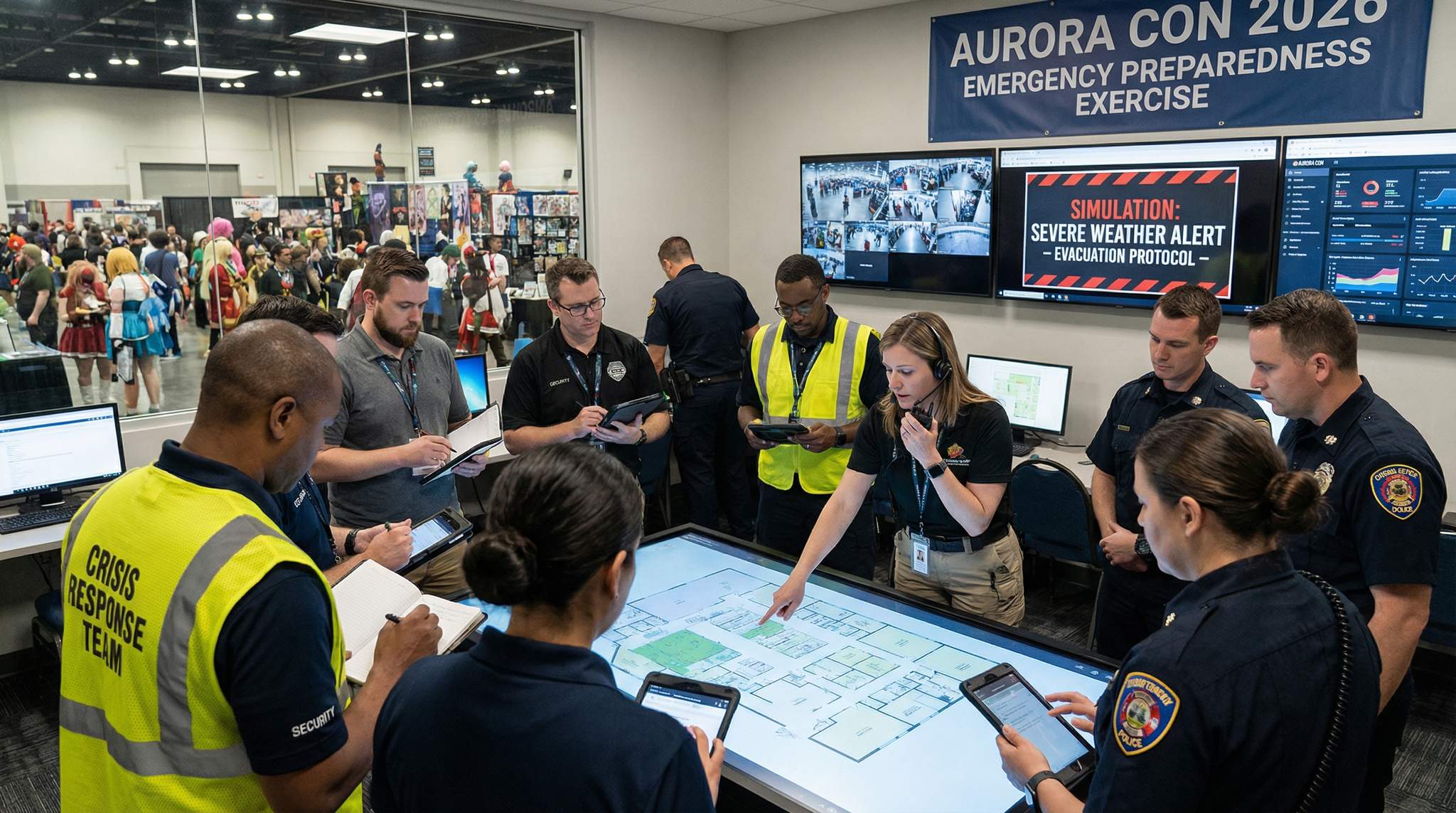
No matter how exciting the event, safety and professionalism must underpin all volunteer actions. Be sure to incorporate thorough training on safety procedures, emergency protocols, and event rules so volunteers know how to respond responsibly. This includes basics like fire alarm evacuation routes, what to do if an attendee has a medical issue, and knowing the location of first aid or security offices. Teach volunteers the boundaries of their authority: for instance, they are not expected to engage in physical conflicts or act as security – rather, they should know how to quickly alert professional security or law enforcement if something serious occurs. Cover your convention’s harassment policy and code of conduct enforcement as well; volunteers are often front-line witnesses to attendee behavior. If someone reports harassment to a volunteer or the volunteer sees inappropriate conduct, they should know the correct procedure (e.g. immediately inform a supervisor or security staff) as per your safe and inclusive convention policies. Understanding why volunteering at San Diego Comic-Con matters highlights the importance of these safety roles. For roles like prop check, weapon peace-bonding, or badge checking, ensure they understand the rules to enforce (politely) and the reasoning behind them. Emphasize that safety includes the volunteers’ own well-being too – things like not lifting beyond their capacity, staying hydrated, and taking scheduled breaks. Some conventions require volunteers to sign a waiver or acknowledgement of safety guidelines; at the very least get a confirmation that they’ve reviewed this training. It’s also smart to brief volunteers on handling sensitive info: for example, if they’re assisting in the green room, professionalism and confidentiality around celebrity guests is a must (no pestering the VIPs or posting private info on social media). By covering all these protocols in training, you equip your volunteers to handle situations calmly and by-the-book, which protects them, attendees, and the event’s reputation.
Continuous Training and Empowerment
Training shouldn’t be a one-and-done deal, especially for an ongoing annual convention. To keep volunteers engaged and improving, offer ongoing training and growth opportunities. For multi-day events, a quick morning briefing each day can serve as a refresher (“Yesterday we saw a bottleneck at Hall B; today let’s position an extra volunteer there”). Post-event, gather feedback and update your training materials for next year. If your convention has year-round meet-ups or an online community (Facebook group, Discord, etc.), consider sharing relevant tips or news (like policy changes, new technology being introduced) with your volunteer alumni periodically. Some cons even organize an appreciation or “rehash” meeting after the event, which doubles as additional training – volunteers discuss what went well and what could be done better, learning from each other’s experiences. Another great strategy is to establish a tiered volunteer structure with leadership roles. For example, designate a few Senior Volunteers or Team Leaders who are experienced and can take on mentoring. You might offer these leaders a special training session so they can in turn coach newer volunteers on-site. This not only improves overall training coverage but gives top volunteers a sense of advancement and responsibility (motivating them to stick around). Encouraging volunteers to grow into larger roles – like heading a small sub-team or assisting organizers with planning – benefits the event through a pipeline of capable leaders. It also shows that your convention doesn’t take volunteers for granted; instead, you’re investing in their development. The more volunteers feel like skilled team members rather than free labor, the more committed and effective they will be.
Scheduling and Logistics: Putting Volunteers in the Right Place
Effective Shift Planning
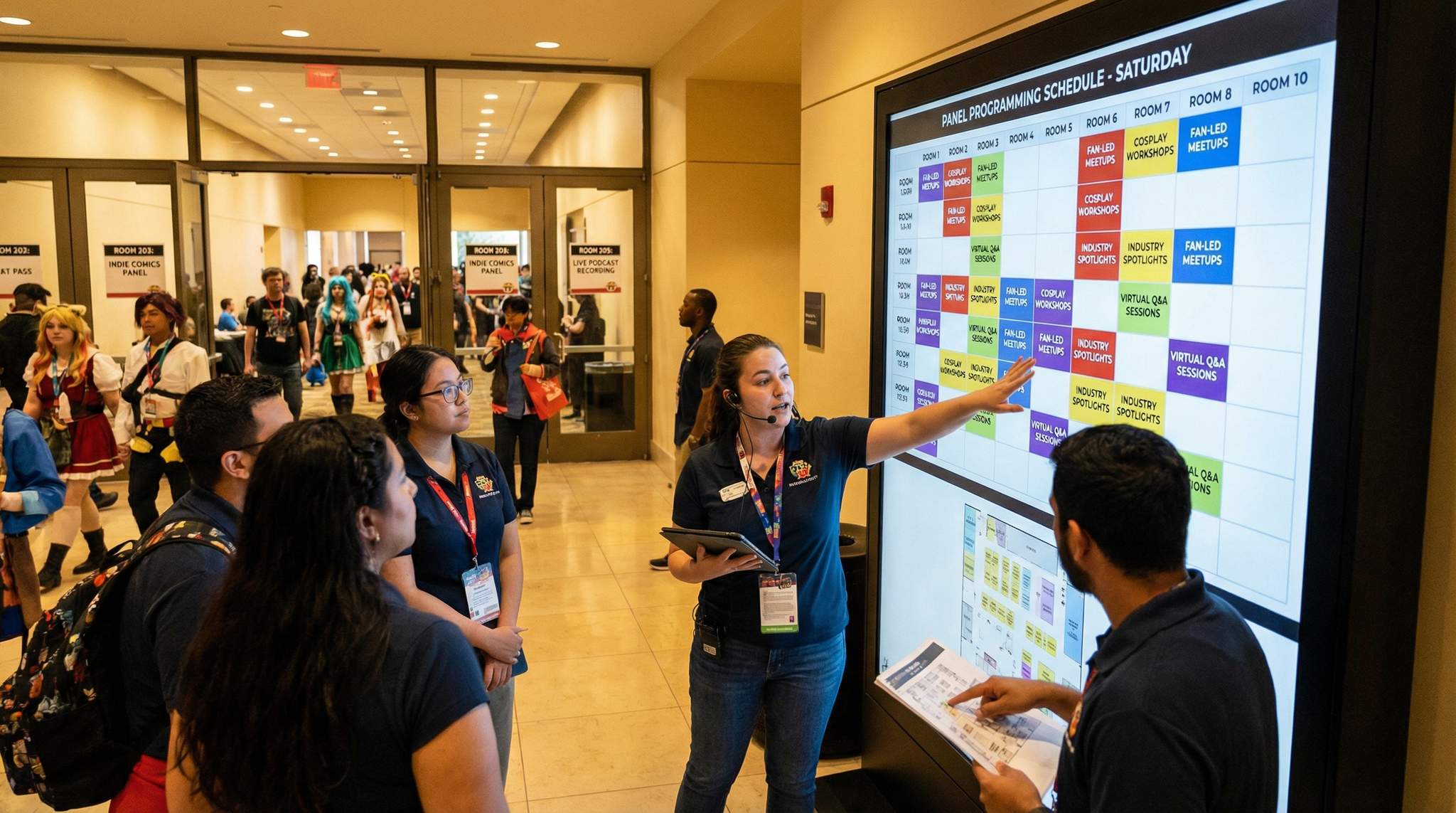
Coordinating volunteer schedules is like assembling a giant puzzle – one that, when solved, ensures every critical spot is covered without overworking anyone. Start by determining how many volunteers you need for each role by time slot. Use your event schedule to map this out: for instance, if the exhibit hall opens at 9:00 AM, you might need 10 volunteers at registration from 8:00–10:00 AM for the morning rush, then fewer later in the day. Panel rooms might need door monitors primarily at session start times. Create a simple matrix of roles vs. time blocks to visualize the staffing demand. Next, decide on shift lengths. Many veteran organizers cap volunteer shifts at around 4 to 6 hours at a time, max 8 hours in a day, to prevent burnout. This aligns with blueprints for large-scale festival staffing which recommend shorter shifts. For example, a volunteer might do a morning shift and then have the afternoon off to enjoy the con (or vice-versa). Break longer needs into multiple shorter shifts if possible – two fresh volunteers doing 3 hours each will usually perform better than one exhausted volunteer doing 6 hours straight. Be sure to schedule meal breaks and short breathers, especially during intense periods. Once you’ve sketched out the needed shifts, work with volunteers to get their availability and preferences. You can send a survey or use a scheduling app where volunteers input when they can or want to work. Many conventions allow volunteers to express role preferences too (some might rather help with cosplay events than crowd control, for instance). While you can’t satisfy everyone’s first choice, honoring preferences when possible leads to happier, more engaged volunteers. Aim to publish the volunteer schedule at least 2-3 weeks before the event if you can, so folks have time to plan. A well-structured shift plan is respectful of volunteers’ time and energy and ensures your event has the right coverage when it matters most.
Tools for Scheduling and Communication
Gone are the days of managing a volunteer roster with endless email chains and spreadsheet tabs (though small events can still get by with Google Sheets). In 2026, take advantage of the volunteer management technology available. There are purpose-built event volunteer scheduling platforms (like Volgistics, SignUpGenius, Shiftboard, and others) that let volunteers self-select shifts from predefined slots, track hours, and even send automatic reminders. If investing in software isn’t in the cards, even setting up a shared Google Sheet with shift sign-ups or using a survey form plus a scheduling template can help organize the madness. The key is to have a centralized schedule that both you and the volunteers can easily reference and update. Leading up to the con, maintain clear communication – consider using an email distribution list or a messaging platform (some events set up a Slack or Discord for volunteers) to send updates and allow Q&A. During the convention, real-time communication is critical for any scheduling hiccups. Equip your on-site volunteer coordinators with radios or a WhatsApp group to reach the team quickly: e.g. “We need two extra volunteers at Panel Room 3 ASAP to manage an overflow line”. It’s also wise to have a check-in/check-out system each day – whether that’s a physical volunteer HQ where people sign in, or a quick SMS-based check-in. This helps you keep tabs on attendance and reallocate people if someone is a no-show. By using modern tools and clear channels, you’ll streamline scheduling and be able to adapt on the fly when reality inevitably deviates from the plan.
Planning for No-Shows and Overflow
No matter how carefully you recruit and confirm, a few volunteers will drop out or simply not show up – it’s just human nature. Smart scheduling anticipates this. Industry experts suggest having a 10–15% buffer of extra volunteers on your roster beyond the minimum needed. As noted regarding difficulties with unpaid support, buffers are essential. These could be folks assigned as floaters or backups, or even a list of on-call volunteers willing to come in if texted last-minute. Some conventions require volunteers to check in by a certain time or the team starts calling backups. You can also schedule slightly overlapping shifts so there’s a grace period where both the outgoing and incoming volunteers are present (providing buffer coverage and a smooth handoff). Another tactic is the volunteer deposit or reward system: for example, some events that offer big perks like full weekend badges tie them to completing a set number of hours, which incentivizes people to fulfill their commitment (though be careful with any punitive measures, as they can sour goodwill). On the flip side, occasionally you’ll have more volunteers show up than you have assignments for – especially if you over-recruited to be safe. In those cases, it’s helpful to have some useful busy-work or learning opportunities ready: maybe an extra pair of hands can help prep swag bags, or they can shadow a role to train for next time. Better to engage them than to send them away feeling unneeded. Also plan for contingencies like suddenly needing more volunteers in one area and less in another (e.g. an unexpectedly popular workshop might require urgent line management). If your communication is good, you can quickly redeploy idle volunteers from, say, a quiet registration desk to that overcrowded panel line. In short, expect the unexpected. Build slack into the system with backup volunteers and flexible assignments so that a few no-shows or a spike in attendee turnout won’t derail your operations.
Adapting to Small vs. Large Events
The scale of your convention will naturally shape how you schedule and manage volunteers. Small cons (say, 1,000–3,000 attendees) might have a volunteer team of only 20-50 people. In these cases, volunteers often wear multiple hats – the same person might help with morning setup, then staff the merch booth midday, then assist with teardown at night. Scheduling is more informal; you might use one WhatsApp group to coordinate everyone, and shifts can be looser because the crew is tight-knit and highly adaptable. Just be cautious not to overwork your small volunteer crew – even at a tiny con, make sure individuals get breaks and a chance to enjoy the event they love. In contrast, midsize and large conventions (10,000, 50,000, or 100,000+ attendees) require a much more compartmentalized approach. You’ll be dealing with potentially hundreds of volunteers spread across departments and venues. Shifts need to be carefully staggered to cover long operating hours (large comic-cons might have programming from early morning till past midnight). At the high end, you might even have multiple teams of volunteers taking turns – for example, one set works the Friday/Monday of a four-day con, another handles the busier Saturday/Sunday. Many huge events implement a formal tiered command structure: a handful of staff coordinators oversee team leads, who in turn manage groups of front-line volunteers. At events like Dragon Con or SDCC, departments like Registration or Line Management have entire volunteer sub-hierarchies. The principle is to maintain a clear chain of command so communication flows smoothly even with thousands of helpers involved. This structure allows supervisors to organize personnel effectively. The table below illustrates how volunteer staffing might scale up from a small con to an expo-sized event:
| Volunteer Role | Small Fan Con (2,000 attendees) | Mega Expo (100,000 attendees) |
|---|---|---|
| Registration & Badge Pickup | 5–10 volunteers total, one station | 100+ volunteers in shifts across large reg hall, multi-day coverage |
| Panel Room Ushers/Monitors | 1 per room (staff double as needed) | 50+ per day covering dozens of rooms, with team leads for major halls |
| Line Management | Ad hoc by staff/volunteer crossover | Dedicated 50-person line management team handling queues for marquee events (Hall H style wristband system, etc.) |
| Exhibit Hall / Artist Alley | 2–3 roaming helpers and info booth | 30+ volunteers rotating at info booths, aid for hundreds of exhibitors, floor roaming teams |
| Autograph/Photo Op Assistants | 2–5 helping with guest signings | 40+ volunteers managing queues and schedules for celebrity signings and photo ops |
| Cosplay Events Crew | 5 volunteers (costume contest, etc.) | 20 volunteers (green room wranglers, stagehands, craftsmanship judges assistants, etc.) |
| Ops & Info Desk | 2–3 at a single info booth | 15+ across multiple info points, radio dispatchers, lost & found, etc. |
As you can see, large conventions multiply the volunteer numbers dramatically and demand more structure. But in either case, the core principles remain: match the number of volunteers to the needs of each area, and schedule thoughtfully so that all critical roles are filled when they’re needed most.
Leadership and On-Site Management
Establishing a Chain of Command
Organizing a volunteer force – especially a big one – requires a clear leadership structure on-site. Volunteers should know exactly who to report to and who provides direction for their tasks. Well before the event, decide on your volunteer management chain of command. Many conventions designate a Volunteer Coordinator (or several coordinators by department) who serves as the point person for all volunteers. This could be a staff member or a highly experienced volunteer leader. Under them, you might have team leads or zone captains; for instance, a registration volunteer lead, a cosplay event volunteer lead, etc. Each team lead can supervise 5–20 volunteers depending on the role complexity, acting as their immediate “boss” during shifts. This hierarchy ensures that if a volunteer has a problem or a question, they don’t have to find the convention director – they can quickly reach their lead or coordinator. Communicate this structure clearly at orientation and in any volunteer handbook (include an org chart if helpful). On the event days, consider a quick daily check-in meeting between the volunteer coordinator and all team leads every morning and evening to share updates and align on any changing needs. It’s also important to empower your leads with some decision-making authority, so they can solve minor issues without always escalating. For example, a line management lead might be trusted to cap a line or adjust queue setups as needed, while a registration lead can decide when to open another station if lines grow. A clear chain of command not only prevents confusion and conflicting instructions, it also makes volunteers feel supported – they know exactly who has their back. As one large-festival producer put it, a coordinated staff and volunteer hierarchy is the heartbeat of the operation.
Real-Time Communication Systems
Smooth communication is the secret sauce of on-site management. Equip your volunteer leadership with the tools to stay in constant contact and respond to issues in real time. Two-way radios (walkie-talkies) are a staple for instant voice communication across different zones – your volunteer coordinator, security, operations, and key leads should have radios and know the call signs/channels to use. Make sure to train on radio etiquette (brief, clear messages; codes for common needs; and no clogging the channel with chatter). For volunteers who don’t have radios, you can implement a phone or text tree: e.g. they contact their team lead via phone, who has the radio to escalate as needed. Many conventions also set up a dedicated volunteer HQ room or desk that serves as the communication hub – volunteers can always find a supervisor there or even use it to relay messages (“Volunteer HQ to Line Lead, please send two people to Hall A”). In 2026, some events use apps or messaging platforms for coordination: for example, a WhatsApp or Telegram group per volunteer team where the lead can drop quick updates (“FYI Panel 5 started seating late, adjust shift change accordingly”). These can supplement but not fully replace in-person or radio comms, since not everyone will look at their phone in the heat of the moment. Don’t forget the low-tech solutions too: something as simple as distinctive flags or signs at busy areas can signal where volunteers should gather if plans change (say, a sign at the info booth that flips to “Volunteers: report to Volunteer HQ at 5 PM”). The goal is to avoid any volunteer feeling stranded or unsure what to do when situations change. By having robust real-time communication, you can quickly redirect manpower, disseminate critical information (like a lost child alert), and generally keep the whole crew in sync during the controlled chaos of a convention.
Integrating Volunteers with Staff
For conventions that have both paid staff (or professional contractors) and volunteers, it’s essential to foster a spirit of cooperation and respect between the two groups. Attendees won’t usually distinguish “volunteer” vs “staff” – to them, anyone with a badge or event shirt represents the convention. So, you want a seamless working relationship where roles are clear and everyone treats each other as one team. Start by setting the right example at the top: ensure your staff leads appreciate volunteers’ contributions and don’t treat them as inferior. Likewise, emphasize to volunteers that the paid staff are ultimately in charge of the event and must be respected and listened to. One strategy is to pair volunteers with staff in mixed teams. For instance, a staff production manager might have a couple of volunteer stagehands assigned to them; a vendor hall manager might supervise a volunteer crew doing crowd flow. By working side by side, camaraderie builds naturally. Make sure volunteers are included in staff communications where relevant – if there’s a staff briefing each morning, invite volunteer leads or key volunteers so they’re in the loop. Little gestures matter too: if staff get event swag or access to the green room catering, consider extending that perk to volunteers who are working similar long hours (or provide a parallel setup for volunteers). When everyone wears official badges or crew shirts, it helps equalize perceptions as well. If any friction arises (e.g. a staff member dismissing a volunteer’s input, or a volunteer overstepping claiming to be “staff”), address it promptly through the chain of command with gentle reminders of mutual goals. Many experienced organizers note that once staff see how enthusiastic and helpful volunteers can be, and volunteers see how much they learn from working with seasoned staff, a strong bond develops. In the end, an attendee asking a question at your con shouldn’t have to care whether the helper is paid or volunteer – they just know that person is part of a unified team making the magic happen.
Managing Performance and Conflict
Even with great recruiting and training, on-site management sometimes means handling the tougher side of supervising volunteers: performance issues, conflicts, or rule enforcement. It’s important to have a plan for these scenarios. First, set the expectation with your volunteer leads that they should observe and provide feedback to volunteers during the event. Many conventions implement something like SDCC’s approach, where senior volunteers or staff quietly evaluate volunteers’ performance and attitude, noting that just because you volunteered once doesn’t guarantee a return spot. If a volunteer is shirking duties (e.g. constantly on their phone instead of helping attendees) or making mistakes, a lead should discreetly correct them early – often a friendly pointer or reminder is all that’s needed. For more serious issues, like a volunteer being rude to attendees or violating a policy, it may be necessary to reassign or remove them from their role mid-event. Identify a “bench” area or backup pool so you’re not left shorthanded if you have to pull someone off duty. Always approach it professionally: thank them for their time, explain the issue, and perhaps keep them on lighter tasks if you don’t want to send them home outright. In cases of interpersonal conflict (say two volunteers arguing or clashing over instructions), step in quickly to mediate. Remind them of the common mission and, if needed, separate their assignments. Having a no-tolerance stance on certain behaviors (harassment, intoxication on duty, etc.) is critical – make sure volunteers know these from the start and empower your coordinators to take decisive action if lines are crossed. After the convention, you can quietly take note of volunteers who were exceptional and those who were problematic. Many events maintain a list: those who did well get invited back or promoted to roles with more responsibility, while those who caused issues may not be asked to return, a policy often enforced by convention organizers like CCI. Handling these situations fairly but firmly shows that while volunteers aren’t paid, the standards are still high – which ultimately keeps the experience positive for everyone.
Caring for Your Volunteer Team
Managing volunteers isn’t just about assigning tasks – it’s also about looking after your team so they can do their best work. During the event, ensure volunteers have access to basic comforts and support. Provide a dedicated volunteer break area or lounge if possible – even a simple backstage room with some chairs, water, and snacks. This gives them a place to recharge (and vent or joke among themselves, which builds camaraderie). Arrange for meals or meal stipends for volunteers working long shifts. Nothing earns goodwill faster than feeding a tired crew! Many cons offer a free lunch or at least ample snacks and drinks through the day to keep blood sugar up. Keep an eye on everyone’s condition – leads should watch for signs of fatigue or stress and insist volunteers take a break if needed. Also encourage a culture of mutual help: volunteers should feel comfortable asking for assistance or swapping duties if something isn’t working out. For example, if one volunteer is overwhelmed at a crowded merch booth while another’s post is slow, they can trade off so no one gets swamped. It’s wise to remind volunteers to look after themselves too – staying hydrated, getting enough sleep between con days (though excitement makes that hard!), and using protective items like sunscreen if it’s an outdoor venue. Little touches can boost morale: consider a small “volunteer survival kit” (a tote with items like granola bars, a mini first-aid kit, hand sanitizer, etc.) as a welcome gift. And make sure volunteers know where to turn if they’re having any issues – whether it’s an attendee conflict or they’re just not feeling well. By actively caring for your volunteers on-site, you demonstrate that they’re valued team members. A volunteer who feels taken care of will pass that care onward in their interactions with attendees, completing a virtuous cycle of positivity.
Motivating and Retaining Volunteers (Beyond Free Badges)
Recognition: The Ultimate Reward
For volunteers, recognition and appreciation are often the biggest motivators – their “paycheck” for hours of hard work comes in the form of gratitude. Building a culture of appreciation is therefore vital. Start with the simple things: say “thank you” early and often. Train your staff and leads to thank volunteers at the end of each shift and to highlight things they did well (“Great job managing that tough crowd at the panel, we couldn’t have done it without you!”). During the convention, find opportunities to publicly acknowledge volunteers. Some cons mention volunteers in the opening or closing ceremonies (“Let’s give a round of applause to our volunteers who made this weekend possible!”). Others have volunteers take a bow on stage at the cosplay contest or another big gathering. You can also feature standout volunteers on your social media or blog – a post or tweet like “Meet one of our amazing volunteers, Sarah, who has been helping attendees all day with a smile! #ConLife” can make someone’s day (with permission to use their photo, of course). If your event has an internal newsletter or an app, consider spotlighting a “Volunteer of the Day” with a short blurb. Personalized appreciation goes a long way too: the volunteer coordinator might handwrite thank-you cards for each volunteer, or the organization’s president sends a heartfelt thank-you email after the con. Remember, volunteers aren’t doing it for money – they’re doing it for love of the community and event. Knowing that their contributions matter and are seen is what will keep that love alive. Some conventions even create certificates or awards for volunteers: fun superlatives (“Best Line Wrangler”, “MVP Volunteer”) or service awards for multi-year volunteers. The specifics matter less than the sincerity. By making recognition an integral part of your volunteer program, you ensure that volunteers feel valued – and a valued volunteer is a happy volunteer who will want to return.
Perks and Incentives that Matter
While most volunteers aren’t primarily in it for the swag, it certainly doesn’t hurt to offer meaningful perks to sweeten the deal and show gratitude. The classic incentive is, of course, free convention access – many events allow volunteers to attend portions of the con for free in exchange for their service (for example, work one 4-hour shift and get that day’s badge complementary). In 2026, though, volunteers often expect a bit more than just a free badge. As new generations miss the rite of passage of traditional volunteering, incentives must evolve. Some popular perks include:
- Exclusive Merchandise: Almost every con volunteer gets a t-shirt, but you can make it special – perhaps a distinct colour or design that’s only for crew. Other swag like pins, hats, or tote bags branded with “Crew” or a fun motto can become badges of honor. For instance, MCM Comic Con in London gives its volunteer stewards a team shirt and an MCM merch bundle, detailing what MCM stewards get as part of their package, rewarding them with collectible goodies on top of entry.
- Access to Special Events: Offering volunteers access to something unique can be highly motivating. This could be a volunteer-only meet & greet with a minor celebrity, reserved seating at a popular panel, or an invitation to the guest after-party if appropriate. Some conventions host an exclusive after-event party just for staff and volunteers – a chance to relax, celebrate, and mingle with organizers once attendees have gone home.
- Meals and Amenities: As mentioned, providing free meals, snacks, and a relaxing lounge during the con isn’t just about efficiency – it’s a perk that volunteers greatly appreciate. Knowing they’ll be fed and cared for makes the long hours much more appealing (and saves them money on buying food at the venue).
- Professional Development: Many volunteers, especially younger ones, value experiences that can help their careers or personal growth. You can lean into this by offering things like a certificate of volunteer service (detailing hours and responsibilities, which can help on a resume), or even brief reference letters for those who did exceptional work. Larger cons might offer training workshops (e.g. a “leadership in events” mini-seminar for volunteer leads) or access to online courses if partnered with sponsors.
- Future Benefits: To boost retention, reward returning volunteers. For example, after completing their first year, a volunteer might get a guaranteed spot on next year’s team (bypassing any lottery or waitlist). Long-term volunteers might earn increasing perks like a free full-weekend badge for themselves or a friend, or even a small stipend or gift card after X years of service.
The key is to find perks that align with what your volunteers value. A free t-shirt and badge are baseline – to truly motivate, think about what would delight your crew. Some conventions survey their volunteers to ask what perks they care about most (you might be surprised – sometimes “an official crew hoodie” beats a $50 gift card in terms of sentimental value!). By going beyond the bare minimum and offering thoughtful incentives, you show that the convention respects volunteers’ time and effort. That can make all the difference in keeping morale high.
Leadership Opportunities and Growth
One often-overlooked way to motivate volunteers is to give them a sense of ownership and advancement. Especially for those who come back year after year, having a pathway to take on more responsibility or develop new skills can be a huge incentive. Consider establishing a tiered system like “Junior Volunteers” and “Senior Volunteers” or specific titles (Team Lead, Shift Supervisor, etc.) for experienced folks. Let’s say someone has volunteered for two years and excelled – invite them to be a team leader for a group of newer volunteers. This not only fills your leadership needs, but it rewards that volunteer with a new challenge and recognition of their expertise. Many “veteran” volunteers take pride in mentoring newcomers, and it creates a healthy structure where knowledge is passed down. You can also involve top volunteers in off-season planning in small ways, which invests them more deeply. For example, ask a few long-term volunteers to give feedback at a post-con debrief meeting with staff, or to help lead the volunteer orientation next year. Some events create committees of volunteer representatives who can voice volunteer concerns and suggestions to the organizers – a great way to show inclusivity in decision-making. Professional growth is another angle: if a volunteer is interested in a field (say, marketing or tech), you might let them assist a relevant staff department to gain experience (like helping the social media team for a few hours, or shadowing the AV crew). By empowering volunteers and treating them as emerging event professionals, you tap into their ambition in a positive way. A volunteer who feels “this helped me grow” gets far more out of the experience than one who just shows up and follows orders. Plus, you’ll be cultivating the next generation of convention organizers. Many a con staffer or director started as a volunteer years ago – give your volunteers the chance to become future leaders of your event, and you’ll earn their loyalty and enthusiasm many times over.
Fostering Camaraderie and Fun
Though volunteers work hard, it shouldn’t feel like a slog. Keeping the experience fun and rewarding in the moment is critical to motivation. Encourage a sense of camaraderie throughout the volunteer program. Little things can build team spirit: perhaps assign creative team names or mascots for different volunteer groups (the “Panel Patrol” for panel room ushers, etc.), or have a friendly competition like a scavenger hunt bingo card for volunteers to complete (“help 10 attendees, high-five the mascot, escort a VIP”). Some conventions give out small prizes to volunteers who complete fun challenges or who are recognized by attendees for exceptional help (you could have attendees fill out a short “caught an awesome volunteer!” form at info desks, and do a random prize draw from those submissions). Make sure volunteers have a chance to socialize with each other during breaks or after shifts – that’s where the friendships form. If possible, host a brief volunteer meetup or mixer before the convention (even if it’s just a casual pizza night after orientation) so people can get to know each other. During the event, injecting a bit of playfulness helps relieve stress: a volunteer coordinator might start a shift with a quick motivational cheer or give out funny sticker badges (“Super Line Tamer”, “MVP of Day 1”) to loosen up the team. Celebrate little wins each day – did the registration crew smash the record by processing 1,000 attendees in the first hour? Announce it and cheer! These moments of positivity are fuel. Finally, cap off the event with a show of appreciation that’s also fun: many cons invite all volunteers on stage for one big group photo and cheer at closing ceremonies, or have an exclusive after-party. Volunteering should feel like being part of a special club – with its own in-jokes, bonds, and memories – not just unpaid labour. When volunteers have fun and feel connected, their passion will shine through in their work, creating a better event for everyone.
Scaling for Every Size: From 2,000 to 100,000 Attendees
Strategies for Small Conventions
If you’re organizing a smaller convention (say a few hundred up to a few thousand attendees), your volunteer program will be a more intimate affair – but no less important. Small fan conventions often run entirely on volunteer staff, essentially blurring the line between “organizers” and “volunteers.” In these grassroots events, every hand matters, and volunteers may double as core staff. The key is flexibility. Roles won’t be as rigid as at a big con: you might have a general pool of 20 volunteers who collectively tackle everything from setup to teardown. Make sure each person knows their primary duties but be ready to reshuffle on the fly. One volunteer might spend the morning helping vendors load in, then afternoon handing out programs at the door. Cross-training is your friend – try to expose your volunteers to multiple areas during training so they can jump in wherever needed. Communication is easier in a small venue; often a group chat or even shout-outs across a room suffice to coordinate. However, don’t skimp on the principles: even a small con benefits from a bit of leadership structure (perhaps one “head volunteer” who coordinates) and scheduling to ensure no one is doing all the work. Small events can also leverage the close community: you might know many volunteers personally (they could be friends or club members), which is great for trust, but remember to keep things professional enough that accountability remains. One common challenge in small cons is volunteer drop-off due to real life (these are all unpaid folks with day jobs/school). So have a few extra friends or family on standby to jump in if half your volunteer crew gets the flu, for example. Lastly, use the tight-knit nature to your advantage – small volunteer teams often feel like family, so nurture that. A group breakfast before the con or a post-event celebration at a local pizza place can reinforce bonds. When people have fun volunteering with friends at a small con, they’re likely to remain your core team year after year, even as the event grows.
Ramping Up for Mid-Sized Events
For conventions in the middle range (perhaps 5,000 to 20,000 attendees), volunteer management becomes more complex and formalized. At this scale, you likely have a mix of volunteer and paid staff, and multiple venues or programming tracks to cover. The volunteer program should start looking like a well-oiled machine with defined departments. You might split volunteers into teams such as Registration, Panels, Exhibitor Hall, Special Events, Line Management, and Operations, each with its own team lead. Mid-sized cons should invest in more robust scheduling and training because you’re beyond the “friends and family” stage – many volunteers will be strangers who need clear guidance. Here, department-specific briefings ahead of time are useful (e.g. a special training session just for all panel room moderators). Communication scales up too: you may need to rent more radios and possibly have a dedicated volunteer dispatcher at HQ to coordinate calls. One thing that becomes critical at mid-size is consistency of service. With 50+ volunteers running around, you’ll see varying levels of initiative – some will naturally take charge, others might hang back. Try to pair less experienced volunteers with veteran buddies, and rotate assignments so no area is staffed entirely by all-new folks. Mid-sized cons also tend to attract more local press and VIP guests, so ensure volunteers interfacing with those groups (like guest liaisons or press room assistants) are among your most reliable and have been given any special protocol training. Another consideration as you grow is volunteer attrition and recruitment scaling. You might need to recruit double the number of volunteers you used to, which requires earlier outreach and possibly expanding beyond your core fan circles. Leveraging the venue’s fanbase for volunteer recruitment is a key strategy. Also, start building a formal volunteer database or CRM to keep track of your alumni – it’s a huge asset if you can email last year’s volunteers and get many to return. In summary, mid-sized events need a structured yet agile volunteer program that can handle a lot of moving parts. You’re in a transitional zone: not a tiny con where everyone knows everyone, but not a behemoth with 50 subcommittees either. Clear roles, capable team leads, and good planning will ensure your volunteer corps scales up gracefully with your convention.
Mastering Mega-Convention Coordination
At the extreme end, we have the mega-cons – events boasting attendee numbers in the high tens of thousands or more (think Comic-Con International, Dragon Con, colossal expos like Gamescom). Managing volunteers here is essentially running a small city’s workforce for a week. It requires top-notch organization, professionalism, and advanced planning. Large conventions often start volunteer registration many months in advance and might hit capacity quickly (SDCC’s volunteer sign-ups famously involve an online lottery due to huge demand, where those lucky enough to get a spot join a massive operation). With potentially thousands of volunteers to coordinate, divide and conquer is the rule. You will have a Volunteer Director or Manager overseeing everything, but beneath them a multi-tier hierarchy: area managers, team leads, zone captains, etc., each with a clearly defined domain. Many huge events borrow from the Incident Command System (ICS) model used in emergency management to organize personnel across different departments – essentially creating a clear tree of command and communication for efficiency. Training for mega-cons often includes mandatory in-person sessions or even online modules that volunteers must complete, given the sheer scale of operations and safety concerns. You’ll also see specialization of volunteer roles at a very granular level. For example, Dragon Con’s volunteer list isn’t just “panel assistant” – it might break down into Track-specific volunteers (sci-fi literature track vs. anime track, each with its own crew). A large expo might have an entire volunteer IT team to help with badge scanning tech, separate from general reg staff. Logistics are king: scheduling thousands of shifts, distributing volunteer credentials, shirts, meals, and coordinating radio comms can be as challenging as the attendee logistics. It’s crucial to have a solid management software or system (some big cons build custom volunteer management apps). Moreover, maintaining morale and personal connection is harder when volunteers become a sea of faces. Mega-cons counter that by fostering sub-communities – for instance, PAX has its famous Enforcer community with a strong identity, traditions, and even lore that bond their hundreds of volunteers into a tribe. They hold Enforcer-only events and forums to keep that spirit, defining what the Enforcer culture is like and how they support each other in times of hardship. Big shows also tend to reward volunteers richly, knowing how precious a committed core is: multi-day volunteers might get an exclusive swag bag, free full-weekend badges, and other perks that casual staff don’t. One big challenge at scale is ensuring no volunteer “falls through the cracks.” With layers of management, a single volunteer’s voice might not reach the top if there’s an issue – so implement feedback loops like end-of-day debriefs for team leads, and a way for volunteers to contact the volunteer office or ombudsman if they need. All told, running a volunteer program at a mega-convention is a herculean task, but when done well, it’s like watching a symphony of moving parts click into place. And the payoff is immense: when 100,000 people have a fantastic time largely thanks to the efforts of an unpaid army of ultra-dedicated fans, it’s a testament to human enthusiasm and teamwork. As PAX’s organizers put it, “What would a PAX be like without Enforcers? Let’s hope we never have to find out.” This sentiment underscores what a PAX would be like without Enforcers. The same goes for any massive convention – volunteers are not just helpful; they’re indispensable.