The Rise of VIP Fan Experiences in 2026
(Image source: Wikimedia Commons)Fan conventions have exploded in size and scope over the past decade, and with that growth has come a surge in demand for VIP fan experiences. No longer reserved just for rock concerts or sports, VIP ticket packages are now commonplace at comic cons, anime expos, gaming conventions, and fan fests. Organizers have realized these premium offerings do more than just add a revenue boost – they cater to superfans’ desire for exclusivity, convenience, and memorable moments that go far beyond what a standard badge provides.
Fans Are Willing to Pay for Premium Perks
Attendees today – especially those with the means – are eager to invest in unique experiences. A recent industry survey found nearly 25% of affluent fans would spend over $500 on VIP hospitality that includes meet-and-greets, according to PwC’s analysis of fan experience and revenue. These fans aren’t just buying a ticket; they’re buying bragging rights and once-in-a-lifetime memories. From early expo floor access to private lounges, premium fans expect more than a seat – they’re seeking a curated adventure, where elevated experiences consistently stand out. This willingness to splurge has encouraged organizers to dream up ever more enticing VIP perks.
New Revenue Streams for Conventions
For event organizers, VIP tiers have proven to be revenue powerhouses. Case studies show that a single VIP attendee often generates income equivalent to 2–5 general admission attendees, with VIP tickets contributing anywhere from 10% up to 30% of total ticket revenue, as noted in VIP upsell model case studies. In tight budget years, that can be the difference between breaking even or not. It’s no wonder even fan-run cons are exploring VIP packages – done right, they boost the bottom line and can even subsidize keeping general admission prices affordable. According to Ticket Fairy’s data, VIP passes typically sell for 3×–5× the GA price, significantly lifting per-capita revenue through specialized VIP experience ticketing platforms. But success isn’t just about charging more; it’s about delivering undeniable value for that premium.
Planning Your VIP Program Strategy
Developing a VIP offering starts long before tickets go on sale. It requires strategic planning to ensure your VIP package aligns with your event’s mission, scale, and fan expectations. Rushing out a high-priced ticket without careful design is a recipe for disappointed attendees and negative feedback.
Smooth Entry With Mobile Check-In
Scan tickets and manage entry with our mobile check-in app. Supports photo ID verification, real-time capacity tracking, and multi-gate coordination.
Setting Clear Objectives for VIP Packages
Begin by asking why you want a VIP tier. Is it to unlock additional revenue to fund new programming? To reward your most passionate fans with special treatment? Maybe to control crowds by staggering entry times? Having clear goals will guide the perks you include. For example, if revenue is a goal, you’ll focus on high-value perks that justify the price. If fan loyalty is key, you might emphasize comfort and personal touches. Conventions veterans recommend defining 2-3 core objectives up front – this helps avoid “feature creep” where you throw in perks that don’t actually serve your goals.
Matching VIP to Your Event’s Scale and Type
One size does not fit all when it comes to VIP. The optimal package will differ for a 2,000-person anime con versus a 150,000-person comic-con. Smaller cons might offer a single VIP tier with a handful of perks (e.g. front-row concert seating and an exclusive print) to keep things manageable. Huge events, on the other hand, can support multi-tier VIP levels (say, VIP and Super VIP) with escalating perks. Consider your venue and crowd dynamics too. For instance, a big gaming expo can leverage early demo access as a perk, while a sci-fi literary con might focus on intimate VIP author coffee chats. Align perks with what makes your event special. Do some research on similar events in your niche – if another anime convention’s top-tier badges sell out instantly, it signals strong fan appetite for VIP treatment in that community.
Ready to Sell Tickets?
Create professional event pages with built-in payment processing, marketing tools, and real-time analytics.
Knowing Your Audience’s Expectations
Understanding your fanbase is critical. Survey your attendees or gather feedback on what perks they’d actually value. An anime con audience might clamor for priority autograph sessions with voice actors, whereas comic con attendees might care more about guaranteed seating in marquee panels. Look at social media chatter and past post-event surveys for clues. Also evaluate your attendee demographics – are they older fans with disposable income or students on a budget? This will inform how lavish (and how pricey) your VIP package can be. The most successful VIP programs are often designed in tandem with fan input, ensuring you’re delivering perks that strike a chord. As an organizer, tap into fan forums or enlist a focus group of seasoned attendees to vet your VIP ideas early on. This not only helps shape a compelling offering, it also builds anticipation among your core community.
Learning from Other Cons’ VIP Offerings
Don’t reinvent the wheel – there’s much to learn from industry peers. Study what large-scale events and local cons alike are offering for their VIP tiers. For example, New York Comic Con’s 2025 VIP package (priced at about $800) included perks like reserved main stage seating, a private lounge with complimentary bag check, fast-pass lines for autographs, an exclusive merch discount, and even a textable concierge service, as detailed in New York Comic Con’s ticket tiers. They also provided fast access queues to Artist Alley. On the other end, a smaller regional anime con might simply promise early dealer hall entry, a swag bag, and a VIP-only meet & greet with their guest of honor. By comparing a variety of models, you can calibrate your own offering. Note which perks consistently excite fans (early access and prime seating are almost always hits) and which ones might be “nice but not necessary.” Also pay attention to any pitfalls reported – if another event’s VIP attendees complained that the “exclusive lounge” was too crowded or that perks weren’t delivered on time, you know what to avoid. Networking with other convention organizers or reading post-mortem reports can provide valuable insight as you formulate your plan.
Designing VIP Perks That Matter
Once you have a strategy, it’s time to choose the perks and privileges that will make up your VIP package. The key word here is value – each perk should meaningfully enhance the attendee’s experience or convenience. A laundry list of trivial benefits won’t justify a hefty price tag. Focus on solving common attendee pain points (long lines, no seats, access to content) and adding unique exclusives that create FOMO for those on the fence.
Early Access and Priority Entry
One of the most popular VIP perks across conventions is early or expedited access. This can take several forms, including:
Turn Fans Into Your Marketing Team
Ticket Fairy's built-in referral rewards system incentivizes attendees to share your event, delivering 15-25% sales boosts and 30x ROI vs paid ads.
- Early show floor entry: Let VIPs onto the expo floor 30–60 minutes before general attendees. This gives them first crack at limited-edition merch and avoids the massive opening rush, similar to the priority access at Anime Las Vegas. Many cons open dealer halls at 9:30am for VIP while GA enters at 10am, for instance.
- Priority panel seating: Allow VIPs to enter panel rooms first (or have a reserved section) so they’re guaranteed a good seat for popular sessions. Even if they still need to show up in advance, knowing a spot is saved removes a huge stress.
- Dedicated VIP entrances or lines: Set up a separate, clearly marked VIP entrance at the venue. Skipping the long main queue and breezing through a VIP-only security or registration line is a game-changer for these guests. As one guide on badge management notes, implementing an express line or separate gate for VIPs is key to mastering event ticket pricing and registration flow.
- Advance admissions: For multi-day cons, consider a VIP preview night or early badge pickup day. This staggers arrivals and gives VIPs a crowd-free head start.
Priority access perks directly address what fans hate most – waiting and FOMO. By literally buying time, VIP attendees feel the stress melt away. Just be sure to coordinate with your operations team so that early entry is executed smoothly (doors need to open on time!) and doesn’t conflict with any last-minute setup in progress. Also, communicate clearly to general attendees; for example, if your exhibit hall opens at 9:30 for VIPs and 10:00 for others, publish that schedule to manage expectations.
Reserved Seating and Viewing Areas
For content-driven conventions, guaranteed great views are a VIP selling point. This perk can be handled in a few ways:
Grow Your Events
Leverage referral marketing, social sharing incentives, and audience insights to sell more tickets.
- Reserved sections in panel rooms: Block off a set number of prime seats (often the first few rows or a front-center block) for VIP ticket holders. Mark them with signs or rope them off, and have staff check badges as VIPs arrive. Many large cons, for example, reserve perhaps 5–10% of a big hall’s seats for VIPs. This ensures your VIP guests aren’t camping in line for hours just to see that marquee panel.
- Priority room entry: Even if you don’t have a roped section, you can let VIPs enter the room first to choose their preferred seat before general admission comes in. New York Comic Con’s VIP program guarantees entry to all panel rooms (even if standing room) and reserved seating in the biggest halls, ensuring premium access to marquee content.
- VIP viewing areas for performances: If your convention has concerts, contests, or outdoor events, consider a VIP-only viewing pit or platform. For example, at some anime cons with evening concerts, VIPs get a spot right in front of the stage or access to an elevated viewing platform for optimal sightlines.
- Comfortable seating lounges: In places like gaming tournaments or screening rooms, you might provide a small VIP seating zone with cushioned chairs or even couches, away from the crowded general areas.
When implementing reserved seating, avoid the pitfall of empty VIP seats in front of a packed crowd. If VIPs don’t fill their section by a few minutes before start, have a plan to release those spots to GA attendees to keep things fair (and avoid the bad optics of empty prime seats), ensuring the festival delivers value despite rising costs. Also, don’t go overboard – save VIP seating for the most in-demand content. If half your attendees are VIP and the reserved section dominates the room, it will breed resentment. Aim for a balance that offers VIP comfort without taking away core content access from GA fans.
Meet-and-Greets and Special Access to Talent
For many fans, the chance to interact with favorite creators or celebrities is priceless. Exclusive meet-and-greets are therefore a powerful VIP draw – but they require careful coordination. Some approaches:
- Private meet & greet sessions: Schedule a small, VIP-only meet with a headline guest. This could be a 30-minute mixer with a popular actor, limited to 50 VIPs, or a quick photo meet & greet with an artist. Make these intimate – perhaps a group photo or a few minutes of Q&A. If you promise a meet & greet, ensure the talent is fully on board and set clear expectations about format and timing, a crucial aspect of mastering event ticket pricing.
- VIP autograph lines: Rather than a separate session, some cons simply allow VIPs to skip the line at public autograph tables. For example, Anime Las Vegas 2026’s VIP pass offered a “Fast Pass” for celebrity guest lines all day as part of their VIP benefits, so VIPs spend more time meeting guests and less time waiting. If using this approach, regulate it so VIPs don’t entirely dominate the line – e.g., alternate VIP and GA if both are waiting, or have specific time windows for VIP fast-track.
- Early access to autograph/photo op sales: Another perk is giving VIPs first dibs to purchase limited-capacity photo ops or autograph tickets before they’re opened to everyone, a strategy used for high-demand photo ops. This priority booking guarantees they can snag those coveted spots.
- Special events with guests: Perhaps a VIP-only panel, reception, or workshop led by a guest. Sci-fi cons have done author coffee klatches for VIPs; comic cons might do a VIP breakfast with an artist. Keep numbers small to maintain exclusivity.
Working with your guest relations team is crucial here. You’ll likely need to negotiate additional appearance time or a small added fee for talent who participate in VIP activities. As the guide to celebrity guest relations advises, get commitments in writing and build in some flexibility, to prevent issues if guests don’t arrive at the gate – guests are human and schedules can change. Always have a backup plan in case a big promised VIP meet-up falls through (for example, a substitute activity or bonus merch to compensate). If you deliver these special access moments smoothly, VIPs will remember it for life – and be likely to buy again next year.
VIP Lounges and Hospitality
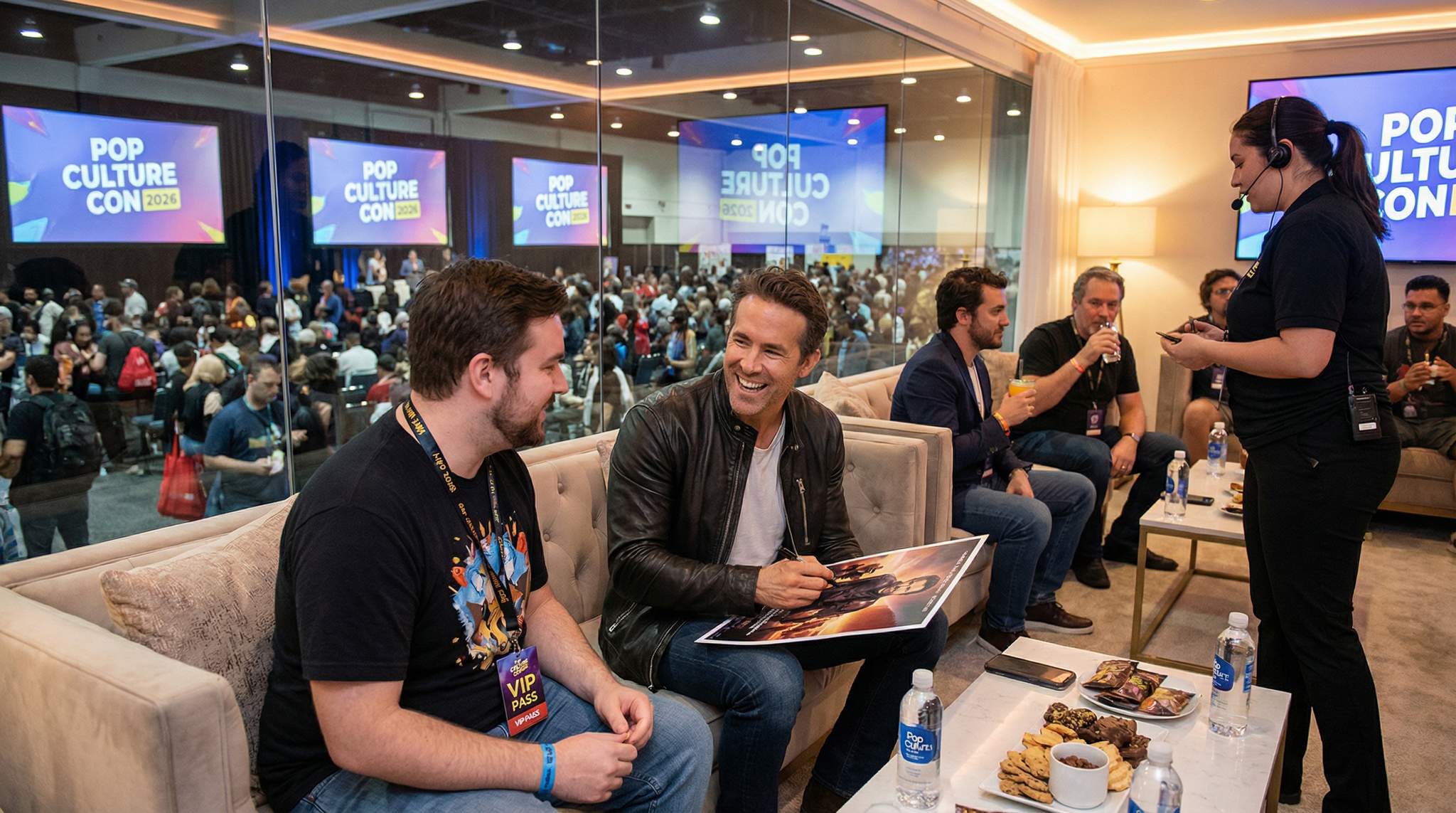
Nothing makes a VIP feel more like a VIP than stepping into an exclusive lounge away from the masses. A well-designed VIP lounge can be a sanctuary of comfort and an anchor of your premium experience. Key considerations:
- Location & Access: The lounge should be in a convenient spot (e.g. near main programming or with a view of a stage), but tucked away from general traffic. You might repurpose a meeting room or section off part of a ballroom. Require badge scanning or have a staffer at the door to ensure only VIPs (and perhaps their +1, if you allow) enter.
- Amenities: Offer comfortable seating (sofas, armchairs, even bean bags depending on your theme). Provide charging stations for phones. Light refreshments are a huge plus: think free coffee/tea, water, and snacks at minimum. Some events get sponsors to supply free sodas or treats – for example, one European comic-con’s VIP area included complimentary ice cream and energy drinks courtesy of sponsors. If budget allows, consider a few “wow” touches like a massage chair, a gaming console corner, or a photobooth backdrop for fun pictures.
- Services: Make the lounge useful, not just comfy. Offer a bag check so VIPs don’t have to lug around heavy merchandise (NYCC, for instance, included complimentary coat and bag check in the VIP lounge to facilitate easier movement for Photo Ops). Have concierge staff or volunteers available to answer questions, assist with schedules, or even book reservations for VIPs (some cons have done this via a text message service). Provide a place to buy refreshments with no lines if you can’t give them free – perhaps a cash bar or snack kiosk that’s only open to VIPs, ensuring quick service.
- Atmosphere: Set the tone with decor and theming. Branded signage, nice lighting, maybe music at a low volume can all elevate the vibe. Make it instagrammable – VIPs love showing off that they’re in the fancy area. However, also ensure it’s a relaxing escape from the noise. Balance is key.
- Capacity Management: Monitor how many people use the lounge at peak times. If you sell 500 VIP tickets but the lounge only seats 50, not everyone will fit at once – and that’s okay as long as VIPs can pop in and out. But avoid gross overcrowding that makes it feel like a packed cafeteria. This is where capping VIP sales (or providing multiple lounge areas) comes into play.
A well-received lounge can significantly boost VIP satisfaction. It gives them a home base to recharge (literally and figuratively) during a hectic con day. Consider gathering feedback on the lounge offerings – you might find VIPs care more about having free sodas than the fancy sofa, or vice versa. Each event’s crowd is different, so iterate on your hospitality each year.
Exclusive Swag and Collectibles
Tangible goodies are a staple of VIP packages. Fans love limited-edition items that show off their status. But rather than a random assortment, curate swag that feels special:
- VIP Credentials: Start with the badge itself – many cons issue premium badges that differ from GA, such as a shiny foil badge or unique artwork. Anime Las Vegas went further by giving VIPs a collectible acrylic badge and special badge ribbon. These become souvenirs in their own right.
- Swag Bags: Put together a gift bag exclusively for VIPs. Common items include event T-shirts or hoodies, enamel pins, hats, posters, or comic books. If you have sponsors, include their freebies (provided they’re quality – avoid stuffing it with pure ads). The swag bag should have at least a couple of items with obvious retail value. One rule of thumb: ensure the cumulative retail value of the swag is a solid fraction of the VIP ticket price (e.g. $100+ of goodies in a $300 VIP package). This helps fans justify the spend.
- Exclusive Merchandise: Offer something collectible that only VIPs can get. It might be a variant cover comic, a limited-run art print (numbered print run for VIPs), or a unique commemorative item. This plays into fans’ love of exclusivity. Just make sure it’s actually exclusive – avoid later selling the same “VIP edition” merch to general attendees, or you’ll erode trust.
- Discounts and Vouchers: As a bonus, VIPs appreciate being treated to savings during the event. Many packages include a percentage off official merchandise (e.g. NYCC gave 15% off at their merch store and access to an exclusive hotel block) or a voucher—like a $30 credit for a photo op, as seen in some VIP offerings providing fast access to Artist Alley. These effectively give some money back to the fan while encouraging them to engage more (and spend more) at the con.
- Digital Perks: In 2026, consider digital swag too. This could be a special access to panel video recordings after the event, exclusive behind-the-scenes videos, or even an NFT or digital badge of attendance if your crowd is into crypto collectibles. For example, NYCC’s VIP ticket included 30-day access to a library of panel recordings post-con along with exclusive hotel block access. That extends the experience beyond the convention days.
When planning swag, factor in production timelines and costs. Custom items like apparel or pins need lead time to design and manufacture. Always order a few extras for exchanges (wrong sizes) and keep quality control high – VIPs expect premium items, not leftover tote bags from last year. And don’t underestimate how much a cool freebie can sway someone on the fence about buying VIP!
Pricing and Packaging Your VIP Offering
With your perks defined, pricing the VIP package properly is the next big challenge. Price too low and you leave money on the table (or end up with an overcrowded VIP section); price too high without sufficient value and tickets will go unsold. It’s a delicate balance of economics and psychology.
Value-Based Pricing for VIP Tickets
Unlike GA tickets, which essentially sell entry, a VIP ticket sells a bundle of experiences and benefits. To set the price, start by tallying the per-person cost of the perks you’ll provide. For example, if each VIP gets a swag bag worth $50, plus catering that costs you $20, plus additional security/staff costs of $5 – that’s $75 of hard cost. If your GA ticket is $75, you know the VIP has to be some multiple above that. Many organizers use a cost-plus model: cover your costs and then add a healthy margin that reflects the exclusivity.
Industry benchmarks show VIP passes often land around 2× to 5× the price of general admission, helping organizers master event ticket pricing margins. So if a GA weekend ticket is $100, a well-loaded VIP might be $250. Ultra-premium tiers (sometimes dubbed Platinum or Ultimate VIP) could go even higher – 5–10× GA – if they include incredibly rare perks like meet-and-greets or lifetime memberships, reflecting the exclusivity of high-margin packages. Look at comparable events: major fan conventions frequently find strong demand at the $200–$500 range for VIP packages, whereas a small local con might cap at $100–$150 for a lighter VIP offering. And pay attention to your attendees’ spending power – in some communities, $1000 for a VIP might be laughable, while in others (say, a luxury comic-art expo) it could sell out.
Don’t be afraid to adjust after testing the waters. If your VIP tickets sell out in minutes, that’s a sign you underpriced or limited supply too much. Conversely, if they’re barely selling, you may need to communicate the value better or consider if the price is simply too ambitious for what’s offered. One approach is to start modest in year one and gradually raise the price as you add more perks and establish a track record of VIP satisfaction.
Single-Tier vs. Multi-Tier VIP Packages
Should you offer one VIP level or multiple tiers (e.g. Silver VIP vs Gold VIP)? This depends on your event complexity and audience. Multiple tiers let you capture different price points – perhaps a lower-tier VIP at $150 and a super-tier at $500 for the ultra-enthusiasts. This was the strategy of some big festivals and cons: they have a standard VIP and an “All Access” or “Elite” VIP with extras like exclusive dinners or backstage tours, creating tiers for high-value attendees. If you go multi-tier, be very clear in distinguishing the perks of each.
A good practice is to outline each tier in a comparison chart so buyers can easily see what extra $ gets them. Make sure even the lower VIP tier still feels special (early entry + a couple perks), otherwise you risk it being seen as inferior – it should be a good experience, and the higher tier a great experience. Also, don’t create more tiers than you can operationally handle; two VIP levels is plenty for most fan conventions. Keep in mind the 80/20 rule: often a small percentage of VIP fans will opt for the top-tier if offered, netting significant revenue. But those folks will have sky-high expectations, so only promise what you can deliver impeccably.
Capping Quantity to Maintain Exclusivity
VIP should feel scarce and exclusive. Selling an unlimited number might boost revenue short-term, but if too many people pack the VIP areas, the experience diminishes for everyone. Many veteran organizers recommend capping VIP tickets at around 5–10% of your total attendance to ensure VIPs have space to relax. For example, if you expect 10,000 attendees, you might release no more than 500 VIP passes. This ensures lounges and reserved sections aren’t overrun, and it also creates urgency during sales (“limited to 200 tickets!” drives FOMO-fueled purchases).
Make the scarcity genuine – if you say only 100 available, stick to that (barring maybe a few internal comps). Nothing irks fans more than “VIP sold out” and then seeing another batch quietly added later. If demand far exceeds supply, that’s a good problem; you can always modestly expand or add a new tier next year. Some cons keep a waitlist for VIP after sell-out, which gives you a gauge of excess demand. This limited approach not only preserves the experience but also justifies the higher price in fans’ minds by positioning VIP access as a coveted commodity.
Ensuring VIP Package Profitability
While VIP perks cost money to deliver, the program should be quite profitable if planned right. It helps to do a simple cost/revenue breakdown. For instance:
| VIP Package Component | Est. Cost per VIP | Notes |
|---|---|---|
| Swag bag (merch, goodies) | $40 | T-shirt, pin, lanyard, etc. |
| VIP lounge food & beverage | $25 | Snacks, drinks, coffee daily |
| Additional staffing & security | $10 | Extra staff for VIP areas |
| Talent fees for VIP meet-ups | $15 | E.g. share of guest honorarium |
| Total Cost per VIP attendee | $90 | |
| VIP Ticket Price (example) | $300 | 3× GA price |
| Gross Margin per VIP | $210 | ($300 – $90 cost) |
In this hypothetical, each VIP brings in $210 net (before fixed overhead like venue rental). Multiply by 200 VIP tickets = $42,000 – a substantial contribution to your con’s finances. Of course, costs vary with extravagance – if you include an open bar, that cost per VIP will rise. Keep a close eye on budgeting: it’s easy for little VIP extras to nickel-and-dime away your profit if you’re not tracking them. Bulk purchasing and sponsors (more on that below) can offset a lot of expense.
The bottom line: design your VIP such that it pays for itself and then some. Ideally, VIP revenue minus VIP delivery costs leaves a healthy margin comparable to or better than GA tickets. If margins look slim, either the price needs to go up or you need to trim or find cheaper ways to deliver certain perks. VIP attendees are paying a premium, but they don’t know (or need to know) exactly how much each amenity costs you – as long as they feel it’s worth what they paid.
Marketing and Selling Your VIP Tickets
A fantastic VIP package won’t get far if fans don’t know about it or aren’t convinced of its value. Marketing your VIP offering is about painting a picture of the deluxe experience and driving urgency for those limited spots. Here’s how to get those premium tickets flying off the digital shelf:
Crafting a Compelling VIP Narrative
Don’t just list perks – sell the story of your VIP experience. Use enticing language and visuals in your marketing materials. For example, instead of “VIPs get a lounge and early entry,” say “Pamper yourself in our VIP lounge with free refreshments and zero crowds, then be the first onto the show floor every morning.” Illustrate how their day will be frictionless and special compared to the GA experience. Highlight pain points that VIP solves: “No more 3-hour lines for autographs – our VIP fast lane gets you face-to-face with guests in a flash.” If possible, include photos of smiling VIP attendees from previous years or mockups of the swag. Creating that emotional appeal – treat yourself, you deserve it – can be very effective.
When writing copy, make every included benefit crystal clear. Bullet lists work well for quick scanning (on your website or ticketing page, clearly enumerate all VIP perks in one place). Also clarify anything that’s not included if there might be confusion (for instance, if VIPs get a “premium viewing area” but still need to arrive at least 10 minutes early to claim a spot, say so). Transparency builds trust, which is crucial when asking fans to drop big money.
Timing Your VIP Release
Consider when to put VIP tickets on sale relative to general tickets. Some conventions launch VIP and GA simultaneously, which can create a frenzy where die-hards immediately snag VIP. Others offer VIP as a pre-sale or exclusive early window – for example, a week before GA tickets, or first to subscribers of your newsletter. Early VIP sales can help gauge demand and even raise some upfront funds. Just be sure to communicate clearly: if GA sale is later, let everyone know VIPs opened early “for the biggest fans.”
Leverage the scarcity in your messaging: phrases like “Only 100 VIP spots – don’t wait!” (but again, be honest about that limit). If VIP historically sells fast, tell people: “Last year our VIP sold out in 48 hours.” This creates urgency and FOMO without being gimmicky. Also, set a dedicated on-sale time for VIP tickets and treat it like an event – count it down, build hype on social media (“VIP tickets drop this Friday at noon!”). The hype around selling out a VIP tier can even boost the desirability of your event overall, as it signals strong fan interest.
Engaging Your Fan Community and Influencers
Your existing fan community can be your best ambassadors for VIP. If you have returning VIP attendees, consider reaching out to them with an exclusive renewal opportunity or a referral incentive. For example, give last year’s VIPs a 24-hour head start to buy for this year as a loyalty perk – many will appreciate the gesture and snap them up again.
When you announce VIP packages, encourage discussion on your forums or social channels about the perks. Often, superfans will start buzzing: “OMG, they’re doing a VIP breakfast with the cast, this is huge!” That word-of-mouth builds credibility. You can also ask a couple of respected fan community figures (maybe a popular blogger or cosplayer) to weigh in on how valuable the VIP perks look – essentially testimonials. If they’re positive, amplify those quotes: “This is honestly one of the best VIP lineups I’ve seen – worth it for the early access alone,” etc.
Don’t shy away from questions or concerns raised by fans. Be ready to explain why the price is set at that level and what measures you’re taking to make it worthwhile. Transparency goes a long way. Additionally, if you have media partners or guest celebrities with big followings, see if they’ll help promote the VIP offering (“Join me for an exclusive VIP Q&A at the con – get your VIP tickets now!”). This cross-promotion taps into existing fan bases and lends star power to your marketing.
Partnering with Sponsors to Add Value
Bringing sponsors into the mix can significantly enhance your VIP program at little cost. Many brands love the idea of associating with a convention’s premium attendees – it’s a captive audience of hardcore fans willing to spend. Think about sponsors that align with your demo: an energy drink or snack company for lounge refreshments, a tech gadget sponsor for charging stations, even a local tourism bureau for VIP welcome bags.
When pitching sponsors, highlight how you can integrate them organically. For instance, creative convention sponsorship activations might include a branded VIP lounge (“Sponsored by XYZ Cola” signage and their product on tap) or a sponsored gift (like a premium merch item in the swag bag provided by the sponsor). This not only covers your costs but can elevate the VIP feel (free ice cream in the lounge courtesy of a brand is a win-win!). Just ensure any sponsor tie-in truly benefits the attendee and doesn’t feel too much like advertising.
Another approach is offering sponsor-funded VIP perks that would be hard to afford otherwise. For example, a sponsor might cover the cost to bring in an extra guest for a VIP-only panel, or underwrite a high-end VIP reception with hors d’oeuvres. In return, they get sampling or signage opportunities with your top-tier fans. When done tastefully, sponsors can enhance the VIP experience – and a happy VIP is likely to think positively of the sponsor too.
Finally, if your VIP tickets are high-dollar, consider working with your ticketing platform on enabling payment plans or financing options. Some platforms (like Ticket Fairy) let you offer installment plans, which can widen your pool of buyers for an $500+ package by making it more financially digestible for high-value VIP packages. Promote this option if available – “Check out with 4 easy payments” can remove a barrier for some fans without cheapening the product.
Operations: Managing VIP Check-Ins and On-Site Experience
Designing and selling VIP packages is only half the battle – you also need flawless execution on-site. VIPs should feel the red-carpet treatment from the moment they arrive at your convention. Operational planning for VIP services needs to be airtight, because these attendees have heightened expectations and less patience for hiccups.
VIP Registration and Check-In
First impressions count. If VIPs have to wait in the same sprawling check-in line as everyone else to pick up badges, you’re undermining your promises from the get-go. Plan for a dedicated VIP check-in desk or lane. This could mean a separate counter at registration staffed with your most efficient team members, or even a completely separate entrance or room for VIP credential pickup. Clearly sign it as “VIP Check-In” so people know where to go.
Better yet, eliminate on-site check-in for VIPs entirely: consider shipping VIP badges in advance along with an info packet. Many large events mail out VIP badges weeks early (with tracking and signature required, given the high value). If that’s not feasible, offer an early pickup window exclusively for VIPs, such as the evening before the con opens. The goal is that when Day 1 starts, your VIP guests are not stuck in any long queues. As one 2026 registration guide put it, badge pickup should be streamlined to the point of no lines at all, leveraging tech like QR scans and pre-event verification to improve entry flow and open bar access. VIPs are prime candidates for such tech – they’ll love skipping the hectic lines.
Also, equip your VIP badges with clear identifiers – a different color lanyard, a gold foil stamp, an RFID chip encoding their VIP status for fast scanning at entry points, etc. This helps staff quickly distinguish VIPs and grant access where needed. Train your reg staff on any special instructions: for example, VIPs might receive extra materials (swag bag vouchers, program invites) at check-in that GA attendees do not.
Credentialing and Access Control
With VIP perks come restricted areas and sessions, so you’ll need a robust method to enforce access. Some best practices:
- Badge Design: As mentioned, VIP badges should visually stand out. Large text or color-coding (“VIP” printed boldly) prevents confusion. If you have multiple VIP tiers, differentiate those too (e.g. “VIP” vs “VIP Elite” on the badge).
- RFID or Barcode Scanning: Using a modern ticketing system with RFID badges or barcodes can automate access control. You can program doors or entrances (to lounges, VIP seating areas, etc.) to only accept valid VIP badges. This way your staff aren’t stuck playing bouncer by memory – the system does the work. It’s similar to how festivals handle VIP wristband access to certain zones for extra comfort and exclusive areas and using exclusive access control technology.
- Wristbands for 18+ or Drink Access: If part of VIP includes alcohol (like a VIP cocktail hour), issue wristbands at check-in to denote age-verified VIPs. This saves time re-checking IDs at the bar and avoids giving minors the same looking credential as those who can drink.
- Securing VIP Areas: Station staff or hired security at VIP entrances (lounge door, reserved seating section, backstage tour meet-up point, etc.). They should politely but firmly check badges or scan tickets. Ensure they understand the VIP perks too – you don’t want a situation where a guard wrongly turns away a VIP from an area they’re entitled to. Clear briefings and maybe a one-page cheat sheet of VIP perks for all staff can help.
One pro tip: Create a VIP hotline or text line for urgent issues. Some events provide a phone number or text concierge (sometimes staffed by volunteers with escalation to managers) that VIPs can contact if they have any trouble accessing what they should. For instance, if a VIP badge isn’t scanning at a door, they can text your team and have someone resolve it immediately. This level of service recovery impresses attendees and prevents small problems from blowing up on social media.
Trained Staff and Volunteer Support
Your staff and volunteer crew are the face of the VIP experience. It’s crucial to assign some of your best people to VIP-related roles. These attendees paid a premium and expect knowledgeable, friendly assistance at every turn. When building your team, hand-pick those who are especially customer-service oriented for VIP duty – people who can keep calm and smile even if a VIP is getting impatient or demanding.
Train the team on the mindset: VIPs should be treated like valued guests at a 5-star hotel. That means proactive service. For example, a volunteer in the VIP lounge shouldn’t wait for a VIP to ask for help – they can circulate and offer, “Hi, can I help you with anything? Do you need directions or a schedule?” Little gestures like offering bottled water or asking how their day is going can leave a big impression.
Make sure every staffer working with VIPs is fully briefed on VIP benefits. They need to know exactly what’s included (and what’s not) so they can answer questions confidently. If a VIP asks “Can I also get into the after-hours party with this badge?” your team shouldn’t be unsure. Create a VIP FAQ for staff, and maybe hold a mini training session specifically on VIP procedures (like how to handle VIP line cutting politely, or how to check VIP badges).
Also prepare for the logistics: if you have VIP reserved panel seating, have ushers or volunteers inside the room to escort VIPs to the right section and ensure GA attendees haven’t swiped those seats. If you have VIP-only queues, assign line managers who know how to organize and merge VIP lines with GA lines effectively (so that GA folks don’t feel completely shoved aside). Some conventions assign a dedicated VIP coordinator on their staff – a point person who oversees all VIP customer service and operations, making sure the various departments (registration, security, programming, etc.) are all aligned on delivering the VIP promises.
Finally, remind your team that while VIPs get special treatment, they must still follow the rules. A high-paying attendee doesn’t have license to harass others or flaunt safety policies. Empower staff to enforce rules diplomatically if needed (e.g. “I understand you’re a VIP and we value that, but for everyone’s safety we do need you to abide by the prop check policy…”). Most VIPs won’t be a problem, but it’s good to have a plan for the rare entitled bad apple.
Line Management and Crowd Flow
Even with VIP perks like front-of-line access, there will still be times VIPs have to queue (registration, entering the building in the morning, etc.). The difference is you want those queues to move fast and be as painless as possible. Use your best crowd flow practices for VIP wherever they line up. For example, at the autograph area, maybe have a separate roped lane that feeds into each guest table just for VIP Fast Pass holders, merging in periodically. This way VIPs might wait 5 minutes instead of 50, and GA attendees can visually see that a process is in place (clear signage helps: “VIP Fast Pass Line” vs “General Line”).
When letting VIPs into panel rooms early, do it in an orderly way. You might have VIPs wait in a pre-line near the door while clearing the previous session, then escort them in swiftly to their reserved seats. Communication is key – use staff or signs to direct VIPs where to go and when. Nothing’s worse than a VIP not knowing where their benefit applies and missing out because of confusion.
In terms of general venue flow, consider letting VIPs bypass chokepoints. Some large cons create VIP-only elevators or stairwells if the layout allows, or a shortcut route from the lounge to the main hall. This isn’t always feasible, but think creatively about your venue’s geography. At the very least, ensure VIPs get a detailed info sheet or digital guide explaining all their entry points, lounge location, and special timings. If they have to constantly ask where to go, the exclusivity factor fades.
Another detail: coordinate with venue security about VIP re-entry. If your con requires badge checks at every hall entrance, make sure security knows VIP badges might have different visuals but are fully allowed everywhere GA is (plus extras). A quick briefing to “yellow shirts” can prevent an overzealous guard from stopping a VIP from entering an area they paid for. It’s all about smoothing the edges so the VIP journey is friction-free across all touchpoints.
Elevating the On-Site VIP Experience
With operations set, you can focus on delighting your VIPs throughout the event itself. Little surprises and thoughtful touches will turn a good experience into a truly memorable one. Remember, VIP attendees will compare notes and spread the word – you want them to become your event’s biggest evangelists because of how special you made them feel.
Curating a Premium Lounge Atmosphere
We’ve covered setting up the VIP lounge, but during the event you should actively manage its atmosphere. Keep the lounge clean and well-stocked at all times. Nothing says “you’re not that important” like an empty coffee carafe or a pile of trash overflowing. Assign staff to periodically refresh supplies and tidy up. If you promised “light catering”, be sure it’s always available – if snacks run out by Saturday afternoon, VIPs will notice. It’s better to slightly over-cater; leftover chips are easier to handle than unhappy VIPs who missed out.
Consider adding entertainment or enhancements in the lounge during peak hours. Maybe a local acoustic musician for ambient background music, or a TV screen playing a live feed of what’s happening on the main stage (so VIPs relaxing don’t miss big moments). Some events put a photo op backdrop in the lounge with the event logo or a themed image – VIPs can snap selfies in a quieter setting.
Pay attention to climate and comfort. If your lounge is in a small space, is it getting stuffy with all those people? Work with the venue to adjust HVAC or bring in fans. Are there enough chairs for groups to sit together? If not, shuffle some layout. These details show that you care about their comfort on an ongoing basis.
Importantly, get feedback in real time. Have your lounge staff ask VIPs “How are you enjoying the lounge?” If multiple people mention it’s too cold, or they’d love a certain snack, you might be able to address it on the fly (even if not, you can note it for next time). This also makes the VIPs feel heard and valued.
Exclusive VIP Programming and Surprises
Think about adding one or two VIP-exclusive activities beyond the advertised perks – a little extra delight. This could be a last-minute bonus like: “Surprise! VIP-only raffle at 3pm in the lounge – win a signed poster.” or an unannounced appearance: perhaps one of your celebrity guests can swing by the VIP lounge for 10 minutes to say hello unexpectedly. Even a quick hello or wave to VIPs can be thrilling for them and wasn’t promised, so it feels like a true bonus.
Some conventions schedule informal VIP-only content, like an off-the-record Q&A with the convention organizers or special demos by exhibitors just for VIPs. For example, a gaming con might have a game publisher do a VIP-only preview play session of an upcoming title. These small-scale activities (attendance capped to VIPs) bolster the feeling of being an insider.
If your schedule and budget allow, you might host a VIP welcome reception or afterparty. A short gathering on the first evening with drinks and a keynote welcome from the event director can set a warm tone. It doesn’t have to be lavish – the key is they get something extra that regular attendees don’t. Make sure to communicate any such events clearly (via email or printed VIP schedule) so your VIPs know to show up.
Surprise freebie drops can also enchant your guests. Perhaps on Day 2 your team slips a bonus item into each VIP’s swag bag or at their seat – like a collectible patch or an extra autograph coupon – with a note “Thanks for being a VIP – here’s a little something more!” The cost of this might be just a few dollars per person, but the goodwill it generates is huge. These kinds of thoughtful gestures often result in VIPs raving about how the event “went above and beyond” what they expected.
Ensuring VIPs Feel Truly Special
Beyond tangible perks, the human element is what often cements a VIP attendee’s satisfaction. Encourage all staff, not just those assigned to VIP areas, to recognize and politely acknowledge VIP badge holders throughout the event. A simple “Hope you’re enjoying the con!” when scanning a VIP’s badge, or a quick chat asking what they’ve loved so far, can make them feel like mini-celebrities themselves.
If possible, empower your team to do micro-upgrades or personal favors. For instance, if a VIP missed their chance at an exclusive merch item, maybe your merch team can find one more for them later. Or if a VIP shows up late to a panel and their reserved seat was given away, a staff member might escort them to a staff seating area instead. Solving problems proactively for VIPs – even small ones – really stands out. One events manager recounts how a VIP’s package got lost at coat check, so the team immediately assembled a replacement swag bag and gave them a free photo op voucher for the trouble. The VIP was so impressed they praised the event publicly despite the hiccup.
Also, consider commemorating the experience. Perhaps send VIPs off with a thank-you card or email after the event, maybe signed by the organizers or with a coupon for next year. It closes the loop on a personal note. Some conventions even set up group photos of all VIPs with a special backdrop or guest, then send that photo out as a keepsake.
In essence, treat VIP attendees as partners in your event’s success. Many are veteran con-goers or community pillars. By nurturing them, you’re not just delivering one weekend of joy – you’re cultivating loyal supporters who will champion your convention for years to come.
Balancing VIP and General Attendee Experiences
While rolling out the red carpet for VIPs, it’s critical to maintain a great experience for all attendees. A common mistake is going overboard with VIP perks in ways that inadvertently alienate general admission fans. Avoiding an “us vs. them” atmosphere will ensure your con’s community stays positive and united.
Avoiding a Two-Class System
Perception is everything. If GA attendees start to feel like second-class citizens, you have a problem. Design your VIP program so that it adds comfort and convenience for VIPs without completely stripping away the core fun for everyone else, ensuring the event delivers value despite costs and maintaining the full experience for all attendees. For example, it’s fine to have a VIP lounge with free snacks, but don’t make all seating on the show floor VIP-only. Or if VIPs get an exclusive merch item, maybe offer GA attendees a shot at other cool merch through contests or purchases. The idea is that VIPs get nice extras, but GA still gets the full convention experience you originally envisioned.
Be mindful of language and optics. Ensure your staff never dismiss a GA query with “oh, that’s only for VIPs” in a haughty tone. Instead, train them to explain positively: “VIPs do have a separate line for this panel, but don’t worry – we’ve saved plenty of great seats for general fans too and we’ll get you all in as quickly as we can!” Public announcements or signage should emphasize the inclusive nature of the event (e.g. celebrate “All attendee cosplay meetup at 5pm!” rather than highlight VIP vs GA distinctions constantly). As one festival consultant aptly put it, “Give VIP nice things, but don’t take things away from GA to do it,” maintaining the full experience for all attendees.
Protecting Core Experiences for Everyone
A good rule when adding VIP elements: never lock general attendees out of the fundamental content that your event is about. If a celebrity is coming to speak, GA should be able to see that panel (even if they’re sitting toward the back). Don’t turn major attractions into VIP-only affairs. The exclusivity should be around comfort, speed, and bonus content, not the main content, even when introducing premium experiences. For instance, a VIP-only Q&A with a guest is okay if that guest also did a main stage panel for everyone. But making the only chance to see a star be a VIP meet-and-greet would rightly upset fans.
Also, pay attention to shared spaces. Are you repurposing a chunk of the expo floor as a VIP lounge thereby removing food vendors or rest areas that GA would have used? That could spark grievances. Try to find space for VIP perks that doesn’t cannibalize GA amenities. If VIPs get a nice lounge, maybe also ensure general attendees have a couple of their own chill areas (they won’t have free snacks but at least a place to sit). If VIPs have a coat check, consider offering a paid coat check for GA too, so they’re not entirely left out of a useful service.
Fairness and Optics
We mentioned earlier the optics of empty VIP seats at the front. Always keep an eye on how things look to the public. A giant empty VIP-only viewing area with GA penned behind a rope can breed resentment. If you see this scenario emerging – like a VIP section consistently underutilized – adapt on the fly. It’s perfectly okay to adjust rules mid-event in favor of inclusivity, such as opening a VIP section to GA 10 minutes after a show starts if it’s half-empty. Just communicate clearly to staff if you do so, to avoid confusion.
Moreover, gauge GA sentiment through your social media or at con discussions. If you catch wind of comments like “everything is about VIPs this year, feels bad for us normal folks,” take that seriously. It might be an exaggeration, but it signals places to improve. Often, the solution is better communication. Make sure you’ve conveyed to GA attendees all the things they still get to enjoy fully. Emphasize that the con has more programming than ever for everyone, that VIP is limited and doesn’t diminish the GA experience. Post-event, be transparent in surveys – ask GA if they felt negatively impacted by VIP arrangements and how, then tweak accordingly.
Finally, celebrate your general attendees openly. Many cons publicly thank all fans and avoid singling out VIPs in official messaging. Some organizers even downplay the VIP aspect on-site to avoid an elitist vibe. For example, you wouldn’t put “VIPs are better!” on anything – obviously – but you might not even label something as “VIP-only” unless necessary. A sign might simply say “Reserved” rather than “VIPs only beyond this point,” which is a bit softer. It’s a subtle psychological thing: the more you make VIP perks feel like natural parts of the event (versus gaudy exclusive barricades), the less anyone will stew over them.
Accessibility and Inclusivity in VIP
One area not to overlook: ensure your VIP program is accessible to fans with disabilities and welcoming to all. If a VIP perk involves physical access (early entry, lounge access), make sure those spaces are ADA accessible. For instance, if the VIP lounge is up a flight of stairs, you’ll need an elevator solution or an alternate lounge location. Keep a few front-row VIP seats for wheelchair users or others who need them, and allow a companion if needed just as you would in GA seating. Your VIPs with disabilities paid the same premium and should enjoy all the benefits equally.
In terms of inclusivity, maintain the same code of conduct standards in VIP areas as everywhere else. Just because someone paid more doesn’t give them a pass on harassment or inappropriate behavior. In fact, VIP areas should feel extra safe and comfortable. Have staff present and approachable. If any VIP attendee feels uncomfortable or reports an issue, handle it swiftly. The VIP lounge is a micro-community – set the tone that it’s a privilege that comes with respecting others.
Also, be conscious of socioeconomic optics. VIP by nature is a tiered experience, but you can still project a message that every fan is valued. Simple things like event staff giving equal enthusiasm whether scanning a GA or VIP badge go a long way. Some events do nice gestures for all attendees (like free digital wallpapers or a thank-you souvenir for everyone) so GA folks also feel appreciated. The goal is a harmonious event where VIPs are pampered and GA attendees are thrilled – it’s not zero-sum if managed right.
Avoiding Common VIP Pitfalls
Even well-planned VIP programs can stumble if certain pitfalls aren’t navigated. Learn from others’ mistakes (and a few of our own war stories) to ensure your VIP experience leaves smiles, not frustration.
Overpromising and Underdelivering
Expectation management is huge. The quickest way to anger your VIP customers is to advertise a perk and then not fully deliver on it. If you promise “exclusive meet-and-greet with the cast,” and half the cast doesn’t show up, you’ve got a problem. Always under-promise and over-deliver if possible. Use careful language in marketing – e.g., if a celebrity is not 100% confirmed for the VIP party, say “special guests expected to appear” rather than a guarantee.
Have a backup plan for every major promised element. Guests can cancel last-minute due to illness or filming schedules – in that case, be ready to offer VIPs a make-good, like an alternate guest meet-up or some form of compensation. One convention learned this the hard way when their headline VIP guest canceled on the day; they quickly organized a free autograph from another actor for VIPs to fill the gap. Communicate changes ASAP. VIPs are more forgiving if you’re transparent and proactive (“Due to unforeseen circumstances, the private Q&A is now with Guest Y instead of X, and we’re providing all VIPs a $50 refund or merch credit for the change”). It stings less when they’re informed and acknowledged.
Also be mindful not to promise intangible things like “VIPs will get short lines” unless you truly can ensure it. It’s better to outline the system (e.g. “Dedicated VIP lines for autographs”) and then execute it well, rather than guarantee “no waiting” which could backfire if something goes awry. Essentially, honesty and reliability are key to maintaining trust with your highest-paying attendees.
Operational Bottlenecks and Delays
Picture this nightmare: you’ve sold VIP tickets promising no long waits, but when the event starts, your VIP ticket holders are stuck in an hour-long line at the VIP entrance because of understaffing or a printer glitch. Yikes. Avoid such scenarios by rigorously stress-testing your VIP logistics. If VIPs have a separate entrance, allocate ample staff and perhaps even a separate screening equipment if needed, so it truly is faster. Coordinate with venue security well in advance on VIP entry procedures – do a run-through if possible.
Registration is another potential chokepoint. If all VIPs decide to check in right before opening, can your VIP desk handle that surge? Think about staggering (maybe encourage VIP pickup the night before with a small incentive) or have a couple of floating staff you can deploy to VIP check-in if lines start forming. Using technology like scan-and-go kiosks or RFID gates can help speed up processes and manage open bars or entry flow, but have a manual backup in case tech fails. Many seasoned organizers keep an emergency “VIP kit” at registration – blank VIP badges, a Sharpie, extra swag – so if something doesn’t scan or a name is wrong, they can quickly issue a temporary VIP pass without making the person wait.
Another bottleneck: limited capacity perks. Example – you promised a VIP-only signing with a guest, but only 50 people can do it at once and you sold 200 VIP tickets. How do you schedule or rotate? Plan a system (appointments, lottery, or first-come with multiple sessions) before selling the idea. Surprises in logistics delivery are dangerous. Always ask, “If all VIPs show up for this perk at once, what happens?” If the honest answer is “chaos,” then redesign the perk or clarify how it’s accessed (perhaps “choose one of the two VIP signings to attend, due to limited time” – set expectations early).
Dealing with VIP Complaints
No matter how well you plan, there may be VIPs who encounter issues or just have high demands. Have a clear protocol for handling VIP complaints swiftly and generously. Ideally, empower a specific VIP customer service rep or manager on your team who can personally address VIP concerns during the event. This could be via that VIP text hotline or in-person in the lounge. When a VIP raises a grievance, listen fully and resolve it on the spot if humanly possible. If their VIP merch pack was missing an item, hand them a replacement immediately (you did order spares, right?). If they’re upset that a perk didn’t meet expectations, offer a sincere apology and a small token like a free upgrade or additional autograph coupon.
The cost of appeasing a VIP is usually minor compared to the goodwill it restores. These folks can be your loudest critics or your biggest advocates. Turn an angry VIP into a satisfied one, and they might sing your praises for how you “made it right.” On the flip side, if you dismiss their complaint, expect them to be on forums and social media tearing down your event. It’s worth going the extra mile.
Post-convention, follow up on any notable VIP complaints in writing. A personal email acknowledging their feedback and perhaps offering a discount for next year’s VIP can convert someone who felt let down into a returning customer. It shows you truly care about delivering on your promises, even if things went sideways initially.
Oversaturation and VIP Crowd Creep
Be cautious not to let VIP offerings creep so far that they start to dictate the whole event’s layout or schedule in a detrimental way. It’s easy to get excited and keep adding VIP perks (VIP breakfast! VIP tour! VIP seating at every panel!) only to realize you’ve now diverted too many resources or space away from GA needs. Revisit that balance frequently. If something for VIP is causing squeeze elsewhere, reconsider the approach.
Also avoid overselling VIP. We talked about caps – stick to them. The allure of extra revenue by upping the cap last-minute can backfire terribly on-site. If your VIP lounge that comfortably fits 100 people suddenly has 300 because you sold more tickets, you’ve poisoned the experience. The negative word-of-mouth from a cramped, under-serviced VIP crowd will cost you far more in the long run than those extra dollars earned.
It’s better to sell out and have a waiting list of disappointed would-be VIPs (who can get first dibs next year, thus almost guaranteeing another sellout) than to oversell and have a mob of unhappy VIP customers. Remember, exclusivity is tied to capacity. Overcrowding is the enemy of exclusivity. One convention runner we know had to learn this the hard way: they doubled VIP sales in year two without increasing lounge space or amenities – the result was angry VIPs who felt cheated, and VIP sales dropped sharply in year three. They ended up issuing partial refunds to appease folks. Don’t be that organizer – maintain the quality and intimate feel of your VIP offerings by keeping numbers in check or scaling up provisions proportionally if you must expand.
Ignoring Post-Event Feedback
Finally, a pitfall is to wipe your brow after the event and say “Well, that seemed to go fine” without actually soliciting detailed feedback on the VIP program. Don’t assume – ask. Send a post-event survey specifically to VIP ticket holders. Their perspectives will be somewhat different from GA attendees’. What did they love? What didn’t meet expectations? You might discover, for example, that the meet-and-greet was awesome but the lounge hours were too limited, or that 90% of VIPs didn’t use the coat check you stressed over, but they really wanted more beverage options.
Also analyze hard data: did all VIPs pick up their merch packs? How many showed up for each VIP-only event? This can indicate which perks mattered and which were meh. If only 10% used the free parking perk, maybe it’s not crucial. If almost all showed up for early entry each day, that’s clearly a valued benefit.
By gathering feedback and usage stats, you can refine your VIP offering yearly. Attendee expectations evolve, especially as you gain more repeat VIP customers. Something that was a novelty one year might be standard expectation the next. Continuous improvement is the name of the game. Show your VIPs that you listen – even share a recap (“Here’s what our VIPs told us and here’s what we’re changing for next year”). This level of responsiveness can turn even previous complainers into loyal fans.
In summary, treat your VIP program as a living, learning entity. Each convention provides lessons; apply them diligently to avoid pitfalls and keep raising the bar.
Measuring VIP Success and Iterating
After the confetti settles, how do you know if your VIP initiative was truly successful? And how can it be even better next time? Establish some metrics and review processes to evaluate performance.
Key Satisfaction Metrics
Start with the obvious: did your VIPs have a great time? Use multiple gauges:
- Survey scores: If you implement a post-con survey, look at VIP responses specifically. What was their overall satisfaction on a scale of 1-10? How did that compare to GA responses? Often, you want your VIP folks to be at least as happy as general attendees (hopefully more, since you catered to them!). If not, dig into why.
- Net Promoter Score (NPS): Asking VIPs “How likely are you to recommend the VIP experience to a friend?” can be revealing. If that score isn’t high, there’s work to do. Many events rely on VIP word-of-mouth to sell tickets (friends convincing friends to upgrade next year), so an NPS for VIP program is a powerful litmus test, often measured in VIP upsell case studies.
- Anecdotes and social media: Qualitative feedback is huge. Scour social media, fan forums, and any emails you received. Did people gush about feeling like rockstars, or did they grumble about not getting value? One heartfelt testimonial from a VIP about how incredible the experience was can balance out a lot, but if you have several public complaints out there, it’s a red flag. See if your community team can compile representative quotes or posts for your review.
Financial Outcomes
From a business perspective, crunch the numbers:
- VIP ticket yield: How much total revenue did VIP tickets bring vs. your total ticket revenue? Calculate the % of income from VIP. Is it growing year over year? If VIP revenue comprises, say, 20% of your total gate and you had budgeted for 15%, that’s a win. If it’s lower than expected, examine if it was due to unsold inventory or underpricing.
- Cost vs. Revenue: Revisit your cost estimates with actuals. Did the VIP program turn the profit margin you anticipated? Perhaps those free cookies in the lounge ended up costing double – eating into margin. On the flip side, maybe you came in under budget. This will guide pricing or cost adjustments for next time.
- Uptake of perks: If you can quantify usage of certain perks (e.g., how many drinks were consumed, how many VIPs actually attended the VIP-only panel), you can evaluate ROI on each element. Maybe that pricey VIP dinner you hosted was only attended by half the VIPs – next year, you might retool or replace it.
Also assess if the VIP offering affected general ticket sales in any way. Sometimes, if VIP is too successful (sells out super fast), it might hint you could carefully expand it. Or if some GA attendees skipped coming because they felt regular tickets were devalued (rare, but track any dip in GA numbers or feedback like “felt left out”), that’s important to address.
Loyalty and Retention
Check how many of your VIP buyers were returnees versus new. If you can track individuals (through your ticketing system or loyalty program), see if last year’s VIPs came back and bought again. A high re-up rate means you delivered well. If many opted not to return to VIP, consider reaching out personally to ask why (some might just be financial reasons, but others might reveal gaps in the experience). Conversely, did some previous GA attendees “upgrade” to VIP this year? That could indicate your marketing and word-of-mouth are convincing more people of the value.
You could even do something like a VIP focus group after the event (online or at a year-end fan meet-up) to discuss how to improve. Your most engaged fans will appreciate being consulted. They often have creative ideas that organizers might not think of, and involving them strengthens loyalty – they’ll feel ownership of “their” VIP program.
Iteration and Innovation
With data and feedback in hand, plan out what changes to implement. Prioritize the fixes for any negative pain points first – those are must-dos. Then look at “nice to have” additions or experiments. Each year, try to introduce one fresh perk or improvement to keep the VIP offering evolving (and giving you new marketing angles). Maybe it’s leveraging new technology, like a gamified VIP scavenger hunt via your event app to win extra prizes, or partnering with a new sponsor for a unique experience. Stay attuned to wider industry trends too; for instance, if other events start offering augmented reality VIP scavenger hunts or AI-personalized schedules for VIPs, consider if those fit your crowd.
Document everything – write an internal report on how the VIP program went, what the metrics were, and what the plan is for next year. This is useful not only for continuity (especially if staff changes) but also to show potential sponsors or stakeholders the impact of the VIP initiative.
In short, treat VIP fan experiences as an ongoing project of refinement. The best conventions in the world didn’t nail it on the first go; they learned and adapted continuously. By measuring success and actively iterating, you’ll keep your VIP offering cutting-edge and compelling, year after year.