The Legacy Headliner Conundrum
Icons Reaching Retirement
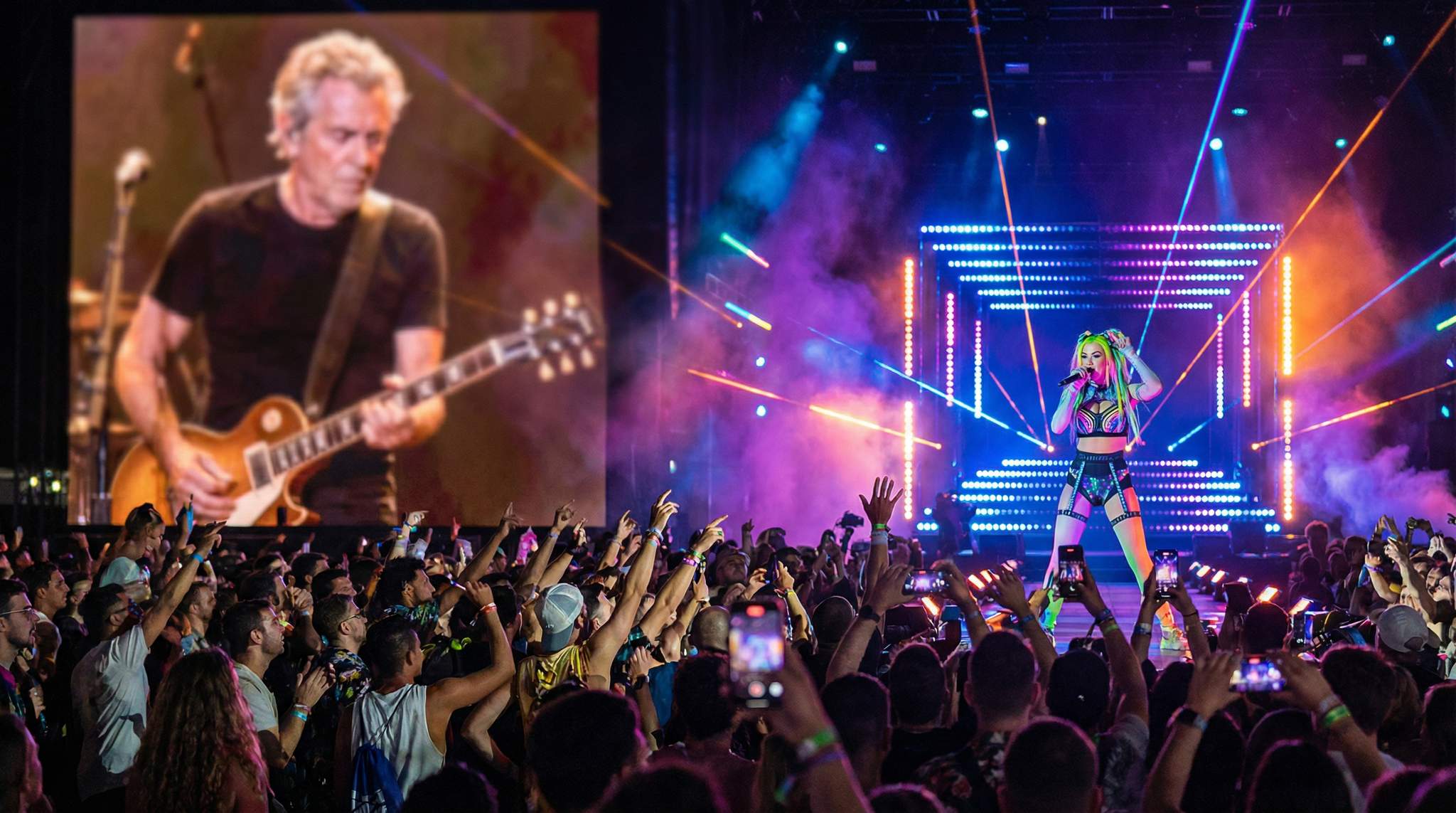
Legendary festival headliners who dominated stages for decades are increasingly aging out or embarking on farewell tours. In 2022, ex-Beatle Sir Paul McCartney made history as Glastonbury’s oldest-ever headliner at age 80, just as Gen-Z superstar Billie Eilish was announced as the festival’s youngest headliner. The contrast underscores a changing of the guard: many iconic rock and pop acts from the ’60s, ’70s, and ’80s – from Elton John to AC/DC – are retiring from touring or scaling back performances. Elton John’s emotional farewell set at Glastonbury 2023, for example, signaled that an era of legacy mega-headliners is coming to a close. Festival organizers can no longer assume that these household names will be available (or willing) to anchor lineups each year. As heritage artists step back, the industry faces a looming gap in star power that must be filled by new talent.
A Shrinking Pool of Mega-Acts
The challenge is not just that older headliners are retiring – it’s also that relatively few new artists have achieved the same universal, multi-generational appeal. Studies have noted an upward creep in the age of festival headliners. A 2015 analysis by Spotify and The Economist found the average age of headline acts at major UK festivals rose from ~31 in 1996 to ~43 by 2015. In other words, festivals have been leaning on an increasingly older cohort of stars. The problem, as observers pointed out, is a supply-side shortfall of new superstars: the small pool of artists capable of thrilling 80,000+ crowds is “pretty much all… old” now. Classic rock giants like The Rolling Stones, Paul McCartney, Fleetwood Mac and others are still out there drawing huge audiences because live shows now make up the bulk of their income. Their continued presence – while a testament to their lasting appeal – can make it harder for younger bands to break into top slots. As one industry analysis warned, the number of proven festival headliners is narrowing, forcing promoters into fierce competition over the same few names. Some veteran promoters and analysts predict festivals will pivot to multiple mid-sized headliners rather than banking on a single aging icon. This approach spreads the draw across several newer acts instead of hinging the entire event on one “supa-duper” legacy name.
Shifting Fan Demographics
These lineup decisions are also influenced by changes in the audience. The fan base for festivals has broadened in age – surveys around the mid-2010s showed the average festival-goer was in their early 30s, and even older demographics are attending in greater numbers. Many Gen X and Boomer fans relish seeing the bands of their youth (fuelling demand for nostalgia acts), but younger Millennials and Gen Z have different tastes. They’ve grown up with hip-hop, EDM, Latin trap, K-pop and other genres that weren’t headliner material in the past. This generational shift means that relying solely on 70-year-old rock legends to sell tickets is not a sustainable strategy long-term. Savvy organizers recognize they must court the next generation of fans with artists and experiences that reflect modern music trends. Notably, festivals in genres that skew younger have no shortage of rising headliners – in electronic festivals like Tomorrowland or EDC, top-billed DJs are often significantly younger than their rock counterparts. Likewise, the explosion of K-pop and digital-native pop stars has introduced a wave of new headlining contenders in their teens and twenties. The key insight is that audience taste and age go hand in hand: as older “legacy” acts bow out, a younger cohort of fans is coming in, hungry for stars of their own generation. Festivals that adapt their lineups to these shifting demographics – rather than leaning on yesterday’s icons – will position themselves to thrive with both current and future audiences.
Scouting and Cultivating Future Headliners
Spotting Tomorrow’s Stars Early
Future-proofing a festival lineup starts long before the show – it begins by identifying which emerging artists have the potential to be the superstars of 2026, 2028, and beyond. The best festival bookers behave like talent scouts, constantly scanning data and industry buzz to catch the “next big thing” on the rise. In the era of streaming and TikTok, breakthrough artists can explode virtually overnight. That’s why modern talent buyers increasingly rely on analytics and trends, not just gut instinct. By analysing streaming stats and social media buzz (Spotify charts, TikTok viral tracks, follower growth rates, etc.), organizers can spot up-and-coming artists who are surging in popularity. Booking a hot newcomer before they become a household name can pay huge dividends. One festival talent buyer described the goal as finding “the next Noah Kahan” – an artist who might start on a small stage but is on a trajectory to be a star by the time the festival comes around, highlighting the value of booking support acts early. Noah Kahan’s example is telling: in 2022–23 his fanbase skyrocketed, and he graduated from side-stage slots to headlining a 75,000-capacity festival alongside major names. Of course, predicting which new act will blow up isn’t foolproof – it’s part art, part science. But by tracking metrics (stream counts, Shazam spikes, viral trends) and maintaining close contacts with labels and agents, festival organizers can get early intel on who is poised for a breakout year. Industry veterans stress the importance of signing breakout artists before they’re mainstream, as noted in discussions on coping with soaring artist fees. Yes, there’s some risk – not every buzzed-about newcomer will turn into the next Billie Eilish – but the upside of catching a future headliner early (often at a fraction of the booking fee they’ll command later) is enormous. This data-informed approach, combined with a bit of intuition, helps festivals cultivate a pipeline of fresh stars.
For promoters wondering where to find both legacy acts and new talent to build these transitional rosters, the answer lies in diversifying your booking channels. While heritage artists are typically secured through major international agencies, discovering the next generation requires tapping into different networks. Talent buyers should actively scout showcase events like SXSW, The Great Escape, or Eurosonic Noorderslag, where emerging artists perform specifically for industry professionals. Additionally, leveraging data analytics platforms and boutique booking agencies that specialize in niche genres can help you identify rising stars before they hit the mainstream radar. By maintaining relationships across both top-tier legacy agencies and grassroots talent incubators, organizers can successfully bridge the generational gap on their posters.
Building Relationships and Loyalty
Identifying rising talent is only one piece of the puzzle. Equally important is building strong relationships with emerging artists so that as their careers ascend, they continue to feel a bond with your festival. Many top festival promoters make a point of “growing up” alongside certain artists: they’ll book a great new band or DJ on a small stage one year, bring them back on a larger stage the next, and so on. By doing this, you signal to the artist and their team that your festival believes in them. Artists remember who gave them a shot early on – and they often repay the favor later. There are countless instances of performers returning to play festivals that helped launch them, even after they’ve become superstars. Local bands who got their first big break at a festival often become passionate ambassadors for that event, as diversifying your talent roster creates reciprocal benefits. They’ll speak fondly of “coming up” through those stages and may prioritize that festival when they’re planning tours or festival runs in subsequent years. From a business perspective, this loyalty can translate into easier bookings and even discounted fees down the road, as the artist sees the festival as a partner in their success. To cultivate this kind of loyalty, treat new artists professionally and respectfully, even if they’re playing at 2 PM to a modest crowd. Simple gestures like fair pay (no one likes being told to play “for exposure”), a proper soundcheck, and a heartfelt thank-you can make a big impression on an emerging act, and providing technical parity is key. Festivals that position themselves as champions of new talent end up with an enviable reputation in artist circles – reinforcing a culture where fair pay at each level is standard. In short, investing in artists’ early careers isn’t just altruism; it’s laying the groundwork for your own future headliners.
Planning a Festival?
Ticket Fairy's festival ticketing platform handles multi-day passes, RFID wristbands, and complex festival operations.
Taking Informed Risks on Newcomers
By definition, betting on up-and-coming talent involves venturing beyond the sure things. It’s unlikely any 20-year-old newcomer will have the proven draw of a decades-old legend – but they might be on the cusp of becoming the next legend. Festival organizers should be prepared to take calculated risks on promising newcomers, backed by research and a vision for the lineup. One strategy is to balance these bets with more established acts in a layered lineup (we’ll discuss that balance later). Another tactic is to offer emerging artists not just a slot, but a platform: give them a decent set time, highlight them in marketing, maybe even pair them with a bigger name in a collaborative set. If it pans out, the festival reaps huge rewards by being known as the event that “had them first.” For example, Billie Eilish went from an afternoon act to a bona fide headliner in just a few years – festivals that booked her in 2018–2019 reaped the buzz when she exploded in popularity by 2022, proving that booking buzzy newcomers pays off long-term. Experienced producers say the upside of discovering the next star far outweighs the occasional miss, a sentiment echoed by veterans navigating talent wars. To improve the odds, use data to inform your gambles: if a regional rapper is blowing up on TikTok and streaming, or an indie band is selling out small venues in record time, those are signs the momentum is real. Also, consider the genre and community fit – an act might not (yet) have mainstream fame, but if they have a cult following in your festival’s scene, booking them can still move tickets. Ultimately, future-proofing means planting seeds now. Not every act will flourish, but the ones that do could become your marquee names in a couple of years. And when fans see that your festival consistently introduces them to amazing new artists, it builds trust that keeps them coming back (even when today’s headliners retire).
Elevating Emerging Acts: From Side Stage to Main Stage
Giving Newcomers Prime Slots
It’s not enough to book rising talent – how you showcase them at the festival itself makes a big difference. Too often, festivals shove all emerging artists into early afternoon slots on minor stages where they play to scattered crowds. A more future-focused approach is to give buzzworthy new acts some prime real estate in the schedule. This might mean a slot just before the day’s headliner on a secondary stage, or an early evening set on the main stage when more fans are onsite. The goal is to let a critical mass of attendees experience the artist’s performance. Many forward-thinking festivals have started doing exactly this. For instance, when Billie Eilish made her Glastonbury debut in 2019, the demand to see her was so high that organizers upgraded her set from a small tent to a packed Other Stage performance. By placing her on a bigger stage at a decent time, the festival created a major moment – and a year later Billie was one of the world’s hottest acts. Similarly, festivals might spotlight an “artist of the day” – a fast-rising act who gets extra promotion and a longer set to really show their stuff, even if they’re not headlining. These opportunities signal to fans that this is someone special, a potential future headliner you won’t want to miss. It also gives the artists invaluable experience playing to large festival crowds, preparing them for bigger slots down the line. Of course, not every new act can get a prime slot, but the takeaway is: be strategic in scheduling. Don’t automatically tuck all fresh faces into the least-visible part of the lineup. If an emerging artist is generating buzz, treat their set like an event – you’ll cultivate fan excitement and maybe witness a star-making turn on your own stage.
From Opener to Headliner: Success Stories
One of the most gratifying sights for festival organizers is watching an artist’s journey from small-font opener to main-stage headliner over successive years. These narratives aren’t just feel-good stories – they’re proof that your festival is doing something right in championing new talent. Let’s look at a few examples of festivals that elevated emerging acts into headliners:
| Artist | Festival (Country) | Initial Slot (Year) | Headliner Slot (Year) | Age at Headlining |
|---|---|---|---|---|
| Ed Sheeran | Glastonbury (UK) | Emerging tent stage debut (2011) | Pyramid Stage headliner (2017) | 26 |
| Billie Eilish | Glastonbury (UK) | Afternoon Other Stage set (2019) | Pyramid Stage headliner (2022) | 20 |
| Lorde | Splendour in the Grass (AU) | Filled in last-minute on main stage (2013) | Headlined international festivals (2017) | 16 (at debut) |
| BLACKPINK | Coachella (USA) | Sahara Tent performance (2019) | Main Stage headliner (2023) | ~26 (avg) |
Table: Real examples of artists who rose from undercard slots to festival headliners within a few years. Each of these cases illustrates the payoff of betting on young talent. Glastonbury famously gave Ed Sheeran a modest slot on a tiny stage in 2011 – just another up-and-coming singer-songwriter at the time – but by 2017 he had ascended to headlining the entire festival. Billie Eilish’s rocket-powered rise meant that the festival she once played in the afternoon soon had her topping the bill at age 20. Australia’s Splendour in the Grass saw Lorde step in as a teenage fill-in when a headliner dropped out in 2013; a mere four years later Lorde was a marquee name on the global stage. And in the U.S., Coachella gave K-pop group BLACKPINK an introduction to American festival audiences in 2019, then watched as they became superstars who returned to headline Coachella in 2023. These trajectories aren’t flukes – they are the result of festivals embracing new artists and then continuing to book them as their profiles grow. By nurturing such relationships, festivals essentially cultivate their own headliners. Attendees also get invested in these narratives (“I saw them when they were third on the bill, and now they sold out the finale!”), which adds to the festival’s lore and appeal. The clear lesson for promoters is to keep an eye on your undercard not just as filler, but as the breeding ground for your future top-liners.
Data-Driven Event Marketing
Track ticket sales, demographics, marketing ROI, and social reach in real time. Exportable reports give you the insights to make smarter decisions.
Mentorship and Growth Programs
How can festivals actively facilitate these star trajectories? One method is through structured mentorship and “ladder” programs that guide emerging artists through progressively bigger opportunities. Many festivals – especially boutique and niche events – have implemented formal initiatives to integrate local and rising talent into their lineups in a meaningful way. For example, Glastonbury’s organizers run an Emerging Talent Competition each year, where thousands of unsigned acts compete for a chance to perform at the festival. Winners get a coveted stage slot and, in some cases, have leveraged that exposure into national prominence. In Japan, the massive Fuji Rock Festival has a well-known “Rookie A Go-Go” stage where new bands play for late-night crowds – and the audience votes on their favorite, who then earns a spot on a major stage at Fuji Rock the following year, ensuring each rung of the ladder is clearly defined. This creates a literal ladder from parking-lot stage to primetime, with fans along for the journey. Other festivals partner with music development programs: Singapore’s Baybeats Festival, for instance, runs a Budding Bands mentorship that pairs emerging bands with established mentors months before the event, showing that climbing the ladder requires support, ensuring they’re ready for the big stage. The key is that these festivals aren’t leaving artist development to chance. They’re actively curating a pipeline of talent and giving artists the tools (and stage time) to climb the ranks. Even if your festival doesn’t have the resources for a formal program, you can adopt the same mindset. Consider hosting local band contests for a lineup slot, or dedicating an entire stage to showcasing new talent under a branded theme (e.g., “Homegrown Stage” or “Future Hits Stage”). Make it known that artists who start on the smaller stages have a pathway to the bigger ones if they connect with the crowd. This transparency and support not only motivate artists to bring their A-game, but it also signals to the music community that your festival is a launchpad for careers. Over time, you’ll develop a reputation as a festival where stars are born, which can be a powerful draw for both performers and fans.
Harnessing Collaborations and Unique Lineup Experiences
Co-Headliners and Shared Billing
Another strategy to future-proof lineups is rethinking the traditional single-headliner model. Instead of banking on one legacy act to carry the night, some festivals are experimenting with co-headlining sets or dual billing – effectively pairing two mid-tier or rising acts to jointly top the lineup. This approach can solve multiple problems at once: it helps cover the absence of a single obvious mega-headliner, it creates fresh programming, and it often broadens the appeal by bringing in fans from two artist communities. For example, a festival might advertise two names in the largest font for Saturday night – say, an acclaimed indie rock band and a fast-climbing hip-hop star sharing the honors. Neither act alone might have a multi-generational draw, but together they can sell just as many tickets while keeping the lineup feeling current. Festivals in genres like EDM have long utilized co-headliner sets (back-to-back DJ performances by surprise duos, etc.) to create buzz. Now we’re seeing this concept spread to mainstream festivals: it’s not unusual to see joint top billing like “Artist A x Artist B – Special Co-Headline Performance” on a poster. The benefit is twofold: fans of each act turn out (boosting the crowd size), and many are curious to see a one-off collaboration that they can’t witness on a normal tour. Collaborative headlining sets harness the power of multiple fanbases, effectively multiplying the star power at the top of your bill without relying on one aging icon. Plus, artists often enjoy the chance to do something different – they might trade off songs, guest on each other’s tracks, or even premiere new collaborative material. This kind of creative twist can energize the lineup and generate extra media interest. When done thoughtfully (ensuring the paired artists complement each other or share a vibe), co-headliners can collectively fill the role that legacy superstars used to play, and signal that the festival is pushing forward with new ideas.
Need Festival Funding?
Get the capital you need to book headliners, secure venues, and scale your festival production.
Cross-Genre Mashups and Special Sets
Beyond formal co-headlining, curating special collaborative performances has become a hallmark of festivals that successfully set themselves apart. If legacy headliners brought familiarity, these unique collaborations bring surprise and novelty – which appeals greatly to modern audiences. Festivals have started to ask: what one-time-only moments can we create that fans will talk about for years? One approach is arranging cross-genre mashups, such as pairing artists from different worlds for a joint set. Imagine a popular EDM DJ bringing out a country music star for a genre-blending jam, or a rock band joined by a famous rapper for a few tracks. Such mashups can attract fans from multiple genres and generate viral buzz (because attendees love sharing smartphone videos of “you’ll never believe who came on stage together!”). In the past, some festivals did this informally with “surprise guests,” but now it’s often intentionally built into the lineup. Bonnaroo, for example, became known for its SuperJam sessions where all-star lineups of musicians who don’t normally play together would collaborate live – creating magic that you only could see at the festival. These are the kinds of one-of-a-kind experiences that differentiate a festival by curating one-of-a-kind experiences. They also help mid-tier acts shine in a new light. An emerging artist might get a huge boost by appearing alongside an established name in a collaborative set. For instance, a mid-level soul singer invited to sing a song with a veteran headliner in their set instantly gains credibility and wins new fans. Festivals are also experimenting with themed tribute sets (e.g., a tribute to a classic album featuring multiple artists) or curator-driven showcases (an established artist “curates” a night of collaborators and proteges). The possibilities are as diverse as music itself. The common thread is that collaboration elevates the lineup beyond a laundry list of individual sets. It says to fans: you can see Artist X on tour, but only here will you see Artist X + Y create something unique together. In an era where festival-goers crave memorable moments, this tactic ensures your event offers experiences they can’t get anywhere else.
Fan Appeal and Buzz from Collaborations
Crafting collaborative and unique performances isn’t just an artistic gamble – it’s backed by clear fan enthusiasm. Festivals that have leaned into this approach often see payoffs in ticket sales and media attention. When Coachella began regularly featuring surprise on-stage pairings and guest cameos, it helped cement the festival’s reputation for “anything can happen” excitement. In fact, events like Coachella and Lollapalooza have found that high-profile collaborations can become major draws in their own right, sometimes even overshadowing traditional sets. Data backs this up: festivals with diverse collaborative lineups tend to report higher attendance and engagement, as collaborations have historically been major draws. It makes sense – a crossover performance means fans of two or three artists will all be buying tickets to see the mashup, and they’ll be hyping the experience before and after the show. From a marketing perspective, it’s gold: music press and blogs love to write about unusual pairings or “festival-exclusive” acts, giving your event free publicity. We’ve seen headlines like “X and Y joined forces for a one-night-only set at [Festival] – and it was legendary,” which only raises the festival’s profile. Importantly, collaborations can also elevate mid-tier artists to headliner status by association. If a relatively lesser-known band is announced to perform alongside a more famous act in a special set, suddenly they’re part of a headliner-caliber moment. This can be a confidence boost to bookers wary of betting on a smaller name: package them in a compelling collab, and the sum might be greater than the parts in the eyes of the audience. Of course, to preserve the impact, festivals should avoid overdoing it – these moments work best when they feel unique and organic, not forced gimmicks. But done right, building a lineup with creative collaborations not only mitigates the absence of legacy anchors – it creates a new kind of must-see value that resonates with younger audiences accustomed to genre-blending and online “remix culture.” It’s a signal that the festival is forward-looking and experience-driven. In an oversaturated market, offering more than the standard fare – truly curating one-of-a-kind experiences that can’t be easily replicated, as discussed in strategies for standing out in an oversaturated season – is key to standing out.
Balancing Lineup Depth vs. Marquee Names
Spreading the Star Power Across the Lineup
For many festivals, the era of one or two names devouring most of the budget is ending. In its place arises a more balanced philosophy: build a deep lineup where the collective draw of many artists replaces sole reliance on a blockbuster headliner. Practically, this means allocating talent budget across multiple tiers of artists rather than dropping a million dollars on one or two superstars. Festival veterans advise treating your lineup like an investment portfolio – don’t pour all your capital into a single stock, no matter how blue-chip it seems. Instead, diversify with a mix of established mid-level acts, regional crowd-pleasers, and fast-rising newcomers alongside a couple of bigger names, creating a sustainable lineup that balances cost and draw. This way, the combined fanbases of those artists can equal (or surpass) the pull of one giant headliner. The approach spreads risk as well. If one act cancels or underperforms in ticket sales, you haven’t lost your entire draw. A strong undercard can ensure that fans still feel it’s worth attending even if, say, a top-billed artist drops out. In the past few years, we’ve even seen some successful festivals forego having a traditional uber-headliner at all – instead marketing a rich lineup of say 15-20 notable acts where no single artist’s name towers above the title. This can be especially effective for long-weekend festivals: rather than expecting 50,000 people to show up just for the last act each night, you give them reasons to come early and engage all day, spreading attendance more evenly. Attendee satisfaction often increases when they’re discovering multiple artists they love across the schedule, versus just killing time until 10pm for one act. To make this strategy work, it’s crucial to curate a lineup that has breadth and depth – cover your genre bases, include some nostalgic favorites, plenty of current hitmakers in various scenes, and some “buzz” artists. The result is a robust bill where fans can each find several names that excite them. In an era where relying on one aging superstar is risky, this diversified lineup model keeps the festival experience rich and compelling from top to bottom.
This diversification is particularly effective when curating an integrated arts fest lineup. In multi-disciplinary events that feature music alongside visual arts, comedy, or immersive theater, the pressure on a single musical headliner is naturally reduced. By thoughtfully programming legacy acts and new talent across different stages and mediums, organizers create a holistic cultural experience. A heritage rock band might anchor the main stage, while cutting-edge digital artists and breakthrough indie musicians dominate the interactive tents. This integrated approach not only justifies the ticket price without relying on a massive talent budget but also encourages cross-pollination between older attendees coming for the established names and younger fans arriving for the fresh, experimental creators.
Turn Fans Into Your Marketing Team
Ticket Fairy's built-in referral rewards system incentivizes attendees to share your event, delivering 15-25% sales boosts and 30x ROI vs paid ads.
Cost-Benefit of Multiple Mid-Tier Acts
One major driver of the shift toward deeper lineups is pure economics. Booking a single A-list headliner can easily consume a high percentage of the budget, as booking top artists has become increasingly expensive, especially as artist fees have ballooned in recent years. By contrast, a combination of “mid-tier” acts – who may be very popular in their own right, just not quite at the mega-star echelon – can often be secured for the same total cost while delivering more aggregate fan draw. Festival financial planners are increasingly doing the math: if Artist X wants $1.5 million but is likely to move, say, 5,000 tickets, whereas for the same money you could book three rising stars who each might pull 3,000 fans, the latter option yields more total attendees and more diverse marketing angles. Calculating the true ROI of bookings is now standard practice – how many tickets (or streams/likes/merch sales) can each dollar of an artist fee generate? This approach hedges risk against a single act breaking the bank. Promoters are scrutinizing data from past lineups to inform these decisions. For example, if paying a superstar DJ twice your typical headliner fee only bumped attendance by 5%, that booking might not happen again. Meanwhile, mid-level artists often give more bang for the buck: they’re cheaper, and collectively they bring in multiple fan segments. There’s also a practical advantage: with several notable names on the bill, you can stagger their set times so that each gets a solid audience without directly competing. Fans feel they’re getting better value: many comments from festivalgoers reflect that they’d rather have “more acts I want to see” than one big name and a bunch of filler. According to industry consultants, mid-sized festivals are increasingly leaning on this strategy – out of necessity, since they can’t afford the priciest headliners, but it’s proving effective as mid-sized festivals lean on this multi-headliner strategy. Even some large festivals, facing the reality of limited headliner availability, have opted to bulk up the middle of the lineup and market the overall experience. That said, a mix of tiers is still important; usually there are a couple of top-billed names in the mix to anchor marketing. But those might be slightly smaller “headline” acts than in the past (for instance, an artist that’s big in a specific genre or region, even if not a household name to all). Ultimately, a well-rounded lineup can fill your venue with the sum of its parts, reducing over-reliance on any one artist’s drawing power and often saving money without sacrificing fan interest.
Mitigating Risk and Over-Dependence
Relying on a single superstar to sell your festival is not just expensive – it’s risky. If that headliner cancels due to illness, scandal, or scheduling conflict, you’re suddenly in crisis mode trying to placate thousands of disappointed fans (or refunding tickets en masse). We’ve seen real-world cautionary tales: festivals that leaned too heavily on one name have had to cancel the entire event when that artist pulled out last-minute, because the rest of the lineup wasn’t strong enough to justify moving forward. Seasoned organizers caution against over-reliance on any one act, advising promoters to diversify talent to mitigate cancellation risks. A balanced lineup acts as insurance. Should the worst happen with one artist, your festival can still deliver a great experience with the remaining talent – and many fans will still show up if they were attracted by multiple names. This ties back to developing depth; if attendees buy tickets because they’re excited to see eight or ten different artists, they won’t bail just because one of them is gone. On the flip side, if you hyped your event around one headliner and that falls through, it’s much harder to convince fans it’s still worth it. Diversifying your lineup thus mitigates cancellation risk and even weather risk (e.g. if a storm delays the main act, the day isn’t a total bust if people enjoyed lots of other sets). Another angle of risk is artist performance – occasionally that big-name booking just doesn’t resonate as expected, perhaps due to poor timing (an album flop or PR issue). In a multi-headliner approach, if one act underwhelms in ticket draw, others can pick up the slack. This safety net isn’t just theoretical; festival insurance brokers and financiers actually look at lineup composition when assessing an event’s contingency plans. They recognize that an event with a spread of popular acts has more resilience than one hinging on a single performance. Additionally, spreading budget across the lineup ensures you’re investing in other critical areas like production, staffing, and amenities (rather than spending half your budget on one artist’s fee). That means the overall festival experience can be better – great sound, visuals, logistics – which in turn keeps attendees happy even if the lineup isn’t packed with household names. Fans might forgive a slightly smaller headliner if the festival experience is excellent, but they won’t forgive a star-studded lineup that’s marred by logistical failures. In summary, balancing your lineup isn’t just a booking strategy, it’s part of comprehensive risk management for the festival’s success.
Table: Legacy Headliner vs. Multiple Mid-Tier Strategy
| Lineup Strategy | Pros (Advantages) | Cons (Trade-Offs) |
|---|---|---|
| Single Major Legacy Headliner | – Huge media buzz and broad fan recognition. – Can spike ticket sales quickly among that artist’s fanbase. – Attracts sponsors seeking association with big-name talent. |
– Fee often extremely high (7-figure range), as booking top artists has never been more competitive, straining budget. – One cancellation can derail the whole event. – Other acts may get overshadowed, creating a top-heavy lineup. |
| Multiple Mid-Tier/New Headliners | – Lower cost per artist; can book several notable acts for the price of one superstar. – Appeals to diverse audience segments (each act brings its own fans). – Reduces reliance on any single performer; event can survive a cancellation. |
– Lacks the instant marquee “wow” factor of one famous name. – Marketing must highlight the experience and variety, not just one star. – Some fans may miss seeing an ultra-famous icon on the bill. |
This comparison highlights why many festivals are now favoring the multiple mid-tier approach. Instead of spending 40–50% of the budget on one headliner (common for some mid-sized events in the past), as competition for top talent intensifies, a festival might allocate that money to 3–5 up-and-coming or regionally popular artists who collectively draw a larger audience. For instance, rather than paying $1 million for a legacy rock band, an indie festival might book five buzzworthy bands at $200k each – capturing five fanbases and offering five times the content. The trade-off is that no single name on that list will have the pop-culture cachet of the legacy act, which means marketing has to focus on the overall lineup strength and the festival experience. However, many fans (especially younger ones) are fine with that; they often prefer discovering an array of cool artists to seeing one veteran act play a “greatest hits” set. As long as the value proposition is clear – e.g., “come for a weekend of 40 amazing bands” instead of “come for X’s only festival show” – this strategy can be very successful. It’s worked for events like Primavera Sound and Pitchfork Festival, which pride themselves on deep, tastemaker lineups without relying on ultra-expensive headliners. The bottom line is, spreading the star power across your lineup not only helps future-proof your festival (by elevating a group of rising stars who can become tomorrow’s headliners) but also makes the event more resilient financially and operationally. It’s a cornerstone of the new festival playbook in an era where legacy acts are stepping off the stage.
Case Studies: Festivals Successfully Nurturing New Headliners
Glastonbury’s Next-Gen Pipeline
No festival illustrates the cycle of renewing headliners better than Glastonbury in the UK. With a history spanning over 50 years, Glastonbury has seen the full arc – from booking the legends of the 1970s to now elevating young artists born in the 2000s. A big part of Glasto’s success is its embedded culture of discovering new talent. The festival’s Emerging Talent Competition, launched in the 2000s, has given many unknown acts a platform on smaller stages through the Emerging Talent Competition. Some of those acts later shot to fame and returned to perform on much bigger stages. Emily Eavis (Glastonbury’s co-organizer) often emphasizes how important it is to champion fresh talent; she has deliberately booked unconventional headliners in their 20s to keep the festival moving forward. In 2019, Glastonbury took a chance by having Stormzy – then 25 and the first British rapper to headline – close the Pyramid Stage. It was a huge success and signaled a generational shift. In 2022, Billie Eilish’s headlining set at age 20 became a banner moment (as noted, the youngest solo headliner in Glasto history), as Billie Eilish took the Pyramid Stage. But it didn’t come out of nowhere – Billie had been booked in 2019 on a daytime stage, drawing a massive crowd during her Glastonbury debut, which proved she could command the festival’s audience. Similarly, Ed Sheeran’s journey from 2011 newcomer to 2017 headliner is often cited as a point of pride in developing artists. Glastonbury also isn’t shy about mixing legacy acts with upstarts; in 2023, they had veterans like Elton John and Guns N’ Roses, but also rising stars like Lizzo and Lil Nas X high on the bill. The festival’s willingness to anoint new headliners early has kept it culturally relevant. It’s notable that Glasto sells out tickets before announcing the lineup – a testament that fans trust their curation, proving that championing rising talent builds loyalty. That trust is built on decades of the festival introducing audiences to future superstars. By cultivating that pipeline and balancing icons with newcomers, Glastonbury has effectively future-proofed itself; even as one generation’s icons retire, the festival has already helped launch the next generation’s icons.
Coachella’s Evolving Headliner Strategy
Across the pond in California, the Coachella Valley Music and Arts Festival provides another playbook for bringing new blood into headliner slots. In its early years, Coachella leaned heavily on reunions of ’90s alt-rock bands and legacy electronic acts to draw crowds. But as the 2010s rolled on, Coachella became a trend-setter in pushing younger and more diverse headliners to the forefront. One notable move was in 2019, when Coachella booked Ariana Grande (then 25) as a headliner – one of the youngest ever for a major US festival. That same year, they had Childish Gambino and Tame Impala, relatively fresh names compared to the usual circuit of legacy rock headliners. Fast forward to 2022 and 2023, and Coachella doubled down: 2022’s headliners included 20-year-old Billie Eilish and genre-bending artists like Harry Styles and The Weeknd (none older than their early 30s). In 2023, Coachella made history by featuring Bad Bunny (the first Latin music headliner) and BLACKPINK (the first K-pop headliner) – both acts representing the leading edge of global pop culture and each drawing massive young followings. This wasn’t a shot in the dark; it was a calculated response to music’s evolving landscape. Coachella’s team recognized, through data and observation, that Latin urban music and K-pop had exploded in popularity worldwide. By giving those acts the prestige of headlining, Coachella signaled that festivals must refresh their top lineups to stay relevant. The bet paid off: Bad Bunny and BLACKPINK’s sets not only sold tickets (including to many fans who might not have attended Coachella before), but also generated enormous media buzz across the Americas, Europe, and Asia. The festival’s willingness to book a K-pop girl group on the main stage in prime time was validated when Blackpink’s performance attracted new global audiences and social media engagement, driving both fan satisfaction and revenue. Coachella has essentially redefined what a “headliner” can be, moving beyond the traditional rock gods to include influencers of current youth culture. It’s a strategy that keeps the festival on the pulse of music trends – one year it’s EDM DJs, another year it’s Latin trap kings, then K-pop queens. By staying flexible and embracing what’s next, Coachella has kept its status as a must-attend event for a new generation, even as the old guard of rock headliners become a rarity.
Local Heroes and Regional Stars on the Main Stage
Future headliners aren’t always global pop sensations – sometimes they are homegrown talents that a festival elevates to prominence. Especially in regions outside the US/UK, festivals have found success by turning local stars into main attractions, thereby cultivating a unique identity and loyal local audience. For example, New Zealand’s long-running Rhythm & Vines festival has consistently mixed international acts with Kiwi artists, some of whom have a massive following at home even if they’re not worldwide names. By giving prime evening slots to beloved New Zealand bands and DJs, Rhythm & Vines draws domestic crowds and showcases its cultural roots. This not only saves costs (local acts are usually cheaper than importing big overseas artists) but also wins fan goodwill for championing local culture. Over time, some of these Kiwi acts have grown to headline status at R&V purely based on their regional popularity. In a similar vein, Japan’s Fuji Rock Festival in recent years has had Japanese rock bands headline certain nights – something that might have been unthinkable in the past when only Western acts were deemed “big enough.” The result? Extremely enthusiastic local crowds and a sense of ownership among attendees. Then there’s the case of festivals acting as springboards for artists from developing scenes. Sauti za Busara, a festival in Zanzibar, has a mission of spotlighting East African talent. They’ve nurtured musicians from obscurity to international careers by giving them prominent festival showcases, with many later crediting the festival for their breakthrough, which humanises the festival brand. Those artists, in turn, often return to headline as their fame grows, effectively becoming the festival’s own alumni stars. This approach builds a sustainable talent pool that doesn’t depend on chasing global celebrity headliners. It also differentiates the festival – fans know they’ll get an authentic experience with artists they might not see elsewhere. Importantly, booking local/regional headliners can sometimes attract public funding or sponsorship keen on supporting local arts. So it’s a win-win: the festival saves money, invests in its community, and potentially taps new funding sources, all while creating new headliner-worthy acts. The broader lesson here is that future headliners can be grown in your own backyard. A festival that helps propel a local act to stardom essentially creates its own headlining talent, reducing dependence on the aging global superstars. And because those artists have deep resonance with the community, they’ll keep drawing crowds as reliably as any imported legend – maybe even more so, because the audience feels a personal pride in their success.
Engaging the Next Generation of Festival Fans
Booking for Gen Z and Millennial Audiences
Future-proofing lineups isn’t only about the artists – it’s about knowing your audience and how their tastes are evolving. The cohort that will be buying tickets in 2026 and beyond is largely Gen Z (and younger Millennials), and their musical palate is widely different from that of older generations. Festivals that thrive will be the ones that curate lineups reflecting the music that younger audiences care about. We’ve already touched on how genres like hip-hop, EDM, Latin, and K-pop have become essential billing at modern festivals. To gauge this, consider that the biggest global tours in recent years included Bad Bunny (Latin trap/reggaeton), BTS (K-pop), and EDM-pop fusion acts – not just the classic rock staples. If a festival’s lineup remains static with only legacy classic rock, for example, it risks alienating the under-30 crowd. On the flip side, embracing newer genres can open up huge markets. A striking data point: one of the fastest festival sellouts in 2022 was for a Los Angeles event called Head in the Clouds, focused entirely on Asian and Asian-American pop artists – a theme that wouldn’t have registered a decade ago. The takeaway is that promoters must adapt to generational shifts. Programming a mix of popular TikTok-charting artists, SoundCloud rap stars, viral EDM producers, and youthful rock/indie bands ensures that the festival feels current. Even within genres, the new wave of headliners may look different – for instance, in rock, bands like The 1975 or Måneskin (who are in their 20s) are taking over slots once held by 50-somethings. One example: by 2025, pop-rock singer Olivia Rodrigo (born 2003) had already ascended to festival headliner status, reflecting tensions felt across the festival industry. Her presence atop lineups indicates that if you’re still counting on 75-year-old rockers for marquee appeal, you’re missing where the market is going. That’s not to say legacy acts have no place – they can provide great balance and multi-generational appeal. But increasingly, the top lines need to include youth-driven acts if you want the 18–34 demographic to stay engaged. The festivals that do this successfully often invest in talent booking teams with young members or advisors, to avoid any blind spots about what’s hot. They also follow streaming charts and youth media closely (as mentioned earlier) to stay ahead of trends. By aligning the lineup with the passions of Gen Z and young millennials, festivals ensure that as older fans (and their favorite artists) age out, a new wave of fans is ready to replace them, excited about the artists on offer.
Harnessing Social Media and Fan Communities
Engaging younger audiences also means meeting them where they are – and that’s largely online. Social media has transformed how festivals market lineups and how fans experience them. To future-proof attendance, festivals are tapping into online fan communities and hype cycles. One approach is to leverage the built-in virality of the artists you book. Many rising stars have die-hard online followings (think BTS’s ARMY or the passionate fandoms of YouTube-bred artists). Booking these acts can come with a free bonus: their fans turn into digital evangelists for your festival, sharing the lineup announcement, trending hashtags, and effectively doing grassroots promo. Festival marketers now often coordinate with artists’ social media teams to amplify announcements – ensuring that, say, when the lineup drops, each artist on it posts about it to their followers. When those artists are popular with Gen Z, this creates a ripple effect of peer-to-peer promotion. Another tactic is to create content that introduces lesser-known artists to your ticket buyers ahead of time. For example, you might do Instagram Live interviews or TikTok spotlights with emerging performers on the lineup, helping fans connect with them. If you educate your audience on why Artist X is worth checking out, they’re more likely to show up for their set and become new fans – which in turn boosts the festival’s reputation as a tastemaker. Some festivals even use their mobile apps or email lists to poll fans about which up-and-comers they’re most excited to see, then push those results out as recommendations (“80% of you are excited for Artist X – don’t miss their set!”). Harnessing fan enthusiasm in this way makes younger attendees feel heard and involved. In fact, some festivals directly ask fans which artists they’d like to see via surveys and polls to determine which artists pop up most. Sziget Festival, for instance, regularly surveys its attendees for desired lineup additions and takes that feedback seriously in booking, using audience insights to curate high-demand lineups. This not only yields useful data (you might discover a highly requested artist you weren’t considering), but also invests the community in the outcome. When fans see that a band they voted for ended up on the lineup, it creates a sense of ownership and excitement. Additionally, engaging content like behind-the-scenes videos of artists preparing for the festival, or a playlist of songs by all the emerging acts on the bill, can stir anticipation among those who might not know the names. Gen Z in particular loves to be “in the know” early on artists – if your festival helps them make those discoveries, they’ll reward you with loyalty. Overall, social media isn’t just a marketing afterthought; it’s integral to lineup curation now. It allows festivals to ride the momentum of trending artists, to create buzz through unique announcements (holographic lineups, AR filters, etc.), and to build year-round online communities that keep the festival relevant even between editions. By mastering these channels, festivals ensure that excitement for new headliners and fresh lineups reaches the broadest (and youngest) possible audience.
Festival Brand as a Tastemaker
In the long run, one of the most valuable assets a festival can cultivate is its brand reputation as a tastemaker. This means attendees trust the festival’s curation so much that they will attend (or buy tickets) even if they aren’t familiar with every name on the poster. Historically, a great example is South by Southwest (SXSW) in Texas – known for breaking new artists. Fans and industry professionals flock to SXSW not to see superstar headliners (it typically doesn’t have many, if any), but to discover “the next big thing” in small clubs and stages, as championing rising talent creates a unique identity. While most festivals aren’t exactly like SXSW, the principle applies: if your event becomes known as the place to find amazing new music, people will come back year after year for that experience, regardless of whether the headliners are legendary or just up-and-coming. Achieving this requires consistency and a bit of bravery in booking. You have to deliver quality lineups that mix big names with a lot of exciting new acts – and you have to do it every year so that over time the audience realizes “I always have a great time and discover bands I love at this festival.” Some European festivals like Primavera Sound and Pitchfork Paris have done this well; their attendees often comment that they trust those festivals to curate what’s interesting in music right now. Being a tastemaker festival also involves storytelling. Highlight the narrative of your lineup: for instance, use your website or program to point out that “Band Y played the small stage here two years ago and now they’re opening the main stage – don’t miss their triumphant return.” Sharing these stories (through blogs, social posts, emails) reinforces the idea that the festival is part of an artist’s journey. When Adele headlined Glastonbury in 2016, Michael Eavis proudly reminded the press that she’d first played an early afternoon set there years before – subtly reinforcing Glasto’s role in nurturing talent. If fans pick up on those stories, they feel like they’re part of a musical legacy by attending. Community building is another facet of this: festivals that make artists and fans feel like family (Burning Man and its offshoot regionals are an extreme example) tend to build an ethos that outlives any particular lineup. On a smaller scale, even a local indie festival can brand itself as “for the music lovers” by doing things like hosting year-round showcase events, running a podcast about new artists, or partnering with local radio to feature festival artists. All these moves underscore that the festival isn’t just an event – it’s a curator of culture. When your festival brand stands for something beyond just whoever’s popular, you are far less vulnerable to the whims of who’s available or which old headliners are left. Your audience will trust your choices, knowing that when they discover a new favorite act at your event, they become loyal fans. They’ll buy tickets confident that, whether or not they recognize every act, they’re going to have an incredible time. That is the ultimate form of future-proofing: making the festival itself the star attraction because of its consistent delivery of great music and experiences. In a sense, your lineup can then withstand generational turnover, because what people are really buying is the curated experience that your brand promises.
The Payoff: Ensuring Your Festival Remains a Must-Attend
Adapting Continuously as the Industry Evolves
Future-proofing a festival lineup is not a one-off task – it’s an ongoing commitment to adaptability and foresight. The music industry in 2026 and beyond will undoubtedly continue to change rapidly. Today’s fast-rising social media sensation could be tomorrow’s headliner; a genre that’s underground this year could explode next year. Successful festival organizers build mechanisms into their planning to keep tabs on these shifts. This might mean annually reviewing which artists “graduated” to larger stages (and ensuring you’re rebooking those that connected well with your crowd), or staying plugged into industry conferences and reports to learn about emerging markets and sounds. Flexibility is key: if data and fan feedback suggest your audience is getting excited about, say, Afrobeat or hyperpop, be ready to pivot and include those styles, even if they weren’t on your radar initially. The willingness to experiment with at least one or two fresh ideas each edition – whether a new genre, a new stage format, or an unconventional artist pairing – will keep your festival from getting stuck in the past. And when experiments pay off, don’t be afraid to make them the new norm. It’s telling that many festivals which started in the rock era have now fully embraced lineups that are majority hip-hop, electronic, and pop. Those that didn’t adapt (some rock-centric festivals, for example) have seen attendance stagnate or have been overtaken by more eclectic competitors. The message is clear: evolve or get left behind. Fortunately, festivals have an inherent advantage in adapting – they recur annually, giving regular opportunities to tweak and improve. By treating each year as a chance to refine the lineup model and incorporate new trends, you ensure that your event stays ahead of the curve rather than reacting late.
Consistency and Trust Building
While embracing change, it’s also important to deliver consistency in quality and to maintain the trust of your audience. If you’re going to ask ticket buyers to take a chance on newer acts, you must consistently deliver a great experience that validates that trust. This means that even as the names on the poster change generationally, the essence of your festival – a top-notch production, amazing atmosphere, and well-curated music – remains strong. Attendees should be able to say, “I’ve never heard of a few of these headliners, but this festival has never let me down before, so I’ll go anyway.” Achieving that means paying attention to attendee feedback, not just on who’s booked but also how the festival feels. Keep the elements that people love (be it a legendary sound system on the dance stage, or the tradition of a big fireworks finale, or excellent local food vendors) so that the festival retains its character even as the lineup refreshes. Transparency can also foster trust: communicate with your community about why you book certain artists or why you’re taking the lineup in a new direction. If, for example, you decide to feature an up-and-coming genre heavily, consider a blog post or press note explaining that this genre is exploding worldwide and you know your audience values being on the cutting edge – so you’re bringing the best of it to them. This kind of messaging portrays your team as experts and fans just like the attendees (which, indeed, the best festival curators are). In practical terms, maintain a balance each year between familiar favorites and new introductions. If last year’s experiment of having a TikTok-viral artist early in the day was a hit, maybe this year they move up to a late slot (and you tell that success story). By consistently elevating artists who earned crowd love and cycling out those who didn’t, you show fans that their experience guides your choices. Over multiple editions, these practices build a reservoir of goodwill. Fans will give you the benefit of the doubt on unorthodox lineup choices because they’ve seen your batting average and it’s good. And artists will trust you as well, knowing that if they deliver a great set, they’re likely to be invited back or otherwise supported. In essence, consistency in how you curate and the quality you uphold will make your festival a trusty guide through the ever-changing music landscape.
Looking Beyond 2026 – Continuous Innovation
Future-proofing isn’t just about 2026; it’s about setting up the festival to flourish for the next decade and beyond. That means thinking long-term and being willing to innovate in every aspect of the festival, not just who’s on stage. We’ve focused on talent booking and lineup curation, but of course, factors like technology, sustainability, and fan experience all intersect with the lineup. For example, as virtual experiences and streaming become more prevalent, a future-proof festival might integrate hybrid events (e.g., streaming select performances globally to build an online fanbase) while ensuring the live experience stays premium. Or consider how dynamic pricing and ticket buying habits are changing – a well-curated lineup might be paired with novel ticket packages (like a pass that includes a meet-and-greet with a rising star, appealing to super-fans). The key is to keep an eye on broader trends in entertainment and youth culture. Festivals that became iconic, like Glastonbury, Coachella, or Lollapalooza, did so by constantly reinventing themselves in big and small ways over the years. They didn’t assume past success meant future success – they earned it through renewal. For a newer or smaller festival, the takeaway is that the work is never “done.” You don’t one day declare “we have our next generation of headliners sorted” and hit cruise control. Rather, you maintain a startup mentality: always scouting, always improving, always seeking feedback and new ideas. This might involve some hard choices, like right-sizing or rebranding the festival if the market dictates. It could also involve deeper community engagement – making the festival a year-round presence that supports local arts or youth initiatives, thereby cultivating the next crop of talent and fans at a grassroots level. Ultimately, future-proofing your lineup feeds into future-proofing your entire festival business. If the lineup remains exciting, relevant, and authentic to your brand, tickets will sell, sponsors will be interested, and media will pay attention. And as today’s headliners retire, you’ll be seamlessly elevating new ones because you laid the groundwork years prior. Your festival becomes not just an event on the calendar, but a living institution that adapts and thrives across generations of music lovers. That is the reward of looking beyond legacy headliners and committing to building the future – your festival stays a must-attend, year after year, no matter how the stars align.
Frequently Asked Questions: Balancing Festival Lineups
Where is the best place to find both legacy acts and new talent for a festival?
Booking established heritage artists usually requires working directly with major global talent agencies. However, to source fresh, up-and-coming performers, promoters should attend industry showcase festivals (like SXSW or Eurosonic), monitor streaming data analytics, and build relationships with boutique agencies and local grassroots promoters who specialize in emerging scenes.
How do you structure an integrated arts fest lineup with mixed generations of performers?
An integrated arts festival lineup thrives on cross-pollination. Organizers should anchor key evening slots with recognizable veteran performers while dedicating interactive spaces, secondary stages, and daytime programming to rising creators. This blend ensures the event appeals to a multi-generational audience while distributing the talent budget more efficiently across music, visual arts, and immersive experiences.