The Festival Tech Hype Cycle in 2026
Shiny New Gadgets vs. Real Solutions
Every year brings a wave of “revolutionary” festival tech. In 2026 especially, buzzwords like AI, AR/VR, NFTs, and automation are thrown around as cure-alls for event challenges. It’s easy to be dazzled by high-tech demos – think augmented reality stage shows or flashy festival NFTs – but experienced festival producers know to ask a simple question: Does it solve a real problem or enhance the fan experience? Many shiny gadgets generate headlines yet fall flat on the field. For example, Coachella once encouraged fans to use an AR mobile filter in its Sahara Tent, but only a fraction of attendees actually participated – most were busy enjoying the music. The lesson? A tech’s cool factor alone doesn’t guarantee it will deliver value when tens of thousands are dancing in a field.
Lessons from Past Fads
Seasoned producers have seen tech fads come and go. Remember the rush to livestream festivals in 360° VR a few years back? It promised global audience reach, but many virtual “attendees” tuned out quickly when the novelty wore off, as seen when Decentraland’s metaverse music festival failed to boost network activity. Likewise, blockchain ticketing and NFT collectibles were touted as game-changers around 2021. Major festivals like Coachella even auctioned lifetime passes as NFTs – only for those digital assets to become unusable when the crypto platform went bust, leaving Coachella’s NFT-based lifetime passes stuck amid FTX’s collapse. These examples highlight a pattern: initial hype often outpaces a technology’s practical utility. Shrewd festival organizers treat new tech with healthy skepticism, piloting it on a small scale and measuring results before rolling it out widely. As industry veterans often say, “Innovate, but verify.”
Focusing on Fans and Fundamentals
The most important filter for any tech trend is fan experience and operational basics. No amount of AI or holograms will save a festival that forgets to provide enough water stations or clean toilets. In fact, the leading festivals in 2026 are doubling down on core infrastructure – efficient entry, robust Wi-Fi, ample amenities – before layering on experimental tech, similar to how cities are replacing fireworks with drone shows to prioritize safety and sustainability. Any innovation must serve the festival’s community and culture. Engaging apps or cashless payments can certainly enhance convenience, but tech should never overshadow the human magic of a festival. As one industry report put it, the goal is “high-tech, human touch”, exploring how festivals can innovate without losing their soul – using innovation to support the communal vibe, not replace it. In the sections below, we’ll cut through the noise and spotlight which 2026 tech trends are truly adding value for festivals, and which are more hype than help.
AI and Automation: Efficiency Over Hype
AI Scheduling and Staffing Optimization
One promising area where artificial intelligence is walking the walk is in operations and scheduling. Festivals juggle complex schedules – artist set times, crew shifts, vendor load-ins – and AI tools are proving adept at optimizing these puzzles. For instance, AI-driven scheduling software can crunch countless lineup permutations to minimize overlap of popular acts and even suggest optimal stage times based on predicted crowd energy patterns. Experienced production managers report that algorithmic scheduling has cut their stage timetable planning from weeks to days, reducing artist conflicts and improving attendee satisfaction. On the staffing side, machine learning is being used to forecast peak crowd hours and assign staff accordingly, avoiding overallocation or critical shortages. At some large 2025 events, AI-driven models predicted hourly entry surges with 90%+ accuracy, helping allocate gate staff precisely when and where needed. These data-informed efficiencies translate to shorter lines and better service on the ground.
Go Cashless With RFID Technology
Enable contactless payments, faster entry, and real-time spending analytics with RFID wristbands and NFC-enabled ticketing for your events.
Automation Filling Labor Gaps
Automation is also delivering real ROI by tackling the festival labor crunch. With many events still short-staffed post-pandemic, organizers have turned to tech solutions to maintain service levels. A clear example is at the entry gates: instead of dozens of staff scanning tickets, many 2026 festivals use self-service scanning kiosks and turnstiles, demonstrating how 2026 festivals use automation to fill labor gaps. Attendees simply scan their own QR code or RFID wristband for a green light and walk in – while a handful of staff oversee multiple lanes. The result? One attendant can monitor 2–3 kiosks handling ~30 people per minute each. Festivals piloting these self-scan gates found they could operate entry with roughly one-third the staff previously needed, significantly increasing throughput per staff member. That’s a massive efficiency boost without compromising speed; if anything, lines move faster. Similarly, robotic and self-serve bar systems are stepping up to fill bartender shortages. Self-pour beer walls, for example, let fans tap their RFID wristband, pour their own beer, and get automatically charged – replacing what might be 4–5 bartenders with one supervisor, a key strategy when staffing is especially tight post-pandemic. In trials, these automated bars greatly reduced wait times, since multiple people can pour drinks simultaneously instead of queueing for a single server. Beyond bars, festivals are deploying cleaning robots to roam grounds at night picking up trash, and drones to survey perimeters for security – covering tasks that would otherwise demand dozens of staff, utilizing operations kiosks and automated bar systems. Real-world results show that when thoughtfully implemented, automation can maintain (or even improve) service quality with fewer hands on deck, proving that automation can maintain service quality. The key is focusing tech on repetitive, high-volume tasks – ticket scanning, transactions, monitoring – while freeing human staff for roles where a smile or decision-making matters.
AI Assistants and Creative Tools
Not all AI uses are behind the scenes – some are enhancing creative and marketing workflows in ways that directly or indirectly add festival value. AI chatbots on festival websites or apps, for instance, now handle common attendee questions 24/7, reducing customer service backlogs and response times. When ticket buyers can get instant answers about shuttle schedules or allowed items, they arrive more prepared and happy (and staff can focus on tougher queries). On the creative front, festival marketing teams are embracing generative AI art tools to produce visuals and content in a flash, moving from AI to RFID for bigger crowds and higher profits. Instead of spending weeks on pricey graphic design, producers are using tools like DALL·E or Midjourney to brainstorm poster concepts and social media art in hours. Several mid-sized festivals even had AI generate unique art for each lineup announcement post, boosting fan engagement with novel visuals while saving budget on designers. Industry veterans note these AI creative tools are best used under human direction – as accelerators of the creative process rather than autopilots. But when a small festival can instantly create professional-looking promo materials or dynamically personalize email content to each fan’s music tastes, that’s real added value from AI. The bottom line is that AI is thriving where it enhances efficiency or creative output without detracting from the human element. Scheduling, staffing, customer service, and content creation are all getting AI-assisted upgrades that are mostly invisible to attendees – except for the benefits of a smoother experience. In contrast, as we’ll see next, the more “glamorous” AI applications like fully AI-generated performances or virtual AI-driven festivals remain speculative (and likely to miss the mark on authenticity).
Planning a Festival?
Ticket Fairy's festival ticketing platform handles multi-day passes, RFID wristbands, and complex festival operations.
Cashless Systems and Fintech that Boost Revenue
Cashless Payments: More Spending, Less Hassle
One tech trend that has unquestionably delivered value is the industry-wide shift to cashless payments at festivals. Replacing physical cash with RFID wristbands, contactless cards, or mobile payments has vastly improved transaction speed and security on-site. The payoff is significant: festivals that moved to cashless systems have seen higher spending per attendee and smoother operations. For example, a 2024 study of major European festivals found that adopting dematerialized (cashless) payments led to a 119% jump in the number of transactions in 2024 vs. 2023, highlighting trends in dematerialized payment usage at festivals. Fans made more purchases, likely because tapping a wristband for a €5 beer is so frictionless that people buy items more frequently rather than holding back. The same study recorded an average 22% increase in total on-site sales after going largely cashless, helping organizers maximize revenues during events. That’s essentially one-fifth more revenue without increasing attendance – purely through making spending easier and faster. These aren’t isolated results; many festivals report double-digit boosts in F&B and merch sales post-cashless. Why? Cashless systems eliminate the bottlenecks and errors of cash handling. No more fumbling for change or ATM runs; a steady flow at vendors means more sales per hour, effectively maximizing per-attendee spending at festivals. Attendees also tend to load more money than they might carry in cash, especially with festivals cleverly offering top-up bonuses (e.g. “Load $100, get $10 free”), a tactic for boosting on-site revenue streams. Even if a small percentage of credit goes unspent (one analysis showed ~11% of loaded funds weren’t used), generating additional revenue if you choose to keep unspent credits, if refund policies are clear, that’s extra margin for the event. Importantly, cashless tech improves the fan experience too: shorter lines, convenient one-tap payments, and no worrying about lost wallets. Festivals like Lollapalooza, Tomorrowland, and countless others have made RFID wristbands standard and report that fans have embraced it once they see the quick throughput. The consensus by 2026 is that cashless is a win-win – higher revenue and customer satisfaction – as long as you provide user-friendly top-up options and offline backups (Wi-Fi hiccups can’t shut down your bars!).
Global Mobile Wallets and New Payment Channels
As festivals attract more international crowds, another fintech innovation adding value is the acceptance of global mobile wallets and payment apps. In 2026, forward-thinking festivals are integrating payment options like Alipay, WeChat Pay, PayPal, and various regional e-wallets so that attendees from abroad can pay seamlessly in their preferred way. This goes beyond just credit card acceptance – it means partnering with payment providers popular in key markets. For instance, a festival targeting a growing audience from China will integrate Alipay and WeChat Pay, which dramatically lowers friction for those guests. One Ticket Fairy report highlights how embracing these “ticketing without borders” payment methods opens new revenue streams by equipping attendees with RFID wristbands. Fans no longer face hurdles like currency exchange or unfamiliar payment processes, making them more likely to buy high-margin items like merch or VIP upgrades on-site. Mobile wallet integration can also reduce fraud and chargebacks, since these platforms have robust security. Additionally, digital wallets enable features like instant refunds or auto top-ups to a wristband when the balance gets low – further smoothing the experience. The practical result is inclusive commerce: everyone spends confidently, whether they carry a Visa, a phone app, or just their festival wristband. Festivals should work closely with their ticketing and POS providers to enable a broad range of payment options, and clearly communicate these to attendees in advance (a traveler will be thrilled to know their usual app will work on the festival grounds). In summary, meeting your audience where they are financially – be it cashless RFID or their native mobile wallet – is a tech upgrade that directly translates to higher sales and happier fans, as detailed in EasyTransac’s cashless payment case studies. It’s tech that feels like excellent hospitality, whether encouraging mobile payments or RFID usage.
Data and Analytics from Cashless Tech
A perhaps underappreciated benefit of the cashless revolution is the wealth of real-time data it gives festival producers. Every transaction on an RFID wristband or festival app generates a timestamped data point: what was bought, where, and by whom (when linked to a ticket account), providing data and personalization from cashless systems. Aggregating this data yields powerful insights. Savvy festival teams in 2026 monitor live dashboards of spending across the venue – if beverage sales spike at one bar or merch tent, they can reallocate stock or staff in real time to meet demand, allowing teams to capitalize on demand on the fly. They can identify when and where foot traffic concentrates based on purchase clusters, helping optimize vendor placement in future layouts. Post-event, analyzing cashless data allows granular understanding of attendee behavior: e.g., the average attendee bought 2.5 drinks per day, or food sales dipped during certain headliners (meaning people didn’t want to leave stages). Organizers can even link purchase data to marketing, offering personalized rewards like “5th drink free” or sending targeted discounts (“saw you didn’t get a hoodie, here’s 10% off online merch”), since cashless tech allows for creative marketing. Privacy considerations are crucial – data must be handled securely and in aggregate – but used ethically, this information enhances planning and sponsor value (brands love insight into festival consumer habits), creating a side advantage of cashless data insights. The key point: the same tech that boosts revenue also provides the intel to optimize and personalize future festivals, proving that cashless payments not only speed up service but also drive intelligence. Unlike hype technologies that promise vague engagement, cashless systems give hard numbers and actionable intel. It exemplifies a trend that truly delivers value: improving the bottom line and equipping organizers to make smarter decisions.
Ticketing and Pricing Tech: Balancing Gains and Fan Trust
Smarter Ticket Platforms, Not Gimmicks
The ticket buying process is one of the first touchpoints where technology can either enhance or sour a fan’s experience. Modern ticketing platforms have made great strides in improving this journey – from smooth mobile purchasing to secure digital ticket wallets and fraud prevention. By 2026, most festivals have ditched printable PDFs in favor of encrypted mobile tickets or NFC wristbands that are harder to duplicate and easier to scan. Entry systems now often use biometric validation like face-match or fingerprint touch for VIP fast lanes, though this is done carefully given privacy concerns. (Notably, some festivals experimented with full facial recognition entry around 2019, but many backed off after fan backlash about privacy and bias – one UK festival dropped the plan entirely when facial recognition was deemed too invasive by its community.) The sweet spot has been tech that speeds up entry without feeling creepy. For instance, simple QR code e-tickets backed by anti-fraud algorithms stop scalper duplication and get fans through gates fast. Many events also use personalized barcodes that update every few seconds (to thwart screenshots being shared). These improvements are behind the scenes, but fans notice the result: shorter waits and virtually zero counterfeit tickets making it in.
Keep Tickets in Fans' Hands
Our secure resale marketplace lets attendees exchange tickets at face value, eliminating scalping while keeping you in control of the secondary market.
When evaluating the best festival ticketing software with mobile scanning for 2025 or 2026, experienced promoters look beyond basic QR reading. The top platforms now offer offline-first scanning capabilities—crucial for remote sites where Wi-Fi drops—and hardware flexibility that allows gate staff to use standard iOS or Android devices rather than renting expensive proprietary scanners. This shift not only reduces overhead but also allows organizers to scale up gate operations instantly by simply handing a volunteer a smartphone during unexpected entry rushes.
Another behind-the-curtain upgrade is the use of intelligent queue systems for on-sale day. Rather than the old wild-west website crashes, 2026 ticket sales use virtual waiting rooms and load-balanced servers that can handle hundreds of thousands of buyers. Some platforms deploy AI load management that detects bots or suspicious purchase patterns and automatically throttles them – protecting inventory for real fans. The result is fairer distribution and less news about “tickets sold out in 1 minute to scalpers.” Festival producers should invest in reputable ticketing partners (like Ticket Fairy and others) whose technology prioritizes a smooth, fair purchase process, since a chaotic on-sale sets a negative tone before the event even begins.
Need Festival Funding?
Get the capital you need to book headliners, secure venues, and scale your festival production.
Dynamic Pricing: Profit vs. Fan Backlash
One of the most hyped – and controversial – ticketing tech trends in recent years has been dynamic pricing algorithms. Much like airline or hotel pricing, these systems adjust ticket prices in real time based on demand, with the promise of maximizing revenue. In theory, hot-selling events can charge more, capturing extra value that would otherwise go to scalpers, while slower sales might trigger discounts to boost uptake. Some festivals have cautiously dipped their toes into dynamic pricing for late-release tickets or VIP tiers. However, the verdict in 2026 is mixed. While a few events did see revenue upticks, many have witnessed the dark side of surge pricing: fan outrage. A widely cited UK survey found that 91% of concertgoers consider dynamic “surge” pricing unfair and believe it should be outlawed, with 91% of concertgoers believing dynamic pricing should be banned. Case in point: when an iconic British band’s reunion show used dynamic pricing in 2024, ticket prices doubled from £150 to over £350 within minutes – triggering public outcry and negative headlines, serving as high-profile cautionary tales for Oasis fans. Fans felt gouged and betrayed, prompting calls for refunds and even government scrutiny, reinforcing the idea that prioritizing profit over fans can have consequences. The technology worked in a narrow sense (prices adjusted to what the market would bear), but at the cost of fan goodwill.
For festival producers, this is a cautionary tale: just because AI can jack up the price doesn’t mean you should. The long-term value of a loyal festival community far outweighs a one-time revenue grab that leaves a bad taste. Some industry veterans have found a middle ground by using tiered pricing (early bird, regular, last-minute) with transparent limits, which achieves some revenue optimization without feeling like a bait-and-switch. If dynamic pricing is used, experts insist on strict guardrails and full transparency, ensuring fans know if prices might change: fans should know if prices might change, and there should be caps to prevent absurd spikes. Also, communicating the why – for example, “later tickets cost more to encourage early commitment” – can help maintain trust. In general, though, 2026’s most successful festivals are leaning toward predictable pricing models and using tech to add value in other ways (bundled offers, payment plans, etc.), rather than subjecting fans to algorithm-driven price rollercoasters. The only dynamic pricing that consistently works in festivals is the time-based tier system and perhaps demand-based add-ons (like popular camping spots) where the impact is less emotionally charged. As a rule, if a technology risks your reputation or relationship with your audience, its cost may outweigh its benefits – no matter the revenue math.
Anti-Scalping and Secure Resale
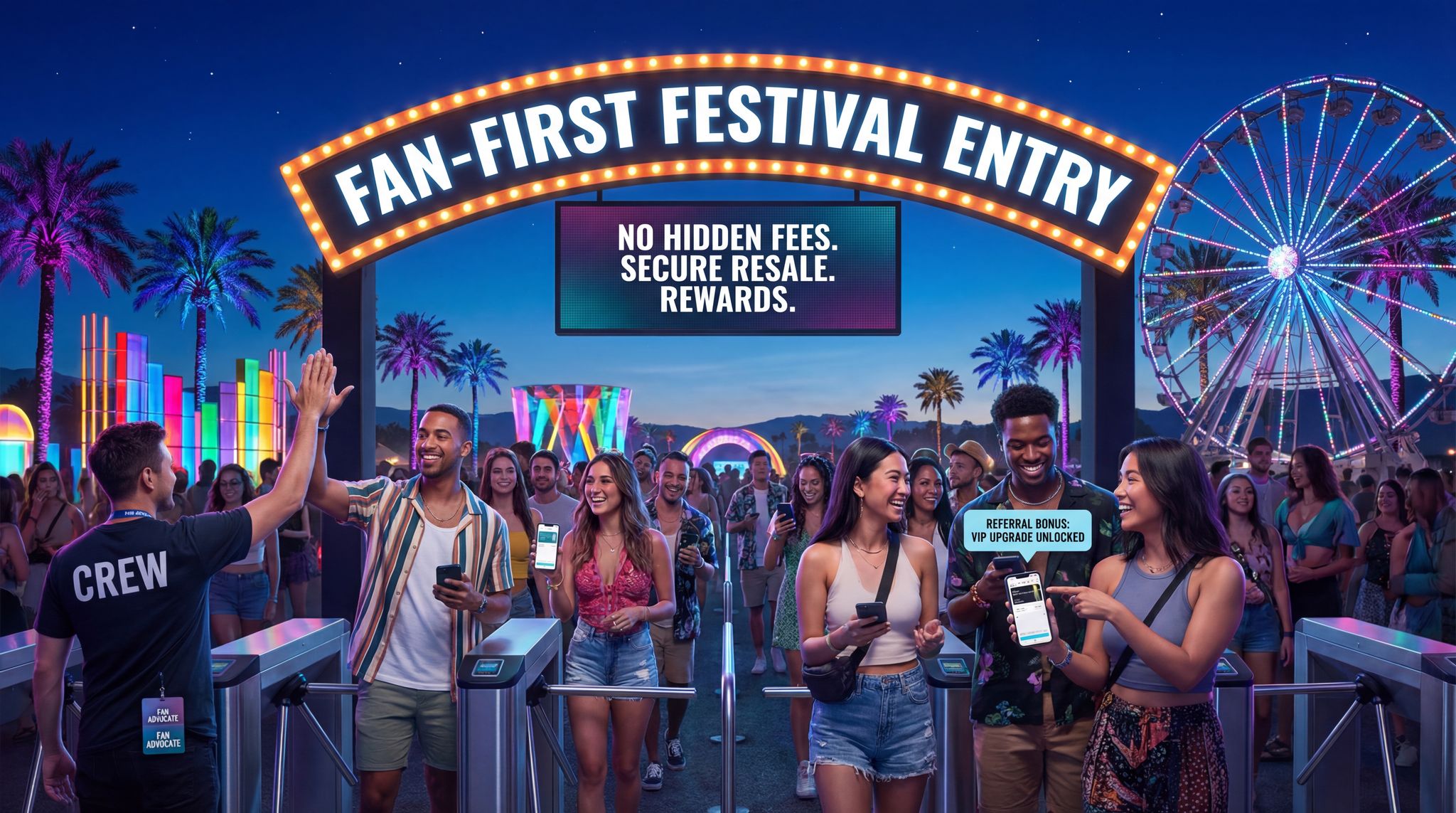
A more universally welcomed use of tech in ticketing is in combating scalping and enabling fair resale. Festivals have been using innovations like blockchain verification and mobile ID checks to ensure tickets can’t be resold for a profit (or if they are, the festival can control it). For example, some tickets now have secure QR codes that refresh and are tied to the purchaser’s identity, making it very hard for scalpers to sell fraudulent copies. Official festival apps often include a ticket transfer feature – fans who can’t attend can easily transfer the ticket to a friend through the app, which updates the barcode and owner info instantly. This not only adds convenience but also keeps the inventory under the festival’s oversight, reducing scams. On the resale front, festivals are launching face-value resale exchanges where ticket holders can list their tickets for other fans at the original price (or a capped price). Technology matches sellers with buyers in a waitlist system, automatically handling payment and issuing a new valid ticket to the buyer while invalidating the seller’s. By 2026, many major festivals have virtually eliminated old-school street scalpers and massively reduced fraudulent ticket incidents thanks to these tech measures. Fans appreciate the increased security – nobody wants to travel to a festival and get turned away at the gate by a fake ticket. And producers appreciate that more of the revenue stays in the primary market or authorized channels. It’s a great example of innovation that protects the community and the bottom line simultaneously. Attendee trust is enhanced by these moves, proving that not all ticketing tech is antagonistic to fan interests; when done right, it can be very fan-friendly. After all, a festival’s relationship with its audience starts the moment tickets go on sale – leveraging tech to make that process smooth, fair, and secure is one of the wisest investments a producer can make.
AR, VR and the Metaverse: Engagement or Distraction?
Augmented Reality On-Site: Novelty with Limits
Augmented reality (AR) has been a buzzword in festival circles, often advertised as a way to create “immersive experiences” on festival grounds. In practice, AR at festivals usually involves aiming your smartphone camera at stages or art installations to reveal extra visuals on-screen. A few high-profile events have tried it: Coachella, for one, introduced an AR feature in its app for the Sahara Tent in 2019, where Coachella cameras used augmented reality. It was undeniably cool in concept, and some fans enjoyed snapping AR-enhanced photos. But did it meaningfully improve the festival? The general consensus is not really. Only a small slice of the audience used the feature (it required downloading the app and choosing to engage), and it was only active between sets, not during the main performances. The majority of attendees were either unaware of it or not motivated enough to pull out their phones when they could be living in the moment. AR can also create a paradox: festivals typically encourage people not to experience the show through a screen, yet AR features ask them to do exactly that. So while on-site AR activations can generate marketing buzz and some extra sponsor opportunities (imagine an AR scavenger hunt with brand tie-ins), they remain side attractions. The technology is still fun and worth experimenting with in moderation – for instance, offering AR selfiemaker filters or interactive map overlays – but it hasn’t proven to be a game-changer in terms of attendee satisfaction. The smart play is to ensure any AR is opt-in and additive (it shouldn’t interrupt or distract from the core festival), and to gauge feedback. If 5% of attendees love it and everyone else ignores it, that might be fine – as long as it didn’t cost a fortune to implement. AR’s value in 2026 is thus mostly as a light engagement tool and a way to score innovation points, rather than a fundamental pillar of festival experience.
Virtual Reality Festivals: Hype from the Pandemic
In the throes of the 2020 pandemic, virtual reality festivals and digital worlds were touted as the future of live music. We saw fully virtual festivals in platforms like Fortnite, Minecraft, and dedicated “metaverse” spaces, complete with digital avatars dancing in lieu of real crowds. Some of these events were impressively produced (Tomorrowland’s 2020 virtual edition, for example, built a stunning 3D island and reportedly drew hundreds of thousands of viewers). Niche platforms like Decentraland even launched a “Metaverse Music Festival” with big-name DJs and artists, as noted when Decentraland’s metaverse music festival failed to boost activity. Fast forward to 2026, however, and the metaverse hype has cooled dramatically for the festival industry. Virtual festivals turned out to be great as stopgaps or marketing experiments, but they have not supplanted physical events – nor do they generate comparable excitement or revenue. A case in point: Decentraland’s heavily promoted 2022 Metaverse Music Festival featured over 200 artists (including global stars like Deadmau5 and Paris Hilton), yet it attracted only around 50,000 unique virtual attendees, a stark contrast to Decentraland’s previous music festival attendance. For a global online event, that number is a drop in the bucket, and it didn’t even boost the platform’s user base beyond the usual crypto crowd (daily active users stayed extremely low), according to Decentraland reports from October. Meanwhile, when real festivals returned in 2022 and 2023, it became clear that the communal, sensory experience of being on-site is something VR simply can’t replicate. Watching a livestream or VR gig at home is no substitute for feeling the bass in your chest, tasting the food, and being surrounded by 50,000 fellow fans.
When analyzing the VR concert experience and the true trajectory of virtual reality music festivals’ popularity in 2026, the data points to a hybrid future. Rather than replacing the physical event, top-tier producers are licensing 360-degree broadcast rights to tech partners. This allows fans who cannot travel to purchase a premium digital ticket, transforming a localized show into a global broadcast without cannibalizing on-site ticket sales.
That said, VR hasn’t disappeared entirely. Some festivals continue to live-stream select performances in 360° VR for remote fans, and there’s modest but steady viewership for these (often via YouTube VR or Oculus platforms). They serve more as promotional tools – keeping distant fans engaged with the brand – than major moneymakers. A few innovating festivals are also using VR behind the scenes: for example, running VR safety drills for staff to simulate crowd scenarios, utilizing virtual reality safety drills for festivals, or designing stages in VR to visualize sightlines before anything is built. These practical applications of VR tech deliver value in planning and training. But the notion of fans regularly attending in VR headsets from their couch – that’s been relegated to niche status. The consensus: physical festivals are here to stay, and virtual add-ons are just that – add-ons. Producers should invest in VR only if it clearly extends the festival’s reach or improves preparedness, not because of FOMO on a tech trend.
The Metaverse, NFTs and Mixed Reality: Cautionary Tales
Beyond VR, the broader “metaverse” concept (a persistent online world where festival communities could mingle year-round) was heavily marketed in 2021-2022. Some festivals created virtual twin worlds or NFT galleries, expecting fans to flock to virtual campsites or merchandise stores. For the most part, these ventures struggled to gain traction. NFT drops, in particular, often overpromised and underdelivered. Many festivals tried selling NFT art or “collectibles” tied to their event – say a 3D avatar or a limited digital poster – expecting a new revenue stream. Initial curiosity saw some high-priced auctions (Coachella’s NFT lifetime passes totaled $1.5 million from 10 buyers, before Coachella’s NFT-based lifetime passes got stuck), but sustaining that interest proved difficult. When cryptocurrency markets cooled, so did the appetite for festival NFTs. By 2024, several planned NFT releases were quietly shelved as organizers realized the crossover of hardcore festival-goers and NFT speculators was small. Moreover, technical fiascos like the Coachella NFT situation – where holders lost access due to a partner’s failure, meaning holders can’t access or use them anymore – hurt trust in these experiments.
Despite the broader crypto crash, a niche market remains for highly targeted digital assets. Some boutique electronic and art-focused events are experimenting with AI-driven NFT features in 2026 as must-have perks for high-end collectors. Instead of speculative trading, these tokens act as immutable VIP memberships, granting lifetime access, backstage privileges, or dynamically generated digital artwork that evolves based on the sets the attendee watches. For the average promoter, however, this remains a high-effort, low-priority integration unless your core demographic is already deeply embedded in Web3.
Mixed reality (MR) and holographic performances also get headlines from time to time. We all remember the surprise hologram of Tupac at Coachella 2012, a moment that sparked talk of virtual artist “appearances” becoming common. While hologram technology has improved (the ABBA Voyage show in London uses hyper-realistic digital avatars of the band to great acclaim), it’s telling that this is essentially a standalone attraction, not woven into multi-artist festivals. When festivals have tried novel MR experiences – like interactive 3D visuals on stage through AR goggles – it’s typically in a sponsored activation for a small group, not something affecting the entire crowd. These cutting-edge visual tech demos can be breathtaking, but they’re often expensive one-offs that don’t scale well. A festival producer must ask: would investing, say, $100k in a VR game or hologram showcase yield more attendee enjoyment than putting that money into better sound systems or art installations everyone can appreciate? Usually, the answer is no. In this sense, the flashy “metaverse” style projects tend to be costly distractions unless you have a very specific strategy and audience for them.
Table: Selected Festival Tech Trends – Promise vs. Reality in 2026
| Tech Trend & Hype | Promised Benefits | Reality Check (Outcome) | Verdict (Value or Hype?) |
|---|---|---|---|
| AI scheduling tools | Automatically optimize stage schedules and staff shifts for maximum efficiency. | Successfully used at several large festivals to reduce artist overlap and save planner hours. Crew deployment became more precise. | Value: Delivered smoother operations and fewer conflicts. |
| VR festivals & metaverse | Unlimited global audience, new revenue streams from virtual attendance. | Low sustained engagement – e.g. ~50k attended a hyped metaverse fest, as reported by BeInCrypto on Decentraland’s failure, with little revenue and no match for real event atmosphere. | Hype: Novelty interest but little long-term value. |
| Cashless RFID payments | Faster transactions, higher spend per fan, better data on sales. | Proven at countless events: 20%+ higher on-site revenue and doubled transaction counts after adoption, according to EasyTransac’s payment trends study and revenue maximization data. Shorter lines and happier vendors. | Value: Tangible boost to revenue & fan convenience. |
| NFT tickets & collectibles | New collectible revenue, fan investment in festival brand via digital assets. | Initial auctions (e.g. $1.4M Coachella NFTs) successful, but technical issues stranded assets, as seen with Coachella’s stuck lifetime passes, and general fan interest faded with crypto downturn. | Hype: Unreliable and niche appeal; high risk for now. |
| Facial recognition entry | Ultra-fast entry, enhanced security by verifying IDs with faces. | Piloted at some venues but halted after privacy backlash and accuracy concerns. Fans and artists voiced strong opposition to being face-scanned. | Hype: More trouble than benefit; trust issues outweigh speed gains. |
| Drone light shows | Eco-friendly “fireworks replacement” to wow crowds with aerial displays. | Growing adoption at events for night spectacles – generally positive reception, though costs are high and weather can ground drones. (Not revenue-driving, but enhances show if done well.) | Mixed: Great visual impact and safety benefits, but an entertainment spend, not a direct ROI generator. |
As the table above shows, festival tech trends land on a spectrum from truly value-adding to mostly hype. The key is to critically evaluate each innovation in context: Will this tech tangibly improve the fan experience or operations? If not, it might be one to skip despite the hype.
Wearables, IoT and Safety Tech: Tech that Protects
Real-Time Health Monitoring Wearables
Keeping attendees safe is priority number one for any festival, and new wearable health tech is emerging as a promising tool in the safety arsenal. In recent years, some festivals have started offering (or selling) sensor wristbands and patches that track vitals like heart rate, body temperature, and hydration levels in real time, utilizing wearable health tech at festivals. The idea is that these devices can alert the user – or medical staff – to early signs of heat exhaustion, dehydration, or even panic, allowing for quick intervention. For example, a pilot program at a desert rave in 2025 gave volunteers smart wristbands that would vibrate and flash if their body temp went into a danger zone, reminding them to seek shade and water. In a few cases, medical teams monitored aggregated anonymous data from wearables to pinpoint hotspots in the venue where many attendees’ vitals were spiking, so they could send cooling resources. This technology showed its life-saving potential in one instance where a festival-goer’s wearable triggered an alert for arrhythmia; medics responded within minutes and likely prevented a serious incident. While wearable adoption isn’t widespread yet, the proof-of-concept is strong: these devices can be the canary in the coal mine for health issues in a crowd. Festivals embracing such tech often do so on an opt-in basis (attendees might sign up for a health monitoring program). Privacy is respected by focusing on real-time alerts rather than long-term data storage. If costs continue to come down, expect more events – especially in hot climates – to partner with health-tech startups to distribute smart hydration patches or heart-rate bands. The value is clear: better-informed attendees and staff can prevent medical emergencies, keeping the fun going safely.
Panic-Button Apps and Emergency Alerts
On the personal safety front, mobile safety apps and “panic button” features have proven their worth at festivals. The concept is simple but powerful: an attendee in distress can tap a button on the festival’s app (or a dedicated safety app) to immediately alert on-site security or medical teams to their location. This tech empowers fans to call for help discreetly, without having to locate a staff member or make a phone call in a noisy environment. Several festivals across the US, UK, and Australia rolled out such panic-button systems in the last couple of years, often in collaboration with app developers or sponsors focused on safety. The results have been encouraging – there are documented cases where assaults were prevented or medical crises averted thanks to a quick app alert. For instance, at a 2022 EDM festival in California, a bystander used the app’s emergency button to report an unconscious person; medics pinpointed the GPS and reached the scene in under three minutes, far faster than if someone had run to a medical tent. Attendee surveys show that just knowing this safety net exists improves peace of mind, especially for solo attendees or vulnerable groups. Beyond panic buttons, many festival apps also include mass notification features: if there’s severe weather approaching or a schedule change due to an incident, push notifications blast out alerts to all users. This immediacy is a game-changer for emergency communication, replacing or supplementing audio announcements that not everyone might hear. To implement these tools effectively, festivals need strong cell/Wi-Fi coverage and to promote the app download heavily (adoption is key). They must also train response teams to triage and react to app alerts swiftly. When done right, safety tech preserves the festival’s vibe while adding a layer of protection, showing that technology can genuinely bolster trust and well-being on-site.
IoT Sensors for Crowd and Structural Safety
It’s not just personal devices – Internet of Things (IoT) sensors are quietly making festivals safer and more efficient at the structural level. Organizers have begun deploying networks of sensors around their sites to monitor environmental conditions, infrastructure stresses, and crowd density in real time. Consider smart stage structures: companies now offer IoT sensor systems for stages, tents, and trusses that track wind speed, load weights, and vibrations on critical components, part of the shift towards high-tech operations and automated systems. If gusts suddenly rise or a rigging point bears unexpected weight, the system can instantly alert engineers to take action (like securing equipment or pausing a show if necessary). This kind of early warning is invaluable – it’s far better to proactively lower a video wall when wind hits a threshold than to have it come crashing down. Likewise, IoT sensors monitor ground conditions such as mud or water buildup in prone areas (glastonbury, we’re looking at you!); by detecting flooding early, staff can deploy hay or pumps before things get disastrous. On the crowd management side, we have thermal and pressure sensors that can estimate crowd density. Placed in floor mats or barriers, they feed data into control centers showing if one area is getting too packed. Some festivals combine this with AI camera analysis – if a crowd surge or bottleneck is detected, staff are alerted immediately to intervene or re-route people, leveraging crowd management tech for festivals. These tools were partly spurred by tragedies like Astroworld 2021; now technology assists human spotters in identifying dangerous crowd conditions faster. Even sound level sensors around stages adjust audio in real time to prevent both damage to hearing and bleed-over between stages (we’ve seen some festivals use IoT decibel monitors that automatically lower PA volume if it exceeds permitted levels outside the venue boundary, keeping neighbors and regulators happy).
All these examples illustrate a powerful point: the newest festival tech doesn’t have to be flashy to deliver value. IoT sensors, sturdy networking, and integrated monitoring dashboards may not be visible to fans, but they create a safer environment for everyone. Festivals that invest in this “infrastructure tech” – essentially upgrading their backstage toolkit with smart systems – are finding it pays off through reduced incidents, better compliance with safety regulations, and smoother logistics. A 2026 mantra in festival operations is “Infrastructure is the new headliner,” meaning fans increasingly expect seamless basics (power, safety, sanitation) at a level that rivals the big names on stage. High-tech safety and infrastructure upgrades play a huge role in meeting those expectations. When you can confidently say your stages are wind-safe, your crowds are being density-monitored, and help is a button-press away, you’ve achieved a significant innovation that truly matters.
Table: High-Impact Tech Investments vs. Overhyped Tech Distractions
| High-Impact Tech to Invest In (Proven Value) | Overhyped or Low-ROI Tech (Use Caution) |
|---|---|
| Cashless payment systems – RFID wristbands and mobile pay for fast, easy transactions (boosts revenue and data collection). | VR/Metaverse festivals – fully virtual events or VR “worlds” that few fans engage with beyond novelty. |
| Automation & self-service – ticket scanning kiosks, automated bars, chatbots that streamline operations and reduce labor needs. | NFT collectibles & crypto tickets – niche interest and technical risks; can create more headaches than value. |
| Safety tech – panic-button apps, wearable health sensors, crowd density monitoring that prevent incidents and improve response times. | Holograms & AR gimmicks – expensive on-stage VR/AR effects or holographic cameos that don’t significantly enhance most attendees’ experience. |
| Data analytics tools – real-time dashboards for sales, crowd movement, and social media to make informed decisions during the event. | Surge pricing algorithms – dynamic ticket pricing that can alienate fans and attract negative publicity if not carefully controlled. |
| Global ticketing integration – multi-language, multi-currency platforms and local mobile wallets (Alipay, etc.) to welcome international attendees with ease. | Biometric entry (e.g. facial recognition) – operational speed gains are offset by privacy concerns and potential bias, leading many to avoid this tech. |
This comparison highlights where festival producers are generally getting the best bang for their tech buck versus what tends to be more flash than substance. It’s notable that the high-impact list leans toward practical upgrades — things that solve common pain points (long lines, safety risks, payment friction, operational inefficiency). The overhyped side often corresponds to technologies that got media buzz or one-off trials but haven’t proven they can materially improve the core festival experience or economics.
Festival Mobile Apps and Digital Engagement
Useful App Features vs. Bloat
By 2026, nearly every sizeable festival has an official mobile app, but not all apps are created equal. The difference comes down to focusing on features that attendees truly find useful versus loading the app with shiny but seldom-used extras. The baseline features that have proven their value are: schedules with custom reminders, interactive maps, artist info and set times, and real-time updates/alerts. Fans love being able to create a personal schedule and get a 15-minute reminder before their favourite DJ hits the stage. Interactive venue maps that let users tap stages, find water stations, or see which food vendors are nearby can greatly reduce confusion on-site. Crucially, these apps also serve as the communication lifeline if plans change (“Stage A set delayed 30 min” or weather warnings). Festivals that keep their app simple, fast, and reliable in these core areas see very high adoption rates – oftentimes 60-70% of attendees actively use the app during the event. On the flip side, we’ve seen apps bogged down by feature-bloat flop. For example, some apps tried to incorporate a full-blown social network or AR mini-games that few people asked for. Unless an app feature aligns with attendee needs at the festival (finding info, navigating, safety, maybe some light engagement), it risks being unused clutter. Accessibility is another must: a truly valuable festival app is designed to be usable by all, including people with disabilities. Simple tweaks like scalable text, high-contrast modes, and content read-aloud can make a huge difference, emphasizing the importance of designing accessible festival mobile apps. Organizers are increasingly recognizing that an app which is inclusive and user-centric enhances the experience for everyone – it embodies tech done right, where the attendee feels more empowered, not more distracted. The mantra for 2026: pack your app with utility, test it rigorously (especially under strained network conditions), and cut the gimmicks that don’t serve a clear purpose.
Engaging Attendees on Their Devices (Responsibly)
When used thoughtfully, festival apps and digital channels can actually deepen engagement rather than detract from it. One successful tactic has been integrating interactive elements that involve attendees in the show. For instance, some festivals run live polls or Q&A during artist sets via the app (“Which classic track should the DJ play next?”). When displayed on big screens, these polls can make the crowd feel directly involved in the performance. Another win has been camera filters and photo contests: the festival app or an Instagram integration offers custom AR filters or frames for the event, encouraging fans to share their experiences with a unified hashtag. This is fun for attendees and doubles as organic marketing. However, organizers walk a fine line – they want to encourage sharing and interaction, but not create a sea of people glued to their phones instead of the music. One best practice is to confine most digital engagements to transitional periods or specific moments (like a daytime contest or between-set polls), rather than during headline sets when fans should be immersed IRL. Push notifications are great for urgent info, but for promotion or engagement, less is more; nobody wants an app that pings incessantly. Social media tie-ins also help offload some engagement outside the official app. Festivals often leverage Facebook groups or Discord servers for year-round community chatter, rather than bloating their app with chat functions. Post-event, the app can prompt fans to relive highlights, check out aftermovies, or buy merch – extending the experience (and revenue) without being intrusive. The key is to use digital engagement tools to add meaningful value or fun, and always give the user control (opt-ins for notifications, etc.). The festivals thriving in the digital realm treat attendee attention as precious: they strive to enhance the live experience, not pull people away from it. In that sense, a well-designed festival app or campaign feels like a helpful companion, not a distraction.
Promoters frequently ask consultants to suggest technology features that bridge the gap between passive viewing and active participation. A common question is: how can technology be integrated into festival programming to captivate attendees? For producers operating in massive, remote environments—such as sprawling outdoor sites in Canada, the US Midwest, or regional Australia—the answer lies in localized, interactive tech. Think mesh-networked LED wristbands that pulse in sync with the headliner’s bassline, or location-based app triggers that unlock secret acoustic sets when fans wander into specific wooded areas. These integrations make the audience feel like part of the production, rather than just spectators.
Building Community and Loyalty Through Tech
Technology also plays a role in fostering the sense of community that makes festivals so special. Many events have introduced loyalty programs or digital badges that reward repeat attendees. For example, an app might award you a “5-Year Festival Veteran” badge that comes with perks like a dedicated entrance lane or a free merch item. These kinds of digital credential programs make longtime fans feel seen and appreciated, strengthening their bond to the festival. Some festivals extend this further by enabling attendees to create profiles in the app with their music preferences, and then using that data (respectfully and with consent) to tailor recommendations: e.g., “You loved our indie stage – did you know we run a smaller autumn event with similar vibes?” This targeted communication is far more effective than generic blasts. A case study in community tech is Tomorrowland’s approach – they’ve built an online platform where ticket buyers from the same region can connect before the festival, coordinate travel, or even plan flag meet-ups. By the time they arrive on site, they’ve already bonded with others, enhancing the feeling that “the people you meet are part of the experience.” Smaller festivals have adopted similar strategies using Facebook groups or forums and then integrating those communities into their apps or newsletters. The technology here isn’t cutting-edge; it’s more about clever use of existing tools to make fans feel like members of a tribe year-round. The ROI, while hard to measure directly, comes in the form of increased loyalty, word-of-mouth promotion, and higher lifetime attendance. People return to festivals that made them feel like they belong. In 2026, the most tech-innovative festival might not be the one with VR headsets at the gate, but the one whose app and digital ecosystem best shores up the human connections that keep fans coming back every summer.
Finding the Right Balance: Innovation vs. Authenticity
Tech Should Serve the Experience, Not Steal the Show
The overarching lesson from festivals that successfully adopt new tech is that technology must serve a clear purpose. It should solve a problem, enhance a moment, or remove a friction point – all in support of the festival’s artistic vision and attendee enjoyment. The danger zone is when producers chase a trend purely for PR or because a sponsor is pushing a certain activation. Veteran organizers advise younger promoters: don’t implement tech that you wouldn’t be excited to use yourself on show day. If you’re a fan in that crowd, would this gadget or system genuinely improve your time? Keeping this perspective helps avoid tech-for-tech’s sake. Many beloved festivals remain somewhat low-tech on purpose. They recognise that sometimes the simplest innovations yield the biggest impact: things like widely available free Wi-Fi (so fans can stay connected), abundant charging stations, or LED wristbands that every attendee wears to become part of the light show at night (as seen at some pop concerts) are relatively straightforward but make people feel good and taken care of. In contrast, a complicated second-screen AR game might sound cool but could just pull people out of the moment. Festivals are ultimately sensory, physical experiences — a temporary city celebrating music, art, and community. No one comes home raving that “the app was the best part” or “the AI was killer”; they rave about the performances, the atmosphere, the new friends made. Tech’s role is to amplify those core elements, not steal the spotlight. The best innovations of 2026 are almost invisible – their presence is felt as shorter lines, safer crowds, happier fans, rather than as gimmicks.
Lessons from Industry Veterans and Case Studies
Experienced festival producers often reference a few key case studies when discussing tech balance. One is Glastonbury: despite being one of the world’s largest, it’s known for a somewhat old-school approach – limited cell signal, often cash-friendly, and minimal high-tech extravagance – yet it sells out every year and is adored for its spirit. Glastonbury has innovated in big ways (in sustainability, in massive video production on stages) but it’s always in service of their ethos of community and artistic freedom. On the flip side, a certain international festival in 2019 boasted about having a full “smart festival” experience with an AI assistant, VR art galleries, and drone deliveries of merchandise. Sounds impressive, but attendees panned the event because the basics fell short: disorganized entry, poor sound bleed management, and not enough bathrooms. All the high-tech bells and whistles couldn’t compensate for the frustration caused by those fundamental failings. This illustrates a crucial point echoed by professionals: get the fundamentals perfect, then layer tech on top. We also hear from industry veterans that data should drive decisions. Many festivals now conduct post-event surveys and analyze engagement data to see which tech features were actually used and appreciated. One festival discovered that their costly AR photo booth had less than 5% usage, while an in-app shuttle tracking feature (which they considered minor) was a huge hit. That informed their priorities for the next year – more practical transit info, less AR investment. These kinds of insights help festivals iterate wisely.
Professional associations and conferences echo the same sentiment. At the 2025 International Live Music Conference (ILMC), a panel of festival directors agreed that tech innovation needs to be mission-driven: start with what you want to improve (quicker entry, greener operations, more inclusivity) and then find the tech to enable it, not the other way around. They also emphasized collaboration with trusted tech partners – whether that’s a ticketing platform like Ticket Fairy that can implement needed features, or a startup that can pilot a new service on-site. In fact, treating your festival as an innovation lab with startups (on a limited trial basis) can be a smart way to test value. Several festivals have done this by hosting startup competitions or demo areas, essentially saying “we’ll give you real-world exposure, you help solve a problem for us.” It’s a win-win that can surface the next big useful tech early, while containing risk. The guiding principle from the veterans: maintain credibility and trust with your audience above all. If a tech could undermine attendee trust (like dynamic pricing surprises or mishandling personal data), tread very carefully or not at all. Fans will forgive a buggy app or a short Wi-Fi outage, but they won’t forget feeling exploited or unsafe. Use tech to show you care more, not to squeeze more.
The Human Element: Keeping the Festival Soul
At the end of the day, festivals are about human connection – technology should never erode that. Innovations that succeed tend to either disappear into the background (like an efficient cashless system that lets people get back to dancing quicker) or facilitate more connection (like a community app that helps fans meet up or a feature that lets someone share a moment with the crowd). The tech that fails often does so because it asks people to engage with devices instead of each other or because it creates barriers (a VIP wristband tech glitch that locks people out, for example). Many organizers keep a sort of mission statement that they weigh decisions against. It might be as simple as, “Our festival is about inclusivity, joy, and escape – will this new technology add to that or detract from it?” This values check is critical. It’s how one multi-decade festival decided against electronic VIP viewing glasses that would have given VIPs lyrics and info about artists in real time – they realized it would create a literal visualization of hierarchy in the crowd (VIPs with special glasses vs. everyone else) which clashed with their community ethos. Instead, they invested in better large-screen visuals for everyone. That’s a small example of keeping the soul intact.
Fans today are pretty savvy; they can sense when tech is used to genuinely enhance their experience versus increase profit at their expense. Being transparent and communicating the purpose of new tech features can help keep everyone on the same page. Did you implement an AI recommendation engine in the app? Let users know it’s there to help them discover artists across stages they might love (and allow opt-out). Using RFID chips for entry? Explain how it improves security and speeds entry so they don’t think it’s for surveillance. When people understand the why and see the benefits, they’re more open to the wow. And if a certain hot tech doesn’t pass these sniff tests, it’s perfectly okay to take a pass on it. Sometimes the bravest innovation is saying “no” to a fad and doubling down on what you know works.
In conclusion, the path to festival tech success in 2026 and beyond lies in staying fan-focused, data-informed, and authentically aligned with your festival’s identity. Embrace the tools that genuinely make your festival safer, smoother, and more magical, and don’t be afraid to skip the ones that don’t. Innovation isn’t about adopting every new technology – it’s about wisely choosing the ones that let your festival shine.