Beyond Ticketing & Cashless: RFID & NFC Unlocking Personalized Experiences in 2026
RFID/NFC in 2026: Beyond Entry & Payment
From Access Control to Experience Platform
Events have widely adopted RFID (Radio Frequency Identification) and NFC (Near Field Communication) wristbands for fast entry and cashless payments. By 2026, nearly every major festival and large venue issues RFID-enabled wristbands or badges to eliminate ticket fraud and speed up queues, effectively busting top myths about RFID reliability. But entry and transactions are just the beginning. A decade of innovation has transformed RFID/NFC from a back-end tool into a full-fledged experience platform. Instead of merely scanning tickets, events now use these smart tags to trigger interactive content, personalized services, and real-time data insights about the crowd. Modern event organizers view RFID/NFC as more than a gatekeeper – it’s the digital backbone for creative engagement throughout an event.
Why 2026 Spurs Advanced Uses
Several trends converged by 2026 to push RFID/NFC beyond the basics. Technology costs have fallen – RFID tags and readers are cheaper, and battery-free NFC chips can be embedded in everything from wristbands to laminated badges at low cost. Wireless infrastructure is more robust at venues, enabling reliable scans even in dense crowds. Attendee expectations have risen, too. In the streaming era, live events differentiate themselves with unique on-site experiences, and interactive tech is a key differentiator. Sponsors and promoters are also hungry for data; RFID’s real-time data generation meets the demand for actionable insights during events, often by integrating ticketing, RFID, and apps for seamless operations. Additionally, the pandemic accelerated demand for contactless solutions, making touchless RFID interactions mainstream, as outlined in complete guides to RFID ticketing technology – now that the infrastructure is in place, organisers are eager to maximise its potential in new ways.
Beyond Basics: New Dimensions of RFID & NFC
With the fundamentals of ticketing and cashless payments mastered, forward-thinking events are layering on creative features. Picture a music festival where your wristband not only gets you through the gate and pays for your lunch, but also unlocks secret stages via scavenger hunts, earns loyalty points towards merch, and helps you connect with fellow fans. Conferences are using NFC badges to swap digital business cards in a tap and to deliver personalised session content after the show. Stadiums link wristbands with spectator apps to offer instant replays or special promotions when you approach a concession. In short, RFID/NFC technology has evolved into a multipurpose tool that can weave personalised, immersive moments into the live event fabric. The sections below explore these advanced applications – from gamification and loyalty programs to crowd analytics and safety tracking – with examples and practical tips for implementation.
| Aspect | Traditional RFID Use (Entry/Payment) | Advanced RFID Use (Experiential) |
|---|---|---|
| Primary Purpose | Validate tickets; process cashless sales | Drive engagement & personalised interactions |
| Touchpoints | Entry gates; POS terminals at vendors | Multiple zones: sponsor booths, attractions, info kiosks |
| Data Collected | Entry scans, purchase transactions | Movement patterns, activity participation, content interests |
| Attendee Benefit | Shorter queues, convenient purchases | Interactive games, tailored rewards, VIP perks |
| Organizer Benefit | Reduced fraud, higher spend per head | Rich analytics, live feedback, higher attendee satisfaction |
Gamification and Interactive Experiences
RFID-Powered Scavenger Hunts & Challenges
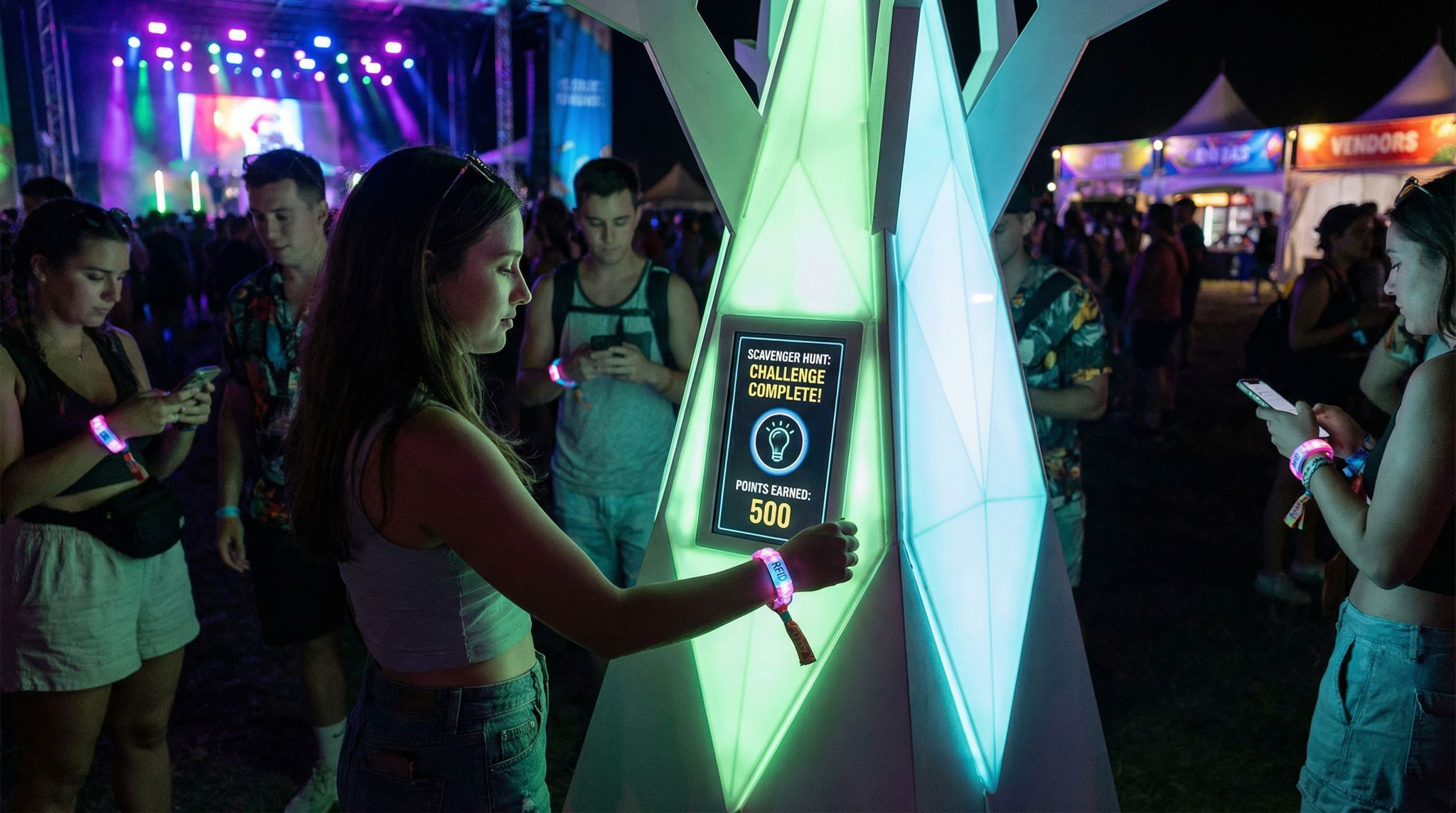
One of the most popular advanced uses of RFID/NFC in 2026 is powering interactive scavenger hunts and challenges that span an event. By planting RFID reader checkpoints around a venue, organizers turn the entire event site into a gaming playground. Attendees tap their wristbands at each checkpoint to collect virtual tokens or clues. Their progress and scores can be tracked in real time on leaderboards or the event’s mobile app, creating a friendly competition atmosphere. As noted in articles on creative ways to use RFID for immersive events, these interactions can be visualized in real-time for maximum engagement. For example, a large comic-con style convention might challenge attendees to visit five themed zones and scan in each to win a prize – encouraging exploration of the whole venue and increased foot traffic to sponsor areas. Festivals have implemented “treasure hunts” where finding and tapping hidden NFC tags triggers special content (like a short music clip or AR experience) and earns points towards merchandise discounts. These RFID scavenger hunts not only entertain attendees but also strategically drive traffic to less-visited areas and sponsor booths.
Smooth Entry With Mobile Check-In
Scan tickets and manage entry with our mobile check-in app. Supports photo ID verification, real-time capacity tracking, and multi-gate coordination.
Implementation tips: Keep RFID game mechanics straightforward and reliable. Use robust, weatherproof RFID readers at checkpoints and have an offline mode in case connectivity drops (e.g., readers that store scans and sync later). This reliability is crucial because RFID relies on local networks rather than spotty internet, ensuring consistent signal performance. Clearly communicate the game rules via the event app or signage, and offer meaningful rewards – even symbolic prizes like a badge or a shout-out on the main stage can boost participation. Importantly, ensure the game aligns with your event’s theme and audience. A tech conference might use an NFC-based trivia quiz at exhibitor booths, while a music festival hunt could revolve around discovering art installations. Test the entire scavenger workflow before the event with a small group to iron out any technical glitches or confusing steps. When done right, RFID-powered quests turn passive attendees into active adventurers.
Interactive Zones and Smart Exhibits
Beyond formal scavenger hunts, RFID and NFC enable interactive zones and exhibits throughout an event venue. Imagine an “experiential” sponsor installation where tapping your NFC badge triggers a personalised experience – for example, an art exhibit projection that changes based on your favourite colours (pulled from your attendee profile), or a gaming booth that loads your saved high score when you arrive. In 2026, many experiential marketing activations at events use RFID to recognise specific attendees and tailor the interaction. At a beer festival, a brewery might set up an RFID-enabled tasting wall: when you tap your wristband, a screen could display your tasting history and recommend which beer to sample next based on your preferences. Interactive photo booths are another hit – an attendee can tap their wristband to automatically pull up their profile or social media, snap a photo, and then instantly receive the picture digitally or have it shared (with permission) to their social accounts. These touchpoints create memorable, personalised moments that go far beyond the “badge scan” of old. They also generate valuable data – showing which experiences were most popular – and give sponsors quantifiable engagement metrics (e.g., number of taps/participants) to prove ROI on their activations. Success stories show how leveraging RFID for better event experiences allows marketers to better align with attendee preferences.
Ready to Sell Tickets?
Create professional event pages with built-in payment processing, marketing tools, and real-time analytics.
Lesson from the field: Ensure any interactive installation has a speedy and intuitive user flow. No one should have to tap more than once or wait more than a second or two for the system to react – otherwise the magic is lost. Use visual and audio feedback (like a light or sound when a tap is successful) to confirm to attendees that something is happening. Have staff or clear instructions present to guide people on how to use the RFID/NFC interaction. It’s also wise to include a backup trigger (like a QR code or a manual button) in case someone’s wristband isn’t reading – inclusive design prevents frustration, as noted in guides on accessible festival tech planning. Finally, build in a measurement mechanism: log every interaction so you can report engagement stats to stakeholders and learn which activations resonated most.
Social Connectivity via Wristbands
Live events are inherently social, and RFID/NFC tech can lower the barriers to making connections. One innovative use is linking attendee profiles or social media accounts to their wristbands, enabling on-site “friending” and networking with a simple tap. A famous example comes from a major EDM festival where organisers introduced “friendship bracelets” with RFID: if two attendees pressed their wristbands together at the same time, the system would register a connection and later email them each other’s social media or contact info. This innovation in RFID technology for event ticketing removes the friction of exchanging details, as the system knows their preferences. In 2026, this concept has expanded to conferences and networking events – instead of exchanging business cards, professionals can tap NFC name badges to instantly swap LinkedIn profiles or contact details. This gamifies networking and ensures contacts aren’t lost. It’s opt-in and secure; participants link their profiles during registration and agree to share when tapping.
RFID/NFC also enables community-building features like digital autograph collection or content sharing. For instance, at a fan expo, an attendee might scan their badge at a kiosk after meeting a celebrity guest, automatically adding a digital autograph or bonus content (like a video greeting from that guest) to their account. Social media integration is another avenue: events have deployed stations where you tap your wristband to “like” a performer or check-in at a location, instantly posting to your social feed (if you gave permissions beforehand). This creates organic buzz as each tap can share branded content, essentially turning attendees into live influencers. The key is to make these interactions fun, voluntary, and beneficial to the attendee – a cool way to connect or share, not a marketing gimmick forced on them. When thoughtfully implemented, RFID-powered social features can transform an event into a connected community rather than a crowd of strangers.
Loyalty Programs and Attendee Rewards
Turning Attendees into Loyal Fans
RFID and NFC technology are driving sophisticated event loyalty programs in 2026. Event organizers are no longer thinking in terms of single events, but lifetime attendee value – and wristbands are the loyalty card. By assigning a unique ID to each attendee’s RFID tag and tying it to a customer profile, organisers can track an individual’s attendance and spending across multiple events and years. This data forms the backbone of loyalty schemes: for example, a festival might award points for every day attended and every on-site purchase made via the RFID wristband. These points accumulate in the attendee’s account within the event app. Frequent festival-goers or high spenders can then unlock perks like discounts on next year’s ticket, access to an exclusive lounge, or free merchandise. One UK music festival chain launched a tiered loyalty program where fans who attended three or more of their events in a season (verified by RFID scans at entry) received early access to lineup announcements and priority ticket presales the next year. By using RFID as the tracking mechanism, it’s seamless – the attendee doesn’t need to do anything extra; simply wearing their wristband and enjoying the event automatically counts towards rewards.
Data-Driven Event Marketing
Track ticket sales, demographics, marketing ROI, and social reach in real time. Exportable reports give you the insights to make smarter decisions.
Attendees respond well to these programs because they feel recognised and valued for their patronage. It also encourages repeat business – a conference might advertise that returning attendees (as identified by past NFC badge scans) get a special badge ribbon or a shout-out on stage, prompting people to come back year after year. Importantly, from a data perspective, loyalty tracking via RFID gives organisers granular insight into fan behaviour: how often they return, which events they never miss, and what activities on-site they engage in the most. These insights help tailor future rewards and even event programming to what loyal fans value. When implementing, be sure to clearly communicate the program terms and get attendee consent to track their activity for loyalty purposes (often handled during ticket purchase or wristband registration). Transparency and a genuine value exchange – “we’ll remember you and give you perks for coming back” – set the right tone for an ethical and successful event loyalty program.
Incentives and Gamified Rewards On-Site
Beyond long-term loyalty, RFID/NFC enables real-time reward mechanics during an event. Organizers can incentivise desired behaviours with instant gratification rewards. For instance, to encourage attendees to explore vendor booths at a trade show, each booth’s RFID reader might grant a certain number of points or a digital stamp when visited. If an attendee collects all stamps in their digital “event passport,” they could receive a prize or entry into a larger giveaway. This approach has been used at gaming conventions where visiting every indie game exhibit unlocked an exclusive in-app badge and a chance to win a free game console – driving footfall to all corners of the expo hall. At music festivals, some organisers run “tap loyalty” programs: every time you buy a drink or merch with your wristband, you earn reward points on the app, and you can redeem points on-site for upgrades (like a free snack after 10 purchases, or a fast-lane ride on the Ferris wheel for loyal customers). Because the RFID system tracks purchases and actions in real time, the rewards can be delivered instantly – a coupon could appear in your event app as soon as you hit a threshold, for example.
These gamified rewards turn routine actions into engaging experiences. However, there are important considerations. Make sure the rewards are achievable and clearly communicated – attendees should know how to earn and what they’ll get, without fine print surprises. Balance is key: if goals are too easy, it may cost the organiser too much in giveaways; too hard, and people won’t bother. An effective strategy is to partner with sponsors for the reward incentives. Facilitating engaging sponsorship opportunities allows brands to align with the event, while accurate data tracking ensures measurable results. Sponsors might provide the prizes (merch, discounts, freebies) in exchange for the increased traffic and data on participants. For example, a loyalty game at a food festival could be sponsored by a payment app – attendees who try dishes at 5 different stalls get £5 credit from the app. This offloads cost and adds a brand activation element. As always with RFID-driven perks, test the technology thoroughly to ensure points tally correctly and rewards issue without hiccups. A smooth, transparent rewards experience will keep attendees happily engaged and talking about how your event “thought of everything.”
Sponsor Integration for Loyalty & Engagement
Sponsors love the detailed analytics and guaranteed interactions that RFID/NFC activations provide. In 2026, forward-looking events are tightly integrating sponsors into their RFID-enabled loyalty and gamification programs. Branded challenges and reward stations have become common. For example, a global beverage sponsor might host an RFID checkpoint as part of a festival’s scavenger hunt – when attendees tap there, they not only progress in the game but also trigger a personalised coupon for that beverage, delivered to their phone or printed on the spot. This gives the attendee a reward and the sponsor a direct conversion opportunity. Sponsors can also use RFID data to measure engagement: they see exactly how many people tapped in at their booth, how long they stayed (if multiple taps or in/out logging is used), and even who they are (demographics from profile data, if shared). Such insights are invaluable for ROI measurement on sponsorship. It’s far beyond handing out flyers and hoping people show up; now brands can quantify their impact and follow up with interested attendees after the event, with permission. As demonstrated in success stories of RFID for better event experiences, marketers can use this data to better align with attendee preferences.
A successful case study comes from an international tech expo where an electronics brand sponsored an “RFID journey”: Attendees tapped their NFC badges at four demo stations the brand had set up (VR, AI, smart home, and gaming). If they completed all four, they earned a premium swag bag from the sponsor. The expo reported that these stations had some of the highest engagement rates of the entire event, and the sponsor gathered hundreds of qualified leads by tying each tap to the attendee’s registration profile (which, with consent, included their job role and interests). This win-win scenario – attendees get fun experiences and prizes, the sponsor gets engagement and data, and the organiser gets happier attendees plus sponsorship revenue – underscores why RFID-driven activations are booming. For organisers, the lesson is to involve sponsors early when designing interactive experiences. You may find sponsors willing to underwrite the cost of RFID infrastructure for certain areas in exchange for branding and data, which can help offset the investment and boost your event’s ROI.
| RFID/NFC Use Case | Attendee Experience (Benefit) | Organiser/Sponsor Benefit | Example ROI Metric |
|---|---|---|---|
| Scavenger Hunt Game | Fun exploration, prizes for completion | Disperses crowd, drives booth traffic | 5,000 game participants; 35% visited all zones |
| Tap-to-Connect Networking | Easy contact exchange, new friends | Builds community, captures attendee info | 1,200 digital connections made |
| Cashless Loyalty Points | Earn rewards for spending or actions | Increases spend per head, repeat attendance | 15% uplift in per-attendee spend |
| Sponsor Coupon Tap | Instant discounts or freebies | High engagement with sponsor, measurable leads | 3,000 coupon redemptions (50% conversion) |
| Personalised Content Unlock | Surprise & delight (e.g., exclusive content) | Deeper insight into interests, upsell opportunities | 2,500 content unlocks; 800 follow-up downloads |
Real-Time Data and Crowd Insights
Live Crowd Flow Monitoring
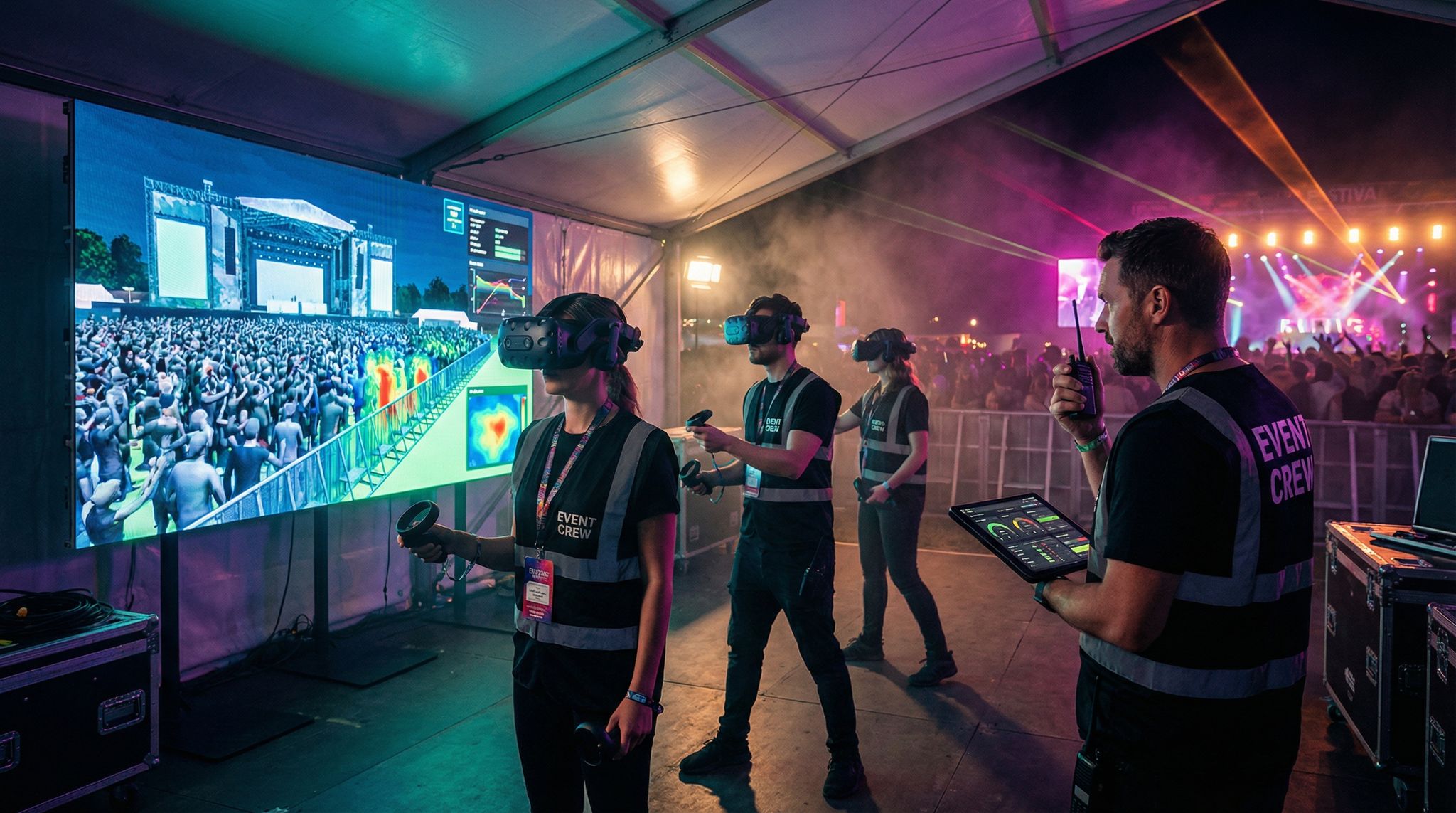
Every RFID/NFC interaction is a data point – and when aggregated, these data points provide a live snapshot of event activity. By 2026, many large events have built real-time dashboards that display information like how many people have entered, which zones are busiest, and crowd flow trends throughout the day. A unified festival tech stack enables organizers to see when stages are nearing capacity and make data-driven adjustments on the fly. This is possible because RFID systems log each scan as attendees move about: entry gates log arrivals, exit scans (if used) log departures, and internal checkpoints (like VIP area gates or session doors) show how attendees distribute themselves. For example, a multi-stage music festival might have RFID reader portals at the entrance of each stage area. Organizers in the control room can see that Stage X currently has 8,000 people (based on unique wristbands scanned into that zone) and is nearing its safe capacity. They also see Stage Y has only 2,000 people. With that live data, they can proactively redirect crowd flow – maybe by triggering a push notification in the event app or digital signage suggesting “Plenty of space at Stage Y for the show starting now!” or by dispatching staff to gently guide excess crowd away from bottlenecks.
This kind of data-driven crowd management was once only imaginable for the biggest events, but as integration between ticketing, RFID, and apps becomes standard, delivering on the promise of seamless integration and enhanced attendee personalization, even modest festivals and venues can implement it. The benefit is huge for safety and attendee comfort. Organisers can respond to crowd surges in real time instead of just reacting after it’s already a problem. If an exit scan system is in place, they can even monitor total real-time occupancy vs. capacity to comply with safety regulations – for example, a stadium can confirm exactly how many people are in attendance at a given moment, which is useful if evacuation is needed or if late entry needs to be cut off. Mission control centers, once a novelty, are now common at big events, serving as a central command for monitoring the event, where screens show live metrics from RFID scans, CCTV, weather, and more so that producers and security teams have a shared situational awareness. The result is a smoother, safer experience for attendees and less guesswork for staff on the ground.
Data-Driven Decisions On the Fly
Having real-time RFID data is only valuable if you act on it. The best event operations teams in 2026 use these insights for on-the-fly decision-making. If the dashboard shows long entry queues building up at the east gate, management can instantly send more staff to scan tickets there or open an additional entrance, leveraging integrated tech stack advantages. If cashless payment data (also tied to RFID wristbands) reveals that one food court is slammed with long lines while another is under-used, organisers might broadcast a quick announcement or message to attendees about options with shorter waits, or even re-route a popular food truck to the quieter area to balance demand. These adjustments, powered by live data, can prevent small issues from snowballing into major problems. In the past, organisers often relied on radio calls and anecdotal reports (“Area A is getting busy”) which could be delayed or imprecise. Now they trust the numbers – e.g., “Area A had 5,000 check-ins in the last 10 minutes, 20% more than Area B” – to prioritize their response.
Grow Your Events
Leverage referral marketing, social sharing incentives, and audience insights to sell more tickets.
Real-time data also aids in emergency response and service delivery. If an attendee has an accident and staff scan that person’s wristband (to identify them and perhaps pull up emergency info), the central system could instantly show where that person has been in the venue that day, which might help trace the incident or even identify if others might be affected (e.g., if it were a food poisoning report, knowing which food stall they visited matters). If weather forces a sudden stage evacuation, RFID gate data can confirm when all wristbands have exited a zone, so security knows when an area is clear. These examples highlight that beyond enhancing experiences, RFID/NFC data is a powerful operational tool. It turns an event into a kind of smart city – with sensors (scanners) feeding a central brain that helps the city run efficiently. Many experienced production teams say that adopting these data practices has moved their approach from reactive “fire-fighting” to proactive management, as one festival director put it.
Post-Event Analytics Goldmine
The benefits of RFID/NFC don’t end when the last attendee leaves. All those scans and interactions log a trove of data that can be analysed post-event for deep insights and future planning. After the festival, organizers can use this data for targeted communications instead of generic blasts. Heatmaps of crowd movement can be generated from aggregated wristband reads – showing, for instance, that the merchandise tent had the highest foot traffic right after the headliner’s set, or that a surprisingly large number of attendees moved from Stage 2 to Stage 3 at 4 PM. Such insights help with next year’s layout and scheduling (maybe avoid putting two popular acts back-to-back on different far-apart stages if many people try to sprint between them). RFID data also feeds into vendor and concession analysis: organisers can supply vendors with accurate customer counts and even peak times, as seen when festivals share sales data with food trucks to optimise their menus and staffing. Success stories confirm that integrated tech gives valuable insights. Session attendance numbers for conferences are tallied effortlessly, replacing manual headcounts – you’ll know exactly 1,320 people entered the keynote and which percentage also went to the after-networking event, for example.
Critically, RFID analytics tie back into ROI. Sponsors will want to know how many visitors engaged with their activation; you can provide hard numbers and even profiles (“3000 taps, of which 60% were age 18-24, mostly interested in gaming”). Marketing teams will use the data to segment audiences for post-event communication – if you know a subset of attendees spent most of their time at the esports arena of your expo (as evidenced by RFID scans there), you can send them tailored content or offers related to gaming. Be mindful of privacy and use aggregated or opt-in data for these purposes, ensuring future marketing is relevant and that attendees feel in control of their experience. But within GDPR or relevant privacy law boundaries, this data is gold for improving experiences. Many organisers hold post-event debrief meetings where RFID reports are reviewed alongside sales, social media, and other feedback to paint a full picture of what worked and what didn’t. As one venue operations guide notes, thorough post-event analysis is key to boosting performance next time. For instance, analyzing scavenger hunts tied to learning can reveal engagement levels, while reviewing how to design age-tiered activities helps refine future programming. RFID provides a factual backbone for these analyses, taking a lot of guesswork out of decisions like “Should we add more water stations?” or “Did our new family zone attract the expected number of visitors?” In the numbers will lie the answers.
Safety, Security & Emergency Applications
Enhancing Safety with Tracking & Alerts
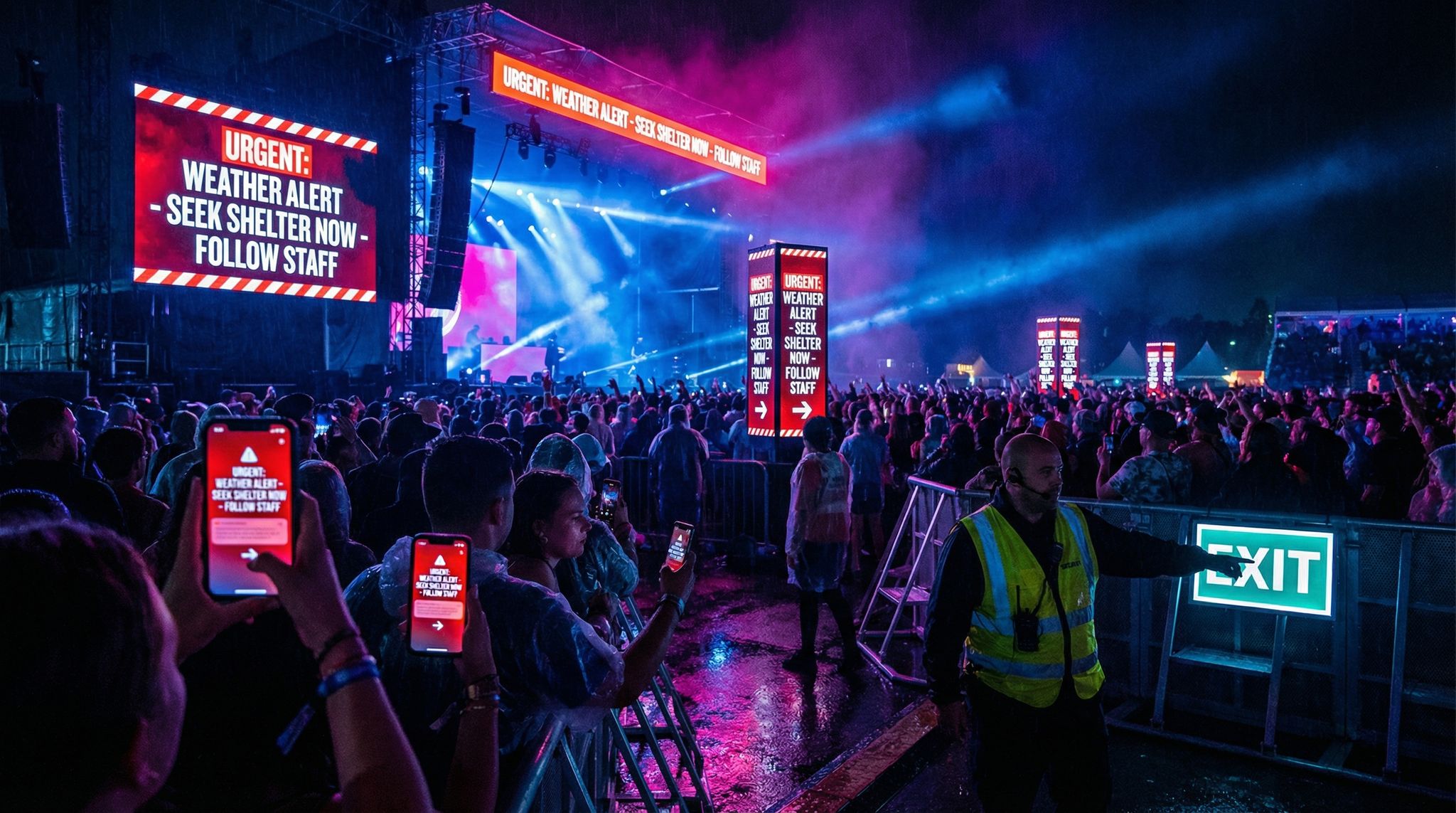
In large crowds, safety is paramount, and RFID/NFC technology has emerged as a valuable tool to help keep attendees safe in ways beyond traditional security measures. One application is real-time headcounts for emergency management. If an evacuation occurs (due to severe weather or another emergency), RFID can assist in confirming clearance of an area. Scanning portals at exits or wearable reader devices carried by security staff can automatically tally wristbands as people evacuate. Organizers can then quickly see if anyone with a wristband is still within a dangerous zone, based on who hasn’t scanned out – information that can be relayed to rescue teams. In routine operations, having accurate live counts from RFID helps prevent dangerous overcrowding before it happens. As discussed, if a zone’s population is nearing its limit, staff can intervene early. This is especially useful at festivals where enthusiasm can lead to crowd surges; RFID data offers an objective view of crowd density to complement CCTV and on-ground observation.
Another safety use-case is restricted area control. RFID credentials can enforce who is allowed where – not just attendees vs. staff, but more granular control. In 2026, it’s common for staff and even VIP attendees to have RFID badges that open specific doors or turnstiles. For instance, a backstage area door might only unlock if the badge presented has the proper clearance. The system logs each entry attempt, so any breach or misuse is immediately flagged. Beyond stopping an unauthorized person, it’s also useful during incidents: if a valuable piece of equipment goes missing, the access logs might show exactly who was in that storage room that day. At venues serving alcohol, RFID-age verification tie-ins (like marking 21+ status on the wristband upon ID check) help ensure safety and compliance too – only those verified get the wristbands with drinking privileges, which bartenders can see via a quick scan, eliminating fake IDs internally. Concert halls and nightclubs benefit from this streamlined verification, as RFID secures exclusive doors. This reduces underage risks and speeds up bar service, a safety and experience win-win.
Additionally, some events have experimented with panic buttons or distress signals integrated into RFID wearables. For example, a smart wristband might include a small button or gesture that, when activated, sends an alert to the command center with that attendee’s ID and last scanned location. While not yet widespread, this concept is being explored for high-risk events or to protect vulnerable attendees (imagine a lone attendee in distress in a dark parking lot – pressing their wristband could summon help if the tech is in place). Even without a dedicated button, security teams can use handheld RFID readers to quickly identify individuals in need during an incident (scanning the wristband of an unconscious person to pull up their registered emergency info, allergies, or to contact their listed emergency phone number). As these examples show, RFID is becoming an important layer in event safety net, complementing human vigilance and traditional security protocols with technological oversight and precision.
Crowd Behaviour and Incident Management
RFID data can also play a role in predicting and managing crowd behaviour issues. By analysing crowd movement patterns, event teams might spot brewing problems – for instance, if an unusually large migration of people is heading toward one stage much earlier than expected (perhaps due to a rumour of a surprise act), organisers can get ahead of a possible crowd crush scenario by dispatching additional crowd control staff there. In one case, a festival noticed via RFID gates that a far-flung parking lot was emptying out at an odd time, suggesting attendees were leaving en masse, possibly due to a negative incident or misinformation; they quickly investigated and communicated the all-clear, preventing panic. RFID isn’t a replacement for on-the-ground intelligence (like security reports of aggressive behaviour), but it adds a lens: if a section of the venue that should be static (like a seated area) suddenly sees a spike in exits, something might be wrong there that merits sending a team to check.
When dealing with unruly attendees or security incidents, RFID can aid in accountability. Each wristband is uniquely tied to a ticketholder’s identity (especially since most systems have users register their wristbands). If security ejects someone for misconduct, scanning their wristband can instantly verify their name and ticket details for record-keeping and potential bans. It also prevents re-entry if the person tries to come back, since their wristband can be deactivated in the system in real time. Festival producers have noted that technology is only one part of handling bad behaviour. While using RFID tags for effective crowd control is powerful, good planning and trained staff are essential. RFID technology for event ticketing ensures that data is encrypted and secure, but RFID adds an extra layer of control. For example, at some events, if a dangerous crowd condition is detected, organizers can use RFID data to selectively stop additional entries into that zone (temporarily invalidating the wristbands for entry at that gate) until it’s resolved.
From a health and safety standpoint, RFID can facilitate contact tracing and health monitoring as well. In the tail end of the pandemic, some events used wearable tech (RFID or Bluetooth tokens) to track which attendees came into proximity, so they could notify people in case of an exposure. In 2026, health concerns could include things like tracking if people visited a particular booth that later is found to have a safety issue (e.g. a VR demo that caused nausea – you could reach out to those who tried it, using scan logs). These scenarios might be edge cases, but they demonstrate the versatility of RFID data in responding to incidents. The overarching lesson for organisers is that technology is not a silver bullet for safety – it must be integrated into a broader safety plan including crowd management training, emergency protocols, and communication strategies, addressing every potential challenge. But when used wisely, RFID/NFC can greatly augment situational awareness and control, making large events safer and more secure for everyone.
Medical and Accessibility Integrations
Another frontier where RFID/NFC is proving its worth is in medical preparedness and attendee accessibility. Attendees can voluntarily link critical medical information to their RFID wristband during registration. This could include allergy information, existing medical conditions, or an emergency contact. In a scenario where an attendee has a medical emergency and cannot communicate, first responders (who are equipped with RFID/NFC readers or smartphone apps) can scan the wristband to quickly retrieve vital info such as “diabetic – insulin in bag” or “allergic to penicillin.” This can save precious minutes and ensure appropriate care. Some events have started to give special NFC-enabled medical alert badges to attendees who opt in, effectively merging the concept of a medical ID bracelet with the event wristband. Privacy must be strictly safeguarded – typically such data is storedencrypted, and only authorised medical staff devices can access it. But in emergencies, this integration can be life-saving.
On the accessibility front, RFID/NFC can quietly assist those with disabilities or special needs. For instance, an attendee with a hearing impairment might have a note on their profile that they’ll be checking out a captioning device for a panel – when they tap their badge at an info desk, staff are automatically notified about the request, streamlining the service. Or someone with mobility issues might be allowed entry through an alternate accessible gate – their wristband could contain a flag that opens a special turnstile or alerts staff to provide assistance when scanned. By 2026, these kinds of personalized accommodations are increasingly expected, as events strive to be more inclusive. RFID technology provides a subtle way to deliver them without drawing attention; the system quietly knows what each person might need and can trigger the right support when they scan. For example, a blind attendee tapping at a kiosk might trigger the system to switch to a voice-assisted mode just for them.
The theme across these safety and accessibility uses is personalization with purpose. It’s not about gimmicks here, but about using RFID/NFC to treat attendees as individuals with individual needs, even in a crowd of thousands. Implementation requires close coordination with medical teams, accessibility consultants, and a strong emphasis on consent and data protection (only collecting info that attendees agree to share for their benefit). While these advanced applications take effort to set up, they dramatically enhance the duty of care an event can provide. In an industry where safety and inclusion are top priorities, RFID and NFC are valuable allies in going above and beyond basic compliance, truly elevating the standard of care. As you plan these features, do so hand-in-hand with professionals (doctors, accessibility experts) and test thoroughly to ensure they work as intended when called upon.
Personalization & VIP Experiences
VIP Greetings and Personalized Touches
Attendees love feeling seen and valued, and RFID/NFC allows events to deliver personalized touches that were previously impossible at scale. A great example is the VIP guest experience. With RFID-based credentials, festivals and venues can program customized greetings or surprises for VIPs when they tap their wristband. Imagine arriving at a VIP lounge and tapping your NFC pass on a kiosk that then displays “Welcome back, Sarah! Enjoy your 3rd Coachella!” along with a profile photo. This is entirely feasible in 2026 – the wristband links to a profile with attendance history, and a simple application can pull that data to create a personal greeting. Some high-end events even equip VIP hosts with handheld readers so they’re alerted as VIPs approach, allowing staff to address guests by name and perhaps offer their favourite drink (since purchase history or preferences might be known from the data). These small gestures leave a big impression of bespoke service.
Personalization isn’t just for VIP tiers. Regular attendees can also benefit, for instance through smart recommendations. If the event app and RFID system are integrated, the app can use an attendee’s scanning history to suggest content. As noted earlier, if a conference attendee’s badge shows they checked into multiple sessions on a topic, the app might recommend a related workshop or an upcoming webinar and provide directions to the next location. Here are several ways RFID elevates the attendee experience, primarily because the system knows their preferences. At a multi-day festival, the system could detect you haven’t visited a popular attraction yet and send a friendly note: “You danced at Stage A a lot yesterday. Today, check out Stage B at 5 PM for a similar vibe!” These suggestions can be delivered via push notification or displayed when you scan your wristband at an info kiosk. The key is to make them helpful and optional, never intrusive. Attendees should feel like the event is helping them discover cool things, not tracking them in a creepy way. Opt-in mechanisms and transparent privacy policies are a must when implementing such features, ensuring that personalized elements contribute to the experience.
Case in point: A large tennis tournament deployed an RFID-based personal concierge for premium ticket holders. Their badges, when scanned at any guest services desk, would pull up their ticket profile and the system would proactively show staff any special notes (like dietary restrictions for catering) and upcoming schedule (like “this guest has a meet-and-greet at 2 PM, remind them 15 minutes prior”). This ensured a seamless, tailored experience where the attendee never had to repeat information or request common needs – the event remembered and anticipated them. In all these examples, personalization deepens the attendee’s emotional connection to the event. They feel like more than a face in the crowd, which in turn boosts loyalty and word-of-mouth. The technology aspect – tying profiles to RFID and triggering content – requires coordination between the ticketing platform, CRM databases, and front-end apps or displays. It’s complex but attainable with modern integrated solutions (for instance, choosing a unified event tech platform that natively supports RFID personalisation can simplify this). Enhanced attendee personalization is best achieved when festival technology works in unison. The investment pays off in delighted attendees who feel truly VIP whether they purchased a VIP pass or not.
Exclusive Access and Perks via NFC
RFID/NFC make it easy to manage exclusive access and timed perks for different attendee segments. Instead of using separate physical passes or checking a list, a single wristband can carry multiple access permissions that update in real time. For example, at a business conference, your NFC badge might automatically grant you access to the keynote luncheon only on the correct day and time. If someone tries to enter early or on the wrong day, the scan will deny entry. This preciseness makes operations smoother – no more colour-coded badges for each day or manual verification; the system handles it. For VIPs at a festival, their wristband can be coded to open premium viewing areas or fast-track lanes at rides and food stalls. One festival in Germany gave VIP package buyers an RFID fast-lane perk: when they tapped at special entrance lines for popular attractions, the system would check their VIP status and log their visit, allowing them a certain number of front-of-line access uses per day. It was all automatically managed by the wristband scanning – ensuring fairness and preventing abuse (since the system wouldn’t let them exceed their allotment).
Such features are enabled by the fine-grained control RFID offers. It’s not just “yes or no” for entry; systems can incorporate rules (yes between 7-8 PM, yes if over-21 flag is true, yes if VIP tier equals Gold, etc.). This flexibility means you can design creative perks. Perhaps you want to surprise attendees whose wristband ID is a winner in a random draw – when they tap at a bar, the point-of-sale could say “Congrats, your drink is free courtesy of Sponsor X!” because the system marked their ID as a winner. Or you might have a hidden speakeasy at your event that only some people can unlock with an NFC tap if they completed a prior task (combining gamification with exclusive access). The possibilities are endless.
From an operational standpoint, using RFID for access perks reduces friction. No more distributing paper drink tickets or separate VIP lanyards for each perk – it’s all in the wristband, and can be adjusted on the backend. During the event, if you need to upgrade someone (say a regular attendee gets a surprise VIP upgrade), staff can update their profile in the system, and instantly their wristband gains new privileges (no need to issue a new band). This was science fiction to event managers a generation ago; today it’s readily achievable. Do make sure to rigorously test these access rules in various scenarios (there’s nothing worse than a VIP gate not recognising a VIP because of a config error). And always have a human override process: staff with supervisor access should be able to manually grant entry in case a wristband malfunctions or a special case arises. When tech works, it’s invisible and smooth – but good planning for exceptions keeps those VIP smiles intact.
Blending Entertainment with Wearable Tech
An exciting trend at live events is blending RFID/NFC wearables with show effects and entertainment, turning the audience into part of the spectacle. A hallmark example is the use of LED bracelets at concerts (popularised by Coldplay’s shows) that light up in sync with the music. While these LED bands use a one-way control system (radio frequency triggers), RFID plays a role in coordinating distribution and zoning. In large stadium tours circa 2026, each LED wristband typically also contains an RFID chip identifying its section or seat. The lighting control system reads those IDs to activate specific groups of wristbands, creating waves or patterns of light across the audience. Another creative use involves interactive experiences where the audience members are actually part of the show. In essence, RFID helps orchestrate the audience like a giant pixel display. Fans absolutely love this kind of immersive participation – it’s a personalised experience at scale, where each wristband knows when to glow or even vibrate, making the attendee feel directly involved in the show.
Some cutting-edge festivals are taking this further by integrating RFID wristbands with augmented reality (AR) and mixed reality experiences. For instance, an AR festival app might use your precise location (determined by a combination of RFID portals and other sensors) to render AR art visible through your phone when you stand in exactly the right spot, effectively creating a high-tech treasure hunt. At theme parks (which often influence festival tech), NFC-based “magic” wands or props allow guests to trigger interactive show elements – a concept events are adapting. We’re seeing trial cases where audience members collectively vote on something by tapping their wristbands on one of several illuminated pads around the venue, and the result influences the show (like choosing an encore song or activating alternate endings in immersive theatre). RFID provides the reliable, fast interaction needed for such mass interactive moments.
When implementing these entertainment integrations, partnership with production teams is crucial. The RFID tech team must work closely with lighting, audio, and stage directors to ensure the timing and triggers align perfectly. There are unique challenges here: for instance, radio frequency interference and range are considerations when tens of thousands of devices are being signalled. One lesson learned from early LED wristband shows was the importance of zoning – using RFID, they had to segment the arena so signals only reached intended sections, avoiding chaos in the patterns. As an organiser, if you venture into this territory, enlist experienced vendors who specialise in these high-engagement wearables. Always have a plan for recollecting or recycling tech-enhanced bands (they are pricier than normal wristbands). If done right, blending RFID wearables with the show itself can create signature moments that attendees rave about for years. It exemplifies going “beyond ticketing” – the technology in their wristbands isn’t just getting them into the event, it is part of the event.
Implementation Challenges & Best Practices
Choosing the Right Platform and Partners
To harness RFID/NFC for these advanced applications, selecting the right technology platform and vendor partners is critical. Not all ticketing or RFID providers support complex integrations like gamification and real-time data visibility. Event organizers must evaluate whether to extend their current systems or bring in new solutions. A classic debate is build vs. buy for event tech – whether to develop custom solutions in-house or leverage vendor platforms, as discussed in articles on seamless integration. In 2026, the ecosystem of event tech vendors is mature, and many offer modular features: for example, your ticketing platform might natively handle RFID access control but not scavenger hunts, so you could integrate a third-party gamification app that uses the wristband APIs. When negotiating with vendors, be clear about the specific advanced use-cases you plan. If a vendor’s RFID system only does entry and payment, but you want interactive features, you’ll either need them to support custom development or look elsewhere. Focus on platforms known for openness and strong integration capabilities. Modern unified event tech stacks aim to connect ticketing, RFID, mobile apps, and more into one ecosystem. Choosing such a platform, like Ticket Fairy’s integrated ticketing and RFID solution, can simplify implementation since the pieces are designed to work together.
It’s wise to ask potential RFID vendors about their API, data access, and past examples of advanced implementations. Reference cases are valuable – if they claim to support loyalty programs, have they done it for actual events? Insist on specifics. Additionally, many organisers bring on specialist partners for certain aspects: maybe an RFID provider for hardware and middleware, a mobile app developer for the front-end, and a production tech consultant to tie it all together. In such multi-vendor scenarios, make sure roles are clearly defined and integration points agreed upon. Consider establishing a central tech “command center” team, responsible for monitoring the event and overseeing all technical streams (ticketing, RFID, network, app) in unison, especially during the event. If you are switching from one vendor to another to gain advanced features, plan the migration carefully. Reviewing guides on designing tiered festival activities can offer step-by-step advice on managing complex implementations, making it a novel challenge rather than a headache. Ultimately, the right setup often involves hybrid expertise: leveraging robust off-the-shelf platforms for reliability and speed, combined with custom configurations or add-ons for the unique experience design. This combo can deliver innovation without reinventing every wheel from scratch.
Integration and Data Management
Advanced RFID/NFC applications touch multiple systems – ticketing databases, mobile apps, CRM, payment gateways, analytics dashboards, etc. Integration is the linchpin that makes everything work seamlessly. A common mistake is treating the RFID system as a standalone tool; instead, plan for it to be woven into your overall data architecture. For example, if you run a scavenger hunt (gamification module), it should pull attendee profiles from registration (so it knows VIPs vs general attendees if needed), and it should feed results into your CRM or post-event analysis. The good news is many modern event platforms have moved toward open APIs and webhooks, allowing near real-time data flow between systems. If your event app is separate from your RFID vendor, ensure you have a reliable API connection so that a wristband tap can instantly reflect in the app’s user profile or game screen. Latency is a consideration – any noticeable delay can frustrate users – so test the end-to-end flow under load. If tens of thousands of people might tap simultaneously (like at a mass participation moment in a show), can your system handle that volume? Load testing with simulated RFID reads is highly recommended for large-scale events.
Data management goes hand-in-hand with integration. Plan how data is stored, secured, and accessed. Real-time dashboards are fantastic, but who is monitoring them and how do they escalate issues? Define which team members get which data views; e.g., security might see crowd counts, marketing sees engagement stats, leadership sees an overview. Also decide on data retention – e.g., keep raw scan logs for post-event analysis or in case of disputes (like a customer saying “I never went to that VIP area” when your logs show their wristband did scan there at 9 PM). Given personal data is involved, compliance with data protection laws (GDPR, CCPA, etc.) is mandatory. Anonymise data where possible and purge it after its purpose is served. Obtain clear consent from attendees during registration for collecting data via RFID, ensuring future marketing is relevant, especially if it’s used for marketing or shared with sponsors. Most people are fine with it if they understand the benefits and you assure security. Indeed, emphasise that these systems are secure – modern RFID encryption can prevent cloning and tampering, a point which can be a selling feature to attendees who worry about their privacy or money. RFID is proven to be secure, and when embedded into a wristband or card, it enhances the patron experience.
One often under-estimated integration point is the network infrastructure. All these advanced features typically require robust connectivity between readers and servers (on-site or cloud). Work with network engineers to design redundant Wi-Fi, wired, or cellular networks for your devices. Some RFID systems use local servers that sync with the cloud periodically, allowing offline operation if internet drops. This is crucial because RFID relies on local networks to function reliably. Map out all these flows and have monitoring on network health, because a lot depends on it. For instance, cashless payment stations might operate offline for a short time, but real-time games might not – you should know which features fail gracefully vs those that need live connectivity. By thoroughly integrating systems and managing data smartly, you pave the way for all the fancy RFID-driven experiences to function reliably when it counts.
Testing, Training, and Dry Runs
Implementing RFID/NFC beyond the basics demands comprehensive testing and staff training. Before the public ever dons those wristbands, every use-case should be run through in controlled scenarios. Start with lab testing of individual components (does the NFC badge properly trigger the app content? Does the access control rule for VIP at the gate work?). Then conduct integrated tests with multiple systems connected. Many large events hold a full “tech rehearsal” or simulation day. Staff and volunteers act as attendees, going through the motions: scanning at entry, playing the scavenger hunt, redeeming a reward, etc., while the tech teams watch the data flow. This often flushes out issues like scanners in one zone not syncing correctly or a mobile app screen not updating fast enough. It’s much easier to tweak and fix in rehearsal than when 50,000 people are live at your event.
Training is equally vital – even the best tech falls flat if staff and attendees don’t know how to use it. Make sure your frontline staff (ushers, info booth attendants, security) understand the RFID system’s basics: how to troubleshoot a wristband (e.g., if not scanning, try on another reader; if still no go, send to customer service to swap band), how to guide an attendee through a tap interaction, and what backup procedures exist. For example, if an attendee says “I completed the treasure hunt but it’s not showing my prize,” staff should have a way to verify their scans in the system and manually trigger the reward if needed. Provide cheat sheets or an on-hand support team (your vendor can often station support techs on-site for major deployments). Volunteer training sessions should include a brief on all new attendee tech features – a staff member should not be caught off guard if an attendee asks “How do I link my wristband to the app for points?” Everyone representing the event should at least know the basics or whom to ask.
Moreover, consider gradual rollouts of new features. If it’s your first time doing advanced RFID at an event, maybe pilot it with a smaller audience segment. For instance, test the gamification on a VIP pre-party crowd of a few hundred before unleashing it festival-wide next day. Or run new tech at a minor event before the flagship one. This incremental approach can build internal confidence and surface feedback that you can iterate on. And as always, have a Plan B. If RFID treasure hunts fail, do you have a paper or app-based backup? If the live data dashboard goes down, do you have radio comms and manual counts to rely on (as slower fallback)? The point of advanced tech is to enhance, but you should still be able to run your event safely and satisfactorily without it in a pinch. Contingency planning (like keeping some handheld barcode scanners or paper tickets ready, just in case) is a hallmark of veteran event technologists, ensuring cashless systems have backups. Training the team on those contingencies too can save the day if something goes wrong. With diligent testing, training, and backups, you’ll ensure the fancy new RFID features come off as planned – and attendees will simply marvel at the results, never seeing the rehearsal and rigor behind the scenes.
Cost Management and ROI Focus
Advanced RFID and NFC implementations can be significant investments, so keeping an eye on cost and return is essential. It’s easy to be enchanted by cutting-edge features, but each reader, server, custom app feature, or premium wristband adds cost. Start with a clear budget and a breakdown of expected expenses: hardware (readers, wristbands – which can range from $1 simple bands to $20+ LED programmable ones), software licenses or development costs, integration and vendor fees, and on-site support. Add to that training and contingency resources (spares, backups). To justify these costs, identify revenue or savings opportunities tied to the tech. For example, cashless payments via RFID have shown to increase attendee spending by 15-30% on average due to convenience. When embedded into a wristband or card, RFID solutions benefit both organisers and patrons – that boost in revenue can be a direct ROI argument. Similarly, if a gamification feature is sponsored, that sponsorship money offsets cost. Some organisers charge vendors or exhibitors for the enhanced data they get (“premium analytics package” made possible by RFID tracking), which can become a new revenue line.
It’s useful to create an ROI model for each major feature. If you’re implementing a loyalty program, estimate how it will increase repeat ticket sales or on-site spend, and weigh that against the cost of the reward incentives given out. For crowd management tech, the ROI might be in risk reduction – preventing an incident or fine due to overcrowding is hard to quantify but massively important (one could view it as protecting the entire event revenue by avoiding cancellations or lawsuits). When pitching these ideas to stakeholders or finance teams, combine hard numbers with qualitative benefits. For instance: “This RFID upgrade will cost $100k, but we anticipate $150k in increased F&B sales, plus intangible benefits of improved attendee satisfaction and safety.” Wherever possible, back assumptions with data from industry reports or past events (e.g., cite how another festival saw a 40% reduction in entry wait times, leading to more time inside spending money, when they moved to RFID systems).
To maximise ROI, utilise the full scope of the technology. A mistake would be investing in RFID and then only using it for one thing. If you’re paying for wristbands and scanners, see if you can get multiple benefits – entry, cashless, engagement, analytics together. Often the marginal cost of adding an extra feature (like turning on the photo booth integration) is low once the infrastructure is in place. This is where a unified platform shines: it can spread the cost across departments (ticketing budget, marketing budget, safety budget all chip in since each reaps rewards). Also, keep an eye on inventory and reuse: durable RFID badges can be recollected and reused for future events (some conferences mail out “permanent” NFC badges to members, to be used at all their events year-round). And don’t forget to negotiate with vendors – 2026’s event tech market is competitive. You can often get better terms on volume of wristbands, or package deals including multiple services for enhanced attendee personalization. If a particular ROI goal isn’t met (say the scavenger hunt had fewer participants than expected), do a frank post-mortem. Was it a tech issue or a concept issue? Use that to refine your approach next time, maybe with better promotion or tweaks. In essence, treat these advanced RFID features not as sunk costs but as investments to monitor and optimise. By being cost-conscious and results-driven, you ensure these innovations truly pay off in enhanced experiences and stronger bottom-line outcomes.
| Phase (Timeframe) | Key Activities | Notes |
|---|---|---|
| Design & Scoping (6+ months out) | Identify goals (e.g., gamification, analytics); evaluate vendors; budget costs; decide build vs buy as per integration guides. | Engage all stakeholders (marketing, ops, IT) early for input on features. |
| Vendor Selection (5 months out) | Sign contracts with RFID platform, app developers, etc.; ensure contract covers data ownership & SLA for seamless integration and unified tech stacks. | Negotiate flexibility for changes; check integration support. |
| Development (3-4 months out) | Configure systems, develop custom features (app integration, dashboards, etc.); begin hardware procurement. | Set up test servers and dummy data for safe development. |
| Integration Testing (2 months out) | Connect ticketing, RFID, payment, app systems in a staging environment; test user flows end-to-end. | Simulate load with test scans; fix bugs. |
| On-Site Setup (1 week out) | Install readers, network gear; distribute wristbands to staff for dry runs; calibrate read ranges at gates and zones. | Have backup power & internet (generators, 4G failover) ready, ensuring cashless systems have backups. |
| Staff Training (1 week out) | Train all departments on new tech: entry staff on scanners, customer service on wristband issues, crew on data monitoring tools. | Provide quick-reference guides or tip sheets for staff. |
| Pilot Test / Soft Opening (Day before or small audience) | Run a mini-event or rehearsal: simulate entry, conduct a sample scavenger hunt, process test transactions. | Involve volunteers or friends as test attendees; refine system settings after. |
| Event Live (Event days) | Monitor all systems from command center; respond to any glitches; ensure constant communication between tech teams and operations. | Keep redundant systems handy (spare readers, manual check-in lists as emergency). |
| Post-Event Review (Within 1-2 weeks after) | Collect all data, generate reports; evaluate performance against ROI goals; gather attendee feedback on tech features. | Hold a debrief meeting to discuss improvements and successes for next time. |
Frequently Asked Questions
How do RFID wristbands enhance event gamification?
RFID wristbands transform events into gaming playgrounds by allowing attendees to tap checkpoints for scavenger hunts, collecting virtual tokens or clues. These interactions often display on real-time leaderboards to encourage competition. Additionally, wristbands enable social connectivity features, such as “friendship bracelets” that exchange social media profiles when two attendees tap their bands together.
What are the safety benefits of using RFID at large festivals?
RFID technology improves safety by providing real-time crowd density data, allowing organizers to proactively redirect flows before dangerous overcrowding occurs. In emergencies, scanning portals facilitate accurate headcounts for evacuations. Furthermore, attendees can voluntarily link medical information to their wristbands, enabling first responders to quickly access critical allergy or contact details during incidents.
How does RFID technology support event loyalty programs?
RFID wristbands act as digital loyalty cards that automatically track an individual’s attendance and on-site spending across multiple events. This data allows organizers to award points redeemable for perks like merchandise discounts, exclusive lounge access, or priority ticket presales. The system seamlessly recognizes returning fans, boosting retention without requiring physical loyalty cards.
Can NFC badges provide personalized experiences for attendees?
NFC badges unlock personalized interactions by triggering custom content based on an attendee’s registered profile and history. When scanned at kiosks or VIP zones, the system can display personal greetings, dietary preferences, or smart recommendations for upcoming sessions. This technology allows staff to deliver bespoke service and tailored suggestions at scale.
Do cashless RFID payment systems increase event revenue?
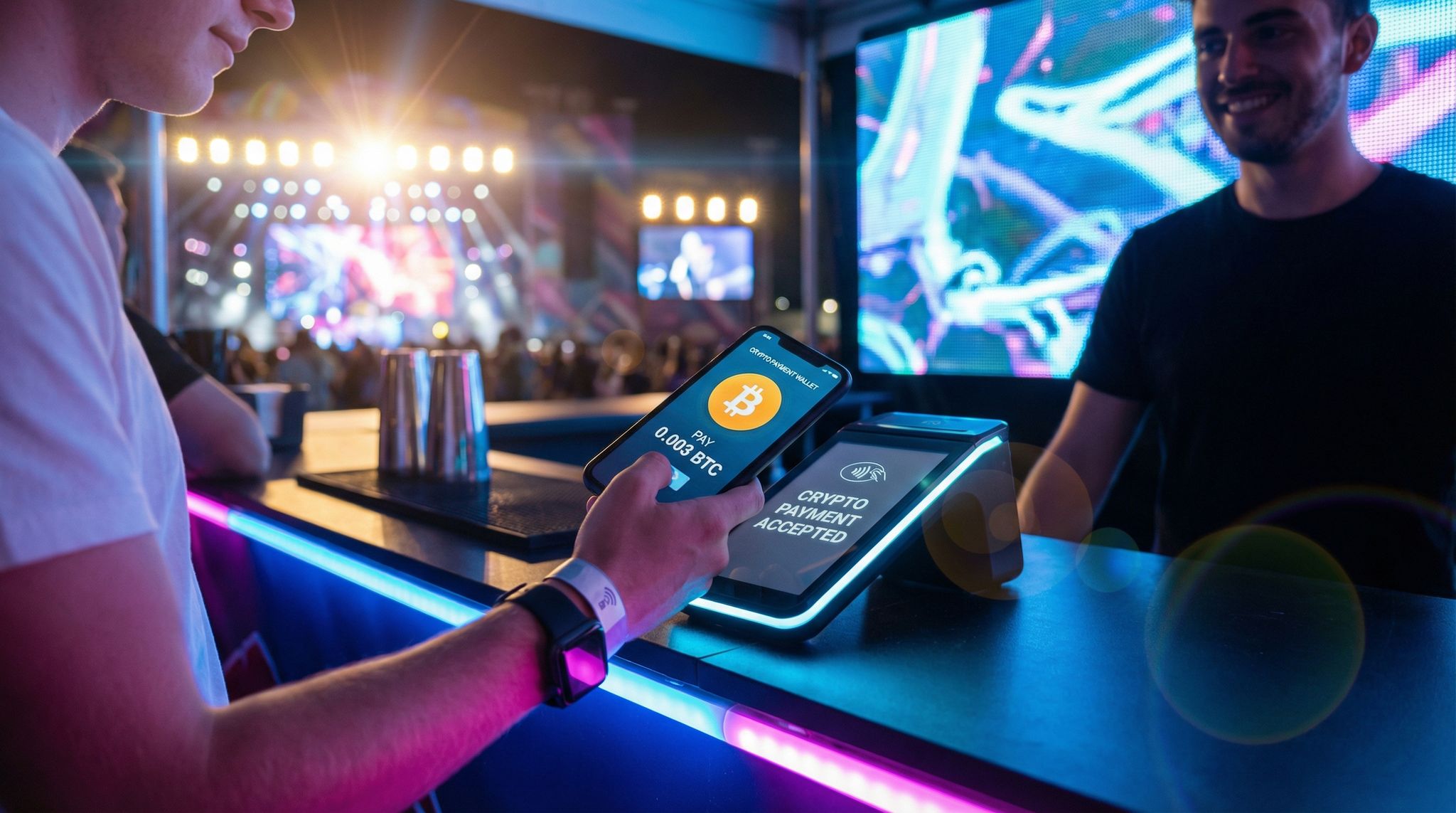
Cashless payment systems using RFID typically increase attendee spending by 15-30% due to the speed and convenience of transactions. This technology reduces queue times at vendors, allowing attendees more time to enjoy the event and make purchases. Additionally, the captured transaction data helps organizers optimize vendor placement and staffing for future profitability.
How is real-time RFID data used for crowd management?
Real-time RFID data feeds into central dashboards that monitor entry counts, zone capacity, and movement patterns throughout the venue. Operations teams use these insights to make on-the-fly decisions, such as opening additional entry gates or deploying staff to bottlenecks. This data-driven approach shifts crowd management from reactive fire-fighting to proactive control.