Festival producers face unique challenges when staging events in extreme mountain and desert environments. The American Southwest and Rocky Mountains host gatherings that range from scorching desert music festivals to high-elevation cultural celebrations.
These case studies from USA mountain and desert festival gatherings highlight how veteran festival organizers adapt to intense heat, thin air at altitude, lack of infrastructure, and dramatic sunrise/sunset cycles. Examining several Southwest and Rockies events reveals how different festivals approach managing climate extremes, providing shade and water, coordinating convoys for remote sites, and integrating the natural rhythms of day and night. The lessons learned from these festivals offer valuable insights into venue selection, logistics, safety, and attendee experience in some of the planet’s harshest yet most beautiful settings.
Heat and Altitude: Environmental Extremes
Desert festivals in the Southwest must contend with blistering heat, while mountain events in the Rockies deal with high altitude and rapid weather changes. In low-elevation deserts, daytime temperatures can soar well above 100°F (38°C). For example, at Nevada’s famed desert arts festival, daytime highs reached up to 105°F under clear skies, as reported by SFGate regarding Burning Man weather forecasts, turning the Black Rock Desert playa into an oven. Large music festivals in Southern California’s desert, such as Coachella, have also faced brutal heat waves. During one Coachella weekend, temperatures exceeded 100°F each day, sending many attendees into air-conditioned tents or medical tents for heat exhaustion, a situation detailed by the Los Angeles Times. Despite the extreme conditions, tens of thousands still gathered on the shade-free open fields in front of stages despite the radiant sun, underscoring how crucial heat management is for attendee safety.
High-altitude festivals encounter a different set of challenges. In the Rocky Mountains, thinner atmosphere and elevation gain mean cooler overall temperatures but more intense ultraviolet exposure and lower oxygen levels. Telluride Bluegrass Festival in Colorado, for instance, unfolds at approximately 8,750 feet (2,667 m) above sea level. The air is noticeably thinner at that altitude – even performers have remarked that they “huffed and puffed” in the thin air at 8,700 feet, according to coverage by Saving Country Music. Attendees not acclimated to high elevations can suffer altitude sickness if unprepared. Dehydration hits faster at altitude, so seasoned festival organizers emphasize constant hydration and pacing of activities. While desert events fight extreme heat by day and surprising cold at night, mountain events grapple with lower oxygen, intense sun during the day, and rapid temperature drops after sunset. Both environments demand careful preparation: desert festivals need abundant water and cooling measures for heatstroke prevention, whereas mountain festivals often station medical staff with oxygen and advise attendees to acclimate, stay hydrated, and go easy on alcohol to avoid altitude sickness.
Shade and Weather Mitigation Strategies
Providing shade and weather relief is a top priority when producing festivals in intense sun or high-altitude conditions. In open desert venues with little to no natural shade, organizers must create shelter from the sun. One boutique desert music festival in California’s Mojave region installed over 35,000 square feet of shade cloth above its main bowl area, creating oasis-like comfort in the high desert sun, as noted in a review by The Los Angeles Beat. At larger desert gatherings, shade structures can be monumental in scale – Burning Man’s Center Camp, for example, is covered by what the organization describes as “the largest tensile shade structure on Earth — a circular acre of possibility”, offering weary participants a communal respite from relentless sun and dust. Smaller festivals may distribute shade tents, misting stations, and free water refill points throughout the grounds. A combination of covered chill-out zones, cooling misters, and adequate ventilation in tents helps prevent heat exhaustion among attendees and crew. Festival producers also schedule programming strategically: in extremely hot climates, headline performances and high-energy activities are often slated for the cooler late afternoon, evening, or nighttime hours, while midday programming is kept lighter or moved indoors (when possible) to avoid the peak sun. It’s no coincidence that some desert festivals shift their operating hours toward night-time — for instance, electronic music events in Las Vegas’ desert area run all night to dodge the daytime heat.
In mountain settings, direct sun can be strong but ambient temperatures are lower. Natural features like trees or mountain shadows can offer some relief, but high-altitude sites often have open meadows without tree cover. Festival organizers in these areas encourage attendees to wear hats, use high-SPF sunscreen, and take breaks in whatever shade is available. They may erect shade canopies over audience areas and provide heated communal tents or fire pits for the cold nights. Weather preparedness is critical: both desert and alpine events can experience sudden weather changes. A cloudless desert day can give way to an afternoon dust storm or a rare thunderstorm, while a sunny mountain morning can quickly turn into rain and lightning by afternoon. Savvy festival teams monitor forecasts continuously and communicate clearly with attendees. Many mountain festivals have an on-site meteorologist or use weather alert apps to anticipate lightning storms, pausing outdoor stages if necessary until storms pass. On the desert side, organizers prepare for high winds and sandstorms by securing structures and having dust masks on hand. Risk management plans should include emergency shelters or evacuation procedures for extreme weather. For example, when high winds forced stage closures at a Southern California desert festival, organizers activated contingency plans to keep attendees safe until conditions improved. Whether it’s extreme heat, strong winds, or sudden downpours, veteran festival producers know to expect the unexpected and have safety protocols ready.
Planning a Festival?
Ticket Fairy's festival ticketing platform handles multi-day passes, RFID wristbands, and complex festival operations.
Convoy Operations and Remote Logistics
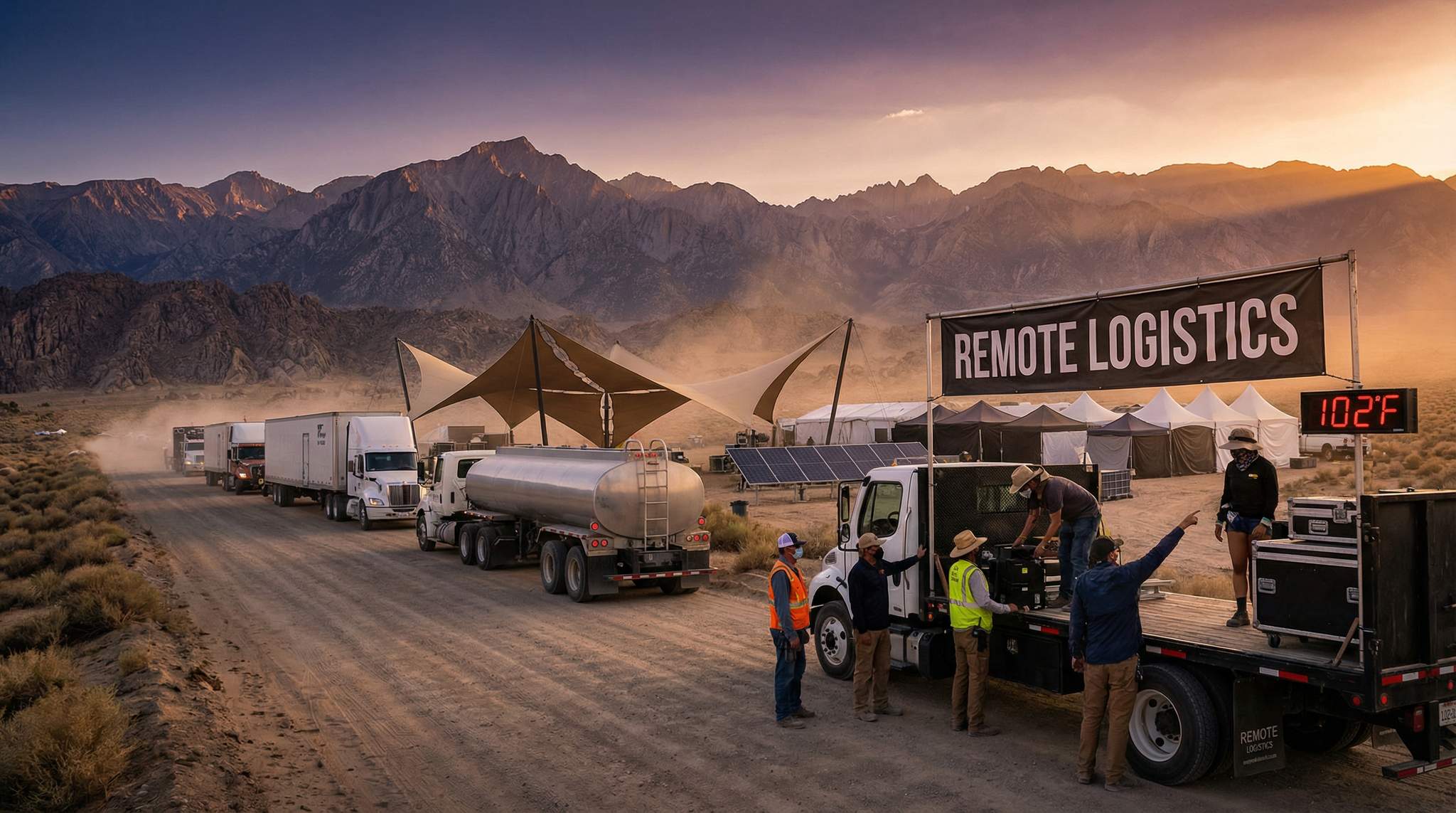
Remote mountain and desert festivals operate far from urban infrastructure, which means every piece of equipment, supply, and personnel must be transported in – often via long, limited-access roads. Careful logistics and convoy operations are essential to make these events possible. In some cases, the festival site is literally in the middle of nowhere: Burning Man’s temporary Black Rock City, for instance, is built on a dry lakebed over 100 miles from the nearest major town and spans over 4 square miles in area, a scale highlighted in AP News reports on the event’s cleanup efforts. To create a functioning city in such an empty expanse, organizers coordinate an incredibly complex influx of materials. Months before opening, convoys of trucks haul in everything from staging, sound and lighting gear to generators, fuel, food, and infrastructure for water and sanitation. The Department of Public Works (DPW) team at Burning Man coordinates the countless moving parts required to build a temporary city in the desert. This includes scheduling deliveries and managing a fleet of heavy equipment on the playa.
On narrow two-lane highways leading to remote sites, festival producers often work with local authorities to time incoming and outgoing convoys so as not to choke public traffic. Large suppliers might be assigned specific caravan arrival times. For instance, a regional desert gathering in Utah might arrange for all vendor trucks and water tankers to be escorted in before the main attendee arrival, moving in a single convoy at dawn to beat the heat and minimize dust on long dirt roads. Similarly, for a mountain festival nestled at the end of a winding canyon, organizers may set up radio communication and pilot cars for equipment convoys to safely navigate hairpin turns and prevent bottlenecks.
Attendee travel must also be managed. Remote festivals often publish strict arrival and departure instructions, urging attendees to caravan or “convoy” together when feasible. Traveling in groups not only helps prevent anyone from getting lost on unmarked desert tracks, but also allows for mutual assistance if vehicles break down in the middle of nowhere. In high elevations, vehicle engines and brakes face extra strain on steep grades, so shuttling people and gear in fewer, well-coordinated trips can reduce risk. The importance of robust transportation planning becomes evident when looking at past failures: a lack of traffic control can lead to exit gridlock lasting many hours, or accidents on isolated roads can delay vital deliveries. Experienced producers now implement detailed traffic management plans — including entry staging areas, one-way routing, speed limits on-site, and real-time radio updates — to keep the flow of vehicles smooth. The goal of any convoy operation and logistics plan is to ensure that all the needed infrastructure and guests arrive on site in a timely, safe manner, and that the breakdown and exodus after the festival are handled efficiently. This often means having crews on 24-hour rotations during critical setup and teardown periods, escorting heavy trucks during off-peak hours, and coordinating closely with local law enforcement or land managers for any necessary road closures. The mantra is bring everything in, take everything out – nothing can be left behind, so the reverse-logistics (clean-up and load-out) is as important as the load-in. By studying how established festivals like Burning Man excel in pre-event planning and transportation management, new producers can learn to streamline their own logistics for remote events.
Sunrise and Sunset: Harnessing Natural Cycles
One of the magical aspects of mountain and desert festivals is the dramatic cycle of day and night. Veteran organizers pay close attention to sunrise and sunset arcs – both for practical reasons and to enhance the attendee experience. In flat deserts, the sun’s path is unobstructed, resulting in long, blazing daylight and equally long twilight. Sunrise in the desert can be a spectacle, rapidly heating the air and waking the campsite. Festival schedules in these environments often bake in a mid-morning lull or gentle activities (like yoga sessions or ambient music) to ease attendees into the day as the sun climbs. It’s common at Burning Man and similar gatherings for all-night music stages to culminate in special sunrise sets, where DJs or live performers play as dawn breaks over the horizon. These moments are legendary – even exhausted revelers find a second wind to watch the first rays of sunlight creep over the desert, bathing art installations in golden light. (Many will tell you there’s nothing quite like seeing the sun rise after a night of music on the playa.) On the flip side, desert sunsets are often stunning and welcome, bringing cooler temperatures after the scorching afternoon. Organizers might plan art performances or rituals at sunset, knowing it’s a time when attendees naturally gather to watch the sky explode in color and to celebrate the respite from the heat. That said, a desert’s lack of shade means the sun will beat down until the moment it sets – so producers ensure that evening program spaces are ready as people retreat from the dying light.
Mountain festivals, by contrast, deal with more irregular solar arcs due to surrounding peaks and terrain. The timing of first light and last light can differ dramatically from official sunrise/sunset times. In a deep mountain valley, the sun may not peek over the ridges until well into the morning, keeping temperatures cold and delaying the warm-up of the festival grounds. Organizers of events like Telluride Bluegrass have learned to schedule morning workshops or smaller shows a bit later, once sunlight actually reaches the town park venue and attendees emerge from their tents after a chilly dawn. Likewise, mountains can cause early sunsets – a high ridge to the west might cast the main stage in shadow an hour or more before the actual sunset time, bringing an early chill over the audience. This gives some relief from sun exposure in late afternoon, but also means daylight fades faster in the event area. Festival planners map out the sun’s trajectory during the event dates to orient stages and tents advantageously (for example, positioning a stage so that the sun sets behind the audience rather than in their eyes, or placing camping areas where a natural cliff can block the 5 AM sunrise, allowing people to sleep a bit longer). As day turns to night in the mountains, temperatures often plummet. Smart producers treat sunset as a cue to have warming stations, hot beverages, or indoor venues ready. Telluride’s organizers even continue the music indoors with NightGrass late-night concerts after the main stage goes dark, noting that “the sun may set and the temperature may drop, but the music doesn’t stop” at their festival. In both desert and mountain settings, embracing the natural light cycle can elevate the festival experience – from ecstatic sunrise dances to cozy sunset gatherings – but it requires planning and flexibility. Timetables, crew schedules, and technical setups must align with the fast-changing light and temperature. The best festival producers treat Mother Nature as a co-producer: working with the sun, moon, and stars to create memorable moments, while always having a backup plan when nature doesn’t cooperate.
Frequently Asked Questions
How do festival organizers manage extreme heat in desert environments?
Desert festivals like Coachella and Burning Man combat temperatures exceeding 100°F (38°C) by providing abundant water, misting stations, and massive shade structures. Organizers often shift high-energy programming to cooler evening hours or nighttime, while medical teams monitor attendees for heat exhaustion caused by the relentless sun and lack of natural shade.
What challenges do high-altitude mountain festivals present for attendees?
High-altitude events, such as the Telluride Bluegrass Festival at 8,750 feet, expose attendees to thinner air, lower oxygen levels, and intense ultraviolet radiation. These conditions increase the risk of dehydration and altitude sickness. Organizers mitigate these risks by emphasizing hydration, pacing activities, and providing medical staff equipped with oxygen.
How are logistics coordinated for remote desert and mountain festivals?
Remote festivals require complex convoy operations to transport equipment and supplies to isolated sites like Black Rock City. Organizers coordinate truck arrivals to prevent bottlenecks on narrow roads and implement strict traffic management plans. This logistical strategy ensures self-sufficiency, covering everything from power and water infrastructure to waste removal.
What strategies provide shade at open-air desert music festivals?
Organizers install extensive infrastructure to create relief from the sun, such as the 35,000 square feet of shade cloth used at a Mojave music festival. Large-scale tensile structures, misting stations, and covered chill-out zones are essential for preventing heat exhaustion. These man-made oases offer protection in venues lacking natural tree cover.
How do festivals utilize sunrise and sunset cycles in their programming?
Veteran producers align festival schedules with natural light arcs to enhance the attendee experience. Desert events often feature sunrise sets where DJs play as dawn breaks, while mountain festivals may delay morning workshops until the sun warms the valley. Sunset serves as a cue for gathering or preparing for rapid temperature drops.
What safety measures are used for sudden weather changes at outdoor festivals?
Festival teams employ on-site meteorologists and weather alert apps to monitor for risks like lightning, dust storms, or high winds. Risk management plans include emergency shelters, evacuation procedures, and protocols to pause stages. Organizers secure structures against wind and advise attendees to bring layers for cold nights or sudden downpours.