Outdoor festivals are increasingly embracing four-legged attendees, allowing dog owners to enjoy entertainment without leaving their pets behind. But welcoming canine companions requires careful planning. This case study examines how several dog-admitting festivals around the world handle critical factors like providing water and shade, setting up waste stations, enforcing leash rules, and managing risks (incidents and liability). By comparing real festivals – from pet-centric events to mainstream gatherings – we’ll highlight practical strategies to keep both humans and pets safe and happy.
Hydration and Shade: Keeping Canine Guests Cool and Comfortable
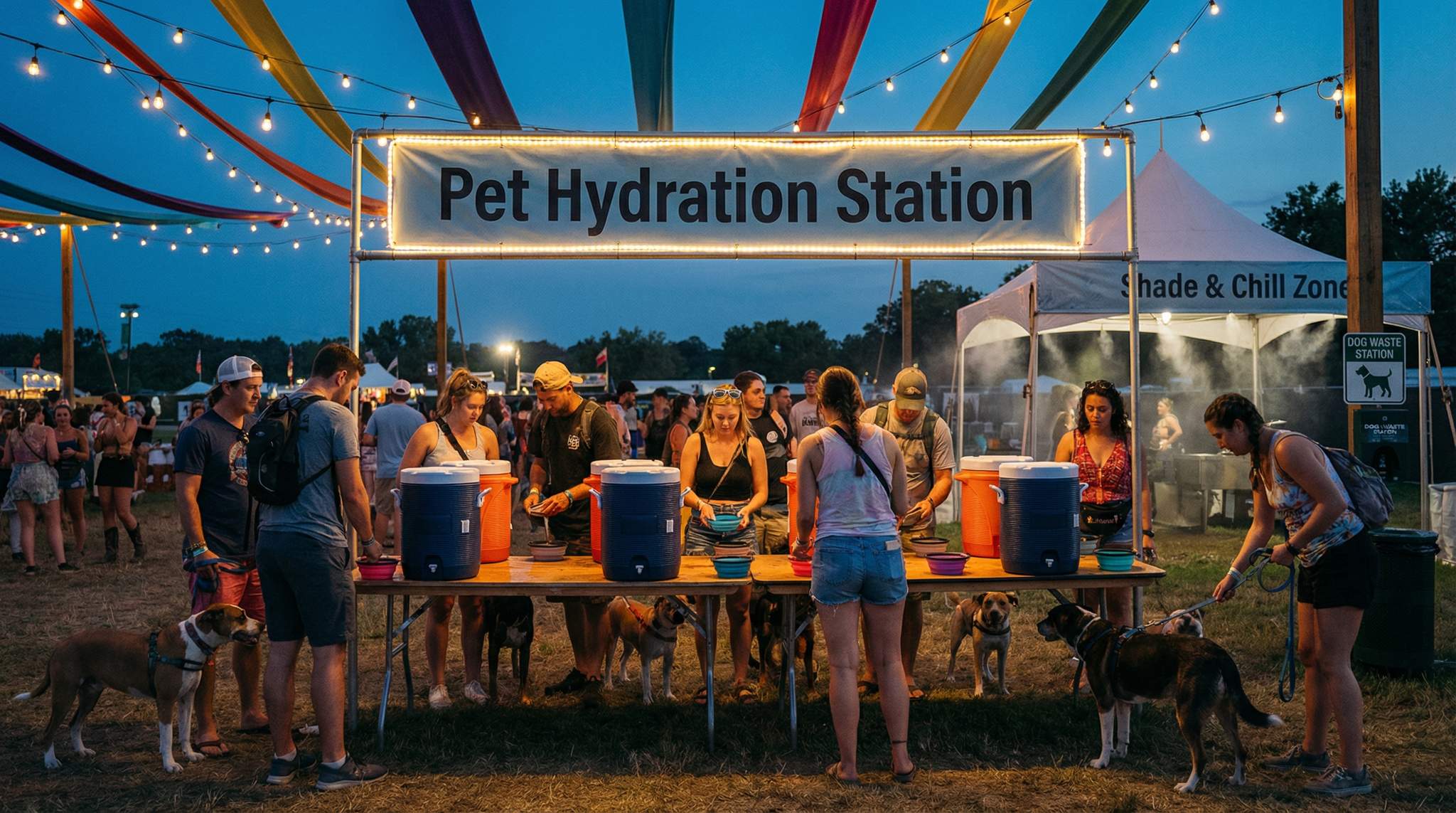
One of the first considerations for any pet-friendly festival is preventing overheating and dehydration in dogs. Ample water availability is a must. Many festivals install multiple dog water stations throughout the venue so attendees can easily refill bowls. For example, Pet Fed (India’s largest pet festival) explicitly provides free water and clean bowls at all its events. At Pup Festival in Arizona, the festival’s organizers set up doggy water stations and also make bottled water available for sale – crucial in a desert climate. Festival producers often encourage owners to bring personal collapsible bowls, but they back that up with accessible water taps or tubs on-site.
In addition to hydration, shade and cooling areas make a huge difference, especially in warm weather. Smart planners create shaded rest zones where dogs can escape direct sun. This might include erecting canopy tents or setting aside areas under trees for pet breaks. Large dog-focused festivals like DogFest in the UK go even further by adding cooling amenities: on scorching days they deploy extra water buggies to refill bowls, kiddie pools for dogs to splash in, and even misting stations to help pets chill out. Some events incorporate fun cooling elements – for instance, Bark by the Bay (a canine festival in Washington state) features off-leash splash zones where dogs can play in water to cool off. The key is to anticipate the weather and provide both the infrastructure (drinking water, shade structures) and reminders to attendees. Signage and announcements can encourage owners to offer water to their pets frequently and take shade breaks. These measures not only keep dogs comfortable but also prevent emergencies like heat exhaustion.
Waste Stations: Clean-Up Infrastructure and Etiquette
Another practical challenge of dog-friendly events is pet waste management. Nothing can sour a festival vibe faster than a field littered with “surprises” left by dogs. Successful pet-friendly festivals plan for this by placing waste stations and supplies all around the venue. This typically includes dispensers with free poop bags and plentiful trash bins designated for pet waste. Pet Fed’s organizers note that they supply waste bags (in addition to water) so owners are never caught empty-handed. At Pup Festival, “potty stations” are set up where dogs can relieve themselves, with baggies provided and a request that owners pick up after their pets.
Smooth Entry With Mobile Check-In
Scan tickets and manage entry with our mobile check-in app. Supports photo ID verification, real-time capacity tracking, and multi-gate coordination.
Spacing these waste stations every few hundred feet in high-traffic areas (and especially near entrances, pet play areas, or food courts) makes it convenient for attendees to do the right thing. Clear signage (“Dog Waste Station – Please Clean Up After Your Pet”) can serve as a gentle reminder. Many events also include polite guidelines in their program or on the event app about pet etiquette. In practice, festival staff or volunteers might do periodic patrols to restock bag dispensers and even spot-clean any missed messes – keeping the grounds clean for all. By investing in easy waste disposal options, organizers foster a culture of responsibility that most pet owners are happy to follow. The result is a venue that stays sanitary and pleasant despite hosting dozens or even hundreds of pups.
Leash Policies and Dog Zones: Balancing Freedom and Safety
Crowded festivals are full of stimuli – music, dancing people, other dogs – which can be overwhelming or risky if pets are not properly restrained. Leash rules are therefore a cornerstone of any dog-admitting event. In almost all cases, festivals require dogs to remain on-leash unless in a specifically designated off-leash area. For instance, the Maine Lobster Festival (a large outdoor food festival in the USA) welcomes leashed dogs on its grounds and even hosts fun dog-and-owner activities, but it insists on “well-behaved pets on short leashes,” and it even leaves each dog’s admission up to staff discretion at the gate. Similarly, Pet Fed mandates that all pets stay on a leash or harness at all times for everyone’s safety. Many organizers explicitly ban extendable/retractable leashes, since those can be hard to control in a crowd and tend to entangle people or other dogs. A standard 6-foot (approximately 2-meter) leash is the common requirement.
Planning a Festival?
Ticket Fairy's festival ticketing platform handles multi-day passes, RFID wristbands, and complex festival operations.
Some pet-centric festivals do offer off-leash play zones, but these are carefully controlled environments. Pup Festival, for example, has fenced-in areas where dogs can run freely, but dogs must be leashed when entering and exiting those enclosures. The off-leash dog park zones often include agility equipment or toys and are supervised by staff or volunteers. Outside of such zones, even the friendliest dogs should be leashed to prevent unexpected chases or scuffles. Events like West Fest in Chicago found a good compromise by having a dedicated “Pet Fest” area within the larger street festival – there, dogs could try an agility course and even splash in a kiddie pool, but they still had to be leashed unless participating in a contained activity. The takeaway is that totally free-roaming dogs and crowded festivals don’t mix. Keeping dogs on-leash (with a short lead length) ensures owners can pull their pets away from dangers (like dropped food or stray electric cables) and quickly intervene if two pups don’t get along.
When designing leash policies, communicate them clearly before and during the event. Festival websites, tickets, and signage at entrances should all state the leash rule. Most dog-loving attendees understand these expectations, but enforcement on-site is also important – security or staff might do gentle reminders if someone absent-mindedly lets their dog off leash. It only takes one unruly or overly exuberant pup to cause an accident, so consistent leash use keeps the atmosphere fun for everyone.
Safety and Incident Protocols: Preparing for the Unexpected
Even with rules and responsible owners, pet-friendly events must be ready to handle incidents calmly and effectively. The best festivals have a plan for incidents involving animals – whether it’s a lost dog, a fight between dogs, or (worst-case scenario) a dog biting a person.
A common policy across events is to reserve the right to remove any aggressive or problematic dog from the premises. Festival staff are typically empowered to intervene if a pet is acting dangerously. For example, Pup Festival’s rules state that officials can deny entry to dogs exhibiting aggressive behavior, and that owners must promptly remove any dog that becomes unruly or threatening. Having a clearly stated expectation that disruptive dogs will be ejected helps set the tone that safety comes first. In practice, if two dogs start snarling at each other or a bite occurs, staff should respond quickly – separating the animals and directing the owners to an exit or a quiet area to resolve the situation.
Many festivals also implement health and eligibility requirements to prevent incidents. Proof of up-to-date vaccinations (especially rabies) is often required or recommended at registration. Some events have on-site checks or ask for vet records if an issue arises. The reason is not just disease prevention; it’s also about liability and peace of mind. Consider a real-world example: at an arts festival in Pennsylvania, an 11-year-old girl was bitten by a dog in attendance, and because the dog’s rabies vaccination status was unknown, the child had to undergo precautionary rabies treatments. No organizer wants to face such a scenario. By ensuring every canine guest is properly vaccinated and healthy, festivals protect both the public and themselves. Along with vaccination rules, some dog-oriented festivals impose age and neutering restrictions (for instance, banning puppies too young to have completed immunizations, or requiring adult dogs to be spayed/neutered to reduce aggressive tendencies). These measures can significantly cut down on potential issues like fights or unwanted litters.
It’s also wise to have basic first aid and animal care services on hand. Larger dog festivals often partner with a local veterinary service or pet first aid team to staff a booth on-site. DogFest, for example, sets up an animal welfare tent with a vet team available to help any dog in distress. For smaller events that may not afford a vet on standby, at least brief the event’s first-aid crew on how to handle pet emergencies and have contact info for the nearest animal hospital handy. Additionally, coordinate with local animal control authorities so you know who to call if a serious incident (like a dog bite to a person) occurs. Having an incident report form ready for any dog-related accidents is a good practice – it ensures you document what happened, obtain witness statements if needed, and have the owner’s details. This kind of diligence not only helps if any insurance or legal follow-up is required, but it also signals to attendees that you take safety seriously.
Need Festival Funding?
Get the capital you need to book headliners, secure venues, and scale your festival production.
Finally, consider the overall environment from a dog’s perspective to prevent issues. Provide some quiet zones or allow re-entry so that owners can take overstimulated dogs outside the festival briefly to decompress. Keep music at a reasonable volume near any designated dog areas and avoid truly startling special effects (e.g. loud fireworks or pyrotechnics) if you know pets are present. Proactively communicating these plans – such as “pet relief area located behind Stage B” or “if your dog seems anxious, feel free to step out and return later” – empowers owners to manage their pets and avert incidents before they happen.
Liability Waivers and Legal Considerations
One of the most important behind-the-scenes safeguards for a pet-friendly festival is a well-crafted liability waiver. Even with great planning, dogs are animals and unpredictable situations can arise. Festival organizers need to protect themselves (and other attendees) through clear legal terms that assign responsibility to pet owners. In practical terms, this means that as a condition of entry, the dog’s owner agrees to be liable for any injury or damage their pet causes, and the festival disclaims responsibility for those outcomes.
Different events implement this in various ways. Some may require pet owners to sign a physical waiver at check-in, especially if the festival involves competitions or high-risk activities. Others include the waiver language in the online ticket purchase agreement or in the attendee terms & conditions. Dog Lovers Festival in the UK, for example, explicitly states in its terms that it accepts no responsibility for any personal injury or property damage at the event (except in cases of organizer negligence). These kinds of clauses, while sounding stern, are absolutely vital to include.
From an organizer’s perspective, working with legal counsel to develop a comprehensive pet liability waiver is non-negotiable if you plan to allow animals. The waiver should be clearly communicated to attendees – post it on your website, include it in promotional materials (“by bringing a dog, you agree to….”), and have visible signage at the festival entrance reiterating that owners are responsible for their dogs. Additionally, verify with your insurance provider that your event policy covers incidents involving animals. You may need a special rider or additional coverage for pet-related incidents (such as dog bites or property damage). It’s better to sort that out well in advance than to discover a gap in coverage when it’s too late.
In the waiver and rules, it’s wise to spell out any specific prohibited behaviors or equipment as well, which can preempt problems. Many festivals ban things like shock collars or other harsh training devices on the premises to promote humane handling. If your event is not exclusively about pets, you might also limit the number of dogs per attendee (Pup Festival, for instance, limits each person to two dogs to ensure one owner isn’t overwhelmed). While these details might seem tedious, they collectively create a safer environment and a clearer legal framework. Attendees will understand that bringing a dog is a privilege that comes with responsibilities.
Frequently Asked Questions
How do outdoor festivals keep dogs cool and hydrated in hot weather?
Festivals prevent overheating by installing multiple water stations for refilling bowls and creating shaded rest zones under tents or trees. Events like DogFest deploy water buggies, kiddie pools, and misting stations. Organizers also encourage owners to bring collapsible bowls and take frequent shade breaks to avoid heat exhaustion.
How should pet-friendly festivals manage dog waste and sanitation?
Successful events place waste stations containing free poop bags and trash bins every few hundred feet in high-traffic areas. Organizers often employ staff to restock dispensers and spot-clean grounds. Clear signage and etiquette guidelines in event apps encourage owners to clean up, ensuring the venue remains sanitary for all attendees.
Why are retractable leashes often banned at pet-friendly festivals?
Many organizers explicitly ban extendable or retractable leashes because they are difficult to control in crowds and can entangle people or other dogs. Standard 6-foot leashes are typically required to ensure owners can quickly intervene in conflicts and keep pets away from dangers like dropped food or electric cables.
Do outdoor festivals provide off-leash areas for dogs?
Some pet-centric festivals offer designated, fenced-in off-leash zones where dogs can run freely under supervision. Outside these specific enclosures, dogs must remain leashed to prevent accidents in crowded areas. Events like West Fest utilize contained agility courses or play areas to allow freedom while maintaining overall site safety.
How do festivals handle aggressive dogs or safety incidents?
Festival staff are empowered to intervene and remove any dog exhibiting aggressive or unruly behavior to ensure public safety. Protocols often include separating animals immediately and directing owners to exits. Events like Pup Festival explicitly state that officials can deny entry or eject threatening dogs to maintain a safe environment.
Why are liability waivers important for dog-friendly events?
Liability waivers protect organizers by legally assigning responsibility for injury or damage to the pet owner. These agreements, often included in ticket terms or signed at check-in, disclaim festival responsibility for incidents. Organizers also verify their insurance policies cover animal-related risks like dog bites to ensure comprehensive legal protection.