Changing Places & Adult-Sized Tables: Making Festivals Truly Accessible for All
Every festival producer aims to create an inclusive environment where no attendee is left out due to inadequate facilities. One critical yet often overlooked aspect of accessibility is the provision of Changing Places restrooms – fully equipped facilities with adult-sized changing tables and hoists. Standard accessible toilets simply don’t meet the needs of some festival-goers, such as adults or older children with severe disabilities who may need support with personal care. Installing proper Changing Places facilities at festivals can be a game-changer, enabling many who previously couldn’t attend to finally join the fun.
What Are Changing Places Facilities and Why They Matter
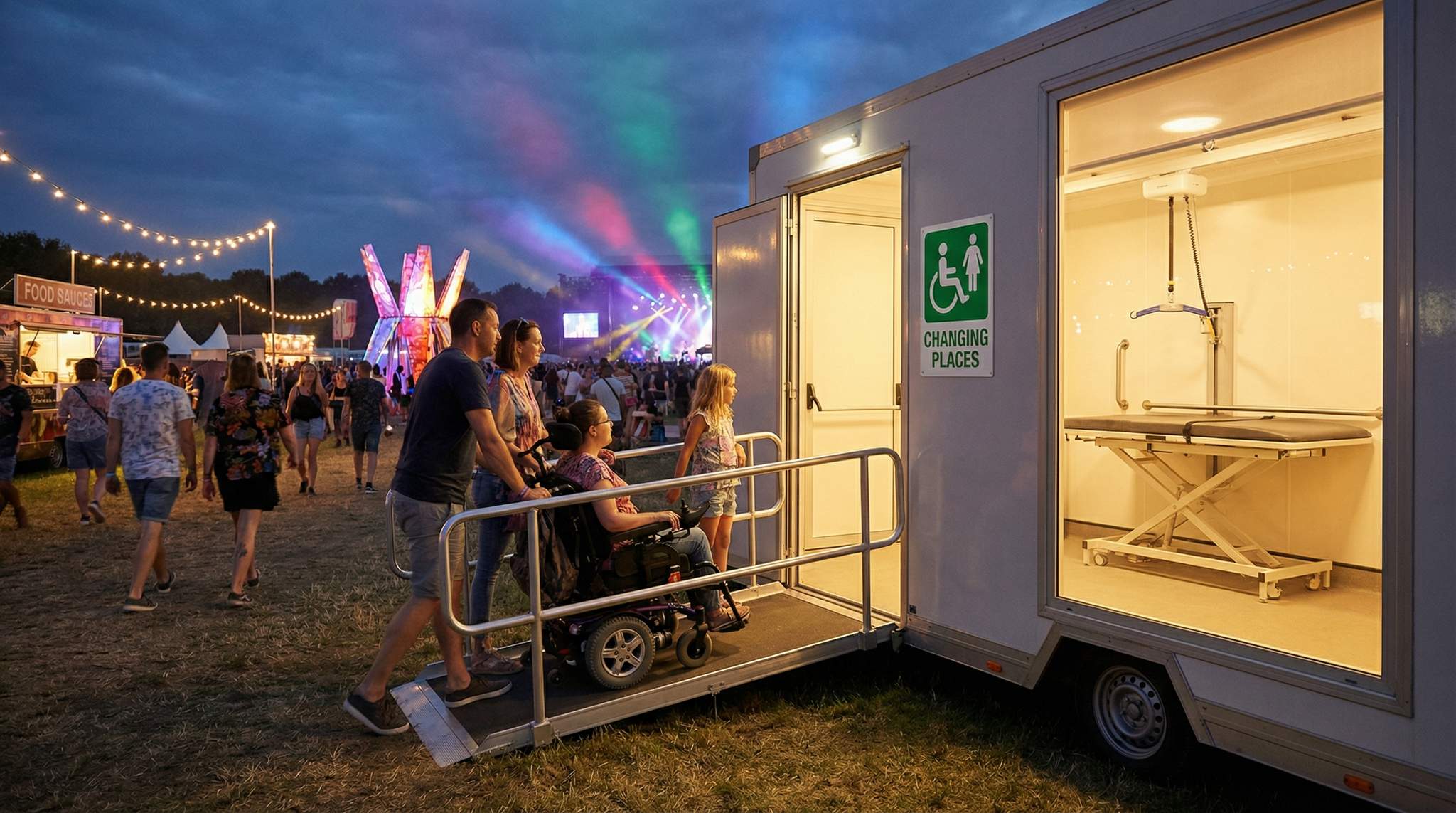
Changing Places are specialized accessible bathrooms designed for people who cannot use standard disabled toilets. They are much larger than a typical wheelchair-accessible stall and come equipped with an adult-sized changing bench (often height-adjustable) and a hoist system for safe lifting, as detailed in Edinburgh Fringe Festival’s accessibility guides. There is ample space for at least two caregivers to assist, along with features like privacy screens, grab rails, and emergency alarms. These facilities originated in the UK in 2006 and have since spread to countries like Australia, New Zealand, the United States, and across Europe, following successful Changing Places funding rounds that aimed to establish a network of specialized facilities.
For festivals, providing a Changing Places unit means attendees who require adult changing or additional assistance can attend with dignity. Without such facilities, families and caregivers often face heartbreaking scenarios – older children or adults having to be changed on a toilet floor, in a vehicle, or not attending at all, a struggle highlighted by advocates pushing for adult changing tables. This isn’t just uncomfortable; it’s unsafe and undignified. True accessibility changes who can attend: when you accommodate these needs, you open your gates to an audience that was previously excluded. For example, a mother of a teenager with profound disabilities will think twice about buying festival tickets if she knows there’s nowhere to handle her child’s personal care. On the other hand, when events have the right facilities, those families feel truly welcome.
Data-Driven Event Marketing
Track ticket sales, demographics, marketing ROI, and social reach in real time. Exportable reports give you the insights to make smarter decisions.
There’s also a tangible business case. One festival in the UK reported that after improving accessibility (including adding Changing Places-style amenities), the number of deaf and disabled attendees rose by 50% over a few years, proving that implementing strategies to improve access directly impacts ticket sales. That’s a huge new audience enjoying the event – and purchasing tickets – thanks to better access. Another city council in Chelmsford (England) found that lack of proper disabled restrooms was actively deterring people from attending events they would otherwise love, prompting Chelmsford City Council to take action. They responded by piloting a mobile Changing Places unit at local festivals to remove that barrier by trialling new gold standard accessible toilets. The message is clear: investing in these facilities is not only the right thing to do, it also expands your festival’s reach and reputation.
Planning and Installing Changing Places at Your Festival
Assess Feasibility and Venue Needs: Start by determining if your festival venue can accommodate a full Changing Places facility. Some modern venues (convention centres, stadiums, large parks) may already have permanent Changing Places or similar “high-dependency” units on-site. If you’re using an existing venue, check if such a facility exists or if one can be installed or temporarily fitted. For greenfield festivals on open land or farms, you’ll likely need to bring in a mobile unit. In the UK and parts of Europe, specialised providers offer mobile Changing Places trailers (like Mobiloo, Pamiloo, or RevoLoo) that you can hire for the event. Resources like Simply Emma’s guide to wheelchair accessible events highlight venues that successfully utilize mobile units with hoists and changing tables. In North America, look for local companies or non-profits that provide accessible restroom trailers with adult changing tables – as seen at the Minnesota State Fair, where advocates secured a fully accessible mobile restroom for the 12-day fair, a victory celebrated by local disability advocacy groups. In Australia and New Zealand, governments and community groups have funded mobile Changing Place units that travel to events and public spaces, often supported by government funding for Changing Places. Research what options exist in your region; often disability organizations can point you in the right direction.
Planning a Festival?
Ticket Fairy's festival ticketing platform handles multi-day passes, RFID wristbands, and complex festival operations.
Budgeting and Partnerships: A full Changing Places facility – especially a mobile unit with hoist and bench – can be a significant investment, but there are ways to manage the cost. Renting a mobile unit for a weekend festival is far cheaper than buying one outright, so include rental fees in your accessibility budget. Large-scale festivals may find it worthwhile to purchase or build a custom unit if the venue will be reused annually. Consider partnerships: local authorities, accessibility charities, or sponsors might subsidize or lend units in exchange for recognition. For instance, a local council might have a portable Changing Places trailer it can provide for community events (as was the case in Chelmsford), providing a vital facility for revellers with disabilities. Always factor in any additional equipment needed – e.g. a generator for power, water hook-ups, etc., if the unit requires them.
Location and Setup: Choose a location on the festival grounds that balances accessibility with privacy. The Changing Places unit should be easy to find – ideally marked on the site map and near other accessible amenities (like accessible camping areas or medical tents) – but not in the noisiest, most congested part of the festival. A spot near the medical or welfare area often works well, since it provides some discretion and quick access to first aid if needed. Ensure the path to the facility is wheelchair-accessible (solid pathways or matting if the ground is uneven). Also, think about crowd flow: you may want a small fenced queue area or signage to prevent random passers-by from mistaking it for a regular toilet. The unit itself must meet the standard: a wide, gently-sloping ramp entry (if it’s a trailer), interior space for wheelchair maneuvering, an adjustable bench and hoist, and essentials like sanitary bins and sinks.
To illustrate, Download Festival in the UK installs a Changing Places unit in its accessible campsite which includes an adult-sized changing bed, an electric hoist, a unisex wheelchair-accessible toilet with grab rails, a sink with running water, and even facilities for disposing waste and charging wheelchairs. Reports confirm these amenities are available at designated charging points within the accessible campsite. That’s the gold standard to aim for – essentially a mini bathroom that can handle all the personal care needs of an adult with disabilities. Even if your festival is smaller, you should try to provide at least a private space with an adult changing table and access to water and cleaning supplies as a minimum, but the goal should be to meet full Changing Places specifications where feasible.
Maintenance, Cleanliness, and Staffing
Having the facility is step one; keeping it spotless and functional throughout your event is step two. Assign specific cleaning staff to the Changing Places restroom, just as you would for VIP toilets or high-traffic bathrooms. This facility might get lighter use than general toilets, but when it’s needed, it must be absolutely clean and ready. A soiled or out-of-order adult changing area is more than an inconvenience – it could force someone to leave the festival early or even pose health risks. Cleanliness is paramount not only for hygiene but out of respect for the users, who often have medical vulnerabilities.
Turn Fans Into Your Marketing Team
Ticket Fairy's built-in referral rewards system incentivizes attendees to share your event, delivering 15-25% sales boosts and 30x ROI vs paid ads.
Equip the space with ample supplies: disinfectant wipes, gloves, extra trash liners, and perhaps disposable adult changing mats or covers for the bench. Check the hoist and any electrical features regularly (e.g. ensure backup battery or generator fuel if applicable). It’s wise to have a maintenance technician on-call who understands the hoist mechanism in case of any technical glitches. Keep a log sheet for cleanings and inspections to guarantee consistent upkeep.
Train Your Attendants: If you have staff or volunteers stationed to manage accessible services, train them on how to handle the Changing Places facility respectfully and discreetly. Their role isn’t to intrude on anyone’s privacy – in most cases, the attendee’s own caregiver will perform the personal care. However, attendants should know how to operate the hoist safely (in case a family needs a hand or a quick orientation), and how to assist if there’s an emergency or equipment malfunction. They should be instructed to be friendly and available but to also give space and privacy as needed. Dignity is the key word. For example, if someone needs access to the Changing Places, an attendant can ensure the area is free, clean, and then step aside out of earshot until called. It’s also crucial that staff are trained not to question someone’s need to use this facility – not all disabilities are visible, and any patron who asks for the Changing Places key or assistance should be accommodated without fuss or invasive inquiries.
Need Festival Funding?
Get the capital you need to book headliners, secure venues, and scale your festival production.
Communication and “Call-Ahead” Service
Make information about your Changing Places (or adult changing facilities) highly visible in all your communications about festival accessibility. On your website’s accessibility page, clearly state that an adult-sized changing facility with a hoist is available, including its location on the festival map. Mention any important details: Will a key or code be required to access it? (In the UK, many such facilities use the “RADAR” key system – you might let attendees know if they should bring their RADAR key or where they can borrow one on-site. Information on how to access the unit should be prominent.) Is there a specific time it’s staffed or is it available 24/7 during the event? The more clarity you provide, the more confidently people can plan their visit.
Offering a call-ahead service or dedicated contact for accessibility inquiries is a fantastic way to help attendees plan. Encourage those with specific needs to reach out before the festival to discuss accommodations. For instance, a family might call or email to confirm that a hoist-equipped restroom will be on site and to ask about any details (such as the hoist weight limit, or if they need to bring their own sling for it). By answering these questions in advance, you reduce uncertainty. Some festivals assign an accessibility coordinator who can even schedule a meet-and-greet upon arrival or reserve certain resources. While you might not “reserve” the Changing Places room itself for specific time slots (since needs can be unpredictable), having a point of contact means a user can notify staff, for example, “We expect to need the changing facility around 2 PM,” so staff can ensure it’s clean and ready at that time. This level of personalised support can make a huge difference for attendees juggling complex care schedules.
On the ground, clearly map and signpost the facility. Use the official Changing Places symbol if one exists in your country (a wheelchair symbol with a changing bench and hoist icon) to help those who know it, and add text like “Accessible Changing Facility.” Include it on printed festival maps, the mobile app, and signage around the site (e.g. directional arrows from the medical tent or main stage pointing toward it). During the event, have your MC or announcers mention accessibility amenities alongside general info (for example, in the same breath as reminding people where water stations and first aid are, they can mention there’s an accessible changing facility available).
Adapting to Different Festival Scales and Types
Whether you run a cosy local food festival or a massive multi-stage music festival, the principles of accessibility apply – but the execution can scale. For small festivals or community events with limited budgets, a full Changing Places setup may feel out of reach, but creativity and goodwill can bridge the gap. You might collaborate with local disability advocacy groups to rent a portable unit at a discounted rate, or even borrow a space in a nearby facility. If your venue is in a town centre, perhaps the local library or shopping centre has an adult changing facility that festival attendees can use; if so, arrange access and advertise it. At the very least, set aside a clean, private room (for example, a first aid tent or a quiet tent) and equip it with a sturdy, waist-height changing table or plinth that can support an adult’s weight, along with a chair for caregivers and cleaning supplies. While this is not as ideal as a full hoist-equipped restroom, it is better than nothing for attendees in need.
For large-scale festivals, there’s no excuse not to provide proper facilities. If tens of thousands of people are attending, statistically there will be attendees who need this service. Many major festivals are already on board. We’ve seen music festivals in England like Glastonbury, Reading, and Download implement Changing Places units and receive accolades for their accessibility efforts, including providing accessible sinks and waste disposal points. In North America, huge events like state fairs and theme park festivals have begun to add adult-sized changing tables to their permanent restroom complexes. This shift has been driven by motivated mothers advocating for change and resulted in emotional moments for families who can finally attend together. When planning a large event, include multiple Changing Places if the site is sprawling – for example, one in the main arena and one in the accessible campground. High-capacity events might also consider staffing a helpline or text service during the festival so that disabled guests can call if they encounter any issues accessing the facilities (for instance, if the door is accidentally locked or a supply needs restocking).
Also consider your festival’s audience demographics. A family-focused festival (like those with kids’ activities or aimed at all ages) is very likely to have attendees with disabled children or elderly relatives who need these facilities. An electronic dance music festival with a younger crowd might have fewer immediate takers, but you cannot assume – people of all ages and backgrounds attend all kinds of events, and disabilities aren’t always visible. Some festivals specifically cater to communities with disabilities (for example, autism-friendly festivals or events like “Festability” in the UK which are designed to be inclusive); at those, top-notch facilities are a given. However, the goal is to normalize and provide such inclusive infrastructure at every festival, not just specialist events.
Frequently Asked Questions
What are Changing Places facilities at festivals?
Changing Places are specialized accessible bathrooms designed for people who cannot use standard disabled toilets. These facilities are larger than typical stalls and come equipped with an adult-sized changing bench, a hoist system for safe lifting, and ample space for at least two caregivers to assist with personal care.
Why are adult-sized changing tables important for events?
Adult-sized changing tables prevent unsafe and undignified situations where attendees with disabilities must be changed on toilet floors or in vehicles. Providing these facilities allows families to attend events they would otherwise miss, with one UK festival reporting a 50% increase in disabled attendees after improving accessibility standards.
How can outdoor festivals provide Changing Places facilities?
Outdoor festivals can hire mobile Changing Places trailers from specialized providers like Mobiloo or RevoLoo if permanent infrastructure is unavailable. Organizers should budget for rental fees, ensure necessary power and water hook-ups are available, and place the unit in a location that balances accessibility with privacy, such as near medical tents.
What features are included in a Changing Places restroom?
A fully equipped Changing Places restroom features a height-adjustable adult-sized changing bench, a hoist system, and a centrally placed toilet with room for wheelchair maneuvering. Essential amenities also include privacy screens, grab rails, emergency alarms, and a sink with running water to support high-dependency personal care needs.
How should festivals maintain accessible changing facilities?
Festivals must assign dedicated cleaning staff to keep Changing Places facilities spotless and stocked with supplies like disinfectant wipes, gloves, and trash liners. Staff should be trained to operate hoists safely and respect user privacy, while regular inspections are necessary to ensure equipment remains functional throughout the event.
How can attendees find information about festival accessibility?
Organizers should clearly map and signpost Changing Places units using official symbols and provide detailed location information on the festival website and app. Offering a call-ahead service allows attendees to confirm specific details, such as hoist weight limits or access requirements like RADAR keys, before they arrive.