Beverage Strategy: Throughput Without Trouble
Running the bars at a large-scale festival can make or break the attendee experience. Efficient beverage operations mean happy, hydrated guests and maximized revenue – but long lines or unsafe service can quickly lead to frustration or worse. Festival organizers around the world have learned through hard knocks and triumphs that when it comes to drinks, speed and safety are equally important. From multi-day music extravaganzas in the desert to boutique food & wine fairs in city parks, a smart beverage strategy keeps the good times flowing without trouble.
In this guide, a veteran festival producer shares proven strategies to boost bar throughput (serving as many guests as possible) while ensuring safety and compliance. The advice covers everything from bar layout and staffing to staff training, menu planning, and on-the-fly adjustments. Whether you’re producing a 5,000-person community festival or a 100,000-strong international music festival, these tips will help you design bars that are fast, efficient, and safe. Let’s dive into the practical tactics – backed by real examples and lessons learned – to achieve high-volume beverage service without the headaches.
Structuring Your Festival Beverage Planning Guide
Developing a comprehensive festival beverage planning guide is the foundational step for any large-scale event. Before a single drop is poured, organizers must map out the entire beverage ecosystem. This master blueprint should detail attendee consumption forecasts, licensing requirements, and the exact chain of command for all bar managers. By documenting these operational standards early, production teams ensure that every stakeholder—from site crew to third-party vendors—is aligned on the core objectives of maximizing throughput, maintaining strict safety protocols, and driving revenue.
Optimized Bar Layout for High Throughput
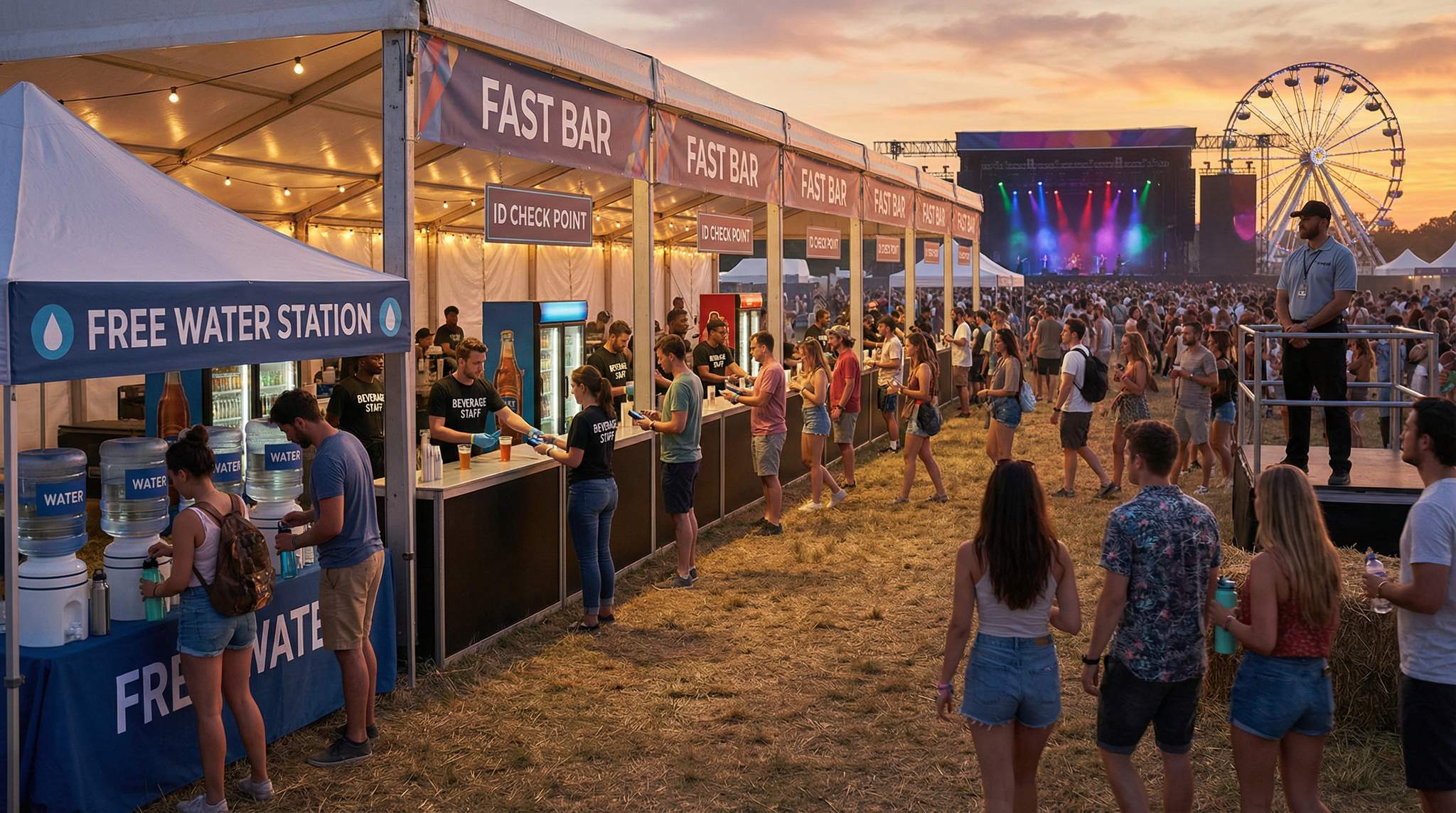
One of the first keys to a smooth beverage operation is bar design. The physical layout of your bars can dramatically impact how quickly drinks are served. Seasoned festival organizers have found that long, well-planned bar counters with plenty of serving stations are ideal for high-volume events. Instead of a single tiny booth handling all orders, it’s far better to design long bars with many POS (points of sale) – essentially, multiple tills or serving points where different bartenders can serve guests simultaneously. This reduces bottlenecks by allowing more transactions at once, much like opening more checkout lanes in a busy supermarket.
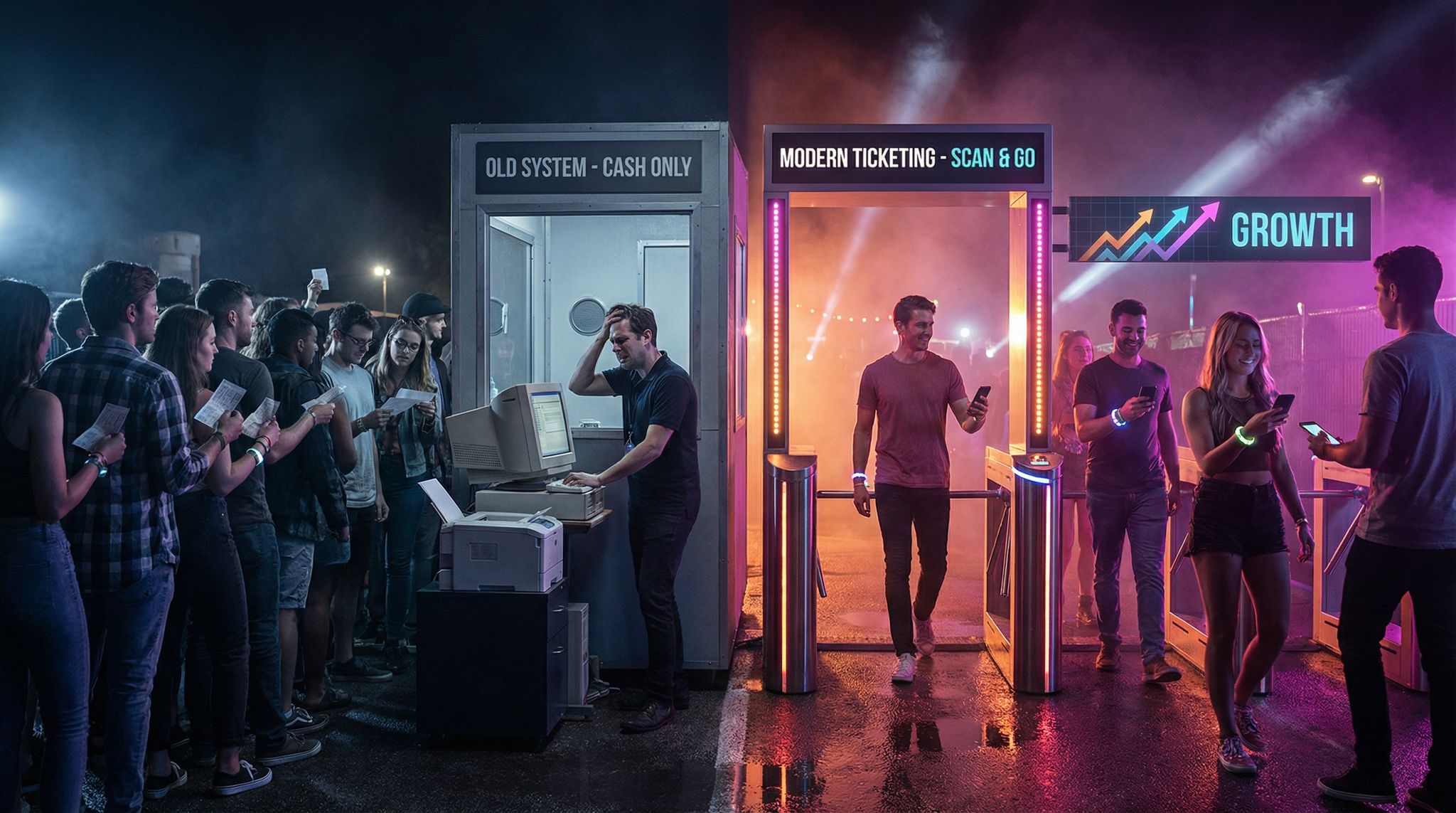
Smooth Entry With Mobile Check-In
Scan tickets and manage entry with our mobile check-in app. Supports photo ID verification, real-time capacity tracking, and multi-gate coordination.
- Long Bars, Multiple Serving Points: At major festivals like Glastonbury (UK) or Coachella (USA), you’ll often see massive bar tents stretching across the field, staffed by dozens of bartenders. This isn’t just for show – it’s to handle the flood of customers between acts. A sprawling bar with, say, 20 taps and 20 cashiers can serve far more people per minute than a small bar with 4 bartenders. The goal is to minimize queue length and wait time by scaling up the serving area. As one event production team put it, they “strategically plan the bar layout to optimize flow and minimize congestion,” often placing beverage stations in multiple locations so crowds disperse rather than choke one spot.
- Ensure Easy Access & Workflow: Within each bar, set up a logical flow for staff. Stock the bar with all necessary supplies (cups, ice, garnishes, kegs) organized for quick reach. Arrange beer taps, coolers, and liquor in an order that reduces needless steps. If bartenders have to constantly run to a back tent for more ice or stock, service slows down. A well-designed bar might include back-of-house runners who restock ice and beverages continually so bartenders never leave their stations. As an example, Tomorrowland in Belgium – a huge 400,000-attendee festival – uses long bar counters with rear-service areas where staff continuously refill beer kegs and drink fridges just behind the bartenders. This way, the front-line servers can keep pouring non-stop.
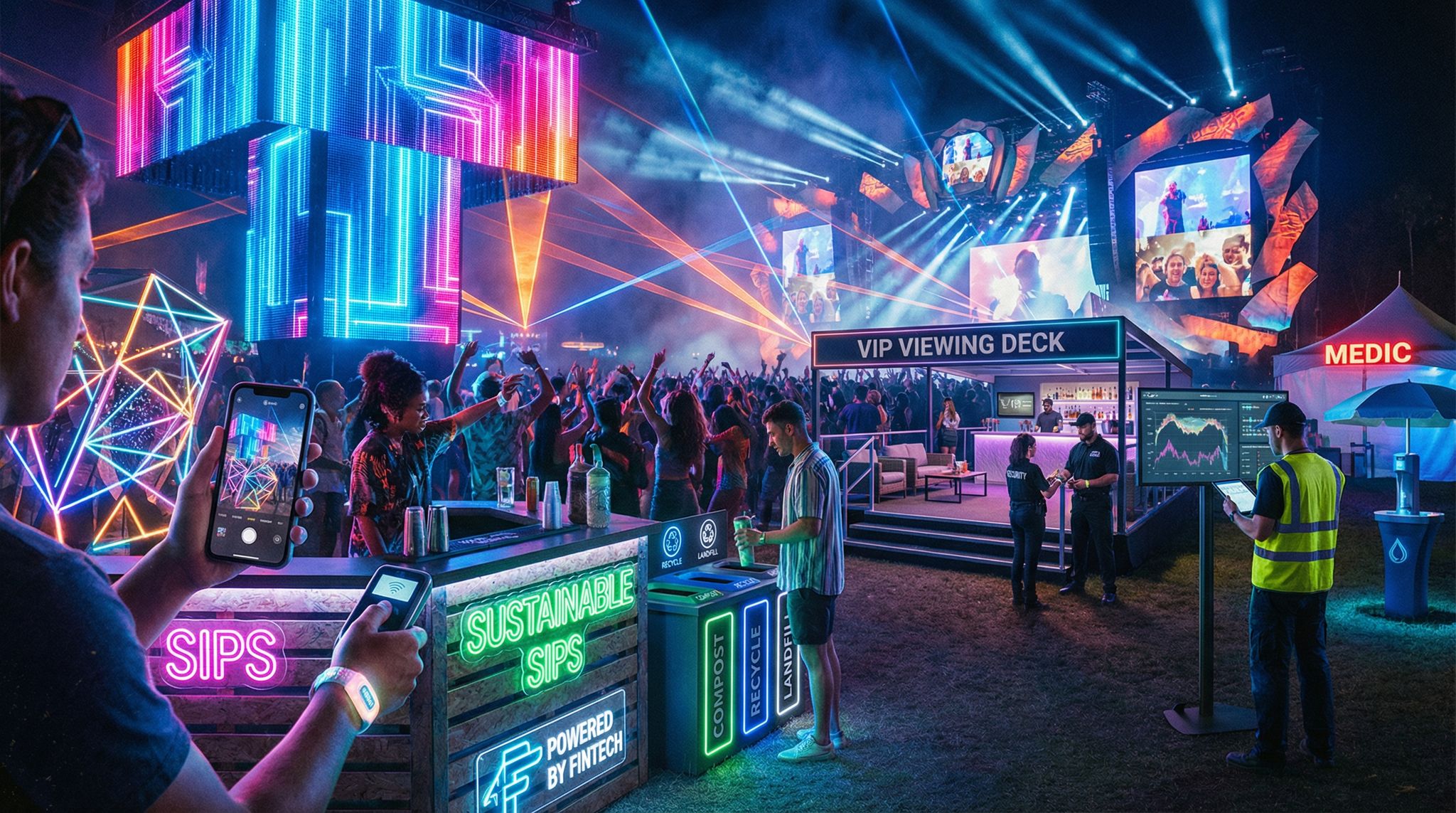
- Sufficient Payment Stations: “Many POS” also implies having enough payment points or cash registers for the volume. For instance, EDC Las Vegas (USA) and Sydney’s Field Day (Australia) have moved toward cashless RFID wristbands or plentiful card readers at bars, enabling faster transactions than handling cash. Each extra second per transaction adds up when thousands of people are in line. By providing each bartender with a dedicated POS device (or using roving cashiers taking mobile orders), festivals can dramatically speed up throughput. In one scenario, a break between headliner sets might send 20,000 thirsty fans to the bars at once – a traditional bar might only manage ~200 drinks per hour per bartender in such peaks, but optimizing layout and checkout tech helps capture far more sales before the next act starts.
Real-World Example: The Lollapalooza festival in Chicago expanded its bar infrastructure after early complaints of slow service. Organizers added extra “beer barns” (large open beer sales tents) with 50% more serving stations and implemented contactless payments. The result was noticeably shorter waits; attendees could grab a cold drink and get back to the music faster. Veteran festival-goers talk, and word gets around: events with fast, efficient bars earn a great reputation, whereas those with hour-long beer queues get blasted on social media. As the Cocktail Maker (a bar technology firm) cheekily noted, seconds can make the difference between success and fiasco during festival rushes. The takeaway: invest in a smart bar layout and ample service points – it will pay off in both sales and attendee satisfaction.
Water, Shade, and Guest Comfort at the Bars
Drinks at festivals aren’t only about alcohol; water is the most critical beverage of all. Any large-scale event must ensure that water is abundant, easily accessible, and ideally free. Keeping attendees hydrated isn’t just kind – it’s often a legal requirement and a safety necessity. In many countries, festival regulations mandate free water availability whenever alcohol is sold. For example, in Australia and much of Europe, festivals are required by law to provide free water stations to keep patrons safe, ensuring patrons stay hydrated and safe throughout the event. Even where it’s not legally required (like parts of the United States), the best events voluntarily offer water to prevent dehydration emergencies, as festivals in Australia have long mandated.
Planning a Festival?
Ticket Fairy's festival ticketing platform handles multi-day passes, RFID wristbands, and complex festival operations.
- Free Water Stations: Large festivals set up water refill stations or water fountains throughout the venue – including near or within bar areas. Coachella (USA), held in the California desert, has numerous free water refill stations scattered around the grounds, allowing guests to bring an empty bottle and top off often. Attendees are encouraged to use the free stations to stay hydrated all day. This not only keeps people safe under the brutal sun, it also reduces the demand for bottled water sales and the waste of plastic bottles. Many major music festivals also partner with sponsors for water programs; for instance, Backwoods Music Festival in Oklahoma worked with a local non-profit to provide free filtered water to all guests. Glastonbury in the UK, known for embracing green initiatives, famously banned single-use plastic bottles and instead offers dozens of tap stands across the site for free drinking water. The message is clear: keeping the crowd hydrated is non-negotiable.
- Water at Bars: Savvy festival producers integrate water access directly into bar design. This might mean water coolers or jugs at each bar so that anyone can ask for a cup of water alongside their beer. Some festivals offer cups of water free at the bar upon request or have self-serve water stations adjacent to the bar queues. This way, someone waiting for a cocktail can sip water in line and won’t get overheated. It’s also a courtesy for designated drivers or non-drinkers to grab water without hunting down a separate booth. Make hydration convenient – fans will remember that you cared about their well-being.
- Shade and Cooling: Apart from water, shade is a lifesaver during daytime events. If your festival is under a blazing sun, consider the comfort of those waiting at the bar. Provide shade structures like tent awnings, umbrellas, or shade sails over bar queues when possible. Many major music festivals set up “cooling stations” or misting areas near food and drink zones, as EMS teams recommend drinking water between every alcoholic beverage. For example, Ultra Music Festival in Singapore (where it’s tropical) has shaded rest areas and mist fans by the main bar zones to help guests cool off alongside hydration stations. Even at milder-weather events, shade over the bar isn’t just for patrons – it keeps your beverages cooler and equipment like POS tablets from overheating or screens becoming unreadable in bright sun.
Why are water and shade so crucial? Beyond basic comfort, they prevent medical issues. Dehydration and heat stroke can escalate quickly in a festival environment with dancing, sun, and alcohol. A dehydrated person may collapse or require IV fluids from medics – scenarios that every organizer wants to avoid. The Woodstock ’99 festival is a notorious example of getting it wrong: that event provided far too few water outlets and virtually no shade on a boiling hot airfield where free water was far from stages. Free water taps were scarce and remote, and vendors were charging a staggering $4 for a bottle of water (in 1999!), forcing attendees to buy water bottles at inflated prices. By the festival’s end, hundreds of attendees were treated for heat exhaustion and dehydration, and sadly a couple of lives were lost due to the heat. Much of the anger that fueled the Woodstock ’99 riots stemmed from those miserable conditions of thirst and heat. The lesson for modern festival producers: never let thirst or heat become a danger. Provide ample water (for free or at least at very affordable prices), and give people places to escape the sun. Your bar areas can double as hydration points and cooling zones, ensuring that grabbing a drink is refreshing in more ways than one.
Staff Training: ID Checks and Spotting Impairment
Even the best-designed bar setup needs a well-trained team to run it. Festival bar staff are not just drink pourers – they are gatekeepers of safety and compliance. At a large-scale festival, you might be serving tens of thousands of drinks a day, which means countless opportunities for underage or intoxicated individuals to slip through if staff aren’t vigilant. Thus, a top priority is to train your staff on ID checks and impairment cues. The goal is to maintain a speedy service without ever serving alcohol to minors or visibly intoxicated people. This protects attendees and keeps your event within the law.
- Rigorous ID Checking: Underage drinking is a universal concern at festivals. Most music festivals are 18+ or 21+ restricted for alcohol (depending on country laws), but enforcing that in a crowd is challenging. The best practice is to implement an ID check system that doesn’t bottleneck the bar lines. Many U.S. festivals, for example, set up dedicated ID wristband stations at the entrances or near the bar areas. Attendees show legal ID once (passport, driver’s license, etc.) and receive a non-transferable wristband indicating they’re of age. This way, bartenders can simply glance at the wristband instead of checking ID for every sale – greatly speeding up transactions. However, staff should still be trained to spot fake wristbands or suspiciously low-quality IDs if checking directly. In places without wristband systems, ensure every bartender or cashier is absolutely diligent about checking photo ID for anyone who appears under the age limit (and in a festival, even a 30-year-old might look young in dim lighting, so when in doubt, check!). It helps to have UV lights or ID scanners at each bar to quickly verify holograms on IDs, plus to catch duplicates.
- Responsible Beverage Service (RBS): Beyond age checks, your bar staff must practice responsible serving regarding intoxication. Overserving alcohol to someone who is already clearly drunk isn’t just bad form – it’s illegal in many jurisdictions and dangerous for the guest. In countries like Sweden, servers are legally responsible for not overserving anyone who is “obviously intoxicated,” and a license issued can be revoked for such violations. Many festivals implement formal RBS training (Responsible Beverage Service training) for all bartenders and alcohol-serving staff. This training (often required by local law or your insurance) teaches how to recognize signs of impairment – slurred speech, stumbling, overly aggressive or affable behavior, slow reactions, etc. – and how to refuse service tactfully. For instance, a bartender might be trained to say, “I’m sorry, I can’t serve this right now. How about some water instead?” to a patron who is clearly too drunk. Role-playing these scenarios in training ensures staff aren’t caught off guard on show day.
- Identifying Impairment Cues: Festival bartenders should be extra alert for guests who may be approaching dangerous intoxication. With festival environments, people might also be under the influence of substances in addition to alcohol, complicating cues. Train staff on basics like: if someone is sweating profusely and confused (could be overheating or drug use), it may be time to alert medical teams; if someone’s speech is incoherent or they can’t stand steadily, do not serve them more alcohol. Teach them to watch for the buddy system – often friends will intervene if a pal has had too much. Some events even have “spotters” or roaming customer service staff in the crowds keeping an eye out for over-intoxicated individuals and relaying that info to bar staff or security. Remember, an attendee in trouble is everyone’s problem – bartenders should never think “not my issue once they leave the bar.” If a patron seems severely impaired, staff should notify a supervisor or medical team to ensure that person gets safely to the medical tent or a chill-out area.
- Learn from Real Cases: Unfortunately, festivals have seen incidents where lack of proper training led to problems. A public health study in Sweden found that at one large music festival (~50,000 attendees), bar staff still served alcohol to actors posing as obviously intoxicated patrons in 27% of attempts, showing that bar staff enacted a standardized scene of overserving far too often. This indicates that without vigilance, overserving happens frequently. The good news: the same study noted that after implementing a comprehensive training and enforcement program, overserving rates dropped significantly in subsequent years, proving that interventions including staff training and policy enforcement are effective. Similarly, in parts of the USA and UK, venues that adopt mandatory bartender certification see fewer alcohol-related incidents. As a festival organizer, you should require all beverage staff to be certified in whatever the local responsible service program is (e.g. TIPS or Serving It Right or RSA depending on country). Bring in experts or partner with your alcohol vendors to run training sessions before the event. Emphasize that speed and sales can never trump safety – one lawsuit or medical tragedy due to an overserved minor or dangerously drunk guest will erase any extra profit from a few extra drink sales.
In practice, well-trained staff keep festivals both fun and safe. SXSW Festival in Texas, for example, works closely with city authorities to train bar volunteers on checking IDs from all over the world (since the festival hosts international attendees) and on denying service to impaired guests without escalation. They often station a few plainclothes compliance officers to monitor bars – but a good festival team welcomes this, since it ensures everyone is following the rules. The bottom line: invest in your people. A thoroughly trained bar crew will not only uphold the law and prevent issues, they’ll also work more efficiently and confidently under pressure. As one industry guide bluntly states, “competent bartenders who can manage multiple orders quickly and accurately will keep service smooth even during the busiest events” – and that competence includes knowing when to say no to a sale for the greater good.
Quality Choices: Strong Zero-Proof Options
Gone are the days when a festival bar’s idea of a non-alcoholic option was a warm cola or bland lemonade. Modern festival-goers expect strong zero-proof choices – meaning robust, flavorful non-alcoholic beverages – and providing these is a win-win for organizers. Why? It inclusively serves attendees who don’t drink alcohol (or who are pacing themselves), it helps reduce overall intoxication levels by giving people appealing alternatives, and it can even open up new sponsorship opportunities. In short, offering great alcohol-free drinks is now considered part of a smart beverage strategy.
Data-Driven Event Marketing
Track ticket sales, demographics, marketing ROI, and social reach in real time. Exportable reports give you the insights to make smarter decisions.
- Cater to All Tastes: At any large festival, you’ll have a percentage of attendees who are under legal drinking age, people who abstain for health or religious reasons, designated drivers, or attendees who simply don’t want to drink alcohol in that moment. If their only choices are water or overly sweet soda, they might not spend much at the bar – or worse, they might feel left out of the fun. By offering quality zero-proof beverages, you ensure everyone has something festive to drink. These could include craft mocktails, alcohol-free beer or wine, kombucha on tap, cold brew coffee, fresh smoothies, or innovative soft drinks. For example, the Outside Lands festival in San Francisco introduced a “Cocktail Magic” bar area that includes inventive mocktails alongside cocktails, so non-drinkers can enjoy a fancy mixed drink experience. In Germany, even the traditional Oktoberfest has seen non-alcoholic beer consumption rise – one historic brewery noted that alcohol-free versions now make up 10% of their production, a trend seen in Germany as beer drinking declines, reflecting a broader shift. If even beer fests are going NA (non-alcoholic), your music or culture festival should certainly have some cool zero-proof picks.
- Signature Mocktails and Brands: Consider dedicating a portion of your menu (and signage) to zeros. You can get creative by collaborating with vendors or sponsors to develop signature mocktails. For instance, a summer festival in Australia might offer a “Sunset Cooler” mocktail with tropical fruit and fizz, or a winter holiday festival could have spiced hot apple cider (zero alcohol but delicious). Some festivals partner with specialized brands – there’s a boom in the non-alcoholic spirits industry (from gin alternatives to alcohol-free canned cocktails). You might find a sponsor like Heineken 0.0 (which aggressively markets at festivals and sports events) or local craft soda companies keen to showcase their products. At Electric Picnic in Ireland, organizers teamed up with a major beer brand to promote their 0.0% beer by giving out samples to designated drivers and sober attendees, making the “sober bar” an attraction in itself. By prominently featuring these options, you also subtly encourage moderation: someone can alternate an alcoholic drink with a tasty mocktail without feeling like they’re missing out.
- Menu Training and Pricing: Ensure your bar staff treats a mocktail or NA beer with the same enthusiasm as a regular drink. Train them to suggest a zero-proof option to someone who hesitates at the bar (“We have a great alcohol-free IPA if you’re interested!”). Price these items reasonably – while you might not charge as much as a cocktail, don’t undervalue them either. People are often willing to pay for a premium non-alcoholic cocktail if it’s unique and presented well. This not only generates revenue, but each NA drink someone chooses might be one less alcoholic drink that could tip them into unsafe intoxication later in the event. It’s a form of self-regulation you’re encouraging among the crowd.
- Success Stories: Many festivals have found success by embracing the zero-proof trend. The Mindful Drinking Festival in London (an event entirely dedicated to low/NO-alcohol beverages) proved there’s a strong market for adult, sophisticated booze-free drinks – their exhibitors and ideas can inspire mainstream festivals. New Zealand’s Splore Festival often features kombucha breweries and coffee roasters alongside beer tents, weaving in a culture of choice. Even EDM events like Ultra Miami now sell electrolyte sports drinks and trendy coconut water at the same stands as beer, recognizing ravers might want to rehydrate or stay sober without leaving the main area. By normalizing alcohol-free options, festivals create a more inclusive atmosphere. You might even reduce medical incidents – a certain portion of attendees will be happy to take a break from alcohol if a yummy alternative is at hand. Overall, providing strong zero-proof choices is a proactive strategy: it keeps more people refreshed, extends the time they can party safely, and shows that your festival’s beverage program is modern and thoughtful.
Coordinating Multiple Bars and Beverage Suppliers
As events scale, organizers often face the complex challenge of managing multiple bars and diverse beverage suppliers across a single festival site. Handling numerous independent bar operators, craft breweries, and liquor sponsors requires centralized oversight. To maintain consistency, establish a unified point-of-sale (POS) network and a standardized token or cashless payment system across all vendor locations. This ensures seamless revenue tracking regardless of who is operating the specific booth.
Furthermore, coordinating logistics for multiple suppliers demands a strict delivery and restocking schedule. Implement a centralized backstage distribution hub where all wholesale beverage deliveries are received, inventoried, and then dispatched to individual bars via dedicated runner teams. By controlling the internal supply chain and requiring all third-party bar vendors to adhere to your festival’s overarching beverage planning guide, you prevent delivery bottlenecks and ensure that no single bar runs out of high-demand products during peak rushes.
Need Festival Funding?
Get the capital you need to book headliners, secure venues, and scale your festival production.
Monitor, Measure, and Adapt in Real Time
Planning and training before the festival are critical – but once the event is live, a great festival producer keeps a close eye on how the beverage operation is performing. Things can change on the fly: a bar that was quiet might suddenly get swamped, a bartender might call in sick, a popular drink might sell out, or weather might alter consumption patterns (e.g. a hotter day than expected causing a run on water and beer). The best way to handle these dynamics is to track metrics in real time and redeploy teams as needed. In other words, don’t just set your bar plan and forget it – actively manage it during the event.
- Track Pours per Minute (Throughput): It’s very useful to establish some key performance indicators for your bars. “Pours per minute” is a concept that measures how many drinks each bar (or each bartender) is dispensing in a given time. You can calculate this from your POS data (number of transactions or drinks sold in an hour) or simply by observation and counts. For example, if Bar A sold 600 drinks in the last hour, that’s 10 drinks a minute on average. Bar B sold 300 drinks in that hour – 5 per minute. This tells you Bar A is twice as fast, or more in demand. Dig deeper: does Bar B have half the staff? Is there a problem like a slow payment system or a lot of cocktail orders slowing them down? Use such data to identify bottlenecks. Modern POS systems can often report sales by the minute or hour, and some even show the number of active orders. If you see one beer tent cranking out far fewer sales than a comparable one at the same time, send a supervisor to investigate and assist. Perhaps the keg blew and they’re waiting on a replacement – you can expedite that. Or perhaps that location is understaffed for the surge of people who just came from a nearby stage.
- Redeploy Teams on the Fly: A hallmark of a strong festival management team is the ability to adapt staffing in real time. Have a few extra “floater” bartenders or barbacks who can plug in wherever a queue builds up. For instance, if the west side bar is getting slammed after a main stage act, radio some floaters or off-shift staff to head over and open a couple more POS tills if possible. Conversely, if a certain VIP bar is overstaffed because the VIPs are mostly watching the show instead of drinking, you might pull one or two staff from there to a busier public bar during peak. This flexible deployment can dramatically cut wait times. At mega-festivals like Rock in Rio or Glastonbury, bar managers hold regular briefings over radios: they watch crowd flows and concert schedules to predict where spikes will happen (e.g., beer tent near Stage 2 will get busy when Stage 1 headliner ends) and pre-position staff accordingly. Some festivals even station line monitors with headsets who report when lines exceed a certain length, prompting management to act.
- Use Technology and Signs: Embrace tools that help with crowd management at bars. Digital queue monitoring systems, for example, can use cameras or staff counts to alert if a line is growing too long. Even a simple approach like putting up a sign “Line starts here – ~10 minute wait from this point” can help set expectations and let you gauge when waits become unacceptable. If you have multiple bars, consider a live board (or festival app updates) that tells attendees where the shortest lines are. It might sound fancy, but some events have done this – akin to how theme parks direct guests to less busy ride queues. Additionally, equip your bar managers with group messaging or radio communication so they can call for restocks or extra hands immediately. The faster you respond to an issue, the less it spirals. For example, one large festival in Mexico noticed via POS data that one bar sold almost no drinks in 15 minutes – they discovered the payment tablets had lost signal. They quickly switched to backup manual card imprinters and sent an IT tech, averting what could have been a huge backup and angry customers.
- Dynamic Replenishment: Real-time tracking isn’t just about staff – it’s also about product. Keep an eye on stock levels at each bar. If cocktail booths are shaking up lots of a certain signature drink, they might be burning through tequila twice as fast as forecasted. You need runners or suppliers ready to shift inventory around the site (from a less-used cache to a hot spot) or to make a timely resupply from your warehouse. Many events run a “bar command center” where inventory and sales are monitored so they can push resources where needed. For instance, Exit Festival in Serbia famously served tens of thousands of unique cocktails; they had a central team tracking when any bar’s key ingredient was low and would dispatch runners before the bar had to stop selling that item.
- Post-Event Analysis: While this is after the fact, it’s worth mentioning – track all these metrics not only to fix things in the moment, but to learn for next time. Calculate each bar’s peak throughput, identify which bars consistently lagged and why, and solicit feedback from bar staff about what slowed them down or what training they felt they lacked. All these insights will help refine your beverage strategy for the next festival, making it even more efficient.
By actively monitoring and adjusting, you can sustain high throughput and prevent small hiccups from becoming big headaches. Festivals that do this well make it almost invisible to attendees – everything just “flows.” If you’re redeploying staff or swapping kegs swiftly backstage, the customer just sees a bar that keeps serving without running dry or a line that moves steadily. It’s like a swan gliding on water (graceful above, paddling furiously below). Your job as the organizer is to coordinate those behind-the-scenes adjustments so that the front of house experience remains smooth. As experienced event managers will tell you, the bar strategy often determines the overall success of a festival – long bar lines have tarnished many an event’s reputation, while fast and friendly service makes people feel taken care of.
Safety First: Drinks Should Never Endanger
Amid the focus on speed, sales, and satisfaction, never lose sight of the overarching principle: drinks should never endanger your attendees or your community. A festival’s beverage program must prioritize health and safety above all. This includes not only the responsible service practices we covered, but also general measures like preventing drink tampering, avoiding unsafe containers, and limiting alcohol-related risks. The idea is to let people enjoy themselves responsibly and get home safe at the end of the night.
- No Overserving – Protect Your Guests: We’ve stressed staff training to cut off intoxicated individuals. Make it clear via your policies that the festival stands behind employees who refuse a sale for safety reasons. Support your crew if they make a judgement call – for example, if an angry customer is denied a shot because they’re slurring, have security or a supervisor back up your bartender. It’s better to refund a disgruntled patron’s ticket than to have that person injure themselves or someone else due to impaired actions. Consider implementing drink limits or slower service as the night wears on; some festivals use a token system or two-drink-per-order rule to moderate consumption pace. Many multi-day festivals also stop alcohol sales well before closing time each night, giving attendees a chance to sober up on site before leaving. Work within local liquor laws (which often mandate a cutoff time anyway) to discontinue service when needed. The short-term profit of one more round is never worth the potential fallout of an alcohol-fueled incident. One tragic accident or medical emergency can cast a long shadow on your event’s legacy.
- ID Checks – Keep Minors Safe: Likewise, preventing underage drinking isn’t just about obeying the law – it’s protecting youths from harm. If your festival is all-ages or 18+ but in a place where 18-20 still can’t drink, be extremely vigilant on this front. Use security at entry gates to confiscate any outside alcohol young attendees might try to sneak in. Some festivals have a policy of ejecting anyone caught giving alcohol to minors. These might seem like strict measures, but they send a message that you take underage drinking seriously. Community stakeholders (like local authorities and parents) will appreciate a festival that is proactive about this. It also avoids legal trouble that could end your festival for good. Remember, in many jurisdictions, the server can face legal consequences if a minor is served – you do not want to put your team in that position.
- Safe Bar Environment: Ensure the physical bar area is also safe. This means using appropriate drinkware – for example, most festivals ban glass cups or bottles for drinks to prevent broken glass injuries. Use plastic cups, aluminum cans, or paper cups as safer alternatives. Train staff to be mindful when handing over multiple drinks that customers don’t drop them in the crowd. Also, make sure bars are well-lit (so IDs can be checked properly and so customers can see any steps or obstacles). Keep bar floors dry – spilled drinks can become slip hazards, so have barbacks regularly mop or put down rubber mats. Small details like this can prevent accidents.
- Anti-Spiking Measures: Sadly, drink spiking (putting illicit substances in someone’s unattended drink) is a concern in nightlife. While it’s not something a festival organizer can directly police easily, you can take some measures. Some festivals hand out drink lid covers (simple plastic covers or even just offer lids/straws on cups) to deter spiking. You can also instruct bartenders to dispose of any unattended drinks left on the counter and to watch for suspicious behavior (like someone hovering around others’ drinks). Publicize in your safety info for attendees to keep an eye on their beverages and look out for friends. By acknowledging this risk, you show attendees and the wider community that you prioritize safety over maximizing bar sales.
- Encourage Moderation and Support: A truly attendee-focused beverage strategy also encourages moderation and offers support for those who may overindulge. Some events have a “cool down” or recovery tent staffed by volunteers where intoxicated guests can rest and rehydrate (with water or electrolytes) instead of being out in the elements or driving. Providing free coffee at the end of the night or partnering with a rideshare for discounted rides can also alleviate alcohol dangers. At Burning Man (Nevada, USA), although it’s a unique case without central bars, theme camps famously give out drinks but also look after people, often refusing alcohol to someone who’s too far gone and offering water or food instead. Adopting a similar ethos at your festival – that we’re all responsible for each other’s safety – creates a positive environment.
Ultimately, a festival should be a place of joy, community, and great memories. By ensuring that drinks never endanger your attendees, you are upholding that ideal. The most successful festival producers balance the celebration aspect of alcohol with a firm underpinning of safety protocols. They view the bar not just as a profit center but as a crucial part of the event’s welfare system. As one safety director put it, “Many major music festivals are very good at providing cooling areas and hydration stations for participants” – meaning the best events take care of their fans. If you champion a culture where getting a drink is easy, enjoyable, and never dangerous, your festival will earn trust and loyalty from audiences, year after year. Throughput without trouble is the name of the game: serve efficiently, serve inclusively, and serve responsibly.
Frequently Asked Questions
How can festival organizers optimize bar layout for high throughput?
Organizers should design long bar counters with multiple points of sale (POS) to allow simultaneous service by many bartenders. Distributing beverage stations across the venue prevents crowd bottlenecks, while back-of-house runners who continuously restock ice and kegs ensure bartenders remain at their stations serving guests.
Are music festivals legally required to provide free water?
Many jurisdictions, including Australia and much of Europe, mandate free water stations to ensure patron safety and hydration. Even where not legally required, reputable festivals provide abundant free water access and shaded areas to prevent dehydration, heat exhaustion, and medical emergencies among large crowds.
What are the best methods for checking IDs at large festivals?
Implementing a verified wristband system at entry points streamlines service, allowing bartenders to visually confirm age without checking IDs for every transaction. Staff should also utilize UV lights or ID scanners to detect fakes and remain vigilant for adults passing drinks to minors.
How do event managers track festival bar performance in real time?
Managers monitor metrics like “pours per minute” and transaction volume through modern POS systems to identify slow service areas immediately. By tracking live sales data and queue lengths, organizers can redeploy “floater” staff to busy bars and dispatch inventory runners to prevent stockouts.
Why should festivals include zero-proof or non-alcoholic beverage options?
Offering quality non-alcoholic drinks like craft mocktails and alcohol-free beer promotes inclusivity for designated drivers and non-drinkers. These options encourage moderation, help reduce overall intoxication levels, and generate additional revenue by providing premium alternatives beyond water for attendees pacing their alcohol consumption.
How should festival staff handle visibly intoxicated attendees?
Bartenders must refuse service tactfully using Responsible Beverage Service (RBS) protocols, often suggesting water or food instead. Staff should be trained to spot impairment cues like slurred speech or stumbling and alert security or medical teams if a patron appears dangerously intoxicated or needs assistance.
What technologies improve speed of service at festival bars?
Cashless RFID wristbands and contactless card readers significantly reduce transaction times compared to handling cash. Providing a dedicated POS device for every bartender ensures continuous workflow, while digital queue monitoring systems can help managers direct crowds to less busy bar locations to balance the load.
What safety measures prevent drink spiking at festivals?
Festivals can provide drink lid covers or straws to deter tampering and train bartenders to dispose of any unattended beverages immediately. Staff should monitor bar counters for suspicious behavior, while well-lit service areas allow for better surveillance and safer interaction between staff and guests.
What should be included in a comprehensive festival beverage planning guide?
A robust festival beverage planning guide should outline bar layouts, staffing requirements, POS technology integration, inventory forecasting, and strict safety protocols. It acts as the master operational blueprint for promoters and bar managers to ensure high throughput and legal compliance.
How do organizers handle multiple bars and suppliers at a single festival?
Managing multiple bars and diverse beverage suppliers requires centralized oversight. Organizers should implement a unified cashless payment system across all vendors, establish a central backstage distribution hub for receiving wholesale deliveries, and enforce standardized operational guidelines to ensure consistent service and inventory management across the entire event site.