For any festival big or small, feeding the crew and artists backstage is as critical as tuning the sound system or setting up the stage. Behind every seamless show is a team of staff and performers running on energy – and that energy comes from good meals, rest, and comfort. Backstage catering and hospitality logistics may not be the flashiest part of festival planning, but they are fundamental to keeping everyone energized and morale high during long event days. Ensuring that your crew is well-fed and artists are comfortable sets the stage for a successful festival experience for everyone involved.
Setting Up Crew Catering Operations
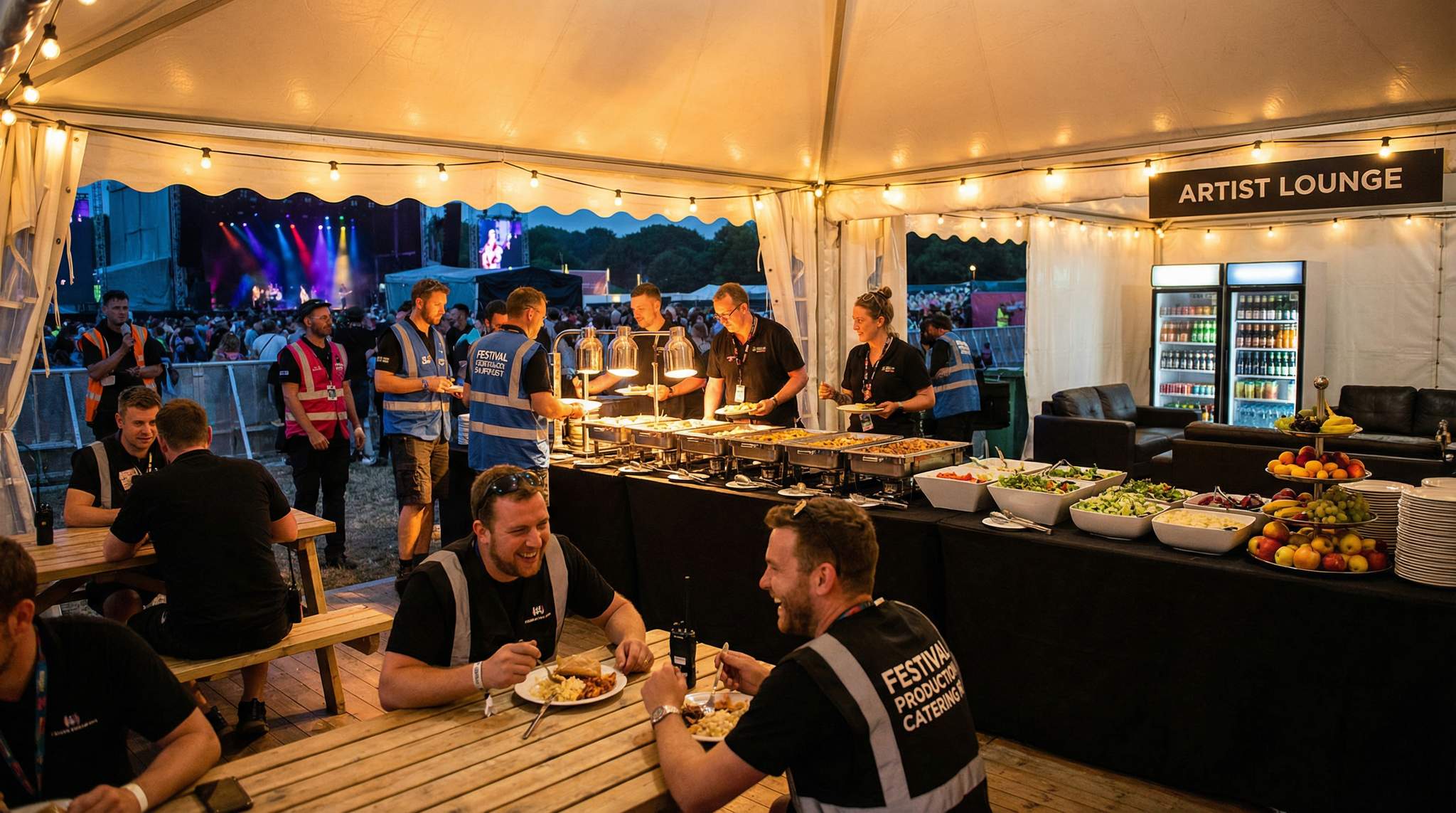
Centralized Catering vs. Food Trucks: Festival producers need to decide how to provide meals for crew and staff. At larger festivals, a common approach is to set up a centralized catering tent or mess hall exclusively for crew. This might involve contracting a professional catering company to cook hot meals on-site or bringing in buffet-style service. Alternatively, smaller events might partner with on-site food vendors or food trucks, providing crew with meal vouchers or scheduled times to grab a bite. For example, a small town music festival could issue vouchers redeemable at selected food stalls, saving the hassle of running a dedicated kitchen while still ensuring the team gets fed.
When evaluating the different types of crew catering, organizers must weigh budget against operational efficiency. The most common formats include full-service buffet lines (ideal for feeding hundreds quickly), grab-and-go boxed meals (perfect for stagehands who can’t leave their posts), and drop-off hot catering (cost-effective for medium-sized teams). Another highly effective method for decentralized events is a festival catering voucher system. By distributing digital or physical meal tokens, promoters can support local food vendors while giving the festival crew the freedom to choose their own meals, drastically reducing food waste and eliminating the need for a dedicated backstage kitchen build.
Menu Planning and Dietary Needs: It’s important to offer a variety of nutritious food options to keep the crew healthy and satisfied. A seasoned festival organizer will plan menus that include proteins, whole grains, and vegetables, not just cheap junk food. Always account for dietary restrictions: provide vegetarian, vegan, and gluten-free options as needed. This prevents anyone from going hungry due to a lack of suitable food. One large international festival learned this the hard way – in its first year, crew catering offered only meat-centric meals, leaving vegetarian volunteers with limited options. The lesson led to more inclusive menus in subsequent years, improving every team member’s morale.
Go Cashless With RFID Technology
Enable contactless payments, faster entry, and real-time spending analytics with RFID wristbands and NFC-enabled ticketing for your events.
Quality and Quantity: Feeding a festival crew is a balancing act between quality and quantity. Crew members are often burning thousands of calories through manual labor and long hours, so portions should be hearty. At the same time, quality matters: tasty, well-prepared meals give a psychological boost. Think of crew catering like feeding an army – an army marches on its stomach, as the saying goes. If the food is unappetizing or runs out, crew might skip meals or seek food elsewhere, which can lead to fatigue or time away from duties. Always err on the side of having a bit extra food available, especially during peak meal times or late-night shifts.
Catering Logistics and Setup: Logistics for crew catering involve location and timing. Place the catering tent or food service area in a secure backstage zone that is easy for staff to access but away from public view. Equip it with necessary amenities: power for warmers or refrigerators, hand-washing stations for hygiene, and ample trash bins for waste. Develop a system for serving meals efficiently – whether it’s a self-serve buffet line, packed lunch boxes, or a ticket system to avoid overcrowding. For multi-day festivals, establish specific meal times (e.g., breakfast 6–9am, lunch 12–3pm, dinner 6–9pm) so crew can plan their visits, and make sure food stays fresh and at safe temperatures throughout those windows.
Planning a Festival?
Ticket Fairy's festival ticketing platform handles multi-day passes, RFID wristbands, and complex festival operations.
Effective Catering Crew Management
Beyond feeding your production staff, successful catering crew management is essential to keep the backstage kitchen running smoothly. The culinary team—whether an in-house department or a contracted third-party vendor—requires its own logistical support. Festival producers must coordinate specific load-in schedules for mobile kitchens, ensure adequate power drops for heavy-duty refrigeration, and provide dedicated potable water and greywater disposal lines. Furthermore, managing the catering staff involves integrating their head chefs and front-of-house managers into daily production meetings. This ensures the food service team is immediately aware of any schedule changes, such as a delayed stage build that might push back the rigging crew’s lunch hour, allowing them to adjust food preparation times and minimize waste.
Evaluating Catering Models for Your Production
When selecting between different catering models, production managers must analyze the site footprint and the specific demands of their workforce. For instance, a 24-hour “dark kitchen” setup is highly effective for mega-festivals where overnight rigging and site-build teams require hot meals at 3 AM. Conversely, utilizing a hybrid model—where core production staff access a centralized mess hall while perimeter staff (like parking attendants or outer-gate security) receive mobile drop-off boxes—ensures no one abandons their post. Understanding these operational nuances helps promoters allocate their food and beverage budget more efficiently while keeping the entire festival crew operating at peak performance.
To streamline access and track meal consumption across these various models, many large-scale events implement a crew catering wristband system. By utilizing RFID technology or simple color-coded bands with scannable barcodes, production managers can monitor exactly who is eating and when. This digital approach prevents unauthorized access to the backstage dining area, helps catering teams forecast peak meal times based on real-time data, and ensures that the food budget is spent strictly on working personnel rather than guests or artists’ entourages who may have separate hospitality provisions.
Fulfilling Artist Hospitality Riders
Artists are the stars of the show, and keeping them comfortable backstage is paramount. A key aspect of artist hospitality is handling green room and dressing room provisions. Well before the festival, artists (or their tour managers) send hospitality riders – lists of food, drinks, and comfort items they expect in their green room. These can range from simple requests (bottled water, fruit, and sandwiches) to very specific or quirky items. It’s the festival’s job to accommodate these requests as closely as possible.
Collect Any Attendee Data at Checkout
Add custom registration fields to your checkout — dietary needs, t-shirt sizes, company names, and more. Conditional logic and per-ticket-type fields.
For newer promoters asking exactly what is a hospitality rider, the meaning extends beyond a simple grocery list. In festival production, a hospitality rider is a legally binding addendum to an artist’s performance contract that outlines their specific backstage requirements. This document dictates everything from the number of hot meals required for the touring party to specific brands of beverages, dietary restrictions, and even dressing room furniture or temperature settings. Understanding the full scope of these riders during the booking phase is crucial, as fulfilling complex requests can significantly impact your backstage budget and procurement logistics.
Green Room Snacks and Drinks: Set up a system to source and prepare each artist’s requested snacks and beverages on the day of their performance. This often means coordinating with catering teams or local suppliers to obtain specific brands or dietary items. For example, if a headlining band asks for a vegan cheese platter and a certain type of herbal tea, ensure those are procured and waiting in their dressing room. Small touches like fresh fruit, a variety of drinks (water, juices, tea, coffee), and some high-energy snacks (nuts, granola bars) should be standard in every green room, even beyond the exact rider requests. This ensures that even if an artist’s request is minimal, they still have options to refuel.
Need Festival Funding?
Get the capital you need to book headliners, secure venues, and scale your festival production.
Managing Artist Meals: In addition to snacks, artists may need real meals, especially if they are at the venue for many hours. Decide if artists will eat in the crew catering facility or if you’ll deliver meals to them separately. At some festivals, artists and their immediate crew are welcome at the backstage catering tent, often in a designated artist dining area. Other events might prefer delivering catered meals directly to dressing rooms at scheduled times. Always check each artist’s schedule – you wouldn’t want to bring a hot dinner right when they’re about to take the stage. Coordination is key: an artist might prefer to eat a couple of hours before performing or right after their set when they can finally relax.
For larger events, establishing a dedicated artist catering compound separate from the main crew mess hall is highly recommended. This specialized dining area allows performers and their touring parties to eat in a private, relaxed environment away from the bustling production staff. When designing an artist catering program, promoters often contract boutique culinary teams capable of executing high-end, restaurant-quality menus that accommodate hyper-specific dietary requirements, such as macrobiotic, raw vegan, or allergen-free diets. Providing this elevated level of culinary hospitality not only satisfies complex rider demands but also builds a strong industry reputation, making top-tier talent more eager to return to your festival in the future.
Rider Compliance and Flexibility: Meeting an artist’s rider needs careful attention, but sometimes not every request can be fulfilled exactly (due to local availability or budget constraints). Open communication via the artist liaison is crucial. If a specific imported beverage or snack isn’t available, provide a suitable alternative and let the artist’s team know in advance to avoid surprises. Most artists are understanding if you’ve made a sincere effort. On the other hand, completely ignoring a rider can sour an artist’s experience. There’s a famous cautionary tale in the concert world about a band requesting a bowl of a certain color of candy in their dressing room – the point wasn’t the candy itself, but a test to see if promoters read the contract thoroughly. The lesson: always read the details and take them seriously, as they often contribute to the artist’s comfort and performance readiness.
Scheduling Meal Times and Crew Breaks
Long festival days mean long shifts for staff and volunteers. Scheduling meal times so they don’t conflict with critical duties is a puzzle, but it’s one that must be solved to keep everyone functioning at their best. Create a meal break schedule for each department of the crew that staggers break times. For instance, half the stagehands can take lunch at one time while the other half cover essential duties, then swap. This rotation ensures coverage on stages, in security, and in operations at all times. Coordination with stage managers and department heads is essential so that no area is left short-staffed during a meal break.
Avoiding Conflicts with Duties: Identify the peak busy periods for each team and plan breaks around them. A lighting or sound crew might be busiest during a performance, so schedule their meal before or after the show times. Merchandise or food vendor staff may have downtime when crowds are watching performances, which could be ideal for breaks. Always communicate clearly with crew about when and where they can take their breaks and get their meals. Posting a break rota or announcements in daily briefings can help avoid confusion.
Late Nights and Long Hauls: Festivals often run late into the night, and teardown can go into the early hours. Don’t forget to plan for odd-hour meals or snacks. A common mistake by new producers is ending catering service too early; crew still working at 2 AM after the final encore will greatly appreciate leftover pizza, a midnight snack bar, or fresh coffee. If the event runs multiple days, remember that crew might be on-site from dawn setup to post-show wrap-up – consider a second wind meal or snack round late at night to keep everyone’s energy up. One festival in a remote location discovered this the hard way: they hadn’t planned for any food after 9 PM, and as a result, the overnight crew went hungry and morale plummeted. After that incident, the organizers implemented a late-night snack service to support staff during overtime hours.
Providing Comfortable Backstage Rest Areas
Feeding the team is only part of hospitality – crew and artists also need places to relax and recharge during down time. Establishing designated rest areas backstage is critical, especially during multi-hour or multi-day events. For crew, set up a break tent or lounge area separate from the public hustle. This space should have seating (chairs or benches), tables, and protection from the elements (shade tents, heaters or fans depending on weather). Consider adding some comforts like phone charging stations, a coffee/tea station, and basic first aid or toiletries (e.g. sunscreen, hand sanitizer) so crew can refresh themselves during breaks.
Artist Lounges and Green Rooms: Artists typically have their own dressing rooms or a shared green room lounge provided as a calm retreat. Ensure these spaces are clean, secure, and comfortable: think sofas or comfortable chairs, mirrors, adequate lighting, and a private restroom if possible. In addition to the snacks and drinks from the rider, stock common essentials in artist lounges such as water, towels, and maybe a few local treats as a welcome gesture. A well-rested, happy artist will give a better performance, so these backstage oases contribute directly to the festival’s success.
Keeping It Tidy and Inviting: Just like public areas of the festival, backstage rest zones need upkeep. Assign someone to periodically tidy up the crew catering and lounge areas: clear trash, refill water coolers, and keep the place hygienic. Nobody wants to relax in a messy, dirty tent. By maintaining a pleasant environment, you signal to your team that their comfort matters. This boosts morale – people feel valued when their employer or event organizer cares about their well-being. Something as simple as a clean table to eat at and a quiet corner to sit for a few minutes can rejuvenate a tired crew member for the next round of duties.
Scaling Hospitality for Festival Size and Type
Festival catering and hospitality plans should scale with the size and nature of the event. A boutique indie film festival with 50 staff and a handful of filmmakers will have different needs than a weekend-long music festival with hundreds of crew and performers. Always tailor your approach:
- Small-Scale Festivals: With smaller staff counts, catering can be simpler. You might arrange catered lunch deliveries from a local restaurant, or even organize a rotating potluck for volunteer-driven community events. For minor festivals, individual meal stipends or per diems can also work – giving staff a food allowance to buy their own meals from nearby vendors (just be sure they actually take the time to eat). Hospitality needs for artists at a small event are often modest: perhaps just one green room with some snacks if there are no elaborate riders. In these settings, personal touches go a long way; for example, a local food sponsor might provide free meals or a comfy break room, showcasing community support.
- Large-Scale Festivals: Big events demand a professional operation. It can mean hiring a full catering crew that serves breakfast, lunch, dinner, and anything in between to hundreds of people daily. Logistics become more complex – you may need multiple meal stations (e.g., one near the main stage and another by a second stage) to save crew from long walks, or separate meal times for different departments. A large festival’s artist hospitality might include a dedicated hospitality team that manages dozens of dressing rooms and staff who run around restocking rider items throughout the day. At this level, detailed spreadsheets, radio communications, and a well-defined chain of command (hospitality manager, catering manager, artist liaisons, etc.) are vital to keep everything running smoothly.
- Different Festival Genres: Consider the type of festival as well. A food & wine festival might naturally have abundant food, but you should still designate certain vendors or a staff kitchen for crew, so they’re not scavenging leftovers or waiting in public lines. A wellness or yoga festival might prioritize healthy meals (think salads, smoothies, and organic options) to align with the event’s theme, which can keep staff and artists feeling their best. A multi-day camping music festival could require a 24-hour tea/coffee and snack station for those working around the clock. Tailor the catering style and menu to fit the vibe and practical needs of each event.
Why Comfort and Good Food Matter
When crew and artists are taken care of, the benefits echo throughout the entire festival. Well-fed, rested crew members have the energy and focus to do their jobs effectively, whether it’s lifting heavy gear, managing crowds, or performing on stage. Artists who feel looked after in hospitality are more likely to give an enthusiastic performance and remember the festival positively (which matters for your reputation in the industry). Inadequate food or poor hospitality, on the other hand, can lead to fatigue, mistakes, and a drop in morale that an audience will eventually sense in the form of delays or underwhelming shows.
The tangible benefits of crew catering extend far beyond basic sustenance. A well-executed festival catering program directly improves on-site safety by preventing exhaustion and dehydration among heavy-machinery operators and riggers. Furthermore, it serves as a powerful retention tool; experienced production staff are much more likely to return to your event year after year if they know they will be fed properly. High-quality meals also foster cross-departmental camaraderie, as lighting techs, security personnel, and site managers share a table, breaking down silos and improving radio communication across the festival site.
From a risk management perspective, the operational advantages of a robust food program are undeniable. Proper nourishment directly mitigates fatigue-related accidents during high-risk phases like stage construction and heavy equipment operation. Furthermore, the long-term financial benefits of crew catering become apparent when analyzing staff retention rates. Promoters who invest in high-quality festival catering see significantly lower turnover year-over-year, reducing the hidden costs associated with recruiting and training new site teams. Ultimately, a well-fed workforce translates to faster load-ins, more efficient changeovers, and a safer event site overall.
Think of backstage catering and hospitality as investments in your event’s success. The money and effort put into crew meals, green room snacks, and comfortable lounges pay off in a smoother operation. Many experienced festival producers say that taking care of their people is rule number one. It’s a simple formula: if you treat your staff and talent well, they can perform at their best and create an amazing experience for attendees. By prioritizing the needs of those working behind the scenes, you build a foundation of trust, loyalty, and high spirits that can carry even a challenging event to a positive outcome.
Frequently Asked Questions
How do festival organizers set up crew catering operations?
Organizers choose between centralized catering tents with buffet-style service for large events or partnering with food trucks using meal vouchers for smaller festivals. The setup requires a secure backstage location with power and hygiene stations. Menus must offer nutritious, hearty portions while accommodating dietary restrictions like vegetarian or gluten-free needs.
What are artist hospitality riders in festival production?
Hospitality riders are lists sent by artists or tour managers detailing specific food, drinks, and comfort items required in their green rooms. Festival organizers must fulfill these requests, ranging from simple snacks and water to specific dietary items, to ensure artists are comfortable and prepared for their performance.
How should festival staff meal breaks be scheduled during events?
Staff meal breaks should be staggered across departments to ensure critical duties remain covered at all times. Organizers create a rotation schedule based on peak busy periods; for example, lighting crews eat before or after shows. For multi-day events, late-night snack services are essential to support crews working overtime or overnight shifts.
Why are designated backstage rest areas important for festival crews?
Designated rest areas provide a critical space for crew and artists to recharge away from the public hustle. These zones should offer seating, shade, and amenities like phone charging stations and refreshments. A clean, comfortable environment boosts morale and ensures staff remain energized and focused throughout long shifts and multi-day events.
Why is dietary menu planning critical for festival crew catering?
Providing diverse, nutritious options is essential because crew members burn significant energy through manual labor. Menus must include proteins, grains, and vegetables while accommodating vegetarian, vegan, and gluten-free restrictions. Failing to provide suitable food can lead to hunger, fatigue, and low morale, negatively impacting the team’s ability to perform their duties.
How does backstage hospitality scale for different festival sizes?
Small festivals often use simple solutions like meal stipends, local restaurant deliveries, or volunteer potlucks. Large-scale events require professional catering operations serving hundreds of meals daily, often with multiple stations and dedicated hospitality teams managing complex artist riders. The approach must be tailored to the event’s specific logistics and budget.
What are the main types of crew catering used at festivals?
The primary types of crew catering include full-service centralized buffets, grab-and-go boxed meals for active stagehands, drop-off hot catering, and festival catering voucher systems. The choice depends on the event’s scale, budget, and whether the production team has the infrastructure to build a dedicated backstage kitchen.
How does a festival catering voucher system work?
A festival catering voucher system provides staff and volunteers with physical or digital tokens redeemable at approved public food vendors. This approach eliminates the overhead of running a private backstage kitchen, supports participating food trucks, and gives the festival crew a wider variety of meal choices during their shifts.
What are the long-term benefits of crew catering for festival promoters?
Beyond immediate sustenance, the long-term advantages include higher staff retention, reduced recruitment costs, and improved on-site safety. A well-fed workforce experiences less fatigue, which minimizes accidents during stage builds and teardowns, ultimately protecting the promoter’s bottom line and ensuring smoother operations year after year.
What are the advantages of using a crew catering wristband system?
Implementing a crew catering wristband system allows festival organizers to securely manage backstage dining access and track meal consumption in real time. Whether using RFID chips or scannable barcodes, this method prevents unauthorized individuals from depleting staff food supplies, helps caterers anticipate peak service times, and provides accurate data for future food and beverage budget forecasting.
What are the best practices for catering crew management at a festival?
Effective catering crew management involves treating the food service team as a core production department. Best practices include providing them with dedicated logistical support (like specific power drops and water lines), integrating their managers into daily production meetings to communicate schedule shifts, and ensuring the culinary staff themselves have adequate breaks and resources to sustain long operational hours.
How does artist catering differ from general crew catering at a festival?
Artist catering typically involves a more private, elevated dining experience separate from the main production mess hall. While crew meals focus on hearty, high-volume sustenance to fuel long labor shifts, catering for performers often requires boutique culinary teams capable of executing high-end menus and accommodating hyper-specific dietary requests found in touring riders. Providing a dedicated dining space for talent ensures they have a quiet environment to relax and prepare before taking the stage.
What is a hospitality rider, and how does it impact festival budgets?
A hospitality rider is a contractual document attached to an artist’s performance agreement that details their backstage requirements, including food, beverages, dressing room amenities, and dietary needs. Because these requests are legally binding, festival organizers must carefully review the rider’s meaning and scope during the booking process to accurately forecast catering costs and procurement logistics.