Keeping young festival-goers fed and happy isn’t just about being a good host – it’s essential for a successful family-friendly festival. As any seasoned festival producer knows, hungry or cranky kids can end a family’s day early, meaning parents pack up and leave before the headliners hit the stage. In one vivid example, a family attending a U.S. music festival had to leave by 5:30 PM – a full five hours before the headliner – because their little ones were tired, hot, and still hungry despite filling up on pricey churros and lemonade, a struggle documented by Vice regarding taking kids to music festivals. The following day played out similarly: after sharing a $5 churro and $6 lemonade, the children were spent by late afternoon, forcing the family to head home long before the final acts. To prevent scenarios like this, festivals around the world have learned that providing affordable, appropriate food for children keeps families on-site longer and ensures everyone enjoys the event. From right-sized portions and allergen-safe menus to healthy choices and comfortable dining areas, here are expert strategies (honed over decades of festival production from London to Los Angeles) to satisfy small stomachs and deliver big value for family audiences.
Right-Sized Portions and Wallet-Friendly Prices
One of the first lessons in family-friendly festival planning is that kids aren’t big eaters – at least not in one sitting. Children often prefer grazing throughout the day rather than receiving a massive meal all at once. Standard festival food portions (and prices) are geared toward hungry adults, which can lead to wasted food and frustrated parents. Festival organizers should coordinate with food vendors to offer kid-sized portions at kid-sized prices. This means smaller servings that cost notably less than full adult meals.
Why does this matter? For one, it prevents paying GBP £10 or USD $15 for a basket of food a child might only pick at. Festival family bloggers note that feeding a family at typical festival prices (around £5–£10 per person, per meal) “soon mounts up”, even if vendors agree to smaller child portions, according to advice from Festival Kidz. Without affordable options, parents may resort to leaving the festival grounds or bringing their own food, which diminishes their festival experience (and your concession sales). On the other hand, when reasonably priced kids’ meals are available, families can comfortably stay on-site and enjoy more of the event.
Real-world example: Camp Bestival – a renowned family-oriented festival in the UK – introduced a groundbreaking policy capping children’s meal prices. All food stalls at Camp Bestival now serve at least one kids’ meal for a flat £6 each, as part of their budgeting initiative. These kid-sized dishes (offered to children up to 12 years old) make festival dining more affordable and reduce waste from half-eaten adult portions, making festival dining more sustainable. Organiser Rob da Bank and team implemented this “£6 kiddie portion” plan as a response to parent feedback about cost. The result? Parents get “peace of mind” that they won’t blow their budget on food, and the kids get meals designed for their appetite, providing parents with peace of mind. Many festivals worldwide are taking note. Even if you can’t enforce uniform pricing festival-wide, consider working with key vendors to designate a discounted kids’ menu item – maybe a smaller slice of pizza, a half-portion burrito, or a mini rice bowl – available at a parental-friendly price point.
Smart Promo Codes & Presale Access
Create percentage or flat-rate discount codes with usage limits, date ranges, and ticket type restrictions. Plus unlock codes for private presales.
For smaller community festivals or local food fairs, achieving kid-friendly pricing might involve recruiting a community food stall or sponsor. For example, a local rotary club or school fundraiser booth could sell simple kids’ lunches (like peanut butter sandwiches, fruit cups, or hot dogs) at cost price or subsidised rates. This not only endears your event to families but can also be advertised as a community service. The key is to communicate with vendors early: encourage them to create half-size portions or “toddler plates” and advertise those clearly at their stall. In many cases, vendors are happy to oblige – Glastonbury Festival’s official tips for families highlight its friendly vibe – vendors will usually oblige requests for a child’s portion (often charging very little), and even basic provisions like fresh milk are sold on site, as highlighted in Glastonbury Festival’s family tips. As a festival organizer, you can formalize this by adding a clause in vendor agreements or by issuing a friendly challenge to food traders: for instance, “Can every stall come up with one child-friendly item for £5 or less?”
Also, be mindful of ticketing tie-ins. Some festivals bundle food passes or meal tokens for kids as part of family ticket packages. Modern ticketing platforms (like Ticket Fairy) allow you to sell add-ons such as a “Kids Meal Pass” which parents can purchase in advance. For example, Camp Bestival launched a “Camp Kids Extra Pass” that parents could buy ahead of time, providing each child multiple meals plus snacks and drinks for a set price, as detailed in the Camp Kids Extra Pass launch, which includes access to unlimited fruit and filtered water. Pre-selling a meal package not only spreads out family spending (making the festival feel better value) but also helps you forecast demand with vendors. Bottom line: right-sized portions and capped kids’ prices create goodwill and keep families enjoying the festival longer, instead of heading home with half-full tummies.
Planning a Festival?
Ticket Fairy's festival ticketing platform handles multi-day passes, RFID wristbands, and complex festival operations.
Allergen Awareness and Safe Food Preparation
Beyond portion size, food safety and allergen transparency are paramount when feeding children at a festival. Parents of kids with food allergies (nut, dairy, gluten, etc.) need to trust that your event has their back. A single food mishap can turn a fun day into a medical emergency – a risk no festival can afford. Therefore, festival producers should require bold allergen labelling on all food offerings and promote strict food handling protocols to prevent cross-contamination.
In many countries, allergen labelling isn’t just a courtesy; it’s the law. For instance, the UK and EU mandate that food businesses clearly highlight the presence of any of 14 major allergens in their menu items, a standard outlined in Qamarero’s guide to food labelling regulations. It’s good practice to adopt or exceed these standards at your festival, regardless of local regulations. Make sure every vendor provides visible, easy-to-read signs or menu notations for common allergens like peanuts, tree nuts, milk, eggs, wheat (gluten), soy, fish, and shellfish. Don’t bury this information in fine print – it should be displayed prominently (large fonts, bold text, or colour-coded icons) so that a busy parent scanning the menu can spot allergen info at a glance.
To achieve consistency, consider supplying vendors with a template signage or chalkboard markers to mark allergens clearly (e.g., writing “Contains: Nuts, Dairy” in bold lettering under a dish name). Some festivals include an allergen key in their official app or brochure as well, but on-site signage is most critical. Encourage vendors to undergo a quick allergen briefing: remind them that “nut-free” must truly be nut-free (no sneaky pesto with pine nuts!) and gluten-free items shouldn’t be cooked in the same oil or on the same grill surface as gluten-containing foods. If possible, designate or request separate prep zones or equipment for allergen-free cooking – for example, a food stall might use a dedicated pan for gluten-free crepes or have a peanut-free workspace for assembling kids’ meals. While not every small vendor truck has the luxury of a second kitchen, even simple steps like thoroughly cleaning utensils and changing gloves can make a big difference in safety.
It’s also wise to curate at least a few allergy-friendly food options within your vendor lineup. Perhaps invite a specialist vendor (like a gluten-free bakery or a vegan food truck that avoids dairy and nuts) to anchor the family food area. Their presence not only serves allergic kids but signals to all parents that you’ve prioritized dietary needs. In Australia and New Zealand, for example, many family festivals ensure there’s at least one “free-from” stall offering gluten-free or nut-free treats. Large-scale events might even coordinate with organizations like Allergy UK or local health departments for guidance on best practices. Training your food vendors and staff to handle allergy questions with confidence (knowing exactly what’s in their food and how it’s prepared) goes a long way in building trust.
No Hidden Fees, Just Honest Pricing
One all-inclusive fee covers the platform, payment processing, support, and every feature. Free events are always free. No setup costs, no surprises.
Finally, communication is key. Publicize your festival’s allergen-friendly measures on your website and program: encourage families to inform vendors of any allergy as they order (an extra trigger for the vendor to be careful). Some events implement a wristband system or a sticker for kids with allergies – for instance, a child with severe allergies might wear a brightly colored wristband (provided at the gate after parents fill out a quick form) alerting food stall staff to double-check ingredients. Work with your medical team as well: ensure first aid tents are stocked with epinephrine auto-injectors (EpiPens) and that staff are trained to respond to allergic reactions. By creating a culture of allergen awareness – through clear labelling and careful prep – you’re not only avoiding disasters but also making families with allergy-prone kids feel welcome and cared for.
Balanced Choices Beyond Sugar and Fries
When crafting a kids’ menu for a festival, it’s easy to fall into the chicken nuggets and french fries rut. Sure, many kids love those, and having familiar comfort foods on-site is important. But today’s parents (and health experts) appreciate when festivals think outside the candy box and offer some healthier, balanced choices for youngsters. Sugar-fueled children might be momentarily ecstatic, but the subsequent crash could cut their festival fun short. The goal is to keep kids energized and satisfied throughout a long festival day – which means incorporating some protein, fruits, and veggies alongside the inevitable ice creams and chips.
Need Festival Funding?
Get the capital you need to book headliners, secure venues, and scale your festival production.
A good strategy is to ensure that at least some vendors offer nutritious alternatives to typical “fair food”. This doesn’t mean going full health-food mode; it just means variety. For example, if your festival’s food court has a dozen stalls, try to include options like a smoothie or juice stand, a fruit salad bowl vendor, or a grill that sells simple corn-on-the-cob or lean kebabs. Even a smaller boutique festival can partner with a local farmers’ market stall to provide fresh fruit cups or yogurt parfaits for kids. Remember that children’s tastes vary – one child might indeed only eat plain buttered pasta and apple slices, while another is excited to try a mild chicken curry. Aim to provide a spectrum: some mild, familiar items and some adventurous but kid-friendly flavors. International family festivals often use food as a chance to gently introduce global cuisines. At a festival in Singapore, for instance, a “Little Foodies” booth might serve bite-sized portions of popular Asian dishes (like mini sushi rolls or dumplings) in a mild form for kids to sample. In Mexico, a festival might include mini quesadillas or fruit paletas (popsicles) with real fruit juice instead of just sugary sodas.
Crucially, balance also refers to nutrition content. Ensure there are a few options that deliver protein and fiber, not just carbs and sugar. If you offer burgers, can a vendor make “sliders” or smaller wraps that include some lettuce and grilled chicken? If there’s a dessert stand, could one option be something like a yogurt-based treat or fresh fruit sorbet? Some festivals have gotten creative: Camp Bestival, in addition to its kids’ meal pass, provided unlimited fruit and water to kids who had the pass throughout the day, offering unlimited fruit and water to keep kids hydrated and healthy as part of the meal pass benefits. That meant parents could easily grab a banana, apple, or handful of berries for their child at no extra cost, encouraging fruit as a snack instead of another candy bar. Likewise, many events in Europe make sure to stock basics like milk – as noted, you can even buy fresh milk at Glastonbury’s general stores, which is a blessing for families with toddlers or for a healthier drink option.
Don’t underestimate the power of branding and fun in promoting better food choices to kids. Consider creating a fun name or corner for healthier eats, like a “Superhero Snack Station” where the narrative is that fruits and veggies give kids “power.” In the U.S., one music festival’s family area included sponsored booths from health-oriented companies: for example, at Austin City Limits’ Austin Kiddie Limits zone, a yogurt company handed out probiotic kefir snacks and a local brand gave away gluten-free chips as free samples, as reported in the Austin Moms guide to Austin Kiddie Limits. These kinds of partnerships can enhance your food offering at minimal cost – sponsors get exposure, and kids get a nutritious bite. Even without sponsorship, you can package healthy items in attractive ways (colourful wraps, fun containers, or interactive make-your-own snacks). How about a “build your own trail mix” tent with dried fruits and nuts (allergy considerations permitting), or a simple smoothie bike where kids pedal a bike to blend their own fruit smoothie?
The message to vendors should be: balance the menu for the little ones. Yes, festivals are for treats and indulgence – cotton candy and fried delights have their place in the mix – but providing alternatives means parents are less likely to have to drag along a separate cooler of healthier snacks (something many do if they fear only junk will be available). A well-fed child with steady energy (thanks to some protein or complex carbs in their diet) is far less likely to have mood swings or meltdowns as the day wears on. By offering balanced food choices, you’re effectively fueling the fun for kids so they can keep dancing, playing, and exploring without the sugar rollercoaster.
Family Food Zones and Comfortable Seating
Even with great food options, families need a practical place to actually feed their kids. Young children often require a seat (and maybe a clean table surface) to eat without chaos. Imagine a parent juggling a fidgety toddler in one arm and a tray of food in the other, scanning a standing-room-only beer garden for a spot to perch – not a recipe for an enjoyable mealtime. To truly cater to families, festivals should designate family-friendly eating areas near the food vendors that serve kids.
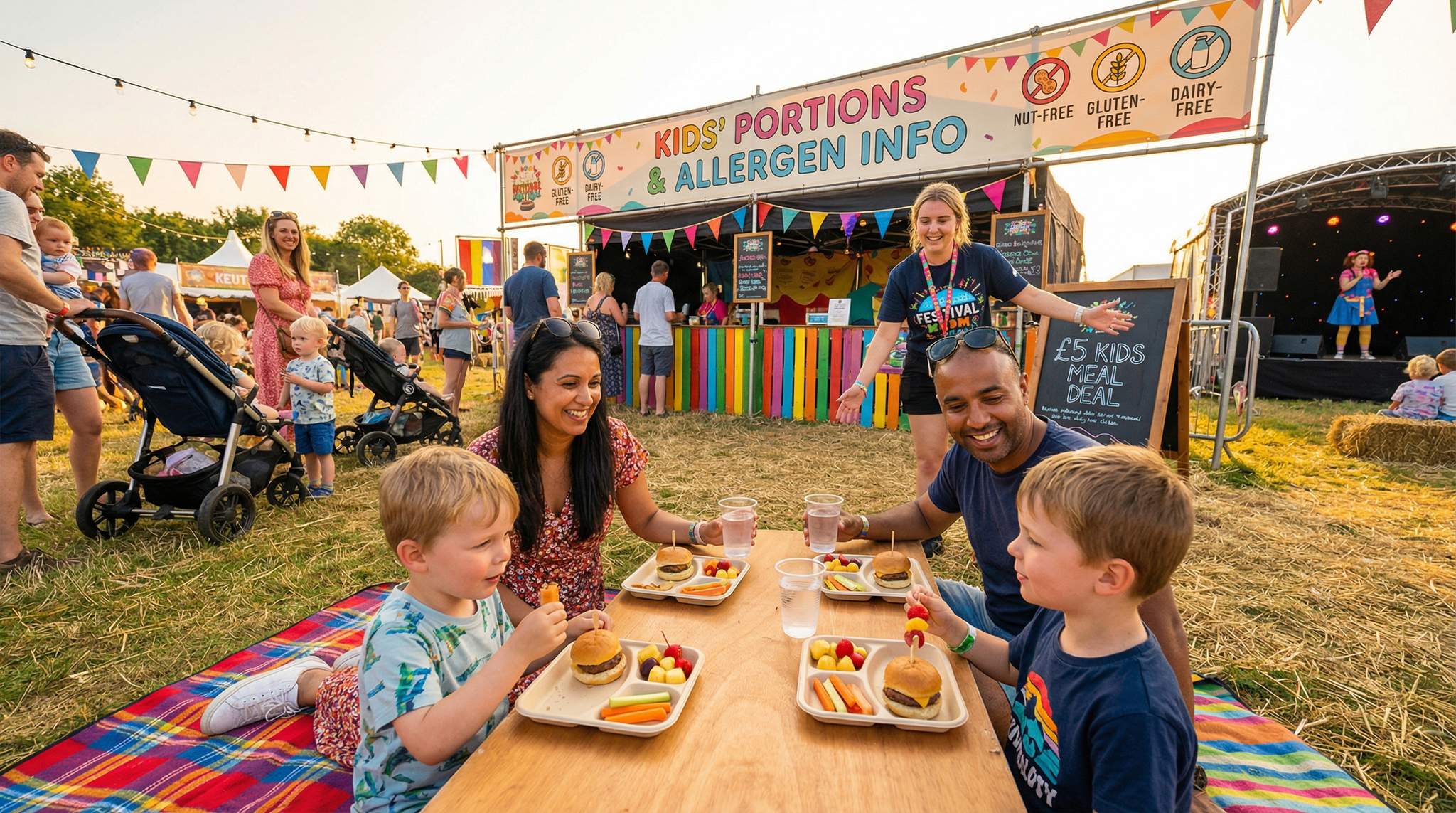
Start by placing kid-focused food stalls in proximity to each other, ideally in or adjacent to the festival’s family activity area (if your event has a kids’ zone). Many successful family festivals create a quasi-“family food court” with several vendors offering child-friendly menus clustered together. Next to this cluster, provide ample seating: picnic tables, benches, even hay bales or ground mats if you want a rustic vibe – anything that gives families space to sit down. Opt for some shade if possible (a big tent or umbrellas), since midday sun + tired kids + mealtime can be a stressful combination. If your festival footprint is large, consider multiple small seating oases near various food areas, but clearly signal those that are especially for families (signage like “Family Picnic Area” helps).
For example, Australia’s Splendour in the Grass festival features a dedicated family zone (Little Splendour) where, alongside kids’ activities, there are comfortable facilities for parents and kids to relax and eat, as noted in Families Magazine’s review of Little Splendour. The idea is to create an oasis amid the festival hubbub. At Little Splendour, families find everything from high chairs and baby-changing stations to food trucks with diverse choices, and plenty of space to spread out a picnic blanket. The result is that parents don’t have to choose between catching a band and finding a place for junior to eat – they can do both, because the kid-friendly eats and seating are integrated into the festival experience.
Even smaller festivals can implement clever solutions: if you’re hosting a street food festival with limited furniture, you might set up a simple “kids café” tent where families can pick up a floor mat or borrow a portable booster seat. Some community events literally park a few bales of hay or bean bags around the family food vendors, which can double as impromptu seats and play structures. The key is to make it easy for families to go from ordering food to sitting and eating without a long trek. That often means situating the family seating within eyesight of the food stalls (perhaps only a few metres away), so that one parent can grab the meals while the other secures a table with the kids.
Another trick from theme parks and savvy festivals: locate the family eating area next to or combined with an activity zone. Kids who finish eating quickly can then be occupied with a nearby puppet show or colouring wall while the parents take a few extra minutes to finish their meal in peace. Placing a small playground, face-painting booth, or even just some bubble machines near the dining area can turn a potential stress moment (waiting for everyone to finish eating) into another fun break.
Finally, keep cleanup and convenience in mind. Family food areas generate spills and mess – be sure to have trash bins and napkin dispensers handy, and maybe even a wash-up station (even a simple water tap or hand-sanitizer station helps parents clean sticky fingers). If your festival budget allows, staff or volunteers assigned to the family area can periodically tidy up and assist (for example, helping carry a tray for a parent with multiple kids, or wiping a table between uses). These small touches elevate the family dining experience from an afterthought to a thoughtfully planned part of the festival.
Feeding Kids = Happier Families (and Longer Festival Stays)
At the heart of all these suggestions is a simple equation: well-fed kids = happy kids = happy parents. Festivals that recognise this and adapt their food offerings accordingly are rewarded with more positive family feedback, higher family attendance, and longer dwell times on site. Think of every aspect – portion sizes, pricing, menu balance, safety, seating – as working together to remove the barriers that typically force families to leave early.
Veteran festival producers around the globe can attest that investing in family food amenities pays off. By capping kids’ meal prices and sizing portions for little stomachs, you show families you’re not out to gouge them – building trust and goodwill. By enforcing allergen labelling and safe prep, you might literally save lives and certainly earn the loyalty of parents who know your festival is a safe space for their food-sensitive child. By offering healthier choices alongside the treats, you help kids sustain energy (and avoid sugar meltdowns) so the whole family can enjoy that sunset performance rather than trudging to the car at noon. And by providing welcoming family eating zones, you transform meals from a chaotic ordeal into a pleasant break – a chance for families to recharge and then dive back into the fun.
Crucially, these strategies scale. A small-town weekend festival can be just as mindful about kids’ food as a mega-festival drawing international travelers. It might look different in practice (one dedicated food stall and a shaded picnic table at a local fair versus dozens of vendors and a giant circus-tent dining hall at a big festival), but the principles remain. Know your audience demographics and plan accordingly: if you expect a lot of families, allocate resources to meet their needs. Even if your event historically catered to adults, adding family-friendly food elements can open your doors to new audiences and revenue streams (think “kids under 12 get in free” promotions – that only works if those kids have something to eat once inside!).
In summary, feeding small stomachs is a big responsibility, but it’s one that can elevate your festival’s reputation from good to truly great in the eyes of families. Make it tasty, make it safe, make it affordable, and make it convenient – do that, and you won’t just fill tummies, you’ll win hearts (and future ticket sales). After all, a festival where kids are dancing with ice-cream-smeared grins and parents are relaxed and well-fed is a festival with an infectious, all-ages energy. That’s the kind of memory you want attendees to carry home – not one of leaving early because nobody could find a decent snack. Keep those small stomachs satisfied, and the whole festival community thrives.
Frequently Asked Questions
Why is kid-friendly food essential for family festivals?
Providing affordable, appropriate food for children is essential to keep families on-site longer. Hungry or cranky kids often force parents to leave early, missing headliners. By offering right-sized portions and allergen-safe menus, festivals ensure families stay to enjoy the event rather than departing due to hunger or high costs.
How can festivals implement affordable pricing for children’s meals?
Organizers should coordinate with vendors to offer kid-sized portions at capped prices, similar to Camp Bestival’s £6 meal policy. Strategies include creating specific discounted menu items for children, such as half-portion burritos or mini rice bowls, and selling pre-paid meal passes to help parents budget and reduce food waste.
What are best practices for allergen safety at festivals?
Festivals must enforce bold allergen labelling on menus and implement strict food handling protocols to prevent cross-contamination. Vendors should display clear signage for major allergens like nuts and gluten, use separate prep zones when possible, and offer dedicated free-from options to ensure parents trust the event’s food safety.
What healthy food choices should be available for kids at festivals?
Festivals should offer balanced options beyond sugar and fries to prevent energy crashes. Nutritious choices include smoothies, fruit salads, yogurt parfaits, and protein-rich items like grilled chicken sliders or mini quesadillas. Some events even provide unlimited fruit and water passes to ensure children stay hydrated and energized throughout the day.
Why are designated family food zones important at festivals?
Designated family food zones provide a practical, safe place for parents to feed young children away from crowded beer gardens. These areas should feature clustered kid-friendly vendors, ample seating like picnic tables or hay bales, and shade. Proximity to activity zones allows kids to play while parents finish eating.
How can small festivals offer budget-friendly kids’ food?
Small festivals can partner with community groups or sponsors to sell simple items like sandwiches and fruit cups at subsidized rates. Organizers can also encourage vendors to create half-size toddler plates or challenge stalls to offer one child-friendly item for a low set price, ensuring affordability without complex infrastructure.