When festival-goers reminisce about their favorite events, it’s not just the music or the food that stands out – it’s often the souvenirs and unique finds they took home. Whether it’s a t-shirt emblazoned with the festival logo or a one-of-a-kind craft from a local artisan stall, these items become cherished memories. For festival organizers, merchandise booths and vendor sales operations aren’t a side note; they are a core component of the event experience and a significant revenue stream. Running these operations smoothly requires careful planning and the wisdom of experience.
This article draws on decades of festival production know-how to guide promoters in setting up successful merchandise stores and third-party vendor booths. From choosing the perfect booth locations in high-traffic areas to providing lighting and security for overnight peace of mind, and from coordinating inventory deliveries to implementing cashless payments – every detail matters. By getting merchandise operations right, organizers can boost festival revenue and delight attendees with memorable shopping opportunities. The following sections explore best practices and lessons learned that ensure the festival’s merchandise and vendor operations are on point.
Booth Placement: High-Traffic Areas Matter
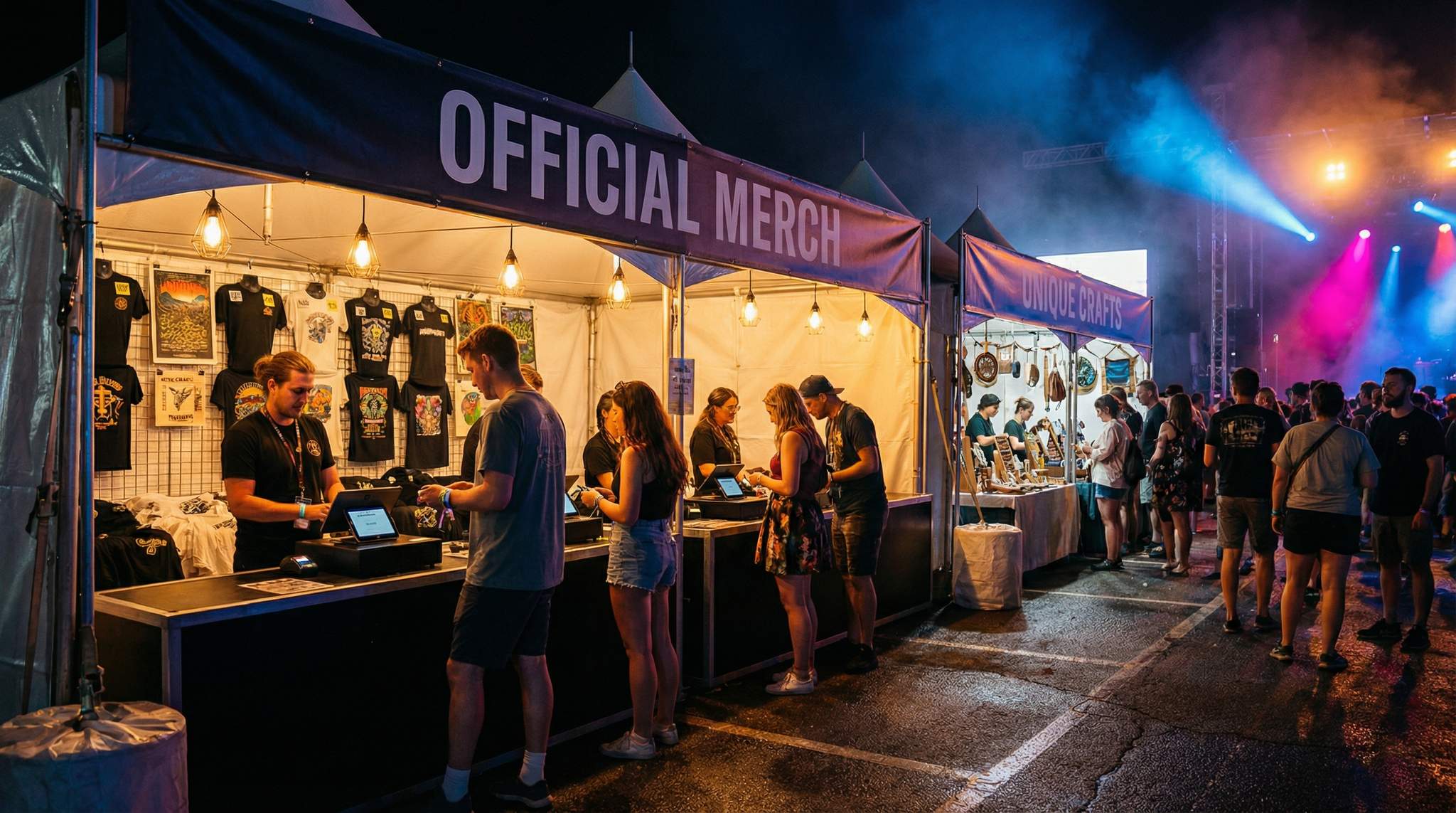
One of the fundamental factors in successful festival merchandising is booth placement. Festival organizers should place merchandise stores and vendor booths in high foot-traffic areas where attendees naturally pass through to maximize visibility. For example, positioning the official festival merchandise tent near the main entrance or exit can capture customers as they arrive excited or depart looking for souvenirs. Likewise, clustering third-party craft and product vendors along busy walkways or near food courts encourages browsing during downtime. The goal is to integrate shopping opportunities into the event flow – a well-placed booth will attract far more visitors than one tucked away in a corner. Always study the site layout and attendee traffic patterns to identify these prime spots, and consider adequate space so crowds can gather without blocking flow.
For large-scale festivals, multiple merchandise points might be necessary – such as a main merch megastore plus satellite stands near major stages. At smaller festivals, a single centrally located vendor area can concentrate energy and become a hub of activity. In either case, clear signage and site maps should direct attendees to vendor areas. Learning from experience, seasoned producers know that even a few extra meters of distance from the action can dramatically cut sales. In one instance, simply relocating a craft market to a path everyone traversed boosted vendor sales significantly compared to the previous year. Placement truly can make or break vendor success.
Go Cashless With RFID Technology
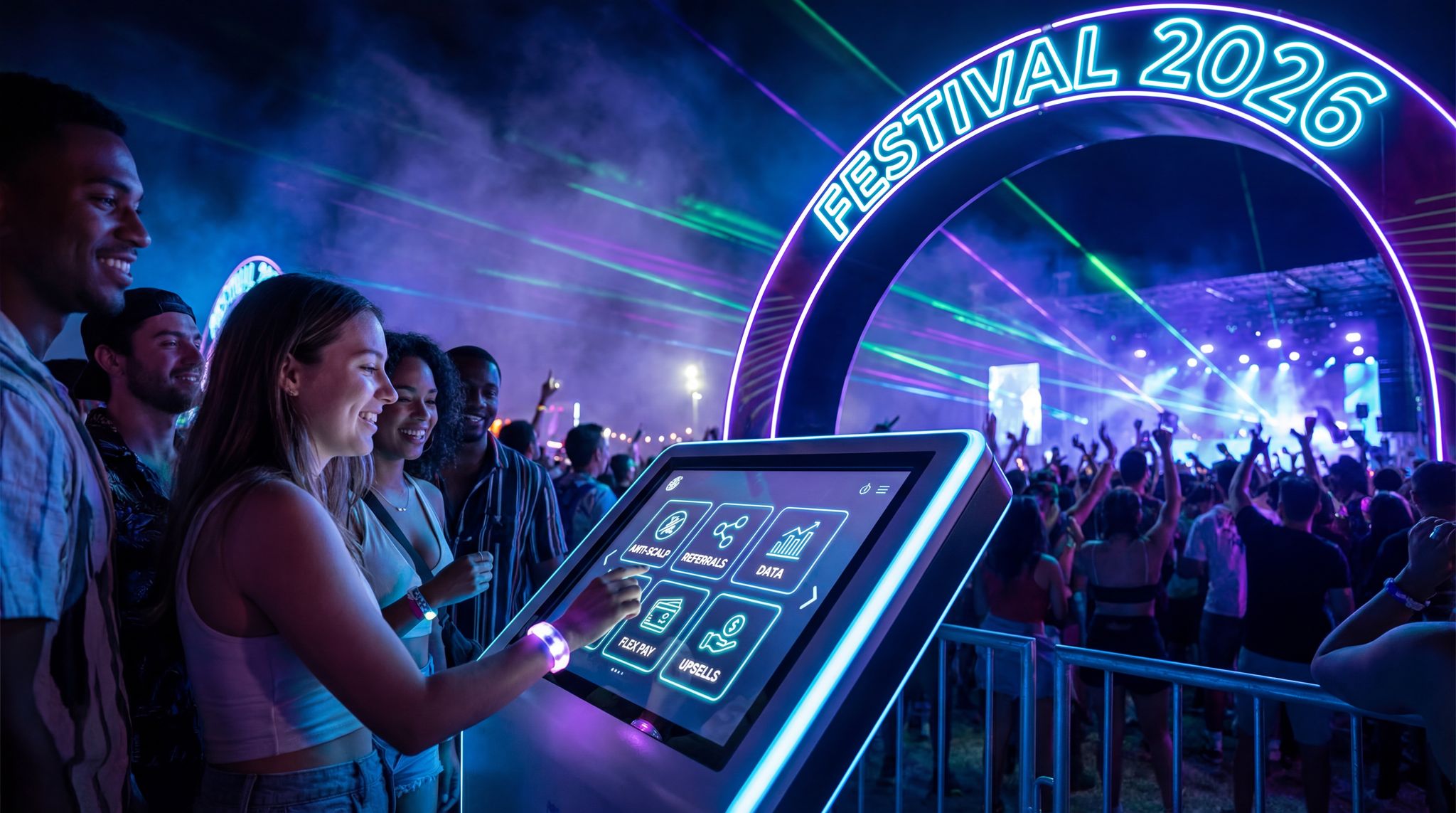
Enable contactless payments, faster entry, and real-time spending analytics with RFID wristbands and NFC-enabled ticketing for your events.
Lighting and Overnight Security
Proper lighting and security are non-negotiable for merchandise and vendor areas – both for operational reasons and asset protection. During the event, good lighting helps showcase products (especially for evening events) and creates an inviting atmosphere for shoppers. Organizers should also plan for overnight security patrols or stationed guards to watch over booths when the festival grounds are closed. After hours, keeping the vendor zone well-lit – and even asking vendors to raise tent walls on their booths – is a proven deterrent against theft and inventory loss, helping to protect valuable inventory.
If the festival runs across multiple days, providing a secure overnight storage solution is vital. This could be lockable on-site storage containers or a secured indoor room where vendors can store extra stock and cash boxes. Vendors will appreciate not having to haul all their goods off-site every night, and knowing their livelihood is safe. However, clearly communicate the security arrangements and any limitations – for example, if vendors are responsible for insuring their own merchandise or if the festival provides any coverage. Weather protection is another aspect of overnight security: ensure tents and stalls are sturdy and can be closed against wind or rain. By investing in solid security and lighting, organizers not only prevent losses but also build trust with vendors, which in turn encourages them to bring their best products and return in future years.
Planning a Festival?
Ticket Fairy's festival ticketing platform handles multi-day passes, RFID wristbands, and complex festival operations.
Coordinating Inventory Deliveries and Vendor Logistics
Smooth merchandise operations require tight coordination with vendors on all logistics, especially inventory deliveries and restocking. Before the festival, organizers should establish a vendor load-in schedule. Stagger arrivals and give each vendor a clear time window to drive on-site, unload merchandise, and set up their booth. Having staff and signage to guide vendors to their spots during setup can prevent chaos. Provide detailed maps and booth assignments ahead of time, so vendors know exactly where to go.
During the festival, plan how vendors can replenish inventory or get supplies in and out. Large festivals often designate specific hours (like early morning or late at night) for vendors to restock, sometimes with the help of golf carts or a back entrance to avoid moving through attendee areas. Smaller events might be more flexible but should still communicate a process (e.g., use of a handcart and staff escort if a vendor needs to bring in more stock mid-event). A good practice is to have a dedicated vendor coordinator on the team – someone vendors can contact with any needs or issues, whether it’s a last-minute inventory delivery or a problem with their booth setup.
Coordination also includes aligning on sales operations. Make sure vendors know the festival’s policies on things like packaging (for instance, requiring recyclable bags if the festival is green-focused) or price controls (some events cap water bottle prices, etc.). If the festival offers an official merchandise store, ensure its operations are streamlined too: track inventory in real time to avoid selling out popular sizes too early, and arrange re-orders or on-site printing if applicable. Nothing disappoints an attendee more than wanting a t-shirt only to find it sold out hours ago. Effective communication – such as a daily check-in with vendors – can catch inventory issues before they become lost revenue. By proactively working with vendors on logistics, organizers keep the sales running smoothly and vendors feel supported rather than hindered by festival operations.
Optimizing Your Festival Vending Strategy
Developing a comprehensive festival vending strategy requires more than simply renting out 10×10 tent spaces. For event producers, curating the right mix of concessionaires, craft artisans, and experiential brand activations is a delicate balancing act that directly impacts the bottom line. A well-planned vendor village keeps attendees on-site longer, satisfying diverse dietary needs and shopping preferences while driving up average order values. When evaluating potential partners, organizers should prioritize operators with proven high-volume experience, as slow service times at food or merchandise stalls can create bottlenecks that disrupt the entire event flow.
Boost Revenue With Smart Upsells
Sell merchandise, VIP upgrades, parking passes, and add-ons during checkout and via post-purchase emails. Increase average order value by up to 220%.
Structuring vendor agreements is another critical component of successful concession operations. Promoters typically choose between charging a flat upfront pitch fee, taking a percentage of gross sales (often ranging from 15% to 30%), or utilizing a hybrid model. While flat fees guarantee baseline revenue regardless of weather or attendance drops, revenue-sharing models incentivize organizers to drive foot traffic to vendor zones and can yield significantly higher overall profits. Whichever model is chosen, ensuring strict compliance with local health department regulations, fire safety codes, and insurance requirements is paramount before any stall opens for business.
Embracing Cashless Payment Systems
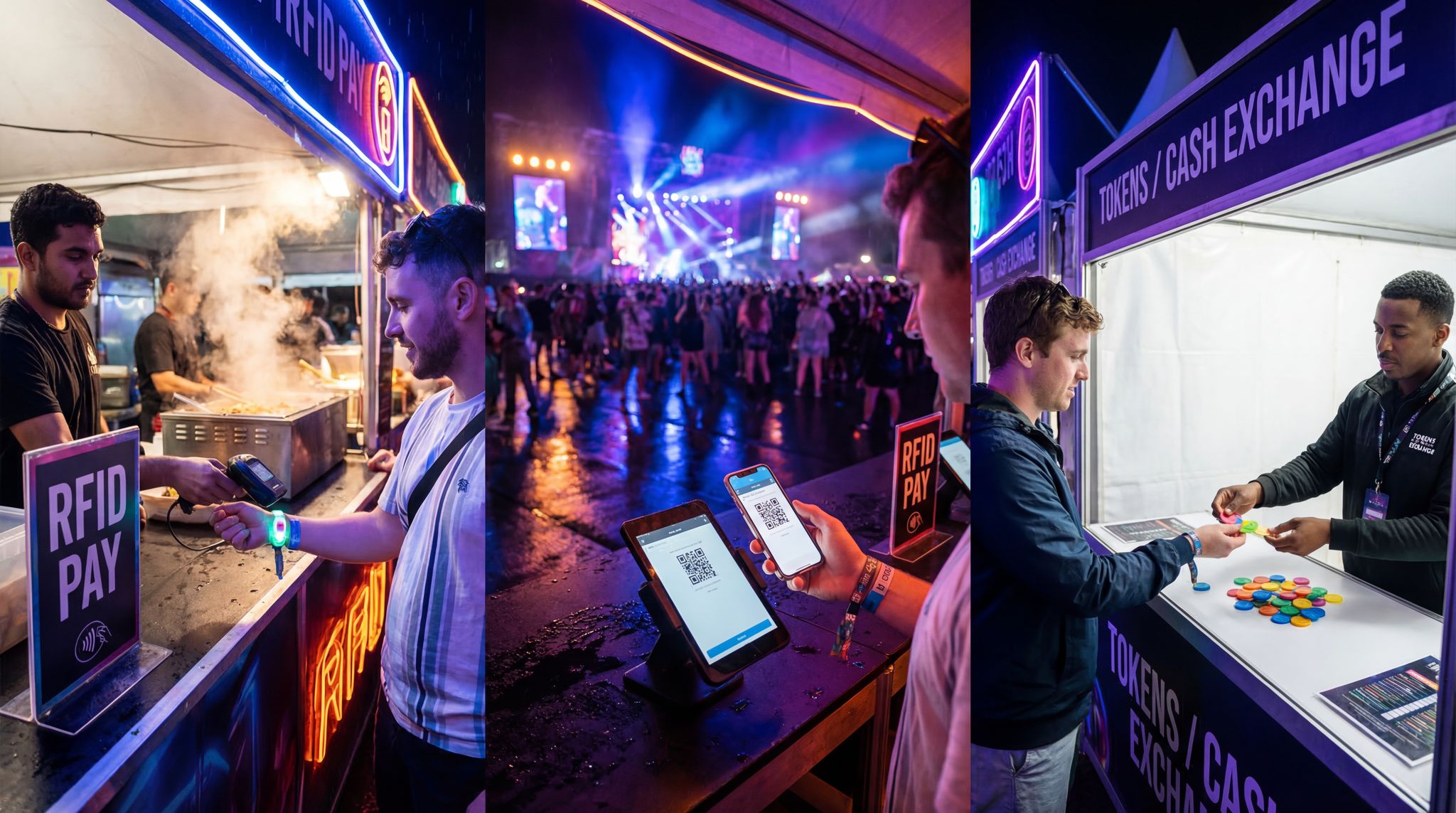
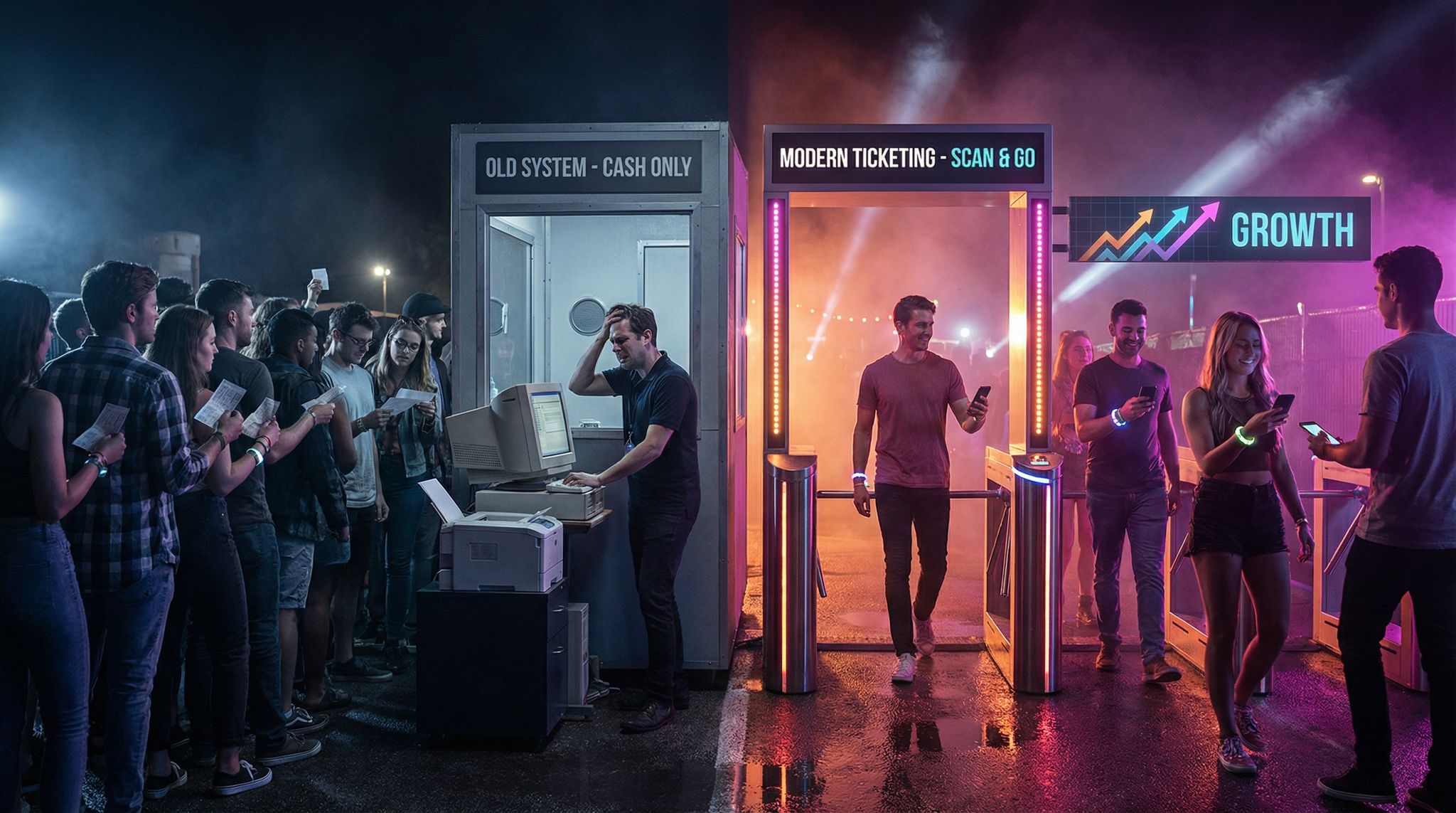
In modern festivals, cashless payment systems have become a game-changer for merchandise and vendor sales. Whether through RFID wristbands, mobile payment apps, or simply robust card payment setups, going cashless speeds up transactions and reduces hassle. Attendees no longer need to fumble for cash or wait in ATM lines, which means shorter queues and happier customers. Faster service translates to more sales per hour, and attendees often spend more when transactions are frictionless. For instance, a Swiss festival saw average spending per visitor leap to roughly CHF 126 after switching to an RFID cashless system – a clear sign that convenient payment methods can spur higher spending.
Need Festival Funding?
Get the capital you need to book headliners, secure venues, and scale your festival production.
From the organizer’s perspective, cashless systems also enhance security and accounting. Less physical cash on-site means lower risk of theft or loss, and digital records make it easier to settle accounts accurately with vendors. Many top festivals have proven the benefits: Tomorrowland, one of the world’s largest music festivals, adopted an RFID wristband payment system early and saw it improve guest experience and boost revenue in tandem. The key is making sure the festival’s vendors are fully onboard and equipped. If a festival uses a cashless payment system, ensure every vendor has the required point-of-sale devices and adequate training well before gates open. Provide technical support during the event in case any vendor’s device goes down or they have issues processing payments.
Selecting the right festival point of sale system is critical for uninterrupted revenue operations. A robust festival POS must be capable of processing transactions quickly in high-density environments, often requiring offline modes if cellular networks become congested. Organizers should look for point of sale hardware that is durable, weather-resistant, and intuitive for temporary staff to learn in minutes. Furthermore, for events utilizing closed-loop RFID systems, understanding the role and meaning of a top up counter in concert and festival settings is essential. A top-up counter is a dedicated physical station where attendees can exchange cash or card payments for digital credits loaded directly onto their wristbands. Strategically placing these counters near entrances and major vendor hubs ensures fans never run out of purchasing power, directly supporting seamless festival vending.
Additionally, test the event’s network infrastructure. Cashless payment only works if the connectivity is reliable – consider setting up a dedicated Wi-Fi network for vendors or using offline-capable POS devices as backup. Communicate clearly to attendees as well that the event is cashless (if it is), so they come prepared; this can be highlighted in pre-event info. Some festivals offer on-site top-up stations or festival-specific currency (like tokens or digital credits) as part of their system – these can further streamline purchases but require careful management and transparency (nobody likes money left on an RFID wristband that they can’t refund). Ultimately, embracing cashless technology, when done right, leads to faster, higher sales and a smoother experience for everyone.
Boosting Revenue and Attendee Satisfaction
Why put so much emphasis on merchandise booths and vendor operations? Because when done well, they significantly boost both festival revenue and attendee satisfaction. For organizers, merchandise sales can be a substantial income stream – especially at large events. On average, per-person spending on merch climbs as festival size grows (one analysis showed about $56 per head at small festivals versus $86 at large festivals). That’s revenue on the table that no organizer wants to leave untapped. Even for smaller community festivals, a successful vendor market can mean the difference between breaking even and turning a profit through booth fees or profit-sharing.
Beyond the direct dollars, an appealing vendor area elevates the overall experience for attendees. People love having unique shopping opportunities as part of their day: browsing artisan crafts, picking up a cool band t-shirt or a limited-edition poster, or tasting local handmade products. These interactions make the event more memorable. A well-curated mix of vendors that fit the festival’s audience – for example, trendy apparel and record stalls at an indie music festival, or local farmers’ market booths at a food & wine fest – adds tremendous value. Attendees go home with souvenirs and stories, which increases their satisfaction and likelihood to return next time.
Expanding the variety of festival vending options is another proven strategy for maximizing income. While standard apparel and beverage tents are staples, introducing niche options—such as artisanal food trucks, interactive craft stations, or even elevated sweet stalls at community fairs and family-friendly events—can capture additional demographic segments. Treating these diverse vendor categories as a cohesive part of your overall revenue operations allows festival producers to analyze sales data across different zones, optimizing layout and vendor mix for future editions.
For organizers managing smaller-scale community events, applying professional festival revenue operations can dramatically increase profitability. When brainstorming food stall for school fair concepts or sweet stall ideas for school fair fundraisers, think beyond basic bake sales. Implementing structured festival vending strategies—such as standardizing point-of-sale hardware across all volunteer-run booths, offering premium dessert options, and tracking real-time sales data—transforms a simple school or community gathering into a highly efficient, revenue-generating event. By treating these smaller stalls with the same operational rigor as a major music festival’s food court, local organizers can maximize their fundraising potential while delivering a polished attendee experience.
On the flip side, poor merchandise operations can sour the guest experience. Long, slow-moving merch lines that cause fans to miss performances, or vendors running out of stock early, can frustrate attendees. Likewise, if a vendor’s booth is hard to find or looks uninviting due to dim lighting, the opportunity for a great discovery is lost. By prioritizing smooth operations – strategic placement, sufficient lighting, inventory planning, and quick transactions – festival organizers create an environment where spending money is convenient and enjoyable. Happy shoppers mean not only higher immediate revenue but also a stronger bond between the festival and its community. Over years, those festival-branded shirts and local crafts circulating in the public become free advertising, further reinforcing the festival’s brand.
Finally, success in merchandising breeds a positive feedback loop. Vendors who do well will spread the word and vie for a spot at future editions, giving organizers a rich pool of vendors to choose from. Attendees who find that perfect festival keepsake will cherish their time more and share it on social media (“Check out this awesome art I bought at the festival!”), indirectly promoting the event. In essence, smooth merchandise and vendor operations transform a festival from just an event into a marketplace of experience, driving revenue and delight in equal measure.
Frequently Asked Questions
Where is the best place to locate festival merchandise booths?
Festival organizers should place merchandise stores and vendor booths in high foot-traffic areas to maximize visibility and sales. Ideal locations include main entrances, exits, and busy walkways near food courts where attendees naturally pass. Positioning booths centrally or clustering them creates a hub of activity, whereas secluded spots significantly reduce sales potential.
How do cashless payment systems benefit festival operations?
Cashless payment systems, such as RFID wristbands or mobile apps, speed up transaction times and reduce queue lengths, leading to increased sales per hour. These systems also enhance security by minimizing physical cash handling and allow for accurate real-time accounting. Studies show convenient payment methods can significantly spur higher average spending per visitor.
Why is lighting important for festival vendor areas?
Proper lighting is essential for showcasing products effectively during evening events and creating an inviting atmosphere for shoppers. Beyond aesthetics, keeping vendor zones well-lit acts as a proven deterrent against theft and inventory loss. It ensures safety for staff and assets, especially when combined with overnight security patrols or stationed guards.
How should festival organizers handle vendor inventory restocking?
Organizers should designate specific hours, such as early mornings or late nights, for vendors to replenish inventory without disrupting attendees. Utilizing golf carts or back entrances helps avoid crowd congestion during these times. Assigning a dedicated vendor coordinator ensures smooth communication regarding last-minute deliveries and helps resolve logistical issues quickly during the event.
What is the average merchandise spending per person at festivals?
Merchandise sales represent a significant revenue stream, with per-person spending often climbing as festival size increases. Data indicates average spending can range from approximately $56 per head at small festivals to $86 at large events. Successful operations rely on strategic booth placement and inventory management to capture this potential income effectively.
What security measures are needed for overnight festival storage?
Effective overnight security involves providing lockable on-site storage containers or secured indoor rooms so vendors do not need to haul inventory off-site daily. Organizers should deploy overnight security patrols or stationed guards to watch over the closed grounds. Additionally, ensuring tents are sturdy and fully closed protects merchandise from weather and theft.
What is a top-up counter at a concert or festival?
In the context of live events, a top-up counter is a designated station where attendees can load digital funds onto their RFID wristbands or event-specific payment apps. These counters bridge the gap between traditional cash or card payments and the event’s cashless ecosystem, ensuring fans can easily add credits to continue purchasing food, drinks, and merchandise.
How do you choose the best festival point of sale system?
The ideal festival point of sale (POS) system should offer offline processing capabilities, durable hardware for outdoor conditions, and an intuitive interface for quick staff training. A reliable POS is the backbone of festival revenue operations, enabling fast transaction speeds that reduce queue times and maximize overall vendor sales.
How can community events and school fairs improve their food stall revenue?
Community organizers can boost profitability by adopting professional festival revenue operations. Instead of relying on informal cash boxes, implementing standardized point-of-sale systems across all booths provides real-time data and speeds up transactions. When developing food stall or sweet stall ideas for a school fair, focus on high-margin, easy-to-serve items and treat the setup with the same logistical care as large-scale festival vending to maximize both attendee satisfaction and overall fundraising.
What are the most common festival vending fee structures?
Organizers typically use one of three models for festival vending agreements: a flat booth fee, a percentage of gross sales (revenue share), or a hybrid of both. Flat fees provide guaranteed upfront revenue for the event, while percentage models align the organizer’s success with the vendor’s performance, often yielding higher overall returns if the event is well-attended.