Introduction
Festival production is the art and science of bringing large-scale events to life. From intimate 500-person gatherings to mega-festivals with hundreds of thousands of attendees, producers orchestrate every detail – creative vision, logistics, finances, safety, and beyond – to deliver unforgettable experiences. The global festival scene is booming: major music and cultural festivals collectively draw tens of millions of attendees each year. Key Stat: Over 30 million people attend music festivals annually in the United States alone, and worldwide festival attendance now exceeds 50 million yearly. These events not only create lifelong memories but also generate significant economic impact, with top festivals contributing tens of millions of dollars to local economies.
Producing a festival requires careful planning, coordinated teams, and expertise across many domains. It’s a complex undertaking where success means balancing creative ambition with operational reality. This definitive guide distills decades of festival production experience, offering insights for events of all sizes – whether you’re planning a community food fair, a niche film festival, or a multi-stage international music extravaganza. The sections below cover every major aspect of festival production, from developing your initial concept and securing funding, to booking talent, marketing the event, ensuring safety, and managing on-site operations until the last attendee leaves.
Mastering event management for music festivals requires a unique blend of creative curation and rigorous logistical oversight. Unlike standard corporate gatherings, music events management involves coordinating multiple moving parts simultaneously—from artist advancing and stage builds to dynamic crowd control. Whether you are overseeing a single-day boutique gig or a sprawling multi-day campout, the principles of effective music festival management remain rooted in proactive planning and adaptable leadership.
To help you get oriented quickly, here’s a quick-start breakdown by festival size. Every festival is unique, but scale dramatically influences your planning timeline, budget, and team structure. Understanding these differences will help you approach the rest of this guide with the right context:
Smooth Entry With Mobile Check-In
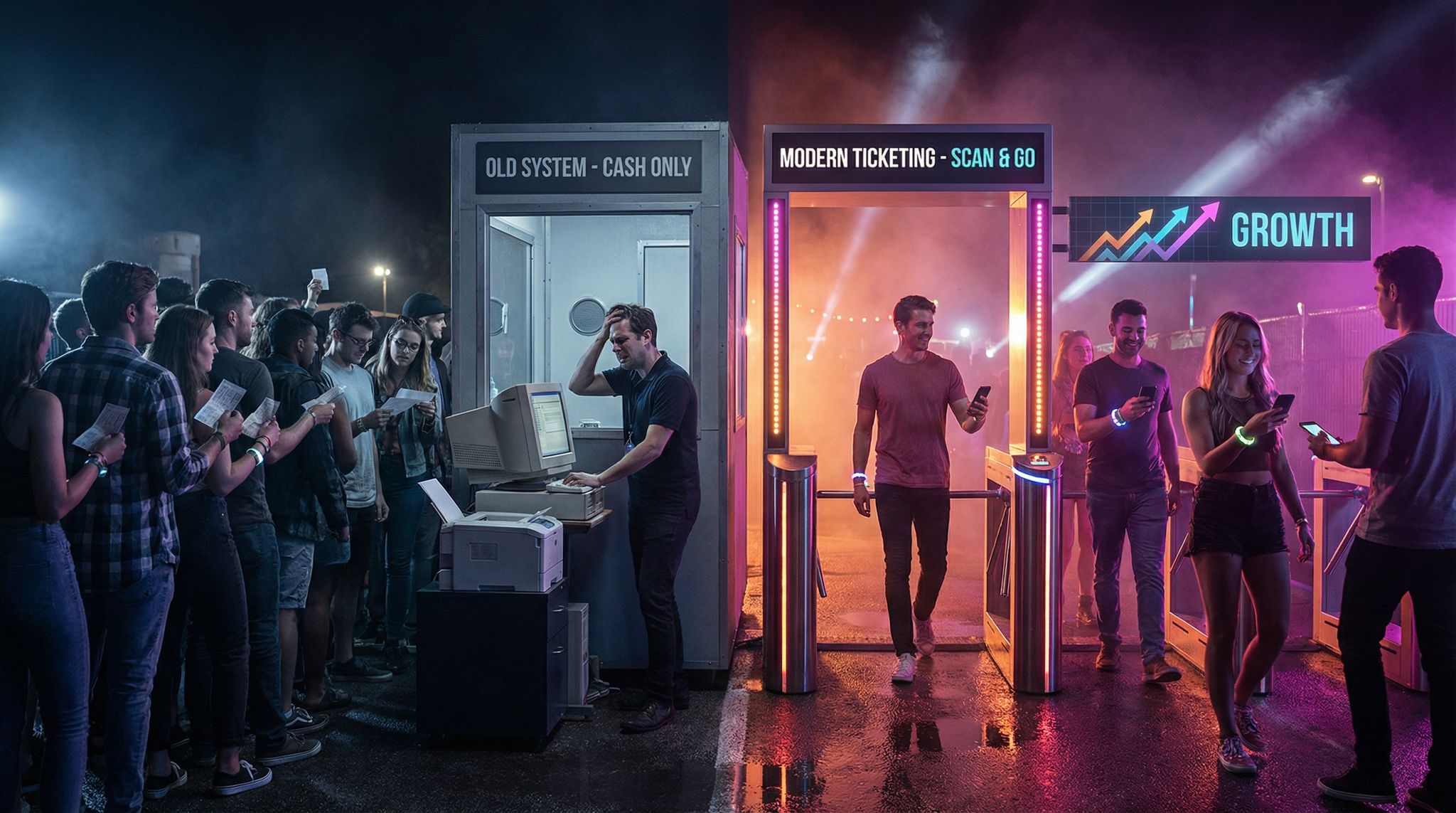
Scan tickets and manage entry with our mobile check-in app. Supports photo ID verification, real-time capacity tracking, and multi-gate coordination.
- Small Festivals (under 1,000 attendees): Typically community-driven or niche events. ~6–12 months planning lead time. Modest budgets (tens of thousands of dollars) often funded by local sponsors or modest ticket sales. Small core team wearing multiple hats; heavy reliance on volunteers. Emphasis on personal touches and flexible planning (expect team members to multitask).
- Medium Festivals (1,000–25,000 attendees): Regional events or growing festivals. ~12–18 months planning timeline. Mid-range budgets (hundreds of thousands to a few million USD) requiring structured finance and diversified revenue streams (ticketing, sponsors, food & beverage sales). Team is organized into departments (operations, marketing, talent, etc.), and formal processes emerge. Logistics become more complex – more infrastructure, professional stage production, and clear roles & communication plans.
- Large Festivals (25,000+ attendees): Major national or global events. 18–24+ months planning cycle. Multi-million dollar budgets and complex financing (corporate sponsors, investors, international marketing). Requires specialized staff and contractors – full production teams, security firms, medical services, traffic management, etc. High emphasis on risk management, crowd control, and global promotion to attract attendees from afar.
Table of Contents
- Concept and Vision
- Budget and Finance
- Site Selection and Venue
- Licensing and Permits
- Production and Technical Design
- Talent Booking and Artist Lineup
- Marketing and Promotion
- Ticketing and Admissions
- Sponsorship and Partnerships
- Operations and On-Site Logistics
- Safety and Risk Management
- Staffing and Volunteers
- Essential Reading
- Frequently Asked Questions
- Glossary
- Conclusion
Concept and Vision
Every great festival begins with a compelling concept. This is the foundational idea that defines the event’s identity – its theme, purpose, and vibe. A clear vision will guide all other decisions, from lineup and décor to marketing tone. Producers should articulate what makes their festival unique: Is it a celebration of a music genre, a cultural tradition, or an artistic movement? Knowing your target audience and core mission is key. For instance, Burning Man centers on radical self-expression in a desert community, while Glastonbury blends contemporary music with its countercultural roots on an English farm. A strong concept not only attracts the right attendees but also helps in rallying sponsors, artists, and community support around a shared vision.
For emerging promoters wondering how to start a festival from the ground up, the journey always begins with community and proof of concept. Launching a new event doesn’t necessarily require massive initial capital. In fact, many successful independent organizers figure out how to start a music festival with no money—or very little—by bootstrapping through strategic partnerships, ticket pre-sales, and in-kind sponsorships. By securing a venue on a revenue-share basis and booking local talent willing to grow with the brand, you can minimize upfront financial risk while validating your core idea.
Planning a Festival?
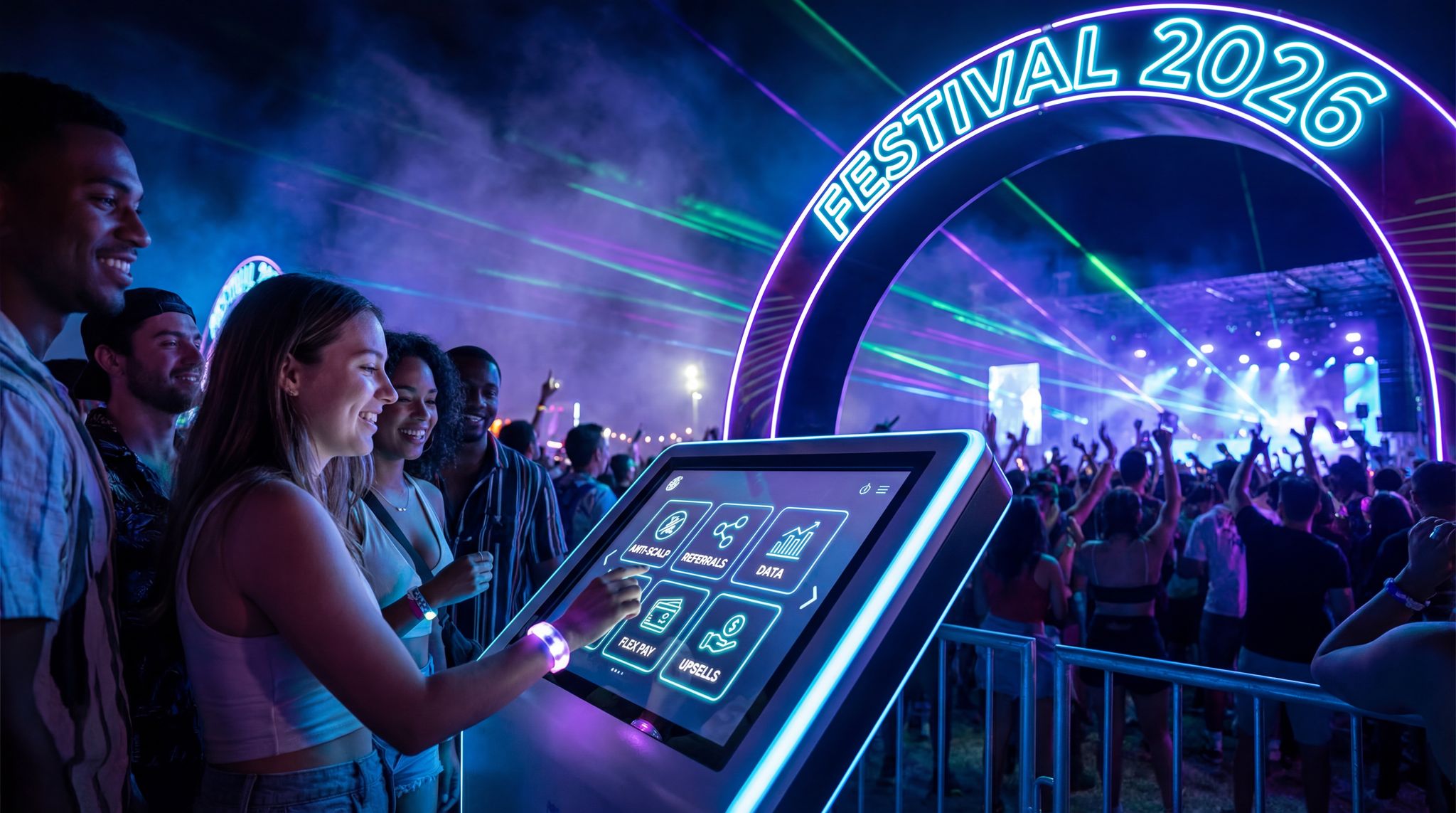
Ticket Fairy's festival ticketing platform handles multi-day passes, RFID wristbands, and complex festival operations.
When setting up a festival from scratch, the initial groundwork goes beyond just picking a theme. Establishing a formal business entity, opening dedicated bank accounts, and securing foundational liability insurance are the unglamorous but essential first steps of festival and event production. This administrative setup protects your personal assets and makes it easier to process early ticket revenue or secure vendor credit lines.
Defining a festival concept involves creative brainstorming grounded in research. Study successful models and local demand – if you’re launching a boutique jazz gathering, what gap does it fill in the region’s music scene? Ensure the idea aligns with practical factors like location and timing. The concept should excite people, but it must also be feasible. Seasoned organizers emphasize creating a festival concept with clear considerations like theme consistency, audience fit, and cultural relevance. Equally important is tempering dreams with realism. It’s crucial to balance ambition with reality in festival planning – a bold vision should be matched by obtainable resources, suitable venues, and talent availability.
Pro Tip: Write a concise mission statement for the festival (1–2 sentences) and revisit it throughout planning. This mission serves as a compass. If a proposal or decision doesn’t align with the festival’s core mission and values, it likely doesn’t fit the concept.
With the concept defined, high-level planning kicks off. Festival production timelines can span many months or even years depending on scale. The table below outlines a general planning timeline from initial idea through post-event wrap-up:
| Timeline (Months Out) | Key Planning Milestones |
|---|---|
| 12+ months (large events) | Establish concept and goals; secure venue and dates; set top-level budget; approach headline talent; begin initial permit discussions with authorities. |
| 6–12 months | Secure major permits and licenses; book headliners and essential vendors; announce save-the-date and begin early marketing; launch sponsorship outreach; open early-bird ticket sales. |
| 3–6 months | Ramp up marketing and promotions; finalize full lineup and schedule; hire on-site contractors (staging, AV, fencing); plan site layout in detail; start volunteer recruiting and training. |
| 1–3 months | Confirm all vendors and deliveries (power, sanitation, tents); push final ticket sales (intensify advertising and PR); conduct safety plan walk-through with officials; release artist, crew, and volunteer schedules. |
| 1–2 weeks | Load-in begins: build stages and infrastructure, run sound and lighting checks; conduct on-site staff orientations; finalize credentialing and ticketing systems; coordinate with police/medical teams on standby. |
| Festival days | Execute according to the run-of-show (gates open, performances, activations); monitor safety, weather, and crowd flow in real time; communicate across departments for any issue resolution on the fly. |
| Post-event (1–2 weeks after) | Breakdown/load-out: tear down stages, clear equipment; thorough site cleanup and restoration; return rentals; debrief with team (what worked, what didn’t); collect attendee and stakeholder feedback; begin post-mortem analysis and document lessons for next time. |
This timeline is a framework. Smaller festivals may compress steps into a few intense months, while mega-festivals might start planning even earlier (18–24 months out). The key is to break the journey from concept to execution into phases, assigning clear deadlines and owners for each task so nothing slips through the cracks.
When planning a festival event with a specialized focus—such as a culinary gathering or craft beverage expo—your timeline must account for niche logistical requirements. For instance, top food festival event planning tips always emphasize securing health department approvals and specialized waste management systems much earlier in the cycle than a standard music gig. The core principles of festival production remain the same, but the operational emphasis shifts toward vendor compliance, high-capacity power distribution for mobile kitchens, and enhanced sanitation protocols.
Need Festival Funding?
Get the capital you need to book headliners, secure venues, and scale your festival production.
Budget and Finance
Bringing a festival to life is a significant financial undertaking. Early in planning, producers must create a detailed budget covering all projected expenses and revenue streams. Key cost categories include talent fees, production (stages, sound, lighting), operations (infrastructure, utilities, insurance), marketing, and staffing. It’s not uncommon for artist bookings to consume the largest share of a music festival budget – major headliners can command fees in the millions for large events. On the income side, ticket sales are typically the primary revenue source, supplemented by sponsorships, food and beverage sales, merchandise, and sometimes grants or public funding (especially for cultural or non-profit festivals). Sound financial planning means defining both best-case and break-even scenarios, so you understand how many tickets or sponsors are needed to cover costs.
Cash flow is also critical: many expenses (deposits to artists, venue fees, permits) occur months before most ticket revenue arrives. A robust festival plan includes a contingency reserve (often 10% of the budget) for unexpected costs. Warning: Never assume everything will go perfectly – from weather delays to vendor issues, unplanned expenses will arise. (The infamous Fyre Festival in 2017 is a cautionary tale of financial mismanagement, where underestimating costs and overpromising revenue led to a very public collapse.) To avoid such pitfalls, focus on both cost control and revenue maximization. For example, strategically negotiating vendor contracts can secure better rates on rentals and services without alienating your suppliers. On the revenue side, creative tactics like VIP upgrades, parking passes, or bundled add-ons (merch packages, backstage tours) can help in maximizing per attendee spending to boost on-site income.
Below is an example of how a festival budget might be allocated by major category:
| Expense Category | Typical Share of Budget |
|---|---|
| Talent (Artists/Entertainers) | ~40% (30–50% for many music fests) |
| Production (Stages, Sound, Lighting) | ~20% (15–25%) |
| Venue & Site (rental, infrastructure, utilities) | ~15% (10–20%) |
| Staff & Security | ~15% (10–15%) |
| Marketing & Promotion | ~10% (5–15%) |
| Permits, Insurance & Misc. | ~5% (5–10%) |
Note: The exact breakdown varies by festival type. For instance, a food festival might spend more on infrastructure (tents, kitchen setup) and less on talent, whereas a showcase music festival’s artist fees could dominate the budget. For smaller community events, in-kind contributions and volunteer labor can offset cash costs (skewing these percentages). Always customize your budget to your festival’s specifics and be conservative in income projections.
Turn Fans Into Your Marketing Team
Ticket Fairy's built-in referral rewards system incentivizes attendees to share your event, delivering 15-25% sales boosts and 30x ROI vs paid ads.
When expanding globally, your financial models must adapt to regional economic realities. For example, organizers often ask how much to produce a concert in the Philippines or launch an Asian festival production compared to a US or European event. While local labor and venue costs might be lower in emerging markets, you must factor in high import taxes for specialized audio-visual gear, international artist travel, and currency fluctuations. A robust festival production management strategy accounts for these localized variables early in the budgeting phase.
Effective budgeting also means exploring diverse funding sources. Many up-and-coming festivals use early-bird ticket sales or crowdfunding to generate early cash. Others pursue local arts council grants or city event funding. Keep meticulous track of expenses against the budget as planning progresses, using spreadsheets or event budget software, and update forecasts regularly. A well-managed budget isn’t just about cutting costs – it’s about ensuring every dollar spent delivers value (enhances attendee experience or reduces a risk). As one guide on budgeting a boutique festival’s P&L notes, aligning spending with phased income (e.g. timing major expenses after ticket sale milestones) can keep cash flow positive even for smaller festivals.
Pro Tip: Maintain a detailed budget tracker that’s updated continuously. Do monthly (or weekly) budget reviews with your team. If one area is trending over-budget (say production costs rise due to an added stage), you can adjust elsewhere or find new revenue (e.g. an extra sponsor) before the festival is at risk. Vigilant budget monitoring allows you to course-correct in real time.
Site Selection and Venue
Selecting the right venue or site is one of the most crucial decisions in festival production. The venue determines the festival’s capacity, atmosphere, and many logistical challenges. Key factors include location accessibility, size and layout, existing facilities, and environmental conditions. For small festivals, a local park or community center might suffice, whereas large music festivals often require vast open fields or dedicated event grounds. Organizers must consider how attendees will get to and from the site – availability of parking, public transit links, shuttle services, and even nearby accommodations will impact the audience experience. In urban settings, sites like city parks or closed-off streets offer convenience but come with noise ordinances, strict time curfews, and community relations to manage. Remote destination events (mountain, desert, or island festivals) can create a magical atmosphere, but they demand extensive infrastructure planning (for example, Burning Man transforms a barren desert into a temporary city, bringing in every necessity from power and water to medical tents). Always choose a festival site with transportation access in mind – attendees should have a smooth journey in and out, whether by car, train, or shuttle.
Capacity and layout are equally important. The venue must comfortably accommodate stages, crowd areas, vendor villages, camping zones (if applicable), and emergency access lanes. A rule of thumb is to allow more space than you think you need per attendee – overcrowding not only ruins comfort but also creates safety hazards. During site visits, evaluate ground conditions (will rain turn the field to mud or is drainage adequate?), shade and shelter (is there relief from sun or cover from rain?), and noise impact on neighbors. Many festivals conduct environmental assessments during site selection, looking at factors like prevailing winds, average temperatures, and local wildlife considerations (to plan for issues like insect control or sound impact on animals). Resilient sites have multiple ingress/egress points and contingency areas if one section becomes unusable. Weather resilience is a growing concern: recent years have seen events disrupted by heatwaves, lightning storms, and wildfires. Planners now prioritize festival site selection with climate resilience in mind – for instance, choosing locations with some natural protection (trees or shade structures for heat, elevation for flood avoidance) and developing robust evacuation or weather-delay plans.
Pro Tip: Build strong relationships with venue owners and the local community. Their support can make or break your festival’s longevity. Negotiate clear terms in your venue agreement around noise curfews, restoration of the grounds, and any local hiring or charity commitments. Some iconic festivals like Glastonbury have multi-year agreements with their site (e.g. Worthy Farm) and even incorporate “fallow years” to let the land recover. Wherever your event is, ensure you have permission in writing and be a responsible guest: leave the site as good as or better than you found it. This goodwill goes a long way in securing future dates.
Licensing and Permits
Navigating permits and legal requirements is a critical part of festival production – one that can be daunting for first-timers. Festivals must comply with a web of regulations from various authorities. At minimum, most jurisdictions require a general special event permit that covers the overall gathering. Beyond that, there are typically specific permits for different aspects of the festival: permission for amplified sound (noise permits, especially if music will go into the night), alcohol licenses if you plan to serve or sell beer, wine or liquor, health department permits for food vendors, fire department permits for open flames or large tent structures, and often building/safety permits for staging and other temporary structures. Securing all these permits can take months of paperwork, inspections, and meetings. Organizers should start the permitting process early – often 6 to 12 months ahead – and coordinate closely with city officials. When done right, you’ll build a comprehensive permit stack that satisfies every agency from the police department to parks and health inspectors.
Common festival permits and their purposes include:
| Permit / License | Issued By & Purpose |
|---|---|
| Special Event Permit | City or Local Authority – Overall permission for a large gathering; usually covers the basic event plan (dates, times, location, crowd size, site layout). This is often the primary permit upon which many others hinge. |
| Noise Permit | City Council or Environmental Dept – Required to allow amplified sound beyond usual limits or past certain hours. Ensures the festival’s sound plan (stage orientation, dB limits, end times) is approved to minimize community disturbance. |
| Alcohol License | State or Local Liquor Board – Needed if alcohol will be sold or served. Often mandates ID checks, controlled serving areas (beer gardens), and trained bartenders. Processing can be lengthy, especially for first-time events. |
| Food Vendor Permits | County Health Department – Certifies that all food and beverage vendors meet health and safety standards. Vendors may need temporary food facility permits; expect health inspectors to check food prep on-site during the event. |
| Fire & Safety Permit | Fire Marshal – Approval of the event’s fire and life safety plan. Covers placement of fire extinguishers, emergency exits, occupancy limits for tents/indoor areas, and any pyrotechnics or open flames. The fire department may conduct an inspection before gates open. |
| Building/Structure Permit | Building Dept or Engineer – If constructing significant temporary structures (stages, scaffolding, large tents), an engineering review or building permit ensures structural integrity. Often requires submitting stage designs or tent certifications ahead of time. |
Not every festival will need all of the above – requirements vary widely by location. Some cities offer a one-stop event application that coordinates multiple departments, whereas in other places you must secure each permit separately. If your festival site spans jurisdictional boundaries (city and county lines, or takes place on state-owned land), additional permits or jurisdictional approvals will apply (e.g. state park permits, or highway use permits for road closures). And when expanding your festival overseas, be prepared for entirely new legal frameworks – for example, European countries may require detailed crowd management plans submitted to local authorities, while some jurisdictions mandate hiring licensed event security companies as part of the permit conditions.
Warning: Never attempt a “stealth” festival without proper permits. Authorities can shut down an event on the spot if you lack required licenses, and you could face hefty fines or liability issues. Instead, approach permitting as a collaboration with officials. Share your festival plans early, welcome input (on matters like sound limits, traffic flow, emergency exits), and demonstrate that safety and community impact are your priorities. Seasoned producers often host multi-agency planning meetings well in advance – walking city officials through the site plan, security strategy, and emergency procedures. By being proactive and transparent, you not only smooth the path to approval but also build trust that can pay off in goodwill and easier negotiations in future years.
Production and Technical Design
Once the planning and permits are in place, the physical production of the festival takes center stage. “Production” encompasses staging, sound, lighting, video, special effects – all the technical infrastructure that transforms an empty location into an immersive event venue. The scale and complexity of production can vary wildly. A small folk festival might have one modest stage and a basic PA system, whereas a large EDM festival could feature multiple massive stages with towering LED screens, laser shows, pyrotechnics, and sophisticated synchronized lighting. Production design should reflect and enhance the festival’s concept – for example, a cultural heritage festival may incorporate traditional art motifs in its stage décor, while a futuristic electronic festival invests in avant-garde stage sculptures and neon visuals.
Safety and functionality are the backbone of production. Stages and rigging must be professionally engineered and erected (often requiring certified riggers and structural engineers to sign off). Electrical distribution needs careful planning – generators, cabling, and backup power must be sufficient for audio, lights, food vendors, and more. A dedicated production manager or technical director usually coordinates these elements, working with specialized crews for staging, audio engineering, lighting design, and video content. Many festivals bring in experienced production vendors who supply stage structures, sound systems, and lighting rigs, since owning this gear outright is rare except for permanent venues. A detailed site plan (CAD drawings) is used to map out stage locations, front-of-house mix positions, speaker towers, lighting trusses, and backstage areas like crew offices and dressing rooms.
For many organizers, executing flawless festival technical production requires partnering with a specialized music festival production company. These experts handle the heavy lifting of festival stage production, from structural engineering to advanced rigging. Whether you are managing a boutique indie gathering or a massive electronic dance event, bringing in seasoned festival and event production professionals ensures that your creative vision translates safely into reality. The best festival production teams integrate seamlessly with your core staff, bridging the gap between artistic ambition and technical feasibility.
The physical process of setting up a festival site—often referred to as the load-in or site build—demands rigorous project management. Before the first stage truss is lifted, site managers must mark out the grounds, establish temporary roadways for heavy machinery, and install perimeter fencing. Efficiently setting up a festival requires a phased approach where heavy infrastructure (like generators and staging) arrives first, followed by delicate audio-visual gear, and finally, attendee-facing amenities like food stalls and signage.
One common challenge at multi-stage music festivals is managing sound so that performances don’t interfere with each other or breach local noise rules. Proper audio design ensures each stage delivers powerful sound to its audience without excessive bleed. Techniques like using directional speakers to create focused audio zones can concentrate sound where needed and minimize spillover – especially crucial if stages are relatively close. Similarly, lighting design must serve both spectacle and safety: dramatic light shows for performances, but also adequate illumination for pathways, exits, and amenity areas once night falls. Many events also integrate live video (IMAG screens showing performers, or creative visuals) which adds another layer of production logistics – camera crews, switching equipment, content creation, and screen management.
Production schedules are tightly choreographed. Load-in (the setup phase) can span days or weeks. It includes building stages, installing sound and lighting equipment, setting up fencing and entry gates, and decorating the venue. A large festival might have dozens of semi-trucks delivering gear and a crew of hundreds working long shifts before gates open. Pro Tip: Always budget time for a full technical rehearsal or at least thorough equipment tests on-site. This “trial run” allows your team to catch and fix issues – whether it’s a lighting cue misfire or a generator carrying too much load – before attendees arrive. Have backup solutions ready for critical systems. Generators can fail, projectors can malfunction, microphones can go out – savvy producers prepare redundant equipment (spares) and contingency plans so that a technical glitch doesn’t stop the show.
During the festival, the production crew should actively monitor and adjust. Experienced audio engineers will tweak sound levels based on crowd size and weather (sound travels differently on a cool night vs. a hot day). Lighting operators may improvise if an act’s needs change last-minute. It’s also wise to establish a clear troubleshooting protocol: if something goes wrong on stage, who calls the fix and how fast can it be addressed? Teams should be adept at festival tech troubleshooting when things go wrong. For example, if a mixer fails, can you swap to the spare in under 5 minutes? If a lighting tower loses power, can you reroute to a backup feed quickly? Drills or at least discussions of “what if” scenarios help prepare the crew for real incidents.
Innovation continues to shape festival production. Some events now use smart sensors (IoT) on stage structures to monitor wind speeds or structural stress in real time, automatically alerting staff to pause a show if conditions become unsafe. Others employ sustainable practices like solar-powered stages or biofuel generators to reduce carbon footprint. Regardless of tech level, the goal of production remains the same: create an immersive, safe environment where artists can perform their best and attendees are awe-struck, all while ensuring the behind-the-scenes systems run smoothly.
Talent Booking and Artist Lineup
Booking performers – whether musicians, speakers, or other entertainers – is at the heart of festival programming. Securing the right talent requires a mix of artistic vision, negotiation savvy, and careful scheduling. For music festivals, the process often starts by targeting a few key headliners who can draw crowds. Top-tier acts may need to be booked 8–12+ months in advance through booking agents, often by making competitive offers and negotiating terms (including performance fees, production needs, and exclusivity windows). Many major artists have radius clauses in their contracts, meaning they agree not to play other shows in the same region for a certain timeframe – this can be a selling point (your festival gets a unique draw) but also a negotiation hurdle.
Once headliners are confirmed, the rest of the lineup can be built out with mid-level and emerging acts that fit the festival’s style and budget. A well-curated lineup feels cohesive yet diverse. It’s important to balance genres (if applicable), eras, and tempos to craft an experience that ebbs and flows pleasantly for the audience. Modern festivals also strive for inclusivity on stage, aiming for representation across genders, ethnicities, and backgrounds. Curators use strategies for ensuring a diverse festival lineup – not as tokenism, but to bring fresh perspectives and attract a wider audience. Many top festivals have publicly committed to lineups that are 50% female or underrepresented genders, recognizing that diversity both reflects social progress and delivers a richer artistic program.
Booking talent involves more than just signing contracts. Logistics must be arranged: travel itineraries (flights, ground transport), lodging for out-of-town artists (hotel or homestays), and hospitality (backstage food and amenities per the artist’s rider). Larger festivals have Artist Relations teams dedicated to these tasks, ensuring artists have what they need and serving as their point of contact. Happy artists are more likely to give electrifying performances and speak positively about your event afterward. It’s also wise to coordinate artist promotion – leverage your artists’ fanbases by having them announce their appearance on their social media, which can amplify your marketing.
For niche or community festivals, local talent often plays a big role. Working with homegrown artists can reduce costs and build community goodwill. Many smaller festivals mix a few touring acts with the best of local performers, giving the event a distinct regional flavor. On the opposite end, some events are actually spearheaded by the artists themselves. There’s a growing trend of artist-curated festivals – think of rock icons organizing their own multi-artist events, or DJs curating festival lineups. In these cases, producers collaborate closely with the artist (and their team) who acts as a co-curator, ensuring the festival reflects their vision. It can be a powerful marketing angle (“presented by [Artist Name]”) and often attracts a very dedicated subset of fans.
Pro Tip: Always have a backup plan for your lineup. Last-minute cancellations happen – an artist falls ill, misses a flight, or even breaks up just before the show. Identify in advance a few local bands, DJs, or performers who could fill a gap in a pinch. It could be as simple as extending other artists’ sets or having a “secret” artist on standby. Also, stay communicative with booked artists’ agents/management as the event approaches, reconfirming details so nothing falls through the cracks. The smoother the experience for artists (from booking to show date), the more likely they’ll want to return in future years.
Marketing and Promotion
Even the best festival concept and lineup need strong marketing to succeed. Festival promotion is about building hype, driving ticket sales, and creating a brand that resonates with your target audience. It starts with a clear branding – a name, logo, visual style, and voice that reflect the festival’s personality. All marketing materials (website, social media, posters, emails) should consistently use this branding so that people recognize and remember it. Many festivals launch with teaser campaigns: a simple “save the date” announcement to spark interest, followed by phases like lineup release, schedule release, and on-site experience reveals. Timing these announcements strategically (often via social media and email blasts) keeps the momentum going and gives potential attendees multiple touchpoints to make the decision to buy tickets.
Digital marketing is paramount. Engaging social media content – artist announcements, behind-the-scenes peeks, throwback posts to prior editions – can build an online community and FOMO (fear of missing out) among fans. Paid advertising on platforms like Facebook, Instagram, and Google can target specific demographics (e.g., fans of certain genres or those within geographic radius). At the same time, traditional tactics like press releases and media partnerships (radio stations, local newspapers, event bloggers) help broaden reach. Many festivals also implement referral programs and street teams to amplify word-of-mouth. Consider turning attendees into ambassadors by offering incentives: for example, a fan gets a free ticket or merch if they refer 5 new ticket buyers. These peer-to-peer tactics tap into the enthusiasm of your core supporters.
Content is king in festival marketing. High-quality festival trailers or aftermovies, artist video shoutouts, and photo galleries from past events all serve to excite potential attendees. Showcasing what people will experience – the crowds, the performances, the fun – is crucial for first-timers especially. Make sure your official website is up-to-date, mobile-friendly, and has all key information (dates, location, lineup, ticket options, FAQs). A smooth ticket purchase process (few clicks, clearly stated prices and policies) can significantly improve conversion rates from interested to attending.
Creative promotions can set you apart. Some festivals organize mini-events or pop-ups in key cities to promote the main event, or collaborate with influencers who align with the festival vibe. Local outreach shouldn’t be neglected either: if you want the support of the host community, engage in local events, colleges, or partner with local businesses for cross-promotion. For example, a city art festival might host a preview night at a gallery or have local cafes display festival art. If your festival appeals to an international audience, tailor marketing in different languages or partner with travel package providers.
Loyalty and retention are also part of promotion strategy. Consider rewarding repeat attendees with discounts or special perks. Implementing a festival loyalty program (often via an app or membership) can boost return rates. Long-running festivals often turn their brand into a year-round community through newsletters, off-season events, and active social media groups. The more your audience feels like they’re part of a tribe or movement, the more they will promote the festival organically to friends.
Pro Tip: Track your marketing efforts and ticket sales closely. Use unique discount codes or tracking links for each campaign (social ads, emails, influencer posts) to gauge what’s effective. This data helps you allocate budget smartly – doubling down on channels that convert, and tweaking or dropping those that don’t. Marketing for festivals is dynamic; be ready to adapt messaging or spend as you see what resonates most with your audience.
Ticketing and Admissions
Ticketing is where all your marketing efforts hopefully convert into attendance. A well-thought-out ticketing strategy can maximize revenue, ensure a smooth attendee entry, and even help shape the event’s demographics. First, consider your ticket types and pricing tiers. Many festivals offer an “early-bird” ticket at a discounted price to incentivize early sales (which improves cash flow and builds buzz). Regular general admission comes next, with possible tiered price increases as the event date nears or as lower-priced allotments sell out. VIP tickets are common at larger festivals – these higher-priced passes might offer perks like dedicated viewing areas, fast-track entry, VIP lounges, or premium amenities. Some events also sell special packages (group deals, travel bundles with hotel and transport, or multi-day passes if the festival runs over multiple days/weekends).
Setting the right price requires understanding your audience’s willingness to pay and your event’s value proposition. Research similar events and consider running surveys. Be clear about what’s included with each ticket tier to avoid confusion. In recent years, technology has opened up new ticketing models: for instance, “membership” or subscription models and even blockchain-based tickets. A few innovative festivals are experimenting with NFT-based membership passes that give holders access to multiple events or special status in a community. While cutting-edge, ensure any new ticket tech you use is user-friendly – attendees shouldn’t need a tech manual to figure out how to attend your event.
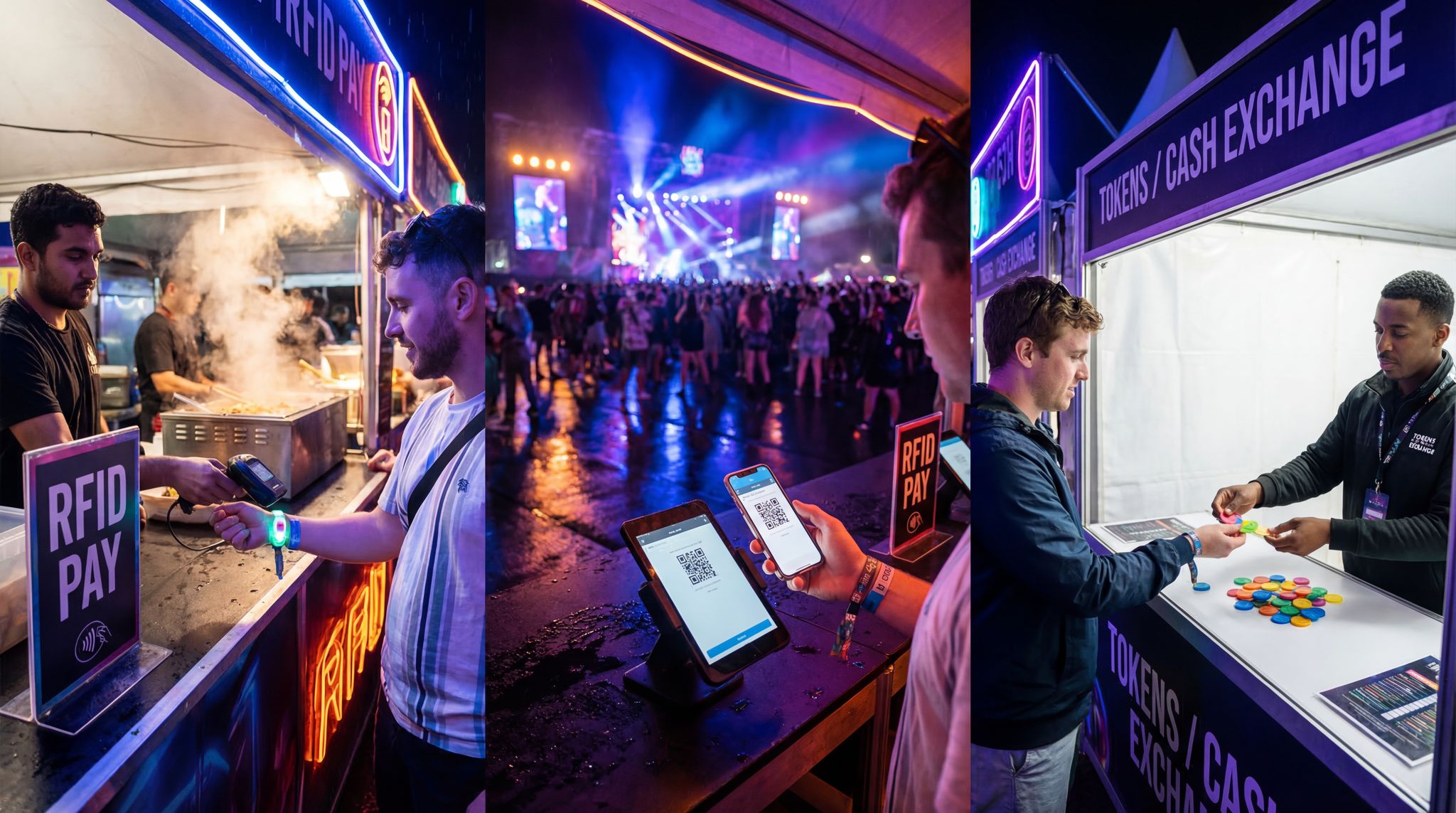
Managing the on-site admissions process is equally important. Long lines at the gate can sour the mood before people even get in. Use an efficient ticket scanning system (mobile QR codes or RFID wristbands are now standard for large events). Train your gate staff or volunteers thoroughly on scanning devices, checking IDs (for age-restricted entry or will-call pickups), and wristbanding attendees quickly. If you have different entry lanes (VIP, General, Staff, Artists), have clear signage. Consider a separate lane for issues (ticket problems, customer service) so one complicated case doesn’t hold up hundreds of people.
Another consideration is ticketing fairness and outreach. Big festivals often sell out fast, which can frustrate local fans. To maintain goodwill, some events reserve a portion of tickets for locals or establish lotteries. For example, you might allocate a batch of tickets specifically for residents of the host city/county at a discount – ensuring the hometown crowd isn’t entirely shut out by global demand. Initiatives to ensure fair local access to tickets can include early sales for locals, partnerships with community centers, or even paper ticket sales in local shops for those who may not be online.
Pro Tip: Communicate ticketing info clearly and often. Well before tickets go on sale, explain the process: sale dates and times (with time zones), where to buy, pricing, and any purchase limits. During the sale, use social media to give live updates (e.g., “80% of weekend passes sold – don’t wait!” or “Friday nearly sold out”). Post-sale, remind ticket buyers of what to prepare (ID policies, how to transfer tickets if allowed, etc.). A smooth ticketing experience, from purchase to festival entry, sets a positive tone for your attendees and reduces workload on your customer support team.
Sponsorship and Partnerships
Sponsorships can be a financial lifesaver for festivals, often turning a marginal budget into a profitable one. But beyond the dollars, good sponsors add value to the attendee experience – through amenities, enhancements, or exclusive content. Building festival sponsorship strategies is about finding companies or organizations whose brand and goals align with your event’s audience. Traditional sponsorship packages might include a presenting sponsor (“XYZ Presents the Festival”), stage or area naming rights, logo placements on signage and marketing, vendor booths on-site, and hospitality perks for the sponsor’s guests. However, the most successful partnerships go deeper. Think of ways a sponsor can enhance the festival. For example, a headphone company could sponsor and operate a high-quality silent disco area, or a beverage sponsor might create a themed bar or free water refill stations branded with their logo.
When approaching potential sponsors, assemble a compelling proposal that includes audience demographics, expected attendance, marketing reach (social followers, media coverage) and clear deliverables for the sponsor. Emphasize the activation opportunities – how they can interact with attendees meaningfully rather than just plastering logos. Brands increasingly seek engagement: they may bring a photobooth, a chill-out lounge, a swag giveaway, or some interactive installation. These not only please the sponsor but also give festival-goers something extra (and often Instagrammable). A great example is when tech companies sponsor festival charging stations or Wi-Fi zones, solving a pain point for attendees while promoting their products.
Festival producers should also consider different tiers of sponsorship to capture a range of partners – from title sponsors contributing big money to smaller in-kind supporters. In-kind sponsorships (equipment, marketing support, catering) can offset costs just as effectively as cash. For instance, a local radio station might trade advertising spots for being named an official media partner, or a craft brewery might supply a artist lounge beer fridge in exchange for signage rights. Be creative and genuine in crafting these deals: the best sponsors are those that festival-goers welcome because they add to the vibe, not just sell to them. As one guide on festival sponsor hospitality and brand love notes, treating sponsors as true partners – including giving them VIP treatment and integrating their brand story naturally – leads to longer-term relationships.
For festivals aiming to grow or replicate in multiple markets, sponsor relationships may go global. A beverage or automotive sponsor, for example, might sign on for a multi-year, multi-city deal if you have expansion plans. Managing international editions and global category sponsorships becomes a consideration – ensuring, say, your beer sponsor in one country doesn’t conflict with another country’s local partners. Transparency and early communication are key if you’re dealing with big corporate sponsors; they often plan budgets a year or more in advance.
Pro Tip: Measure and report value to your sponsors post-event. Provide them with a sponsorship report highlighting on-site exposure (photos of their branding in action), attendee engagement stats (foot traffic to their activation, social media mentions), and media reach (any press or online content featuring them). This data proves ROI and makes them far more likely to renew sponsorship for your next edition.
Operations and On-Site Logistics
Operations is the broad engine that keeps the festival running smoothly on the ground. It covers everything from entry gate management, crowd control, and vendor coordination to power supply, sanitation, and internal communications. Unlike the high-visibility areas of talent and marketing, operations work is often behind-the-scenes – but when done well, attendees hardly notice it (which is the goal). A solid operations plan starts with a detailed site layout: mapping stages, food courts, bathrooms, medical tents, merch booths, info points, and more. Efficient layout design avoids congestion points (e.g., ensure plenty of space near food vendors for lines, or locate bathrooms in multiple corners to disperse crowds). It also plans for accessibility – ADA compliance for disabled attendees, consideration for families if it’s a family-friendly event (diaper changing stations, etc.), and clear signage so people can navigate the grounds.
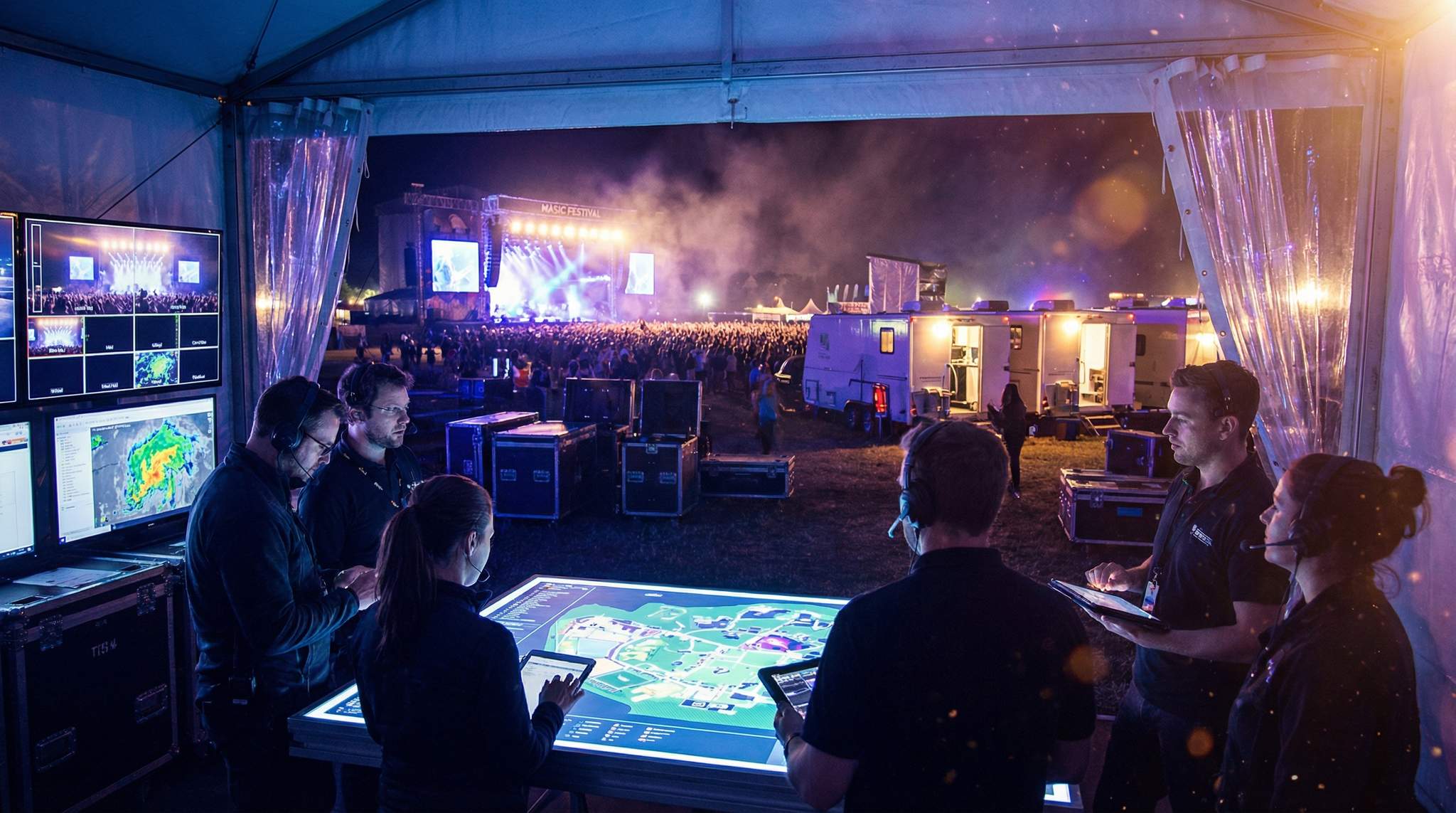
One of the operations team’s main jobs is coordinating all the moving parts during the festival. This means having a robust communication system: typically radios (walkie-talkies) for staff, with distinct channels for different teams (security, medical, production, etc.), plus a central command post where key decision-makers monitor everything. Many large festivals set up an Event Control room staffed with the festival director, operations manager, security lead, medical lead, and often a city liaison officer. They’ll have tools like site CCTV feeds, weather monitors, and incident tracking boards. Decisions such as whether to pause a show for weather, how to handle a lost child, or dispatching extra staff to an overcrowded area are managed here in real time. Smaller festivals may not have as elaborate a setup, but it’s wise to establish a clear chain of command and communication protocol no matter the size.
Attendee services fall under operations as well. This includes things like lost & found, information booths, water stations, and waste management. Festivals generate a lot of trash, and a plan for frequent garbage collection and recycling can prevent overflowing bins (which not only looks bad, but can attract pests or create hazards). Sustainability is a growing emphasis – operations teams might implement eco-friendly initiatives like refillable water stations to cut plastic waste, compostable plates for food vendors, or a “leave no trace” clean-up ethos. Not only is this socially responsible, it can also reduce cleanup costs and ingratiate the festival with the local community.
Medical and first aid services are another critical operational element. For any sizable event, having EMTs or paramedics on-site (often in a couple of medical tents or roaming teams) is essential, as is a protocol for when to involve local hospitals. Some festivals even integrate telemedicine services on-site – for example, equipping first aid tents with tablets to consult remote doctors for non-critical cases. Likewise, security operations (whether volunteer staff, professional security, or police presence) need a base and clear marching orders on everything from checking bags at entry to handling lost persons or ejecting unruly attendees. Modern festivals often use technology like RFID wristbands not just for cashless payments but also for security – controlling access to back-of-house areas or allowing quick ID of a person’s ticket type.
Scaling operations up or down is a major challenge as festivals grow. A site setup that worked for 5,000 people could fail at 20,000 if not adjusted (e.g., doubling entry lanes, more restroom facilities, larger staffing). One must continually adapt and scale festival operations for massive crowds as attendance increases. This includes planning for peak times – for instance, when the headline act ends and everyone heads for the exits, do you have enough exit lanes, security managing traffic, and transportation ready? Similarly, multi-day festivals need overnight operations: cleaning crews, stage maintenance, perhaps even overnight attendee services for campers.
Specialized operational planning is also required for unique event formats and dedicated audience areas. If you are running a 24-hour music festival, your operations must account for continuous shift rotations, overnight noise ordinances, and round-the-clock medical coverage. Additionally, modern events often incorporate specialized areas; for instance, fan zone producers create highly interactive, branded spaces that keep attendees engaged between sets. Similarly, curating a dedicated VIP or industry mixer where they can mingle and network—often inviting artists, filmmakers, or sponsors to interact—adds immense value but requires its own micro-operations plan for catering, access control, and ambiance.
Executing a true 24 hr music festival also demands specialized infrastructure resilience. When the music never stops, your event management strategy must include “hot swaps” for generator maintenance, continuous sanitation servicing without disrupting the attendee experience, and dedicated welfare zones where exhausted fans can safely decompress. Successful music events management at this extreme scale relies on building a robust, overlapping shift schedule for your core leadership team, ensuring that fresh, clear-headed directors are always at the helm.
Pro Tip: Create a detailed Operations Manual and run a tabletop exercise before the festival. An Ops Manual is a document outlining all procedures (opening/closing times, emergency contacts, evacuation routes, staff roles, etc.). Sharing this with your team and key external partners (security firms, medical provider, venue owner, city officials) ensures everyone literally “on the same page.” A tabletop exercise means you gather the department heads and walk through hypothetical scenarios (“What do we do if there’s a power outage on Stage 2?” or “How do we respond if there’s a report of a lost child?”). Talking through these in advance exposes any gaps in plans and makes the real response faster and more coordinated.
Safety and Risk Management
Safety is the single most important responsibility of any festival producer. A festival is meant to be joyous, but it brings inherent risks: large crowds, loud music, weather exposure, possible intoxication, and complex structures. Risk management in festival production starts long before show day. It begins with identifying potential risks (through risk assessment charts or consulting past festival case studies) and then drafting plans to mitigate them. This spans everything from crowd control measures and medical preparedness to weather contingencies and security threats. Emergency action plans (EAP) are a must-have: a document that clearly outlines what happens in various emergencies (severe storm, fire, active threat, etc.), who has authority to make decisions, how to communicate to attendees (use of stage PA, text alert systems), and evacuation routes and shelters.
One major area of festival risk is weather. Outdoor events face heat waves, thunderstorms, high winds, cold snaps – all of which can be dangerous. A heatwave demands free water, cooling stations, and medical vigilance for heat stroke. Thunderstorms, especially with lightning, may require pausing shows and seeking shelter (lightning is a leading cause of outdoor event evacuations). High winds can threaten stage structures and tents – hence engineering and regular monitoring is vital (many events use wind meters and have maps of “safe vs. unsafe” wind speeds for their stages). It’s wise to build weather resilience into event planning by scheduling in milder seasons if possible, or investing in things like drainage, wind breaks, and heat mitigation (shade, misting tents). Some festivals even purchase weather insurance for extreme cases, or have a meteorologist on-call for forecast updates.
Crowd safety and security are another focus. Crowd management starts with good design – avoiding choke points, having sufficient entrances/exits, and using barriers to break up dense crowds if needed. Professional security personnel and informed volunteers should be positioned at key points (stage front, gates, perimeter) watching for issues like overcrowding or distress. Sadly, history has examples of festival tragedies due to crowd crushes or poor planning (from the 1979 Who concert stampede to more recent incidents). Learning from these, many festivals enforce crowd capacity limits for stages, have mosh pit guards and enhanced surveillance, and stop performances if crowd conditions become unsafe. Training staff to detect the early signs of crowd surges or panic is key.
Health and welfare policies also fall under safety. Festivals should have clear anti-harassment and inclusion policies to ensure all attendees feel safe from personal harassment or discrimination. Enforcing a robust anti-harassment policy with real consequences helps build a positive culture on-site. Additionally, harm reduction services – such as free water, designated driver programs, or drug education and testing in regions where that’s allowed – can save lives. Many music festivals now provide on-site drug counseling or testing kits to prevent overdoses, acknowledging that safety is more important than denial.
In terms of external threats, coordinate closely with local law enforcement on security plans. Depending on the risk profile, some festivals conduct bag checks or even full pat-downs at entry. Others employ CCTV camera systems for surveillance. Major events may have undercover security mingling in crowds or K9 units for contraband detection. The balance to strike is thorough safety measures without killing the friendly atmosphere. Regular safety team meetings during the festival (daily briefings with security, medical, operations leads) allow everyone to share observations and adjust tactics for upcoming days or nights.
Pro Tip: Conduct a formal debrief with your safety and operations team after the festival and document all incidents (even minor ones). This institutional memory – what was learned about weather prep, or how effectively the crowd exited, or any medical patterns – is gold for future planning. Many festivals publish a post-event report or “we heard, we’re improving” summary, which not only helps internal improvement but can also show attendees and local officials that you’re committed to continually enhancing safety.
Staffing and Volunteers
A festival is only as good as the people running it. Staffing covers your core production team, extended staff, contractors, and the often indispensable volunteers. Early in the planning you’ll identify key roles: Festival Director/Producer, Operations Manager, Talent Booker, Marketing Lead, Production Manager, Volunteer Coordinator, Sponsorship Manager, and so on – these folks form the backbone of your pre-production efforts. As the event approaches, staffing expands to include on-site crew: stage managers, sound and lighting technicians, site crew (for power, plumbing, tent setup), security personnel, medical staff, box office/ticket scanning staff, artist liaisons, runners, drivers – the list can be long. Each role should have a clear job description and a point of contact managing them. Creating an org chart helps everyone understand the chain of command.
Many festivals rely on volunteers for a substantial portion of on-site labor, especially non-profit or smaller events. Volunteers may trade work for a ticket, getting tasks like checking wristbands at gates, staffing info booths, cleaning up, or artist hospitality. Successful volunteer programs require good coordination: recruitment, training (even if just an orientation briefing), and reward. Make sure volunteers know their shifts and duties well in advance and have a supervisor they report to. Provide perks like a free T-shirt, meals, and a thank-you party – these go a long way in motivating volunteer crews who, when happy, often come back year after year. Some events even empower select volunteers or super-fans as “fan ambassadors” on-site, roaming the grounds to help attendees and spread positive vibes.
Scaling your team with the festival size is crucial. A boutique 500-person event might run with a dozen core staff and 30 volunteers, whereas a 50,000-person weekend can involve thousands of staff and volunteers across all departments. For large festivals, consider professional staffing agencies for security, medics, and sanitation, as they can bring trained personnel. Also plan for staff logistics: do you need to feed your crew? (Often yes – hungry crew are unhappy crew, so arrange catering or meal vouchers.) Where will staff park or camp? How do they check in and get credentials? Smooth staff operations behind the scenes translate to a better-run festival for attendees.
Here are some key festival staff departments and their primary responsibilities:
| Department | Key Responsibilities | Roles/Examples |
|---|---|---|
| Production (Technical) | Stage builds, sound, lighting, video, power & technical logistics. | Production Manager, Stage Manager, Audio Engineer, Lighting Designer, Rigging Crew. |
| Operations (Site & Logistics) | Site layout, fencing, entry gates, facilities (water, waste, toilets), transportation, and general logistics. | Operations Manager, Site Crew, Gate Supervisor, Traffic Manager. |
| Talent & Artist Relations | Booking and managing performers’ needs, hospitality, schedule adherence. | Talent Booker, Artist Liaison, Stage MC (Emcee) for announcements. |
| Marketing & Communications | Ticket sales campaigns, social media, press relations, on-site visuals/signage, attendee communications. | Marketing Lead, Social Media Manager, Press Coordinator, Graphic Designer. |
| Sponsorship & VIP | Managing sponsor activations, VIP guest services and amenities, VIP area operations. | Sponsorship Manager, VIP Hospitality Coordinator, Brand Activation Staff. |
| Security & Safety | Crowd management, entry screening, asset protection, emergency response coordination. | Security Chief, Safety Officer, Security Guards, CCTV Monitoring staff. |
| Medical & First Aid | Providing first aid and medical response to attendees and staff. | Medical Coordinator, EMTs/Paramedics, First Aid Volunteers. |
| Vendor Management | Coordinating food, beverage, and merchandise vendors, ensuring they follow rules and have what they need (power, water). | Vendor Manager, Market Coordinator, Merchandising Manager. |
| Volunteer Coordination | Recruiting, scheduling, and supervising volunteers; assigning roles and managing volunteer check-ins and breaks. | Volunteer Coordinator, Team Leads (volunteer supervisors for groups). |
Depending on the festival, departments may overlap or additional ones may exist (for example, a camping festival might have a dedicated Camping Manager, or a festival with art installations might have an Art Director). The important part is that every crucial function has someone accountable for it. In the lead-up to the event, hold regular team meetings (weekly or biweekly), and as you get within the final month, possibly daily check-ins or update emails. This keeps everyone aligned and aware of how their piece fits into the bigger picture.
Pro Tip: Decide early what tasks you handle in-house vs. outsource. Many new festival producers grapple with the choice of in-house vs. outsourced operations. Outsourcing (hiring a specialist staging company, or a security firm, etc.) can bring expertise and reduce management burden, but it can be costly. In-house (using your own team and volunteers) can save money and give you more direct control, but if you lack experience in an area, quality might suffer. Often a mix works well: outsource highly technical or risk-critical areas (like stage production, security, medical) to proven pros, and manage areas aligned with your team’s strengths internally. And always ensure any external contractors are integrated into your communication flow – invite them to site walks or planning meetings so they become part of the festival family rather than siloed vendors.
Essential Reading
- Creating a Festival Concept: What to Consider – Guide to developing a clear vision and theme from the outset.
- Budgeting the Boutique Festival P&L – Mapping Fixed & Variable Costs, Phasing Revenue, and Protecting Liquidity – Comprehensive look at budgeting fundamentals and cash flow management for smaller festivals.
- Location, Location, Commute: Choosing a Festival Site with Transportation Access in Mind – Ensuring your venue is accessible and convenient for attendees.
- Licensing & Permits for Heavy Bass Music Festivals: Building a Comprehensive Permit Stack – Step-by-step advice on securing every permit your event needs (noise, alcohol, fire, etc.).
- Ensuring a Diverse Festival Lineup: Strategies for Authentic Inclusion on Stage – How to curate lineups that reflect diversity and why it benefits your festival.
- Turning Attendees into Ambassadors: Building a Festival Referral Program That Boosts Ticket Sales – Tactics to harness your existing fans to spread the word and drive ticket sales.
- Festival Sponsor Hospitality That Feels Like Brand Love – Approaches to treating sponsors as partners and creating win-win sponsorships that enhance the event.
- Scaling Up: Adapting Your Festival Operations for Massive Crowds – Tips for expanding your festival from modest to mammoth while maintaining efficiency and safety.
- Climate-Proofing Your Festival: Building Weather Resilience into Event Planning – Preparing your event to withstand extreme weather, from heat to storms.
- Lean Festival Production: Streamlining Operations to Save Money and Time – Adopting lean principles to boost efficiency in planning and execution.
Frequently Asked Questions
Q1: How long does it take to plan a festival?
The planning timeline depends on the festival’s size and complexity. Boutique events (a few hundred attendees) might pull together in 6–9 months, especially if using local resources. Medium-sized festivals often need 12–18 months of lead time to secure artists, permits, and marketing. Major festivals of 25,000+ people commonly work on a 18–24 month cycle – for example, booking headliners a year or more out and coordinating with city agencies well in advance. It’s recommended to start as early as possible; more time allows for better talent options, thorough permitting, robust sponsorship outreach, and contingency planning. If you’re reviving an annual festival, you essentially start planning the next edition as soon as the last one ends (if not before!).
Q2: What permits do I need for a festival?
Specific permit requirements vary by location, but most festivals will need at least: a general special event permit from the city/local authority, a noise permit (for amplified sound especially at night), and permits for food and alcohol service (health department and liquor licenses). You may also need fire department approval for your site plan (covering tents, stages, emergency access), and building permits if you erect large temporary structures. If your festival is on public land (like a city park), there’s typically a park/event permit. We recommend checking with your city’s events office or municipality – many publish an event permitting guide. Always apply well in advance, and be prepared to present detailed plans (site maps, schedules, insurance certificates) to the authorities as part of the approval process.
Q3: How do I budget for a festival and find funding?
Start by outlining all potential expenses – talent, production, venue rental, permits, marketing, insurance, staff, and a contingency for surprises. Assign realistic costs to each based on research and quotes. Then project conservative revenue: ticket sales (at various price points and expected quantities), confirmed sponsorships, vendor fees, and any other income (grants, subsidies). The budget should tell you your break-even point (e.g. how many tickets must be sold at what price). To fund the upfront costs, many festivals use a combination of early ticket sales (e.g. launching early-bird tickets far in advance), sponsorship deals (money from sponsors often comes in before or by the event), and personal or investor capital. Some events take deposits from food vendors or partners. If there’s a shortfall, consider fundraising – anything from community fundraisers and Kickstarter campaigns to seeking local business investors who believe in the event’s vision. Just be cautious about incurring debt; overspending without firm income can be risky. It’s better to scale the event plan to what you can afford on likely income, not on overly optimistic scenarios.
Q4: How do I book big artists for my festival?
Booking headlining artists typically involves reaching out to their booking agency with a formal offer. You’ll need to know the artist’s fee range (often available via industry contacts or by inquiring with the agent), and be prepared to negotiate. The offer usually includes the performance fee, plus any major production needs, hospitality, and transport you’re covering. Big artists and their agents will consider your festival’s date (does it fit their tour routing?), the other artists booked (they often like to be in good company), and the reputation or vibe of your event. Having a solid pitch – explaining what the festival is about, past success (if applicable), expected crowd, and media coverage – can help. Networking at music conferences or via promoters can get your festival on agents’ radar. And remember, timing is crucial: many big summer festival slots for bands, for example, are filled by late fall of the previous year. Finally, be ready with a contract and deposit when an artist says yes. Contracts will include technical and hospitality riders (detailing all the artist’s requirements), which you must be confident you can fulfill. It can help to start by booking a mid-level act or two to build momentum, then use that lineup to entice bigger names who see that the festival is shaping up nicely.
Q5: How do I ensure festival attendees are safe?
Ensuring safety requires planning on multiple fronts: crowd management, health services, security, and infrastructure safety. Crowd management means designing your site and schedule to avoid dangerous overcrowding – use barriers and staff to direct flow, and monitor crowd density especially in front of stages. Having an ample and well-trained security team is key; they should calmly enforce rules (no glass bottles, etc.), and be ready to respond to fights or emergencies. Medical services on-site (first aid tents with EMTs) ensure quick response to any injuries, overheating, or other health issues; also plan for an ambulance on standby for serious cases. Conduct a risk assessment for potential hazards: for example, if it’s a hot day, deploy extra water and shade to prevent dehydration issues; if rain is forecast, prepare for slippery ground or electrical safety for stages. Emergency planning is vital – have clear procedures for severe weather (e.g. lightning storms: temporarily halting the show and guiding people to shelter), lost children, fires, or evacuation if needed. Communicate safety information to attendees too: signage showing emergency exits, maps in the program, and occasional PA announcements about staying hydrated or where to find help. If your event has campsite, enforce quiet hours and have overnight security patrols. Lastly, coordinate with local police, fire, and emergency agencies – often they will send officers or liaisons on-site, and their insight can be invaluable for overall safety oversight.
Q6: How can I attract sponsors for my festival?
To attract sponsors, approach the process as creating a win-win partnership. Start by defining what assets your festival offers a brand: a captive audience in a specific demographic, experiential marketing opportunities, media coverage, social media impressions, etc. Develop a sponsorship packet that outlines your event (vision, audience size and profile, marketing reach) and lists sponsorship tiers or ideas (for example: Title Sponsor, Stage Sponsor, VIP Area Sponsor, Product Sponsor for certain needs like “official beer” or “official water”, etc.). Research companies that target a similar demographic or have a history of event sponsorship. Local businesses can be great starting sponsors for community festivals (regional banks, breweries, tech companies, universities, tourism boards). Send a professional proposal and then try to get a meeting or call – many deals come through personal connections and demonstrating passion and professionalism. Be ready to customize packages; one sponsor might value on-site branding and booth space, while another cares more about digital exposure or hospitality perks. If you’re just starting out, in-kind sponsors (providing goods/services in exchange for exposure) are easier to obtain and can save you money (e.g., a lighting company providing a discount if they can showcase their logo, or a restaurant feeding your crew in exchange for being the “official caterer”). Always follow up and, after the event, provide sponsors a recap report with metrics and photos – this helps build a case for them to return next year.
Q7: How many staff and volunteers do I need for my festival?
The number of staff/volunteers scales with your attendance and programming complexity. For a small 500-person festival, you might have a core team of 10–15 paid staff (or dedicated unpaid organizers) and 30–50 volunteers handling things like entry, stage help, and vendors. For a mid-sized festival of around 5,000 people, it’s common to see 100–200 volunteers plus 50–100 paid crew (including security, medics, technical staff, etc.). Large festivals of 50,000+ can involve thousands: perhaps 500+ security staff (often through a security firm), 200–300 operations crew (site, production, stagehands), 100+ medical and police/fire personnel, and several hundred volunteers for customer service roles. A good rule is to identify key functional areas and assign at least 1–2 people to each for small events, and a whole team for each at big events. For example, you always need someone managing the entrance, someone overseeing vendors, a person (or team) running artist hospitality, etc. Volunteers can fill many general roles, but for critical skilled tasks (sound mixing, electrical work, heavy machinery operation, etc.) hire professionals. Additionally, consider shift lengths – one person can’t supervise a gate for 16 hours straight. Plan for shifts and possibly multiple people per role if the festival runs long hours or multiple days. It’s better to be slightly over-staffed than under; extra hands can be reassigned to help wherever needed on the fly.
Q8: Should I hire a dedicated music festival production company or manage the build in-house?
Deciding between in-house festival production management and hiring an external agency depends on your team’s experience and the event’s scale. For small community events, managing the build internally with local contractors can save money. However, for large-scale music festival production, partnering with a specialized festival and event production company is highly recommended. They bring established vendor relationships, bulk-rental discounts, and crucial liability coverage for complex festival stage production. Ultimately, the best festival production approach balances your budget with the non-negotiable need for structural safety and technical reliability.
Q9: How do I start a festival if I have limited funding?
Figuring out how to start a festival with little to no upfront capital requires a bootstrapping mindset and strong industry relationships. Begin by scaling down your initial vision to a “proof of concept” event—perhaps a single-day block party or a takeover of an existing local venue. Minimize out-of-pocket costs by negotiating revenue-share agreements with venues and production vendors instead of paying flat rental fees. Utilize grassroots marketing, lean heavily on volunteer support, and secure in-kind sponsorships (where local businesses provide necessary goods like fencing, water, or equipment in exchange for branding). Launching early-bird ticket pre-sales is also a proven strategy to generate the essential cash flow needed to pay artist deposits and secure permits before the gates even open.
Q10: What makes event management for music festivals different from other types of event planning?
While traditional event planning focuses heavily on controlled environments and strict schedules, event management for music festivals requires navigating highly dynamic, unpredictable outdoor settings. Music events management involves specialized disciplines like talent advancing, complex multi-stage audio-visual production, large-scale crowd dynamics, and often, temporary city-building (camping, sanitation, and round-the-clock medical infrastructure). The risk profile is significantly higher, meaning your operational contingency plans must be far more robust than those required for a standard conference or trade show.
Q11: What are the first steps when setting up a festival?
Setting up a festival begins with defining your core concept and target audience, followed immediately by establishing a realistic budget. From a business perspective, you should form a legal entity (like an LLC), open a dedicated bank account, and secure preliminary liability insurance. Once the administrative foundation is laid, the next critical steps in festival and event production involve scouting a viable venue, researching local permit requirements, and mapping out a timeline that gives you at least 9 to 12 months of runway before the proposed event date.
Q12: What are the key differences when planning a food festival versus a music festival?
While the foundational steps of planning a festival event are similar, the operational focus shifts dramatically. Food festival event planning requires prioritizing health department compliance, specialized vendor power requirements (like high-amperage hookups for food trucks), and rigorous waste management protocols (including grease disposal and greywater). In contrast, music festival production leans heavily into audio-visual engineering, stage rigging, and artist advancing. Both require meticulous festival and event production strategies, but your core team’s expertise must align with the specific hazards and logistical demands of the event type.
Glossary
Backline: Musical equipment provided on stage for artists’ use (often heavy or standard items a traveling artist might not carry, like drum sets, guitar amplifiers, keyboards). Festivals provide backline to speed up changeovers between acts.
Capacity (Venue Capacity): The maximum number of people allowed in the event site or a specific area, determined by safety regulations. It’s crucial for crowd control and permit compliance – e.g., a tent might have a capacity of 500 persons.
Crew (Event Crew): The workers and staff who set up and run the festival. This broad term can include stagehands, riggers, techs, site ops, etc. Typically wearing credentials or uniforms distinguishing them from attendees.
Ing?ress/Egress: Terms for how attendees enter (ingress) and exit (egress) the festival or a particular area. In planning, ingress/egress routes are mapped to ensure smooth crowd flow and quick evacuation if needed.
Infrastructure: The basic services and installations needed for the festival to run – power, water, lighting, fencing, roads/paths, communication systems, internet, and structures (stages, tents, booths, toilets). Often much of the infrastructure at festivals is temporary and brought in just for the event.
Rider: An addendum to an artist’s performance contract detailing their requirements. It usually comes in two parts: a hospitality rider (food, drinks, lodging, dressing room needs) and a technical rider (stage plot, input list for sound, lighting cues, etc.). Festival producers must fulfill these to keep artists satisfied.
Run of Show: The detailed schedule or timeline of the festival’s programmed events, usually listing set times for each artist, plus key announcements or ceremonies. It often includes internal notes like “5:00pm – Gates open” or “9:30pm – Fireworks”. Stage managers use the run-of-show to keep everything on time.
Site Map: A scaled diagram of the festival grounds showing the location of stages, entrances, exits, facilities (toilets, first aid, vendors), and any restricted areas. It’s used for planning and operations, and a simplified version is often shared with attendees in programs or on signage.
Sponsor Activation: A marketing term for a sponsor’s on-site presence that actively engages attendees. Rather than just a banner, an activation might be a branded experience or interactive station (e.g., a gaming lounge sponsored by a tech company, or a free photo booth provided by a camera brand). Successful activations add value for both the attendee and the sponsor.
Vendor: Any third-party selling goods or services at the festival. Common vendor types are food vendors (food trucks, beverage stands), merchandise vendors (selling crafts, clothing, festival merch), and sometimes service vendors (massage booths, phone charging services). Vendors usually pay a fee or percentage of sales to the festival for the opportunity to sell on-site.
Volunteer Coordinator: The person (or team) responsible for recruiting, training, and managing volunteers. They assign roles, schedule shifts, handle volunteer check-in/out, and act as the point of contact for any volunteer issues. This role is crucial if your festival relies heavily on volunteer labor.
Walkthrough (Site Walkthrough): A physical tour of the festival site with key team members (and often authorities or vendors) before the event. It’s used to verify plans against reality – checking things like stage placements, cable runs, booth setups, and compliance with permit conditions. Final walkthroughs happen in the days leading up to opening, but initial site walkthroughs may happen months earlier during planning.
Conclusion
Producing a festival is a monumental undertaking – a complex dance of creativity, logistics, and leadership. This guide has walked through the major components, but every festival will teach you something new. The most seasoned producers will tell you that flexibility and problem-solving are your best friends. Despite months (or years) of preparation, you’ll face surprises – a sudden storm, an artist delay, a power hiccup – and your ability to adapt in the moment will define the event’s success.
At the same time, festival production is incredibly rewarding. Few experiences compare to standing in the middle of a festival you brought to life, watching thousands of people smiling, dancing, and making memories. All the spreadsheets, phone calls, and sleepless nights translate into a real-world community, if only for a weekend. The impacts go beyond the event itself: festivals can boost local economies, shine light on new artists, and build traditions that last for generations.
As you wrap up one edition of a festival, the cycle often starts again for the next. Take the time to conduct thorough post-event evaluations (what we did well, what to improve) and to celebrate the wins with your team – after all, festival production is a team sport. Educate yourself continuously (the Essential Reading above and other resources can deepen your expertise on specific topics). And perhaps most importantly, stay true to the festival’s core vision. Trends will change and challenges will arise, but a festival with a strong identity and purpose will attract the support, talent, and audience it needs to thrive. Here’s to bringing your festival dream to life and watching it grow year after year, in ever more spectacular fashion.