Introduction
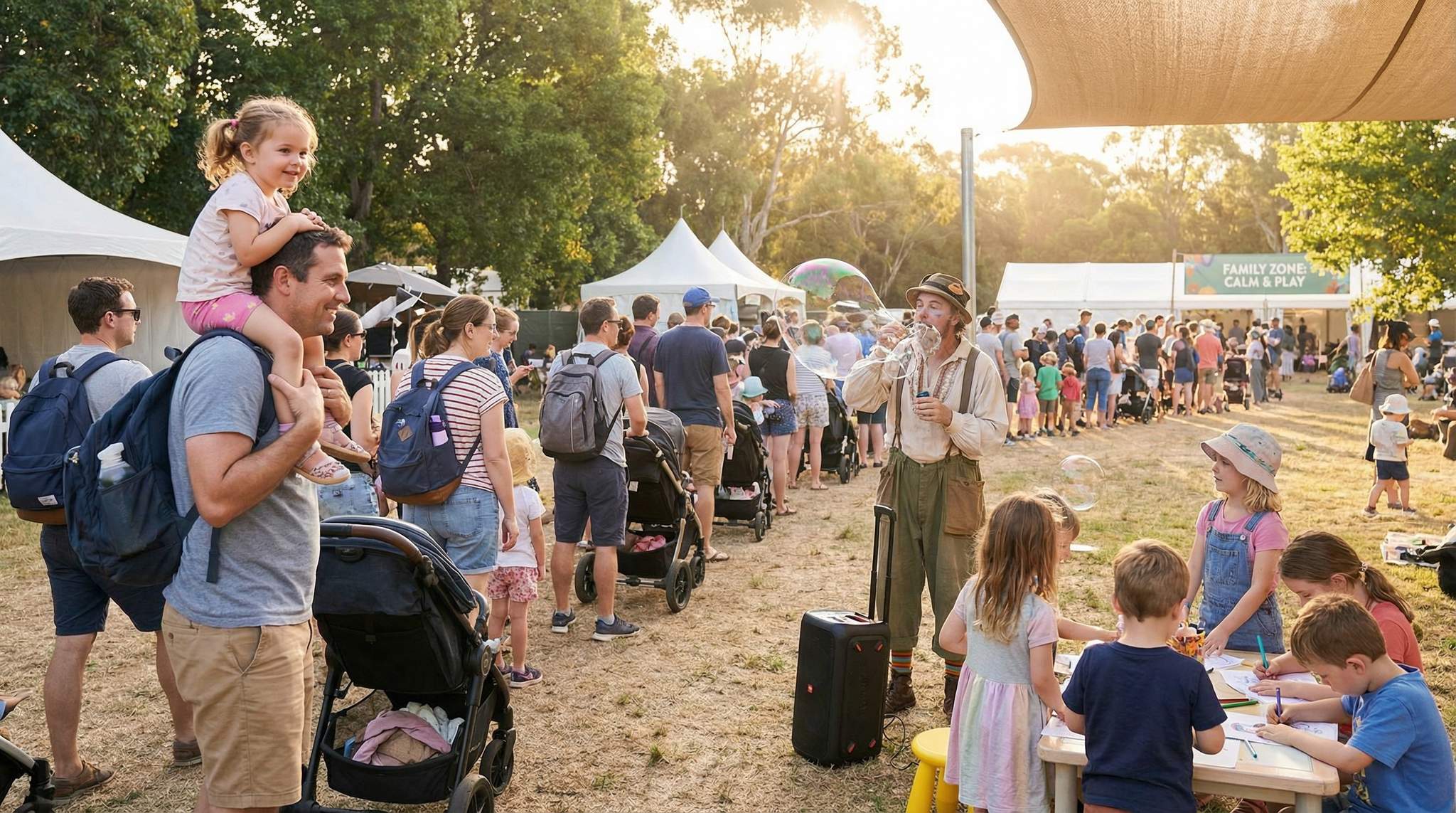
Long queues at family-friendly festivals can test the patience of attendees – especially parents with young children. The goal is to ensure that waiting in line becomes a gentle, engaging experience rather than a frantic ordeal. Seasoned festival producers understand that a crowd’s first moments on-site set the tone for the entire event. A calm, well-planned queue environment makes arrivals smoother, keeps kids content, and even boosts overall safety and satisfaction.
Why Calm Queues Matter at Festivals
First impressions count: When guests arrive at a festival, long wait times in disorganized or uncomfortable lines can sour their mood before they even get through the gate. On the other hand, a thoughtfully managed queue with calming elements helps maintain excitement and goodwill. Keeping families relaxed in line reduces stress and prevents meltdowns – a huge win when children are involved. As event management experts note, occupied time feels shorter than unoccupied time. In practice, this means providing something for people to do or enjoy while waiting will make the wait seem to fly by.
Perceived wait vs. actual wait: It’s not just the actual minutes that matter, but how those minutes feel. For example, an entry queue that lasts 30 minutes but features gentle entertainment and comfort can feel shorter and more tolerable than a 15-minute chaotic wait with nothing to do. A calm queue keeps attendees’ excitement intact rather than draining their energy. Parents will appreciate not having to constantly reassure bored, fussy kids. Moreover, a relaxed line is less likely to see frustrated outbursts or line-cutting incidents, which improves safety and crowd control.
Learning from past mistakes: Festival history is filled with cautionary tales about ignoring queue comfort. At a 2018 London festival, fans endured hours-long queues in sweltering heat with insufficient water – an ordeal that led to public outcry regarding long queues in sweltering heat. Incidents like this show how quickly goodwill can evaporate when basic needs aren’t met. On the flip side, many successful events have earned praise for their smooth, attentive queue management. Providing shade, water, and distractions isn’t just nicety – it’s critical for avoiding negative headlines and unhappy attendees.
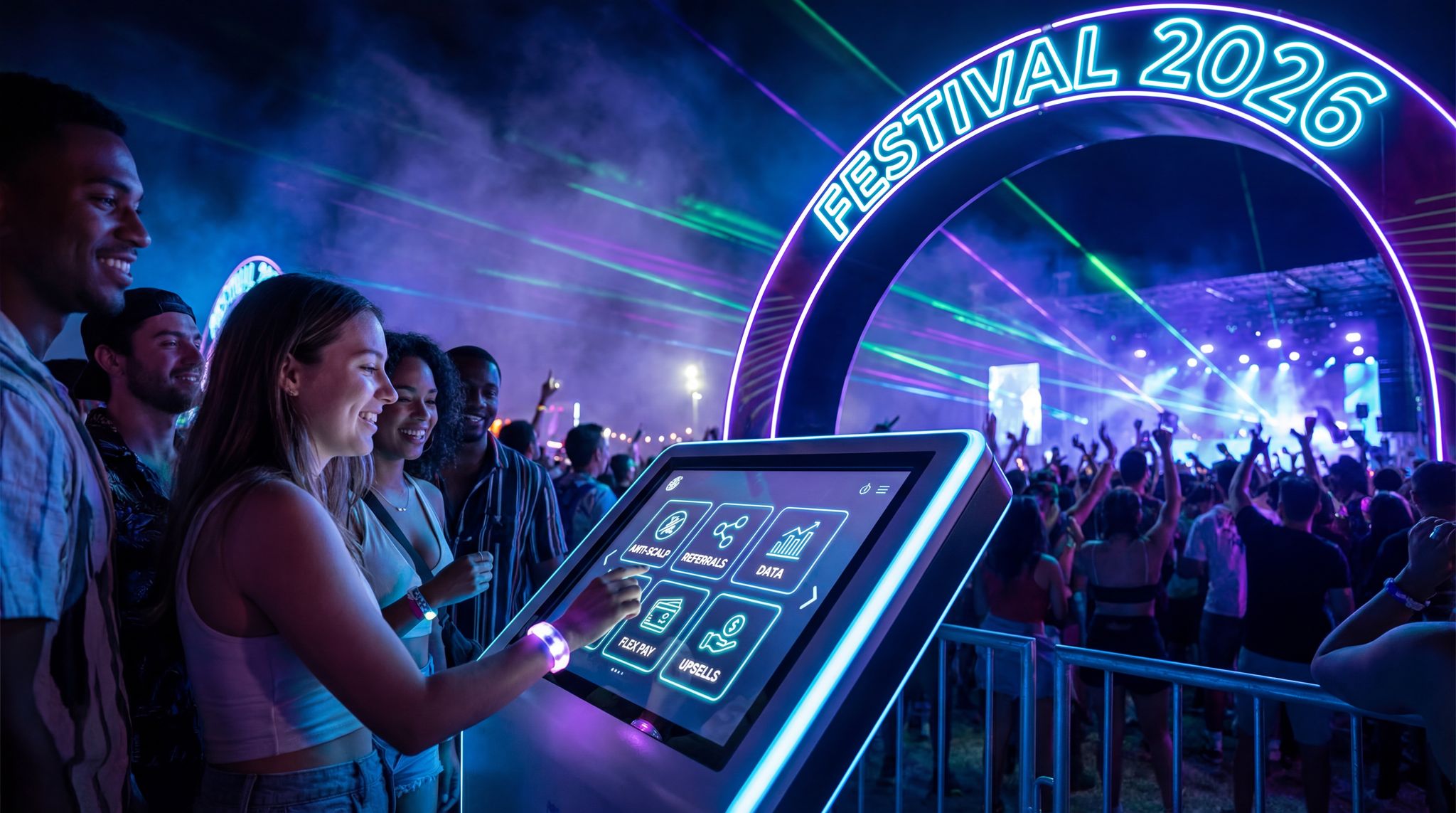
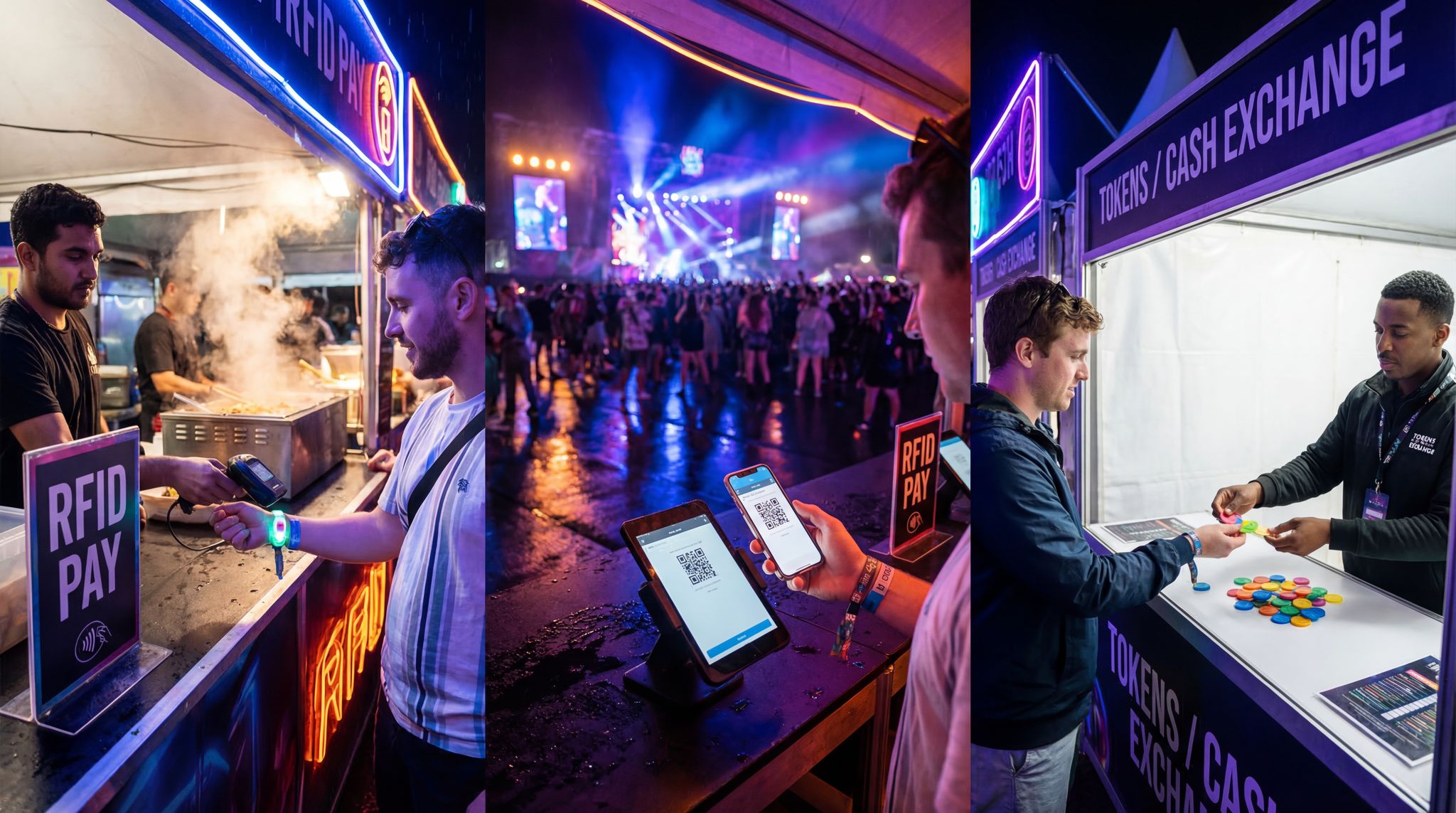
Go Cashless With RFID Technology
Enable contactless payments, faster entry, and real-time spending analytics with RFID wristbands and NFC-enabled ticketing for your events.
Audience demographics matter: Family-friendly festivals in particular must account for attendees who are more sensitive to the waiting experience. Small children have shorter attention spans and can become uncomfortable or overstimulated within minutes of idle waiting. What might be a mild annoyance to an adult (like standing in a loud, crowded line for 20 minutes) can be overwhelming for a toddler. By tailoring queue entertainment and environment to be kid-friendly and calming, festival organisers demonstrate empathy for their audience. This effort goes a long way in building trust with parents and encourages families to return year after year.
Planning Low-Volume Queue Entertainment
Design your queue entertainment to delight without overwhelming. The best choices for family festival lines are those that engage attendees at a low volume and gentle pace. Here are some proven low-key entertainment ideas for queues:
Planning a Festival?
Ticket Fairy's festival ticketing platform handles multi-day passes, RFID wristbands, and complex festival operations.
-
Puppetry and Puppet Shows: A small puppet performance can work wonders for kids waiting in line. Puppeteers can stroll along the queue or set up a tiny stage at a fixed point that the line passes. The visuals and storytelling of puppets captivate children’s imaginations without the need for loud sound systems. For example, at some family arts festivals, roaming puppet characters interact playfully with kids as their parents inch forward in line – resulting in giggles instead of tantrums. The key is to keep voices and music in the puppet act at a low volume. Children will focus on the animated characters, and parents will appreciate the creative distraction that doesn’t add noise to an already busy environment.
-
Bubble Artists: Few things are as universally calming and enchanting as bubbles. A bubble performer who creates large, iridescent bubbles can transform a dull queue into a magical scene. Bubble artists are a fantastic walkabout option for family events, silently sending giant bubbles floating overhead or inviting kids to try to catch them. This type of entertainment is visually mesmerizing but noise-free – ideal for entertaining children without overstimulation. Festivals around the world have hired bubble performers to roam their grounds; placing one along the entry or attraction line keeps young attendees happy and occupied. Just be sure the performer works in a spot that doesn’t block the flow of the queue, and that any bubble solution drips are managed to avoid slippery spots.
-
Gentle Trivia and Games: Engaging attendees’ minds is another way to make waiting time enjoyable. Consider organizing a gentle trivia game or scavenger hunt that families can participate in together while they wait. This could be facilitated by a staff member with a friendly demeanor walking down the line and posing fun, kid-appropriate trivia questions (“How many balloons do you think we have on site today?” or simple riddles). Alternatively, post trivia questions and fun facts on signs or banners along the queue route. For instance, a music festival might display “Did you know?” facts about the performers or the event’s history, giving parents and kids something to read and discuss. You could even incorporate a quiz that people can answer via their phones (on the festival app or via QR code) with winners announced later – but keep it low-key and optional. The point is to occupy waiting families with a calm, thoughtful activity rather than high-energy stimulation. Simple games like “I Spy,” alphabet hunts on signage, or bubble counting contests (if you have a bubble artist nearby) also work well for children without raising the noise level.
-
Soft Acoustic Music: If you choose to include live music near a queue, opt for acoustic or mellow performances. A lone guitarist playing soothing folk tunes, a harpist, or a musician on a gentle instrument like a flute can provide a pleasant backdrop for those waiting. Keep any amplification minimal or none at all. The idea is to create an ambient soundtrack that eases nerves. At a large fair in California, organizers once stationed a calypso steelpan player near the family entrance – the music was melodious and low-volume, putting newcomers in a festive yet relaxed mood. Acoustic performers should position themselves slightly off to the side of the line, so people can enjoy the music as they pass but also have the choice to step away if they need quiet. Never place loudspeakers blaring music at the queue for a family festival; what’s calm and enjoyable to one person might be distressing noise to a baby in a stroller.
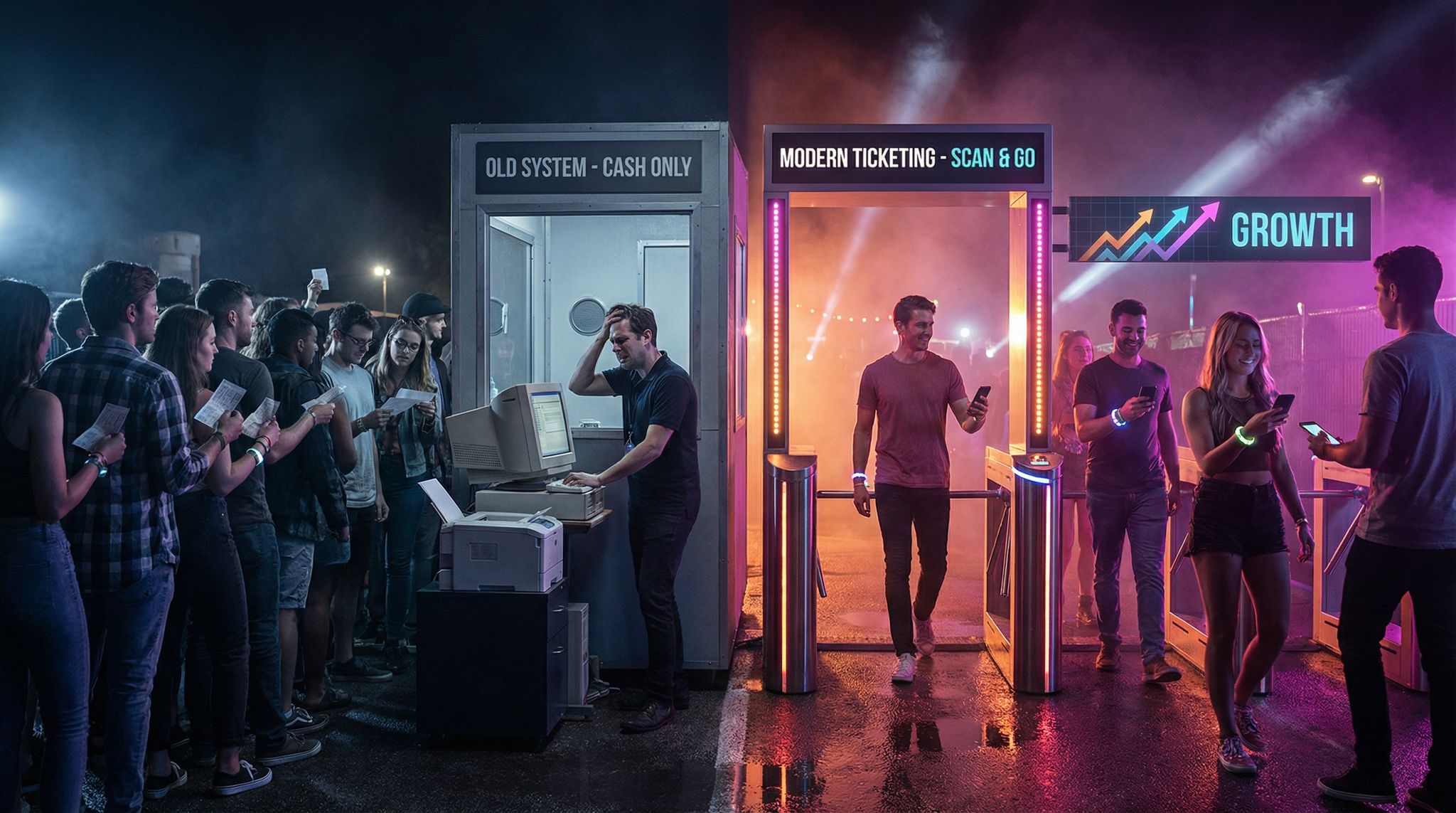
Smooth Entry With Mobile Check-In
Scan tickets and manage entry with our mobile check-in app. Supports photo ID verification, real-time capacity tracking, and multi-gate coordination.
-
Contained VR Queue Entertainment Ideas: For events catering to a mix of ages, including older children and teens, virtual reality offers a uniquely silent yet highly engaging distraction. Setting up a small, supervised VR station along the line allows guests to take turns experiencing a 360-degree preview of the festival grounds or a calming immersive art piece. Because the audio is contained within the headset, it adds zero noise bleed to the surrounding area. When exploring VR queue entertainment ideas, ensure the headsets are tethered, easily sanitized between uses, and managed by a dedicated brand ambassador to keep the line moving smoothly.
When deploying any of these low-volume distractions—whether you are hiring acoustic musicians or testing out virtual reality queue entertainment concepts—always factor in the operational footprint. Ensure that performers or tech stations do not obstruct the primary ingress lanes or emergency egress routes. A well-planned music festival queue system integrates these entertainment nodes seamlessly into the crowd flow, using them to naturally pace the audience rather than creating secondary bottlenecks.
Need Festival Funding?
Get the capital you need to book headliners, secure venues, and scale your festival production.
Avoiding Overstimulation (No High-SPL Acts Near Kids)
When curating queue entertainment, it’s crucial to avoid acts that could overwhelm or upset young attendees. High-SPL (sound pressure level) performances – in other words, very loud acts – should be kept far away from family queues. This isn’t just about hearing protection (though that is a factor); it’s about keeping the environment stress-free for infants, toddlers, and noise-sensitive individuals.
Mind the decibels: Babies and small children have much more sensitive hearing than adults. Experts advise keeping noise levels for infants below around 50 decibels – roughly the volume of a quiet conversation. Many busking acts, like drumming troupes, electric guitars, or loud brass instruments, easily exceed 85+ decibels in close range. Subjecting a baby in line to that level of noise can not only frighten them into tears but also potentially impact their hearing. Festival producers should enforce “quiet zones” or volume limits in any queue areas designated for families. If you’ve hired street performers or energetic buskers, position them elsewhere in the venue (e.g., at a stage or in adult-oriented sections), not right next to the queue where strollers and kids are waiting.
Prevent sensory overload: Overstimulation isn’t just about sound. It can be bright flashing lights, chaotic crowd interactions, or performers getting too “in-your-face.” For example, a stilt walker juggling fire might be an exciting spectacle in a general festival area at night, but bringing that act to a daytime entry line where toddlers are inches away could be a recipe for distressed little ones. Choose queue entertainment that is interactive but gentle. Performers should be friendly and engaging if they interact with children, but never pushy. A quiet clown making silly faces or a mime performing slow, funny antics can get children smiling without raising heart rates. By contrast, an aggressive hype emcee shouting through a megaphone to amp up the crowd would likely do more harm than good in a family queue.
Case study – lesson learned: One outdoor festival in Mexico City learned this the hard way when they placed a lively drum circle near the entrance to welcome guests. The intention was to create a party vibe from the get-go; unfortunately, families with young kids found the pounding drums overwhelming as they waited to enter. Some babies in line started crying, and parents had to cover their children’s ears. Organizers noticed the discomfort and quickly responded by moving the drummers deeper into the festival grounds and replacing the queue area music with a much softer mariachi trio playing acoustic guitars. Immediately, the mood in the line improved – conversation could be heard again, and children calmed down. The event producers took note and made “family zone volume control” a standard practice for future editions. The lesson: match your queue entertainment to your audience’s comfort level. High-energy acts have their place, but not where people (especially kids) are confined in line.
Comfort Essentials: Shade, Water, and Seating
Entertainment alone won’t keep queues calm if people are physically uncomfortable. Nothing escalates frustration faster than standing under a blazing sun or feeling dehydrated with restless kids in tow. Successful festival queue management treats comfort as a priority, ensuring attendees have shelter and hydration while they wait.
-
Provide Shade: Look at any family festival in a hot climate like Australia or Spain, and you’ll notice the smart ones provide ample shade. This can be as simple as pop-up canopies, large umbrellas, or even trees (if your venue is lucky enough to have them) along the queue path. Shade not only protects people from sunburn and heat exhaustion, it also creates a visual sense of relief – a shaded queue feels shorter and more bearable than a line baking in direct sun. For example, the Woodford Folk Festival in Queensland, Australia, is known for setting up shady chill-out spots around its site, understanding how vital respite from the sun is for families. Even if your event isn’t in a tropical climate, consider rain shelters or windbreaks if weather might be harsh. Basically, keep the elements from turning your queue into a torture tunnel.
-
Offer Water (and maybe Snacks): Staying hydrated is non-negotiable, especially for children. Ideally, have water stations or staff handing out free water to those waiting during hot weather. Some festivals station volunteers with jugs of water and cups at long queues, or even pass out bottled water as a goodwill gesture. This can be life-saving on extreme heat days and certainly mood-saving on any day. One example comes from the U.K.’s Glastonbury Festival, famous for its massive entry lines – in past years, organizers dispatched crew members with trays of water bottles and even a sprinkler man to gently mist the crowd and cool them off. Attendees still talk about how that simple act made a miserable wait almost fun. Conversely, failing to provide water can lead to health emergencies and PR disasters. Recall the earlier example of an event where lack of water in line during 30°C heat caused outrage and negative headlines – nobody wants to be that headline. If budget allows, you might also have vendors doing quick sales of cold drinks or ice cream along the line – but be mindful that price-gouging thirsty families would backfire. At minimum, water should be freely available.
-
Consider Seating for Long Waits: Families with young kids or elderly grandparents in tow will deeply appreciate any opportunity to rest their legs. If your entry or ride queue is expected to exceed, say, 45 minutes, think about creative ways to incorporate seating. This might be simple benches or hay bales placed at intervals (perhaps every 50 meters there’s a bench where a parent can perch while the line slowly moves). Even a low wall or railing can serve as a brief rest spot. Some innovative festivals issue “queue numbers” – like a deli counter – allowing people to sit in a nearby waiting lounge until their number range is called to approach the gate. This approach may not always be feasible, but it underscores the point: acknowledging physical strain is part of making queues calm. If seating isn’t possible in the line, at least ensure there’s a shaded rest area adjacent where one parent can take a break with a fussy toddler before rejoining their group in line.
Don’t Forget Off-Site Transport Hubs: The attendee journey often begins long before they reach your main gates. Whether you are designing the main gate flow or making a queue at the bus stop for off-site park-and-ride shuttles, apply these same comfort principles. A comprehensive music festival queue system shouldn’t be limited to the box office; deploy shade structures, portable restrooms, and roaming staff at your off-site transit locations. Managing the flow at these transport bottlenecks is one of the most effective ways to control the arrival rate at your main gates, indirectly solving how to reduce queues at festivals by staggering the influx of crowds.
Effectively managing these remote staging areas is a cornerstone of modern crowd control. When attendees are lining up at the shuttle stop, you have a captive audience and a golden opportunity to begin the check-in process early. Deploying mobile scanning teams to validate tickets and issue wristbands before fans even board their transport is a highly impactful method for reducing gate congestion. This forward-deployment strategy transforms idle waiting time into productive processing time, significantly alleviating pressure on your main entrance infrastructure.
Using Tech and Feedback to Improve Wait Experiences
Managing queue entertainment and comfort is not a set-and-forget task. The best festival organisers actively monitor the queue experience in real time and use data to refine their approach year over year.
Leverage technology: A well-designed festival mobile app can turn waiting in line into a more informed and interactive time. Many events now use apps to provide queue length updates (“Approximately 20 minutes from this point”) or even offer virtual queue systems for certain attractions. If your festival uses a platform like Ticket Fairy for ticketing, explore features such as scheduled entry times or QR-coded check-ins that speed up the entry process – the less time families have to wait, the less entertainment you need to provide! Ticketing technology that enables rapid scanning and verification at the gates (including offline scanning for when networks are jammed) will prevent bottlenecks. Some festivals employ text alerts or app notifications to entertain and inform guests in line, sending gentle quizzes or event trivia directly to their phones. Just ensure any digital engagement is opt-in and doesn’t become another source of overstimulation (for instance, avoid blasting loud notification sounds).
Implementing a Comprehensive Music Festival Queue System: Beyond just entertaining guests, the ultimate goal for any producer is figuring out how to reduce queues at festivals entirely. A modern music festival queue system relies on multi-tiered triage. Separate your ingress into distinct lanes: bag-free express lanes, VIP/family priority access, and standard entry. Pair this with decentralized box offices and RFID wristbands shipped in advance. By processing credentials before attendees even step foot on the grounds, you drastically cut down the transaction time per person at the gate.
Real-time monitoring: During the event, assign some staff or volunteers to be “queue monitors.” Their job is to walk along the queues, check on attendees, and gauge the mood. Are people looking restless or upset? Are kids starting to cry? These monitors can hand out water, inform waiting guests about any delays, and relay information back to the control centre. If a line is growing unexpectedly long, management can decide to deploy additional entertainers or open extra entry lanes on the fly. Keep an eye on social media too – often attendees will post on Twitter or Instagram if they’re unhappy (or happy) about their wait. A quick response like offering a small freebie to those stuck in a delay can turn the sentiment around.
Measure satisfaction: To truly know if your queue improvements are working, collect feedback specifically about the waiting experience. This can be done through a post-festival survey (include a question like “How would you rate your entry queue experience?” or “Did the waiting line entertainment improve your experience?”). Some events have even placed simple feedback kiosks at the exit of a queue – for example, a set of smiley-face buttons that people can press to indicate if they’re leaving the line satisfied or frustrated. This immediate feedback can be incredibly useful. If you notice that despite entertainment and comfort measures, the satisfaction is low, you may need to investigate where the pain points are (Was the wait still too long? Was the entertainment not visible enough? Were people aware water was available?). Over time, tracking these scores can show improvement. Imagine being able to report that last year 60% of attendees rated the queues “acceptable” or better, but this year it’s up to 90% after changes – that’s a tangible success for your team.
Continuous improvement: Use what you learn each time to refine your strategy. Perhaps you discover that the bubble artist you hired was a huge hit, but the trivia signs were largely ignored – next year you might add a second bubble performer and skip the signs in favor of something else, like a quiet craft station at the queue entrance where kids can pick up a colouring sheet and crayons for the wait. Or maybe feedback showed the queue moved too slowly even though people loved the entertainment – that could signal operational fixes needed at the gate (more staff, better ticket scanners, etc.). Treat queue management as an integral part of the festival experience design, with its own budget and creative planning, rather than an afterthought.
Calm Queues Beat Frantic Queues
At the end of the day, a calm queue beats a frantic one every time in a family setting. A peaceful, well-managed queue keeps parents and kids in good spirits and sets them up for a great day at your festival. In contrast, a chaotic or overstimulating wait can lead to exhausted, irritable families before they even see the first attraction or act – and that negativity can cast a shadow over the rest of their visit.
Festival producers around the globe, from small-town community fair organisers to the teams behind mega-festivals, have learned that investing effort into the queue experience pays off. It’s not “wasted” entertainment or unnecessary expense; it’s an essential extension of your event’s hospitality. Think of the queue as the welcome mat to your festival – you want it to feel inviting, not like an ordeal to endure.
By choosing the right entertainment (soothing and engaging rather than loud and agitating), providing for basic comforts, and paying attention to feedback, you transform waiting lines into something more akin to pre-show entertainment. Families get a chance to settle in, kids get a preview of fun to come, and everyone walks through the gates with smiles instead of frowns. That translates into attendees who arrive in a spending mood, ready to enjoy themselves, and far more likely to leave glowing reviews about your festival.
In summary, never underestimate the power of a well-planned queue. Calm, happy queues lead to calm, happy crowds – and those are the foundation of a successful family-friendly festival.
Frequently Asked Questions About Festival Queue Management
How can organizers effectively reduce queues at festivals?
To reduce queues at festivals, organizers should implement a multi-lane entry strategy (such as no-bag express lanes), ship RFID wristbands or tickets in advance to eliminate box office bottlenecks, and use high-speed offline scanning technology. Staggering arrival times through tiered ticketing or scheduled shuttle buses also helps distribute the crowd flow evenly.
What makes a good music festival queue system?
A robust music festival queue system integrates physical crowd control (like switchback barriers and clear signage) with digital solutions (such as real-time capacity tracking and mobile app wait-time updates). It should also account for off-site staging areas, ensuring that the flow of attendees from parking lots or transit hubs is carefully metered before they reach the main gates.
Can off-site staging areas help streamline a music festival queue system?
Yes. Utilizing off-site staging areas, such as park-and-ride lots or shuttle pickup points, allows organizers to pre-process attendees. By scanning tickets and distributing wristbands while guests are waiting at the bus stop, you effectively decentralize the box office. This strategy is a proven method for reducing gate wait times, as it minimizes transaction bottlenecks at the main entrance and creates a more continuous, manageable flow of fans into the venue.