Families attending festivals often face a familiar challenge: finding clean, accessible restrooms that accommodate their needs. A parent juggling a toddler and a baby at a crowded event shouldn’t have to improvise a diaper change on a dirty floor or struggle to help a small child reach a sink. Progressive festival organizers around the world recognize that family-friendly restrooms can make or break the experience for parents and kids alike. By providing well-equipped, clean, and inclusive facilities, festivals can prevent toddler meltdowns and ensure that all attendees – from infants to grandparents – enjoy the event comfortably.
Changing Tables in Every Restroom (For Every Caregiver)
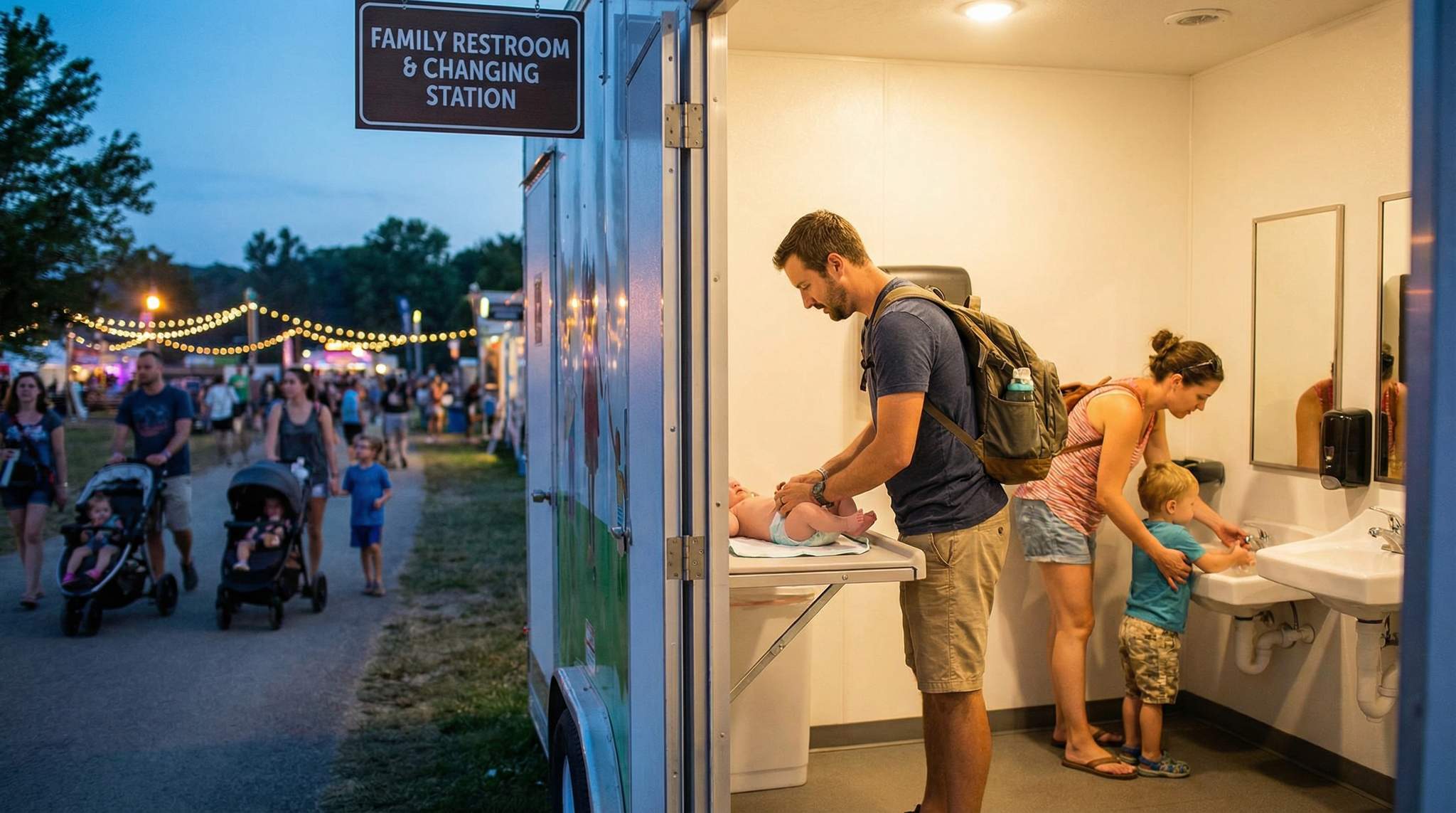
One of the simplest ways to respect families is to install baby changing tables in every restroom, regardless of gender designation. Traditionally, changing stations were only found in women’s bathrooms, leaving fathers and other caregivers in the lurch, a frustration documented by fathers advocating for equal access to changing stations. Modern events are correcting this imbalance. For instance, the U.S. recognized the issue by passing the BABIES Act in 2016, a law designed to make bathrooms accessible in every situation by requiring baby-changing stations in both men’s and women’s restrooms of federal buildings.
At festivals, the implications are clear. Any caregiver – father, mother or otherwise – should be able to safely change a diaper without a trek across the venue. Achieving this may involve outfitting all permanent restroom units with fold-down changing tables or providing dedicated family restrooms that anyone can use. If you’re working with portable toilets, ask your vendor about units that include changing stations or consider renting a specialized family restroom trailer with extra space for parent and child. In the past, some events learned the hard way that lack of changing facilities leads to frustration and negative feedback. On the flip side, festivals that proactively provide changing tables often earn immense goodwill from parents. It sends a message that every guest is valued, even the tiniest ones. As a festival producer, making this a priority is an easy win – it prevents unsanitary improvisations and shows that your event supports caregivers of all genders.
Child-Height Hand Washing Stations and Supplies
Have you ever watched a five-year-old struggle to reach an adult-sized sink? It’s not just adorable – it’s a sign that the facilities aren’t designed with kids in mind. Child-friendly hand washing stations are a must at family-oriented festivals. Ensure that sinks or sanitizer dispensers are low enough for children to access, or provide stepping stools that give little ones a boost. Young attendees need to clean their hands just as much as adults (if not more, after messy play and festival foods!), so make it easy and even fun for them. Some portable restroom models come equipped with sinks at multiple heights or built-in footstools for kids. If such units aren’t available, a simple workaround is to set up extra free-standing hand-wash stations at child height next to standard ones.
Turn Fans Into Your Marketing Team
Ticket Fairy's built-in referral rewards system incentivizes attendees to share your event, delivering 15-25% sales boosts and 30x ROI vs paid ads.
Don’t forget to stock plenty of essentials: gentle soap, paper towels, and hand sanitizer. Children often go through soap and wipes quickly (and sometimes play with them), so plan to refill these supplies more frequently. Consider using visual cues or kid-friendly signage to encourage hand washing – for example, a colorful sign reminding children to “wash those little hands” can be effective. By making hygiene accessible and fun, festival organizers help keep everyone healthier and instill good habits in the youngest festival-goers. And from a parent’s perspective, a kid who can wash up easily is one less thing to worry about during a long day out.
Frequent Cleaning During Peak Family Hours
Cleanliness is paramount for family restrooms. A dirty or foul-smelling toilet can upset children and halt a family’s good time in an instant. Festivals should increase cleaning frequency during peak family hours to ensure facilities stay fresh. Identify the times when families are most active – typically mid-morning to early evening – and schedule extra sanitation rounds during those periods. For example, consider an additional cleaning sweep just after lunch, when many parents might be visiting the restrooms with young kids, and early in the evening as bedtime for little ones draws near. Regular maintenance keeps restrooms sanitary and prevents unpleasant surprises, like an empty toilet paper dispenser or overflowing trash bin, that could trigger a toddler’s meltdown.
Planning a Festival?
Ticket Fairy's festival ticketing platform handles multi-day passes, RFID wristbands, and complex festival operations.
Event sanitation providers often recommend flexible service schedules for family-heavy crowds. Rather than just cleaning overnight, maintain a visible presence of restroom attendants or cleaning crew in the afternoons and early evenings. This ensures that trash is removed, surfaces are wiped, and supplies restocked continuously, which underscores the importance of restroom facilities at multi-generational events. Some family-centric festivals even dedicate specific staff to their “family area” toilets to give them extra care. Small touches – like a quick mop-up of a sticky floor or prompt removal of odorous waste – make a huge difference to sensitive noses. By keeping facilities clean and well-stocked throughout the event, festival organizers show they care about every guest’s comfort. The payoff is happier parents, healthier children, and far fewer emergency early exits due to bathroom disasters.
Bright Lighting for Safety and Comfort at Night
A trip to the restroom should never be a scary adventure for a child. As day turns to night, it’s crucial to light paths and restroom interiors generously so families feel safe and comfortable. Young children (and many adults) can be afraid of dark, unlit porta-potties or shadowy pathways. Good lighting is a simple amenity that dramatically improves their experience. Festival sites that extend into the evening must ensure every toilet area is well-illuminated – both inside each unit and along the route leading to it. Organizers should research how to light a portable toilet for outdoor events to ensure visibility. This might mean stringing LED lights on the way to a bank of portable toilets, using solar-powered lights on or inside units, or renting restroom trailers that come equipped with interior lighting.
Illuminating restrooms isn’t just about reducing fear; it’s also about safety and practicality. Parents need to see clearly to assist a toddler in the bathroom at night, and adequate light helps avoid accidents (like trips, slips, or mishaps with toilet seats). Guests feel safer and more at ease using facilities that are visibly lit after dark. From a planning perspective, double-check that generators or solar lights are in place before dusk and have backup batteries if needed. Also, consider using a subtle night-light inside toilets that stays on all night – this can comfort a child who might otherwise refuse to step into a pitch-black stall. By turning the lights up around the loos, you make your festival environment more secure and welcoming for families when the sun goes down.
Designing Equitable & Kid-Friendly Facilities
Beyond the basics, great family restrooms come from thoughtful design geared towards children and caregivers. If your budget and logistics allow, explore adding a few child-sized toilet units or training seats in some stalls. For instance, smaller potty chairs or lower toilet seats can be a game-changer for toddlers who are toilet-training. Utilizing specific kids portable toilets for events adds comfort and safety to young users. Some festivals have experimented with “kids-only” toilets in family areas – brightly decorated and scaled for little ones – and found that they stay cleaner and reduce wait times for families. Resources on managing festival toilets with kids note that some festivals now have special children’s loos. Even without specialized units, simple adaptations go a long way. Provide hooks or shelves for diaper bags and backpacks, since parents often come laden with supplies. Ensure door latches aren’t too high or stiff for older children to manage on their own. And include at least one larger accessible stall or family restroom in each area, so a parent with multiple young kids (or a stroller in tow) has enough room to get everyone inside comfortably.
Equitable design also means considering all caregivers and children, including those with special needs. An increasing number of events are adding accessible family restrooms that can accommodate wheelchairs or provide adult-sized changing benches for older children with disabilities. The push for solutions for temporary changing stations highlights the need for adult-sized benches. Such facilities require more space and planning, but they embody the spirit of inclusion. Remember that families come in all shapes – a grandfather might be taking his granddaughter to the festival, or an older sibling might be helping a younger one. By anticipating diverse needs, you ensure that no one is left out. The goal is a restroom setup where any parent or child can walk in and think, “This was made for me.”
Clean, Equitable Restrooms Stop Meltdowns
There’s no doubt about it: when children are comfortable and caregivers have what they need, everyone’s festival experience improves. A clean, well-lit, well-equipped restroom might not be the flashiest part of event planning, but it can make the difference between a family staying all day or having to leave early. Parents notice these details. Something as small as providing a changing table in the men’s room or a sink at kid-height tells families that they’re seen and welcomed. It prevents the kind of stress that leads to tears and tantrums (from kids or adults!). In short, investing effort into family-friendly restrooms is investing in your audience’s happiness.
Need Festival Funding?
Get the capital you need to book headliners, secure venues, and scale your festival production.
By respecting families’ needs in your festival infrastructure, you build loyalty and positive word-of-mouth. Many parents will gladly return to an event that made their life easier, and they’ll tell others about it. On the other hand, if basic facilities fall short, you can expect complaints or even ill-timed departures when a meltdown ensues. The formula is simple: clean, equitable restrooms = fewer meltdowns. It’s all about proactive care. Just like a good setlist keeps the crowd dancing, good restrooms keep the whole family smiling. Make this a core part of your planning, and your festival will stand out as a truly family-friendly experience.
Frequently Asked Questions
Why are baby changing tables necessary in men’s restrooms at festivals?
Installing baby changing tables in every restroom ensures all caregivers, including fathers, can safely change diapers without trekking across venues. This inclusive practice aligns with modern standards like the BABIES Act and prevents unsanitary improvisations on dirty floors. Providing equal access supports caregivers of all genders and reduces frustration.
How can festival organizers make hand washing stations accessible for children?
Organizers can make hygiene accessible by providing child-friendly hand washing stations with lower sinks or stepping stools that give little ones a boost. Stocking plenty of gentle soap, paper towels, and sanitizer is essential. Visual cues like colorful signs reminding children to wash their hands also encourage good habits.
When is the best time to clean festival restrooms for families?
Restrooms require increased cleaning frequency during peak family hours, typically from mid-morning to early evening. Scheduling extra sanitation rounds after lunch and before bedtime ensures facilities remain fresh. Maintaining a visible cleaning presence helps remove trash, wipe surfaces, and restock supplies, preventing unpleasant surprises that could trigger toddler meltdowns.
Why is restroom lighting important at outdoor festivals?
Generous lighting inside and around restrooms ensures families feel safe and comfortable as day turns to night. Illuminating pathways and interiors with LED or solar lights helps parents assist children and prevents accidents like trips or slips. Adequate visibility reduces fear for young children who might be afraid of dark portable toilets.
What features make portable restrooms family-friendly?
Family-friendly portable restrooms feature spacious designs to accommodate strollers and multiple children, often including changing tables and hooks for diaper bags. Specialized units may offer child-sized toilets, lower seats, or training seats to assist with potty training. Accessible stalls and adult-sized changing benches also support diverse needs and inclusive caregiving.
How do clean restrooms impact the festival experience for families?
Clean, equitable restrooms significantly reduce stress and prevent meltdowns, potentially determining whether a family stays all day or leaves early. Providing amenities like changing tables and kid-height sinks signals that families are valued, building loyalty and positive word-of-mouth. Proactive sanitation and thoughtful design create a welcoming environment for all ages.