Why Security Planning is Crucial for Festivals
Security can make or break a festival. A well-executed security plan keeps attendees safe, prevents incidents, and ensures everyone goes home with positive memories. On the other hand, poor security planning – from understaffing to untrained personnel – can lead to chaos or even tragedy. Visible, well-organized security is not just about stopping bad actors; it’s a cornerstone of crowd safety and guest experience. Festival organizers must approach security with the same care and detail as booking talent or designing stages, because ultimately a safe festival is a successful festival.
A comprehensive event security plan serves as the master blueprint for your entire operation. Whether you are organizing an intimate outdoor show or sourcing temporary security for festivals and concerts across a multi-day weekend, documenting your protocols ensures every stakeholder—from local municipalities to private contractors—is aligned. Effective event security planning goes beyond just hiring guards; it encompasses risk mitigation, emergency communication frameworks, and crowd management strategies tailored to your specific venue.
Assessing Your Festival’s Security Needs
Every festival is unique, and so are its security requirements. Start by evaluating the crowd size, venue layout, and risk factors of your event:
– Expected Attendance: A larger crowd generally needs more security personnel, but it’s not a simple “one size fits all” formula. A peaceful 5,000-person food festival might need fewer guards than a rowdy 5,000-person rock concert with mosh pits. Consider the energy levels and behaviors typical for your event’s genre.
– Venue Layout: Map out your site’s geography. A compact venue with one main stage and a fenced perimeter is easier to secure than a sprawling multi-stage festival ground. If your site has multiple entry points, parking lots, camping areas, or nearby public spaces, each adds to your security staffing needs. Complex layouts with hidden corners or dense areas may require extra patrols or fixed posts.
– Event Type & Audience Demographics: Tailor security to the crowd profile. An all-ages family festival will focus on lost children and family-friendly assistance, whereas a music festival with a young adult crowd might involve more crowd surfing, alcohol-related issues, or drug incidents to monitor. A high-profile DJ night might raise different concerns (like intense crowd surges) compared to a chill indie folk afternoon. Look at your ticket buyer demographics and past attendee behavior to identify potential hotspots.
– Risk Assessment: Conduct a formal risk assessment that considers all scenarios – from minor scuffles to major emergencies. Are there any controversial artists or content that might draw protestors? Is the event happening during a heatwave (risk of dehydration) or in a city center (higher security alert for terrorism)? Work with local authorities if possible to gauge current threat levels. For example, festivals in major cities today often plan for elevated security due to general global concerns, even if there’s no specific threat.
By examining these factors, you’ll get a clearer picture of how much security is appropriate. It’s wise to plan for the worst reasonable case – it’s easier to scale down if things are calm than to scramble for extra help in an emergency. Many veteran producers advise erring on the side of having a few too many security staff rather than too few. The cost of an extra guard or two is minimal compared to the potential cost of an unmanaged incident.
Smooth Entry With Mobile Check-In
Scan tickets and manage entry with our mobile check-in app. Supports photo ID verification, real-time capacity tracking, and multi-gate coordination.
From Small Gatherings to Massive Festivals
Security planning isn’t just for mega-festivals with tens of thousands of attendees. Even a local event for 500 people needs a plan. Smaller events might operate with a lean crew – perhaps a handful of trained guards (or even volunteers serving as stewards) handling entry gates and roving the grounds. In these cases, staff multitasking is common: one person might monitor both the stage area and the exit, for example. Just because an event is small doesn’t mean security can be taken lightly; in fact, with fewer eyes on the crowd, each security team member has to stay especially vigilant.
For large-scale festivals, the operation becomes multi-layered. Major music festivals of 50,000+ attendees often involve hundreds of security personnel divided into teams, with multiple agencies coordinating efforts. For example, the famous Glastonbury Festival (with well over 200,000 attendees) employs a multi-tier security operation that includes professional security firms, on-site police and emergency services, and teams of volunteer stewards – all coordinated through a unified command center. It’s common to see a tiered structure: for instance, zone teams assigned to different areas (front-of-house, backstage, campgrounds, parking, etc.) each led by a supervisor who reports to a central command. Large festivals also integrate on-site police or emergency services and may have a joint operations center where security managers, police, medical, and fire coordinators sit together. The key is to maintain communication and coordination as the footprint grows – your plan should scale up in a structured way so nothing falls through the cracks.
Planning a Festival?
Ticket Fairy's festival ticketing platform handles multi-day passes, RFID wristbands, and complex festival operations.
When considering what goes into planning security for Las Vegas mega-events or similar massive global gatherings, the scale of coordination is staggering. These massive productions require months of advance tabletop exercises, integration with federal and local intelligence agencies, and specialized infrastructure like temporary cell towers for emergency communications. Preparing for public event security at this magnitude means treating the festival grounds like a temporary city, complete with its own dedicated multi-agency command center.
When developing security for music festivals, organizers must also account for the unique challenges of live entertainment environments. High-decibel audio, dynamic lighting, and dense crowds require specialized personnel. Guards must be adept at non-verbal communication and trained to monitor audience behavior in low-light conditions, ensuring that the festival security apparatus remains effective even during peak headliner performances.
Understanding Baseline Security Requirements for Events
Before finalizing your headcount, you must identify the mandatory security requirements for events dictated by your local jurisdiction and venue contracts. These baseline event security requirements often depend on factors like venue capacity, whether alcohol is served, and the nature of the entertainment. For instance, many municipal licensing boards mandate a strict ratio of licensed guards to attendees, while fire marshals dictate specific crowd management personnel at emergency exits. Failing to meet these foundational compliance standards can result in denied permits or immediate event shutdown. Always consult with local law enforcement, your insurance provider, and city council representatives early in the planning phase to ensure your operational plan exceeds the minimum legal thresholds.
Determining Security Headcount and Structure
One of the first questions is “How many security staff do we need?” The answer depends on the factors above, but here are practical steps to get it right:
– Consult Guidelines and Authorities: Some locales have regulations or guidelines that specify a minimum security-to-attendee ratio. For example, a city might recommend 1 security guard per 250 attendees for general events, or a venue license might stipulate a certain number of guards if alcohol is being served. Use these as baseline references, not absolute rules – you may need more based on your event’s characteristics. Always meet the minimum legal requirements, then consider adding to that as needed.
– Consider Different Roles: Your security team won’t be one-size-fits-all. Plan for a mix of roles including entry screeners, roaming guards, response teams, stage/PIT crews, and supervisors or team leaders. Each role might have a different ratio. For instance, you might allocate a pair of security guards for each entry gate, a few roaming personnel per crowd area (depending on density), and dedicated stage pit crews for each active stage. If you expect mosh pits or crowd surfing at a concert, station a robust team (with ample water and training) at the stage front to help distressed fans and deter dangerous behavior.
– Supervisor-to-Staff Ratio: A good rule is to ensure there are experienced supervisors overseeing groups of security staff. A common practice is having one supervisor for every 8-10 security guards on duty, though at very large events each zone might have its own lead. Supervisors help coordinate their team, serve as the communication link to event control, and troubleshoot issues on the fly. Neglecting to have enough leadership can be as risky as not having enough staff – a team with no leader can become ineffective quickly in a crisis.
– Specialized Positions: Don’t forget security needs beyond just guarding attendees. Assign staff to monitor back-of-house areas (like artist dressing rooms, production zones, or cash handling areas), to guard equipment storage and parked vehicles, and to watch perimeter fencing. Festivals often have overnight security as well, especially multi-day camping festivals – a separate night shift to protect the site when attendees are sleeping or when the venue is closed.
– Flexible Staffing: Plan some buffer in your numbers. Keep a few security staff “on reserve” or able to float between assignments. If one area becomes overcrowded or an incident breaks out, you can dispatch this flexible crew as reinforcement. Similarly, plan for staff breaks – if you have exactly the number of guards required with none extra, someone going on a meal break or to handle an issue will leave a gap. Scheduling overlapping shifts or having spare personnel helps maintain continuous coverage.
Go Cashless With RFID Technology
Enable contactless payments, faster entry, and real-time spending analytics with RFID wristbands and NFC-enabled ticketing for your events.
Remember: Quality matters as much as quantity. 10 well-trained, alert security guards are more effective than 20 untrained or disengaged ones. So, in determining headcount, factor in the experience level of the team. If you have first-timers or volunteers in roles, bolster their numbers or pair them with veterans so that no area is left in the hands of inexperienced personnel alone.
Private Security Firms vs. Off-Duty Police
A big decision in festival security staffing is whether to hire a private security firm, off-duty law enforcement, or a combination of both. Each option has its advantages, and the right mix depends on your festival’s needs and resources.
Need Festival Funding?
Get the capital you need to book headliners, secure venues, and scale your festival production.
Private Security Firms: These are professional security companies that specialize in events. Hiring a reputable firm can provide:
– Large, Trained Workforce: Security companies can supply dozens or hundreds of guards, all trained and certified (often with qualifications like crowd management and first aid). They can often scale to your event size and have experience in similar festivals.
– Event-Specific Expertise: Private event security teams usually understand festival dynamics. They know how to do bag checks, ID checks for alcohol wristbands, stage pit operations, and how to politely but firmly deal with festival-goers. They’re also accustomed to the long hours and unique challenges like loud music environments or outdoor weather.
– Flexibility in Roles: You can task private security with everything from gate control to overnight patrols. They typically coordinate with your team and other agencies smoothly if you’ve done proper briefings.
– Cost Considerations: Private firms charge for their services (hourly per guard or a flat contract). While this is a budget line item, remember that using a licensed firm also shifts some liability to them, and they carry insurance for their staff.
Off-Duty Police Officers: Many festivals hire off-duty police officers (or arrange special duty police presence) to complement private security. Off-duty (or secondary employment) police bring:
– Authority and Arrest Powers: Sworn officers have powers that private guards do not. They can make arrests, issue citations, and generally carry more legal authority. For situations involving serious crime or a dangerous suspect, an on-site police officer is invaluable.
– Advanced Training: Police are trained for a variety of high-risk scenarios, from active threats to crowd control tactics. Having a few officers around means you have expertise on hand if a situation escalates beyond what a normal guard can handle.
– Deterrence of Serious Crime: The visible presence of police (in uniform) can deter drug dealers, would-be attackers, or rowdy behavior on a different level. Some attendees will behave better knowing law enforcement is present, not just private security.
– Local Coordination: Police working your event often serve as a direct line to local emergency resources. If an incident requires backup or city resources, an officer can radio directly for support. It also fosters goodwill with local law enforcement when they are integrated into your plan.
Things to Consider:
– Cost & Availability: Off-duty police generally cost more per hour than private security guards. There may also be a limited number of officers available for events on a given day. Budget accordingly if you want a significant police presence, and book well in advance. Some jurisdictions require a minimum police presence for large events, so check local laws.
– Jurisdiction & Rules: When police work off-duty at events, they still operate under their department’s protocols. They may insist on certain standards (e.g., no armed private guards if they are present, or specific reporting procedures for incidents). Make sure any hired officers are properly sworn in the event’s jurisdiction – e.g., having out-of-town police won’t help if they have no authority at your site.
– Roles and Integration: Clearly define what duties the police will handle versus private security. Often, festivals use private guards for the bulk of entry screening and internal patrols, while off-duty officers are stationed at key choke points or on call for any law-and-order issues. For instance, you might place police near main entrances (to handle any serious gatecrashers or altercations) and roaming among the crowd in plain clothes or uniform. Meanwhile, your contracted security can handle routine bag checks and monitoring. Ensure the police and private security supervisors know how to reach each other and coordinate if something happens – they should function as one extended team, not silos.
Blended Approach: In practice, many festivals use a hybrid model: a private security firm provides the majority of staffing, and a small contingent of off-duty police are hired for specific roles or high-risk periods (like evening headliner sets or cash transport from the on-site ticket office). This way, you balance coverage and cost with the benefit of having law enforcement on site. As an organizer, treat the police officers as another part of your staff – include them in pre-event briefings and debriefings so they’re aware of festival-specific plans (like emergency evacuation routes, chain of command, etc.).
Training and Briefing the Security Team
Hiring competent people is only step one; training them for your event’s specific needs is essential. Even experienced security personnel need to be oriented to the particulars of your festival. Here’s how to ensure your team is prepared:
– Festival-Specific Orientation: Before the gates open, conduct a thorough briefing or training session for all security staff (including volunteers, private guards, and off-duty officers). Cover the festival layout (with maps), schedule (when are the high-density times or potentially rowdy performances), and key protocols (like what to do if a lost child is found, or how to initiate an emergency stop of a show).
– Crowd Management Techniques: Make sure staff are trained in basic crowd management and crowd psychology. They should recognize signs of crowd surges or distress – for example, if a mosh pit is becoming dangerous or if a section of the audience is getting too tightly packed. Teach them to communicate calmly but authoritatively, and to never incite panic. Simple techniques, like forming a human chain to create space or using hand signals, can go a long way in controlling a crowd if taught and practiced.
– Conflict De-escalation: Festivals are meant to be fun, and security should ideally act as guardians of good times – firm but friendly. Train guards on de-escalation tactics: how to talk down an agitated attendee, break up a confrontation safely, or handle an intoxicated person without unnecessary force. Remind them that they are often dealing with guests who might be under the influence or emotionally charged, and a calm approach can prevent incidents from escalating. For example, instruct security to use a polite but firm tone at the gates and to call for a supervisor if a situation starts to get out of hand, rather than letting it turn into a shouting match.
– Emergency Response and Scenarios: Go over the plan for major emergencies – be it severe weather, fire, an active threat, or a medical crisis. Who calls 911 or contacts on-site medics? Where should attendees be directed if an area must be cleared? Conducting a short tabletop exercise with supervisors can help, and at minimum give every guard a pocket reference card with emergency procedures and important phone/radio channels. In several real cases, security staff who knew their emergency roles acted swiftly and saved lives (for instance, by guiding crowds out safely during a sudden evacuation).
– Threat Reporting Best Practices for Event Staff: Establish a clear, frictionless protocol for how personnel should communicate suspicious activities or potential hazards. Staff must know exactly who to notify—whether it’s a direct supervisor, the central command post, or local law enforcement—and what details to provide (e.g., location, description, and nature of the threat). Implementing a proactive reporting culture among your crew ensures that minor anomalies are investigated before they escalate into critical emergencies. Use dedicated radio channels or secure messaging apps to keep these reports organized and out of the general chatter.
– Festival Policies and Common Issues: Ensure the team knows the festival’s rules and policies inside out. This includes the list of prohibited items, the age restrictions, alcohol service rules, and any noise curfews or neighborhood considerations. When guards are well-informed, they project confidence and attendees are more likely to respect their instructions. Additionally, brief the team on issues like drug use (e.g., recognizing signs of overdose and immediately getting medical help rather than simply ejecting the person), crowd surfing and mosh pit protocols (e.g., how to safely catch a crowd surfer and escort them out of the pit area), and sensitive issues like harassment or assault reports (they should know how to respond and whom to notify discreetly).
– Customer Service Mindset: Remind security staff that they are also representing the festival. A friendly, approachable demeanor – smiling, offering help to attendees – can coexist with authority. Often, security will be asked questions by festival-goers (“Where’s the water station?” or “Can I exit and re-enter?”). Training your team to be helpful in these moments improves the overall atmosphere and builds trust. If attendees trust security, they’re more likely to report issues early, whether it’s a spilled drink that could cause a slip or a suspicious individual.
Briefing Materials: In addition to in-person briefings, provide written or digital materials. Hand out site maps marked with security posts and important locations (first aid, exits, info booths), a schedule of each day’s main highlights, key contact numbers, and radio call signs for various teams. Some festivals prepare a “security briefing pack” that each guard receives – it’s an excellent practice to emulate.
Finally, encourage a culture where security team members look out for each other. Festivals can be long, exhausting shifts; a guard who’s been standing in the sun for 6 hours might miss something. So emphasize teamwork – if you see your colleague needs a water break or is dealing with a tough situation, step in and assist. A well-trained team operates like a cohesive unit, covering each other’s blind spots.
For organizers looking to continuously improve their operations, regularly reviewing industry resources and staff training tips for safer events is highly recommended. Building a comprehensive training curriculum means staying updated on the latest crowd psychology research, de-escalation frameworks, and emergency communication protocols. By integrating these evolving best practices into your pre-show briefings, you ensure your festival security personnel remain adaptable and prepared for any scenario.
Creating a Security Deployment Map
With your staffing estimates and training in place, the next step is deployment – deciding who goes where. This is often done using a security deployment map, a detailed plan of the festival site showing security positions and patrol routes. Here’s how to craft one:
– Map Key Zones and Posts: Break down your festival site into zones: entrances/exits, stages, vendor areas, VIP sections, campgrounds, parking, etc. For each zone, determine fixed posts (static positions) and roaming assignments. For example, Zone A could be the Main Stage area – on your map mark the stage pit positions (e.g., 10 security along the front barricade), the sound booth guard, the entry points into the VIP pit, and roaming guards who circulate through the crowd. Zone B might be the food court and vendor area – perhaps two roving guards on constant foot patrol there and one at the first aid tent nearby. Do this for the entire site until every critical spot has coverage.
– Entrances and Exit Gates: Pay special attention to your gates. These are high-pressure points especially when the festival opens and as it closes. On the map, indicate how many guards at each public entrance (for ticket scanning, bag checks, and line management). Also include guards at any artist/crew entrances or delivery gates. Clearly separate the duties: one team might handle checking tickets and wristbands while another handles bag searches, with a supervisor overseeing the whole gate. Crowds can bottleneck here, so ensure your gate security layout has crowd control barriers/fencing drawn in and enough staff to process people efficiently. Also plan for late arrivals or re-entry points if allowed, with at least a smaller team during off-peak times.
– Stage Pit and Perimeter: At any performance stage, especially with large crowds, stage pit security is crucial. On your plan, draw the security line between stage and audience. These guards should be spaced out along the barricade, with extra personnel at any center gate (where you might pull people out) or near the corners where crowd surfers often get passed to the sides. Mark an emergency exit route out of the pit area for evacuating ill or injured fans – and ensure guards in this area know how to quickly signal medics or stage management if something is wrong in the crowd. Around the perimeter of your festival (the fencing or boundary), plan patrol routes for security to walk and monitor for fence jumpers or anyone trying to sneak in or out where they shouldn’t. A common strategy is having perimeter patrols in pairs, circling the site at intervals and also being the eyes on the outside (noticing if a crowd is forming outside a gate or any external issue).
– Patrol Schedules and Routes: For roving guards, define their patrol routes and frequency. Radio communication protocols should be established so that patrolling staff check-in regularly and report any concerns (like noticing a broken fence barrier or a developing altercation). Some events assign specific sectors for patrol with overlapping coverage – for instance, two guards walking opposite loops around the grounds to encounter each other periodically, which ensures every area is seen by security eyes often.
– Central Command and Communications: On your map, designate the security headquarters or command post. This could be a tent or trailer where the head of security, event manager, and emergency services leads are located. All security teams should know where this is and how to reach it quickly. If you have CCTV cameras, this is usually where they’re monitored. The deployment plan should show any camera locations as well, and possibly the arc they cover – so you know which areas are under direct surveillance and which rely solely on patrolling staff.
– Emergency Access Routes: Work with your security and operations team to mark emergency access routes (for ambulances, fire trucks) and ensure they remain unobstructed. Security deployed near these routes must keep them clear of crowds or parked equipment. Include on the map who is responsible for each route or gate in an emergency.
– Adaptability: A deployment map is a living document. Be ready to adjust on the fly. Perhaps on Day 1 you realize one corner of the site has a larger crowd flow than expected – you might add an extra guard there on Day 2. Encourage your team to give feedback after each day or show so you can tweak the deployment. Some festivals even run a brief all-hands meeting each morning of a multi-day event to reassign staff based on the previous day’s learnings (e.g., “Tonight we expect bigger crowds at Stage 2, so we’re moving two extra guards there.”).
Creating this map not only helps in planning but is also a great visualization during training. You can show the security team “Here’s exactly where each of you will be and what your patrol area is.” Clarity in deployment prevents both over-concentration of guards in one area and gaps in another. It also reassures other stakeholders (like local authorities or sponsors) that you have a meticulous plan for safety coverage.
Implementing a Safer Event Check-In Process
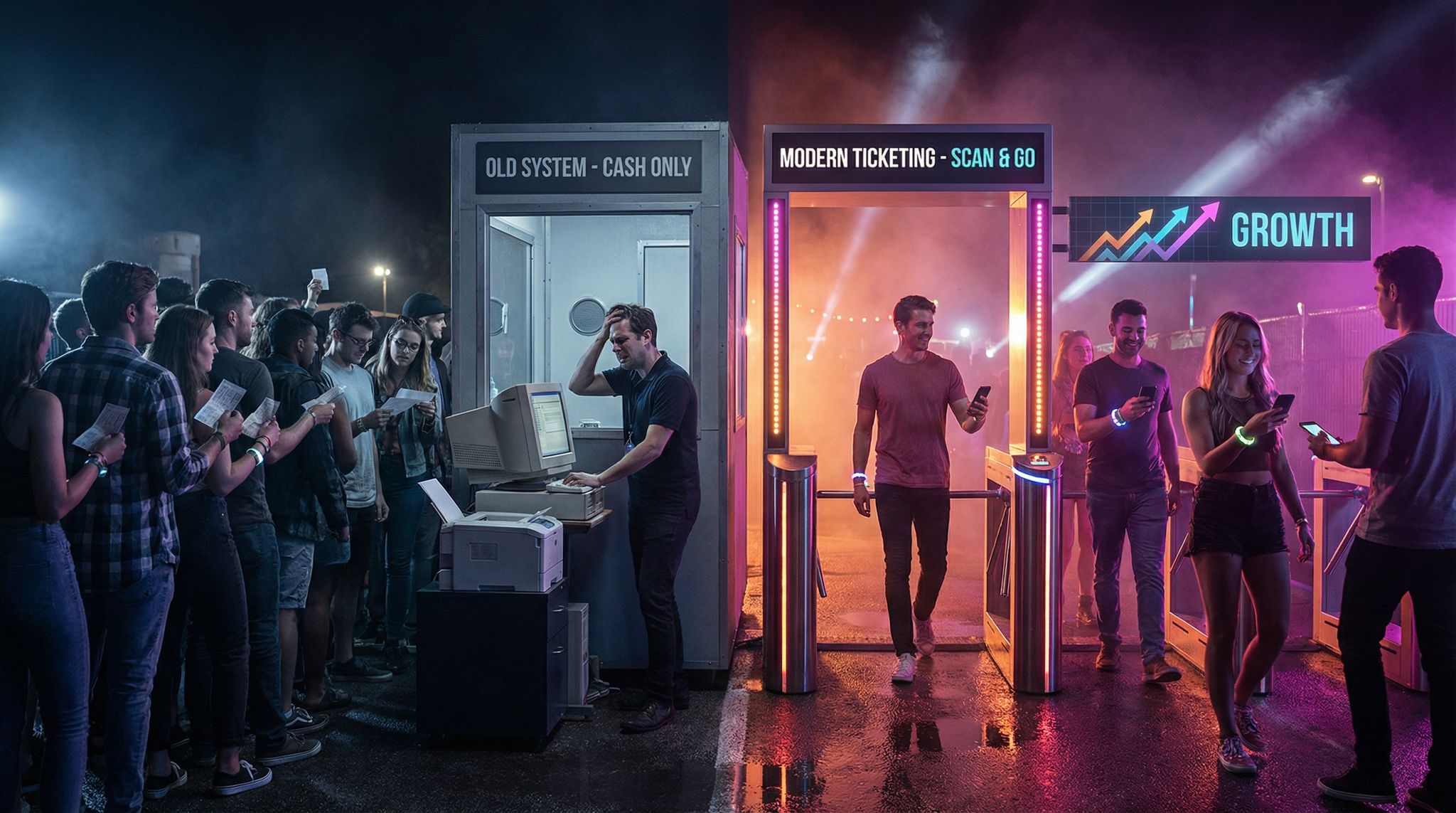
The entrance gate is your first line of defense and often the most vulnerable point for crowd bottlenecks. Designing a safer event check in requires balancing thorough screening with efficient crowd flow. Organizers should deploy tiered entry systems where ID verification, ticket scanning, and bag searches happen at distinct, staggered checkpoints rather than a single chokepoint. Utilizing advanced ticketing technology—such as RFID wristbands or rapid QR scanners—drastically reduces wait times, minimizing the risk of crowd crushes outside the perimeter. Furthermore, clearly marked lanes, ample signage, and dedicated amnesty bins for prohibited items help streamline the arrival phase, ensuring that the ingress process is both secure and welcoming for attendees.
Visibility, Deterrence, and Rapid Response
Think of your security team as both guardians and guides. A strong security operation is one that attendees can easily spot when needed, but that never overwhelms the festival’s atmosphere. Visible, well-organized security serves two key purposes: deterrence and rapid response.
-
Deterrence: Mischief-makers and potential criminals are far less likely to cause trouble when they see security at every turn. Uniformed guards at entrances, walking through the crowd, and standing by the stage send a clear message: this event is being watched over. For example, if someone considers sneaking in or picking a pocket, spotting a security officer nearby can make them think twice. Even the simple act of checking IDs and bags at the gate acts as a deterrent by establishing that rules are being enforced from the outset. A notable success story – many seasoned producers recall events where a visible security presence stopped issues before they even started (e.g., a would-be gatecrasher walking away after seeing multiple guards on patrol by the fence). In short, well-placed security staff are like the eyes that are always watching, encouraging everyone to stay on their best behavior.
-
Rapid Response: Despite all preventive measures, incidents can still happen – a medical emergency, a fight, a lost child, or something more serious. When an issue arises, a quick and efficient response is critical. If security personnel are well-distributed and equipped with communication tools (like radios), they can respond within seconds. For instance, if a fight breaks out in the beer garden, your nearest roaming guards should be able to reach it within moments and de-escalate, while radioing for backup or medical help if needed. Or if a performer stops a show because they see someone fainting in the crowd, your stage pit team can immediately assist and extract that person to safety. Visual organization – like different colored shirts for security, medics, and staff – also helps here. Attendees can quickly point to “the person in the security T-shirt” when reporting something, and various teams can identify each other at a glance when coordinating responses.
-
Professional Demeanor: Visible security only works as a deterrent if the team appears professional and confident. This means uniforms or at least consistent attire (clearly labeled “Security”), and guards who are attentive (not buried in their phones or huddled in conversation ignoring the crowd). As an organizer, do spot-checks: roam your festival and see how your security is positioned. Are they spread out appropriately? Are they scanning their area? A tip from veteran festival producers is to encourage a stance of relaxed alertness – looking approachable but ready. The mere posture and attentiveness of your team contributes to safety.
-
Engagement with Attendees: Don’t hide your security in corners. Encourage them to engage politely with attendees throughout the event. Simple gestures like greeting people at the gate, giving a nod or a quick “How’s your day?” to someone, or dancing a little to the music (if appropriate) can break down the adversarial image. This way, if festival-goers see something amiss, they’re more likely to inform security because they feel they can approach them. Quick reporting by attendees can prevent incidents or allow lightning-fast response – but that requires that your security is both visible and seen as helpful.
Finally, learn from both success and failure. Debrief after the festival: What security measures worked well? Were response times appropriate? Did any areas lack coverage or have too many people? If something went wrong – say there was a breach of the fence or an incident of theft – examine how security responded and how the plan might be improved next time. The best festival security operations continually evolve. Over the years, there have been festivals that unfortunately became case studies in security lapses (for example, the riots at Woodstock ’99 or the crowd crush tragedy at Astroworld 2021, both fueled in part by inadequate security and crowd control), but those lessons have driven modern festivals to implement better controls such as reinforced barricades and more vigilant staffing. On the flip side, festivals renowned for safety show that planning, staffing, and training truly pay off – their reputations shine, attendees feel safe, and artists are confident performing there.
At the end of the day, the goal is a festival where people remember the amazing music, art, or food – and never even have to think about the security operation because everything went so smoothly. Achieving that seamless safety net is the art and science of festival security planning and staffing.
Frequently Asked Questions
How many security guards are needed for a festival?
A common baseline recommendation is one security guard per 250 attendees, though this varies based on local regulations and event specifics. Organizers must adjust this ratio to account for venue layout, alcohol service, and crowd behavior. Effective staffing also requires a mix of roles, including entry screeners, roaming patrols, and stage pit crews, rather than a single formula.
What factors determine festival security requirements?
Security needs are determined by evaluating crowd size, venue layout, and specific risk factors like audience demographics. A complex site with multiple entry points requires more personnel than a compact, fenced venue. Additionally, the event genre influences planning; a high-energy rock concert often necessitates different security protocols and staffing levels compared to a family-friendly food festival.
Should festivals hire private security or off-duty police?
Most festivals utilize a hybrid model that combines private security firms for general staffing with off-duty police for specific high-risk roles. Private security handles routine tasks like bag checks and crowd monitoring, while police officers provide arrest powers and advanced training for serious incidents. This approach balances cost and coverage while ensuring legal authority is present on-site.
What is a security deployment map?
A security deployment map is a detailed visual plan that designates specific guard positions and patrol routes across the festival grounds. It breaks the site into zones such as entrances, stages, and VIP areas to assign fixed posts and roving teams. This tool ensures every critical area has coverage, prevents staffing gaps, and helps visualize emergency access routes.
Why is de-escalation training important for event security?
De-escalation training enables security staff to resolve conflicts with agitated or intoxicated attendees without using unnecessary force. By teaching guards to communicate calmly and firmly, festivals can prevent minor disputes from escalating into dangerous incidents. This approach maintains a positive event atmosphere and encourages attendees to view security as helpful guardians rather than adversaries.
What is the role of a stage pit security crew?
Stage pit security crews are stationed between the audience and the stage to manage crowd surges and ensure performer safety. These teams are trained to catch crowd surfers safely, extract distressed fans from the front rows, and deter dangerous behavior near the barricades. They also maintain a clear emergency exit route to quickly evacuate injured attendees to medical aid.
Can you hire police for an event?
Yes, event organizers can hire off-duty police officers to provide security for music festivals and other public gatherings. Hiring sworn law enforcement offers the advantage of full arrest powers, advanced threat-response training, and a highly visible deterrent to serious crime. However, you must coordinate directly with the local precinct or a specialized secondary-employment agency to ensure officers are operating within their jurisdiction and your event meets the department’s specific contracting requirements.
What factors must a city consider when planning a mega event to ensure its success?
When municipalities collaborate with promoters on massive gatherings, they must evaluate a comprehensive list of factors to ensure the event’s success. Key considerations include public safety and security staffing, emergency medical services, traffic control, and public transportation capacity. Additionally, city planners must assess lodging availability for out-of-town attendees, sanitation infrastructure, and the overall economic impact versus the strain on local municipal resources.
What are the threat reporting best practices for event staff?
Effective threat reporting relies on clear communication protocols and a defined chain of command. Event staff should be trained to immediately report suspicious behavior, unattended packages, or safety hazards to their direct supervisor or the central command center using designated radio channels. Best practices include providing specific details—such as exact location, physical descriptions, and the nature of the threat—while avoiding panic. Establishing a proactive “See Something, Say Something” culture ensures that potential risks are assessed and mitigated by security professionals before they escalate.
What are the standard security requirements for events?
Standard security requirements for events vary widely by jurisdiction but typically include a minimum ratio of licensed guards to attendees (often 1:250, or stricter if alcohol is served), certified crowd managers, and dedicated personnel for emergency exits. Organizers must also meet specific mandates set by local fire marshals, municipal licensing boards, and insurance providers, which may dictate bag search protocols, perimeter fencing standards, and medical response integration.
What are the top staff training tips for safer events?
Effective staff training tips for safer events center on proactive preparation and clear communication. Key recommendations include conducting site-specific orientations, running tabletop emergency exercises, and teaching verbal de-escalation techniques. Additionally, organizers should ensure all personnel understand the chain of command, recognize signs of crowd distress, and know exactly how to report suspicious activity without inciting panic.
How can organizers ensure a safer event check-in process?
To guarantee a safer event check-in, organizers should implement staggered screening checkpoints to prevent dangerous bottlenecks at the main gates. Utilizing rapid scanning technology, clearly marked entry lanes, and deploying trained crowd management personnel helps maintain a steady, secure flow of attendees while allowing security to conduct thorough bag and ID checks without causing crowd crushes.