Every festival relies on its vendors to keep attendees fed, hydrated, and happy. Food trucks, craft booths, and merchandise stalls all need a solid infrastructure to operate effectively. When planning an event, meeting the utility needs of vendors is just as important as staging and sound. A vendor without power can’t cook meals or process payments, and one without water can’t maintain food safety or cleanliness. The most experienced festival producers know that taking care of power, water, wastewater, and internet for vendors isn’t a luxury – it’s essential.
Building robust infrastructure for events goes beyond simply renting equipment; it requires a cohesive site plan that integrates utilities, safety protocols, and vendor logistics into a seamless operational grid. Whether you are mapping out a greenfield site or adapting an urban space, getting these foundational elements right dictates the flow and success of the entire festival.
Reliable Power for Vendors
Developing a comprehensive strategy for power management for outdoor festivals is a cornerstone of site operations. Whether you are organizing a boutique culinary gathering or need massive temporary power for a music festival, the goal is to create a resilient festival power supply that won’t buckle under peak demand. A well-engineered electrical grid protects both your infrastructure and your vendors’ livelihoods.
One of the first questions to address is: How will vendors get electricity? Without reliable power, food stalls grind to a halt – ovens go cold, fridges warm up, lights and menus go dark, and the customer experience suffers. There are two main approaches to power at festivals: hooking into an existing electrical source or providing generators.
Go Cashless With RFID Technology
Enable contactless payments, faster entry, and real-time spending analytics with RFID wristbands and NFC-enabled ticketing for your events.
-
On-Site Electrical Hookups: If your venue has built-in power (like a fairground or urban park with outlets or distribution panels), coordinate with the venue to allocate enough circuits for vendors. Ensure you know the capacity of each outlet or panel and avoid overloading them. For example, at a city street festival, organizers might tap into streetlight power or nearby building outlets – but this requires permits and professional electricians to do safely. Always have a licensed electrician assess the electrical distribution, set up proper cabling, and be on standby during the event. Lesson learned: at one local fair, they underestimated vendor power needs and kept tripping breakers all day, teaching the team to always overestimate power consumption and arrange more circuits than the minimum.
-
Generators: For greenfield sites or large festivals, portable generators are often the backbone of vendor power supply. Choose the right generator setup based on event size and vendor needs. Small events might let each vendor bring a small generator for their booth, which gives autonomy but can lead to a chorus of noisy engines and fumes. Larger festivals typically provide a few high-capacity generators placed strategically, running power cables to multiple vendor booths. Centralized generator systems can be more fuel-efficient and quieter overall (especially if you use inverter or biodiesel generators), but you must size them with a safety margin. Calculate the total wattage or amperage of all vendor equipment – then add at least 20-30% extra capacity to handle surges or additional unplanned gear. For instance, a food truck might need a 50-amp connection for all its appliances, whereas a crafts booth might only need power for a couple of lights and a cash register. Group vendors with similar power needs to appropriate power sources to avoid overloading any single generator or circuit. And critically, have backup plans: spare generators or at least maintenance staff who can fix issues on the fly. Many seasoned producers keep a small backup generator on standby – if one fails, swapping it quickly can save several vendors from losing hours of sales.
Planning a Festival?
Ticket Fairy's festival ticketing platform handles multi-day passes, RFID wristbands, and complex festival operations.
-
Separating Production and Vendor Grids: When scaling up temporary power for music festival environments, one of the most critical rules is isolating your vendor power supply from your main stage and production grids. Audio, lighting, and video walls require incredibly stable, clean electricity. If a food truck’s deep fryer or a craft stall’s faulty extension cord trips a breaker or causes a voltage dip, you do not want it affecting the main stage PA system. Experienced technical directors always deploy dedicated generator farms specifically for the vendor village and front-of-house concessions, ensuring that the event’s core entertainment remains completely insulated from third-party equipment failures.
-
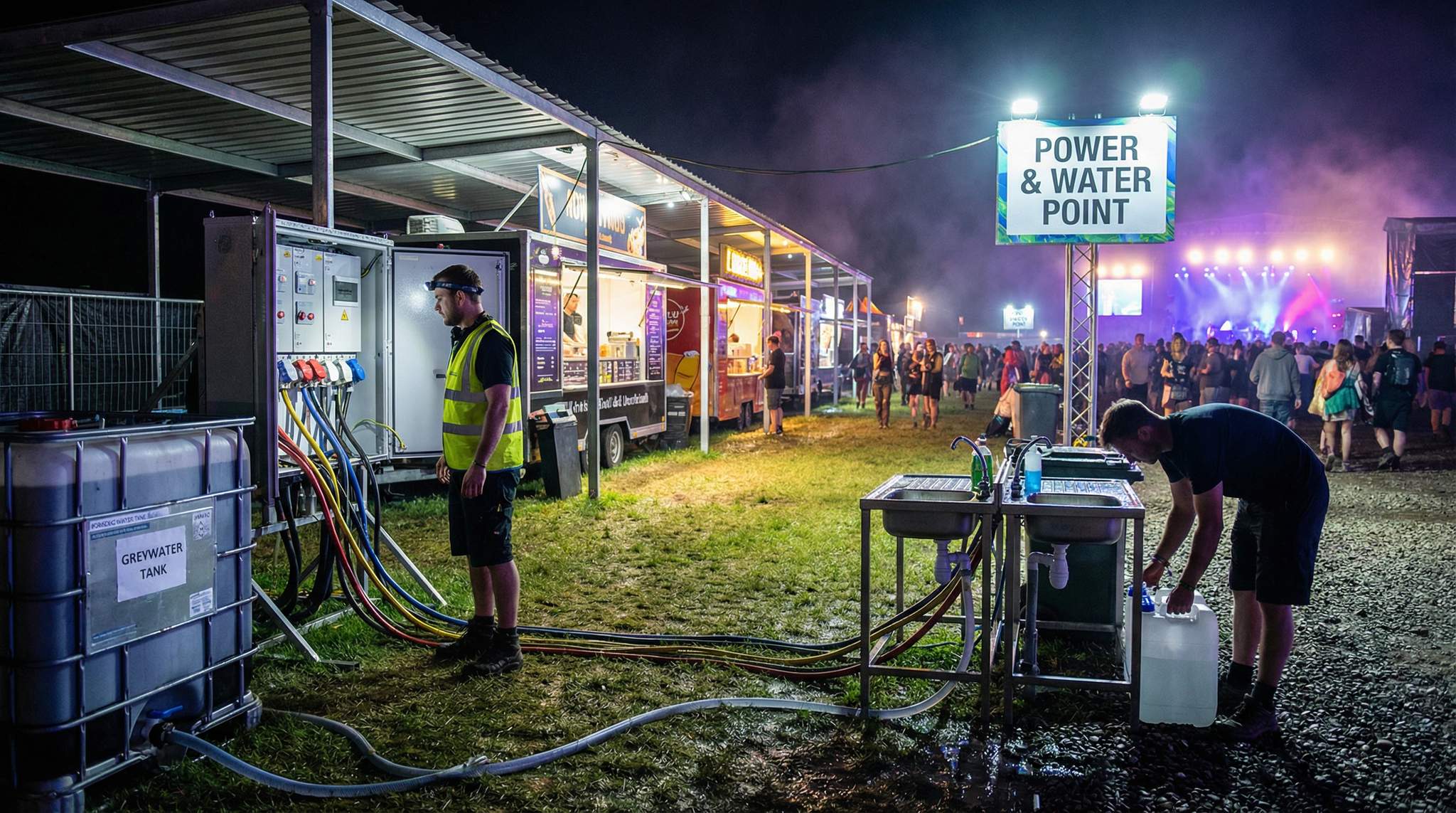
Distribution and Safety: Whether using grid power or generators, plan out the distribution. Long heavy-duty extension cables, power distribution units (breaker boxes), and weatherproof connections are a must. Keep cords out of foot traffic or cover them securely with cable ramps to prevent trips. Each vendor should have the appropriate outlets – some may need 240V for certain equipment, while others just need standard 120V supply. Clear communication is key: survey vendors beforehand about their exact power requirements (voltage, amperage, plug type). This ensures you have the right adapters and don’t put two high-demand vendors on the same small generator. In one festival, failure to confirm a vendor’s electrical needs led to a cotton candy booth showing up with high-wattage machines that nearly overloaded the system. Now the organizers always double-check equipment lists and even bring spare extension cords and adaptors for last-minute needs. Safety-wise, enforce that vendors use grounded cables and no daisy-chaining of power strips beyond capacity. If it’s a multi-day event, have fuel schedules for generators and rotation plans so no one runs out of power mid-day.
-
Real-Time Load Monitoring: Advanced power management for outdoor festivals now relies heavily on telemetry and smart distribution boxes. Instead of just turning on a generator and hoping for the best, modern site operations teams use digital monitoring tools to track electrical draw across the festival power supply in real time. If a specific food vendor cluster suddenly spikes their energy usage during the dinner rush, telemetry alerts your site electricians before a breaker trips. This proactive approach to temporary power for music festival sites prevents catastrophic outages, allowing your team to balance the load or deploy supplementary generators before the vendors even notice a dip in voltage.
Water Access and Supply
Alongside power, water is fundamental for many vendors, especially food and beverage stalls. They need water for cooking, cleaning utensils, washing hands, and providing certain drinks or dishes. A festival producer must ask: Where will vendors get clean water, and how will it be delivered on site?
Collect Any Attendee Data at Checkout
Add custom registration fields to your checkout — dietary needs, t-shirt sizes, company names, and more. Conditional logic and per-ticket-type fields.
-
Potable Water for Cooking and Cleaning: If the venue has water hookups or spigots, designate some for vendor use. You might run food-grade hoses from a potable water source to a “water station” in the vendor area. At smaller events, this could be as simple as allowing vendors to fill containers from a tap backstage. For larger festivals or remote locations, you may need to bring in water tanks or partner with a water service company. For example, a multi-day music festival on a farm might hire water trucks to fill large temporary tanks daily, ensuring vendors always have access to clean water. Make sure the water pressure is sufficient if multiple vendors are using hoses simultaneously – you don’t want the flow to drop during the lunch rush. It’s wise to schedule water refills during off-peak hours (like early morning) so that supply never runs dry when vendors need it most. Tip: Communicate to vendors whether they need to bring their own food-grade water containers or if you’ll provide communal ones. Many experienced organizers provide a couple of bulk water containers centrally and let vendors know to bring buckets or jugs to transport water to their stalls as needed.
-
Regulatory Needs and Sanitation: Health departments often require food vendors to have a handwashing station and adequate water for cleaning. By facilitating water access, you help vendors meet these requirements – and ultimately keep the event safe and hygienic. In the planning phase, check local health regulations: some might mandate that water must be from an approved source or that hoses are food safe. One festival learned this the hard way when a health inspector flagged their water source; after that incident, they ensured all vendor water came from a certified potable supply and kept documentation on-site. Planning with regulations in mind avoids last-minute scrambles and ensures no vendor is shut down for lack of water compliance.
Need Festival Funding?
Get the capital you need to book headliners, secure venues, and scale your festival production.
-
Water for Attendees vs. Vendors: Keep vendor water supply separate from attendee drinking water stations if possible, so you can monitor usage and refill needs more accurately. Vendors typically won’t need as much volume as thousands of attendees do for hydration, but they do need consistent availability. It’s also a good practice to provide vendors with drinking water (like bottled water or a cooler) for their own staff, since they often can’t leave their booth to get water easily. This is a small hospitality touch that seasoned festival organizers include – if vendors are cared for, they can focus on serving guests better.
Wastewater and Greywater Disposal
Where there’s water use, there’s wastewater. Greywater (from sinks, handwashing, cooking cleanup) and black water (sewage from restroom facilities, if any) must be handled properly to keep the venue sanitary and to comply with environmental rules. Many new festival producers overlook this until they realize vendors have buckets of dirty water or grease and nowhere to dump them. Planning for wastewater disposal is as crucial as supplying the water in the first place.
-
Greywater Collection: For events with food preparation, create a plan for collecting gray water from vendors. This could mean providing large labeled barrels or tanks in the vendor area where stalls can dump their non-hazardous dirty water (like water used for washing dishes or hands). In a small event, maybe you designate a specific drain or area vendors can empty into (with permission from the venue). At bigger festivals, it’s common to rent large greywater tanks and have an extraction service pump them out periodically. For instance, a large state fair might have giant portable storage tanks behind the food court, and a sanitation truck comes every evening to empty them. Make sure these disposal points are clearly marked and conveniently located (not a long trek from the booths). Never allow vendors to just pour wastewater on the ground – not only does it damage the site and create mud or slip hazards, it can violate health and environmental regulations. One festival had to pay hefty fines after cooking oil and greywater were found dumped on a field, a mistake that could have been avoided with proper infrastructure. Learning from that, they implemented strict rules and provided plenty of containers for all liquid waste.
-
Cooking Oil and Hazardous Waste: Grease and oil deserve special mention. If you have food vendors doing any frying, they will generate used cooking oil. Have a plan whether you’re asking vendors to cart out their own oil waste or if you’ll provide a disposal bin for it. There are companies that provide oil recycling barrels which you can station behind the food area. It’s much safer and cleaner for vendors to pour leftover fry oil into these than trying to store it in their trailer for the ride home. Also consider any other hazardous fluids – for example, some vendors may have fuel or generator oil. Establish a procedure or designated area for those wastes, and communicate it clearly in vendor briefing materials.
-
Wastewater Disposal Logistics: Coordinate with waste management or portable sanitation companies. Often the same provider that handles your toilets can handle greywater tanks. Schedule the pump-out service for before, during (if multi-day), and after the event as needed. It’s a good practice to monitor the fill levels of greywater tanks throughout the event – assign a team member or the sanitation crew to keep tabs. Overflowing wastewater is the last thing you want near food booths. Additionally, include contingency plans: extra empty drums or an emergency vacuum truck contact in case you end up with more waste water than expected.
-
Environmental Responsibility: Modern festivals place a big emphasis on sustainability. Managing vendor wastewater properly is part of that ethos. If you’re aiming for a green event, let vendors know you’ll provide environmentally safe soap or cleaning supplies (or encourage them to use such products) so that any greywater has fewer harmful chemicals. Some festivals even implement filtration or evaporation systems for greywater, but those are advanced solutions. At minimum, communicate clearly with vendors on what can and cannot go into the greywater tanks (e.g., no solid trash, which should be separated) and your plan for disposing of it after the event. Transparency and proactivity here can also reassure the venue owners (or park authorities) that you’ll leave the site as clean as you found it.
Internet Connectivity for Point-of-Sale
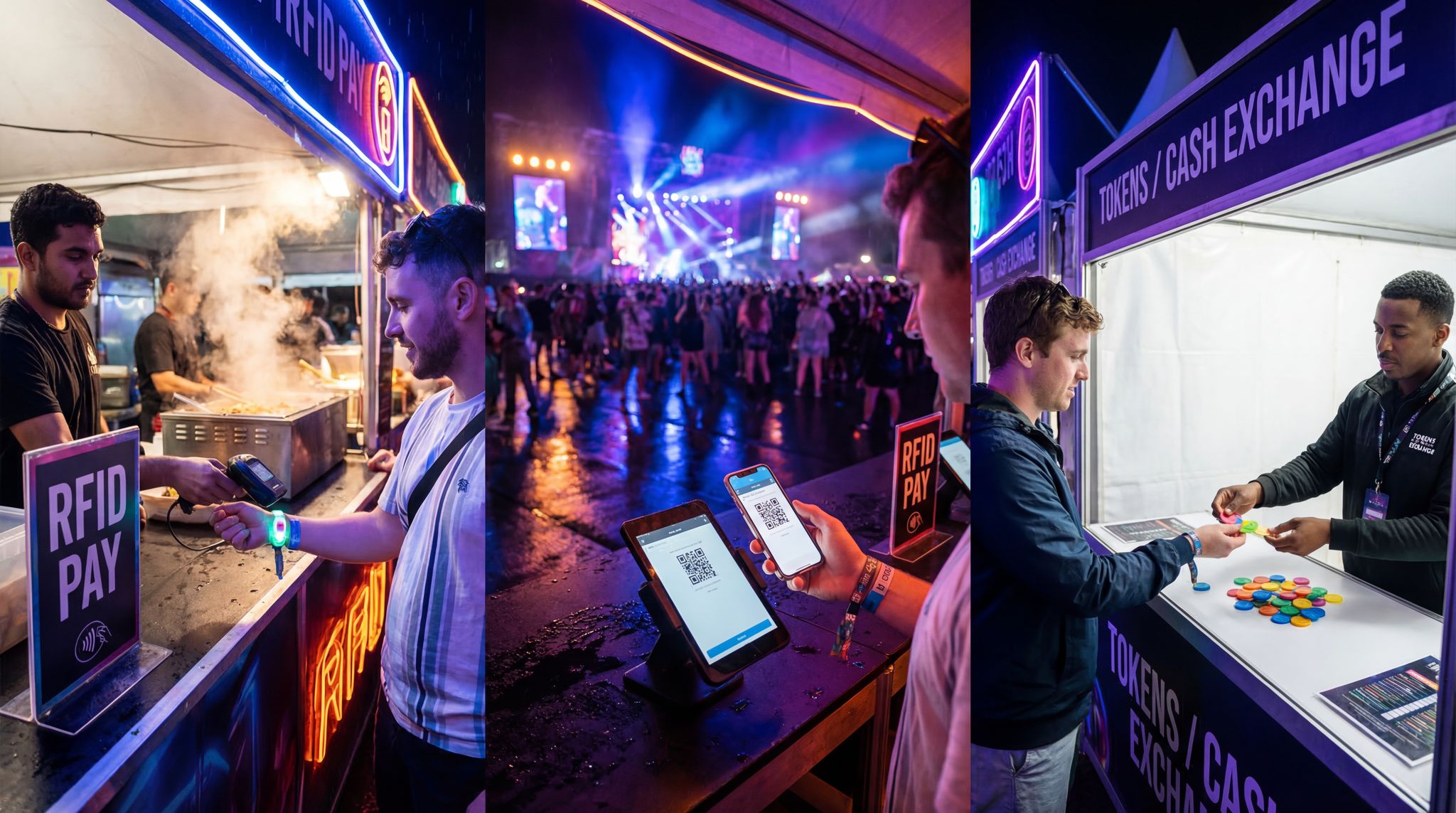
In the age of cashless payments, internet access can be as critical as water and power for certain vendors. Many festivals now are largely cash-free zones, with vendors relying on point-of-sale (POS) systems and credit card readers that require an internet connection. If your festival is in a remote field or even just a crowded location, you can’t assume normal cellphone service will suffice. Providing internet connectivity to vendors ensures they can process payments quickly and keeps the lines moving.
-
Assess Vendor Needs: Early in your planning, survey vendors about their POS systems. Are they using smartphone card readers that need Wi-Fi or a strong cellular data signal? Some may have offline-capable systems that queue transactions if the signal drops, but even those need to sync eventually. If most vendors indicate they need connectivity, decide whether to set up a dedicated vendor Wi-Fi network or boost cell coverage. For example, at a tech-forward festival where every vendor was using iPad registers, the organizers partnered with an IT company to install a temporary Wi-Fi mesh covering the vendor area. This prevented the scenario of sales grinding to a halt when 10,000 attendees arrived and saturated the cell towers.
-
Wi-Fi, Wired, or Cellular: The solution might be a dedicated Wi-Fi network for vendors and staff, protected with a password (and not open to attendees). Alternatively, some events bring in portable cell towers or signal boosters (often called COWs – “Cell on Wheels”) in partnership with telecom providers, which can improve 4G/5G coverage for everyone. A wired connection (fiber or cable) to the site with an on-site router is another robust option, though it’s usually feasible only if you have enough lead time and budget to run physical lines to a remote venue. Consider the scale: a small one-day craft fair in a city park might be fine with standard mobile service, but a multi-day camping festival in the woods likely needs a professional solution for internet.
-
POS Contingencies: Even with the best planning, internet can be finicky. Smart festival producers require vendors to have a backup plan for transactions. Encourage vendors to enable offline mode on their payment apps (so they can store transactions if connection drops and process later) or even have a manual credit card imprinting machine as a last resort. It’s also wise to place an ATM or two on festival grounds – if all else fails, attendees can withdraw cash. In fact, letting attendees know where the nearest ATM is could salvage sales if the card readers go down. One festival in a rural area lost internet for an afternoon due to an equipment failure; because they had communicated a backup plan, vendors temporarily switched to offline card processing and even old-fashioned cash until the network was restored. The key is not leaving vendors stranded – if their payment systems fail, their revenue stops and frustrated customers walk away.
-
Securing and Budgeting for Connectivity: Providing internet isn’t free – you may need to rent networking gear or pay for a dedicated data service. Factor this into your budget from the start. It might be worth charging vendors a small tech fee or including it in the booth fee if you’re offering event-wide Wi-Fi. And if you do set up event Wi-Fi, secure it properly. Use a strong password and perhaps a separate network for attendees if offering public Wi-Fi too, so vendor bandwidth is protected. Monitor the network during the event (having a tech person on call) so any outages or slowdowns can be addressed quickly. A well-run connectivity setup is often invisible (nobody notices when internet “just works”), but if it’s absent, you’ll hear about it from both vendors and guests.
Other Supportive Infrastructure Considerations
Power, water, waste, and internet are core needs, but don’t overlook other infrastructure elements that help vendors succeed:
– Lighting: Ensure vendor booths have adequate lighting when it gets dark. This might mean providing some ambient lighting in the vendor area (overhead string lights, for example) or making sure vendors know to bring their own lights. Good lighting not only helps vendors operate (safe food handling, readable menus) but also draws attendees in after sunset. Many festivals provide basic tower lights in the market area as a courtesy, which also improves safety.
– Shelter and Flooring: Vendors often operate out of tents or trucks, but consider the ground conditions and weather. If the festival is on a grass field, heavy rain can turn vendor areas muddy, making it hard for them to work (and deterring customers). Proactively laying down ground mats, gravel, or temporary flooring in high-traffic vendor spots can make a big difference. Similarly, think about shade and shelter – a blistering hot day can be tough on vendors. If the site lacks natural shade, consider providing a few large tents or umbrellas in common areas, or at least encourage vendors to bring canopy extensions. A comfortable vendor is more likely to stay energetic and serve attendees well during a long festival day.
– Waste Management (Solid Waste): Just as with utilities, have a plan for vendors’ solid waste (trash and recyclables). Vendors produce cardboard boxes, food scraps, and packaging waste. Provide dumpsters or bins nearby exclusively for vendor use so they aren’t stuffing the attendee trash cans with back-of-house waste. Schedule pick-ups or bin swaps so trash doesn’t overflow (which can attract pests or create bad odors near food stalls). Let vendors know the recycling policies too – for example, if you’re an eco-friendly festival that bans single-use plastics, enforce that through the vendor agreement and provide alternatives (like compostable dishware disposal bins).
– Communication and Support: Finally, infrastructure is not just physical utilities – it’s also the support system. Set up a clear line of communication (like a vendor help desk or a phone/radio channel) where vendors can reach festival staff if they have an issue (e.g., a power outlet isn’t working, or they need an urgent water refill). Having roaming crew or volunteers assigned to check on vendors periodically can catch small problems before they become big. For example, a staffer noticing a vendor’s fridge is off can quickly radio the electricians to fix a tripped circuit. This kind of attentive support can save a vendor’s inventory and your festival’s reputation. Seasoned producers often treat vendors as partners in the event – when vendors thrive, attendees get better service, and the festival as a whole is more successful.
Curating and Managing Your Vendor Village
Beyond physical utilities, successful vending at festivals requires strategic curation and clear communication. When you find yourself with vendors needed for events, don’t just fill spaces to meet a quota. Select a diverse mix of food, beverage, and craft partners that align with your audience’s demographics and dietary preferences. One of the most crucial food festival event planning tips is to stagger vendor load-in times and provide a comprehensive site map well in advance. This ensures that heavy food trucks and delicate craft stalls can set up their operations without creating a logistical bottleneck, allowing your site management team to focus on finalizing the utility connections.
Another essential strategy for optimizing vending at festivals is establishing a strict vendor compliance program. Before any food truck or craft stall arrives on site, require them to submit detailed equipment manifests and safety certifications. This proactive vetting ensures that when you are sourcing vendors needed for events, you are selecting partners who understand the rigorous demands of outdoor operations. By integrating these food festival event planning tips into your standard operating procedures, you minimize day-of-show surprises, streamline the health inspection process, and guarantee that your site’s utility grid remains stable under peak operational stress.
Strategic Planning for Food-Centric Events
When organizing a culinary-focused gathering, the infrastructure demands multiply. A crucial strategy for successful culinary event production is to design your site layout around utility access rather than just aesthetics. High-draw catering equipment requires robust electrical mapping. Instead of placing all heavy-duty fryers and electric ovens in one cluster, distribute these high-load stalls across different generator zones to balance the draw. Furthermore, when sourcing culinary partners and mobile kitchens, prioritize operators who can provide accurate, documented utility requirements weeks in advance. This level of proactive load balancing prevents mid-event breaker trips and ensures a seamless gastronomic experience, proving that effective vending operations rely heavily on backend preparation.
Frequently Asked Questions
How do organizers calculate power requirements for festival vendors?
Organizers must calculate the total wattage or amperage of all vendor equipment and add at least 20-30% extra capacity to handle surges. Grouping vendors with similar needs helps avoid overloading generators. It is crucial to survey vendors beforehand about their exact voltage and plug type requirements to ensure the right adapters are available.
How can festivals provide potable water to food vendors on site?
Festivals can run food-grade hoses from existing water hookups or use water trucks to fill temporary tanks for remote locations. Organizers should designate specific water stations for vendor use, ensuring sufficient pressure during peak times. Health regulations often mandate certified potable sources and proper documentation to maintain food safety compliance.
What is the proper way to handle greywater disposal at festivals?
Greywater from cooking and handwashing must be collected in labeled barrels or large storage tanks rather than dumped on the ground. Organizers should arrange for sanitation trucks to pump out these tanks periodically. For grease and cooking oil, specific recycling barrels should be stationed behind food areas to prevent hazardous waste issues.
How can festivals ensure reliable internet for vendor point-of-sale systems?
To support cashless payments, festivals can deploy dedicated vendor Wi-Fi networks or bring in portable cell towers (COWs) to boost signal. Organizers should assess vendor needs early and encourage backup plans, such as offline-capable card readers or manual imprinters, to prevent sales from stopping during network outages or cellular saturation.
What safety measures are required for festival electrical distribution?
Electrical safety requires using heavy-duty grounded cables, weatherproof connections, and cable ramps to prevent tripping hazards in foot traffic areas. Licensed electricians should assess distribution to avoid overloading circuits. Organizers must enforce rules against daisy-chaining power strips and ensure vendors have the correct voltage outlets, keeping backup generators ready for emergencies.
How should festivals manage solid waste and recycling for vendors?
Festivals should provide dedicated dumpsters or bins exclusively for vendor use to prevent overflowing attendee trash cans. Scheduling regular pick-ups or bin swaps helps avoid odors and pests near food stalls. Organizers must clearly communicate recycling policies and provide appropriate disposal options, such as compost bins or oil recycling barrels, to maintain site cleanliness.
What are the best practices for power management at outdoor festivals?
Effective power management for outdoor festivals involves calculating total vendor wattage, adding a 20-30% safety margin, and utilizing centralized, high-capacity generators. Organizers should map out temporary power distribution carefully, ensuring licensed electricians oversee the festival power supply to prevent overloaded circuits and maintain a safe environment.
Why should organizers separate vendor power from main stage power?
Isolating the vendor power supply from production grids prevents third-party equipment failures—like a food truck tripping a breaker—from affecting stage audio or lighting. Deploying dedicated temporary power for music festival concessions ensures clean, uninterrupted electricity for critical performance infrastructure while safely managing the high-draw appliances used by food and beverage teams.
What are the core components of infrastructure for events?
Comprehensive infrastructure for events encompasses all the temporary physical and technical systems required to support the gathering. This includes high-capacity power distribution, potable water supply, wastewater management, reliable internet connectivity for point-of-sale systems, and structural elements like staging, lighting, and temporary fencing.
How can telemetry improve power management for outdoor festivals?
Using telemetry and smart distribution systems allows site operations teams to monitor electrical loads in real time. By tracking the exact draw of the festival power supply, organizers can identify unexpected spikes from vendor equipment and rebalance the grid before breakers trip, ensuring uninterrupted temporary power for music festival concessions and stages.
What are essential planning tips for managing food festival vendors?
Successful culinary event production requires mapping your site layout based on utility access. Organizers should distribute high-draw catering equipment across multiple generator zones to balance the electrical load. Additionally, vetting mobile kitchens for accurate power and water needs weeks in advance prevents infrastructure failures and ensures smooth operations.