Introduction
Managing payments for vendors and artists is a critical part of festival budgeting and logistics. Every festival relies on a network of service providers and performers, and clear payment practices help build trust and ensure smooth operations. By establishing well-defined deposits, payment schedules, and settlement procedures, a festival organization protects itself financially and maintains strong relationships with its partners.
Vendor Contracts and Deposits
Major vendors – such as staging companies, sound and lighting providers, caterers, and equipment rental firms – typically outline payment terms in their contracts. A common best practice is a 50% deposit upfront and 50% after the event (net-30). This means the festival pays half the vendor’s fee when the contract is signed, giving the vendor cash flow to start preparations. The remaining half is paid within a set period (often 30 days) after the festival. Splitting payments this way protects the festival if plans change or the scope of work is adjusted during the event. For example, if a supplier’s services end up being reduced or expanded, the final invoice can be modified before the last installment is paid. The upfront deposit also shows good faith and secures the vendor’s commitment – vendors are far more willing to reserve inventory and schedule staff when they’ve received a deposit.
When negotiating vendor deposits, organizers should consider the supplier’s actual upfront costs. While a 50% initial payment is standard, some infrastructure partners may accept a tiered approach—such as 25% upon signing, 25% thirty days out, and the balance post-event. Structuring these initial outlays strategically helps preserve the organizer’s working capital during the critical early phases of event planning.
Effective deposit management requires attention to timing. Schedule all vendor deposits well in advance according to each contract’s terms. Many festivals create a payment calendar or spreadsheet specifically for tracking deposits and due dates. Missing a deposit deadline can jeopardize services; there have been cases where a production vendor threatened to withdraw a week before showtime because an upfront payment was delayed. To avoid such crises, the festival’s finance team should coordinate closely with the operations team, ensuring funds are ready and payments are issued on time. It’s also wise to confirm receipt of payment with each vendor – a simple confirmation email or phone call can provide peace of mind that everything is on track.
Let Fans Pay Over Time
Offer flexible payment plans that split ticket costs into manageable installments, making higher-priced events accessible and boosting conversions.
Artist Fee Payments and Timing
Artists and performers have their own standard payment practices. It’s customary for artists to receive a deposit upon signing the performance agreement, usually anywhere from 10% to 50% of their guaranteed fee. The exact percentage often depends on the artist’s stature and their booking agent’s policies. For instance, a headline artist or their agency might insist on a 50% deposit to lock in the date, whereas a smaller regional act might only require 10% or 20%. This deposit assures the artist that the festival is committed and has the funds allocated for their performance.
The remaining balance of the artist’s fee is typically due by the day of the performance. Many festivals prepare to pay artists on the day they perform – sometimes just before they go on stage or immediately after their set, per the contract. It’s common for payments to be made via wire transfer, certified check, or even cashiers check on show day, depending on what was agreed upon. Larger festivals often have an on-site “settlement office” where the final payments are handled; accounting staff might hand the payment (or proof of wire transfer) to the artist’s tour manager or agent. In all cases, obtaining a signed receipt or acknowledgment from the artist’s representative is important. This provides a clear record that the final payment was delivered and accepted, preventing any later disputes.
Planning a Festival?
Ticket Fairy's festival ticketing platform handles multi-day passes, RFID wristbands, and complex festival operations.
One lesson learned in festival production is never keep an artist waiting for payment. Artists (and their agents) are very mindful of payment terms – some contracts even stipulate that an artist may refuse to perform if the balance due hasn’t been paid by a certain time. In practice, most artists will perform as long as they trust the promoter, but delays in final payment can damage that trust. A well-known example in the industry involves an artist staying in their tour bus and refusing to take the stage until the festival wired the remaining fee. Such standoffs are embarrassing and disruptive; they can be avoided by planning ahead so that every artist fee is ready to be settled as promised.
Payment Schedules and Cash Flow Management
From a budgeting and cash flow perspective, festival managers must plan when each payment will hit and ensure funds are available. Vendor deposits might be due months before the event, and artist deposits often coincide with contract signing during the talent booking phase. These early outlays mean festival organizers need sufficient upfront capital – whether from early ticket sales, sponsorship advances, or investment – to cover commitments long before any revenue from the event is fully realized. Building a detailed schedule of all deposit and balance due dates is a fundamental step in festival financial planning.
To streamline these complex schedules, many organizers rely on an event booking system allowing deposits to be tracked and processed automatically. Modern ticketing and festival management platforms often feature built-in payment routing, enabling promoters to manage outgoing vendor installments and artist guarantees within a single centralized dashboard. Utilizing software that supports milestone-based festival payments reduces manual data entry and ensures that upcoming balance due dates trigger automated reminders for the finance team.
By plotting out the payment schedule, producers can identify peaks in cash needs and plan accordingly. For example, the team may discover that several major deposits (staging, sound, and security services) all come due around the same month. Knowing this, the finance team can arrange to have necessary funds ready or negotiate staggered payment dates if needed. Clear internal communication is key: everyone on the leadership team should understand the timing of big payouts, because these affect cash flow and budgeting decisions across the board.
Go Cashless With RFID Technology
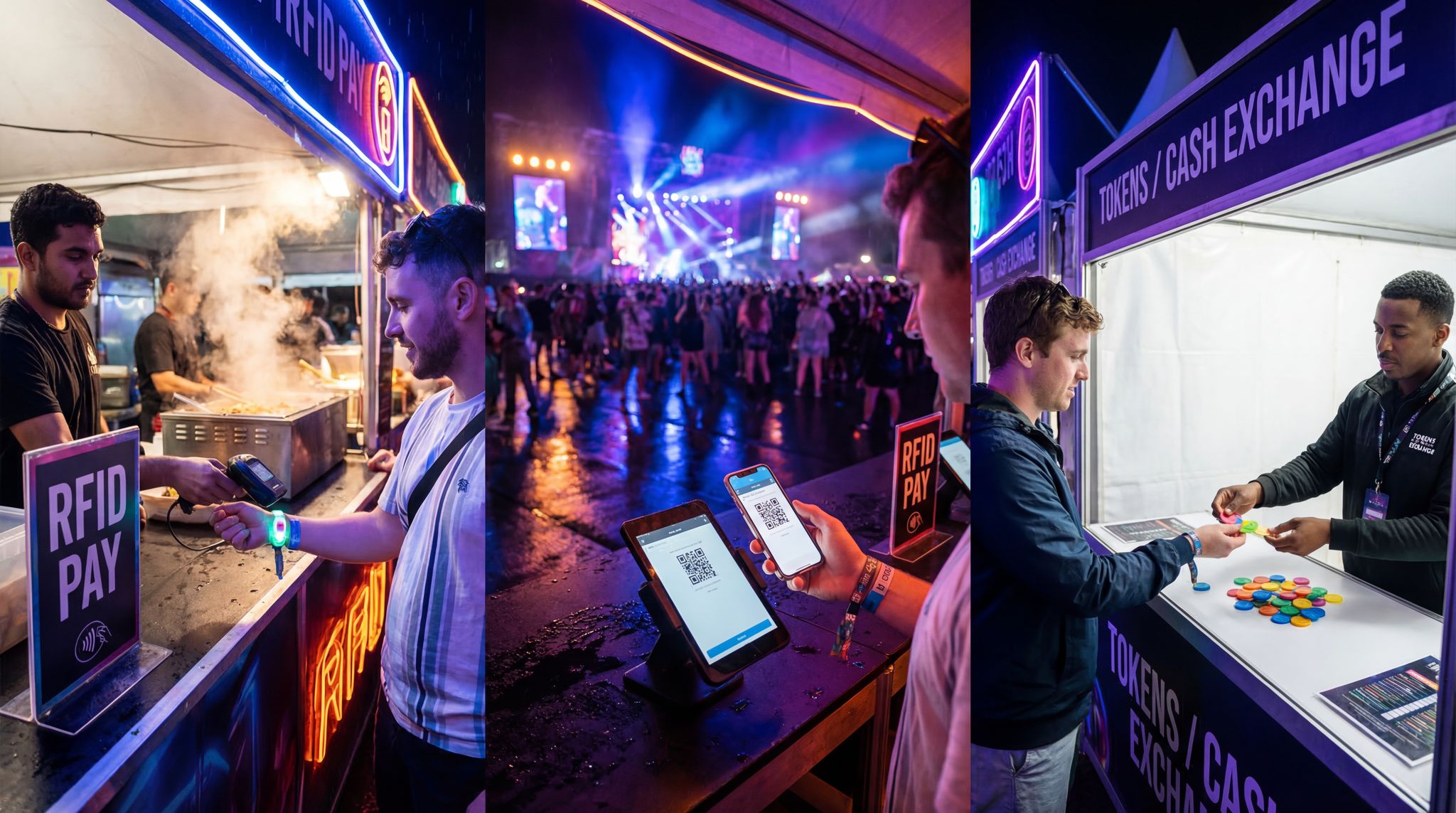
Enable contactless payments, faster entry, and real-time spending analytics with RFID wristbands and NFC-enabled ticketing for your events.
It’s also important to align payment schedules with contract terms and festival milestones. Ensure that the finance department is aware of any deliverables tied to payments. Sometimes, a vendor’s second installment might be contingent on the work being completed or certain performance metrics. Similarly, an artist’s final payment might be prepared but only handed over after they arrive on site. Coordinating these details requires communication between the production team (who know when services are delivered or artists check in) and the accounting team (who controls the funds). Having a designated point person for payment coordination during the festival can streamline this process, making sure nothing slips through the cracks amidst the event-day excitement.
Using Escrow Accounts for Large Deals
In certain situations, a festival may consider using an escrow account or other secure payment method to manage deposits and final payments. Escrow can be useful when dealing with very high-value contracts or when trust needs to be built between parties. For example, a first-time festival booking a world-famous headliner might agree to place the artist’s full fee (or a large portion of it) into an escrow account. This arrangement guarantees the artist that the money is set aside and will be released to them as long as the performance occurs as planned. It also protects the festival: funds are only released according to the agreed conditions (such as the artist’s arrival and performance), possibly with a neutral third party or bank overseeing the process.
Need Festival Funding?
Get the capital you need to book headliners, secure venues, and scale your festival production.
Escrow accounts can also be used with major vendors, especially if the vendor must incur significant expenses upfront or custom-build equipment for the event. Rather than paying 100% in advance (which exposes the festival to risk if the vendor doesn’t deliver), the festival can deposit the funds in escrow. The vendor gains confidence that the money is there, while the festival retains control until the vendor fulfills their obligations. However, keep in mind that escrow services may charge fees and add complexity. They are typically reserved for large-scale deals or new partnerships where neither side has an established track record with the other. In most standard cases, simpler deposit arrangements (like 50% up/50% after) suffice, but it’s valuable to know escrow is an option for those exceptional scenarios demanding extra assurance.
When setting up these secure holding accounts through digital platforms, organizers must carefully review the associated costs. For instance, if you are utilizing automated split payments or holding funds via a third-party API, you need to calculate the specific Stripe payment processing fees for event management escrow features. Platforms like Stripe Connect allow ticketing and event management systems to route funds securely to vendors or hold artist deposits in escrow until the performance is completed. However, the convenience of automated payouts and secure fund routing comes with per-transaction and volume-based fees that must be factored into the festival’s overall financial model.
Payment Processor Partnerships and Sponsorships
Beyond standard banking, modern festival payments often involve strategic partnerships with fintech brands. Many organizers actively seek out payment companies that sponsor music festivals to offset operational costs and enhance the attendee experience. Brands like Cash App, PayPal, Venmo, and major credit card networks frequently sponsor large-scale events. In exchange for sponsorship dollars or reduced transaction rates, these financial partners typically require exclusivity—such as becoming the official cashless provider for on-site food and beverage, or integrating their digital wallets directly into the festival’s ticketing checkout. Securing these deals requires demonstrating high transaction volumes and a tech-savvy demographic eager to adopt the sponsor’s payment ecosystem.
When pitching payment companies sponsoring music festivals, organizers should highlight their audience’s purchasing power and the potential for exclusive on-site activations. These fintech brands are highly motivated by user acquisition, making them ideal partners for covering significant infrastructure costs in exchange for prominent brand visibility across the event’s point-of-sale network.
Promoters often ask exactly which payment companies sponsor music festivals in today’s market. Beyond the major credit card networks and digital wallets, emerging point-of-sale (POS) hardware providers and specialized RFID cashless systems are increasingly stepping up as financial backers. These tech-forward firms look for events with highly engaged demographics where they can showcase their seamless transaction technology in a high-volume, real-world environment, effectively subsidizing the cost of processing festival payments.
Final Settlements and Post-Event Payments
Once the festival is over, the financial work isn’t complete until final settlements are done. This process involves reviewing and reconciling all payments, and making sure every vendor and artist has been paid the correct remaining balance. A good practice is to start the settlement process immediately after the event while details are fresh. The festival’s accounting team should gather final invoices from all vendors within days of the festival’s end. Vendors might adjust their final bill for reasons such as overtime labor, additional equipment used, or consumables (like fuel or supplies) that exceeded the initial estimate. Cross-check these invoices against what was provided on-site, involving the operations team to verify that all charges are legitimate.
Prompt payment of these final bills is not only contractually required but also vital to maintaining good relationships. Most vendor contracts with a net-30 term give the festival up to 30 days after the event to pay the balance due. This grace period allows time to sort out any discrepancies, but it should not be an excuse to procrastinate. In fact, paying earlier than the deadline can leave a strong impression. Festivals that reliably pay their partners quickly often find vendors eager to work with them again next year. It demonstrates professionalism and appreciation for the vendors’ hard work.
For artist settlements, ideally the performance fees have been paid by show day, but there could be other post-event financial matters – for instance, merchandise revenue splits or reimbursing an artist for agreed travel expenses. These should be handled as outlined in the artist’s contract. Finalize any open items by providing documentation (such as sales reports for merchandise) and sending the remaining payments promptly. Much like with vendors, artist agents and managers remember how smoothly (or not) a festival handled payments. A talent agency is more likely to book their roster with a festival that has a reputation for fair and fast payment.
To ensure complete transparency during this process, organizers should always prepare a comprehensive artist settlement sheet. This document acts as the definitive financial record of the booking, detailing the guaranteed fee, any percentage-based bonuses (like ticket sales bumps), and itemized deductions. Common deductions on a settlement sheet might include local withholding taxes, agreed-upon production chargebacks, or advances previously paid out. By presenting a clear, line-by-line breakdown to the tour manager or booking agent, the festival’s accounting team eliminates ambiguity, speeds up the final sign-off, and streamlines all remaining festival payments.
Lessons Learned and Best Practices
Every experienced festival producer has stories of financial lessons learned. One common lesson is that clarity and communication are everything when it comes to payments. All payment terms should be clearly stated in contracts: deposits, due dates, and acceptable payment methods. Double-check these terms before signing and make sure both parties have a copy. It helps to go over the key points in a kickoff call or email with each major vendor and artist’s team – reiterating when they can expect deposits, how final settlement works, and what they need to provide (like invoices or tax forms).
Another lesson is to prepare for the unexpected. Festivals are live events subject to changes: a vendor’s deliverables might shift, an artist cancellation might require rebooking last-minute (with new deposit negotiations), or weather might force a schedule change that affects labor costs. Having a contingency in the budget for unforeseen expenses can cushion the blow of any extra payments that weren’t planned. Moreover, maintain open lines of communication with finance partners (banks, payment processors) during the event. High-volume, last-minute payments (such as dozens of wires on performance day) can trigger fraud alerts or bank limits if not pre-arranged – so the festival should inform its bank if large transactions or unusual activity will occur during the festival.
Finally, post-event follow-through distinguishes great festival organizers. After the dust has settled, conduct a wrap-up meeting with the finance team to review how the payment process went. Note any hiccups, such as a vendor who didn’t send an invoice promptly or an artist payment that was tricky to execute, and update the process for next time. Sending thank-you notes to key vendors along with their on-time payment can also reinforce the partnership. By treating vendors and artists as valued collaborators – and honoring every financial commitment to them – a festival builds a reputation as a trusted, professional event. That reputation will pay off in future editions, as partners will be keen to sign on again, often on even better terms.
Conclusion
Vendor payments, deposits, and settlements are the backbone of the festival’s financial ecosystem. They require careful planning, clear agreements, and proactive management throughout the festival lifecycle. By implementing standard practices like deposit schedules (50/50 splits for vendors, appropriate deposits for artists), utilizing tools like escrow accounts when necessary, and executing prompt final settlements, festival producers safeguard both their event’s integrity and their industry relationships. This mentor-tested advice boils down to due diligence and respect: plan ahead, stick to the agreed terms, and treat every payment as an investment in the festival’s reputation. In doing so, the next generation of festival organizers will carry forward a legacy of professionalism and trust that keeps the festival world thriving.
Frequently Asked Questions
What is the standard payment schedule for festival vendors?
A common best practice for major festival vendors involves a 50% deposit paid upfront upon contract signing and the remaining 50% paid after the event, typically on net-30 terms. This structure secures the vendor’s inventory and commitment while allowing the festival to adjust the final invoice if the scope of work changes.
When are festival artist fees typically due?
The balance of an artist’s fee is typically due by the day of the performance. Festivals often make these payments via wire transfer, certified check, or cashier’s check immediately before or after the set. While a deposit is paid upon signing, failing to settle the final balance on show day can cause artists to refuse to perform.
How do escrow accounts benefit festival organizers?
Escrow accounts protect festival organizers by holding funds securely until specific conditions, such as an artist’s arrival and performance, are met. This method is useful for high-value contracts or first-time bookings, as it guarantees the talent that money is set aside while ensuring the festival retains control until the vendor or artist fulfills their obligations.
How much deposit is required to book a festival artist?
Artists customarily receive a deposit between 10% and 50% of their guaranteed fee upon signing the performance agreement. The exact percentage depends on the artist’s stature; headline acts often require a 50% deposit to lock in the date, whereas smaller regional acts might only require 10% or 20% upfront.
What is the process for festival financial settlements?
Final settlements involve reconciling all accounts immediately after the event by gathering final invoices and cross-checking them against on-site deliverables. The finance team verifies any adjustments for overtime or additional equipment with operations staff, then issues payments for the remaining balances within the contract’s grace period, often net-30 days.
Why is a payment calendar important for festival budgeting?
A payment calendar is essential for identifying peaks in cash needs, as vendor deposits and artist fees often come due months before the event. By plotting out specific due dates, the finance team ensures sufficient upfront capital is available from ticket sales or sponsorships to cover commitments without jeopardizing services or relationships.
Which payment companies typically sponsor music festivals?
Payment companies that frequently sponsor music festivals include major credit card networks like Visa and Mastercard, as well as digital wallet and fintech brands such as PayPal, Cash App, and Venmo. These companies sponsor events to drive user adoption, often requiring exclusive rights to power the festival’s cashless RFID wristband system or ticketing checkout.
How do payment processing fees impact event management escrow?
When using digital platforms to hold or route funds, organizers must account for the specific transaction costs, such as Stripe payment processing fees for event management escrow setups. While these tools securely automate vendor payouts and hold artist deposits until contract fulfillment, the associated volume and per-transaction fees must be built into the festival’s operating budget.
What should be included in an artist settlement sheet?
An artist settlement sheet should include a complete line-by-line breakdown of the financial agreement. This typically covers the artist’s guaranteed fee, any performance bonuses or merchandise splits, and all itemized deductions such as prior deposits, local tax withholdings, and agreed-upon production chargebacks. Providing this detailed document ensures transparency and prevents disputes during final festival payments.
Can an event booking system manage vendor and artist deposits?
Yes, utilizing an event booking system allowing deposits helps organizers track outgoing financial commitments, automate balance reminders, and manage complex festival payments from a centralized dashboard. Modern platforms often integrate directly with accounting software to streamline cash flow management and ensure no installment deadlines are missed.
How can organizers negotiate better terms for vendor deposits?
To negotiate more favorable terms for vendor deposits, organizers can offer multi-year contracts or exclusive on-site branding in exchange for lower upfront percentages. Instead of the standard 50% initial outlay, a promoter might secure a 25% deposit structure, keeping more working capital available for other early-stage festival payments and marketing efforts.