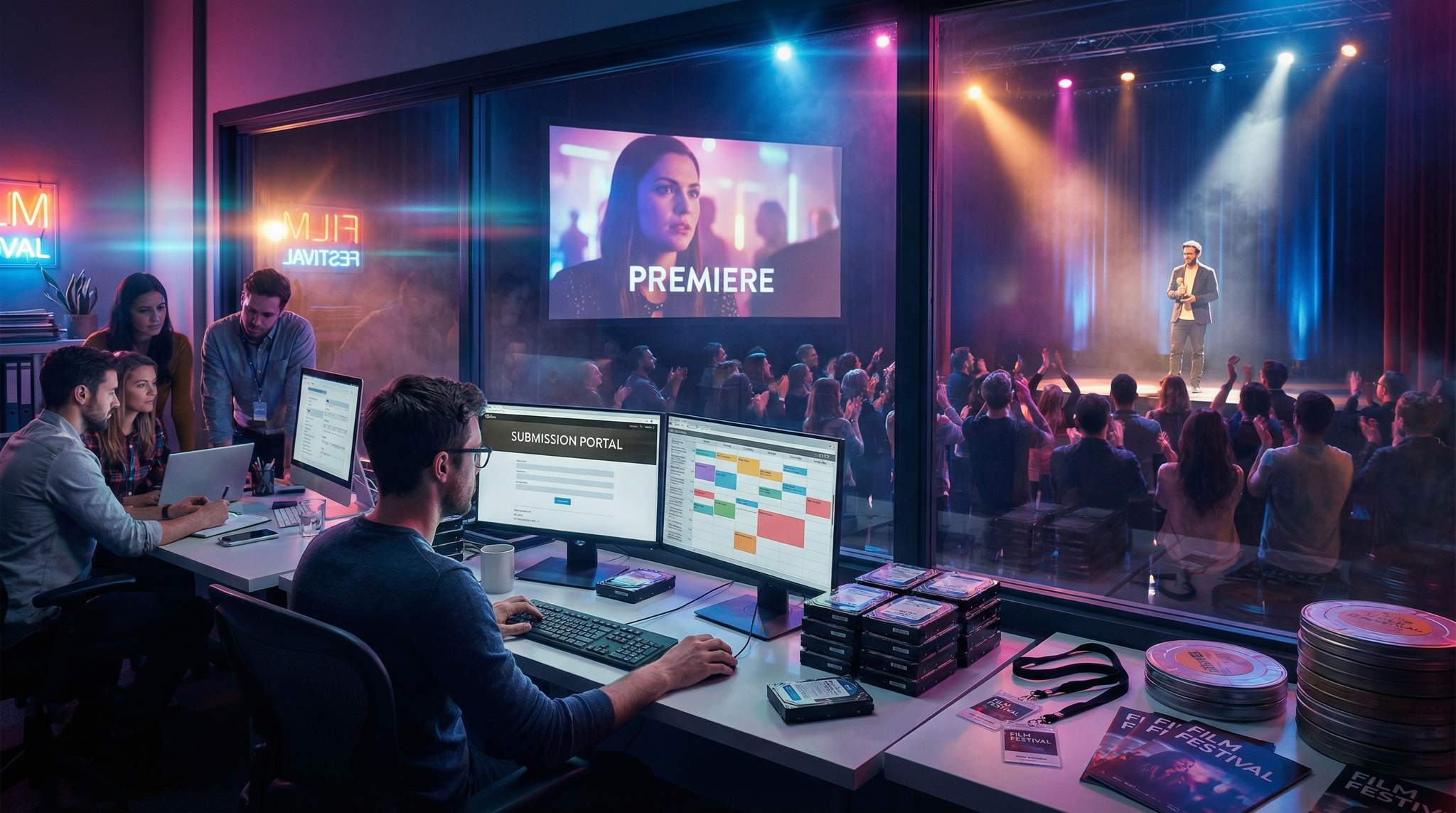
Introduction
Film festivals are unique cultural events that celebrate storytelling and community through cinema. They are not just about screening films – they’re about creating an immersive experience that brings together filmmakers, audiences, and the broader film industry. A well-run festival can become a launchpad for emerging talent, where even a single successful screening or award can elevate a filmmaker’s profile virtually overnight, as film festivals provide a captive audience for projects.
At the same time, film festivals are highly selective and competitive – for instance, top-tier events like Sundance accept only a tiny fraction of submissions (on the order of 60 out of 9,000 entries, or ~0.6% acceptance). This intense competition highlights why managing submissions for your film festival requires such rigorous organization. This means careful planning and strong strategy are critical. From managing hundreds (or thousands) of film submissions to orchestrating memorable award ceremonies, organizers must balance artistic vision with logistical precision.
In the following sections, seasoned festival producers share practical strategies for every step of film festival planning – from the submission process and judging, to scheduling screenings, running engaging Q&As, and hosting award ceremonies. Each aspect requires attention to detail and a passion for fostering a community where filmmakers and cinephiles alike feel valued.
The Core Pillars of Organizing a Film Festival
When figuring out how to organize a film festival from the ground up, it helps to break the event down into its foundational elements. For first-time film festival organizers and veteran producers alike, a comprehensive film festival strategy must account for the complete attendee and filmmaker journey. If you are outlining exactly what happens at a film festival—screenings, Q&A panels, awards, and networking events form the core programming. Balancing these pillars ensures that your event delivers both cinematic value to audiences and career-building opportunities for creators.
Grow Your Social Following With Every Sale
Require social media follows, shares, or playlist adds to unlock presale access or special pricing. Turn every ticket purchase into audience growth.
For dedicated film festival organizers, the day-to-day reality of organizing a film festival involves constant cross-functional coordination. Whether you are learning how to organise a film festival for the first time or scaling an existing regional event, success hinges on aligning your programming team with venue operations and marketing staff. This holistic approach ensures that every screening, panel, and networking mixer feels like part of a unified cinematic experience.
When considering how to plan a film festival from scratch, establishing a realistic timeline is your most valuable asset. Most seasoned producers recommend beginning the process at least nine to twelve months in advance. Learning how to plan a festival of this scale means mapping out critical milestones: securing seed funding, locking in anchor venues, opening the call for entries, and launching early-bird ticket sales. By treating these milestones as non-negotiable deadlines, organizers can prevent the chaotic last-minute scramble that often plagues first-year events.
Planning a Festival?
Ticket Fairy's festival ticketing platform handles multi-day passes, RFID wristbands, and complex festival operations.
Defining the Festival’s Vision and Scope
Every successful film festival starts with a clear vision. Organizers should define the festival’s theme, genre focus, and mission early on. For example, will this festival showcase international arthouse cinema, local independent filmmakers, horror shorts, or a mix of genres? A well-defined niche helps attract the right audience and submissions. Deciding on the festival’s scale and scope is equally important – whether it’s a cozy weekend event at a single theater or a city-wide extravaganza spanning multiple venues. Initial planning includes choosing dates and location, mindful of other events on the calendar (avoid clashing with larger festivals or holidays) and of the local community’s support.
Practical considerations like venue availability and climate (for any outdoor screenings) can influence timing. If the festival has a specific theme or cultural angle, that should resonate through its branding, marketing, and programming. Seasoned organizers emphasize aligning every decision with the festival’s core vision, as this coherence appeals to attendees and filmmakers alike. During early planning, outline all components you envision – film screenings, panel discussions, workshops, networking events, award ceremony – to ensure the schedule can accommodate them. As one industry guide notes, determining the festival’s theme and logistics at the outset lays the groundwork for everything to come, a crucial step in the secrets of organizing a successful film festival.
Managing the Film Submission Process
Handling film submissions efficiently is a cornerstone of any film festival strategy. Establish a streamlined submission process that is filmmaker-friendly but also gives the programming team what they need to evaluate entries. Many festivals use an online submission platform (such as FilmFreeway or similar) to collect entries, payments, and information in one place. These platforms can significantly simplify tracking hundreds of submissions, though they do come with commission fees – a large festival might accept this cost for convenience, while a small-budget festival could opt for direct email or mailed-in submissions. Regardless of method, clearly publish the submission guidelines and categories: define runtime limits for shorts vs. features, acceptable genres, premiere status requirements (if any), and technical format rules. Clarity upfront will save everyone time by deterring ineligible entries.
Tip: Offer multiple submission deadlines (early bird, regular, late) with tiered fees to encourage early submissions while still allowing last-minute entries. This staggers the review workload and brings in some extra funds via late fees. Always communicate key dates (submission deadlines, selection notification date, festival dates) on your website and submission portal. Once submission is open, be prepared for potentially overwhelming volume. Even mid-sized festivals can receive thousands of films, so plan the manpower and tools to review them all fairly. This may involve recruiting a screening committee or team of pre-selectors who watch and rate films before final programming decisions. A robust system for cataloging submissions – with each entry’s status, scores, and feedback – ensures nothing falls through the cracks.
Smart Promo Codes & Presale Access
Create percentage or flat-rate discount codes with usage limits, date ranges, and ticket type restrictions. Plus unlock codes for private presales.
Implementing a dedicated film festival submission tracker is one of the most effective ways to maintain this robust cataloging system. Whether you utilize a customized spreadsheet, a specialized CRM, or built-in tools from your entry platform, a centralized tracking system allows your programming team to monitor each film’s journey from initial receipt to final selection. An effective tracker should log essential metadata—such as director contact info, runtime, genre, premiere status, and technical requirements—alongside real-time judging scores and committee notes. By keeping all this data in a single, accessible dashboard, organizers can quickly filter top-rated entries, identify missing screening files, and automate status updates, drastically reducing administrative overhead during the busiest phases of curation.
To maximize the quality of entries, organizers must develop a proactive film festival submission strategy. Rather than simply opening a portal and waiting, successful directors actively scout film schools, online platforms, and other regional events to invite promising creators. If you are running a niche event, such as a shorts-only program, your short film festival strategy should involve targeted outreach to university film departments and independent creator collectives. Offering fee waivers to highly sought-after directors or alumni can also elevate the overall caliber of your programming.
Need Festival Funding?
Get the capital you need to book headliners, secure venues, and scale your festival production.
As your event scales, relying on manual spreadsheets becomes unsustainable, making the adoption of comprehensive film festival software a strategic necessity. For events that handle massive volumes of high-resolution files, selecting the right awards management software for arts and film festivals with media uploads is critical. The best platforms go beyond basic entry collection; they offer integrated video hosting, automated transcoding, and secure screener access for remote judging committees. When evaluating which awards management software is best for your specific needs, prioritize systems that seamlessly handle large media uploads without crashing, offer customizable judging rubrics, and integrate directly with your ticketing and scheduling infrastructure.
When managing digital submissions, ensure you have adequate storage and backups for large video files. High-profile festivals often ingest terabytes of content; efficient digital infrastructure (cloud storage or dedicated drives) and backup protocols are essential. It’s wise to download or request screening copies well in advance in case of technical issues. Some festivals allow filmmakers to submit password-protected streaming links for initial judging to simplify logistics. Whatever the format, preserve quality and confidentiality (for example, ask that online screeners be password-protected so films aren’t publicly accessible pre-festival). Additionally, maintain good communication with entrants: confirm when you receive their film and notify all filmmakers of their status once selections are made. Sending polite rejection notes and celebratory acceptance letters in a timely manner shows professionalism and respect, helping to build your festival’s reputation.
Selection Committees and Judging Fairly
Once submissions are in, a critical task is to curate a compelling lineup through a fair selection process. Many festivals appoint a selection committee or panel of judges to review films. For smaller festivals, this might be a handful of passionate cinephiles or local filmmakers; larger festivals might have multiple committees for different sections (features, shorts, documentary, etc.) plus a programming director overseeing it all. The key is to assemble a diverse group with a range of perspectives – consider including people of different backgrounds, ages, and film industry roles (directors, critics, educators, etc.) to avoid one-dimensional taste. Ensure everyone involved in judging is clear on the evaluation criteria: for example, storytelling quality, originality, technical execution, emotional impact, and relevance to any festival themes or submission categories.
It’s prudent to use a scoring or ranking system for initial evaluations to help quantify feedback. This can be as simple as a 1–10 score or a more detailed rubric. A structured scoring sheet keeps judges consistent and helps when deliberating final selections. Encourage honest but constructive feedback, and remind judges to be mindful of bias. Conflicts of interest should be addressed upfront – if a judge has any connection to a submitted film, have them recuse themselves from scoring that entry. Transparency and integrity in selection build trust with the filmmaker community. Some festivals provide brief feedback to creators of non-selected films (especially if asked); though not mandatory, it can be a nice touch if resources allow.
Once your committee has decided, curate the final program balancing various factors. It often means mixing established names or crowd-pleasers with fresh voices and hidden gems. Aim for a program that reflects the identity of your festival – for example, a blend of crowd-pleasing features and innovative indie shorts, if that aligns with your mission. Also ensure the selected films collectively aren’t too homogeneous; variety in style, origin, and perspective keeps your festival interesting. After finalizing the lineup, promptly send out acceptance notices along with all necessary next steps (requesting final screening copies in the required format, press kits, attendance confirmation, etc.). Publicly announce the lineup with fanfare – this is a marketing moment – but only after informing filmmakers privately. By structuring judging well and communicating transparently, you set the stage for a respected festival program.
Scheduling Screenings and Venue Logistics
Designing the screening schedule is like solving a complex puzzle – one that must satisfy filmmakers, audience expectations, and venue constraints. Start by determining how many screening blocks and venues you will use. If you have multiple screens (e.g. two or three theaters running in parallel), decide which films go to the largest venue (typically high-demand titles) versus smaller halls. Stagger start times slightly between venues if possible, to allow attendees to move around and to reduce bottlenecks at entrances. Also, avoid programming films with a similar target audience at the same time; for instance, two popular horror features playing concurrently could force genre fans to choose one over the other, whereas alternating them could maximize both screenings’ attendance.
Each film’s runtime and any post-film discussion needs to be factored in. Always include buffer time between sessions. A common practice is to schedule each screening block with an extra 15–20 minutes after the film’s runtime – this accounts for a short Q&A or simply provides cushion for audience turnover and technical resets. Without buffers, a single delay early in the day can cascade into major schedule overruns by evening. In the case of short films, consider grouping them into thematic blocks so that audiences can enjoy several in one sitting without too much downtime between each short. Clearly label these blocks (“International Shorts 1”, “Student Films Showcase”, etc.) in the program so viewers know what to expect.
Logistics are vital: ensure projection and sound equipment are of high quality and tested for each film. Conduct technical rehearsals or file checks for every film prior to its screening; nothing is worse than discovering a codec issue or bad file at showtime. If using physical media or DCPs, have a technician verify each one. If streaming or downloading files, do it ahead of time – do not rely solely on last-minute internet connectivity. Have backup playback devices and even backup copies of films on hand in case the primary source fails. Additionally, manage the venue environment: adequate seating, proper screen brightness, audio levels optimized, and climate control for audience comfort all contribute to a seamless viewing experience.
To guarantee this seamless viewing experience, organizers must invest in professional film festival AV production & screening solutions. Whether you are outfitting a traditional cinema or transforming a non-traditional space like a warehouse or outdoor park, your technical infrastructure is paramount. This includes sourcing DCI-compliant projectors, high-fidelity surround sound arrays, and reliable media servers capable of handling massive DCP (Digital Cinema Package) files without latency. Partnering with experienced audiovisual technicians who specialize in cinematic events ensures that color calibration, aspect ratio adjustments, and acoustic treatments meet the exacting standards of the filmmakers.
For festivals spread across multiple locations, coordinate transportation or clear directions for attendees and filmmakers. Provide maps in the program or an event app. If venues are far apart, consider shuttles or at least factor travel time into the schedule so guests aren’t rushing impossibly from one screening to the next. Staffing is another part of logistics – assign volunteers or staff to each screening to handle ticket check-in at the door, introduce the films and guests, and monitor for any issues during playback. Smooth scheduling and venue management not only keep the festival running on time, they also signal professionalism and care, making both filmmakers and cinephiles feel they are in good hands.
Organizing Engaging Q&A Sessions
One of the most enriching parts of a film festival is the Q&A session that often follows a screening, when filmmakers take the stage to interact with the audience. When executed well, Q&As add a dynamic layer to the event – deepening audience engagement and reinforcing the festival’s reputation as a hub for meaningful dialogue around film. Indeed, interactive Q&A sessions add significant value to the event, making it truly unforgettable. For the filmmakers, these sessions offer a golden opportunity to share insights into their creative process, connect personally with viewers, and receive immediate, unfiltered feedback. To ensure Q&As are successful, a bit of planning goes a long way.
First, decide which screenings will include Q&As. Typically, if a director or key cast/crew are in attendance, you’ll want to allocate time for it (as mentioned, build this into the schedule). Recruit a skilled moderator for each Q&A – someone personable and knowledgeable about the film. The moderator can kick off with a brief introduction and a couple of thought-provoking questions to get the conversation flowing. This is helpful in case the audience is shy at first. Brief your moderators and filmmakers beforehand about the format and timing. Many veteran festival moderators prepare by watching the film and writing a few questions in advance.
It’s also wise to prepare the filmmakers or panelists: let them know how long the Q&A will be and encourage them to share a mix of insights and personal anecdotes rather than one-word answers. Some festivals even provide filmmakers with a few sample questions or topics in advance, so they won’t be caught off guard by the audience. During the session, the moderator should repeat or summarize audience questions if the acoustics are poor, and tactfully keep the discussion on track (for example, gently redirecting if someone in the crowd goes on a tangent or if time is running short). Aim to end on a high note – perhaps with the director sharing a final thought or the moderator thanking the participants and audience.
For virtual Q&As (if your festival includes online screenings), similar rules apply: have a moderator manage questions via chat and ensure the filmmaker has a good connection and a proper setup to be on camera. In all cases, be mindful of time – if you advertised a 15-minute Q&A, keep to that limit so the next screening isn’t impacted. Have festival staff on hand to manage any technical needs (microphones for audience questions, seating for panelists, lighting if needed). A well-run Q&A can become a highlight of the festival experience, leaving audiences inspired and filmmakers feeling heard.
Award Ceremonies and Recognitions
Most film festivals culminate in an award ceremony to honor the standout films and talent of the event. Planning this ceremony is a project in itself, but it’s immensely rewarding as it celebrates everyone’s hard work. Early on, define what awards your festival will present – common ones include Best Feature, Best Short, Best Documentary, Best Director, Best Actor/Actress, and possibly category-specific awards (e.g. Best Student Film, Best Cinematography, Audience Choice Award, etc.). Smaller festivals might keep it to a handful of top awards, while larger ones have many categories. Determine the judging process for awards: will the same selection committee also choose award winners, or do you have a separate jury specifically for awards? Some festivals have a two-tier system where a programming committee picks the lineup, then a distinguished jury (sometimes with guest judges or industry veterans) selects the winners among those.
Logistics for the ceremony involve choosing a venue and format. Will it be a formal gala, a theater presentation after the final screening, or a casual on-stage announcement and group photo? Align the tone with your festival’s personality – a black-tie ceremony might suit a prestigious international fest, whereas a local indie festival could opt for a more laid-back awards party. Prepare the awards themselves: trophies, plaques, or certificates, and any prizes (such as cash, gear, or distribution deals) that come with them. If trophies will be given, have them engraved in advance if possible (or have a plan to engrave winners’ names afterward). Arrange for an emcee or host to run the ceremony – someone affable and organized who can keep it flowing. Script the order of awards and who will present each one; often presenters are festival directors, jury members, sponsors, or local cultural figures.
Keep award presentations concise but heartfelt. It’s nice to show clips of the nominated films (if time and A/V setup allow) to remind the audience of each work before announcing the winner. Winners might want to say a few words – ensure they know they have a brief window (like 1-2 minutes) for remarks so the program doesn’t drag on. Having press involvement is valuable: invite media to cover the awards and have a photographer capture the key moments. Immediately after the ceremony, the festival should send out a press release announcing the winners to maximize publicity for both the filmmakers and the event itself.
A special note: consider including an Audience Choice Award, since this directly engages your attendees by letting them vote for their favorite film. This can be done via paper ballots after each screening or a mobile app, tallied up by the end of the festival. Announcing an audience-voted award alongside the juried awards recognizes the films that resonated most with viewers. Overall, a smoothly executed award ceremony brings the festival to an uplifting close – it not only rewards excellence but also motivates filmmakers and leaves attendees with a memorable finale.
Fostering a Filmmaker Community
Great film festivals make filmmakers feel like they are part of a creative community, not just competitors in a one-off event. Fostering a supportive, collegial atmosphere can set your festival apart and add long-term value for participants. Start by facilitating ways for filmmakers to meet and network with each other and with industry professionals. For example, you might host a welcome mixer or networking event early in the festival exclusively for filmmakers (and perhaps key guests or sponsors). Provide a relaxed venue with refreshments where introductions can happen. Many lasting collaborations and friendships in the film world spark at festival mixers!
Another idea is to organize panel discussions, workshops, or masterclasses during the daytime. Filmmakers appreciate opportunities to learn and exchange ideas, so bringing in a few guest speakers (like notable directors, producers, or distribution experts) for a talk or Q&A adds educational value. It’s also a draw for aspiring local filmmakers in your audience. If scheduling permits, consider a daily informal gathering – maybe a filmmaker breakfast or coffee hour – where directors and producers can chat with festival organizers and each other in a low-key setting.
Throughout the festival, treat your filmmakers like VIPs. Assign a liaison or hospitality coordinator to communicate with and assist them – for example, ensuring they know when and where to be for their screenings, helping arrange their travel and accommodation (if your festival provides that), and answering any questions. A small hospitality gesture such as a welcome bag with festival merchandise, local snacks, or information about the city can make a big impression. Filmmakers who feel taken care of are more likely to return and to spread the word that your festival is filmmaker-friendly.
In the digital age, fostering community also extends beyond the physical event. Encourage filmmakers to connect on social media or through a festival alumni network. The festival might set up a private online group for participants to continue sharing news and opportunities after the event ends. Some festivals spotlight their alumni filmmakers’ new projects on their blog or invite them back in future years as panelists or jury members – strengthening the network. By consciously building a community around your festival, you create an ecosystem where filmmakers and film enthusiasts continue to engage with your event year after year.
Enhancing the Audience Experience for Cinephiles
While filmmakers are central to a festival, the audience (cinephiles) ultimately bring the event to life. Satisfied attendees will not only return in the future but also champion your festival to others. Delivering a great audience experience requires empathy for what film fans want and careful planning to meet those expectations. Start with clear, accessible information: publish your schedule and film descriptions well in advance on a user-friendly website or festival app. Highlight any special screenings, guest appearances, or panel talks so enthusiasts can plan their must-see list. When tickets go on sale, make the process smooth – an online ticketing system that’s easy to navigate (with options for festival passes versus single tickets) will minimize frustration. As noted in industry guides on behind-the-scenes festival logistics, efficient ticketing systems also help organizers gauge demand.
Selecting the right film festival ticketing systems is a critical operational decision that directly impacts both revenue and attendee satisfaction. Unlike standard concert ticketing, film festivals require platforms capable of handling complex pass structures, such as all-access VIP badges, multi-film punch cards, and single-screening rush tickets. The most effective platforms offer seamless integration with your scheduling software, allowing attendees to reserve seats for specific blocks using their pre-purchased passes. Furthermore, robust ticketing software provides organizers with real-time analytics on box office performance, helping teams identify which genres or specific screenings are selling out and which might need a last-minute marketing push.
Consider the overall journey of an attendee at your festival. Venue ambience and convenience play big roles. Ensure venues are easy to find (use plenty of signage), and if possible create a central “festival hub” space where attendees can gather between films – maybe a lobby with a café or an outdoor courtyard with festival banners and information booths. This helps build a sense of occasion and community. Pay attention to line management: have volunteers guide ticket-holders and pass-holders, and be clear about seating policies (is it first-come-first-served, are certain seats reserved for VIPs, etc.). Nothing sours an audience faster than confusion or feeling mistreated in a queue.
Enrich the experience with a few extras that cinephiles love. For instance, you might introduce each screening with a short personal welcome – a festival programmer or MC giving context or a fun fact about the film – which adds a human touch beyond just pressing “play.” Providing time for Q&As (as covered earlier) lets the audience engage directly with filmmakers. You can also implement audience voting for the Audience Choice Award, which encourages attendees to participate by rating the films they watch. Many festivals use simple paper ballots or a mobile app for this purpose.
Don’t forget practical comforts: schedule short breaks for meals (attendees will appreciate a chance to grab lunch or dinner without missing films), and work with on-site vendors or nearby restaurants to offer quick bites or discounts for badge-holders. Keep your audience’s basic needs in mind – are the seats comfortable for back-to-back viewings? Is there water, coffee, or snacks readily available? Also, ensure accessibility for all movie lovers: provide subtitles or closed captioning for films where possible, choose wheelchair-accessible venues, and accommodate any special needs so that everyone feels welcome.
Finally, engage with your audience beyond the screenings themselves. Use social media during the festival to share highlights (photos of events, quotable moments from Q&As) and encourage attendees to post about their favorite films using a festival hashtag. Perhaps run a fun contest (like a photo contest or film trivia) with prizes such as festival merchandise to keep the excitement high. After the event, gather attendee feedback via surveys to learn what worked well and what could improve. This shows you value their experience and helps in planning future editions. By prioritizing the cinephile’s perspective, you ensure the festival isn’t just a series of screenings, but a memorable event experience for all who attend.
Developing a Film Festival Marketing Strategy
Even the most meticulously curated program needs an audience, which is why a robust film festival marketing strategy is essential for organizers. A successful promotional campaign builds anticipation months in advance, targeting both industry professionals and local cinephiles. Start by leveraging your selected filmmakers; provide them with digital press kits, official laurel graphics, and pre-written social copy so they can easily promote their screening to their own followers. This grassroots approach multiplies your reach exponentially without draining your advertising budget.
Equally important is your film festival social media strategy. Organizers should use platforms like Instagram, TikTok, and X (formerly Twitter) to share behind-the-scenes content, filmmaker interviews, and teaser trailers. Creating a cohesive visual identity and a dedicated event hashtag helps aggregate user-generated content. For targeted ticket sales, consider running localized social media ads aimed at users who follow independent cinema, local arts organizations, or specific genres featured in your lineup. Partnering with local influencers, film critics, and cultural blogs can further amplify your festival’s visibility and drive early-bird pass sales.
A comprehensive film festival strategy also requires organizers to continuously analyze ticket sales data and audience demographics. By understanding who is attending, film festival organizers can refine their promotional outreach, ensuring that marketing dollars are spent efficiently to attract both dedicated cinephiles and industry professionals.
To execute these tactics effectively, organizers must document a formal film festival marketing plan. This blueprint should outline specific promotional phases, starting with a “call for entries” campaign aimed at creators, followed by a “save the date” teaser for audiences, and culminating in a high-impact lineup announcement. A structured marketing plan ensures that your advertising budget is allocated strategically across digital ads, PR outreach, and community partnerships, rather than being burned through in the final weeks before opening night.
Budgeting and Risk Management
Behind the scenes of all these exciting festival elements lies the unglamorous yet crucial work of budgeting and risk management. Seasoned producers stress that creating a detailed budget early – and sticking to it – is non-negotiable. Outline all expected expenses: venue rentals, film licensing fees (if any), equipment hire or purchase (projectors, screens, sound gear), marketing and PR costs, staff/volunteer needs (T-shirts, meals, training), hospitality for guests (flights, hotels, local transport), catering for events, printing programs, awards/trophies, insurance, and contingencies. Compare this against projected income: ticket sales, submission fees, sponsorships, grants, and donations. If there’s a gap, adjust your plans or fundraising efforts accordingly. It’s better to scale down an over-ambitious plan at the start than to run out of funds midway. Remember that many festivals don’t turn a profit in their early years – they’re often labors of love – but you should still aim to break even or have a financially sustainable model supported by sponsors or parent organizations.
On the revenue side, sponsorships and partnerships are often lifelines for festival budgets. Seek out sponsors aligned with the arts or your festival’s theme (for example, a camera equipment company for a cinematography award, or a local brewery to sponsor the opening night party). In-kind sponsorships can defray costs too – a hotel partner might offer discounted rooms for your guests, or a tech firm might lend projection equipment. Be creative and approach local businesses, cultural institutions, or universities for support. In return, provide them with visibility at the festival (logo placement, mentions in speeches, complimentary passes, etc.).
Risk management is another behind-the-scenes priority. Conduct a risk assessment during planning: identify what could go wrong and have backup plans prepared. Key areas include:
- Technical failures: Have spare equipment ready (extra projector bulbs, adapters, a backup playback device like a laptop or media player). Keep IT support on call. If a film file won’t play, know if you can reschedule that screening or quickly swap in another screening while resolving the issue.
- Guest cancellations: What if an honored guest or speaker misses their flight or falls ill? Consider having a backup option, such as a local filmmaker or critic who can step in for a Q&A, or an alternate film to screen in that slot if a premiere doesn’t arrive in time.
- Venue issues: Ensure all permits and insurance are in place. Know the emergency procedures for each venue (fire exits, first aid kits, etc.). If an outdoor venue faces bad weather, have an indoor backup location or rain plan (tents, umbrellas, or the ability to move audiences under shelter).
- Crowd management: If a particular screening is drawing far more audience than expected, be ready to manage overflow – perhaps offer a second showing if feasible, or at least communicate clearly and consider priority seating for pass-holders. Conversely, if turnout is very low for an event, regroup by consolidating audiences (e.g. closing off an empty balcony to bring everyone together) so the room energy stays positive.
- Health and safety: Have basic health measures and security in place. Depending on the size of your event, this can range from having volunteers trained in first aid to hiring professional medical staff on-site. Keep security personnel or volunteers visible to handle any crowd issues or emergencies calmly. In post-pandemic times, also be mindful of hygiene (provide hand sanitizers, consider mask guidelines if needed) to keep everyone comfortable.
By anticipating risks, you can mitigate them swiftly so that surprises don’t derail the festival. Purchase event insurance to cover liabilities and major unforeseen losses. Keep a close eye on finances as the festival approaches – track expenses against the budget and avoid last-minute costly changes. Successful festival production is as much about problem-prevention and preparedness as it is about creativity and showmanship.
Conclusion
Organizing a film festival is undoubtedly a massive undertaking – a blend of artistic curation, detailed logistics, and community leadership. The most seasoned festival producers know that success lies in the details: choosing the right films and venues, communicating clearly with filmmakers and audiences, and always having a plan (and a backup plan) for everything. By applying the strategies discussed – from efficient submission management and fair judging, to thoughtful scheduling, engaging programming, and diligent behind-the-scenes planning – the next generation of festival organizers can create extraordinary experiences.
Remember that every festival, whether a small local showcase or a global cinematic extravaganza, is ultimately fueled by a passion for film and storytelling. Keep that passion at the heart of your planning. Celebrate your filmmakers, delight your audiences, learn from any stumbles, and continuously refine your approach. With each edition, your festival will not only showcase great films but also cultivate a vibrant community of creators and film lovers. That, ultimately, is the true magic of a film festival.
Ultimately, mastering how to plan a film festival requires balancing this cinematic magic with rigorous operational discipline. Whether you are figuring out how to plan a festival for a niche local audience or scaling up to an international market, the fundamentals remain the same: prioritize the filmmaker experience, build a comprehensive marketing plan, and execute your logistics with precision.
Frequently Asked Questions
How should film festivals manage submission deadlines?
Film festivals should offer multiple submission deadlines, such as early bird, regular, and late options, with tiered fees. This strategy encourages early submissions while accommodating last-minute entries and generating extra revenue. Organizers must clearly communicate these dates and technical rules on their website and submission portals like FilmFreeway.
How do film festivals ensure a fair selection process?
Festivals typically appoint a selection committee or panel of judges representing diverse backgrounds to review entries. Judges often use a structured scoring system or rubric (e.g., 1–10 scale) to evaluate storytelling, originality, and technical execution. To ensure fairness, judges with conflicts of interest regarding specific films must recuse themselves.
Why is buffer time important in film festival scheduling?
Buffer time is essential for managing audience turnover, technical resets, and potential delays between screenings. Organizers should schedule an extra 15–20 minutes after a film’s runtime to accommodate Q&A sessions and prevent schedule overruns. Without these buffers, a single delay early in the day can cause cascading timing issues.
What makes a film festival Q&A session successful?
Successful Q&A sessions require a skilled moderator who prepares questions in advance and manages the time strictly. Organizers should brief filmmakers beforehand to share personal anecdotes rather than one-word answers. It is crucial to allocate specific time slots in the schedule and ensure technical needs like microphones are ready.
How can film festivals secure funding and sponsorships?
Festivals fund events through a mix of ticket sales, submission fees, grants, and sponsorships. Organizers often seek partnerships with local businesses or cultural institutions for financial support or in-kind donations, such as venue discounts or equipment loans. Creating a detailed budget that outlines expenses against these projected income sources is critical.
Why should festivals include an Audience Choice Award?
An Audience Choice Award directly engages attendees by allowing them to vote for their favorite films via paper ballots or mobile apps. This recognition validates films that resonate most with viewers and encourages active participation. Announcing these results alongside juried awards helps foster a sense of community among cinephiles.
What are the first steps in organizing a film festival?
Learning how to organize a film festival starts with defining your core vision, theme, and target audience. From there, film festival organizers must secure a suitable venue, establish a clear budget, and set up a streamlined submission process. Once submissions are curated by a selection committee, the focus shifts to scheduling screenings, coordinating Q&A panels, and planning networking events and award ceremonies.
What should a film festival marketing strategy include?
A comprehensive marketing plan should target both industry professionals and local attendees. Organizers should provide selected filmmakers with digital press kits and official laurels to encourage grassroots promotion. Additionally, running localized social media ads, partnering with cultural influencers, and sharing behind-the-scenes content are proven tactics to drive ticket sales and build event awareness.
How do organizers create a successful film festival social media strategy?
A strong social media approach relies on visual storytelling and community engagement. Festival producers should utilize platforms like Instagram and TikTok to share teaser trailers, director interviews, and live updates. Establishing a cohesive visual identity and a dedicated event hashtag helps aggregate user-generated content and encourages attendees to share their experiences online.
What are the primary responsibilities of film festival organizers?
Film festival organizers oversee the entire event lifecycle, from defining the initial creative vision and securing funding to managing venue logistics and marketing. Their day-to-day duties include coordinating submission reviews, negotiating with distributors, directing staff and volunteers, and ensuring that screenings, Q&A panels, and networking events run seamlessly.
What features should a film festival submission tracker include?
An effective film festival submission tracker should centralize all entry data, including filmmaker contact details, runtime, genre, and premiere status. It must also feature real-time scoring capabilities for selection committees, allowing judges to log feedback and ratings directly. Advanced tracking systems often integrate with communication tools to automate acceptance or rejection notifications and flag missing technical assets like screening files or press kits.
What features should organizers look for in film festival ticketing systems?
When evaluating film festival ticketing systems, organizers should prioritize platforms that support complex credentialing, such as tiered VIP passes, multi-screening bundles, and single-ticket sales. Essential features also include real-time box office analytics, seamless integration with scheduling apps, and mobile-friendly barcode scanning to ensure rapid attendee check-in at multiple venue doors.
What exactly happens at a film festival?
A comprehensive program typically revolves around several core pillars: film screenings, interactive Q&A panels with directors and cast members, industry networking events, and formal award ceremonies. Together, these elements transform a simple movie viewing into an immersive, career-building experience for creators and a culturally enriching event for attendees.
What should organizers consider when sourcing film festival AV production and screening solutions?
Organizers must prioritize high-quality projection and audio equipment tailored to their specific venues. This involves securing DCI-compliant projectors, reliable media servers for DCP playback, and professional surround sound systems. Partnering with experienced technical directors ensures proper color calibration, acoustic treatment, and seamless transitions between screenings, which are critical for maintaining the artistic integrity of the showcased films.
What features define the best film festival software for managing submissions?
Comprehensive film festival software should streamline the entire curation lifecycle, from initial entry collection to final programming. For events handling large video files, the best awards management software for arts and film festivals with media uploads will feature robust cloud storage, automated file transcoding, and secure, password-protected screening portals for judges. Organizers should also look for platforms that offer customizable evaluation rubrics and seamless integration with their primary ticketing and scheduling systems.