Introduction
The New Imperative: Collaboration for Climate and Cost
Global festival organizers in 2026 face twin pressures: drastically cutting carbon emissions and controlling skyrocketing costs. Environmental responsibility is no longer optional – industry surveys indicate roughly 70% of festivalgoers factor eco-practices into attendance decisions, pushing organizers to meet 2026 festival sustainability benchmarks. At the same time, inflation and soaring artist fees are squeezing budgets, with some mid-sized events seeing talent costs jump 30–40% since 2020 as festivals cope with fierce competition and rising expenses. These challenges are forcing a shift in mindset. Rather than going it alone, many festivals are joining forces. By teaming up on tour routing, transport, and sourcing, festivals can achieve sustainability goals and financial relief.
From Competition to Cooperation
In past decades, festivals often saw each other as fierce competitors for artists, sponsors, and attendees. Now a new ethos is emerging: collaboration over competition. Independent festivals are banding together to share resources, utilizing resource sharing alliances to cut costs and recognizing that collective action can accomplish what each can’t alone. For example, a UK coalition of grassroots promoters launched a cooperative festival, Where It All Began, co-owned and co-programmed by its members. Organizers say this alliance will cut costs by up to 40%, a strategy highlighted by The Guardian regarding non-profit collectives utilizing shared staging, marketing, and talent – an innovative lifeline after dozens of independent events closed in recent years. Even industry veterans are pitching in; Secret Garden Party founder Freddie Fellowes offered his own farm as a venue for the collective’s debut, underscoring the community spirit found when festivals unite to build community.
Green Touring Alliances Defined
A “green touring alliance” is essentially a pact between festivals to coordinate and share behind-the-scenes logistics in pursuit of lower carbon footprints and mutual savings. These alliances can range from informal scheduling agreements between two events, to multi-festival networks that bulk-buy supplies, swap equipment, and coordinate artist tours. Crucially, each festival retains its unique vibe and programming – the collaboration happens mostly in backstage operations and planning. By aligning on key logistics (like routing an artist’s tour or co-chartering equipment transport), allied festivals reduce redundant travel and shipping. The result is fewer emissions, lower costs per event, and a support network of like-minded producers. As we’ll explore, this cooperative approach is helping festivals worldwide meet strict sustainability benchmarks and stay financially viable in 2026’s challenging market.
Coordinated Artist Touring Routes
Synchronized Scheduling on a Circuit
One of the most powerful alliance strategies is coordinating festival dates and lineups so artists can play multiple events in a single, efficient tour. By aligning schedules regionally, festivals create a mini “touring circuit” that benefits everyone. For instance, several European reggae festivals have mastered this approach. Spain’s Rototom Sunsplash, Germany’s SummerJam, and Belgium’s Reggae Geel often fall on successive weekends, enabling international acts to hop between them by tour bus or train instead of taking separate long-haul flights. Early communication allows festivals to share booking targets, creating a win for budgets and sustainability. Because the festivals stagger their dates cooperatively, an artist flying in from Jamaica or Africa can perform at all three before heading home. Each festival still curates its own lineup around that shared headliner, but the routing is synchronized for maximum efficiency. The artists essentially tour the allied events as part of one trip, dramatically cutting travel time and emissions.
Turn Fans Into Your Marketing Team
Ticket Fairy's built-in referral rewards system incentivizes attendees to share your event, delivering 15-25% sales boosts and 30x ROI vs paid ads.
Cutting Flights and Carbon Emissions
Coordinating artist routing isn’t just convenient – it slashes carbon emissions from air travel, one of the biggest contributors to a festival’s footprint. When festivals book the same overseas band for back-to-back dates, they avoid multiple intercontinental flights that would have occurred if each event booked the act independently. In the reggae circuit example, artists travel by road between European shows instead of three separate flights in and out of the continent. This makes a huge environmental difference: the average touring DJ emits ~35 tonnes of CO2 per year – 17 times a person’s recommended annual carbon budget, according to DJ Mag’s report on touring impacts – largely due to constant flights. Any reduction in flights has an outsized impact. Festival alliances are capitalizing on this by grouping gigs geographically, so artists take one transatlantic round-trip to play several festivals rather than several round-trips. Fewer planes in the air means a smaller carbon footprint for all events involved. Some forward-thinking festivals even collaborate with artists on low-carbon travel options: for example, a French festival arranged a biofuel-powered tour bus to pick up multiple DJs from Paris and bring them to its site together, meeting proactive sustainability benchmarks and eliminating a handful of separate car or plane rides. By 2026, such efforts aren’t just eco-friendly – they’re meeting fan expectations for climate action and helping festivals hit emission reduction targets.
Multi-Festival Booking Deals and Savings
Coordinated routing also yields financial benefits in the form of shared costs and better booking leverage. Festivals on an alliance can approach booking agents jointly, offering an artist multiple bookings in one go. A singer or DJ who might charge $50,000 for a lone festival gig could be secured for, say, $40,000 at each of three allied festivals if they’re booked as part of one tour. The artist earns a full tour’s worth of fees, and each event pays less per show. Agents are often willing to negotiate such package deals for allied events, seeing the value in reducing multiple long-haul flights because it guarantees their talent more gigs with one travel itinerary. This tactic was highlighted as a smart response to surging artist fees: collaborating with other festivals on bookings lets independent events cope with soaring artist fees by splitting hefty travel expenses and negotiating volume discounts. Real-world examples abound. In North America, a network of indie festivals in the Midwest coordinated to route a popular electronic artist through three states on consecutive weekends, sharing the cost of flying the artist in from Europe. Each festival shouldered only a third of the transatlantic flight expense, and group negotiation helped trim the artist’s total fee by 15%. These savings are meaningful when talent fees now often consume 40–50% of a festival’s budget, a reality where talent wars drive hard bargains. By teaming up instead of bidding against each other, festivals secure strong lineups without blowing out their budgets. The key is early communication – alliance members swap target artist lists and availabilities well in advance to find overlaps, then lock in tour schedules that benefit all parties.
Planning a Festival?
Ticket Fairy's festival ticketing platform handles multi-day passes, RFID wristbands, and complex festival operations.
Shared Transportation & Logistics
Joint Equipment Freight and Backline Sharing
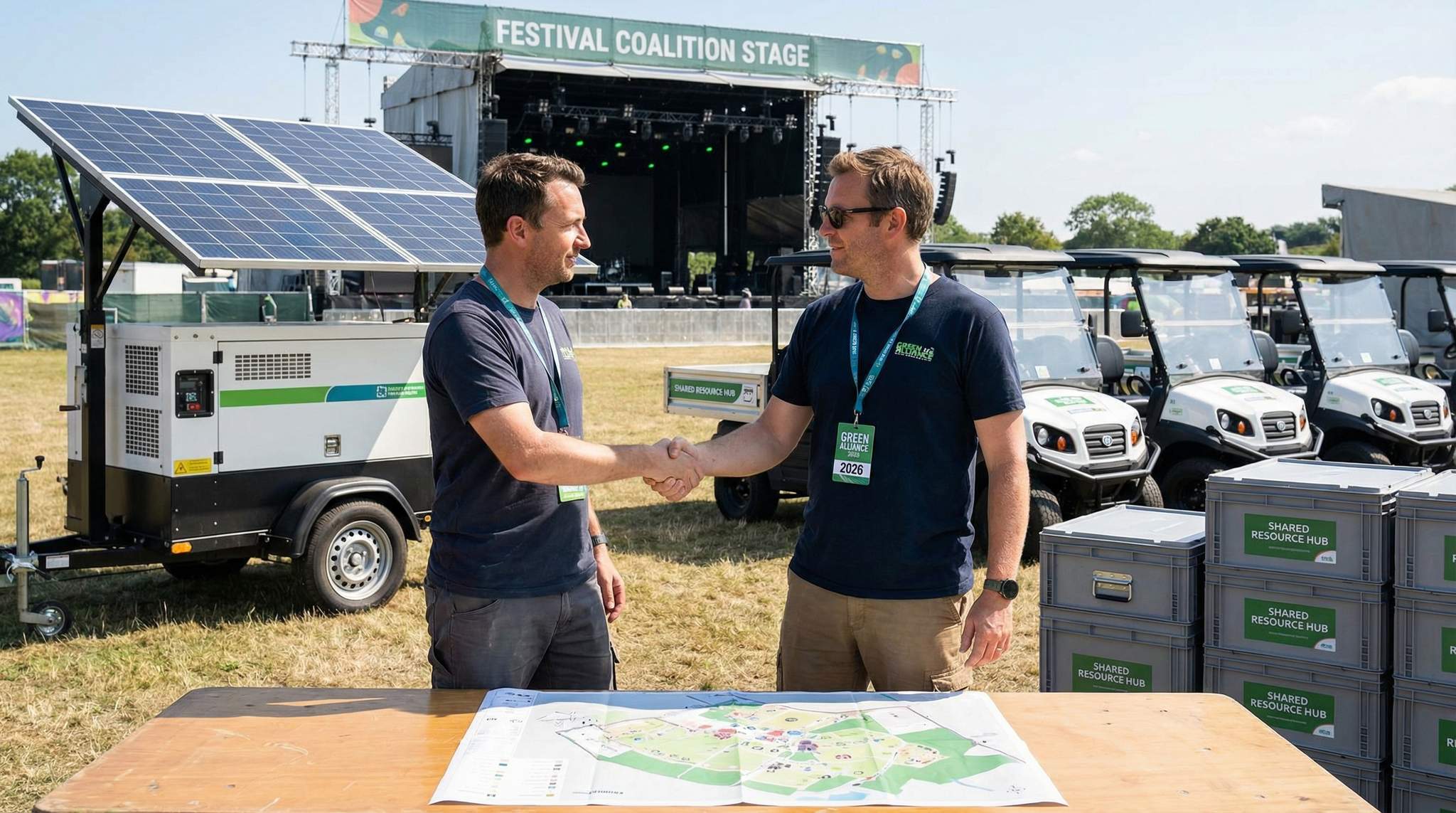
Beyond moving artists, festivals also move tons of equipment – stages, sound systems, lighting rigs, instruments – often over long distances. Alliances look for ways to streamline these logistics and eliminate duplicate trips. One effective tactic is sharing backline gear and standardizing tech specs between events. For example, if two festivals run on back-to-back weekends, they can coordinate with the same audio vendor to supply one set of band equipment (drums, amplifiers, etc.) to both shows. In practice, a single professional drum kit and amp setup might serve Festival A on week 1, then travel by truck to Festival B on week 2, utilizing shared backline equipment lists, instead of each event importing or renting its own gear. By jointly renting one top-tier backline and splitting the cost, both festivals may even secure a volume discount from the supplier for renting specific brands and models. This approach was used by a pair of rock festivals in California in 2025: they coordinated a shared stage and sound rental package, saving each event ~20% versus separate rentals. The environmental payoff is parallel to the cost savings – one truck hauling equipment to two nearby festivals burns far less fuel (and emits less CO2) than two separate delivery routes would. Some alliances go further and co-invest in infrastructure: a group of boutique festivals in Australia jointly purchased a large shade tent structure that each uses in turn, passing it along like a baton over the summer, a strategic move to protect festival margins. They split storage and maintenance costs and avoid manufacturing multiple tents. Such shared infrastructure means fewer materials produced overall and fewer transport trips, shrinking the collective carbon footprint.
Pooled Transport for Crew and Artists
Festival alliances also find efficiencies in how they transport people – the crews, contractors, and even artists traveling to their sites. Rather than each festival arranging separate vehicles, allied events can pool transport when schedules align. For example, if two partner festivals are a week apart, an artist flying in for the first event might stay in the region and take a shared shuttle or tour bus to the second event, often coordinated by the festivals. This was the case in Eastern Europe, where two EDM festivals in neighboring countries teamed up to fly in a group of DJs on one set of flights and then used a single coach bus to move the performers and their team to the next site. Splitting these transfer costs saved each festival thousands in airfare and ground transport. In another instance, a sustainability-focused festival in France organized a biofuel-powered bus to collect several France-based artists and crew from Paris, bringing them to the rural festival location together, helping match increasingly proactive sustainability goals. That eliminated what would have been a dozen separate car trips. For crew members, alliances can coordinate travel so that one technical team handles multiple events in sequence – the crew for a stage might finish Festival X, then hop on a van to Festival Y happening the next weekend, with their travel between covered jointly. This not only cuts costs on per diem and travel, it also builds a steadier work stream for those crews (more on shared staff later). Some alliances have even explored group air travel discounts: by aggregating their artist and crew flight needs, they negotiate with airlines for a bulk rate or carbon offset package. Organizers know they should be collaborating with transport partners to secure discounts or offset partnerships. While still an emerging idea, the message is clear – any logistic that can be shared or consolidated will be, to drive down fuel use and expenses.
Greener Transport Solutions
Working together also unlocks more sustainable transport options that might be out of reach for one festival alone. An alliance might partner with a transit company to run festival-to-festival shuttles for fans and staff, or collectively rent electric vehicles for on-site use. In the UK, a cluster of events collaborated with a rail provider to offer a special “festival train” service that carried attendees and crew to multiple festival locations on a single rail line over consecutive weekends. Coordinating such services requires sufficient scale – a single event might not fill a whole train, but several events together can justify it. Allied festivals are also sharing knowledge and tools for greener transport. Many are adopting recommendations from industry groups like Ecolibrium (a sustainable travel charity) and the “Last Night a DJ Took a Flight” report to reduce touring emissions. Those guidelines encourage tactics like grouping tour dates by region (which alliances inherently do) and using ground transport over air whenever possible, as suggested by Trippin’s feature on tackling the climate crisis. Festival producers in 2026 are also increasingly conscious of what vehicles they hire. Through their alliances, some have secured group deals on electric shuttle buses for moving attendees and artists. Others jointly invest in things like biodiesel generators or solar-powered battery systems to run those buses and other site needs. By pooling demand, they make it worthwhile for vendors to supply greener options. In short, collaboration enables festivals to innovate in sustainable logistics – from trains to tour buses to EV fleets – on a scale that single events couldn’t afford or arrange alone.
Facilitating Affordable Attendee Transit
With inflation impacting consumer wallets, fans are actively searching for ways to save money on travel to European music festivals in 2025 and 2026. Forward-thinking organizers are turning this attendee pain point into an alliance opportunity. By negotiating group rates with national rail services or chartering cross-border coach fleets, a coalition of events can offer subsidized, low-carbon travel packages directly at the point of ticket purchase. This proactive approach not only reduces the festival’s Scope 3 emissions but also removes a major financial barrier for international attendees, boosting overall ticket sales across the partner network.
Data-Driven Event Marketing
Track ticket sales, demographics, marketing ROI, and social reach in real time. Exportable reports give you the insights to make smarter decisions.
Resource Sharing and Group Deals
Bulk Purchasing Power
Alliances aren’t only about moving people and gear – they’re also about leveraging economies of scale in purchasing. Festivals require vast quantities of supplies: ticket wristbands, fuel, food and beverages, merchandise, sanitation products, you name it. Independent events buying these separately often pay premium prices. But if allied festivals combine their orders, they unlock bulk discounts and reduce waste. For example, if five regional festivals each need 1,000 reusable water bottles for merchandise, they can band together and order 5,000 from a manufacturer in one go. The supplier, eager for the larger contract, might drop the price per bottle by 20% or more. This isn’t hypothetical – such bulk-buy alliances have been used by events in Europe and North America to great effect. In one case, a group of eco-conscious midsize festivals jointly ordered 50,000 biodegradable cups with their logos, securing a unit cost almost 30% lower than any could get alone. By co-buying in volume, festivals also ensure consistent quality (all members get the same durable, certified-green product) and often negotiate perks like free shipping or on-site support from the vendor, creating a budget that stretches every dollar further. Alliances also strengthen festivals’ hands, leveraging shared seasonal contracts. There’s a sustainability win here too: consolidating orders means fewer separate deliveries (cutting down transport emissions) and often less packaging waste overall. Rather than five smaller pallets of goods trucked to five places, one big pallet goes to a central point for distribution. Less fuel burned, less cardboard and plastic packaging – all thanks to bulk purchasing.
Joint Vendor Negotiations
Many resource-sharing alliances take collective buying a step further by negotiating multi-event contracts with major vendors. Instead of each festival renting staging, lighting, or fencing at full price, the alliance presents itself as a single large client representing multiple events. This united front creates leverage. A stage production company might not budge on price for one 5,000-person festival, but if three festivals approach together seeking a package deal for all their events, the vendor is likely to offer a better rate to win the combined business, as vendors appreciate larger contracts. For instance, several independent festivals in California coordinated their approach to an audio-visual supplier. By signing a shared seasonal contract, they obtained high-end sound and lighting rigs for each event at around 20% lower cost than separate one-off rentals, significantly reducing costs for staging and sound. Similarly, festival alliances have negotiated group deals on things like generators, tents, portable toilets, and even insurance. An insurance broker may secure a lower premium per event if an alliance pools its risk and buys a group policy for multiple festivals (some alliances form a legal association or LLC for this purpose). The data bears out the benefits – many allied festivals report double-digit percentage savings on key budget items after negotiating as a bloc. The table below illustrates how joint procurement can shrink costs:
Need Festival Funding?
Get the capital you need to book headliners, secure venues, and scale your festival production.
Table: Examples of Cost Savings Through Festival Alliances
| Expense Category | Solo Festival Cost (USD) | Alliance Negotiated Cost (USD) | Savings for Each Festival |
|---|---|---|---|
| Stage & Sound Rental | $100,000 | $80,000 (shared multi-event deal) | 20% savings |
| Power Generators & Lighting | $30,000 | $24,000 (group rate) | 20% savings |
| Fencing & Sanitation | $20,000 | $15,000 (bulk contract) | 25% savings |
| Insurance Premiums | $10,000 | $8,000 (alliance policy) | 20% savings |
| Marketing Spend | $15,000 | $12,000 (cross-promotion & shared ads) | 20% savings |
| Staff Training Programs | $5,000 | $2,500 (joint workshop) | 50% savings |
| Total (illustrative) | $180,000 | $141,500 | ?21% overall |
Illustrative breakdown of potential savings for a mid-sized festival joining an alliance. Actual results vary, but shared strategies commonly cut costs by 15–30% across key budget areas, as seen in examples of alliance cost savings and illustrative budget breakdowns.
These savings free up budget for other needs (or help keep ticket prices stable). For example, if an alliance saves each member $40,000, that money might be reallocated to hiring better security staff or booking an extra mid-tier artist – improving the festival’s quality and value to attendees. It’s a virtuous cycle: cost efficiencies from cooperation can enhance the fan experience, which in turn boosts reputation and revenue.
Shared Infrastructure and Materials
Alliances also explore co-owning or rotating physical assets so that expensive infrastructure is utilized fully rather than sitting idle. The Australian shared tent is one example, but the concept extends further. Some regional festival groups have jointly purchased items like LED lighting systems, stage truss components, high-capacity Wi-Fi equipment, or decor installations that can serve different events over a season. By sharing capital investments, they unlock equipment quality they couldn’t afford alone, a crucial move to protect their margins regarding items that would have been prohibitively expensive individually. For instance, three boutique festivals in the Pacific Northwest co-funded a professional stage roof (weatherproof canopy and truss) that rotates among their sites in July, August, and September. Each festival pays a third of the purchase, and they share storage and maintenance responsibilities. Not only did this eliminate the need for each to rent an older stage cover annually, but it also reduced waste: one set of gear is manufactured and transported, instead of three separate temporary rentals that would eventually wear out. Alliances sometimes formalize these arrangements through a simple contract or cooperative structure, ensuring each member’s rights to the asset are clear. Maintenance schedules are coordinated so the equipment stays in top shape for all users. Another area of resource sharing is swapping excess materials. If one festival has leftover eco-friendly toilet paper rolls or unsold merch stock, it might transfer them to a partner event rather than letting them go unused. This level of granular sharing builds trust and camaraderie (one festival helps another in a pinch) and chips away at needless purchasing and waste. In essence, allied festivals create their own mini supply chain that maximizes the use of every stage, structure, and supply item across multiple events, aligning perfectly with sustainability principles of reduce, reuse, recycle.
Shared Staffing and Expertise
Exchanging Crew and Staff
Human talent is one of the most valuable – and limited – resources in festival production. Through alliances, festivals are mitigating labor shortages and improving crew quality by sharing staff and expertise across events. Many top-notch production crews, stage managers, lighting techs, and safety coordinators work freelance from event to event. An alliance can coordinate so that the same trusted crew works multiple member festivals, providing crews across events with a steadier stream of work and each festival with seasoned personnel who already know the equipment and expectations. For example, two music festivals in New Zealand that run a month apart jointly hired a veteran stage manager to oversee both events. They split his fee and travel costs, providing staff with steadier work and making it affordable to bring in a high-caliber expert neither could have retained full-time. The stage manager, in turn, had continuity – he carried insights from the first festival into planning the second, avoiding repeat mistakes and saving setup time. Some alliances have formalized a rotating “crew pool”: a roster of reliable staff (from electricians to decor artists to social media managers) that are scheduled to cycle through all the member festivals, allowing them to apply lessons from Festival A. This arrangement yields multiple benefits:
– Cost Savings – reduces recruitment expense and duplicate training since the same people fill roles at several events.
– Institutional Knowledge – crew members carry experience and lessons learned from one festival to the next, elevating performance. As one alliance member put it, “our lighting tech solved an issue at Festival A, and when it popped up at Festival B, he already knew the fix.” That continuity is invaluable.
– Efficiency & Trust – teams that have worked together across events become more efficient and have a rapport with each festival organizer. There’s less of a learning curve at each new site, and a shared culture of safety and professionalism develops.
To make staff sharing work, festivals set clear agreements on payment, insurance, and scheduling. Typically, each festival handles the payroll for the days the crew works their event, but the alliance might standardize rates or titles to keep things fair. Liability and insurance are clarified as well – for instance, whose policy covers a crew member on travel days between festivals. Alliances also watch out for burnout: they coordinate schedules to ensure key crew get adequate rest between events, making sure to manage crew fatigue effectively. After all, a shared technician who is exhausted by festival four isn’t an asset to anyone. When managed well, however, resource-sharing alliances can turn a staffing crisis into a strength. In 2026’s tight labor market, this has been a lifesaver for independent festivals that struggle to find experienced crew. By collaborating, they effectively create a larger labor pool together than they ever had separately, proving how festivals help each other.
Joint Training and Skill Development
Alliances aren’t just sharing current staff – they’re also investing in developing skills together. Training programs can be expensive for one festival to host, but when costs are split among a group, it becomes feasible to bring in top-notch instructors or certification courses. For example, a collective of festivals in India partnered to hold a crowd management and safety certification workshop for all their security leads and volunteer coordinators, where each festival pitched in a small amount to hire a certified trainer. They scheduled the session during the offseason when all teams were available. The result was that dozens of staff across the alliance got professional training for half the cost it would have been individually, and all member events benefited from improved safety practices thereafter. Similarly, European festival alliances have organized joint training on sustainability (like how to achieve zero-waste operations) and accessibility (making events more inclusive). The UK’s Association of Independent Festivals (AIF) has facilitated shared webinars on topics such as festival drug safety and mental health first aid for crew, open to any member festival’s staff. These learning exchanges propagate best practices rapidly through the community – when one festival innovates, allied festivals hear about it and learn how to implement the idea. In some cases, alliances also share administrative expertise: an event with a great marketing manager might lend that person’s skills to another festival in the network for a few weeks, or two festivals might swap personnel for cross-training so each learns how the other operates. This kind of collaboration builds collective intelligence. It also sends a message to crew and volunteers that if they stick with the alliance network, there are growth opportunities not just at one event per year but across many. In an era where crew retention is challenging, despite staff being branded useful idiots in some sectors, formalizing a crew pool for retention offers a path to more work and development within a supportive community helps keep talent engaged and loyal.
Building a Community of Organizers
Perhaps the most intangible but powerful outcome of these staffing and knowledge exchanges is the sense of community that forms among festival organizers themselves. Instead of feeling isolated, struggling with the same problems in parallel, allied festival producers become part of a peer network. They regularly communicate – through group chats, alliance meetings, or informal meetups – swapping advice and moral support. This camaraderie can be a game-changer in a high-stress industry. As one alliance founder noted, “when a production snag hit us, our partner festivals jumped in with solutions and even loaned us a piece of equipment on the spot.” Such goodwill not only solves problems faster but also provides emotional reassurance. The community mindset extends outward as well: festivals in alliances often promote each other on social media or on-site (“Don’t miss our friends at XYZ Festival next month!”), reinforcing to fans that they’re part of a larger movement of music and culture. Working together also lets festivals present a united front on important issues – from lobbying local authorities for permit changes to collectively tackling green initiatives beyond the scope of one event. For example, alliance members might co-launch a regional sustainability campaign, inviting their combined audience to participate in beach cleanups or tree-planting drives between festival dates. These collaborations amplify community impact and show that festivals aren’t just about profits – they’re about cultural and social value. In essence, by teaming up, festivals are strengthening the cultural fabric that supports live events, ensuring that a setback for one can be overcome with the help of many.
Maintaining Unique Vibes in Collaboration
Differentiating Lineups and Programming
A common concern about closer cooperation is whether festivals will start to feel “cookie-cutter” or lose their unique identity. Savvy alliances handle this by drawing clear lines between shared and separate elements. Festivals might coordinate on a few big headline artists to route together, but otherwise ensure their lineups reflect different genres or local talent. For instance, two allied festivals could both book a major rock headliner on consecutive weekends, yet Festival A builds its undercard with folk and indie acts while Festival B leans into electronic and hip-hop. Each event’s essence remains distinct. In practice, even when events share some artists, the context – the stage design, the crowd, the setting – gives each performance a fresh life. Take the scenario of a popular DJ playing at both an urban festival and a beach festival on the circuit; the city event might schedule them at midnight in a warehouse stage, whereas the beach fest has them at sunset by the sea. Fans get unique experiences at each. Alliances often explicitly agree to respect differences: they’ll collaborate on logistics and sometimes on a couple of anchor artists, but not homogenize programming. In fact, sharing resources can enhance uniqueness because it frees up budget for each festival to invest in niche programming like local art installations, workshops, or community showcases that set them apart. Many festival producers report that after saving money through alliance deals, they were able to add special experiences – one brought in an indigenous dance group local to their region, another added a day of wellness activities – the kinds of touches that make an event one-of-a-kind. Thus, working together doesn’t mean becoming the same; it means each can afford to be more fully itself in other areas.
Customizing On-Site Experience
Allied festivals also maintain their individual character through the on-site design and atmosphere. While they might share hard infrastructure (like that rotating stage or tent), each festival decorates and configures it in their own style. Think of it like a blank canvas provided by the alliance – one fest drapes it in bohemian tapestries and LED art, another paints it with neon jungle motifs. The look and feel remain unique. Local culture plays a big role too. Festivals keep showcasing their home region’s food, art, and personality even if they cooperate on behind-the-scenes elements. A sustainable food truck partnership might serve the whole alliance, for example, but each festival will pair those offerings with its local craft beers or traditional dishes. Attendees often have no idea that two festivals sharing a stage roof or security team are even related in any way – to them, each is a standalone world. Organizers can amplify this by theming their events distinctly (one might be known for a fantasy theme, another for retro aesthetics), which alliance savings help support. Additionally, any shared messaging on sustainability or community is usually woven into each festival’s own voice. For example, allied festivals might all promote a “bring your reusable bottle” initiative to reduce plastic, but one fest frames it as part of their funky eco-hero storyline, while another ties it to a local conservation cause. In short, alliances operate in the backstage realm and during planning months; once gates open, each festival puts its personal stamp on the experience delivered to fans. This balance keeps the magic and diversity of festivals alive, even as they smartly cooperate out of view.
Collaborative Marketing, Not Confusion
Marketing is another area where festivals tread carefully to maintain brand distinction while still enjoying alliance benefits. Partnering with other events allows for cross-promotion – but it’s done in a way that enhances rather than dilutes each brand. Festivals might agree to shout each other out on social channels or include a flyer for the partner event in their ticket packets. These nods signal a friendly relationship without merging identities. In some cases, alliances create a collective marketing campaign for their sustainable initiative or tour circuit, but they present it like “Presented by the Independent Festival Alliance” with logos of each member, rather than replacing individual branding. One successful example was a group of eco-focused festivals in the Pacific Northwest that ran a joint social media challenge (“Travel Green to All Our Festivals”) highlighting sustainable travel options. They promoted it together but kept their separate hashtags and flavor in posts. As a result, engaged fans discovered sister events through the campaign while recognizing each festival’s unique voice. Ticketing and promotions can also be coordinated in subtle ways: allied festivals might offer a small discount for attendees who go to multiple alliance events (e.g. show your wristband from Festival A at Festival B for 10% off admission). This rewards loyal fans without making anyone feel like the festivals are interchangeable – rather, it frames it as being part of a larger community experience. From a sponsor perspective, collaborating can actually increase distinctiveness because brands see that a festival is part of a forward-thinking network. It signals professionalism and shared values (especially sustainability), which sponsors appreciate. Environmentally responsible events attract sponsors, serving as a marketing asset that differentiates. Each festival can pitch sponsors on its individual audience plus the extended reach or data from alliance partners, making a more compelling case while still delivering sponsorship activations tailored to each site. The key is communication: alliance members regularly discuss marketing plans to avoid stepping on each other’s announcements and to coordinate messaging on joint initiatives. By doing so, they achieve the best of both worlds – mutual support in growing their audiences, and clear identities that fans can latch onto.
Forming and Managing an Alliance
Finding the Right Partners
Building a successful festival alliance starts with choosing the right collaborators. Not every event makes a good match. The most fruitful partnerships tend to be between festivals that have complementary qualities and trust. Geography is a major factor – look for festivals in the same broad region (so travel logistics can align) but not on the exact same dates. If your event is in July, an alliance with an August or September festival can work well, whereas teaming with one on the very same weekend might limit artist-sharing potential. Ideally, partner festivals should also operate on a similar scale (all boutique, or all mid-sized, etc.) so their needs align and no member consistently dominates. Perhaps most importantly, shared values and openness lay the foundation for collaboration. Organizers should identify overlaps and agreements early on to gauge whether potential partners are trustworthy, willing to communicate transparently, and see the alliance as a win-win (rather than a zero-sum game). For instance, an upstart festival that is very secretive or fiercely competitive might not play well in a cooperative. On the other hand, a festival whose team actively reaches out to brainstorm joint solutions – even before any formal alliance exists – is showing the right spirit. Many alliances start informally: a few like-minded festival directors simply begin chatting (at conferences, via email, or even on social media groups) about shared challenges and “what if we helped each other out?” Those initial conversations reveal who could be a reliable long-term partner. It’s wise to start with a small pilot group – maybe two to four festivals – and you can always add others once the collaboration gains traction. Remember, it’s not about raw numbers of partners, but the quality of cooperation. Two tightly-knit festivals can achieve more together than five loosely connected ones.
Setting Alliance Goals and Ground Rules
Once a core group of partners is on board, the next step is to define clear goals and guidelines for the alliance. All members should discuss and agree on what they aim to accomplish by teaming up. Are the top priorities cost savings, carbon reduction, talent booking, or something else? Laying this out focuses everyone’s efforts. For example, an alliance might set a goal to cut each festival’s operational costs by 15% in the first year and to reduce combined CO2 emissions by 20 tons through shared transport. Setting measurable targets like these provides direction and a way to later gauge success. It’s equally important to establish ground rules for how the collaboration will function. This can be done in a friendly way, but it helps to actually write down a simple agreement or Memorandum of Understanding (MOU) covering specific opportunities like supply orders. Key points might include:
– Scope of Sharing – List the specific areas you’ll cooperate in (e.g., “We will coordinate artist booking approaches, pool equipment rentals, and cross-promote on marketing”). This manages expectations; no one is surprised by requests beyond the agreed scope.
– Cost-Splitting Formula – Decide upfront how expenses or savings from joint activities will be divided. It could be equal shares, or proportional to festival size, or case-by-case. For instance, bulk orders might be split per item count, whereas a co-owned asset might be split 50/50.
– Decision-Making – Outline how the group will make decisions (unanimous for big moves like adding a new member? Majority vote for routine matters?). Having this prevents stalemates and feelings of unfairness.
– Communication – Agree on communication channels and frequency. Many alliances set up a shared Slack workspace or regular Zoom calls so everyone stays in the loop. You might commit to a monthly check-in call off-season, and weekly check-ins during the intense pre-festival months.
– Confidentiality & Non-Compete – Since sensitive info (like financials or artist offers) may be shared, members often agree not to disclose alliance plans to outsiders and to refrain from poaching each other’s sponsors or artists in bad faith. There should be a baseline of professional trust.
Formalizing these in an MOU about 6–8 months before the festival season helps cement the partnership, ensuring specific opportunities are locked in. It’s not a heavy legal contract, but it ensures everyone is on the same page. As a living document, it can be adjusted each year as the alliance evolves. Starting with clear goals and ground rules turns a nice idea into an operational plan that team members can rally behind.
Coordinating Timelines and Communication
Effective alliances run on good organization. Each festival already has its own production timeline; now the group needs a coordinated timeline for joint actions. A typical alliance planning cycle might look like this (assuming summer festivals):
Table: Sample Timeline for Forming a Festival Alliance
| Timeline Stage (Months Out) | Key Actions and Milestones |
|---|---|
| Initial Outreach (12+ months out) |
– Festival organizers connect and gauge interest in collaboration. – Share basic info (event dates, major needs) to spot quick wins (e.g. back-to-back scheduling or common vendor contracts). |
| Planning & Alignment (9–10 months out) |
– Hold a group kickoff meeting (in-person or virtual). – Agree on alliance goals like cost savings targets and sustainability initiatives. – List resources each festival can share or needs help with. – Identify overlaps (e.g. all need fencing, or have staffing gaps in common). Form sub-teams for specific areas (equipment sharing, joint marketing, etc.). |
| Formalizing Agreement (6–8 months out) |
– Draft and sign an MOU outlining members, shared projects, and cost-sharing arrangements. – Set up shared communication tools (email list, Slack, Google Drive for documents). – Possibly establish a small joint fund if doing collective purchases. |
| Execution Phase (3–5 months out) |
– Implement plans: place bulk orders together, negotiate vendor deals using alliance leverage, book any shared equipment and transport logistics. – Coordinate lineup announcements if routing artists together (so one festival doesn’t leak news that affects another). – Launch any joint marketing (cross-promo on websites, coordinated social media hashtags). – Schedule monthly alliance calls to monitor progress and address issues. Increase to weekly as the season nears. |
| Festival Season (Event time) |
– Deploy shared resources in real time: shared gear is delivered and rotated as planned, crew travels between sites as scheduled. – Keep communication open daily – a WhatsApp group or radio channel for alliance producers to solve any on-the-fly problems (e.g., if a shipment is delayed, decide which festival can lend a spare). – Cross-promote live on-site (e.g., stage announcements: “See you at our partner festival next month!”). Collect data on successes (attendance spikes, cost reductions) as events unfold. |
| Post-Season Review (1–2 months after) |
– Reconvene for a debrief meeting once all events are done. – Analyze outcomes: How much did each festival save? Emissions reduced? Which shared tactics worked well, which didn’t? – Gather feedback from all departments (production, marketing, finance) to compile lessons learned in a shared report. – Decide on next steps: Will the alliance continue next year? Expand to new members or new collaboration areas? What tweaks to agreements are needed? – Celebrate successes – some alliances issue a joint press release touting their achievements, or simply host a thank-you dinner for all teams to reinforce camaraderie. |
(Adapted from real-world alliance playbooks – timing can shift based on festival schedules. The key is to start early and keep communicating. See the initial outreach timeline and the formalizing agreement phase.)
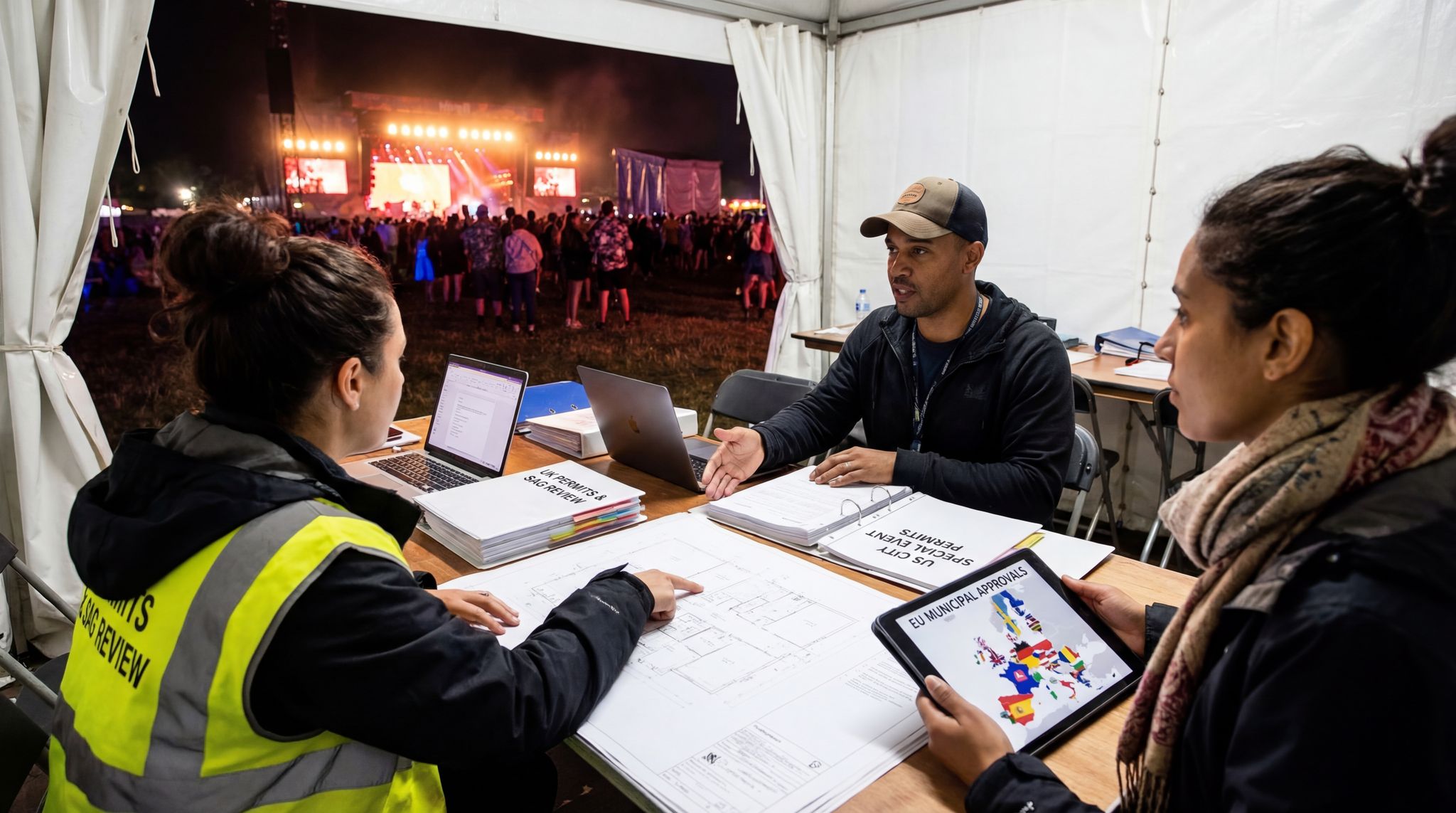
Following a structured timeline ensures nothing falls through the cracks. It’s especially important that one or two point people drive the coordination. Often an alliance will designate a coordinator (maybe one festival’s director or an external facilitator) who sends calendar invites, nudges folks on deadlines, and centralizes information. This role keeps everyone accountable. Another tip: use collaborative project management tools – shared spreadsheets for cost tracking, docs for joint schedules, and cloud folders for contracts – so all members can view and edit in real time. In 2026, some alliances are even using specialized event collaboration software to manage these shared tasks. But even simple tools like Google Sheets can do the job if everyone commits to updating it. The mantra is visibility and communication. No festival should be left guessing what the others are doing or when that shared generator is arriving. Regular check-ins, clear documentation, and an open channel for spontaneous communication (like an alliance-wide chat group) together create a smoothly functioning unit. When coordination is done right, partner festivals operate almost like different departments of one big festival spread over time and space – a remarkable feat given they’re independent entities at heart.
Navigating Challenges and Trust Issues
No collaboration is without challenges. It’s best to acknowledge and prepare for potential friction points in an alliance so they can be managed proactively. One common challenge is changing circumstances – say one festival shifts its dates or suddenly cancels for a year. This can throw alliance plans (like routing or equipment schedules) into disarray. The solution is to build flexibility into agreements. For instance, include a clause on what happens if a member takes a “fallow year” or drops out: remaining members might adjust cost splits or invite a new festival to join. Keeping an open dialogue is crucial; if you’re thinking of moving your dates, loop in the group early so adjustments can be made together. Another potential pitfall is the perception of uneven benefit. Perhaps one festival feels they’re contributing more equipment or not getting as many shared artists as another. To avoid resentment, alliances should strive for transparency in accounting who saved what and who contributed what. Regularly reviewing the value each member is gaining (like in that post-season debrief) helps surface any imbalance so it can be corrected. Sometimes simply rotating certain opportunities can help – if Festival A got first dibs on a headline artist this year, maybe Festival B gets that advantage next year. Trust is the currency that makes all these arrangements possible; it can be strengthened by little things like openly sharing budgets or by big things like helping a partner in crisis without hesitation. Alliances that endure often set a tone of “we’ve got each other’s backs.” For example, when one partner festival had a last-minute supplier fallout, the others rallied to share spare equipment and staff – that kind of response builds immense goodwill.
It’s also wise to plan for conflict resolution explicitly. If a disagreement arises (and it might, say over how to allocate an unexpected cost), having a pre-agreed mechanism is helpful. This could be as simple as consulting an outside mediator (perhaps someone from a national festival association) if the group can’t resolve an issue internally. Fortunately, because alliances are voluntary and mutually beneficial, serious conflicts are rare – everyone has incentive to find compromise. As veteran producers note, the measure of a strong alliance isn’t avoiding all conflicts, but rather resolving them amicably while preserving relationships. Finally, respect the need for each festival to retain some independence. There may be areas where partners choose not to interfere, like each event’s core branding or certain local sponsorships. Giving each other that space prevents collaboration from feeling stifling. In summary, being upfront about challenges, documenting how to handle them, and fostering an environment of trust and flexibility will keep the alliance resilient. When bumps occur, the group that has prepared together will ride them out together and often emerge even stronger.
Sustainability Wins and Community Impact
Measurable Carbon Reductions
By 2026, stakeholders from fans to regulators are asking festivals to show real progress on sustainability, not just promises. Green touring alliances position festivals to deliver tangible carbon reductions that can be measured and showcased. Travel emissions are a prime metric. Consider a scenario of three festivals in an alliance coordinating an artist tour: if that eliminates two trans-Atlantic flights (because the artist only flies once to play all three events), it saves roughly 2–3 tonnes of CO2 per avoided flight (depending on distance) – so perhaps ~5 tonnes total. Multiply that by numerous artists and crew trips consolidated, plus freight shipments avoided, and the numbers add up quickly. Some alliances are tracking these gains in detail. For example, a Scandinavian festival network logged all shared transport in 2025 and found they collectively cut about 18% of their combined carbon footprint compared to if they had operated separately – much of it from reduced air and road miles. They achieved this while each festival still grew its attendance, proving sustainability doesn’t mean scaling down success. The data-driven approach, championed by groups like the Music Sustainability Alliance, emphasizes not just doing good but proving it with numbers. Many festivals now use carbon calculators to estimate savings from each initiative, specifically reducing audience travel emissions. While audience travel dominates emissions, savvy talent booking and routing plays a huge role. By feeding in data like “X number of artists took trains instead of flights” or “Y tonnes of gear were co-shipped,” organizers can quantify emissions avoided. These metrics can be reported in post-event sustainability reports or even live dashboards. It’s powerful PR: festivals can announce “Our alliance saved 50 tonnes of CO2 this season – equivalent to removing 11 cars from the road for a year.” Such statements resonate with eco-conscious fans and sponsors. Importantly, alliances also provide a support network for achieving broader green certifications. If one festival is pursuing A Greener Festival certification or ISO 20121 sustainable event standard, allied peers can share tips or coordinate efforts so everyone hits targets together. By teaming up, festivals move beyond isolated gains to collectively bend the curve downward on music touring emissions – setting an example for the entire live events industry.
Financial Resilience and Savings Reinvestment
Cost savings from alliances translate into stronger financial health and resilience for festivals – and that has community benefits. When independent festivals stay profitable, they continue to bring cultural and economic vibrancy to their regions year after year. The alliances described have helped many events avoid going into the red or canceling due to budget shortfalls. For example, after joining a resource-sharing alliance, a mid-sized festival in France reduced expenses enough to weather a year of lower ticket sales without cutting community programs. The money saved through shared deals can be reinvested in important areas: better staffing, attendee amenities, local community outreach, or simply keeping ticket prices fair despite inflation. In an era of rising costs, fans appreciate when festivals can hold the line on ticket pricing or offer added value – and alliances are one reason they can. Moreover, the collective approach can unlock new funding and sponsorship that individual events might not secure alone. Governments and grant bodies interested in sustainability are more likely to support collaborative efforts. In Australia, a group of festivals jointly received a tourism grant to develop green tour infrastructure (like shared EV charging stations on festival sites), something none of them would have been awarded solo. Sponsors, too, are excited by alliances. Brands with sustainability missions are eager to back projects that have scaled impact; an alliance’s combined audience and carbon savings present a compelling story. It’s a case of doing well by doing good: festivals boost their bottom line by going green and teaming up, appealing to modern festival audiences and buyers who feel good about eco-choices. As a bonus, the press tends to give positive coverage to these initiatives, raising each festival’s profile. All of this contributes to festivals’ long-term resilience – they are financially steadier and more culturally relevant, meaning they can continue to serve their communities with music, art, and economic stimulus for years to come.
Fan Engagement and Community Benefits
Alliances focused on sustainability don’t only make behind-the-scenes changes; they also engage attendees and local communities in meaningful ways. Fans today are grateful – and vocal – when festivals take real action on climate and waste. By publicizing their collaboration, allied festivals send a powerful message that the live music community is uniting to protect the environment. This fosters a sense of participation among fans: attendees feel that by supporting these festivals, they’re supporting a greater movement. Some alliances harness that sentiment through fan-facing programs. For instance, a group of festivals in the UK launched a “Green Passport” initiative: fans who traveled to multiple alliance events via low-carbon means (train, bicycle, EV, or carpool) could collect stamps and earn rewards like merch or VIP upgrades. This fun challenge got audiences involved in the alliance’s mission, building loyalty not just to one festival, but to all events in the network. Local communities see benefits too. With coordinated scheduling, festivals can avoid undesirable overlaps that strain regional infrastructure; instead of two neighboring towns holding big festivals on the same weekend (doubling traffic and emergency service loads), an alliance might stagger them, making life easier for residents and authorities. Additionally, when festivals save money through shared resources, they often have more to spend on local partnerships – hiring local crews, sourcing local food, or donating to area charities. The goodwill from “thinking local” is amplified when it’s done collectively. Community leaders appreciate when festivals demonstrate cooperation and responsibility, because it shows they’re not just parachuting in for profit, but rather acting as long-term community stakeholders. In some cases, alliances have used their united voice to advocate for improvements that help the whole community, like better public transit links or environmental preservation efforts in festival areas. It’s a shift towards festivals serving as regional cultural alliances, not isolated events. By teaming up, festivals have proven they can enrich their communities more deeply – economically, socially, and environmentally – than they ever could apart.
Leveraging the “70% of Festivalgoers” Sustainability Metric
Understanding that “70% of festivalgoers” prioritize sustainability when choosing which events to attend fundamentally changes how promoters should market their alliances. This isn’t just a feel-good statistic; it is a critical conversion driver. When organizers actively promote their green touring networks, shared biofuel transport, and zero-waste initiatives, they directly appeal to this massive demographic of climate-conscious ticket buyers. Highlighting these verifiable eco-practices in your ad copy and sponsor decks transforms backstage logistical choices into front-facing brand equity, ensuring your event remains competitive and culturally relevant.