Ensuring health and safety at a festival is not just a legal obligation but a fundamental pillar of successful event management. Seasoned festival producers have learned through years of experience that a well-executed safety plan can mean the difference between a triumphant event and a disastrous one.
Implementing comprehensive safety measures during festivals goes beyond basic compliance; it actively protects your production company from liability while building trust with local authorities. Whether you are coordinating a multi-stage electronic music event or a sprawling outdoor cultural gathering, prioritizing festival health and safety protocols ensures operational continuity when unexpected challenges arise.
Navigating the complexities of festival health and safety requires a proactive approach. Establishing clear festival rules and regulations early in the planning phase ensures that vendors, staff, and attendees all understand the baseline expectations for a secure environment.
Major incidents at past festivals – from crowd crushes to fires – have underscored how critical it is to cover every safety detail in advance. And while every festival is unique – a family-friendly community food fair will have different concerns than a weekend EDM rave – the fundamental health and safety principles remain the same across all events. By following a comprehensive compliance checklist, organizers can protect attendees, staff, and the festival’s reputation while adhering to all applicable laws and guidelines. The checklist below covers the common requirements and best practices that every festival organizer should review to ensure their event is both compliant and safe.
Smooth Entry With Mobile Check-In
Scan tickets and manage entry with our mobile check-in app. Supports photo ID verification, real-time capacity tracking, and multi-gate coordination.
Ultimately, a robust event health and safety checklist serves as the operational backbone for your entire production team. By standardizing your approach to festival health and safety, you empower site managers, security leads, and vendors to proactively identify hazards before they escalate into emergencies.
Understanding Event Safety Regulations at a Local Level
For any production team, understanding event safety regulations begins long before the site build. Organizers must proactively engage with municipal authorities, fire marshals, and local health departments to grasp the specific ordinances governing their chosen venue. Because legal requirements vary drastically between jurisdictions, a one-size-fits-all approach is rarely sufficient. Building a localized event health and safety checklist ensures that your baseline operational plan aligns perfectly with regional mandates, preventing costly permit denials or last-minute structural changes.
Planning a Festival?
Ticket Fairy's festival ticketing platform handles multi-day passes, RFID wristbands, and complex festival operations.
Venue Capacity and Crowd Control
Before tickets are even sold, organizers must establish a safe crowd capacity for the venue. This capacity should be based on local fire and building codes and the physical layout of the site. Exceeding the legal occupancy limit can result in fines or permits being revoked on the spot, but more importantly it endangers lives. Overcrowding not only creates discomfort but also raises the risk of crowd crush incidents, especially in bottleneck areas like gates or narrow pathways. (For instance, a European festival in 2010 saw a tragic crowd crush due to an overcrowded entry tunnel, a stark reminder that proper crowd flow and capacity limits are non-negotiable.)
Checklist – Crowd Capacity & Control:
– Verify the maximum occupancy allowed by local authorities for your venue and never exceed it, even if demand is high.
– Design the festival layout to avoid choke points: ensure multiple entrances and exits and use barriers to guide crowd flow safely.
– Monitor attendance in real-time via ticket scans or headcounts, and be prepared to pause entry if any area is nearing its safe limit.
– Train staff or hire professional crowd managers (often one per 250 attendees is recommended) to constantly observe crowd density and preempt dangerous congestion.
Fire Safety and Emergency Exits
Complying with fire safety regulations is paramount for any public gathering. Festivals must adhere to fire codes that dictate the number of emergency exits, exit sign visibility, and the presence of fire-fighting equipment. All exit routes should remain unobstructed at all times – a blocked exit can turn a manageable incident into a tragedy. It’s vital to coordinate with local fire marshals or authorities who may need to inspect the site before opening. No one ever expects a fire, but being unprepared for one is a risk no organizer should take. (In 2017, a festival stage in Barcelona caught fire due to a technical fault. Thanks to well-marked exits and a practiced evacuation plan, over 22,000 people were ushered to safety with no injuries.)
Checklist – Fire Safety Compliance:
– Identify and clearly mark emergency exits throughout the venue; ensure they are illuminated and never blocked by equipment or crowds.
– Install the required number of fire extinguishers (and other fire suppression tools as needed) and have them readily accessible; train staff in their use.
– If using tents, stages, or decor, make sure they are made of fire-retardant materials and meet local fire code standards.
– Coordinate with the local fire department for inspections, permits (for any pyrotechnics or open flames), and to confirm emergency vehicle access routes in and out of the venue.
Medical Services and First Aid
Every festival should be prepared to handle medical issues, from minor scrapes to serious health emergencies. Large gatherings can put a strain on local emergency services, so organizers typically must provide on-site medical tents or first aid stations staffed with qualified medics or emergency medical technicians (EMTs). Even smaller festivals should not neglect medical readiness: a local community event might arrange a basic first-aid post with volunteer medics, whereas a massive multi-day music festival might operate a fully equipped field hospital on-site. For any size event, adequate medical coverage not only keeps attendees safe but is often a requirement of event permits and insurance. (Many major festivals deploy roaming medical teams – for example, medics on bicycles or golf carts at outdoor camping festivals – to reach distressed attendees within minutes, a practice that has saved lives during cardiac or heat-related emergencies.)
Checklist – Medical Preparedness:
– Hire professional medical staff or partner with a medical services provider to operate a first aid tent/medical clinic on site, sized according to the event attendance.
– Ensure ambulance access routes are kept clear into and out of the venue, and consider stationing an ambulance on-site for rapid transport if needed.
– Equip the medical team with necessary supplies (bandages, IV fluids for dehydration, defibrillators/AEDs, etc.) and ensure they have communication links to event control and local hospitals.
– Develop a protocol for handling common festival medical issues (heat exhaustion, alcohol/drug overuse, injuries) and make sure staff and volunteers know how to quickly contact the medical team in an emergency.
Need Festival Funding?
Get the capital you need to book headliners, secure venues, and scale your festival production.
Sanitation and Hygiene
Maintaining sanitary conditions at a festival is both a health requirement and a courtesy to attendees. Local health regulations will dictate minimum standards for restroom facilities and waste management. Organizers need to provide sufficient toilets (including accessible units for people with disabilities) and hand-washing or sanitizing stations to serve the crowd. A lack of restrooms or poor maintenance can lead to unhygienic conditions, illness, or environmental violations. Similarly, garbage accumulation poses health risks and can become a fire hazard or attract pests if not properly managed. Cleanliness is a safety issue as much as it is an image issue – nobody enjoys a festival with overflowing toilets or trash piles.
Checklist – Sanitation & Waste Management:
– Rent or provide an adequate number of toilets based on attendance and event duration (a common guideline is at least 1 toilet per ~100 people, adjusted for the event’s length and alcohol availability). Ensure a portion of these are wheelchair-accessible.
– Supply plenty of hand-washing stations or hand sanitizer dispensers near food areas and restrooms to promote attendee hygiene.
– Schedule a dedicated clean-up crew to service restrooms regularly (restock toilet paper, empty holding tanks, clean surfaces) and to collect trash throughout the event. Do not let garbage bins overflow—plan for frequent waste removal or dumpster service.
– Follow local environmental health regulations for waste disposal (including recycling and greywater disposal if applicable), and have contingency plans for hazardous waste (like needle disposal at medical tents).
Food and Water Safety
If the festival involves food vendors or on-site cooking, food safety regulations become crucial. Event organizers are often responsible for ensuring that vendors have appropriate food service permits and that their operations pass health department requirements. This means proper food handling, cooking at correct temperatures, and having refrigeration for perishables. The availability of safe drinking water is equally important, especially in hot weather or multi-day festivals – dehydration can quickly become a medical issue if water isn’t accessible. Attendees also appreciate free water refill stations or clearly marked potable water sources as part of a festival’s hospitality and safety measures.
For mega-events, relying solely on local health inspectors may not be enough. Many organizers opt to hire an independent, FSA-compliant food safety monitoring service for large festivals. These specialized teams conduct continuous audits of vendor stalls, ensuring strict adherence to temperature controls and cross-contamination protocols throughout the event’s duration.
Checklist – Food & Water Compliance:
– Require all food vendors to have up-to-date health permits and food handlers’ certificates as mandated by local laws; coordinate with health inspectors if they will be checking vendors on-site.
– Provide vendors with adequate infrastructure like power for refrigeration and designated wash-up stations, and enforce rules on food storage and waste (e.g., keeping raw and cooked foods separate).
– Ensure there are ample drinking water points available: this could include water refill stations, bottled water sales, or drinking fountains. Clearly mark these stations and encourage attendees to stay hydrated.
– Have a plan for food safety monitoring during the event – assign staff or a health officer to periodically check that vendors are maintaining hygiene (proper glove use, temperature control, no cross-contamination) and to respond to any food-related incidents (such as a suspected case of foodborne illness).
Public Health Measures (Including COVID-19 Protocols)
Festivals must also align with broader public health guidelines that extend beyond the usual event safety norms. In recent years, pandemic-related measures like COVID-19 protocols have become a key part of festival planning. Organizers need to stay updated on current health advisories and legal requirements, which may include proof of vaccination or negative tests for attendees, mask mandates in certain areas, or capacity restrictions to allow physical distancing. Even outside of a pandemic context, communicable disease prevention is important – think of measures like providing hand sanitizer, encouraging sick staff or ticket holders to stay home, and having a plan if an illness is reported on-site. Taking health precautions seriously not only avoids legal penalties but also shows respect for the community’s well-being, helping festival-goers feel safe attending the event.
Checklist – Public Health Compliance:
– Stay informed on the latest public health regulations and guidelines from authorities (for example, state or national health departments) in the lead-up to the festival, and be ready to adjust plans (such as reducing capacity or adding safety measures) accordingly.
– Implement necessary COVID-19 protocols (if applicable), such as checking vaccinations or test results at entry, providing masks or PPE for staff, and posting signage about hand hygiene and respiratory etiquette. Ensure you have sanitization routines for high-touch surfaces (like frequent cleaning of door handles, counters, and shared equipment).
– Provide ample hygiene resources to attendees and staff: hand sanitizer stations, hand-washing facilities, and perhaps free masks or health kits as needed.
– Develop a clear illness response plan: designate an isolation area or protocol in case someone shows COVID-19 or other infectious symptoms on-site, and have contacts ready for local public health officials. Communicate refund or roll-over policies to discourage those who are unwell from attending in the first place.
Security, Emergency Planning, and Risk Management
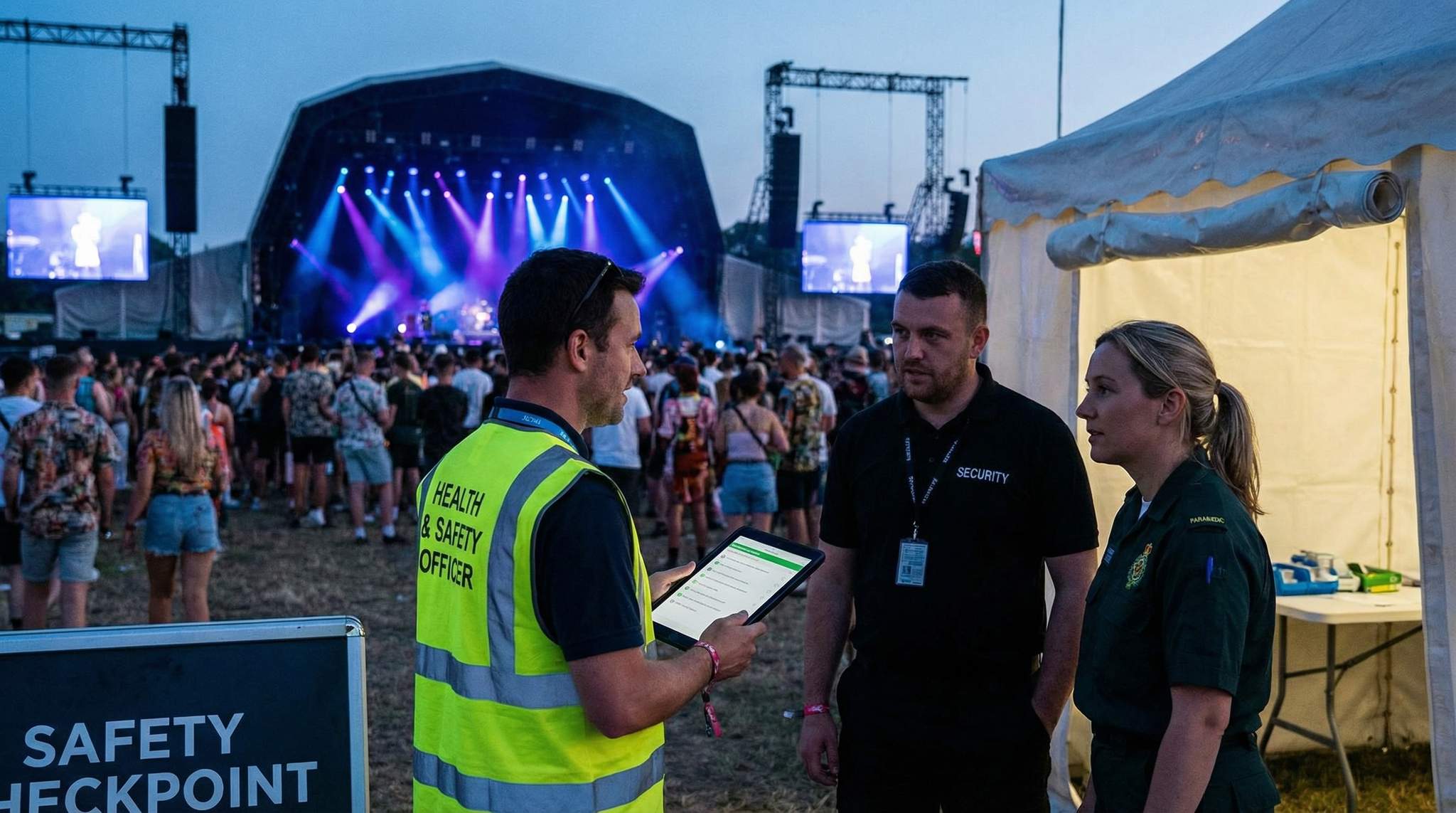
Ensuring the physical security of the event and having a plan for emergencies are core parts of compliance and responsible management. Festivals are required in many jurisdictions to submit an Event Safety Plan or Risk Assessment that details how various incidents would be handled. This includes everything from a lost child protocol to severe weather evacuation routes. For a small local festival, the safety plan may be simpler but must still cover all essential risks, whereas a large multi-stage festival will involve intricate coordination with multiple agencies and highly detailed contingency procedures. Security personnel (both professional security teams and volunteers or staff) need clear roles and training: they are the eyes and ears on the ground to detect problems early and enforce safety rules (like preventing overcrowding in one area or stopping unsafe behavior). Communication systems are also critical — organizers should have a central command post and use radios or other channels to coordinate between security, medical, and operations teams instantly if something happens. In short, hope for the best but plan for the worst: a well-rehearsed emergency plan can save lives and is often legally required for obtaining event permits.
Checklist – Security & Emergency Prep:
– Hire a sufficient number of licensed security personnel or stewards, and brief them on crowd management, access control, and emergency procedures. Ensure staff are easily identifiable (e.g., uniforms or vests) and positioned strategically around the venue.
– Create a written Emergency Action Plan covering potential scenarios (fire, severe weather, medical emergency, security threat, lost child, etc.) and distribute it to all key staff and local emergency services. Include clearly defined evacuation routes and assembly points.
– Set up a reliable communication system: equip your team with two-way radios or an equivalent, establish a command center, and use clear codes or channels for different types of incidents. Conduct a run-through or drill with staff before the festival starts.
– Coordinate with local authorities (police, fire, EMTs) on security measures – this might include having officers on-site or on call, setting up secure perimeters, and establishing how to quickly liaise in case outside assistance is needed.
– Verify that you have appropriate insurance coverage for the event (general liability, cancellation, weather insurance if relevant). Not only is insurance a prudent safety net, it’s often mandated by venues or local governments as part of the permitting process.
Conducting a Comprehensive Music Festival Risk Assessment
A dedicated music festival risk assessment is a specialized process that goes beyond standard event safety. Because live music environments introduce unique variables—such as high-decibel audio equipment, complex stage rigging, pyrotechnics, and dynamic crowd behaviors like moshing or front-stage surging—producers must evaluate these specific hazards systematically. To build a resilient safety framework, your hazard evaluation should categorize potential threats by severity and likelihood, assigning clear mitigation strategies for each. This document becomes the blueprint for your security deployment, medical staging, and overall festival health and safety strategy, ensuring that every department knows exactly how to respond to both common incidents and worst-case scenarios.
Specialized Event Environments: Water-Based and Outdoor Gatherings
Not all events fit the standard field or stadium mold. Specialized productions—such as waterpark electronic music events or large-scale outdoor picnic gatherings—require highly tailored security and risk management approaches. For instance, a “wet” event environment introduces severe electrical hazards, slip-and-fall risks, and the need for aquatic-certified rescue personnel. Similarly, sprawling daytime picnic festivals often face unique perimeter control challenges and prolonged sun exposure risks. Organizers must adapt their baseline event health and safety checklist to include specialized environmental audits, ensuring that all custom safety measures during these unique festivals meet strict municipal codes.
Managing security at a wet electronic music festival or a sprawling community picnic requires highly specific perimeter controls and crowd monitoring. Security teams deployed in these environments must be trained to handle unique behavioral dynamics, monitor water-adjacent zones for distress, and strictly enforce festival rules and regulations regarding prohibited items like glass bottles or unauthorized outside alcohol.
Accessibility and Inclusivity
Safety and compliance aren’t just for the majority of attendees – they must extend to those with disabilities or special needs as well. Laws in many countries (such as the ADA in the United States) require that public events be accessible to individuals with disabilities. This means considering wheelchair access, accessible viewing areas, and facilities like toilets and parking. It also involves training staff to assist people with special needs during an evacuation or emergency. Inclusivity goes hand-in-hand with safety: for example, a patron who is mobility-impaired must have a clear way to get out quickly in a crisis, and a deaf attendee should be able to understand emergency announcements (which might involve visual signal systems or on-screen text). By planning for accessibility, festival organizers not only abide by the law but also ensure a safe, welcoming environment for everyone.
Checklist – Accessibility Compliance:
– Provide accessible entrances and exits (ramps, at-grade access) so that attendees using wheelchairs or other mobility devices can enter, navigate, and evacuate the venue safely. Avoid routes with steps or obstacles, or provide alternate accommodations like temporary ramps or assistance.
– Designate accessible viewing areas near stages or performance spaces, with sightlines that account for attendees who may be seated or in wheelchairs. These areas should also be positioned for easy evacuation if needed.
– Ensure that a sufficient number of accessible toilets (and where possible, ADA-compliant restroom trailers or units) are available, and that paths to these facilities are navigable.
– Train staff and volunteers on assisting people with disabilities – for instance, understanding how to guide a visually impaired person, or how to communicate emergency info to someone who is deaf or hard of hearing. If your festival has many deaf attendees, consider hiring sign language interpreters for stage announcements and emergency messaging.
Weather and Structural Safety
Outdoor festivals are at the mercy of Mother Nature, and preparing for weather is a critical part of safety compliance. Sudden thunderstorms, high winds, extreme heat, or cold snaps can all pose serious risks. Organizers should have a detailed weather contingency plan – for example, criteria for delaying or canceling performances due to lightning, and methods to broadcast emergency weather warnings to attendees. Large temporary structures (stages, lighting towers, tents) must be built to code and often require an engineer’s sign-off or inspection. There have been incidents of stage collapses in high winds that resulted in injuries and deaths, so paying attention to structural integrity and wind limits is non-negotiable. Additionally, consider crowd comfort and safety in various weather conditions: provide shade and water in heat, warming stations or blankets in cold, and plan for mud or rain by securing flooring or drainage where needed.
Checklist – Weather & Structures:
– Continuously monitor weather forecasts and radar leading up to and during the event. Designate a weather officer or use a weather monitoring service to get alerts for lightning, high winds, or other severe conditions.
– Establish clear criteria for weather-related evacuation or shelter-in-place. For example, have a policy that if lightning is within a certain radius, performances pause and attendees are guided to safe areas (e.g., their cars or sturdy shelters), and communicate this policy beforehand.
– Ensure all stages, tents, and structures are professionally erected and meet safety standards. Use wind-rated tents and secure all structures with proper ballast or stakes. Have an expert set wind speed thresholds for potential stage shutdown or speaker rig lowering if winds become too strong.
– Provide for extreme weather amenities: free water and cooling stations for heat waves, misting tents or shaded rest areas; or fire pits/heaters and indoor respite areas if the festival is in cold weather. Keep medical staff alert to weather-related health issues like heat stroke or hypothermia and adjust plans as conditions change.
Building a Culture of Event Safety Compliance
Achieving true event safety compliance goes beyond simply ticking boxes on a festival health and safety document. It requires continuous training, rigorous documentation, and a proactive mindset from the top down. Whether you are organizing an intimate boutique gathering or a massive multi-day production, integrating an event health and safety checklist into your daily operational workflow ensures that every stakeholder—from site crew to security personnel—understands their role in mitigating risk. By prioritizing these festival rules and regulations, organizers protect their attendees, their staff, and their business liability.
To maintain this standard, your event safety planning checklist should function as a living document rather than a static piece of paper. As site builds progress and new contractors arrive on-site, producers must continuously update their safety protocols to reflect real-time ground conditions. Reviewing this comprehensive safety framework during daily production meetings ensures that every department remains aligned on hazard prevention and emergency response.
Final Thoughts
Health and safety compliance is not a one-time task but an ongoing commitment throughout the festival lifecycle. From planning to teardown, the most successful festival producers foster a culture of safety and vigilance. They know that when all the regulatory boxes are checked and every potential risk is managed, the creative side of the festival can truly flourish.
By utilizing a thorough checklist like the one above and learning from both past failures and successes in the industry, the next generation of festival organizers can carry the torch forward. The result is an event where attendees have fun and feel cared for, staff operate with confidence, and the community and authorities see the festival as a well-run, responsible gathering. In the end, a safe festival is a successful festival – one that earns the trust of everyone involved and paves the way for future editions.
Frequently Asked Questions
How do festival organizers determine safe crowd capacity?
Organizers establish safe crowd capacity based on local fire and building codes alongside the physical site layout. Exceeding these limits risks fines and dangerous crowd crush incidents. To maintain safety, staff should monitor attendance in real-time via ticket scans and use barriers to guide flow and avoid choke points.
What fire safety regulations apply to festivals?
Festivals must comply with fire codes by clearly marking illuminated emergency exits, keeping routes unobstructed, and installing accessible fire extinguishers. Tents and decor should use fire-retardant materials, and organizers must coordinate with local fire marshals for inspections and permits regarding pyrotechnics or open flames to ensure attendee safety.
What medical facilities are required at festivals?
Festivals require on-site medical readiness ranging from basic first-aid posts for small events to field hospitals for large gatherings. Organizers must hire professional medics, ensure clear ambulance access routes, and equip teams with supplies like defibrillators and IV fluids to handle emergencies such as heat exhaustion or cardiac issues.
How many portable toilets are needed for a festival?
A common guideline for festival sanitation is providing at least one toilet for every 100 attendees, adjusted for event duration and alcohol availability. Organizers must also include wheelchair-accessible units and hand-washing stations. Regular maintenance schedules are essential to restock supplies and prevent unhygienic conditions or environmental violations.
What should be included in a festival weather contingency plan?
A weather contingency plan includes continuous monitoring of forecasts and clear criteria for evacuation or pausing performances due to lightning or high winds. Safety measures involve securing temporary structures like stages, providing amenities like shade and water for heat, and establishing communication protocols to warn attendees of severe conditions.
How can festivals ensure accessibility for disabled attendees?
Festivals ensure accessibility by providing wheelchair-accessible entrances, exits, and restrooms alongside designated viewing areas with clear sightlines. Compliance involves training staff to assist people with special needs during emergencies and ensuring paths are navigable. Inclusivity measures, such as sign language interpreters, help create a safe environment for all attendees.
What are the core components of an event health and safety checklist?
A comprehensive event health and safety checklist should cover venue capacity limits, fire safety protocols, medical and first aid readiness, sanitation requirements, and food hygiene standards. It must also detail emergency action plans, security deployments, and weather contingencies to ensure full regulatory compliance.
How should organizers communicate festival rules and regulations to staff and vendors?
Organizers should distribute a comprehensive event health and safety checklist and a finalized code of conduct well before the build phase begins. Hosting mandatory pre-event briefings ensures that all contractors, security personnel, and food vendors fully understand the festival rules and regulations, aligning the entire team on emergency protocols and compliance standards.
What does event safety compliance entail for specialized or water-based festivals?
For specialized events, such as waterpark electronic festivals or outdoor picnic gatherings, event safety compliance requires additional risk assessments. Organizers must implement strict electrical grounding protocols near water, mitigate slip hazards, and deploy specialized security teams trained for aquatic or unique outdoor environments to maintain overall festival health and safety.
What are the most critical safety measures during festivals?
The most critical safety measures during festivals include strict crowd capacity management, clearly marked and unobstructed emergency exits, comprehensive on-site medical care, and robust weather contingency plans. Organizers must also enforce rigorous festival rules and regulations regarding vendor compliance, sanitation, and security deployments to mitigate risks effectively.
Why is understanding event safety regulations critical during the early planning stages?
Understanding event safety regulations early allows organizers to secure necessary permits, design compliant site layouts, and accurately budget for required medical and security personnel. Proactive compliance prevents costly last-minute operational changes and ensures the festival meets all municipal legal standards.
How do you conduct a music festival risk assessment?
Conducting a music festival risk assessment involves systematically identifying hazards unique to live music events, such as stage rigging failures, crowd surges, and extreme weather impacts. Organizers must evaluate the likelihood and potential severity of each risk, then implement targeted mitigation strategies—like reinforced barricades, specialized security deployments, and dedicated medical zones—to ensure comprehensive festival health and safety.
When should an organizer finalize their event safety planning checklist?
While the core event safety planning checklist should be drafted during the initial permitting phase, it remains a living document throughout the production lifecycle. Organizers must continuously update their safety frameworks to account for final site layouts, updated weather forecasts, and specific vendor requirements right up until gates open.