Infrastructure Is the New Headliner: Upgrading Festival Basics for 2026 Fan Expectations
Category: Infrastructure & Utilities
As we head into 2026, festival-goers expect more than great lineups – they demand seamless, comfortable experiences. Mega lineups alone won’t guarantee success in an oversaturated festival market where fans have countless options. Savvy organisers know that infrastructure is the new headliner, and investing in “unsexy” essentials like power, sanitation, entry systems, and comfort can make or break an event’s reputation. This practical guide explores why upgrading festival basics is mission-critical for meeting rising attendee expectations, with real examples of festivals that earned fan loyalty by elevating infrastructure (and cautionary tales of those that didn’t). From clean facilities and reliable power to fast entry, strong connectivity, and crowd comfort, we’ll cover how to audit and upgrade these fundamentals to deliver true value in an increasingly competitive landscape.
The New Fan Expectation: Experience Over Lineup
Beyond Lineups – Fans Crave Seamless Experiences
In 2026, a festival’s experience is as important as its lineup. Attendees no longer tolerate events that excel on stage but falter with basics like toilets or entry queues. Industry veterans note that to stand out in an oversaturated season, festivals must deliver comfort and efficiency alongside great music. Rising ticket prices also raise fan expectations – people want to feel they’re getting full value, not just paying for big names, a trend highlighted by industry discussions on rising costs and ticket pricing. This means everything from clean bathrooms to smooth traffic flow is under scrutiny. Major events like Tomorrowland have built such trust in their experience that they sell out before announcing any headliners, proving that a reputation for seamless logistics and comfort packs as much draw as a superstar artist. In short, modern festival-goers judge an event holistically – the food lines, phone signal, and toilet queues all contribute to whether it’s “worth every penny” to attend, a sentiment echoed in recent analyses of Eastern European festival trends.
Loyalty Through Basics: How Infrastructure Delivers Value
Investing in rock-solid infrastructure yields returns in fan loyalty and spending. Clean, well-run events encourage attendees to stay longer, enjoy more, and return next year. Studies show that poor facilities are fans’ top frustration – in one UK survey, 78% cited dirty toilets as their number-one festival complaint according to a Virgin Media O2 survey. On the flip side, festivals that prioritise comfort see higher satisfaction and dwell time, often boosting on-site revenue as happy attendees enjoy comfort infrastructure like shade and seating. Organisers with an experience-first mindset understand that a contented crowd will spread positive word-of-mouth and forgive the occasional hiccup. For example, Y-Not Festival in England earned an award and glowing fan feedback by making spotless toilets a hallmark of their event (they even advertised their clean loos as a selling point) by implementing strict cleaning logs and restocking protocols. This attention to detail builds trust and enhances the boutique bathroom experience. When basic needs are met, fans feel cared for and perceive real value for their ticket – a critical advantage as festivals compete not just on lineup, but on the overall journey they offer attendees, as noted in Pollstar’s coverage of market challenges.
Go Cashless With RFID Technology
Enable contactless payments, faster entry, and real-time spending analytics with RFID wristbands and NFC-enabled ticketing for your events.
Cautionary Tales: Festivals That Skimped on Infrastructure
The importance of basics becomes painfully clear when they go wrong. High-profile festival failures over the years underscore how inadequate infrastructure or planning can trigger disaster. Consider the infamous examples:
– Fyre Festival (2017) – Marketed as a luxury paradise, it collapsed when attendees arrived to zero proper infrastructure. Instead of promised villas and gourmet food, they found disaster-relief tents, scant meals (the viral limp cheese sandwich), no running water, and no electricity. This lack of basics turned Fyre into a fiasco so dire it spawned lawsuits and documentaries – a masterclass in what not to do.
– Woodstock ’99 – This 250,000-person event is now a case study in infrastructure negligence. Organisers provided too few toilets and water stations; by day two, overflowing latrines and contaminated water had attendees furious. This lack of foresight regarding essential comfort and hygiene infrastructure combined with price-gouging on bottled water led to riots and a legacy marred by chaos.
– Astroworld (2021) – Even well-established festivals can falter if crowd safety infrastructure is lacking. At Travis Scott’s Astroworld, poor crowd flow design and insufficient safety protocols led to a deadly crowd crush. Investigations highlighted failures such as no real-time crowd density monitoring, slow emergency response, and failure to halt the show promptly as the situation escalated, proving that crowd management infrastructure is a life-or-death matter.
– Electric Zoo 2023 – Technical and planning failures at this New York EDM festival infuriated fans. Day 1 was abruptly canceled just hours before gates due to “unfinished construction” of the main stage, as reported by Brooklyn Vegan. On Day 2, entry was delayed for hours by ticket scanning system failures, causing massive queues. Day 3 then hit a wall when the venue reached capacity early, and organizers barred ticket-holders from entering by 6:30pm, sparking anger over ticketholders being barred from attending. Attendees described the 2023 edition as a “nightmare” of being stuck outside or facing subpar conditions inside, leading to refund demands months after the event. This fiasco shows how overselling tickets or under-preparing entry systems can wreck fan trust.
Each of these cases became a cautionary tale in the industry, demonstrating how to avoid the mistakes of past disasters. The common thread? Basics were treated as afterthoughts. Whether it’s sanitation, crowd flow, or reliable staging, neglecting core infrastructure can turn an eagerly awaited event into a PR disaster. Smart festival producers study these failures and double-down on safety and infrastructure fundamentals to ensure their own events never make these lists.
Planning a Festival?
Ticket Fairy's festival ticketing platform handles multi-day passes, RFID wristbands, and complex festival operations.
Clean and Plentiful Facilities: No More Porta-Potty Nightmares
Abundant, Clean Restrooms for All
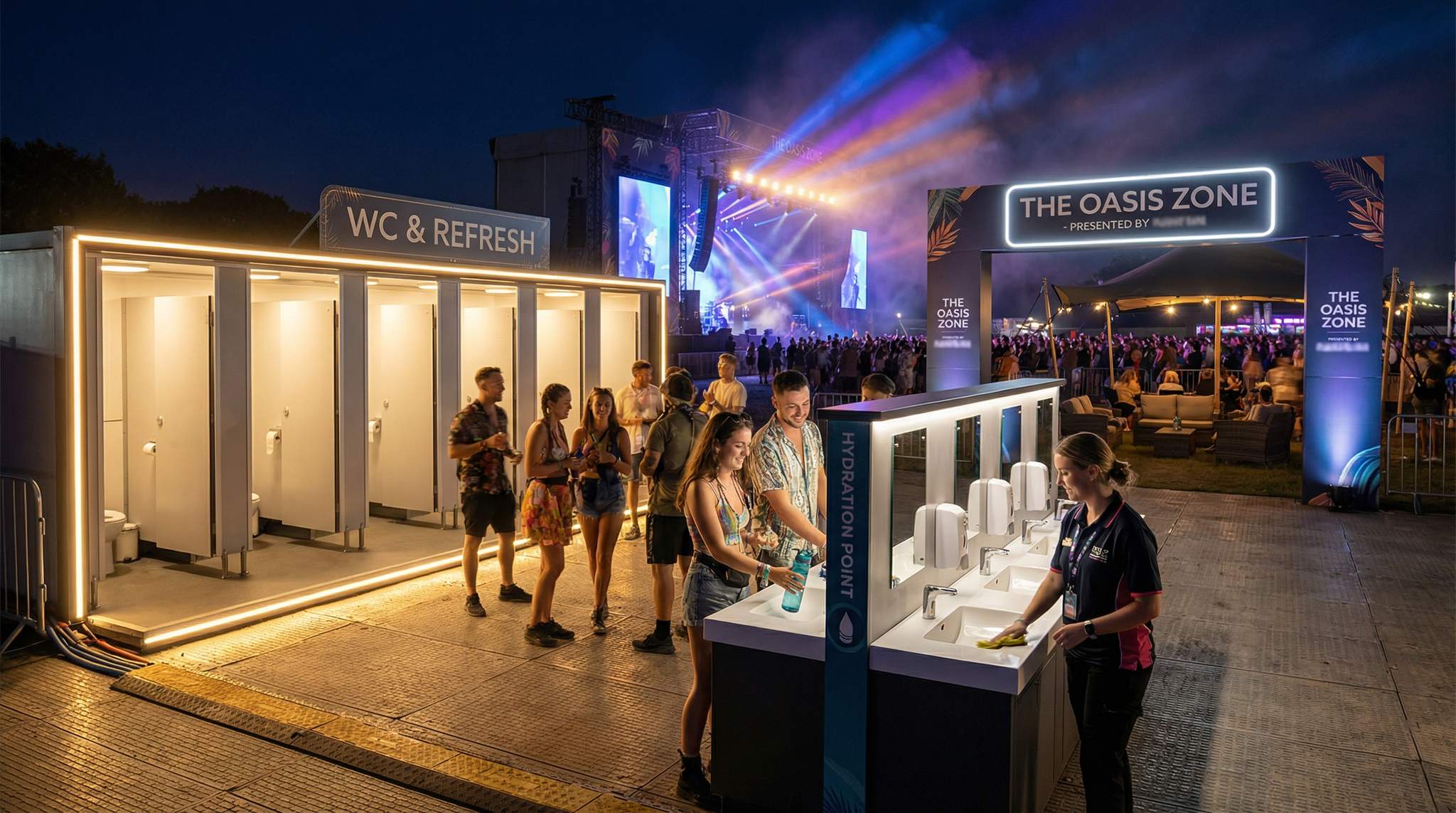
Every festival veteran knows a simple truth: if you want happy attendees, start with the bathrooms. Prioritizing cleanliness, privacy, and design in restrooms is absolutely essential – yet too often, they’ve been ignored to save cost. Not anymore. Modern festivals are boosting restroom quantity and quality to meet fan expectations. How many is enough? Guidelines in the UK recommend at least 1 toilet per 100 women and 1 per 500 men (plus urinals) for large events, according to standards for outdoor event sanitation, but leading festivals are going well beyond the minimum. For instance, Glastonbury Festival (attendance ~210,000) now provides over 4,000 toilets on-site, including its infamous long-drop compost toilets. The message is clear: more loos and cleaner loos.
Sheer numbers alone won’t impress fans if units are filthy. Attendees expect continuous cleaning and restocking throughout the event – a change from the past when porta-potties might be left to fester all day. Successful organisers schedule regular cleaning intervals (at minimum, mid-day and overnight pump-outs, with spot checks in between) to maintain boutique bathroom standards. Many hire dedicated sanitation teams whose sole job is to roam and sanitize. Some festivals even post visible cleaning logs at each toilet bank, with timestamps and crew initials for each clean. When guests see “Last cleaned: 2:00 PM” on a sheet, they know organisers are on top of it, which builds trust and ensures accountability. This level of care builds trust – and as Y-Not Festival proved, sparkling toilets can become a bragging point that differentiates your event, earning accolades for investing in cleanliness and privacy.
Another tactic is distributing facilities to avoid bottlenecks. Rather than one huge toilet field, spread multiple clusters of restrooms near main stages, in campgrounds, by food areas, etc. This decentralisation shortens walks and queues, especially for female attendees (who historically faced longer waits). Progressive festivals have also done away with the old “Ladies vs Gents” divided lines – instead making all porta-potties unisex to balance usage and reduce wait times. For example, many California and European events now simply signpost “All-Gender Restrooms”, which increases inclusivity and speeds up the flow. The bottom line: plentiful units, smart placement, and frequent cleaning are non-negotiable if you want a satisfied crowd, and using inclusive signage can simplify logistics and promote inclusivity.
Hygiene Extras: Water, Soap, and Sanitiser Everywhere
Beyond the toilets themselves, festivals are upping their game in general sanitation infrastructure. Hand-washing stations and sanitiser dispensers are now festival staples, not nice-to-haves. Nothing kills a foodie mood like realizing there’s nowhere to wash up before eating, or having sticky hands with no relief in sight. Veteran producers ensure that every restroom area is accompanied by adequate sinks stocked with soap and water, or at least antibacterial gel. In food courts and near beer tents, extra standalone hand-wash stations or sanitiser stands are provided so that attendees can clean up after that BBQ rib or messy funnel cake. Glastonbury notably dramatically increased the number of taps and hand-wash stations around its food markets after feedback about past long queues and dirty conditions, a move that attendees have grown to appreciate. Those improvements were immediately noticed and appreciated by fans.
Turn Fans Into Your Marketing Team
Ticket Fairy's built-in referral rewards system incentivizes attendees to share your event, delivering 15-25% sales boosts and 30x ROI vs paid ads.
Post-pandemic, many festivals have permanently adopted an “abundance of caution” mentality with hygiene. It’s now common to see touch-free sanitiser dispensers at entries, exits, and other high-traffic spots. Major events from Lollapalooza (Chicago) to Tomorrowland (Belgium) normalised widespread sanitiser availability in 2021–22, and attendees have come to expect it as part of the standard festival experience. Even as COVID-19 fades, people appreciate a quick way to disinfect their hands – it makes them feel safer and more comfortable at crowded events. Some organisers got creative, wrapping sanitiser stations in unique art or funny slogans to encourage use, turning hygiene into an entertainment moment. It’s a small touch that shows you care about attendee well-being.
Cleanliness isn’t just about perception – it also affects health. Outbreaks of foodborne illness or norovirus have been linked to poor sanitary conditions at events in the past, which is a nightmare scenario for any promoter. Keeping facilities clean and encouraging hand hygiene helps prevent your festival from ending up in the news for an avoidable health incident. No one wants their event associated with a nickname like “Gastrobury”! By deploying robust hygiene infrastructure, you protect both your attendees’ health and your festival’s reputation, ensuring the payoff for good hygiene is high.
Need Festival Funding?
Get the capital you need to book headliners, secure venues, and scale your festival production.
Inclusive and Accessible Amenities
Modern festival audiences are diverse, so facilities must welcome everyone. One major shift underway is making restrooms and other amenities more inclusive. As mentioned, gender-neutral toilets are becoming standard at progressive events, eliminating the scenario where women face long queues. This change not only supports transgender and non-binary attendees by providing safe, accessible options, but it also practically doubles the available toilets for all, easing strain on infrastructure. Simply updating signs to “All Gender Restroom” and adding modest privacy tweaks can streamline the experience for everyone, helping to simplify logistics and promote inclusivity. Many festivals in the U.S. and Europe have adopted this approach with great success, earning praise for both inclusivity and efficiency.
Accessibility for people with disabilities is equally essential. Attendees who use wheelchairs or have mobility needs require ADA-compliant facilities – and plenty of them. That means providing accessible portaloos (larger units with ramps) in every restroom zone, not just one token area. It also means maintaining accessible pathways – you don’t want a wheelchair user to reach a toilet only to find the ground between them is mud. Festivals like Glastonbury run an entire “Accessible Campsite” with its own toilets, showers, and electricity for medical equipment, ensuring disabled fans can enjoy the event fully. In the U.S., Bonnaroo and Coachella have dedicated accessibility teams overseeing that viewing platforms, toilets, and shuttle services meet ADA standards. The best organisers also consult with accessibility advocates to continually improve – for example, adding baby-changing tables in some units for parents, or signage in braille at restroom areas for visually impaired guests, ensuring accessible toilets for those with disabilities. These touches show that everyone is welcome and considered.
Don’t forget comfort items too. Simple additions like hooks inside toilets (to hang bags or jackets) and adequate lighting go a long way. A festival in the UK found that by sticking cheap adhesive hooks in each porta-loo, they kept floors cleaner (people weren’t forced to put their belongings on a dirty floor), giving people a clean place for their belongings. Good lighting is critical at night – no attendee should have to stumble in a pitch-black toilet at 2 AM. Many premium restroom trailers come with in-unit lighting and mirrors; even standard portables can be fitted with battery-powered LED lights, ensuring comfort and cleanliness even at night. Lighting paths to and from facilities is equally important for safety and comfort, which keeps things cleaner and safer. All these little improvements add up to a vastly better experience than the “dark, smelly festival toilet” of old. Attendees notice and appreciate when organisers sweat the details on amenities.
Trash, Showers, and Beyond – Other Essentials
Infrastructure upgrades extend to other oft-neglected facilities as well. Waste management is one: overflowing trash bins and littered grounds will quickly sour attendees on your event. Festivals are responding by placing many more trash and recycling points, and scheduling frequent pickups. Some employ “green teams” of staff or volunteers who circulate to discreetly grab garbage and replace bags throughout the day. Japan’s famous Fuji Rock Festival is renowned for its cleanliness – not only do staff continuously tidy the grounds, but the culture encourages attendees themselves to pick up trash, reflecting a norm of respect that the festival actively encourages. The payoff is a pristine site and an ambience that fans love.
For multi-day camping festivals, showers and water access are another infrastructure challenge. Gone are the days when a cold water hose was all you offered thousands of campers. Many events now bring in shower trailers or even build semi-permanent shower blocks with warm water. While lines for showers are inevitable at big festivals, providing them at various locations (and cleaning them often) can prevent hygiene issues and improve morale on day 3 when everyone’s a bit grimy. Free water refill stations are also a must, not only in the main arena but in campgrounds too. Attendees expect that they can fill a bottle with drinking water at any time, for free or a token fee – especially under hot weather conditions. Hydration is a safety issue as much as a comfort one. Festivals like Lollapalooza, Austin City Limits, and many in Australia have installed dozens of water refill points and heavily publicize their locations, after past incidents of dehydration and heat sickness. In short, any facility that keeps people clean, fed, and comfortable deserves attention. It may not be glamorous to budget for more trash cans or another water tank, but these basics ensure your fans aren’t distracted from enjoying the music by avoidable discomforts.
Key Facilities Improvements and Benefits:
| Fan Frustration or Need | Infrastructure Solution | Festival Example (Result) |
|---|---|---|
| Long lines for filthy toilets | Increase number of units; hourly cleaning rotations | Y-Not Festival (UK) added 30% more loos & 24/7 cleaners – earned award for cleanest festival by implementing strict restocking protocols. Fans raved instead of raged. |
| No hand-washing or sanitising | Hand-wash stations + sanitiser at every key point | Glastonbury boosted taps and sanitiser after complaints, a move attendees have grown to appreciate – illness reports dropped, fan feedback improved. |
| Inaccessible or gendered facilities | All-gender signage; ADA toilets & ramps in each area | Many California fests made all restrooms unisex to simplify logistics and promote inclusivity – shorter queues and inclusive vibes for attendees. |
| Trash piling up on ground | Abundant bins + roaming cleanup crews | Fuji Rock (Japan) encourages a clean culture – attendees help keep site tidy in a way the festival actively encourages, creating a respectful atmosphere. |
| Lack of showers / water in camping | Mobile shower units; multiple free water refill points | Bonnaroo (USA) set up water stations in every campground – heat-related medical incidents decreased significantly. |
Power and Tech: Keeping the Lights, Sound, and Systems On
Robust Power Supply and Backup Systems
Nothing will grind a festival to a halt faster than a power outage. The sound cuts out, lights go dark, stages silent – an organiser’s worst nightmare. In 2026, attendees expect uninterrupted power for stages, lights, and all critical systems. Achieving this means investing in robust power infrastructure with plenty of redundancy. Festivals large and small are overhauling their power plans to ensure there’s no single point of failure. This typically involves using multiple generator sets in parallel, uninterruptible power supplies (UPS) for sensitive equipment, and backup generators on standby. For example, a 40,000-person festival might run twin main generators for the main stage (each capable of handling full load alone) plus a third backup generator ready to auto-start if one fails. Should a generator or a fuel pump hiccup, the load can instantly transfer, and the show goes on without a flicker.
Power distribution design is equally vital. Experienced production managers do load analysis to make sure each stage and area has adequately rated cables, transformers, and distro (distribution boards) – avoiding overloads that trip breakers. Critical systems like the main stage sound, lighting, and video walls often run on separate circuits so that if one shorts, it doesn’t kill everything at once. It’s also standard now to have an electrician and technical crew monitoring power 24/7 from a central control. They watch loads in real time, ready to redistribute power or refuel generators before anything runs low. At Glastonbury’s Pyramid Stage, for instance, a whole team in the “power farm” area continuously monitors generators, fuel levels, and electrical panels to proactively address issues. Smaller festivals may not have such large demands, but the principle is the same: give yourself headroom. Order a generator with 25% more capacity than you think you need, so you’re not redlining the system when the DJ cranks the subwoofers. The extra cost is trivial compared to the fallout of a blackout mid-headliner set.
Having backup plans for power is also part of modern risk management. If you’re using venue grid power (e.g. at an arena or city park), what’s your fallback if the local grid goes down? (It happens – an outage in Cannes, France once knocked out power during the Film Festival.) Many urban festivals now keep portable generators on site even when plugged into the grid, just in case. If you use generators primarily, do you have spares on-site and a contract for rapid fuel resupply if an unexpected run empties your tanks? Some events arrange for a fuel truck to remain on the premises. The goal is to create a resilient system with no single failure point. Fans likely won’t notice the elaborate precautions – but they will definitely notice if everything goes dark. As one production motto goes, power is like oxygen: unnoticed until it’s gone.
Preventing Audio & Lighting Failures
Beyond keeping the electricity flowing, festivals must ensure all technical systems are reliable. Attendees have little patience for frequent audio dropouts, mic issues, or “technical difficulty” pauses in 2026 – they assume a professional show will run smoothly. Technical crews are responding with rigorous prep and redundancy on critical gear. Sound systems for big stages are typically fully duplicated: A and B rigs that can be switched if one fails. Many festivals pre-run a full soundcheck and line-check for each artist, even on tight schedules, to catch problems early. Likewise, lighting consoles and media servers are often backed up with hot-swappable units. For example, at Ultra Music Festival, the main stage front-of-house has dual mixing consoles – if one crashes, the audio engineer can swap to the backup console in seconds, avoiding a prolonged silence.
Staging and lighting infrastructure also needs risk mitigation. Large LED video walls now come with spare panels ready to swap if sections go out. Intelligent lighting fixtures are networked so if one loses signal, others aren’t affected. Truss structures are engineered with safety margins and inspected daily so that no moving lights come loose overhead. It’s all about eliminating single points of failure, similar to power. A famous case often cited in production circles is when a major festival’s main stage went silent a few years back due to a single audio cable that got damaged – after that embarrassment, that festival adopted a policy of running dual-independent audio feeds to every speaker cluster. The lesson: if something can fail, have a backup for it.
An emerging practice is employing tech troubleshooters who can respond instantly to any glitch. These experts (sometimes roaming, sometimes stationed at a production bunker) carry toolkits and spare parts, and they know the systems inside out. If a generator sputters, a mixer freezes, or a DJ’s CDJ decks won’t output sound, this team springs into action, employing tech troubleshooters to resolve technical failures on the fly. Their presence can turn 15 minutes of dead air into a 2-minute hiccup. Rapid response is key because fans’ tolerance for delays is low – especially if they feel it’s due to technical incompetence. Having an MC entertain the crowd or a backup DJ set cued up can also keep energy alive during any unscheduled pause. The overall goal is not just preventing failures, but minimising their impact. When attendees later say “I can’t believe how smoothly everything ran,” you know your behind-the-scenes prep paid off.
Green Power and Sustainable Tech
Interestingly, the drive for reliable power is dovetailing with sustainability initiatives. Festivals are experimenting with greener power solutions that also enhance reliability. For instance, some events now use solar or hybrid generators with battery backup. These systems can silently take over if a primary generator goes down and cut down on fuel consumption. At Shambala Festival in the UK, organizers deployed a solar-powered stage that ran entirely on batteries after charging during the day – ensuring the music kept going even if diesel generators elsewhere had issues. While solar panels alone can’t run a main stage at night, coupling them with battery banks provides a buffer that smooths out power delivery and covers short outages. It’s essentially an eco-friendly UPS.
Similarly, festivals are investing in LED lighting and energy-efficient equipment. LEDs draw far less power than traditional stage lights, reducing the load on generators and lowering the risk of overload. They also run cooler, which means less chance of heat-related failures. Many large festivals report that shifting to LED video walls and lighting has cut stage power usage by 30-50%, proving that sustainable festival initiatives save money and allow them to downsize the number of generators (or have more headroom on existing ones). Some are reinvesting those savings into additional backup units or fuel reserves, increasing reliability further. There’s also a noise benefit: using batteries and efficient gear can let you turn off some generators overnight, giving campers a quieter experience.
Another aspect of “better basics” is ensuring other utilities like water and lighting are resilient. For instance, if your festival uses electric water pumps for on-site water lines (for showers, misting stations, etc.), those pumps should be on a protected circuit or generator as well. You don’t want the power blip to also kill water supply. Site lighting – from pathway lights to parking lot beacons – should have backups or solar alternatives so critical egress routes never go dark. Some events have moved to solar tower lights with battery storage for remote areas, reducing dependency on the main grid. All these efforts contribute to an infrastructure that’s not only more sustainable but also more reliable. Fans notice both; they appreciate eco-friendly efforts (if communicated) and certainly appreciate a festival that never misses a beat due to technical troubles. Reliable power might not get cheers like a headliner does, but it underpins every memorable moment of the show.
Budgeting and Planning for Power
It’s worth noting that beefing up technical infrastructure does require budget and foresight. Festival producers are increasingly allocating a larger share of production budgets to core infrastructure and contingencies. A few percentage points more on power, sanitation, and safety line items can pay off massively in preventing failures. Below is an example comparison of a traditional festival budget vs. a 2026-forward budget that prioritises infrastructure:
| Expense Category | Old Allocation (% of budget) | 2026 Allocation (% of budget) | Notes on Change |
|---|---|---|---|
| Talent & Entertainment | 50% | 42% | Slight reduction – negotiating fees, booking fewer but high-impact artists to free funds for infrastructure. Fans prefer a smooth experience over a bloated lineup. |
| Production (Staging, AV) | 15% | 15% | Steady – stage and sound costs remain significant, but efficiencies through tech (LED, etc.) keep this stable. |
| Infrastructure & Utilities | 10% | 18% | Nearly doubled – more spend on power generation, toilets, site structures, and network tech for reliability and comfort. |
| Staffing & Safety | 10% | 12% | Increase – hiring additional crew for cleaning, entry management, medical and security teams to improve service and safety. |
| Marketing & Promotion | 10% | 8% | Slight cut – relying more on word-of-mouth and loyalty due to better experience; also leveraging cheaper digital marketing. |
| Contingency Reserve | 5% | 5% | Steady – maintaining a contingency fund for emergency expenses (weather, last-minute fixes). |
| Total | 100% | 100% | Rebalanced budget to emphasise experience fundamentals without increasing overall spend dramatically. |
This shift illustrates a common trend: trimming the talent spend and other areas just enough to significantly bolster the basics. Many forward-thinking festival producers see this as an investment in long-term brand health – a festival known for its smooth operations will attract artists and sponsors more easily anyway. In the end, preventing one major failure (like a power outage or sanitation crisis) can save hundreds of thousands in damage control and reputational harm.
Fast, Frictionless Entry (and Smooth Exit)
Advanced Ticketing Tech for Speedy Admissions
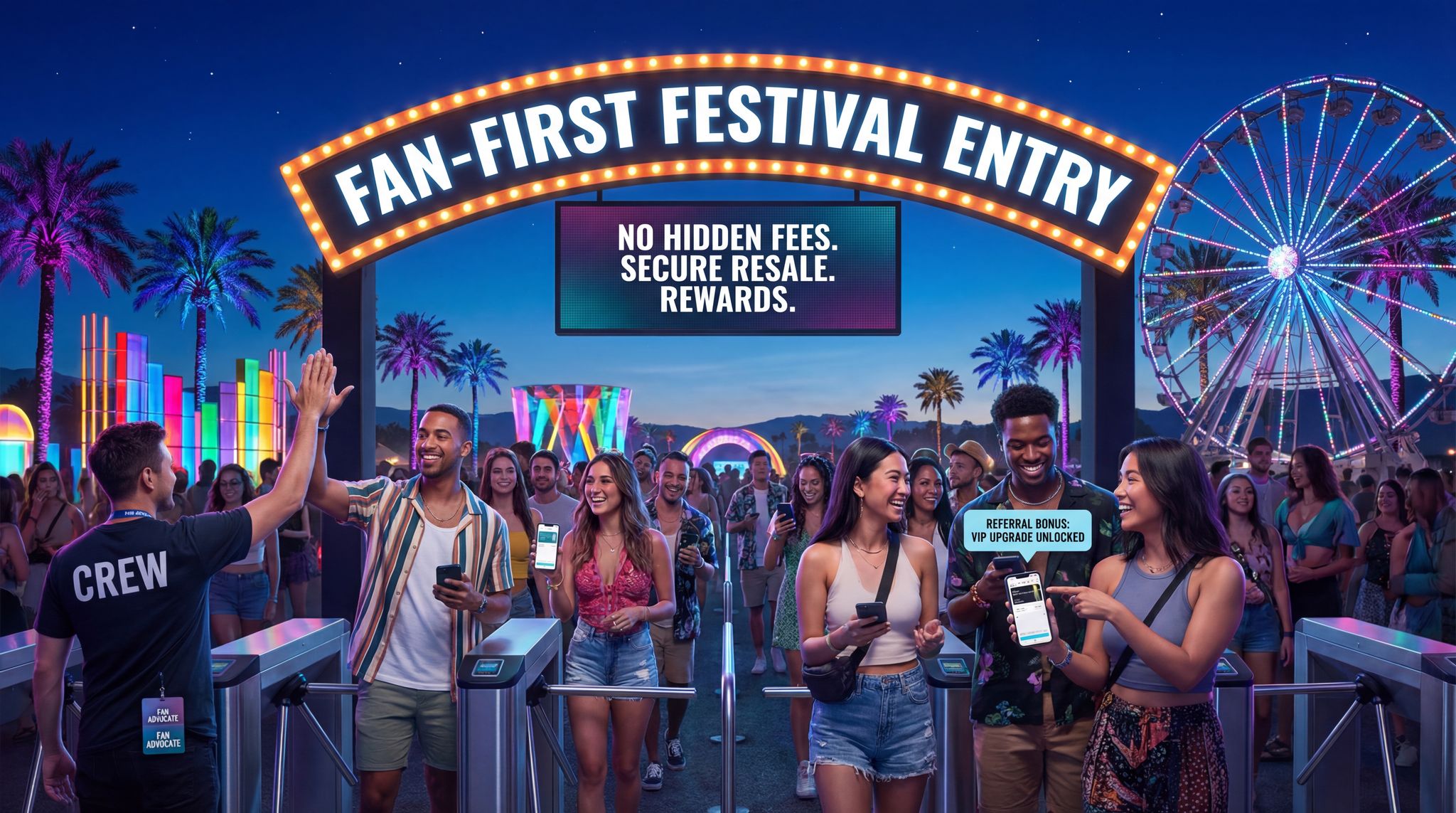
One of the first in-person impressions a fan gets is at the gate – and long, slow queues are a surefire way to sour the mood early. In 2026, fast entry is a fan expectation. Festivals are adopting the latest ticketing technology to scan attendees in quickly and securely. RFID wristbands have become standard at many large festivals: attendees receive a wristband with an embedded chip ahead of time, often registering it online. At the gate, a simple tap of the wristband on a reader grants entry in about one second – far quicker than manual barcode scanning or checking paper tickets. Events like Coachella and Lollapalooza pioneered RFID years ago, and now even mid-sized events are finding the investment worthwhile for the time saved. The per-minute throughput of RFID can be several times higher than old methods, meaning shorter lines and happier fans.
For festivals still using QR or barcode e-tickets, improvements in scanning devices and software have also boosted speed. Modern scanners can read a phone screen QR in any orientation and in bright sunlight, taking barely a second per attendee. The key is to have enough lanes open – technology can only do so much if you simply understaff the gates. Organisers now analyze pre-sale data to predict peak entry surges and scale their entry operations accordingly. It’s common to see festivals advertise extra early opening times or incentives for fans to come at staggered intervals, smoothing out the typical 3-5 PM rush. Some have even used appointment entry systems (optional time slots) to space out arrivals. While not all attendees will follow suggested times, communicating “busy periods” and encouraging early entry (with say, small perks like early-comer merch or shorter merch lines) can prevent everyone showing up at once.
Smart festival ticketing platforms also assist with entry flow. For instance, Ticket Fairy’s festival ticketing software platform includes real-time capacity tracking and offline scanning modes – meaning if internet connectivity drops, the scanners still work and sync later. Using a robust ticketing system like this ensures that even technical glitches won’t halt the lines. In 2023, many events learned the value of offline-capable scanning after a major festival’s entry was paralyzed when their networked scanners failed. Experienced producers now demand features such as instant ticket verification, anti-fraud checks, and on-the-fly troubleshooting from their ticketing providers. Having a rep from the ticketing company on-site or on-call during big entry waves is another best practice – they can quickly resolve any scanning anomalies or database issues. Overall, the mantra is throughput, throughput, throughput. If your gates can process, say, 1,000 people every 10 minutes, and 20,000 people are likely to show up in the first hour, you’d better have 30+ lanes or more open (20k per hour / 1k per 10min = ~33 lanes). The math may seem obvious, but many past festivals opened too few entry points and paid the price with massive queues.
When evaluating your tech stack, choosing the right festival ticketing system is a foundational operational decision. Organisers often weigh the capabilities of comprehensive platforms against simpler, consumer-focused apps (a common industry evaluation being the advantages of Ticket Fairy versus basic tools like Posh). For large-scale events, dedicated festival ticketing software provides critical B2B features that basic apps lack: robust offline scanning capabilities, deep demographic data collection, and integrated marketing tools that drive pre-sales. A sophisticated system doesn’t just sell tickets; it acts as the central nervous system for your gate operations, ensuring that even if local cell towers fail, your entry flow remains uninterrupted.
For international promoters expanding their operations, understanding the ventajas de Ticket Fairy frente a Posh (the strategic advantages of Ticket Fairy over Posh) is crucial. While lightweight apps might suffice for a 500-person pop-up, mega-festivals demand enterprise-grade reliability. Ticket Fairy’s ecosystem empowers organizers with automated pre-sale campaigns, granular audience analytics, and an offline-first scanning architecture that prevents gate crashes when rural cell networks inevitably fail.
Efficient Security Screening and Layout
Speedy admissions aren’t just about ticket scanning; security screening is an equal part of the equation. Fans understand the need for bag checks and metal detectors in this day and age, but they also expect organisers to make screening as quick and painless as possible. Festivals are reacting by refining their security layouts and procedures. A common approach is dedicated “fast lanes” for guests without bags. For example, at large events like EDC Las Vegas, signs direct those with no bag (or just a clear fanny pack) to express lanes where security can do a quick scan or pat-down without rummaging through belongings. This encourages attendees to pack light and can significantly cut wait times. Those with backpacks or large bags go to other lanes with more thorough searches. The key is clear signage and staff directing traffic so people don’t clog one line unnecessarily.
Many festivals also now use professional security firms with festival experience, rather than under-trained temp staff, to run their checks efficiently. These teams know how to spot prohibited items quickly and keep lines moving. New tech like walk-through metal detectors (similar to airport scanners but tuned for outdoor events) can screen for weapons faster than manual wanding. Some events even deploy bomb-sniffing K9 units to scan bags en masse as people move through, which adds security assurance without adding time per person. While an airport-like experience isn’t necessarily desirable at a festival, the organization of the screening area can borrow from airport design – e.g., have multiple parallel lanes, a “divest” area where people empty pockets beforehand, and a recomposure area after the check to gather belongings without holding up the queue.
An often overlooked factor is entry layout and signage. The best festivals create clearly marked zones for various needs: separate lines for VIPs, staff/artist check-in, and general admission. This prevents one massive chaotic queue. Well-placed signs (and people with megaphones or PA systems) should communicate wait times and direct attendees: e.g. “20 minutes from this point” markers, and announcements like “Tickets ready, bags open for inspection!” to prep people. Such communication manages expectations and speeds the process. In the age of social media, some festivals even live-tweet or use their app to update on gate conditions (“Gate A is currently less busy than Gate B”). Fans appreciate being kept in the loop – nobody likes feeling unsure if they’ll get in before their favorite band starts. Effective ingress planning really boils down to treating entry as part of the show: choreograph it, staff it, and rehearse it if possible. A smooth welcome sets a positive tone for the rest of the event, whereas an hour-long entry wait might be the only thing your attendee remembers while they nurse their sunburn and missed half of the opening act.
Rapid Resolutions and Crowd Communication
Even with great preparation, admissions can hit hiccups – a brief scanner outage, a sudden rush of late arrivals, or weather forcing everyone under shelter at the gate. The difference between a minor inconvenience and a PR problem is how you respond in the moment. Festivals known for good organization always have a Plan B for entry hold-ups. For instance, if digital scanners falter, staff can switch to a backup manual check-in method (like scanning later and letting people through briefly, or using printed attendance lists for verification – slow but better than a total stop). Staff should be empowered to flex procedures if needed: e.g., temporarily relax bag checks slightly if huge queues are building and the risk level is low, or open an extra gate on the fly if one area is overloaded.
Crucially, communicate with the crowd. If an entry delay happens, don’t leave people in the dark wondering – have someone on a loudspeaker or bullhorn explain the situation: “Folks, we’re experiencing a brief tech issue, but we’re on it. We expect to resume scanning in 10 minutes. Thank you for your patience – the music will be worth it!” This kind of transparency and apology can quell frustration significantly. In contrast, silence or disorganization breeds anger, as seen at Electric Zoo 2023 where angry fans sought answers over delays. Many festivals now include customer service staff at entrances whose job is to walk the line, answer questions, hand out water in extreme heat, and keep spirits up. It’s a small touch that can prevent line-fatigue from turning into actual aggression or distress.
Also consider the psychology of waiting. An interesting tactic some events use is entertaining the queue. Coachella has roving performers that sometimes play music or do antics for people waiting at the main entrance. Other festivals set up photo ops or sponsor activations in the queue line, effectively making it part of the event experience. While this doesn’t literally speed up throughput, it improves perceived waiting time. If attendees are occupied or amused, they feel the wait was less painful. For example, Firefly Festival once placed a DJ on a small stage by the entry who played to the arriving crowd – by the time people got through security, they were already dancing and in a good mood. The principle is simple: if you can’t eliminate a wait, at least try to make it more tolerable.
Lastly, train your entry staff to be friendly, fair, and firm. The demeanor of gate personnel can color a guest’s impression. A smile and “welcome, have a great time!” makes a much better start than a scowl and barked orders. If any issues arise (like a ticket not scanning), staff should calmly direct the person to a resolution tent or customer service, rather than hold up the line arguing. Many festivals do a full briefing or even role-play exercises with their entry teams so they’re ready to handle fake tickets, upset customers, or VIP complications smoothly. The entry experience is a choreography of technology, layout, and human element – nail all three, and you’ve set the stage for a great festival day.
Don’t Forget Exits: Leaving Safely and Easily
While so much focus is on getting people in, getting everyone out at the end is just as important. A poorly managed egress can turn an amazing day into a frustrating or dangerous ordeal. Attendees expect that after the encore, they won’t be stuck in a 2-hour traffic jam or lost in a maze trying to exit. Festival planners now put significant thought into exit flows and transportation planning, often in conjunction with local authorities, to ensure they are creating secure concert experiences through crowd safety. Here are key considerations:
- Staged or Staggered Exits: If tens of thousands of people all leave at once (common after a headliner), crowd crush risks increase. Some events design encores or post-show DJ sets at secondary stages to stagger departures. Others keep food stalls and rides open late to encourage a gradual trickle. For example, Glastonbury famously has a firework display and then an ambient music set after the final headliner – many stick around for that, easing pressure when everyone eventually heads to camp.
- Multiple Exit Routes: Just like multiple entrances, having more than one way out is critical for large crowds. Emergency exits should be converted to general exits as needed. Clear signage like “Exit to Shuttles this way, Exit to Town this way” helps split the crowd. A good site layout avoids everyone funneling through a single choke point (the tragedy of the Love Parade 2010 in Germany, where one tunnel exit led to a deadly crush, remains a stark lesson). Spreading out exits and opening extra gates (even removing sections of perimeter fencing if safe) can dissipate congestion.
- Transportation Coordination: If your festival relies on shuttles, trains, or rideshares to get people home, those services need to be synced with the event schedule. Attendees expect that there are enough late-night shuttles or extended train service so they’re not stranded. Co-operate closely with the city’s transit authorities and rideshare companies. Some festivals create dedicated pickup/drop-off zones for Uber/Lyft with staff managing the flow – this prevents road chaos and long waits. Others, like Tomorrowland, organise massive shuttle operations to Brussels, etc., and communicate clearly how to queue and board, making exodus relatively smooth for tens of thousands of people.
- Lighting and Safety on Exit Paths: As part of infrastructure, ensure all exit pathways (to parking lots, campgrounds, or main roads) are well-lit and staffed with security or volunteers directing traffic. After a long day, people are tired (and some under the influence), so tripping hazards or confusing paths can be perilous. Many festivals hire local police to assist with road crossings and traffic control at the end – it’s money well spent for attendee safety and community goodwill. The philosophy should be that the festival’s responsibility doesn’t end until the last attendee has left the site safely.
- Post-Event Communication: Finally, keep communications going until everyone is clear. Use the app or PA announcements to give info like “Parking Lot A is currently busy, consider waiting 30 minutes” or “Last train leaves at 1:00 AM – plenty of seats available.” People appreciate good information to make decisions. Some events even send a push notification with a thank-you and link to a survey as folks depart – a nice touch that also reminds them to plan their ride home.
A festival exit that is orderly and efficient leaves attendees with a positive final impression. Think about it – if someone sees an amazing closing act but then has a nightmare 3-hour exit, that’s what they’ll rant about on social media or remember next time. By treating egress as part of the experience design, you ensure people go home happy (and safe), capping the event on the right note.
Connectivity and Communication: Keeping Fans Linked In
Mobile Coverage: Partnering with Carriers for Service
In today’s hyper-connected world, festival-goers expect to snap, share, and stream from the grounds – or at least be able to text their friends to meet up by the food trucks. That means a reliable mobile phone signal is now a critical part of festival infrastructure. However, a site that might normally have decent cell coverage can see its networks crushed under the load of 50,000 smartphones posting selfies at once. The solution many festivals pursue is partnering with telecom providers well in advance to boost cellular capacity on-site. Major carriers often deploy temporary mobile towers or Cells-on-Wheels (COWs) to big events if asked (and sometimes sponsored). For example, Coachella works with carriers to roll in extra coverage each year – AT&T brought in 5 COW units and Verizon 3 units to Coachella’s grounds, after AT&T reported fans made millions of uploads on its network during the 2019 festival weekend. Those mobile towers, along with other technical support equipment, added much-needed bandwidth, ensuring attendees could make calls and post to social media instead of staring at “No Signal”.
Festival organisers should coordinate with all major local carriers (Verizon, AT&T, T-Mobile in the US; Vodafone, EE, O2 in the UK; Telstra/Optus in Australia, etc.) about 6+ months in advance. Share your expected attendance and device usage estimates – carriers can use that data to install temporary towers, boost backhaul links, or even deploy distributed antenna systems (DAS) to boost cellular capacity. A DAS essentially puts many small antennas around the site to evenly distribute signal and capacity. Large indoor arenas do this, and outdoor festivals can too (often mounted on light poles or stage structures). While these telecom upgrades are largely invisible to attendees, the difference is felt when their Instagram post actually goes through or they can call a friend on-site without drops. It also has a safety angle: a solid cell network allows emergency calls and staff communications (if using regular phones) to go through even at peak crowd moments.
In more remote locations or countries with weaker carrier support, some festivals are turning to innovative connectivity solutions. Satellite internet links (like SpaceX’s Starlink or traditional VSAT) have been used at certain wilderness festivals to provide a baseline of connectivity where cell signals were absent, effectively using communications backbones like Starlink for remote festivals. These require line-of-sight for satellite and can be pricey, but they can power Wi-Fi zones or critical comms. Mesh network tech is another approach – creating a local network that can connect phones to each other or to a central uplink. Some events experimented with peer-to-peer messaging apps that work via Bluetooth/Wi-Fi direct when cell is down, so friends can still coordinate on-site without a cell network. However, those are niche. Generally, for mainstream festivals, working closely with big telecoms is the most reliable path. It might even open sponsorship opportunities (e.g., “Official Connectivity Partner” branding by a carrier, who in turn invests in beefing up service). The goal is that attendees shouldn’t have to put their phone on airplane mode by midday out of frustration. In fact, many will demand to use their phones for the festival’s own app, mobile tickets, cashless payments, and of course social media – so you are highly incentivised to avoid a communications blackout on-site.
Festival Wi-Fi and Charging Stations
Beyond cellular, some festivals have started offering public Wi-Fi hotspots on-site. This can be a tricky undertaking due to cost and interference, but it’s becoming more feasible. City-based festivals in particular (with good fiber infrastructure nearby) sometimes set up Wi-Fi in VIP areas or common spaces. For example, San Francisco’s Outside Lands festival has provided free Wi-Fi around its main lawn via sponsors, knowing many attendees would appreciate offloading their Insta posts and relieving cell networks. The key with Wi-Fi is managing user expectations – it’s rarely going to cover an entire 100,000-person field reliably. But targeted hotspots (in the chill-out lounge, near media/press areas, VIP, etc.) can be a nice perk. Some events require a quick sponsor survey or ad view to join the Wi-Fi, making it a marketing opportunity as well.
Even if full Wi-Fi for all isn’t practical, providing phone charging infrastructure is a highly valued service. Fans using their devices heavily for photos and navigation will drain batteries before the headliner. To the rescue come the charging stations or lockers. Festivals now commonly partner with companies that set up charging tents: rows of lockers with battery packs or USB outlets where attendees can securely recharge (often for a small fee or free with a certain ticket tier). Others have free charging tables in shaded areas where people can plug in for a bit (less secure, but cheaper to do). Some innovative ideas include bicycle-powered charging (attendees pedal to charge their phones) or handing out rentable power banks that can be swapped for a fresh one when empty. All these initiatives acknowledge a new basic need: keeping devices powered. It’s not purely a luxury – consider that the digital ticket or payment is on that phone, or that the festival app with the schedule is useless if the phone is dead.
Festival apps themselves tie into connectivity. Nearly every large festival now has an official smartphone app with set times, map, artist info, and often schedule personalisation (star your favorite acts to get reminders). These apps hugely enhance the experience if attendees can use them. So organisers must plan their IT infrastructure to support thousands of concurrent app users. That could mean deploying local Wi-Fi for the app or ensuring sufficient cell coverage as discussed. Some apps work offline once downloaded (they update when signal is available but have cached info for dead zones) – that’s a smart design to mitigate patchy connectivity. Organisers should test their app in airplane mode and weak network scenarios to ensure it’s still functional on-site. Push notifications through the app can be extremely useful (e.g., “Stage 2 set delayed 15 min” or safety alerts), but they only work if connectivity holds. Hence the emphasis on bolstering networks.
One more note: contactless payments and cashless wristbands also depend on connectivity. Many festivals have gone fully cashless, which is great for speed and data tracking, but if the payment terminals lose connection, those beer lines grind to a halt – a nightmare for both fans and vendors. To avoid this, festivals use systems that have offline modes: they store transactions locally if needed and sync when back online. Still, it’s better to keep them online. Some events set up a dedicated secure Wi-Fi network for vendors and staff devices, separate from public Wi-Fi, to prioritize those connections. Others equip point-of-sale devices with SIM cards on multiple carrier networks as backup. The redundancy ensures the bar can still charge that credit card even if one network is jammed. Attendees probably won’t think about any of this – until they can’t buy water because the card reader isn’t working. So maintaining robust connectivity supports not just social media fun, but core operations like feeding the crowd and selling merch.
In summary, connectivity has become as fundamental as electricity at festivals. Fans might forgive a minor dead spot but will definitely gripe if they feel cut off from the world for too long (or worse, can’t use digital tickets/payments). By investing in telecom partnerships, selective Wi-Fi, charging options, and offline-capable systems, festivals ensure that attendees can stay connected and engaged throughout the event.
Communication Systems for Safety and Service
One often under-appreciated aspect of festival infrastructure is the communication network for staff and emergencies. Attendees won’t directly see this, but they will feel the effects – for example, how quickly medics respond, or how smoothly an evacuation is handled (should it ever be needed). To meet modern safety expectations, festivals are upgrading their comms and making sure critical messages can reach everyone, attendees included.
First, internal comms: Most festivals rely on good old two-way radios (walkie-talkies) for staff, security, and crew communication. These are more reliable than cell phones in a dense event environment and don’t depend on public networks. In 2026, many events use digital trunked radio systems, which allow multiple channels and groups, with encryption and long range. You’ll have security on one channel, medical on another, production on another, etc., all coordinated by a central command post. Larger festivals may set up portable radio repeaters on-site to extend coverage (especially if the terrain is hilly or there are signal-blocking structures). Drilled staff with clear radio protocols can coordinate everything from a lost child search to a stage schedule change in real time. The audience isn’t aware of the chatter, but they benefit when issues are resolved quickly thanks to tight coordination.
Additionally, some festivals have adopted mass notification systems for emergencies. These range from loudspeaker setups to SMS alert systems. For instance, a coastal festival might need to warn attendees of an incoming storm and direct them to shelter. Organisers can deploy a siren/public address system across the grounds – many stages’ speaker systems can be overridden by a central emergency mic if needed. Some events integrate with local authorities’ alert systems or use services that can blast text messages to all ticket-holders’ phones. (This requires pre-collection of attendees’ cell numbers and permission, which many ticketing platforms now include.) Attendees in 2026 expect that if something important happens – say, severe weather or a security issue – the festival will promptly inform them. The disaster at Astroworld showed how dangerous it is when an event doesn’t stop the show or communicate clearly during an emergency, proving that crowd management infrastructure is a life-or-death matter. Today, many festivals explicitly mention in their pre-show communications or apps: “If there is an emergency, info will be announced on stage video screens, PA, and our mobile app push notifications.” Having those channels set up and tested is a crucial part of infrastructure.
Another growing trend is the use of “panic button” apps or text lines for attendees. These allow a guest to instantly report an emergency or harassment situation via their phone, following event management guidance for in-person events. For example, some UK festivals have a number you can text if you feel unsafe, which goes straight to the control room. Others in the U.S. have smartphone apps where hitting a panic button alerts security to your GPS location. This only works if connectivity is decent (tying back to the previous section) and if staff are actively monitoring and responding to these channels. But it empowers attendees to summon help quietly and quickly, meeting the expectation that festivals care about their personal safety. From medical tents equipped with telemedicine links , to on-call translators via radio for international guests, the communication infrastructure is broadening to cover all kinds of scenarios.
In terms of physical infrastructure for communications, some festivals set up an on-site Operations Center (sometimes called the Event Control or Silver Command, etc.). This is like a mini headquarters usually tucked backstage, where representatives from all key teams (security, medical, technical, traffic, local police/fire, etc.) sit with radio consoles, CCTV feeds, and computer systems. They coordinate the event in real-time, much like a mission control. A well-run Ops Center can catch issues before they escalate – for instance, noticing a crowd buildup on CCTV and dispatching more security before it becomes a crush, or coordinating between medical and traffic teams if an ambulance needs to get in. While not visible to fans, this kind of control center has become fundamental to large festivals’ infrastructure. Attendees only notice that things seem to run “like clockwork” and that any incidents are handled swiftly – which is exactly the goal.
Finally, customer service communication is part of the puzzle. Festivals now maintain active social media and help lines during the event so attendees can ask questions or report non-emergencies. For example, if someone tweets “Hey @FestivalX, the water refill by Stage 2 is empty,” a good team will catch that and respond or dispatch staff to fix it. Many use their mobile app’s chat feature or a Telegram/WhatsApp info number for real-time Q&A. This shows fans that the organisers are listening and responsive, which greatly boosts trust. When infrastructure hiccups do occur (a restroom runs out of paper or a tent collapses in wind), an attendee can quickly inform staff and see it addressed. The more two-way communication you enable, the more minor issues you’ll catch and resolve before they become Twitter rants or safety hazards. In essence, robust communications – both tech and human – form the backbone that keeps the festival experience safe, smooth, and enjoyable for everyone.
On-Site Comfort: Shade, Space, and Crowd Well-being
Shelter from the Elements: Shade, Rain, and Weather
A comfortable crowd is one protected from weather extremes. In open fields under a blazing sun, shade turns from luxury to necessity. Festivals in hot climates are now installing shade structures and cooling zones liberally. This can range from simple tent canopies or tarps stretched over sections of the audience area, to large shade sails in food courts and misting “spray zones” for people to cool off. For instance, EDC Las Vegas (which takes place in a desert environment) created misting tents and free water spray stations throughout the grounds after suffering fan heatstroke incidents in early years. Australian festivals, facing intense summer sun, often provide sunscreen stations and encourage hats and refillable water bottles as part of their entry messaging. All these measures recognise that heat can be deadly and at the very least will exhaust your attendees (and hurt your bar sales if everyone’s too overheated to dance!). With climate change making heat waves more common, festivals are treating heat relief infrastructure as critical. Plenty of water refilling stations, shade canopies near stages, and even air-conditioned domes for short respites (as seen at some Middle Eastern festivals) are becoming the norm to keep fans safe and comfortable.
At the opposite end, rain and mud are classic festival foes. A downpour can turn a venue into a swamp. Forward-thinking events prepare by weatherproofing their sites as much as possible. For example, perpetually muddy Glastonbury has a playbook: before rains hit, they lay down tons of straw, woodchips, and metal trackway on high-traffic paths to mitigate heavy rain that stranded attendees. This provides traction and keeps people out of knee-deep mud. They’ve also installed permanent drainage in some fields over the years. Compare that to the ill-fated TomorrowWorld 2015 (USA): heavy rain turned parking and pathways into mud so deep that on the final day shuttles couldn’t run, and thousands of attendees were stranded overnight without transport or shelter, a disaster caused by heavy rain that stranded attendees. The organizers hadn’t established contingency route mats or alternatives, leading to a PR nightmare and the festival’s cancellation thereafter. The lesson is stark – invest in ground protection (flooring in tents, gravel in key areas, pumps for standing water) before bad weather arrives. It might feel like an unnecessary cost until the one year it saves your entire event.
Even if you can’t cover the whole site, creating dry havens is key. Many festivals set up large tents or warehouses as secondary stages, which double as shelter during storms or intense sun. When rain comes, communicating to attendees where to take cover (and perhaps pausing outdoor performances) is crucial. Some events hand out ponchos when a surprise storm hits – a small goodwill gesture that fans remember. On the flip side, if extreme cold is an issue (e.g., desert fests that get chilly at night or winter music festivals), providing heating areas like fire pits or heat lamps in communal zones can be a huge comfort boost. Ultimately, treating weather preparedness as infrastructure – with supplies and plans ready – ensures your fans aren’t left miserable or in danger due to Mother Nature. A festival can’t control the weather, but it can control how it responds to it.
Seating and Rest Areas: Encouraging Recharge
Even at high-energy music festivals, attendees need the occasional break. Providing ample places to sit, rest, and recharge can dramatically improve comfort levels, especially for older attendees or those with mobility issues. We’re not talking assigned seating (most festivals are largely standing), but rather informal seating areas and quiet zones. Successful events sprinkle the site with picnic tables, benches, bleachers, or simply grassy knolls where people can plop down. Some bring in hay bales, others build funky art benches – as long as it’s somewhere off your feet. As one festival operations guide put it, “Seating is not a luxury; it’s a necessity – people need breaks” to allow fans to relax, socialise, and enjoy the event.
One strategic approach is to integrate seating with food and drink areas. If you want attendees to enjoy the craft beer garden and local food trucks, give them a shaded place to sit while they do it. They’ll likely spend more time (and money) if they’re comfortable. Another tactic is viewing platforms or bleachers at stages – not everywhere, but perhaps at the back or sides for those who don’t want to be in the crush. Coachella, for instance, has some areas at the main stage lawn with a bit of an incline and platforms where fans can sit and still see the show. Even a small bleacher setup can accommodate dozens of people needing a rest without leaving the performance area. And of course, dedicated ADA viewing platforms with seating are mandatory for accessibility; many festivals invite disabled attendees plus a companion to these raised platforms so they can enjoy the show seated if needed.
Quiet and recovery zones are another emerging feature. These are spaces slightly away from the loud music where people can relax, often with softer ambient music or none at all. Some festivals have wellness tents offering free water, electrolytes, and a calm place to sit for anyone feeling overwhelmed (kind of like a chill-out spa). Glastonbury’s famous “Green Fields” area serves as a decompression zone with calmer vibes. At EDM festivals, organisers learned to provide “chillout domes” or areas with cushions and low lighting for those who might be overstimulated or need to rest (especially important in harm reduction for those who may have overindulged in substances – having a safe space to come down can prevent medical issues). These comfort zones show attendees that the festival cares about their well-being, not just their wallet.
Older festival-goers especially appreciate thoughtful seating and rest opportunities. With the rise of multi-generational festival attendance, events are adapting to be more senior-friendly. That might mean more benches with back support, a clearly marked quiet tent, or even a small seniors’ lounge with complimentary tea and earplugs (which some UK festivals have trialled!). According to experts on accessible festival design, providing seating at regular intervals and near bathrooms is one of the simplest, most effective ways to keep fans coming back year after year. It benefits everyone, really. After all, even the hard-core teens might appreciate collapsing on a beanbag chair in a shade tent come late afternoon. By facilitating short breaks, you enable attendees to recharge and then re-engage with the festival rather than leaving early from exhaustion.
Organisers often ask why must the centre create a seating plan for an event that is primarily general admission and standing room. The answer lies in crowd control and premium experience management. Developing a strategic seating plan for VIP areas, ADA viewing platforms, and designated rest zones allows producers to accurately calculate safe capacities for these specific enclosures. It also provides a structured blueprint for security teams to manage ingress and egress during peak performances, ensuring that high-density areas don’t become dangerous choke points.
Hydration, Food Access, and Well-Being
While food and beverage operations could be an article on their own, from an infrastructure standpoint it ties directly into comfort and health. Free water cannot be emphasized enough. We mentioned it in the context of infrastructure – fountains and refill stations – but it’s also about policy. Festivals that forbid bringing water and then charge exorbitantly for bottled water create resentment and health risks. Fans have revolted in the past (Woodstock ’99’s water price outrage contributed to unrest). The paradigm has shifted: now most festivals allow at least empty bottles or camelbacks through security to fill on-site, and they promote where to find water. Some events provide one free water bottle on entry or have roaming water vendors in the crowd handing cups to those who look dehydrated. Hydration is life for a festival, quite literally. Many serious incidents (heat strokes, collapses) can be averted if people stay hydrated. Thus, investing in large water tanks, plumbing lines, or partnership with a water sponsor (many partner with organizations like WaterAid or corporate sponsors to fund robust water infrastructure) is key infrastructure not to skimp on.
Having sufficient food stalls and bars with reasonable wait times also impacts perceived comfort. Attendees expect that at any given time they can grab a bite or drink without missing an entire act due to waiting 45 minutes in line. The infrastructure element here is ensuring enough points-of-sale, a good layout to avoid queue spillover, and perhaps technology like cashless payments to speed transactions. Staging the food court with wide aisles and plenty of serving lanes is just as important as stage production quality – it’s part of the show from the attendee’s perspective. One strategy is to distribute food vendors in multiple zones rather than one packed “food area,” so that wherever fans are, a snack or beverage isn’t far away. Another is providing menus and prices on the app or signage so people can decide what they want while in line (reducing hesitation at the counter). It’s these micro-considerations that reduce small frictions throughout the day.
Health services round out crowd well-being. Fans feel more at ease when they see clearly marked First Aid tents and roaming medics. Knowing that help is readily available if they twist an ankle dancing or feel woozy can relieve anxiety. Many festivals promote their medical and harm reduction services in the program or app (e.g., “Medical located next to Stage 2, open 24/7. Free earplugs and sunscreen available.”). Some U.S. festivals partner with groups like DanceSafe to offer peer education and even pill testing kits in a safe space – a controversial but increasingly demanded service in the EDM scene. Family-friendly festivals might have a “family care” area with basic childcare facilities or a nursing mothers’ tent, which falls under infrastructure catering to specific demographics. All these services contribute to a general sense of security and comfort.
When attendees feel that their basic needs – water, food, rest, and health – are well looked after, they can fully immerse themselves in the festival experience. They’ll dance harder, smile more, and rave about how well-organised everything was. On the flip side, if they’re hungry, dehydrated, sunburnt, and can’t find a place to sit, even the best band in the world won’t salvage their mood. Festival producers should almost think in terms of hospitality: you are hosting tens of thousands of guests for a day or a weekend. Just as a good host makes sure guests are fed, watered, and comfortable, a good festival covers those bases expertly. It’s not easy, but it’s the foundation upon which unforgettable festival moments are built.
Managing Crowds: Comfort in Numbers
A crucial aspect of on-site comfort is how the crowd itself is managed and dispersed. Even if you provide plenty of amenities, if attendees are too crowded or constantly stuck in congested areas, the experience suffers. That’s why crowd flow planning is a core part of infrastructure design. It starts with your site layout: placing stages, vendors, and attractions such that people naturally spread out rather than all cluster in one spot. Many mid-to-large festivals ensure at least two big stages are scheduled in alternation so that the entire crowd doesn’t surge to one stage at the same time. Even within a single stage viewing area, features like video screens and delays speakers (towers that broadcast sound to the back) help people in the rear feel engaged, so they don’t all push to be at the front, a strategy that helps keep large festivals online and safe. A well-televised and well-sounded festival allows more personal space per attendee because fans are comfortable standing further out, still able to see and hear clearly.
Capacity management is another factor. Overselling tickets might be tempting for short-term revenue, but it’s a recipe for discomfort at best and disaster at worst. Most reputable festivals now cap attendance at what the infrastructure can handle – and often that’s below what local permits technically allow, to ensure breathing room. Recall the Forbes article after Electric Zoo 2023, where lawsuits alleged the event exceeded its capacity, leading to overcrowding and canceled acts. That kind of press is what producers want to avoid at all costs. Instead, strive for an attendee density where movement is possible and emergency egress routes are always clear. Industry best practices often aim for about 5 square feet (0.5 sqm) per person minimum in main crowd areas – any denser and it becomes hard for individuals to move. Given the tragedies like Astroworld, some festivals have re-evaluated their layout to avoid penning people into tight spaces. For example, adding more radial aisles or breaks in the crowd with barriers can prevent a single solid mass of people. Some UK festivals subdivide big fields with barrier “lanes” so that crowd surges are limited in size.
Ingress, egress, and choke points within the site also affect comfort. Are there enough pathways between stages? Did you provide a dedicated route for people going to the toilets so they don’t cut through dancing crowds? Look at your festival map and imagine peak times – where do bottlenecks form? Perhaps between the main stage and second stage when one act ends and another begins and everyone moves at once. Those areas might need to be widened or re-routed. Signage plays a role here too: clear signs to attractions (“This way to Stage 2”, “Camping Village ->”) help people navigate without frustration. Many events now also use the app to give a map with live navigation like Google Maps would – though that depends on connectivity working. In any case, placing some friendly staff or volunteers at known tricky spots (like where pathways merge) to direct traffic and answer “how do I get to…?” questions can ease human traffic jams.
Finally, crowd behavior and culture can influence comfort. Festivals have begun actively messaging their audience about being courteous – “No pushing, help your neighbors, pick up trash, share space.” When the crowd embraces a positive ethos, everyone’s comfort improves. Some events have big screens display reminders like “Stay hydrated” or “Look out for one another” between sets. Others incentivize good behavior (e.g., give a free water bottle to someone who turns in a full bag of litter). It might sound idealistic, but fostering a sense of community can make a crowd self-regulate to some extent, reducing instances of aggression or inconsiderate behavior that cause discomfort for others. For instance, Fuji Rock’s culture of respect (where attendees themselves keep toilets tidy and line up politely) is often cited as making the experience far more comfortable than a rowdy free-for-all environment, a standard that the festival actively encourages.
In essence, crowd comfort comes down to space, movement, and mindset. Ensure there’s sufficient space and efficient movement paths, and encourage a mindset of mutual respect. With those in place, even a huge sea of people can feel oddly welcoming – a shared, enjoyable togetherness rather than a fight for survival. After all, a festival crowd should amplify the joy of the music, not detract from it. When you see thousands smiling and dancing in unison, with no one looking distressed or trapped, you know the behind-the-scenes planning for crowd comfort has succeeded.
Safety and Security: The Infrastructure of Trust
Visible Security, Invisible Stress
Attendee comfort isn’t just physical – it’s also about peace of mind. Fans want to feel safe at festivals, especially after high-profile incidents in recent years. A secure environment actually contributes to their overall enjoyment (when done right). Thus, safety infrastructure is now as important as toilets and stages. This starts with a professional security presence that is both effective and attendee-friendly. Festivals are investing in well-trained security staff, often led by experienced crowd managers. The goal is to have a visible security presence that deters trouble (e.g. bag thieves, gate-crashers) and can respond rapidly, but without creating an oppressive atmosphere. You’ll see approaches like having security in easily identifiable outfits (so attendees can find them for help), and posting guards at key spots (stage front barriers, entries, perimeters) to monitor and assist. For example, many festivals station security inside the crowd at the front-of-stage area to quickly pull out anyone in distress (this became common after multiple crowd crush incidents). Their mere presence and watchful eye can comfort attendees that “okay, someone’s looking out for us if things get too wild.”
However, festival security has learned to avoid an overly militarized vibe. Heavy-handed or antagonistic security can ruin the mood and even spark conflict. So there’s been a push for “smarter, not harsher” security. De-escalation training is now common – security personnel are taught how to calm a situation or talk someone down before resorting to force. Many events hire a mix of professional guards and friendly “ambassadors” (often volunteer or paid staff with customer service training) who roam and help attendees with queries or minor issues, leaving the tougher stuff to licensed guards. This layered approach keeps the environment feeling welcoming while still having muscle in the wings if needed. Some UK festivals even have on-site police liaison teams – but they’ll be in casual polo shirts, mingling with the crowd, not in riot gear. The idea is to integrate security as part of the festival community rather than an occupying force, which builds trust. Attendees who trust security are more likely to report issues and follow guidance in an emergency, which improves safety for all.
A fundamental, yet often overlooked, component of this secure environment is robust perimeter fencing. High-quality, anti-climb perimeter fencing not only prevents unauthorized access and gate-crashing but also clearly defines the festival’s boundaries for local authorities and attendees alike. To measure the effectiveness of these physical barriers and security deployments, producers must establish clear infrastructure KPIs (Key Performance Indicators). Tracking metrics such as the number of perimeter breaches, average security response times, and queue lengths at bag checks allows operations teams to audit their security footprint and make data-driven adjustments for future editions.
A critical piece of safety infrastructure is contingency planning and emergency readiness. Attendees might not see the detailed emergency action plans, evacuation routes, and medical triage protocols – but they expect that those exist. Post-Astroworld, many festivals made a point of publicly stating some safety measures (like “We have independent crowd safety specialists monitoring real-time and authority to pause the show if needed”). This transparency can reassure ticket buyers who may be skittish. Infrastructure-wise, having clearly marked emergency exits throughout the site is key. As mentioned earlier, these exits should be kept unobstructed and known to staff. Some festivals run full safety drills with staff prior to gates opening – practicing scenarios like severe weather evacuations or mass casualty response. It’s increasingly common to involve local police, fire, and EMT in these pre-event drills, so everyone knows their role. Cutting-edge events are even using virtual reality simulations for crowd emergencies to train staff . That level of prep stays behind the scenes, but its effect is felt in a swift, orderly response if something does go down. For example, when a sudden thunderstorm hit Bonnaroo 2021, the organisers were able to calmly suspend the show and evacuate the main stage field for 30 minutes, then resume, because they had a practiced plan for weather – most fans complied and later praised the professionalism of the response.
Medical and Welfare Services On-Site
Knowing that medical care is readily available makes attendees feel safer. Festival medical infrastructure has improved vastly from the old “one first aid tent” days. Now, a mid-to-large festival might have a whole network: a central medical center (like a field hospital with doctors and nurses), plus multiple first aid outposts around the grounds, plus roaming EMT teams in the crowd. For instance, EDC and Tomorrowland both set up fully equipped medical tents capable of handling everything from dehydration to drug reactions to injuries, reducing the need to send people off-site to hospitals unless absolutely necessary. Having medical help on-site means issues are treated faster, and it reassures attendees that if they or a friend feel unwell, help is at hand.
Many festivals also implement welfare services beyond just medical. These are especially common in Europe and Australia – teams offering mental health support, drug advice/testing (where legal), lost person services, etc. Boomtown Fair (UK), for example, has a “welfare tent” staffed with trained counselors where anyone feeling overwhelmed, anxious, or in need of a safe space can go sit, have a chat, and recover a bit. Such spaces acknowledge that festivals can be intense environments and not everyone will have a purely blissful time; some may need comfort or help. Similarly, having a robust lost children center for family-friendly festivals is crucial. It both solves the problem when a kid and parent get separated and signals to parents that “we’ve got your back”. Signage pointing to these facilities (often with a distinctive icon) and announcements when someone is found or lost help the whole community assist – we’ve all heard the classic “Attention: we have a lost child named Sam at the Info Tent…” which ironically can warm hearts as everyone claps when kid and parent reunite.
Another facet is harm reduction for adult attendees. Festivals with significant drug and alcohol presence (i.e., most music festivals) improve safety by addressing reality head-on. This might involve free water and electrolyte popsicles for those overheated from substances, or a “safe chill zone” staffed with people who won’t judge if you need to lie down (‘trip tents’, colloquially). Some innovative approaches: Wearable health tech like smart wristbands that monitor attendee heart rates have been piloted, aiming to alert medics to potential heatstroke before the person even realises . While still experimental, it shows the lengths festivals are exploring to prevent tragedies. At minimum, ensuring security can quickly call medics and that medics can swiftly reach any part of the crowd (sometimes using golf carts or even small bikes) is standard now.
All these measures contribute to an environment where attendees subconsciously feel “I’m in good hands here.” They might not actively think about it, but when you see a medical tent with a big red cross, or friendly welfare staff walking by, it registers that the organisers care about safety. Fans have grown more aware – many will check the festival website beforehand to see if things like free water, first aid, and harassment policies are mentioned. A 2026 festival that doesn’t highlight its safety measures would stand out (negatively) in contrast to industry norms. On site, a safe atmosphere means people can relax and focus on fun instead of worrying if things go wrong. It’s akin to flying on a plane: you enjoy the ride more if you trust that safety procedures and parachutes (figuratively) are in place, even if you never see them. The same goes for festivals – the infrastructure of safety underpins the freedom and joy that attendees ultimately experience.
Emergency Response and Risk Mitigation
While we hope emergencies never occur, being ready for them is a core part of festival infrastructure. This involves both physical provisions and protocols. Fire safety is one example: large tents and stages must have fire extinguishers and often even sprinkler systems if they’re semi-permanent structures. Crew are trained in basic fire response and there are volunteer fire marshals on site at some camping festivals. On the attendee side, communicating simple things like “No campfires or BBQs allowed” (to prevent accidental fires) and “know your exits” (in case of evacuation) contributes to overall risk mitigation. Many events print safety info on the back of the festival map or in the app – e.g., what to do if you see a fire, how to contact staff in an emergency, etc. Savvy organisers also inform the crowd before the show starts each day, something like: “Look around now and note the nearest exit. In an emergency, follow instructions from staff and remain calm.” It’s a brief announcement that can save lives if worst comes to worst.
Weather emergencies are a big focus in recent years. With severe storms seemingly more frequent, festivals have adopted tech like lightning detectors and weather alert systems to know what’s coming. If dangerous weather is approaching (e.g., lightning within 8 miles), many have policies to pause the event and instruct attendees to seek shelter (or evacuate outdoor areas). The key is having a reliable way to broadcast that message (sirens, PA, push notifications) and shelter or evacuation routes that people can actually use. Some U.S. festivals partner with companies that provide real-time weather monitoring and parametric weather insurance – for instance, if rainfall exceeds a certain threshold, an insurance policy kicks in to cover cancellation costs, following announcements of cancellation due to weather. But beyond financials, the attendee care side is: do you have school buses lined up at a parking lot to potentially evacuate people? Have you coordinated with the local arena as a shelter? This level of contingency planning was once rare but is now more common, especially for large events.
One infrastructure element that intersects safety and comfort is structural safety – making sure stages, viewing platforms, and tents are physically sound. High winds have caused stage collapses in the past (tragically, Indiana State Fair 2011, Pukkelpop 2011, etc.), so festivals now hire structural engineers to sign off on builds and often use wind-monitoring IoT devices on stage roofs . These can send alerts if winds near dangerous speeds, prompting stage managers to pause shows and lower heavy equipment. Some UK festivals even have automatic wind-speed cutoffs that trigger lowering of PA line arrays to a safe position if exceeded . Attendees generally won’t notice these high-tech precautions, but they will notice if a stage is swaying precariously or if – knock on wood – something collapses. Thus, strict standards and inspections (sometimes by government safety inspectors as well) are part of the behind-the-scenes infrastructure. It reassures fans and artists alike that the venue is safe to be in.
Finally, insurance and liability handling are part of the trust infrastructure. If an accident happens (say, a piece of lighting truss falls and injures someone), festivals must have rapid response, clear procedures, and insurance to cover damages . From the attendee perspective, what matters is that incidents are handled responsibly – e.g., the festival stops, addresses it, communicates updates, and compensates or refunds if appropriate. Being transparent and humane in the face of incidents maintains trust. A good example is how Roskilde Festival responded after the 2000 fatal crowd crush – they fundamentally revamped their safety approach and have memorials and open communication about it, which regained community trust over time. Attendees today expect that if something goes wrong, the organisers will put attendee welfare above profit or saving face. That expectation is part of why they invest their money and time in your event.
In summary, safety and security infrastructure is multi-layered: personnel, equipment, plans, and communication all working in concert. When done well, it’s largely invisible – overshadowed by the fun of the festival – which is exactly how it should be. But its presence is felt in the confidence attendees have that they can let loose and enjoy, knowing the organisers have thought about the “what ifs” so they don’t have to. That trust is invaluable. It turns one-time customers into longtime fans who feel genuinely cared for and protected by the festival community.
Continuous Improvement: Auditing and Upgrading Your Infrastructure
Gathering Attendee Feedback and Data
How do you know if your infrastructure investments are paying off? Ask your attendees. The most successful festival producers treat each event as an opportunity to learn and improve for next time. A critical step is to systematically collect feedback on all aspects of the attendee experience, especially the basics. Post-event surveys are a common tool: a few days after the festival, send an email (perhaps with an incentive like a chance to win tickets) asking people to rate and comment on things like cleanliness of facilities, ease of entry, security friendliness, sound quality, etc. Savvy organisers dig into these results to spot pain points. For example, if 40% of respondents say “toilet lines were too long” or specifically mention “more water stations please,” those are clear directives for next year’s planning. Some festivals even assign internal scores (KPIs) to infrastructure metrics – e.g., average wait time at entry, number of water points per 1,000 attendees – and measure against those each year, aiming to improve or at least maintain satisfaction levels.
Beyond formal surveys, social media listening is invaluable. Monitor your event’s hashtags, comments, Reddit threads, etc. in the days during and after the festival. Attendees often share candid thoughts in real-time (“Running low on toilet paper in VIP lounge #FixThis” or “Props to Festival X – barely any lines for water!”). This unfiltered feedback can highlight issues that your team on the ground might have missed. Some festivals set up a dedicated “listening team” during the event to catch and relay such intel to operations. For instance, if multiple tweets complain about a specific bathroom area being dirty, you can dispatch the cleaning crew right away. Post-event, comb through and note recurring themes. One pro tip: differentiate between one-off gripes and widespread consensus. Ten tweets about slow Wi-Fi might matter less than 200 tweets about traffic gridlock. Focus on the improvements that will impact the largest segment of your audience or carry the highest risk if left unaddressed.
Data from your own systems is also a goldmine for improvement. Modern ticketing and RFID systems can provide hard data on entry throughput (entries per minute, peak entry times), which helps in reconfiguring gates for next time. Cashless payment data might show bar lines backing up at certain times, pointing to when you need more bartenders on shift. If you used footfall trackers or heat maps (some festivals deploy technology to monitor crowd density via cameras or Wi-Fi pings), those can identify choke points: e.g., “the path between Stage 2 and Stage 3 saw 5,000 people in 10 minutes at 9pm, exceeding its comfortable capacity.” Armed with such data, you can justify adding another route or widening that one. Even something as simple as counting toilet paper restocks by area can tell you which toilet blocks saw the most use – maybe those need doubling in quantity or more frequent cleaning. In short, measure what you can: turn experience into numbers where possible, as that often makes the case for infrastructure changes more concrete when explaining to stakeholders or budgeting for improvements.
Auditing Infrastructure and Operations
Before you can upgrade, you need to know exactly where you stand. Conducting a thorough infrastructure audit is a recommended practice, especially for recurring festivals. This means reviewing each aspect systematically: How many toilets did we have per attendee, and was that sufficient? What was the capacity of our generators relative to peak load, and did we have any close calls? How did our entry rate compare to ticket-holder arrival patterns? What was radio comms coverage like across the site? Essentially, it’s a debrief that goes beyond the surface. Many festival teams hold a post-event workshop with all department heads, where each presents what went well and what problems arose in their area. This cross-sharing can reveal interdependencies (e.g., ops team learns that the bar queues were partly a payment system issue – maybe the network was slow in that zone). Document the insights in a report or tracker that can be referenced in next year’s planning.
It can be helpful to benchmark against industry standards or similar events. If you find out that comparable festivals provide one security guard per 250 attendees and you had one per 400, that might explain some of the issues you faced. If others are investing in coverage like sensor-powered festival operations using IoT to monitor toilet statuses in real-time, you might consider that for future if overflow complaints were common. Likewise, learn from those who do it best: for instance, Glastonbury’s waste management or Burning Man’s community operations might inspire improvements in your own processes. Industry conferences, trade magazines, and articles (like this one!) are good for picking up such benchmarks. An excellent tactic is participating in festival alliance groups or forums where organisers share tips. Many independent festivals have formed networks to swap knowledge on infrastructure hacks and even share resources, including information regarding water provision and infrastructure – you might find out that the festival in the next county has a great vendor for solar lighting or a playbook for volunteer training that you can adapt.
Include an audit of your contingency plans too. If you had any near-misses (say, a storm that almost caused an evacuation, or a generator that failed but you luckily had a spare ready), treat those as learning moments. Ask “What if this had been worse – were we really ready?” Examine whether staff knew the emergency protocols – perhaps run an unannounced drill next time to test response. If any incident occurred (medical, security, structural), do a root-cause analysis and update your plan to prevent a repeat. Some festivals bring in independent safety consultants for an audit, akin to an “outside inspector” view. They might spot gaps you overlooked. It’s all about closing loops: find the crack before it becomes a chasm.
Finally, audit the attendee journey end-to-end. Literally walk the path your attendee did: from parking or transit drop-off to the entry gate, through each area, to exit. How was signage? Did we provide enough information pre-event (maps, FAQ) to reduce confusion? Sometimes comfort issues arise simply from attendees not knowing what’s available – e.g., people complained of no water, but actually stations were there; they just weren’t obvious or marked. That’s an easy fix: better signage or promotion via the MC and app (“Don’t forget free water at X and Y locations!”). By retracing every step of the fan experience with a critical eye, you’ll notice little things that can be tweaked to add up to a better whole. This detailed auditing mindset is what turns an average festival into an excellently run festival over successive editions.
Embracing Innovation (Carefully)
The world of festival infrastructure isn’t static – new solutions and technologies appear every year. From high-speed satellite mesh networking to AI-driven crowd analysis, there’s no shortage of shiny new tools marketed to organisers. Embracing innovation can give your event an edge, but it must be done thoughtfully. The mantra here is: identify real needs first, then see if technology offers a solution (not vice versa). For example, if your audit shows medical response times on the outskirts of your site are slow, maybe deploying some drones with medical supplies or giving medics GPS locators could help. In fact, some large festivals are testing telemedicine and drone support for first aid – a medic drone that can drop an AED (defibrillator) to the scene of a cardiac incident before medics on foot arrive . That’s cutting-edge and potentially life-saving, but you’d only invest if you have a specific need (e.g., an enormous site where quick access is challenging).
Another cool innovation is the use of IoT sensors for operational efficiency. If you struggled with overflowing trash cans or surprise shortages of toilet paper, sensor tech can monitor fill levels and ping staff when servicing is needed, a key benefit of sensor-powered festival operations using IoT. Festivals like Roskilde have piloted sensors in garbage bins to optimise waste collection routes – no more guessing which areas need cleanup, the data shows it in real time. Similarly, foot-traffic sensors or even simple video analytics can alert to crowd bottlenecks as they form, helping optimize toilets, trash, and crowd flows. These technologies help your team respond dynamically. The ROI is a cleaner, safer environment with possibly fewer staff because they’re deployed exactly where needed rather than on fixed rounds, as shown in various case studies on occupancy sensors. If budget allows, trying out IoT solutions on a small scale – say, sensor-equipped toilets in one section – could be a game changer that you then expand.
Mobile apps and digital engagement are areas to innovate too, as long as they serve the attendee. We’ve seen festivals launch features like interactive maps that show real-time line lengths at food vendors, or chatbots that answer common questions 24/7. In 2026, AI is the buzzword – perhaps an AI chatbot in your app could quickly direct someone to the nearest water station if they type “Where’s water?” The key is these should reduce friction, not add it. If an app is buggy or an AR gimmick hogs phone battery, it might do more harm than good. Always test new tech under festival-like conditions (lots of users, poor connectivity) to ensure it truly works on the ground. A good approach is to pilot new features at a smaller event or as a soft launch, gather feedback, then refine for the main event. Also, keep analog backups. Tech can fail, so while you might adopt e.g. a fancy RFID cashless system, still have a few ATMs or a small amount of cash handling capability in case system goes down.
Innovation isn’t only high-tech. It can be as simple as a new queuing method or signage idea. For example, some festivals innovated by implementing a “lanyard info card” – giving each attendee a card on their lanyard with a map on one side and key info (like safety procedures and a schedule grid) on the other. It sounds basic, but it greatly reduced confusion and questions, thus easing strain on staff and improving attendee confidence. Another low-tech innovation: color-coding different zones of the site (flags or lights) so that even if someone is disoriented, they know from the environment “I’m in the Blue Zone, I can follow blue signs to get out.” Always be on the lookout for such creative solutions. Talk to your front-line staff and even attendees – they often have clever suggestions like “Wouldn’t it be better if you did X…?”
In short, don’t shy away from new ideas, but integrate them in service of clearly defined needs. A useful exercise after each event is a brainstorming session: if money were no object, what wild solution could fix problem Y? Then scale it down maybe to something feasible or keep it in mind for when budgets grow. The festival industry thrives on creativity, not just on stage but in operations too. By cultivating a culture of innovation on your team – encouraging them to bring forward new approaches – you’ll continue to refine the basics in ways that surprise and delight your audience. Just be sure any innovation is tested and reliable; attendees should never be beta-testers for critical infrastructure during the live show (non-critical experiments are fine). When done well, integrating new tech and ideas can elevate the attendee experience from good to “wow, they’ve thought of everything!” which is exactly the reaction that breeds loyalty.
Collaboration, Partnerships, and Community
Upgrading festival basics doesn’t have to happen in isolation. Many independent festivals are discovering the power of collaboration and community partnerships to achieve infrastructure improvements that would be hard to do alone. One model gaining traction is festivals forming alliances to share resources or group-purchase infrastructure, a strategy used to manage demand for water in hot weather. For instance, several mid-sized European festivals created a consortium to jointly buy high-quality stage flooring and crowd barrier systems, which they rotate between their events on different weekends. By sharing the cost, each festival obtained better infrastructure than they could have afforded solo. Similar cooperatives exist for buying eco-friendly portable toilets or committing to a shared pool of trained medical staff that travel event to event. These “Festivals United” approaches cut costs and ensure proven quality gear and personnel are in place at each event, helping to meet infrastructure demands during peak times. It’s a win-win: the festivals save money and get better infrastructure, and the community of organisers grows stronger through trust and knowledge exchange.
Partnering with local government and civic organizations can also yield infrastructure boosts. Many city-based festivals coordinate with city authorities on things like sanitation and transport – e.g., the city might provide extra street cleaning crews or allow use of municipal water hydrants for festival water supply (with proper permits) to ensure ample pressure at refill stations. Building good relationships with the host town can lead to joint investments: there are cases of towns and festival organisers co-funding permanent electrical hookups in parks or improved roads to remote festival sites, benefiting both the festival and the local community year-round. When pitching such ideas, emphasize how upgrades (like better lighting in the park) will leave a positive legacy. Some governments have grants for “event infrastructure” or innovation which savvy festival producers tap into, especially if they can tie it to public benefit or sustainability.
Sponsors too can be allies in improving basics, if you align incentives. A sponsor might be more interested in flashy brand activations, but many also want goodwill. For example, a hygiene product sponsor could underwrite the cost of deluxe restroom trailers or free sanitiser for attendees, in exchange for branding those facilities. A telecom sponsor obviously might invest in mobile coverage improvements. Even a beverage sponsor could help fund more water stations (it sounds counterintuitive, but plenty of beer brands also push responsible drinking, so they don’t mind supporting water availability). Approach sponsorship in 2026 as not just “slap a logo on stage” but integrate them into utility upgrades that fans will love. The sponsor gets credit for solving a pain point. In one case, at a festival in California, a solar energy company sponsored a shaded rest area with phone charging – attendees got free shade and charging, and the company got to demo their solar panels and battery tech on-site. Such partnerships are increasingly common as sponsors seek deeper engagement than just signage.
Finally, involve the festival community (your attendees and volunteers) in co-creating improvements. Crowd-funding specific infrastructure upgrades is not unheard of: e.g., “Help us buy new sustainable toilets – donate $10 and get your name on them!” might sound funny, but passionate attendee communities (like those around Burning Man or niche transformational festivals) have contributed to funds for improving their beloved events. More practically, leveraging volunteer power and fan expertise can go a long way. You might discover that one of your longtime attendees is actually a civil engineer who’d love to advise on better drainage for free tickets, or a tech enthusiast group willing to pilot a volunteer-built mobile app. Some festivals run year-round online forums or work weekends where fans can give input and labor towards site improvements – fostering a sense of ownership. When people feel involved in making the festival better, they become its ambassadors.
The road to better basics doesn’t have to be walked alone. By sharing knowledge and resources with fellow organisers, forming creative sponsorships, and engaging the community, you can amplify your capacity to upgrade infrastructure. And when those collaborations succeed, be sure to give credit publicly – thank the city for the new shuttle program, praise the volunteer clean-up crew for spotless grounds, announce that you joined forces with other festivals to develop a great new safety protocol. Attendees appreciate knowing that a broader community effort has gone into making their experience great. It reinforces that festivals aren’t just businesses extracting money – they’re collective labors of love, constantly improving through the contributions of many.
Frequently Asked Questions About Festival Infrastructure
What are the most critical features of reliable festival ticketing software?
For large-scale events, a robust festival ticketing system must go beyond basic transaction processing. Key B2B features include offline scanning capabilities to prevent gate bottlenecks during internet outages, deep demographic data collection for future marketing, and dynamic capacity tracking. When comparing comprehensive platforms to consumer-focused apps (such as evaluating the advantages of Ticket Fairy versus Posh), professional organizers prioritize data ownership, white-label branding, and dedicated on-site support to ensure frictionless entry.
Why must the centre create a seating plan for a standing-room event?
Even for general admission festivals, developing a strategic seating plan is vital for crowd control and safety. Designating specific zones for VIP enclosures, ADA-compliant viewing platforms, and shaded rest areas allows operations teams to calculate safe capacities for high-density areas. This structured approach prevents dangerous choke points and ensures security personnel can manage ingress and egress effectively during peak performances.
What KPIs should be used to evaluate infrastructure like perimeter fencing?
Evaluating physical security requires tracking specific infrastructure KPIs. For perimeter fencing, organizers should monitor metrics such as the number of unauthorized breach attempts, the structural integrity of the barriers during crowd surges, and the efficiency of queue flows at designated checkpoints. Analyzing these data points post-event helps producers optimize their security footprint and budget for future editions.
Why do large-scale organizers prefer Ticket Fairy over basic apps like Posh?
When evaluating the advantages of Ticket Fairy versus Posh (often discussed by international promoters as the ventajas de Ticket Fairy frente a Posh), the distinction lies in B2B infrastructure. Posh is primarily a consumer-facing app suited for small club nights or casual gatherings. In contrast, Ticket Fairy provides a comprehensive festival ticketing system designed for massive scale. It offers robust offline scanning, automated referral marketing to drive pre-sales, and full data ownership for the promoter, making it the superior choice for complex, multi-day festival operations.