Introduction
Every festival organizer knows that unpredictable challenges come with the territory. From sudden weather changes to the occasional accident on-site, running a festival means expecting the unexpected. One of the most critical safety nets a festival organization can have is comprehensive insurance coverage. Not only is adequate insurance often required to obtain permits and licenses, but it also shields the festival’s finances and reputation when things go wrong. Securing the right insurance policies helps ensure that a mishap or cancellation doesn’t turn into a financial catastrophe for the organizers.
In festival operations, insurance isn’t just a bureaucratic box to tick – it’s a fundamental part of risk management. Proper coverage instills confidence among stakeholders (from local authorities to sponsors and attendees), showing that the organizers are prepared to handle incidents responsibly. The following sections outline the key types of insurance a festival needs, how each relates to on-site operations, and why they’re essential for both permit compliance and financial protection.
Essential Insurance Types for Festival Operations
General Liability Insurance
General liability insurance is the cornerstone of festival coverage. It protects the festival organization from legal and financial responsibility if someone is injured or if property is damaged during the event. For example, if an attendee slips on a wet surface, or a piece of staging accidentally falls and causes injury, general liability coverage will handle the medical costs and legal claims. This type of insurance typically covers bodily injuries to attendees, damage to third-party property, and even personal injury claims (like libel or slander) arising from festival activities.
From an operations standpoint, general liability insurance allows the festival team to plan ambitious installations and activities with peace of mind. Many venues and municipalities require proof of general liability insurance (often with a minimum coverage, such as $1–5 million per occurrence) before granting permits or venue access. Festival operations must integrate this requirement early in the planning process, ensuring certificates of insurance list all required entities (like the city or venue) as additional insureds. By doing so, the festival meets local regulations and builds trust with partners that if an accident occurs, there’s a reliable mechanism to address it.
Scaling your festival liability insurance appropriately is also vital as your event grows. A boutique gathering might comfortably operate with standard limits, but a multi-stage music event drawing tens of thousands of attendees requires significantly higher aggregate coverage. Underwriters will evaluate crowd density, the presence of interactive art installations, and overnight camping facilities when structuring this core liability policy, making it imperative for producers to provide highly accurate site maps and attendance projections during the quoting process.
For specialized gatherings, the risk profile shifts but the need for robust protection remains. Art festival liability insurance must account for high-value exhibits, interactive installations, and heavy pedestrian traffic around delicate structures. When determining what level of public liability insurance is generally recommended for an annual community festival organised by a local council, organizers should anticipate baseline requirements of at least $2 million to $5 million per occurrence. Municipalities often mandate these specific tiers to shield public funds from claims related to trip-and-fall incidents, temporary staging collapses, or crowd management issues.
Planning a Festival?
Ticket Fairy's festival ticketing platform handles multi-day passes, RFID wristbands, and complex festival operations.
Event Cancellation and Weather Insurance
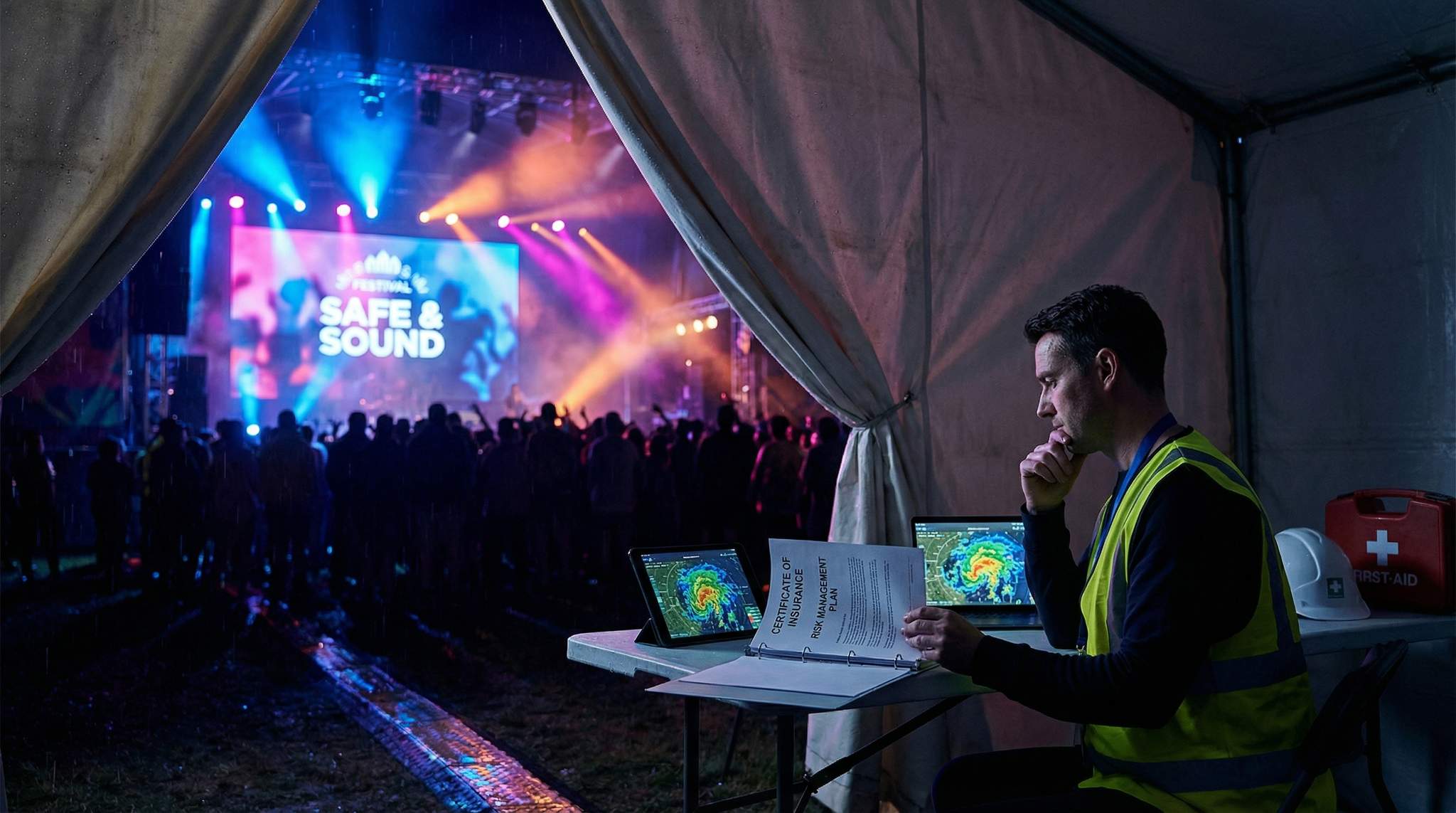
Outdoor festivals are particularly vulnerable to weather and other unforeseen disruptions. Event cancellation insurance (often including weather-related coverage) reimburses the organizers for financial losses if the festival must be canceled or significantly interrupted. Consider a scenario where severe weather – such as a hurricane, lightning storm, or flood – forces a festival to shut down for safety. Without cancellation insurance, the organizers would have to absorb the sunk costs of production, artist guarantees, staff wages, and vendor fees, not to mention refunding potentially thousands of tickets. With the proper policy, many of these costs can be recovered, ensuring the organization survives to plan another event.
Weather insurance can be tailored to specific risks – for instance, a policy might pay out if rainfall exceeds a certain threshold during event hours or if wind gusts reach unsafe speeds. From an operations perspective, having cancellation and weather coverage means festival leadership can make tough calls (like evacuating or canceling for safety) without hesitating purely due to financial fears. It’s an essential backstop for open-air events, especially in regions prone to extreme weather. Additionally, some local authorities and venues take comfort in knowing a festival has this coverage, as it shows the organizers have a plan to handle emergencies without leaving contractors or ticket-holders in the lurch.
When securing outdoor music festival weather insurance, organizers must account for the unique vulnerabilities of large-scale audio and lighting rigs. High winds or sudden downpours don’t just threaten the attendee experience; they pose immediate safety hazards that can force a mid-show evacuation. A robust weather policy specifically designed for open-air concerts will often include provisions for delayed gate openings, partial-day cancellations, and the costs associated with rescheduling headlining acts, ensuring that a sudden storm doesn’t permanently sink the production company.
Special Considerations for Outdoor Festival Insurance
Procuring comprehensive event insurance for outdoor festivals requires evaluating risks that indoor venues simply do not face. Open-air environments introduce variables such as uneven terrain, temporary perimeter fencing, and exposure to the elements, all of which significantly alter a producer’s liability profile. When structuring coverage for an open-air event, underwriters will scrutinize the structural integrity of temporary stages, wind-loading capacities for audio-visual rigging, and emergency evacuation routes across unpaved grounds. Organizers must ensure their policies explicitly cover these outdoor-specific hazards, as standard indoor event policies often contain exclusions for incidents related to natural terrain or temporary outdoor structures.
Cultural and heritage events introduce their own distinct risk profiles that require specialized underwriting. For example, securing Greek festival insurance—or coverage for similar large-scale community and religious gatherings—means accounting for extensive on-site food preparation, open-flame cooking, and high-volume alcohol service. These events often rely heavily on volunteer labor from local community or church members, making volunteer accident coverage just as critical as standard workers’ compensation. Furthermore, traditional activities like group dancing or interactive cultural exhibits increase the likelihood of slip-and-fall incidents, requiring organizers to ensure their general liability limits are robust enough to protect the hosting organization or parish from significant financial exposure.
Workers’ Compensation Insurance
Festivals rely on a small army of staff and crew – from stage riggers and sound technicians to security and volunteers. Workers’ compensation insurance provides coverage for medical expenses and lost wages if a festival employee or crew member is injured while working on the event. In many jurisdictions, workers’ comp is legally required as soon as you have employees on payroll (even temporary event staff). For example, if a crew member falls while setting up lighting trusses or a staffer suffers heat exhaustion during the event, workers’ comp insurance will cover their treatment and compensate them for time off work due to that injury.
Need Festival Funding?
Get the capital you need to book headliners, secure venues, and scale your festival production.
Integrating workers’ comp into festival operations is both a legal compliance issue and a moral responsibility. It protects the people who make the festival happen. From an operational view, having this coverage means the production team can quickly get injured crew the help they need without delay or complicated reimbursement battles. It also shields the festival organization from lawsuits by injured workers, since accepting workers’ comp benefits typically means the employee won’t sue the employer for the injury. In short, workers’ comp keeps the festival workforce safe and the organization protected.
Additional Specialized Coverages
Beyond the big three policies above, several other insurance coverages should be considered based on a festival’s specific activities and risks. These specialized policies relate closely to on-site operations:
- Liquor Liability Insurance: If the festival is serving alcohol (for example, a beer garden at a music festival or a wine tasting event), a liquor liability policy or endorsement is essential. It covers incidents related to alcohol service, such as claims that an overserved attendee caused an accident or injury. Standard general liability policies often exclude alcohol-related incidents, so this coverage fills that gap and is often required by law or permit when alcohol is present.
- Property and Equipment Insurance: Festivals use a tremendous amount of equipment – staging, audio-visual gear, lighting, tents, and even art installations. Property/equipment insurance covers loss or damage to these items, whether they are owned or rented. For instance, if high winds destroy a rented LED screen or if expensive sound equipment is stolen or vandalized on-site, this policy can cover the repair or replacement costs. Having equipment coverage ensures that one unlucky incident doesn’t blow the entire production budget.
- Automobile Liability Insurance: Festival operations often involve vehicles – golf carts, trucks, forklifts, and other utility vehicles transporting equipment or people around the site. If the festival organization owns or rents vehicles, commercial auto insurance or hired/non-owned auto liability coverage is important. It covers vehicle-related accidents on site or en route, protecting the festival if a crew driver accidentally causes an injury or property damage while driving a festival vehicle. (Note: Vendors and contractors using their own vehicles should have their own auto insurance; organizers must verify this as part of vendor agreements.)
- Umbrella Liability Insurance: Also known as excess liability, an umbrella policy provides an additional layer of coverage above the limits of general liability, auto, and other primary liability policies. Large-scale festivals or events with inherently higher risk may opt for an umbrella policy to extend their liability coverage by millions of dollars. This extra protection relates to operations by addressing worst-case scenarios – for example, a major incident with costs that exceed the primary policy limits. Umbrella insurance helps ensure the festival can cover catastrophic claims without exhausting its resources.
- Artist or Key Personnel Insurance: In some cases, festivals consider insurance that covers non-appearance or cancellation by a key performer (especially if a headline artist’s cancellation would lead to significant refund demands or revenue loss). This can be structured as part of an event cancellation policy or separate coverage. For a festival that heavily markets a superstar performer, this insurance provides financial relief if that artist cancels last-minute due to illness or other reasons.
- Vendor and Concessionaire Insurance Requirements: While the core organization holds the primary festival liability insurance, it is equally critical to mandate that all third-party operators carry their own coverage. Requiring dedicated festival vendor insurance protects the main event policy from claims originating at a specific booth. For example, festival food vendor insurance is an absolute necessity to cover unique risks like foodborne illnesses, allergic reactions, or cooking equipment fires. Organizers must verify these certificates of insurance (COIs) and ensure the festival is named as an additional insured.
- Event Promoter Insurance: While a specific festival requires its own dedicated coverage, the production company itself needs overarching protection. Event promoter insurance acts as a comprehensive safety net for the organizing entity across their entire portfolio of shows. This professional liability and general coverage shields promoters from claims related to negligence, breach of contract, or third-party injuries that might fall outside a single event’s policy scope.
When evaluating these specialized policies, it is crucial to distinguish between event-specific coverage and broader promoter liability insurance. While a single-event policy covers incidents occurring during a specific festival’s dates, a promoter’s liability policy provides annual, overarching protection for the production company itself. This ensures that year-round business operations, pre-event marketing activities, and contract negotiations are shielded from claims of negligence or professional errors. For independent organizers managing a portfolio of events, securing this continuous coverage is just as vital as insuring the individual festivals they produce.
Each festival’s needs will vary, but a seasoned festival producer will assess every aspect of operations – from the stage to the campgrounds to the parking lot – and confirm that each area of risk is insured. It’s wise to consult with an insurance broker who specializes in events and festivals; they can recommend the right mix of policies and appropriate coverage limits tailored to the festival’s size and activities.
Insurance, Permits, and Operational Readiness
Insurance coverage and permit requirements go hand-in-hand in festival planning. Virtually all municipalities require proof of adequate insurance coverage before approving event permits. This means festival organizers must secure their insurance policies well in advance of the event date. Commonly, local authorities will ask for a Certificate of Insurance (COI) that names the city or county, the venue, and other relevant entities as additional insured parties for the duration of the festival. Providing this documentation is as crucial to operations as submitting site plans or safety protocols; without it, the event won’t get green-lit.
From an operational standpoint, having the right insurance is a form of preparedness. It forces organizers to evaluate potential hazards thoroughly as they work with insurers to determine coverage. For example, when discussing the event with an insurance provider, organizers must outline aspects like expected attendance, presence of stages or large structures, use of pyrotechnics, water features, or any high-risk activities. This process often serves as a double-check on safety plans – if an insurer is uneasy about a particular aspect of the event, it’s a signal that more risk mitigation might be needed in that area.
During the festival, the operations team should be ready to respond to incidents with insurance in mind. That includes having a clear protocol for documenting any accidents, injuries, or property damage (incident reports, photos, witness statements) to support potential insurance claims. It’s also wise to have the insurance policy numbers and emergency claim contacts handy on-site. In the stress of an incident, knowing there’s insurance coverage in place gives the operations team peace of mind to focus on taking care of people and solving immediate problems, rather than panicking about costs or liability.
Securing comprehensive insurance coverage also strengthens relationships with vendors and sponsors. Many sponsors will require the festival to have proper insurance (and likewise, festivals should require vendors and performers to carry their own insurance). By having robust coverage and insisting others do the same, the festival creates a safety net that spans all participants. This network of insurance policies makes operations smoother because everyone knows that if a mishap occurs, there is a plan for handling it without lengthy disputes over responsibility.
When navigating these complex requirements, partnering with an experienced professional is invaluable. If you are an organizer—or a broker assisting a client who runs a major cultural festival—identifying the specific event liability coverages needed requires deep industry knowledge. Securing comprehensive music festival insurance or tailored event insurance for outdoor festivals in the United States often involves working with specialty underwriters or major commercial carriers (such as State Farm or specialized entertainment insurers) to build a custom portfolio. A knowledgeable broker will ensure no operational blind spots remain, from vendor compliance to severe weather contingencies.
Finally, consider how insurance plays into the financial continuity of the festival organization. Festivals are often high-investment ventures with relatively thin profit margins, especially in early years. One large claim or a canceled event can bankrupt an unprepared organizer. With insurance, the festival’s budget and future plans are sheltered from the worst-case scenarios. It’s a lot easier to recover from a setback when an insurance payout can cover major losses. In contrast, festivals that skimp on insurance might save a bit on upfront costs but gamble their entire survival on nothing going wrong – a risk no wise producer should take.
Frequently Asked Questions
Why is general liability insurance required for festival permits?
General liability insurance protects the festival organization from legal and financial responsibility for bodily injuries or property damage. Venues and municipalities typically require proof of this coverage, often with limits between $1 million and $5 million, before granting access or permits to ensure third-party claims are covered.
What does festival event cancellation and weather insurance cover?
Event cancellation insurance reimburses organizers for financial losses if a festival is canceled or interrupted due to unforeseen issues like severe weather. It covers sunk costs such as production expenses, artist guarantees, staff wages, and ticket refunds, allowing organizers to prioritize safety without facing immediate financial ruin.
Why is workers’ compensation insurance essential for festival operations?
Workers’ compensation insurance covers medical expenses and lost wages for staff and crew injured while working at the event. It is often a legal requirement for payroll employees and protects the festival organization from lawsuits by injured workers, ensuring the production team receives immediate care without legal battles.
When is liquor liability insurance necessary for a festival?
Liquor liability insurance is essential whenever a festival serves alcohol, such as in beer gardens or wine tastings. Standard general liability policies typically exclude alcohol-related incidents, so this specific coverage handles claims regarding accidents or injuries caused by overserved attendees, filling a critical gap in risk management.
How does insurance coverage impact obtaining festival permits?
Municipalities and venues almost always require a Certificate of Insurance (COI) before approving event permits. Organizers must secure policies early and list the city or venue as additional insured parties. Without providing this proof of adequate coverage, local authorities will not green-light the event or grant site access.
What insurance covers damage to rented festival equipment?
Property and equipment insurance covers loss or damage to items like staging, audio-visual gear, lighting, and tents, whether owned or rented. If high winds destroy structures or expensive sound equipment is stolen, this policy pays for repair or replacement costs, preventing a single incident from blowing the production budget.
Do festival organizers need to provide insurance for their food vendors?
Generally, no. Organizers should require all independent contractors to carry their own festival vendor insurance. Specifically, festival food vendor insurance is critical to cover unique risks like foodborne illnesses or cooking fires. Vendors must provide a Certificate of Insurance (COI) naming the festival organization as an additional insured.
How should organizers work with brokers to secure music festival insurance?
Organizers running a major cultural or music festival should collaborate with an experienced broker to identify specific event liability coverages. Brokers can navigate offerings from major commercial carriers or specialty underwriters to build a comprehensive package tailored for outdoor festivals, ensuring all operational risks are mitigated.
What does outdoor music festival weather insurance specifically protect against?
Outdoor music festival weather insurance protects organizers from financial losses tied to severe meteorological events like lightning, high winds, or torrential rain. It covers sunk production costs, artist guarantees, and ticket refunds if the event must be delayed, partially evacuated, or fully canceled due to unsafe conditions.
How do organizers determine the right limits for festival liability insurance?
Organizers determine appropriate festival liability insurance limits by evaluating total expected attendance, site hazards, and specific activities like camping or interactive installations. While $1 million to $5 million is a common baseline, large-scale events often require higher aggregate limits or supplemental umbrella policies to satisfy municipal permit requirements and venue contracts.
What level of public liability insurance is generally recommended for an annual community festival organised by a local council?
For an annual community festival organized by a local council, a minimum of $2 million to $5 million in public liability coverage is generally recommended, though larger events may require $10 million or more via an umbrella policy. This ensures adequate protection against third-party bodily injury and property damage claims, safeguarding municipal resources.
Does art festival liability insurance differ from standard event coverage?
Yes, liability coverage for art festivals often requires specialized endorsements to address the unique risks of high-value exhibits, interactive installations, and independent creators. Organizers must ensure their policy covers damage to third-party artwork on display and mandate that individual exhibiting artists carry their own dedicated vendor coverage.
What is the difference between event promoter insurance and a single-event liability policy?
Event promoter insurance provides overarching, year-round protection for the production company or organizing entity across multiple shows and business operations. In contrast, a single-event liability policy is strictly bound to the dates, location, and specific risks of one individual festival. Promoters typically carry their own annual coverage while securing separate, dedicated policies for each major festival they produce.
What are the most critical coverages when securing event insurance for outdoor festivals?
When securing event insurance for outdoor festivals, organizers must prioritize general liability that accounts for open-air terrain risks, robust weather and cancellation policies, and property coverage for temporary outdoor structures. Additionally, ensuring all third-party contractors carry adequate festival vendor insurance is crucial to mitigating the unique liabilities of an open-air environment.
Why is promoter liability insurance necessary if I already have event-specific coverage?
Promoter liability insurance provides continuous, year-round protection for your production company’s business operations, whereas event-specific coverage only applies to incidents during a particular festival. It shields organizers from professional negligence claims, breach of contract disputes, and liabilities arising during pre-production or off-season activities.
What specific liabilities should Greek festival insurance cover?
Greek festival insurance, and coverage for similar cultural heritage events, must address unique liabilities such as extensive open-flame food preparation, high-volume alcohol service, and slip-and-fall risks associated with traditional dancing. Additionally, because these events rely heavily on community volunteers, organizers should secure volunteer accident coverage alongside robust general liability and liquor liability policies to fully protect the hosting organization.