Insurance for participatory art events – especially those within cultural festivals – is a cornerstone of responsible event planning. These interactive art experiences invite attendees to become part of the art, whether by climbing on installations, contributing to murals, or engaging in creative play. Yet with participation comes risk. A solid insurance plan protects everyone involved – attendees, artists, vendors, and organisers – from financial and legal fallout when the unexpected happens. This guide breaks down the essential insurance coverages and risk management practices that every festival producer should consider for participatory art events.
General Liability Insurance: The Foundation of Protection
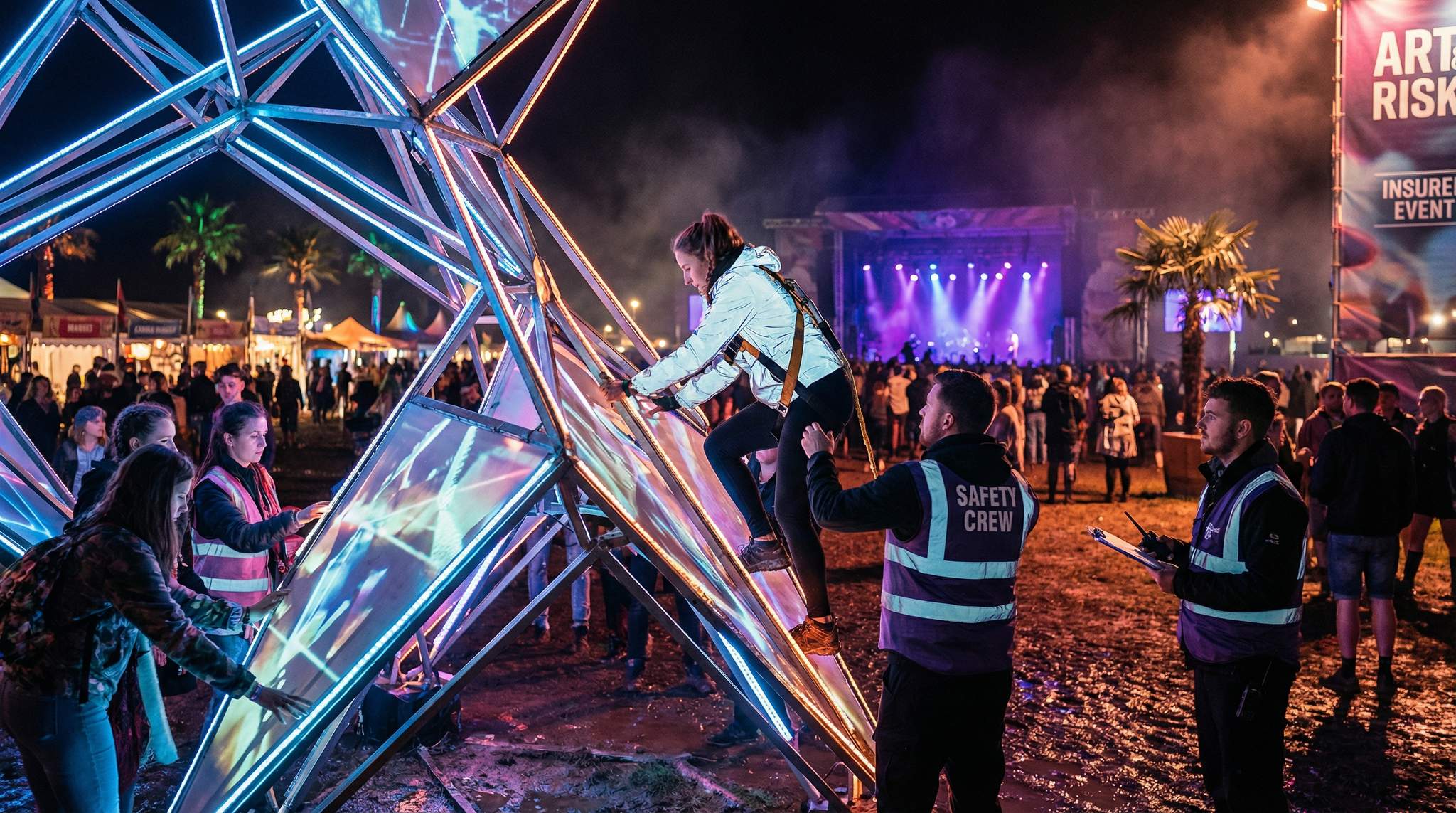
General liability insurance is the first line of defence for any festival or event, and it’s especially vital for participatory art festivals. This coverage protects the event organiser if an attendee, crew member, or other third party is injured or experiences property damage due to the event’s activities. For example, if a visitor trips over a cable in an interactive art exhibit or knocks over a sculpture and gets hurt, general liability insurance can cover medical costs or legal claims arising from the incident. In many countries, having public liability insurance (as it’s often called outside the U.S.) is not just prudent but a legal or permit requirement for events that involve the public. Festival organisers must ensure they have sufficient coverage limits – commonly $1–5 million USD for small events and $10 million or more for large-scale festivals – to confidently handle potential claims. Some countries set specific minimum coverage thresholds – for example, UK festivals commonly carry at least £5 million in Public Liability cover, and Australian events often require AUD $10–20 million – to satisfy local regulations. Ultimately, festival organisers should tailor their coverage to the event’s size and risk profile, ensuring it’s sufficient to handle a worst-case scenario.
When organizing gallery-style pop-ups or large-scale exhibitions, securing dedicated art fairs liability insurance is essential to address the unique risks of dense foot traffic navigating around high-value, temporary installations. This specific type of art fair liability insurance ensures that if a patron accidentally knocks over a pedestal or trips on a lighting cable, the organizer’s financial exposure is mitigated.
Securing dedicated art festival liability insurance is critical whether you are hosting a month-long cultural exhibition or a weekend pop-up. For shorter events, organizers often rely on art fair short term insurance, which provides robust coverage tailored specifically to the dates of the event, including setup and teardown days. This flexibility allows producers to manage costs effectively while maintaining comprehensive protection against third-party claims.
A real-world lesson in the importance of liability coverage comes from major festivals that have faced incidents. Large events like Coachella (USA) or Glastonbury Festival (UK) welcome tens of thousands of attendees and have countless moving parts. These festivals maintain robust liability policies and often even umbrella liability extensions (excess coverage) to handle worst-case scenarios. Smaller community art festivals should take note: while your crowd may be smaller, even one serious injury without insurance could financially devastate an event and its organisers. Investing in a solid general liability policy demonstrates professionalism and care, reassuring venues, local authorities, and participants that the festival prioritises safety and responsibility.
When evaluating art festival liability insurance, producers must also account for the unique interactive elements of their programming. A standard public liability policy might not automatically cover high-risk participatory activities, such as climbing structures or fire art. Therefore, organizers should work closely with their brokers to ensure their overarching art festival insurance explicitly includes endorsements for these specialized interactive exhibits, leaving no gaps in the primary safety net.
Planning a Festival?
Ticket Fairy's festival ticketing platform handles multi-day passes, RFID wristbands, and complex festival operations.
When transitioning from a standard exhibition to a highly interactive environment, securing specialized art fair event insurance becomes paramount. Unlike basic public liability policies, this tailored coverage accounts for the unique risks of attendees physically engaging with installations. A comprehensive art festival insurance package will typically bundle this enhanced liability protection with property damage limits, ensuring that both the organizer’s financial assets and the public’s safety are fully covered during the event.
Ultimately, a robust art festival liability insurance policy acts as the financial bedrock for any interactive event. By working with brokers who understand the nuances of participatory installations, producers can customize their coverage limits to match the specific crowd size and physical risks of their programming, ensuring seamless protection from the first attendee’s arrival to the final teardown.
When negotiating contracts with high-profile interactive artists, having verifiable art festival liability insurance is often a prerequisite. Artists want assurance that if their installation causes unintended harm or is damaged by crowd interaction, the event’s primary coverage will respond. A well-structured art festival insurance portfolio not only satisfies legal mandates but also serves as a critical tool for attracting top-tier creative talent who require a secure operating environment.
Furthermore, a comprehensive art festival insurance strategy must evolve alongside the event’s growth. As producers scale from local community gatherings to multi-stage cultural phenomena, their overarching art festival liability insurance limits must be reassessed annually to ensure they adequately cover increased foot traffic, larger temporary structures, and more complex interactive programming.
Short-Term vs. Annual Policies: Structuring Insurance for Art Fairs
When producing temporary exhibitions or weekend-long creative events, organizers must decide between purchasing an annual policy or securing dedicated insurance for art fairs on a per-event basis. For promoters hosting multiple events year-round, an annual general liability policy often provides the most cost-effective baseline. However, for independent producers or community groups organizing a single annual event, short-term coverage is usually the smarter financial choice. A comprehensive short-term policy can be customized to cover the exact duration of the festival, including crucial load-in and load-out days when the risk of property damage or crew injury is notably high. By tailoring the coverage window, producers ensure they aren’t paying for year-round premiums while still maintaining robust protection against third-party claims and equipment damage during the active event lifecycle.
When evaluating art festival short term insurance, producers should look for policies that offer flexible date ranges. A standard multi-day coverage plan can be tailored to encompass not just the public-facing weekend, but also the critical build and strike periods. This type of dedicated art festival insurance ensures that temporary installations, rented equipment, and volunteer crews are fully protected under a single, cohesive event liability policy without the financial commitment of an annual contract.
Need Festival Funding?
Get the capital you need to book headliners, secure venues, and scale your festival production.
For highly focused pop-up events, securing one day art festival insurance is often the most efficient way to mitigate risk without overpaying for unnecessary coverage. This type of single-day policy is specifically underwritten for brief activations, though producers must ensure it still accounts for the hours required to build and strike the exhibits. If the event spans a full weekend, organizers will instead need to look at art festival 2 day insurance or a broader multi-day package. Whether you are purchasing an art festival 1 day insurance plan for a brief community showcase or extending to a three-day cover for a longer exhibition, the core requirement remains the same: the policy must encompass all active hours when the public, vendors, and temporary structures are on-site.
For many community organizers, the standard event format spans a Friday evening preview through a Sunday afternoon teardown. In these scenarios, securing dedicated art fair weekend insurance is the most practical approach. This specialized multi-day coverage is designed to bridge the gap between single-day pop-ups and month-long exhibitions. A robust weekend policy not only protects against third-party claims during peak Saturday foot traffic but also extends liability coverage to the crucial load-in and strike periods, ensuring the venue and public are protected throughout the entire operational window.
For organizers hosting a brief, concentrated event—such as a 12-hour community mural project or a Saturday-only interactive exhibit—securing art festival single day insurance provides highly targeted protection. This specialized short-term coverage ensures that the unique liabilities of a condensed timeframe are fully managed. When booking a single-day policy, producers must carefully verify that the coverage window extends beyond public hours to include the critical early-morning load-in and late-night strike phases, preventing any gaps in their overall art festival insurance strategy.
For producers transitioning from large outdoor festivals to indoor gallery exhibitions or temporary warehouse takeovers, securing proper event insurance for an art show requires a slightly different underwriting approach. While a massive outdoor build demands heavy weather and structural liability limits, insurance for art shows often prioritizes high-value property protection, venue damage waivers, and dense crowd management within confined spaces. Whether you are hosting a weekend gallery pop-up or a month-long exhibition, tailored art show event insurance ensures that both the venue’s strict liability requirements and the unique risks of indoor interactive displays are fully addressed.
Specifically, securing comprehensive art show liability insurance becomes a primary focus for promoters managing these refined indoor settings. This type of coverage is uniquely underwritten to address the risk profile of confined spaces, where dense crowds navigate closely around fragile installations. A robust policy ensures that if a patron accidentally damages a temporary exhibit or sustains an injury within the venue, the organizer’s financial assets remain protected without relying on standard, less specialized event covers.
When organizing a highly condensed exhibition, securing art fair 1 day insurance is a strategic move to protect against immediate liabilities without overcommitting resources. For events that extend slightly longer, such as a weekend showcase or a bank holiday exhibition, producers might instead require art fair 2 day insurance or an extended art fair 3 day insurance policy. Whether you need single day art fair insurance for a brief pop-up or a multi-day cover, it is crucial that the policy window includes the hours dedicated to load-in and strike. A comprehensive one day art fair insurance package ensures that the venue, the artworks, and the attendees are fully protected from the moment the first pedestal is placed until the final piece is packed away.
For independent promoters curating brief gallery takeovers or temporary interactive exhibits, securing art show short term insurance provides a highly efficient risk management tool. Instead of absorbing the overhead of a year-round policy, organizers can purchase this targeted coverage to protect the exact operational window of their exhibition. A well-structured short-term policy not only satisfies venue lease requirements for third-party liability but also safeguards high-value installations during the vulnerable load-in and strike phases, ensuring comprehensive protection without unnecessary premium costs.
Participant Accident Coverage: Protecting Your Participants
While general liability covers injuries where the organiser is deemed at fault, participant accident insurance provides an extra layer of protection for the participants themselves. This coverage (available in many regions as an add-on or separate policy) can cover medical bills and accident expenses for someone injured while actively participating in an art activity, regardless of fault. In participatory art, attendees might be climbing onto an art piece, using tools in a workshop, or dancing in an interactive performance – all activities where accidents can happen even with proper precautions. Participant accident insurance steps in to pay for immediate medical costs or accidental death and disability benefits in these situations, which helps injured participants get care quickly and reduces the likelihood of lawsuits.
For instance, consider a hands-on art workshop at a festival in which a participant accidentally cuts their hand while carving wood. If the festival has participant accident coverage, the injured attendee’s medical treatment could be covered swiftly, without needing to prove the festival was negligent. This goodwill not only helps the participant but also protects the festival’s reputation. Organisers of high-engagement events like interactive art fairs in Singapore or community arts festivals in New Zealand have increasingly looked into participant accident policies, when available, to supplement their insurance stack. It’s important to note that participant accident insurance doesn’t replace liability insurance – rather, it augments the safety net for everyone involved.
Equipment and Artwork Insurance: Safeguarding Your Assets
Participatory art often involves expensive equipment, technology, and one-of-a-kind artworks. Equipment insurance (also known as event property insurance or inland marine insurance) is essential to protect these assets from damage, loss, or theft. Cultural festivals frequently erect temporary structures, set up high-end audiovisual gear, and display artworks in open environments – all of which face risks like weather damage, accidental breakage, or vandalism. By insuring equipment and art installations, festival producers ensure that if, say, a sudden rainstorm ruins electronic gear at an outdoor light festival, or a sculpture is damaged by an enthusiastic crowd, the costs can be recovered.
Many festivals have learned the hard way the value of equipment coverage. A case in point: at a popular light art festival in Sydney, Australia, unexpected high winds one year knocked over several large interactive neon sculptures. Thanks to comprehensive property coverage, the organisers were reimbursed for the costly repairs and replacements, allowing the festival to continue the next day with minimal financial loss. When selecting equipment insurance, festival organisers should take inventory of all valuable items – from projectors and sound systems to art pieces and even rental furniture – and ensure the policy covers those items during transit, installation, the event itself, and takedown. Pay attention to policy deductibles and any exclusions (for example, some policies might exclude damage from certain acts, like participant misuse, unless extra coverage is added). In short, by safeguarding the physical components of the artistic experience, you shield the creative vision and your budget from disaster.
Event Cancellation Insurance: Planning for the Unexpected
Even with perfect planning, external events can derail a festival. Event cancellation insurance is designed to cover financial losses if your festival must be cancelled, postponed, or cut short due to circumstances beyond your control. In the world of participatory art, festivals are often outdoors or site-specific, making them vulnerable to weather events. Imagine a cultural art festival where attendees move through outdoor interactive exhibits – a severe storm or hurricane can force a shutdown for safety reasons. Cancellation coverage can reimburse organisers for lost revenue or sunk costs (like non-refundable vendor deposits, equipment rentals, marketing spend) when the event can’t proceed as planned due to covered perils like extreme weather, natural disasters, venue power failures, or even certain emergency government orders.
One famous cautionary tale is the ill-fated Fyre Festival in the Bahamas, which collapsed amid logistical chaos and was abruptly cancelled – and reportedly did not have event cancellation insurance in place. The result was massive financial loss and lawsuits, with no safety net.
On the other hand, well-established festivals often carry cancellation insurance and even specialty riders (for example, coverage for terrorism or national mourning periods) to guard against a sudden cancellation. Glastonbury Festival in the UK, for example, each year budgets for cancellation insurance primarily for weather; in 2020, many festivals learned the hard way that standard policies didn’t cover pandemics, prompting some governments (like in Australia and parts of Europe) to consider support schemes for pandemic-related event cancellations. When purchasing event cancellation coverage, be clear on what scenarios are included or excluded – some policies might cover a washed-out festival due to heavy rain, but not an artist’s last-minute cancellation or a pandemic without a special rider. Having this insurance means that even if the show can’t go on, the festival organisation can financially survive to plan another day.
Vendor and Instructor Insurance: Demand Certificates of Insurance (COIs)
A participatory art festival often involves many third-party contributors – food vendors, art installation crews, workshop instructors, stage contractors, and more. Each of these partners introduces potential risk. A food stall’s cooking station could cause a small fire, or a guest art instructor could accidentally injure a participant during a hands-on activity. Festival producers should require every vendor, contractor, and instructor to carry their own liability insurance and provide a Certificate of Insurance (COI) naming the festival (and venue) as an additional insured. A COI is a document from their insurer proving they have an active policy and coverage limits.
Navigating art festival vendor insurance requirements is a shared responsibility. While the main event policy covers the organizer’s overarching liability, individual vendors must carry their own specific coverage to protect against risks originating from their booths or activities.
Furthermore, mandating comprehensive art festival vendor insurance creates a necessary firewall between the independent seller’s operations and the producer’s main policy. If a food concessionaire or craft exhibitor causes property damage, their individual coverage responds first, preserving the limits of the overarching art fair liability insurance for broader event-wide claims.
To streamline compliance, many organizers establish a preferred art festival event insurance program. This allows independent creators, food trucks, and craft sellers who might not carry annual policies to purchase short-term exhibitor coverage specifically for the event dates. By offering a direct link to a vetted insurance provider, festival producers ensure that all art festivals vendor insurance policies meet the required minimums for general liability and property damage, reducing the administrative burden of rejecting inadequate COIs.
Beyond general liability for the overall event, requiring specific art festival booth insurance ensures that each individual exhibitor’s footprint is fully protected. Whether a vendor is selling handmade crafts, operating an interactive installation, or serving food, their dedicated booth coverage shields both their inventory and the festival from claims arising directly within their designated space. This localized protection is a vital component of comprehensive art festival insurance, as it prevents the main event policy from bearing the brunt of isolated, vendor-specific incidents.
For indoor or gallery-style setups, requiring art fair booth insurance is equally vital. While outdoor festivals deal with weather and large-scale crowds, an indoor art fair presents unique risks, such as attendees knocking over fragile displays within a confined space. By ensuring each exhibitor carries dedicated coverage for their specific footprint, producers safeguard the venue from localized property damage and protect the overarching event liability limits.
When curating indoor exhibitions or gallery-style events, mandating art shows vendor insurance is just as critical as it is for massive outdoor festivals. Independent artists selling high-value pieces, craft exhibitors, and pop-up beverage stations all introduce unique liabilities into a confined space. By requiring each participant to carry their own art show vendor insurance, producers ensure that any localized incidents—such as a patron tripping over a display pedestal or a spilled drink damaging venue property—are handled by the exhibitor’s policy rather than the main event coverage.
For organizers curating these experiences, protecting the overarching art shows liability insurance policy requires strict compliance from all participants. Mandating that every independent gallery and pop-up vendor carries their own dedicated coverage ensures that localized incidents do not exhaust the primary event safety net, keeping premium costs manageable for future productions.
Tip: COI Checklist for Vendors/Partners – When collecting certificates from vendors or instructors, ensure:
– The policy will be in effect on all event dates (no expired or short-term policies).
– The coverage limits meet your festival’s requirements (e.g. at least $1 million USD general liability, or higher for riskier activities).
– Your festival (and venue, if applicable) is listed as an additional insured on the policy.
– The vendor’s insurance specifically covers the activities or services they are providing (for instance, a fire performance crew’s policy should cover performing with open flames).
By obtaining COIs, you ensure that if an incident is caused by a vendor’s negligence – for example, a pyrotechnics artist’s display causing damage – their insurance will cover the damages first, rather than the festival’s policy.
Requiring COIs is standard practice at major festivals worldwide. For instance, SXSW (South by Southwest) in the U.S. mandates that all official event partners and venues carry insurance, and Glastonbury requires all food traders to show proof of public liability coverage before they can set up stall. Smaller community festivals in places like Toronto or Mumbai have also adopted this practice to protect themselves. It’s not just about having the paperwork – festival organisers should verify the coverage is adequate (e.g. the vendor’s policy covers the activities they will do, and the limits meet your requirements). If an instructor is teaching a high-risk workshop (say, welding sculpture pieces with attendees), you might insist on a higher liability limit or specific coverage like participant liability on their policy. Remember to collect these certificates well in advance and keep them organised. By building a network of insured partners, you create a safety buffer that shares the risk load and reinforces a culture of accountability.
For producers managing large-scale exhibitions, establishing clear guidelines around art fairs vendor insurance is a critical operational step. Rather than leaving independent creators to navigate complex commercial policies alone, proactive organizers often provide a framework or recommended broker for securing this coverage. This ensures that every participant—from food trucks to interactive installation artists—holds adequate third-party protection that aligns with the overarching event liability requirements.
Ultimately, the strength of your overarching art fair event insurance relies heavily on the compliance of your individual exhibitors. By strictly enforcing these vendor coverage minimums, producers create a resilient, multi-layered defense against unexpected liabilities.
Implementing a strict art festival vendor insurance requirement also simplifies the claims process if an incident does occur. When every independent contractor, food truck, and interactive booth operator carries their own compliant coverage, the festival’s primary liability limits are preserved for broader, site-wide emergencies.
Beyond collecting documents from your own exhibitors, producers must also be prepared to provide their own art fair proof of insurance to municipalities, venue owners, and equipment rental companies. This documentation, typically a standard COI issued by your broker, serves as verifiable evidence that your overarching event liability policy is active and meets the specific limits required by your lease or permit agreements. Failing to produce this proof on demand can result in delayed load-ins or revoked event permits.
When an exhibitor or contractor submits their documentation, verifying the art fair insurance certificate is just as important as collecting it. A valid certificate must clearly state the policy’s effective dates, the specific liability limits, and explicitly list the event organizer and venue as additional insured parties. To maintain a secure operational environment, producers should implement a centralized tracking system for every art festival vendor insurance document, ensuring no independent creator sets up their booth with expired or inadequate coverage.
For indoor exhibitions and gallery takeovers, securing a valid art show insurance certificate from every participating artist and contractor is equally non-negotiable. This document serves as formal proof that the exhibitor holds adequate third-party liability limits specifically tailored to the risks of confined spaces and high-value temporary installations. Venue managers will frequently audit these records before granting load-in access, making the prompt collection and verification of each policy document a critical operational milestone.
Documenting Hazards and Safety Measures
Insurance is critical, but preventing accidents in the first place is even better. A proactive risk management step used by seasoned festival organisers is to identify and document hazards on-site – and their fixes. Before and during your participatory art event, conduct regular safety walkthroughs of the venue. Look for anything that could pose a risk: loose cables, wet spots on floors, unstable structures, poorly lit stairways, sharp edges on art installations, etc. When you find a hazard, fix it immediately if possible (cordon off the area, tape down cables, add warning signage, secure the structure). And importantly, photograph the hazard and the fix. For example, if volunteers notice that rain has made a walkway slippery, they might spread sand on it and put up caution signs – taking a photo of the initial hazard and the mitigation provides a time-stamped record.
These photographs serve multiple purposes. First, they are proof that the festival took reasonable steps to ensure safety, which can be invaluable in defending against liability claims. If someone later alleges they slipped in that area, you have evidence that it was addressed promptly. Second, it helps your team learn for future events – you can review what types of hazards kept cropping up and take preventive action in the next festival (like investing in more cable covers or non-slip mats if tripping hazards were common). Many international arts festivals, such as street art festivals in Berlin and Singapore, empower their staff and volunteers to report hazards via mobile apps or radios, and log each issue until resolved. Cultivating this safety-first mindset not only reduces incidents but also can lead to lower insurance premiums over time, as insurers recognise a well-managed risk environment.
Incident Logging and Reporting
No matter how careful you are, incidents can happen – from minor injuries to equipment malfunctions or security issues. Establish a clear procedure to log every incident in detail. An incident log typically records the date, time, location, people involved, a description of what happened, any injuries or damage, and the immediate response taken. Encourage your team (from security and medical staff to art project leads) to report all incidents and near-misses, not just major accidents. For example, if three people stumbled (but didn’t fall) on a particular step leading into an installation, logging these near-misses alerts you to improve that step or add a ramp before someone is seriously hurt.
Meticulous incident logs are a festival organiser’s secret weapon in both preventing larger problems and dealing with insurance if a claim arises. They create a factual record that can be referred to later. If an injured attendee or a vendor files an insurance claim days or weeks after the event, you’ll be able to pull up the incident report and provide accurate information to insurance adjusters. This can speed up the claims process and ensure you meet any notification deadlines from your insurer. Moreover, reviewing the incident reports post-event helps identify patterns or weak spots in your safety plan. Perhaps you discover through logs that most accidents happened at night in poorly lit areas of an art park – a prompt to invest in better lighting next time. Festival teams from Mexico City to London know that transparency and diligent reporting build trust with stakeholders (including insurance providers and local authorities) and ultimately lead to safer events.
Building a Comprehensive Safety “Stack”
Think of your festival’s risk management as a protective stack; each layer works together to cover gaps and reinforce the whole. The stack starts with smart planning – choosing a suitable venue, designing installations with safety in mind, and training staff and volunteers on emergency procedures. Added to that are insurance policies (general liability, accident, equipment, cancellation) covering different angles of risk. Next, require partners and participants (vendors, artists, instructors) to carry their own insurance or sign liability waivers as appropriate (for example, Burning Man’s ticket terms include a liability waiver clause for participants), adding another layer of protection. Then, active risk mitigation on-site – safety inspections, hazard fixes, clear signage, and accessible first aid – forms the next layer. Finally, documentation (photos of hazards, incident logs, contracts and COIs on file) wraps around all these layers, ensuring that if something does go wrong, everyone is protected by a clear record of due diligence and coverage.
This comprehensive approach creates confidence among all parties. Artists and participants can experiment and engage in the art more freely knowing that there’s a safety net if accidents occur. Vendors and instructors understand that the festival runs a professional operation that values safety. Local officials and sponsors see that the organisers are responsible and will be more willing to support current and future events. Ultimately, a clear stack of insurance and safety practices protects everyone – from the individual guest who scrapes their knee, to the festival producer who has invested time, money, and passion into creating a memorable participatory art experience. In an industry where unpredictable challenges are the norm, this layered protection and preparation is what allows creativity to flourish safely.
Frequently Asked Questions
What types of insurance are needed for participatory art festivals?
Participatory art festivals require a comprehensive insurance stack including general liability for third-party claims and participant accident coverage for attendee injuries. Organisers should also secure equipment insurance to protect art installations and event cancellation insurance to cover financial losses from weather or unforeseen shutdowns.
What does general liability insurance cover for art events?
General liability insurance protects event organisers against financial and legal claims involving third-party bodily injury or property damage. This coverage pays for medical costs or legal fees if an attendee trips over equipment or is injured by an art installation, serving as the primary line of defence.
How much public liability coverage is required for festivals?
Small events typically require coverage limits between $1–5 million USD, while large-scale festivals often need $10 million or more to handle potential claims. Specific requirements vary by location, with UK festivals commonly carrying £5 million and Australian events often requiring AUD $10–20 million to satisfy local regulations.
Does festival insurance cover injuries to participants in interactive art?
Participant accident insurance covers medical bills and accident expenses for individuals injured while actively engaging in art activities, regardless of who is at fault. This coverage supplements general liability by ensuring injured attendees receive immediate care for accidents like cuts or falls, reducing the likelihood of lawsuits.
Does event insurance cover damage to art installations and equipment?
Equipment insurance, also known as inland marine insurance, protects art installations, audiovisual gear, and temporary structures from damage, loss, or theft. This policy reimburses costs if assets are ruined by weather events, vandalism, or accidental breakage during transit, installation, the event itself, and takedown.
What does event cancellation insurance cover for outdoor festivals?
Event cancellation insurance reimburses organisers for lost revenue and sunk costs like vendor deposits when a festival must be cancelled due to uncontrollable circumstances. Covered perils typically include severe weather, natural disasters, venue power failures, and specific emergency government orders that force an event shutdown.
Why do festivals require Certificates of Insurance (COI) from vendors?
Festival organisers require Certificates of Insurance (COIs) to verify that vendors, contractors, and instructors carry active liability policies naming the festival as an additional insured. This ensures that if a third party causes an incident, such as a fire or injury, their insurance covers the damages first.
How should festival organisers document safety hazards on-site?
Organisers should conduct regular safety walkthroughs to identify risks like loose cables or slippery floors and immediately photograph both the hazard and the fix. Creating a time-stamped visual record proves reasonable steps were taken to ensure safety, which is invaluable for defending against future liability claims.
Can organizers purchase short-term insurance for a weekend art fair?
Yes, producers can secure art fair short term insurance designed specifically for the duration of the event. These temporary policies typically cover the active festival dates as well as the necessary load-in and load-out periods, providing essential liability protection without the cost of an annual premium.
How do independent creators obtain art festival vendor insurance?
Independent creators and food concessionaires who lack annual coverage can typically purchase short-term exhibitor policies tailored to the event’s duration. Festival organizers often partner with specialized brokers to offer an art festival event insurance portal, allowing vendors to easily buy compliant coverage that automatically names the festival as an additional insured.
Should organizers buy annual or short-term insurance for art fairs?
For producers hosting a single annual event, short-term event liability coverage is generally the most cost-effective solution, as it covers specific festival dates plus setup and teardown. Promoters operating year-round venues or multiple exhibitions annually typically benefit more from an annual general liability policy, supplemented by specific riders for high-risk participatory installations.
What does art festival short term insurance typically cover?
Art festival short term insurance provides temporary liability and property protection tailored to the specific dates of your event. This specialized coverage typically encompasses the active festival days, as well as the load-in and load-out periods, shielding organizers from third-party injury claims and equipment damage without requiring an annual policy commitment.
Why is specific art fairs vendor insurance necessary for independent creators?
Specific art fairs vendor insurance is necessary because the main event policy typically only covers the organizer’s overarching liability. Independent creators, food stalls, and interactive exhibitors must carry their own coverage to protect against third-party claims originating directly from their specific booth, artwork, or activity. This ensures a shared risk environment where individual vendors are accountable for their own operations.
What makes art festival liability insurance different from standard event coverage?
Art festival liability insurance often requires specialized endorsements to cover interactive and participatory elements that standard event policies might exclude. Because attendees actively engage with, climb on, or help create the art, the risk profile is higher, necessitating tailored underwriting to ensure all unique interactive installations are fully protected.
Can I get one day art festival insurance for a pop-up event?
Yes, organisers can purchase one day art festival insurance specifically designed for brief, 24-hour pop-up exhibitions. While this single-day coverage protects against liabilities during main event hours, producers must verify that the policy window also includes the necessary time for load-in and load-out. For weekend-long events, brokers offer tailored art festival 2 day insurance or three-day options to ensure continuous protection across the entire operational timeline.
What does art festival booth insurance cover for exhibitors?
Art festival booth insurance provides dedicated liability and property protection for individual vendors operating within a larger event. It covers claims arising specifically from their designated space, such as a visitor tripping over their display or damage to their inventory, ensuring the main festival policy isn’t held responsible for vendor-specific accidents.
How does art fair liability insurance differ from standard public liability?
While standard public liability covers general third-party bodily injury and property damage, dedicated art fair liability insurance is specifically underwritten for the nuances of exhibitions. It often includes tailored endorsements for high-value temporary installations, dense crowd flow around fragile structures, and the specific load-in/load-out risks associated with gallery-style pop-ups and participatory art events.
Why is art festival vendor insurance critical for overall event safety?
Art festival vendor insurance ensures that independent creators, food stalls, and interactive exhibitors carry their own liability protection. This creates a shared risk environment where individual vendors are financially accountable for incidents originating in their booths, thereby protecting the organizer’s primary event policy from isolated third-party claims.
What does event insurance for an art show typically cover?
Event insurance for an art show typically includes general liability to protect against third-party slips, trips, and falls within gallery or exhibition spaces. Additionally, comprehensive art show insurance often features property coverage for high-value installations, rented venue damage protection, and specific endorsements for interactive or participatory exhibits.
What are the core components of comprehensive art fair event insurance?
Comprehensive art fair event insurance typically bundles general liability for third-party injuries, property coverage for high-value temporary installations, and specific endorsements for interactive exhibits. This specialized package ensures that organizers are protected against the unique risks of dense crowds navigating around fragile or participatory artworks.
What is included in art festival single day insurance?
Art festival single day insurance is a highly targeted short-term policy designed for one-off events. It typically includes general liability for third-party injuries and property damage during the event’s public hours, while also covering the specific timeframe required for early-morning setup and late-night teardown.
How does art festival liability insurance protect organizers?
Art festival liability insurance protects organizers by covering legal fees, medical costs, and settlement expenses if an attendee or third party is injured during the event. It is specifically underwritten to account for the unique risks of interactive and participatory art installations.
Why is art shows vendor insurance required for indoor exhibitions?
Requiring art shows vendor insurance ensures that independent artists, craft sellers, and pop-up vendors are financially responsible for incidents occurring within their specific booth areas. This localized coverage protects the organizer’s primary liability policy from claims related to individual exhibitor negligence, such as a patron tripping over a display or accidental damage to the venue.
What does art fair weekend insurance cover for organizers?
Art fair weekend insurance provides targeted liability and property protection for events spanning two to three days. This multi-day coverage typically encompasses public exhibition hours as well as the necessary Friday load-in and Sunday or Monday teardown phases, ensuring organizers are protected against third-party claims and equipment damage throughout the entire event lifecycle.
What does art fair 1 day insurance cover for pop-up exhibitions?
An art fair 1 day insurance policy provides targeted general liability and property damage protection for a single 24-hour period. This short-term coverage is ideal for brief pop-up exhibitions, ensuring organizers are protected against third-party claims during public hours, as well as during the critical setup and teardown phases.
Can organizers purchase art fair 3 day insurance for weekend events?
Yes, producers hosting weekend-long exhibitions can secure art fair 3 day insurance to cover the entire operational window. This multi-day policy typically protects the event from Friday load-in through Sunday teardown, offering a cost-effective alternative to annual coverage while maintaining robust liability limits.
How do organizers provide art fair proof of insurance to venues?
Organizers provide art fair proof of insurance by requesting a Certificate of Insurance (COI) from their broker. This official document outlines the active policy limits, effective dates, and names the venue or municipality as an additional insured, which is typically required to secure event permits and lease agreements.
Why is dedicated art show liability insurance important for indoor exhibitions?
Dedicated art show liability insurance is crucial for indoor exhibitions because it specifically addresses the risks associated with confined gallery spaces, dense foot traffic, and high-value temporary installations. This coverage protects organizers from third-party bodily injury and property damage claims that can occur when attendees navigate closely around fragile artworks, ensuring the event’s financial stability.
What does art fair booth insurance cover for individual exhibitors?
Art fair booth insurance provides targeted liability and property protection for a vendor’s specific footprint within a larger exhibition. It covers incidents that occur directly inside their designated space—such as a patron tripping over a display rack or accidental damage to the vendor’s inventory—ensuring the main event policy is not held liable for localized accidents.
What information must be included on an art fair insurance certificate?
A compliant art fair insurance certificate must display the policyholder’s name, the insurance provider, active policy dates that cover the entire event (including load-in and strike), and the specific liability limits. Crucially, it must also list the festival organizer and the venue as additional insured parties to ensure proper risk transfer.
What are the benefits of art show short term insurance for independent promoters?
Art show short term insurance allows independent promoters to secure comprehensive liability and property protection for the exact duration of their event, including setup and teardown. This targeted approach eliminates the need for an expensive annual policy while still satisfying venue requirements and protecting against third-party claims during brief gallery takeovers or temporary exhibitions.
What is an art show insurance certificate and why is it required?
An art show insurance certificate is an official document provided by a broker that proves an organizer or exhibitor holds active liability coverage. Venue operators and municipalities require this certificate to verify that the policy meets specific financial limits and includes them as additional insured parties before granting event permits or load-in access.