Lighting plays a crucial role in shaping the energy and experience of electronic music festivals. One major decision for any festival lighting team is whether to synchronize the light show to timecode or to busk it live. The balance between these two approaches can make a big difference, especially in BPM-driven events where the beats—and the crowd—are relentless. This article explores when to program lighting to timecode for precision and repeatability, and when to trust the skill of a lighting operator to improvise (busk) on the fly. It also delves into preparing for the unexpected with robust fallback cues and emphasizes the importance of reading the room, not just the rig.
When conceptualizing lighting for festivals, production managers must look beyond the DJ booth. A comprehensive festival lighting strategy encompasses site-wide illumination, architectural highlights for VIP areas, and crucial safety lighting for egress routes. The main stage rig is undoubtedly the crown jewel, but the overall visual identity of the event relies on a cohesive design that guides attendees safely while maintaining the immersive atmosphere from the moment they pass through the gates.
Timecode Lighting: Precision and Repeatability
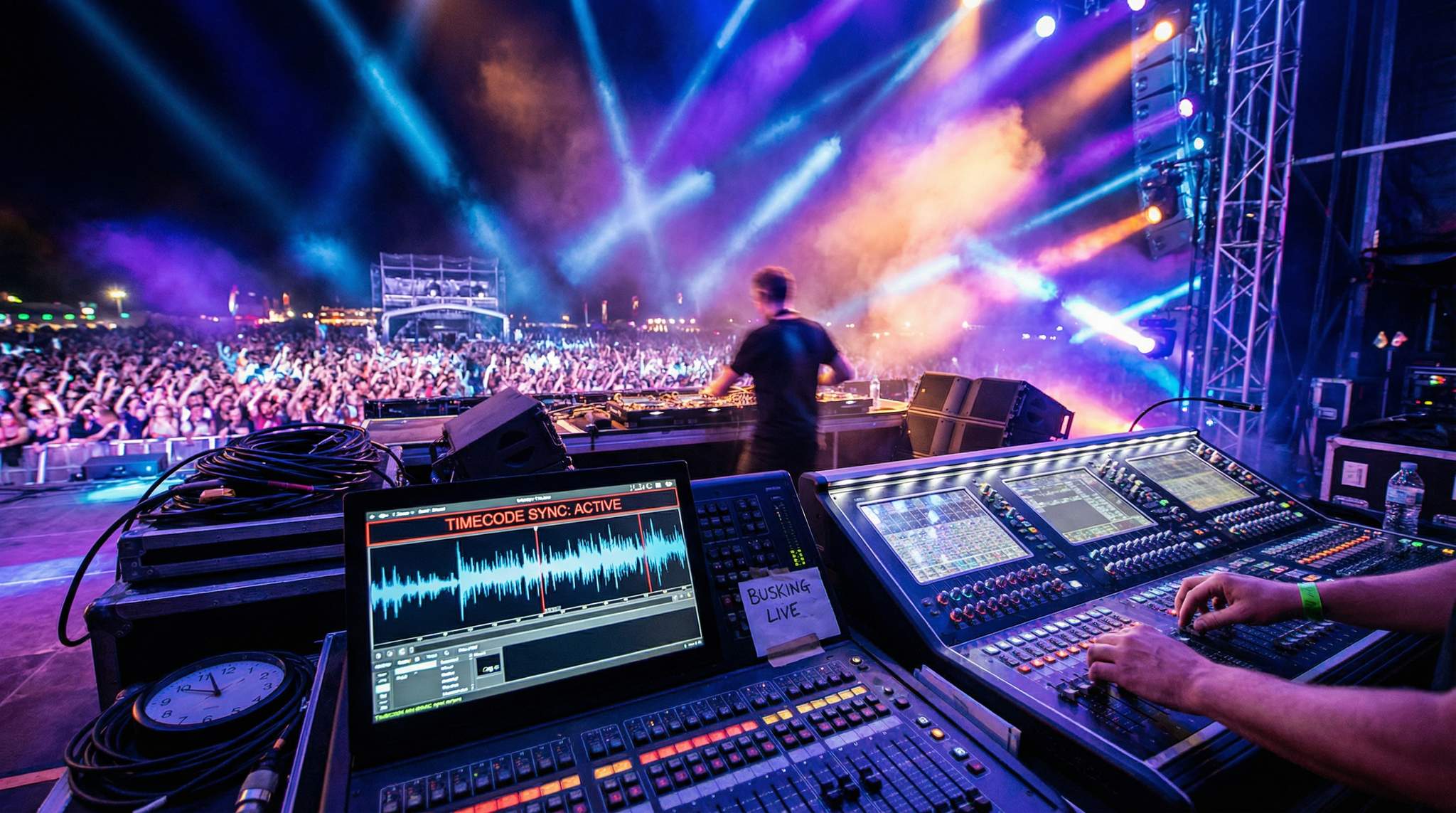
Timecode programming is the art of pre-syncing lighting cues to a timeline or musical track. Using timecode (such as SMPTE or MIDI timecode), lighting cues are triggered at exact moments in the music, resulting in a perfectly synchronized audiovisual spectacle. This approach shines for repeatable headliner shows where artists perform a well-rehearsed set or use the same setlist across multiple events. For example, major EDM headliners often tour with a pre-programmed light show (and even pyrotechnics or video content) perfectly aligned to their tracks. At large festivals like Ultra Music Festival or Tomorrowland, it’s common to see headline acts deliver tightly scripted lighting and laser shows that hit every beat, drop, and fill with military precision.
The advantage of a timecoded light show is consistency and impact. Audiences are treated to the exact creative vision each time: think of coordinated strobe bursts right on the snare hits or color changes that match musical motifs. Timecoding also enables complex integration of lasers, fireworks, and video walls, since all elements follow the same clock. Once programmed, the show can run like clockwork. This is ideal for festivals when a particular performance needs to be replicated over multiple days or on different stages (for instance, a famous DJ’s set across a festival tour). It’s also useful when an artist has a signature moment – say a track where lights and visuals have to crescendo exactly with the music – because timecode ensures no cue is missed.
Staying updated on the latest timecode lightshow technologies is also vital for production managers. Modern media servers and advanced lighting consoles now offer deeper integration with DJ hardware, allowing a pre-programmed timecode sv?telná show (timecode light show) to dynamically adjust if the artist slightly alters the track’s BPM. This ensures that even the most rigid, highly produced sets maintain their flawless execution.
From a technical infrastructure standpoint, implementing reliable time code lighting requires meticulous planning. Festival production managers must ensure the audio department and the visual team are perfectly linked, typically using a dedicated SMPTE linear time code (LTC) audio feed sent directly from the DJ’s playback rig to the front-of-house lighting console. When specifying the technical rider for a main stage, organizers should account for time code generators, redundant audio interfaces, and isolated signal paths to prevent any ground loops or interference that could disrupt the sync.
Planning a Festival?
Ticket Fairy's festival ticketing platform handles multi-day passes, RFID wristbands, and complex festival operations.
However, timecode has its limitations. It demands extensive preparation: lighting designers must obtain the music (or set list) in advance, program every cue beforehand, and test thoroughly. There is little room for spontaneity; if an artist deviates from the plan – e.g., changes the track order or remixes something on the fly – a strictly timecoded show can fall out of sync. For this reason, timecode fits best when the performance is predictable. A good example is a live electronic act or a DJ with a fixed set, where precision is more important than improvisation. On the other hand, if improvisation or crowd interaction is likely, fully timecoded shows might become a liability.
Busking Lighting: Flexibility and Improvisation
Busking in lighting means the operator is controlling the light show live, in real-time, rather than relying on a pre-programmed sequence. Think of it as improvisational lighting – the lighting designer or operator (LD) has an array of prepared cues, effects, and looks on the console, and they trigger them on the fly to match the music’s energy and twists. Busking is essential for sets with high unpredictability: for instance, DJ B2B (back-to-back) sessions or artists known for spontaneous improvisation. In these scenarios, the music can change direction on a whim, and a talented LD will “play” the lighting rig like an instrument, responding to the DJs just as the DJs respond to each other.
For those wondering exactly what is busking in lighting from a technical setup standpoint, it requires a highly customized console layout. Production teams must provide their LDs with adequate hardware—such as expanded fader wings, macro buttons, and multiple touchscreens. This physical interface allows the operator to map out color palettes, strobe rates, and movement speeds so they can execute complex busking lighting commands instantly without digging through software menus.
The strength of busking lies in its flexibility. A skilled festival lighting operator can read the vibe moment-to-moment and adjust lighting intensity, color, and effects to amplify what’s happening in the music right now. For example, if a techno DJ in Berlin suddenly dives into a faster tempo, the LD can instantly bring in faster strobing or sharper movements to match. If the next moment the DJ layers in a melodic breakdown, the operator can fade to dimmer, moodier hues. This on-the-spot adaptability often creates a powerful feedback loop between the artist, the lights, and the crowd – something that rigid timecode sequences might not achieve in a volatile set.
However, busking is only as good as the operator. It requires experience, quick reflexes, and deep knowledge of both the music and the lighting console. Not all acts can afford a top-tier lighting operator who knows their music intimately. Additionally, busking without preparation can look haphazard if the LD isn’t in sync with the music’s flow. That’s why even for busked shows, good preparation is key – LDs will often set up pre-programmed palettes and cue snippets (for colors, movements, dimmer chases, etc.) that they can trigger at will. In essence, busking is not “winging it” from scratch; it’s more like live remixing of well-prepared building blocks.
Within the industry, a highly skilled busking operator is sometimes affectionately referred to by touring crews as an EDM light fairy—flitting across the console to sprinkle visual magic over an unpredictable set. However, behind that playful moniker lies intense technical focus, deep genre knowledge, and an encyclopedic memory of the console’s programming architecture.
Need Festival Funding?
Get the capital you need to book headliners, secure venues, and scale your festival production.
Choosing Between Timecode and Busking
Deciding whether to use timecode or busking (or a combination of both) comes down to the nature of the performance and the festival’s resources. Here are some considerations to help make the call:
- Repeatable headliner shows: If you have a headliner with a well-known, relatively fixed set (say a live EDM act or a DJ with a pre-planned festival set), timecoding can elevate their performance. The consistency and wow-factor of synchronized lights and effects will ensure every stop on their tour or festival circuit gets the same high-quality show.
- Complex productions: When the performance involves multiple production elements (lighting, LED screens, lasers, pyrotechnics) all needing tight sync, timecode is often the only realistic way to keep everything in lockstep. Huge festival main stages in the US, UK, and Europe – from EDC in Las Vegas to Tomorrowland in Belgium – rely on timecode for the biggest acts to coordinate massive visuals and special effects.
- Improvisational sets and B2Bs: For artists who thrive on spontaneity – common in underground electronic scenes from London to Mumbai – a busking approach is better. If two techno DJs are going B2B in a warehouse rave in Berlin or a drum and bass MC in Sydney decides to double-drop into a new track unexpectedly, a timecoded show would crumble. Here, an attentive LD busking live can follow along with every twist.
- Mid-size and side stages: Smaller festival stages or club nights in places like Mexico City or Melbourne might not have the budget or prep time for elaborate timecoding for each act. A busking approach by a house LD is more practical, possibly with some basic scenes pre-programmed for each genre or act. This way, the operator has a starting point but can adapt as needed.
- Artist preference: Always consider what the artist wants or expects. Some DJs and live acts are accustomed to carrying their own lighting show file (timecoded to their performance). They may even tour with their own LD. Others prefer to just “feel the moment” and might get frustrated if the lights are out of sync because they deviated from a plan. Communicate with artists in advance – if they plan something special (say a certain cue to go black or a big flash at a drop), make sure the LD knows whether it will be timed or signaled live.
- Genre-specific visual demands: Different electronic subgenres require distinct visual languages. For example, a dedicated trance stage lighting design often relies heavily on sweeping lasers and massive, euphoric color washes that build over long, progressive tracks. While the core laser choreography might be timecoded for safety and precision, the LD will typically busk the blinders and atmospheric washes to match the crowd’s real-time emotional peaks.
- Scalability across the festival footprint: When budgeting lighting for festivals, promoters must balance the high costs of timecoded main stage rigs with the need to illuminate secondary areas. A massive mega-structure might demand a fully synced, pre-programmed show, while smaller immersive environments or art installations benefit from a more organic, busked approach that stretches the production budget further without sacrificing vibe.
From a production management perspective, understanding these genre-specific requirements is critical during the vendor bidding process. If a promoter is hosting a dedicated trance event, the technical rider must allocate sufficient budget for the specialized atmospheric fixtures and laser safety officers required to execute a proper trance stage lighting design. Conversely, a bass music or hardstyle stage will demand a completely different fixture inventory, emphasizing rapid LED strobes and high-contrast beam effects. Aligning the lighting rig’s physical capabilities with the musical programming ensures that whichever control method is used—timecode or busking—the operator has the right tools to deliver an unforgettable visual experience.
Robust Show Files and Fallback Cues
Even with a solid plan – be it timecode or busking – things can go off-script. Equipment can fail, DJ decks can desync, or an artist might unexpectedly change tempo mid-set. A professional lighting team prepares for these moments by building robust fallback cues and flexible programming into the show file.
- Backup looks when sync fails: If you’re running a timecoded show and the timecode signal drops out or the DJ skips a track, the console should have an auto-pilot look ready. For example, program a default lighting scene or chase that can safely run in sync with an average BPM, or simply hold some lighting output (so the stage isn’t plunged into darkness). This can be triggered manually by the LD at a moment’s notice or even automatically if the timecode signal is lost.
- Beat-synced effects without timecode: Modern lighting consoles and software can listen to an audio feed or tap into the DJ’s BPM via protocols like Ableton Link or Pioneer’s ShowKontrol. While not as precise as full timecode programming, these tools can adjust chases and effects to follow tempo changes. If an artist jumps from 128 BPM to 140 BPM suddenly, a beat-linked strobe effect can speed up accordingly. Using such features provides a safety net whereby the light show still follows the music even if pre-set cues are no longer valid.
- Hot keys and override cues: Always program a set of emergency or override cues on the lighting desk. These might include a button that brings up full stage light, a bump to accent a big drop, or a quick blackout – whatever might be needed to gracefully handle surprises. For instance, if a DJ stops the music unexpectedly (perhaps to address the crowd), the LD can hit a blackout or pause cue rather than letting an off-time programmed effect continue. Having these at your fingertips means you can re-sync with the performance smoothly when it resumes.
- Layered control: Many advanced festival LDs create show files that allow both timecode and manual control simultaneously. For example, the base of the show might run on timecode, but the operator still has live control for certain fixtures or effects on top. This hybrid method ensures that if the crowd energy calls for something extra, the LD can inject a burst of light or color on the fly, augmenting the timecoded backbone of the show.
The key is redundancy and flexibility. Just like an audio engineer builds redundancy into sound systems, a lighting designer should build fallback options into the programming. Never assume the night will go 100% according to plan – instead, plan for the unplanned so that even hiccups are invisible to the audience.
Training LDs to Read the Room
Technology and preparation aside, one of the most important aspects of festival lighting is the human touch. Lighting operators should be trained to read the room, not just the rig. In other words, they must pay attention to the crowd’s energy and the artist’s momentum, not solely their pre-programmed cues or technical settings.
- Crowd energy awareness: An LD who keeps eyes on the audience will notice if the crowd is peaking with energy or if they’re losing interest. Maybe the script calls for slow-moving lights during a breakdown, but if the crowd is clearly ready to erupt, a seasoned LD might slowly ramp up intensity or trigger a teaser effect to build anticipation. The goal is to use lighting to amplify the emotional journey of the crowd in real time.
- Collaboration with artists: The best festival light shows happen when the LD and the artist are in sync. This comes from communication and trust. Some artists give cues (verbally or via hand signals) to the LD for big moments; others trust the LD to enhance whatever unfolds. Festival producers should encourage pre-show meetups between LDs and performers whenever possible, even if briefly, so they can align on any special moments or do’s and don’ts for the set.
- Training and practice: Reading a room is a skill honed by experience. Consider having newer lighting techs shadow veterans during live sets. During multi-day festivals (whether it’s a trance gathering in Amsterdam or a bass festival in New Zealand), take time to review what lighting choices made the crowd go wild versus which moments fell flat. Use those lessons to train the team. Emphasize that a lighting console is a musical instrument in its own right – learning to “play” it in response to an audience reaction separates good LDs from great ones.
- Avoiding tunnel vision: It’s easy for an operator to get lost in the mechanics – staring at screens and buttons. To combat this, festival crews often rotate duties or ensure the LD has short breaks, especially during lengthy events, to keep their mind fresh. An alert LD with situational awareness will outperform a fatigued one following a script. Festival producers might even schedule lighting cue callers or have a second pair of eyes at front-of-house to give feedback (e.g., signaling the LD if a section of the crowd isn’t engaged).
- Managing marathon events: Operating a console for extended periods is mentally taxing. If you are producing a continuous 24 hour music festival, you cannot expect a single LD to maintain peak creative energy. Schedule overlapping shifts where the incoming operator can observe the outgoing LD’s busking rhythm before taking over. Standardizing the base show file across the lighting team ensures a seamless visual transition for the audience, even as personnel changes behind the desk.
Ultimately, a great festival lighting experience comes from a blend of technical mastery and empathy with the audience. The lighting rig and console are tools; the real art is in how those tools are used in the moment to create magic for the crowd.
Frequently Asked Questions
What is timecode programming in festival lighting?
Timecode programming involves pre-syncing lighting cues to a specific timeline or musical track using protocols like SMPTE or MIDI. This technique allows lighting, lasers, and video to trigger at exact moments in the music, ensuring a perfectly synchronized and repeatable audiovisual spectacle ideal for headliner shows.
When should festivals use busking instead of timecoded lighting?
Busking is the preferred approach for sets with high unpredictability, such as B2B sessions or artists known for improvisation. In these scenarios, a lighting operator controls the rig in real-time, triggering prepared cues and effects to match the music’s changing direction and energy, offering flexibility that rigid timecode cannot provide.
How do lighting designers handle timecode failures during a live set?
Professional lighting teams prepare robust fallback cues and backup looks within the show file to handle failures. If a timecode signal drops or decks desync, the operator can trigger an auto-pilot look, use beat-synced effects via protocols like Ableton Link, or manually engage override cues to ensure the stage never goes dark.
What are the benefits of timecoded light shows for electronic music?
Timecoded shows deliver unmatched consistency and impact by ensuring every strobe burst, color change, and visual effect hits exactly with the music’s beats and drops. This precision is essential for complex productions integrating lasers, fireworks, and video walls, allowing headliners to replicate their specific creative vision across multiple festival dates.
Why is reading the room important for lighting operators?
Reading the room allows lighting operators to adjust intensity and effects based on the crowd’s real-time energy rather than just following a script. By observing audience reactions, an LD can amplify the emotional journey, ramping up lights during peak moments or dimming them for breakdowns to match the vibe.
How does a hybrid lighting approach work?
A hybrid lighting approach combines the precision of timecode with the flexibility of manual control. The base of the show runs on a pre-programmed timecode sequence, while the operator retains live control over specific fixtures or effects, allowing them to inject spontaneous bursts of light or color to augment the performance.
What is busking in lighting?
Busking in lighting refers to the live, improvisational control of a stage’s visual elements. Instead of relying on a pre-recorded timecode track, the lighting designer uses a customized console layout to manually trigger colors, movements, and effects in real-time, matching the unpredictable energy and tempo changes of a live DJ set.
What are the core elements of a trance stage lighting design?
For festival producers, a successful trance stage lighting design requires prioritizing immersive, euphoric visual elements over stark, rapid-fire strobes. The technical specification should heavily feature high-wattage lasers, sweeping moving-head washes, and robust haze generation to create volumetric lightscapes. Because the genre relies on long, emotional build-ups, organizers must ensure the lighting console and operator are equipped for a hybrid approach—allowing lasers to run on precise timecode for safety, while the LD busks the atmospheric washes to match the crowd’s real-time reactions.
What are the key considerations when planning lighting for festivals?
Planning lighting for festivals requires balancing creative impact with operational safety. Promoters must allocate budget for main stage visual spectacles—whether timecoded or busked—while also ensuring adequate site-wide illumination, emergency egress lighting, and architectural highlights that enhance the overall attendee experience.
How do production teams set up time code lighting networks?
Setting up a time code lighting network requires routing a synchronized clock signal—usually SMPTE or MIDI time code—from the artist’s playback equipment to the front-of-house lighting and video consoles. Production managers must ensure technical riders include dedicated audio interfaces, isolated signal paths, and redundant time code generators to guarantee the lighting rig remains perfectly locked to the music without signal dropouts.