Introduction: The Live Moment as a Marketing Channel
Why Real-Time Engagement Matters in 2026
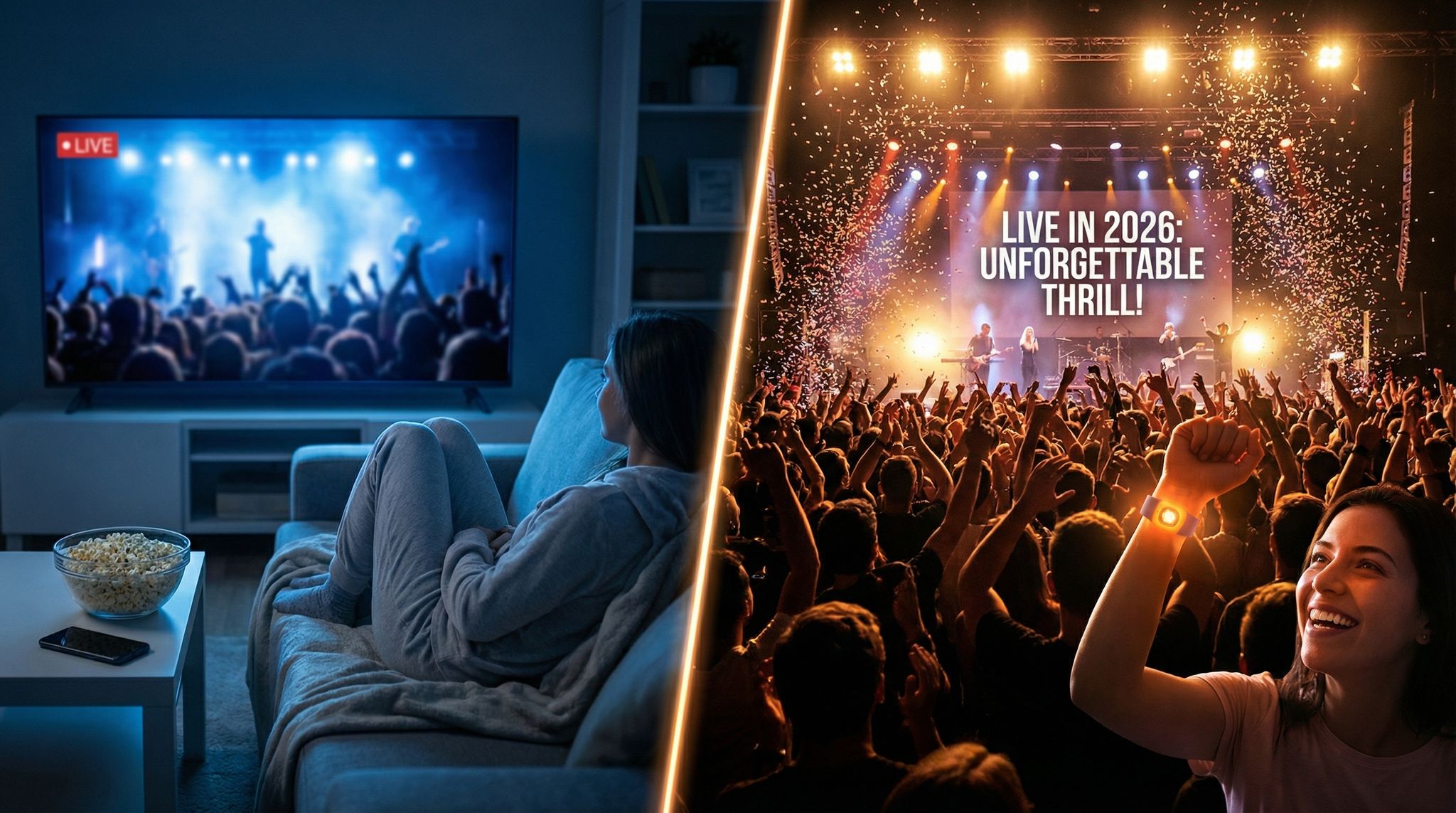
Live events are no longer isolated experiences – they’ve become powerful marketing channels in their own right. In 2026, the buzz generated during an event can spread globally within minutes, thanks to ubiquitous smartphones and social platforms. Attendees don’t just consume the experience; they broadcast it. From packed concerts to industry conferences, audiences are sharing live snippets, reactions, and behind-the-scenes peeks in real time. This in-the-moment buzz creates a ripple effect: those not in attendance feel the FOMO (“fear of missing out”), which can drive last-minute ticket purchases, online stream viewership, and heightened interest for future events. Research even shows that younger audiences factor in how social media impacts live event attendance decisions – a clear sign that real-time engagement is central to an event’s appeal.
Staying ahead of the most impactful event marketing trends in 2026 requires organizers to view the live experience not just as a product, but as an interactive broadcast. As consumer expectations shift toward instant gratification and digital participation, promoters who seamlessly blend physical attendance with digital amplification are seeing the highest returns on their marketing investments.
Fans as Co-Marketers and Amplifiers
Experienced event promoters know that community-driven promotion often outperforms traditional ads, a concept central to leveraging key trends for sold-out events. When attendees excitedly post photos, videos, and live updates, they become co-marketers of your event. Their genuine enthusiasm serves as social proof to their friends and followers. According to industry surveys, user-generated content (UGC) carries significantly more trust than brand messaging – consumers are nearly 10 times more likely to believe posts from peers over polished ads, highlighting the authenticity advantage of user-generated content and how lo-fi content resonates more than studio shots. This means an attendee’s Instagram story or TikTok clip from your event can be more persuasive than any official promo. Savvy promoters facilitate this by making it easy for fans to create and share content during the show. The goal is to turn spectators into ambassadors in real time. In fact, hybrid event playbooks now explicitly include strategies to engage on-site and online audiences simultaneously, because both audiences amplify each other. When your in-person crowd and remote fans fuel each other’s excitement through social media, you maximize reach, engagement, and ultimately ticket demand.
A Global, Real-Time Reach (Even for Local Events)
In 2026, even a local event can achieve global visibility before the lights come up for the encore. A fan live-tweeting from a small venue in London could have followers in Los Angeles or Tokyo tuning into the hype. Major festivals provide dramatic examples: Coachella’s 2019 live stream drew roughly 82 million online viewers versus 250,000 on-site attendees – a staggering amplification of reach, demonstrating how to master video marketing for event promotion. More recently, TikTok’s stream of Tomorrowland 2024 reportedly attracted 74 million unique viewers over two weekends, setting a record for livestreams on the platform, far exceeding the festival’s physical capacity. This isn’t limited to giant festivals; even conferences and niche events can leverage real-time broadcasting to reach far-flung audiences. The key is recognizing that the moment something exciting happens on stage, it can be instantly shared worldwide. Embracing this global real-time reach can also boost future tourism to your events. Fans who watch remotely – or see friends’ posts – may be inspired to travel for the next edition (a phenomenon tied to the rise in concert tourism for bucket-list events). Importantly, broadcasting these live moments doesn’t cannibalize attendance – it often has the opposite effect. One case study revealed that 67% of millennials who watched a live-streamed concert subsequently bought tickets to a similar show, proving that live streams can increase event attendance. In short, sharing the magic as it happens creates a virtuous cycle: online buzz drives more people to experience events in person down the line.
Turn Fans Into Your Marketing Team
Ticket Fairy's built-in referral rewards system incentivizes attendees to share your event, delivering 15-25% sales boosts and 30x ROI vs paid ads.
(Pro tip: If your event targets regions with low internet connectivity, don’t neglect offline tactics. In emerging markets, creative on-the-ground promotion – like local radio broadcasts, SMS alerts, and community watch parties – can bridge the digital divide and spark live buzz even where Wi-Fi is scarce, effectively adapting your event marketing for different markets. The principles of real-time engagement still apply, but you may need to localize strategies based on regional connectivity.)
The Psychology of FOMO and Live Buzz
Harnessing the Fear of Missing Out
“You had to be there.” That’s the sentiment you want swirling on social media as your event unfolds. Fear of missing out (FOMO) is a powerful psychological driver that event marketers can ethically harness. When people see their peers singing along in a packed arena or making business connections at a conference happy hour, a natural longing kicks in – “I wish I was there!”. In fact, studies indicate that about 69% of consumers (and an even higher share of millennials) experience FOMO regularly in the social media age, which significantly influences consumer purchasing behavior. Live events tap directly into this: nearly half of young attendees admit they go to live events partly so they’ll have something exciting to post and not feel left out, confirming that concerts are major social status events. By orchestrating share-worthy moments and highlighting them in real time, you stoke that FOMO among those on the outside. Seeing a friend’s video from the front row or an influencer’s backstage selfie triggers a concern in others that “life-defining moments are happening without me.” The result? They become more inclined to jump on late ticket opportunities, or at least mark their calendars for your next event.
Ready to Sell Tickets?
Create professional event pages with built-in payment processing, marketing tools, and real-time analytics.
Social Proof: Crowds Attract Crowds
Beyond FOMO, social proof is a fundamental factor in decision-making. Humans often look to others’ behavior to guide their own. At events, this means that a visibly engaged, excited audience will attract even more interest. When your attendees are clapping, cheering, and sharing their enthusiasm online, they send a signal that “this experience is worth it.” According to marketing research, seeing other people enjoy something creates a bandwagon effect, where those observing (either on-site or via social media) also want to take part, creating real-time social proof that drives sales. For example, if thousands of fans flood Twitter with praise for a festival set or a conference’s keynote, undecided observers may decide to drop everything and head to the venue (or at least buy a streaming pass). Live attendee reactions are infectious. This is why event-day marketing should showcase the crowd as much as the headliners. A camera panning across a sea of smiling faces on a live stream, or an attendee’s TikTok showing a flash mob dance in the crowd, can be more compelling than the official recap of what’s happening on stage. Successful promoters often seed out such crowd-centric content intentionally. By highlighting “everyone’s here and having a blast,” you leverage social proof to validate the event’s value. In turn, that validation drives more ticket sales – if not for today, then for the next date.
Urgency and Exclusivity in the Moment
There’s a unique urgency to live events – the idea that “it’s happening RIGHT NOW.” Savvy marketers play into this temporal scarcity. Limited-time offers and content during an event can spur immediate action. For instance, a conference might flash a one-hour promo code on the big screen for next year’s registration, available only while the event is live. Concert promoters might announce at 9 p.m. that a small allotment of backstage passes or merchandise upgrades just became available for those who act before the show ends. These real-time exclusives create a surge of urgency – attendees and even remote followers are prompted to seize the opportunity before it’s gone. Psychologically, people are more motivated by the thought of losing out on something unique than by a generic future offer. We see this with on-site merch drops: if a festival announces “only 100 limited-edition shirts left – tonight only,” fans will line up in minutes, not wanting to miss their chance. Scarcity (when genuine) and immediacy are incredibly motivating. Just be sure to wield them ethically – the goal is to reward fans who engage in the moment, not to manipulate or cause regret. When done right, live urgency tactics boost sales and engagement while amplifying the thrill of being there. Many veteran promoters can recall moments when a timed on-site offer sparked a buying frenzy (and a social media flurry of people bragging about their exclusive score). Those stories become lore that fuels demand for future events – nobody wants to be the one who hears about the awesome surprise after the fact; they want to be there next time.
Real-Time Social Media Strategies During the Event
Official Live Updates & Hashtag Campaigns
Your event’s social media feeds should come alive during the event – effectively acting as a live news channel and hype machine for those not in the room. Designate a team member (or a small crew) to handle official live posting. This means tweeting the highlights as they happen, sharing Instagram Stories throughout the day, posting Snapchat or TikTok clips of peak moments, and generally ensuring your channels are buzzing with real-time content. Treat it like a mini broadcast: short, exciting updates that capture the vibe. For example, as a music festival kicks off, you might tweet: “Gates just opened under sunny skies – fans already rushing to the front! ? #FestivalNameDay1”. Mid-event, share an Instagram Story of the headliner’s first song with a caption “LIVE NOW: [Artist] opening with their hit single! ?”. These updates serve two purposes: they keep remote followers engaged (perhaps enticing some to drop by if tickets are available at the door or tune into a stream), and they also encourage on-site attendees to share their own perspective using the official hashtag. Always establish a clear, easy-to-spell event hashtag and publicize it widely – on screens, signage, and from the stage. Many events create a hashtag strategy where they display live social media walls showing posts from attendees in real time. This not only delights attendees who get their 5 seconds of fame on the big screen, it also motivates others to post (“seeing my tweet up there is cool, I’ll do one too”). The hashtag becomes a rallying point that can even trend if volume is high enough. For example, SXSW’s official hashtag regularly trends during the conference, generating organic publicity far beyond Austin. By orchestrating a steady stream of live posts and an easy way for fans to join the conversation, you transform social media into a real-time megaphone for your event.
This strategy isn’t limited to music festivals. For niche B2B trade shows, researching popular, effective hashtags for your content marketing in 2026—whether you are in metal fabrication, fintech, or specialized SaaS—ensures your event surfaces in highly targeted professional feeds. By adopting the exact tags your industry already follows, you instantly plug your live updates into established online communities.
Smart Promo Codes & Presale Access
Create percentage or flat-rate discount codes with usage limits, date ranges, and ticket type restrictions. Plus unlock codes for private presales.
Tracking the performance of these specialized tags through your ticketing partner’s analytics dashboard can reveal which professional communities are engaging most with your content. This data allows promoters to refine their targeting on the fly, ensuring that live updates reach the most relevant industry players and maximize organic reach.
For those stepping into leadership roles who might be thinking, “As a festival coordinator, I want to boost our social media presence without overwhelming my small team,” the secret lies in decentralized content capture. By equipping stage managers, volunteer leads, or dedicated roaming photographers with a shared cloud folder, you can crowdsource high-quality, real-time clips from across the venue. This allows the core marketing team to focus on curating, tagging, and amplifying the best moments rather than running from stage to stage, instantly elevating the festival’s digital footprint and driving organic engagement.
Grow Your Events
Leverage referral marketing, social sharing incentives, and audience insights to sell more tickets.
Encouraging Attendee Content Creation
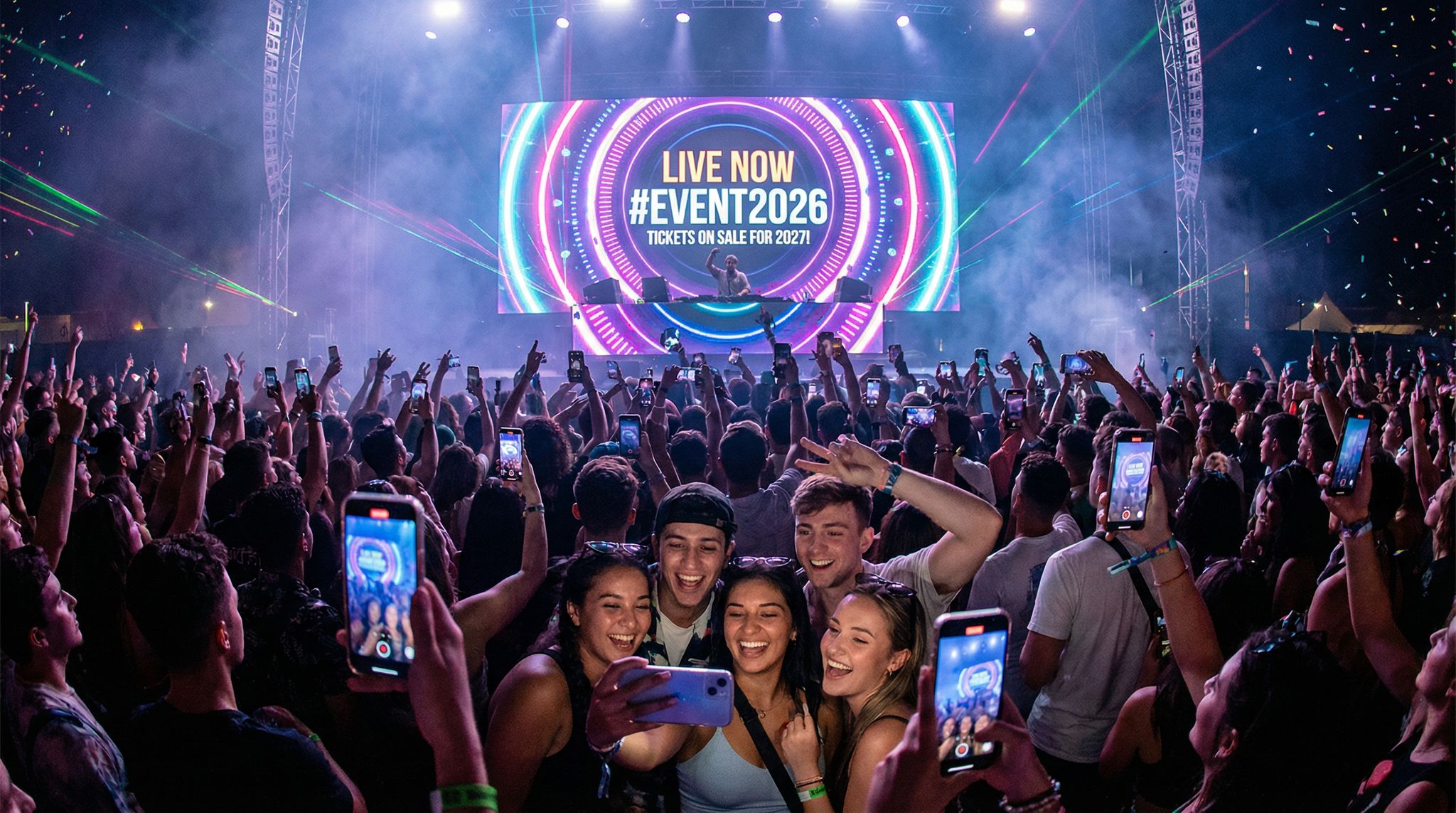
Some of the most potent event-day marketing content will be created not by your team, but by your attendees. You want to inspire and incentivize them to share their experience widely. User-generated content during the event is marketing gold: it’s authentic, abundant, and highly trusted by viewers. So how do you get more of it? First, design shareable moments into your event. This could be a visually stunning stage design, a surprising stunt (like a sudden fireworks burst or a celebrity cameo), or interactive installations that beg to be photographed. At a conference, it might be a thought-provoking quote on a backdrop that people will snapshot and post. Next, make sharing frictionless. Provide strong mobile signal or Wi-Fi if possible (nothing kills live posting like a dead zone). Remind attendees of your hashtag and social handles on programs and slide decks. Many events also run social media contests: for example, “Post a photo on Instagram with #EventName for a chance to win VIP upgrades tonight.” This type of contest can dramatically increase sharing volume. Another tactic is to reward content in real time – e.g., announce that the best tweet of the day (as chosen by your team) will get a shout-out or a free merch item. During the 2026 World Marketing Summit, organizers asked attendees to live-post their favorite insight from each session; those who did were entered into a drawing for a meet-and-greet with the keynote speaker that afternoon. The result was thousands of knowledgeable quotes flooding LinkedIn and Twitter, essentially turning the attendees into a marketing army for the event’s thought leadership, a prime example of encouraging user-generated content through contests. Encouraging UGC also means engaging with it: retweet attendees, share fan Instagram posts to your story, show genuine appreciation. When people see their posts acknowledged by the event, they’re even more likely to continue sharing. The compounding effect of dozens or hundreds of attendees posting their perspectives is enormous reach. It also puts prospective attendees “virtually” into the shoes of real fans experiencing the magic, which is far more persuasive than any ad copy you could write.
Influencer & VIP Collaborations On-Site
In 2026, influencer marketing extends into the live event sphere. Bringing in a few well-chosen influencers or VIP content creators to attend your event can dramatically amplify real-time buzz. The key is to collaborate with individuals whose audience aligns with your target and who excel at live storytelling. For a music festival, this might be a popular Instagram music blogger or a TikTok creator known for concert vlogging. For a business conference, it could be a LinkedIn thought leader or a YouTuber who covers industry trends. Invite them to the event (often with a VIP experience or behind-the-scenes access) in exchange for them sharing their honest experiences in real time. Their live posts, whether it’s an Instagram Live walkthrough of the festival grounds or a Twitter thread from a conference panel, serve as authentic endorsements to their followers. The impact of influencer live coverage can be substantial: consider how Coachella turned its VIP area into an “influencer playground” – dozens of fashion and lifestyle influencers posted live from the festival, making it the place to be for millions of fans watching online. Smaller events can mirror this tactic on an appropriate scale. For example, a 5,000-person comic convention in 2025 invited a few popular cosplay YouTubers; they live-tweeted and streamed from the show floor, drawing in tens of thousands of remote viewers and helping drive ticket sales for day two of the event after day one content went viral. The authenticity and relatability of influencer content often surpasses polished PR. A creator excitedly exclaiming “This crowd energy is insane!” on their Instagram Story feels genuine and infectious. One pro tip: equip your influencer partners with any access or tech they need (special Wi-Fi, dedicated filming spots, maybe a golf cart to get around if the site is large) so they can create content easily. Also, agree on some mutual expectations – not scripted content, but perhaps key moments to cover or a branded hashtag to include – while still giving them creative freedom. When done right, on-site influencer collaborations turn into a win-win: your event gains massive real-time exposure to new audiences, and the influencer grows their own cred by being seen on-location at a must-attend experience, leveraging viral reels and live streams for promotion.
To manage the flurry of online activity, keep an eye on your social listening dashboards throughout the event. If your hashtag starts trending or a particular post about your event gains traction, amplify it. Thank people for positive posts, and address any negative feedback or questions quickly (e.g., someone tweeting about a long line or a schedule confusion) – your responsiveness will be on public display, which is another form of marketing (showing that you care). Remember, social media on event day is a two-way conversation, not just a broadcast. By actively engaging, you not only increase buzz but also build goodwill and community.
Below is a quick reference guide to the major digital channels and how to leverage them during an event:
| Channel | Real-Time Strength | Tactics During Event |
|---|---|---|
| Visual FOMO for millennial/Gen Z audiences | IG Stories & Reels showcasing performances, behind-scenes clips. Repost attendee stories; use interactive stickers (polls, Q&A) during live moments. | |
| TikTok | Viral moments and challenges (Gen Z focus) | Post trending sound clips from the event, start a TikTok challenge or dance from on-site. Go live on TikTok during a hype moment to reach global fans. |
| Twitter (X) | Instant news updates and commentary | Live-tweet key highlights, quotes, and schedule updates. Engage with fan tweets, use event hashtag in every post. Great for conferences (quotes, stats) and concerts (song-by-song reactions). |
| Reaching older demographics & local communities | Post live videos or photos to event page. Use Facebook Live for major announcements or big moments. Encourage attendees to check in at the venue on FB. | |
| YouTube | Long-form streaming to broad audience | Stream select sets or sessions live (with decent production). Upload same-day highlight clips so people can relive and share overnight. Promote the live stream link on other platforms. |
| Professional engagement (for B2B events) | Live stream important talks or panels. Post insightful soundbites or attendee testimonials during the event. Encourage attendees to share their takeaways with your event hashtag. | |
| Event App / SMS | Direct reach to attendees on-site | Send push notifications or texts for live announcements (e.g., “Stage B running 10 min late” or “Flash sale at merch tent until 8PM”). Use in-app activity feeds for attendees to share photos that others can see. |
Each platform plays a role – the table above can guide you in focusing your efforts where your target audience is most active. The overarching strategy is to flood the digital sphere with live excitement and make sure anyone interested can easily follow the action (and ideally, be enticed to join in).
Live Streams and Real-Time Video Highlights
Broadcasting Key Moments to Remote Fans
Live-streaming isn’t just a pandemic-era fad – it’s now a mainstream expectation for many events. Broadcasting parts of your event in real time to remote viewers can exponentially expand your reach and cultivate future attendees. There are a few approaches to consider. One is offering an official live stream of certain performances, games, or talks (perhaps free on platforms like YouTube, Twitch or a social media live, or as a paid virtual ticket for premium content). Another is more spontaneous live video on social media: firing up Instagram Live or TikTok Live from backstage or during a big crowd moment. Both have value. For marquee events – say a music festival or major conference – a polished multi-camera live stream of the headline acts or keynote sessions can draw tens of thousands (or more) viewers worldwide. These viewers are not just passive; many are potential future ticket-buyers. Take the example of Elton John’s 2023 Glastonbury set televised live to 7.6 million people – those massive shared moments only boosted interest in his subsequent tour, showing how live streams amplify FOMO and future demand. Closer to home, you might find that a few thousand locals tune into your county fair’s Facebook Live of the main stage band, and next year they decide to attend in person after seeing how fun it looked. The data increasingly shows live streams do not steal would-be attendees; they create new ones, as live streams increase event attendance). The key is to treat remote viewers as a distinct audience: welcome them, engage them with commentary or chat interactions, and perhaps even cater exclusive angles (like a host interviewing artists between sets just for the stream viewers).
If you don’t have the resources for a big production, embrace lo-fi live video. An organizer holding up a phone and going live for a few minutes can still generate excitement. Stream the festival crowd jumping in unison during the drop of a song, or a quick walkthrough of the conference expo hall with vendors waving to the camera. These unfiltered snippets make remote fans feel included in the moment. One proven tactic is doing scheduled live “check-ins” – for instance, every hour on the hour, go live for 5 minutes with a new scene or surprise. Viewers will come to expect it and tune in. And always replay the best bits on your channels (many platforms let you save live videos). Those archived streams become valuable marketing content post-event as well, serving as highlight reels that latecomers will watch – further driving the FOMO cycle.
Creating Instant Highlights & Recap Clips
In the past, event marketers would wait days or weeks for a professionally edited aftermovie to show the highlights. In 2026, that cadence is far too slow to capitalize on momentum. Smart teams now produce instant highlight clips during the event itself. This could mean having a videographer or even a skilled smartphone shooter capturing key moments and quickly editing on the fly (basic editing apps or even TikTok’s native editor can do wonders). For example, by the end of Day 1 of a festival, you could push out a 60-second sizzle reel on social media showing that day’s best crowds, performances, and candid moments. Label it “Day 1 Highlights – More to Come Tomorrow!” Not only do these quick-turn videos engage current attendees (who love reliving what they just saw and looking for themselves in the crowd), but they also entice fence-sitters to turn up the next day or next year. A person who skipped Day 1 might see the recap you posted Friday night and decide to snag a last-minute ticket for Saturday. Similarly, conferences can post a same-day recap of networking events and panels, which can drive interest for late registrants or at least boost online engagement for the content.
Pro tip: Identify signature moments as they happen and get them online immediately. Did a speaker drop a buzzworthy quote or statistic? Clip it and share within the hour (“Watch
Many events also utilize ephemeral live content like Instagram Stories or Snapchat stories for quick highlights that don’t need to be polished. An Instagram Story series might show 3-4 clips from a concert’s encore moment with the caption “You had to be here ?”. The ephemeral nature adds to FOMO – those not watching within 24 hours will miss it, which again nudges people to follow your channels closely or come in person next time.
Engaging Remote Viewers in Real Time
A live stream or live video isn’t a one-way broadcast – one huge advantage of modern platforms is the ability to interact with viewers in real time. This can greatly enhance the experience and make remote fans feel almost as engaged as those on-site. If you’re streaming on a platform like YouTube, Facebook, or Twitch, consider assigning a team member as a community manager to monitor chat comments and questions. Give remote viewers shout-outs: “I see a question from @Anna93 online – she asks if there’s merch available for shipping. Yes, Anna, check our site…”. These small acknowledgments delight the online audience because they feel seen. During live Q&As or panels, you can even take a couple of questions from the online chat to pose to speakers on stage, truly integrating the audiences. Some events have fun with remote vs on-site interactions – for example, a virtual attendee poll whose results get displayed to the live crowd (“55% of our online viewers are cheering for Team Blue!” during an esports event, for instance). Another idea is running a simultaneous contest or giveaway exclusively for live stream viewers, paralleling something happening on-site. For instance, if people on-site can enter a raffle by visiting a sponsor booth, maybe remote viewers can enter a raffle by typing a keyword in the stream chat. This keeps them engaged and feeling like they have their own perks.
To truly maximize real-time event video engagement, organizers must treat the digital broadcast as a two-way street rather than a static feed. Interactive overlays, live polling, and dedicated virtual hosts who respond to chat comments keep remote attendees glued to the screen. High video engagement metrics directly correlate with future ticket conversions, as viewers who actively participate in a stream feel a stronger emotional connection to the brand.
To sustain this high level of interaction, consider integrating dynamic calls-to-action that prompt viewers to join a waitlist or access a hidden ticket tier. When remote fans feel their active participation unlocks tangible rewards, their viewing duration and likelihood of converting into future attendees skyrocket.
Additionally, encourage remote viewers to share their experience of your event. Yes, even people watching from home can generate word-of-mouth. Come up with a hashtag for virtual attendees (e.g., #MyEventAtHome) and prompt them to post a photo of their “viewing party” or a selfie of them watching the stream on their TV. Some events put together montages of remote fans – like a social roundup showing fans hosting viewing parties in different cities. BlizzCon, the gaming convention, famously highlights tweets from people watching the live stream from around the world, making those fans feel included. This kind of content can signal to everyone that your event isn’t just a physical gathering, but a global phenomenon in real time. The more you blur the line between on-site and online participation, the more comprehensive your event-day marketing impact will be. As veteran hybrid event marketers advise, think of the online buzz as another “venue” of your event, one that can hold exponentially more people than any physical site, effectively mastering hybrid event engagement strategies. Those people are primed to become ticket buyers in the future.
Finally, don’t forget to capture data from your live stream audience. Many will be first-time “attendees” of your brand. Encourage them to sign up for something – maybe a mailing list to get a post-event recap or a discount code for next year. For example, drop a link during the stream saying “Enjoying this? Get our highlights video emailed to you after the event – sign up here.” Each live viewer is a warm lead, so guide them down the funnel while their excitement is high, using non-pushy calls to action during streams. Some organizers even provide a special ticket offer during the live stream, like “flash sale for stream viewers: 20% off next year’s tickets for the next 1 hour with code STREAM20.” If you see an uptick of sales immediately after a live stream moment, that’s tangible proof that real-time content converts, as seen when sales spike immediately after live stream moments. Track those metrics closely so you can quantify the ROI of your streaming and live highlight efforts.
On-Site Activations & Interactive Experiences that Drive Sharing
Branded Photo Ops and AR Filters
One of the best ways to encourage attendees to share their experience is to give them something irresistibly cool to share. Physical photo opportunities at the event are a proven tactic. This could be a branded backdrop where people can take selfies, a quirky prop or art installation, or a scenic vantage point of the venue with a hashtag sign subtly included. For example, many festivals set up large art pieces or lit-up event logos that practically beg attendees to snap a pic. A well-placed photo op can result in thousands of images on Instagram carrying your event’s branding – effectively free advertising. When planning these, think about what fits your theme and what people will genuinely find fun or beautiful. At a 2026 food festival, organizers built a gigantic faux instant noodle cup attendees could stand in as if they were the “noodles” – silly, yes, but it generated a ton of shares because it was unique and on-theme. Branded AR (augmented reality) filters are another modern twist. Platforms like Instagram and Snapchat allow events to create custom AR lenses (for instance, a filter that adds a flower crown with your festival’s name, or a conference filter that places the attendee on a virtual stage). When attendees use these filters on-site, their followers see a polished, themed piece of content – and often try it themselves if the filter is publicly available. In 2025, a major EDM festival launched a Snapchat lens that overlaid fireworks and the festival logo onto your video; it was used over 100,000 times during the weekend, extending the festival’s visual presence far beyond the venue. The barrier to entry for AR filters is a bit higher (you’ll need a designer or use platform tools in advance), but the payoff in viral brand impressions can be huge, especially with younger, tech-savvy attendees.
Gamification, Challenges and Giveaways
Transforming your event into an interactive playground doesn’t just enhance the attendee experience – it creates a wealth of shareable moments. Gamification is a buzzword, but at live events it can take many creative forms. Conferences have started using event apps that include scavenger hunts (visit these 5 sponsor booths, collect a badge from each, get a prize and a shoutout on social media). At festivals, you might hide golden tokens around the grounds that can be redeemed for merch, and then announce clues via your social channels or screens – attendees will eagerly participate and post about their hunt. Another approach is real-time challenges: e.g., “The best 30-second dance video recorded at Stage 2 today wins two free tickets to next year – post your entry to TikTok with #DanceOffChallenge.” This not only gets people enthusiastically engaging on-site, but generates loads of user videos tagged to your event. Competitions like best costume, trivia questions flashed on screens, or live voting on an event app for something (“which food truck should win Best Festival Snack? vote now!”) also pull people deeper into the experience. The key is to offer meaningful rewards or recognition – people love free swag, upgrades, or even just seeing their name announced. In 2026, veteran conference organizers report great success with gamified networking: attendees earned points for each new connection made (by scanning each other’s badges in the app), and a live leaderboard spurred friendly competition, going beyond basic icebreakers with gamified networking. Attendees ended up meeting far more people (fulfilling a core event goal) and kept talking about it on LinkedIn afterward (“I met 50 people in one day at X Conference!”).
For B2B organizers, brainstorming buzzworthy prize ideas for your conference opening day in 2026 is a proven way to break the ice and drive immediate app adoption. Instead of generic swag, offer high-value incentives like a private lunch with the keynote speaker, premium software subscriptions, or exclusive access to a VIP networking lounge. When attendees compete for these top-tier rewards on day one, the resulting social media chatter sets a high-energy tone for the rest of the week.
Pairing these high-value incentives with a seamless digital redemption process ensures that the momentum doesn’t stall. When attendees can instantly claim their rewards via the event app, the immediate gratification fuels further participation and keeps the competitive energy alive across the entire venue.
Giveaways are a simpler but still effective activation. Consider doing flash giveaways during the event that require social media participation. For instance, a convention might announce: “Tweet a photo from our expo hall in the next hour with #ExpoExcitement and we’ll pick 3 winners to get a VIP swag bag – announced at 3pm!” This creates a flurry of posts in a short window, boosting your event’s online mentions. At concerts, some promoters encourage fans to use an event filter or hashtag by selecting random users’ posts to appear on the big screen between acts (with their permission). The chance to be featured on stage – even virtually via their tweet or photo – motivates plenty of sharing. Interactive tech can also elevate on-site engagement: things like digital graffiti walls where attendees draw something that’s projected in real time, or a “social media mirror” booth that instantly emails the user their photo with your branding, ready to post. The more playful and engaging the on-site activation, the more likely attendees will talk about it both in person and online. It turns your event into a participatory experience rather than a passive show, which in turn builds a deeper connection (and a richer pool of content) that carries into the post-event period.
Social Media Walls and Live Displays
Humans have a bit of vanity – we like seeing our own content acknowledged. Social media walls tap into this nicely. By setting up large LED screens or projections around your venue that display attendees’ live social posts, you create a virtuous cycle of engagement. Attendees post about the event with the hashtag, some of those posts show up on the wall, which excites the people who posted them and encourages others to join in. It’s not just about ego; it actually adds to the communal atmosphere (“look, we’re all part of this collective conversation!”). To do this, use a social media aggregation tool that filters for your event hashtag and rotates recent posts (you can moderate to avoid anything inappropriate). Many music festivals now place social walls near stages or info booths, and conferences often have them in lounges or hallways. It’s common to see groups of friends pointing and cheering when their photo appears. One caution: ensure the content is updating frequently enough or is interesting; a stagnant wall is ignored. It can include tweets, Instagram photos, and even a count of how many posts have been made – turning your hashtag trending into a visual element. Some events take it further by integrating remote audiences on these displays. For example, an e-sports tournament might show a feed of selected comments from Twitch viewers up on the arena screen, or a business conference could display questions coming in from virtual attendees alongside those from the live audience, helping to engage on-site and online audiences for maximum sales. This merges your audiences and signals that the event extends beyond the room.
Another engaging on-site display is a live content feed that showcases behind-the-scenes moments in real time. For instance, imagine a “backstage cam” projected in the venue lobby or on screens between sets – attendees get to peek behind the curtain at the exact time things are happening (maybe the headliner doing warm-ups, or speakers chatting before a panel). This insider view makes attendees feel special and is definitely something they’ll record or photograph to share (“They’re showing us backstage prep live!”). Sports events do this well with locker-room cams or player tunnels broadcasted on the jumbotron. In 2026, some cutting-edge events also incorporate real-time data visuals – like a live map of attendee origins (dots lighting up showing where everyone traveled from) or live polls where the audience sees results changing second by second. These not only entertain the crowd but often end up on social media, as attendees film the dynamic visuals.
In summary, by making your event interactive through activations, games, and real-time displays, you achieve two things: you deeply engage the attendees on-site (enhancing their satisfaction) and you generate a mountain of organic content and buzz that extends outside your venue. Every person engrossed in a scavenger hunt or gawking at a social wall is a person likely sharing that experience with others. The more they share, the more your event’s profile grows – both now and for the future.
Driving Last-Minute Sales and On-Site Revenue Boosts
FOMO-Fueled Last-Minute Ticket Purchases
While most tickets are sold before an event, there’s often an opportunity to capture extra sales during the event – especially for multi-day festivals, conferences with day passes, or even tours where seeing one show can sell people on attending a later date. Real-time marketing can nudge fence-sitters into buying at the 11th hour. How? By broadcasting “it’s not too late to join” messages amid the excitement. For example, let’s say Day 1 of a 3-day festival is going off with huge success. That evening, your social media should explicitly invite those watching enviously: “Still time to be part of this! Limited tickets remain for Day 2 – gates open at 1pm tomorrow. Don’t watch from your phone, experience it in person. ???”. Include a short highlight clip from Day 1 to show what they missed. This tactic works – many promoters have seen spikes in next-day ticket sales when overnight buzz convinces locals to come out last-minute. Similarly for a touring concert: fans often post “best night ever” after show #1, which can drive procrastinators in the next city to finally buy for show #2. If there’s a live stream with strong viewership, literally use it to push sales: mention during the stream, “Love what you’re seeing? We’re hitting Los Angeles next week and some tickets are still available.” Even at single-day events, you might still have some capacity and can encourage walk-ups: e.g., noon of an all-day food festival, tweet out “We’re nearly sold out, but a handful of tickets remain at the gate – come on down!” This leverages the real-time proof that the event is awesome to pull in those nearby who didn’t commit yet.
It’s important to make the purchase process seamless for these impulsive buyers. Use direct links in all digital posts that go straight to the ticket page (don’t make them hunt around). If you have a mobile box office, promote that it’s open. With Ticket Fairy, for instance, organizers can keep online sales open even as the event starts, and our real-time analytics show if there’s a surge when certain content drops (so you can literally see if that hype tweet at 1pm drove 50 extra ticket purchases). The goal is to remove any excuse not to buy right now. And because these last-minute deciders are driven by emotion (hype, envy, excitement), reassure them: no one wants to feel like they missed out on logistics. Post things like: “Yes, tickets are still available at the door!”, “Plenty of space left for you and your friends – join us!”. When a potential attendee sees both the awesome content and a clear invite, they’re more likely to take action. Conventions and conferences can do a similar thing for virtual attendees – e.g., “Enjoyed today’s free live stream? Upgrade now to a full access pass for tomorrow and get to network in our platform with attendees.” The conversion window is short, but the iron is hottest during the event buzz. Capitalize on it.
Promoters often ask how The Ticket Fairy boosts event exposure during these critical live windows. The platform’s built-in referral systems and real-time analytics allow organizers to track exactly which social posts are driving immediate conversions. Furthermore, for global teams implementing estrategias de marketing con The Ticket Fairy (marketing strategies with The Ticket Fairy), the ability to seamlessly integrate localized messaging with automated reward tiers ensures that international audiences are just as incentivized to buy last-minute tickets as local fans.
Beyond immediate conversions, maximizing your event’s visibility requires a ticketing partner that actively amplifies your reach. By utilizing automated pre-save campaigns and robust lookalike audience generation, organizers can ensure their promotional content surfaces in front of high-intent buyers. This built-in marketing ecosystem seamlessly turns early interest into exponential organic growth, allowing promoters to scale their audience without constantly increasing their paid advertising budgets.
On-Site Upsells and Limited Offers
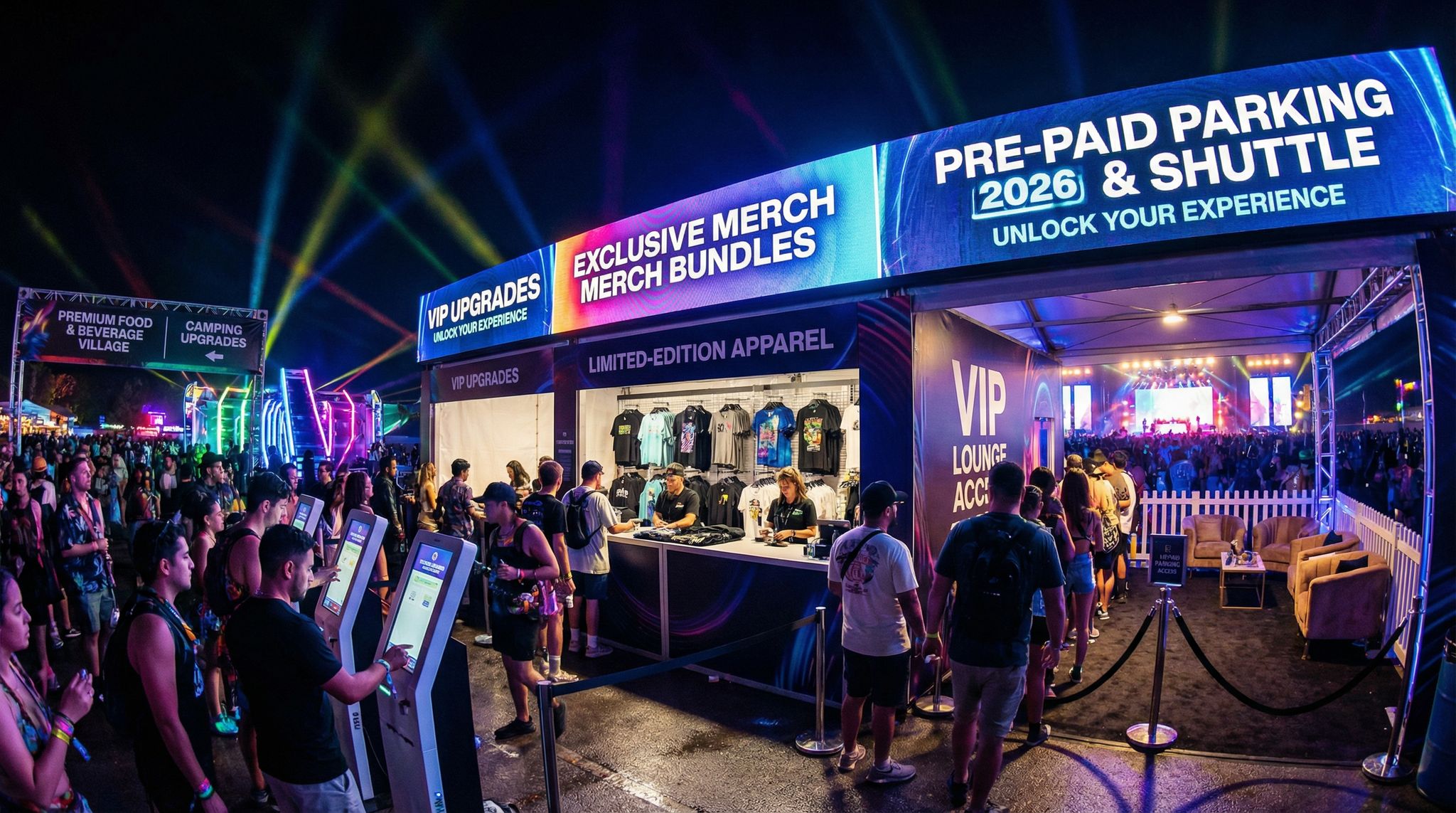
Beyond ticket sales, real-time marketing at the event can boost on-site revenue like merchandise, food and beverage, and upgrades. An attendee who’s already having a great time might just need a little nudge to spend more – and you can provide that nudge through smart messaging. One tactic is the flash sale or limited drop. For instance, announce mid-event that a limited-edition merch item is now available (or only available for the next hour). “Attention, comic-con attendees: for the next 30 minutes, the first 50 people at the merch booth get an exclusive free enamel pin with purchase of any t-shirt. Show this tweet to claim it!” Suddenly you have a rush of attendees hustling over (and tweeting about the mini-shopping spree). Or consider a festival scenario: you push a notification on the app that says “Sunglasses half-price at merch until 4pm – sun’s coming back out, grab them while you can! ?”. You’ve not only solved a customer need (it’s getting sunny) but created urgency to buy now. These real-time upsells work because they feel spontaneous and special, not pre-planned (even if you did plan them behind the scenes). The buzz of people talking about “the deal” or “the secret drop” amplifies the effect. Some music artists have started doing surprise merch drops after particularly big moments in their set – e.g., right after the encore, a message displays “Go to merch now for a surprise item available tonight only.” Fans literally run, and it often sells out in minutes.
Upgrades are another on-site revenue lever. Did someone in general admission just see how awesome the VIP lounge looks on your Instagram Story? Tempt them: “Treat yourself – VIP upgrade available on-site! Visit the ticket desk by 8pm to upgrade and watch the headliner from the VIP viewing area.” A portion of your attendees will splurge if the FOMO is strong enough and the process is easy. The same goes for things like after-parties or add-on experiences. During a multi-day conference, you can announce “A few spots opened for our exclusive dinner tonight with the keynote speaker – register by 3pm if you want in.” These sorts of announcements make attendees feel like savvy insiders (they caught an opportunity others might not know about). It’s important to coordinate with your operations team so that any on-site offer you promote can be smoothly fulfilled – nothing worse than sending 200 people to a merch stand that only has 50 bonus items; manage expectations by clearly stating limits.
One interesting observation: when attendees make an on-site purchase and share that on social media, it further markets your event’s desirability. For example, someone might tweet “Just scored this limited poster at #Expo2026 ? They only made 100 and I got one!” – now all their friends see not just that the event is cool, but that it has exclusive stuff people are proud to own. That drives both immediate and future interest. So in a way, on-site sales promotions can double as marketing promotions. A good strategy is to tie a social element into it: perhaps a digital coupon that attendees get via scanning a QR code you flash on screen, which they can redeem for a discount (and maybe it encourages them to follow your account for more deals). Or a contest: “Buy any drink from Bar A and check in with our app to enter to win a backstage tour tonight.” This leverages sales to create more engagement touchpoints.
Finally, keep an eye on inventory and demand signals in real time. If you see one food vendor line is short and another is insanely long, perhaps give a shout: “Pro tip: The taco truck by Stage 2 has no line right now ??.” Attendees appreciate useful info, vendors get more business, and your role as event host on social media becomes more trusted. Or if merchandise tent traffic is slow mid-event (common during main performances), consider a mid-show online promo: “Can’t leave the stage? Shop merch online now with free delivery for attendees – use code ROCKNOW.” With modern cashless systems and integrated apps, attendees might be able to buy on their phones without missing a beat. The big picture is, use real-time insights to maximize revenue opportunities on site. When you find that sweet spot – delivering a timely offer that genuinely adds to the attendee’s experience – the sales will follow, and attendees won’t feel like they were “sold to,” but rather that they “discovered” something cool.
Sponsor Activations that Get Attendees Sharing (and Spending)
Many events rely on sponsors, and real-time marketing can make sponsorship activations far more impactful (for both attendee experience and sponsor ROI). The days of a static logo banner are over; sponsors now want engagement. So it’s a win-win when you design sponsor booths or activities that attendees love and naturally share online. For example, a beverage sponsor might set up a “charging lounge” where attendees can recharge their phones (much needed for all that live posting!) in a cool, branded environment – perhaps with free samples or a DJ. During the event, you can promote this on social: “Low phone battery? ? Visit the MixIt Energy Lounge by Gate 3 for a recharge (for you and your phone)!” People head over, enjoy the perk, and often snap a photo of the nicely decorated lounge with the sponsor’s branding subtly in view. Or consider a sponsor-branded photo booth that prints physical photos or GIFs and also lets users send a digital copy to themselves (with your event logo and sponsor logo embedded). Attendees line up for these booths because it’s a fun takeaway; when they post those photos online (which they do), it’s organic advertising for the sponsor and your event.
Some sponsors get very creative: at a recent tech expo, a tech company sponsor had an AR game installation – attendees could point an iPad at a wall to play a quick augmented reality game and win prizes. This drew constant crowds (who also posted videos of it because it looked futuristic and fun). A simpler idea is a sponsor-driven contest that runs during the event. For instance, a fashion brand sponsor might do a “street style challenge”: attendees post photos of their festival outfits with #FestivalFashion and the sponsor’s handle, and the brand reposts favorites and gives merch to winners. It’s engaging for attendees (many love showing off their style) and gives the sponsor a trove of user-generated content plus goodwill for enhancing the event experience. Key insight: If sponsor activities add value to the attendee (fun, utility, freebies, exclusive experiences), attendees will engage and share about it without feeling like they’re shilling an ad.
Facilitating these on-site activations via your official channels boosts participation. Use your app, MC announcements, and social feeds to shout out cool sponsor spots: e.g., “The @GoPro Slow-Mo Booth is insane – check it out by the main stage to film yourself in epic slow motion ?!” (Yes, GoPro actually did something like this at the Winter X Games – and it lit up Instagram with slow-mo trick shots.) The sponsor is happy with all the buzz, attendees are happy with a memorable experience, and your event gets more online exposure via the shared content. Just ensure the tie-in feels authentic; attendees can sniff out when something is purely commercial versus when it’s enhancing their day. The best sponsor activations almost don’t feel like ads at all, more like bonus attractions at the event.
From a revenue perspective, strong sponsor engagement can lead to increased sponsor investment in future events, and sometimes direct revenue on site too (like if a sponsor sells product on-site and sees a bump because of your promotional push). For instance, if your festival app sends a push saying “Happy Hour at the Red Bull Tent – 50% off mocktails 5–6pm for the next 100 people ??”, you drive foot traffic and sales to that sponsored bar. The sponsor’s sales increase, they credit your marketing, and they’re more likely to sponsor again generously. Always recap these successes in your sponsor reports – e.g., “our tweet about your activation reached X people and you saw Y participants.” In 2026, sponsors expect data, and real-time digital engagement provides plenty of it.
In summary, don’t silo your marketing from the commerce happening on-site. When you integrate the two, you can capture extra tickets sales, boost per-cap spending, and delight sponsors – all while enhancing the attendee experience. It’s a delicate balance to strike promotional messages during an event (you don’t want to annoy people with constant salesy stuff), but done thoughtfully, attendees will see it as helpful and exciting rather than pushy. Use a light touch, focus on genuine value (“here’s something cool you can do or get”), and let the live enthusiasm carry the message.
Here’s an example of how real-time marketing could boost sales and buzz at a fictional festival:
| Metric / Channel | Real-Time Impact | Notes |
|---|---|---|
| Event hashtag mentions | 25,000+ posts during festival week | Became #1 trending locally on Day 1, amplifying awareness to non-attendees. Many posts showed merch & sponsor booths as well. |
| Peak concurrent livestream viewers | 85,000 viewers (global) | Occurred during headliner set. ~10% viewers clicked the “buy tickets” link for next year that was shown on stream. Immediate lead funnel for future sales. |
| Same-day ticket sales | 300 extra tickets (5% boost) | Day 2 tickets spiked after Day 1 highlight reel was posted at midnight. FOMO drove locals to attend last-minute. |
| On-site VIP upgrades | +150 upgrades (out of 1000 GA attendees) | Push notification and at-venue signage offered VIP lounge access upgrade mid-event; notable uptake after fans saw VIP perks on social. |
| Merchandise revenue | 20% increase vs forecast | Limited “event date” t-shirt announced via Twitter during event sold out in 2 hours. Attendees also spent more time at merch after seeing others’ haul posts. |
| Sponsor engagement | 5,000 participants in sponsor activations | Two major sponsor booths (gaming AR challenge and free photo booth) drew thousands. Sponsor hashtags trended alongside event hashtag, yielding an estimated $250k in sponsor media value. |
| Social follower growth (event accounts) | +8,000 new followers | Gained across IG/TikTok/Twitter during and immediately after event, as non-attendees followed to watch live content. Provides a larger audience base for future marketing. |
| Next-event waitlist signups | 4,300 signups post-event | Prompt on live stream and at-event QR codes invited fans to register for next year’s pre-sale. Captured thousands of leads while excitement was at its peak. |
(The table above illustrates hypothetical outcomes for a multi-day event leveraging real-time marketing. It shows how strategic live engagement can tangibly move the needle on both revenue and future demand.)
Cross-Promoting Future Events During Your Live Event
Turning Current Attendees into Future Attendees
There’s no better time to sell someone on your next event than when they’re euphorically enjoying your current one. Event marketers are increasingly using the live event high to plant seeds (or even directly sell tickets) for upcoming shows in their portfolio. If you run multiple events – say an annual festival, monthly club nights, or a series of conferences – treat your current attendees as the warmest leads for those. They already like what you do enough to be here in person. For example, if you organize both a summer festival and a New Year’s Eve concert, don’t wait until after the festival to push the NYE tickets. Make an on-site announcement: “Loved today’s show? We’ve got another spectacular night coming on Dec 31 – as a thank-you, attendees here get first dibs on New Year’s tickets!” You can display a QR code on screens or include a link in the event app that goes to an exclusive pre-sale for that next event. Possibly offer a small attendee-only discount or bonus (like “buy in the next 24 hours to get a free merch item at the next event”). The sense of privilege and urgency can drive significant early sales. Many successful festival promoters do this on the final day – they announce next year’s dates and open a loyalty pre-sale for this year’s attendees right then and there. It’s not uncommon to see thousands of tickets sold before people even leave the venue, simply because the excitement is fresh and they don’t want to miss out next time.
Even if you’re not ready to sell tickets for the next event, you can still cross-promote. Collect interest and signups: “Stop by our Future Events booth to join the waitlist for 2027 – you’ll get an exclusive discount when tickets open.” Or promote a multi-event pass: “Having a blast? Upgrade to a Season Pass and your entry to our Fall event is covered too.” At a conference, this might take the form of “sign up now for next year at 30% off – good only during this week”. It works because attendees can visualize the value – they’re in the experience now and can imagine wanting it again. In essence, you’re leveraging the live emotional peak to lock in future commitment, by tailoring content to specific city audiences and leveraging social channels to manage passionate fanbases. Campaign veterans recommend having a clear call-to-action ready – whether that’s a special URL, an app notification, or even staff roving with iPads to take down emails of interested folks. Keep it short and sweet: it shouldn’t feel like a hard sell, more like an insider tip or reward (“secure your spot at the reunion of this wonderful time”). And definitely mention it multiple times in non-intrusive ways: a line from the stage MC, a mention in the event’s printed program or digital schedule (“Next Event Preview at 5pm on the small stage”), and on your social feeds during the event.
Surprise Announcements and Teasers
Another way to cross-promote is by dropping exclusive news or content about future events during the current event. This plays on the idea that attendees get to be the first to know (or even influence) your next moves, which makes them feel valued and in-the-know – and more likely to commit to that future event. For instance, at the end of a concert, you flash on the big screen: “[Artist] will be back here on tour in October – tickets go on sale this Friday!” The crowd goes wild knowing they just got the scoop before anyone else. Some might even pull out their phones right then to mark calendars or pre-register. Festivals often reveal their next year’s theme or first headliner exclusively to the current audience. Coachella once played a teaser video on the last night hinting at the next year’s headliner, sending the live audience (and the internet) into a frenzy of speculation – free hype generated months in advance. Conferences can announce next year’s location or keynote speaker during the closing remarks to prompt on-site rebookings of attendees (“We’re thrilled to announce London 2027 – and yes, Malala Yousafzai will be our opening keynote. Register now at the desk for an alumni rate!”). This technique turns your event into a platform for major announcements that resonate with your most engaged supporters.
Teasers can be more subtle too – perhaps a cryptic poster on the venue wall with a date and a hashtag, or a surprise appearance by an artist who then says, “See you all at XYZ Festival?” which hints at a future lineup. These Easter eggs often get shared online by your attendees (“OMG, they just hinted at a fall event!”) thereby letting your broader audience in on the secret and building anticipation. A word of caution: if you tease, be ready to follow up with concrete info soon. You don’t want to frustrate people; the tease should intrigue and excite, leading to a reveal or sign-up call-to-action either during the event or shortly after. Done right, you’ve essentially kicked off your marketing campaign for the next event while the current one is at its peak hype.
Cross-Event Incentives and Bundles
If you host multiple events or a series, consider bundle or loyalty incentives that you can promote on-site. For example, a music promoter with a whole concert season might advertise at each show: “Pick up the Rock City Pass at the merch booth – 4 shows for the price of 3, this weekend only.” It’s much easier to upsell a music fan on more shows when they’re literally basking in the adrenaline of a live performance. Another approach is offering attendee exclusives – say everyone who attended your spring conference gets early access or a discount to the summer workshop series you also run. Announce this perk during the event: “As a thank you for coming, use your attendee badge code to get 20% off our next workshop in July.” This not only drives immediate sales, but makes attendees feel appreciated. They might even share that code with colleagues (increasing your reach).
For festivals, some organizers introduce a “friends & family” presale link that goes live during the festival for next year’s tickets – attendees can snag extra tickets for friends at a special rate if they act fast. It turns your current attendees into evangelists persuading their buddies to join next time (“I had a blast, and I grabbed us early bird tickets already!”). A case study from a New Zealand promoter showed that a surprise limited BOGO offer (buy-one-get-one-free) announced on the final evening for next year’s event led to 800 tickets sold in 24 hours, essentially using the audience’s high to drive group sales for the future.
If your events are related in theme, cross-promotion is naturally easier (“like what you’re hearing at Jazz Fest? Come to our Blues Weekend in two months!”). If they’re diverse, you can segment the promotions on-site – maybe through flyers or targeted signage. For instance, at a comic convention (general pop culture audience), you might promote your niche Anime Expo to just those who visit the anime screening room, via a QR code on the wall there. Or use your registration data: send a personalized push notification to attendees who opted into certain topics: “Hey sci-fi fans at ComicCon, get 50% off our Sci-Fi Expo tickets this weekend only.” This is a blend of real-time and data-driven marketing that ensures you’re hitting the right people with the right cross-event pitch.
One more advanced idea: live endorsements of future events by performers or speakers. Audiences listen when a beloved artist or respected speaker plugs something. Coordinate with a few key folks in your lineup to mention your next event if it fits. E.g., the headline DJ might say on the mic, “This crowd is amazing – I better see you all at the Halloween Rave they’re throwing in October!” (assuming you indeed host that). Or a speaker can say, “We’ve had such great discussions – we should continue at the regional meetup next month.” These feel organic and carry weight. People think, if the artist is into it, then it’s probably worth checking out.
Finally, remember to capture content of these cross-promotional moments. If your crowd roars when you announce next year’s headliner, film that and use it in marketing materials: it’s proof of how eagerly anticipated your events are. A quick video clip of fans rushing to a ticketing tent on-site because of a special deal is social media gold demonstrating the demand and excitement for your brand.
By weaving cross-event promotion into the live experience, you ensure that the energy of the current event directly feeds your event pipeline. Think of each event as both a culmination and a launch pad: you’re delivering on expectations now while simultaneously igniting interest in what’s next, capturing excitement from live Q&As. This strategy, when executed with subtlety and genuine value (not just hard selling), can significantly lift your year-round ticket sales and foster a loyal community that follows you from event to event.
Post-Event Follow-Up: From Event-Day Excitement to Future Demand
Extending the Buzz with Recap Content
Just because the event has ended doesn’t mean the marketing stops – in fact, the moments immediately after an event are critical for channeling fresh enthusiasm into lasting engagement. One of the best tools here is recap content. Soon after your event (within 24-48 hours is ideal), drop a highlights reel or photo album that captures the magic. Attendees will hungrily consume this to relive their experience, and importantly, non-attendees will watch it and feel that FOMO all over again. Make sure to share this content widely: on social media, via an email blast (“Here’s what you missed at X 2026 – see you next year?”), and on your website. Great recap videos often get shared by attendees who are basically bragging “I was there!” and by those who weren’t there with captions like “def not missing this next time.” For example, Tomorrowland’s aftermovies are famous for inspiring people around the world to attend; a strong recap can serve as your unofficial trailer for the next edition of the event.
Additionally, share user-generated recaps. Retweet the threads attendees wrote (“My 10 favorite moments from the conference…”), compile Instagram story highlights where fans tagged you, and encourage attendees to continue posting their own photos and memories. Acknowledge and celebrate these. If someone writes a glowing blog post review of your event, promote it. This not only validates the experiences of those who came (building loyalty and likelihood they return), but it also acts as testimonial content for prospects. Consider writing a blog post or LinkedIn article from the organizer perspective: “5 Incredible Moments from Our 2026 Festival (And What’s Next)”, including some behind-the-scenes anecdotes. This humanizes your brand and sets the stage that you’re already thinking about making the next event even better.
One smart move is to create shareable mini-content pieces from the event that attendees can’t resist sharing. Think funny GIFs or clips of big moments, quotable images of speakers, or a meme that emerged from the event. For instance, if a speaker had a catchy one-liner joke that went viral on-site, turn it into a captioned video meme and tweet it out (“When the Wi-Fi actually works at a tech conference… speaker joke”). Attendees will tag their friends who were there, and non-attendees get a taste of the fun side of your event. Essentially, keep feeding the social feeds with bits of event content for a few days after the event – this extends the lifespan of your buzz beyond the event day itself.
Community Engagement and Feedback
Right after an event is the perfect time to deepen your relationship with the community you’ve built. First, express gratitude – a heartfelt thank-you post or email to attendees goes a long way. Make them feel part of something special (“You were part of a record-breaking crowd” or “This community made [Event] unforgettable”). People who feel appreciated and included are more likely to stick around. Encourage them to stay engaged year-round: if you have forums, groups, or social media communities (like a Facebook Group or Discord server), invite the attendees to join for continued discussion, sharing photos, networking, etc. For example, many conferences set up LinkedIn or Slack groups so attendees can keep connections going; pushing that invite right after the event, while people are still basking in the aftermath, helps maintain momentum, a key part of cultivating fan communities year-round. “The event may be over, but the conversation continues in our online community.”
Also, now’s the time to gather feedback while experiences are fresh. Send out a post-event survey to attendees asking what they loved, what could be improved, and who/what they’d like to see next time. Not only does this give you actionable data to improve, it subtly signals that you are already planning “next time” – planting in their minds that future event. You can even include a question like “Are you interested in hearing about our future events?” with a checkbox – those who check yes are your hottest leads. Some events gamify the feedback process: “Complete our survey in the next 48 hours for a chance to win 2 free tickets to next year!” That can dramatically increase response rates and simultaneously acts as promotion for next year’s event (hey, there’s going to be a next year, and you could go free!).
Engage on social media by asking attendees to share their favorite moments or post their photo highlights (with a hashtag). You might compile the best ones into a blog or gallery (“Top 10 Fan Photos from XYZ Fest”). This not only flatters those fans (who will definitely share that they got featured), it shows outsiders the genuine joy the event created. Monitor the ongoing chatter: retweet or respond to people who are still talking about the event a week later (“We’re thrilled you had a great time!”). And if there were any hiccups, acknowledge them transparently. For example, if some attendees tweet constructive criticism (“Lines at security were too long”), respond with something like, “Thanks for the feedback – we’re already working on streamlining that for next time!” This openness builds trust and can turn a slightly negative sentiment into respect for your team’s responsiveness.
Early-Bird Promos and Loyalty Rewards
Within days of your event’s end (once you’ve delivered those recaps and thank-yous), it’s often effective to launch an early-bird ticket promotion for the next event. This captures the enthusiasm before it fades. Many events see a big spike of sales right after the current edition – essentially people saying “take my money, I’m coming back!” For annual events, offering the lowest price tickets or best deal immediately after the event rewards the die-hards and locks them in. For instance, “For the next 72 hours, last year’s attendees can secure their spot at 2027’s festival for only $X – the lowest price it’ll ever be.” This creates a sense of urgency and exclusivity. You can send personal emails with a special link just to this year’s ticket buyers (perhaps even pre-filled with their info for one-click renewal). If your event historically sells out, emphasize that: “Guarantee your ticket now – before we open sales to the public, this is your chance.” Even if it doesn’t sell out, framing it as a loyalty perk works well.
Loyalty programs can formalize this concept. Consider implementing a system where repeat attendees earn benefits. For example, if someone has attended 3 years in a row, maybe they get a free hoodie or a fast-lane entrance pass next time. Mention these kinds of perks in your follow-up communications: “This was your 2nd time at our festival – one more and you enter our Gold Fan tier with special perks!” This makes them feel part of a club and incentivizes them to keep that streak going. Some ticketing platforms (including Ticket Fairy) provide tools to identify and reward returning customers, making it easy to automate loyalty rewards. Simple gestures like a dedicated “VIP alumni” registration line or a badge ribbon at a conference (“Alumni Attendee”) can make repeat attendees feel seen and special.
Now, early-bird sales don’t have to target just the past attendees – you should also leverage the broader buzz to get new attendees on board early. All those friends and followers who watched jealously via social media are ripe for targeting. Use lookalike audiences in your social ads based on this year’s attendee profiles, and hit them with that killer recap video and a CTA for early tickets. Consider a referral incentive: give this year’s attendees a unique code to share with friends for a small discount off next year’s tickets (and maybe a reward for the referrer too). This turns your satisfied customers into your salesforce, right after you delivered them a great experience. As one guide on referral marketing articulates, fans who had a blast are often eager to recommend it – you just have to ask and reward them for it, utilizing referral programs to boost ticket sales and fueling friendly competition among fans, which can gamify the referral process.
Finally, don’t let the email list momentum slip. Those leads you collected from live stream signups or waitlist forms during the event – hit them with a warm “you followed along, now join the real thing” message, complete with a limited-time offer. Timing is crucial: strike while the memory of the event is still filling newsfeeds and conversations. Every day that passes, a bit of the magic fades in people’s minds as routine life takes back over. By acting swiftly with follow-ups, specials, and community-building, you carry the spark of event-day excitement forward, lighting the way to your next successful on-sale and sustaining the community that will be eager to return.
Measuring Real-Time Marketing Success and Iterating
Key Metrics to Monitor During and Immediately After
Real-time event marketing is dynamic, but it shouldn’t be a guessing game. With the right metrics, you can quantify the impact of your on-site engagement efforts. Social media metrics are a primary indicator: track your event hashtag usage, mentions, shares, and trending status in real time. Did your hashtag trend regionally or nationally? For how long? How many posts per hour rolled in? These numbers show reach. For instance, if you see 5,000 posts in one day where last year you had 2,000, that’s a huge leap in online buzz (and you’ll want to figure out what drove it). Also look at engagement rates on your live content – the views on your Stories, the retweets of your live tweets, comments on your live streams. Spikes often correlate with key moments (e.g., engagement peaked at 9pm – aha, that’s when the surprise guest came out on stage). This helps you understand what content or moments resonated most so you can replicate or amplify those in the future.
Live stream analytics are another goldmine. Track concurrent viewers, total unique viewers, average watch time, and engagement (comments, likes) on the stream. If you used a platform like YouTube or Facebook Live, they provide these stats. Note at what point viewers peaked or dropped off – maybe you lost a chunk of viewers when there was a technical issue, or you gained a bunch when a headliner started. If thousands of people tuned in from Brazil, for example, that’s a clue to perhaps target Brazil with marketing for next year’s event (or even consider an event there!). Ticket Fairy’s platform and tools like GA4 can also attribute any immediate sales to the live stream – e.g., if you included a tagged URL for a ticket offer in your stream and see 50 purchases came through it, that’s direct ROI, allowing you to track sales immediately after live streams.
On-site engagement has metrics too. If you have an event app, look at usage stats: what percentage of attendees shook the app’s “digital tambourine” during a world record attempt, how many messages were sent, how many scavenger hunt tasks completed, etc. If you ran SMS polls or on-screen hashtag contests, how many participated? These numbers give you insight into how actively involved the crowd was beyond just watching the show. One festival discovered that 30% of attendees had participated in at least one of their mobile engagement games – a solid figure that they aimed to grow to 50% the next year with more games and better announcements.
And of course, sales metrics: last-minute ticket sales, on-site upgrades, merch sales volume, food & beverage sales – track if there were observable lifts at times corresponding to your marketing pushes. Did merch revenue jump after that flash sale announcement? Did you sell a notable number of VIP upgrades through the app after sending the upgrade promo notification? If you have real-time sales dashboards (Ticket Fairy offers real-time stats on ticket sales, for example), you might see a bump minute-by-minute. If not, comparing hourly sales logs from this year vs a previous year (or against a control day with no promo) can reveal patterns. Say you notice an extra 100 tickets sold between 8-10pm on Day 1 which was unusual – checking your marketing logs, you realize that’s when a popular local radio DJ spontaneously told people to come down in a live stream she was doing. These insights can be surprising – marketing attribution for live buzz is tricky but incredibly insightful when you crack it, especially when analyzing sales spikes post-stream. Using unique redemption codes or links helps; for instance, if you gave out a discount code “INSTALIVE” during an IG Live, see how many times it was used.
Post-Event Analysis and Attribution
After the dust settles, gather all that data and take a holistic look. The goal is to understand what worked, what didn’t, and why. Start with high-level outcomes: Did attendance meet/exceed targets? How about online engagement hit some new high? What about merchandise and concession revenue – any notable increases likely tied to your engagement efforts? If, for example, merch revenue per head was up 15% from last year, and you know you did multiple on-site promotions this time, that’s a strong indicator of success in that area. If it was flat, maybe those flash sales and announcements weren’t compelling enough or were mistimed.
On the marketing side, analyze each channel’s performance. Perhaps Twitter was on fire but your Instagram engagement was lukewarm – dig into why. It could be the demographic of attendees (maybe older crowd uses Twitter more), or maybe your IG content wasn’t as timely or compelling. Check which specific content pieces had the most impact: Was it user-generated posts outperforming your official posts? Did video clips do better than photos? If you ran an official event Snapchat or TikTok challenge, pull those metrics (views, submissions) and see if they justify doing it again or differently. Many platforms will let you export analytics – do that and spend time correlating it with your timeline of event programming.
Surveys and sentiment analysis complement the numbers. What did attendees say in feedback forms about engagement? Did anyone mention things like “Loved seeing my tweet on the big screen!” or “The app contest was fun”? These qualitative nuggets validate the quantitative data. Also, monitor general sentiment on social posts during and after the event – was the vibe positive, and which aspects were highlighted? If a lot of people are saying “Best weekend ever, so many great memories”, you nailed the experience. If there are repeated negative notes like “lines too long” or “stage sound issues” – those are operational, but any negativity can dampen the marketing halo, so they need addressing next time (and in severe cases, proactive PR follow-up right after event). Tools like social listening services or even a manual skim of top posts can gauge sentiment.
When it comes to attribution, it’s a challenge to say “X action led to Y result” with 100% certainty in a live context, but you can make educated links. Multi-touch attribution models in tools like GA4 could help for digital conversions (like tracking if someone saw a live stream, then clicked an email, then bought a ticket later). But for the organic buzz, a lot will rely on inference and surveys (“How did you hear about our event/decide to attend?” – and you might see answers like “Saw my friends posting about it last year”). For future planning, note these findings: if 40% of new attendees say they were influenced by seeing friends’ social posts, that justifies investing even more in those social-sharing initiatives, providing real-time social proof. If a good chunk say they found out via the live stream, that’s a big win for streaming.
Share your analytics within your team and stakeholders. Highlight successes: “Our hashtag was used 10k times, double last year – indicating far greater online reach.” Also be honest about soft spots: “Our official live blog page had low traffic; maybe we should focus on social instead of blogging during the event.” It’s all about refining the strategy. Event marketing is iterative – each year or each event, you apply the lessons from the last. Perhaps you discover that Instagram Stories got way more traction than Twitter updates; next time, you might allocate more staffing to IG content creation live. Or you see that the photo scavenger hunt had only 50 participants – maybe the instructions weren’t clear or the prize wasn’t enticing, so either improve it or replace it with a different activation.
Finally, consider benchmarking against industry or similar events if data is available. Are you leading or lagging in certain areas? For example, if most festivals of your size trend nationally on social but you only trended locally, that’s a target to aim for next time (maybe by roping in influencers or partners to boost reach). Conversely, if your engagement rate per attendee is higher than peers, that’s a competitive advantage – build on it by bragging about your community’s passion to attract sponsors or guests (“look how hyped our crowd is, you definitely want to be part of this event.”), creating value for brands through relevant engagement and leveraging social media access to talent.
Iterating for Continuous Improvement
With analysis in hand, start planning how to level up for the next event. Make a list of actionable changes: e.g., “Add a second social media wall on the other side of venue since the first one was crowded” or “Begin the hashtag campaign earlier and encourage speakers to mention it – noticed a lull in usage during mornings”. Consider holding an internal debrief solely on marketing/engagement while memories are fresh. What did the team feel went well or struggled in execution? Maybe the live stream crew felt understaffed or a certain software gave issues – fix that before next time. Or the community manager noticed a lot of the same questions being asked online – maybe publish a better live FAQ or update your chatbot.
Stay current with platform changes too. Social media algorithms and features evolve rapidly. By the time your next event comes, there might be a new TikTok feature or a trending platform (remember when Clubhouse was a thing for about six months?). Keep an eye on where your target demo is shifting. The fundamentals of real-time engagement likely won’t change – people love sharing cool experiences and feeling part of something – but the medium might. For example, Connected TV streams might become more prevalent for events; if you see potential, maybe you simulcast on a platform like Roku or Apple TV to reach living room viewers, ensuring seamless multi-channel campaigns. Or perhaps you realize next year you should tap into regional social networks (if expanding globally): e.g., use WeChat or Weibo for a China-targeted stream promo, as organizers learn the value of localized hybrid strategies.
Use the data to also inform your content strategy for off-season engagement. See what resonated most and keep that tone in your communications. If a particular artist’s surprise cameo was the highlight, maybe consider bringing them back for a bigger role (clearly they engage your audience). If the networking happy hour got rave mentions, plan more of that. And importantly, evaluate which marketing investments gave you the strongest returns. Did that extra camera crew for live clips pay off with reach? Did hiring a dedicated TikTok creator show results in metrics? Budget is always a constraint, so double down on what worked and reconsider what didn’t.
One often overlooked aspect: share some of these results with your audience, too. Sometimes a wrap-up infographic (“By the Numbers: [Event]”) with stats like total attendees, cups of coffee consumed, # of countries viewers tuned in from, etc., is fun and continues the engagement. People love feeling like they were part of something big. It can also stealthily serve as marketing (“Wow, 5,000 people came and we trended #1 – that looks like an event not to miss!” someone might think seeing the infographic on LinkedIn). Just be sure to frame it in a celebratory, inclusive way, not self-congratulatory.
In essence, treat real-time event marketing as a cycle: plan -> execute -> measure -> learn -> adjust -> plan better. The more iterations you go through, the more you’ll fine-tune the art of capturing those ephemeral live moments and turning them into lasting brand value and ticket sales. Tools like Google Analytics 4 can provide deeper insight into the customer journey from seeing live content to taking action, using Google Analytics 4 for data-driven insights, so don’t shy away from the technical side of data analysis – it’s your compass in the adventure of continuous improvement. And as you refine, keep creativity at the forefront. New engagement ideas will arise (maybe next year it’s hologram performers or AI-personalized content for attendees); with a solid feedback loop, you’ll integrate innovation in a smart, evidence-backed way.
Frequently Asked Questions
Why is real-time engagement crucial for event marketing in 2026?
Real-time engagement transforms attendees into co-marketers who broadcast their experience globally, generating FOMO among non-attendees. This immediate social proof drives last-minute ticket purchases and heightens interest for future events. Research shows younger audiences rely heavily on social media impacts when making attendance decisions, making live buzz central to an event’s appeal.
How can event organizers encourage attendees to share content on social media?
Organizers can inspire user-generated content by designing shareable moments like stunning stage designs or interactive installations. Implementing gamification strategies, such as social media contests for VIP upgrades or scavenger hunts, incentivizes posting. Additionally, displaying live social media walls that feature attendee posts creates a feedback loop that motivates further sharing.
Does live streaming an event reduce physical attendance?
Broadcasting live moments typically amplifies reach rather than cannibalizing attendance. Data indicates that live streams often increase future ticket demand by creating a virtual experience that inspires travel for the next edition. For instance, 67% of millennials who watched a live-streamed concert subsequently bought tickets to a similar show, proving online buzz drives in-person participation.
How can real-time marketing boost on-site revenue during an event?
Real-time marketing drives on-site revenue through limited-time offers and flash sales announced via apps or social media. Tactics like releasing exclusive merchandise drops, offering last-minute VIP upgrades, or promoting happy hour specials create urgency. These spontaneous opportunities encourage attendees to spend more while enhancing their experience with exclusive perks.
When is the best time to sell tickets for future events?
The optimal time to sell future tickets is during the current event while attendee excitement is at its peak. Organizers can launch exclusive pre-sales or loyalty discounts for the next edition before the current event ends. Strategies like displaying QR codes for waitlists or announcing next year’s headliner on-site effectively capture immediate commitment.
What should event marketers do immediately after an event ends?
Marketers should release recap content, such as highlight reels and photo albums, within 24-48 hours to extend the buzz. Sending thank-you emails with early-bird ticket promotions for the next event captures lingering enthusiasm. Engaging with user-generated content and gathering feedback through surveys helps maintain community connection and converts recent attendees into loyal fans.
How does The Ticket Fairy boost event exposure during live events?
The Ticket Fairy boosts event exposure by leveraging automated referral marketing, real-time sales tracking, and targeted audience data. This allows organizers to see exactly which live updates are driving ticket sales and adjust their on-site promotional strategies instantly to maximize reach and revenue.
What are effective marketing strategies to use with The Ticket Fairy?
Successful marketing strategies with The Ticket Fairy involve utilizing its automated referral rebate system to encourage peer-to-peer sharing, leveraging real-time demographic analytics to optimize ad targeting, and integrating localized messaging for international campaigns. These tools help organizers lower customer acquisition costs while maximizing overall event visibility.
As a festival coordinator, how can I quickly boost our social media presence during an event?
To rapidly increase your festival’s digital footprint, shift from purely broadcasting to active community curation. Equip your on-the-ground staff with shared cloud folders to upload real-time clips, allowing your core marketing team to post the best moments instantly. Pair this with incentivized user-generated content—like VIP upgrade contests for the best attendee photos—to multiply your reach without needing a massive social media team.
What are the top event marketing trends for 2026?
The leading event marketing trends in 2026 revolve around real-time digital engagement, hybrid audience integration, and user-generated content. Promoters are increasingly leveraging live streams, augmented reality activations, and instant highlight clips to create FOMO and drive immediate ticket sales. Additionally, utilizing data-driven platforms to track on-site conversions and cross-promote future events has become a standard practice for maximizing revenue.