Next-Gen Festival Food: 2026 Culinary Trends to Delight Your Crowd
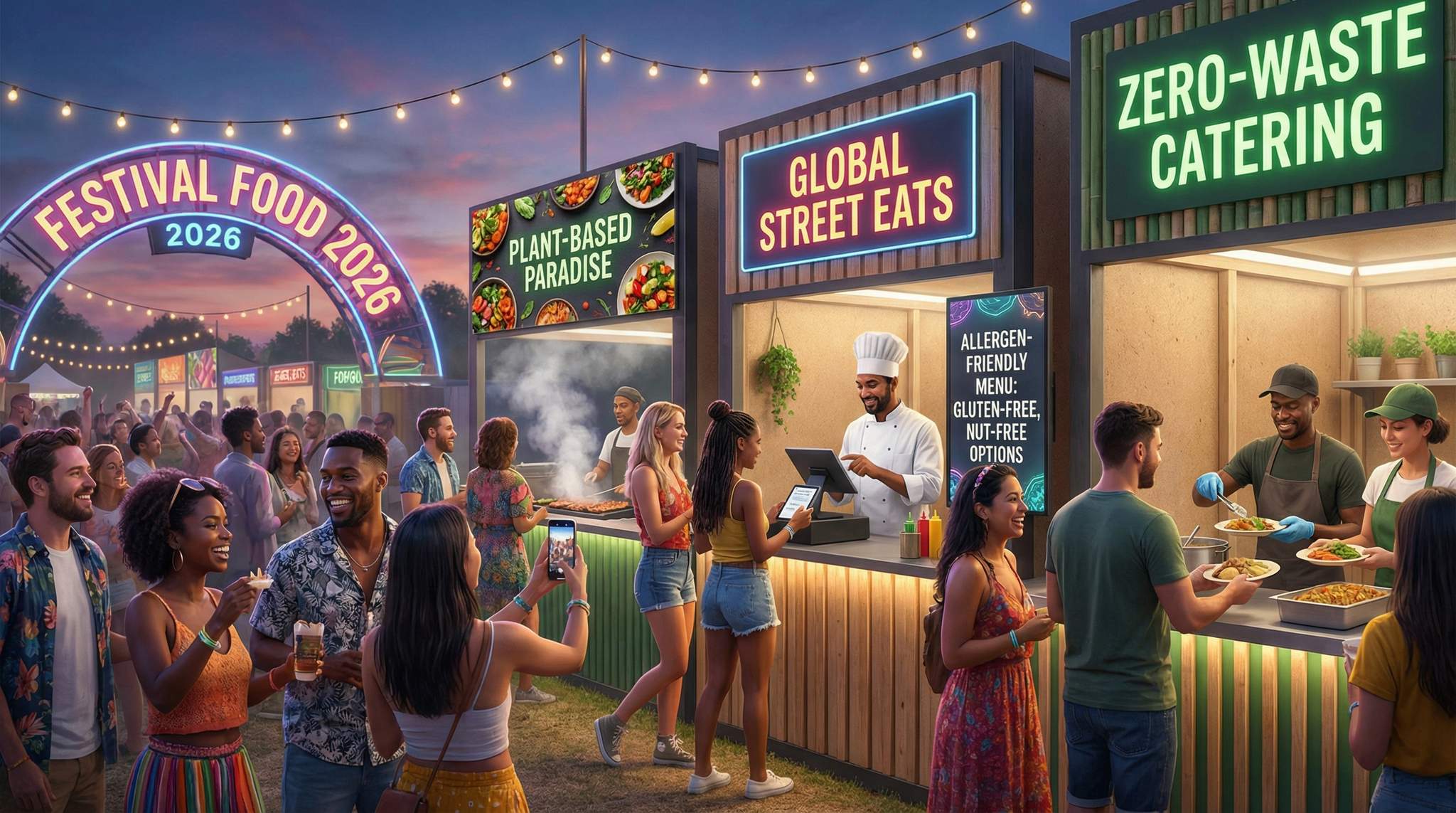
Food at festivals is no longer an afterthought – it’s a headline attraction. In 2026, forward-thinking festival producers are transforming their culinary offerings to wow attendees just as much as the music does. From plant-based feasts and allergen-friendly menus to global street eats, zero-waste catering, and high-tech meal services, next-gen food trends are reshaping the festival experience. These trends aren’t just buzzwords; they enrich fan satisfaction, foster a sense of community around shared meals, and even boost on-site revenue. This comprehensive guide explores the hottest festival food trends of 2026 and provides practical tips (with real-world examples) to help organizers elevate their gastronomic game.
Before diving into each trend, let’s contrast the old approach vs. the new approach to festival food. Festivals that embrace these changes are seeing happier attendees, stronger communities, and healthier profits:
| Aspect | Traditional Festivals (Past) | Next-Gen Festivals (2026) |
|---|---|---|
| Food Variety | Generic fast-food staples (burgers, fries) | Diverse cuisine: global street food, gourmet and fusion choices |
| Dietary Inclusion | Limited vegetarian options, little allergy info | Plentiful vegan/vegetarian options; label allergens clearly and consistently and ensure you are understanding legal requirements for allergens at every stall |
| Sustainability | Single-use plastics; lots of food waste | Compostable or reusable serveware; food waste composting & donation initiatives |
| Technology | Cash-only, long queues for food stalls | Cashless payments & RFID wristbands (faster service); mobile app ordering & self-serve kiosks for using automation to fill labor gaps and achieving efficiency with automated systems |
| Attendee Experience | Food as mere fuel between performances | Food as a core experience (curated vendor lineups, communal eating areas, chef pop-ups) |
| Revenue per Attendee | Lower – attendees spend minimal on basic fare | Higher – enticing options keep fans on-site and spending more |
As the table shows, upgrading your festival’s food program isn’t just about hot new flavors – it’s about inclusivity, efficiency, sustainability, and strategy. Each of the following sections breaks down a key 2026 food trend, complete with real examples and actionable advice. By the end, you’ll know how to delight every palate, strengthen your community through shared food culture, and turn culinary creativity into a revenue engine for your event.
Plant-Based and Allergen-Inclusive Menus
Mainstreaming Plant-Powered Options
Global tastes are shifting, and festivalgoers are leading the charge. A growing number of attendees identify as vegetarian, vegan, or flexitarian, reflecting changing dietary preferences and trends. What used to be a niche “veggie burger tent” is now mainstream – fans expect hearty plant-based meals across the venue. Industry data backs this up: about 20% of festivals were fully vegetarian or vegan by 2024, up from just 8% in 2023, as organisers recognize the demand for plant-based food. This surge is driven not only by personal diet choices but also by sustainability goals. Food and drink are often the second-largest source of a festival’s carbon emissions after travel, meaning sustainability goals drive menu changes, so cutting animal-based ingredients can dramatically shrink an event’s carbon footprint. It’s no surprise that veteran producers who expand plant-based offerings see multiple payoffs: they attract a broader audience, align with eco-conscious values, and often save on costs (plant proteins can be cheaper and store longer than meat).
Go Cashless With RFID Technology
Enable contactless payments, faster entry, and real-time spending analytics with RFID wristbands and NFC-enabled ticketing for your events.
Real-world festivals are proving that plant-powered menus work at any scale. Way Out West in Sweden, a 30,000-attendee urban festival, went 100% vegetarian in 2012 and never looked back – they achieved ~40% reduction in food-related carbon emissions and continue to sell out while winning sustainability awards for acting as a trendsetter in influencing smart events. They even utilize buns made with plant ingredients, which acts as a sustainability statement. Post-event surveys even showed 15% of attendees ate more veggie food generally after the festival, showing how festivals influence attendee habits, indicating the influence a festival can have. Over in the Netherlands, the electronic DGTL Festival made its entire food offering vegan as of 2022 as part of a circular sustainability plan, as DGTL committed to a meat-free policy. DGTL worked closely with vendors to serve creative dishes (think tempeh satay skewers and truffle-mayo fries) and proved that a 100% vegan menu can satisfy thousands of dance music fans, proving how plant-based menus save CO2 and water. Their food stalls remain busy and have earned praise for showing that festival dining can be delicious and sustainable, ensuring food stalls remain busy and profitable. The takeaway: plant-based food has moved from the fringe to the center of the plate.
Allergen-Friendly Dining for Safety and Inclusion
Alongside the plant-based surge is a push to make festival fare safe and enjoyable for people with food allergies and dietary restrictions. In the past, an attendee with a severe nut or gluten allergy might have found very limited choices and little information at a festival – a recipe for anxiety or even medical emergencies. Now, leading festivals are adopting allergy-smart festival food policies to ensure everyone can partake in the culinary fun. This starts with transparent menu labeling: every vendor should clearly mark common allergens in each dish using icons or text, moving from policy to every plate. For example, a simple peanut icon next to a menu item (with the word “Peanuts”) instantly signals a peanut-allergic guest to avoid it, creating a strong allergy policy foundation. Festivals from local street fairs to mega music events are providing vendors with standardized allergen signage, often following regulations like the EU’s rule to list 14 major allergens in food service, ensuring consistency in allergen labeling. The goal is to let attendees see at a glance which foods are safe for them, without a 20-question quiz for the vendor.
Planning a Festival?
Ticket Fairy's festival ticketing platform handles multi-day passes, RFID wristbands, and complex festival operations.
Organizers are also implementing allergy-friendly zones and practices. Some family-oriented festivals, for instance, have designated “nut-free” areas where no peanut or tree-nut containing foods are allowed past a checkpoint – giving parents of allergic kids peace of mind, as simple signage helps identify safe vendors. Others set up an Allergy Info Booth staffed by medics or trained volunteers who have a master list of every vendor’s ingredients, with team members knowledgeable about allergens. This concierge approach can quickly answer questions like “Which stalls have dairy-free and gluten-free options?” and direct attendees accordingly, creating an allergen matrix for the entire event. To make it work, organizers coordinate with vendors well in advance: requiring vendors to avoid cross-contamination (e.g. separate fryers/utensils for gluten-free items), and vendors must also prevent cross-contamination, and allowing guests to bring safe snacks from home if needed despite general no-outside-food rules, accommodating medical needs and security protocols. These measures are lifesaving – literally. A tragic incident where an unlabeled allergen caused a fatal reaction in the UK led to “Natasha’s Law” requiring clear ingredient labels on packaged foods, highlighting real-world consequences of poor labeling. Festival producers have taken heed, recognising that allergen transparency and preparedness isn’t just courteous, it’s critical risk management.
By embracing allergen-inclusive menus, festivals send a powerful message: everyone is welcome at the table. And it pays off – event surveys consistently show that food variety and safety impact attendees’ decisions to attend. In fact, around 30% of festival-goers now say food options that meet their dietary needs influence their ticket purchase, demonstrating the impact of food options on satisfaction. Ensuring that vegans, vegetarians, gluten-free, nut-free, and other folks can all find tasty meals makes your festival more accessible to more people. Experienced producers know a guest who’s well-fed (and not stressed about their food) is a happier, more engaged customer who will stay longer and return next year.
Lessons from Festivals Leading the Way
Many pioneering events have turned dietary inclusion into a defining feature – and their successes provide a playbook for others. The UK’s Shambala Festival (15,000 capacity) famously went 100% meat-and-fish-free in 2016 as a bold experiment to go meat and fish free. The result? Attendees loved it. With plentiful vegan curries, gourmet mushroom pizzas, and other creative plant-based fare, Shambala found virtually no drop-off in satisfaction; in fact 77% of attendees voted to continue the meat-free policy after year one, and by the next year 94% were on board, proving that partying without meat is possible. The festival’s team reported that removing meat cut their food-related emissions roughly 40%, eliminating about 100 tonnes of CO? per year, and data on food-related emissions backs this up. Shambala’s “give it a try” approach shows that with the right messaging and food quality, even a full switch to vegetarian can enhance a festival’s brand. Across the Atlantic, California’s Cruel World Festival (a mainstream music fest) significantly ramped up vegetarian and vegan offerings at its 2023 edition. They brought in popular LA plant-based vendors and clearly labeled vegan options at every booth, earning praise from attendees of all diets. The lesson is echoed worldwide: festivals that champion dietary inclusion – whether gradually or overnight – reap goodwill, free media buzz, and often discover that omnivorous attendees embrace the change when the food tastes great, helping attendees embrace the change.
For festivals not ready to go fully meat-free, a smart step is simply expanding the range of choices. Aim for vendor lineups where a solid percentage of stalls (say 30–50%) specialize in vegetarian or allergen-friendly cuisine. Ensure every food court has at least one gluten-free specialist and one vegan vendor, so no attendee is stuck with a bag of chips as their only option. Feature these choices prominently in your marketing – experienced producers find that highlighting vegan and gluten-free options in pre-event promos can actually increase ticket sales by appealing to health-conscious fans and encouraging organizers to provide diverse options. Ultimately, the plant-based and allergy-inclusive movement is about living up to festivals’ ethos of community. As industry veterans put it, feeding everyone well is key to welcoming everyone.
Boost Revenue With Smart Upsells
Sell merchandise, VIP upgrades, parking passes, and add-ons during checkout and via post-purchase emails. Increase average order value by up to 220%.
Regionally Inspired Street Food and Global Flavors
Showcasing Local Cuisine and Culture
Nothing roots a festival in its locale quite like the smell and taste of authentic local cuisine wafting through the air. In 2026, festivals are curating food offerings that celebrate regional specialties and tell a story about where the event takes place. This trend goes beyond token “local vendor” slots – it’s about making local food a centerpiece of the experience. For example, the Montana Folk Festival in Butte, USA, highlights dishes tied to the area’s heritage: attendees can sample Butte’s famous Cornish pasties, Serbian sarma (cabbage rolls), and other ethnic recipes from the mining town’s immigrant history, creating authentic connections through local food. As the festival’s organizers put it, these foods “take diners on a culinary journey around Montana, America, and the world”, showcasing Montana, America, and the world. The result is an immersive cultural experience – attendees don’t just hear local music and see local art, they literally get a taste of the local community.
Featuring regional dishes also wins major community goodwill. Savvy festival producers often partner with beloved hometown restaurants, family-run eateries, or community groups to run food stalls. This injects local pride into the festival and can turn skeptical neighbors into enthusiastic supporters. A great example is Glastonbury Festival (UK), where the local Somerset chapter of the Women’s Institute has long managed a tea and cake tent serving traditional scones, cakes, and hot tea. This humble tent became hugely popular with Glasto-goers for its homey charm, with the Women’s Institute tent proving a hit – festival fans rave about taking a break from rock concerts to enjoy a cuppa served by local grandmas. In return, the Women’s Institute raises funds for community causes and feels ownership in the festival’s success. It’s a true win-win: the festival gains character and credibility, and the community gains economic benefit and pride. Including local cuisine isn’t just culinary – it’s political. It shows the host town or region that the festival honours local traditions rather than just parachuting in commercial vendors. And attendees increasingly seek out these genuine food experiences as part of the adventure.
Need Festival Funding?
Get the capital you need to book headliners, secure venues, and scale your festival production.
Leveraging Restaurant Opportunities at Multicultural Events
As we look toward 2026, tracking multicultural food festival trends reveals a massive restaurant opportunity for local brick-and-mortar eateries. Promoters organizing cultural food heritage festivals are increasingly partnering with established neighborhood restaurants rather than relying solely on touring concessionaires. For a restaurant, operating a pop-up tent at a heritage event is a low-risk, high-reward marketing activation that introduces their authentic dishes to thousands of new potential patrons. For the festival producer, securing these beloved local institutions elevates the event’s credibility and guarantees high-quality, culturally resonant menus. If you are reading any event production blog and planning for 2025 or 2026, the consensus is clear: bridging the gap between traditional restaurant hospitality and festival logistics is a winning strategy for multicultural gatherings.
Global Street Food Markets on Festival Grounds
While local flavors create authenticity, global flavors create excitement. The modern festival crowd is adventurous, and many events now offer a curated “street food market” atmosphere with cuisines from around the world. Think Korean BBQ tacos next to Italian wood-fired pizzas, Japanese ramen, Mexican elotes, Indian curries, and more – all in one place. These international food courts within festivals serve two purposes: they satisfy diverse palates, and they turn eating into a cultural exploration. Major music festivals often program their food lineups to mirror their eclectic artist rosters. For instance, a world music festival like WOMAD will have food stalls representing African, Latin American, Asian, and Middle Eastern cuisines to complement the global beats on stage. At Singapore’s Baybeats festival, attendees can graze on local hawker fare like satay and chili crab alongside trendy imports like Neapolitan pizza, reflecting Singapore’s status as a foodie crossroads.
The key to doing global food right is quality and authenticity. Festival organizers are increasingly selective, seeking out vendors who are true specialists or even importing vendors from other cities for the weekend. Coachella in California has elevated this to an art form – its 2023 food lineup featured award-winning restaurants and chefs from across the U.S., including a Houston hot-chicken icon and a Michelin-starred sushi bar pop-up, asking is Coachella secretly a food festival. Attendees could snag Nashville-style hot chicken, then stroll over for a 16-course omakase sushi experience in a hidden speakeasy, all on the festival grounds, featuring top chefs like Boonthanakit and Lijo George. Uproxx quipped that Coachella is “secretly one of the best food festivals in the country” due to these kinds of offerings, proving Coachella is a music festival for foodies. The lesson for other festivals is that investing in standout food vendors generates buzz. Fans now swap food recommendations on social media alongside set times (“You have to try the dim sum at Stall 12!”). By curating global street eats – and marketing them – festivals create an additional draw that can set them apart from competitors. As the 2026 festival season approaches, unique food and beverage experiences help events stand out in the crowd, making food a key revenue stream.
Fusion Cuisine and Novelty Dishes
Another trend in festival food for 2026 is the rise of fusion cuisine and novelty dishes that make the culinary experience fun. Festivals have become incubators for creative food mashups and Instagram-worthy bites. Part of this is driven by vendors, often food trucks, trying to differentiate themselves in a crowded marketplace – and a festival is the perfect stage to showcase an outrageous new dish. We’ve seen cross-cultural hits like sushi burritos, kimchi quesadillas, and Indian-spiced tacos become fan favorites at festival stalls. These inventive eats not only draw long lines but also generate free marketing as people share photos and reviews online.
Consider Outside Lands in San Francisco, a festival renowned for its foodie approach. It introduced items like a “donut burger” (an Angus beef patty served between two glazed donuts) and “ramen burritos” through its eclectic vendor lineup, amusing curious attendees and daring the adventurous to try something new. Similarly, Australia’s touring Laneway Festival has worked with cutting-edge local eateries to offer limited-edition creations like matcha ice cream bao (a twist on the traditional bao bun) exclusively at the event. These kinds of novelty offerings spark conversation and give attendees a memorable story (“Remember that crazy burger we tried?”). Importantly, festivals pair novelty with quality – the best fusion vendors combine the hype with genuinely delicious results, so it’s not just a gimmick.
From hyper-local specialties to global street food and fusion fads, the guiding principle is curation. Successful festivals treat their food vendors like an extended lineup, booking the right mix to reflect their identity and audience tastes. The payoff is a richer attendee experience: fans feel like they’ve not only attended a concert, but also explored a marketplace of culture through cuisine. And as we’ll see later, compelling food selections can significantly boost how long people stay on-site and how much they spend – directly impacting the festival’s bottom line.
Low-Waste and Sustainable Catering
From Trash to Treasure: Embracing Zero-Waste Goals
As festivals enhance their food offerings, they’re also confronting the ugly side of food service: waste. A single festival of 50,000 people can generate mountains of trash from food booths – from disposable containers and cutlery to leftover scraps. Environmental awareness is at an all-time high going into 2026, and attendees expect festivals to minimize their eco-footprint. Leading events are responding with low-waste or zero-waste catering initiatives, fundamentally rethinking how food is served. This often starts with setting concrete targets. Many festivals now announce goals like “90% waste diversion” (meaning only 10% or less of waste goes to landfill) and transparently report their results. Setting ambitious diversion targets is key, and the Independent reports on waste diversion rates to track progress. For example, the Dingle Food Festival in Ireland set a goal to become 100% waste-free; by 2023 they had hit 75% waste diverted and were communicate the target to everyone. Ambitious targets galvanize staff, vendors, and attendees to all chip in, and create accountability beyond vague “we’ll be greener” statements, pushing towards 90+%, giving vendors and attendees a concrete mission.
So, how do festivals actually cut food waste and disposables? One big move is enforcing sustainable vendor practices via “green contracts.” Organizers require all food vendors to use only compostable or reusable serviceware – no single-use plastics, styrofoam, or non-recyclable materials, establishing the foundation for vendor participation. For instance, New England VegFest in the US mandates vendors use certified compostable plates, cups, utensils, even straws, and provides a list of approved suppliers to make compliance easier, as food service can be the biggest source of waste. Many events also ban plastic water bottles, instead using refill stations or selling branded reusable bottles. To get vendor buy-in, some festivals implement a refundable green deposit system: a vendor pays a deposit that they get back only if they follow all sustainability rules and leave no mess. To encourage compliance, some events use deposits to ensure cooperation. This creates a financial incentive to do the right thing, rewarding vendors who do their part. On the attendee side, festivals are introducing deposit-return cup programs (pay $1 extra for a sturdy cup and get it back when you return the cup) and “dish credit” systems to encourage people to return reusables instead of trashing them, utilizing volunteer Green Teams. Volunteer Green Teams often roam the grounds, helping sort recyclables and staff dishwashing stations – turning waste reduction into a community effort. Real examples of Green Teams show how effective this can be.
Crucially, festivals are tackling food waste itself. Even with perfect compostable packaging, leftover food is a waste of resources. Top festivals now coordinate with food rescue charities to donate unsold edible food each day to local shelters or food banks. Others encourage vendors to offer smaller portion sizes or half-orders to reduce scraped-plate waste (attendees can always buy more if still hungry). Some events have even gone so far as to challenge “ugly food” norms – working with vendors to use imperfect-looking produce from local farms that might otherwise be discarded. All these measures add up. A study found that a typical large festival attendee produces about 2.8 kg (over 6 lbs) of waste per day, showing that food festivals are vibrant celebrations – but with aggressive programs, festivals like Øya (Norway) have diverted over 80% of waste from landfills. When setting targets, be ambitious. Cutting down that waste not only helps the planet but also reduces cleanup and garbage hauling costs (which can be huge line items in a festival budget).
To illustrate the impact and goals of sustainable food practices, here are some numbers from festivals that are turning trash into treasure:
| Environmental Impact Metric | Festival Food Footprint |
|---|---|
| Waste generated per attendee per day | ~2.8 kg (6+ lbs) at large events and setting concrete goals and targets |
| Waste diversion achieved (Øya Festival) | >80% waste diverted from landfill by setting ambitious diversion targets |
| Emissions cut by going vegetarian (Way Out West) | ~40% reduction in food-related CO? emissions after Way Out West went vegetarian |
| Emissions saved by meat-free menu (Shambala) | ~100 tons CO? equivalent avoided annually by cutting food related emissions |
These figures highlight why low-waste catering is more than a trend – it’s becoming a standard. Festivals that ignore the waste issue risk backlash from attendees, many of whom are passionate about climate and conservation. On the flip side, events that lead on sustainability often earn press coverage, grants or sponsorships from eco-minded partners, and stronger loyalty from fans who feel their values are represented.
Compostable, Reusable, and Beyond
A key focus in 2026 is the switch from disposable plastics to compostable and reusable materials in festival F&B. Compostable serveware – plates, cups, cutlery made from bioplastic, bamboo, or fibers – can be industrially composted after use, returning to soil instead of polluting oceans. Many festivals have moved to 100% compostable food packaging by working closely with vendors and waste management companies. For example, Mighty Hoopla festival in London provides all food vendors with compostable containers and has clearly labeled bins across the site (with staff helpers) so attendees put them in the right place. The result is cleaner grounds and high composting rates. However, seasoned organizers warn that compostables only pay off if you have the proper waste stream set up – otherwise, they might end up in landfill anyway. It’s crucial to coordinate with local waste facilities or hire a partner to haul organics to composting sites.
Even better than compostables is embracing reusables. Some innovative festivals run like pop-up restaurants: they use durable plates, cups, and metal cutlery that are washed and reused throughout the event. This approach has been seen at boutique eco-festivals and large ones too. Planet Bluegrass (which puts on the Telluride Bluegrass Festival in Colorado) pioneered a reusable plate system – attendees pay a $10 deposit for a plate and can either return it for a refund or keep it as a souvenir, and washing stations are set up behind the scenes, as seen in this case study on zero waste festival programs. Similarly, Boom Festival in Portugal (known for its sustainability) requires attendees to bring their own bowl, cup, and utensils; food vendors give a rinse between servings if needed. While BYO policies might not work for every event, they massively cut down waste (Boom eliminated an estimated 200,000 single-use items by doing this). Reusable cup programs for beer and drinks are also widespread now, with branded cups and a deposit token – a practice common at European festivals that is catching on elsewhere. The big picture: festivals are redesigning the food experience to be circular, not linear. It’s a shift that requires planning and investment, but experienced festival teams say it’s worth it for the savings on trash disposal and the goodwill from attendees and hosts.
Success Stories in Sustainable Festival Food
Looking at festivals that have successfully embraced sustainable catering offers practical inspiration. DGTL Amsterdam (as mentioned earlier) didn’t just switch to a vegan menu – they also made the entire food operation nearly zero-waste by using only reusable cutlery and partnering with a company to compost all food scraps, showing how attendees have embraced the change. They even publish metrics post-event, like how many tons of CO? and liters of water were saved by their plant-based, low-waste approach, establishing its brand as one of the most sustainable. DGTL’s transparency has strengthened its brand as one of the world’s most environmentally progressive festivals.
In Germany, Fusion Festival (60,000 attendees) has been vegetarian-only since the 1990s and has normalized reusables from the start, offering fascinating examples of the concept. Attendees expect to pay a small deposit for real plates and then return them; it’s simply part of the culture. Munich’s Tollwood Festival – a huge cultural festival attracting 750,000 visitors seasonally – took a gradual approach by introducing a dedicated “green gourmet” market where about half the food vendors served vegan dishes on eco-friendly servingware. Munich’s Tollwood Festival introduced this quietly to let the food speak for itself, helping mainstream and accepted plant-based options. The result: even in a region famous for sausages and schnitzel, the vegan stalls did just as well in sales as the meat stalls, with many curious omnivores lining up. Tollwood’s organisers did this quietly and proved that flavor trumps bias – people went for the tasty vegan options and didn’t mind (or even notice) that they were eating plant-based on compostable plates. Notably, they found profit margins were often higher on the vegan items, since plant ingredients can cost less than meat, increasing profit margins for vegan vendors. Tollwood’s experience is a great case study in bringing sustainability to a mainstream audience: start by focusing on delicious food, implement eco changes steadily, and you might find the crowd embraces the evolution organically, by integrating plant-based cuisine.
The common thread among these festivals is leadership and consistency. They set clear policies (no plastic, veg-focused menus, etc.), invest in the needed infrastructure (whether it’s dishwashing stations or ample compost bins), and educate everyone involved. The payoff comes not just in ecological terms but reputational and financial terms too. Fans increasingly want to support events that align with their values – in a recent survey, 70% of festival-goers said they prefer events that prioritize sustainability and will even pay a bit more for it. Sponsors and city partners also take note; a festival that can boast of zero-waste achievements or carbon savings is more likely to attract grants and positive media. As one festival sustainability manager put it, “Green practices are no longer a bonus – they’re expected. The good news is they can save us money in the long run and make the experience better for everyone.” Sustainable festival initiatives that save money are proving that going green and going gourmet go hand in hand to future-proof a festival.
Tech-Driven Dining: Apps, Kiosks, and Robot Chefs
Mobile Ordering and Cashless Payments
2026 is bringing the tech revolution to festival food courts. One of the most impactful innovations has been the adoption of cashless payments and mobile ordering systems for food and beverage. Replacing physical cash with RFID wristbands or contactless payments has greatly sped up transactions and cut down wait times. One tech trend that has delivered value is this shift away from cash. Fans no longer fumble for bills or exact change at a busy food stall – a quick tap of a wristband or scan of a phone completes the purchase. The results are striking: festivals that went cashless have reported higher spending per attendee and smoother operations overall, meaning fans made more purchases. In one study of major European festivals, adopting cashless payments led to a 119% jump in the number of transactions (2024 vs 2023) and an average 22% increase in total on-site food and drink sales, creating smoother operations. The psychology is simple – when buying a $5 snack is as easy as tapping your wrist, people make more impulse purchases (a second beer, a dessert, etc.) instead of holding back. Maximizing revenues during the event becomes easier with frictionless payments. For festival organizers, that means more revenue and happier guests who aren’t stuck in line forever.
Building on cashless payments, many events are rolling out mobile app ordering for food. The concept is similar to ordering your Starbucks on your phone – attendees use the festival’s app (or a third-party service) to browse vendor menus, place an order, pay digitally, and then get a notification when their food is ready for pickup. This allows fans to order food from anywhere on the grounds (even while watching a band, before walking to the food area) and skip the initial queue to order. A single staffer at the vendor can manage multiple incoming digital orders, prepping them in sequence rather than taking one order at a time in person, helping achieve something with automation. Festivals that have piloted this, like Lollapalooza and Primavera Sound, found it especially useful during peak meal times – lines moved faster, and guests who might have given up on grabbing dinner due to long waits were still making purchases. It’s also an accessibility upgrade: someone who doesn’t want to push through a crowd at a busy food court can order from a calm spot and just arrive for pickup.
However, experienced tech directors caution that you need robust connectivity and user-friendly design for mobile ordering to work well. Invest in site Wi-Fi or ensure cell coverage so the app doesn’t crash when thousands try to order at once, avoiding network issues leaving fans stranded. Connectivity is a certainty, not an if. Also, test the system at a smaller event or during a soft launch; ensure menus are clear on the app (with allergen info accessible digitally via tech solutions for menu information) and that each vendor has a streamlined process for app orders versus walk-ups. Some festivals set up a separate pickup window for app orders to keep things efficient. With planning, mobile ordering can dramatically reduce one of the biggest attendee pain points: waiting too long for food and missing part of a show. As a bonus, the data from apps (like which food items are most popular and when) helps organizers and vendors optimize inventory and staffing for future events, tracking drinks per day or food sales.
Self-Service Kiosks and Smart Queues
In addition to app ordering, self-serve kiosks are popping up around festival food courts. These touchscreen stations let attendees browse the menu and place orders on the spot, without needing to interact with a cashier. Essentially, they act like a high-tech vending machine interface for made-to-order food. This approach has been standard in many fast-food restaurants and theme parks for years, and now festivals are catching on. Beyond how attendees pay, automation helps streamline the process. For example, Download Festival in the UK deployed self-order kiosks at some of its busiest bars and food stands; fans could tap through a quick menu, pay by card or wristband, and then simply wait for their number to be called. The kiosks relieved pressure on limited staff and increased the number of orders that could be taken in a short time.
The benefit of kiosks is speed and efficiency – one attendant can oversee several kiosks, helping with the occasional question but mostly just handing over prepared items to guests with receipts. They also ensure accuracy (no mis-heard orders in a loud festival environment). One organizer noted that kiosks are great for standard high-volume items like beer, fries, and pizza slices. During the dinner rush, having 10 self-serve screens can be like opening 10 extra cash registers, which prevents massive line build-ups. To make kiosks work well, place them in visible locations with clear signage (people won’t use them if they don’t know they exist) and consider offering a small incentive like a $1 discount for using the kiosk to nudge adoption initially. Training staff to assist and troubleshoot is key – a cashier can become a “kiosk concierge,” guiding less tech-savvy attendees on how to use it, so no one gets frustrated.
Another tech trick is virtual queuing systems for popular vendors. Some festivals have tried issuing QR codes or numbers when you arrive at a busy stall, so you can wander and be alerted (via screen or app) when it’s your turn – rather than physically standing in line for 30 minutes. This isn’t widespread yet, but it aligns with the overall trend of reducing the pain of queues using tech. After all, every minute an attendee spends stuck in a food line is a minute they’re not enjoying the event (and not spending money elsewhere). Seasoned festival producers are continuously seeking ways to keep the crowd moving happily – and self-service innovations are proving to be effective tools.
Robot Bartenders and Kitchen Automation
Are robots the future of festival kitchens? It might sound futuristic, but elements of automation are already making an appearance at forward-looking events. Robot bartenders, for instance, have been showcased at a few high-profile festivals and clubs – these are essentially mechanical arms that can mix cocktails with speed and precision. While often a novelty attraction (with fans gathering to watch the robotic arm shake a martini), they also serve a practical purpose of pouring drinks quickly during peak times. The 2025 CES after-party in Vegas famously had a robot bartender that could churn out about 120 drinks an hour, drawing long lines of curious patrons. Some music festivals are toying with renting similar setups for VIP areas to add a wow factor and alleviate bar queues.
On the food side, robotic kitchen assistants are starting to handle repetitive tasks like flipping burgers and frying snacks. A company called Miso Robotics developed “Flippy,” a robot burger griller that attracted attention by cooking 300 burgers a day at a sports stadium. When artificial intelligence meets food service, efficiency increases. It’s easy to imagine such bots deployed at a burger stall during a festival, maintaining perfect sizzle while human staff focus on assembly and customer service. In Hanoi, Vietnam, a recent culinary festival featured a pho-cooking robot that handled tasks like blanching noodles and ladling broth, making each bowl of soup in about 2–4 minutes. Hanoi’s pho-cooking robot draws crowds and demonstrates the potential of automated cooking. Crowds were delighted by the spectacle and queued for hours to try robot-made pho, becoming one of the festival’s highlights. The organizers noted the robot was a prototype and still needed humans for prep and setup. While the robot added a spectacle, it offered a glimpse of how automation could spice up the food experience.
While robot chefs are still more gimmick than common sight in 2026, experts predict we’ll see more semi-automated kitchens at large events soon. This could include conveyor belt pizza ovens (already used at some pizzerias to output pies rapidly) or automated smoothie machines. The advantage in a festival context is consistency and speed – machines don’t tire during a 12-hour day of serving. However, festival veterans point out that robots should complement staff, not replace the human touch entirely, as a festival organizer explained. The best deployments use tech to handle volume while humans still supervise quality and engage with customers (after all, a friendly chat with a vendor can be part of the festival fun). As the tech improves and costs drop, more organizers – especially those facing labor shortages – will evaluate robotics as a solution, effectively letting fans do the work. The key is ensuring it genuinely improves service rather than just being a flashy toy. When done right, automation can shorten waits and free up staff for higher-level hospitality, delivering that “fast, but friendly” service festival-goers appreciate.
Data and Personalization
The tech-driven approach to festival food doesn’t end at the point of sale. Another burgeoning trend is using data analytics and AI to personalize and optimize food offerings. With digital ordering and cashless payments, festivals now collect a wealth of data on what is selling, when, and even to whom. Smart promoters analyse this to make real-time decisions: for instance, if data shows that food sales dip during certain headliner performances, tracking drinks per day (because fans won’t leave a set early), the festival might deploy roving vendors in the crowd before the headliner comes on, or push a mobile notification for pre-ordering dinner to pick up right after the show. If certain cuisines consistently sell out by 8 PM while others lag, that can inform adjusting vendor placement or inventory on the fly (and booking decisions for next year). Some festivals are even experimenting with AI to forecast demand for each vendor by the hour, cross-referencing schedule and weather – e.g. predicting that cold weather will spike hot cocoa and ramen sales.
On the attendee side, apps and cashless systems enable personalized marketing that can boost revenue. For example, an app can send you a nudge: “It’s 3 PM – cool down with a craft ice cream at the Sweetery stand, 5% off for the next 30 minutes!” or “We see you liked the vegan tacos yesterday – try our other vegan option at Booth 7 and get a loyalty discount.” Of course, this needs to be done tastefully (nobody wants spam during a festival), but targeted offers can gently encourage more spending while enhancing the fan experience. Veteran marketers advise focusing on helpful info (“shortest food lines right now: Vendor X in Zone B”) and rewards (like a digital punch card – buy 4 coffees, get the 5th free) to make the tech feel like a perk, not a nuisance. Tracking drinks per day or food helps optimize these offers. Already, about 67% of festivals report leveraging cashless payment data to adjust pricing or promos in real time (for instance, dropping certain item prices late at night to clear stock). Increasing the number of transactions is the ultimate goal. The future might see integration with wearables or RFID tags to understand crowd flow – if one area is crowded, an app could promote vendors in a less busy area to redistribute traffic.
The takeaway for festival organizers is that tech can significantly augment your food operations beyond the kitchen and counter. By adopting proven tools – from cashless systems to mobile orders – you solve immediate problems (long lines, slow service). By embracing emerging tech – kiosks, robots, data analytics – you stay ahead of the curve and potentially unlock new efficiencies and revenue streams. Importantly, always loop back to the attendee perspective: any tech feature should ultimately make the fan’s food experience faster, safer, or more enjoyable. Do that, and you’ll see both satisfaction scores and F&B sales trend upwards.
Food as Experience and Community Builder
Shared Meals and Social Bonds
At their heart, festivals are communal experiences – and nothing brings people together quite like sharing food. In 2026, many festival organizers are designing food areas and programming in ways that foster social connection. Long beer-hall style tables or picnic areas invite strangers to sit together, sparking conversations that might not happen if everyone eats on the go. Some events set up communal dining tents where attendees can join large group tables for family-style meals. For example, Burning Man (while not a typical commercial festival) has long embraced communal eating in theme camps, where attendees cook and serve meals to anyone who stops by, creating impromptu communities around the dinner table. Mainstream festivals are taking inspiration by organizing special sit-down feasts as part of the event. At Lightning in a Bottle in California, there have been ticketed farm-to-table dinners under the stars where 100 guests dine together at a giant table, served by a guest chef. Strangers leave as friends after bonding over a meal and music in the background.
Even without formal programs, simply curating the festival space to encourage gathering around food makes a difference. Think comfortable seating near food vendors, shade and shelter where people can relax and chat over their tacos, and perhaps ambient entertainment (like an acoustic musician or busker in the food court). Some festivals have added interactive food elements – such as a communal grill where attendees can purchase a BBQ kit and cook their own food alongside others, or DIY s’mores fire pits for late-night treats. These playful additions turn eating into an experience rather than a transaction. Seasoned event designers note that attendees cherish these mellow moments as breathers between concerts. It’s a chance to swap stories with fellow fans (“Which sets have you loved so far?”) and makes the whole atmosphere more friendly. When you create opportunities for people to break bread together, you’re cultivating the festival’s sense of community, which in turn boosts attendee loyalty and word-of-mouth appeal.
Cultural Exchange Through Cuisine
Food at festivals also serves as a bridge between different cultures and attendee demographics. Festivals with diverse audiences find that offering a variety of cuisines encourages cultural exchange – attendees might try foods from a culture they’ve never experienced, broadening horizons. A prime example is international music festivals or city multicultural festivals, where stage performances and food stalls are paired intentionally. At Seattle’s Northwest Folklife Festival, you might watch a Bulgarian folk dance troupe perform, then step over to a Bulgarian food booth to taste banitsa (pastry) or kebapche (grilled meat) for the first time, possibly served by community members eager to share their cuisine. That creates a multi-sensory understanding of the culture. Similarly, diaspora community festivals (like an Indian cultural fest or Latinx music festival) often use food vendors from local ethnic communities, effectively inviting attendees to learn about their neighbors’ heritage through delicious bites and conversation.
For mainstream music festivals, producers are increasingly aware that inclusive food choices make attendees from all backgrounds feel welcome. Consider dietary cultures: having halal or kosher-certified food options means fans who follow those practices can fully participate in the festival fun. Big events in diverse cities (London, New York, Sydney, etc.) now often include at least one halal vendor and clearly mark it, which can be the deciding factor for some concert-goers on whether they’ll attend. The same goes for regional tastes – a festival in Mumbai that only served burgers and pizza would alienate a local crowd that expects some Indian cuisine. Thus, you see festivals in Asia featuring a blend of international fast foods and beloved local street foods, from satay in Malaysia to steamed momos (dumplings) in India, ensuring everyone finds comfort food amid the adventure.
A beautiful side effect of this culinary diversity is the camaraderie it builds among attendees. People get excited to share “You’ve got to try this!” recommendations for foods, just as they do for bands. Festivals have reported that posts about food – whether it’s someone raving about the jerk chicken they found or posting a photo of their gelato – often get high engagement on social media during the event. Food becomes part of the shared story attendees tell, and trading tastes can spark new friendships. A fan might ask “Where did you get that cool-looking dessert?” which starts a conversation with a stranger. In this way, a thoughtfully curated food lineup doesn’t just fill stomachs, it enriches the cultural fabric of the festival community.
Engaging Local Producers and Causes
Another way festival food fosters community is by connecting to local producers and social causes. Farm-to-festival initiatives are springing up, where organizers source ingredients from nearby farms or invite local farmers’ market stalls to join the event. This not only guarantees fresh, seasonal ingredients in festival dishes, but also introduces attendees to the faces behind their food. Farmers’ market areas at festivals allow local vendors to sell fruit, baked goods, or artisanal products – giving the festival a charming bazaar vibe and pumping money into the local economy. The Byron Bay Bluesfest in Australia, for instance, integrates a mini farmers market with local macadamia nuts, tropical fruits, and coffee from nearby plantations. Festival-goers appreciate the authenticity, and local producers get exposure to thousands of potential new customers. It roots the festival as a community-supported event rather than a disconnected corporate venture.
Festivals are also partnering with non-profits and community groups around food. A common model is to let a local charity run a concession stand and keep a portion of the proceeds. This might be a school booster club grilling burgers or a volunteer group operating a lemonade booth. Attendees often like knowing their purchase helps a cause – signage like “All proceeds from this stand support the local animal shelter” can even drive traffic to that vendor. Meanwhile, the volunteers gain a fun way to raise funds and be part of the festival energy. We already saw the Women’s Institute example at Glastonbury; similarly, at New Orleans Jazz & Heritage Festival, many food booths are run by local civic organizations or church groups famous for a particular dish (like crayfish bread or sweet pralines). They get a huge fundraising opportunity, and the festival gets delicious homemade recipes unique to New Orleans’ culture. Fans truly respond to these authentic touches – it feels more like being welcomed by a community host than buying from a faceless concessionaire.
Lastly, some festivals incorporate food education and workshops, engaging attendees in a deeper way. This might include cooking demonstrations by local chefs during the daytime, tastings or pairing workshops (e.g. a craft beer and cheese pairing class), or panels on sustainable food. At South by Southwest (SXSW) in Austin, the conference side of the event has featured sessions on the future of food, inviting festival folk to think and learn – which often then ties back to experiences on the festival side, like trying lab-grown meat tacos that were discussed in a panel. By weaving food into programming, festivals elevate it from service to content. Attendees not only eat, but go home with new recipes, knowledge of a culture, or a passion for reducing food waste. In creating these opportunities, festivals solidify their role as community builders and educators as well as entertainers. It’s a powerful combination that leaves a lasting positive impression.
Boosting Revenue with Culinary Creativity
Increasing Spend Per Head with Better Food
For festival organizers, one of the strongest arguments for upgrading food offerings is the impact on the bottom line. When attendees are excited about the food, they spend more money on-site – period. Traditionally, many festivals saw food purely as a necessity (or even a headache) rather than a revenue driver, outsourcing it to basic vendors and focusing on ticket and drink sales. But the paradigm has shifted. Now, top festivals treat food as a strategic asset that can boost per-capita spending significantly. Let’s break down how the new food trends translate into dollars and cents:
-
More choices = fewer off-site meals: If your festival is located where attendees can leave and come back, boring or very limited food virtually encourages them to go off-site for dinner (or to tailgate with their own food in the parking lot). But when you provide variety and quality, people stay and eat inside the festival. This recaptures revenue that might have been lost. Even at camping festivals where people can’t easily leave, if the food options are poor, attendees might bring all their own meals and not buy anything beyond maybe one token burger. Offer them wood-fired pizza, vegan sushi burritos, or gourmet coffee, and suddenly they’re buying breakfast, lunch, and dinner at your event.
-
Quality commands a premium: Festival-goers are willing to pay higher prices for standout food if it delivers on taste and uniqueness. A plain hot dog might only fetch $4 and still draw complaints, but fans will eagerly pay $12 for a legendary BBQ brisket sandwich or a trendy açai bowl if it’s known to be good. In marketing terms, food can be a value-add that justifies higher overall ticket prices too – attendees perceive that they are getting a “food festival” and music festival in one. Coachella’s VIP dinner packages (where a Michelin-starred chef meal can cost an extra $250) actually sell out, showing some fans will spend top dollar for exclusive culinary experiences on-site. Even general attendees spend more if they’re enticed; data suggests a wide food selection can raise average attendee F&B spend by 20-40% compared to a basic offering, according to industry surveys, leading to longer stays. Furthermore, preferences encourage social interactions, which can lead to increased group spending.
-
Longer stays = more meals: When fans are having a great time (which includes being well-fed and not frustrated by lines), they tend to stay at the festival grounds longer each day. That might mean they decide to have an extra meal or snack before heading home. For instance, someone might originally plan to leave a day festival at 7 PM to get dinner in town, but if the festival has a fun night market vibe with dinner options and entertainment, they stay till closing and eat a second meal on-site. More time on-site generally correlates with more spending on both food and merch. Festivals have noticed that improving food has a halo effect on dwell time – attendees don’t treat the festival as just a concert to pop in and out of, but as an all-day hangout where they’ll spend on multiple items.
VIP Dining and Upsell Experiences
Another revenue angle is developing premium F&B experiences as upsells. Many festivals have introduced special food-related add-ons that fans can purchase for an elevated experience. One common approach is the VIP lounge with exclusive food vendors or bars. For example, a VIP ticket might grant access to a nicer area where a local celebrity chef runs a pop-up restaurant, or where there’s a curated whiskey and wine bar apart from the regular beer stalls. Festivals have found that partnering with high-end chefs or mixologists to cater VIP areas not only justifies the higher ticket price, it can also attract press coverage and luxury sponsors. The aforementioned Tomorrowland in Belgium created a full service Tomorrowland Restaurant with a thematic tasting menu overlooking the mainstage. Michelin star chefs are serving up bites at this spectacle and revenue-generator, since fans paid a premium for that dining ticket. Such offerings turn a festival into a festival + culinary event hybrid, tapping into the foodie market.
Even without a VIP tier, ticket bundles or packages can incorporate food perks. Some events sell a “Meal Deal Pass” which for an added fee includes vouchers for lunch and dinner each day, often at a slight discount versus buying meals individually. This pre-sales technique guarantees revenue before the gates even open and encourages attendees to budget their spending into the ticket. Other creative upsells include tasting flights (an add-on to try small portions from multiple vendors, popular at beer and wine festivals) or cooking workshops as a paid activity on-site (e.g., a $50 sushi-making class with a renowned chef, limited to 20 people). These not only bring extra income but enrich the festival’s programming.
Merchandising opportunities also exist in the food realm. Festivals have started selling branded items like cookbook zines featuring recipes from the festival’s vendors or artists (imagine a “Taste of [Festival Name]” cookbook – fans can recreate their favorite festival bites at home). At the event, unique food-related merch such as reusable utensil kits, picnic blankets, or even hot sauce with the festival logo have proven popular. They serve a dual purpose: additional revenue and promotional value as attendees use them post-event. The key is to think beyond the basics – food can be an experience that fans will pay extra for, whether that’s convenience, exclusivity, or just more fun.
Sponsorship and Partnerships via Food
A robust festival food program can also unlock sponsorship dollars and partnerships that benefit the bottom line. Brands are often eager to engage consumers through food and drink, and festivals provide a captive, happy audience. For instance, if your festival embraces plant-based trends, that’s an opening to collaborate with plant-based food brands (say, a vegan protein company or dairy-free ice cream brand) for sponsorship. They might sponsor the entire vegan food court, or provide samples in exchange for logo placement. Similarly, a festival pushing sustainability in F&B might attract an eco-packaging sponsor or a partnership with a carbon offset program that a company funds. A real example: Bonnaroo partnered with a beer company to create the “Broo’ers Festival,” a craft beer village on-site, which not only gave fans something cool to do (sample dozens of craft beers) but was underwritten by the brewery sponsor. The festival got a cut of sales and a sponsorship fee, the brewer got brand exposure and goodwill for enhancing the fan experience.
Big beverage companies, in particular, have long sponsored festival bars (the Coca-Cola Stage or Heineken House are common sights), but now even niche food areas can find an angle. A hot sauce brand might sponsor a chili-pepper eating contest on festival grounds. A local restaurant group could pay to be the “official catering partner” and host a VIP dinner. There’s also potential in technology partnerships around food – e.g. working with a food delivery app or cashless payment provider who sponsors the mobile ordering system (some festivals have had branded pickup lanes by apps, etc.). The important principle is alignment: when a sponsor naturally fits the food experience (like a non-alcoholic beer brand sponsoring a festival’s new zero-proof cocktail bar), it enhances authenticity and fan reception. Consumers today are health conscious, and brands know that a memorable food experience at a festival can create positive associations, so they’re willing to invest – which can offset the costs of upscale food programming or even turn it into a profit center. Moderation and wellness are exciting trends that sponsors are eager to tap into.
Cutting Costs and Driving Profit with Sustainability
Counterintuitively, some of the sustainability measures we discussed can also save money and boost net revenue over time. While there might be upfront costs for things like purchasing reusable cups or hiring extra waste management services, festivals that have gone greener often report lower cleanup and disposal costs. Landfill dumping fees are expensive; by reducing waste tonnage through composting and recycling, festivals save on those fees. For example, the team behind California’s Outside Lands noted that their extensive waste diversion (over 90% in recent years) let them significantly cut down the number of dumpsters and trash-hauling trips needed, saving tens of thousands of dollars which could be redirected to fan amenities. Over a multi-year horizon, investing in washing stations or durable serveware can cost less than continuously buying pallets of single-use cups and bags of trash liners.
Additionally, sustainable food choices can attract grant funding or subsidies. In some regions, local governments or tourism boards offer grants for events that hit sustainability benchmarks, such as reducing plastic or sourcing locally. A festival could potentially get, say, a $50k grant for implementing a farm-to-table program with regional producers, which directly improves their profit/loss statement. And when you source locally and seasonally, sometimes you can negotiate better prices since you’re cutting out middlemen – e.g., buying corn straight from a local farm for your vendors could be cheaper (and tastier) than having vendors each buy smaller batches from wholesalers.
Ultimately, festival veterans emphasize viewing your food and beverage operations as a holistic part of the business strategy: it drives revenue through sales, through enhanced attendee satisfaction (leading to repeat attendance and free marketing via word-of-mouth), and through partnerships. The trends of 2026 – plant-based menus, diverse cuisines, tech integration, sustainability – all intertwine to create a food program that can delight customers and improve the festival’s financial performance. In summary, great food is good business. By investing in next-gen food trends, you’re not just being trendy – you’re cultivating new income streams, future-proofing your event’s appeal, and feeding the very community that sustains your festival year after year.
The Future of Food Festivals: 2026 and Beyond
When producers gather to discuss the future of food festivals, the conversation inevitably shifts from basic logistics to immersive culinary curation. The days of treating F&B as a secondary thought are over. To stay competitive, organizers must actively explore food options for 2026 that prioritize sustainability, dietary inclusivity, and technological efficiency. Whether you are running a dedicated gastronomy event or integrating a massive food village into a music mega-festival, the core principles remain the same. The future of the food festival industry relies on treating vendors as true partners, utilizing data to refine menus, and transforming the simple act of eating into a memorable, community-driven experience.