The Rising Drone Threat at Festivals
From Tech Novelty to Safety Hazard
Drones have rapidly transformed from novelty gadgets into everyday tools – and potential nuisances – at large events. By 2026, affordable high-quality drones are in the hands of millions, meaning festival producers face an unprecedented new safety risk from above. Attendees might launch drones to capture crowd shots or sneak a peek at headliners, often oblivious to the dangers. Unauthorized drones can swoop over stages and crowds, sometimes startling performers or dropping low enough to endanger fans. What began as cool aerial footage can quickly turn into a hazard if a drone malfunctions or collides with people or infrastructure.
Experienced event organizers have already witnessed close calls. In one case, a popular EDM festival had to pause a nighttime fireworks show when security spotted a rogue drone hovering near the launch zone. At a winter music festival in New Zealand, fireworks were halted mid-show until an attendee’s drone cleared the area, illustrating how one hobbyist’s device can disrupt carefully planned spectacles. And it’s not just about show delays – a small drone can cause real harm. For example, a drone crashing into a crowd at a 2015 parade knocked a woman unconscious, a case where a man was convicted for the drone crash, underscoring that even a two-pound quadcopter falling from the sky can injure attendees. These incidents hammer home a new reality: keeping the skies over your festival safe is now as important as securing the ground.
Why 2026 Festivals Must Take Drones Seriously
The drone threat isn’t hypothetical – it’s here. Industry data shows a sharp rise in unauthorized drone flights over event spaces in recent years. At Belgium’s massive Tomorrowland festival, a dedicated detection system recorded over 1,000 drone flights during two weekends, and while 90% were by authorized security or media crews, police still confiscated 11 unauthorized drones that breached the no-fly zone, as reported when police confiscated unauthorized drones as operators violated festival airspace regulations. Meanwhile in the UK, local authorities have started treating festivals like airspace to defend: during 2024’s BBC Radio 2 In The Park concert, police established a “no-fly zone” and seized three drones that dared to violate it, prompting Lancashire police to praise visitors for respecting the no-fly zone. These real-world examples show how common rogue drone incidents have become – and how proactive some festivals already are in response.
Several factors make 2026 a tipping point for drone risks at festivals:
– Drone Accessibility: Advanced drones with long battery life, 4K cameras, and semi-autonomous flight now cost just a few hundred dollars. More fans can easily bring and fly them.
– Large Crowds = Big Temptation: Festivals offer visually stunning scenes. The bigger and more packed the event, the more tempting it is for amateur pilots to try to capture it – even if it means breaking the rules.
– Evolving Regulations: Many countries tightened drone rules (licensing, max altitudes, etc.), but enforcement is still catching up. Gaps in enforcement at events can create a false sense of “no one will notice if I fly here.”
– High-Profile Safety Incidents: Every time a drone causes an injury or near-miss at a concert or sports event, it raises organizer awareness. Veteran producers know they can’t rely on hope – they need plans to prevent a drone-induced accident at their show.
Data-Driven Event Marketing
Track ticket sales, demographics, marketing ROI, and social reach in real time. Exportable reports give you the insights to make smarter decisions.
Potential Hazards from Rogue Drones
Unauthorized drones over a festival aren’t just a minor annoyance – they pose multiple serious hazards:
– Injury to Attendees: A drone that loses power or gets hit by a gust of wind can drop into a dense crowd. Spinning rotors and falling debris can lacerate skin or cause head injuries. Even a small drone (2–5 kg) falling from 100 feet can hit with dangerous force.
– Collateral Accidents: Drones can trigger panic. Imagine a drone buzzing low over a packed audience – people might scatter or stumble, risking a crowd surge or stampede. In one incident, a crashing drone at a mass religious gathering caused panic and a stampede that injured dozens as people scrambled away.
– Equipment and Infrastructure Damage: Festival stages are loaded with lighting rigs, LED screens, and sensitive equipment. A drone collision with a lighting truss or giant screen could knock out critical production elements – or start a fire if it ruptures wiring. Drones also threaten pyrotechnics; a stray drone near a fireworks launch zone could lead to a catastrophic accident or forced show stoppage.
– Interference with Aircraft: Some festivals partner with news media or police helicopters, and medical evacuation helicopters may need to access the site. An errant drone in the flight path of a helicopter (or near airports in city festivals) could cause a collision or force an emergency maneuver. Aviation authorities treat drones near aircraft very seriously for good reason.
– Security and Privacy Breaches: Drones can be used for nefarious purposes – from smuggling illicit substances into a venue (dropping packets into a crowd or campsite) to surveilling VIP areas or staff-only zones. In an era of heightened security, an unknown drone overhead could even raise terrorism concerns (e.g. could it carry a harmful device?). While such scenarios are rare, festivals should be prepared – counter-drone planning is now part of comprehensive threat assessment alongside more traditional risks.
Bottom line: Unauthorized drones introduce safety, security, and logistical problems that can disrupt events or put lives at risk. Forward-thinking festival organizers are treating this honestly: it’s an emerging risk that must be managed, not ignored. In the sections ahead, we’ll dive into how to establish no-fly zones, detect rogue drones early, and neutralize threats – all while working within the law and keeping your event’s vibes intact.
Planning a Festival?
Ticket Fairy's festival ticketing platform handles multi-day passes, RFID wristbands, and complex festival operations.
Establishing a No-Fly Zone Over Your Festival
Navigating Airspace Rules and Regulations
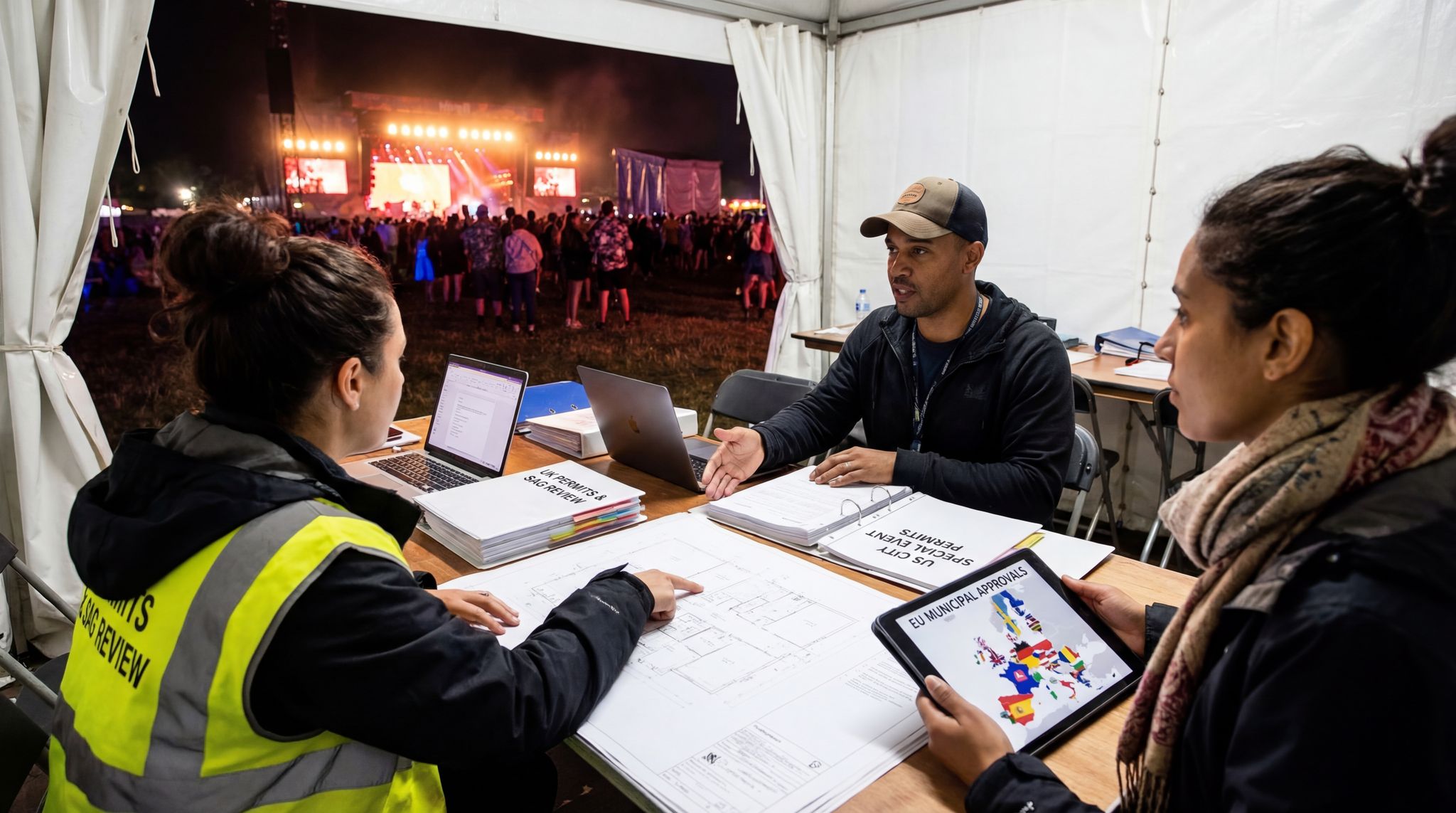
Declaring a “no-fly zone” for drones isn’t as simple as putting up signs – it often requires working with aviation authorities. Airspace is regulated by government agencies (like the FAA in the US, CAA in the UK, DGCA in India, etc.), and major festivals can sometimes secure official flight restrictions for their events. For example, the UK government and Civil Aviation Authority have begun issuing temporary drone bans over large festivals, such as creating a restricted airspace above London’s Finsbury Park during Wireless Festival. In the US, the FAA in late 2025 rolled out criteria to grant Temporary Flight Restrictions for uncrewed operations for certain large open-air events at law enforcement’s request – a sign that authorities are recognizing drone risks at big gatherings. Generally, to be eligible for these official no-fly zones, an event must be high-profile or have a significant safety case. Stadium-based events (sports championships, etc.) have long had such protection; now festivals are entering the fold.
What can a festival organizer do? Start by researching your local drone laws and airspace class. Is your venue near an airport or under controlled airspace? If yes, it might already be illegal for any drone to fly there without permission, as drone and laser airspace rules for inner-city festivals are often quite strict. For example, a downtown festival in Los Angeles or London is under strict airspace – meaning unauthorized drones cannot legally take off in much of that area. If your festival is in open countryside, you may be in Class G (uncontrolled) airspace where drones are generally allowed up to certain altitudes. In that case, you’ll need to be extra proactive in defining a no-fly zone, since the default law might not automatically forbid flights.
Contact your national aviation authority months in advance to discuss your event. Authorities can sometimes issue a Notice to Air Missions (NOTAM) or a specific restriction for your festival dates, especially if you present clear safety reasons. Be prepared to explain your crowd size, any planned aerial activities (like your own camera drones or drone show), and the risks of rogue drones. The process may involve local law enforcement as well, since police often enforce these no-fly orders on the ground. For instance, Tomorrowland’s organizers worked with Belgian aviation officials to establish a temporary “GeoZone” over the festival, where only police and approved drones could fly. This partnership let police legally intervene and confiscate unauthorized equipment when others violated the zone.
As you plan your no fly zone 2026 festival strategy, remember that communication is a two-way street between authorities and operators. When a TFR is granted, it is broadcasted through official aviation channels. For instance, to learn if there’s a temporary flight restriction due to an emergency or a major planned event, drone pilots should check the FAA’s NOTAM database or official airspace apps like B4UFLY. Ensuring your event’s restriction is properly logged in these systems means responsible commercial and hobbyist pilots will automatically see your festival grounds marked as restricted airspace on their flight maps.
Grow Your Social Following With Every Sale
Require social media follows, shares, or playlist adds to unlock presale access or special pricing. Turn every ticket purchase into audience growth.
Even if you can’t get an official TFR, don’t be discouraged – you can still declare your own festival no-fly zone as a policy and enforce it on-site. Many festivals simply announce that “This event is a No Drone Zone” even without a formal government order. The FAA in the U.S. encourages using the term “No Drone Zone” for any venue where drones are unwelcome, providing resources on community engagement for No Drone Zones. As an organizer, you have the right to ban certain items or activities on your premises. Flying a drone over a ticketed private event without permission can be considered trespass or endangerment. At the very least, if you find someone doing it, you can evict them and confiscate the drone (handing it to police). Having clear rules posted in advance strengthens your position.
Crafting and Communicating Your Drone Policy
Don’t wait until show day to let people know about your drone ban. Integrate a “no personal drones” rule into all your event communications. Here’s how veteran producers approach it:
– Ticket Terms and Website FAQs: Include a line in your ticket purchase terms that drones are prohibited. On your website’s FAQ or rules page, list drones alongside other banned items (like weapons, fireworks, professional cameras, etc.). Make it clear that any drone found will be confiscated and that flying one could result in ejection or even legal action.
– Pre-Event Emails and Social Media: In attendee info packets and email updates, remind fans that for everyone’s safety, the festival is a no-fly zone for drones. Frame it positively: “Help us keep the skies safe – please leave drones at home.” During the final countdown week on social media, a polite post or infographic about the no-drone policy can reach a wide audience. Emphasize that even small drones can cause big problems in crowds.
– On-Site Signage: On event day, reinforce the message with signs at entrances and around the grounds. Use universal symbols (a drone icon with a red slash through it) and wording like “No Drone Zone – Unmanned aircraft prohibited on festival grounds.” Position signs where people entering will see them, and near any open fields or parking lots where someone might think of launching a drone. This signage isn’t just for attendees – it also signals to crew and local hobbyists in the area that the airspace is being monitored. Major festivals like Glastonbury in the UK explicitly advertise their drone ban, helping set attendee expectations regarding drone and aerial operations at summer festivals.
– Staff & Volunteer Briefings: Make sure your security teams and volunteers know the policy and why it matters. If a staff member spots someone preparing to launch a drone, they should feel empowered to intervene early (“Sorry, that’s not allowed here, let’s not risk anyone’s safety.”). Build it into security briefing checklists alongside other safety notes. When staff understand the stakes – like how a drone could crash into the crowd or stage – they’ll be more vigilant in enforcing the rule.
Need Festival Funding?
Get the capital you need to book headliners, secure venues, and scale your festival production.
By broadcasting a firm no-drone policy, you accomplish two things: deterrence and expectation setting. Casual hobbyists will be less likely to attempt a flight if they see the festival is serious about enforcement. And if someone ignores the rule, you’re on solid footing to act, having given fair warning. Experienced organizers also note a PR benefit – attendees appreciate knowing you’re actively looking out for their safety. Announcing a drone ban publicly signals that you take modern risks seriously, which can strengthen public trust in your event’s professionalism.
Gate Screening and On-Site Enforcement
A policy is only as good as its enforcement. So, how do you actually keep drones off the premises? It starts at the entry gates. Treat drones as contraband during bag searches, just like outside alcohol or weapons. Train your security bag-checkers on what common drones and accessories look like (many consumer drones fold up – they might resemble a camera or weird gadget in a backpack). If found, have a procedure: either tag and hold the device for post-event return or deny entry until the attendee removes it from the premises. Many festivals already ban “professional camera equipment,” and drones can be handled in a similar way. The goal is to stop the majority of would-be fliers at the door.
Despite best efforts, one or two drones might slip through with crew or attendees – or someone might operate it from just outside the grounds. That’s why you need active monitoring during the event (we’ll cover detection tech in the next section). If an unauthorized drone is spotted flying, your security team should be ready to respond. Often the priority is locating the pilot on the ground. If you can find who’s operating it (many pilots stand visible, heads-up with controller in hand), sending security to them is the fastest way to halt the flight. In some cases, the person is an attendee who thought it was no big deal; once confronted, they’ll land it. Have a clear policy for consequences – typically confiscating the drone and escorting the person out. Work with on-site police if available; law enforcement can take further action like issuing fines under aviation laws.
For large-scale events, it may be worthwhile to designate a special response team for drone incidents. This could be a couple of security staff with extra training on drone scenarios, equipped with tools we’ll discuss (like radio for coordinating with detection operators, maybe even a net gun if legal and practical). At minimum, ensure your show-stop decision-makers (those in charge of pausing performances for emergencies) are aware that a drone in certain areas is cause to potentially hold the show. Artists should be briefed too – many performers have strong opinions about drones flying near them (some artists have even tried to swat drones away mid-show, which is dangerous). Clear communication is key: if a rogue drone is hovering above the stage or crowd, who decides to kill the music or turn off the lighting to avoid attracting it? Define that trigger in advance.
Finally, engage your audience in vigilance. Much like the “if you see something, say something” campaigns for security, encourage attendees (subtly) to alert staff if they notice someone about to launch a drone or a drone buzzing around. Crowd members might assume an event drone is authorized; but if you explicitly told them “no drones allowed,” they’ll know any drone they see is rogue and should be reported. Some festivals even announce reminders from the stage or MC: a quick “By the way folks, for everyone’s safety please don’t fly drones here – enjoy the show from the ground!” This combination of policy, communication, and on-site vigilance establishes a true no-fly zone culture around your event.
Detecting Drones: Early Warning Systems
High-Tech Detection Systems Keeping Watch
Even with a ban in place, you should assume a rogue drone will show up eventually – and plan to detect it early. Traditional event security focuses on fences and ground perimeters; now the sky is a new frontiers. Luckily, a range of counter-drone detection technologies has emerged, many battle-tested at airports, military bases, and yes, festivals. Here are the primary tools expert event security teams are deploying in 2026:
– Radio Frequency (RF) Scanners: These devices passively scan the wireless spectrum for frequencies often used by drone controllers (or the drone’s video feed transmission). They can pick up the telltale signals of a drone communicating with its operator. Advanced RF systems can even triangulate roughly where the signal is coming from (helping locate the pilot) and identify the drone’s make or model. The moment an unauthorized drone’s controller is powered on near your venue, RF scanners like these can raise the alarm. Pros: They work 24/7 and can cover a wide radius if calibrated well. Cons: They might miss drones that fly on autopilot with pre-programmed routes (no active control link), and they require updating as new drone communication protocols emerge.
– Radar Units: Similar to aircraft radar, these specialized short-range radars can detect small, low-flying objects like drones. They bounce radio waves and detect the return signature of a drone’s body or propellers. Radar is great for getting range and altitude of the target. Modern drone radars use algorithms to distinguish drones from birds by analyzing flight behavior and speed. Pros: Radar provides true real-time tracking and works in most weather or lighting conditions. Cons: It can be expensive and may require a clear line-of-sight (tall stages or buildings could block it). Also, very small plastic drones have a tiny radar signature, which can be a challenge – though newer systems are improving on this.
– Optical Camera Systems (EO/IR): These involve high-definition video cameras, sometimes paired with infrared (thermal) cameras, mounted on poles or rooftops, actively scanning the sky. Using AI-based image recognition, they can visually spot and track drones. Thermal cameras help at night by detecting the heat from drone motors or batteries. Pros: Provides visual confirmation – you get a live video feed of the intruding drone, which is useful for threat assessment (is it carrying something?). Cons: Cameras can be hampered by glare, darkness (for regular cameras), or obstructions. They also have limited range and require smart software to avoid confusing a drifting plastic bag or bird for a drone.
– Acoustic Sensors: Drones make distinct buzzing or whirring noises. Acoustic detection systems use arrays of microphones to “listen” for drone signatures amid festival noise. Sophisticated software filters out music and crowd noise to pick up patterns from drone propellers. Pros: Useful in environments where visual line-of-sight is tough (dense urban settings or wooded areas). They can sometimes hear a drone before it’s visible. Cons: Range is typically short (hundreds of feet), and loud music can limit their effectiveness. They work best as part of a layered system rather than alone.
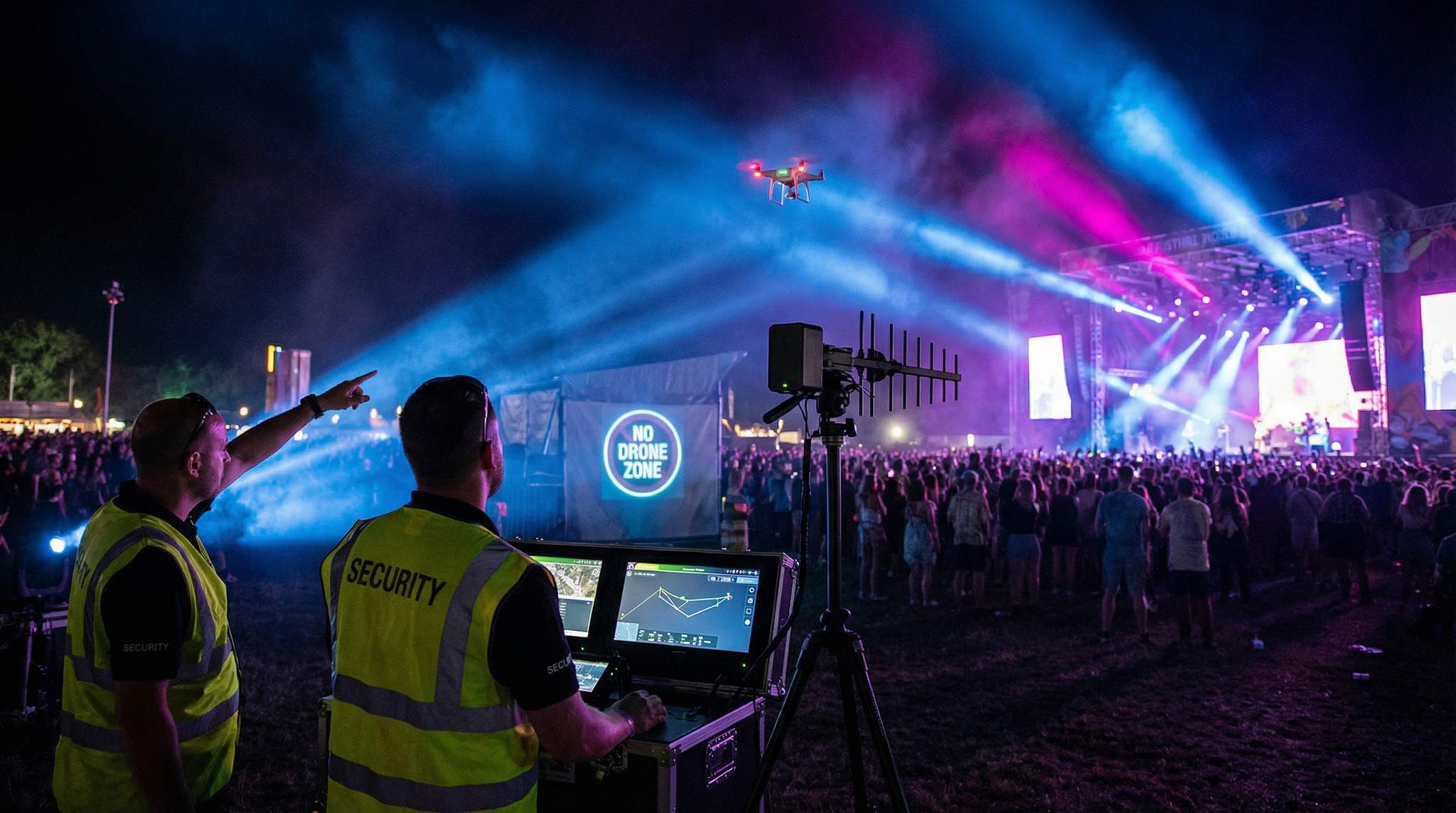
Many events use a combination of these sensors, integrated through a central system that fuses the data. A unified drone detection dashboard can show an alert with drone location on a map, speed, altitude, and even drone model type. For example, a large outdoor concert might deploy RF scanners to cover the broad area and cue pan-tilt-zoom cameras to visually lock onto any suspicious flying object. The goal is to catch the drone as early as possible – ideally as soon as it takes off near your event – to give security maximum time to respond. In one European festival trial, a drone detection team identified 27 unauthorized drone flights near the event in just 3 hours, highlighting the importance of safety and best practices for aerial operations. Imagine if those 27 drones had all buzzed through unnoticed; the potential for incident was high. Because the festival had a response plan, they could intervene (several pilots were located and stopped) before any of those drones caused trouble.
When evaluating a drone signal detector for your site, look for systems that offer multi-band frequency scanning and seamless integration with your existing security dashboard. A high-quality RF detection unit doesn’t just alert you to a presence; it decodes the telemetry data to pinpoint both the unmanned aircraft and the operator’s exact ground location. This allows your response teams to intercept the pilot before the device even breaches your inner perimeter.
To clarify the strengths of each detection method, here’s a quick comparison:
| Detection Method | How It Works | Strengths | Limitations |
|---|---|---|---|
| RF Signal Detection | Scans for drone controller radio frequencies and Wi-Fi signals. Can sometimes identify drone make/model and pilot’s controller location. | Early warning even before drone is airborne; works in real-time; not affected by darkness or weather. | Misses drones not using RF (pre-programmed routes); new drone signal protocols can evade detection; requires spectrum expertise to tune properly. |
| Radar Surveillance | Uses radar pulses to detect small airborne objects and track their movement. | Reliable tracking day or night; gives precise location/altitude; covers wide area if unobstructed. | High cost; can confuse birds or debris as drones (requires filtering); line-of-sight needed (tall stages, terrain can block). |
| Optical/Camera Systems | High-zoom video and infrared cameras scan the sky, with AI identifying drone shapes/motion. | Visual confirmation of target; can record evidence; thermal picks up night operations. | Affected by lighting, glare, and sight obstructions; shorter range (needs multiple units for large sites); potential false alarms without good AI. |
| Acoustic Sensors | Microphones arrayed to detect the unique sound of drone propellers/motors. | Can catch drones hidden by darkness or obstacles (if they make noise); helpful additional layer in quiet zones. | Limited range; less effective in loud environments (concert sound); cannot differentiate drones if many sound sources are present. |
In 2026, there are turnkey solutions available – companies specialize in drone detection for events. As a festival organizer, you can hire a service that brings the sensors and monitoring team to your site for the event duration. They’ll set up equipment (often on portable masts or rooftops) and feed data to a security control center. If you’re a DIY tech-savvy type, smaller systems (like RF or optical kits) can be purchased or rented, but integrating them correctly is a complex task. Most mid-to-large festivals engage experienced providers for peace of mind. As one festival security director put it, “We treat drone detection like we treat weather monitoring – it runs in the background and we hope nothing bad comes, but we’re ready if it does.”
Integrating Drone Monitoring into Your Ops
Detection is only useful if it’s tied into your overall event operations and emergency response. Seasoned producers make sure that drone alerts funnel into the event command center, where decisions can be made. If you have a Production Control or Security HQ onsite, that’s where a screen should display the drone detection system. Assign a specific staffer or security officer to watch it during show hours (often this role is part of a broader surveillance team that might also be watching CCTV for crowd issues). When an alert comes in, have a clear protocol: for example, “If an unidentifiable drone is detected within 500 meters of stages, immediately notify the Head of Security and the on-duty Police commander via radio.” Speed is critical. It might only be a minute or two from when a drone is first picked up to when it’s over your crowd.
Also integrate drone spotting into your existing visual surveillance and crowd scanning. Just as you’d station security personnel at high vantage points to watch for crowd distress or fires, brief those spotters to also keep an eye on the skies. Effective festival security teams often include this in their training – using binoculars or the naked eye to scan above and around the site for any low-flying objects. Many drones have lights that make them visible at night (and at 2026’s festivals, plenty of lasers and lights might be pointed upward, so something hovering can stand out). If a staffer radios in “we’ve got a drone over the camping area,” that should trigger the same core response as a detector alert would. Redundancy is good; sometimes a human will notice what a sensor misses and vice versa.
One crucial integration point is with your performance schedule and technical crew. If you’re doing anything in the air (fireworks, confetti cannons, flame effects), coordinate closely with the drone monitoring. Some festivals establish a “hold fire” signal: the pyro team gets a direct line or a signal light from the drone detection station. No drone detected? Green light to launch fireworks. Drone spotted wandering near the pyro zone? Delay until it’s clear. This prevents dangerous intersections of drones and pyrotechnics. Similarly, if you have live broadcast drones (authorized ones), your system should be tuned to recognize those as friendly – perhaps by giving them a specific radio tag or known frequency – so that you don’t confuse your own drone camera with a rogue. Clear airspace maps can help: define exactly where official drones (if any) will fly, and treat everything outside those lanes as suspect.
Finally, practice makes perfect. Include the drone detection and response in your pre-event simulation or drills. If you’re running a tabletop exercise or using tools like virtual reality safety drills to simulate festival emergencies, throw a “drone intrusion” scenario at the team. How quickly does the monitoring staff communicate the threat? Do security teams know who should pursue the pilot on the ground? Does the stage manager have a way to gracefully pause the show if needed? By rehearsing these steps, you’ll uncover any gaps (for instance, maybe only the site manager has the authority to stop the music – if he’s not immediately reachable, that’s a problem; assign a backup). As drones are a newer risk, many teams haven’t faced one live yet, so a practice scenario can educate everyone. One major festival incorporated a drone flyover in a live simulation with local police – afterward, staff said they felt far more confident because they’d run through it once in a no-pressure setting. The first time your team handles a drone incident shouldn’t be during the real festival if you can help it.
Countermeasures: How to Stop a Rogue Drone
Implementing effective drone countermeasures requires a delicate balance between rapid threat mitigation and strict regulatory compliance. For festival producers, the goal isn’t simply to knock a device out of the sky, but to deploy a calculated, multi-tiered defense strategy that neutralizes the intrusion without endangering the thousands of fans below.
Legal and Safe Response Strategies
Detecting a drone is only half the battle – the next challenge is neutralizing the threat without making things worse. Here’s the tough part: unlike a rogue fan jumping a fence (whom security can tackle) or a thrown object (which falls on its own), a drone is a moving target in shared airspace. Bringing it down can be risky, and in many jurisdictions, it’s illegal for anyone other than law enforcement or specific authorized personnel to interfere with an aircraft – and yes, drones are considered aircraft. As a festival organizer, you must balance urgency with legality and safety when choosing your counter-drone tactics.
First and foremost, involve law enforcement whenever possible. If police or security services are on-site, they should be informed immediately of a rogue drone. Many police departments, especially in tech-forward regions, are now equipped with counter-drone tools or at least have a protocol to respond (some have dedicated drone squads). In countries like the US, new laws (e.g., the Preventing Emerging Threats Act) give law enforcement and select agencies authority to disable or seize drones in certain circumstances – powers that private citizens or companies don’t have. So, if you have cops on site, let them take the lead in stopping the drone. For instance, at one festival in India’s Uttar Pradesh, police deployed an anti-drone gun (a jamming device) to bring down a drone that flew over the crowd, since local regulations empowered them to act for public safety. As an organizer, facilitating that by having the right people present is key – if your risk assessment flags drones as a major hazard, consider requesting a police unit with counter-drone capability as part of your event permit or security plan.
When event producers ask how to bring down drones safely, the answer always hinges on minimizing collateral damage. Forcing an aircraft out of the sky above a densely packed crowd introduces severe kinetic risks. Therefore, any physical or electronic interdiction must be carefully timed. Security directors typically wait until the rogue device drifts over a designated “safe drop zone”—such as an empty parking lot or a secured backstage perimeter—before authorizing police to deploy jamming rifles or net guns.
However, you might not always have a specialized squad handy, especially at smaller events. So let’s explore the toolkit of countermeasures – and remember, legality varies by country, so always vet these approaches with local authorities and attorneys beforehand:
– Radio Jamming: This involves blasting a broad radio frequency interference to cut off the control link between the drone and its pilot (or to jam the drone’s GPS). The effect in many cases is that the drone will autonomously hover in place or initiate a “return to home” (if GPS is jammed, some drones default to landing slowly). Jamming devices exist (often looking like a rifle or antenna array) that can be aimed at a drone to disable it from hundreds of meters away. Caveat: In most countries, RF jamming is illegal for civilian use because it can disrupt all sorts of communications (and potentially affect your own event comms). Only government agencies are typically allowed to jam. Plus, indiscriminate jamming could knock out Wi-Fi or radios at your festival. This is usually a police-only measure – but it’s good to know about if discussing options with authorities.
– Protocol “Hijacking” (Drone Takeover): Some advanced tech can send crafted signals to overtake control of a drone by exploiting its protocol (essentially hacking it). One well-known system can force certain popular drone models to land immediately by sending a fake “return to home” command. These systems target the drone’s specific manufacturer protocols rather than brute-force jamming everything. They require up-to-date libraries for each drone type, so they’re often provided by professional security firms. If legal in your area, hiring a vendor with such a system can be a game-changer – it means if an unknown drone enters your airspace, you press a button and that drone drops into a controlled descent, neutralized without a crash. Again, authorization is key: such “intercept” techniques are heavily regulated (in the US, only certain federal agencies can do it without special dispensation). Europe is gradually updating laws to allow counter-drone actions by police under strict conditions, reflecting the growing Europe anti-drone market outlook. Always check the current legal status, but keep this approach in mind as the landscape evolves.
– Net Guns and Interceptor Drones: These are physical capture methods. A net gun is a device (often CO2-powered) that shoots out a net to entangle a drone. Security forces can aim at a drone overhead (ideally when it’s within 30-50m range) and fire the net; if it hits, the drone’s propellers get snarled and it falls, hopefully cushioned by the net. Some nets are attached to a tether so you can gently bring the drone down. There are also interceptor drones – drones that carry nets and are flown by security to chase and capture the rogue. Tokyo police famously tested a drone with a net to snag others out of the sky. Pros: No electronic interference, so legally it can be easier to deploy by private security (check local weapon laws, though – net guns might be regulated). Cons: Accuracy and safety. It’s hard to hit a moving drone with a net unless you’re well-practiced (and doing so over a crowd is risky – you might drop the drone onto people). There’s also a chance of partial tangling that sends the drone on a wild trajectory. Interceptor drones require an expert pilot and carry the risk of drone-on-drone collision overhead.
– Laser or Microwave Systems: Mostly in the military domain right now, these systems either burn out the drone’s electronics with a laser or fry them with focused microwaves. They are not commercially available for festival use (and would be overkill). But in the future, who knows – events might have automated laser turrets that zap intruding drones. As of 2026, this is not an option for civilian event organizers (and definitely not something to improvise!).
– Old-Fashioned Takedown: This means using whatever is at hand to get the drone down – from throwing objects to, in one extreme case, signalers have attempted shotguns. Obviously, firearms are a terrible idea in a festival setting (and in many countries, discharging a weapon at a drone is illegal unless by police). Throwing things (cans, balls) is also not effective for anything beyond a very low hover. One creative approach tried by some: trained birds of prey. Dutch police a few years ago trained eagles to snatch drones, but ultimately retired the program due to mixed results and concern for the birds’ safety. In short, physical force is a last resort and generally not advised unless the drone is very low and clearly about to hit someone – in which case a nearby staffer might even just grab it or swat it safely. One festival security manager recounted an incident where an unauthorized drone landed near the stage (perhaps its battery died); security rushed in and covered it with a heavy fire blanket to prevent takeoff, then removed the battery. That’s a smart, simple containment approach if a drone is grounded.
Given these options, what’s practical for festivals? A layered approach: Early detection, chase the pilot, and have a contingency to disable the drone if it’s posing an imminent danger. The safest outcome is usually making the pilot stop. That’s why investing in detection that can pinpoint the pilot’s location (or at least direction) is so valuable – if security can find the person with the controller, they can often end the incident without any dramatic drone crashes. At Tomorrowland, after detecting those 27 rogue flights, authorities didn’t shoot them all down; instead, they tracked and confiscated drones and took action against the operators, as police confiscated unauthorized drones. That prevented debris falling on 400,000 attendees, which is ideal.
However, you need a fallback if the pilot can’t be immediately found or if the drone is clearly threatening (say it’s hovering directly over a packed crowd or VIP). In such a case, coordinating with law enforcement is key. If police have jamming or takeover tools on-site, let them deploy those. If not, and you have a net gun and a trained operator as part of your team, you might decide this is the moment to use it – preferably when the drone has moved over an empty spot (like an open field or parking area) to minimize risk if it drops. Some festivals arrange a “clear sky” alert – stopping music and asking people to cover their heads – but this can cause unnecessary panic and is rarely used unless there’s truly a dangerous object about to fall.
One emerging concept is geofencing the drones themselves. Major drone manufacturers like DJI implement GPS-based no-fly zones in their software (for airports, prisons, etc.). Event organizers are now talking with these companies and aviation authorities to add temporary geofences for festival sites. By 2026, we’re seeing early examples: a large festival in Australia successfully lobbied for a manufacturer’s geofence update during their event weekend – effectively preventing many consumer drones from even taking off in that radius. While not foolproof (older or custom drones won’t have the geofence), it’s a promising avenue. If you run a high-profile event, it’s worth inquiring with authorities or manufacturers about temporary no-fly geofencing as part of your counter-drone strategy.
To summarize common counter-drone tactics and who can use them, see the table below:
| Countermeasure | Description | Usable By | Considerations & Risks |
|---|---|---|---|
| RF Jamming | Blast radio/GPS interference to cut drone’s control or navigation. | Primarily law enforcement or military (illegal for private use in most regions). | Can trigger drone failsafe (hover/land) but also may cause crash; indiscriminate – could disrupt event communications or nearby devices. Legal restrictions are strict. |
| Protocol Takeover | Hack or send commands to drone via its own signal, forcing it to land safely. | Specialized security vendors; law enforcement units with authorization. | Selective and often effective if drone model is known. Requires expensive tech and legal clearance. Generally safe landing if successful. Limited to certain drone brands/models. |
| Net Gun (Ground) | Fire a projectile net at the drone to entangle it and bring it down. | Trained security staff or police. (Check local laws on projectile devices.) | No electronic interference. Must be at close range and have line-of-sight. Risk of drone falling – best if drone is over an empty area when hit. Operator must be skilled. |
| Interceptor Drone | Launch another drone equipped with a net or other means to snag the rogue drone mid-air. | Specialist security team or police drone unit. | Can engage at higher altitudes than ground methods. Requires expert pilot or autonomous system – complex to execute. Collision or crash debris risk if over crowd. |
| Laser/Microwave | Use directed energy to disable the drone (burn out circuits or fry electronics). | Military and high-security events only (not available for civilian use in 2026). | Highly effective if available, almost instant neutralization. But overkill for typical festivals; also risk of collateral damage if mis-aimed. Not commercially accessible. |
| Physical Capture on Ground | Manual capture if drone descends low (e.g., grabbing it or using a pole/blanket). | Event security or staff (if safe to approach). | Only feasible at very low altitude or after drone has landed. Risk of rotor blade injury – use caution (gloves, blanket). Useful for securing a downed drone to prevent re-takeoff. |
| Do Nothing / Wait | Monitor drone until it leaves or its battery dies, without direct intervention. | Event security decision (often when no other safe option). | Sometimes a drone will exit on its own. Avoids provoking an unpredictable crash. However, if drone malfunctions or stays too long, this is merely delaying action. Should pair with tracking the pilot if possible. |
As the table shows, each method has pros and cons. Festival organizers in 2026 lean towards non-destructive, controlled solutions – nobody wants a scenario where the countermeasure causes more alarm than the drone itself. That’s why communication and training are crucial (more on that in the next section). If a drone incursion happens, your team should have a decision tree: Can we find the pilot? If yes, focus on that (and get police to them ASAP). If no, is the drone posing immediate danger? If it’s just hovering at the periphery, maybe monitor and wait; if it’s diving toward the stage, consider active countermeasures. And always, ensure any takedown attempt accounts for the safety of people below – you might wait until the drone is over a less populated spot or above an area where you control the fallout.
One often overlooked aspect: evidence collection. If you do neutralize a drone or confiscate one, treat it like an incident scene. Document it – take photos of the drone in the position it landed, note the time, and secure any video card onboard (it might hold clues like footage of the pilot). Hand the device to authorities if they’re involved; if not, keep it safe in case the owner comes looking or if there’s later a liability claim. Some festival teams even include a small forensic kit – essentially a bag or box to store a downed drone and a log sheet to record details. This might sound extreme, but considering potential legal follow-ups (prosecuting a rogue operator, or defending your festival if the drone caused damage), having that evidence is invaluable. It also contributes to industry knowledge – many events share data on intrusions (anonymously) to help others. For example, learning what model of drone was commonly breaching events in 2025 helped some festivals adjust their detection to those frequencies.
In summary, countering rogue drones requires quick thinking within legal bounds. The best festival outcomes have come from a mix of preparedness: official no-fly zones so you have law on your side, detection to cue a fast response, trained staff who know how to approach the issue calmly, and appropriate tools (often involving law enforcement) to disable the drone if needed. It’s a new frontier in event safety, but one that can be managed with the right strategies – as proven by events that have successfully averted drone mishaps.
Building Drones into Your Emergency Plan
Risk Assessment and Insurance Implications
In the era of drone proliferation, any comprehensive festival risk assessment must include the possibility of drone-related incidents. When you’re reviewing hazards – alongside weather, medical emergencies, crowd control, etc. – add a line for “Unauthorized drone intrusion” and brainstorm the potential consequences and likelihood. This formalizes the issue and ensures you allocate resources to it. Think through scenarios: property damage (e.g., a drone crashes into the mix console), personal injury (drone hits a guest), show interruption (authorities stop your event because a drone is endangering a performer). Assign a risk rating (how likely, how severe) and then document the mitigation steps (like “No-fly zone policy, detection system, trained response team”). Many seasoned event producers now treat drone risk similarly to how they treat minor fire risks – unlikely but possible, and with potentially high consequences, so it warrants mitigation investment.
Engage your insurance provider in this conversation as well. Insurance companies in 2026 are very aware of drone issues. In fact, some insurers ask events explicitly: “Are you using drones or have a plan for unauthorized drones?” because it can affect liability. Check if your general liability policy covers injuries or damage caused by third-party drones. Often, if an attendee-operated drone causes harm, the liability primarily falls on that person – but in practice, victims might still include the event in claims, arguing perhaps that security should have prevented it. It’s a gray area, so having insurance that doesn’t exclude “aircraft” incidents is important. Discuss adding a rider if needed for drone coverage. Document your preventive measures to the insurer – showing that you have a no-drone policy, safety plan, and perhaps even contingency insurance coverage for unforeseen incidents can sometimes earn you a better premium or at least goodwill in case of a claim. According to festival insurance experts, demonstrating proactive risk management (like anti-drone measures) is viewed favorably during claims, especially when simulating the unexpected with virtual reality safety drills. It signals that you’re not negligent regarding this modern hazard.
Despite best efforts, if a drone accident does occur – say, a drone crashes and injures someone – have a plan for incident response and reporting. This should fold into your general emergency operations plan. Treat the drone like any other cause of injury: prioritize care for the injured, secure the area, and then collect information. Ensure medical teams know to report if they suspect a drone was involved in an injury (someone might come to the first aid tent with a cut caused by a drone blade – it helps if medics realize and log “injury likely from drone” rather than it being a mystery wound). Security should attempt to locate the drone and the operator immediately. The incident commander might decide to pause festivities if the situation is chaotic (for example, multiple injuries or an unknown object causing fear). If you have to stop the show due to a drone, communicate carefully to the crowd – e.g., “We have a technical issue overhead, please stay calm and we’ll resume shortly” – no need to incite panic by mentioning a drone bomb possibility or anything extreme.
After such an incident, preserve evidence and document everything. Get statements from security who saw the drone, anyone who was hurt, and if the operator was caught, record what happened. This will all be crucial for insurance claims and any legal follow-up. Festivals that suffered incidents often share a critical tip: don’t move the crashed drone until proper authorities or investigators see it, unless leaving it poses a further safety risk. Take photos of it in place. If police are present, let them handle it as potential evidence of illegal drone operation. Also, be ready to interrupt your event schedule if needed – event directors should have authority to delay a set if a serious injury or safety threat needs attention (just as you would for a medical emergency or weather delay). It’s painful to halt a performance, but attendees will understand if it’s clearly for safety.
Finally, review and update your emergency action plan (EAP) to include drone-specific procedures. Does your plan have a protocol for “airborne intrusion” or similar? If not, add a section. Detail who must be notified (e.g., “Security Control will notify the Event Director and law enforcement immediately upon confirmation of an unauthorized drone in the venue.”). Specify who has the authority to stop the music or evacuate an area if a drone poses imminent danger (this could be the Security Chief or Safety Officer). Outline communication methods: perhaps a specific code word on the radio for a drone sighting to avoid alarming everyone (“Code Sky” or whatever). Clarify roles: security focuses on pilot interdiction, tech crew might power down certain effects, medical stands by for potential injuries, etc. By writing this into the plan, you ensure that in the heat of the moment, staff aren’t scrambling to figure out who should do what – they can follow a pre-agreed script.
Training Your Team for Drone Scenarios
Your festival staff and vendors are likely not used to thinking about threats from above. That’s why training and drills are essential. In safety briefings during the lead-up, include a segment on drones. Educate everyone – not just security – on why drones are banned and what the protocol is if one is spotted. For example, your stage managers and audio/visual crew should know that if they see a drone near the stage, they should immediately alert security control and perhaps be prepared to shut down certain equipment. Train security on how to approach a drone pilot: non-confrontational but firm, and ideally to cover the drone’s camera if it’s recording (to avoid antagonizing an operator live-streaming). Frontline staff need to know what a drone controller looks like (so they can detect someone actively flying).
Some festivals are taking training high-tech. Virtual reality drills have been used to prepare for all kinds of emergencies, and a drone incursion is no exception. Using VR or simulated environments, you can run your team through a mock scenario: a drone appears above the crowd, detection alarms go off, what do you do? Each person – from the safety officer to a volunteer – can play their role in the simulation. As noted in the guide on VR safety drills for festivals, immersing staff in a realistic scenario builds muscle memory and reveals cooperation issues in a controlled way. Imagine a VR sim where the team in the ops room sees a blip on the drone detector, they radio ground units, the ground units have to “locate” the virtual pilot, etc. It might sound futuristic, but leading festival organizations are exploring these training tools to stay ahead of new threats. If VR is out of reach, a simple tabletop exercise works too: gather department heads and walk through a hypothetical drone incident step by step (“Security, what’s your first action? Production, what do you do if we tell you there’s a drone near Stage 2?”). Discussion will clarify responsibilities and likely surface some creative solutions from the team.
Don’t forget to loop in external partners in training. If police or local emergency management are part of your event, consider a joint drill with them. Collaboration is key – for instance, if a drone crashes and causes injuries, you may suddenly have to coordinate with local EMTs or even an explosives disposal unit (if the drone is suspected to carry something dangerous). That’s obviously a worst-case, but practicing communication with outside responders is valuable. Some festivals now specifically ask police, “What would you do if a drone threatens our event?” and incorporate their answer into the plan. The more everyone knows each other’s procedures, the smoother the real response will be.
Lastly, training should instill a mindset: stay calm, but act quickly. A drone incident can be startling – people naturally look up in surprise, and there’s often confusion (“Is that ours? Is that allowed?”). Staff must overcome that initial shock fast. By having discussed and drilled it, when the day comes they’ll be more likely to snap right into action: notify the right people, keep eyes on the drone, move to the next step. Emphasize not causing panic – most drone situations will not require informing the crowd at large, and public address announcements should be a last resort. Your team’s composed reaction will help keep attendees blissfully unaware or at least unconcerned while you handle the issue.
When (and How) to Halt the Show
One of the toughest calls a festival organizer can make is to stop a performance for a safety issue. It’s disruptive, potentially costly, and can rattle the crowd. But attendee safety always comes first, and drones add a new dimension to that decision-making. It’s wise to define in advance the criteria for when you would consider pausing or shutting down a stage due to a drone.
Factors to consider:
– Drone Position and Behavior: If a drone is loitering directly above a densely packed crowd or over the stage where artists are exposed, that’s high risk. If it’s out over an empty parking lot or camping area, you have more leeway to let it be.
– Ability to Mitigate Quickly: If detection indicates the drone is leaving or security has the pilot in custody, you might avoid a show stop and resolve it in minutes. But if the drone is behaving erratically (which could mean it’s losing control or malfunctioning), a proactive pause might be warranted before it literally falls on the audience.
– Time of Day and Show Criticality: Stopping a headliner’s set in the middle of the night is a big deal; doing a brief hold between acts or during a daytime filler act is easier. Of course, drones don’t choose convenient times, but your threshold for intervention might be lower when the stakes (in terms of show element intensity) are lower. Many festivals have scheduled “downtimes” or intermissions where they could slide in a delay if needed (“technical difficulties, please stand by”).
– Communication with Performer: Are you able to quickly tell the artist or DJ on stage about the situation? Some artists might spot the drone themselves and react (some positively, some negatively). It’s ideal if you can warn them via their in-ear monitors or a stage manager, “There is a security issue, we may stop briefly.” You don’t want, say, a band member to see a drone and take matters into their own hands (one famous singer cut his hand grabbing a camera drone that flew too close – definitely not what you want happening).
Establish a chain of command for show-stop decisions. Often this will be the Festival Director or Head of Security who calls it, with input from others. It could be as straightforward as: “If an unauthorized drone is hovering over a main stage crowd and not leaving immediately, the Head of Security will radio the Stage Manager to pause the show until it’s resolved.” Come up with a subtle way to execute the pause – maybe fading out the music or having the MC come on with a random announcement to distract the audience (“folks, we’re going to take a quick break to fix a technical issue, use this time to hydrate!”). Avoid alarming language. You might not mention “drone” at all to the crowd, since that could spark people trying to spot it (and pushing or tripping as they look up).
Importantly, coordinate with your lighting and effects team if you do pause. One smart tip: bring up house lights a bit if you’ve stopped a night show – this keeps people calmer and more aware of their surroundings (and incidentally makes it easier for security or police to track the drone visually). Conversely, if the drone is directly overhead, you may avoid hitting it with strong lights or lasers from the stage, because sudden lighting could disorient the pilot or the drone’s sensors, making it harder to control – potentially causing a crash. These technical nuances can be worked out in training and cue sheets (e.g., a note: “In case of show pause due to aerial issue, do X with lights, mute music slowly, etc.”).
Once the drone is gone or neutralized, resume normal programming as smoothly as possible. The artists and MCs can help by re-engaging the audience. If the crowd wasn’t fully aware of what happened, there’s no need to dwell on it – often the show can pick back up with most attendees none the wiser. If the crowd was very aware (say they saw it and cheered when it left, or booed at it), you might acknowledge it briefly: “Thanks for bearing with us – we had to handle a quick safety issue in the sky. All clear now, let’s continue the party!” This transparency, delivered positively, can actually boost audience confidence that you’ve got things under control.
The key takeaway is to have a plan but use judgement. Not every drone sighting means stop the show – in fact, most can be handled without impacting the performance if dealt with swiftly. But you need the option on the table, and everyone from production to performers should know it’s a possibility in extreme cases. It’s far better to have a slight delay than to gamble through a song and have an accident occur. As festivals learned with severe weather protocols over the past decade (“when do we pause for lightning?”), now we must learn the triggers for aerial intrusions. Many event professionals lean on a simple rule: if a drone’s presence could directly harm someone or something imminently, hold the show; otherwise, manage it in parallel with the show. And when in doubt, err on the side of safety – you can always make up for lost time, but you can’t undo an injury or worse.
Partnering with Authorities and Community
Involving Law Enforcement Early
When it comes to countering rogue drones, forging strong partnerships with law enforcement and aviation authorities can be your festival’s secret weapon. Loop police and officials into your planning as early as possible. When you first meet with local police to discuss event security, bring up the drone issue: “We plan to enforce a no-fly zone over the festival – can we count on your support if someone violates it?” Many police departments appreciate this proactive stance and will coordinate operations. For instance, some will assign an officer specifically to monitor airspace or be the point person if a drone is spotted. Provide them details of your detection capabilities; if you have a system that can locate pilots, that intel is hugely valuable for police response (they can dispatch units to that location quickly).
It’s also wise to clarify legal enforcement powers. Ask local authorities what laws apply to unauthorized drones at your event. In the UK, for example, it’s illegal to fly drones within 150 meters of an open-air crowd over 1,000 people, so understanding drones and airspace rules at remote festivals is vital – a drone over your festival is likely breaking the law outright. Police can act on that (seize the drone, fine the operator, etc.). In the U.S., recreational drone rules prohibit flying over people without special waivers; again, that gives law enforcement grounds to intervene. Knowing the exact statutes (like “FAA Part 107 violation” or specific national drone regulations) will help you and the police categorize the incident. Some festivals even include a local police drone unit in their vendor list – essentially hiring them officially to be on site, which can simplify jurisdiction issues if a take-down is needed.
Don’t forget about aviation regulators if your event is large enough. Maintaining communication with the likes of the FAA or CAA beyond just getting a permit can pay off. They might provide resources such as direct contacts if a serious drone issue arises (e.g., an FAA rep you can call for advice mid-event, or who might coordinate any necessary air traffic measures). In high-profile cases, national agencies might deploy personnel – for something like the upcoming 2026 FIFA World Cup events, the U.S. federal government is investing heavily in drone security measures, specifically U.S. drone defenses for the 2026 World Cup. While your festival might not warrant that scale, being on the radar (no pun intended) of these agencies means you could be looped into broader security programs or intel. For example, if there’s chatter about planned drone disruptions (yes, that has happened via social media or activist groups), sometimes authorities warn events in the area.
Another community resource: local drone hobby groups or clubs. This might sound counterintuitive – aren’t those the very people who might buzz your fest? Actually, many responsible drone enthusiasts are happy to help promote safe flying and respect no-fly zones. Some festivals engage with nearby hobbyist communities to spread the word that “this event will have restrictions – please don’t fly anywhere near it.” You could even invite club members to volunteer as additional eyes on the sky (they know best how to spot and even how to technically identify drones). We’ve seen examples where a drone racing club worked with a sports event to educate their members not to fly on game day, and it built goodwill (plus prevented any rogue flights from that community). It’s part of a broader strategy: make drone safety everyone’s interest, not just an us-vs-them enforcement angle.
Public Awareness and Neighbor Outreach
Remember that not all drone threats come from ticket-holders. Someone with a drone could operate just outside your venue and still cause trouble. That’s why public outreach matters. Consider issuing a public service announcement in local media in the week before the festival: “Local Notice: [Festival Name] this weekend is a designated No Drone Zone. For safety, please refrain from flying drones in the vicinity.” If local authorities endorse it, even better – a quote from a police spokesperson or local council official can add weight. Some cities will put temporary notices on community boards or online groups, alerting residents that drones shouldn’t be flown near the event. While this won’t stop a determined outlier, it does cover the base of someone who just didn’t know and might have planned to fly for fun.
For festivals in remote or rural areas, check if any neighboring landowners or farms use drones (for crop monitoring, etc.). A polite reach-out to say “We’ll have a lot of people outdoors these dates, could you avoid drone flights then?” can’t hurt. Most neighbors will understand and cooperate, especially if you position it as a courtesy to prevent any mishaps.
On-site, you might also publicly recognize your no-drone efforts as part of your safety messaging. For example, some festivals in 2026 have added drone safety to their community impact or sustainability reports: “In our commitment to attendee safety, we partnered with local authorities to enforce a drone no-fly zone, ensuring a secure environment for all.” It’s somewhat PR, but it reinforces to everyone that drones are taken seriously and not allowed. Attendees who read that are less likely to think about sneaking one in, and local press might even highlight it as an interesting facet of your event’s safety measures.
Learning and Adapting with the Industry
The challenge of rogue drones is relatively new, and it’s evolving. Stay connected with the wider festival and events industry to share lessons learned. By 2026, many festival organizers swap stories of drone encounters in workshops and conferences. Associations like the Event Safety Alliance, International Festivals & Events Association (IFEA), and others have begun to include drone risk sessions in their programming. These forums are gold mines for practical tips (and sometimes you find a great vendor through a colleague’s recommendation). For example, one festival might share how they worked with a tech startup to create a drone detection network on a modest budget, or how another convinced their city to pass a temporary ordinance against drones during event weekends.
Also, keep an eye on regulatory changes. Drone laws are playing catch-up to technology. The EU has rolled out a drone registration and remote ID system; the U.S. is implementing Remote ID broadcasts (drones will transmit an ID and location of the pilot). By the end of 2026, if Remote ID becomes standard, your detection system could tie into that – meaning you might instantly get the registered ID of a drone flying where it shouldn’t. That would simplify identifying offenders. Some countries might introduce special event-related no-fly zone procedures – for instance, a city might allow festivals to apply for a drone restriction zone as part of their event permit (some locales are already heading that way). Being aware of these updates can save you time and give you new tools. Subscribe to drone industry newsletters or your national aviation authority’s updates. As tedious as that might sound, it’s now part of the safety manager’s purview.
Finally, don’t be afraid to adapt your plan each year. After every festival, do a post-mortem on your drone strategy. Did you spot any drones? How did the team handle it? What feedback did security or artists give? Maybe your detection covered 90% of the area but missed a blind spot behind the main stage – next year, you add another sensor there. Or perhaps you over-budgeted, and no drone even tried – you might dial back a bit (though, never get complacent, the one year you have no incidents might lull you into a false sense of security). The technology options will also get cheaper and better over time, so you might upgrade from purely human spotters to a mid-level RF detection by next year as prices drop.
The fight against unauthorized drones will likely be ongoing, much like event cybersecurity or other emerging challenges. But by treating it with the same seriousness as any other safety concern, festivals can largely stay one step ahead. The industry mantra is becoming clear: plan for drones, and you’ll rarely be caught off-guard by one. It’s all about preparation and partnerships – from your own crew up to the government level – to keep those skies clear.
Future-Proofing Your Skies: 2026 and Beyond
Smarter Tech on the Horizon
The cat-and-mouse game between rogue drones and defenders will spur a lot of innovation in the coming years. Festival organizers who stay informed about next-gen counter-drone tech can gain an edge. One trend is the move toward autonomous detection and response systems. Imagine an integrated setup where AI software not only spots a drone, but also chooses the best response in seconds – perhaps launching an interceptor drone automatically. While we’re not fully there yet, companies are demoing these “drone shield” systems, and costs are expected to come down by the late 2020s as the market grows (the anti-drone tech market is projected to exceed $3.5 billion globally by 2030, reflecting high demand, with the Europe anti-drone market outlook showing significant growth).
For festivals, one promising development is wider adoption of Remote ID and drone geofencing. By 2026, the majority of new drones in the US and EU are built to comply with Remote ID – broadcasting who they are. Equip your security team with a Remote ID receiver (a small device or even a smartphone app in development) and suddenly, that mystery drone isn’t anonymous; you might see a registration number or the pilot’s coordinates. This makes enforcement much easier (“Hey John Doe, with drone ID 123XYZ, we know you’re flying illegally, land now.”). It’s akin to a license plate for drones. Regulators are pushing this hard, so festival producers should watch how it rolls out and tap into it. For example, if a drone flies near your event, you could call authorities and say “We picked up a Remote ID – here’s the number,” and they could look up the registered owner.
Artificial intelligence is enhancing detection accuracy too. The latest systems use AI to better distinguish drones from birds or debris, reducing false alarms and allowing systems to auto-track multiple drones at once. This means by 2027 or so, festival-scale detection setups may become more plug-and-play, without needing an expert to interpret every blip. We’re heading toward software that just gives clear alerts: “Drone detected at NW perimeter, moving east, altitude 60m” in plain language. As these tools become user-friendly, even smaller events might afford them or share them through vendor co-ops.
On the flip side, drones are also getting more advanced. Longer flight times, more autonomous capabilities (a drone might self-route via GPS, with no active control link – a scenario that’s harder to thwart). Countering autonomous drones may require new tactics like signal decoys or advanced radar. There’s also the specter of swarm drones (multiple drones working in concert). It sounds like science fiction for a rogue actor to deploy a swarm at a festival, but government security planners are already thinking about it. The good news is, the same tech that manages beautiful drone light shows at events (where dozens of drones fly in sync) could potentially be adapted to intercept or confuse a hostile swarm. Some researchers are working on “good drone swarms” to catch “bad drones.” While your festival probably won’t face a swarm attack, being aware of these discussions helps you appreciate why robust plans are needed – they cover even the outlandish scenarios.
Collaborative Defense: Festivals Helping Festivals
A heartening development in festival safety is the increased collaboration between events. Just as festivals share tips on sustainability or ticketing, they’re now sharing info on security threats like drones. Consider joining or forming a consortium with other festivals in your region to tackle drone issues. Maybe collectively hire a drone defense consultant for a season who can assess all your sites in one go (reducing cost), or bulk-rent detection equipment for a summer circuit. There’s precedent: some independent festivals have pooled resources for things like medical teams and crowd barrier rentals – extending that to a high-tech item like drone defense is a logical next step.
There’s also opportunity to engage sponsors or tech partners. An insurance company concerned with event safety or a telecommunications firm might sponsor your festival’s anti-drone infrastructure in exchange for being seen as innovative protectors. In 2025, a festival in California partnered with a startup that develops drone jamming rifles – they got a reduced rate on services by agreeing to be a real-world testbed for the tech, and in return the startup got valuable data and a case study. Think about whether any of your event sponsors (perhaps those in the tech, defense, or telecom space) have an interest in this area. Even a mobile phone company might sponsor your public “No Drone Zone” awareness campaign as part of a safety initiative.
A Safer Flight Path Forward
As we look beyond 2026, one can imagine festival skies becoming much more regulated yet also safer. It’s possible that by 2030, large events will routinely have “airspace marshals”, similar to how we have fire marshals – professionals dedicated to managing the overhead security during events. Drone incidents will hopefully become rare as word spreads that festivals are not easy targets (because of all the measures we discussed!). The culture among hobbyists may also shift – already, many drone owners are conscious of the bad PR that reckless flying generates and are policing their own community. We might see festival-specific drone training or certification for those who are authorized (like media teams), further reducing accidents.
In any case, festival organizers will continue to be on the front lines of adopting and iterating safety practices. Just as crowd management saw leaps in professionalism after some high-profile scares, aerial management at events is quickly growing from a niche consideration to a standard part of event planning. The good news: you’re not alone in this. By educating yourself (hopefully this guide has helped), tapping the knowledge of peers, and working hand-in-hand with experts, you can keep your event safe from the drone threat without losing focus on delivering an amazing experience. In fact, you might even turn it into a positive – fans may appreciate the futuristic vibe of seeing anti-drone equipment at a festival, a reminder that they’re at a cutting-edge event that cares about their well-being.
In summary, unauthorized drones are a new challenge, but one that the festival world is increasingly ready for. With solid no-fly policies, the right detection and counter tools, trained staff, and strong partnerships, you can confidently declare your festival a no-fly zone – and back it up. When done right, the show goes on uninterrupted, the crowd stays safe, and the only things flying through the air are the music, the lights, and the occasional fireworks (launched on schedule, once that pesky drone is gone).
Frequently Asked Questions: Festival Drone Countermeasures
What are the legal limitations of deploying drone countermeasures at live events?
In most jurisdictions, private event organizers and standard security vendors cannot legally deploy active drone countermeasures like RF jammers or protocol hijacking tools. These technologies interfere with regulated airspace and communications. Festival producers must coordinate with local, state, or federal law enforcement agencies, who possess the statutory authority to utilize these advanced mitigation tactics safely during a confirmed threat.
How do security teams safely bring down drones over crowded festival grounds?
When evaluating how to bring down drones, the primary concern is preventing kinetic impact on attendees. Authorized tactical teams typically wait until the unauthorized aircraft drifts over a pre-established “safe drop zone”—such as an empty parking lot or secured backstage area—before deploying net guns or electronic takeover commands. Forcing a crash directly above a dense crowd is strictly avoided unless there is an imminent, catastrophic threat.
Can private festival security teams use an anti drone gun to neutralize threats?
In almost all jurisdictions, an anti drone gun—which typically operates as a directional radio frequency (RF) or GPS jammer—is strictly restricted to military and specific law enforcement agencies. Private event security personnel cannot legally operate these jamming rifles because they can disrupt critical public communication spectrums. Festival organizers must instead coordinate with local police or specialized federal units who are authorized to deploy such counter-UAS (Unmanned Aircraft Systems) technology on-site.
How do operators know if a festival has restricted airspace?
To learn if there’s a temporary flight restriction due to an emergency or a major permitted festival, drone pilots should check the FAA’s NOTAM database or official airspace applications like B4UFLY. Event producers who successfully secure a formal TFR from aviation authorities will have their venue’s coordinates logged in these systems, ensuring that responsible commercial and hobbyist pilots are automatically warned of the active no-fly zone before they attempt to launch.