Onsite marketing at a festival is more than just advertising – it’s about enhancing the attendee experience while boosting the event’s brand and revenue. From eye-catching merchandise booths to engaging sponsor activations, every on-site marketing element should add value for festival-goers. The most successful festivals treat merch stands, sponsor booths, and content capture teams as integral parts of the event, not afterthoughts. This advisory guide shares wisdom from seasoned festival producers on how to effectively implement merchandise and brand activations that complement the festival atmosphere rather than detract from it.
Official Merchandise: More Than Just Souvenirs
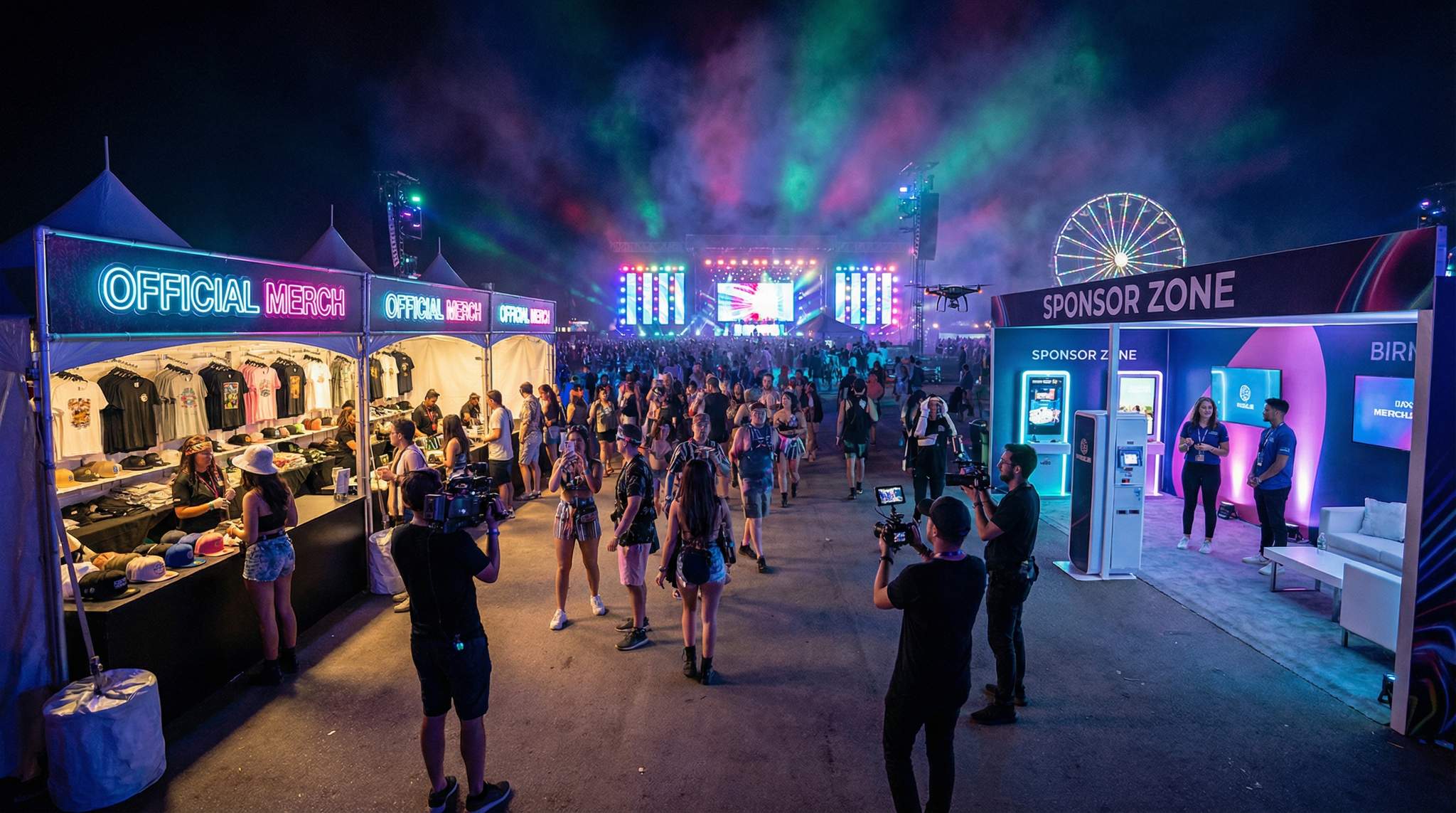
Selling official festival merchandise on-site serves a dual purpose: it generates revenue and turns attendees into walking ambassadors for the event. A well-designed t-shirt or hat not only makes a great memento but also spreads the festival’s brand when worn later. Festivals operating on tight margins find merch increasingly critical for profit, as maximizing revenue streams from merch sales is a vital strategy for financial success. However, achieving this requires careful planning and quality control:
- Design with Appeal: Offer merchandise that resonates with the festival’s identity and audience. Use vibrant artwork, festival dates, or lineup names to make items special. If the event has a theme or iconic symbols, incorporate them creatively so that the merch feels like a piece of the event itself.
- Quality Over Quantity: Invest in good materials for apparel and accessories. A comfortable, durable shirt or a sturdy tote bag will be used often, giving the festival ongoing exposure. Poor-quality merch, by contrast, might be discarded, losing both revenue and marketing potential.
- Stock and Sizing Strategy: Analyze past events (or similar events) to forecast demand. Nothing frustrates fans more than popular sizes selling out early on Day 1 – a lesson many organizers learn the hard way. Keep ample stock of best-sellers and consider printing a limited edition item for each day or stage. For smaller festivals, even a modest run of merch (like branded reusable cups or local artist-designed posters) can create buzz if it’s unique.
- Merch Booth Logistics: Choose a high-traffic yet non-obtrusive location for the merch stand. Ensure the booth is well-staffed to handle rushes (e.g., right after headliner sets) and organized so attendees can browse quickly. Display items prominently and use clear signage for prices. At larger festivals, multiple merch stations or a dedicated merchandise tent can reduce lines and encourage more purchases.
- Beyond Onsite Sales: While on-site sales often spike during the event, consider offering online merch sales before and after the festival. Enthusiasts may want to buy official gear ahead of time to wear at the event, and those who missed out on-site might purchase afterward. This approach not only extends revenue opportunities year-round but also keeps the community engaged.
Pro tip: Treat merchandise buyers as an extension of the festival’s marketing team. Whenever attendees wear the festival’s t-shirt in their hometown or post a selfie with the festival’s hat on social media, they spread awareness. Limited-edition or dated merchandise (like a poster with the festival year and lineup) can become collectibles that fans cherish – and free advertising in dorm rooms and offices around the world.
Sponsor Activations: Enhancing the Experience
Sponsors can bring extra flavor and fun to a festival if their presence is woven organically into the event. In fact, roughly 70% of festival-goers believe sponsors can enhance their experience when done right, proving that brands can effectively integrate into the music festival scene. The key is brand activation that provides genuine value or entertainment to attendees, rather than feeling like an interruptive ad. Here’s how to integrate sponsors so everyone wins – festival, sponsor, and most importantly, the fans:
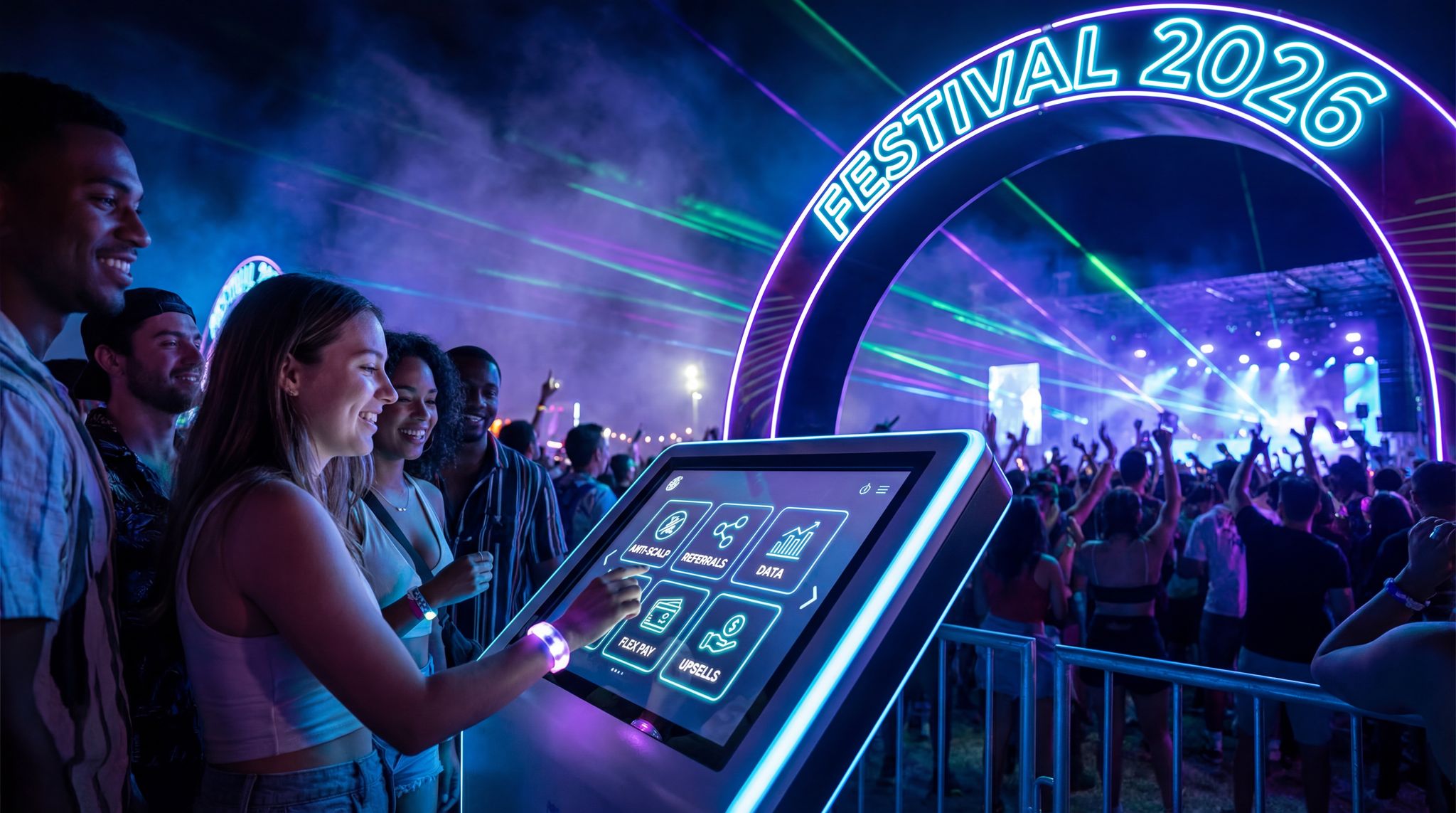
Boost Revenue With Smart Upsells
Sell merchandise, VIP upgrades, parking passes, and add-ons during checkout and via post-purchase emails. Increase average order value by up to 220%.
- Choose the Right Partners: Select sponsors whose products or ethos align with the festival’s audience and vibe. A tech gadget company might sponsor a phone charging lounge at an electronic music festival, while a local craft brewery could host a cozy beer garden at a folk festival. When there’s a natural fit, attendees are more likely to appreciate the sponsor’s contribution.
- Interactive Experiences: Encourage sponsors to create interactive booths or activities that add to the event. For example, a headphone brand might set up a silent disco dome or a chill-out tent where festival-goers can test noise-canceling headphones in a relaxing environment. A beverage sponsor could run a game zone or a themed bar with games and giveaways. At a recent major festival, a beauty brand offered a “hydration lounge” with fruit-infused water and misting fans, giving attendees a refreshing retreat on a hot day – an activation that left a positive impression.
- Prioritizing Festival Activations Entertainment: The most memorable brand activation at festivals blurs the line between marketing and actual performance. When sponsors fund roaming performers, interactive theater, or secondary stages, they provide genuine festival activations entertainment that keeps crowds engaged. This approach transforms a standard booth into a destination, ensuring that festival brand activations contribute directly to the event’s overall programming and energy.
- Integrate with the Festival Theme: If the event has a theme or unique culture, invite sponsors to tailor their activations accordingly. At an art and music festival, a sponsor might fund an interactive art installation or photo wall reflecting their brand and the festival spirit. By aligning with the theme, the activation feels like a natural part of the event landscape.
- Adapting for Single-Day Events: While multi-day events offer extended dwell time, a concert brand activation requires a more immediate, high-impact approach. For standalone gigs or arena shows, organizers must focus on rapid engagement before the headliner takes the stage. Streamlined photo ops, quick-scan giveaways, and fast-moving interactive kiosks work best when attendees have a narrower window to explore the venue compared to sprawling festival grounds.
- Navigating the Audio-Visual Environment: Designing a successful music festival activation requires careful consideration of the sensory landscape. Unlike trade shows, a brand activation at festivals must compete with—or ideally, complement—massive sound systems and elaborate stage lighting. If your onsite sponsorship production involves audio, ensure it doesn’t cause sound bleed with nearby stages. The best festival brand activations lean into the musical environment, offering rhythm-based games, silent discos, or visually striking, illuminated structures that look incredible when the sun goes down.
- Location and Layout: Strategically position sponsor activations where they’ll attract interest without causing bottlenecks. A sponsor village off to the side of a main walkway, for instance, can draw curious attendees without blocking foot traffic. Make sure each activation has clear signage that respects both the sponsor’s branding and the festival’s aesthetics (avoid an overwhelming logo-fest that clashes with the scenery).
- Keep It Fun and Optional: Festival-goers should feel invited, not forced, to engage with sponsors. Avoid blaring adverts from the stage or pushing pamphlets on attendees. Instead, let cool freebies, comfortable lounges, or unique activities be the draw. When people choose to participate because it looks fun or rewarding, they’ll associate those good feelings with the sponsor and the festival. For instance, a branded photo booth that prints souvenir pictures can be a hit – attendees get a memory keepsake, and the sponsor logo on the print spreads the word organically.
- Manage Sponsor Expectations: Work closely with sponsors on what a successful activation looks like. Set guidelines so they understand the festival’s culture and attendee expectations. A well-briefed sponsor will focus on creating a positive experience (e.g., giving away useful swag like bandanas or phone fans) rather than just collecting emails. Balance the sponsor’s goals (brand exposure, lead generation) with attendee satisfaction. It’s often worth including an activation in sponsorship packages that explicitly benefits the crowd – such as sponsoring a water station, shade tent, or phone charging area – so the sponsor gains goodwill for providing a service.
- Leverage Ticketing for Promotion: Organizers often look for ways to promote brand activations through event ticketing. Utilizing your ticketing platform’s features before the gates even open is a highly effective strategy. By offering free RSVP add-ons for a sponsor’s exclusive lounge, VIP upgrade giveaways, or pre-booking time slots for immersive festival activations during the checkout process, you drive guaranteed foot traffic. This pre-event engagement provides sponsors with valuable early data and builds attendee anticipation.
- Streamline Onsite Sponsorship Production: A brilliant concept falls flat without flawless execution. Managing onsite sponsorship production requires dedicated logistical support to ensure brand builds are safe, powered, and visually cohesive with the festival environment. Assign a dedicated sponsorship liaison or production manager to oversee load-in, power drops, internet connectivity, and structural safety for all festival brand activations. When the production side is handled professionally, sponsors can focus entirely on engaging with the crowd.
- Scaling for International Tours: When managing a multi-country festival brand or a touring event, global sponsorship activation and on-site production require a standardized yet adaptable approach. Organizers must develop scalable activation blueprints that maintain brand consistency across different territories while accommodating local safety regulations, power standards, and cultural nuances. Partnering with international production agencies ensures that a complex brand activation at festivals in Europe feels just as seamless and impactful when replicated in Asia or the Americas.
- Staffing and Training for Onsite Activations: The human element can make or break a brand’s physical presence at your event. The success of any on-site activation relies heavily on the people running it. Brand ambassadors must be thoroughly briefed on both the sponsor’s goals and the festival’s overall culture. When staffing these onsite activations, ensure teams are prepared for long hours, varying weather conditions, and high-volume crowd interactions. A well-trained, energetic crew transforms a static booth into a dynamic, memorable touchpoint for fans.
- Designing High-ROI Festival Activations: To attract top-tier partners, organizers must demonstrate how brand activations at festivals deliver measurable returns. The most successful music festival brand activations go beyond simple logo placement by integrating data capture naturally into the attendee journey. Think RFID wristband scans for a free sample, gamified app integrations, or QR-code-triggered AR experiences. By providing sponsors with concrete engagement metrics—such as dwell time in the activation zone or conversion rates from interactive kiosks—you transform a standard festival activation into a highly lucrative, data-rich partnership.
- Executing a Multi-Touchpoint On-Site Brand Activation: To maximize impact, an on-site brand activation shouldn’t be confined to a single 10×10 tent. The most effective experiential marketing campaigns create a journey for the attendee. This might involve a primary interactive hub supported by smaller, secondary touchpoints scattered throughout the festival grounds, such as branded wayfinding signage, roaming ambassadors, or sponsored rest areas. By expanding the physical footprint, organizers give sponsors more opportunities to connect with fans organically without creating a massive bottleneck in one location.
Successfully executing these strategies requires a seamless bridge between digital promotion and physical builds. Promoting brand activations through event ticketing sets the stage, but delivering on that promise hinges on flawless onsite sponsorship production. Organizers must ensure that the physical footprint—from custom fabrication to AV integration—matches the hype built during the ticket purchase journey.
Learning from experience: Festival producers have seen both hits and misses with sponsor activations. When done well, a sponsor’s booth becomes an attraction – people still talk about that year when a candy company’s colorful inflatable playground gave tired festival-goers a place to play and recharge. But when done poorly, it sticks out (like a car dealership plopping a generic sales tent in the middle of a music festival – a real case that drew little interest). The difference is careful integration and a focus on enhancing the attendee experience. Always ask, “How does this activation make the festival better for our audience?” If the answer isn’t clear, work with the sponsor to adjust the concept or placement.
Capturing Content: Fuel for Post-Event Marketing
The festival itself may last a weekend, but the marketing impact continues year-round through the content captured onsite. Photographers and videographers roaming the festival are not just documenting the magic – they are gathering fuel for post-event marketing, future promotions, and the festival’s legacy. Many successful festivals credit their aftermovies and photo galleries with sustaining excitement and driving ticket sales for the next edition. Whether it’s a multi-day mega-festival or a one-day community event, capturing content is essential at any scale. A small local festival might rely on a single photographer to document its key moments, while a large festival could deploy a full media crew – in both cases, the images and videos collected will be invaluable for engaging the audience once the gates close.
Here’s how to make the most of content creation during the event:
- Professional Coverage: Hire experienced event photographers and a video team who understand festival dynamics. They should know to capture wide crowd shots, artist close-ups, candid fan moments, and those little details (like costumes or art pieces) that convey the festival’s unique atmosphere. High-quality imagery stands out in post-event recaps and press coverage. As one festival film producer noted, a great recap video is “the best way to get all eyes back on your festival” after the weekend, especially as festival movies grow in budget and impact.
- Shot List and Moments: Before the festival, brief the content team on key moments and elements to record. This could include the headliner’s grand entrance, the sunset crowd scene, a planned firework show, or a special sponsor activation that is sure to be photogenic. While spontaneity is part of the charm, having a checklist ensures no highlight is missed. Some festivals even coordinate with artists for a quick backstage photo op or a crowd selfie from the stage – golden material for social media.
- Live Social Content vs. Aftermovie Footage: Balance content capture between immediate use and archival. Dedicate a photographer for rapid-turnaround shots that can be posted on social channels during the festival (to share the excitement in real time). Meanwhile, have videographers and a separate photographer focus on gathering footage for the polished aftermovie and next year’s marketing. This way, fans are engaged in the moment and quality content is stockpiled for later.
- Backstage and Attendee Perspectives: Don’t just film the performers – capture the audience perspective and behind-the-scenes snippets too. Shots of friends hugging in the crowd, attendees laughing over festival food, or a volunteer team working enthusiastically can all tell a story about the community around the event. These human moments often resonate in an aftermovie, helping future attendees emotionally connect with the festival vibe and highlighting the significance of event aftermovies for customer retention.
- Drones and Unique Angles: If budget and regulations allow, consider drone footage or other creative camera techniques to showcase the scale and setting of the event. A bird’s-eye view of a massive festival crowd or a slow-motion clip of confetti raining down can become an iconic shot associated with the brand. Just ensure all safety guidelines are followed and obtain any required permits for aerial filming.
- Post-Event Workflow: Plan where all this content goes after the festival. Set deadlines for the video editors to produce an exciting aftermovie while the energy is still fresh. Organize photo albums by day or stage and share them with attendees (via social media or email newsletters) to keep the post-festival engagement alive. Tag sponsors and artists in the released content where appropriate – it gives them added exposure and strengthens those relationships. Crucially, these photos and videos will form the backbone of off-season marketing campaigns, ad materials, and sponsorship decks. They are proof of the experience delivered and invite others to join the next edition.
Wisdom for the next generation: By investing in quality content capture, festival organizers ensure that the event’s spirit lives far beyond the final encore. A compelling highlight video or photo gallery can ignite nostalgia in past attendees and FOMO in those who missed out, cultivating a community that will eagerly follow along until next year’s tickets go on sale.
Conclusion
Onsite marketing – from the merch tent to the sponsored lounge to the camera crew in the photo pit – should never be an afterthought. It’s a core part of festival production that, when executed thoughtfully, amplifies both the attendee experience and the festival’s brand long-term. The next wave of festival producers can build on past lessons: design merchandise that fans love to wear, collaborate with sponsors to create memorable on-site experiences, and capture the magic on camera for future storytelling. By weaving merchandising, brand activations, and content creation into the fabric of the event, organizers turn marketing into another festival attraction. This holistic approach ensures that attendees leave not only with great memories, but also with souvenirs, stories, and social media posts that keep the festival’s spirit alive – until it’s time to do it all over again.
Turn Fans Into Your Marketing Team
Ticket Fairy's built-in referral rewards system incentivizes attendees to share your event, delivering 15-25% sales boosts and 30x ROI vs paid ads.
Frequently Asked Questions
How can festivals maximize revenue from merchandise sales?
Festivals maximize merchandise revenue by designing items that resonate with the event’s identity, investing in quality materials, and analyzing past data to forecast demand and prevent stockouts. Organizers should place well-staffed booths in high-traffic areas and offer online sales before and after the event to extend revenue opportunities beyond the festival dates.
What makes a festival sponsor activation successful?
Successful festival sponsor activations provide genuine value or entertainment to attendees rather than acting as interruptive advertisements. Effective activations align with the festival’s theme and audience, offering interactive experiences like chill-out tents, game zones, or hydration lounges that enhance the overall event atmosphere while generating positive brand association.
Why is capturing content important for festival marketing?
Capturing content is essential for sustaining excitement and driving future ticket sales through post-event marketing. Professional photos and aftermovies serve as fuel for year-round promotions, helping to cultivate a community and ignite nostalgia in past attendees while showcasing the festival’s unique atmosphere and scale to potential new fans.
How should brands integrate into music festivals?
Brands integrate into music festivals by creating interactive booths that add to the event experience, such as silent discos or charging lounges. Organizers should select partners whose ethos matches the festival vibe and position activations strategically to attract interest without causing bottlenecks, ensuring the presence feels organic rather than forced.
What are the best practices for designing festival merchandise?
Effective festival merchandise design incorporates vibrant artwork, dates, lineup names, and iconic symbols that resonate with the event’s identity. Organizers should prioritize quality materials over quantity to ensure items like t-shirts and tote bags are durable and comfortable, turning attendees into walking ambassadors who spread brand awareness long after the event.
How should festivals manage content creation during the event?
Festivals should balance content capture between immediate social media use and archival footage for polished aftermovies. Organizers need to brief professional teams on key moments to record, ensuring coverage includes wide crowd shots, artist close-ups, and candid attendee perspectives to convey the event’s spirit and support future marketing campaigns.
How can organizers promote brand activations through event ticketing?
Festival organizers can promote brand activations through event ticketing by offering pre-booking options, free RSVP add-ons for exclusive sponsor lounges, or VIP upgrade giveaways during the checkout process. This strategy drives guaranteed foot traffic to onsite sponsorship production areas and provides brands with valuable pre-event data.
How do you measure the ROI of brand activations at festivals?
Measuring the ROI of festival brand activations requires tracking both qualitative and quantitative data. Organizers and sponsors should monitor metrics like foot traffic, dwell time, social media mentions, and direct lead generation (such as email sign-ups or RFID scans). High-ROI music festival brand activations often leverage interactive elements that naturally capture attendee data while providing a memorable experience, ensuring the sponsor sees a clear return on their onsite investment.
How do you manage the logistics of onsite activations?
Managing the logistics of an onsite activation requires meticulous advance planning and dedicated production support. Festival organizers must coordinate power drops, internet connectivity, structural safety, and load-in schedules well before the gates open. Assigning a specific liaison to oversee all on-site activations ensures that brand builds are executed safely and cohesively, allowing sponsors to focus entirely on engaging with the crowd once the event begins.
How do you design a successful music festival activation?
Designing a successful music festival activation requires aligning the brand experience with the event’s audio-visual environment. Organizers should ensure that onsite sponsorship production complements the musical atmosphere rather than competing with stage sound. The most effective festival brand activations offer interactive, sensory-rich experiences—such as illuminated lounges or rhythm-based games—that provide genuine value to fans while seamlessly blending into the festival grounds.
How does a concert brand activation differ from a multi-day festival activation?
A concert brand activation typically requires faster, higher-impact engagement due to shorter attendee dwell times. While multi-day festivals allow fans to explore sponsor villages at their leisure, standalone concerts demand streamlined experiences—like quick photo ops or rapid digital giveaways—that capture attention before the main act begins without causing venue bottlenecks.
How do festival activations use entertainment to engage attendees?
Integrating entertainment into festival brand activations transforms traditional sponsorships into immersive experiences. By funding secondary stages, roaming performers, or interactive games, brands provide genuine value that aligns with the event’s energy. This approach ensures that a brand activation at festivals feels like an organic extension of the lineup rather than a disruptive advertisement.
How do organizers manage global sponsorship activation and on-site production?
Managing global sponsorship activation and on-site production requires creating scalable, standardized blueprints that can be adapted to local regulations and cultural nuances. Festival organizers often partner with international production agencies to ensure brand consistency, handle varying power or safety standards, and deliver a seamless experience across different countries and continents.
What are the key elements of a successful on-site brand activation?
A successful on-site brand activation combines immersive experiential marketing with seamless logistical execution. Key elements include a strategic physical footprint that avoids bottlenecks, interactive touchpoints that provide genuine value to attendees (like charging stations or photo ops), and robust onsite sponsorship production to ensure safe, reliable power and internet connectivity. Ultimately, the activation must feel like an organic extension of the festival rather than an intrusive advertisement.