Why ROI of Event Tech Matters in 2026
Rising Scrutiny of Tech Budgets
Every dollar invested in event technology now faces intense scrutiny. In 2026, proving ROI for each system is mandatory, not optional, as evaluating platforms based on clear ROI metrics becomes the standard. Event organizers operate under tight budgets and stakeholders demand clear justification before approving new tech spend. Past years of rapid tech adoption have taught executives to ask hard questions: Will this investment boost our bottom line or just add flash? With global event spending climbing and 74% of event marketers expecting budget increases in 2025, according to insights on cashless event technology returns, CFOs want assurance that increased spend is matched by increased returns. The result is a new era of accountability where ROI-centric thinking guides every tech decision.
Learning from Successes and Failures
Experienced event technologists know that technology can be a double-edged sword. When done right, tech upgrades have delivered big wins – like cashless payment systems that paid for themselves within one festival through higher sales, a result seen in systems that generated strong returns through revenue increases. But there have also been high-profile flops where expensive platforms went unused or even caused event-day disasters. These lessons underscore why a bulletproof business case is crucial. By analyzing both real ROI drivers in business events and lessons from event management software evaluations, event teams can identify what drives ROI and what pitfalls to avoid. Stakeholders remember the cautionary tales (like ticketing systems crashing during on-sale and losing revenue) as much as the success stories. A strong business case acknowledges these realities and shows how the proposed tech will emulate the successes – not the failures.
Aligning Tech Investments with Event Goals
Tech investments only deliver ROI when they serve core event goals. In 2026, the most successful events start by mapping each technology to a clear objective: increase ticket sales, boost on-site spending, cut overhead, improve satisfaction, and so on. This alignment is key to convincing decision-makers. For example, if the goal is to grow attendance, the business case might focus on how a new AI-driven marketing integration can lift ticket sales by targeting the right audiences (as covered in our guide to automating event marketing with AI tools). Likewise, if the priority is operational efficiency at a venue, the case could highlight how smart venue infrastructure (IoT sensors, automated systems) can cut energy and staffing costs by 20–30%, as seen in smart venue infrastructure case studies and automation reports. By tying technology directly to event KPIs and strategic goals, you set the stage for ROI calculations that make sense to stakeholders.
Defining ROI: Metrics That Matter to Stakeholders
ROI and Key Financial Metrics
Return on Investment (ROI) is the star of the show when justifying tech spend. It’s typically expressed as a percentage:
Smooth Entry With Mobile Check-In
Scan tickets and manage entry with our mobile check-in app. Supports photo ID verification, real-time capacity tracking, and multi-gate coordination.
ROI (%) = (Total Benefits – Total Costs) / Total Costs × 100
This simple formula resonates with executives because it answers, “What are we getting back for what we put in?” A positive ROI (over 100%) means the gains outweigh the costs, while an ROI below 100% means the investment isn’t fully paying off. Alongside ROI, savvy event professionals also prepare CFO-friendly metrics:
Ready to Sell Tickets?
Create professional event pages with built-in payment processing, marketing tools, and real-time analytics.
- Net Profit Increase: How much will the tech boost net income (revenue minus expenses)?
- Payback Period: How long until the investment “pays for itself”? (e.g., 0.5 or 1.0 events, 6 months, 1 year)
- Total Cost of Ownership (TCO): The all-in cost over the tech’s lifecycle, including maintenance and support, not just the upfront price.
- Internal Rate of Return (IRR) or NPV: For larger multi-year investments, IRR or Net Present Value can show long-term value in financial terms.
By speaking in these terms, you translate tech benefits into the language of finance. For instance, instead of saying “faster entry,” you might quantify “$50,000 in labor cost savings annually from faster entry processes”. Always connect features to dollars or percentages – that’s what stakeholders latch onto.
Tangible vs. Intangible Benefits
Not all benefits are straightforward to measure, but they all matter. A bulletproof business case distinguishes tangible benefits (direct revenue or cost impacts) from intangible benefits (indirect or long-term impacts) – and attempts to quantify both. Tangible benefits are easier: increased ticket revenue, on-site sales, sponsorship income, staff cost reductions, printing cost savings, etc., can be estimated in monetary terms. Intangibles like improved attendee satisfaction, brand reputation, data insights, or safety improvements are trickier, but you should still address them. Often, you can attach proxies or estimates to intangibles. For example:
- Higher attendee satisfaction ? likely increase in repeat attendance (which translates to future revenue). If historically 40% of attendees return and the new tech improves experience, perhaps you forecast 45% next year – that bump contributes to ROI.
- Better data collection ? more efficient marketing spend. You can estimate that using data to target campaigns will improve conversion rates, effectively saving, say, 10% of your marketing budget while optimizing ad spend for the same results.
- Stronger safety measures ? avoided costs of incidents. Improving entry security might reduce ticket fraud or prevent costly shutdowns, which you could quantify based on past incidents or insurance savings.
When executives see that you’ve accounted for both direct dollars and strategic value, it builds trust. Just be careful to ground your intangibles in reality – use surveys, past experience, or industry research to justify how you put a number on them.
Total Costs and Hidden Expenses
Any ROI calculation is only as credible as its accounting of costs. It’s critical to include all costs of the technology, not just the vendor’s price quote. Obvious costs are things like software licenses, hardware, and implementation fees. But don’t overlook hidden expenses:
Data-Driven Event Marketing
Track ticket sales, demographics, marketing ROI, and social reach in real time. Exportable reports give you the insights to make smarter decisions.
- Setup and Integration: Will you need developers or consultants to integrate the tech with your ticketing platform or CRM? Factor that in.
- Training and Onboarding: Estimate the staff hours required to learn the system or the cost of training sessions.
- Operational Costs: Include ongoing costs like support contracts, cloud service fees, RFID wristbands per attendee, or extra bandwidth for live streaming. Also consider any extra on-site needs (e.g. renting backup generators for new AV gear).
- Contingency/Backup: Smart planners budget for backups (extra devices, secondary internet lines, etc.) especially for critical systems. While these might not always be used, they are part of the cost of reliably deploying tech.
- Opportunity Cost: If staff will spend time implementing this system, what other work might be delayed or what existing processes paused? This is abstract but can be noted qualitatively – it shows you’ve thought through the real-world impact.
By presenting a total cost of ownership that spans implementation through end-of-life, you prevent nasty surprises later. Stakeholders will appreciate that your cost estimates are realistic (and not low-balled just to get approval). For instance, if a new event app costs $20,000 to license, but also needs $5,000 of integration work and $5,000 of dedicated Wi-Fi upgrades, present it as a $30,000 investment. This comprehensive view sets a solid foundation for honest ROI projections.
Forecasting Revenue Gains from Event Tech
Boosting Ticket Sales and Attendance
One of the strongest cases for event technology is its power to drive ticket sales. An integrated ticketing and marketing platform can widen your reach and convert more browsers into buyers. For example, data-driven marketing tools (like CRM integrations and AI recommendation engines) help target likely attendees with precision. Organizers have seen tangible uplifts by leveraging tech: some who adopted personalized email campaigns and smarter ad targeting saw ticket sales jump by double digits, turning marketing spend into profit by achieving higher engagement and satisfaction and optimizing marketing dollars. In practical terms, if your event typically sells 10,000 tickets, a modest 5% lift from better targeting or smoother online purchase flows means 500 extra tickets – which at $50 each is $25,000 more revenue.
Grow Your Events
Leverage referral marketing, social sharing incentives, and audience insights to sell more tickets.
Technology can also expand your audience beyond physical limits. Hybrid event platforms and live streaming infrastructure allow unlimited virtual attendance. When you simulcast your event or offer digital tickets, you tap into a global audience. Even if only a few hundred people purchase a $10 live-stream ticket or on-demand content access, that’s pure incremental revenue that wasn’t possible without the tech. Some conferences in 2025-26 reported that adding a virtual component increased total attendance (physical + virtual) by 20% or more, directly translating to higher income. The key is to forecast realistically: estimate what fraction of your fan base might join remotely and price it right to entice them while valuing the experience.
Increasing On-Site Spend Per Attendee
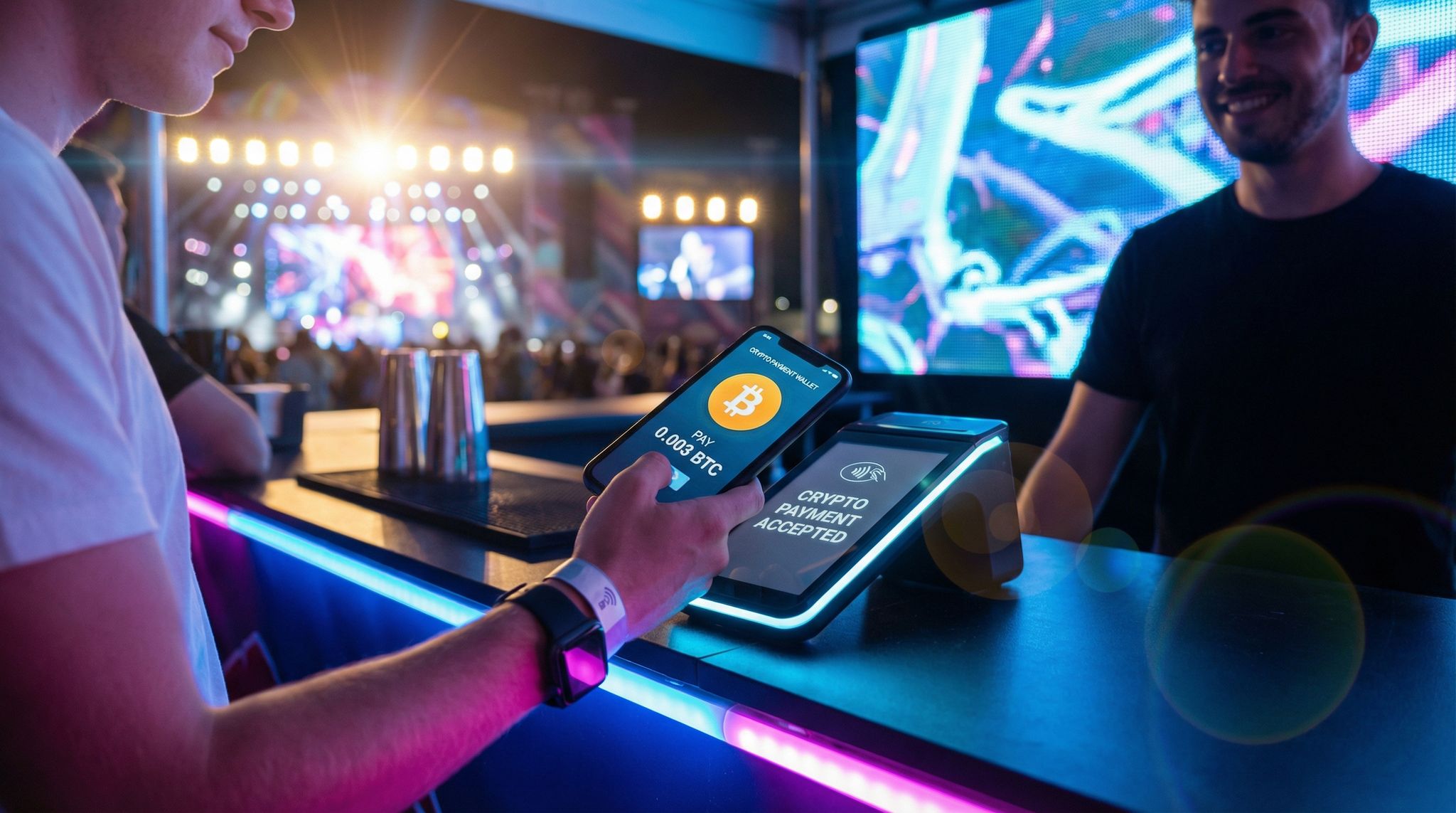
Many tech investments boost on-site revenue by encouraging attendees to spend more freely. A prime example is going cashless with RFID/NFC payments. When festivals and venues replaced cash with contactless wristbands or mobile payments, they consistently saw attendees spend more. Why? Cashless systems remove friction (no need to find ATMs or fumble with bills) and speed up transactions. In fact, events that switched to RFID cashless have reported 15–30% growth in on-site spending, a trend observed in real-world cashless implementation data and revenue increase statistics. One boutique UK festival saw bar sales per head jump ~24% in the first cashless year, demonstrating rapid transaction speed benefits. Faster service means each attendee can buy that extra drink or merch item without abandoning the queue.
Just as importantly, cashless tech can handle volume at peak times. If a manual point-of-sale could serve 10 customers a minute, and a tap-and-go system doubles that to 20 (as some vendors achieved with less friction in making payments), you’re effectively doubling your potential sales per minute at the bar or merch stand. Over an evening, that easily becomes tens of thousands in additional revenue that would have been lost as unserved demand in long lines.
Mobile ordering apps and advanced event POS systems offer another avenue to higher spend. Imagine an app that lets attendees order food from their seat or receive push notifications about limited-edition merch drop – these convenience features drive impulse purchases. Modern event POS strategies focus on shorter lines and more points of sale, using tablets or self-service kiosks, which have been shown to increase concession sales throughput dramatically through reduced friction and faster lines. When forecasting revenue gain here, look at your current per-attendee spend (e.g. $40 average). If tech can reasonably bump that to $45 by capturing more impulse buys and cutting wait times, multiply that $5 gain by your attendance to project the revenue upside.
Unlocking Sponsorship and Exhibitor Value
Event technology can also open up new revenue streams from sponsors and exhibitors. Sponsors in 2026 are hungry for data and interactive exposure – and they’ll pay for it. If your new tech (mobile app, RFID, etc.) provides rich engagement metrics or novel brand activations, you can justify higher sponsorship fees. For instance, a conference app that includes sponsored polls or a matchmaking feature gives sponsors valuable leads and impressions. You might forecast that integrating a networking app, which lets a sponsor be “presented by” throughout the experience, could net an extra $10,000 from that sponsor due to the enhanced value. Case in point: organizers have successfully sold tech-enabled sponsorships like AR treasure hunts or RFID gamification that command premium prices, as detailed in venue sponsorship strategies for revenue growth. When building your case, highlight how the tech will deliver measurable ROI to the sponsors (e.g., number of scans at an RFID-enabled booth, or thousands of logo impressions in the event app). If sponsors see more ROI, they’ll invest more in your event and return next year.
For trade shows and exhibitions, similar logic applies to exhibitor ROI. Lead-capture apps, smart badges, and interactive kiosks help exhibitors generate more leads and track engagement. If you can show that by renting an event lead retrieval system, your exhibitors might each capture 20% more leads (which they value highly), you could potentially charge higher booth prices or sell more booths because your show is known to deliver ROI. That, in turn, boosts your revenue. In your financial model, you might add an extra $500 per exhibitor in value due to tech – which for 100 exhibitors is $50,000 total. These numbers get the attention of sales VPs and sponsorship directors, linking tech investment to top-line growth.
Revenue Gain Cheat Sheet
To summarize the major ways tech can drive revenue, here’s a quick reference table of common technology investments and their potential revenue lifts with tips on forecasting each:
| Technology Investment | Potential Revenue Lift | How to Forecast/Calculate |
|---|---|---|
| Data-Driven Ticketing & Marketing | Higher ticket sales (5–15% boost in sales volume) | Use past data and benchmarks; e.g. if personalized marketing increases conversions from 2% to 3%, that’s a 50% lift in conversion – apply to your funnel. Start conservative (e.g. +5% tickets) unless you have case studies for more. |
| RFID Cashless Payments | Increased on-site spend per head (10–30%+) | Look at current avg spend (e.g. $50). Assume a modest bump (say 15%) from reduced friction and faster lines, based on industry examples of implementing tap-and-go convenience. Multiply new avg spend by expected attendees for projected sales. |
| Hybrid/Virtual Event Platform | New revenue streams (virtual tickets, VOD sales, sponsorship) | Estimate remote attendance uptake: e.g. 10% of your in-person count might join online at a lower ticket price. Add sponsor revenue if offering virtual branding. Calculate virtual ticket income + any added sponsor fees. |
| Mobile App with Engagement Features | Boosted sponsorship and upsells (extra sponsor $ + attendee purchases) | If a sponsor pays to be in-app, count that fee. Also project incremental sales from app-driven promotions: e.g. if push notifications or in-app purchases could get just 5% of attendees to buy a $20 add-on, that’s additional revenue. |
| Advanced Analytics & CRM Integration | Higher lifetime value (LTV) of attendees (long-term) | Harder to immed. forecast; assume improved retention or repeat attendance (e.g. +5% next event attendance from loyalty efforts). Calculate the future ticket revenue from those retained attendees. |
By laying out assumptions this way, you show exactly where the growth will come from. The table can be adjusted to your event’s specifics, but it demonstrates a thoughtful approach to predicting revenue gains – something any CFO or finance committee will expect to see.
Quantifying Efficiency and Cost Savings
Automating Processes to Save Labor
Cost savings are the flip side of ROI, and automation is often the hero here. Implementing technology to automate manual tasks can lead to significant labor savings. For example, replacing a paper check-in process with a robust RFID access control system means fewer staff needed at entrances scanning tickets – one person with a scanner can often do the work of three people manually checking IDs and tickets. Similarly, using an all-in-one event management software that automates communications, scheduling, and reporting can save hundreds of staff hours in planning and coordination, freeing up your team to focus on experience and enhancing attendee satisfaction. In building your case, identify specific tasks that will be automated or streamlined, then estimate the labor hours saved and assign a dollar value.
Suppose an event ops team spends 200 hours manually creating schedules and sending vendor emails; a new software that automates much of this might cut that to 50 hours. That’s 150 hours saved. If your average staff cost (fully loaded) is $30/hour, that’s $4,500 saved per event just in planning. On event day, consider automation like cashless payment reconciliation – no nightly counting of cash drawers, fewer accounting staff needed to tally sales, less security required for cash transport. These efficiencies add up. Some organizers have seen operational cost reductions of 30–50% by eliminating labor-intensive steps and manual errors through tech, leading to optimization and future event improvements. When presenting these numbers, it’s wise to be a bit conservative and use a range or a lower-end estimate to stay credible. Even a 20% labor reduction across your crew can be compelling in dollar terms.
Faster Entry and Shorter Queues (Time is Money)
Speeding up attendee entry and reducing queue times isn’t just about making people happy – it has real cost and efficiency implications. Faster entry systems (e-ticket scanning, RFID gates, biometric check-ins) can reduce the number of gate staff or security personnel needed to handle peak crowds. If your old system could process 500 people per hour per gate and the new one can handle 1,000, you might halve the number of lanes or staff required, or handle a much larger crowd with the same resources. This directly translates to savings in staffing costs for entrances. For instance, if you normally hire 50 temp staff for 4 hours to manage lines and you can cut that to 30 staff because of efficiency, that’s 20 fewer people * 4 hours * $15/hour = $1,200 saved on one event’s front-of-house alone.
Beyond staffing, shorter lines can shrink venue rental overtime costs. Many large venues start charging overtime or additional fees if crowds aren’t cleared or processed by a certain time. By accelerating entry and avoiding delays (especially at festivals or stadiums), you mitigate the risk of those penalties. Plus, when attendees get in faster, they have more time to start spending on concessions and merch, which loops back to revenue – a point not lost on ROI calculations. A case study from a major festival showed that by using streamlined RFID entry, gates were cleared an hour faster, avoiding extra staffing and giving attendees 60 more minutes inside to spend money. The dual benefit (cost saved on staff + extra sales from time gained) strengthened the ROI argument for that access control upgrade considerably.
Reducing Errors, Waste, and Leakage
Technology’s knack for reducing human error and preventing losses is another source of cost savings. Think of how many little inefficiencies or mistakes cost money during an event: mis-scanned tickets causing refunds, miscounted inventory leading to stock over-ordering, or even employee theft of cash. The right systems can tighten these up:
- Inventory Management and Waste Reduction: Modern POS systems and vendor management tools track inventory in real time, helping avoid overstocking (which wastes money on unsold goods) or understocking (missed sales). For example, if data shows that by 8 PM you’ve only sold 50% of the pizza at a food stall, you can stop cooking more and avoid having to toss out unsold food – saving perhaps a few thousand dollars in waste. Over multiple vendors and days, this optimization can cut food/beverage costs by 10% or more.
- Cash Handling and Theft: Whenever cash is involved, there’s risk – theft, counterfeit bills, miscounting. Shifting to cashless payments eliminates most of these issues. Organizers have found that removing cash not only boosts revenue but also saves on security and shrinkage. No cash means you don’t need armored transport or as many security guards for the safe room, etc. One vendor noted that cashless systems can shrink typical cash handling costs (security staff, overtime for counting) by up to 30%, according to cashless ROI analysis. And by virtually eliminating cash theft or loss, you might save a percentage of sales that would have “gone missing” otherwise (often event cash loss can be 1-2% in worst cases, which on $500k sales is $5-10k saved).
- Ticket Fraud Prevention: Advanced ticketing platforms with secure QR codes, blockchain tickets, or RFID entry can prevent unpaid entries via fake or duplicated tickets. Stopping even 100 unauthorized attendees at a $100 ticket event saves $10,000 in unrealized revenue leakage. If your business case includes a new ticketing system, include the benefit of reduced fraud chargebacks and fewer comped entries due to mistakes, which have direct dollar values.
- Compliance and Error Fines: Automation helps ensure compliance tasks (like timely permit filings, labor law adherence for scheduling, GDPR-compliant data handling) are done correctly, avoiding fines. For example, scheduling software that warns you if staff are approaching overtime limits can save you from hefty labor law penalties (and staff burnout). While this might be rare, you can cite it as risk avoidance – e.g., “This system helps avoid potential overtime fines of $X, saving both money and reputation.” It shows foresight in your plan.
Overall, by digitizing workflows you get more accurate data and fewer expensive mistakes. To quantify these savings, look at past pain points: How much did we overspend on overtime last year? How many refunds or freebies did we issue due to errors? How much inventory ended up in the dumpster? Then credibly argue how the new tech cuts those numbers by a certain percentage. Even small percentages of a big budget can mean a lot – a 5% efficiency gain on a $1 million operational budget is $50k saved.
Cutting Energy and Overhead Costs
Increasingly, technology is leveraged to save on facility and overhead costs at event venues. If your tech investment includes venue infrastructure (like IoT sensors, smart lighting, or energy management systems), the ROI case should count utility savings. Smart HVAC and lighting systems can significantly trim energy bills. For instance, IoT occupancy sensors tied into HVAC can adjust climate control dynamically – arenas and convention centers have reported double-digit reductions in energy costs after implementing these systems, illustrating the impact of smart venue infrastructure and automation for operations. Industry estimates suggest 20–30% savings on heating/cooling costs by using adaptive, data-driven controls instead of fixed schedules. If your venue spends $500,000 a year on power, a 20% cut is $100,000 straight to the bottom line. That’s huge and very ROI-friendly.
Smart lighting (LED upgrades with automated dimming when areas are unoccupied, etc.) similarly slashes electricity usage without affecting guest experience, as intelligent lighting control becomes standard. And IoT maintenance systems can reduce repair costs by catching issues early (e.g., a sensor that flags a cooling fan issue before it causes a projector to overheat and fail). Predictive maintenance means equipment lasts longer and you avoid emergency repair fees. While it’s hard to forecast exactly, you might include a line like “Expected reduction in maintenance and equipment replacement costs: 10%, based on fewer emergency fixes and prolonged asset life.” Over time, this can be validated in post-event audits where predictive maintenance yields cost savings and operational efficiency.
Staffing overhead can also drop from tech-driven efficiency. For example, implementing an IoT-based crowd monitoring might allow you to optimize staffing (cleaning crews, security patrols) by deploying them based on real-time crowd density rather than fixed rotations. If sensors show one area is light on people, you can redeploy staff to busier zones or let some go early, trimming labor waste. These micro-optimizations contribute to overall cost control. They might only save a few thousand per event here or there, but adding them up across categories strengthens the ROI argument. Your business case should definitely tout “automation drives efficiency without cutting corners” – meaning you can save money while maintaining or even enhancing the attendee experience, ensuring cost savings do not compromise quality.
Converting Attendee Experience to Financial Value
Repeat Attendance and Lifetime Value
Happy attendees become loyal attendees – and loyalty is immensely valuable. When building ROI projections, consider the lifetime value (LTV) of an attendee, not just their single-ticket purchase. If a new technology elevates the experience and leads to a higher retention rate for future events, that future revenue is part of the return. For example, let’s say historically 30% of this year’s attendees come back next year. If improved tech-driven satisfaction can bump that to 35%, that’s thousands of extra tickets sold for the next edition that you can attribute to this investment. In broader business terms, it’s well known that a small increase in customer retention can yield large profit gains – Bain & Company famously found that a mere 5% increase in customer retention can boost profits by 25–95%, a statistic often cited in customer retention strategy research. Apply this concept to events: retaining loyal attendees lowers your marketing costs (you don’t have to spend as much to convince them) and often these returning fans spend more and bring friends along.
You can attempt a rough calculation: if 5,000 people attended this year and a new mobile app or engagement platform helped drive satisfaction up (as evidenced by, say, post-event surveys or NPS scores improving), perhaps 250 more people will return next time than otherwise would have. 250 extra returning customers x $50 ticket = $12,500 more revenue next year plus the likelihood they tell others (adding new customers for free). While this is somewhat speculative, it’s reasonable to include in ROI discussions as a longer-term benefit. Just make sure to back it with any data you have (survey intent to return, etc.) or industry benchmarks. Also highlight that improving loyalty has a compounding effect – it can pay dividends over multiple event cycles, which CFOs understand in terms of customer lifetime value.
Word-of-Mouth and Social Boost
Investments in attendee experience can also indirectly save marketing dollars by turning attendees into promoters. In the age of social media, a delighted attendee will broadcast their joy, providing free publicity and a credibility that money can’t buy. How to quantify this? One way is through the lens of Cost Per Acquisition (CPA) or marketing spend. If your superb event app or immersive tech experience gets people posting and raving, you might not need to spend as much on ads for your next event because organic buzz drives sales. Perhaps historically you spent $20 in marketing per ticket sold; with stronger word-of-mouth (thanks to that awesome tech-enhanced experience), maybe you project you can reduce that to $18 per ticket because more people buy due to peer recommendations. Spread over thousands of tickets, that’s a sizable cost saving.
Another angle: If your Net Promoter Score (NPS) increases due to the tech (say NPS rises from 40 to 50 after introducing a popular event app), research would suggest your referral rate and word-of-mouth sales will increase along with it. You could conservatively attribute a few percentage points of new ticket sales next year to this improved word-of-mouth. It’s not an exact science, but including a narrative like “Our investment will turn attendees into brand advocates, reducing reliance on paid advertising (estimated $X savings in marketing for the next event)” adds weight to the intangible ROI. It shows the decision-makers that you’ve considered how experience quality today lowers acquisition costs tomorrow.
Premium Experiences and Upsell Opportunities
Enhanced technology can enable premium offerings that directly translate to higher revenue per attendee. For instance, if your event app or registration system allows easy upselling, you might create new VIP upgrades, add-on experiences, or merchandise pre-sales that weren’t feasible before. Attendee experience tech (like personalized itineraries, concierge chatbots, AR photo ops) can make an event feel more exclusive – which in turn justifies higher ticket tiers or pricing in the future. When you wow attendees, you elevate your brand, and potentially you can charge more next time, improving profit margins.
In a business case, you can include projections for upsells: maybe 5% of attendees will opt for a $100 VIP package if the app makes it easy to purchase and deliver extra value (special access, bonus content) – that’s $5 extra per person on average, which adds up. Or if you deploy RFID tech that doubles as a loyalty program, attendees might accumulate points during the event and be more inclined to buy that extra merch item to reach a reward threshold. All those mechanisms hinge on a better experience design through tech.
Consider also the price elasticity that comes with improved experience. If post-event surveys and social chatter indicate your event experience is top-notch (thanks in part to tech), you gain pricing power. Even a small increase in ticket price (which might have been risky when experience was mediocre) can stick if people perceive high value. For example, increasing a ticket from $50 to $53 might have no impact on demand if the experience justifies it – that’s a 6% revenue increase with zero additional cost. When tech boosts satisfaction, you earn this kind of goodwill. It’s tricky to claim in advance, but you might note “Better experiences support premium pricing strategies in future editions, contributing to ROI in long-term revenue growth.” It primes stakeholders to see experience investment as a path to healthy pricing power, not just a cost.
Attracting Sponsors with Happy Audiences
Never forget that sponsor ROI is tightly linked to attendee experience. Sponsors want to be associated with events that attendees love, because positive experiences create positive brand associations. If your new technology (say an interactive LED wall, AR game, or smart badge system) delights the crowd, that story can be sold to sponsors. Essentially, you’re improving the product you offer sponsors: an engaged, happy audience that will interact with sponsor activations more.
While this benefit is somewhat indirect, you can make it tangible by pointing to sponsor retention or growth. “Last year, our attendee satisfaction was 80% and we retained 70% of sponsors. With enhancements like a networking app and live engagement metrics, we expect satisfaction to hit ~90%, which should help us retain at least 85% of sponsors.” If each returning sponsor means $X for next year, that’s a concrete financial impact. Additionally, you might project new sponsors attracted by innovative tech features – for example, a sponsor might specifically come on board to brand your event’s new VR experience or charging lounge. In monetary terms, perhaps “Interactive tech activations could attract 2 new sponsors at $10k each, adding $20k revenue.”
To reinforce this, consider internal data or case studies: events that introduced new high-tech elements often see increased sponsor satisfaction and renewals, as discussed in venue sponsorship strategies. Sponsors have their own ROI to worry about, so if you can show that your tech will boost attendee engagement by 30% (meaning 30% more eyes on their activation or 30% more leads captured), you can sometimes translate that into higher sponsorship fees. All of this flows back to your event’s ROI in the form of stronger and more predictable sponsorship income – a critical part of many event budgets.
Building the Business Case Step by Step
Step 1: Identify All Costs (Direct and Hidden)
Begin your ROI build-out with a comprehensive list of costs. Gather quotes and estimates for the obvious direct costs – software licenses, hardware devices, implementation fees from the vendor. Then add every hidden cost you can think of, as discussed earlier. This means including personnel time (calculate how many staff hours will go into setup, training, content creation for the new platform, etc., and multiply by hourly wage), any required travel (like flying out a specialist or going to see the system demo), and contingency funds. If the tech is expected to be used for multiple events over time, decide whether to amortize the cost or show it as an upfront lump sum in your calculations (often it’s useful to do both: “$X upfront, which we expect to spread value over Y events, effectively $X/Y per event”).
Create a cost table if needed, and don’t shy away from the total. A thorough cost accounting looks professional, especially if you footnote assumptions (e.g., “assuming 5 staff for 3 days of training = 120 hours”). For example, your cost breakdown might look like this:
- Software license (1 year): $50,000
- Hardware (50 handheld scanners + 5 kiosks): $25,000
- Implementation services (vendor onboarding): $10,000
- Integration development (API work to connect to CRM): $5,000 (estimated 50 hours of developer time)
- Staff training time: $2,000 (100 total hours of staff time, valued at $20/hour)
- Contingency (10%): $9,200
- Total Year-1 Investment: $101,200
Listing these out builds credibility. It shows you’re not “lowballing” the cost just to get approval, which in the past has led to nasty surprises and broken trust once actual expenses hit. Stakeholders will trust your ROI more if they trust your cost side of the equation. Transparency is key: if some costs are uncertain, state your assumptions. Better to slightly overestimate and come under budget than the opposite. Once you have the total costs, that’s the baseline for evaluating benefits.
Step 2: Project the Benefits in Detail
This step is the heart of your business case: quantifying the benefits. Using the categories we covered (revenue gains, efficiency savings, etc.), lay out each benefit with numbers and how you arrived at them. It often helps to mirror the cost breakdown with a benefits breakdown. For instance:
- Increased ticket sales: +$40,000 (expect 5% more tickets sold via improved marketing and smoother online checkout – from 10,000 to 10,500 tickets at $80 each)
- Higher on-site spending: +$60,000 (15% boost in per-cap spend from cashless payment adoption; historically $50/head, projecting $57.5/head over 8,000 attendees)
- Sponsorship uplift: +$15,000 (two sponsors upgraded packages by $7.5k each to feature in new event app and RFID activations)
- Labor cost savings: +$25,000 (200 fewer temp staff hours needed for entry and cash handling, and 100 fewer planning hours due to automation, see calculation)
- Printing and collateral savings: +$5,000 (digital ticketing and apps replacing physical tickets, brochures, signage)
- Total Benefits: $145,000
Notice we included both new revenue and cost savings together in the benefits list. The sum of these is the total economic benefit of the tech. Make sure to explain how you got each number: reference industry stats or pilot results whenever possible (e.g., “this 15% spend lift is in line with what other festivals achieved going cashless, according to RFID implementation case studies”). If you ran a small trial or have a comparable event’s data, highlight that (“our spring event saw ~10% higher merch sales after introducing mobile ordering, so we’re using 10% in this forecast”). Always err on the side of conservative, defensible numbers rather than optimistic ones. A CFO will likely haircut your projections anyway, but if you show you already took a conservative stance – that’s golden.
For intangible or long-term benefits that are hard to peg with a number, you can still include them in narrative form or as qualitative benefits. For example, “Improved attendee satisfaction (as evidenced by survey scores) which is expected to enhance brand loyalty and repeat attendance.” You can’t put a direct dollar value easily, but mentioning it ensures the full value of the investment is appreciated. Sometimes business cases use two columns: Quantified Benefits and Strategic Benefits to separate the dollar-figures from softer impacts. Use whatever format makes sense for your stakeholders, but capture everything meaningful.
Step 3: Account for Risks and Alternatives
A robust business case doesn’t ignore risks – it addresses them head on. In this step, acknowledge the factors that could affect the ROI and how you will mitigate them. Common risks for event tech ROI include:
- Lower than expected adoption: If attendees or staff don’t use the technology fully, benefits will fall short. (We’ll mitigate this with thorough attendee adoption strategies and staff training to ensure high uptake.)
- Technical issues or downtime: If the system fails during the event, it could reverse the efficiency gains or even cause revenue loss (e.g., if a payment system goes down). (Mitigation: choose a proven vendor, conduct load testing and backups, as we discuss in our plan to use scalable infrastructure to prevent crashes during peak demand. Also have a fallback process in place.)
- Cost overruns: Implementation might cost more than anticipated or take longer. (Mitigation: we included a 10% contingency in budget, will do a pilot phase to catch issues early, and negotiate fixed-fee implementation where possible.)
- Data security/GDPR issues: New tech means new data flows – a breach or compliance issue could be costly. (Mitigation: ensure vendor is compliant, perform security testing, have a clear privacy policy. Possibly mention insurance coverage/policies.)
- Staff learning curve: Productivity could dip initially as staff learn the system. (Mitigation: invest in training ahead of event, utilize vendor support, schedule a simulation event run-through.)
By outlining these, you demonstrate due diligence. You’re showing the ROI case isn’t blind to reality. In fact, you can even build a worst-case vs expected-case scenario: e.g., “If adoption is only 50% of expectation, then on-site spend increase might be half, say 7.5% instead of 15%. That would reduce our benefit by $30k. Even in that scenario, total benefits ($115k) still exceed costs ($100k), giving a slight positive ROI. In the expected scenario, we have a substantial ROI.” This kind of sensitivity analysis reassures stakeholders that even if things don’t go perfectly, the investment isn’t a bust. And if things go better than expected (best-case), the upside is even greater.
Having considered alternatives is also key. Explain briefly why this specific technology or approach is the best choice. Did you evaluate other vendors or options? If so, what tipped the scales (better ROI, more capabilities, a successful case study elsewhere)? For example: “We considered keeping the status quo (do nothing) – but that carries its own cost of missed revenue and rising labor inefficiencies. We also looked at Vendor X – cheaper license but lacked the integrated payment solution that drives a big part of our revenue gain, making its ROI actually weaker.” This preempts the question, “Why not go with a cheaper or different solution?” and shows that the recommended tech yields the best bang for the buck.
Step 4: Calculate ROI and Payback Period
Now comes the moment of truth – crunching the ROI. Take the total benefits and total costs you projected and plug them into the ROI formula. For example:
- Total Investment: $110,000 (all costs year 1)
- Total Benefits: $185,000 (all quantifiable gains year 1)
- Net Gain: $185k – $110k = $75,000
- ROI: $75k / $110k = 0.68, or 68% ROI in the first year/event
If that ROI is above 0% (i.e., benefits > costs), it means a positive return. In our example, 68% ROI means for every $1 spent, you get $1.68 back (your dollar plus 68 cents profit). Present this number clearly and proudly if it’s positive. If it’s below 0% initially but you expect it to become positive over time (maybe a large upfront cost with multi-year benefit), then emphasize the payback period: e.g., “Payback in 1.5 events, ROI by second year is 120%”. You can even include a small table or graph for multi-year projections:
| Year | Investment | Benefits | Net Cash Flow | Cumulative ROI |
|---|---|---|---|---|
| Year 1 (2026) | $110,000 | $85,000 | -$25,000 | -23% (negative in first year) |
| Year 2 (2027) | $20,000 (maint.) | $100,000 | +$80,000 | +50% (cumulative) |
| Year 3 (2028) | $20,000 (maint.) | $95,000 | +$75,000 | +118% (cumulative) |
In this hypothetical, the initial ROI is negative, but by Year 2 it’s positive and by Year 3 the cumulative ROI is very attractive. This format is useful for large capital items or enterprise software that have long-term use. Many CFOs will appreciate seeing the timeframe for full return: “The solution will pay for itself within 6 months” or “We break even after selling 300 extra tickets, which we are confident of based on pre-sales data.” If you can pinpoint a break-even point (in time or in units sold), do it – it provides a concrete goalpost.
Make sure to double-check your math and consider adding a small buffer or stress test: “Even if our sales bump is 10% instead of 15%, ROI remains positive at ~20% and payback is under one year.” Such statements show that the business case isn’t fragile and can withstand some variance. The output of this step – the ROI percentage and payback – is the headline that executives will remember, so it needs to be solid and credible.
To illustrate how an ROI calculation might look in practice, here’s a simplified example of an ROI breakdown for a cashless payment system at a festival:
| Expense/Benefit Item | Amount (USD) | Notes |
|---|---|---|
| Investment Costs: | ||
| Cashless system platform (vendor fee) | $50,000 | Annual license and setup for RFID payment system |
| RFID wristbands (50,000 attendees @ $1) | $50,000 | Unit cost $1 each, including spares |
| Hardware & network upgrades | $20,000 | POS terminals, network routers, offline servers |
| Staff training & onboarding | $5,000 | Training sessions and materials |
| Total Investment (Year 1) | $125,000 | |
| Benefits: | ||
| Increased F&B and merch revenue (+20%) | $150,000 | From $750k to $900k in sales due to 20% higher spend, based on cashless festival benchmarks |
| Labor savings (cash handling ops) | $30,000 | Fewer cashier staff and no overnight money counting (approx 300 staff hours saved) |
| Reduced cash leakage/theft | $5,000 | Lower shrinkage (assumed ~0.5% of cash sales) |
| Shorter lines = more sales (incremental) | $20,000 | Extra sales captured during peak times that were previously lost |
| Total Benefits (Year 1) | $205,000 | |
| Net Gain (Benefits – Costs) | $80,000 | Positive net return in first year |
| ROI (Year 1) | 64% | ROI = $80k / $125k * 100% |
| Payback Period | 0.6 years | Achieved within the first event cycle |
In this example table, the investment of $125k yields $205k in benefits within the same year (or festival), netting $80k. The ROI is 64% and the payback is well within the first event (0.6 means a little over half the event was needed to recoup the cost). Presenting the data in a table like this can make it easy for stakeholders to digest the components of ROI. Tailor your own table to fit your scenario, and include it in the business case document or slide deck for maximum clarity.
Step 5: Align Benefits with Strategic Goals
After the number-crunching, circle back to the bigger picture: connect these ROI benefits to what the organization cares about strategically. If the company’s priority is growth, emphasize how the tech enables scalable attendance and new revenue streams. If it’s fan experience, highlight the satisfaction scores and brand loyalty angles. Often, ROI alone might not seal the deal if leadership has other concerns (e.g., protecting brand image, innovating in the market, etc.). So explicitly state how this investment supports those top-level goals:
- “Enhances attendee experience and brand reputation:” We expect higher NPS and social media sentiment, strengthening our brand. This aligns with our goal to be the most talked-about festival in the region, not just immediately boosting revenue but attracting future business.
- “Drives long-term growth:” The data and infrastructure we gain will help us launch new event products (like a winter edition or spin-off event) faster, using the same platform – fueling growth beyond this one event. The ROI numbers don’t even capture that future expansion capability.
- “Keeps us competitive and resilient:” If competitors are adopting similar tech, this ensures we don’t fall behind in attendee expectations. Also, the hybrid capabilities give us a fallback to reach audiences if in-person is disrupted (we’ve learned from the pandemic era that tech-driven flexibility is key to financial resilience).
- “Improves operational sustainability:” In line with our mission to be efficient and sustainable, the cost savings (like reduced waste and energy use from smart systems) not only save money but also reduce our environmental footprint. This can be positive for brand and even unlock opportunities (some sponsors/grants look for sustainability efforts).
By aligning with strategic goals, you elevate the conversation from just “this tech makes us $X” to “this tech makes us $X and moves us closer to our vision.” It frames the spend as a strategic investment, not just a tactical expense. Executives respond well to that because it shows you’re not just thinking short-term dollars, but long-term direction – while still grounding it in financial reality.
Finally, wrap up the business case document or presentation with a concise summary of the ROI and a call to action. For example: “In summary, investing $125,000 in [Tech Solution] is projected to generate $205,000 in quantifiable benefits in the first year, an ROI of ~64%, while significantly improving attendee satisfaction and operational agility. We recommend proceeding with this investment to secure these gains and position our event for continued growth and innovation.” This kind of conclusion makes it easy for the decision-makers to say “Yes, let’s do it.”
Presenting ROI to Stakeholders
Tailoring the Message to Decision-Makers
When it comes time to present your business case, know your audience. A CFO, CEO, event director, or board member each might care about slightly different angles. Tailor your emphasis to hit their hot buttons:
- CFO / Finance: Lead with the numbers – ROI percentage, payback period, and the impact on the bottom line. Use clear financial terms and show that you’ve done risk analysis. The CFO will appreciate that you speak their language and have vetted the financials thoroughly. For example: “This investment yields a 50% annual ROI and will pay for itself within the first two major events, thereafter contributing an additional $50k to profit each year.” That’s music to a CFO’s ears if credible.
- CEO / Executive Director: They will be interested in ROI too, but also how it ties to strategic direction and competitive advantage. Frame the tech as something that keeps the organization ahead of the curve or enables future opportunities. E.g., “Beyond the immediate financial return, this positions us as an innovative market leader, which is crucial for attracting sponsors and top-tier talent to our events.” CEOs think about positioning and long-term sustainability.
- Operations Director / Event Manager: Focus on how it makes the event run better and makes their life easier, in addition to cost savings. They will nod along to points about reliability, faster processes, and fewer headaches. “This system will drastically cut on-site troubleshooting – for example, no more manual cash reconciliations at 2 AM – freeing the ops team to focus on attendee experience.” This stakeholder will later be an ally in implementation, so getting their buy-in with practical benefits is key.
- Marketing/Sales Director: Emphasize how it boosts attendee engagement and provides new marketing data or sales opportunities. “We’ll capture rich data on attendee behavior that marketing can use for personalized campaigns, likely increasing conversion for next event’s ticket sales. And sponsors will love the engagement stats we can provide.” They care about growth and relationships.
By addressing each perspective, you cover all bases. In many pitch meetings, each stakeholder will only perk up when their main concern is addressed – make sure to include those points so they remain supportive. It can help to even mention, “For finance, the ROI is X; for operations, this reduces risk and workload; for marketing, it opens new revenue streams,” showing that you did a 360° analysis of the investment.
Using Data Visualization and Clarity
How you present the numbers is as important as the numbers themselves. Use clear visuals: charts, graphs, and tables that distill the ROI argument in an instant. A few best practices:
- ROI Summary Chart: Consider a simple bar chart showing costs vs benefits, or a pie chart of cost components and benefit components. Visualizing that “benefits bar” taller than the “costs bar” drives home the point immediately. Or a timeline graph showing cumulative breakeven point (“here’s the moment we go into profit”).
- Tables for Detail: Include the kind of table we discussed for ROI calculation, but ensure it’s not too busy. Highlight key figures (bold or use a different color for net gain, ROI%). If handing out a document, tables allow stakeholders to examine the details at their own pace.
- Avoid Jargon and Techno-babble: Write labels and captions in plain language. Instead of “Increased merchandise conversion due to integrated CRM” say “More merch sales from knowing attendee preferences (CRM data).” The clearer it is, the less likely someone will misinterpret or glaze over.
- One-Page Financial Summary: It’s often effective to have a one-page snapshot: total cost, total benefit, ROI%, payback, and bullet points of key assumptions. This could even be an executive summary at the top of your proposal. Time-strapped execs might only read that page – make it count.
- Dashboards for Live Cases: If you already used a small pilot or have live data from a previous event, a quick dashboard screenshot or anecdote can be powerful. For example, showing a real stat – “During our test run, 85% of attendees adopted the app and spent on average $5 more – here’s a snapshot of the live dashboard from that night” – this makes the ROI tangible and less theoretical.
Remember, visuals should support your story, not drown it. Keep slides or documents uncluttered, and be ready to talk through any charts (“as you see on this graph, the blue section represents the net profit we gain after costs”). A well-crafted visual can preempt questions too by illustrating results under different scenarios or the breakdown of where value comes from. And if public speaking or presenting isn’t your forte, practice explaining the charts so you come off confident – confidence in delivery often translates to confidence in the project from the audience’s view.
Addressing Questions and Worst-Case Scenarios
Expect and welcome questions – they show stakeholders are engaged. Common questions might be: “What if your assumptions are wrong?”, “What’s Plan B if this system fails during the event?”, “How certain are we of these sponsor deals?” and so on. You should have thought through these in your risk section, so respond candidly with the facts and mitigations you’ve prepared. For instance:
- Adoption Concerns: “We’ve anticipated the adoption risk. That’s why we’re allocating budget and time to attendee education and incentives for using the new system. Similar events that invested in user adoption saw their expensive tech actually get utilized, ensuring consistent usage and ROI, which is what we plan to replicate. If adoption is slower, our forecast of a 15% spend increase might only be 10%, but even then the ROI stays positive. We also have analog backups to ensure no disruption.” Mentioning the user adoption plan is in place will ease minds.
- Technical Failure: “We are very conscious that a tech failure can be catastrophic – trust us, we’ve all seen when event tech goes wrong and it’s not pretty. That’s why we vetted vendors for reliability and will have on-site technical support during the event. For example, the system can operate offline if the network goes down, and we have spare devices for any hardware malfunctions. The contract also includes 24/7 vendor support. These measures greatly minimize the risk of downtime impacting us.” Mention any guarantees or SLAs (Service Level Agreements) you negotiated – CFOs love to hear that the vendor is contractually obligated to perform or pay penalties.
- Cost Overrun or Timeline: “We built in a 10% contingency on cost and schedule. We also have milestones to evaluate progress. If something threatens to go over budget or time, we have go/no-go checkpoints to avoid throwing good money after bad. And because we chose a market-proven system, we don’t expect significant unforeseen costs. In the unlikely event of a major implementation hiccup, our contract allows us to escalate with the vendor or even exit with minimal penalty.” Essentially, show you have control points and exits – nobody wants to approve a blank check.
- Alternatives and Opportunity Cost: If someone asks “What if we just don’t do this at all?” you should be ready: “If we do nothing, we risk stagnating or even falling behind. For example, without this, we know our entry lines will continue to grow as attendance grows, causing more attendee frustration and possibly turning away late buyers. We’d also leave an estimated $100k on the table in unrealized revenue and savings. Over 3 years, that’s $300k lost potential. So ‘no action’ actually has a cost – it’s just less visible.” This can flip the script by showing not investing is also a decision with ROI (or lack thereof).
Always answer honestly and with data where possible. If you don’t know something, say you’ll find out – but in a fully prepared case, you likely do know the numbers and have backup slides or appendix material if needed (some people include detailed spreadsheets in an appendix just in case a deep dive question comes up). When you handle questions smoothly, it boosts stakeholder confidence. They start to see you not just as someone pitching an idea, but as someone who can manage and execute the idea, navigating any bumps along the way. That’s critical for getting final buy-in.
Highlighting Success Stories and Benchmarks
People are persuaded by evidence that others have succeeded with similar initiatives. Wherever possible, weave in real-world examples or case studies to support your ROI claims. This can be internal (from your own past events) or external (industry examples, vendor case studies, competitor moves):
- Internal Benchmark: If your organization has done a smaller pilot or a related tech upgrade before, mention how that went. “Last year, we introduced a new volunteer management app on a trial basis and saw check-in time for volunteers drop by 50%, saving about $5,000. It gave us confidence to tackle the attendee side with this RFID project, expecting even larger gains.” This shows a track record of ROI-positive tech investments.
- Industry Example: “Festival XYZ implemented the same cashless system in 2025 and their organizers publicly reported a 22% increase in attendee spending and a 30-minute reduction in average queue times. Our assumptions for ROI are actually a bit more conservative than their results, but it illustrates the potential of implementing tap-and-go convenience. If we even get close to their outcome, we’ll be in great shape.” Citing successful implementations at well-known events gives your decision-makers confidence that this isn’t uncharted territory.
- Vendor Case Studies: Many tech vendors publish ROI case studies. Use them, but carefully. “According to the vendor, their clients on average see 40% reduction in processing costs and 15% higher online ticket sales. We tempered these figures a bit for our plan, but it’s good to know others have achieved those numbers.” This shows optimism with realism (acknowledging vendor-provided info might be rosy). If you have references or spoke to another event organizer who uses the system, by all means mention their testimonial or feedback.
- Competitor Actions: If applicable, mention if peers or competitors are adopting similar tech and reaping rewards. “Our main competitor in the market introduced a mobile app with cashless ordering last year. They haven’t shared numbers, but their event satisfaction scores jumped and they’re doubling down with more tech this year. To stay competitive and not be seen as lagging, we should invest now in a solution that actually leapfrogs what others are doing.” Sometimes the fear of missing out (FOMO) or of being left behind can tip the scales, especially for executives concerned with market position.
By peppering your presentation with these anecdotes and references, you make your case more tangible. It’s not just theory – it’s backed by practice. This also subtly shows you’ve done extensive research (E.g., “We know this is the same platform Tomorrowland used for their cashless system” or “The NBA arenas are moving to this IoT model too, seeing big savings through smart venue infrastructure”). It builds your authority and the trustworthiness of the pitch. Just be sure any specific figures you quote are accurate and cited from credible sources (misquoting a stat can undermine things if someone knows the correct number – always double-check). In documents, you might footnote sources, but in a meeting you can just verbally attribute or have the source in small text on a slide.
End your presentation segment on success stories by essentially saying: “If all these others have done it, there’s no reason we can’t achieve equal or greater success given our team and plan.” It’s a confidence booster that can help push the proposal across the finish line.
Ensuring ROI: Monitoring and Post-Event Evaluation
Tracking Key Metrics in Real Time
Winning approval for the tech is only the beginning – to truly prove ROI, you need to track it through execution and afterwards. Set up the tools and processes to monitor key indicators as the event approaches and during the live event. Many modern systems will have dashboards – use them. For instance, if you’ve implemented an event app or cashless system, keep an eye on adoption rates (how many have downloaded the app, how many cashless transactions are happening vs expected). If uptake looks slow, you can intervene during the event – perhaps by making announcements or on-site signage that encourage attendees to use the new features. The goal is to hit the targets you assumed in your ROI model.
Some metrics to monitor in real time:
– Ticket Sales Pace: Are sales tracking to the forecasted increase attributed to marketing tech? If not, maybe adjust campaigns or spend while there’s time. (Our ticket sales forecasting guide can help identify if you’re lagging and need a push.)
– Entry Throughput: Watch scans per minute at gates. If it’s slower than promised by the vendor, deploy more staff or troubleshoot reader issues on the fly. Every extra minute in line can dent on-site spend and experience.
– On-site Spending: Many cashless systems give live sales data. Compare interim figures to last year’s benchmarks by the same hour. If spend per head is lower than expected, maybe some POS locations aren’t working or people need reminders of how to top-up their wristbands, etc. Real-time data lets you react – e.g., opening an extra bar if you see few transactions at one because it’s understaffed.
– Attendee Engagement: If you introduced an app or interactive tech, track usage stats: number of app logins, posts, QR scans at sponsor booths, etc. If engagement is lower than anticipated mid-event, it might be an awareness issue – perhaps send a push notification or have MC announcements to drive engagement. The more people engage, the closer your ROI will get to the mark.
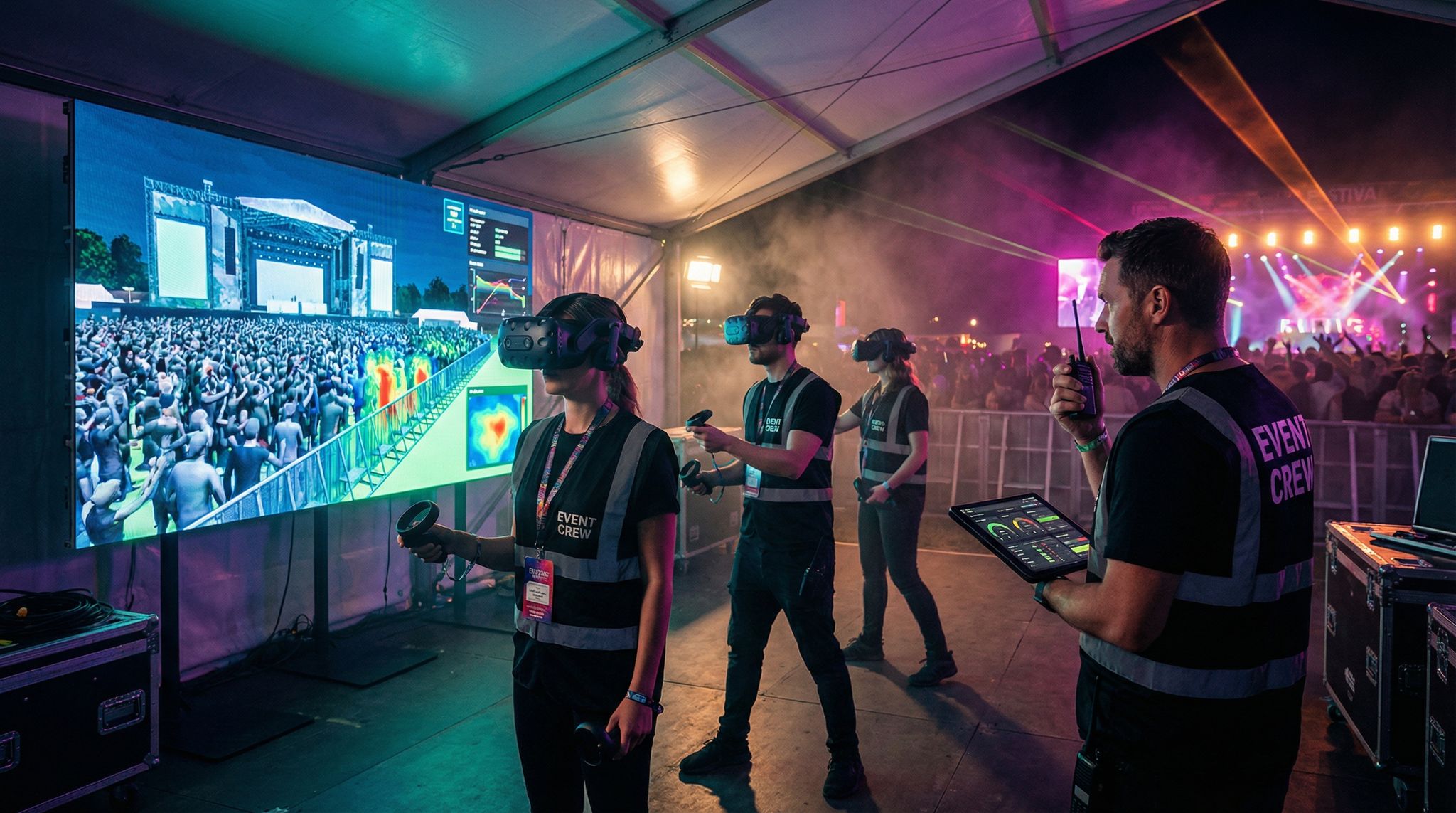
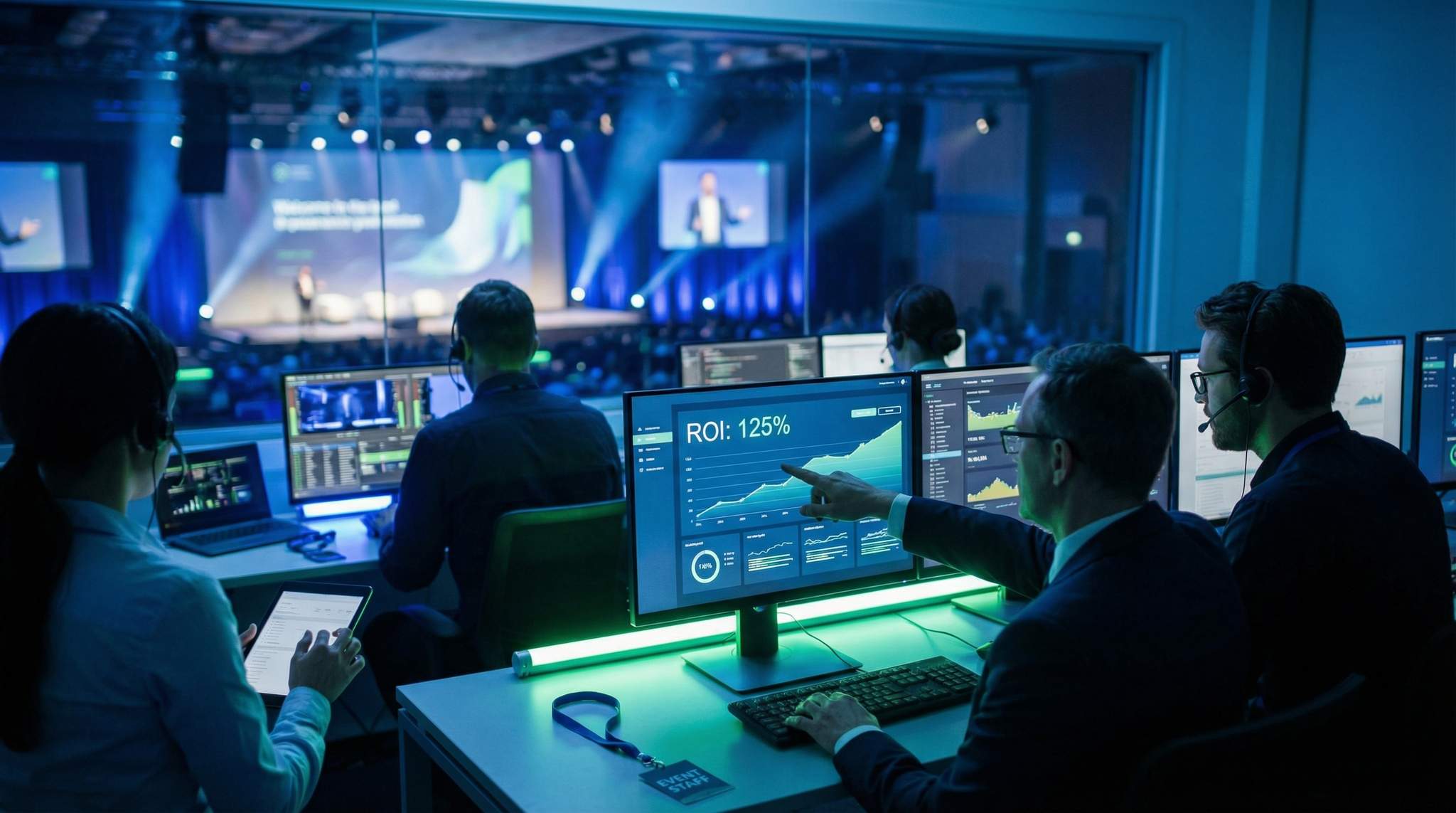
Having a “live event command center” for tech metrics is invaluable. Not only does it help maximize ROI on the fly, but it also shows your team’s commitment to making the promised benefits a reality. It’s like an airline adjusting its course mid-flight to ensure it lands on time. You might even designate someone as the tech ROI watcher during the event, responsible for reporting any anomalies so action can be taken. By the end of the event, you’ll have a trove of data to compare against your business case projections.
Post-Event Tech Audit and ROI Analysis
Once the event is over and the dust settles, it’s time to audit the technology performance and calculate the actual ROI achieved. This step closes the loop and is crucial for learning and accountability. Gather all relevant data: final ticket sales, total on-site revenue, usage logs, cost actuals (did we end up spending more or less on staff? any unexpected expenses?). Then compare these against both your business case projections and the previous event’s baseline if applicable.
Conducting a post-event tech audit will answer questions like those regarding accountability and ROI and learnings from every event:
– Did the RFID entry system speed up entry as promised? Check average entry wait times and throughput data. Calculate how many staff hours were saved or reallocated as a result, holding the system accountable for its performance.
– Did the cashless payments lead to higher spend? Compute the actual per capita spending and see the percentage increase from last year, ensuring the tech provided enough engagement to justify investment. For instance, if it rose from $50 to $58, that’s a 16% increase – how does that compare to the forecast of say 15%? Also, look at any differences in vendor sales patterns (maybe more even sales with fewer peak bottlenecks).
– What was the adoption rate of the new tech? If 90% of tickets were scanned via the new system or 80% of attendees used the app, that’s a success indicator. If it was lower, investigate why – was it lack of promotion, technical hiccups, or certain segments of the audience not engaging? This will inform how to do better next time, ensuring consistent usage and value.
– Did we encounter any tech issues or extra costs? Document any outages, support calls, or last-minute workarounds. For example, if Wi-Fi went down and offline mode saved the day, note that (and perhaps the cost of having that backup, which proved worthwhile). If you had to rent an extra generator last-minute to support the new AV gear, include that in the cost tally you present.
After crunching the numbers, calculate the actual ROI. This is where you see if your forecast held. It might look like: “We projected $145k in benefits; we achieved $130k (90% of target) due to slightly lower merch sales than hoped, but we also underspent on labor by $5k more than expected, partially offsetting. Net ROI came out to 50% vs projected 60%.” Even if you missed the target, owning that and explaining why builds credibility for future cases. If you exceeded it – great, highlight that: “ROI came in even higher at 70%, thanks to an unexpectedly large bump in sponsorship revenue tied to the new tech features.”
Importantly, communicate these findings back to stakeholders. This closes the feedback loop and enhances trust. It can be a brief report or presentation: “Here’s how the tech performed and the value it delivered.” This not only proves that the investment was (hopefully) worth it, but also captures lessons for next time. Maybe your CFO will be delighted to see the numbers in black and white, which will make future approvals easier. And if some benefits fell short, you can discuss adjustments: perhaps the ROI will fully materialize as adoption grows over two events, or a certain feature wasn’t used and you might drop it to save cost next time.
One more angle: a post-event review can sometimes surface new unexpected benefits. Maybe the data collected revealed a new customer segment that marketing can now target (leading to future revenue), or the tech impressed a key sponsor so much they already committed to a bigger deal for next year. These things might not have been in the original business case but absolutely count toward the investment’s value. Document them and include in the overall assessment of ROI.
In summary, the work isn’t done when the event is done. Proving ROI is an ongoing process of measure and learn. By treating the investment as something to be audited and learned from, you instill a culture of accountability. Each event’s tech ROI analysis will make your next business case even sharper – you’ll have your own benchmarks and proof points (“Last time we saw 20% increase; this time we expect similar or better”). It’s a virtuous cycle of data-driven improvement that any stakeholder will respect.
Continuous Improvement and Future Planning
After evaluating the results, use the insights to refine both the technology setup and how you make the case for it. ROI analysis might show certain features delivered big and others weren’t utilized. For example, maybe the RFID access and payments were a hit, but a fancy AR activation had low engagement. That might lead you to reallocate budget next time to what’s proven to work. Perhaps your forecast overestimated merch sales – dig into why (Was inventory the issue? Location of stands? Or do you promote it differently?). By identifying gaps, you can implement changes to capture that missed value in the future.
Continuous improvement steps:
– Vendor debrief: Meet with the technology vendor after the event to review performance. Share the good and the bad – a good partner will help troubleshoot any issues for next time. If a promised benefit didn’t materialize, ask them for advice or improvements. You might negotiate a discount or extra support for the next event if something didn’t go as sold. Conversely, if things went well, this sets the stage for maybe expanding the partnership (but always with ROI in mind!).
– Team debrief: Get input from staff and volunteers who interacted with the tech. They often have practical suggestions to improve efficiency or usage. Maybe staff noticed attendees were confused about how to use the top-up stations at first – next time, better signage or an in-app tutorial could fix that and improve adoption, thereby improving ROI.
– Attendee feedback: Look at attendee feedback specifically about the technology via post-event surveys, social media, or support queries. Did the tech add to their experience or cause frustration? If 95% loved the new app and found it useful (as one might see in survey results confirming attendees found the app useful), that’s great evidence to keep investing. If there were pain points (“The lines were still long at RFID top-up points” or “I didn’t download the app because it wasn’t advertised”), then you have action items. Solving those issues could unlock the full ROI potential next time.
– Update ROI model: Take what actually happened and update your ROI model for future use. Maybe you learned that a 10% spend increase is more realistic than 15% for your crowd, but also learned that labor savings were higher than you thought. Adjust those assumptions in your template. Over time, you develop a very accurate, organization-specific ROI calculator for tech, which makes future business cases even more bulletproof.
– Iterate or Innovate: Decide if you will continue, scale up, or pivot the tech usage next time. Success might encourage you to roll it out to all events or expand features. Shortfall in one area might mean reallocating budget to a different solution that could address the same goal more effectively. Always connect this back to ROI: e.g., “We noticed the networking feature of the app wasn’t used, so we’ll drop that add-on and save $5k, but we’ll invest $3k into better on-boarding of attendees to the app to boost overall use.” Each tweak is aimed at improving the return.
Communicate to stakeholders that this continuous improvement is happening. It demonstrates that approving this investment wasn’t a one-and-done decision but the start of a cycle of optimization. It assures them that their money is being managed responsibly for maximum value. This habit of doing a post-event tech audit and feeding it back into planning institutionalizes ROI discipline within your team, identifying what worked, what failed, and why across every technology component. Over time, it will become much easier to propose new tech investments because you’ve built a track record of delivering results and learning from every initiative.
Proving ROI isn’t a static report – it’s a dynamic process that spans before, during, and after the event. By following through all the way and looping back insights, you truly build that bulletproof reputation: when you say a new technology will be worth it, stakeholders believe you – because you’ve proven it, time and time again.