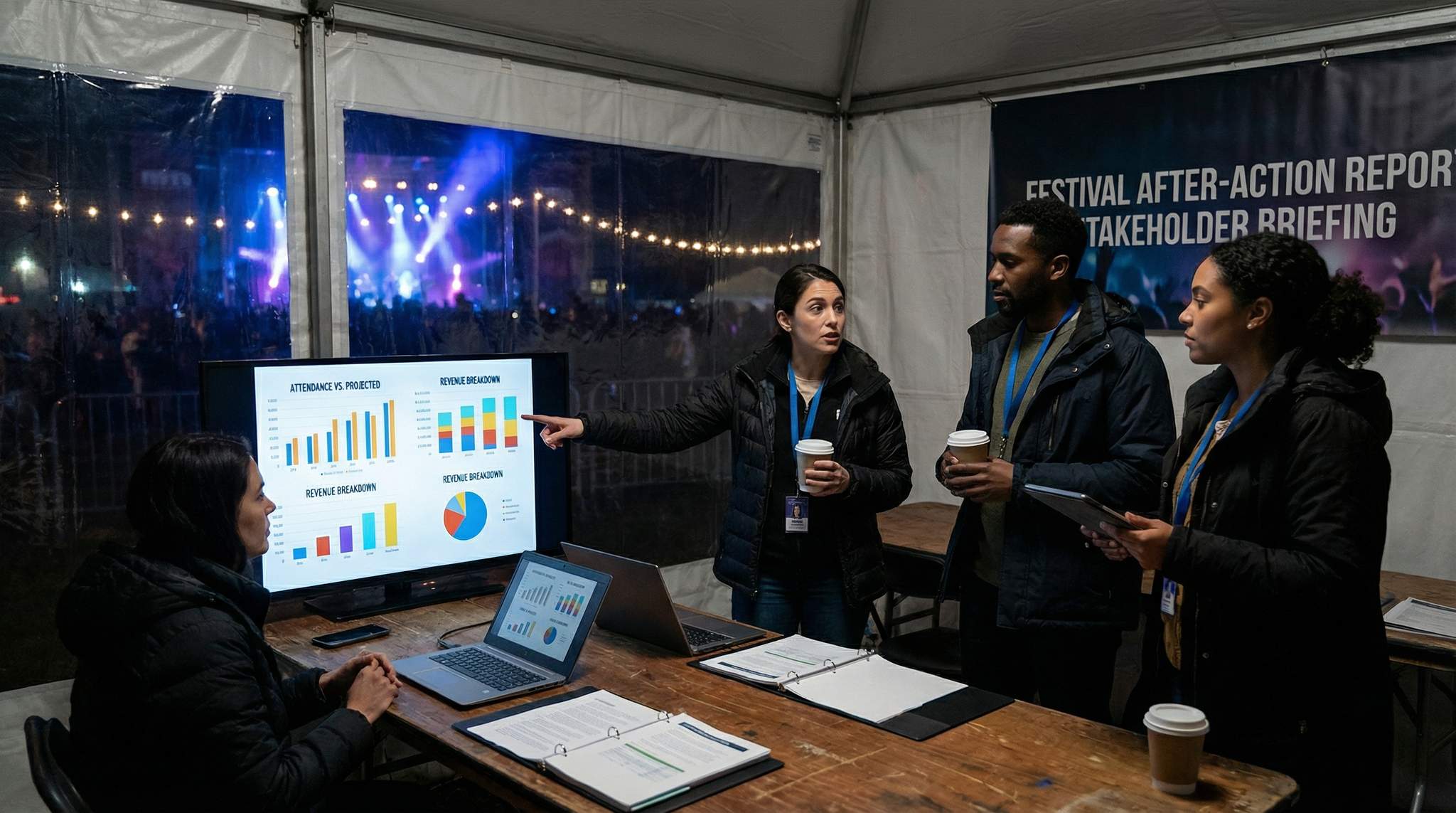
After the final encore and the last attendee has left, a festival producer’s job isn’t quite over. One critical next step is compiling a comprehensive after-action report for stakeholders. Whether the festival was a small community event or a massive international gathering, this formal post-event report serves as both a record of what happened and a blueprint for future improvements. It provides investors, board members, city officials, sponsors, and other stakeholders with a clear picture of the festival’s outcomes and impact. The tone of the report should be honest, data-driven, and solutions-oriented – celebrating successes while candidly addressing any shortcomings. By presenting facts and learnings side by side, the festival organizer demonstrates professionalism and builds confidence for continued or future support.
After Action Report Definition in Event Production
By standard after action report definition, this document is a structured review process that analyzes what happened, why it happened, and how operations can be improved by the production team. In the context of live events, it translates raw data into a strategic post-event evaluation that guides future festival planning, mitigates risk, and streamlines stakeholder communications.
Key Metrics and Outcomes
A stakeholder-focused report must include quantifiable metrics showing how the festival performed against its objectives. These numbers and data points are often the first things stakeholders look for when assessing success. Key metrics help paint a picture of the event’s scope and achievements. Important figures to include are:
– Attendance vs. Projected: Start with how many people attended compared to pre-event projections or ticket sales goals. Break this down further by day or stage if applicable (e.g., peak daily attendance). Highlight whether the festival reached capacity, fell short, or exceeded expectations, and offer context (for instance, if bad weather or a last-minute lineup change affected turnout).
– Ticket Sales & Revenue: Report total ticket revenue and compare it to targets. Include a breakdown of ticket types (VIP, general admission, day passes, etc.) as needed. If revenue was higher or lower than expected, explain contributing factors – perhaps an aggressive marketing push led to strong last-minute sales, or conversely, perhaps high ticket prices kept some would-be attendees away.
– Financial Outcome vs. Budget: Provide a summary of the overall financial performance. This includes total income (tickets, concessions, merchandise, sponsorships) and total expenditures. Compare the actual figures to the original budget. Stakeholders will want to see whether the festival turned a profit or met financial expectations. For any significant variances in costs or revenues, include notes on why they occurred – for example, security costs might have been higher due to new safety measures, or sponsorship revenue came in under target because a partner withdrew. Such context shows that the producer is paying attention to financial details and learning from them.
– Incidents and Resolutions: Document any notable incidents that occurred (such as medical emergencies, security issues, weather disruptions, or technical problems) and how they were handled. Stakeholders appreciate transparency about challenges and, more importantly, want to know that proper procedures were in place and effective. For example, if there was a severe weather delay, note how the team kept attendees safe and how the schedule was adjusted. If any safety incidents happened, report their resolution and any follow-up (e.g., “Minor first-aid cases were handled on-site, and one major medical incident was swiftly managed with emergency services – all outcomes were positive”). Showing that the team managed issues calmly and effectively will reassure partners and officials.
– Marketing Reach and Engagement: Summarize the impact of the festival’s promotional efforts. Include statistics such as the total social media reach (impressions, post engagement, hashtag mentions), email campaign performance, and website traffic leading up to the event. If there were any standout marketing wins – for instance, a promotional video that went viral or a huge spike in follower count – highlight those. Stakeholders often like to see how the festival’s brand awareness grew. Also mention the extent of press coverage: list major media outlets that covered the festival, notable reviews or interviews, and total media impressions if available. Positive press highlights (quoting a glowing review or noting a TV feature) can reinforce the festival’s success.
– Attendee Satisfaction: Include results from any post-event attendee surveys or feedback forms. Report the overall satisfaction ratings, perhaps using a metric like Net Promoter Score (NPS) or simple survey averages on aspects like lineup quality, food options, facilities, and overall experience. Pull out a few insightful statistics (e.g., “85% of attendees rated their experience 8/10 or higher”) and even incorporate a short anecdote or representative quote from attendee feedback if appropriate. If there were common complaints or suggestions, acknowledge them and note how they will be addressed in the future. This shows stakeholders that the festival cares about its audience and is committed to improving.
– Sustainability Achievements: Modern festivals often have sustainability goals – if applicable, outline how the event performed on that front. Metrics might include the amount of waste recycled or composted, reduction in single-use plastics, energy use statistics, or carbon offset programs. For example, if the festival introduced a reusable cup system or donated surplus food, report the outcomes (like “2,000 pounds of waste diverted from landfill”). City officials and sponsors in particular may appreciate seeing these efforts, as they reflect social responsibility.
– Community and Economic Impact: When reporting to city officials or local sponsors, it’s crucial to emphasize the festival’s positive impact on the community. Include data on local economic benefits: estimates of how much the festival contributed to the local economy through tourism (hotel stays, restaurant spending), job creation, and vendor sales. For instance, if it can be determined that local hotels were fully booked or that local businesses saw a surge in customers, those results should be highlighted in the report. Some festivals work with city agencies or consultants to calculate an economic impact figure (e.g., “the festival generated an estimated $5 million in local economic activity”). Even on a smaller scale, community outcomes like charitable donations, cultural enrichment, and partnerships with local organizations should be noted. This information demonstrates that the event provided value beyond just the festival grounds.
Variances, Analysis, and Lessons Learned
Raw data alone doesn’t tell the whole story. It’s equally important to explain why outcomes turned out the way they did. In the after-action report, include a brief analysis of any major variances between projections and actual results, and capture the lessons learned:
Data-Driven Event Marketing
Track ticket sales, demographics, marketing ROI, and social reach in real time. Exportable reports give you the insights to make smarter decisions.
- Budget Variances: If certain costs were significantly over or under the budget, provide an explanation. For example, if marketing expenses were 20% higher than planned, was it due to last-minute advertising to boost ticket sales? Alternatively, if the team saved money on production costs by using a new vendor, that should be noted as well. Explain what unexpected challenges or smart decisions led to these differences. By doing so, the report not only accounts for the numbers but also serves as a financial learning tool for future festivals.
- Attendance & Revenue Gaps: Analyze any gap between expected and actual attendance or revenue. If the festival fell short of its ticket sales goal, discuss potential causes – was it due to inclement weather, a competing event on the same dates, or perhaps pricing that was a bit too high for the market? Conversely, if the event sold out faster than anticipated or exceeded revenue projections, identify what worked – maybe an early artist announcement strategy or a partnership that drove sales. Understanding these causes helps stakeholders trust that the team is critically evaluating performance and will capitalize on successes or address shortfalls next time.
- Operational Lessons: Note any operational surprises and the adjustments they prompted. Perhaps certain vendors ran out of stock, indicating higher attendee consumption than expected – next time, ordering more might be wise. Or maybe entry lines backed up on Day 1, so the team opened more gates on Day 2, quickly solving the issue. Mention these pivots and what was learned from them. This kind of reflection shows a commitment to constant improvement and assures stakeholders that even if something went wrong, it was handled and will be prevented or optimized in the future.
Structuring Your Event Summary Report Template
For producers building their first formal debrief, starting with a reliable event summary report template ensures no critical details are overlooked. While every festival is unique, a standard post event evaluation sample structure typically includes the following core sections:
- Executive Summary: A high-level overview of the festival’s success, major takeaways, and overall stakeholder value.
- Event Overview & Objectives: The original goals (e.g., attendance targets, revenue goals) compared directly against actual outcomes.
- Departmental Breakdowns: Specific evaluations for site operations, talent buying, marketing, ticketing, and security.
- Financial Review: Budget versus actuals, highlighting major variances and revenue gaps.
- Incident Reports & Risk Management: A summary of medical, security, or weather-related incidents and their resolutions.
- Recommendations for Next Year: Actionable steps and operational pivots to improve the next edition.
Using this framework as your baseline evaluation sample allows you to plug in your specific metrics and narrative seamlessly, ensuring consistency year over year.
Planning a Festival?
Ticket Fairy's festival ticketing platform handles multi-day passes, RFID wristbands, and complex festival operations.
Adapting the Template for Different Stakeholders
While a universal event summary report template provides a strong foundation, experienced producers often tailor the final document to suit specific audiences. For instance, a post event evaluation sample prepared for municipal authorities should heavily emphasize public safety metrics, traffic management, and community economic impact. Conversely, a debrief intended for financial backers or brand sponsors will prioritize ROI, ticket yield, and demographic engagement data. Customizing these sections ensures that each stakeholder receives the exact operational insights they need without wading through irrelevant logistical data.
Clarity, Honesty, and Professional Presentation
An after-action report should be clear, well-organized, and presented in a professional format. Start with an Executive Summary that highlights the most important takeaways – for example, state whether the event’s key objectives were met, present major metrics, and outline top recommendations going forward. This summary gives busy stakeholders a snapshot of the event’s performance at a glance.
Throughout the report, maintain a factual and balanced tone. Present achievements confidently – for example, “Reached 95% of ticket sales target and increased VIP sales by 15% over last year” – but avoid exaggeration. Equally, address shortcomings or challenges directly without defensiveness. For instance, if there were complaints about long bar lines, acknowledge the issue and note the plan to upgrade beverage service next time. Honesty builds credibility: stakeholders will trust the report more if it openly discusses both the highs and the lows.
Visual aids like charts and graphs can be helpful to illustrate data (such as attendance trends or budget breakdowns) in a digestible way. If possible, include a few visuals in the report to complement the text. Keep language clear and free of jargon – some stakeholders (like city officials or investors) may not be immersed in festival lingo, so explain terms or acronyms if they must be used. Ensure that the document is well-formatted, with headings and bullet points that make it easy to navigate. A polished presentation reflects well on the festival’s management team.
Go Cashless With RFID Technology
Enable contactless payments, faster entry, and real-time spending analytics with RFID wristbands and NFC-enabled ticketing for your events.
Turning the Report into an Action Plan
The true value of an after-action report lies in how it’s used after it’s written. It’s not just a document to file away – it’s a tool for planning and improvement. Make sure to conclude the report with actionable recommendations based on the findings. These might include ideas for next year’s festival (e.g., adjusting the budget allocation, booking a different mix of artists, improving a specific logistical process) or steps to strengthen stakeholder relations (like engaging the community earlier or enhancing sponsor activations).
Share the report with all key stakeholders promptly, and invite feedback or questions. This openness can foster a collaborative spirit – city officials or sponsors might provide useful input or appreciate that their concerns were addressed. Moreover, circulating the findings internally with the festival team is equally important. Hosting a debrief meeting where the staff reviews the report together can help reinforce learnings and ensure everyone is on the same page for the future.
Need Festival Funding?
Get the capital you need to book headliners, secure venues, and scale your festival production.
Remember that a good after-action report also serves as an institutional memory. Months or years later, when planning the next edition of the festival, this report will be a reference point for what was done and what should be done differently. For example, new team members can read it to catch up on past challenges and innovations. In addition, having a track record of thorough reports can be a selling point when securing future investment or permits – it shows a history of accountability and progress. When stakeholders see that their support led to tangible results and that issues were proactively addressed, it builds confidence in the festival’s leadership and viability.
In summary, compiling a thorough after-action report is a vital practice for any festival producer aiming to maintain and grow their event. By including all relevant metrics and honest analysis, and by clearly demonstrating both triumphs and lessons learned, the report becomes more than a formality – it becomes a roadmap for continuous improvement. This level of transparency and diligence not only satisfies stakeholders’ immediate needs for information, but also lays the groundwork for future festival success, stronger community relationships, and sustained support from sponsors, investors, and officials.
The Evolution of the Modern Festival Report
Over decades of producing everything from intimate boutique gatherings to massive mega-festivals, the standard festival report has evolved significantly. In the past, a simple spreadsheet of ticket sales and bar revenue might have sufficed. Today, a comprehensive festival report must integrate complex data streams—from RFID cashless payment metrics and real-time crowd flow analytics to granular digital marketing ROI. This evolution means that your post-show documentation is no longer just a historical record; it is a predictive tool. By treating your festival reporting as a dynamic asset, production teams can forecast future infrastructure needs, negotiate better terms with municipal councils, and secure multi-year sponsorship deals based on proven, data-backed performance.
Distributing Your Post Event Report
Once the final data is compiled, deciding who receives the full post event report versus a condensed summary is a critical strategic step. While your core production team and major financial backers require the comprehensive document, secondary sponsors or local vendors might only need a tailored one-page overview highlighting specific marketing reach or sales metrics. Utilizing a secure, cloud-based distribution method for your post-event reporting ensures that sensitive financial data remains protected while allowing stakeholders to access the insights they need.
Frequently Asked Questions
What is the purpose of a festival after-action report?
A festival after-action report serves as a formal record of the event and a strategic blueprint for future improvements. It provides stakeholders, including investors and city officials, with an honest, data-driven assessment of outcomes. By presenting successes alongside shortcomings, the report demonstrates professionalism and builds confidence for continued support.
Which key metrics belong in a festival post-event report?
Essential metrics include attendance versus projections, total ticket revenue, and financial outcomes compared to the budget. The report should also quantify marketing reach, attendee satisfaction scores, and sustainability achievements. Including data on economic impact and incident resolutions helps paint a complete picture of the festival’s scope and performance.
How should festival organizers explain budget variances to stakeholders?
Organizers should explain significant budget variances by identifying the specific causes behind cost overruns or savings. Whether due to last-minute marketing pushes or operational efficiencies, providing context for these financial differences turns raw data into a learning tool. This analysis assures stakeholders that the team is financially accountable and adaptable.
Why is it important to include incident reports in stakeholder updates?
Documenting incidents and their resolutions proves to stakeholders that the festival team handles challenges effectively. Transparency about medical emergencies, security issues, or weather disruptions demonstrates that proper safety procedures were in place. Showing that the team managed issues calmly builds trust and reassures partners about the event’s operational competence.
How can festivals measure their economic impact on the community?
Festivals measure economic impact by estimating contributions to the local economy through tourism, hotel stays, and restaurant spending. Reports often cite specific figures, such as total generated economic activity or surges in local business customers. Highlighting job creation and charitable partnerships demonstrates the event provided value beyond the festival grounds.
What is the best way to present a festival after-action report?
A professional after-action report should start with an Executive Summary highlighting key takeaways and recommendations. The content must maintain a factual, balanced tone that celebrates successes while honestly addressing challenges. Using visual aids like charts for data and keeping the layout organized ensures the document is accessible and persuasive.
What is the standard after action report definition for festivals?
In festival production, the after action report definition refers to a structured, formal review document created after an event concludes. It analyzes operational successes, financial performance, and logistical challenges to provide stakeholders with a clear understanding of what happened and how future editions can be improved.
What sections should an event summary report template include?
A comprehensive event summary report template should include an executive summary, a review of core objectives versus actual outcomes, departmental breakdowns (such as marketing, operations, and security), a detailed financial review, and actionable recommendations for the next event. This structure serves as a reliable post event evaluation sample for organizers to adapt.
How soon after the festival should the event summary report be completed?
Ideally, the initial draft of your debrief should be populated within two to four weeks following the festival. This timeline ensures that operational memories are fresh and financial reconciliations are mostly complete, allowing you to deliver a highly accurate evaluation to your stakeholders.
What is the difference between an internal debrief and a formal post event report?
An internal debrief is typically a candid, operational discussion among the core production team to identify immediate logistical fixes. In contrast, a formal post event report is a polished, data-backed document designed for external stakeholders, sponsors, and investors, focusing on high-level metrics, financial ROI, and strategic growth.
Who is responsible for compiling the final festival report?
Typically, the festival director or lead producer oversees the compilation of the final festival report, but it requires collaborative input from all department heads. The site operations manager, talent buyer, marketing director, and security chief must all submit their individual departmental debriefs. The lead producer then synthesizes these insights into a single, cohesive document that presents a unified narrative to stakeholders.