Introduction
Organizing a food festival requires making key decisions about how vendors will participate financially. One of the biggest choices is whether to charge vendors a flat stall rental fee or to arrange a revenue-sharing model where the festival takes a percentage of vendors’ sales. Each model carries its own risks and rewards for both the festival and the vendors. The goal is to find a structure that fits the festival’s vendor mix and financial objectives. This article compares vendor revenue share vs. stall rental models in detail, helping festival organizers choose an approach that aligns with their event’s scale, culture, and goals.
Stall Rental Model – Guaranteed Fees Upfront
Under a stall rental model, vendors pay a fixed fee for their stall or booth space at the festival. This fee is agreed upon in advance and usually paid before the event. It’s a straightforward approach widely used in many festivals, from local fairs to large international events.
How It Works: The festival organizer sets a price for vendor spots (often scaled by stall size or location quality). For example, a prime-location food stall at a major music festival in Europe might cost several thousand euros in rent for the weekend, according to guides on setting up festival food stalls. Vendors pay this amount to secure their place, and afterward, all the sales they make at the event are theirs to keep.
Pros for the Festival: This model provides guaranteed income. The festival knows in advance how much revenue it will collect from vendors, which helps cover upfront costs like venue rental, infrastructure, and marketing. The risk of low food sales is essentially transferred to the vendors – even if a vendor has a slow day, the festival still retains the rental fee. Many large-scale festivals and fairs rely on flat fees; for instance, some premier events in the UK require a basic pitch fee plus VAT that can range from £300 for a small stall to well over £10,000 for high-traffic locations, as noted in industry cost breakdowns. For the festival organizer, this assurance can be crucial for budgeting and reduces financial uncertainty.
Turn Fans Into Your Marketing Team
Ticket Fairy's built-in referral rewards system incentivizes attendees to share your event, delivering 15-25% sales boosts and 30x ROI vs paid ads.
Pros for Vendors: Vendors know exactly what the cost will be to attend. If a food vendor is confident that an event will draw big crowds, a flat fee can work out cheaper than sharing a large portion of high sales. Once the fee is paid, the vendor keeps all their revenue, which means unlimited upside if they manage to sell out their stock. Vendors with popular offerings or efficient operations often prefer this model at established festivals because they can project their profits more clearly once the stall cost is covered.
Calculating Fair Rates: When determining appropriate stall rental fees, organizers must evaluate the venue’s historical foot traffic, the specific footprint required by the trader, and the availability of on-site utilities like power and water. Setting a competitive vendor rental price ensures that you cover your infrastructure costs while remaining attractive to high-quality culinary partners who need to forecast their weekend margins accurately.
Planning a Festival?
Ticket Fairy's festival ticketing platform handles multi-day passes, RFID wristbands, and complex festival operations.
To accurately benchmark your baseline stall rental cost, it helps to analyze regional averages and the specific tier of your event. A premium pitch at a multi-day mega-festival will naturally command a higher vendor rental fee than a standard 10×10 tent space at a local weekend fair. Organizers should also factor in indirect expenses—such as waste management, overnight security, and health inspector permitting—when finalizing the total stall rental cost passed on to culinary partners.
When looking at the broader industry, the average vendor fee for events can vary wildly based on the gathering’s size and demographic. For a mid-sized regional food and beverage festival, organizers typically charge anywhere from $250 to $800 for a standard weekend pitch. Conversely, mega-festivals drawing upwards of 50,000 attendees might set their baseline rates between $1,500 and $3,000, reflecting the massive volume of guaranteed foot traffic. Understanding these benchmarks helps promoters price their real estate competitively without pricing out high-quality independent chefs.
Cons for the Festival: Setting a fixed fee requires finding the right price. If fees are set too high, small or unique vendors could be scared away, leading to a less diverse food selection. There’s also an opportunity cost – if a vendor does extraordinarily well (sells far more than average), the festival doesn’t receive any portion of those surprisingly high sales. In hindsight, a flat fee can sometimes mean the festival organizer left money on the table. Additionally, when a festival charges a high flat rate, vendors will expect the event to deliver the promised foot traffic. Any shortfall in attendance or spending can sour vendor relationships, even if the festival already collected its fee.
Cons for Vendors: The stall rental model places more financial risk on the vendor. The fee must be paid regardless of actual sales. For instance, an emerging street food vendor in India might pay the organizers ?50,000 for a 3-day food festival stall, a figure highlighted in reports on food festival economics. If rain or poor attendance slows down sales, that vendor could incur a loss after also factoring in ingredient and staffing costs. High upfront fees can also hurt cash flow for small businesses, who have to pay weeks or months ahead of the event. Vendors may try to compensate by raising menu prices or cutting portion sizes to ensure they cover costs – which can negatively impact the attendee experience if food feels overpriced. In extreme cases, talented vendors may skip an event entirely if the fees seem too risky, meaning the festival could miss out on quality food options due to the financial barrier.
Go Cashless With RFID Technology
Enable contactless payments, faster entry, and real-time spending analytics with RFID wristbands and NFC-enabled ticketing for your events.
When Stall Rentals Work Best: A flat-fee structure tends to work best for established festivals with a proven attendance record. If a festival has tens of thousands of eager attendees each year, vendors can be confident they’ll earn enough, and most will accept a reasonable flat rate. It’s also common when many vendors are larger businesses or national brands – those vendors often prefer the simplicity of a fixed cost. For example, at major state fairs in the United States or large music festivals in Australia, vendors expect high fees but also know the massive crowds will justify the investment. The stall rental model is also simpler to administer – the festival’s team can focus on operations during the event without needing to track every vendor’s sales in real time.
Revenue Share Model – Sharing Risk and Reward
A revenue share model (also known as a sales percentage model) means the festival takes an agreed percentage of each vendor’s sales instead of (or sometimes in addition to) an upfront fee. For instance, a festival might take 15% or 20% of every vendor’s gross sales at the event. This approach has been growing in popularity, especially at food festivals that want to lower the barrier to entry for unique or small vendors.
Need Festival Funding?
Get the capital you need to book headliners, secure venues, and scale your festival production.
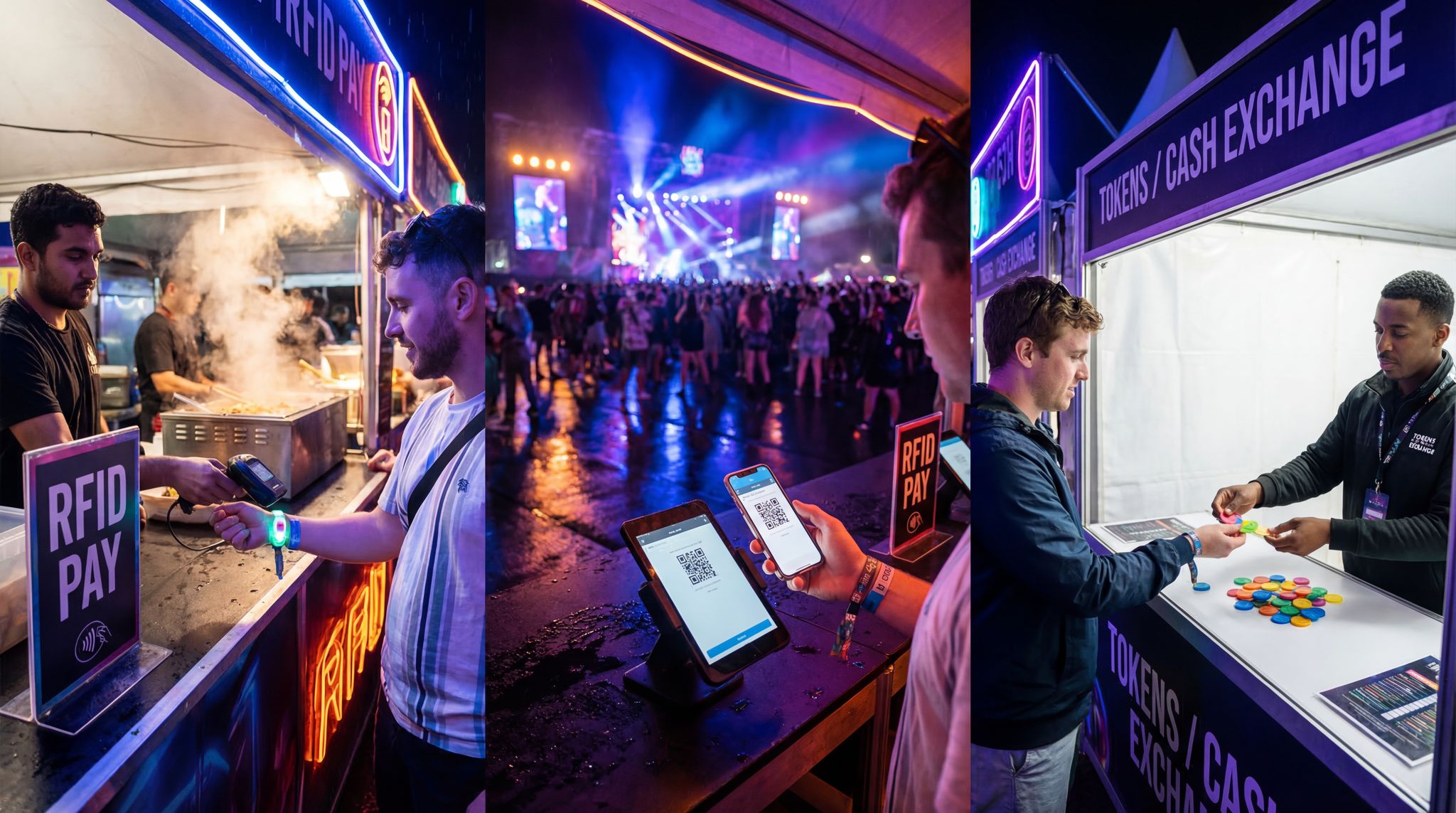
How It Works: Rather than paying a large sum before the festival, the vendor typically pays a smaller deposit or a minimal fee to reserve their spot, and then after the event (or periodically during it), they remit a percentage of their sales back to the organizer. Some festivals implement this by using a centralized payment system – for example, requiring all food purchases to go through festival-issued tokens or a cashless payment system. By doing so, the organizers can accurately track sales and automatically take their cut. An example is the model used by certain street food festivals in the U.S., where organizers charge vendors a modest base fee and then, say, 15% of their sales; this way a vendor who sells $10,000 of food would owe $1,500 to the festival. According to industry data, percentage-based agreements for food vendors often hover in the 10–30% range of gross sales, based on common vendor fee structures, though the exact figure can vary by event and is usually communicated upfront in the vendor agreement.
Pros for the Festival: The biggest advantage is upside potential and flexibility. The festival’s earnings from vendors scale with success – the more the attendees spend on food and drinks, the more the organizers earn. This can be particularly beneficial for festivals that are confident in high attendee spending or those featuring very popular food vendors. Another benefit is that it aligns the festival’s interests with the vendors’. When using a revenue share, the organizer has a direct stake in each vendor’s success, which encourages festival management to support vendors through good marketing, efficient event layout, and reasonable vendor count (to avoid too much competition). For example, if a festival in Singapore opts for a 20% revenue share model, they will be motivated to drive foot traffic to all vendor stalls and not oversaturate the event with too many similar food options. In terms of vendor variety, revenue sharing can enable a richer mix of booths – small family-run or artisan vendors who might balk at a high flat fee can participate since they only pay a portion of what they actually sell. This can enhance the festival’s reputation for having diverse and authentic cuisine. Some well-known festivals even use a hybrid approach: the San Francisco Street Food Festival in the US, for instance, has generated income through a combination of vendor booth fees plus a percentage of sales, leveraging local vendors’ popularity while ensuring the festival shares in big sales, a strategy discussed in analyses of festival revenue streams.
Pros for Vendors: The revenue share model significantly reduces upfront risk for vendors. Instead of investing a large sum with no guarantee of return, a vendor can pay, for example, a small deposit and know that if they only sell half of what they anticipated, their fee to the organizer will also be proportionally lower. This model is very friendly to newer vendors, local artisans, or experimental food concepts. They can join a festival without the fear of losing a big rental fee – essentially, they pay in direct proportion to their success. If sales are good, the vendor is making more money anyway, so sharing a slice is easier to swallow. If sales are weak, at least the vendor isn’t out a huge sunk cost. Vendors also often appreciate that the organizer has “skin in the game.” It assures them that the festival management will strive to get attendees in the gate and in front of booths. In a revenue share scenario, a cooperative spirit tends to develop; for example, at a community food fair in New Zealand that used a 15% revenue share, vendors noted that organizers actively directed visitors toward all stalls and promoted the coolest dishes on social media during the event – behaviors that benefit everyone.
Impact on Culinary Partners: Adopting a revenue sharing model for a food business allows emerging chefs and independent food trucks to participate in large-scale events without crippling upfront costs. Because the food business only pays a percentage of what it actually earns, operators can allocate their capital toward high-quality ingredients and adequate staffing rather than sinking their budget into a massive advance deposit.
Cons for the Festival: The revenue share model means the festival’s vendor-related income is unpredictable and not guaranteed. If an event has lower attendance or if attendees simply spend less on food than expected, the festival could end up with a smaller pot of vendor revenue than they budgeted for. This can be risky especially if the festival organizer was counting on vendor fees to pay for essential expenses. From an operations standpoint, implementing a revenue share can be complex. The festival must have a reliable system to track each vendor’s sales accurately – whether through mandated point-of-sale systems, token sales, or periodic sales reporting checkpoints. There is also an element of trust required; without controls, some vendors might under-report cash sales to reduce the commission they owe. To manage this, many festivals enforce cashless payment systems or have staff audit sales, which adds to the logistical overhead. Another downside is that the festival usually needs to wait until during or after the event to collect most of its vendor revenue, impacting cash flow (as opposed to stall rentals which are often paid months in advance). Lastly, if not communicated properly, a commission can irritate vendors – nobody enjoys giving up a chunk of their hard-earned sales, especially if the percentage is high. It’s vital that the percentage feels fair and that vendors see the value they’re getting (e.g. a well-run event with strong sales to justify the cut).
Cons for Vendors: While less risky than a flat fee, a revenue share still means vendors are giving up a portion of their profits. If a vendor ends up having a blockbuster day with huge sales, they might actually pay more in total than they would have under a flat fee arrangement. For instance, imagine a food truck in Mexico that joins a festival with no upfront fee but a 25% of sales agreement. If they manage to earn $8,000 in sales over a weekend, they owe $2,000 – which could be higher than many flat fees. In such cases, success is effectively “taxed” by the festival cut. Vendors could also feel that the festival is encroaching on their margins, especially if their food ingredients and labor costs are high. A high percentage also might tempt vendors to raise their menu prices to maintain their own margin (just as they might with a high flat fee), and that could turn off price-sensitive attendees. Moreover, any complications or errors in sales tracking can lead to disputes – a vendor might question whether the reported sales total (and thus the fee owed) is accurate. In short, vendors must trust the festival’s process and be willing to share their financial info. Seasoned vendors might prefer a known flat cost simply for clarity and the possibility of greater profit if they perform exceptionally well.
When Revenue Share Works Best: This model shines for newer festivals or community-oriented events that want to attract a wide range of vendors. If you are launching a food festival in a city like Jakarta or an up-and-coming region, adopting a revenue share can entice many small culinary businesses to participate because it lowers their risk. It’s also common at events where vendor variety and innovation are a priority – for example, curated street food gatherings, night markets, or niche food fairs (vegan festivals, dessert festivals, etc.) where the festival organizer’s goal is to have as many interesting offerings as possible without pricing them out. Additionally, festivals that cannot accurately predict attendance – perhaps a first-year festival or one in a volatile climate – might use revenue share so that the burden is not all on vendors if things go awry. Finally, any event that has the technical capability (or a ticketing partner) to handle cashless payments and real-time analytics will find revenue sharing easier to manage. Using modern event management software, a festival can track every transaction and even provide vendors with instant sales reports. (Notably, platforms like Ticket Fairy offer vendor management tools with features such as real-time sales tracking and automated commission calculations via specialized food festival ticketing systems, which simplify the execution of revenue share agreements.)
Comparing Risk and Reward
Every festival is a partnership between organizers, vendors, and attendees. The financial model you choose for vendor payments will influence how the risk and reward of the event are distributed between you (the festival team) and your food vendors:
- Financial Risk: A flat stall fee transfers most sales risk to the vendors. They pay upfront regardless of how they perform. In contrast, a revenue share means the festival organizer shoulders more risk – if sales are weak, the festival’s income from vendors drops accordingly. There is a middle ground with hybrid models (for example, a modest base fee plus a percentage, or a minimum guarantee versus a percentage) that attempt to balance risk. In fact, some UK festivals use a policy like “£X or 20% of sales, whichever is higher,” to ensure the event covers costs while still benefiting from busy vendors, a tactic often cited in vendor management guides. Such hybrids protect the organizer’s base revenue while also ensuring that if a vendor does extremely well, the event also gains.
- Revenue Potential: With stall rentals, the festival’s revenue from vendors is fixed. You know the total income from vendor fees once all slots are sold. You won’t earn more even if a vendor experiences wildly successful sales. On the flip side, revenue sharing provides uncapped upside for the festival – a packed event where vendors have long lines means more earnings for the organizer as well. This can be very attractive if food and beverage are expected to be major revenue drivers. However, it’s only advantageous if the event truly draws spending; a revenue share won’t fulfill its potential if attendees aren’t buying as much as anticipated.
- Vendor Turnout and Quality: The fee structure can directly impact how many vendors sign up and who they are. Lower upfront fees or generous revenue share terms tend to attract a higher number of vendors, including small-scale and unique vendors who add character to your festival. A high flat fee might deter these interesting vendors, leaving only larger companies that can afford the cost. On the other hand, if your festival is highly sought-after (say a famous wine & food festival in France or a top-tier music festival in the US), vendors might be willing to pay large rents just to be there. But even then, keep in mind that vendors talk to each other – if many vendors lose money due to steep fees, word will spread and it could become harder to recruit the best food stalls in subsequent years.
- Attendee Experience: The pricing model indirectly affects attendees’ experience too. Festivals where vendors face steep costs (via high rent or high commission) often see vendors charge more for food to protect their margins. News stories have noted that at some UK and Irish festivals, food prices have crept very high, in part because vendors needed to recoup heavy pitch fees and commissions, as observed in market research on stall costs. If attendees feel gouged by $20 burgers or very small portion sizes, it can hurt the festival’s reputation. Conversely, a vendor-friendly model can mean more reasonably priced and diverse foods, enhancing guest satisfaction. Happy vendors are more likely to be generous with portions and creativity, which makes the festival more enjoyable and memorable.
- Administrative Overhead: Simply put, flat fees are easier to manage. Collect the fee, assign the stall, and you’re done. Revenue sharing requires more hands-on administration. During the event, staff may need to monitor sales or manage a centralized token system, and after the event there’s the work of settling accounts with each vendor. There’s also potential for disputes or delays in payment. Make sure your team is prepared for this, or use reliable systems to handle it. If tracking sales precisely is not feasible for your event, a revenue share could become chaotic – in such cases a flat fee may be the safer choice despite its other drawbacks.
Choosing the Right Model for Your Food Festival
There is no one-size-fits-all answer – the ideal approach depends on your festival’s unique context. Here are key considerations to help decide, or even craft a hybrid solution:
1. Festival Scale and Reputation: For a well-established festival with predictable high attendance (perhaps a famous BBQ festival in Texas or a long-running food fair in Melbourne), charging flat stall rentals can be effective and widely accepted. Vendors know what to expect and are willing to pay for access to your large crowd. In contrast, for a new or growing festival that doesn’t yet have proven foot traffic, a revenue share can be a smarter bet to attract vendors. Early on, it may be worth sharing more of the upside to build the event’s reputation. As your festival grows in stature, you might gradually increase flat fees or introduce a hybrid model.
2. Financial Goals and Budgeting: Evaluate how important vendor fees are in your overall budget. If your festival’s viability heavily depends on a certain amount of vendor income (for example, you need those funds to pay the venue or artists), you might lean toward fixed fees to secure that money in advance. Alternatively, if ticket sales, sponsorships, or other streams cover most costs, you have flexibility to experiment with revenue sharing without jeopardizing the budget. A festival aiming for high profitability might opt for a mix: moderate flat fees for base revenue plus a small percentage to boost profits if things go well. On the other hand, a community-oriented festival run by a city council or a nonprofit might prioritize vendor participation over revenue, and thus choose minimal fees or just a revenue split that simply covers event services (power, cleaning, etc.).
3. Vendor Mix and Profile: Consider the types of vendors you want to attract. If your vendor mix includes many small businesses, first-time festival vendors, or local ethnic cuisines, a revenue share or low flat fee will encourage those folks to join. These participants often bring the most buzz and authenticity to food festivals but are also the most sensitive to high fees. If instead your vendor lineup is composed of well-known restaurants, food trucks with steady followings, or corporate food sponsors, those players often expect to pay – and they can afford – a higher fixed rent for the privilege of a prime spot. It’s not uncommon for festival organizers to tier their fees: e.g., offer lower rates to local mom-and-pop vendors and charge premium fees to big beverage companies or national chains that come in. Just be transparent and fair to avoid any resentment between vendors.
4. Competitive Landscape: Research what other festivals in your region (or of your theme) are doing. If every other major food festival in New Zealand is charging 15% of sales, and you decide to charge a huge flat fee, you might lose vendors to the competition. Conversely, if all the comparable events have high fees and you come in offering a generous revenue share model, you could quickly win favor and fill your vendor slots with great options. Understanding the norm will help you position your festival attractively. It can also guide you on setting the percentage or fee amount in a competitive range.
5. Operational Capacity: Be realistic about your team’s ability to manage complex financial arrangements. If you have a small organizing team and the thought of auditing dozens of individual vendor sales sounds daunting, a simpler flat-fee structure might reduce stress. If you do go for revenue share, invest in systems or technology to streamline it. For example, using a cashless payment system that automatically logs each transaction can save a lot of headaches. Make sure to communicate to vendors how sales will be tracked and when/how they are expected to remit the percentage due. Clarity and simplicity go a long way in avoiding confusion.
6. Hybrid Approaches: You don’t have to strictly choose one or the other. Many festivals adopt hybrid models to balance security and upside. We’ve mentioned some already, like a minimum rent plus a percentage of sales. Another approach is scaling fees by performance – for instance, you could cap the maximum fee a vendor pays (so that exceptionally high sales don’t lead to an exorbitant commission) or inversely, have a minimum guarantee (to protect the festival if sales are very low). An example of a gentle hybrid is asking for a small flat fee that just covers basic costs (say $200 to cover electricity, water, and site management) and then a 10% share of sales on top. This ensures the festival isn’t out-of-pocket on hard costs and still aligns with the vendor’s success. Hybrid models can get complicated, so design them carefully and explain them in plain terms to vendors. Put the details in the contract – including how and when the reconciliation will happen.
7. Long-Term Partnerships: Think beyond this one event. If you plan to make your festival recurring, the relationships you build with quality food vendors are extremely valuable. Those vendors become part of your festival’s identity. Ask yourself which model will help foster loyalty. Some festival organizers opt to initially charge low fees to entice great vendors, treat them well, and then mutually grow the event’s success over years. Vendors often appreciate festivals that show they are invested in everyone winning, not just collecting a fee. On the flip side, if a festival earns a reputation in the vendor community for high fees or unfair terms, word spreads quickly (especially via vendor groups on social media). Striking a balance where the festival is financially sustainable but vendors can also thrive will pay off through higher re-sign rates and even word-of-mouth as vendors tell others “you have to do this festival, it was great for us.”
Streamlining the Vendor Application Process
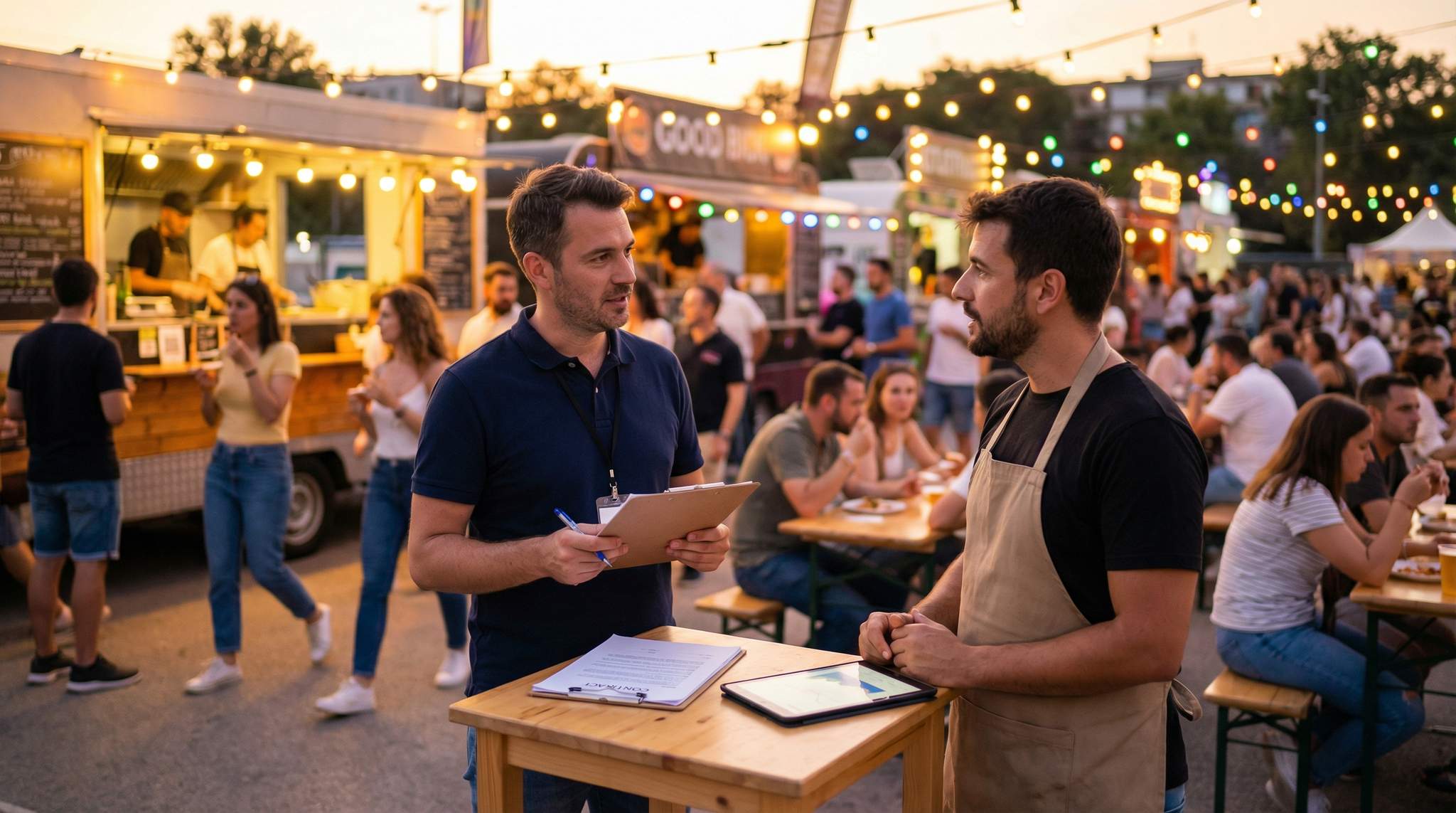
Regardless of whether you choose a revenue share or a flat vendor rental fee, the intake process sets the tone for your financial relationship. Organizers should look into modern FAS (Festival Administration System) options for food vendor management at fairs to handle onboarding, document collection, and fee processing. Relying on outdated methods can complicate revenue operating vendor models, especially when tracking percentage cuts. When designing your intake forms, it helps to study the comprehensive requirements of mega-events. For example, reviewing a major municipal event’s paperwork—like a Taste of Chicago vendor application or an Essence Festival 2026 vendor application PDF—can provide a masterclass in what to ask for. These large-scale forms typically require health permits, insurance certificates, menu pricing, and electrical needs upfront, ensuring that all operational and financial terms are locked in before the gates open.
By standardizing these intake documents, festival producers can more easily transition between flat-fee and revenue-sharing structures. Whether a food business is paying a fixed stall rental cost or participating in a hybrid model, having a rigorous application process ensures that all compliance, power needs, and financial agreements are clearly documented.
Conclusion
Deciding between vendor revenue sharing and flat stall rentals is a pivotal choice that can shape the character and success of a food festival. Flat fees offer stability and upfront certainty for organizers, but they put more on the line for vendors. Revenue sharing can energize a festival with diverse food options and a spirit of partnership, yet requires more trust and robust logistics to execute well. Some of the most successful festivals around the world use a blend of the two approaches, tailored to their size and mission. The key is to align the model with your festival’s values, the expectations of your vendors, and the experience you want to create for attendees. By carefully weighing the risk and reward of each structure, festival producers can craft an arrangement where everyone – organizers, vendors, and customers – walks away satisfied.
In the end, a great food festival thrives on a positive ecosystem: organizers cover their costs and maybe turn a profit, vendors make a fair return for their hard work, and attendees get to enjoy delicious offerings at reasonable prices. Choosing the right vendor fee model is part of building that ecosystem. With clear communication, fair terms, and perhaps a bit of creativity, you can develop a vendor participation strategy that supports your financial goals and delivers a fantastic festival experience.
Frequently Asked Questions
What is the difference between stall rental and revenue share for festivals?
Stall rental involves vendors paying a fixed upfront fee for booth space regardless of sales, transferring risk to the vendor. In contrast, the revenue share model requires vendors to pay a percentage of their gross sales to the festival, aligning organizer and vendor interests while reducing upfront costs for small businesses.
Why do food vendors prefer revenue share models at festivals?
Revenue share models significantly reduce financial risk for vendors by eliminating large upfront fees. Vendors pay a percentage of actual sales, meaning costs scale with success. This structure is particularly attractive to new businesses, local artisans, or experimental concepts that might otherwise be priced out by expensive fixed stall rentals.
When is the stall rental model best for food festivals?
The flat stall rental model works best for established festivals with proven attendance records where vendors are confident in high sales volume. It is also ideal for events featuring large national brands or corporate sponsors who prefer the simplicity of a fixed cost over sharing a percentage of their potentially high revenue.
Can festivals combine stall rental and revenue share fees?
Festivals often use hybrid models to balance risk and reward, such as charging a modest base fee to cover hard costs plus a percentage of sales. Some events implement a minimum guarantee versus percentage structure, ensuring the organizer covers expenses while still benefiting from the upside of high vendor sales volume.
How does a revenue share model affect festival operations?
Implementing a revenue share model increases administrative overhead because organizers must accurately track every vendor’s sales. This often requires specific technology like cashless payment systems, token sales, or point-of-sale integration to calculate commissions automatically and prevent under-reporting, unlike the simple one-time collection of flat stall rental fees.
How do vendor fees impact food festival variety?
High flat fees can deter small, unique, or artisan vendors who cannot afford the upfront risk, potentially limiting food diversity. Lower barriers to entry, such as revenue sharing or low base fees, encourage a wider mix of vendors to participate, enhancing the festival’s reputation for authentic and diverse cuisine options.
What are the best FAS options for food vendor management at fairs?
The best FAS (Festival Administration System) options for food vendor management at fairs integrate application processing, document tracking (like health permits and insurance), and automated fee collection. Platforms that offer real-time sales tracking are especially critical if you are running a revenue-sharing model, as they streamline the entire revenue operating vendor workflow.
What should be included in a festival vendor application PDF?
A comprehensive vendor application PDF should collect business details, menu items with pricing, power and footprint requirements, and proof of insurance. Organizers often model their forms after major events—such as the Taste of Chicago or Essence Festival vendor applications—to ensure they capture all necessary compliance and operational data upfront.
How should organizers calculate stall rental fees?
Organizers should calculate stall rental fees by factoring in the expected daily foot traffic, the physical footprint of the booth, and included utilities like electricity or water. A well-researched vendor rental rate covers the event’s infrastructure costs while allowing traders to maintain healthy profit margins.
Why is a revenue sharing model beneficial for a food business at a festival?
A revenue sharing model allows a food business to minimize upfront financial risk. Instead of paying a large flat fee before the event, the business pays a percentage of its actual sales, freeing up cash flow to invest in better ingredients, staffing, and booth presentation.
What factors determine the average stall rental cost at a food festival?
The average stall rental cost is primarily driven by the event’s historical attendance, the physical size of the vendor footprint, and included amenities like dedicated power drops or water access. Organizers also adjust vendor rental pricing based on location prestige, with prime placements near main stages or entrances commanding a premium compared to secondary walkways.
What is the average vendor fee for events?
The average vendor fee for events depends heavily on the scale, location, and duration of the gathering. Small community fairs might charge between $50 and $150 per day, while mid-sized regional festivals typically range from $250 to $800 for a weekend. Large-scale mega-festivals can command baseline fees of $1,500 to over $3,000, reflecting the high volume of guaranteed foot traffic and premium infrastructure provided to culinary partners.