Introduction
Organising an international festival on a small budget demands meticulous planning and creative problem-solving. One of the most complex aspects is handling visas and travel for artists coming from abroad. Mistakes or oversights in this area can lead to artists being delayed at borders, shows canceled, or expensive last-minute fixes. Seasoned festival producers know that investing time and care into travel logistics not only avoids chaos but also builds trust with performers. In an era of rising visa costs and stricter regulations – for example, recent U.S. visa fees soared by over 250% and processing slowed, causing international tours to cancel due to rising costs – smart planning is essential, especially when resources are limited. The following guide shares expert strategies for visa and travel management that will help boutique festival organisers worldwide ensure artists arrive smoothly and feel valued.
Funding these logistical safety nets ultimately relies on your revenue streams. Utilizing a robust small festival ticketing platform ensures you have the cash flow visibility needed to lock in early flights and secure favorable exchange rates before travel costs escalate.
Early Visa Prep: Invitation Letters & Carnets
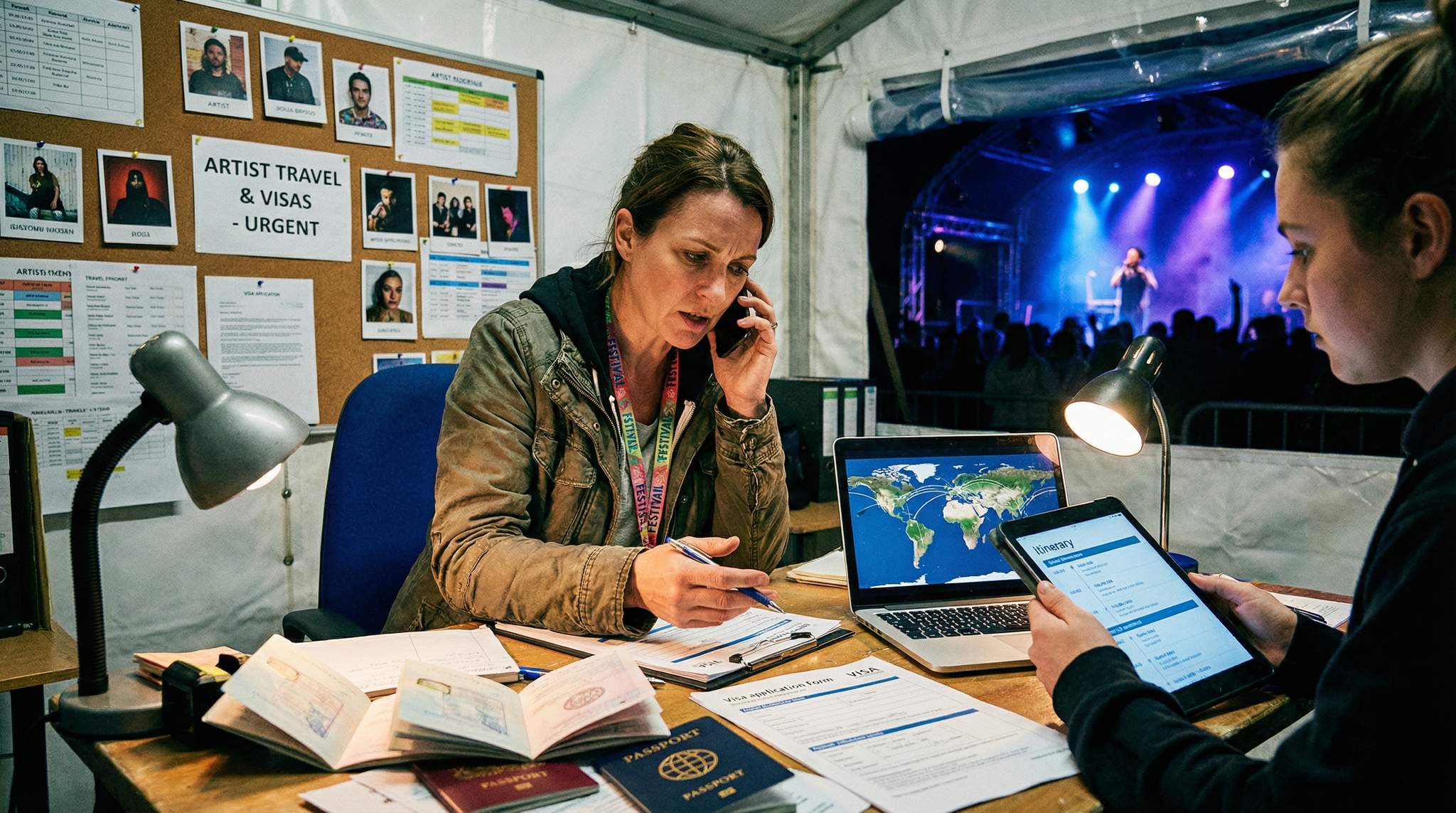
Start the visa process early. As soon as you book an international artist, provide an official invitation letter on festival letterhead confirming their engagement details (dates, venue, role in the festival). Many countries require this letter as part of artist visa applications. For instance, New Zealand’s immigration rules for arts events explicitly ask for a letter of invitation from the festival organisers. An invitation letter should clearly state the festival’s name, the artist’s name (matching their passport), the event dates, and a pledge to cover travel or accommodations if applicable. This helps artists obtain the correct visa or permit without delay. Small festivals often underestimate visa timelines – but embassies can be slow, and last-minute visa approvals are rare. Starting the paperwork months in advance is ideal; it saves on costly expedited processing fees and reduces the risk of an artist being denied boarding a flight due to visa issues.
Help with carnets when needed. If your artists are bringing instruments, sound equipment, or other gear across borders, advise them on using an ATA Carnet. A carnet is essentially a “passport for musical equipment” that allows duty-free and tax-free temporary import of gear, as explained in this guide to ATA Carnets for musicians. This document can save everyone a lot of money and hassle at customs – without it, bands might face hefty deposits or risk having gear held up by customs officials. Many emerging artists or small touring ensembles may not be familiar with carnets, so a savvy festival producer will guide them through it or connect them with a freight agent who can. Real-world example: The team behind a boutique jazz festival in France once invited a Brazilian percussion group who arrived without a carnet; customs nearly impounded their drums, leading to frantic negotiations. After that scare, the festival added carnet guidance to their artist welcome packet and even offered to reimburse carnet fees for groups who couldn’t afford them. The lesson is clear: proactively assist artists with customs paperwork, and issue any necessary documentation well ahead of time. It’s far cheaper and easier to handle these details in advance than to solve gear crises at the border.
Accept Payments Across 13 Countries
Local currency processing via Stripe, Razorpay, Xendit, Paystack, and OXXO across 13 countries with region-specific payment methods.
The type of event also dictates the specific immigration category. For example, if you are bringing an industry expert or artist to speak at a panel, securing a visa for a conference in the USA (often a B-1 business visitor visa) requires different documentation than an O-1 or P-1 performance permit. Always clarify the exact nature of the artist’s activities—whether they are performing, speaking, or attending promotional events—so your legal team can file the correct petition.
When securing visas for international shows, especially for a multi-act lineup, partnering with an entertainment immigration specialist can be a game-changer. While boutique promoters might hesitate at the upfront legal fees, a specialized attorney ensures that group petitions (like the P-1B for internationally recognized entertainment groups) are filed correctly the first time. This prevents costly Requests for Evidence (RFEs) or outright denials that could jeopardize your entire event. Furthermore, establishing a standardized internal checklist for all foreign bookings—collecting passport scans, press clippings, and itinerary details the moment a contract is signed—streamlines the application pipeline and keeps your production schedule on track.
Planning a Festival?
Ticket Fairy's festival ticketing platform handles multi-day passes, RFID wristbands, and complex festival operations.
Buffer Travel Days & Insure Instruments
When budgets are tight, it’s tempting to fly artists in and out as close to their performance as possible to save on hotels and per diems. However, not buffering extra travel days is a false economy. Flights get delayed or canceled, connections are missed, luggage (and even people) go astray. By scheduling artists to arrive at least one day (or better, two days) before their scheduled performance, you build a cushion against unexpected delays. This buffer also gives artists time to recover from jet lag and travel fatigue, which means a better performance on stage. Countless festivals have had close calls or outright no-shows due to tight travel timing. For example, when severe weather swept Europe in 2010, many flights were grounded – some bands heading to North American festivals never arrived in time. Savvy organisers now plan for contingencies: if an artist arrives early and everything goes smoothly, they get an extra day to acclimatise or even enjoy the local area. If travel hits a snag, that buffer day can literally save the show. In remote boutique festivals – say a mountain music festival in Nepal or a jungle event in Borneo – extra travel days are critical because reaching the site may involve multiple flights or long drives. Budget a bit more on accommodation to protect your festival schedule; the cost of a hotel night is nothing compared to an empty headline slot on your programme.
Equally important, insure instruments and gear for the journey. Travelling musicians often carry instruments that are both valuable and essential for their performance. Lost or damaged equipment can ruin a show and incur huge costs. Encourage artists to obtain travel insurance that covers their instruments, or consider purchasing a short-term insurance rider if your festival is directly responsible for transporting any backline gear. This advice comes from hard experience – there are horror stories of airlines cracking guitar necks or misrouting entire instrument cases. A well-known case in the music community is “United Breaks Guitars,” when a musician’s guitar was infamously damaged by an airline, leading him to write a protest song that went viral. The takeaway: don’t assume “it won’t happen to us.” Work with artists to tag and secure their gear, use sturdy flight cases, and have insurance as a safety net. Additionally, as a festival organiser, have a contingency plan for instrument emergencies: for example, arrange contacts with local instrument rental shops or fellow musicians who could lend gear on short notice. For boutique festivals on a budget, this kind of community network can be a lifesaver if an instrument doesn’t arrive or gets broken.
Dedicated Travel Liaisons for Headliners
Even with thorough advance planning, travel days can be chaotic – airports, foreign languages, lost bags, last-minute changes. One of the best investments a festival can make (even on a shoestring budget) is assigning a dedicated travel liaison for your headlining acts or any international artists who are key to your lineup. This person acts as a combination of tour guide, problem-solver, and personal assistant for the artist’s journey. For a small festival team, it might simply be an existing staffer or a trusted volunteer who is on call 24/7 during the artists’ travel days. Their job is to monitor flights, assist with connections, and ensure someone is waiting to greet the artists upon arrival. If a headline DJ’s flight from London to Sydney gets delayed, the liaison is the one coordinating the backup plan – maybe rebooking tickets or arranging a pickup at 3 AM when they finally land. When artists know they have a direct contact who speaks the local language and can navigate the logistics, it dramatically reduces their stress.
Many successful boutique festivals swear by this personal touch. Case study: At the annual Java Sounds festival in Indonesia, the organisers assign each major international act a liaison who meets them at the airport with a welcome sign, helps them through visa-on-arrival procedures, and drives them to the hotel. This hospitality not only ensures nothing falls through the cracks, it makes artists feel valued. Similarly, producers of a Canadian folk festival noted that having an artist relations person travel with the headliner from the airport helped avert a potential disaster – the liaison caught that the airline had left one of the artist’s bags in transit and immediately arranged for it to be sent on the next flight, so it arrived before showtime. The lesson: even if your festival can’t afford luxury perks, providing artists with a knowledgeable point person for travel is a priceless courtesy. It humanises the experience and builds goodwill, which in turn often leads to artists spreading positive feedback about your festival in industry circles.
No Hidden Fees, Just Honest Pricing
One all-inclusive fee covers the platform, payment processing, support, and every feature. Free events are always free. No setup costs, no surprises.
Routing Strategies: Roadshows and Residency Tours
When organizing travel for international music festival roadshows—where your event travels across multiple cities or countries—logistical complexity multiplies. Instead of a single point of failure, you are managing rolling border crossings, regional flights, and ground transport for a touring party. To keep budgets in check, many seasoned promoters collaborate with other regional events to share international flight costs. Alternatively, consider the benefits of a stationary model. If you are wondering what is a residency tour, it involves booking an artist to perform multiple dates at a single venue or city over a week or month, rather than moving them daily. For boutique festivals, hosting a mini-residency or partnering with local clubs for extended stays can drastically reduce internal travel costs while maximizing the artist’s local impact.
Clear Tax and Payment Guidance
Money matters can be awkward, but clarity up front is non-negotiable – especially when dealing with artists from other countries. Every festival organiser should provide clear guidance on payments and taxes to international artists well in advance. This means explaining how and when the artist will be paid, in what currency, and what (if any) taxes or withholdings will apply. The last thing you want is a surprise where an artist expects a certain fee but receives less due to local tax law or bank transfer fees. Different countries have different regulations: for example, in the United States, a standard requirement is to withhold 30% of a foreign artist’s gross pay for taxes (though artists can later file to reclaim some of that if a tax treaty applies). In many European countries like Germany or France, there may be a lower flat withholding tax on performance fees, or paperwork to exempt cultural events – it’s your job to know the basics or consult a professional.
Need Festival Funding?
Get the capital you need to book headliners, secure venues, and scale your festival production.
For small festivals, it might not be feasible to hire a dedicated accountant for artists, but you can still prepare a one-page info sheet that outlines the important points. Include any forms artists might need to fill (such as tax identification forms), and what documentation you will provide (for instance, a certificate of tax deduction or a receipt of payment). Be explicit about whether your agreed artist fee is gross or net of local taxes. If you agreed to pay an artist $5,000, clarify if that’s the amount they take home or if you must deduct required taxes from it. Also, discuss the payment method: international bank transfer, cash on arrival (some festivals do this for convenience, but be mindful of currency and security), or through a platform. Each method has pros and cons – wire transfers have fees and might require IBAN/SWIFT details; cash needs safe handling and might violate local laws if over a certain amount; online payments might incur conversion fees. By guiding artists through these details early (ideally during contract stage and again in pre-event communication), you demonstrate professionalism. Artists will appreciate knowing exactly how they’ll be paid and won’t be frustrated by any “fine print” surprises. Financial transparency builds trust and avoids souring an otherwise great festival experience.
Border Care – Respect Made Visible
At international borders, abstract goodwill becomes concrete action. The way a festival handles border crossings for artists is respect made visible. This starts with ensuring all paperwork is in order – visas secured, invitation letters in hand, carnets for equipment ready, and any special permits or clearances sorted. But it goes beyond documents: it’s about treating the artist as a valued guest from the moment they encounter immigration or customs in your country. Whenever possible, have someone from the festival or a hired airport handler meet the artist upon arrival. A friendly face who can help them navigate passport control, translate if needed, and explain the purpose of their visit to officials can prevent misunderstandings. Remember, immigration officers can be strict, and even a small miscommunication can lead to an artist being turned away. (There have been unfortunate incidents in the past – for example, an Italian rock band was deported from the U.S. because they arrived on the wrong visa and misunderstood the regulations for unpaid performances. Such situations are avoidable with proper preparation.)
Showing care at the border reflects the ethos of your festival. It tells artists that you respect their craft and the effort they’ve made to travel to your event. Simple gestures make a big difference: providing the artist with a folder of all needed documents (letters, contracts, contacts) before they fly; checking in with them during layovers; ensuring their names are on the border officials’ entry list if your country requires prior notification for performers. Some festivals even create a special “passport letter” in the local language for the artist to hand to the officer, explaining they are an invited performer at a cultural event – this can smooth the conversation if there’s a language barrier. Taking these extra steps is crucial for boutique festivals that may not have the clout of big events. It shows that your festival is organised and considerate. Artists who feel looked after from the moment they land are more likely to give inspired performances and speak highly of your event later on. In short, caring for artists at the border isn’t just logistics – it’s a form of hospitality and respect that sets the tone for their entire stay.
Frequently Asked Questions
How do you manage travel for multi-city festival roadshows?
Organizing travel for international music festival roadshows requires centralized logistics, bulk booking for ground transport, and shared international flight costs across all participating promoters. Utilizing a dedicated travel coordinator for the entire run ensures consistency across different regional borders.
What is a residency tour in the context of festivals?
A residency tour involves an artist setting up at a single venue or city for an extended series of dates, rather than traveling to a new market every day. Festival organizers use this model to reduce internal travel budgets and offer fans multiple opportunities to see an act in an intimate setting.
What type of visa is needed for a music conference in the USA?
If an international artist is strictly speaking or attending as a delegate, a B-1 business visitor visa for a conference in the USA may suffice. However, if they are also performing showcases, they will typically require a P-1, O-1, or other appropriate performance visa. Always consult an immigration attorney.
What is the typical timeline for processing international artist visas?
Promoters should begin the application process for foreign performers at least three to six months prior to the event. Processing times vary wildly by country and immigration category, and embassies frequently experience backlogs. Filing early avoids exorbitant premium processing fees and provides a buffer if additional documentation is requested by border authorities.