Synopsis: Many festivals struggle to cut through the noise and sell tickets because of avoidable marketing missteps. This in-depth guide exposes common promotional mistakes – from misidentifying target audiences and neglecting early buzz to over-relying on one channel or last-minute pushes – and provides actionable fixes drawn from real-world experience. Discover how to craft a coherent marketing strategy that maximizes engagement and drives ticket sales, with practical guidance and case examples covering audience targeting, timing, multi-channel outreach, branding, data usage, community engagement, budgeting, online presence, and more.
Modern festival producers operate in an oversaturated events market, where effective marketing can make or break a festival’s success. Yet time and again, even experienced organizers repeat the same costly marketing mistakes. From bungled audience targeting to frantic last-minute ad blitzes, these missteps leave tickets unsold and potential fans unaware. It doesn’t have to be this way. Veteran festival producers have learned hard lessons about what not to do – and how to do it right instead. Just as events often stumble with misguided festival sponsorship approaches that don’t deliver, marketing and promotion efforts can fall into predictable traps if not approached strategically.
This article draws on decades of festival production experience and industry research to break down what most festivals get wrong about marketing and promotion – and how to get it right. You’ll find practical, actionable advice backed by real examples from festivals around the world. From identifying your core audience and building early buzz to choosing the right marketing channels, shaping your festival’s story, leveraging data, engaging the community, and budgeting wisely, we’ll cover the full spectrum. Learn from both successes and failures – including cautionary tales of festivals that paid the price for marketing missteps, and case studies of those that innovated and thrived. By the end, you’ll have a roadmap to craft a coherent marketing strategy that avoids common pitfalls, maximizes fan engagement, and ultimately drives ticket sales.
Let’s dive into the biggest festival marketing mistakes – and how you can steer clear of them.
Turn Fans Into Your Marketing Team
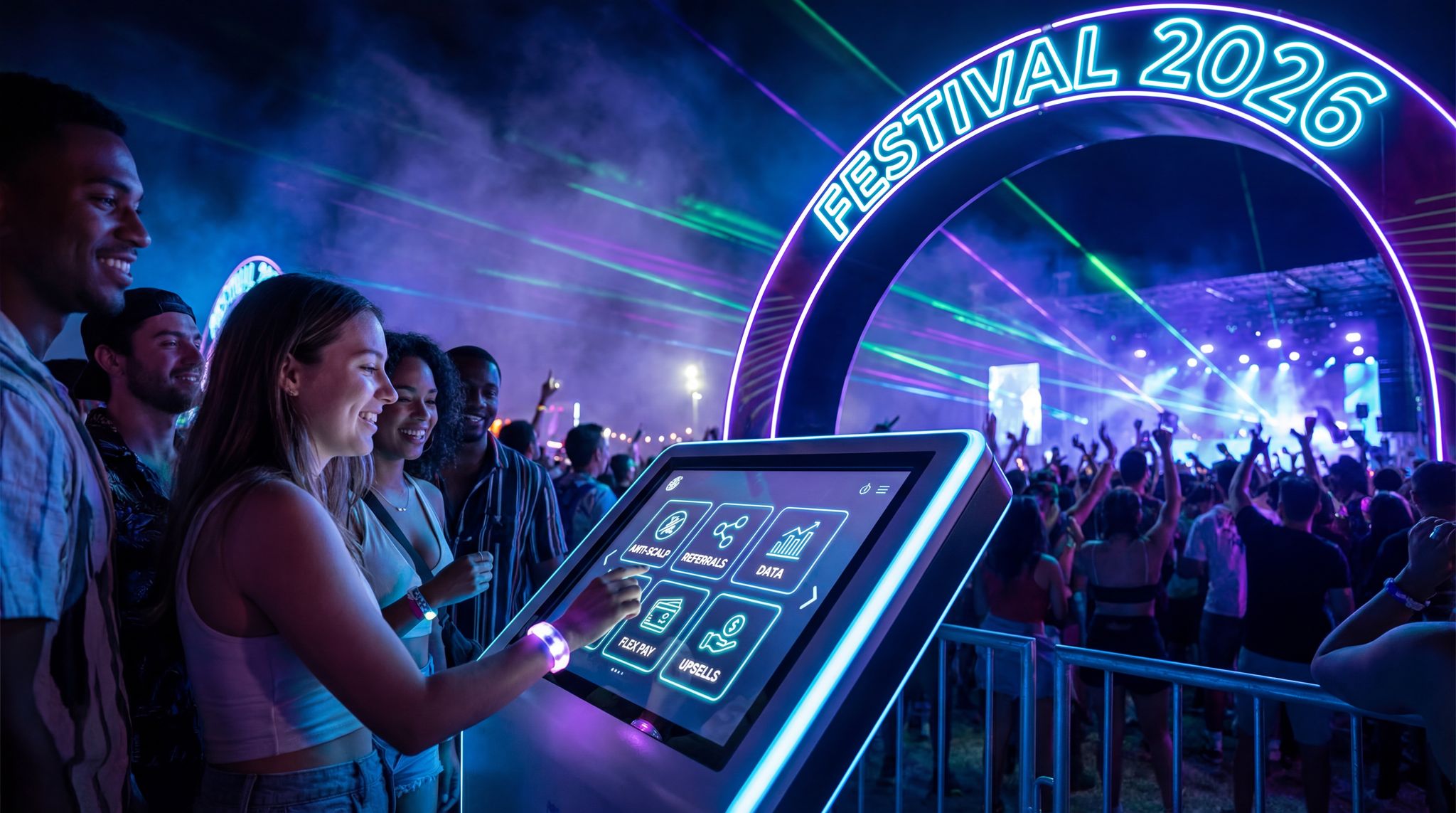
Ticket Fairy's built-in referral rewards system incentivizes attendees to share your event, delivering 15-25% sales boosts and 30x ROI vs paid ads.
The Core of a Winning Festival Marketing Strategy
Before diving into the specific pitfalls, it is crucial to understand that a successful festival marketing strategy requires a holistic approach. Organizers often ask how not to promote concerts and music festivals, and the answer usually boils down to avoiding fragmented, reactive tactics. Instead, modern event promotion demands a focus on digital marketing strategies for festivals, user behavior analysis, and continuous campaign optimization. Whether you are organizing an underground techno gathering or a massive comedy event like the Netflix Is A Joke Festival 2026, the foundational principles of understanding your audience and tracking their purchasing journey remain the same.
Lack of a Clearly Defined Target Audience
Trying to Appeal to “Everyone” (and Reaching No One)
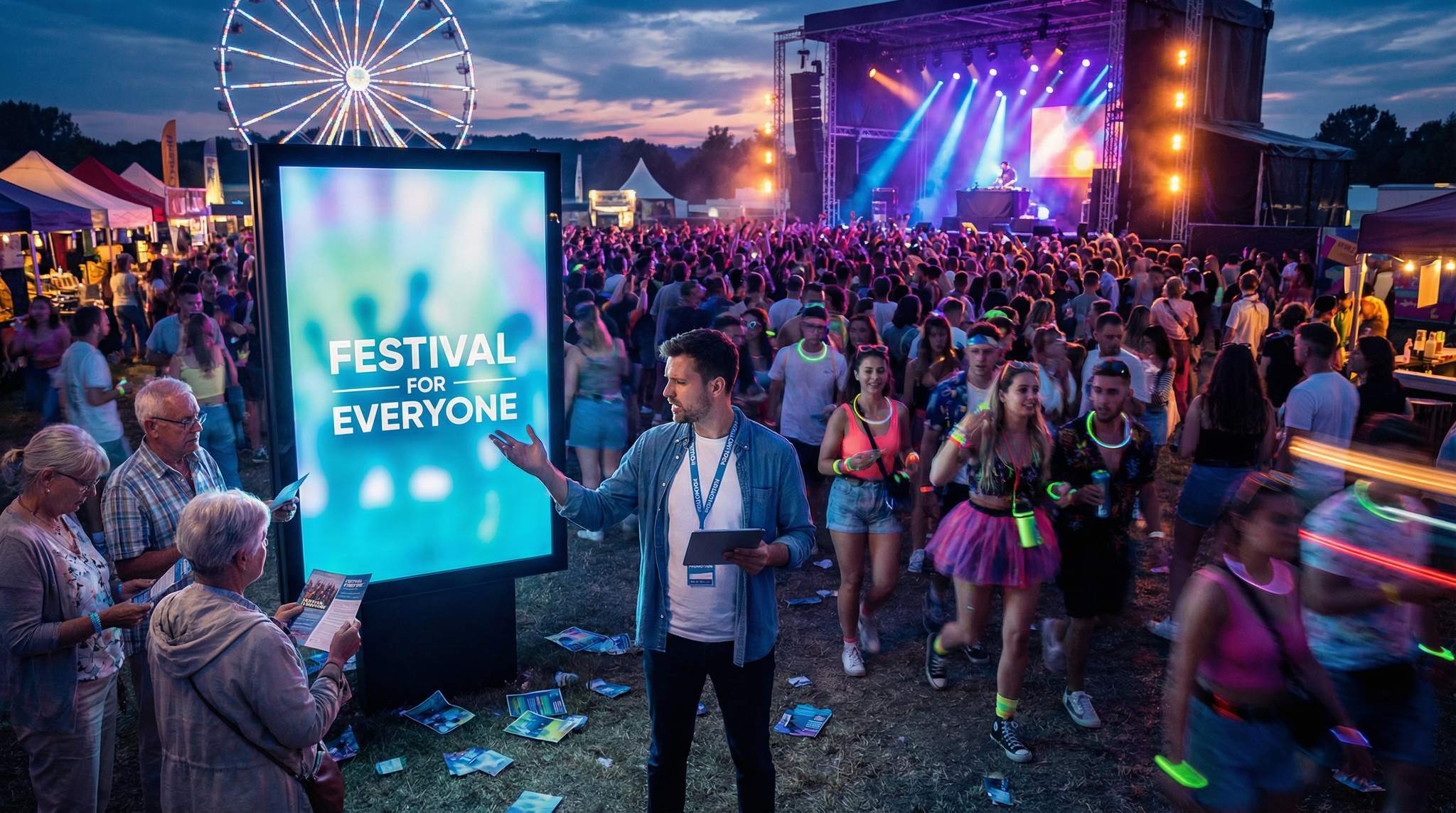
One of the most fundamental mistakes is failing to define a clear target audience for the festival. New festival organizers often say “our event is for everyone”, thinking a broad net will catch more attendees. In reality, trying to appeal to the masses can dilute your message. Different demographics have different tastes, budgets, and values – a family-friendly food festival requires a completely different tone and content than an 18+ EDM rave. Seasoned festival producers stress that being vague about your audience usually yields an unfocused campaign that doesn’t strongly appeal to anyone, highlighting the importance of identifying your festival’s target audience and personas. For example, a boutique indie music festival that markets itself as “fun for all ages and genres” will struggle to build a loyal fanbase, because prospective attendees can’t tell if it’s meant for them.
Planning a Festival?
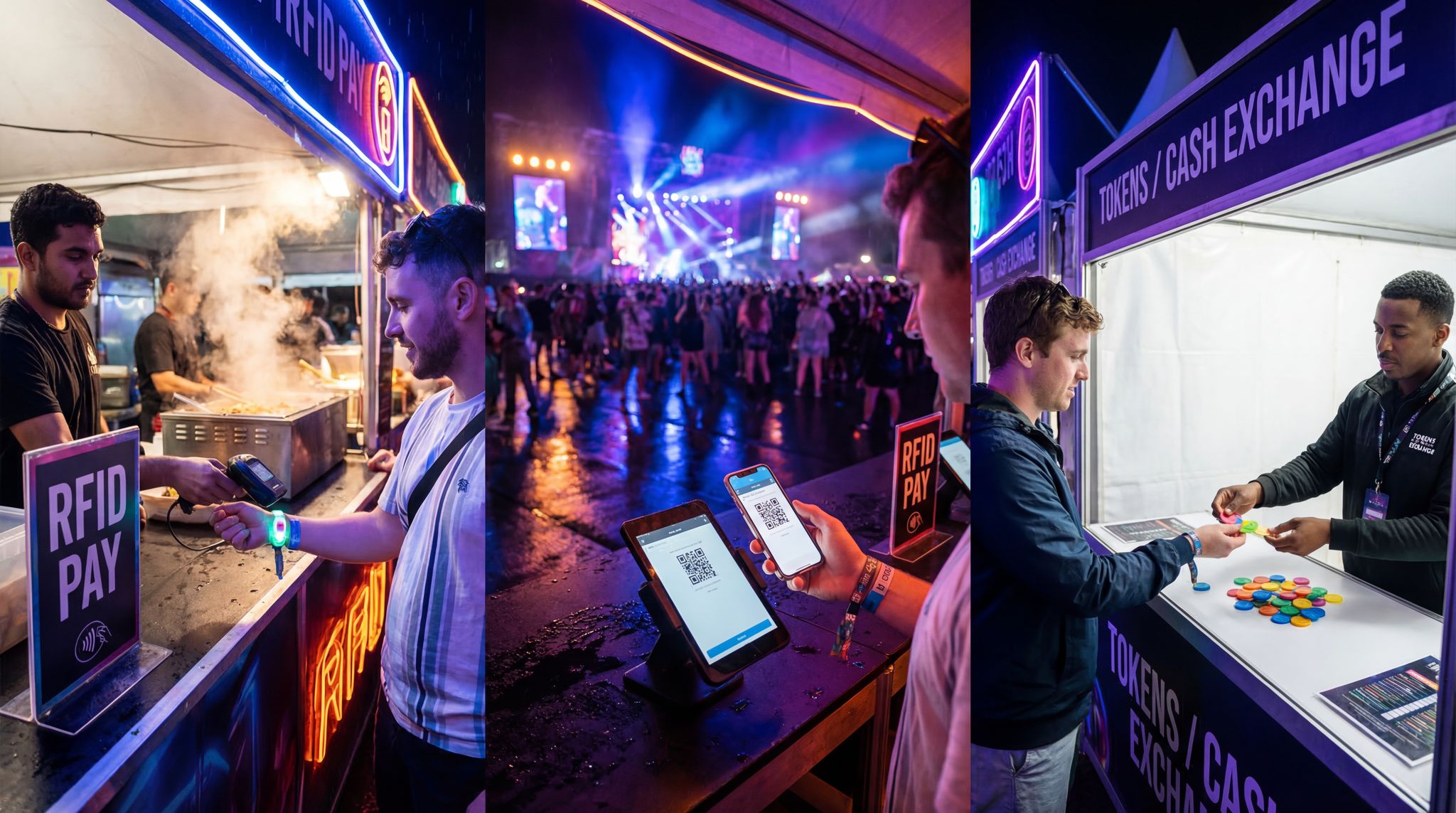
Ticket Fairy's festival ticketing platform handles multi-day passes, RFID wristbands, and complex festival operations.
Why it happens: Festival teams sometimes fear that narrowing their audience will limit ticket sales, so they hedge by keeping messaging broad. There’s also pressure from sponsors or stakeholders to cast a wide net. But this often backfires – generic marketing gets lost in the shuffle of competing events. According to industry veterans, knowing your audience is the foundation of any successful festival marketing plan. Without it, everything from lineup booking to advertising channels can miss the mark. A lack of audience clarity can lead to misaligned programming (booking artists nobody asked for) and wasted ad spend targeting people who have no interest in your festival’s concept.
Consequences of Misidentifying Your Audience
Misidentifying or ignoring your core audience has very real financial consequences. Money spent on marketing to the wrong people is money lost. If a festival aimed at college-aged electronic music fans accidentally markets mostly to an older classic rock crowd, you can guess what happens – sparse ticket sales and confused social media comments. Case in point: the now-defunct FYRE Festival infamously targeted luxury-seeking Instagram influencers with promises of an ultra-luxe experience, when in reality it had none of the infrastructure or credibility to appeal to that high-end audience. The mismatch between marketing and reality led to a PR disaster and legal fallout – an extreme example of what can go wrong when your promotional messaging doesn’t align with what your true audience values.
Even established festivals stumble here. If a long-running jazz festival suddenly pivots its ads to attract EDM fans in hopes of boosting numbers, it risks alienating its loyal jazz aficionados and failing to convert new attendees who sense the identity crisis. Data supports how crucial alignment is: one study found that events with clearly defined target demographics had 3X higher conversion rates on their marketing campaigns than those using one-size-fits-all messaging. In short, when you speak to everyone, you speak to no one – and ticket sales reflect that.
Get It Right: Define Personas and Tailor Your Message
The Fix: Start all marketing efforts by explicitly defining attendee personas. Who is your primary audience? Be as specific as possible: e.g., “Yoga-minded millennials (ages 25–35) interested in wellness and electronic music” or “Families with young kids in the local region looking for an affordable day out with live folk music.” Develop 2–3 key personas and detail their demographics, interests, online habits, and what they seek in a festival experience. Many experienced producers use surveys, social media polls, and ticketing data from previous events to inform these personas, a practice that involves balancing gut instinct with big data decisions. If your festival is brand new, research similar events and talk to potential attendees in your community to gauge interest.
Smart Promo Codes & Presale Access
Create percentage or flat-rate discount codes with usage limits, date ranges, and ticket type restrictions. Plus unlock codes for private presales.
Once you have clear personas, tailor your marketing to speak directly to them. Craft messages that address their desires or pain points. For example:
- For music-savvy Gen Z festival-goers: emphasize Instagrammable stages, trending artists, and cashless convenience.
- For older rock fans: highlight comfortable amenities (seating, shade, real bathrooms), classic bands, and nostalgia factors.
- For families: showcase kid-friendly activities, safety, and value (e.g., children under 10 enter free).
This targeted approach pays off. When Glastonbury Festival in the UK markets itself, it doesn’t try to be “for everyone” – it leans into music lovers who crave a diverse, communal experience. In fact, Glastonbury famously sells out its ~200,000 tickets before announcing the lineup most years, because it has branded itself so well that its core audience trusts the experience will deliver, a trend reflected in global festival attendance and popularity insights. That’s the power of knowing your crowd. Smaller festivals can emulate this by starting niche: focus on owning a specific genre or community first, then broaden gradually once you’ve built a base.
Need Festival Funding?
Get the capital you need to book headliners, secure venues, and scale your festival production.
To organise your thoughts, consider creating a simple table of your target segments, their preferred channels, and messaging angles:
| Audience Segment | Preferred Marketing Channels | Messaging That Resonates |
|---|---|---|
| Indie music fans, 18–30 | Instagram, TikTok, music forums | “Discover your next favorite band. DIY vibes and intimate stages.” |
| EDM ravers, 21–35 | TikTok, Instagram, festival blogs | “All-night dancing with world-class DJs. Unforgettable visuals.” |
| Local families, all ages | Facebook, local radio, community sites | “A fun-filled day for the whole family – food, music & kids’ activities.” |
| Rock/metal enthusiasts, 30–50 | Facebook, niche Reddit, email lists | “Legends live on stage. Relive the classics with great company.” |
Regularly revisit and refine these personas. Gather attendee feedback each year and adjust your target profiles as needed, ensuring you are constantly refining your attendee personas for nuanced targeting. A festival’s audience can evolve – maybe you notice a new segment showing interest (e.g., a tech festival suddenly attracting more artists and designers). Update your marketing strategy accordingly. In summary, be intentional and specific with your targeting. By understanding exactly who your festival is for, you can craft promotion that pulls on the heartstrings of those people, rather than shouting into the void.
Neglecting Early Buzz and Year-Round Hype
Delaying Promotion Until It’s Too Late
Another major pitfall is starting your marketing push too late. Festival newcomers often underestimate how much lead time is needed to build buzz. They quietly finalize lineup and logistics for months and then announce the event only a few weeks or a couple of months before day one – expecting tickets to vanish overnight. In reality, short notice promotion is a recipe for stress and low turnout. Seasoned promoters know better: they often begin outreach 6–12 months in advance of a major festival, understanding the importance of building buzz and trust from scratch. Even for a smaller boutique festival, you want at least a few solid months of marketing runway. Why? Because buzz needs time to grow. Fans typically plan their festival attendance (travel, budget, friends) many months out, and big competing events are locking in those plans early.
Real-world example: When the organizers of a new EDM festival in California in 2019 held off on marketing until 6 weeks before the event, they struggled to sell even 30% of tickets. Attendance suffered not because people weren’t interested, but because many had already committed to other plans or simply never heard about it in time. Contrast this with Tomorrowland in Belgium – they tease dates and pre-registration nearly a year ahead. By the time tickets officially go on sale (typically about 7–8 months prior to the festival), millions of people worldwide are ready and waiting to buy, thanks to the prolonged anticipation built through teaser videos, email countdowns, and social media hints. Smaller festivals might not have Tomorrowland’s clout, but the principle stands: if you “go dark” for too long and then suddenly pop up with an announcement, you forfeit months of potential momentum.
Why Early Buzz Matters
Launching promotion early accomplishes several key things:
- Secures Early Ticket Revenue: Early-bird ticket sales can bring in cash flow when you need it most (to pay deposits on artists, venues, etc.). They also lock in a base of attendees. Without early sales, you’re funding everything out-of-pocket and praying for a last-minute rush.
- Creates Word-of-Mouth: The sooner people know your dates and lineup, the more time they have to tell friends, arrange group trips, and generate organic buzz. A fan who buys a ticket 8 months out becomes an ambassador, excitedly talking about the festival for months. If you only give them a month, that chatter is limited.
- Allows Multiple Marketing Waves: Long lead time lets you execute a timeline of promotional phases – initial announcement, lineup drops, second lineup phase, schedule release, on-site experiences reveal, etc. This keeps the festival in conversations continuously. If you compress everything into a short window, you lose those cycles of engagement.
- Builds Trust and Visibility: Especially for new festivals, starting promotion early signals professionalism. Fans see that you’re serious and organised, and media outlets have time to include you in festival roundups or do feature stories. Late announcements struggle to get press coverage, as editorial calendars fill up.
A year-round marketing mindset is increasingly crucial. In 2023 and 2024, many festivals noticed that attendee buying patterns have shifted (more on last-minute buyers later). To counteract quiet periods, leading festivals maintain a drumbeat of engagement even in the off-season. This could include posting throwback highlights, releasing aftermovies and photo galleries, updating blogs or podcasts with artist interviews, and staying active in fan communities. The goal is to never truly “disappear” from your audience’s radar. When fans feel connected to your festival year-round, they’re much more likely to jump on tickets as soon as they launch, because the excitement has been percolating.
Building Hype: Timeline and Tactics
The Fix: Develop a marketing timeline that starts early and sustains interest all the way to showtime (and even after). Here’s what an example timeline might look like for an annual summer festival in July:
| Months Before Festival | Key Marketing Actions |
|---|---|
| 12+ months out | – Strategic planning: Set marketing goals, budget, and target audience. – Save the date: Announce next year’s festival dates as soon as current festival ends. Launch pre-registration for updates. |
| 9–12 months out | – Early buzz: Release a teaser video or theme. Open waitlists or loyalty pre-sales for past attendees. – Community engagement: Host off-season meetups or online contests to keep fans talking. |
| 6–8 months out | – Lineup drop phase 1: Announce a few headliners or a phase of the lineup to reignite buzz. – Early-bird tickets: Put a limited batch on sale at a special price to create urgency and reward early buyers. |
| 3–5 months out | – Full lineup announcement: Unveil the complete lineup, schedule, or key attractions. This is peak promo time – expect a sales surge here. – Paid ad campaigns: Ramp up social media ads, email marketing, and partnerships (influencers, media) now that fans know what’s on offer. |
| 1–2 months out | – Late push: Emphasize urgency (tickets running low, deadlines for shipping, etc.). Use countdowns, last-call messaging. – Local media and PR: Coverage in local press, radio interviews, final wave of poster/flyer street marketing in the region. |
| Final weeks | – FOMO content: Share behind-the-scenes setup photos, artist rehearsals, previews of merch, weather updates – anything to heighten FOMO for fence-sitters. – On-site info: Ensure your website and app have set times, maps, and FAQs to help attendees prep (reduces anxiety for newcomers). |
| During & Post-event | – Live engagement: Post live clips, do artist live streams or Twitter takeovers to engage remote fans and enhance experience for attendees. – Post-festival: Immediately push out thank-yous, highlight reels, surveys for feedback, and perhaps loyalty codes for next year. Keep the community talking even after the stages go dark. |
Of course, this timeline is flexible. Not every festival will have the resources for all these touchpoints – but the concept of rolling announcements and sustained engagement is key. Also, adapt to your specific sale pattern. For instance, if your festival is one that sells out immediately upon lineup drop, you might not need heavy last-month marketing – instead, focus on early hype and then community content leading into the event to keep ticket-holders excited.
Notice the post-event marketing in the timeline. Many organizers go silent until the next year’s announcement – a missed opportunity. If your attendees had a great time, they are never more passionate than right after the festival. Tap into that: encourage them to share their experiences (user-generated content), get them to fill out surveys (which also doubles as data collection for you), and keep them subscribed to your newsletter with off-season updates. Some forward-thinking festivals even put loyalty pre-sale tickets for next year on sale immediately after this year’s event, capturing the hype. Keeping fans warm in the off-season will make your life much easier when it’s time to start the cycle again for next year.
Case Study: Early Buzz Done Right
To see the power of early buzz in action, look at Splendour in the Grass in Australia. As a major music festival, Splendour doesn’t wait for the last minute – they typically announce dates and venue nearly a year in advance and drop hints about lineup early on. In one recent year, they teased a cryptic poster on social media 8 months before the festival, which drove fan forums into a frenzy trying to decipher which artists might be on it. By the time the official lineup was released a couple of months later, thousands of fans had already pre-registered for tickets, and the event sold out within days. That kind of fervor only happens with prolonged, strategic buildup.
On a smaller scale, consider a new boutique event, the hypothetical “Desert Oasis Festival.” In its first year, Desert Oasis struggled, waiting until 6 weeks out to promote – and it barely drew 1,000 attendees. Learning from that hard lesson, the next year the organizers started 9 months early: they launched an Instagram countdown to the lineup, engaged local influencers in the yoga and music scenes (their target demo), and released a series of short behind-the-scenes videos each month showcasing the festival site being built. By the time the gates opened, they had doubled their attendance. Many fans commented that seeing the festival’s journey over months on social media made them feel personally invested and excited to finally experience it in person.
The takeaway: Don’t be a stranger to your audience for most of the year. Start your marketing early, plot out multiple waves of buzz, and treat your festival like a year-round presence. This steady approach prevents the need for a panicked last-minute ticket push – because you’ve been cultivating interest all along.
Relying on a Single Marketing Channel
The Danger of “All Your Eggs in One Basket”
In the modern era, festival marketing spans a wide range of channels – social media, email, search engines, traditional media, on-ground promotions, influencers, partnerships, and more. One of the most common mistakes, however, is over-relying on a single channel and neglecting the rest. Perhaps a festival had early success just by using Facebook, so now they put 90% of their promotional effort into Facebook each year. Or an organizer might assume that a few press articles will carry the campaign and ignore social media. Focusing on only one avenue is risky: if that channel underperforms or its algorithm changes, your entire campaign falters.
A market research report in the UK found that 75% of small festival organizers feel they rely too heavily on social media for promotion, even admitting this over-reliance on social media is a weakness. This is understandable – social media is often low-cost (or free for organic posts) and can reach thousands of people. But platforms like Facebook or Instagram reach only a fraction of your followers organically nowadays, and their pay-to-play nature means you may be forced into ad spend to be seen at all. Meanwhile, if you’re not building an email list, not engaging local radio/press, and skipping other channels, you’re leaving entire audiences untapped.
Consider the fate of festivals that banked solely on Facebook events for marketing. A few years ago, Facebook made a slight change to its event recommendations algorithm – many users suddenly stopped seeing events in their feed. Festivals that didn’t have other outreach methods saw noticeable dips in RSVPs and traffic. Similarly, some festivals rely 100% on word-of-mouth (which, while powerful, isn’t controllable or scalable alone), or 100% on paid digital ads (which can burn budget if not optimized). The truth is, your potential attendees are scattered across different platforms and media. To maximize reach, you need a multi-channel strategy. In fact, integrated campaigns that span 3 or more channels have been shown to significantly boost ticket sales compared to single-channel efforts, according to a 2025 INTIX industry survey.
Missed Opportunities Beyond Social Media
What happens when you ignore diverse channels? You miss large swathes of potential customers. For example:
- Email Marketing – The Unsung Hero: Some organizers pour everything into social media and neglect email, assuming it’s outdated. Big mistake. Email remains one of the highest converters for ticket sales because you’re targeting already-interested people (your subscribers). According to marketing benchmarks, email click-through rates for events are often higher than social ad engagement. It’s a direct line to fans who have opted in. Underestimating email means leaving money on the table, as noted in guides on marketing mistakes your festival can’t afford to make. Building an email list should start early (e.g., via early-bird sign-ups, contests, website pop-ups) and be nurtured with engaging content and special offers.
- Search Engines and SEO: Many festival websites are effectively invisible on Google. If someone searches “[Your City] summer festival” or “[Genre] festival 2026,” will your event show up? If you haven’t optimized your site or used event listings, you may be missing thousands of organic searches. Optimizing your festival website for SEO (titles, keywords, mobile performance) is a low-cost, high-reward effort to capture interest from people actively looking for events, a strategy often cited as crucial for festival visibility. Furthermore, neglecting the ticketing and checkout process on your site can kill conversions. (Pro tip: check out a festival-specific SEO guide on optimizing your event website to sell more tickets for actionable tips.)
- Traditional Media & PR: In the age of TikTok, it’s easy to forget radio, TV, print, and press releases. But traditional media still has clout, especially for reaching older demographics or local communities. A 30-second mention on a popular local radio morning show can spike regional ticket sales. Likewise, features in newspapers or music magazines lend credibility. If you rely only on digital channels, you forfeit the trust and exposure that come from good PR. Many successful festivals use a hybrid approach: digital ads for targeted reach and press outreach for broad awareness. (When was the last time you sent a press release or personally invited a journalist to cover your festival? If the answer is “never,” that’s a channel to add!)
- On-Ground and Community Marketing: Don’t forget the real world. Posters in trendy neighborhoods, flyers at related concerts, promo street teams at universities or partner events – these grassroots tactics can be highly effective, yet some festivals skip them entirely, thinking online is enough. The best approach often combines both: for instance, leveraging social media insights to choose where to flyer or host pop-up events means you’re using data to drive offline marketing.
- Influencer and Partner Marketing: Festivals often overlook partnering with influencers, niche content creators, or complementary brands. For a gaming and anime convention-style festival, partnering with popular YouTubers or Twitch streamers in that space can expose your event to millions of their fans with authentic endorsements. Similarly, aligning with tourism boards or sponsors who will promote the festival (e.g., a beer festival teaming up with local breweries to co-market) multiplies your reach. If you only push out messages on your own channels, you limit yourself to your existing follower bubble.
One striking statistic from the Festival Insights Report 2019 showed that 63% of festival organizers were using only basic data tracking for their marketing, which often correlates with a simplistic channel approach like just counting Facebook likes. By diversifying channels and tracking each, you can achieve far better promotional coverage and resilience. If Facebook’s algorithm tanks, your email newsletter and radio ads still churn. If email open rates dip, perhaps your Instagram contest picks up the slack.
How to Diversify Your Marketing Mix
The Fix: Embrace an integrated marketing strategy. That means planning campaigns that unfold across multiple channels in a complementary way. Here’s how to get it right:
- Identify 3–5 Key Channels for your audience. Use your attendee personas to determine where they spend their time. For a youth-oriented music fest: focus on TikTok, Instagram, YouTube, and SMS/email. For a food festival aimed at families: Facebook, local radio, community news sites, and Instagram (for food pics) might be key. Don’t spread yourself too thin; pick a handful that make sense.
- Maintain a Consistent Message across channels, but tailor format. For example, a consistent slogan or theme should carry through, but you might use a long-form story in a press release, a catchy video on social, and a personal tone in email. The goal is that someone who sees your festival in different places gets a cohesive picture. An integrated campaign might involve releasing a big lineup announcement video on YouTube, sharing snippets on Instagram Stories, emailing the video link to subscribers with ticket info, and issuing a press release to media – all in the same week, for maximum impact.
- Leverage Cross-Promotion: Use each channel to boost others. For instance, “Sign up for our newsletter for an exclusive discount” (promoted on social media) can grow your email list. Or “Tune into 99.5 FM this Friday, our festival organizers will be on air with a surprise announcement” (posted on Facebook) can direct fans to listen to your radio spot. This cross-talk creates a surround-sound effect.
- Allocate Budget Wisely: If you have a marketing budget, don’t dump it all into one platform. A balanced budget might look like 50% digital ads (spread across Google, Facebook, Instagram, TikTok as appropriate), 20% content creation (video, graphics – used on all channels), 15% traditional media buys or local activations, 10% influencer partnerships, and 5% for contingencies. The right mix varies, but the point is diversification. (For an in-depth breakdown on where to spend marketing dollars, see this guide on key factors in a festival marketing budget, which outlines digital vs. traditional allocation.)
- Track and Adapt: Crucially, track performance per channel. Use UTM codes on your links to see what drives ticket sales (e.g., do more buyers come from your Instagram swipe-ups or your email blasts?). If one channel isn’t performing, adjust your strategy – maybe the content needs tweaking, or your audience isn’t there. Conversely, if one is booming (e.g., a TikTok video goes viral and drives tons of traffic), capitalize on it by doubling down with more content or budget there. The best marketers iterate constantly. They might start with a broad mix, then concentrate spending where they see ROI. For example, if retargeting ads on Facebook yield a $5 cost per ticket sale – which is fantastic – whereas local print ads didn’t move the needle, they’ll reallocate funds accordingly.
To illustrate success: Lost Paradise Festival in Australia (a music and camping festival) successfully grew from a few thousand attendees to a sell-out event by expanding beyond a single channel. In early years, they relied heavily on Facebook. Growth plateaued, so they broadened: investing in stunning aftermovie videos for YouTube and Instagram, engaging lifestyle influencers (who created travel vlogs about the festival), running ticket giveaways on radio and through Spotify ads, and using email for exclusive pre-sale alerts. This multi-pronged approach not only reached more people but reinforced the messaging – someone might hear about Lost Paradise on the radio, then see an influencer’s experience on YouTube, then get an email from the festival. By the time they consider buying a ticket, they’ve essentially “heard” about the festival in three places, which builds trust and familiarity. The result: record-high ticket registrations and quicker sell-outs, even as capacity increased.
The bottom line is diversity equals strength in marketing. Don’t let your festival be a one-trick pony in promotion. As one events report put it, festival organizers should indeed be wary of over-reliance on a single channel like social media. Spreading out your efforts ensures that if one channel falters, others carry the message – and collectively, they amplify your reach. In today’s fragmented media landscape, meet your audience where they are, which is everywhere.
Scrambling with Last-Minute Promotions
The “Panic Push” Problem
Few things induce more anxiety for a festival producer than watching the event date loom while thousands of tickets remain unsold. Panicked, some organizers resort to a last-minute marketing blitz – slashing prices, bombarding social media with “Don’t miss out!” posts in the final two weeks, and throwing money at ads in desperation. Unfortunately, this “panic push” is often too little, too late, and it’s a symptom of inadequate planning earlier on. Relying on a final-hour surge to save your event is a dangerous game that can damage your brand and finances.
Why do festivals end up in this scramble? One factor we touched on earlier is starting promotion late. Another is misjudging sales cycles – historically, many events would sell the majority of tickets well in advance, but recent trends show more attendees procrastinating (waiting until the last few weeks or even days). If organizers don’t adapt to this shift, they may under-market in early months and then suddenly realize their sales are far behind. It’s tempting to think “if we throw a massive promo now, we can catch up,” but by that time, many potential attendees have mentally moved on or made other plans.
A candid example: the Riverside Festival in Glasgow, UK faced a tough 2023 season. Ticket sales lagged far behind projections. Co-director Dave Clarke admitted, “We went as far as three weeks before the gig, then made the decision to cancel… We were trying to get things moving a little faster, but in reality, it was too big a gamble”, as reported in DJ Mag’s feature on the UK festival sector. They attempted a late push, but ultimately realized it was too late to build the required momentum and called off the event with just weeks to go – a painful and costly outcome. This illustrates how last-minute promotion cannot always compensate for months of slow sales. Moreover, a frantic public promo blitz (“50% off tickets now!”) near event date can signal to those who already bought at full price that they overpaid, breeding resentment, and it can make your festival seem unpopular (why else would it be discounted?).
Why Fans Buy Late – and How to Work With (Not Against) It
It’s important to understand that late ticket buying is increasingly common due to changing consumer behavior. In 2023–2024, a significant share of festival-goers procrastinate on ticket purchases until the final weeks or days before the event, a trend explored in our guide on managing last-minute festival ticket buyers. There are several reasons:
- Flexibility and Uncertainty: Post-pandemic, people are used to plans changing. Many wait to be sure nothing (like cancellations or personal schedule conflicts) will derail their attendance. They value flexibility.
- Financial Timing: Younger attendees might wait for a paycheck or to see if they can afford the trip. Some save up and buy last minute when they have the funds.
- FOMO and Group Decisions: Friend groups often finalize plans late. One person might hold off until they confirm all their friends are going. Social FOMO can actually spur a late surge – e.g., a bunch of friends all commit in the last week once they realize “everyone’s going”.
- Shopping for Deals: Notably, dynamic pricing practices by major ticket sellers have “trained” some fans to wait, as discussed in our analysis of winning the waiting game with ticket buyers. They’ve seen that sometimes ticket prices drop closer to the event (via resale markets or official promotions). Pollstar’s analysis of live event trends noted that this has conditioned consumers to hope for last-minute bargains, especially if early bird tiers sold out fast. In short, some buyers now strategically procrastinate, assuming they might save money or make a more informed decision later (e.g., checking weather forecasts or lineup schedule conflicts).
Given this reality, what’s a festival organizer to do? If you know a chunk of your audience will buy late no matter what, you need to both encourage earlier sales and prepare for a late influx. Here’s how:
- Incentivize Early Sales: Create strong reasons not to wait. Early-bird pricing tiers, limited-time bundle deals, or perks for early purchasers (like exclusive merch or better camping spots) can nudge people to commit sooner. As mentioned earlier, emphasize urgency throughout your campaign, not just at the end. For example, use messaging like “Only 100 early-bird tickets left at $X price – don’t wait!” months out, a tactic that creates necessary urgency. Scarcity and bonus incentives tap into FOMO in a positive way, spreading out sales. Many successful festivals have multiple waves of pricing – and communicate them clearly so fans know prices will rise.
- Steady Drip of Promotion: Instead of one giant push at the end, maintain a consistent level of promotion throughout (with peaks around key announcements). If you go quiet for months and then suddenly flood ads in the final 10 days, it can come off as spammy noise people tune out. But if they’ve been seeing interesting content and reminders over time, those final calls-to-action feel more natural and are hitting a warmer audience.
- Leverage Paid Retargeting: One smart strategy for late converters is retargeting ads. These are ads shown specifically to people who showed interest (visited your ticket page, clicked an event on Facebook, etc.) but didn’t buy. Set up retargeting campaigns in the last few weeks to “follow” those fence-sitters around the web with gentle reminders (“Still thinking about Festival X? Tickets are almost gone!”). It’s far more effective than blanket ads, because it targets those who already know about your event. Data shows people often need 3–10 touchpoints before buying, as noted in articles about why ticket buyers forget about you, and retargeting ensures those touches happen, effectively closing the sale.
- Plan Operationally for Late Surge: Accept that you may get a significant spike in the final week and be ready for it. That means ensuring your ticketing platform, customer support, and on-site logistics (like will-call staff for last-minute buyers) can handle a rush. Many events have been caught off guard by a huge last-week sales bump – which is a good problem, except when it overwhelms systems. Prepare your team with contingency plans (e.g., have extra staff on call if sales hit X per hour, extend online ticket availability until showtime, etc.).
- Communicate Key Information Repeatedly: Late deciders might have missed earlier announcements. In final communications, reiterate the basics – date, location, major attractions – assuming some people are only paying close attention now. It’s surprising how often someone buys a ticket late and then asks “So what’s the address again?” or “Is camping included?”. Don’t assume every follower saw your posts from months ago; keep important info in rotation.
Case Study: Managing the Waiting Game
Many top festivals have adjusted to the late-buyer trend. For example, EDC Las Vegas (one of the world’s largest electronic music festivals) historically sold out months in advance. In recent years, they noticed more fans delaying – possibly due to increased competition and higher ticket costs. Insomniac (the promoter) adapted by offering flexible payment plans and emphasizing them in marketing. By allowing fans to lock in a ticket early for a small deposit and pay the rest closer to the event, they captured would-be procrastinators. This not only drove earlier commitment but also made the festival accessible to those who can’t drop a lump sum at once. It’s a promotional tactic (advertising “$10 down to secure your pass!”) and a financial strategy rolled into one, effectively combating late buying.
On the flip side, let’s look at a mid-sized festival that struggled: ExampleFest (hypothetical name), a 15,000-capacity multi-genre festival in 2022. They saw slow early sales and assumed “people will buy in the last month, they always do.” They didn’t emphasize any early-bird urgency, kept prices flat, and saved most of their marketing budget for the final 3 weeks. Indeed, a wave of buyers did come late – but it wasn’t enough. Worse, by the time they realized they might not hit their target, marketing costs had doubled (ad rates often increase closer to summer as many events compete for the same eyeballs). One insider revealed they had to double their marketing spend to sell roughly the same number of tickets they did the previous year, a scenario that illustrates the high cost of reactive marketing, eroding their profit. Essentially, procrastinating consumers + a reactive last-minute marketing approach = higher costs to barely achieve the same outcome.
What ExampleFest could have done instead was invest earlier in the cycle, perhaps selling more tickets during lineup announcement hype, and maintain momentum with moderate spending each month rather than a lump at the end. They also could have read the warning signs better: if by two months out you’re far below targets, that’s the time to pivot messaging or promotions (e.g., introduce a flash sale or a new marketing angle) before panic mode.
Getting It Right: Consistent and Calm Promotion
The Fix: Avoid the feast-or-famine approach to marketing. Aim for a consistent, strategic promotion plan that ramps up logically, rather than a procrastinated rush. Here are key tactics to get it right:
- Front-Load Some Value: Offer the best deals or biggest hype moments early, not at the very end. If you know a certain percentage will buy late regardless, you can still coax a lot of maybes into early yeses with limited enticing offers (exclusive merch package for first 500 buyers, tier 1 pricing deadlines, etc.). This reduces how many you need to convert later under pressure.
- Mid-Campaign Check-ins: Treat the midpoint of your sales cycle as a critical check-in. If you launch sales in January for a July fest, then by April/May assess if you’re at 50-60% sold (or whatever is healthy for you). If you’re far behind, implement a mid-course correction then – such as a “Spring Special” promotion or boosting media visibility – rather than waiting until June. Small course corrections early can prevent the need for drastic measures in the final hour.
- Create Urgency Throughout, Not Just End: Urgency shouldn’t only occur in week-of messaging (“Last chance!”). Create mini-deadlines all along: early-bird cutoffs, tier price increases on set dates, contests that close on a certain date, etc. This way, you always give indecisive folks a reason to act sooner. For instance, deploying emergency strategies to boost attendance often involves using countdowns and ‘last chance’ messaging even a few weeks out (not just the night before) to encourage action. Use countdown timers on your website, social posts highlighting “Only 3 days left to save $20!”, and so on.
- Stay Cool Publicly: Even if sales are slow, avoid conveying panic to the public. Desperation can hurt your brand image. Keep outward messaging positive and excitement-focused (“We’re almost there – join the party!”) rather than negative (“Tickets not selling, please buy!”). Internally, you can be hustling, but externally maintain the FOMO factor – people want to attend popular, confident events, not ones that seem like they’re begging.
- Have a Plan B (or C): If worst comes to worst and you truly are nearing the event with a lot of unsold tickets, have a thought-out plan rather than random flailing. For example, maybe partnering with a daily deals site or a promo with a sponsor to move tickets in bulk at a discount (quietly) is better than publicly slashing prices across the board. Or offering group bundle deals (“buy 3, get 1 free for last-minute crew additions”) can stimulate sales without devaluing single tickets. Some festivals quietly paper the house (give away some tickets to bolster attendance) rather than have visibly empty venues – but if you do, make sure it’s done in a way that doesn’t alienate paying customers. The key is to think these through before you’re in the crisis. Essentially, a risk management plan for ticket sales: “If by X date we have not sold Y tickets, we will initiate strategy Z.” This level of foresight keeps you out of pure panic mode.
In the end, a well-marketed festival will seldom need a true last-minute rescue mission. By combining early buzz with steady engagement and strategically timed pushes, you’ll naturally see sales flowing at all stages – with perhaps a healthy spike at the end from the procrastinators, but not a do-or-die situation. And when those late buyers do roll in, you’ll be ready to welcome them without breaking a sweat.
Inconsistent Branding and Messaging
Lacking a Cohesive Festival Story
Many festivals fall into the trap of promoting their event as just a collection of acts or attractions, rather than a unified experience with a clear identity. This mistake manifests as disjointed branding – the festival’s website, social media, and ads might all give off different vibes, or the messaging changes tone month to month. An inconsistent brand makes it hard for potential attendees to latch onto what your festival is about. Is it an edgy, underground art rave or a family-friendly cultural fair? Are you promoting peace and love, or high-energy adventure? Without a cohesive story and vibe, your marketing becomes noise.
Why is branding so important in festival marketing? Because festivals are emotional purchases. Attendees aren’t just buying a product; they’re buying an experience and an identity. The strongest festivals have almost a mythology around them – think of Burning Man’s ethos of radical self-expression or Tomorrowland’s fairy-tale aesthetic of unity. These brands permeate every piece of promotion, making them instantly recognizable and resonant. When a festival’s marketing simply lists performers and “buy tickets”, it’s missing the chance to build a brand that people want to be part of.
Common signs of inconsistent branding:
- Visuals that are all over the place (different logos in different places, clashing colors or fonts, no clear theme).
- Tone of voice that varies – one day you’re formal and corporate, the next day using slang and memes, confusing the audience.
- Messaging that shifts focus – e.g., initially selling the festival as an eco-conscious retreat, but later all your ads are about VIP bottle service. This confuses or even betrays segments of your audience.
- Lack of a unique selling proposition (USP) – if you stripped the name off your marketing materials, would people know it’s your festival? If the answer is no, you may be blending in with generic language (“great music, great vibes!” that any event could claim) rather than standing out.
Mixed Messages and Lost Identity
When branding and messaging aren’t consistent, a few negative things happen:
- Customer Confusion: Prospects aren’t sure what you stand for, so it’s harder for them to commit. For instance, if your festival initially marketed itself as a boutique intimate gathering and then you announce a superstar DJ and blast #PartyHard all over social, potential attendees might think, “Wait, is this the same event? Is it going to be a crazy EDM rave or a chill boutique fest? I’m not sure if it’s for me anymore.” Uncertainty kills sales.
- Weakened Word-of-Mouth: It’s harder for others to sell your event for you. Fans who did get it might struggle to pitch it to their friends if the branding isn’t clear. (“It’s sort of like this, but also like that… hard to explain.” Ideally, a fan can sum up your festival’s vibe in one compelling sentence, which comes directly from how you’ve branded it.)
- Sponsor and Media Appeal Diminished: A strong, consistent brand not only attracts fans but also partners and press. If sponsors can’t tell what your festival represents or what audience it really serves, they may hesitate to invest. Media also find it easier to write stories about festivals with a clear angle (“Festival X is the eco-friendly EDM haven” vs “Festival X is… a music festival that has some green stuff and some not, we’re not sure”).
- Erosion of Trust: Inconsistency can appear as dishonesty. If you tout values like community and inclusivity in early messaging but later your marketing seems purely commercial (“limited $5000 VIP tables available!”), loyal fans might feel the festival sold out or wasn’t genuine. Authenticity is crucial – especially to younger audiences. Any perception that your festival’s brand is just lip service will turn them off fast.
A notorious example of brand failure was the FYRE Festival’s promotion. Yes, FYRE again – it’s an extreme case but illustrative. The marketing sold a vision of an ultra-luxury, ultra-exclusive paradise with supermodels and yachts. That was the “brand” they built (though it was false). When attendees showed up to a reality of disaster relief tents and no organization, the brand illusion shattered instantly, and all trust was lost. Now, most festivals aren’t perpetrating fraud like Fyre did, but even small-scale overpromising – like calling your event “the ultimate VIP experience” and then delivering long lines and mediocre amenities – will create brand damage. People remember that, and it undermines future marketing. In the social media era, any disconnect between what you market and what you deliver will be amplified by attendees online.
Crafting a Strong, Consistent Festival Identity
The Fix: Your festival’s marketing should tell a coherent story that resonates in every channel and touchpoint. Here’s how to strengthen your branding and messaging consistency:
- Define Your Core Identity: Ask the big questions with your team – what are this festival’s values? What feelings do we want to evoke? What 3 words describe the experience we offer? Who is our cultural tribe? For example, you might answer: “This festival is about adventure, sustainability, and community.” Those concepts then become pillars; everything from the artists booked to the marketing tone should reflect them. Write a brand manifesto or creative brief that summarizes this identity and share it with anyone creating content or ads for you.
- Develop a Visual Brand Kit: Consistency in visuals reinforces your identity. Create a guide for colors, fonts, logo usage, and imagery style. If you have a logo, use it uniformly. If you don’t, consider designing a simple one or at least a consistent wordmark. Choose a limited color palette and stick to it. For instance, Outside Lands festival in San Francisco uses a playful, retro design style across all its posters, website, and merch – you’d never mistake it for another festival. Consistency doesn’t mean boring; you can update themes yearly (many festivals do annual themes), but even then, it should feel like part of the same family.
- Keep Tone of Voice Steady: Whether your communications are exuberant and slang-filled or formal and informative, maintain a relatively steady voice. It should match your audience’s vibe. A punk festival can be irreverent and edgy in tone; a wellness festival might be soothing and inspirational. Draft a few example sentences or slogans that capture your tone and share with your social media/content team. That way, the person writing tweets and the person writing press releases and the person writing website copy are all on the same page tonally.
- Message Mapping: Identify the key messages you want to hit in all materials. These include your USP (e.g., “the country’sOnly festival powered 100% by renewable energy” or “the region’s longest-running indie music fest”), your value propositions (what attendees get out of it), and any important sub-themes. Come up with a tagline or hashtag that embodies your festival. Use it everywhere. For example, Electric Forest leans heavily into the concept of the “Forest Family” in marketing – reinforcing community and mystical woods vibes. Every piece of copy invites you to “join the Forest Family” – that consistent phrasing builds a feeling of belonging.
- Storytelling Content: Instead of just hard-selling tickets, weave storytelling into your marketing. Introduce the people behind the fest, share the history, highlight past magical moments – create a narrative that fans can latch onto. If your festival is rooted in something (a location, a cultural movement, a cause), double down on that in your promotions. For instance, if you run a festival born out of a local arts scene, telling that origin story consistently (how it started in a tiny club and grew by community love) can differentiate you from a corporate-feeling competitor. Authentic stories build an emotional connection and trust.
Case Study: Branding Turnaround
Sometimes festivals learn this the hard way then evolve. Take Reading Festival in the UK – an old, rock-focused festival that in recent years added more pop and hip-hop. At first, their marketing was muddled: trying to appeal to new teen pop fans while also reassuring their legacy rock audience, they sent mixed signals (one Facebook post would reference mosh pits and legendary rockers, the next would use teen slang about a pop artist). After facing backlash from both sides, they re-centered their brand. Reading’s team clarified that the festival’s core identity was as a rite-of-passage music explosion for youth – genre be damned. They unified their tone to be about the youthful energy and diversity of music. Now their messaging is consistently about “the best weekend of your life with all your favourite artists in one place,” portraying a more inclusive, yet still high-energy brand. They backed this up by blending the imagery – you’ll see a rock band and a rapper in the same promo video, rather than separate campaigns. The result? While some purists grumbled, the festival managed to broaden its audience without completely alienating its base, by controlling the narrative of who they are. They addressed the change in press interviews too, explaining how they saw their brand evolving. This transparency and consistency helped smooth the transition.
Another great example is Boomtown Fair in the UK. This festival is known for its incredibly strong theming and branding – each year Boomtown creates an immersive “city” with a storyline. The marketing doubles as chapters of the ongoing story, with consistent aesthetics and characters. Their social media reads like fictional news from the Boomtown universe. Attendees deeply engage with this; it feels like being part of an epic tale. The takeaway for a typical festival is not that you need such elaborate lore, but that having a distinct, recognizable brand voice (in Boomtown’s case, tongue-in-cheek and theatrical) can set you apart from the crowd. Fans can tell a Boomtown ad or post at a glance because it has a personality.
Stay True, But Evolve Thoughtfully
Maintaining consistency doesn’t mean never changing. Great festival brands evolve in step with their fans, a concept detailed in our guide on evolving your festival brand for new generations. The key is, when you evolve – whether that’s expanding genres, moving to a bigger venue, or repositioning – do so transparently and tie the changes into your story. For instance, if you were a niche punk festival adding an electronic stage, you might message it like, “Staying true to our alternative roots while embracing a new wave – this year, for the first time, we’re adding edgy electronic acts that push boundaries just like our punk heroes do.” This kind of messaging acknowledges evolution but frames it as consistent with your values. As one festival branding guide advises, “When experimenting with new ideas, tie them into the festival’s story”, ensuring you maintain brand consistency during growth so fans see it as an exciting chapter in the same book, not a whole new book.
Also, when crises or mistakes happen, address them in line with your brand voice and values. If sustainability is part of your brand and something goes wrong with waste management one year, own it and communicate your fix – that protects your brand integrity. Protecting the brand means cherishing the trust built over years through consistency and authenticity. Own your narrative or others (press, social media chatter) will define it for you.
In summary, a festival’s marketing should always answer the attendee’s unspoken question: “What experience am I buying into, and does it align with who I am or want to be?” If your branding and messaging consistently paint a clear, compelling picture of that experience, you’ll attract the right audiences and build loyalty. If you falter on consistency, you risk confusing or alienating the very people you’re trying to win. So before you launch any campaign, step back and ask: Does this feel unmistakably like our festival? If not, revise until it does.
Failing to Leverage Data and Analytics
Flying Blind Without Feedback
We live in a data-driven age, yet a surprising number of festival organizers still rely on gut feeling or surface-level feedback when planning their marketing. Ignoring data and analytics is a critical mistake that means you’re essentially flying blind. If you’re not tracking where ticket buyers are coming from, what promotions actually worked, how your audience is engaging online, and what attendees say in surveys, you’re missing the map that shows you where to go.
Many festivals fall into data neglect for a few reasons: perhaps the team isn’t very tech-savvy, or they feel they don’t have time, or they assume only mega-festivals need fancy analytics. But even a small event can benefit hugely from basic data practices. For example, if you run a series of Facebook ads and a radio ad, wouldn’t you want to know which brought in more ticket sales? If you send out a newsletter, don’t you want to see how many people clicked the ticket link? This information is readily available with modern tools – often for free – yet some producers never look at their Google Analytics or social media insights at all.
Consequence of data neglect: You end up repeating mistakes or missing opportunities. You might be spending money in the wrong places. You might be crafting messages that don’t resonate while ignoring ones that do. Anecdotally, consider a festival that always advertises in the local city newspaper because “we’ve just always done it,” not realizing that perhaps only 2% of their buyers heard about it from print media (something a post-purchase survey could reveal). Without data, that festival keeps burning budget on an ad channel yielding minimal returns. Another festival might assume their Instagram posts are driving sales because they get lots of likes, but if they dug into analytics, they might discover that email and Google search were actually the silent ticket sellers. Data often defies assumptions – which is why measuring matters.
According to an IFEA industry report, fewer than 40% of small-to-mid size festivals conduct thorough post-event evaluations with data analysis on marketing performance. And recall the earlier mention: 63% of festival organizers surveyed used only basic tracking, often just looking at vanity metrics like social followers, rather than conversion metrics. This means a majority are essentially guessing what worked.
Gut Instinct vs. Data: Finding the Balance
Let’s be clear: gut instinct and creativity do have a place in festival marketing. Some of the best ideas (a crazy stunt, a heartfelt video) come from intuition and understanding your scene, not from a spreadsheet. However, the balance of gut and data is where experts shine. One veteran promoter said, “Marketing a festival today is part art, part science. On the science side, data analytics have revolutionized how we find and convert ticket buyers.” This balance is critical, as combining gut instinct with big data allows smart festivals to target the right audience with the right message at the right time.
Here’s how data can inform your decisions:
- Audience Insights: Look at demographics and behaviors of your current ticket buyers. Your ticketing platform or surveys might show, for instance, that 40% of buyers are coming from a particular city or zip code, a key insight for geographically targeted marketing. That’s golden info – you could double down on ads in that region, or even set up shuttle buses from that city to make attending easier (a marketing and logistical win). If data shows a lot of clicks coming from a university website or a certain subreddit, that tells you where interest lies.
- Channel Performance: Use tracking links (UTMs) for each campaign to see what really drives sales. Maybe your Google Ads converted 50 tickets and Instagram ads converted 10 – time to reallocate budget accordingly. Or perhaps your collaborative giveaway with a sponsor yielded 500 new email signups, whereas a random Facebook contest yielded 50 – so focus efforts on the successful tactics.
- Website Behavior: Google Analytics (or similar) can show where people drop off on your ticket purchase process. If many people click “Tickets” but don’t complete checkout, perhaps your checkout is too complicated or they’re getting cold feet at pricing – an indicator to simplify the process or reiterate value at that stage. It can also show what info people search for – if “parking” or “lineup schedule” are top searches on your site close to the event, ensure those are prominent and perhaps even use that interest in marketing (“Check out our easy parking + shuttle options…”).
- Social Listening: Beyond numbers, qualitative data is important too. Monitor comments and discussions. What are people excited or concerned about? Maybe many are asking if you’ll have vegan food options – your marketing can then highlight “tons of vegan and gluten-free eats available,” turning a potential concern into a selling point. If post-event surveys show attendees wish for more shaded areas, you can mention improvements in next year’s promo (“new chill-out tents to beat the heat”). Listening to feedback and acting on it in your communications demonstrates you care and builds trust.
- ROI and Budget Justification: Data helps you justify marketing spend. If you can show that each $1 on advertising brought back $10 in ticket sales, it’s easier to convince stakeholders to maintain or increase the budget. Conversely, if something isn’t working, you have evidence to cut it. This makes your entire festival more financially sustainable – a point echoed in festival finance guides which note that tracking marketing ROI is key to not falling into the trap of spending blindly.
Data Tools Every Festival Should Use
The Fix: You don’t need a full-time data scientist; just make use of accessible tools and practices:
- Google Analytics (GA): If you have a website or ticketing page, GA provides a wealth of info – visitor sources, geography, devices, conversion paths – mostly free. At minimum, check your GA weekly during campaigns. See which traffic sources lead to the most ticket page views or conversions. Also monitor spikes/dips after big announcements to gauge interest.
- Social Media Insights: Every major platform (Facebook, Instagram, Twitter, TikTok) has built-in analytics for business accounts. These tell you which posts got the most engagement, your follower demographics, optimal posting times, etc. Use these to refine content. For example, if video posts are consistently getting more shares than static images, lean into video content for marketing. If you see a lot of engagement from a country you weren’t targeting (say a bunch of Brazilian fans excited about your festival in the US), consider adding Portuguese subtitles to your promo video or info about travel packages – that kind of tweak can convert international interest into sales.
- Ticketing Reports: Your ticketing platform likely offers sales reports – breakdowns by ticket type, time of purchase, and possibly referral links. Analyze the sales curve (when do sales spike? What was happening then – lineup drop, payday, an ad campaign?). That can inform next year’s timeline and which promotions triggered action.
- Pixels and Conversion Tracking: Implement Facebook Pixel, Google Ads conversion tags, etc., on your ticket purchase confirmation page. This way, your ad platforms directly tell you how many purchases came from their ads. It also unlocks retargeting and lookalike audiences – super powerful tools. For instance, you can run ads targeting people similar to your past ticket buyers using Facebook’s lookalike feature, which is much more efficient than broad targeting.
- Surveys and Feedback: Post-event or even during on-sale periods, use surveys (SurveyMonkey, Google Forms). Ask how people heard about the festival, what made them buy a ticket, what nearly stopped them from buying, etc. Incentivize responses with a prize draw if needed. This qualitative data adds context to the numbers. If 60% say they heard via “a friend” and only 5% via “radio ad,” maybe word-of-mouth is your real hero (and you might formalize a referral program next time). If many say “was waiting for lineup release,” it shows the importance of lineup in driving sales, etc.
Turning Data Into Action
The final – and most important – step is closing the loop: use the insights to make changes. Data is only as good as what you do with it. Some actionable scenarios:
- If data shows low engagement from a certain demographic you expected (e.g., you thought 25-34 would be keen but they’re not responding), investigate and adjust messaging to better appeal to them, or shift focus to the demo that is hot. Perhaps your fest actually attracts more 35-44 year olds than you thought – then lean in and adjust tone/channels accordingly.
- If you notice lots of website hits but few ticket sales from a particular ad campaign, check the messaging or targeting. Maybe your ads are enticing clicks from curious folks who then bail at the price. The fix could be adjusting the ad audience or providing more info about payment plans or value in the landing page to convince them.
- Data might reveal new opportunities. For example, your top blog content might be a guide “Top 10 Attractions at Festival X” that got tons of views. That indicates people crave content about on-site experience – so invest more in content marketing, like creating an official “What to Expect” video or photo tour to further excite indecisive buyers.
- A/B testing using data: Try two variants of an email subject line on small subsets to see which gets higher open rate, then send the better one to the rest. Similarly, test different ad creatives (one emphasizing lineup, another emphasizing experience). The data will tell you which angle resonates more. Then allocate more budget to the winner.
Case in point: Coachella – a festival giant – heavily uses data for its marketing. They analyze the online buzz (mentions, trending artists) to inform late lineup additions or schedule highlights in their app. They famously release their advance sale before lineups, then analyze that demand to guide booking and marketing spend. Even on-site, they track foot traffic and engagement in sponsor activations via RFID data, feeding back into next year’s sponsor pitch decks and site planning. While you may not have Coachella’s tech team, you can emulate the philosophy: measure, learn, and iterate.
On a smaller scale, Envision Festival in Costa Rica used survey data to find out that a large portion of their attendees were coming from California and New York. With that insight, they started tailoring some Facebook ads specifically to those regions, using imagery of past attendees from those areas and mentions like “Join the California crew heading to Costa Rica” – it gave a sense of community for travelers. The result was even more ticket sales in those hotspots, effectively creating mini regional movements of people going to Envision together. Data pointed them where to focus, and creative marketing did the rest.
In summary, data turns marketing from guesswork into a strategic endeavor. By harnessing even basic analytics, you gain a competitive edge and use resources more efficiently. Importantly, data and creativity aren’t mutually exclusive – the best festival marketing campaigns use data to inform creative decisions, then use creativity to execute in a way that data alone could not. Ignoring either is a mistake; but failing to leverage the readily available data at your fingertips is like shooting in the dark when you could flip the light switch on. Don’t be afraid of the numbers – they’re your friends, guiding you to smarter marketing moves that result in more tickets sold and happier attendees.
Underestimating Community Engagement and Word-of-Mouth
Overlooking Your Strongest Promoters – The Fans
In the scramble to nail digital marketing and ads, many organizers underestimate one of the most powerful promotional forces any festival can have: its community of fans and the word-of-mouth they generate. Festivals, by nature, are social experiences – people love to attend in groups, talk about it with friends, share memories, and feel a sense of belonging. If you’re not actively engaging this community and harnessing their enthusiasm, you’re leaving a lot of organic promotion on the table.
The mistake: treating marketing as a one-way broadcast (festival -> audience) and neglecting the two-way relationship (audience <-> festival, and audience <-> audience). Some events do minimal community management – infrequent social replies, no fostering of fan groups or street teams, no local outreach. They focus purely on selling a product, not building a tribe. The result is often a lack of loyalty: people might attend once but feel no attachment, or they may skip your fest if a competing one has a more vibrant community they identify with.
Consider how massive the impact of genuine word-of-mouth can be. Surveys routinely show that friends’ recommendations are among the top influences on festival attendance decisions – often outranking ads. If John went to YourFestival last year and had an amazing time, and he raves about it to his friends, you might gain 2-3 new attendees through him alone. Multiply that by thousands of attendees and you see why some festivals barely need to advertise at all in later years – their community does it organically. On the flip side, if you neglect or mistreat your community, negative word-of-mouth can crush an event’s reputation. We’ve all seen social media pile-ons where attendees air grievances (bad organization, unexpected charges, etc.) – that can scare off would-be attendees fast. Thus, nurturing a positive community is not just a nice-to-have; it’s a core part of marketing risk management.
Community Engagement Done Right: Case Examples
Many of the world’s most beloved festivals owe much of their success to community engagement:
- Burning Man (USA): The quintessential community-driven event, Burning Man does almost no traditional advertising – it’s the passionate “Burners” who spread the gospel. How? Burning Man involves attendees in creating the event (art projects, theme camps). That participatory ethos makes people personally invested. As a result, tens of thousands of Burners sustain regional meet-ups, art grants, and year-round discussions, all fueling interest for the main event. While not every festival can be Burning Man, the lesson is to involve your audience. Give them roles – whether as volunteers, ambassadors, content contributors (fan photo contests), or simply valued voices in polls and decisions (“Help us pick this year’s theme!”). When people feel ownership, they advocate for you because it’s their festival too.
- Electric Forest (USA): This Michigan festival has cultivated what they call the “Forest Family.” They actively engage fans with loyalty programs (e.g., returning attendees get early access to tickets), interactive social media (featuring fan stories, hosting Reddit AMAs), and on-site community builders (like sticker trading spots, meetups). Electric Forest even runs the “Plug In Program,” which invites fans to propose and run projects or performances at the festival. By empowering their community’s creativity, they turn attendees into co-creators. The reward: Electric Forest sells out quickly and has high return rates, largely because its attendees promote it organically out of love. You’re more likely to hear someone say “you have to experience the Forest!” from a friend than see a random billboard for it.
- Roskilde Festival (Denmark): Roskilde involves the local and fan community extensively through volunteering and charity. An astounding ~30,000 volunteers help run the festival, a massive effort that shows the power of volunteer heroes (everything from security to cleanup), many coming back year after year. This not only drastically cuts labor costs – it creates 30,000 evangelists who feel proud of “their” festival and promote it. Roskilde also donates all profits to charitable causes, which gives attendees a sense that by attending, they’re part of something greater. Local residents and even the Danish royal family have been supportive attendees, because the festival’s community impact is so positive. The fest has essentially become a cultural institution locally, ensuring ongoing goodwill (and free word-of-mouth marketing). The lesson: do good and involve the community, and they will champion you.
- Desert Hearts (USA): A smaller boutique example – Desert Hearts is a house/techno festival that started as a tight-knit party. They’ve grown primarily through building a familial community vibe. They tour with their DJs to various cities for one-off parties throughout the year, essentially bringing the community together regularly. At the main festival, the founders personally interact with attendees; you’ll find them dancing in the crowd. This approach breaks down the barrier between organizer and attendee. Fans feel like friends. So they promote Desert Hearts passionately, often sporting the festival’s merchandise and stickers year-round (free advertising!). By being approachable and engaged, the organizers turned attendees into die-hard loyalists who recruit others. Their strategy shows that even without big budgets, putting people first yields marketing gold.
How to Boost Community Engagement
The Fix: Proactively cultivate your festival’s community and use that energy to amplify marketing. Some actionable strategies:
- Create Spaces for Fans to Gather and Talk: This can be online (official Facebook groups, Discord server, subreddit) and offline (launch parties, fan meetups, street teams). Monitor these spaces, contribute, but also let fans lead discussions. Official groups are great for sharing updates in a less formal way and for seeding word-of-mouth (fans will answer each other’s questions, share excitement, etc.). Make sure these communities know they are appreciated – e.g., give group members early info or occasional merch giveaways. Seeing a thriving fan forum is a huge green flag to newcomers that “people care about this event.”
- Run Referral or Ambassador Programs: Turn enthusiastic attendees into active promoters. For example, offer a referral bonus – each attendee gets a unique code, and if a friend buys with it, they both get a small reward (like a drink voucher or merch discount). Some festivals formalize “street teams” or ambassador programs where fans earn points towards free tickets or VIP upgrades by completing tasks: putting up posters in their town, or bringing a carload of friends, etc. Many college-targeted festivals do this to great effect, basically mobilizing hundreds of micro-influencers. Just ensure any such program is well-managed and fair – you want to amplify genuine hype, not create spam.
- Spotlight Your Community in Marketing: People love recognition. Feature real attendees in your promotional content – a quote testimonial, a fan’s photo on your Instagram (with credit), a blog interview with a super-fan, etc. It humanizes your brand and rewards loyal fans with a moment in the sun. For instance, the Glastonbury Festival’s official website often highlights fan stories and initiatives which makes the community feel seen. You can also leverage user-generated content: run hashtag campaigns encouraging fans to share their favorite festival memories or why they’re excited, and then repost those. It’s authentic and contagious.
- Engage Local Community and Businesses: If your festival is in a specific town or region, get the locals on your side – they can be either your biggest advocates or critics. Involve local artists or performers, partner with local food vendors and promote them (they in turn will promote the festival to their customers), and communicate with local residents early (maybe a neighborhood flyer with festival info, hotline for issues, etc.). Some festivals do community open days or free tickets for local residents as goodwill. The result is less NIMBY pushback and more civic pride. A festival that’s loved by its host community earns free PR via local news and word-of-mouth (“our town’s big festival”). For instance, Montreux Jazz Festival in Switzerland enjoys local support in part because it’s integrated into the town – locals volunteer, local venues host spin-off events, etc., making it their festival.
- Provide Exceptional Customer Experience: This might sound like an operations issue, not marketing, but they’re intertwined. A well-handled customer concern (like promptly answering questions on social media, or resolving a ticketing issue via support) can turn someone into a vocal fan. People often post about both very positive and very negative experiences. Aim for the former: surprise your attendees in good ways. Maybe randomly upgrade a few fans from GA to VIP and let them share that joy online, or send a thank-you email to long-time attendees with a discount code. These gestures create goodwill, and happy customers share their happiness. One festival gave out free water and popsicles during an especially hot day – attendees raved about how caring the organizers were, which is not exactly “marketing” but directly impacts the public perception that marketing is trying to shape. In short, treat your attendees like cherished community members, not one-time transactions.
The ROI of Goodwill
Community engagement efforts may not have the immediate, easily measurable ROI of an ad campaign – but they build equity that pays off long term. A fan base that feels connected will promote you for free, defend you in tough times, and stick with you year after year (which also increases lifetime customer value, a finance plus). Moreover, when you have a true community, you can recover from missteps more easily. If a logistical issue happens at the festival, a supportive community is more forgiving if they feel you generally value them and communicate transparently.
A great demonstration of community power was during the pandemic in 2020: many festivals had to cancel. Some, like Belgium’s Tomorrowland, leaned heavily on their community by hosting virtual events, engaging fans with online content, and basically keeping the spirit alive even when the physical gathering was impossible. They encouraged fans to post past memories and hopes for the future. This kept the buzz so strong that when tickets went on sale for the comeback edition, the community snapped them up instantly – no expensive marketing needed, because the collective hunger had been nurtured. Conversely, festivals that didn’t have a strong community presence had a harder time regaining momentum after the pause.
In conclusion, people promote what they love. Make your festival something people love by engaging them, appreciating them, and involving them. Your marketing can then lean less on shouting from the rooftops, and more on amplifying the cheerful voices of your fans singing your festival’s praises. Not only is that more effective, it’s also more trustworthy – a recommendation from a friend or beloved artist carries far more weight than the slickest ad copy ever could. So ask yourself: what have I done this week to make my festival’s community feel valued and excited? If the answer is nothing, it’s time to invest in the people who ultimately make the festival possible.
Poor Marketing Budget Planning and Allocation
Skimping or Splurging in the Wrong Places
Marketing budgets can be tricky – spend too little and no one hears about your event; spend too much (or unwisely) and you blow your margins without boosting sales. Poor budget planning and allocation is a frequent culprit behind underperforming festivals. This mistake comes in a few forms:
- Underestimating Marketing Costs: New festival organizers especially might think “if we build it, they will come” and allocate only a tiny slice of the overall budget to marketing, assuming social media is free or word-of-mouth will magically happen. Then they’re surprised when ticket sales lag. Industry veterans often recommend earmarking a significant percentage of your festival’s expenses for marketing – commonly 10-20% of your total budget depending on how known your event is. If you’re only putting, say, 3% toward marketing for a first-year festival, it’s likely too little to move the needle.
- Blowing Budget on Ineffective Tactics: On the flip side, some festivals burn cash on flashy marketing stunts or overpriced channels without analyzing if they’re worth it. Perhaps you spent $50,000 on a high-production promo video and TV ad buy, when your core audience is 20-somethings who mostly stream and might never see that TV spot. Or you poured money into a major city billboard for the prestige of it, when a series of targeted digital campaigns could have yielded more ticket conversions at a fraction of the cost.
- No Budget Flexibility: A rigid budget is problematic too. If you don’t allocate some contingency or have the ability to reassign funds mid-campaign, you can’t capitalize on what’s working (or fix what’s not). For instance, imagine you set a strict $5k for radio ads and $5k for Instagram ads. If radio is flopping but Instagram is on fire, a smart move is to pull from radio and boost Instagram – but that requires a flexible mindset and sometimes quick decision-making to get approval for reallocation.
- Ignoring Hidden Costs: Marketing isn’t just ad buys. Did you budget for a good graphic designer or video editor? For copywriting? For on-site signage (yes, on-site branding is part of promotion too – it drives social shares)? What about influencer partnerships (they might expect free tickets or payment)? Or analytics tools and software? A thorough budget accounts for the full scope: creative production, technology, personnel, as well as media spend. Festivals that don’t plan for these may find themselves either overspending unexpectedly or cutting corners (leading to amateur-looking materials, which then hurt the campaign’s effectiveness).
A classic scenario: a festival dumps nearly all of its marketing budget into securing a couple of giant headliner artists, thinking their names alone equal marketing. Headliners are indeed a draw, but star power alone doesn’t guarantee sales if people aren’t hearing about the event, or if the rest of the experience feels lacking. In 2022, a European festival had huge headliners but skimped on marketing and on-site improvements; they assumed talent would sell itself. Ticket sales stagnated because fans saw nothing differentiating that fest from dozens of others with similar artists. Meanwhile, local competitors with smaller acts but savvier marketing (and better fan engagement) outran them.
Align Spending with Strategy and Timeline
The Fix: Craft a marketing budget that aligns with your strategy, target audience, and sales timeline. Here’s how to approach it:
- Start from Goals and Channels: Rather than arbitrarily picking a budget number, start with your ticket sales goal and audience reach. How many people do you need to reach (and convert) to sell, say, 10,000 tickets? Given typical conversion rates in entertainment (perhaps 1-2% of those reached will buy), you might need your ads to hit hundreds of thousands of impressions. What will that cost across various channels? This kind of reverse-engineering can give a reality check. Then consider each key channel in your marketing mix and assign a portion of the budget to it, weighted by expected efficacy. For example, if past data or industry benchmarks show digital ads drive 60% of your sales, allocate 60% of spend there. Maybe 20% for PR/traditional, 10% for content creation (video, design), 5% for community initiatives, etc. There’s no perfect formula, but the idea is to be intentional rather than guessing.
- Budget for the Entire Sales Cycle: Distribute budget over time, not just one burst. You might spend 30% in the initial announcement phase (to get early traction), 40% in the middle months to maintain visibility, and 30% in the last push. Or an alternate approach: a smaller fest might hold 50% of budget until lineup drop, then unleash most of it because that’s when interest peaks. The key is mapping spend to when it’s needed. Many events find it useful to tie budget to sales milestones – e.g., “if by 3 months out we have sold 50% of tickets, we’ll release another $X in marketing to up the pace.” If sales are already fast, you might save some money; if slow, you might invest more or adjust tactics. This dynamic approach ensures you’re not spending blind.
- Use Data for Budget Decisions: Leverage the analytics discussed earlier to trim what’s wasteful. If an expensive initiative last year yielded little, cut it and reassign funds. Conversely, if a modest campaign gave great ROI, give it more backing. For new festivals, look at analogous events or general industry research. For instance, festival marketing studies might reveal that on average, digital advertising now constitutes over 50% of successful festivals’ marketing spend (given the shift from print to online). Use such insights to inform your allocation. Additionally, keep an eye on your cost per acquisition (CPA) as sales progress. If an ad channel’s CPA becomes too high (costing you, say, $100 in ads to sell a $80 ticket – unsustainable), pull back spending there and rethink the approach or message.
- Invest in Quality Content and Assets: Allocate enough budget (or skilled manpower) for creating high-quality marketing materials. This could mean hiring a pro photographer for your event (so you have great photos to use in next year’s marketing), budgeting for a highlight reel video edit, or paying for good graphic design on your flyers and social posts. Amateurish visuals or sloppy copy can undermine even a well-placed ad. Think of it this way: the production quality of your marketing content reflects your festival’s quality in the eyes of consumers. You don’t need Hollywood-level trailers, but clear, attractive, on-brand assets are worth the spend. Many festivals allocate a portion specifically for content creation each year, knowing those assets often get reused across multiple channels (making them cost-efficient in the long run).
- Don’t Forget On-site Marketing: A subtle area to budget for is on-site promotion that feeds back into marketing. For example, set aside money for a cool photo op installation or art piece with your festival’s name that attendees will photograph. Or on-site camera crews to capture live content for socials (keeping the buzz going). These things blend operations and marketing, but they contribute hugely to post-event word-of-mouth and content for future marketing. A festival that stands out in attendees’ social media feeds (because it had interesting decor, stage design, etc.) essentially gains free advertising to all those people’s friends. That might justify, say, a few thousand dollars of budget towards experiential elements that boost shareability.
Cost-Benefit Mindset
A helpful approach is to treat each budget line as an investment and ask: What is the expected return? Not all returns are immediate dollars; some are awareness or goodwill that pay later. But try to quantify or at least qualitatively justify each expense. For example:
- Spending $20k on an opening party event months prior: will it generate enough press coverage or influencer hype to translate to ticket sales? Perhaps you expect at least 100 sales from it, then $20k/100 = $200 per acquired customer, which might be high unless those are VIP tickets. If it doesn’t pencil out, maybe skip the party or find a sponsor to offset the cost.
- Spending $5k on branded festival merch giveaways: return might be longer-term brand building and word-of-mouth if people wear the shirts. Harder to measure, but you might justify it as increasing loyalty (retention of past attendees), which is valuable. Still, you might cap such “soft ROI” spend to a small percentage of total budget.
- A $10k radio sponsorship vs $10k in targeted YouTube ads: compare reach and audience fit. If radio reaches 100,000 locals but 90% might not care about your music genre, and YouTube can specifically target fans of similar artists with 1 million impressions, the latter might be better bang for buck. Always weigh an opportunity cost: every dollar spent one way is a dollar not spent elsewhere.
When Your Budget Is Tiny
For smaller festivals reading this, you might think, “All these tactics are great, but what if I hardly have a marketing budget?” If funds are extremely limited, prioritize high-ROI, low-cost tactics first, which often means digital and community-driven efforts:
- Focus on growing social media organically and via small boosts, building an email list, and engaging community ambassadors. These can be done with sweat equity more than cash.
- Collaborate with partners (artists, vendors, local businesses) who will promote the event in exchange for exposure or mutual benefit, effectively expanding your budget through bartering.
- Use press and media outreach – writing a great press release and personally emailing writers costs little but can yield major coverage if you have a compelling story.
- Ensure your website SEO is solid – free traffic from search is invaluable.
- Spend what little budget you have on critical assets like a decent poster design (first impressions) and perhaps a well-targeted social ad to get the ball rolling. Sometimes a $500 highly focused Facebook/Instagram campaign to your core demographic can jump-start word-of-mouth.
Then, as the festival goes on and (hopefully) revenue grows, reinvest a portion of profits into bolstering the marketing budget next year. It’s a virtuous cycle: better marketing -> more attendees -> more revenue -> more marketing potential.
Key point: view marketing not as an expense to minimize, but as an investment in your festival’s attendance and brand growth. However, invest wisely with strategy and tracking. As one festival finance expert bluntly put it, “You can’t save your way to a sold-out festival, but you can spend your way to bankruptcy if you’re not strategic.” The sweet spot is a budget that is generous enough to achieve awareness goals but lean enough that every dollar works hard. By planning ahead, monitoring performance, and staying flexible, you can avoid both underspending pitfalls and overspending waste, steering your festival’s promotion to be cost-effective and impactful.
Neglecting the Online Presence and Ticketing Experience
A Weak Website and Friction-Filled Checkout
In the digital age, your festival’s online presence is its storefront and first impression. Yet many festivals treat their website, ticketing platform, and related online info as an afterthought. Neglecting these can severely hurt your marketing and sales. Picture this: a potential attendee hears about your event from an ad or a friend. They go online to learn more or buy a ticket – but your site is slow, not mobile-friendly, lacking key information, or the ticket purchase process is confusing and lengthy. How many potential buyers give up at that point? Quite a lot, unfortunately.
Common mistakes include:
- Outdated or Sparse Website: Some festival sites don’t get updated frequently. It’s frustrating for users if, say, the homepage shows last year’s dates or doesn’t yet have this year’s lineup or FAQ even after announcements. If people can’t easily find what they need (lineup, schedule, location, pricing, what’s included, age limits, etc.), they might abandon the search. Remember, the website often ranks on Google searches – it’s often the first official info people see.
- Not Mobile Optimized: A huge portion of users will check your site and even attempt ticket purchase from their phones. A site that isn’t responsive or has tiny text and cut-off images on mobile will turn them off. Google also ranks mobile-friendly sites higher in search. In short, a clunky mobile experience = lost customers. As of 2025, estimates suggest over 60% of event web traffic is mobile, so this is non-negotiable.
- Slow Load Times: Today’s user has little patience for a slow site. If your fancy graphics or poor hosting cause pages to load in 10 seconds, many will bounce. Every second of delay lowers conversion rates. Use tools to test your site speed and optimize it (compress images, use caching, etc.).
- Complicated Ticket Purchase Process: Perhaps the worst sin – making it hard to give you money! Some ticketing pages have too many steps or mandatory account sign-ups that frustrate buyers. According to event industry observations, if it takes more than a couple of clicks or if the checkout form is long and cumbersome, drop-off rates soar. We’ve all experienced adding a ticket to cart, then being forced to fill 10 fields or deal with errors; many will just say “forget it”.
- Lack of Payment Options: Relatedly, not catering to user payment preferences can be a barrier. If someone wants to pay via mobile wallet (Apple Pay, Google Pay, Alipay, etc.) or needs a payment plan, and you don’t offer it, they might bail. In international markets, having local payment methods can significantly increase conversion.
- Poor Information Architecture: If important pages like contact info, refund policy, or travel directions are buried or nonexistent, you create uncertainty that can deter a sale. Similarly, not addressing common questions (Can I bring children? Is camping included? What if it rains?) can result in lost customers who don’t find an immediate answer and move on. A well-structured FAQ page and clear site menu are crucial.
The Digital Footprint Beyond Your Website
Online presence isn’t just the website. It includes your event pages on ticketing sites, social media profiles, Google listings, and more. A lot of festivals neglect these extended presences:
- Ticketing Platform Listing: If you use a platform like Ticket Fairy, Eventbrite, etc., your event page there must be as compelling and detailed as your website. Many buyers might go straight there from a link. Ensure the description is persuasive, the imagery high-quality, and all relevant info mirrored. Don’t use a generic blurb – make it count with key selling points and keywords (for searchability too).
- Social Media Bios and Links: Often, people will check Facebook or Instagram for quick info like dates and location. Keep those bios up to date. Use link aggregators (Linktree, etc.) or the built-in event link features to funnel them to key pages like ticket purchase or lineup announcement. If your last Facebook post was 6 months ago, someone might think the festival isn’t happening anymore – maintain some activity or pinned announcements.
- SEO and Search Presence: We touched on SEO, but to reiterate: many potential attendees discover events by searching genre + location (“techno festivals in California”, “2026 New Zealand food festival”). If your site is optimized with those keywords and you’ve gotten some press or listings, you’ll show up and snag that interest. Neglect SEO and you cede ground to competitors or generic listing sites. Also, ensure your festival has a Google Business listing if applicable (for physical location or dates) and keep it accurate – this can make your event appear on Google Maps or in local search panels automatically, adding credibility.
- Online Reputation (Reviews/Comments): While you can’t control everything said about your fest online, you can monitor and respond. Sites like Facebook or Google might allow ratings/reviews; engage with them, thank positive reviewers, address issues raised in negative ones professionally. The same goes for comments on public forums or social media – a polite informative response from the official account can turn a potentially damaging post into an opportunity to show good customer service (e.g., someone tweets that they can’t find refund info – you reply promptly with help, others see that and gain confidence). Ignoring your online reputation is perilous; people do research and they trust peer feedback.
Streamlining the Ticket Buying Journey
The Fix: Make it as easy as possible for someone who is interested to get all the info they need and complete a purchase without frustration. Treat your website and ticketing like a conversion funnel and polish every step.
- Audit Your Website UX: Do a thorough review from a user’s perspective (ideally get some friends or first-time testers). Can they quickly find basic info like what, where, when, how much? Are your lineup and attractions presented in an exciting, clear way? Is the call-to-action (“Buy Tickets” button) prominent on every page? Are pages loading fast and correctly on both desktop and mobile? Use tools like Google’s Mobile-Friendly Test and PageSpeed Insights. Trim any bloat. Make sure any external links (to tickets, partner sites) open in new tabs so people can easily get back.
- Simplify Checkout: Work with your ticketing provider to reduce steps. If possible, enable guest checkout (don’t force account creation unless truly needed). Only ask for info that’s essential; you can collect other data later via surveys or at will-call. Integrate quick-pay options: many modern ticketing platforms, including Ticket Fairy, support Apple/Google Pay, PayPal, etc. Each extra option can capture a segment that prefers it. If you have multiple ticket types, organize them neatly and avoid overwhelming the buyer with too many choices or add-ons in one go; a clean interface with descriptions helps. Also, clearly display total price (including fees) before final confirmation – surprise fees at the end lead to cart abandonment from sticker shock or feeling of being deceived.
- Provide Support During Purchase: Sometimes people bail because they have a question or fear during checkout (e.g., “Do I need to print the ticket? Can I refund if I can’t go?”). Preempt this by having a little “Need Help?” link or mini-FAQ on the checkout page. Even better, some events integrate a chat support or at least a prominent customer service email/number for ticketing questions. If a buyer knows they can quickly ask and get an answer, they’re more likely to proceed rather than quit.
- Keep Information Up-to-Date and Complete: As soon as something changes (lineup updates, schedule release, COVID policies, whatever), update your official pages. Don’t make fans hunt for answers that might only be on your latest social post. Consistency across channels is key to avoid confusion. Make a checklist of all places to update when you announce something (website, ticketing page, socials, email blast, etc.). It’s surprising how often a site’s homepage lags behind an Instagram announcement – that disconnect can cause people to question the professionalism or even the legitimacy of the event.
- Highlight Trust and Security: People are increasingly aware of scams and security. Make sure your online presence conveys trust. This means using official ticket vendors (no sketchy URLs), having an SSL certificate on your site (HTTPS – a must for SEO and user confidence), and maybe even a note like “Secure Payment Guaranteed” or showing accepted payment icons at checkout. Also, consider a page about ticketing policy to warn against unofficial resale scams and state how to verify legitimate tickets (there’s an internal blog on protecting your festival from fake pages and ticket scams which could be useful to link in communications). If users see you’ve thought about their security, they feel safer to transact.
- Leverage External Online Presence: Ensure your festival is listed on popular event discovery sites or local city event calendars where appropriate. A robust online presence means being wherever your potential attendees might stumble upon events. Many people use apps or sites like Bandsintown, Songkick, Resident Advisor (for electronic music), etc., to find events. Listing your festival there (with correct link to tickets and info) can funnel more traffic and also boost your SEO by creating backlinks. It’s part of managing your digital footprint – you want to occupy as many “shelves” on the online store as possible.
Test, Test, Test
Before a big on-sale, do test runs of your entire online flow. It’s shocking how some big events go live with broken links or crashed sites because they didn’t test under load or with real user simulation. Most ticket platforms can handle scale these days (and if you anticipate a huge surge, warn your provider so they can scale servers), but the weakest link might be something like a mis-configured setting or an expired API key for payment. Testing prevents disasters that can tarnish your launch – remember how some fans might just give up if they encounter errors on first try.
Also, test across devices and browsers. A button might work on Chrome desktop but not Safari mobile due to a quirk. You want to catch that proactively. Use analytics to see what devices your audience mostly uses and double down on making those flawless.
Example: The Smooth Experience
To illustrate the payoff: Tomorrowland (Belgium) consistently provides a smooth online experience despite massive demand. They have a virtual queue system that manages traffic, clear instructions for each ticket phase, and a personalized dashboard for buyers to arrange add-ons like lodging and travel packages. Users know exactly where they stand in line and what to do next. This careful planning has made their notoriously competitive ticket sales still feel fair and organized, which in turn reinforces the festival’s reputation. Now, small festivals don’t need such complex systems, but the principle is to scale appropriate to your audience and ensure the process is straightforward. If you expect 500 people on your site at on-sale, don’t let it crash – get decent hosting. If your event caters to international fans, follow the lead of many major festivals who introduced embracing global mobile wallets and payment options to welcome global attendees. It’s all about knowing your market and meeting their needs online.
In short, think of your online presence as part of the customer journey – it should reflect the same excitement, care, and quality as the festival itself. Marketing brings people to your digital door; don’t let a flimsy door or a confusing hallway stop them from entering. A fast, informative website plus an easy, trust-inspiring ticket purchase equals more conversions and a better impression, which feeds back into positive word-of-mouth. Conversely, a neglected site or clunky checkout can silently sabotage even the best marketing campaign by leaking potential attendees who wanted to buy but got frustrated. Don’t let that happen – polish your digital front and back end, and you’ll remove a major obstacle between interested fan and happy ticket-holder.
Leveraging Your Ticketing Partner for Promotion
A common oversight in event production is treating your ticketing platform as just a checkout cart rather than an active growth engine. If you’ve ever asked industry peers, “Have you heard of Ticket Fairy for festivals?”, it’s usually because modern organizers are actively looking for built-in promotional tools. Advanced platforms offer features like automated referral rewards, pre-registration campaigns, and deep data analytics that directly support your broader festival marketing strategy. For international or bilingual events, implementing estrategias de marketing con The Ticket Fairy (marketing strategies with The Ticket Fairy) allows promoters to tap into localized payment gateways and targeted audience insights, turning the ticketing process itself into a powerful channel for acquiring new attendees.
Frequently Asked Questions About Festival Promotion
What is the number one rule for how not to promote concerts and music festivals?
The biggest mistake is relying on a fragmented, last-minute “panic push” without a clearly defined target audience. Effective concert promotion requires a sustained, multi-channel approach that builds buzz months in advance, rather than blasting generic ads to a broad audience weeks before the event.
How can a ticketing platform improve my festival marketing strategy?
A robust ticketing partner does more than process payments; it acts as a marketing multiplier. By utilizing features like automated fan referrals, targeted email integrations, and real-time demographic data, organizers can lower their customer acquisition costs and turn early buyers into active brand ambassadors.