The High Stakes of Festival Sponsorship
Sponsorships are the lifeblood of many festivals, but mishandling them can alienate fans and leave money on the table. In today’s live events landscape, brands are choosier and demand more than ever. A decade ago, a sponsor might settle for a logo on a stage banner; now they expect immersive activations, rich data, and authentic alignment with their values. The post-pandemic sponsorship boom means festivals must work harder to prove value. Global promoters like Live Nation reported record sponsorship revenues ($1.2 billion in 2024, up 9% over 2023), making sponsorship the second-largest income stream after ticketing, according to Pollstar’s analysis of live music sponsorship trends. With so much at stake, festival organisers can’t afford to get it wrong.
Yet, many festivals still repeat common sponsorship mistakes – from plastering logos everywhere to neglecting sponsors once the gates close. These missteps risk damaging the attendee experience and jeopardizing future deals. This guide examines what festivals get wrong about sponsorship and how to get it right, backed by real-world examples and veteran advice. Whether you run a local boutique fest or a 100,000-person mega-event, learning to forge win-win sponsor partnerships is crucial for boosting revenue while keeping your festival’s soul intact.
Logo Overload vs. Value-Adding Sponsorships
The Pitfall: Drowning Your Festival in Logos
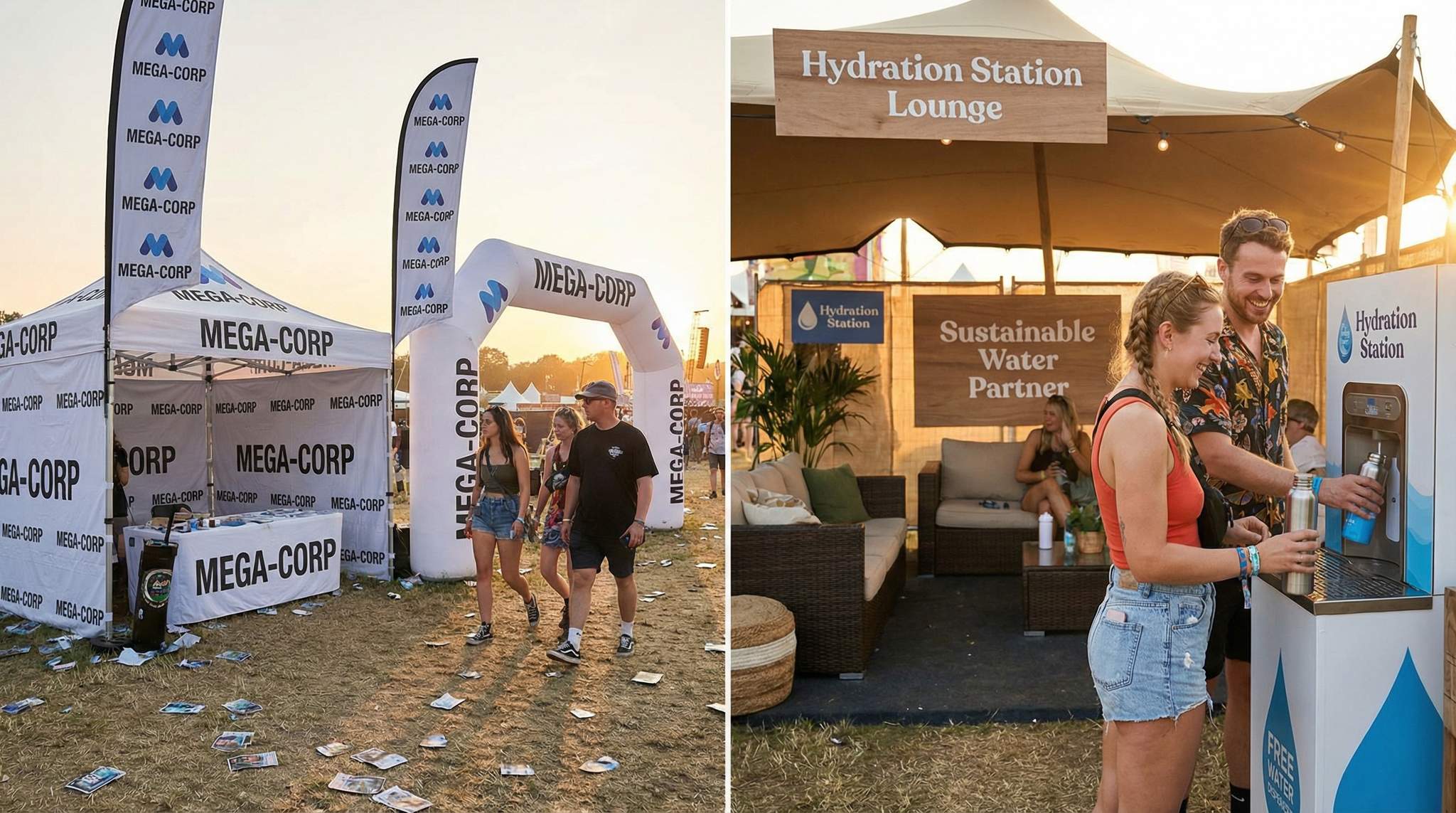
Walk onto some festival grounds and you might think you’ve entered a marketing expo. Banner ads on every fence, logos covering stages, tents, even porta-potties – an overzealous attempt to give sponsors visibility. It’s a common mistake: equating sponsorship success with sheer volume of branding. Not only does this logo overload cheapen the festival’s atmosphere, it often doesn’t even deliver value to sponsors. Attendees quickly tune out a sea of ads. In worst cases, fans mock the festival for “selling out,” as happened when one UK music festival plastered sponsor logos so indiscriminately that social media was flooded with complaints about the “brand takeover.”
Industry veterans caution that signing too many sponsors can backfire. If a festival has 15+ sponsors all vying for attention, each logo or mention is less impactful – and your team will struggle to service them all. As noted in guides on sponsorship strategies for year-one festivals, signing a long list of partners can dilute the impact of each one. One seasoned producer recalls a small EDM festival that welcomed every local sponsor they could; attendees were bombarded with flyers and ads from a dozen companies. The result? Sponsors felt lost in the noise and didn’t return, and fans said the constant ads ruined the vibe. More sponsors does not automatically mean more money if the experience deteriorates.
Data-Driven Event Marketing
Track ticket sales, demographics, marketing ROI, and social reach in real time. Exportable reports give you the insights to make smarter decisions.
Why Logo Overload Hurts the Experience
For festival-goers, a barrage of untargeted ads can feel like a betrayal. People attend festivals for music, art, community – not to be treated as walking wallets. When branding overshadows the culture, attendees notice. A clutter of logos can actively erode audience trust: instead of remembering the amazing performance or the sense of community, fans leave talking about how “commercial” the event felt. This damages the festival’s brand in the long run. From the sponsor’s perspective, being one of many logos thrown at a disinterested crowd isn’t great ROI either. Sponsors pay for fan engagement, not billboard wallpaper. As one sponsorship expert put it, if you can’t plan unique integrations for every sponsor, you probably have too many sponsors in the mix. It’s better to downsize and make each partnership count, because spreading your team too thin can result in none of the sponsors getting the care they need.
There’s also a practical downside: cluttered branding can violate local bylaws or venue rules (some cities limit signage and corporate presence at cultural events). We’ve seen festivals forced to take down banners mid-event due to complaints, wasting sponsors’ investment. And consider media coverage – photos of your festival plastered with logos send a message that the event is more about advertisers than art. That’s not the PR you want.
Planning a Festival?
Ticket Fairy's festival ticketing platform handles multi-day passes, RFID wristbands, and complex festival operations.
Case Study: Sponsors That Enhance, Not Distract
The best festivals today are flipping the script on old-school logo-centric sponsorships. Instead of just plastering logos, they compel sponsors to add value on-site. For example, major events like Coachella and Glastonbury have partner brands who provide free water refill stations, shade tents, phone charging lounges and other useful amenities, as seen in case studies on sponsor portfolios that add utility. Attendees love these perks – they solve pain points (heat, thirst, dead phone batteries) and make the sponsor look like a hero. A Case Study in the Ticket Fairy Promoter Blog found that festivals installing hydration hubs, cool-down zones, and charging stations with sponsor support not only improved attendee satisfaction, but earned those sponsors glowing fan sentiment and multi-year loyalty. When a festival in California partnered with a tech company to create a Wi-Fi and device charging lounge, thousands of grateful fans interacted with the brand in a positive way – far more meaningful engagement than a static banner ad would ever achieve.
Sponsors can also enhance programming. At Lollapalooza India 2023, Johnnie Walker set up a whiskey lounge that became a social hub for adults – a respite from the music where fans could relax and connect. It didn’t feel like an ad; it felt like part of the festival fabric, proving that healthier sponsorships are built on engagement. Likewise, at Spain’s Primavera Sound, a long-term partnership with Heineken helped fund new stages and sustainability programs, creating features fans actually value rather than just signage. These examples show that when sponsors align with attendee needs, the branding comes naturally. A well-placed logo on a free water station or a sponsored “chill-out lounge” where exhausted fans can rest will generate far more goodwill (and social media mentions) than dozens of banners ever could.
How to Fix It: Focus on Quality Over Quantity
To avoid the logo overload trap, prioritize quality of sponsorships over quantity. This means limiting the number of sponsors so each can shine with a meaningful presence. Many experienced festival organisers advise securing fewer sponsors, but forging deeper partnerships with each, a strategy often recommended for building sustainable festival sponsorship models. Rather than selling ten sponsors a basic logo placement, try to sign three to five sponsors to whom you can devote real attention. Give them each an exclusive niche – one sponsor powers your “Hydration Haven” with branded water refill stations, another creates a “Recharge Zone” with seating and phone chargers, etc. This way, sponsors get noticed for their contribution to the festival experience, and attendees remember the brand fondly (“They’re the ones who handed out free cold water!”).
When structuring sponsor packages, brainstorm assets that add utility or delight. Do you have a picturesque spot at the venue? Offer it as a branded relaxation garden. Is heat or rain an issue? Propose that a sponsor provides a shaded pavilion or free ponchos. Think beyond banners: photo booths, art installations, interactive games, even sponsored festival shuttles can integrate a brand in a fan-friendly way. The key is to ask, “What will make attendees’ experience better?” and then involve sponsors in delivering that. This approach naturally limits pointless logo proliferation because every brand activation must serve a purpose.
Grow Your Social Following With Every Sale
Require social media follows, shares, or playlist adds to unlock presale access or special pricing. Turn every ticket purchase into audience growth.
Finally, remember that less is more when it comes to branding visibility. Maintain a cohesive look – you can set guidelines so sponsor logos appear in certain areas or formats that don’t conflict with your festival’s aesthetic. Many top festivals have rules like no unsanctioned signage outside of sponsor zones, or a cap on logo size on stage screens. By curating where and how sponsors appear, you prevent that tacky Nascar-effect. Your festival’s identity remains front and center, with sponsors as welcome supporters rather than overwhelming billboards.
Another highly effective way to reduce physical logo clutter on the festival grounds is to shift visibility to digital touchpoints before the fan even arrives. Many organizers ask, “How do I integrate sponsor logos into the ticketing flow?” The answer lies in utilizing your ticketing platform’s customization features to offer high-value digital real estate. You can seamlessly integrate sponsor logos into the ticketing flow by placing them on the purchase confirmation page, embedding them in the digital ticket delivery emails, or offering a “presented by” banner during the checkout process. This strategy gives sponsors guaranteed impressions at a moment of high fan excitement, allowing you to keep the actual festival site cleaner and more focused on the immersive experience.
Need Festival Funding?
Get the capital you need to book headliners, secure venues, and scale your festival production.
Misaligned and Tone-Deaf Sponsorships
When Sponsors Don’t Fit the Festival
Not every sponsorship is good sponsorship. A common mistake is chasing a big-name sponsor whose brand or message clashes with the festival’s ethos or audience. This misalignment can range from mildly awkward to outright damaging. Imagine a vegan food festival sponsored by a barbecue meat company – the attendees would recoil. Or a family-friendly community fest partnering with an alcohol brand known for risqué advertising. These are extreme examples, but subtler mismatches happen frequently. The result: attendees feel the festival has “sold out” or lost its identity, and the sponsor fails to connect with the crowd.
One recent real-world example involved the Essence Festival of Culture, a celebration of Black music and empowerment, and a corporate retailer sponsor. In 2025, Essence Fest faced fierce fan backlash for sticking with a sponsor that had come under fire for scaling back its diversity initiatives, as reported regarding Essence Festival’s partnership controversies. The partnership looked tone-deaf – the brand’s actions seemingly undermined the festival’s core values. Organizers had to publicly acknowledge the discontent, explaining they were contractually bound, but it left a stain on that year’s event. The lesson? If a sponsor’s reputation or values conflict with your audience’s, no amount of sponsorship dollars will make up for the trust you lose. Fans are increasingly values-driven and will call out brands (and festivals) that feel inauthentic, necessitating robust ethical policies for sponsorships.
Misalignment isn’t always about controversial values – sometimes it’s simply a poor contextual fit. Picture an underground techno rave plastered with a bright, bubbly soda pop logo; it just feels off. At one alternative culture festival, organizers invited a luxury car brand as a sponsor, envisioning cool sports cars on display. Instead, attendees (mostly eco-conscious millennials with no interest in gas-guzzlers) ignored the booth completely, and the cars sat embarrassingly idle all weekend. The sponsor was disappointed, and the festival wasted a prime spot that could have gone to a more relevant partner. Knowing your audience demographics and subculture is vital when pairing sponsors. A festival geared toward indie art and local craft should probably partner with indie artisans or a hip local coffee company, not, say, a random telecom giant whose presence might scream “corporate”.
To achieve true alignment, festival producers must strive for contextual harmony. When pitching to sponsorship brand teams, emphasize that a contextual fit is just as critical as the financial investment. Brand managers are increasingly evaluated on how organically their activations blend into the cultural fabric of an event. If a brand team understands that their presence needs to feel like a natural extension of the festival rather than an intrusive commercial break, you are much closer to achieving that elusive contextual harmony. This shared understanding prevents the friction that occurs when a sponsor tries to force a square-peg activation into a round-hole festival environment.
Cultural Sensitivity and Ethical Guardrails
Beyond fit, festivals must ensure sponsor activations are culturally sensitive and respectful. What might seem like a playful marketing idea to a brand’s team could be offensive or inappropriate in the festival context. For instance, a sponsor handing out Native American headdresses as a promotion at a dance festival would (rightfully) trigger outrage for cultural appropriation. Or a liquor sponsor encouraging heavy drinking games at a festival that promotes wellness and safety – a total disconnect that could even become a health risk. Festival organisers need to vet all sponsor plans and creative content through an ethical lens, using brand safety and ethical guardrails. Top festivals today set clear sponsorship policies about what’s off-limits: e.g., no imagery that trivializes cultural symbols, no activities that endanger attendees or conflict with the event’s mission.
Communication is key. If a potential sponsor’s product or history is a sensitive topic for your community, address it upfront. Some festivals even include clauses in contracts reserving the right to review and approve all sponsor messaging and activations to ensure they won’t alienate the audience. It’s also wise to have a Plan B: if a sponsor’s public image takes a sudden turn (say, a scandal or backlash as happened with the Essence/Target situation), you should have an exit clause or contingency plan. Your festival’s reputation is hard-won and must come first. Remember, a bad sponsorship can do lasting harm, whereas walking away from one deal (or finding a better-aligned replacement) can save you in the long run.
On the flip side, sponsorships that align with your festival’s values can greatly enhance your brand. Many forward-thinking festivals seek out mission-driven sponsors that amplify their cultural ethos. For example, a sustainability-focused festival might partner with renewable energy companies or eco-friendly brands to sponsor its recycling programs and solar stages. This isn’t hypothetical – festivals that emphasise green initiatives have attracted sponsors in sectors like organic food and outdoor gear, because those brands see a mission match. As the Ticket Fairy Blog notes, the old model of “logos and dollars” is fading; today the best sponsorships are true partnerships with mission alignment where the sponsor’s values resonate with the festival’s message, which helps in building a sustainable festival brand. When a sponsor activation feels authentic to attendees, it ceases to be seen as an ad and instead comes off as a positive contribution.
Getting the Right Sponsors on Board
So how do you get it right? Start by defining your festival’s identity, audience, and core values before you pitch sponsors. Be clear on what your community stands for (music genres, lifestyle, social causes, etc.) and seek brands that share that DNA. This might mean turning down a lucrative deal that doesn’t fit – a tough call, but one that seasoned organisers say pays off in credibility. For instance, the producers of a prominent hip-hop festival once declined a large fast-food sponsorship because they knew their audience prized a certain authentic, grassroots vibe that an overload of fast-food branding might disturb. Instead, they courted an urban streetwear company and a local tech startup – both smaller deals in cash value, but a huge hit with fans on-site due to free merch and relevant content. The next year, those sponsors increased their investment. Alignment breeds loyalty.
Do your homework on potential partners. Research a brand’s public perception and past sponsorships. If your festival celebrates diversity and a company has been in the news for clashing with those values, think twice (or insist on a specific joint initiative that clearly demonstrates progress or sincerity on that front). Many festivals now adopt something akin to a brand safety checklist for potential partners. This can include looking at their advertising for any tone-deaf campaigns, ensuring their product is legal/appropriate for your attendee age group, and confirming they have a solid track record as sponsors elsewhere. Don’t hesitate to ask other festival producers about their experiences with a sponsor – the events industry is a small world, and informal references are invaluable.
When you do find a well-aligned sponsor, celebrate and showcase that partnership. Involve them in a community initiative or on-theme activation. For example, if a music festival’s ethos is all about local art, maybe your aligned sponsor can fund a live mural painting by local artists during the event, with subtle branding. This both promotes the sponsor and deepens your festival’s cultural impact. By creating sponsorships that authentically enhance what your festival is about, you turn would-be pitfalls into big wins for everyone: the sponsor gets genuine engagement, the attendees get a richer experience, and your festival stays true to itself.
One-Sided Deals and Imbalanced Partnerships
The Problem: Deals Skewed in One Party’s Favor
Another thing many festivals get wrong is structuring sponsorship deals that are one-sided or vague, leading to disappointment and conflict. In the rush to secure funding, a newer festival might over-promise benefits to a sponsor – only to find they can’t deliver everything, or that fulfilling the sponsor’s demands compromises the event. On the other side, some sponsors push festivals into lopsided agreements where the brand gets tons of perks (and control), but the festival receives little real support beyond a check. An imbalanced sponsorship is not truly a partnership; it’s a recipe for short-term money and long-term headaches.
Signs of a one-sided deal include unclear expectations, excessive demands, or lack of mutual benefit. Perhaps the contract is so sparse that the sponsor expects far more than you intended to give, leading to last-minute friction (“We thought we’d get a prime-time stage mention every hour!” “No, that wasn’t in our plan…”). Or maybe the sponsor insisted on exclusive rights that hamstring your operations – for example, a beverage sponsor who blocks you from selling any other drinks, but then doesn’t adequately supply the event. (Imagine the outrage if one beer brand runs out midway and you’re forbidden from bringing in alternatives.) If your attendees are unhappy or your hands are tied because of a sponsor arrangement, that deal is hurting your festival’s reputation and revenue.
Industry insiders have observed a troubling trend: sponsors’ demands have grown in recent years, but fees haven’t always kept pace, creating an imbalance in the live music sponsorship ecosystem. Festivals often feel pressured to throw in more deliverables – elaborate brand activations, influencer access, year-round content – for the same sponsorship fee. One festival organizer candidly shared that their team ended up acting like an ad agency for a big sponsor, producing custom social media videos and even altering event schedules to suit the brand’s campaign, all for a modest check. The workload and compromises far outweighed the financial benefit, nearly inflating the partnership into a loss. This kind of imbalance is unsustainable; it leads to burnout and a festival bending over backwards while the sponsor wonders why promised results didn’t materialize.
One extreme example: At a major U.S. festival in 2025, a well-known brand secured naming rights and essentially became a co-headliner of the event, a trend highlighted in reports on how sponsorships drive the live music world. The festival was rebranded with “Presented by [Sponsor]” in its title, and the site was flooded with the sponsor’s own zones and giveaways. While the paycheck was large, attendees and media felt the line between festival and marketing stunt had blurred. If a sponsor’s presence is so dominant that it overshadows the festival itself, that’s a one-sided deal gone too far. The festival may have gained short-term revenue but risked long-term brand damage by ceding too much control.
Consequences of Over-Promising (or Under-Delivering)
When a sponsorship deal is out of balance, neither party truly wins. If the festival over-promises, the sponsor will be disappointed by under-delivery – perhaps foot traffic to their activation was lower than the unrealistic guarantee, or the “exclusive” exposure they were sold is diluted by other ads. Disappointed sponsors walk away and likely spread the word to other brands that your event didn’t meet commitments. This can quietly hurt your reputation in sponsorship circles. Conversely, if a sponsor overreaches and dominates without delivering real value to the festival, you may fulfill the contract and still feel a net loss. For example, giving a title sponsor too much influence can alienate your audience (as discussed earlier) and diminish ticket renewals, far outweighing the sponsorship dollars earned.
Additionally, lopsided deals can strain your operations and staff. It’s demoralizing for a production crew to constantly “serve” a sponsor’s every whim if it detracts from running a good festival. One festival operations manager recounted how a last-minute sponsor-added stage (demanded by contract) stretched their tech team so thin that a power outage on the main stage wasn’t fixed as fast as it should have been – because staff were busy tending to the sponsor area. The audience didn’t care why it happened, they just saw the festival drop the ball. A mis-prioritized deal can directly impact attendee experience and safety.
Financially, an imbalanced deal might not actually be profitable when you calculate the extra costs. If a sponsor pays $50,000, but fulfilling their VIP catering, extra signage, custom app integration, and free merch for attendees costs you $30,000, then factor in the opportunity cost of what else you could have sold or the discount you gave versus market rate – the net gain may be slim. Savvy festival producers calculate the true cost of servicing each sponsor to ensure they’re not losing money or time on the deal.
Lastly, one-sided deals often mean one-and-done. The sponsor doesn’t renew (or you don’t want them back) because one side felt shortchanged. That leaves you hunting for new sponsors each year – an exhausting and risky position to be in. It’s far more efficient to have sponsors renew, but they won’t if they feel they didn’t get value (or if you feel burned). Thus, imbalance directly undermines the goal of building long-term sponsorship stability.
How to Strike Win-Win Sponsorships
Rescuing a one-sided situation starts with open communication and clear terms. Before signing anything, discuss goals openly: What does the sponsor really want out of this? If they say “brand awareness,” dig deeper – maybe they actually want social media content, lead generation, or on-site sales. If what they need isn’t something your festival can deliver organically, that’s a red flag. It’s better to be transparent than to nod along and fail later. When crafting agreements, detail the deliverables and metrics of success. For example, instead of vaguely promising “lots of exposure,” specify placement (e.g. logo on main stage screen 5x per day, two dedicated social media posts, 10k impressions expected). Specificity protects both sides – the sponsor knows what they’re getting, and you know what you’re providing.
Aim for balance in benefits. A healthy deal means the sponsor achieves their marketing objectives and the festival gains resources or enhancements that justify the effort. One approach is to tie sponsorship fees to tangible benefits: if a sponsor wants extra activations or a larger footprint, scale the fee accordingly or ask them to cover certain costs (for instance, “You want a branded afterparty? Provide the additional security staff for it.”). Festivals that treat sponsorships as partnerships will negotiate terms like shared risk and reward. This might include performance-based elements: e.g., if the sponsor activation attracts over 5,000 engagements, maybe they pay a bonus, whereas if it underperforms, you both regroup on how to improve (rather than you guaranteeing an outcome you can’t fully control).
Also, don’t undervalue your assets. New festival producers sometimes set sponsorship prices based on what they need budget-wise, rather than the actual marketing value. Do some homework – what are sponsors paying at similar events for comparable exposure? Are you throwing in your festival’s naming rights or premium assets too cheaply just to close the deal? It’s often better to start modest (with fewer promises) and over-deliver, than to promise the moon. If a sponsor insists on something huge like title sponsorship, ensure the fee and relationship is truly worth essentially co-branding your event. Many veteran organisers will only consider title sponsors who commit to multi-year deals and significant investment, because the festival’s name and identity are so tied up in that decision.
For festivals that keep finding themselves on the short end of the stick, consider seeking mentorship or examples from successful sponsorships elsewhere. Look at how major events structure deals: they often include exclusivity clauses carefully (limited to a reasonable category and sometimes with opt-outs if the relationship sours), they set deliverables that are ambitious but achievable, and they often involve year-round partnership activities (like sponsor launch events or joint press releases) so that the value is spread out, not just riding on one weekend. By modeling a professional, balanced approach, you can renegotiate future deals more in your favor. It’s perfectly acceptable to push back on a sponsor’s ask – for instance, if they want more on-site presence, you might say “We can accommodate that, but we’ll need additional budget or we’ll make it part of a longer-term deal so it’s worth our while.” Most brands respect festivals that know their worth. They ultimately want the event to be successful too, because that’s how their investment pays off.
Finally, aim for multi-year partnerships whenever possible (more on this later). A one-off deal is inherently transactional; by contrast, a multi-year deal encourages both parties to be reasonable and invest in the festival’s growth. Sponsors taking the long view are more likely to contribute to the event’s infrastructure or content (a win for you) and be patient for returns, while you can plan improvements with their future support in mind. The most celebrated festival sponsorships – think of Absolut Vodka’s long-running sponsorship of Tomorrowland’s art installations, or Bacardi’s decade-long association with India’s NH7 Weekender – were forged over years of trust and mutual benefit, demonstrating that long-term investment enables innovation. They became true partnerships rather than line-item deals. Strive for that ethos even in smaller sponsorship agreements by focusing on win-win outcomes and maintaining an open dialogue. When both festival and sponsor feel they got a good deal, you’ve done it right.
Neglecting Post-Event Follow-Up
The Forgotten Step: After the Festival Ends
When the last encore is over and attendees head home, festival teams are often exhausted – and tempted to move on and put sponsorship matters to rest until next year. This is where many festivals make a critical mistake: neglecting post-event follow-up with sponsors. All the energy went into pitching and executing the sponsorship, but what about after? If you pack up and go radio-silent until it’s time to ask for money again, you’ve squandered a huge opportunity and possibly soured the relationship.
What does follow-up entail? At minimum, thanking the sponsor and recapping the results. It sounds obvious, yet surprisingly many organisers either delay or provide only a cursory “thanks, it was great!” note. Sponsors today expect more – they’re often accountable to their own higher-ups to prove the sponsorship’s worth. Failing to promptly deliver a thoughtful post-event report or at least a meeting is a surefire way to make a sponsor feel undervalued. Imagine you invested in a partnership and then heard nothing for weeks; you’d question if your contribution mattered. That’s how sponsors feel if a festival doesn’t close the loop.
Another aspect is community recognition. Some festivals forget to publicly acknowledge sponsors after the event (being too busy wrapping up). A simple social media shout-out or a recap blog post crediting sponsors for their role can go a long way in making brands feel appreciated. When this is skipped, sponsors notice. One festival sponsorship manager shared that their client almost didn’t renew because “we had to chase them for the recap and never saw any post-event thank you to the fans.” The sponsor wondered if they were just a check to the organisers. No sponsor wants to feel like an ATM that’s ignored after dispensing cash.
Why Post-Event Engagement Matters
Closing the loop isn’t just polite – it’s strategic. A comprehensive post-event report is often the key to securing sponsor renewals. Creating post-event reports that win renewals is essential. Research indicates that post-event fulfillment reports rank among the most valued services a festival can provide a sponsor to close the loop and secure future funding. These reports demonstrate in black-and-white (and colorful charts) what the sponsor got out of the deal: attendance figures, brand impressions, engagement metrics, press coverage, social media reach, onsite feedback – all the KPIs that were promised. Delivering this information in a professional format within a week or two after the festival shows the sponsor three things: you’re organised, you delivered on your promises, and you care about their investment. This transparency proves the ROI and builds trust, setting the stage for discussing next year while the success is fresh. In contrast, if you wait months to send results (or never quantify them at all), the momentum is lost and the sponsor may have mentally moved on.
Post-event engagement also allows you to collect feedback and solidify the relationship. A week or two after the festival, it’s wise to have a debrief call or meeting with each major sponsor. This is a chance to ask: What went well from your perspective? What could be improved? Did the sponsorship meet your expectations? This dialogue can yield invaluable insights (maybe the sponsor reveals they had far more foot traffic at their booth than anticipated, or perhaps their on-site reps felt they needed a better location). It also gives you a chance to address any issues while they’re small. Sponsors appreciate when organisers are proactive about discussing outcomes – even if something underperformed, you can acknowledge it and propose ideas to enhance it next time. This transparency builds trust, showing that you’re not just cashing their check but truly partnering in their goals.
Furthermore, maintaining contact in the off-season keeps your festival in the sponsor’s mind (in a good way). If you disappear for 10 months and then suddenly reappear with your hand out for the next festival, it’s a very transactional feeling. Instead, consider periodic updates: send sponsors a mid-year update on big developments (e.g., “We secured an amazing new venue for next year – excited to have you see it!”) or share any media accolades your festival got, giving a nod to sponsor contributions. Some festivals even create sponsor newsletters or host an appreciation event for partners. For example, a renowned film festival hosts an annual luncheon to thank sponsors and preview the next year’s theme, which makes sponsors feel like insiders. These touches deepen the relationship so that when renewal time comes, the sponsor is already inclined to continue because they feel part of the festival family.
How to Do Follow-Up Right
Start planning the follow-up before the festival even happens. Build a template for your post-event report while you’re in pre-event mode, identifying the key metrics you’ll report on. Typical sections include: a summary of the event (attendance, highlights), sponsor branding exposure (e.g., on-site signage reach, any online/live-stream impressions), engagement stats (booth visits, contest entries, samples distributed), social media impact (mentions of the sponsor, hashtag reach), press coverage that included the sponsor, and qualitative feedback like attendee survey results that mention the sponsor. If you have the capacity, take photos of the sponsor’s activation and presence during the event to include in the report – seeing a smiling crowd at the sponsor’s booth or a packed audience in the “XYZ Brand Stage” tent provides powerful validation. By outlining the report early, you also remind yourself what data to capture during the festival (such as counting how many people used the sponsor’s lounge or participated in their activation).
Be timely and thorough. A good practice is to send an initial thank-you email within 24-48 hours of the festival’s close – a warm note expressing appreciation for their support, perhaps with one exciting preliminary stat (“We saw over 5,000 fans visit your gaming dome – it was a hit!”). Then, deliver the full report within 1-2 weeks. According to experienced promoters, a two-week turnaround hits the sweet spot, ensuring timeliness in delivering sponsorship data. If you need more time for certain metrics (maybe you’re waiting on a third-party survey analysis), send a partial report or let the sponsor know when to expect the final numbers, rather than going quiet.
In your report or follow-up meeting, highlight the value clearly. Compare outcomes to the goals set initially. For example: “Goal was 3 million online impressions; we achieved 3.5 million across Instagram and TikTok during festival week. Goal was 5,000 booth interactions; we recorded approx. 6,200 visits to your activation area.” If you can, translate exposure to a more tangible ROI metric (some festivals use ad value equivalents – e.g., the media coverage value – or track codes to show how many sales a sponsorship drove). Include testimonials or social media snippets if available: a screenshot of a festival-goer praising the sponsor’s contribution (“Shoutout to @CoolBeverage for the free water at #FestivalName – lifesaver! ?”) is gold to show the authentic impact. Use visuals – charts, infographics, and photos – to make the report engaging; many sponsors will forward this to their higher-ups, so polish matters.
Crucially, make renewal the natural next step. In your closing comments, express that you’d love to build on this year’s success and perhaps even drop a teaser for what you could do together next year (“Next year, we’re considering expanding the VIP area, and we immediately thought of involving you as the exclusive partner given how well our audience responded to your brand this time.”). This plants the seed and turns the conversation toward the future. Some festivals even attach a preliminary proposal for a renewal package to the report (or present it in the follow-up meeting). Even if the sponsor isn’t ready to sign on yet, you’ve made it easier for them to say yes by showing you’re proactive and thinking about their goals ahead of time.
Finally, remember that follow-up is not one-size-fits-all. Tailor your aftercare to the sponsor’s level and preferences. A small local sponsor might be thrilled with a coffee thank-you meeting and a short recap email. A major corporate sponsor likely expects a formal report and maybe a presentation meeting with slides. Match your style to what fits the sponsor. And always keep the tone appreciative: sponsors support your vision, so genuine gratitude and professionalism go a long way. Festivals that excel at sponsorship retention treat their sponsors like valued partners year-round – your follow-up process is the first step in that year-round engagement.
Underwhelming On-Site Activations and Poor Logistics
Activations: If You Build It Wrong, They Won’t Come
It’s one thing to sign a sponsor and agree on an activation – it’s another to execute it well on the festival floor. Many festivals get the sponsorship basics right but falter when it’s showtime, resulting in underwhelming or chaotic sponsor activations. A classic mistake is sticking a sponsor booth or experience in the wrong place: too far from foot traffic, or in a congested area that frustrates attendees. If festival-goers don’t engage with the activation (or worse, actively dislike its impact), the sponsor’s effort is essentially wasted, and the festival may suffer operational hiccups or complaints.
Common on-site errors include poor layout, inadequate staffing, technical failures, or simply a boring concept. For example, at a large outdoor festival in Asia, a major electronics sponsor set up an interactive VR game tent – sounds great, except they placed it right next to the main stage speakers. The deafening sound bleed made it impossible to hear the game instructions, and the VR experience left people dizzy when bass from the stage rattled the floor. Hardly anyone stuck around, and the expensive activation flopped. The sponsor was upset at the turnout, and the festival had essentially allowed a cool idea to fail by not integrating it thoughtfully into the site plan. In another case, a beverage sponsor offered a “chill lounge” for people to sample drinks, but they underestimated demand and sent only two staffers – lines grew long, service was slow, and thirsty fans walked away annoyed. That’s the opposite of brand enhancement.
A particularly dangerous scenario is when logistics aren’t ironed out. One festival invited a car sponsor to do test drives on a track area, but without clear scheduling and route barriers, it nearly caused accidents as festival pedestrians wandered near the test area. Festival staff had to shut it down midday, a huge embarrassment for both the sponsor and the organisers. The devil is in the details: power supply, Wi-Fi, permits, staffing, signage – a sponsor’s on-site presence is only as good as the planning behind it. When festivals treat sponsor activations as an afterthought, the results can range from forgettable to fiasco.
At its core, a truly effective festival sponsorship activation must transcend the traditional trade-show mentality. Promoters need to view these physical footprints as immersive micro-events within the larger festival ecosystem. When a brand’s onsite presence is treated merely as a transactional space to hand out flyers, it fails to capture the high-energy, experiential mindset of a live music or arts crowd. The goal is to design an interactive environment that attendees actively seek out, rather than a corporate obstacle they try to walk around.
Designing Activations Fans Actually Love
The best sponsor activations don’t feel like advertisements – they feel like part of the fun. To achieve this, festivals should collaborate closely with sponsors on creative, interactive experiences that match the event’s vibe. It starts with asking a simple question for any activation: Would I as a festival-goer enjoy this? If the honest answer is no, back to the drawing board! Some of the most beloved activations have been those that offer entertainment or utility with minimal “sales pitch.” For instance, at a major EDM festival, a tech sponsor set up a free 360° photo booth where friends could get a slow-motion video of themselves with the festival stage in the background. It was wildly popular – attendees lined up for it, shared their videos online (with the sponsor’s logo subtle in the corner), and associated the sponsor with a memorable experience. The sponsor got brand exposure and social media buzz, the fans got a cool keepsake. Win-win.
Integration into the festival theme or content is key. A misstep is doing something generic that ignores the festival’s character. If you run a cosplay/anime festival, a sponsor’s activation should probably incorporate cosplay, fantasy or art elements – a plain branded tent giving away keychains won’t cut it. One successful example comes from a comic-con style festival where a streaming service sponsor created a lounge styled as a living room from a popular TV show, complete with set pieces for photo ops. It felt like an extension of the fest’s attractions rather than a separate marketing push. Attendees actively sought it out. In contrast, a misaligned activation at a 90’s nostalgia music festival featured a modern digital banking sponsor trying to sign people up for accounts on-site – no one was in that mindset, and it fell flat. If they’d instead leaned into nostalgia (say, an arcade game station branded by the bank), it might have connected.
Operational excellence is the unglamorous hero of great activations. Ensure the sponsor’s area has the necessary infrastructure: reliable power (backups if critical), lighting for night, enough physical space so crowds gathering won’t block exits or other attractions, and clear signage so people know what it is. Crowd flow is important – work with sponsors on where to place queues or how to layout their booth so it’s inviting. Some festivals have a dedicated “sponsor activation manager” role during the event, whose sole job is to liaise with sponsor teams, monitor their setups, and troubleshoot issues. That kind of attention can save an activation from disaster. If a generator goes down at the sponsor’s stage, your team should know immediately and have a fix on hand, rather than the sponsor scrambling alone and the crowd getting restless.
One more tip: promote the activations as part of the festival program. Don’t relegate sponsors to the sidelines in communications. If a sponsor is providing a cool experience, mention it in the festival map, app, or announcements (“Visit the XYZ tent at 4 PM for a surprise performance!”). This drives traffic and signals to fans that it’s a curated part of the event. Some festivals even integrate sponsor activations into the main schedule – e.g., a sponsored “silent disco” after midnight listed alongside artist performances. When done right, attendees don’t differentiate between “sponsor” content and festival content; it’s all part of the adventure.
To elevate a standard booth into a memorable festival sponsorship activation, organizers should encourage brands to leverage multi-sensory elements and gamification. Think beyond static displays: incorporate dynamic lighting, custom soundscapes, or interactive digital touchpoints that sync with the event’s official app. Furthermore, tracking the success of these experiential builds is crucial. By utilizing RFID wristband scans, QR code check-ins, or localized Wi-Fi analytics, producers can provide concrete data on dwell time and unique visitor counts, proving the tangible ROI of the physical footprint to the brand’s marketing team.
How to Nail the Execution
To ensure sponsor activations succeed, plan early and often with the sponsor’s team. Once a sponsorship agreement is signed, immediately loop in your operations and creative teams to begin designing the on-site presence. Share detailed info with the sponsor: expected foot traffic patterns, busy vs. quiet times, demographic insights about attendees, any venue restrictions. Many pitfalls can be avoided by aligning expectations at the outset. If a sponsor proposes something that won’t work (e.g., handing out free glass bottles in a field – a safety hazard), explain the concern and find an alternative (maybe aluminum bottles or reusable cups). It’s far better to problem-solve in advance than to repair damage on the day of the show.
Schedule a walkthrough of the site with major sponsors, if feasible, or at least a virtual walkthrough using maps. Show them where their activation could go and discuss the layout. This manages their expectations (“Oh, it’s not as huge a space as we thought, maybe we’ll simplify our setup”) and also demonstrates your professionalism. It’s also a chance to spot needs – e.g., the sponsor might mention requiring a forklift to move a heavy display; you can then coordinate to have that available. Some festivals build the cost of such support into sponsor fees, but whether or not you do, being prepared avoids last-minute scrambles like looking for a generator on show day because the sponsor didn’t mention they needed power for a fridge.
Training and staffing are another critical piece. If the activation involves festival volunteers or staff (say, you’re providing crew to help run a sponsor’s area), ensure they are well-briefed on the sponsor’s goals and any talking points. Even if the sponsor brings their own promo staff, it’s wise to have one festival point-person nearby, especially at launch time, to ensure everything runs smoothly and that they adhere to festival rules. For example, if a sponsor’s staff start doing something not allowed (like roaming into crowds with unapproved giveaways), your point-person can gently correct that. Maintaining a good relationship involves helping sponsors succeed within the boundaries that keep your event enjoyable and safe.
For larger events, investing in dedicated onsite sponsorship production is a game-changer. Rather than leaving brand reps to figure out the physical build themselves, having a specialized onsite sponsorship production manager ensures that every activation is constructed safely, on time, and in alignment with the festival’s aesthetic standards. This liaison bridges the gap between the sponsor’s creative vision and the harsh realities of festival logistics—managing heavy machinery load-ins, coordinating union labor if required, and ensuring weather-proofing. When you provide top-tier production support on the ground, sponsors feel taken care of, and the resulting activations are far more polished and impactful.
Be ready to adapt on the fly. Despite planning, live events always have variables – maybe an activation is too popular and causing unexpected queues, or not attracting enough people because it’s tucked away. Train your team to monitor sponsor zones periodically and report issues. If adjustments can be made (like redistributing a line, adding more signage, or even re-locating a minor setup that isn’t getting love), coordinate with the sponsor and do it. This responsiveness shows sponsors that you’re committed to their success. One festival noticed mid-day that a sponsor’s game booth was under-attended; they quickly sent out a push notification on the festival app about a prize giveaway happening at that booth. The surge of participants delighted the sponsor, who otherwise might have left feeling the activation flopped.
After each festival day (if it’s a multi-day event), check in with your sponsors. A short nightly debrief can catch issues while there’s still time to fix them for the next day. Something like, “How did Day 1 go for you? Any concerns?” goes a long way. Perhaps they’ll mention they ran out of swag or need an extra table – problems you can solve overnight. Proactive service like this can turn a mediocre activation into a great one by festival’s end, and it ingrains goodwill. Sponsors will remember that you were attentive to details that made their on-site experience better.
In summary, executing sponsor activations flawlessly is about treating them as an integral part of the event plan – not an accessory. When you invest effort in logistics, creative alignment, and real-time support for sponsors, you transform what could be a forgettable promo tent into a highlight of the festival. Attendees will then see sponsors not as a necessary evil, but as partners who made their experience richer. And sponsors, seeing the enthusiastic response, will be eager to return.
Sacrificing Festival Identity for Sponsor Dollars
Selling Out: Perception vs. Reality
Festivals walk a fine line between commercial partnerships and cultural integrity. One of the gravest errors is when a festival sacrifices its own identity or values in the pursuit of sponsorship money. This often manifests in the festival’s branding or programming being overtaken by a sponsor’s influence. The classic sign is hearing longtime fans say, “It doesn’t feel like our festival anymore.” When a festival becomes a vehicle purely for marketing, it risks losing the authentic magic that made it popular in the first place.
Sometimes this happens in a very visible way, like changing the festival’s name or imagery to incorporate a sponsor. For instance, if a beloved indie festival rebrands as “BigCorp Presents XYZ Fest,” it can spark backlash unless handled extremely carefully. Fans might see it as the festival “selling its soul.” A recent high-profile case was When We Were Young festival adding a major convenience store chain as title sponsor – it officially became “WWWY Festival presented by [7-Eleven]”, a first for a major U.S. fest, reflecting the increasing branding integration in live events. While the organizers saw it as a financial win (and argued there was a sort of quirky synergy with the brand’s products and the pop-punk crowd), many attendees were taken aback by the overt co-branding. The site had themed 7-Eleven hangouts and promotions everywhere, a symptom of rising commercial pressure on festivals, to the point some joked the headliner wasn’t a band at all, but the sponsor.
But identity sacrifice can also be more subtle: if a sponsor starts dictating content in ways that conflict with the festival’s spirit. Imagine a music festival known for championing emerging local artists, but then a big sponsor pressures the lineup to include a couple of mainstream pop acts that feel out of place, just because they want a bigger audience. Or a counterculture festival that prides itself on DIY aesthetic suddenly has a slick corporate presence that feels antithetical to its roots. Even if the average attendee can’t point out exactly what changed, they sense it. The authenticity fades, and ironically, the festival’s value to sponsors might decline too, because the passionate community that made it special begins to dissipate.
Balancing Commerce with Culture
The reality is, festivals do need sponsor dollars – as we noted, in some cases a majority of an event’s revenue may come from partnerships. So how do successful festivals balance this without losing their identity? The key is to be selective and set boundaries. Savvy festival producers establish what aspects of their event are non-negotiable. For example, the founder of a famous boutique festival once shared that they strictly limit any on-stage branding and have never sold naming rights to stages, even though sponsors ask, because the stage names are part of the festival’s heritage. Instead, they offer sponsors creative naming elsewhere (like the sponsor’s name on a scholarship program or a sustainability initiative at the festival) – integrating brands in meaningful ways that don’t rewrite the festival’s core iconography.
Another technique is to align with sponsors who actually enhance the festival’s story. If your festival’s identity is tied to, say, environmental consciousness, bringing in an environmental nonprofit or a solar energy sponsor as a partner can reinforce your identity rather than dilute it. Their branding naturally complements your own message. A great example is Glastonbury Festival in the UK – it has retained an anti-corporate, grassroots aura even while partnering with big brands, by choosing partners that support its ethos (like renewable energy companies providing power, or a long-running telecom sponsor that focuses on improving connectivity for attendees without gaudy advertising). Glastonbury also notably involves charities like WaterAid and Oxfam as “sponsors” in a sense, integrating them deeply into the event. The result: fans see these partners as part of the cultural fabric, not interlopers plastering logos around.
Community communication is also vital when making sponsorship moves that might raise eyebrows. If you do take on a prominent sponsor that could be seen as outside your usual milieu, consider transparently communicating why. Some festivals issue statements or have the director speak on the fact that “this partnership enables us to improve X aspect of the festival” or “Sponsor Y is helping us keep ticket prices accessible.” If fans understand there’s a thoughtful reason and that the core experience won’t be compromised, they’re more accepting. In contrast, sudden changes with no explanation breed cynicism. A festival in Australia that added a large bank as a headline sponsor faced initial fan skepticism, until the organisers explained that funding was being used to launch a new all-ages stage and community music program (things very on-brand for the fest). They even had the bank’s logo in a heart on promo materials with a tagline “supporting the future of Aussie music,” which cleverly framed the sponsor as a patron of the arts rather than a mere advertiser.
Guardrails: Keeping Your Soul Intact
To avoid losing your festival’s soul, it helps to create internal sponsorship guidelines. Think of it as a litmus test every potential deal must pass. For instance, you might set rules like: Sponsors cannot influence artist booking or scheduling. No sponsor signage on the main festival logo. We do not endorse sponsors whose products directly conflict with our mission (e.g., a junk food brand at a health-oriented festival). By writing these principles down and sticking to them, you ensure that in the heat of budgeting or sales targets, you don’t cross lines you’ll regret. Event professionals often talk about the slippery slope – once you allow one compromising sponsor element, it becomes easier to allow more. But if you have formal guardrails (“this is our policy”), it’s simpler to say no and cite the policy, even to a big check.
It’s also useful to keep your core team and even artists involved in preserving the festival identity. Some festivals solicit input from veteran staff or key performers when considering major sponsorship changes. If your festival was built with a certain community in mind, listen to their feedback. You can run informal polls of loyal attendees (“Would you mind if we had a naming sponsor if it kept tickets cheaper?” etc.) to gauge sentiment. Obviously, it’s not a democracy – tough business decisions must be made by organizers – but understanding fan priorities helps navigate decisions. You might find, for example, that fans don’t actually care about a logo on the poster, but they would care if the festival grounds suddenly had huge sponsor booths in the way of their camping area. Such insights guide where to draw the line.
Finally, remember that your festival’s brand is what keeps both fans and sponsors coming in the long run. Sponsors actually crave properties with strong identities and loyal followings – that’s precisely what they want to be associated with. If you hollow out your brand for a short-term gain, you may end up with a generic event that’s less attractive to sponsors in the future. It’s the paradox: by not selling out, you remain more valuable to sponsors (the right ones, at least). Many veteran festival organizers will attest that turning down a misaligned sponsor or curbing over-branding has preserved the “cool factor” of their event, allowing them to charge more down the line because sponsors compete to be part of something authentic. As one festival director put it, “We treat our festival’s image like a temple. Only those who respect it get to place their banner on the walls.” That mentality will help ensure you get the sponsorship dollars and keep your cultural ethos strong.
Short-Term Deals vs. Long-Term Partnerships
The Perils of Year-to-Year Sponsorship
In the frenzy of launching or sustaining a festival, producers often focus on getting sponsors for this year and forget the bigger picture. Relying only on short-term, one-year deals can lead to a rollercoaster of uncertainty and labor each season. It’s a common scenario: you cobble together sponsors for the current edition, the event happens, sponsorship contracts end, and then you have to start from scratch next time. This short-term approach is rife with pitfalls. For one, it hinders your ability to plan improvements – you can’t be sure what budget or support you’ll have in future years, so investments in infrastructure or long-lead projects (like building a new stage or expanding to multiple days) become riskier. Also, you expend enormous effort in sales every single year, which can burn out your team and strain sponsor relationships that feel transient.
Furthermore, one-off sponsors tend not to integrate as deeply. If a sponsor knows they’re just trying this festival once, they might treat it opportunistically – slapping up their marketing and pulling out, rather than investing time to create something special. They haven’t “bought in” to the festival’s long-term success. Festivals composed entirely of one-year, surface-level sponsorships can appear patchwork and inconsistent to attendees (different sponsors each year doing the bare minimum). It’s harder to build traditions like “oh, that brand’s been hosting the silent disco for the past 5 years – it’s a festival staple now!” which is something fans come to appreciate.
There’s also the risk of financial shortfall when a major sponsor doesn’t renew and you have to scramble to fill a big gap. We’ve seen festivals get badly hurt when a title or presenting sponsor pulls out late and no contingency is in place. In contrast, if that sponsor were on a multi-year deal, you’d likely have known their intentions earlier or had at least some security to cover you while finding a new partner. Essentially, living hand-to-mouth in sponsorships can put your entire festival in jeopardy if market conditions shift or if you hit a hiccup one year (like lower attendance – a short-term sponsor might bail, whereas a committed partner might weather a bad year with you if they’re in it for the long haul).
Why Long-Term Sponsors Are Game-Changers
Long-term sponsorships – multi-year agreements or simply sponsors who renew year after year – are often described by festival veterans as the holy grail. When you secure a stable multi-year sponsor, it’s not just about the guaranteed cash for a few years; it changes the relationship dynamic. Sponsors who know they’re with you for multiple editions have a vested interest in helping the festival grow and maintaining a positive fan experience (because they’ll be back next time to reap the rewards). They are more likely to invest in custom infrastructure or capital improvements that benefit everyone. Structuring multi-year festival sponsorship deals allows for innovation without shackling the event. For example, a multi-year beer sponsor might fund the construction of a permanent bar or shade structure on-site, since they’ll get to use it each year – whereas a one-off sponsor would never pay for something that lasts beyond their term.
Long-term sponsors also become part of the festival’s story. Think of how Bacardi’s 10-year sponsorship helped shape India’s NH7 Weekender, becoming intertwined with the festival’s identity and funding its expansion, as seen in analyses of successful long-term music partnerships. In Europe, Heineken’s long-standing partnership with Primavera Sound ensured support for stages and even sustainability programs, helping create credibility instead of clutter. These partnerships can enable festival innovations that one-year budgets couldn’t justify – like a new stage, a better sound system, or a unique program element – because the cost can be amortized over several years of sponsor support. The festival improves, fans notice the enhancements, and ironically this draws in even more sponsors or allows you to charge higher sponsorship rates in the future.
Additionally, having anchor sponsors in place for the long term can augment your credibility when pitching new sponsors. It sends a signal: “Brand X and Brand Y have committed to three-year partnerships – they believe in us, and you can too.” It creates a sense of stability around your event. This can be especially important for newer festivals trying to break out; securing even one well-known sponsor on a multi-year deal can catalyze others to come aboard (often other brands want in on a property that they see competitors or complementary brands involved with in a sustained way).
From a budgeting standpoint, multi-year deals also allow festivals to make smarter financial decisions. Instead of purely variable income, you have some fixed predictable revenue for the next 2–3 editions. That can help with securing loans, investments, or just planning a steady growth trajectory. Many festivals that survived tough periods (like recessions or a year of bad weather) credit their multi-year sponsors with giving them the cushion to push through – those sponsors didn’t pull out at the first sign of trouble. In return, of course, sponsors benefit from longevity too: they often negotiate better rates for multi-year (which can save them money), and they build cumulative equity with the audience (a fan might not remember who sponsored one year ago, but if the same brand is there five years running doing something great, it sticks in their mind).
Making Multi-Year Deals Without Handcuffs
If long-term deals are so great, why doesn’t everyone do them automatically? Well, both festivals and sponsors can be hesitant because circumstances change. A sponsor worries they might overcommit and not see the ROI, a festival worries it might lock into a partnership that could later limit them (like if a better sponsor comes along or the sponsor’s image goes sour). The solution is to structure multi-year sponsorships smartly, giving both sides flexibility and assurances. Experienced festival organisers recommend designing multi-year deals without handcuffs – for example, a three-year deal that allows the sponsor to exit after year one or two if certain reasonable metrics aren’t met (attendance, impressions, etc.), or conversely allows the festival to adjust the partnership scope if it’s not working out.
Another strategy is scaling the partnership over time. Instead of demanding a huge fee upfront for a multi-year commitment, you can start a sponsor at a modest level and build each year. For instance, a sponsor might pay $50k in year 1, $60k in year 2, $75k in year 3 as the festival grows – and in return they maybe get right of first refusal to become a title sponsor by year 3 if they wish. This kind of graduated approach can hook a sponsor for the long run without scaring them off with an enormous initial price tag. It also gives them time to activate and see results, increasing their buy-in annually. Seasoned producers emphasise that locking in long-term sponsors doesn’t mean stagnation. You can preserve flexibility by, say, limiting exclusivity to a couple of years with an option to renew, or by excluding future new categories from the lock-in (so you’re not forever shutting out potential new sponsor categories).
It’s wise to exchange multi-year commitments for added value, beyond just logo rights. If a sponsor commits for 3+ years, consider offering something unique: perhaps a say in co-developing a new festival area, or a higher level of hospitality for their clients, or an “innovation fund” where a portion of their fee each year goes toward a visible improvement (like upgraded lighting or community initiatives) credited to them. This way, they see a concrete legacy from their long-term investment, not just repeated advertising. One festival negotiated a multi-year deal with a technology sponsor that included the sponsor installing free Wi-Fi across the grounds – the sponsor paid for the infrastructure which remained permanently. The fest would never have been able to afford that in a single-year deal, but over several years with that sponsor, it became a reality, benefiting audiences (who loved it) and giving the sponsor positive exposure as the hero who “brought Wi-Fi” to the event.
In forging long-term partnerships, relationship management is paramount. Treat these sponsors as true partners: involve them in post-festival debriefs and future planning. Share your 3-5 year vision for the festival with them (under NDA if needed) so they feel like stakeholders. Often, they’ll contribute ideas and resources beyond the contract’s strict terms, because they’re now emotionally and strategically invested in seeing the event succeed over the long haul. That kind of relationship cannot be built with a last-minute, one-year deal.
In conclusion, while not every sponsor arrangement needs to be multi-year, festivals should cultivate those opportunities proactively. It may mean being a bit more patient and selective – choosing a partner who might pay slightly less now but is likely to stay on, versus the highest bidder who’s one-and-done. Over time, the stability, growth and shared purpose that come from long-term sponsor partnerships can elevate a festival from an annual project to an enduring institution. As one industry panelist wisely noted, the healthiest sponsorships take a longer view, enabling infrastructure investment over time rather than grasping for quick visibility. That long view is what every festival should strive for.
Overlooking Local and Community Partnerships
The Missed Opportunity of Local Sponsors
In pursuit of big national sponsors, many festivals overlook the power of local businesses and community sponsors. This is a mistake especially for small to mid-sized festivals, but even large events can benefit from local partnerships. Local sponsors – think regional banks, local craft breweries, restaurants, nearby retailers, tourism boards, civic organizations – might not have the deep pockets of a Coca-Cola or Red Bull, but they often bring something invaluable: community goodwill and authenticity. When festivals ignore these potential allies, they miss out on revenue and the chance to deepen roots in their host community.
One issue is that festival producers assume local businesses can’t contribute much or aren’t interested. However, it’s been shown that small business festival sponsorships can punch above their weight in impact. They may contribute in-kind support, local expertise, or rally their existing customer base to attend your event. A cluster of local sponsors working together can even rival a big sponsor in combined value – for example, a group of local food vendors each chip in to sponsor a cooking demo stage, or several neighborhood boutiques co-sponsor the fashion aspect of a festival. Beyond money, their involvement signals that the festival is a community endeavor, not just a corporate venture parachuted in. Attendees (especially locals) notice and appreciate that. Conversely, if a festival has zero local support and only outside corporate logos, the community might view it as an interloper just extracting from the town.
There have been cautionary tales where festivals neglected community engagement and then struggled with local authorities or attendance. For instance, a city music festival once lost its permit after a couple of years because local businesses complained it wasn’t benefiting them at all, as all vendors and sponsors were from out of town. Had the organisers brought those businesses in as stakeholders (sponsors or partners), they likely would have had more political and community backing. Local sponsorships can literally help ensure your festival’s survival by building local goodwill.
Community Engagement That Sponsors Love
Some festivals truly excel at weaving community into their sponsorship model. They transform what could be a pitfall – “we don’t have big sponsors” – into a unique strength. How? By designing sponsorship packages specifically for local businesses and framing them as community partnerships. For example, a regional arts festival created a “Main Street Row” of local sponsor booths, curated like a mini hometown fair within the festival. This approach turns local sponsors into community allies. They had the local record store, the independent coffee roaster, the nearby outdoor gear shop all set up engaging activations. The festival bundled these smaller sponsors together in marketing (“Visit Local Lane, sponsored by our hometown businesses!”). It not only gave attendees a charming focal point that felt organically tied to the town, but also turned those businesses into enthusiastic evangelists for the festival. Each local sponsor promoted the event to their customers and social followers, amplifying ticket sales through word-of-mouth at a grassroots level.
Local sponsors also often contribute in-kind resources that elevate the event. A local tent company might sponsor by providing tents at a discount (saving you cost), a nearby farm might supply farm-to-table ingredients for a sponsored culinary experience, or the town’s craft brewery may brew a special festival beer – a marketing win for both sides. These kinds of sponsorships enhance authenticity. Attendees love exclusive, locally-sourced offerings because it connects the festival to its location. For the sponsors, it’s a chance to showcase their product directly to a large audience in a context that highlights local pride.
Another brilliant example is when festivals involve sponsors in community initiatives around the event. Some festivals partner with local charities or causes and get sponsors to support those efforts. For instance, a festival might run a beach cleanup or neighborhood beautification day as part of its sustainability mission, with local sponsors co-funding and participating. Not only does this do genuine good, but it yields human-interest stories and goodwill that reflect well on the sponsors. It demonstrates that the festival is giving back to the community, which sponsors (and their PR teams) absolutely love to be a part of. In turn, the community sees sponsors in a positive light too, not just as entities trying to sell something.
Beyond businesses, consider local government and tourism boards as sponsors or partners. Particularly in smaller markets or emerging festival locations, city councils or tourism bureaus might have grants or sponsorship programs to support events that drive cultural tourism. These often come with conditions (such as demonstrating economic impact or marketing the destination), but they can be significant sources of funding. Plus, having the city as a sponsor can simplify permits and local cooperation – they have skin in the game. An example from Mexico: a city’s tourism department sponsored a portion of a music festival on the condition that the festival would highlight local cultural heritage (which the festival did by having traditional dancers open the show). It was a win-win: the festival got funding and unique content, the city got global exposure and pleased constituents seeing their culture celebrated.
How to Engage Local Partners
Firstly, approach local sponsors differently than you would nationals. It’s often less formal – you might have a conversation at the local Chamber of Commerce or over coffee rather than a big pitch meeting with slides. Focus on shared community goals: emphasize how the festival draws visitors, creates economic uplift, or puts the town “on the map.” When local businesses see the festival as our festival rather than just your festival, they’re more inclined to support it. You can create special packages that allow multiple small businesses to co-sponsor something. For example, instead of one Presenting Sponsor, you might have a “Local Legends Circle” where 5-10 local entities each contribute a smaller amount and all get collective recognition as foundational supporters. This was done by a folk festival in New Zealand, which lacked a single big sponsor but had a dozen local companies each proudly listed as “Local Legend Sponsors” who collectively underwrote the main stage.
Be mindful of budget and bandwidth when working with small sponsors. They may not have a dedicated sponsorship manager, so make it easy and attractive for them. Perhaps offer a turnkey booth setup or shared staffing if a small business wants presence but can’t man a booth all weekend. Recognize them publicly in ways that matter – not just on a banner, but maybe during the festival announcements (“Let’s hear it for our hometown sponsors who made this possible…”). This earns huge appreciation. Also, ensure they see tangible benefits: provide them with data like how many locals vs. tourists attended (to demonstrate domestic impact) or foot traffic near their activation if they had one.
Bundle community storytelling into your sponsor deliverables. For instance, produce a short article or video for social media about the festival’s community impact, featuring quotes from local sponsors or partners. “Meet the local businesses powering our festival” – this kind of content highlights them and reinforces that community vibe to your audience. It’s something local sponsors will eagerly share too, boosting your reach. Plus, larger sponsors respect a festival that has strong local roots; it can actually make your festival more attractive to big brands if they see how loved and integrated it is locally.
Lastly, treat local sponsors as long-term partners as well. A neighborhood bakery sponsoring your event with $500 worth of pastries each year might not seem like a big deal to your bottom line, but over 5–10 years that consistent support (and the charm of having those pastries in artist hospitality or VIP areas) becomes part of your festival’s DNA. Many huge festivals today started with local sponsorships that grew alongside the event. Keep cultivating those relationships. As the Ticket Fairy Blog notes, partnering with local businesses can deliver outsized benefits relative to their size. They bring authenticity and a loyal network. And who knows – that tiny startup you partner with might become the next big national brand and remember that your festival gave them a shot.
In summary, avoiding the mistake of ignoring local sponsorships means embracing the community around you. It’s about mutual uplift: the festival drives patrons to local businesses, and those businesses support the festival’s mission. The festival feels more authentic and sustainable, earning respect from attendees and larger sponsors alike. In an era where audiences crave genuine community connection, weaving local partners into your sponsorship strategy is not only wise financially, it’s part of staying true to the cultural ethos of festivals as celebrations of place and people.
One-Size-Fits-All Sponsor Packages (vs. Tailored Deals)
The Boilerplate Package Trap
Many festivals, especially those new to sponsorship, fall into the habit of offering generic “Gold, Silver, Bronze” sponsorship packages. You’ve probably seen it – a prospectus PDF listing tiered benefits like Gold sponsors get 10 logos here and 5 mentions there, Silver gets half that, etc. While having structured packages seems organized, it’s often a cookie-cutter approach that doesn’t excite brands. Every company’s marketing goals are different, yet a one-size-fits-all package treats them all the same. The truth is, standardized tiers are fast becoming relics of the past. Experts suggest designing outcome-based festival sponsorships rather than arbitrary levels. Festivals that cling to them risk losing potential sponsors who are looking for custom value, not a pre-fab menu.
If you find yourself asking, “Our sponsorship program is flat — how can we make it more appealing?”, the first step is to audit your current prospectus. A stagnant sales pipeline usually indicates that your assets no longer align with modern marketing objectives. To revitalize a sluggish program, organizers must pivot from selling static inventory (like banner space) to pitching dynamic, problem-solving partnerships. By introducing interactive elements, data-capture opportunities, and exclusive experiential zones, you instantly transform a dull, uninspiring deck into a compelling proposition that grabs a brand manager’s attention.
The problem with Bronze/Silver/Gold packages is that they focus on what assets the festival has to sell rather than what the sponsor actually wants or needs. You might proudly list “Logo on website, 3 social media mentions, 2 VIP passes” as if it’s a great offer – but if a sponsor’s main goal is to get product sampling in hands of 25–35 year-olds, those benefits aren’t addressing that goal at all. Conversely, you might be giving something away that a sponsor doesn’t even care about (like VIP passes to a sponsor that doesn’t plan to entertain clients, for example) – essentially wasting value. Misalignment means wasted opportunity for both sides. And savvy sponsors know these tiered decks are generic; they receive dozens of them from events. It can signal that the festival hasn’t put thought into their brand and how to help them succeed.
A case study in missed opportunity: a mid-sized U.S. festival sent out a sponsorship kit with set tiers and got lukewarm interest. One regional bank was actually interested in sponsoring but didn’t need all the advertising spots in the Gold package – what they wanted was a custom private hospitality area to host their key clients and a branding tie-in with the festival’s charity initiative. The festival initially responded, “That’s not part of the standard package,” and the bank walked away. Only later did the organizers realize they could have closed a significant deal if they had been flexible. They literally left money on the table by clinging to the pre-set menu.
Why Sponsors Crave Customization
In today’s data-driven marketing world, sponsors are increasingly focused on specific outcomes: lead generation, content creation, sales conversion, audience alignment, etc. They are less interested in vanity exposure (“logo here, logo there”) and more in meaningful engagement. A study of event sponsors found that many sponsors would trade broad logo visibility for targeted contact with their ideal customers or authentic experiences that generate social media buzz. If your sponsorship offering doesn’t account for those evolving expectations, you’ll get it wrong. According to industry experts, what sponsors truly want is measurable ROI and partnerships built around their business goals. Moving away from tiers allows you to create bespoke sponsorship packages that deliver real value.
This is why a bespoke approach works. When you sit down with a prospective sponsor and ask, “What does success look like for you? Who are you trying to reach and how can we help you do that?” it shifts the conversation. Maybe they’ll reveal they want content – e.g., footage or photos of their involvement to use in their own marketing. Now you can propose including a videographer to capture their activation as part of the deal. Or they might say they want to drive trial of a new product, so you tailor an on-site distribution or a digital coupon for festival-goers. These tailored elements wouldn’t exist in a stock tier, but they could be the deciding factor for a sponsor to sign on.
Moreover, sponsors talk. Agencies and brand managers who handle sponsorships share notes on which festivals are great to work with. Being known as a festival that customizes and really listens to sponsors can set you apart. It builds your reputation as a partner rather than just a vendor. Sponsors are more likely to renew if they feel the package was basically “made for them” and can evolve as their needs do. Contrast this with a sponsor who buys a Bronze package and gets the same treatment as any other Bronze – there’s no sense of special involvement, and they might think, “Maybe I’ll try a different event next time, this one didn’t do anything unique for us.”
There’s also a practical benefit: flexibility helps close deals faster. When you’re not rigid about packages, you can adapt on the fly during negotiations. If a sponsor says, “we can’t afford Gold, but Bronze is too small for us,” you can craft a middle option on the spot – e.g., offer Silver pricing with one extra perk from Gold that you know matters to them. That agility can make the difference between a yes and a no. Festivals that insist “sorry, those are the packages” may come off as inflexible or out of touch, and sponsors could walk away or spend elsewhere where they feel more heard.
How to Craft Outcome-Based Sponsorships
Transitioning from tiered packages to outcome-based, bespoke sponsorships requires a bit more research and creativity, but it’s well worth it. Start by identifying common sponsor objectives relevant to your festival. For example, a music festival might find sponsors typically want to: increase brand awareness in a youth demographic, drive on-site sales (if they’re a vendor type sponsor), grow social media engagement, or associate their brand with a lifestyle/culture. Once you know the usual goals, you can brainstorm assets and ideas to meet those goals. Essentially, you build a menu of modular benefits that can be mixed and matched per sponsor, facilitating flexible and effective sponsor agreements.
Conduct discovery sessions with key prospects. Instead of blasting out a PDF and hoping for a bite, have a meeting (in person or virtual) where you ask the sponsor about their marketing challenges and audience. If it’s a beer company, maybe their goal is to become the most popular beer among 25-34 year olds in your region. That tells you a lot – you might propose a sponsored beer garden with live acoustic sessions to create a cool brand experience, plus perhaps a text-to-win promotion during the fest that collects data from that age group, giving the beer brand leads for later. None of that would fit neatly into Bronze/Silver/Gold, but it directly serves their aim.
It’s helpful to create case studies or concept examples. Sometimes sponsors themselves aren’t sure what they want beyond vague terms. Come prepared with a few hypothetical sponsor activations: for instance, “For a tech sponsor, we could host a ‘technology recharge lounge’ with device charging, your product demos, and branded giveaways; for a fitness apparel sponsor, we could do a morning yoga session on-site presented by your brand, aligning you with health-oriented festival-goers,” etc. This paints a picture of possibilities and gets the conversation going. It shows you’re willing to tailor and that you understand how to integrate a brand organically. Sponsors often get excited by these creative ideas. This aligns with adapting your pitch to brands’ new expectations, moving beyond the tired logo placement routine.
Pricing by value, not by level. One trick when ditching tiers is to price your sponsorship elements based on the value or outcome they deliver, rather than an arbitrary hierarchy. If a meet-and-greet with artists or a stage naming yields huge exposure, price it high, but also be ready to justify with expected reach or engagement numbers. On the other hand, if a sponsor mainly cares about digital reach, you might have a package heavy on online content, and you price that differently. Be transparent – show how you arrived at the price by linking it to expected ROI (for example, “Our post-festival video featuring your brand will reach an estimated 100,000 viewers; we value that at $X based on comparable social media advertising rates”). This moves the discussion from “Is Gold worth $50k?” to “Is reaching this targeted audience in this authentic way worth $50k?” – a much more compelling pitch.
Implement flexibility in contracts too. Leave room for adjustments: if a sponsor wants to swap one benefit for another of equivalent value, be open to amendments. It can even be in the contract that by mutual agreement you’ll substitute items if needed. This shows you’re committed to delivering what they value most. One caution: maintain consistency in what you promise multiple sponsors so you don’t double-book assets or create conflicts (e.g., two sponsors both thinking they have exclusive rights to something). Good CRM or spreadsheet tracking is needed when customizing. It’s often useful to still have “levels” in terms of investment ranges (to ensure your smaller sponsors and big sponsors are distinguishable in scale), but within those ranges, customize freely.
Finally, educate repeat sponsors and new prospects on this new approach. If you’ve previously used standard packages, let sponsors know you’ve evolved your strategy to be more tailor-made. Highlight that this is in response to sponsor feedback and modern trends – it positions your festival as cutting-edge and attentive. One could say, “We no longer do the cookie-cutter tier system, because we learned that crafting bespoke partnerships around your goals works far better. Let’s build something together that truly meets your needs.” This kind of language can actually excite brand representatives who are tired of the old way. It tells them your festival is a partner who gets it. And that might be the ultimate competitive advantage in a crowded sponsorship market.
Frequently Asked Questions About Festival Sponsorships
How do I integrate sponsor logos into the ticketing flow?
To seamlessly integrate sponsor logos into the ticketing flow, utilize your event ticketing platform’s customization features. You can place partner branding on the purchase confirmation page, embed logos within digital ticket delivery emails, or feature a “presented by” banner during the checkout process. This guarantees high-visibility impressions during a moment of peak attendee excitement.
What is contextual harmony in event sponsorship?
Contextual harmony refers to the seamless alignment between a sponsor’s brand identity and the festival’s cultural ethos. When pitching to sponsorship brand teams, organizers should emphasize that a contextual fit ensures activations feel like a natural extension of the event rather than an intrusive commercial, ultimately driving better engagement and preserving the festival’s authenticity.
Why is onsite sponsorship production important?
Dedicated onsite sponsorship production ensures that brand activations are built safely, efficiently, and in line with the festival’s aesthetic standards. By providing specialized production support, organizers bridge the gap between a sponsor’s creative vision and the logistical realities of the festival grounds, resulting in higher-quality experiences for attendees.
Our sponsorship program is flat — how can we make it more appealing?
To revitalize a stagnant sponsorship program, transition away from generic, tiered packages and focus on outcome-based, bespoke partnerships. Audit your current offerings to ensure they align with modern brand goals, such as lead generation, experiential marketing, and social media engagement. Introducing interactive activations, exclusive naming rights for unique festival zones, and robust post-event data reporting will instantly make your pitch more attractive to prospective partners.
What makes a successful festival sponsorship activation?
A successful festival sponsorship activation transcends traditional advertising by offering an immersive, value-driven experience that aligns with the event’s culture. Rather than simply displaying logos, top-tier brand footprints provide utility (like charging stations or shaded lounges), interactive entertainment, or multi-sensory gamification. For organizers, the key is integrating these physical spaces seamlessly into the site plan and utilizing data capture tools, such as RFID scans or app integrations, to measure attendee dwell time and prove ROI to brand partners.