Introduction
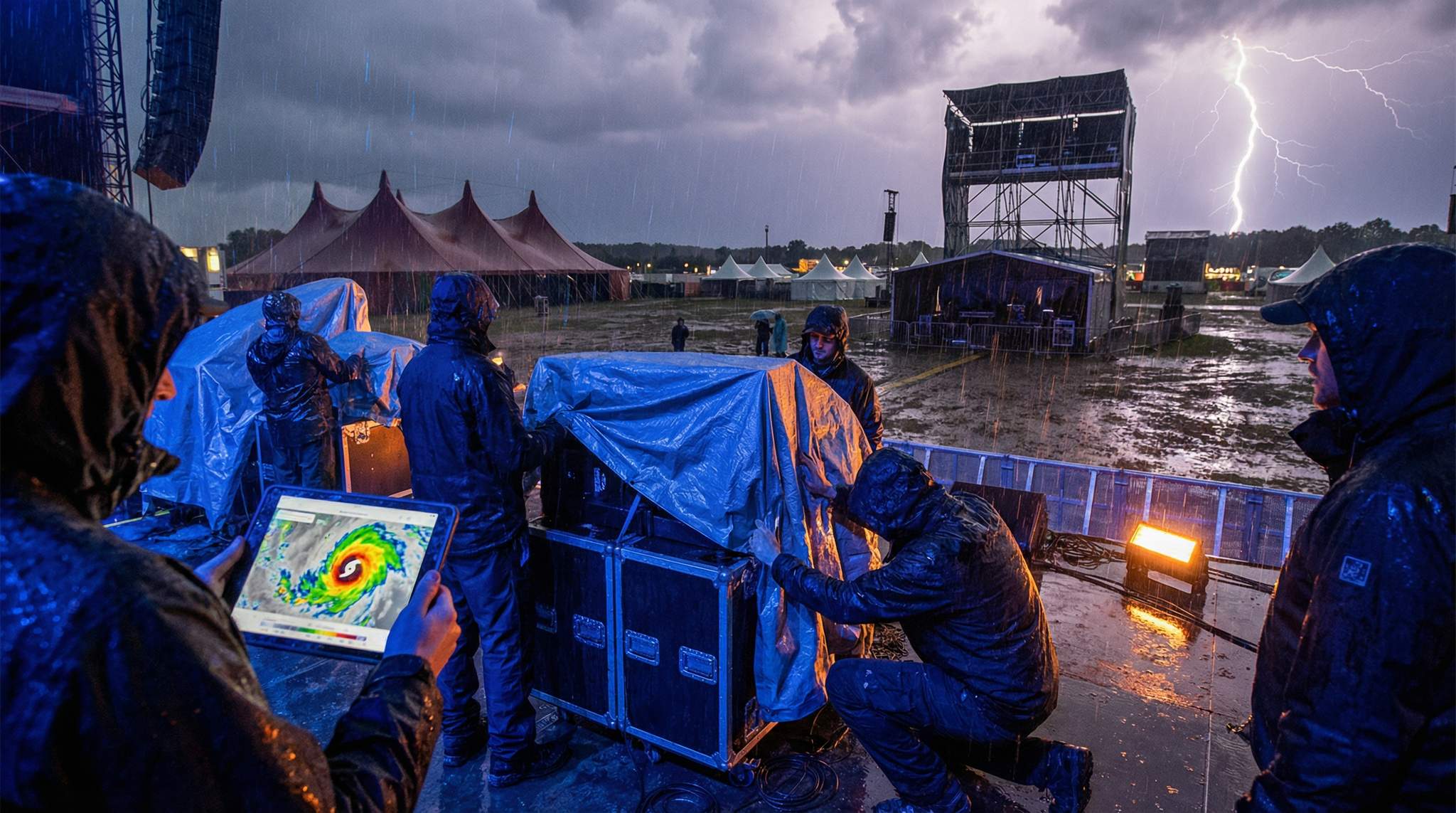
Summer festival season coincides with some of the most volatile weather on the planet. From hurricanes in coastal regions to sudden thunderstorms in the heartland, extreme weather can derail a festival in an instant. Around the world, festival organisers have learned the hard way that robust insurance coverage and meticulous planning are the keys to surviving these natural threats, as highlighted in reports on how festival organisers must bolster adverse weather plans. The goal is not to scare festival producers, but to empower them with knowledge to secure the right insurance, set clear triggers for claims, mandate vendor protections, and continually improve risk strategies for hurricanes and severe storms.
Understanding Regional Weather Risks
Every festival’s risk profile is unique, largely dictated by its geographic location and season. Regional weather patterns should guide your insurance decisions:
- Hurricane-Prone Areas: Festivals on the U.S. Gulf and Atlantic coasts (or in Caribbean, Southeast Asian, and Pacific regions during cyclone seasons) face hurricane or typhoon threats. For example, Bonnaroo in Tennessee was cancelled just two days before opening when remnants of Hurricane Ida drenched the site in 2021. In East Asia, EDC China had to cancel as Typhoon Bebinca barreled toward the festival dates. If your summer event is in a coastal or tropical zone, special hurricane coverage or a named-storm policy rider is a must.
- Severe Thunderstorm Belts: In inland regions, summer can bring violent thunderstorms, tornadoes, or hail. Even without a hurricane, straight-line winds and lightning can force evacuations or cause damage. European festivals aren’t immune either – the Pukkelpop festival in Belgium was devastated by a sudden thunderstorm in 2011, with 60,000 attendees evacuated after the main stage collapsed amid a freak “mini-hurricane” wind burst. Understanding what nature can throw at you locally helps in tailoring insurance coverage to those specific perils.
- Extreme Rain and Flooding: Many summer festivals (from Glastonbury in the UK to regional fairs in Southeast Asia’s monsoon season) deal with torrential rain. Prolonged downpours can flood grounds or turn fields to mud, potentially forcing cancellations or safety shutdowns. If your region’s summer comes with heavy rain risk, consider rain insurance or cancellation insurance that activates when rainfall reaches a defined threshold.
- Heatwaves and Wildfires: While hurricanes and storms are the focus here, don’t overlook other summer hazards. Extreme heat can pose health risks and wildfires can threaten outdoor events, so producers in heat-prone areas or fire zones should evaluate add-on coverage (for instance, coverage if wildfire smoke causes cancellation). Always align insurance purchases with the worst-case weather scenarios for your festival’s location and timing.
Securing Weather and Cancellation Insurance Coverage
Standard event cancellation insurance is the bedrock for protecting your festival’s finances against weather disasters. It reimburses lost revenues or unrecoverable costs if you have to cancel or curtail the event due to circumstances beyond your control (like severe weather). However, it’s crucial to ensure the policy specifically covers weather-related perils relevant to summer storms:
- Named Storm & Hurricane Coverage: Verify that your policy does not exclude named hurricanes or tropical storms if those are a threat in your region. Some basic policies might exclude hurricanes or require a separate endorsement in high-risk areas. Festival producers in Florida, the Caribbean, Mexico, or other hurricane zones have learned to negotiate hurricane coverage into their insurance. The costs may be higher, as insurers have faced massive hurricane losses in recent years, but it’s non-negotiable for summer events in these areas.
Also, secure coverage well in advance of your event. Once a looming storm is on the radar, insurers may refuse new policies or charge exorbitant premiums for that period. For example, a Florida event (Harvest Moon Festival) had to cancel its 2022 edition after failing to obtain cancellation insurance just weeks before the date – forecasts showed the site potentially in the path of two brewing storms, making insurers balk, a situation detailed in reports on how extreme weather is impacting insurance premiums. Planning early ensures you’re not left unprotected when peak hurricane season approaches. - Adverse Weather Clauses: For other severe weather, ensure “adverse weather” is listed as a covered cause for cancellation. This typically covers extreme wind, lightning, torrential rain, etc., that make the event unsafe or impossible to continue. In Ireland, local authorities have even begun requiring festivals to carry cancellation insurance as a licensing condition due to frequent weather disruptions. Around the world, insurers are scrutinising how prepared organisers are for weather emergencies and may tie coverage approval to your contingency plans (e.g. evacuation procedures, on-site drainage, etc.).
- Tailored Coverage Limits: Set your coverage limit high enough to cover worst-case losses. Consider the total costs invested (talent guarantees, production, staffing) and potential refunds. For instance, a large multi-day festival might need a higher limit than a one-day event. If a hurricane forces you to cancel last-minute, can your policy payout sustain refunds and vendor payments? Some major festivals carry multi-million dollar policies to account for these scenarios. St. Patrick’s Festival in Dublin had insurance that provided a vital financial safety net when severe snow forecasts led to event cancellations in 2018 – without adequate limits, that story could have ended very differently.
- Consider Parametric Weather Insurance: Traditional insurance pays based on proven loss and often has strict exclusions. As an alternative or supplement, parametric insurance offers a pre-agreed payout if specific weather thresholds are met (for example, if wind speeds exceed 50 mph or over 2 inches of rain falls during the event). The advantage is quick, guaranteed payout when triggers hit, without lengthy claims investigations. Parametric solutions have brought new flexibility to the festival industry as traditional insurers tighten terms. However, choose triggers carefully – if those weather triggers (say 1 inch of rainfall or 100°F heat) aren’t met exactly, you get nothing, a common issue regarding the rise and risk of parametric insurance. Work with a specialist broker to define parametric triggers that match the conditions under which you’d cancel or significantly lose attendance. The trigger should be measurable, independently verifiable, and aligned to your financial risk (e.g. a rainfall amount that truly would wash out the event).
- Dedicated Rain Insurance Policies: For many outdoor music festival producers, standard cancellation policies aren’t enough to cover the nuanced financial impact of heavy rainfall. Dedicated festival rain insurance is designed specifically to protect against revenue drops—such as lost walk-up ticket sales, reduced food and beverage consumption, or diminished merchandise revenue—even if the event isn’t fully canceled. When securing rain insurance for festivals, organizers typically select specific hours of coverage and a precise rainfall threshold (e.g., 0.25 inches between 2 PM and 8 PM). If the recorded rainfall hits that mark, the policy pays out, making it an essential component of a comprehensive outdoor music festival weather insurance strategy.
- Multi-Peril Coverage for Open-Air Events: Beyond isolated rain showers, open-air concerts face complex vulnerabilities. High winds can render stage roofs unsafe, and sudden lightning can force immediate site evacuations. A robust weather insurance policy for an outdoor festival must encompass these overlapping risks. This ensures that if organizers must delay a headliner’s set due to a passing thunderstorm, the coverage can help mitigate the costs of extended venue rentals, overtime pay for security and production crews, or even artist guarantee payouts if the performance is ultimately abandoned.
- Concert Weather Insurance for Single-Stage Events: While sprawling multi-day festivals require complex multi-peril policies, organizers of standalone outdoor gigs must also secure dedicated concert weather insurance. A single severe thunderstorm can force a complete abandonment of a one-night show, leaving promoters liable for artist guarantees, venue rental fees, and ticket refunds. Structuring weather insurance for concerts often involves highly specific time-bound triggers—such as lightning strikes within an eight-mile radius during the headliner’s scheduled set time—ensuring rapid financial recovery if the performance cannot safely proceed.
- Concert Rain Insurance Specifics: For standalone gigs, general cancellation policies might not trigger for moderate precipitation that simply depresses walk-up sales or food and beverage revenue. Securing specific concert rain insurance allows promoters to set precise rainfall thresholds (e.g., 0.2 inches during the show window). If the rain hits that mark, the policy pays out a predetermined sum, helping offset the financial sting of a wet, low-turnout evening even if the headliner still performs.
Defining Measurable Triggers and Documentation Procedures
No matter the type of coverage, clarity in coverage triggers and diligent documentation can make or break your insurance claim after a storm. Festival organisers should define in advance what “extreme weather” means operationally and how it will be documented:
Boost Revenue With Smart Upsells
Sell merchandise, VIP upgrades, parking passes, and add-ons during checkout and via post-purchase emails. Increase average order value by up to 220%.
- Objective Cancellation Criteria: Establish specific, measurable criteria for when you’ll cancel, pause, or evacuate the event due to weather. For example: “sustained winds above 40 mph,” “lightning within 5 miles, continuing for 30+ minutes,” “flooding in patron areas over ankle-depth,” or official government evacuation orders. Tying your action plan to clear metrics not only aids your decision-making, but also aligns with insurance requirements. Many insurers will ask “what conditions prompted the cancellation?” – having a pre-written trigger list provides a confident answer backed by safety experts. It also prevents ambiguity; you don’t want a debate with your insurer over whether it was “dangerous enough” to shut down.
- On-Site Weather Monitoring: To support these decisions, invest in reliable weather monitoring for your event. This could mean hiring a professional meteorologist or subscribing to a weather alert service that provides real-time, site-specific forecasts. Some large festivals even have Doppler radar support or meteorologists on the team. By keeping precise logs of weather data (wind speeds, lightning strikes, rainfall totals, heat index, etc.), you’ll have hard data to document that triggers were met. For instance, if your policy pays out for “0.5 inches of rain within an hour,” an on-site rain gauge or an official local weather station report can provide the needed proof.
- Documentation for Claims: When extreme weather forces your hand, immediately begin gathering documentation for a potential claim. Key pieces include:
- Official Weather Reports: Obtain reports from national meteorological agencies or reputable weather services confirming the conditions (e.g. a National Weather Service storm report, hurricane warning notice, or local Doppler radar data printouts). These authoritative documents carry weight in justifying your claim.
- Event Logs & Notices: Keep copies of emergency alert transcripts, timestamps of when you made public evacuation or cancellation announcements, and any directives from authorities (police, fire, emergency management). This shows you acted responsibly and in response to genuine threats.
- Photographic Evidence: Photos or video of the extreme conditions and any damage can further validate what occurred. While safety comes first (no one should be out in a hurricane to get footage!), often staff can document aftermath like flooded fields, downed structures, or dangerous debris.
- Attendance and Financial Records: If possible, note how many attendees were on site or expected, and maintain records of expenses and refunds. Your insurer may require an accounting of losses. For example, if Day 3 of a festival was cancelled, document lost ticket revenue, artist fees paid, vendor refunds, etc., to expedite the claims payout.
- Work Closely with Insurers: Notify your insurance provider or broker as soon as a weather incident occurs that might lead to a claim. They can guide you on specific documentation needed. By defining these procedures in advance (even creating a “claim checklist” in your emergency action plan), your team won’t be scrambling under duress. A well-documented claim is much more likely to be approved quickly, allowing you to recover financially and plan your comeback event.
Vendor Insurance (COI) Requirements for Summer Hazards
It’s not just the festival organisers who need insurance – all vendors, contractors, and partners on site should carry their own coverage. When severe weather strikes, having each party properly insured creates a safety net that protects everyone involved and clarifies liability. As a seasoned festival producer, you should require vendor Certificates of Insurance (COIs) and ensure they reflect summer weather risks:
- General Liability with Weather Incidents Covered: Require every vendor (food stall, merchandise seller, production subcontractor, etc.) to have a general liability insurance policy (often with at least a $1–2 million limit). Importantly, their insurance should cover accidents or injuries even if caused by weather conditions. For example, if a sudden wind gust knocks over a vendor’s tent or sign and injures attendees, the vendor’s liability policy should respond to those claims. Confirm that no policy exclusions would nullify coverage for “acts of God” or wind/rain damage in such scenarios.
- Additional Insured Status: Insist that your festival (and the venue, if you’re renting it) be named as an additional insured on each vendor’s liability policy. This extension means the vendor’s insurance will also protect the festival organisers if a vendor-related incident leads to lawsuits. In a storm scenario, if a vendor’s equipment causes harm, your festival won’t shoulder sole responsibility – your legal team can tap into the vendor’s insurance. This requirement not only offers financial protection but also encourages vendors to prioritize safety (knowing their own insurance is on the line).
- Property and Casualty Insurance for Vendors: Encourage or require vendors to carry property insurance for their own goods, especially if they bring high-value equipment or inventory. Summer storms can destroy merchandise, cooking gear, art installations, you name it. If a torrential downpour ruins a vendor’s electronics or a hailstorm smashes their tent and stock, their insurance should cover replacement costs. This prevents disputes later – vendors won’t need to turn to you for compensation if they have their own coverage. Clearly communicate that the festival is not liable for vendors’ property losses due to weather, and that vendors should insure their assets accordingly.
- Operational Safety and Compliance: While not an insurance policy per se, enforce rules that minimize weather risks for vendor operations. For instance, require all tents and structures vendors use to be secured to a spec (e.g. weighted for high winds). Many events mandate specific tie-down methods and periodic safety checks, especially after seeing horror stories of unsecured tents in storms. By coupling such rules with insurance requirements, you create a culture of risk management. Vendors who know they must both mitigate hazards and hold insurance are far less likely to cut corners.
- Vendor Contracts and Force Majeure: Update your vendor and performer contracts to include clear force majeure language addressing weather cancellations. Specify what happens if the event is canceled or shortened due to severe weather (Will vendors get any fee refunds or roll-overs? Are they obligated to evacuate when told? etc.). Also, state that vendors must have their own business interruption or cancellation insurance if they want to recoup lost sales – the festival’s insurance will not cover their revenue. These clauses set the expectation that summer storms are a known risk and everyone must play their part in managing it responsibly.
Annual Debrief and Adjusting Insurance Strategy
Insurance planning for weather is not a “set it and forget it” task. The best festival organisers conduct annual risk debriefs after each festival season to refine their insurance coverage and limits continuously:
Planning a Festival?
Ticket Fairy's festival ticketing platform handles multi-day passes, RFID wristbands, and complex festival operations.
- Post-Event Weather Debrief: Gather your core team (production managers, safety officers, insurance broker, etc.) soon after the festival to review how weather impacted the event. Even if you were lucky to have sunny skies, discuss near-misses or forecasts. Did any days come uncomfortably close to trigger conditions? For example, maybe a tropical storm veered away last minute – a reminder that next year’s festival might not be so lucky. Or perhaps high winds forced a temporary stage shut-down but not full cancellation; was that covered by insurance or a gap to address?
- Claims and Near-Misses Analysis: If you did file an insurance claim (or came close), dissect the experience. Was the coverage adequate to cover all losses? Did the claim process go smoothly, or were there documentation hurdles? Use this information to adjust your policy details for next year. You might discover, for instance, that your current policy had a 48-hour waiting period for named storms which was problematic, or that the coverage limit barely covered refunds. These insights are gold for renegotiating terms or increasing coverage limits.
- Adjust Coverage Limits and Triggers: Over time, festivals evolve – and so do climate patterns. Reevaluate the coverage limit annually against your growing budget and exposure. If you’re investing more into production or expecting higher attendance (hence more ticket revenue at stake), ensure the insurance limits grow in tandem. This also applies to triggers in parametric policies: if climate data shows storms are intensifying, you might lower the windspeed trigger or include additional triggers (like lightning or rainfall) next time. Flexibility is key; a trigger that made sense five years ago may be outdated now. Keep an eye on industry trends too – if peers are adding heatwave insurance or extending hurricane coverage dates, consider if those changes make sense for you.
- Vendor Insurance Audit: The annual review should also examine vendor and contractor performance regarding insurance and safety. Did all vendors provide valid COIs and follow weather safety protocols? If any vendor’s tent failed or there was an issue, you might tighten requirements (e.g. higher insurance limits or stricter setup rules) for next year. Continuously communicate with vendors about their responsibilities – share any weather incidents from the event as learning examples and reinforce the importance of their insurance in those situations.
- Update Contingency Plans: Lastly, feed your findings back into the festival’s emergency action and communication plans. Improving insurance is only one side of the coin; the other is improving how you handle weather emergencies operationally. Refine evacuation routes, strengthen structures, train staff on new protocols, and then ensure your insurance still aligns with that game plan. The next summer storm season will bring new challenges, but with an annual recalibration of your insurance strategy, you’ll be ready to face them confidently.
Frequently Asked Questions
What type of insurance covers festival cancellations due to severe weather?
Standard event cancellation insurance serves as the financial bedrock for protecting festivals against weather disasters. However, organizers must verify the policy specifically covers relevant perils like named hurricanes, adverse weather, or extreme rain. For high-risk areas, special riders or parametric insurance based on specific weather thresholds may be necessary.
When should festival organizers purchase hurricane insurance coverage?
Organizers must secure hurricane coverage well in advance of the event dates. Once a storm is named or appears on the radar, insurers often refuse new policies or charge exorbitant premiums. Waiting too long can leave festivals unprotected, as seen when the Harvest Moon Festival canceled without coverage in 2022.
How does parametric insurance work for weather-related festival cancellations?
Parametric insurance offers a pre-agreed payout if specific, measurable weather thresholds are met, such as wind speeds exceeding 50 mph or specific rainfall amounts. Unlike traditional insurance requiring proof of loss, this provides quick, guaranteed payouts without lengthy claims investigations, though organizers receive nothing if the exact triggers are not met.
What documentation is required to file a weather-related insurance claim?
Successful claims require objective evidence proving specific coverage triggers were met. Organizers should gather official reports from meteorological agencies, on-site weather data like wind speeds or rain gauge readings, and time-stamped logs of emergency alerts. Photographic evidence of conditions and financial records detailing lost revenue and expenses are also essential.
Why should festivals require vendors to name them as additional insured?
Naming the festival as an additional insured on a vendor’s general liability policy extends coverage to the organizers if a vendor-related incident occurs. This ensures that if severe weather causes vendor equipment to injure attendees or damage property, the festival does not shoulder sole liability, allowing legal teams to tap into the vendor’s insurance.
How should regional weather patterns influence festival insurance decisions?
A festival’s geographic location dictates its specific risk profile and necessary coverage. Coastal events require named-storm or hurricane riders, while inland festivals may need protection against severe thunderstorms, hail, or tornadoes. Organizers in rain-prone areas should consider cancellation insurance that activates when rainfall reaches a defined threshold to prevent washout losses.
What are the main alternatives and competitors to Sensible Weather for parametric weather insurance?
While Sensible Weather is well-known for its consumer-facing weather guarantees, festival organizers seeking B2B parametric weather insurance often look to specialized commercial providers. Competitors and alternatives in the commercial parametric space include Descartes Underwriting, Demex Group, and traditional brokers like Risk Strategies or Gallagher who structure bespoke parametric policies through major reinsurers (like Swiss Re or Munich Re). When evaluating these options, festival producers should compare trigger flexibility, payout speed, and the specific meteorological data sources used to verify rainfall or wind events.
What does weather insurance for an outdoor music festival typically cover?
Weather insurance for an outdoor festival typically covers lost revenue and unrecoverable expenses if adverse conditions force a cancellation, postponement, or abandonment. For open-air music events, this includes protection against heavy rainfall, high winds that threaten stage structural integrity, and lightning strikes within a specific radius. Policies can be tailored to cover artist guarantees, equipment rental costs, and refunded ticket sales when the elements make it unsafe to proceed.
How does concert weather insurance differ from multi-day festival coverage?
While multi-day festival policies account for complex variables like camping infrastructure and staggered artist schedules, concert weather insurance is typically streamlined for single-day or single-performance events. It focuses heavily on the specific hours of the show, protecting promoters against lost ticket revenue and unrecouped production costs if a severe storm, lightning, or high winds force a delay or total cancellation of the headlining act.
How does concert rain insurance protect promoters if the show isn’t canceled?
Concert rain insurance is often structured as a parametric policy that pays out if a specific amount of rain falls during a defined time window, regardless of whether the event is officially canceled. This protects promoters from secondary financial losses, such as reduced walk-up ticket sales, lower merchandise purchases, and decreased food and beverage revenue caused by wet conditions.