In 2026, festival producers face a tsunami of tech solutions promising to revolutionize events. From AI scheduling software to cashless payment systems, the choices are dazzling – and often dizzying. But more tech isn’t always better. A smart producer needs to separate game-changing innovations from distracting gimmicks. This comprehensive guide lays out a practical framework to choose the right tools for your festival without succumbing to digital overload. We’ll draw on real-world examples (the good, bad, and ugly), step-by-step decision principles, and veteran insights so you can streamline your tech stack, enhance operations and fan experience, and avoid the trap of too many disconnected apps.
Understanding the 2026 Festival Tech Landscape
The Explosion of Festival Tech Solutions
The live events industry is in the midst of a technology boom. By 2026, nearly every festival task – from planning to fan engagement – has a specialized tech tool or platform. Buzzwords abound: AI-driven planning, AR/VR experiences, NFT ticketing, IoT crowd sensors, and more. For example, scheduling software now leverages machine learning to optimize complex festival timetables, while drones and robots are appearing on festival grounds for security or even bartending roles, representing 2026 festival tech trends that deliver value. These innovations are crucial for automation filling labor gaps in production. On the attendee side, almost every major event offers a mobile app with interactive maps, personalized schedules, and cashless payment integration. The sheer variety of tools is unprecedented.
Navigating the modern ecosystem of festival event technology requires a strategic mindset. Today’s platforms go far beyond basic ticket sales; they encompass end-to-end operational management, crowd analytics, and immersive fan engagement. For promoters and venue operators, investing in the right digital infrastructure means building a scalable foundation that can adapt to sudden lineup changes, severe weather protocols, and shifting consumer behaviors without missing a beat.
Yet with this explosion of options comes hype. Each new product claims to be a “game-changer.” It’s easy for festival organizers to feel pressure to adopt the latest tech simply because it’s trending. In 2026, the choice between shiny new gadgets vs real solutions is a constant balancing act. For instance, holographic performers and VR concerts made headlines, but did they truly satisfy fans or just generate buzz? This question of shiny new gadgets versus practical solutions remains central. A wave of festivals experimented with virtual worlds, even hosting metaverse music festivals, but one highly touted platform event drew only about 50,000 virtual attendees and negligible revenue – a tiny fraction of a real-world festival’s impact, highlighting the challenges of VR festivals and metaverse revenue maximization. The lesson: not all that glitters (or “goes viral”) is gold for your event.
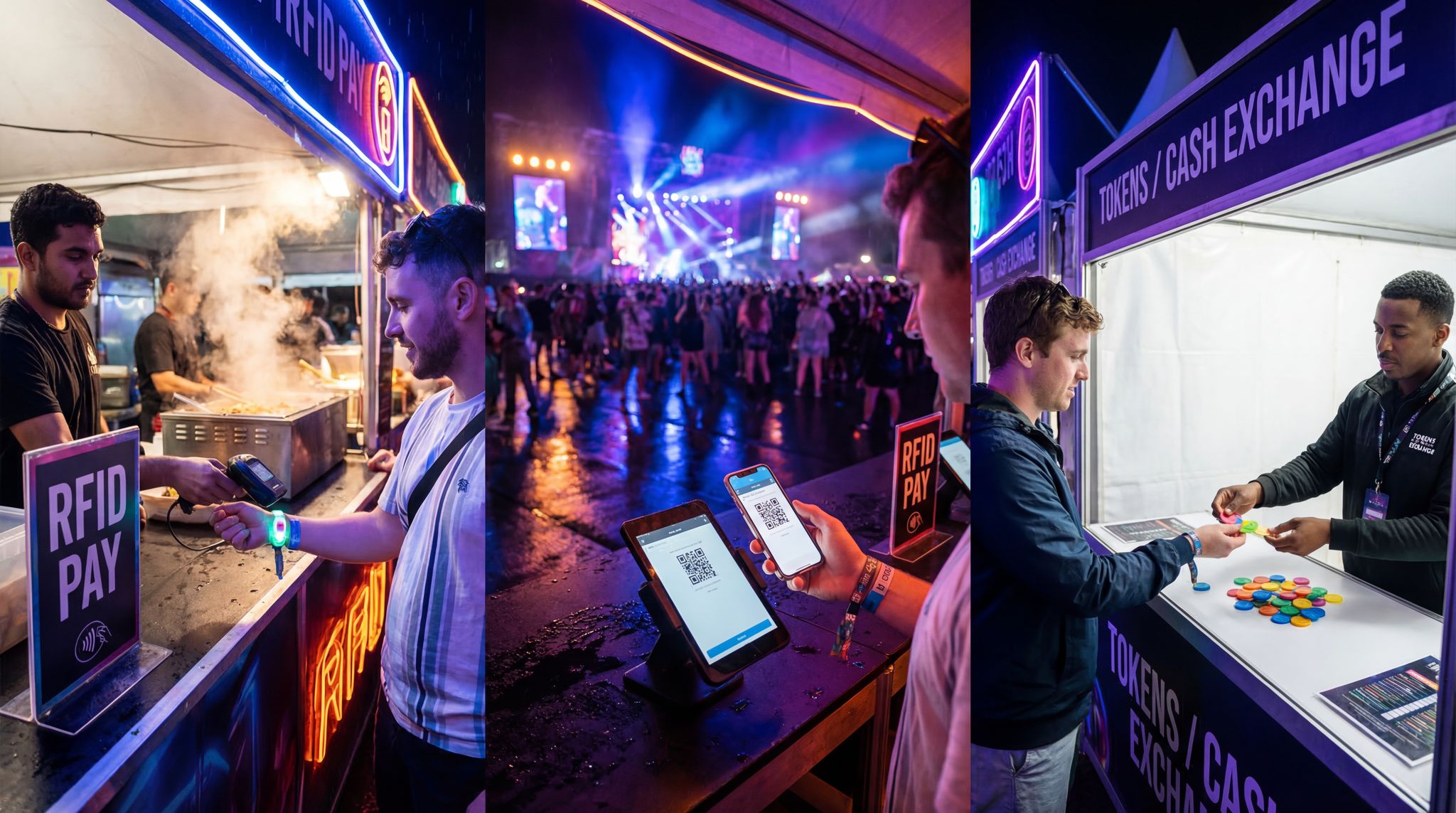
Go Cashless With RFID Technology
Enable contactless payments, faster entry, and real-time spending analytics with RFID wristbands and NFC-enabled ticketing for your events.
Digital Overload for Organizers: Too Many Apps, Too Little Time
For festival organizers, the downside of this tech abundance is fragmentation and complexity. It’s not unusual for a production team to juggle separate platforms for ticketing, vendor management, volunteer coordination, artist advancing, marketing, and on-site operations. Logging into half a dozen dashboards and stitching together data manually becomes a real headache. Disconnected apps create data silos – your ticketing system might not automatically update your marketing CRM, or the volunteer scheduling app might not sync with artist hospitality info. The result? Wasted time and potential errors. Veteran production managers recall the chaos of using one app for check-ins, another for mapping, another for incident reporting – staff ended up confused, and critical info fell through the cracks. The risk of digital overload is real: too many tools can actually reduce efficiency if they’re not well integrated.
There’s also the learning curve and maintenance burden. Each new tool means training your team and troubleshooting yet another system. During a festival, staff should be focused on attendees and safety – not grappling with glitchy software or switching between iPad apps. Seasoned producers know to be wary of overloading crew with tech. As Live Nation Urban’s president Shawn Gee told Pollstar, festival teams must control costs and carefully choose innovations that truly add value, rather than trying to use every new gadget at once, noting that the present future in a changing market requires discipline. In his words, it’s vital to “manage my ticketing, my prices and overdeliver the experience to the fan,” rather than let tech novelties drive up complexity, a sentiment echoed in discussions about 2025 music festivals and market shifts. In short, more tech tools do not automatically equal a better festival – especially if they strain your team’s bandwidth.
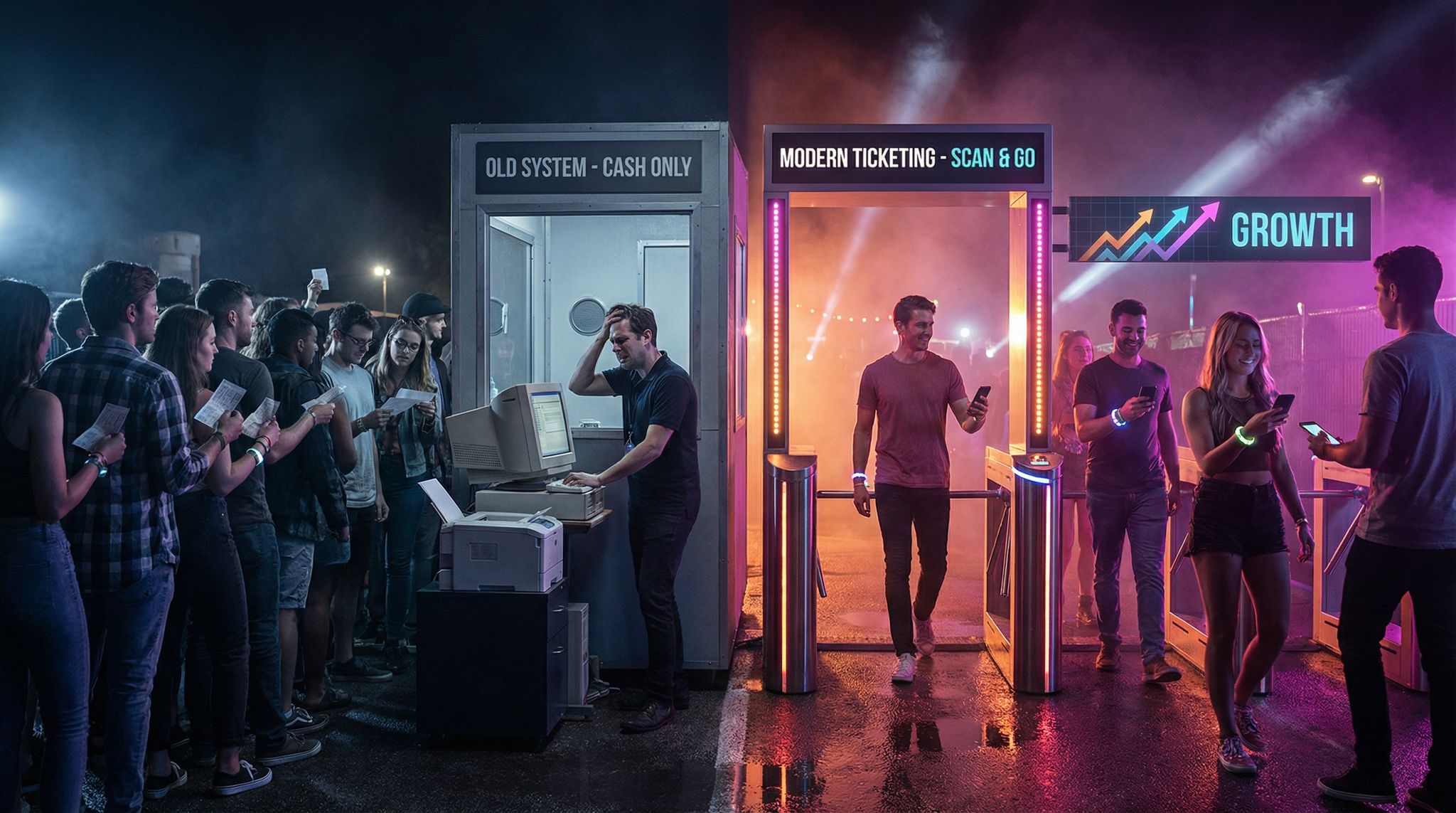
Planning a Festival?
Ticket Fairy's festival ticketing platform handles multi-day passes, RFID wristbands, and complex festival operations.
When Tech Overload Hits the Fan Experience
It’s not just back-of-house teams that can feel tech overload – attendees can suffer from it too. A festival should be an immersive escape, but an overdose of digital requirements can pull fans out of the moment. Consider the attendee journey: Before the event, they might be asked to download an official app, create an account, load money onto an RFID wristband, maybe even claim an NFT collectible. On site, they could be bombarded with AR filters, cashless kiosks, push notifications, and interactive screens. While much of this tech is intended to enhance the experience, too many digital demands can frustrate or alienate festival-goers.
Not all audiences are equally tech-savvy or willing. A slick app with dozens of features means little if half your crowd never opens it. In fact, festivals have learned that simplicity and utility trump feature-bloat in attendee apps. Core features like set schedules, personalized reminders, interactive maps, and timely alerts see high adoption (often 60–70% of attendees actively using the app) when done right. Statistics show 60-70% of attendees actively use the app when organizers focus on designing accessible festival technology. But when apps tried to introduce non-essential gimmicks – think built-in social networks or AR mini-games no one asked for – usage rates flatlined (sometimes under 5%) and the effort was wasted because reliable core features trump extras and users struggled with finding essential information in bloated apps. Fans appreciate technology that simplifies their festival experience (like quick info or shorter lines), not tech that complicates it. A 2026 survey even showed that an in-app shuttle tracking feature (considered a minor add-on) became a breakout hit, while an expensive AR game was barely touched, proving that games that few people asked for are poor investments. The takeaway: attendees want convenience, not distraction.
There’s also the human connection factor. Festivals at their core are about community and shared experience. Over-reliance on screens and hi-tech effects can erode the authentic festival “soul.” Industry veterans stress that technology should enhance the magic of being together, not replace it. This balance is crucial as festivals innovate without losing their soul. For example, if everyone is glued to a festival’s app for a virtual scavenger hunt, they might be missing the spontaneous moments happening in real life. Some longtime attendees even express “digital fatigue” – they welcome tech that improves logistics, but they don’t want a festival to feel like staring at yet another screen. Producers must gauge their audience: a hyper-tech EDM festival for digital-native Gen Z will lean into apps and AR, whereas a folk or jazz festival catering to older fans might prioritize comfortable seating and simple communication (like SMS updates) over flashy tech. In 2026, striking the right balance is key to keeping the human touch alive even as you innovate. It is about maintaining the high-tech human touch balance ensuring technology remains in the background of human togetherness.
Determining What Your Festival Really Needs
Start with Problems, Not Products
With so many solutions on the market, the crucial first step is identifying your festival’s specific needs and pain points before looking at tech. It’s tempting to get excited about a product demo (“This VR stage view looks cool!”) and try to find a use for it. Seasoned festival organizers flip that approach: they start by listing the biggest challenges or goals for their event, and then seek technology only if it meaningfully addresses those.
Data-Driven Event Marketing
Track ticket sales, demographics, marketing ROI, and social reach in real time. Exportable reports give you the insights to make smarter decisions.
Take an honest look at where your festival struggles or where it could improve. Do you routinely have long entry lines or bottlenecks at the gate? Is managing volunteer shifts a logistical nightmare each year? Are merch sales being lost due to cash handling issues? Do attendees complain about not knowing schedule changes? These pain points should drive your tech shopping list. For example, if entry wait times are your Achilles’ heel, an RFID wristband ticketing system or more entry scanners might be a worthy upgrade. If you run a multi-stage music festival where scheduling conflicts upset fans, an AI scheduling tool that optimizes set times (and minimizes overlap of similar genres) could directly boost attendee satisfaction. In fact, production managers report that algorithmic scheduling has cut down weeks of manual planning and reduced artist overlap incidents, improving the fan experience of seeing their favorite acts. On the operational side, machine learning is being used to forecast peak crowd movements and ensure better service on the ground. The key is to chase solutions for existing problems, not problems for flashy solutions.
One helpful exercise is to involve your various departments (operations, marketing, finance, etc.) in a needs assessment meeting. Each team should highlight their top challenges or inefficiencies. This might reveal, for instance, that your operations crew is stretched thin monitoring perimeter fencing – perhaps a few security cameras or drones could multiply their oversight, allowing robotic and self-service solutions to handle tasks that would otherwise demand dozens of staff. Or your volunteer coordinator might be struggling with no-shows – maybe a dedicated volunteer management platform with better communication tools would help. By focusing on pain points, you create a roadmap of opportunities where technology could genuinely make a difference. This prevents getting sidetracked by the latest trend that doesn’t address any of your real needs.
Need Festival Funding?
Get the capital you need to book headliners, secure venues, and scale your festival production.
Align Tech with Your Festival’s Identity and Scale
Not every festival needs the same tech stack – what’s essential for a 100,000-person mega-festival might be overkill for a 5,000-person community event. An important part of deciding “do we need this tool?” is considering your festival’s scale, audience, and brand identity. In other words, choose tech that fits who you are as an event.
Festival size matters: Larger festivals tend to benefit from more automation and robust systems because the volume of transactions and complexity is high. For example, a 3-day, 70,000-attendee festival almost certainly needs a cashless payment system and high-speed network infrastructure – handling tens of thousands of bar transactions by cash would be impractical. Indeed, many big festivals report a significant boost in revenue (15–30% higher spending per head) once they switched to RFID wristbands for payments. This aligns with findings on implementing tap and go convenience at festivals, which notes attendees feel more secure and spend more. At that scale, going cashless shortens lines and encourages more purchases, directly impacting the bottom line. Conversely, a single-day food festival for 1,000 people might find that standard card readers (or even cash) suffice; a full RFID system could be unnecessary expense and complexity if queues are manageable. Table 1 illustrates how different tech can be critical for some events and excessive for others.
| Technology | Potential Benefits | Drawbacks / Risks | Best Suited For Festivals That… |
|---|---|---|---|
| Cashless payments (RFID wristbands or mobile pay) | Shorter queues, higher spend per attendee, easier on-site transactions tracking, less theft. Studies show 20%+ higher on-site revenue post-cashless. However, organizers must be wary of stranded assets as seen with cashless RFID payments. | Needs robust Wi-Fi/cellular network; upfront cost for infrastructure; requires attendee education and backup plans if systems go down. | Have high transaction volumes (large music festivals, multi-day events). Especially valuable if 5,000+ attendees or many bar/food sales. |
| Festival mobile app (schedule, map, alerts) | Real-time communication of schedule changes, personalized schedules with reminders, interactive maps reduce confusion, direct marketing channel (sponsors, post-event surveys). When done simply and reliably, up to 60-70% adoption by attendees. Apps serve as the communication lifeline for festivals provided they are reliable in core areas. | Development and maintenance cost; must persuade attendees to download; too many features can overwhelm (keep it intuitive). Also needs offline functionality for patchy service. | Multi-day festivals or ones with complex layouts and schedules. Audiences that are smartphone-friendly. Less critical for very small or single-stage events. |
| AI scheduling & staffing tools | Optimizes artist set times to avoid conflicts, automates crew scheduling based on predicted crowd flows. Can reduce scheduling work from weeks to days. Furthermore, machine learning is being used to forecast peak crowd flows and ensure better service on the ground. | Relatively new tech – can be a black box if not understood, may need data inputs. Risk of over-optimization (losing human touch in curation). Requires staff buy-in to trust AI suggestions. | Large, multi-stage festivals with complex lineups or those struggling with overlapping crowds. Helpful when fine-tuning schedules or managing hundreds of staff/volunteers. |
| AR/VR experiences (augmented reality filters, virtual festival worlds) | Novelty factor and “instagrammable” moments; potential global reach (for VR livestreams); engaging younger audiences with interactive tech. Can earn marketing buzz and differentiate the festival brand. | Typically low usage by on-site attendees (often <5% engage with AR extras). While reliable core features are essential, games that few people asked for often see low adoption; development costs can be high; VR attendance so far doesn’t match real events (e.g. a major metaverse fest peaked ~50k users). Not a direct revenue driver unless selling virtual tickets, and even then, interest has been tepid, highlighting the difficulties of VR festivals and metaverse revenue maximization. | Tech-forward festivals appealing to early adopters, or events aiming to extend presence online (e.g., during pandemics or to reach international fans). Use sparingly as a side offering rather than main attraction. |
| Robotics & automation (e.g. self-serve kiosks, drones, robot bartenders) | Can fill labor gaps and improve efficiency: e.g. self-scan ticket kiosks significantly increase throughput per staff and handled entry with one-third the staff. Utilizing tech solutions to maintain service allows for automated charging via code or RFID wristband for payments. Drones offer aerial surveillance over large sites; cleaning robots can tidy grounds overnight. Automation can keep service going when labor is scarce. This includes robotic and self-service solutions that result in reduced wait times and better monitoring. | Initial setup and maintenance of devices; public perception concerns (will robots remove jobs or feel impersonal?); requires oversight – e.g. robots still need humans to monitor or intervene when something goes wrong. Integration with operations (training staff to work alongside automation) is crucial. | Festivals facing labor shortages or very large sites where scaling staff is difficult. Security drones fit big outdoor venues. Robotic bartenders or self-pour beer taps shine where long bar queues are chronic and staffing is hard (some 2026 festivals turned to self-pour stations to cut wait times, significantly increasing throughput per staff). |
As Table 1 suggests, context is everything. Aligning tech with your festival’s identity also means considering your audience demographics. If your crowd skews older or is not very tech-oriented, requiring a complex app or cashless-only payments might hinder their enjoyment. (For instance, a jazz festival with many senior attendees must ensure any app or digital ticket is extremely simple, optional, and that there are analog alternatives like on-site credit card stations or printed schedules. Senior-friendly festivals often blend the old with the new to keep all ages comfortable.) On the other hand, a hyper-connected youth festival (think EDM or K-pop) can confidently roll out features like interactive fan voting in the app, QR treasure hunts, or NFT merchandise, knowing their audience will dive right in. The goal is to match technology to what your attendees will embrace.
Finally, stay true to your brand and mission. If your festival’s appeal is its off-grid, back-to-basics vibe (imagine a folk music retreat in the woods), then ultra high-tech infrastructure might actually detract from the charm. In contrast, a festival branding itself on innovation and futurism (like a cutting-edge electronic festival) should indeed showcase novel tech as part of the experience. Your tech choices should feel like an organic extension of your festival’s character, not a forced add-on. Many successful events find creative ways to incorporate tech without losing authenticity – for example, Glastonbury Festival (UK) is famously a bit old-school in spirit; when they introduced a festival app, they kept it focused on practical info and emergency alerts, and still printed their traditional physical programme for collectors. The tech was there to support the experience, not redefine it.
Different Scales, Different Priorities: A Quick Comparison
To illustrate how festival tech stacks differ by size, consider the contrast between a small boutique event and a massive multi-stage festival. Their needs and priorities will vary greatly, as shown in Table 2 below:
| Function & Tools | Small Boutique Festival (1–2k attendees) | Large-Scale Festival (50k+ attendees) |
|---|---|---|
| Ticketing & Entry | Simple ticketing platform with barcode or QR code e-tickets. Entry managed by a few staff with smartphone scanners or printed lists. May still allow some gate sales. | Enterprise-level ticketing system with RFID wristbands for entry & re-entry. Dozens of entry lanes with automatic turnstiles or scanners. Real-time entry tracking and anti-fraud systems. No on-site cash sales – all tickets sold online in advance. |
| On-Site Payments | Traditional payments: cash accepted at vendors, plus mobile card readers (Square, etc.) for credit/debit. No centralized cashless system – keeps tech simple for vendors, but cash handling security needed. | Full cashless payment ecosystem. Attendees preload funds to RFID wristbands or festival app; all vendors use festival-provided POS linked to the cashless system. Fast transactions at scale, comprehensive sales data collection. Backup plans for offline transactions are in place to prevent outages. |
| Communication & Info | Low-tech approach: informational emails before the event, printed schedules on-site, basic PA announcements. Possibly a simple website with schedule. Attendees largely “unplugged” on-site. | Dedicated festival mobile app with interactive map, performance schedule, personalized notifications, and emergency alert capability. On-site info booths with digital screens. SMS push or email for last-minute changes. High-bandwidth public Wi-Fi or distributed antenna systems to support thousands of devices. |
| Staff & Volunteer Management | Small team coordinating via phone calls, WhatsApp groups or walkie-talkies. Schedules handled with spreadsheets. Volunteer briefing done in person. | Professional workforce management software scheduling hundreds of crew and volunteers. Mobile check-in/out for shifts, automated reminder texts. Team communication via secure messaging apps or radio networks across the huge site. Control center monitors everything. |
| Attendee Engagement | Intimate engagement: organizers interact directly with guests, small workshops or Q&As. Little tech – focus on human touch and unique on-site experiences (e.g. campfire jam sessions). | High-tech engagement: live polls during sets via the app, AR photo filters for social media sharing, large LED screens encouraging hashtag posts. May include hybrid events (e.g., live stream certain acts in VR for remote fans). Engagement analytics gathered post-event (social media mentions, app analytics). |
| Infrastructure & Logistics | Minimal tech infrastructure: basic sound and lighting setups, local power generators. Paper-based incident logs or simple Google Forms for feedback. | Heavy tech infrastructure: advanced stage production tech, networked IoT sensors (for crowd counting, sound levels, weather monitoring), digital incident management systems, drones for surveillance. Command center with dashboards tracking power, weather, security feeds in real time. |
Table 2: Typical tech stack and practices for a small vs. large festival. As shown, a smaller festival may deliberately keep tech lightweight to remain agile and personal, whereas a large festival must harness tech to coordinate its complexity. Understanding where you fall on this spectrum will help clarify which tools are truly necessary.
When evaluating these different scales, a common question arises among organizers: how to choose the right event management tool for my festival when operational needs vary so wildly? For independent promoters, identifying the top ticketing platforms for indie music festivals usually comes down to balancing cost with essential built-in features, such as audience data ownership and automated marketing integrations. Conversely, if you are figuring out how to buy a system that handles multi-venue, multi-day logistics, your focus must shift toward enterprise-grade festival ticketing software. Complex events require robust access control that can seamlessly manage wristband scanning across different city venues, VIP areas, and camping zones simultaneously. The core engine driving your event—the actual tech behind it—must be stress-tested for your specific operational footprint before you sign a multi-year contract.
To formalize this process, many producers utilize a weighted scoring matrix when evaluating prospective vendors. Determining which are the top ticketing platforms for indie music festivals ultimately comes down to three operational pillars: system resilience, marketing data ownership, and financial flexibility. You must ask hard questions about the infrastructure—specifically, can the tech behind it survive a complete on-site network failure? While some sales pitches might highlight AI-driven NFT features as 2026 must-have tools for collectors, your matrix should heavily weight fundamental stability over speculative add-ons. By systematically scoring each provider’s festival ticketing software against your specific B2B requirements, you can confidently procure a solution that handles multi-venue, multi-day logistics without risking your event’s operational baseline.
When promoters debate the top ticketing platforms for indie music festivals—and ultimately, which is best for their specific model—the answer rarely lies in a one-size-fits-all recommendation. The ideal solution is the one that directly aligns with your growth trajectory. For a first-year boutique event, the premier choice might be a lightweight system with low overhead and rapid payout schedules. Conversely, an established independent festival looking to scale needs a partner offering deep audience insights, automated marketing integrations, and robust access control. Evaluating these options requires looking past the initial sales pitch to understand how the software handles real-world indie constraints, such as limited promotional budgets and lean operational teams.
Evaluating Tech Solutions: Research and ROI
Do Your Homework: Demos, Peers, and Proof of Concept
Once you have a shortlist of problem areas that need tech solutions, it’s time to evaluate the options out there. This phase is critical: rushing into a contract with a vendor or adopting a platform without due diligence can lead to expensive mistakes. Start by surveying the landscape for each need. For example, if volunteer management is a priority, research the leading event volunteer software (there may be several competing products). For cashless payments, compare the providers specializing in festivals. Make a long list of possible tools and then whittle it down.
Ask for demos and trials. Reputable tech vendors will happily walk you through their software via demo and might set you up with a sandbox account to play with. Involve the team members who would actually use the tool in these demo sessions – get your ops manager and gate staff leader into that access control demo, have your marketing lead test the analytics dashboard of a prospective ticketing system. Front-line perspective is crucial; they may spot limitations or complexities that a sales rep glosses over. For instance, a volunteer coordinator might ask, “Can this app send batch text messages to all volunteers if a schedule changes?” If not, that’s a potential deal-breaker you want to know before signing anything.
Talking to industry peers is another invaluable step. The festival world is a tight-knit community, and most producers are happy to share war stories about tech – both successes and failures. If a certain ticketing platform has hidden fees or a cashless system had reliability issues at a big event, you’ll likely hear about it through the grapevine. Many promoters attend conferences like IFEA or Pollstar Live, where panels of festival directors discuss what tech worked for them (and what flopped). There are also online forums and groups for event professionals where candid reviews get shared. Before committing to a system, ask around: Has anyone used X platform at a festival our size? What was the experience? These first-hand accounts often reveal the true picture beyond the marketing brochure.
Finally, consider doing a proof of concept or pilot if feasible. Rather than rolling out a new technology across your entire festival of 50,000 people sight unseen, test it in a smaller setting. Some festivals trial new systems at a single gate or a side stage in year one. For example, a major Australian festival considering RFID entry first ran the system on just the VIP entrance and a sample of attendees – this exposed some software kinks (like scanner guns struggling under direct sunlight) that they fixed before full implementation the next year. If you run multiple events (perhaps a summer series), try the new volunteer app on the smallest event to gauge its impact and user adoption, then expand if it proves beneficial. A pilot can be as simple as using the new incident reporting app for one day alongside your old method, just to see how it performs under real conditions. This low-stakes trial can validate claims and uncover surprises.
When your event spans a whole city or runs across an entire weekend, the procurement conversation shifts. Promoters often ask how to buy a FAS (Festival Administration System) or SaaS platform that handles multi-venue, multi-day logistics without buckling under the pressure. The secret is to look beyond the sales dashboard and scrutinize the underlying architecture. A robust system must offer centralized credential management, allowing a single wristband to grant access to a downtown club on Friday and a mainstage VIP tent on Saturday. During your vendor demos, demand to see live stress-test data and ask how their software manages offline syncing across geographically dispersed gates.
Show Me the Data: Cost-Benefit Analysis
After researching, you should have a shortlist of serious contenders for each tech need. The next step is to evaluate the expected ROI (return on investment) and overall cost-benefit. It’s essential to quantify, as much as possible, what you’re getting for the money and effort. Let’s break it down into key considerations:
Upfront and ongoing costs: Create a clear spreadsheet of the costs of each option. Include licensing or purchase fees, hardware costs (for devices like wristband scanners or routers), and any required connectivity (extra internet bandwidth, etc.). Don’t forget implementation costs – e.g., paying a tech consultant to integrate the system, or extra labor for tagging all your inventory if it’s an RFID system for assets. Also factor ongoing expenses: monthly SaaS fees, transaction fees (many cashless payment providers charge a percentage per top-up or transaction), maintenance, and support contracts. This gives you the “investment” side of ROI.
Tangible benefits and savings: Next, estimate the benefits in concrete terms. Some will be financial, such as increased revenue or saved labor costs. For instance, if a cashless payment system typically boosts attendee spending by 20% (as numerous festivals have reported), apply that to your festival’s sales figures. Case studies on implementing tap and go convenience at festivals show consistent revenue growth. Say you gross $500,000 in F&B sales normally; a 20% bump would mean $100,000 extra – that’s a significant upside. Also consider the value of faster throughput: shorter lines might let people hit the bar more times or simply improve satisfaction (happier fans = likely to return next year, which is long-term revenue). If a new planning software can save 100 staff hours in the off-season, calculate what that labor is worth. Some benefits are qualitative but still important: better safety through real-time monitoring (which could prevent costly incidents), or richer data on attendees that could attract sponsors (sponsors pay more when you can prove demographics and engagement). Try to attach numbers or at least factual arguments (“we can handle 30% more transactions per minute – meaning more sales – with this system”).
Payback period and scalability: For each tech investment, ask how long it will take to recoup the cost through those benefits. A system that pays for itself in one festival season is obviously attractive; one that might take five years is harder to justify unless it’s mission-critical. Also consider how the solution scales with your growth. If you plan to double attendance in a few years, will this platform handle it without exorbitant price increases? It’s often wiser to choose a solution that you can grow into, rather than outgrow in a year and have to replace.
It can help to make a simple comparison table for each tech option, summarizing cost vs. benefit. For example:
– Option A (e.g., Cashless System Alpha): Costs: $50k setup + 2% of sales; Benefits: expected +20% sales (~+$100k), data on spend patterns, shorter lines (improves ratings). ROI: Likely recoup setup in Year 1 from sales increase.
– Option B (status quo, no cashless): Costs: minimal; Benefits: no change in revenue, long lines persist, cash handling losses ~2% (theft/spillage). ROI: n/a (we lose potential revenue).
Clearly Option A looks worth it. This analytical approach cuts through hype. If a tech tool’s benefits are fuzzy or unconvincing (“it’s cool, but will it sell more tickets or save time?”) then perhaps it’s not a priority. On the flip side, if data and case studies show strong returns – like the fact that festivals dematerializing payments saw 119% more transactions year-on-year, proving that adopting dematerialized payments is frictionless and around 22% higher total on-site sales after going largely cashless. Festivals have recorded an average 22% sales increase thanks to these systems – that is compelling evidence to move forward. Real-world benchmarks are your friend; use industry reports and success stories as guidance. For instance, the IFEA or Association of Independent Festivals (AIF) often publish annual surveys indicating what tech most festivals are adopting and the results. If 80% of peer festivals swear that investing in a mobile app improved their communication and emergency response, that’s a benefit you can’t ignore in your ROI tally.
Also weigh intangible or risk factors as part of ROI. How do you price the value of avoiding a PR disaster? Some investments, like a robust ticket fraud detection system, might not generate revenue but can save your reputation by stopping scammers from ripping off your fans. This is part of how 2026 festivals use automation to fill labor gaps while simultaneously securing the perimeter. Or consider environmental tech: going digital with ticketing and cashless may reduce paper and plastic waste, contributing to sustainability goals that please sponsors and regulators (there can be financial value in positive brand image and smoother permit approvals). In 2026, festivals are increasingly expected to align with sustainability benchmarks , so tech that helps measure or reduce environmental impact (like power management systems) may pay off indirectly through compliance and goodwill.
In short, make a case for each tool on its merits. Treat tech investment like you would talent booking or any major budget item: require justification. This not only clarifies your own decision, it also helps “sell” the idea to stakeholders (finance teams, investors, or co-directors) who need convincing. When you can say, “This operations app will cost $5,000 but will likely save 200 labor hours and $8,000 in overtime, and here’s the data to back that up,” you move from shiny object syndrome to strategic business decision.
Prioritization: Must-Haves vs. Nice-to-Haves
During evaluation, you might find a lot of tools seem beneficial. But budgets and bandwidth are finite – you can’t implement everything at once without overwhelming your team (and draining funds). Now comes the art of prioritizing which tech solutions to implement first (and which to defer or skip). One effective approach is to classify potential tools into three buckets:
1. Must-Haves: Technologies that solve critical issues or dramatically improve efficiency/experience. These typically have strong ROI or are essential for safety/compliance. For example, if your festival has outgrown paper ticket checking, a reliable ticket scanning system is a must-have. If long bar queues are the #1 complaint, a cashless system might be a must-have to boost service speed and revenue.
2. Nice-to-Haves: These offer improvements but are not mission-critical. They might be newer features that add some convenience or a “wow” factor but won’t make or break the event. For instance, a festival mobile app could be nice-to-have if your event is manageable via website info and signage, but not absolutely necessary for a one-day event. AR photo booths or fancy cashless tip calculation tools might also fall here – cool extras that you could add once core needs are met.
3. Not Now (or Not Ever): Tools that are either too costly for the return, too complex for your current size, or unaligned with your audience. These you consciously decide to put aside. Maybe you love the idea of an AI-driven crowd sentiment analysis tool that scans social media to gauge real-time fan mood – interesting, but if you barely have basic analytics in place, it’s a “not now.” Or a blockchain-based ticket platform that is unproven and your demographic isn’t asking for crypto tickets – likely “not ever,” at least until the industry matures.
To prioritize effectively, consider making a scorecard for each potential tech project. You can score each on criteria such as: Impact (high to low), Urgency (does it fix an immediate pain or a future nice-to-have?), Cost, and Effort to Implement. A high-impact, high-urgency, affordable, and low-effort item is a no-brainer to do first. A low-impact, high-cost, high-effort one is probably off the table. Many fall in between, and that’s where your team’s input and your strategic goals will guide you. If your vision is to grow the festival’s capacity significantly, maybe prioritizing scalable systems (like a robust staff management system ready for more volunteers) moves up the list. If improving fan satisfaction scores is a top goal for next year, prioritize the tech that directly touches attendees (like better sound system, event app for communication, or contactless entry to avoid lines).
Crucially, limit your focus to a few tech initiatives at a time. It’s far better to implement 2-3 new tools properly than to roll out 10 things poorly. Remember, each new platform will require time to integrate, train, and fine-tune. Overloading on implementations in one cycle could lead to a situation where none of them are executed well. A phased approach is often more sustainable: tackle the must-haves for Year 1, and line up some nice-to-haves for Year 2 once the core systems are stable. This way, your team can adapt gradually and attendees won’t be shocked by a totally transformed (and possibly glitchy) experience. And by the time you get to those “maybe later” items, you might discover you don’t need them after all, or there are newer, better solutions then.
In summary, treat technology adoption like curating a lineup: you can’t book every band on the planet, you pick the ones that fit the show and excite your crowd the most. Similarly, choose the tech that best fits your festival’s needs and will deliver a great performance (value) on event day.
Integration and Compatibility: Building a Cohesive Tech Stack
Avoiding the Silo Trap: Make Systems Talk to Each Other
One of the biggest pitfalls of adopting multiple technologies is ending up with isolated data silos – systems that don’t share information, forcing you into duplicate work and fragmented views. An overarching principle for modern festival tech should be integration. As you evaluate and implement tools, always ask: Can this connect with our other systems? Ideally, you want a unified ecosystem where key data flows seamlessly – ticket sales, attendee profiles, volunteer info, and more feeding into a central hub or at least accessible when needed.
For example, consider ticketing, which is the core of your event data. Your ticketing platform holds names, emails, ticket types, maybe even ages or demographics of attendees. That data is gold for marketing and on-site operations. If you then use a separate festival mobile app, integration means attendees could log into the app using their ticket account and get personalized info (“Hey John, welcome back since your last visit in 2019!”) or the app can reflect their tickets (for scanning QR codes at entry). If the app is siloed and requires a separate login, you lose those personal touches and many users won’t bother. On the operations side, say your staff check-in system could pull the list of all VIP ticket buyers so that when VIPs arrive at a parking lot, your crew app instantly verifies them – but only if those systems are linked.
How to achieve integration? One way is to opt for all-in-one platforms that offer multiple functionalities under one roof. For instance, some event management platforms (like Ticket Fairy’s integrated festival ticketing software) combine ticketing, marketing tools, analytics, and even on-site access control in one solution. Using a single, comprehensive system can eliminate the need to patch together disparate apps. This approach streamlines festival production and talent management. If your ticketing provider also offers a mobile app interface, merchandise POS integration, and a marketing CRM, you reduce the number of separate services you use – and the data is inherently unified. However, all-in-one might not cover every specialized need, so often festivals use a mix of systems.
When using multiple systems, APIs are your best friend. API (Application Programming Interface) basically allows different software to communicate and share specific data securely. Ask vendors during evaluation about their API capabilities or built-in integrations: Does your volunteer system integrate with [common ticketing platform]/[common scheduling tool]? The best vendors have pre-built integrations or at least open APIs so your developers (or a third-party integrator) can connect them. For example, if your cashless payment system’s API can feed spending data into your central analytics dashboard, you won’t have to export CSV files manually after the event – it’ll update in near real-time. Many festivals also use middleware or integration services (like Zapier or custom scripts) to sync data across apps (e.g., automatically add new ticket buyers to a MailChimp email list, or sync volunteer check-ins with a Google Sheet).
Another integration point to consider is identity and single sign-on. Reducing the number of accounts and logins for users (be they staff, volunteers, or attendees) makes life simpler for all. If volunteers can use the same login for the staff scheduling app and the crew catering portal, they’re less likely to get locked out or confused. Similarly, enabling attendees to use social login or their ticket account across your various digital touchpoints (app, web portal, etc.) streamlines their experience. It’s worth prioritizing tools that allow such single sign-on or identity federation.
Data centralization is a goal that might not be fully attainable in year one, but keep it on the horizon. Some larger festival organizations create a custom “data warehouse” where all the key data from ticketing, surveys, app usage, and payments are consolidated for analysis. That might be advanced for many, but even simpler, think about a central source of truth for things like the festival schedule or site map. If your schedule lives in one database, then your website, app, and digital signage should all pull from that database so there are no inconsistencies. Nothing frustrates fans more than an out-of-sync change (like the app says a set is at 9:00 but the website says 9:30). Integration ensures everyone – audience and crew – is on the same page. Lean operations principles encourage eliminating redundant data entry and processes , which integration directly addresses by linking systems together instead of maintaining parallel records.
Consolidate Where Possible: Less Can Be More
A straightforward strategy to avoid tech overload is consolidation – use fewer tools that do more, rather than many single-purpose tools. This doesn’t mean skimping on functionality; it means finding an optimal blend or platform that covers multiple bases. We touched on all-in-one platforms above, but even if you don’t have a single system for everything, you might consolidate vendors or systems in a few areas.
For example, if you currently use one app for volunteer sign-ups and a different system for staff scheduling, see if you can move both onto the same platform. There are event workforce solutions that handle volunteers, paid crew, and artists all in one scheduling module by just tagging roles differently. Similarly, maybe you have an email marketing tool and a separate SMS messaging service for attendee communications; consolidating those channels under one communication platform could cut costs and admin time. Many modern ticketing systems (including Ticket Fairy and others) now incorporate built-in marketing features – like sending targeted email campaigns or push notifications – which could let you retire a separate email service provider for your ticket holders.
Another key area is on-site hardware. If each of your tech systems comes with its own hardware, that’s a lot of gadgets to deploy and maintain. Some forward-thinking festivals use versatile devices to consolidate: for instance, issuing staff iPads that serve as ticket scanners at gates, POS devices at merch stands, and incident loggers for operations (just running different software as needed). Or using RFID wristbands that act as both entry credentials and cashless payment tokens, rather than separate tickets and payment cards. Fewer physical devices mean simpler logistics and fewer failure points.
It’s also wise to consolidate vendors when it makes sense. If one reputable vendor can provide multiple services, a festival might benefit from volume pricing and tighter integration among those services. A practical example: Many festivals need radios for crew communication and also a system for real-time GPS tracking of assets (like golf carts or medical teams). Some providers now offer an integrated radio network with GPS tracking in the same units. Choosing that one provider could simplify support (one point of contact), and the integrated product by design works seamlessly.
However, be cautious of putting all eggs in one basket if it means compromising on quality. Sometimes, a specialized tool is far superior in its domain than the jack-of-all-trades option. If the consolidated solution has clear shortcomings, the complexity of an extra tool might be better than a one-size-fits-all that doesn’t quite fit your critical needs. For instance, an all-in-one platform’s volunteer module might be weak in features compared to a best-in-class dedicated volunteer app. In that case, it might be worth keeping the dedicated app, but you could still cut out less useful tools elsewhere.
The mantra “less is more” rings true in tech stacks. By streamlining and consolidating, you not only reduce cost and complexity, you also make it easier for your team to become experts in the tools you do use. It’s better to have mastery of a handful of systems than shallow knowledge of a dozen. Festivals that successfully slim down their tech stack often report better adoption and usage of the remaining tools – crew actually use the features because they aren’t overwhelmed by too many platforms. One festival production team reduced its software from nine different apps to four core systems; staff reported far less confusion and significantly faster onboarding of new team members because there were fewer tools to learn. The event’s operations became more efficient simply because everyone was on the same pages (literally and figuratively).
Ensuring Vendor Support and Interoperability
Integration isn’t just a technical issue, it’s also about vendor cooperation. When you plan to have multiple systems working together, the attitudes and support of those tech providers make a difference. Choose vendors who have a partnership mindset. Do they have documented APIs and willing support engineers to help with integration? Will they possibly collaborate with your other vendors if a custom integration is needed? You might be surprised – in the festival tech world, many vendors understand they need to play nicely with others to be successful. For example, your cashless payment provider might already have a partnership with your ticketing company to share data of top spenders (to help with VIP loyalty programs). If not, ask if they’d allow a third-party developer to build a bridge.
During contract negotiations, consider including clauses on data accessibility – you should own and be able to export your event data from any system, easily and quickly. If a vendor’s system is very closed-off (sometimes smaller or older systems don’t offer data export except in clunky formats), that’s a red flag for integration. Modern cloud systems usually have at least CSV export and often direct API endpoints. Also ask about webhooks (real-time data push) if you need live syncing – for instance, when a ticket is scanned at the gate, a webhook could instantly notify your analytics system to update the count. This could be critical for capacity tracking or even triggering content (like updating a “Now Playing” screen when an artist check-in at stage happens). If a system lacks such capabilities, you may have to rely on periodic manual syncing, which is not ideal for live operations.
Another often-overlooked aspect: compatibility with your infrastructure. Ensure any new tech fits into the physical and network infrastructure you have at the festival site. If your site has spotty cellular service, a cloud-based app that requires constant internet might fail – unless it has offline capability (this loops back to vendor technical features). Interoperability may mean the system can function with minimal connectivity or sync data later when back online. Many robust festival systems, especially cashless payment ones, are designed to handle offline transactions and then reconcile once back online. Having offline fallback strategies for large festivals is critical for improved security. In fact, festivals learned the hard way that without offline capability, a network crash can grind sales to a halt – as happened when Reading Festival 2021’s card machines went down, leaving vendors unable to sell food for hours. These incidents underscore the need for cashless fallback strategies at scale. Likewise, Download Festival in 2015 saw its new RFID payment system crash, stranding attendees who couldn’t even buy water, because there was no way to take payment via Wi-Fi alone. Those horror stories underscore why picking tech that interoperates with the realities of a festival environment (high density crowds, sometimes remote locations) is as important as fancy features.
In sum, think of building your festival tech stack like constructing a stage production: each piece of equipment must connect correctly (soundboards to speakers, lights to rigging) and the crew operating it must work from the same plan. Integration ensures your various tech components create a symphony together rather than a cacophony of isolated sounds. With thoughtful consolidation and compatibility checks, you’ll set up a tech ecosystem where the whole is greater than the sum of its parts.
Implementation: Rolling Out Tech Effectively
Pilot Programs and phased Rollouts
Committing to a new technology is just the beginning – how you implement it can make the difference between a smooth upgrade and a rough fiasco. A proven tactic among veteran festival producers is to start with pilot programs and phased rollouts, instead of flipping the switch for everyone all at once. This gradual approach allows you to catch issues early, get feedback, and build confidence before full deployment.
Let’s say you’re introducing a new cashless RFID payment system across a large festival. Rather than converting every vendor and attendee to cashless in one go, you might do a pilot at a smaller event first (as mentioned earlier), or at least a contained trial at your festival. For example, you could open one food court or one day of the event as cashless-only to gauge how well the system works – check for problems like long top-up lines, card activation hiccups, or network load issues. This also exposes any human issues: did attendees understand how to use it? Did vendors operate the devices correctly? Using the insights from the pilot, you can refine procedures (maybe you learn you need more top-up stations or clearer signage about how to tap and pay) before the full festival goes live cashless.
Phased rollout can also mean implementing one feature at a time. If you launch a brand new festival mobile app with five major features (schedules, map, friend finder, AR games, and a chatbot), you might phase in the lesser-used features after the primary ones are stable. Perhaps you start by rolling out the app’s schedule and map function first – as those are critical – and only activate the AR photo filters on day 2 of the festival, once you’re sure the core is working and you have user adoption. This staggered release prevents the situation where a bug in a fringe feature compromises the whole app. It also lets your team and the crowd acclimate gradually.
Another practical tip: run a full test in a live-like scenario whenever possible. For a festival, that could be the week of setup. For instance, if you have new scanning gates, have staff simulate an entry rush before gates open to the public. If using a new volunteer check-in app, do a mock check-in during training sessions. Some large events even host a “friends and family” night or soft opening just to test systems – a manageable subset of attendees arrives and effectively acts as beta testers for the tech. This can reveal issues under real conditions that no lab test would (like what happens when thousands of people turn on the app and try to use the Wi-Fi at once – does the network throttle?). It’s much better to find out on a test night than when the real crowds hit.
Training Your Team and Vendors
No technology, no matter how advanced, will automatically solve problems if the people using it aren’t prepared. Comprehensive training is absolutely essential whenever you introduce a new tool or process. A common mistake is to assume that an app is “intuitive” or that staff will just pick up an iPad and figure out the new POS system on the fly. Under festival pressure, that’s a recipe for errors and frustration. So, build training into your implementation timeline.
Start with your internal team well in advance. Key staff (department heads, tech crew, stage managers, etc.) should get hands-on with the system early. Many festivals do internal training sessions – for example, a week before the festival, gather the entry gate supervisors and let them practice with the new ticket scanners: scanning real tickets, troubleshooting common error messages, and processing various scenarios (like an invalid QR code, or a VIP upgrade on the fly). Document “cheat sheets” or quick guides for reference on show days. If the system is complex, consider a train-the-trainer approach: have a few staff become super-users who can then support others during the event.
When vendors or volunteers are involved, remember they too need onboarding. If all food vendors must use a new tablet to accept payments, you might hold a vendor orientation session dedicated to the tech: show them how to log in, take payments, cancel an order, and what to do if the device loses signal. Provide support contacts or a helpdesk during the event specifically for vendor tech issues. It’s wise to have a technical team on-site or on-call who can rapidly respond to things like “the beer tent’s cashless reader isn’t connecting.” Some festivals assign “tech runners” whose job is to roam vendor areas and assist with devices or connectivity – a small but crucial role especially on Day 1 as everyone gets the hang of things.
For volunteers and front-line staff, incorporate tech training into their general training. If volunteers will use a volunteer app to check their schedule, ensure they all download it beforehand and maybe send a test notification so they know it’s working on their phones. If security personnel have a new incident reporting system on their radios or phones, walk them through submitting a report. Repetition and practice help. One festival found success by gamifying training: they created a scavenger hunt for staff using the new app (staff had to find locations on the map and check in, mimicking how attendees might use it). This not only made training fun but ensured staff understood the user perspective.
Also, clarify the chain of command for tech-related hiccups. Who do staff call if the ticket scanning system has an outage? Make sure everyone knows the backup plans (more on that soon) and who has admin access. For instance, if an attendee’s RFID wristband isn’t working, staff should know the location of the resolution booth or have a process to validate their ticket manually. Training isn’t just “how to use the app” – it’s also training in procedures surrounding the tech. The better your crew is trained, the smoother the implementation will go, because they can quickly adapt and even educate attendees on the spot.
Communicating Changes to Attendees
Your careful tech rollout can stumble if you forget to bring your attendees along on the journey. When introducing anything that changes the audience experience (like going cashless, requiring an app for entry QR codes, or new security tech), communication is key. Attendees need to know before they arrive what’s new, what they need to do, and why it benefits them. This helps manage expectations and reduces resistance.
Use all your channels to announce tech changes well in advance: email newsletters, social media, your website FAQ, maybe even press releases for major shifts. Frame it in terms of attendee benefit – for example, “This year we’re implementing a cashless payment system to cut wait times at bars and improve convenience. No more fumbling for cash – just tap your wristband and go! Here’s how it works….” Provide clear instructions: if they need to create an account or download an app, give step-by-step guidance and a support contact for questions. Visual aids like short videos or infographics can be super effective (a 30-second video showing how to top up an RFID wristband can preempt a lot of confusion).
Be transparent about any actions attendees must take. If mobile tickets will replace physical ones, remind people to charge their phones and have the app ready; encourage adding tickets to their mobile wallet early. When Electric Daisy Carnival (EDC) transitioned to app-based entry tickets, they sent multiple reminder emails and FAQs to ensure fans knew the process. Similarly, when festivals embrace global mobile wallets (like Alipay or WeChat Pay for international guests), they often announce these new payment options and any discounts or incentives for using them . If you’re introducing multilingual chatbots for customer service, let attendees know they can get help in their language via the app. Essentially, don’t let new tech be a surprise at the gate – prime your audience so they arrive prepared and even excited to use it.
On site, reinforce communications with ample signage and staff coaching. At entrances, have signs like “New this year: Self-Service Scanning – Scan your QR code here” with an arrow. Staff/volunteers stationed nearby can proactively assist or explain to anyone hesitating. For cashless systems, clearly mark all top-up points and maybe hand out a one-pager at the festival entry that outlines how to use the wristband for payments (some events include this in a welcome booklet or on the festival map). Use the festival’s public address system or video screens for periodic reminders: “Remember, this festival is 100% cashless. Top-up stations are located at X or use the mobile app to add funds instantly.” The first few hours are critical – that’s when people are figuring things out. After that, most will settle into the new processes.
Also, encourage feedback channels for attendees during the event. If something isn’t working (say the app is crashing for some users), you want to hear about it quickly. Monitor social media mentions and have an in-app feedback or support chat if possible. Quick reaction can turn a potentially negative experience into a smooth one (“Our team is aware of the issue and here’s a workaround while we fix it”). Post-event, you might even survey attendees about the new tech: Did it improve their experience? Any suggestions? This will inform how you adjust for the next edition. Many fans appreciate when organizers clearly strive to improve the festival – even if there are small hiccups, being communicative and responsive builds trust with your community.
Plan B: Always Have a Manual Backup
No matter how well you plan and how advanced your tech, Murphy’s Law can strike: if something can go wrong, it might. Power outages, network failures, server crashes – festivals have seen it all. That’s why experienced producers insist on contingency plans for critical tech systems. Think of it as having a robust analog backup to every digital process.
Identify which tech components are mission-critical. For example, your entry system and payment system are top of the list – if those fail, the event can grind to a halt or descend into chaos (no one can get in, or people can’t buy food/drinks). Other important ones might be communications (radios or PA system) and safety alert systems. For each, ask “What is our fallback if this fails?”
For ticketing/entry: If scanners go down, do you have a way to validate tickets manually? Some festivals print a backup list of order numbers or have offline scanner mode. Or you may issue physical wristbands in advance, so at least visual checks can be done. In 2019, one festival’s scanning system briefly went offline due to a server issue, but they had trained staff to quickly switch to scanning in offline mode (storing scans on devices to sync later), which kept the lines moving until the connection was restored.
For cashless payments: Offline capability is crucial. Ensure your cashless solution can operate without internet for a period – storing transactions locally and syncing when back online. Even then, set up a plan for a complete tech failure: perhaps keep some emergency generators for POS or even a stash of old-fashioned paper drink tickets as a last resort. Some events have contingency “backup credit card imprinters” or a manual voucher system ready. While it might be ugly and slow, it’s better than not being able to serve attendees at all. Training vendors on this is key – they should know that if devices fail, there is a procedure (like noting down wristband IDs and amounts to deduct later, etc.).
Power and connectivity backup: Have redundant internet sources – e.g., two different cellular providers’ boosters, or satellite backup for critical systems. Generators or UPS (uninterruptible power supplies) should be in place for network gear, servers, and charging stations. A story often cited in festival circles is how a major rainstorm at a European festival knocked out power to the production center, and with it the Wi-Fi and cashless top-up stations. But the organizers had backup generators and battery packs ready, restoring the network in 15 minutes and avoiding what could have been hours of lost sales. The audience barely noticed beyond a short delay.
Crowd communication backup: If your fancy app fails to send a weather alert, you better have bullhorns or audio trucks to relay emergency messages. The Event Safety Alliance recommends not relying solely on high-tech signage or apps for emergency egress instructions – always have a low-tech method like air horns, sirens, and staff with megaphones as well. Tech should augment, not replace, fundamental safety protocols.
Even seemingly minor tech – like digital two-way radios – should have backup. If your digital trunked radio system crashes, do you have some analog handhelds or even cell phone trees to fall back on? Plan it out in advance. In table-top exercises, run scenarios: “What if the credential scanning system malfunctions at artist check-in?” Maybe keep a box of laminated all-access passes to hand out if needed. Or if the fancy drone surveillance is grounded by wind, ensure security can redeploy more staff on the ground.
The bottom line is redundancy. Airlines and hospitals have backup systems for critical tech; festivals should approach major tech similarly. It’s not pessimistic – it’s responsible. Over the years, festivals that had these backups have saved themselves from disaster. And those that didn’t… ended up as cautionary tales on industry panels. (No one wants to be the festival in the news that “went cashless and ended up giving away free water and food because the system collapsed.” It happened a decade ago a few times, and most learned to never be without Plan B.)
Make sure to communicate to your team what the backup plans are. Confidence in tech is good, but readiness for failure is better. If the worst never happens, excellent – but you’ll sleep easier knowing you’re prepared. In fact, having backups can make you more bold in adopting tech, because you know a safety net is there. Embrace innovation, but plan for failure like a pragmatist.
Maximizing Benefits: Efficiency and Fan Experience Wins
Once you’ve carefully selected, integrated, and implemented the right tech, the focus shifts to getting the most out of it. Technology is a tool – it can deliver great results, but you need to wield it effectively. This section covers how to leverage your tech stack to truly boost operations and delight fans, without losing the festival magic.
Streamlining Operations and Squeezing Out Wasted Effort
One of the best advantages of adopting tech is the opportunity to streamline operations – doing things faster, smarter, and with less waste. To realize these efficiency gains, make sure you actually use the features and data your new systems provide. It’s not uncommon for an event to buy a fancy operations platform but then continue doing things the old way due to habit. Avoid that trap: fully embrace the new workflows and automate wherever it makes sense.
For example, if your staff scheduling software allows automated shift reminders via text/email, use it! That could drastically cut down no-shows or lateness, because volunteers get pinged the night before and an hour before their shift. This reduces the scramble of finding missing staff. If your ticketing system offers real-time dashboards of entry rates, have the ops team monitor it and make dynamic decisions (like opening more gates at peak times). In the past, producers relied on radio calls and gut feel to manage ingress, but now data can inform those choices minute-by-minute. Tools are now used to forecast peak crowd movements to ensure better service on the ground.
Another efficiency boost is reducing manual data entry. With good integration (as discussed), you should avoid retyping info from one system to another. When you set up your artist database, for instance, it could feed your website lineup page, the mobile app schedule, and even the digital stage screens. That means one update (say an artist cancellation) populates everywhere – saving precious time and preventing inconsistencies. During the festival, if incident reports are logged via a digital system, you can export that afterwards instead of deciphering handwritten notes. This not only saves staff hours, but also yields more accurate records for your post-event analysis and insurance reports.
Resource optimization is another area where tech shines. AI tools were mentioned for staffing – they can forecast and suggest efficient allocation (e.g., cleaning crews know exactly which restrooms saw the most foot traffic via sensor data, so they prioritize those). Some festivals use GPS tracking on golf carts and trucks to optimize routes – no more two drivers inadvertently doing the same supply run. Even simple tech like inventory management apps for your merchandise tent ensures you don’t waste effort restocking items that aren’t selling, or conversely, you quickly send more staff to a bar that’s slammed by using a heat map of crowd density. The operational motto becomes work smarter, not harder.
When done right, these efficiencies can translate into significant cost savings – or allow you to reallocate effort to areas that enhance the fan experience. For instance, if your tech platform saves your production team 10 hours in administrative tasks, they could spend that time adding creative decor or double-checking safety setups. A lean festival production approach uses tech to cut out waste and focus human energy where it matters most . Over multiple editions, continuously refine your use of tech by reviewing data: did the new process actually save time/money? If not, tweak it or consider a different solution. Festivals like Bonnaroo and Lollapalooza have famously iterated their operational plans year over year, increasingly relying on data (from Wi-Fi analytics, ticket scans, etc.) to optimize how they deploy staff and services. The result is that these events run like well-oiled machines despite their enormous scale – a testament to leveraging tech for efficiency without adding unnecessary complexity.
Personalization and Data-Driven Improvements
Modern festival tech opens up a world of data-driven insights that earlier producers could only dream of. With the right tools, you can understand your crowd better and even tailor experiences to individuals, boosting satisfaction and loyalty. To harness this, make sure you’re capturing and analyzing the data from your systems – and then acting on it.
Consider the humble cashless payment data. Beyond the revenue increase we discussed, what can it tell you? You might find that certain vendors always have long lines and sell out quickly – indicating you should add more of that food type next year. Or perhaps data shows that on Day 2, beverage sales drop off after 10pm – maybe you need to adjust artist scheduling to keep people dancing (and drinking) later, or ensure coffee and late-night snacks are available. On the flip side, data might reveal areas of oversupply (that second lemonade stand barely made any sales – reposition it next year or cut it). Some festivals are already using real-time dashboards during the event to shift resources – e.g., if merchandise sales are lagging, a push notification via the app might be sent offering a limited-time discount on t-shirts (“for the next hour only”). These tactical adjustments can drive revenue and also make fans feel like the festival is responsive.
Personalization is a powerful way to improve the fan experience when done respectfully. If attendees opt in via your app or ticketing preferences, you can deliver targeted surprises. For example, loyalty rewards: experienced producers recommend identifying your repeat attendees (your ticketing CRM can flag who’s been to 3+ editions) and using tech to reward them, such as a personalized QR code for a free drink, or a special “welcome back” fast-lane entry. It’s a small cost that builds goodwill. Some festivals send personalized schedule recommendations: “We noticed you favor rock bands; don’t miss the surprise acoustic set at the campground cafe at midnight!” – enabled by analytics on the lineup interests attendees show in the app. However, there’s a fine line: recommendations should enhance, not pigeonhole. As marketing pros caution, over-reliance on algorithms can narrow the experience. Organizers must avoid creating filter bubbles by using personal data. Festivals are about discovery, so suggest but don’t limit options.
Fan feedback loops are greatly enhanced with tech. Use post-event surveys (which you can send through your ticketing or app platform) to gather satisfaction scores on things like ease of entry, sound quality, food options, etc. These surveys can be segmented automatically: VIP ticket holders might get a slightly different set of questions than GA attendees. The data you gather will directly inform improvements and investments for next year. If 80% of respondents say bar wait was too long, you know focusing on that (perhaps doubling down on point-of-sale tech or adding staff) will move the needle. Or if the new mobile app gets a high usability score and fans loved live polling during sets, that’s a win to expand upon – maybe integrate more interactive features like voting on encore songs via the app.
Don’t forget sponsor value in data too. Many tech systems can provide aggregated (and GDPR-compliant) insights that attract sponsors. For instance, your app could report that 5,000 users engaged with the AR photo booth branded by a sponsor, or that the average attendee spent 15 minutes in the sponsor’s lounge (via location data). These metrics give concrete ROI to sponsors, which helps you retain and upsell them. Offering targeted discounts that brands love is a proven strategy. Even environmental tech data (like how many water bottle refills were done at stations) can be packaged as positive impact reports for stakeholders. In short, data is now part of your storytelling – to your team, your audience, and your partners.
The caveat with all this data is privacy and trust. Always handle attendee data ethically and transparently. If you personalize or target communications, allow opt-outs and be clear about what data you use. Fans are generally happy to share data for better experiences (like quick entry or personalized schedules) as long as you protect that data and don’t spam or stalk them. One technology that raised trust issues was facial recognition entry – a few venues tried it for security, but a backlash ensued and it was halted due to privacy concerns. While interest in some tech faded, crypto downturns affected other areas. The lesson: just because you can do something with data or monitoring doesn’t always mean you should. Use tech to delight and assist, not to cross personal boundaries.
When done right, data-driven tweaks and personalization lead to happier attendees. Fans feel the event “just works” and even anticipates their needs. They may not see the tech behind it, but they’ll notice shorter lines, better lineup flow, and timely info at their fingertips. That translates to positive word-of-mouth and repeat attendance. The ultimate measure of festival success – returning fans and growing community – can be supported by the smart use of technology and data analytics. In 2026, the festivals that thrive are often those that marry the art of live experience with the science of data insight.
Enhancing (Not Replacing) the Festival Magic
A core principle to keep front and center is that all this technology should enhance the festival magic, not replace it. Fans come for music, community, art, and human experiences. Tech’s role is to facilitate those moments – smoother operations and fun flourishes that amplify enjoyment – but it mustn’t steal the show in a negative way.
Consider what parts of your festival are truly special to people. It might be the thrill of a live performance, the beauty of the lights at night, the camaraderie of camping, or the spontaneity of discovering a new artist with friends. When introducing tech, always ask: Does this make those moments better, or does it distract from them? For instance, a real-time augmented reality art installation might be very cool, but if it requires attendees to hold up their phones for 10 minutes during a headline set, it could detract from the collective concert experience. One festival learned this when they rolled out an AR stage filter – very few used it, and some who did actually complained they missed part of the live vibe fiddling with the feature. By the next year, the festival pivoted to using AR only in chill-out areas away from the main stages, and instead focused on massive synchronized LED wristbands in the crowds to create a unifying visual effect (a simpler tech that brought people together rather than pulling them into personal devices). The difference was palpable – fans raved about feeling “part of the show” thanks to the wristband lights.
Another example: social media integration. Festivals know that attendees love sharing their experience online. Tech can help with that (free Wi-Fi hotspots, official photo walls with instant uploads, event hashtags displayed on screens). But you can also encourage a balance: perhaps designate certain times or areas as “phone-free” to encourage living in the moment (some festivals use signposts with gentle reminders like “Sunset Moment – let’s experience this one together, phones down”). It’s more of a programming decision, but it shows that even as we embrace tech, we value tech-free magic too. Some festivals have adopted Yondr pouches (locking up phones) for particular performances where the artist wants full engagement – a bold move that many fans actually appreciate once they immerse themselves fully. The key is communicating why: that it’s about sharing a collective memory rather than recording a shaky video you’ll never watch.
Humanizing the tech can also maintain the festival soul. For instance, if you deploy chatbots in your app for customer questions, make sure they have a friendly tone and can seamlessly hand off to a human when needed. A bot that gives quick info (“What time does parking open?”) is great, but one that responds empathetically (“I’m sorry you lost your phone – here’s where Lost & Found is located, and I’ve notified staff to look out for it”) feels more human. Some festivals program their app or bot with a bit of the festival’s personality – using in-jokes or thematic language – so it feels like part of the experience, not a sterile tool.
Community engagement features can use tech to foster human connection. One idea is an opt-in attendee map in the app where people can pin where they came from and see others – it highlights the diverse community at the festival without invading privacy (no names, just pins and maybe first names or fun facts if shared voluntarily). Or doing live polls from the stage (“Which classic track should the DJ play next?”) as mentioned earlier – these can make the crowd feel directly involved and collectively cheered when the winning song plays. When used thoughtfully, festival apps can enhance engagement, though organizers walk a fine line. The tech enabled it, but the joy is in thousands of people reacting together.
In production, keep some analog charm where appropriate. Many festivals still incorporate physical art installations, interactive games, or live performers roving the grounds precisely because not everything should be digital. The glow of a fire art piece or a spontaneous drum circle can be as impactful as any high-tech laser show. Smart producers ensure that the high-tech elements don’t eclipse the low-tech joys. In 2026, we’ve seen festivals like Burning Man (though not a typical commercial festival, it’s instructive) remain largely tech-free in terms of attendee gadgets – and its appeal is exactly that escape from digital. While you likely aren’t going phoneless or power-free, you can identify areas in your festival to purposely go light on tech to give breathing space. Maybe the camping zone is kept simple (no loudspeakers or screens, just basic amenities and organic gatherings), while the main stage is a tech spectacle. This variety caters to different moments and moods.
Ultimately, a festival’s soul is something delicate. Tech can nurture it (through connecting people, facilitating comfort and safety, and adding layers of creativity), or tech can dampen it (if the event starts to feel like a tech conference or an over-engineered theme park). The best outcome is when people leave saying, “That festival was incredible – so well organized, I hardly had to think about logistics, and some cool surprises enhanced the fun – but most of all, what an amazing vibe!” The tech should almost fade into the background of a seamlessly positive experience. One festival director put it perfectly: “We use cutting-edge systems, but in the end the community and music are front and center, as they should be.” That’s the balance to strive for.
Avoiding the Gimmicks: Hype vs. Real Value
Trend or Fad? Evaluating Tech Hype Cycles
Each festival season comes with its hot tech trends – but how do you tell a lasting innovation from a fleeting fad? Producers in 2026 need sharp radar to detect hype cycles. A good approach is a healthy dose of skepticism combined with observation. When a new tech trend emerges, like say “NFT tickets” did around 2022, ask critical questions: Is there clear value for my festival and fans? Are many events adopting this successfully, or is it mostly PR buzz? What problems does it solve, if any? Often, a trend is hyped as “the future of all festivals” – until it isn’t. For example, NFTs (non-fungible tokens) were touted as the next revolution in ticketing and fan collectibles. Some festivals jumped in and made headlines selling NFT VIP passes for huge sums. But by late 2022, real-world snags appeared – including Coachella’s much-publicized NFT lifetime passes getting trapped and inaccessible due to a crypto exchange collapse. In February, the California festival partnered with FTX to launch digital collectibles. Fans paid over $1.5 million collectively. However, over six months later, the assets were stranded on the defunct exchange. Suddenly those digital perks were in limbo. Customers are seemingly unable to access their passes following the crash. That’s a textbook hype cycle: early excitement, some success (money raised), then a crash when infrastructure or interest failed to support it. Reports confirmed that all NFTs are stuck on the disabled crypto exchange. In 2026, NFT tickets remain niche; the mainstream festival industry largely stepped back, waiting to see if practical, secure use-cases return.
Similarly, promoters are frequently pitched on AI-driven NFT features billed as 2026 must-have tools for collectors and superfans. Vendors might promise that dynamically generated digital art or AI-curated token drops will revolutionize attendee loyalty. However, veteran producers know to look past the sales pitch and examine the tech behind it. If the underlying blockchain infrastructure is too complex for the average ticket buyer to navigate, or if the digital collectibles do not offer tangible on-site utility (like skipping a line or accessing a VIP lounge), these features quickly become expensive distractions rather than genuine value-adds.
Other examples: A few years ago, many talked about every festival soon having a VR version in the metaverse. And indeed, virtual festivals spiked during the pandemic. But once in-person returned, demand for purely virtual experiences plummeted. A metaverse concert with big-name DJs in one case saw tens of thousands of sign-ups but very low sustained engagement. This reflects the challenges of VR festivals and metaverse revenue maximization. The allure of a virtual crowd just didn’t match the real thing, and development costs outweighed the benefit for most organizers. This doesn’t mean VR is dead – some hybrid approaches (like offering a VR stream for distant fans) continue, but the idea that “by 2025 every festival will be half in the metaverse” was clearly over-hyped.
The strategy for a producer is don’t be first for the sake of being first, unless you truly have the appetite and resources for experimentation. It’s often wiser to be a fast follower – observe a trend’s debut at a few other events, and see if it delivers. If a new technology is genuinely valuable, you’ll start to hear peers praising it and see fans responding well. If it’s purely hype, it’ll fizzle out after the initial buzz. There’s an innovation adoption curve in play: innovators and early adopters take the first risk; early majority waits for proof. As a festival aiming to avoid gimmicks, you might position yourself around the early majority phase – adopt once there’s some proof in the pudding. Of course, if a tech aligns perfectly with your festival’s brand (say you run a tech-music crossover event), you might play more in the innovator space, but then you accept the risk of misfires.
Case Studies: Wins and Flops
Let’s look at a couple of real-world case studies to glean lessons on tech adoption choices: one where tech truly added value, and one where it ended up a gimmick that was quietly dropped.
Case Study 1: Adding Value – Roskilde Festival’s Waste App. Denmark’s Roskilde Festival (one of Europe’s largest) introduced an innovative waste-sorting and recycling app for volunteers and attendees in 2024. The problem: huge amounts of trash, with low recycling rates. The solution: an app that used AI image recognition – attendees could snap a photo of an item, and the app would tell them if it’s recyclable and direct them to the nearest recycling bin for that material. It also gamified cleanup, awarding points that could be redeemed for merch when users picked up trash and logged it. This might have sounded gimmicky on paper, but it directly addressed a need (cleaner grounds, engaging the community in sustainability). Result: Roskilde reported a noticeable improvement in recycling rates and less litter, and many attendees said it was even fun – they felt part of a mission. This tech aligned with the festival’s eco-friendly culture and had tangible outcomes, turning a potential gimmick into a win.
Case Study 2: The Flop – “Herb the Robot” Concierge. A U.S. food and wine festival in 2025 brought in a humanoid robot concierge named Herb, stationed at the entrance to answer attendee questions. It was a media talking point pre-festival (“robot at a foodie fest!”). However, on ground the execution fell flat. Herb’s voice recognition struggled with the noisy environment, leading to frustrated guests repeating themselves. Most ended up seeking out human volunteers for info anyway. The novelty of a robot quickly wore off when it couldn’t tell someone where the restroom was due to a glitch. It also had limited database answers, so many inquiries got an “I’m sorry, I don’t have information on that” response. In the post-mortem, organizers found Herb answered fewer than 50 questions over the weekend, while costing tens of thousands of dollars to rent and deploy. Needless to say, Herb did not return the next year. The festival refocused on a well-staffed information booth (with humans) and improved signage – low-tech but effective. The lesson: a robot might be eye-catching, but if it doesn’t meaningfully outperform or augment the human solution, it’s not worth it. It risks being unused like weather warnings if not essential, and statistics show attendees actively use the app mostly for core functions. In this case, Herb turned out to be a marketing gimmick that didn’t improve attendee experience.
Between these extremes, many tech trials yield mixed results. For example, some festivals implemented augmented reality treasure hunts (find AR objects on the festival grounds for prizes). A few got decent engagement, often from younger attendees, but the majority saw only a small fraction participate. One event found only 5% of attendees even opened the AR feature in their app. If 5% usage is considered a success, it might be worth it, but usually, it is not a fundamental pillar of festival experience. However, those who did enjoyed it, and it didn’t detract from others’ experiences because it was optional and unobtrusive. So is that a flop or a modest win? It depends on cost and expectations. If it was cheap to implement and adds a bit of extra fun for a niche audience, it might be worth keeping as a side activity (provided it doesn’t clutter the app or confuse people). If it took major resources, probably not. This illustrates a nuanced approach: measure usage and feedback for any new tech feature. Set a threshold of success (e.g., “We want at least 20% engagement and positive feedback, or we’ll replace this feature next year”). These data-driven evaluations protect you from clinging to pet projects that aren’t resonating.
Low-Tech Solutions Can Sometimes Win
It’s important to acknowledge that sometimes the answer isn’t more technology – it’s refining processes or using a simpler solution. Festival veterans often joke that “gaff tape and zip ties solve more problems than apps do,” meaning good old-fashioned practical fixes are still gold. In the context of our discussion, this means you should always consider if a non-tech solution could be as effective as a new gadget.
For example, if crowd flow in a certain area is an issue, the answer might be better signage, more lighting, or a slight layout change – not necessarily an AI-powered crowd tracking system. A well-placed sign that says “More food vendors this way ->” could disperse crowds more efficiently than a fancy app feature that shows crowd heat maps (which attendees might not even check). If communication with attendees about schedule updates is spotty, maybe the simplest addition is a large chalkboard or whiteboard at a central info point updated in real time by staff. Sounds old-school, but guess what? People see it when walking by, and it doesn’t rely on cell service at all. Several festivals still use physical message boards or schedule boards effectively alongside digital methods.
In volunteer coordination, plenty of smaller festivals manage with shared Google Sheets and WhatsApp groups. If that’s working and scale is modest, a $10,000 volunteer management software might be overkill. Or take rain plans: a high-tech approach might use a sophisticated weather monitoring system (and yes, you should watch weather closely) and app alerts. But equally vital is a low-tech arsenal: rubber mats for muddy paths, extra ponchos for guests, hand-written “Lightning Shelter this way” signs if you need to evacuate into buildings. The best preparation often blends tech and basic tools.
An insightful example came from a mid-sized UK festival that noticed a lot of their older attendees weren’t using the app to find things like water stations or ATMs, and they kept asking staff or wandering. The organizers realized that relying solely on digital maps missed part of their audience. The solution? They installed tall signposts around the grounds with old-fashioned directional pointers (“Toilets -> 50m”, “Water <- 20m”) and big maps on boards at key junctions. It cost maybe a few hundred pounds in materials, but immediately helped everyone, tech-savvy or not, navigate more easily. The app was still there for those who wanted it (and it was used mostly for scheduling), but the physical wayfinding complemented it perfectly. The takeaway: never underestimate simple fixes. They can coexist with high-tech systems in harmony.
Another domain is customer service. A chatbot might cut down some inquiries, but some festivals found that having a few well-trained customer service reps reachable by phone or live chat (actual humans) solved complicated cases much more satisfactorily. A human can handle a panicking parent who lost their child or a ticket buyer with a unique problem in a way a script cannot. Thus, maintaining a human element in your service – maybe a help desk tent on-site and a phone hotline – can be the right call even as you adopt automation elsewhere. It’s about augmenting, not fully replacing, human-driven solutions.
Seasoned producers often create a matrix during planning: Tech Solution vs. Low-Tech Alternative vs. Do Nothing. Each option is weighed. You might be surprised how often the low-tech or even do-nothing (status quo) wins for certain items. “Do we really need an AI social media sentiment analyzer, or can our comms team just keep manually checking Twitter for any festival mentions?” If the manual way is working and timely, maybe AI isn’t needed yet. Or “We could invest in high-end drone surveillance, or just build a better watchtower for security personnel with binoculars.” If budget is tight, the tower might suffice for now (some festivals literally use scissor lifts or ferris wheels as vantage points!). It’s a charmingly analog method, but it works.
In short, keep an open mind that innovation doesn’t always mean automation or code – sometimes a clever tweak in human workflow or some physical infrastructure yields the best improvement. The ultimate goal is solving problems and elevating the festival, not using tech for tech’s sake. By considering all options, you ensure you’re not blindly following a tech trend when a simpler, more proven approach exists.
Keeping an Eye on the Long Game
The final aspect of avoiding gimmicks is maintaining a long-term perspective. Festivals are often annual – you build on each year’s foundation. So think about where you want to be in 3, 5, 10 years, and adopt technology that can be part of that evolution, not distractions that will be discarded next year. That means picking battles: you might skip a fad now and invest instead in something foundational like better IT infrastructure or a more stable ticketing system that will support future growth. It’s like upgrading the plumbing and wiring of a house before installing fancy smart home gadgets.
Community trust is also a long game. If your attendees see you jumping on every shiny new thing and then abandoning it, they might get fatigued or lose confidence. But if you introduce changes thoughtfully and consistently improve the event, they’ll trust your direction. Fans appreciate when a festival clearly focuses on meaningful improvements. For instance, plenty of seasoned festival-goers will cheer for better sound systems, more shade structures, or increased shuttle buses (operational improvements supported by tech or simply budget allocation) over an expensive hologram that doesn’t impact their enjoyment much. Of course, one can do both if resources allow, but priorities matter.
Ask yourself for each potential tech adoption: “If we implement this and it works, will we likely continue or expand it for future editions? Does it have a place in our 5-year plan?” If the honest answer is no (maybe you suspect it’s a one-off novelty), then weigh that in the decision. It might still be okay to do a one-off fun thing (like a 10th anniversary festival might splurge on something purely celebratory), but you should be clear-eyed that it’s not a long-term investment. On the other hand, investing in a robust data analytics platform or a durable RFID system is something that can pay dividends year after year and scale up with you. These long-term assets often deserve more attention (even if they aren’t flashy to fans, the results they enable will be noticed by fans through improvements).
Keep an eye on broader industry trends and societal shifts too. Some tech becomes “must-have” over time as standards rise. For example, a decade ago having a festival mobile app was novel; now attendees almost expect at least a mobile-friendly website or basic app for larger events. Looking to 2026 and beyond, areas like sustainability and accessibility are gaining prominence. Tech that improves environmental impact (like smart power management, or apps that encourage ride-sharing) could soon move from nice-to-have to essential as regulations tighten and audience expectations shift . Similarly, accessibility tech – features for disabled attendees – will increasingly be a marker of a festival’s quality. Many events are adopting accessible apps that work with screen readers, offer captioning for stage audio, and provide navigation for wheelchair users. This approach ensures technology creates an accessible festival for everyone. These aren’t gimmicks; they’re compassionate improvements that also align with social responsibility. If you haven’t invested in those yet, it might be wise to do so before pouring money into, say, an AI VIP concierge that only a small fraction will use. Essentially, prioritize tech that aligns with the future you want to be part of.
In avoiding gimmicks, you also cultivate your festival’s identity. Not every festival should be the same high-tech wonderland. Some will be leaders in innovation, others will be cherished for tradition. Both paths can succeed as long as you meet your audience’s core desires. There’s a reason some boutique festivals sell out purely on vibe with minimal tech – they know their niche. Others, like the big EDM festivals, lean into tech because that’s part of their spectacle. Know thyself, and you won’t be easily led astray by every wind of tech fashion. As the saying goes, “strategy is choosing what not to do.” Apply that wisdom to tech choices, and you’ll steer clear of the overload.
Frequently Asked Questions About Festival Tech Stacks
How do I choose the right event management tool for my festival?
Start by mapping your specific operational bottlenecks rather than shopping for features. Identify whether your biggest challenges lie in staff scheduling, cashless payments, or marketing. Then, look for festival ticketing software or management platforms that offer native solutions or seamless API integrations for those exact pain points, ensuring the platform scales with your attendance.
What should I look for when buying software that handles multi-venue, multi-day logistics?
For complex, distributed events, prioritize systems with robust offline capabilities, centralized real-time reporting, and flexible access control. Your chosen platform must be able to sync wristband scans, VIP upgrades, and capacity counts across multiple gates and venues simultaneously without relying entirely on continuous Wi-Fi connectivity.
What are the top ticketing platforms for indie music festivals?
The best platforms for independent events combine low barrier-to-entry costs with powerful built-in marketing and data ownership tools. Solutions like Ticket Fairy are highly regarded because they provide indie promoters with enterprise-level analytics, automated referral tracking, and targeted ad integrations without the bloated fees of legacy providers.
What are the core components of modern festival event technology?
At its foundation, robust festival event technology includes enterprise-grade ticketing and access control, cashless payment infrastructure, and staff management software. Advanced setups also integrate real-time crowd analytics, automated marketing CRMs, and offline-capable communication networks to ensure seamless operations across multi-day, multi-venue footprints.
How do I buy a FAS (Festival Administration System) for multi-venue logistics?
Procuring a Festival Administration System (FAS) or comprehensive SaaS platform for complex, multi-day events requires prioritizing architectural stability over flashy add-ons. Look for vendors that offer centralized credential management, offline-capable scanning across geographically dispersed venues, and unified reporting dashboards. Always request a proof-of-concept demo that simulates your specific multi-venue footprint before signing a contract.
When comparing the top ticketing platforms for indie music festivals, which is best for scaling operations?
The best platform for a growing independent festival is one that transitions seamlessly from basic ticket sales to comprehensive audience management. While many entry-level systems work for small crowds, scaling operations require software that offers built-in marketing automation, detailed demographic data ownership, and reliable on-site access control. Platforms like Ticket Fairy excel here by providing indie promoters with enterprise-grade tools that actively help sell out events, rather than just processing transactions.
By following this framework, festival producers in 2026 and beyond can confidently navigate the ever-expanding world of event technology. The key is a balanced approach: embrace the tools that make your festival safer, smoother, and more magical for everyone, and politely decline the rest. Choose technology with purpose, integrate it well, and never forget the reason people come to festivals in the first place – the unforgettable experience that happens when music, community, and the real world collide in joyous harmony. Your thoughtful curation of tech (and non-tech) will ensure that experience stays front and center, without overwhelm.