Mastering Event Copywriting in 2026: Crafting Messages that Drive Ticket Sales
In 2026’s fast-paced digital world, attention is fleeting and competition for ticket buyers is fiercer than ever. A brilliantly planned event can still fall flat if its marketing copy doesn’t spark excitement and trust. Crafting compelling event copy – from the event page description to ads, emails, and social posts – has become a make-or-break skill for event promoters. The right words can ignite interest, overcome hesitation, create genuine urgency, and ultimately drive those all-important ticket conversions. This comprehensive guide breaks down how experienced event marketers write copy that turns interest into ticket sales. You’ll get step-by-step advice for every channel, real-world examples, A/B test results, and proven tactics to elevate your event messaging in 2026. Let’s dive in!
The Power of Words in 2026 Event Marketing
Competing for Attention in a Crowded Digital Landscape
In 2026, ticket buyers are inundated with content – social feeds, emails, ads, and endless online noise. Cutting through that noise requires copy that instantly grabs attention. Event marketers have learned that you only have a few seconds (or a few words) to convince someone your event is worth their time. A bland “Join us for a concert” won’t cut it when dozens of other events are just a scroll away. Instead, lead with a hook that speaks to a desire or problem. For example, a music festival ad might open with “Need an epic weekend escape?” – a question that piques interest and resonates with a common need.
Attendees today also have shorter attention spans. They skim more than they read. Successful event copywriting uses punchy headlines, emoji accents, and bold key phrases to stop the scroll. An attention-grabbing phrase like “Last summer’s sold-out sensation returns” immediately signals excitement and timeliness. Studies show that incorporating power words (like “unforgettable”, “exclusive”, “limited”) can boost engagement by using magical words to boost conversions. In a crowded digital landscape, every word must earn its place by either sparking curiosity or driving action.
Data-Driven Event Marketing
Track ticket sales, demographics, marketing ROI, and social reach in real time. Exportable reports give you the insights to make smarter decisions.
Understanding Audience Psychology and Triggers
Crafting persuasive event copy starts with psychology. Experienced event promoters know that audience emotions and biases drive decisions as much as facts do. People often buy tickets based on FOMO (fear of missing out), excitement, or the allure of being part of something special. In fact, research shows that events trigger FOMO in over half of millennials according to travel trends. Tap into this by highlighting what makes your event a one-of-a-kind experience. Phrases like “one night only” or “join 5,000+ fans for an unforgettable night” instill a sense that everyone will be there – and potential attendees won’t want to be left out.
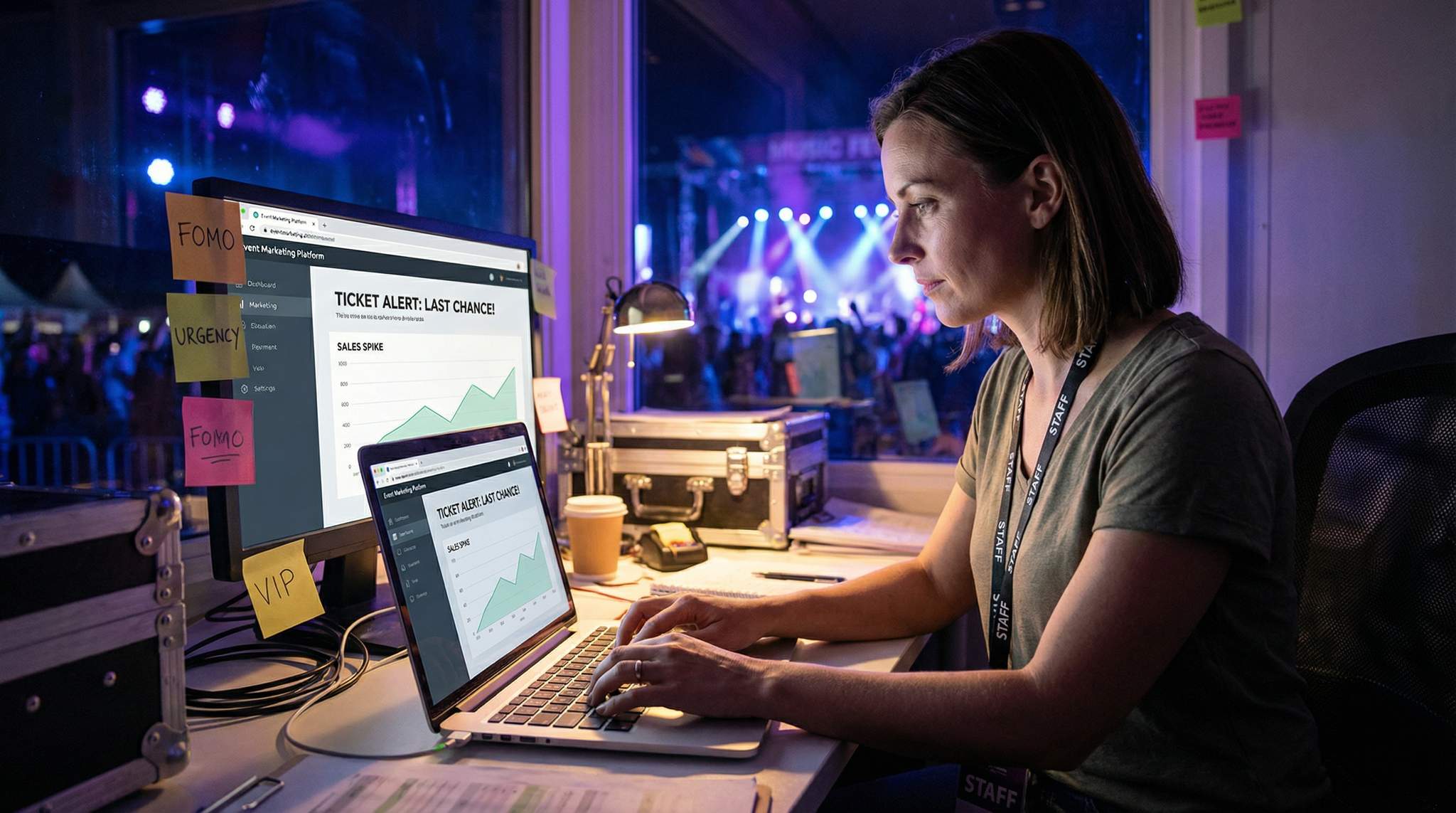
Another psychological trigger is urgency. The closer it feels to the “now,” the more likely people are to act. Simple words can create urgency: “Tonight only”, “Early-bird ends Friday”, or “Final tickets remaining” push readers to decide rather than defer. The key is to use urgency ethically (more on that later) – only when it’s real – because savvy audiences spot disingenuous hype a mile away. Social proof is powerful too. Mentioning “Sold out three years running” or including a quick testimonial (“‘Best conference I attended all year!’”) leverages herd mentality and trust. Experienced event marketers strategically weave these psychological triggers into copy to convert interest into action by using strategies to reignite ticket sales and leveraging social proof messaging.
Ready to Sell Tickets?
Create professional event pages with built-in payment processing, marketing tools, and real-time analytics.
Maintaining a Consistent and Authentic Brand Voice
While we adapt copy to different channels, a consistent brand voice across all messaging builds recognition and trust. Your event’s voice might be edgy and humorous (for a EDM festival) or professional and insightful (for a B2B conference). Define your tone and stick to it. If your social posts are playful with slang, keep that vibe in emails and event pages too (adjusting formality as needed without becoming unrecognizable). Consistency doesn’t mean dull – it means authenticity. Fans should feel the same personality whether they read your Instagram caption or your website description.
In 2026, authenticity is prized. With AI-generated content on the rise, audiences can sense generic “cookie-cutter” copy. Stand out by letting your genuine passion for the event shine through. Use the language your community uses. Refer to shared experiences (“Remember last year’s midnight surprise set?”) to create a bond. Seasoned event marketers stress that an authentic voice not only differentiates your event brand in a crowded market, but also fosters trust by adapting event marketing for different markets. And trust is the foundation upon which conversion is built – people buy tickets from events that feel real and deliver on their promises.
Crafting Event Descriptions That Convert
Highlighting the Experience, Not Just the Facts
The event description on your ticketing page or website is often the make-or-break copy that determines if someone clicks “Buy”. Rather than just listing facts (date, time, venue, lineup), paint a vivid picture of the experience awaiting attendees. Lead with the benefits and excitement. For example:
- Instead of: “XYZ Band live at ABC Venue on July 9th. Doors at 8 PM.”
- Try: “Feel the bass shake the floor as XYZ Band unleashes their biggest hits at the legendary ABC Venue. Join us July 9th for a night of pure rock energy – doors open 8 PM for an epic kickoff!”
The second description doesn’t just tell time and place – it helps the reader imagine the thrill they’ll feel. Effective event descriptions answer the attendee’s unspoken question: “Why should I care?” By emphasizing what they’ll gain – fun, memories, community, learning – you connect on an emotional level. Phrases like “immersive art installations”, “intimate acoustic set under the stars”, or “world-first preview” turn a plain listing into a tantalising invitation.
Built-In Email Marketing for Events
Send targeted campaigns, automated purchase confirmations, and post-event follow-ups directly from your ticketing dashboard.
Structuring for Readability and Impact
Even the most compelling message can fall flat if it’s buried in a wall of text. Structure your event description for quick scanning. Use short paragraphs, bullet points, and subheadings to break up information. Many successful event pages include a brief hook paragraph, followed by a bullet list of highlights. For instance:
- ? Headliner: Grammy-winning DJ ABC spinning a special 2-hour set
- ? Support: Live performances by XYZ and DEF
- ? Experience: Interactive art zones, gourmet food trucks, and a VIP lounge
- ? Why Attend: Join 5,000+ fans for a record-breaking night that everyone will be talking about!
Notice the use of emojis and concise phrases – these grab attention and convey meaning quickly. Important details (age restrictions, start times, address) can be listed clearly so nothing is missed. A well-structured description ensures that even a quick skim gives readers the highlights that matter, which can dramatically improve conversion. Optimising your event page layout and copy like this is a core part of optimising landing pages for event ticket sales – a small time investment that can yield a higher ticket purchase rate.
Grow Your Events
Leverage referral marketing, social sharing incentives, and audience insights to sell more tickets.
Incorporating Keywords for SEO (Without Sacrificing Flow)
Event descriptions don’t just speak to human readers – they also communicate with search engines. Including relevant keywords can help your event get discovered online. Think about what terms your target audience might search for. This often includes the event type, location, headliners or genres. For example, “London drum & bass rave 2026” or “Toronto startup conference”. Naturally weave these into your copy. A sentence like “Get ready for a Drum & Bass rave in London unlike any other in 2026…” can improve your Google visibility for those terms.
However, avoid “keyword stuffing” that makes text clunky. The priority is always an engaging, human-friendly description. Use keywords organically – if they fit, great; if not, focus on clarity and appeal. Also consider SEO elements like the event page title and meta description (if you control them) to include one or two top keywords. For instance, a meta description might be: “Experience an unforgettable night at London’s premier Drum & Bass rave with DJ ABC – July 2026. Tickets on sale now.” This captures interest and boosts search relevance. Smart SEO usage in copy can quietly complement your marketing, bringing in attendees who are actively searching for events like yours by writing the perfect event description, without any extra ad spend.
Using Storytelling and Social Proof
Storytelling isn’t just for novels – it’s a potent tool in event marketing copy. Weave a brief narrative to draw readers in. If your event has an interesting origin or theme, mention it: “What started as a backyard jam is now celebrating its 5th anniversary on the big stage – come be part of our story!”. Narratives create emotional investment. Similarly, integrate social proof to reassure potential buyers that this event is the real deal. If thousands attended before or if it’s produced by a trusted team, let them know: “Over 3,000 attendees danced with us last year – now we’re back bigger and better.” Including a quick quote from a past attendee or media review (if available) can also boost credibility: “‘No other festival like it in the region,’ – EDM Magazine.” Real quotes and numbers act as evidence that others loved the experience by using social proof to overcome sales slumps and leveraging your event’s community.
For first-time events without past attendees, lean on the reputation of performers or partners: “From the creators of XYZ Festival…” or “Featuring the award-winning chef from ABC events.” The goal is to remove doubt. By telling a story and showcasing proof within your event description, you transform it from a cold info dump into a persuasive narrative with trust factors – making readers much more comfortable clicking that “Buy Tickets” button.
Crafting Social Media Posts That Engage and Sell
Tailoring Your Tone to Each Platform
Not all social media platforms are created equal – and neither is the copy you write for them. To maximise impact, adapt your tone and style to fit the platform’s culture while keeping your core message consistent. For example, on Instagram and TikTok, a casual, upbeat tone with trendy slang or emojis feels at home (“Can’t chill this excitement ?? #SummerFest2026”). These platforms skew younger and favour authenticity and fun. Meanwhile, on Facebook you might adopt a slightly more informative tone for a broader audience (“Join us for an unforgettable night – all ages welcome. Grab your tickets now!”), and use the platform’s event features to include details.
If your event targets professionals or B2B audiences, LinkedIn is key and it demands a professional tone. Focus on value and networking opportunities there. For example: “Calling all fintech leaders: Don’t miss FinTech Summit 2026 – meet C-level peers and get insights from industry pioneers.” The language is a bit more formal and expertise-driven, which resonates better with LinkedIn’s professional audience. Each platform has unique quirks (Twitter’s character limit, TikTok’s emphasis on video with captions, etc.), so successful event marketers craft copy that feels native to the platform. A/B testing messaging on different networks can reveal what tone gets the most engagement, allowing you to fine-tune your approach to each audience segment by adapting your tone for local markets.
Balancing Engagement and Promotion
On social media, engagement is the gateway to conversion. Pure “buy now” posts every time can turn off followers. The trick is to balance posts that build excitement and community with posts that drive ticket sales. Think of it like a conversation: if every message you send is “buy, buy, buy,” people tune out. Instead, mix up your content:
- Hype Posts: Share an exciting detail or behind-the-scenes peek without an overt sales pitch. “? Just got a sneak peek of the stage design – it’s next level! (No spoilers, but expect fireworks ?)”. These spark comments and shares, building buzz.
- Value Posts: Give useful or entertaining content tied to your event. “Our headliner put together a playlist to get you hyped – check it out on Spotify!” or “5 tips to make the most of your festival weekend (hydration is key ?).”. This positions your brand as caring about fans, not just ticket sales.
- Direct Promotion Posts: When you do a sales-focused post, make it count. Use an eye-catching visual and urgent copy. “? Only 48 hours left for Early Bird prices – don’t miss your chance to save. Secure your ticket now ??? [link]”. Because you’re not bombarding them with these constantly, your followers are more likely to pay attention when you do drop a direct CTA.
By providing engaging content in between promotional pushes, you keep your audience interested and receptive. Engaged fans are far more likely to convert when you hit them with that key sales message, because you’ve earned their attention and goodwill. This approach aligns with an omnichannel strategy that nurtures and then converts – social media being a prime touchpoint for the nurture stage.
Using Hashtags, Emojis, and Visual Cues Wisely
Hashtags and emojis are small but mighty tools in social copy. They can extend your reach and convey tone instantly – if used correctly. For hashtags, less is more these days. Research which hashtags are actually followed or searched by your target fans (for example, #MusicFestival, #[YourCity]Events, or niche tags like #TechConference). Use 1-3 relevant hashtags in your post so it appears in those feeds, but avoid cramming a dozen hashtags which can look spammy. Branded hashtags can also rally your community (e.g., encourage attendees to post with #DanceFest2026 for contests or UGC campaigns). In our experience, a couple well-chosen hashtags can boost a post’s visibility without hurting readability.
Emojis add personality and visual interest. A ? or ? instantly conveys “music” or “celebration” without using words. They’re great for breaking up text and adding emotion. An important tip: make sure emojis match your event’s tone – a corporate summit might sparingly use ? or ? for emphasis, while a party event can go wild with ???. Use them to complement, not replace, your words. For instance: “We’re buzzing to announce ??Comedy Night lineup – get ready to LOL ?”. The emojis amplify the excitement and theme.
Also, take advantage of visual cues in formatting if the platform allows. On Facebook, you can use bold or italics (via certain third-party tools) for key phrases. On Instagram, line breaks and lists with emojis or checkmarks make info easier to digest. Even the placement of a link matters – on platforms like Instagram or TikTok, since you can’t hyperlink in captions, a phrase like “link in bio” or a Link Sticker on Stories is essential to drive traffic. The goal is to make your social copy eye-catching and clear at a glance. A great practice is to draft your post and then view it on a phone screen; see if the key info and vibe pop without needing to click “…see more.” If not, tweak it until the most important words and symbols stand out.
Examples of Compelling Social Copy in Action
It’s helpful to see how all these principles come together. Here are a couple of real-world inspired social post examples that drive engagement and ticket sales:
-
Festival Announcement (Instagram):
“? JUST ANNOUNCED: [Festival Name] 2026 lineup is here! ? Swipe ? for the full list – it’s our biggest year yet. From EDM legends to rising stars, we’ve got your summer covered. Tag your squad who needs to be there! #FestivalVibes2026 #CityName”
Why it works: Starts with an emoji and exciting news (“JUST ANNOUNCED” creates urgency to swipe). Uses emojis to amplify emotion (??). Invites interaction by asking followers to tag friends (driving organic spread). Mixes a branded hashtag with a popular one. -
Last-Minute Tickets Push (Twitter/X):
“? Procrastinators, this is it – TONIGHT we throw down at Dance Bash 2026. Only 50 tickets left at the door. Don’t be the one who hears about it tomorrow… be there! ?? [ticket link]#DanceBashTonight”
Why it works: Directly addresses last-minute buyers humorously (“Procrastinators, this is it”). Emphasises TONIGHT and only 50 left to create urgency and scarcity. Leans on FOMO (“don’t be the one who hears about it tomorrow”) which is extremely salient on event day by overcoming the mid-campaign sales slump and creating urgency when tickets are selling fast. Clear CTA with an emoji pointing to the link. -
Conference Value Post (LinkedIn):
“What’s the ROI of attending our Marketing Innovators Summit? ? Here’s what past attendees say: 89% learned new strategies, 75% met a future client or partner. (And 100% loved the free barista coffee! ?) Secure your spot to gain connections and insights that propel your business forward.”
Why it works: For a professional audience, it leads with ROI and statistics (appealing to rational motivation). Still adds a touch of humour with the coffee mention and wink emoji to keep it personable. This post provides social proof with data and drives home the value, making the decision to attend feel like a smart investment.
In each example, the copy is tailored to both the platform and the purpose, combining excitement, useful info, and a nudge to take action. When in doubt, save examples of posts from other events that made you want to click or buy – study and emulate their tactics (with your own twist). Social media moves fast, but with the right copy, your message will stick in the minds of potential attendees and translate into more ticket sales.
Writing High-Converting Ad Copy
Hooking Attention with Powerful Headlines
Paid ads are often the first encounter someone has with your event, so your ad copy must immediately grab attention and communicate value. The headline (or the first line of text) is critical. In 2026, effective ad headlines tend to either appeal to emotion or present a clear benefit. For example, which Facebook ad headline is more compelling at a glance:
- “Music Festival in Auckland”
- “? Auckland’s Ultimate Summer Music Festival – Aug 12”
The second one leaps out because it uses an emoji and superlative (ultimate) to promise a unique experience, plus includes the date for context. It feels exciting and timely. Always think: what would make you stop scrolling? Bold promises, targeted appeals (e.g. “Attention NYC hip-hop fans!”), or intriguing questions can all work – just ensure the rest of the ad backs up the headline’s promise.
For search ads (Google Ads), the stakes are a bit different. Your ad appears when someone is actively searching, so relevance is king. Mirror the user’s query in your copy. If they searched “Halloween haunted house LA tickets”, a good ad title might be “Haunted House LA – VIP Tickets Available”. Add a small twist to stand out, like “Scariest Night in LA – Haunted House Tickets”. The key is that the searcher sees exactly what they’re looking for. High relevance not only attracts clicks but also boosts your quality score (lowering ad costs). Whether it’s social or search, your headline should immediately scream “This is the event you want!” or at least “This is interesting enough to read more.”
Focusing on Benefits and Unique Selling Points
Once you’ve got the user’s attention, the body of your ad needs to sell them fast. Space is limited (a Facebook feed ad might only show 125 characters before truncating, a Google ad only 90 characters per description line), so every word counts. Lead with benefits and what makes your event unique. Rather than saying “Featuring DJ XYZ and full bar”, translate that into the benefit or experience: “Dance all night to DJ XYZ’s beats + enjoy an open bar – all included with ticket!”. That way, even if truncated, the value is upfront.
Make sure to include your event’s unique selling points (USPs): what sets it apart? It could be a rare performance (“only U.K. show of 2026”), an exclusive venue (“rooftop view of the city”), or extras like meet-and-greets. Incorporate one or two USPs into the copy. For example, a conference ad might say: “Learn from 20+ marketing gurus (Inc. Google & Nike speakers) – boost your skills in 2 days.” This highlights the calibre of speakers and the value (skill boosting in a short time). If your event appeals to a specific passion or niche, call that out too. “Indie film lovers, unite – premiere screenings & director Q&A at CinemaCon.” Tailoring the message to the target audience’s interests makes it far more compelling than a generic statement.
It’s also wise to address pain points or objections subtly in ad copy. For instance, if people often worry an event might be too expensive, an ad could mention “Early-bird tickets from $25 – budget-friendly fun!”. If they fear boredom, “Non-stop entertainment, 3 stages of music” assuages that. The most effective ad copy anticipates the viewer’s question “What’s in it for me?” and answers it convincingly within seconds.
Calling to Action with Urgency
Every great ad needs a call-to-action (CTA) – a directive that tells the viewer what to do next. In event marketing, common CTAs are “Get Tickets”, “Book Now”, “RSVP Today”, or “Learn More”. The phrasing can impact conversion. Tests often find that a more specific or urgent CTA can outperform a generic one. For example, “Get Tickets” might have a stronger pull than “Learn More” when the goal is a purchase, because it implies action and ownership (you’re not just learning, you’re getting your ticket). On the other hand, for higher-priced events like conferences, a softer CTA like “Learn More” can initiate the journey for those not ready to buy on the spot. It’s important to match your CTA to the customer’s readiness.
Consider adding urgency or incentive in the CTA line when possible. Instead of a plain “Register Now”, something like “Register Now – Limited Spots” can create a subtle push. A famous example in the ticketing world was an A/B test where one variant said “Buy Now” and another said “Buy Now – 90% Sold Out!”. The latter drove significantly higher clicks because it combined the CTA with a FOMO trigger (nearly sold out). Whenever using urgency, though, make sure it’s truthful – if 90% isn’t sold, don’t claim it (users will catch on, and it breaches trust). If you have a real deadline (like a price increase or low inventory for a tier), absolutely leverage that in your ads by communicating true scarcity ethically.
Also, design and copy work hand-in-hand for CTAs. If you have control over the ad creative, ensure the CTA is highly visible – often it’s a button on the ad. Using action-oriented words on the button or link text (like “Reserve My Seat” or “Grab My Ticket”) in combination with the ad copy can reinforce the message. The CTA should stand out as the natural next step after reading your compelling ad. A user should never wonder “How do I get tickets?” – your copy should make it obvious and enticing what to do next.
Platform-Specific Copy Considerations
Each advertising platform has its nuances, so fine-tune your copy to exploit the strengths of each:
- Facebook/Instagram Ads: You have a headline, main text, and maybe a description. The main text can be a bit longer, but put the most important info in the first sentence so it shows before the “See More”. For instance: “? Tickets just $10 till Friday! ? Indie Rock Fest hits Melbourne 9/10 – grab yours now.” Front-load the offer and essential details. Use conversational tone and emojis if appropriate – many top-performing FB/IG ads feel like posts from a friend, not formal ads. Also, advanced targeting in these platforms allows your copy to be very tailored: you might mention the city name or interest (“Calling all metalheads in LA…”) to immediately click with the viewer.
- Google Search Ads: Here, clarity and relevance beat cleverness. You have limited characters for headlines (often 3 headlines of 30 chars) – use them wisely. For example: “Summer Jazz Fest Tickets – 25% Off Thru June” and “Live in NYC July 5-6 – Book Now”. This packs location, dates, and a promo offer in two neat lines. Use the description to add a unique hook or trust signal (“Family-friendly event | Free afterparty | Secure checkout”). Including pricing or offers in search ad copy can also filter in serious buyers and filter out those who might click but not convert. Remember, the goal of search ads is to match the intent of the searcher and then stand out with a compelling value or offer.
- TikTok and Short-Video Ads: Much of the persuasion in TikTok ads comes from the video, but don’t ignore the caption. Here you can be very casual or use trending phrases. Gen Z responds to authenticity and humour. A TikTok ad caption might say “POV: You finally found a festival where the vibes are immaculate. ? See you at Sunset Fest?”. It’s playful and uses a popular slang (“vibes are immaculate”). Even though TikTok captions can be longer, typically only a line or two will display without tapping, so again front-load any key message. And always include a clear call to action either spoken or as text overlay in the video (e.g. “Get your tickets in bio”).
- LinkedIn Ads: If promoting, say, a conference or networking event, keep copy professional and succinct. Highlight career or learning benefits. E.g., “Level up your skills at Marketing World 2026. Early registration ends soon – secure your spot among 500+ industry peers.”. On LinkedIn, bullets or line breaks might not format well in ads, so favor a clean sentence or two. Include a CTA like “Register now” in the text because LinkedIn’s UI is subtler with buttons than Facebook’s.
No matter the platform, always review your copy on a mobile preview. Over 75% of ad engagement for events happens on mobile devices, so ensure your headline doesn’t get cut awkwardly and your key points are immediately visible on a small screen. Fine-tuning for each platform might seem tedious, but it’s a tactic all top event marketers swear by to increase ROI on their ad spend by using emergency strategies to boost attendance and low-budget event marketing strategies. Small copy tweaks – even just mentioning the city or using an emoji – can often lift click-through rates and conversions in a noticeable way.
Testing Ad Copy Variations
Given the high stakes and tight constraints of ad copy, A/B testing is your best friend here. Platforms like Facebook Ads Manager and Google Ads make it easy to run split tests or have multiple ad variants rotate. Take advantage of this to continuously improve your messaging. Test one element at a time to draw clear learnings. Some effective tests to try:
- Headline Focus: Try one headline that highlights the headliner/attraction (e.g. “Live with DJ Spectra”) vs. one that highlights the offer (“50% off tickets this week”). See which angle draws more clicks.
- Urgency Phrasing: Test including urgent language (“Now”, “Limited”, “Last chance”) vs. a more neutral tone. Often urgency boosts click-through, but you need to ensure it’s not turning some audiences off by feeling too pushy. If one version leads to more clicks but a lower conversion rate, it might be overdoing the urgency, attracting clickers who don’t convert. The data will tell you.
- CTA Text: If you have control over the CTA button (like on Facebook you choose the button text), try “Book Now” vs “Learn More” or others. We’ve seen cases where a “Learn More” got more initial clicks for high-end events (people wanted info), but a “Buy Now” on cheaper, impulse events drove more purchases. Match the CTA to the commitment level.
- Emojis vs No Emojis: It sounds minor, but testing an emoji in your ad copy can be revealing. Some audiences respond to the colour and emotion added, while a small segment might find it unprofessional depending on context. One campaign for a tech conference found that an ad headline with a ? emoji had a 15% higher click-through rate than the same headline without, because it reinforced the “future/innovation” theme and drew the eye.
Track metrics that matter for each test. Click-through rate (CTR) will tell you which copy grabs attention, but conversion rate (ticket purchases) will tell you which persuades the right people. Ideally, you want to optimize for the combination – high CTR with high conversion, i.e., a high percentage of viewers not only click but also buy. It might take a few iterations to find that sweet spot message. When you do find a winning ad copy, you can scale up its spend, and also propagate its learnings to other channels (e.g., if “Last chance to dance!” resonated in ads, use that phrasing or concept in emails or organic posts too). The beauty of digital ads is the instant feedback – use it to refine your copy until the clicks – and tickets – roll in.
Email Subject Lines and Copy that Boost Open Rates & Sales
Crafting Irresistible Subject Lines
Your email subject line is arguably the most critical element of your entire email campaign – because if the subject doesn’t entice, the content won’t even be seen. By 2026, inboxes are smarter and people more selective, so writing a subject line that stands out (yet doesn’t feel spammy) is essential. A few strategies:
- Personalisation: Including the recipient’s name or other personal detail can grab attention. For event marketing, using the city or interest can work too. For example: “Hey John – see you at Comic Con next week?” or “Jazz lover? Don’t miss this weekend’s live sessions”. In one campaign, a personalized subject like “Still looking for tickets to Los Angeles?” significantly outperformed a generic “Haven’t found what you need?” – increasing open rates by 31% and even boosting sales by 38% according to A/B split test conversion optimization studies. The reader feels the email is speaking directly to them.
- Urgency & FOMO: Similar to ads, indicating time sensitivity in the subject can prompt immediate opens. “? 24 Hours Left for Early Bird Pricing” or “[Tonight] Last chance to join the party”. These signal that if the email is ignored, an opportunity will be missed. Just be sure to only use this when true – constant “last chances” that aren’t real will lead to burnout and distrust. But when a genuine deadline looms, highlighting it in the subject can lift open rates. Emails framing a limited time offer have been found to get 14% higher click-to-open rates than average, and even double the normal transaction rates in some cases by framing limited time offers effectively, thanks to that urgency driving action.
- Value or Curiosity: Give a hint of what’s inside that makes it worth the click. “Your Exclusive Discount Inside – VIP Tickets ??” teases a benefit, or “5 Festival Hacks for the Best Weekend Ever” promises useful tips (which could be within a newsletter that also plugs your event). Question formats can intrigue: “What’s the #1 event in LA this summer? (Hint: you’re invited)”. The goal is to create a little suspense or clear value so they can’t resist seeing more.
- Keep it Short (usually): Many email clients (especially on mobile) show roughly 30-50 characters of a subject before cutting it off. While there’s no magic number, subject lines around 6-10 words often perform well. A study of billions of emails found that subject lines 61-70 characters long had the highest average open rate (~32% open) according to email subject line statistics). That’s roughly 8-10 words. Long subjects tend to get truncated and lose impact. There are exceptions when a longer, very descriptive subject can work for highly interested lists, but as a rule, be concise.
Additionally, pay attention to your sender name as part of the “copy” package. If possible, use a sender name that’s easily recognized (your event or brand name) or even a human name plus brand (like “Samantha at TicketFairy”). Consistency here helps readers immediately identify your emails in the inbox and associate them with value, making them more likely to open based on who it’s from as well as the subject text.
Optimising Preview Text (The “Second Subject Line”)
Many email clients show a preview text or snippet (the line that appears after the subject in the inbox view). This is pulled from the first line or two of your email body, unless you’ve set a custom preview text. Don’t waste this opportunity. Think of preview text as an extension of your subject line – together they should tell a compelling mini-story or one-two punch. For example:
- Subject: ? “Flash Sale: 50% Off Concert Tickets Today Only”
- Preview text: “Treat yourself! Use code JAM50 by midnight to save big on this weekend’s show.”
Anyone seeing that subject+preview in their inbox gets the full context: huge discount, limited time, and exactly what to do. Avoid generic or empty opener lines like “Having trouble viewing this email? Click here” at the top of your email HTML, because that might become your preview text and it’s a wasted impression. Instead, start your email body with a sentence that supports the subject. If the subject was more curiosity-based, the preview can reveal a bit more to convince them to open.
For instance, if subject says “Guess who’s headlining? (You’ll want to see this)”, the preview could be “We just confirmed an incredible headliner: DJ Marshmello – and you get first dibs on tickets!”. That way the reader is doubly tempted. Utilize this “second subject line” to either reinforce urgency (“2 days left to secure your spot”), highlight a benefit (“Includes free drinks for early buyers – cheers to that”), or personalize further (“John, this is your presale invite”). It can significantly improve open rates and help guide the right readers to click through.
Writing Email Copy that Drives Clicks
Once the email is opened, your copy’s job is to convert that interest into action (ticket purchase, RSVP, etc.). A proven approach is to keep emails concise and focused on a single goal. If you’re announcing a new event or pushing a sale, make that the star of the show. The email body should quickly recap the what/when/where (some people will skip your beautifully crafted event page and only read the email, so ensure key details are present), but more importantly, sell the why. Use benefit-driven language similar to your event description, but tailored for email format:
- Start with a punchy opening line that reiterates the value or excitement. “Your next unforgettable night out awaits – and it’s 50% off if you act fast!” for a discount offer, or “We’re bringing the mountains to Melbourne – get ready for a snow-themed rave like nothing you’ve seen.” for a thematic hook.
- Use short paragraphs or even bullet points in the email to make it scannable. People often scroll emails quickly. A great technique is a bullet list of reasons to attend or what’s included, e.g.: “Why you’ll love it: 1) Two stages of live music ?, 2) Gourmet food trucks, 3) Free after-party with DJ set, 4) Easy access via free shuttle.”. This highlights enticing points at a glance.
- CTA buttons or links: Don’t rely on one link at the bottom. Include a call-to-action early (after the first section) and again at the end. E.g., a bold button saying “Get Your Tickets” or “Reserve My Spot”. Many readers will click as soon as they’re convinced, so make that easy. Ensure the button text is action-oriented (“Grab my ticket”, “Secure seat now”) and consider adding urgency on it if appropriate (“Register – Sale Ends Midnight”).
- Secondary content: If you must include additional info (like multiple events or a schedule), prioritize. Lead with the main event or offer you want to convert, and maybe below the CTA, you can have a secondary block like “Other events you might like” or a P.S. for another upcoming date. But don’t dilute the main message. Each email should ideally have one primary conversion goal.
Tone-wise, emails can be a bit more intimate since they land in a personal space (inbox). You might say “Dear John,” or you might drop formality and just start with “Hey John!” or even no name if not personalized, like “We’ve got great news for you”. Match it to your brand voice. Just be sure the tone remains encouraging and upbeat. Even if urgency is the theme, frame it positively (e.g., “Last chance to join the fun” rather than “Don’t miss out or you’ll regret it” – the latter feels like scolding).
Lastly, proofread and test for deliverability. Spam filters in 2026 are sensitive to certain phrases (like “FREE!!!” with multiple exclamations, excessive caps, etc.). Avoid all-caps except maybe a single word for effect (and not in the whole subject). Watch out for common spam triggers and needless superlatives that might reduce credibility. A quick check: over 60% of consumers find all-caps subject lines unacceptable based on data on subject line acceptability), and obvious spelling errors or gimmicks can lead to emails being ignored or marked spam. Keep it clean, genuine, and action-focused. When your subject line and email message work together seamlessly, you’ll not only get high open rates but also see a healthy click-through rate (CTR) from email to your ticket page – meaning more ticket revenue.
To illustrate the impact of great copy in email, here’s a quick summary of a couple of A/B test results from real campaigns:
| Test Scenario | Variation A (Copy) | Variation B (Copy) | Result & Insight |
|---|---|---|---|
| Subject Line – Generic vs Personalised | A: “Haven’t found what you’re looking for?” (generic) |
B: “Still looking for tickets to [Destination]?” (personalised with interest) |
Variation B won: 31% higher open rate, 38% higher sales (A/B split test conversion optimization studies). Personalising with the event context reminded readers of their interest and re-engaged them effectively. |
| Urgency Email vs. Standard Email | A: Standard announcement tone “Festival Update: New Artist Added” |
B: Urgent tone + deadline “? 48 hours left: Final chance for early-bird tickets” |
Variation B won: Emails with a real deadline saw 14% higher click-to-open and double the normal purchase rate (framing limited time offers effectively). Urgency drove action, proving effective when used truthfully. |
These data-driven results reinforce how the right wording can dramatically change outcomes. By continuously testing and refining your email copy – from subject to body to CTA – you’ll discover what truly resonates with your audience and drives them to act.
Overcoming Hesitation with Trust-Building Copy
Addressing Common Objections Upfront
Even when someone is interested in your event, certain hesitations can hold them back from buying a ticket. Great copy anticipates these objections and counters them proactively, putting the potential attendee’s mind at ease. Some common concerns and how to address them in your messaging:
- Price/Value: If price is a sticking point, justify the cost by highlighting value. Emphasise what the ticket includes (“All-access pass – concerts, workshops, and after-parties for one price”), or compare it to something of value (“Less than $20/night for five amazing bands – cheaper than a movie!”). If you offer payment plans or “buy now, pay later” options, mention that flexibility. Early-bird offers or group discounts can also be framed positively: “Get 4 friends to come and you all save 20% with the squad pack.” The key is to make the attendee feel they’re getting great bang for their buck. Successful events often weave messaging about improvements and value throughout their campaigns, so by the time buyers get to checkout, they’re convinced it’s money well spent according to trends showing value perception is key and selling out on a shoestring budget.
- Unfamiliar Event or Organizer: If your event or brand isn’t well-known, build credibility through copy. Mention any reputable partners, sponsors, or artists involved (“Official after-party presented by [Famous Club]”). Highlight years of experience if applicable (“From the team behind 10 years of sold-out New Year’s Galas”). Including a brief testimonial or review quote in ads or on the landing page can convert the skeptical: “‘Honestly the best event of the year – can’t wait for the next one.’ – Attendee feedback from 2025”. People feel safer investing time and money when they see social proof that you deliver on promises by utilizing don’t miss out messaging.
- Fears of a Dud Experience: Nobody wants a boring or poorly run event. If you have impressive stats, flaunt them: “97% attendee satisfaction last year”, “#1 rated festival in the region on XYZ.com”. If the event is new, set expectations in a positive way by describing what you’ve planned in detail to showcase professionalism: “Professional stage production, top-notch sound system, and a full schedule of activities so there’s never a dull moment.”. Also, if applicable, address safety or comfort concerns (especially in a post-2020 world, attendees might wonder about crowd management, health measures, etc.). A simple line in the FAQ or footer of an email like “Safety first: on-site medical and security teams, plus extra sanitization measures for your comfort.” can reassure those who worry.
- Logistics (Date, Location, Timing): Sometimes people hesitate because an event seems like a hassle to attend. Use copy to remove that friction. Emphasise convenience: “Right off the Main Street station – no car needed!”, “Doors at 7, show starts 8 – you’ll be home by midnight.” If you can, highlight easy parking, public transport, or even partnerships like discounted rideshares for ticket holders. For multi-day festivals, outline that you have accommodations or camping support or shuttles. When folks see that the little details are handled, they feel more confident clicking “buy”.
By addressing these points directly in your promotional copy, you preempt the “what ifs” that quietly linger in a potential attendee’s mind. It’s like having a friendly salesperson anticipating questions and answering them before they become objections. The result is a smoother path to purchase with fewer abandoned carts or bounced visitors.
Building Trust with Transparency and Integrity
Trust is paramount in event marketing — after all, people are buying something they’ll experience in the future, which involves a leap of faith. Trust-building copy can significantly boost conversion by assuring buyers they’re making a safe choice. A few ways to infuse trust:
- Honest Urgency and Scarcity: We discussed using urgency tactics, but always with honesty. If you say “Only 50 tickets left” or “Price increases tomorrow”, those must be true. Faking it might create a short-term bump, but as veteran promoters warn, fake scarcity backfires and erodes trust. Modern ticketing platforms make it easy to showcase real ticket counts or sold percentages; leverage those real stats in your messaging. Authentic updates like “Wow – 85% of tickets sold in the first week!” excite people and simultaneously build credibility that others are buying (social proof) and you’re transparent about sales. On the flip side, if sales are slow, you can still be transparent in a positive way: “Plenty of space left – bring the whole crew!” (This can be paired with a value pitch or special offer to boost appeal.) The bottom line: when attendees feel you’re truthful, they are more likely to trust your marketing messages and act on them.
- Policies and Guarantees: Especially after the wave of event rescheduling and cancellations in recent years, ticket buyers appreciate clear policies. In your copy, consider mentioning things like “Easy 5-minute online ticketing & 24/7 support” or “Tickets transferable if your plans change” if you allow that. Some events offer refund guarantees or “buy with confidence” policies – if you do, shout it out: “100% refund if event is cancelled – no risk in securing your spot.”. Knowing they won’t be left hanging if something goes wrong can tip an on-the-fence reader into a buyer. If you don’t do refunds, you might emphasize “Official resale platform available for ticket exchanges” (and use a positive angle like joining the waitlist, etc.). Transparency in terms and what to expect builds trust.
- Authentic Voice & Factual Information: It might sound basic, but make sure all factual claims can be backed up, and don’t over-hype with adjectives that feel too good to be true. For instance, saying “The best lineup ever” is subjective and seen as hype; instead list what’s objectively impressive (Grammy winners, number of stages, etc.). Use a conversational tone that treats the reader with respect and intelligence. If your copy reads too much like a hard sell or is full of marketing buzzwords, today’s savvy audiences may disengage. Instead of “This epic, life-changing event will blow your mind!!!”, try authenticity: “We poured our hearts into curating a lineup we know you’ll love – and we can’t wait to share it with you.” This reads as genuine and passionate rather than salesy.
- Social Proof & Community: Encourage user-generated content and reviews, then highlight them. “Join 10,000+ happy attendees – see our event hashtag #XYZFestival for live excitement from fans.” When people see a thriving community or positive attendee feedback, it reinforces trust that the event is legitimate and worthwhile according to research on user-generated content trust. Even visuals like a photo of a smiling crowd or an artist on stage can subconsciously assure would-be buyers that real people attend and enjoy this event.
Remember, trust earned can be easily lost, so maintain it at every touchpoint. That means if your copy promises something (“free drinks all night!”), ensure the event actually delivers, or clarify scope if needed. Under-promising and over-delivering is better than the opposite. Over time, maintaining integrity in your copy and fulfilling on those promises will build your brand reputation, making each subsequent event easier to sell out because you’ve created a loyal base that trusts your word.
Leveraging Social Proof and Testimonials
We’ve touched on social proof earlier, but let’s focus on how to directly use it to turn hesitating prospects into ticket buyers. Social proof in copy can appear as testimonials, ratings, influencer endorsements, or user-generated content. Each can be woven into different channels:
- On Event Pages: If your ticketing platform or website allows, include attendee testimonials right on the event page. A short quote like “? ? ? ? ? – Absolutely electric atmosphere, well worth it!” stands out. If you have media quotes (from press or blogs reviewing past events), even better: “Named Event of the Year by CityLive Magazine”. These bits of text can be stylized in italics or quotes to signal it’s someone else praising you. The impact is reinforcing to the visitor, “others loved this, so will you.” Even numbers serve as social proof: “Join 5,000+ attendees” or “Over 85% of tickets gone” are effectively proof that many people trust and desire this experience by announcing sold-out tiers proudly.
- In Emails: Highlight satisfaction or excitement from others in your email copy. For example: “5000+ fans have already secured their tickets – have you got yours?” or share a mini story: “Meet Jane – she came last year not knowing what to expect, and called it ‘the best night of my life.’ We’re ready to top that – come see for yourself.”. This personal approach helps the reader envision themselves having a similar positive experience.
- On Social Media: Share user-generated content (UGC) from past attendees – photos, TikToks, tweets – along with your promotional posts. When potential customers see real people endorsing the event, it’s incredibly persuasive. Encourage your followers: “Tell us your favorite memory from last year!” and then reshare those comments in your stories or as quotes in graphics. It creates a buzz of positivity around your brand. Influencer shoutouts also count – if a popular local DJ or a known figure has hyped your event, mention it: “Even DJ Star can’t wait: ‘This lineup is ?’” (with their permission or if it’s public). Collaborating with influencers in this authentic way can drive their fans to trust you too, as detailed in successful influencer partnerships for events.
- In Ads: Yes, even ads can incorporate social proof. A display ad might include text like “? ? ? ? ? Rated” or “Trusted by 10,000+ attendees”. Facebook ad copy could say “Voted best festival in the Midwest – experience it yourself.” These little trust badges in ads can increase click confidence, especially for new prospects who haven’t heard of you.
One advanced tactic is to use case studies or mini success stories in content marketing if you have a series of communications (like blog posts, or long-form social posts). For instance, a LinkedIn article or blog story about how your festival grew, including attendee feedback and outcomes, can serve to build trust in a narrative form. While not directly “copywriting” for ads or descriptions, it’s part of the overall persuasive content mix that can warm up an audience.
The voice of other customers is more convincing than your own – we inherently trust peer opinions. So wherever possible, let your happy attendees or reputable sources do the talking. A light touch of praise here and there across your marketing materials can dramatically reduce hesitation and instill a sense of confidence in potential ticket buyers. They start thinking, “This event is clearly enjoyed by people like me, so I’ll probably enjoy it too,” which is exactly the mindset that leads to conversions.
Using Urgency and FOMO Ethically to Drive Action
Creating Real Urgency with Deadlines and Countdowns
One of the most powerful copy techniques to drive quick action is urgency – motivating people to buy now rather than later. In 2026, with so many distractions, many ticket buyers procrastinate (some intentionally wait for last-minute deals, others just delay). By introducing genuine deadlines in your copy, you can spur them to move. Here’s how to do it ethically and effectively:
- Time-Limited Offers: If you have early-bird pricing, VIP packages that will sell out, or a promo code expiring, shout it loud. For example, as soon as your early-bird window opens, your messaging should include “Early-bird prices end in 7 days” across ads, emails, and posts. As the deadline nears, escalate the language: “? Last 48 hours for early-bird tickets – prices go up Friday!”. Many promoters report a predictable surge of sales in the final 48 hours of a price tier by counting down to price increases and confronting buyers with a ticking clock – because those countdown messages light a fire under fence-sitters. Use countdown timers on your site or daily countdown reminders on social: “10 days until doors open!” or “Only 3 Fridays left until festival time!” This constant but friendly ticking clock keeps the event on people’s radar and emphasizes that opportunities are diminishing the longer they wait.
- Low Ticket Alerts: When availability gets tight, tell people! “Only 50 tickets left for Saturday!” or “90% sold out – act now!” works on multiple psychological levels. It not only uses scarcity (nobody wants to miss out on something that’s almost gone) by using scarcity to drive sales, but it also acts as social proof that the event is popular (which reinforces that it’s a good choice). Modern ticketing platforms often display dynamic counts or “X seats left at this price” – you can mirror that in your messaging. If an email blast goes out saying “Over 10,000 tickets gone, final 500 on sale now”, recipients feel a jolt that they might literally lose their spot if they don’t hurry. Do be precise and truthful – if you have separate tiers, specify which is running low (e.g., “Only 20 VIP passes left” if general admission is still ample). That way you maintain credibility while still creating urgency.
- External Deadlines: Sometimes the urgency can come from external factors beyond ticket sales. For example, if attendees need to book their own travel or accommodation, you might remind them of those timelines: “Last weekend to book hotels before our discount block closes” or “Just 5 days left to secure shipping for your wristband – afterwards, pickup at venue only.” These are indirect to ticket buying but can push someone who’s already intent on going to finalize their purchase sooner than later. Another angle: seasonality or context. “Last big holiday weekend of the summer – don’t spend it on the couch!” (implying time of year urgency) or “This band won’t tour again anytime soon – now or never.” if appropriate. The phrase “now or never” essentially encapsulates urgency + FOMO and can be used in various forms when it’s legitimately a rare opportunity.
The golden rule: never fabricate urgency. Don’t say “last chance” if tickets will be available next week as normal, or “selling fast” if you’ve sold 5 tickets (some cheeky promoters have tried and it always backfires in reputation). Instead, find real angles of urgency. Early-bird deadlines, venue capacity limits, artist not touring frequently, limited-time perks (like “Buy before June 1 and get a free merchandise bundle” – that deadline creates urgency too). Use these honestly and creatively, and you’ll see more people converting now rather than adding it to their endless to-do list for “later” (which often never comes).
Emphasising True Scarcity and Exclusivity
Closely tied to urgency is scarcity – the idea that something is in short supply or hard to get – which makes people value it more. In event copy, scarcity can be about tickets, experiences, or access. Here’s how to wield it:
- Limited Tickets or Capacity: We mentioned low-ticket notices above. The psychology is simple: people rush to grab something that might be gone if they wait. If your event does have a cap (almost all do), occasionally remind your audience. For example, in the early stages you might say “First 100 tickets at $X – don’t miss the cheapest tier!”. That not only encourages early action but frames those tickets as a scarce deal (only 100 at that price). Later, “Tickets are 75% sold – secure yours before we hit capacity” conveys that scarcity strongly. If possible, use concrete numbers rather than vague terms, as they carry more weight (compare “limited tickets remain” vs “only 43 tickets remain” – the specific number oddly feels more urgent and believable). Scarcity messaging, when genuine, has been shown to significantly increase conversion rates as the event draws closer by communicating true inventory levels.
- One-Time-Only Experiences: If your event offers something exclusive – say an artist’s only performance this year, or a unique collaboration that won’t happen elsewhere – emphasise that exclusivity. “Only chance to see [Band] perform their new album live in the US”, “Exclusive world premiere of [Film] – not available online or in any other city”. Words like “only”, “exclusive”, “world premiere”, “debut”, “one-night-only” are red flags to the brain: if I miss this, I truly miss out. It creates a sense that the value of attending is higher because it’s irreplaceable. Fans, especially, will not want to miss a unique set or experience by their favorite artists. Many promoters successfully drive sales by highlighting these unique elements, essentially saying: you can’t get this later or elsewhere. This taps into the pure essence of FOMO – fear of missing out on something unique and unrepeatable by generating FOMO through social posts and highlighting unique event experiences.
- VIP or Tiered Perks (Scarce Upgrades): Another angle is having scarce perks. For instance, if you have VIP tickets or add-ons that are limited in quantity, play that up. “Only 50 VIP passes available – get early entry, reserved seating, and a meet & greet”. Because VIP often is limited by nature, people on the fence about splurging might be nudged to go for it before it’s gone. Even things like merchandise pre-orders can drive early action via scarcity: “First 200 ticket buyers get an exclusive merchandise bundle not sold anywhere else.” Once those 200 are gone, later buyers know they missed that extra – reinforcing that earlier action yields more value (and hopefully teaching them to buy sooner for future events). Scarcity in upgrades not only boosts overall sales but can also increase your average revenue per attendee as more people opt for higher tiers to avoid missing out on premium experiences.
One caution: scarcity should not be overused to the point of stress. Ethically, it’s about helping genuinely interested people not procrastinate to their own regret – not about pushing someone into something they don’t actually want. Your copy tone can reflect this by being enthusiastic rather than purely fearmongering. For example, “Last chance to join the excitement!” is more positive in tone than “Don’t miss out or you’ll regret it.” Both convey scarcity, but the former feels like an invitation, the latter like a threat. Always frame it as helping the reader seize a great opportunity, not scaring them. When done right, highlighting real scarcity and exclusivity makes attending your event feel special – like a golden ticket – and that’s a powerful motivator for sales.
Stirring FOMO (Ethically) in Your Messaging
FOMO – Fear of Missing Out – is such a driving force, it deserves its own focus. We’ve already touched on urgency and exclusivity, which are tools to create FOMO. Now, let’s talk about the art of FOMO-centric storytelling – painting a picture of the event in your copy that makes people think, “I don’t want to be the only one not there.”
- Showcase the Community and Buzz: People often go to events not just for the content (music, speaker, etc.) but for the social experience. Your copy can highlight the community aspect: “Join thousands of fans”, “the entire city’s music lovers will be there”, or “meet fellow developers from 40+ countries.” This signals that if you skip it, you’re missing a major gathering of your tribe. Additionally, share evidence of buzz: “Tickets are flying – Twitter is blowing up with #EventName excitement!”. If you have influencers or notable guests attending (and it’s appropriate to mention), that’s FOMO gold: “Even [Local Celebrity] just got their ticket – who might you bump into in the crowd?”. Social proof, as discussed, feeds FOMO by showing an in-crowd that the potential attendee would want to be part of by ensuring attendees don’t feel left behind and showcasing the amazing atmosphere.
- Project the Future Memory: A clever FOMO tactic is helping people imagine looking back after the event. Phrases like “Don’t hear about it later – experience it live.” or “Your future self will thank you for going!” nudge them to picture the regret of missing out. For instance, in post-event conversations, do they want to say “I was there,” or do they want to be the one who wasn’t and hears all the cool stories secondhand? One could even cheekily say, “Skip it if you must… but prepare for serious FOMO when your friends can’t stop talking about it Monday ?.”. By playfully acknowledging the feeling, you make the reader weigh the cost of missing the fun.
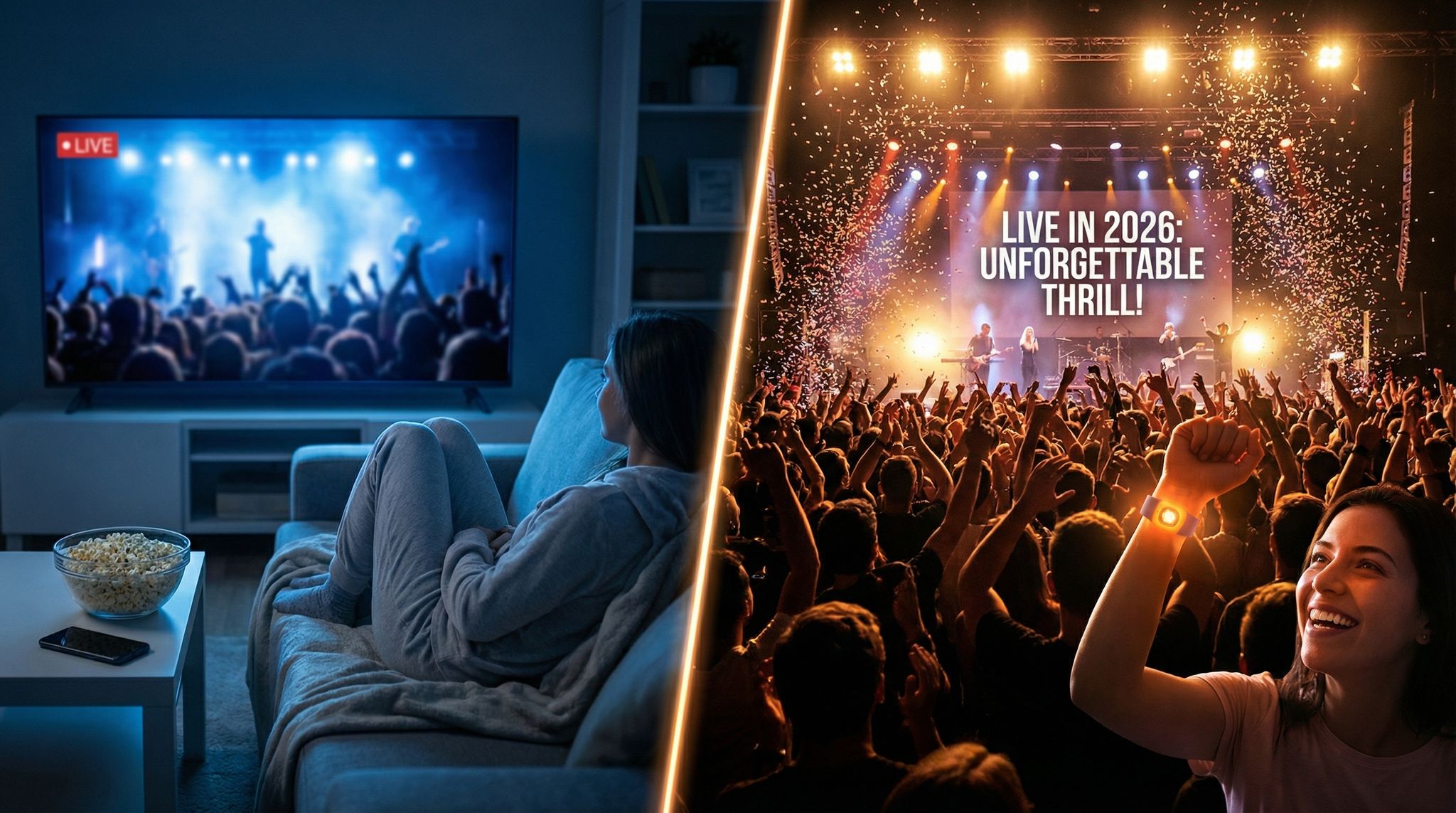
- Emotional Descriptors and Imagery: Use language that triggers the senses and emotions. “Imagine the roar of the crowd as the lights go down…”, “Feel the bass, see the spectacle, be in that moment – not watching it on someone else’s story.”. The more you can make them mentally experience what being there feels like (versus the bland experience of not going), the more they’ll yearn to secure that ticket. In describing past events or what’s anticipated, choose vibrant words: “breathtaking finale”, “surprise collaborations”, “jaw-dropping visuals”. And pair those in a contrast with what missing it would be: “These are the moments you can’t download or replay – you have to be there.”. The emotional payoff of attending – joy, excitement, inspiration, connection – should feel tangible in your copy, making the fear of missing those emotions very real.
- Ethical Lines: While leveraging FOMO, be mindful not to shame people or make claims that aren’t true. Ethical FOMO is about highlighting the genuine greatness of the event and its popularity, not inventing hype. Avoid negative fear-based tactics like “Your friends will have fun without you” – that’s guilt-tripping. Instead, keep it inclusive and encouraging: “We want you to be part of this – it won’t be the same without you.” That way, you’re inviting rather than alienating. Also, ensure any “exclusive” claims are accurate. If it’s not really exclusive (e.g., the content will be streamed or available later), don’t claim people will never get to see it – focus instead on the irreplaceable feeling of being there live, which is still a valid FOMO angle.
All in all, FOMO marketing done right should align with a true passion for your event’s experience. You’re essentially telling someone: This event is going to be amazing and beloved, and we don’t want you to wake up the next day wishing you’d been part of it. When that message comes from a place of authenticity and excitement, it resonates. Attendees will purchase because they want to share in that excitement, not just because they were scared or tricked. They’ll count down the days with anticipation, and when they’re at the event having a blast, they’ll be glad your copy convinced them to come instead of sitting at home watching others’ Instagram stories.
Testing, Optimising, and Evolving Your Copy
Continuously A/B Testing Your Messaging
No matter how seasoned a copywriter you are, surprises happen – sometimes the phrasing you thought would kill ends up underperforming, while a last-minute tweak becomes the star. That’s why A/B testing isn’t a one-and-done task but a continuous practice, especially in event campaigns that roll out over weeks or months. We’ve talked about A/B testing ads and subject lines; the approach extends to all channels:
- Email A/B Tests: Most email platforms let you A/B test subject lines (sending two variants to a small percentage of the list and then automatically sending the winner to the rest). Use this on important emails like on-sale announcements or last-chance reminders. Also test email content: you could send two versions of an email – one with a long-form storytelling style vs. one that’s short and bullet-pointed – to see which yields higher click-through to the ticket page. Keep an eye on open rates, click-through rates, and conversion (if trackable via pixels or unique links). For instance, one event might find that an informal, emoji-laden email gets more clicks from a Gen Z-heavy list, whereas a more formal tone might work for a professional conference audience. The data will tell you what your audience responds to.
- Landing Page Experiments: If you have the ability to tweak your event landing or purchase page, test different copy emphasis on the page. Examples: highlighting the headline (“The Ultimate New Year’s Party”) vs. highlighting the date/venue in the headline (“NYE Party @ The Grand Ballroom”). Or test including a short testimonial near the top vs. no testimonial. You might not have high volume of traffic to do super granular website A/B tests, but even sequential testing (change something one week and monitor conversion, then change back or to something new the next week) can give directional insights. Ticketing or registration platforms often provide data on conversion rates (visitors to actual buyers); use that to gauge which page content performs best at turning interest into ticket sales by incentivizing fans to share the event and targeting past attendees for loyalty.
- Social Media and Ad Iterations: Social posts, being more ephemeral, can be tested by simply observing engagement differences. Try wording the same announcement two different ways a few days apart (if it’s something you can repeat) and compare likes/clicks. For ads, as noted, always be optimizing – pause poor performers, allocate budget to winners, and keep introducing new contenders to beat the champion (this is often called “beat the control” approach in direct marketing). A culture of experimentation keeps your copy fresh and effective.
When running tests, change one major element at a time whenever possible. If you change subject line and body between A and B, you won’t know which factor drove the result. Isolate variables: test tone, or CTA text, or benefit highlighted, etc., one at a time. There are more advanced multi-variate tests, but they require big audiences to be statistically significant. For most event marketing purposes, simple split tests with clear single-variable differences yield actionable insights.
Crucially, share and document these learnings. If you’re part of a team or plan to promote future events, keep a log: “Tested X vs Y on subject lines – X got 5% higher open.” Over time, you’ll build a knowledge base of what copy style works best for your audience. What works for one event brand might differ for another. Some audiences might love emoji and slang, others might respond better to clean, info-rich copy. Let the data, not personal preference, shape your ongoing copy strategy. Embrace a mindset of constant improvement. Even a campaign that’s doing well can often do better with a few tweaks. And if something flops, don’t see it as failure – it’s valuable information on what your audience doesn’t want. As the saying goes in optimization: “Test, fail, learn, improve, repeat.”
Key Metrics: Measuring Copy Performance Across Channels
To truly optimise, you need to know what to measure and how to interpret it for copy-related insights. Different channels have different key metrics that indicate how your messaging is performing:
- Email Metrics: The big three are open rate, click-through rate (CTR), and conversion rate. Open rate is heavily influenced by subject line (and sending time/segmentation). If open rates are low, your subject lines might not be compelling or targeted enough. A healthy open rate can vary, but for engaged lists 20-30%+ is common, sometimes much higher for super fans. Click-through rate tells you if the email content and call-to-action are enticing people to learn more; if your CTR is low relative to opens, maybe the email copy isn’t persuasive or the CTA isn’t prominent. Conversion rate (tickets bought per email delivered) is the ultimate measure – if opens and clicks are high but conversions low, perhaps the landing page copy or offer is off. Track each major email and see which ones actually led to sales – that will teach you which messaging (urgency, lineup announcements, discounts, etc.) most effectively drives revenue.
- Ad Metrics: Click-Through Rate (CTR) indicates how well your ad copy (and creative) attract attention from its audience. A higher CTR means your message is resonating. However, also watch Cost Per Click (CPC) and Cost Per Acquisition (CPA) (or per ticket sale). It’s possible an ad with a slightly lower CTR might yield better cost per sale if it’s pre-qualifying people better. For copy, focus first on CTR – that’s your hook’s job; then focus on conversion rate of the clicks. If conversion is lacking, tweak the ad’s targeting or ensure the ad copy sets the right expectations for the landing page (message match). Relevance Score or Quality Score (in Google) is also feedback: those scores incorporate how people react to your ad. If you see those scores improving after a copy change, you know it was a positive move.
- Social Engagement: On organic posts, metrics like likes, shares, comments, and link clicks tell you what hit the mark. A post that gets a ton of shares (especially event announcements or funny memes related to your event) indicates that wording or concept really struck a chord. Lots of comments can mean high interest or excitement (though read them – gauge sentiment, not just quantity!). If you consistently see higher engagement when you use certain language or content types, lean into that. For example, maybe questions in your copy (“Who’s ready for…?”) always get people replying. Or countdown posts always get a spike. Use those insights to refine your content calendar and emphasize copy styles that work. Conversely, if some posts fall flat (low engagement), examine the copy: was it too promotional, or unclear, or posted at a bad time? Over time, your social metrics will teach you how to write posts that both engage the algorithm and your followers.
- On-Site Conversion: If you have access to web analytics (like Google Analytics on your ticket page), look at the conversion funnel. For instance, out of those who visit the event page, what percentage click “Buy” and proceed to checkout? If that ratio is low, the page copy or layout might not be convincing enough. Try tweaks and see if it moves the needle. Watching session recordings or heatmaps can even show if people scroll past your key info or where they drop off. Copy could be adjusted accordingly (maybe the pricing info should be higher, or the hype text should be bolder). This is more advanced, but even a basic stat like “visitors per ticket sold” before and after a copy update can hint at improvement or not.
In all cases, context matters. Compare your metrics against industry benchmarks when available, but more importantly against your own historical data or similar campaigns. If last year’s on-sale email had a 25% open and this year’s had 35%, that’s a successful improvement – dig into what changed (subject line wording, segment targeting, etc.). If your click-through on Facebook ads is 1.5% and the previous campaign was 0.9%, that new copy is an improvement worth keeping.
Analytics can seem daunting, but start simple: track a few key numbers for each channel, and try linking them to your copy choices. It will quickly become second nature to glean insights. And don’t forget qualitative feedback too – if you see comments like “This email convinced me, just bought my ticket!” or conversely “This ad is confusing,” those are treasure for a copywriter. Combine the quantitative data with qualitative audience feedback to continuously refine your messaging strategy.
Learning from Wins (and Failures)
Every campaign – even the flops – provides lessons. Top event marketers do post-mortems on their promotions to glean insights for next time. Here’s how you can turn wins and failures alike into future copy gold:
- When Something Works Exceptionally Well: Celebrate it, but also dissect why it worked. Did a particular word or phrase get a huge reaction? Did the positioning of the offer hit a sweet spot? For example, maybe you found that framing your concert as “A Night of Nostalgia” featuring 90s bands unexpectedly went viral. That tells you nostalgia is a strong angle for your audience. Next time, you might roll out a series of throwback-themed posts or events. If an A/B test produces a clear winner, carry that learning forward – e.g., “exclusive pre-sale for subscribers” subject lines yield huge opens – so use that tactic regularly. Consider writing an internal case study to document the win: what was the hypothesis, what was tested, and what were the results. This not only cements the lesson in your mind but also helps share the knowledge with any team members or collaborators.
- When Something Fails: It’s inevitable that some copy or campaigns will miss the mark. Instead of brushing it off, examine it critically. Was the messaging off-target for the demographic? (Maybe using slang with an older crowd, or the wrong cultural reference?) Did it come off as inauthentic or too pushy? Did external factors (like news events, algorithm changes) play a role? Sometimes a failure is simply timing – e.g., a last-minute push email might tank if sent at 10pm on a Friday. Other times, it’s the content – a contest post that nobody entered could indicate the instructions were unclear or the incentive wasn’t attractive enough. Look at any feedback: if people comment “I don’t get it” or “this seems scammy”, that’s a red flag on clarity or trust. It’s also extremely useful to compare a failed piece of copy to a successful one side by side and spot differences. Maybe the failing Facebook ad buried the lead (the exciting part was only at the end) whereas the successful one led with it.
- Staying Agile and Adapting: A huge part of learning is being nimble. In 2026’s landscape, trends shift quickly. A meme or phrase that was hot a month ago might be old news now. Pay attention during your campaign if buzzwords or sentiments need updating. For example, mid-campaign you might see your audience latching onto a phrase or joke – incorporate that into your copy for a relatability boost. Conversely, always be ready with a plan B if something in your copy unexpectedly becomes problematic (say an insensitive phrasing in light of an event – pivot immediately and gracefully). We have an article on when marketing misses the mark and lessons from failures which shows even big campaigns can falter by misreading the audience or context. The takeaway is to learn from others’ mistakes too, not just your own.
As an example of learning from failure: suppose an email using heavy urgency (“ONLY 2 DAYS LEFT!!!”) got a lot of unsubscribes or spam complaints. That tells you your audience may respond better to a calmer tone – next time you might tone it down and focus on excitement rather than all-caps alarm. Or if a particular tagline fell flat, try to find out if it was understood – maybe doing a quick poll or asking a few loyal fans what they thought of it could reveal misinterpretation. Treat your audience like the best teacher – their actions and reactions are constant feedback on your marketing.
It’s often said in marketing, “There are no failures, only feedback.” Embrace that philosophy. By fostering a cycle of executing, measuring, learning, and refining, your copy will only get stronger with each event. Over years, you’ll develop an intuitive feel for what works, backed by a deep well of data and experience. That’s when copywriting becomes a true superpower in your event marketing arsenal – you’ll be able to spin words into sold-out shows with a confidence built on both art and science.
Embracing AI and Tools (Without Losing the Human Touch)
Finally, a word on the new frontier: AI-assisted copywriting. By 2026, tools like GPT-4 (and beyond) have become commonplace in marketing. They can generate snappy headlines, brainstorm creative angles, or even personalise content for different segments at scale. Event marketers are indeed using AI to do more with less time. For example, you can prompt an AI with “Write a playful Instagram caption for a food festival, 2 sentences, include a taco emoji” and get instant options. This can be a huge time-saver when you’re juggling many channels by crafting fresh copy with AI tools and using AI to discover new angles). AI can also help overcome writer’s block – suggesting copy variations you might not think of, or localising language for different markets if you operate globally.
However, AI is a tool, not a replacement for human creativity and authenticity. Use AI for the heavy lifting of first drafts or ideas, but always add your human touch before publishing. The seasoned event promoters say it well: let AI generate options and do the grunt work, then you refine it to match your brand voice and ensure it truly connects with your audience by letting AI generate options and ensuring it truly connects with your audience. AI might not inherently understand the exact vibe of your community or the nuance of an inside joke that your fans love – that’s where you come in. And always fact-check any AI-generated content; it can sometimes make up details (you wouldn’t want it writing “sold out 5 years in a row” if that’s not true!).
Also consider other tools: Email subject line testers, headline analysers, readability checkers – these can provide useful scores or suggestions to optimize your copy. For instance, a headline analyser might tell you your event title is too long or lacks emotional words, prompting you to tweak it for more impact. An email tester might alert you that your subject line could trigger spam filters (e.g., too many exclamation points or certain spammy words). These tools are like having a second pair of eyes to catch things you might overlook when staring at the text for too long.
The fast-paced 2026 landscape means new platforms, new slang, and new audience behaviors will keep emerging. Commit to staying curious and updated. Follow industry blogs or communities (many event marketers swap tips on forums or LinkedIn groups). What’s working in copy this month? Maybe it’s TikTok video captions that look like comment replies, or maybe it’s minimalist text because people are overwhelmed. Trends can swing. Being adaptable and willing to try new approaches (while holding onto timeless principles like clarity and emotional resonance) will ensure your copy keeps driving ticket sales no matter how media evolves.
In summary, be analytical but also trust your growing expertise. By blending data-driven insights, lessons learned from past campaigns, and thoughtful adoption of new tools like AI, you’ll continually sharpen your copywriting craft. The result? Marketing messages that consistently hit the mark – grabbing attention, stirring excitement, earning trust, and ultimately turning event interest into event attendance. That’s the magic of masterful copywriting, and it’s now a skill you’re well on your way to mastering for 2026 and beyond.