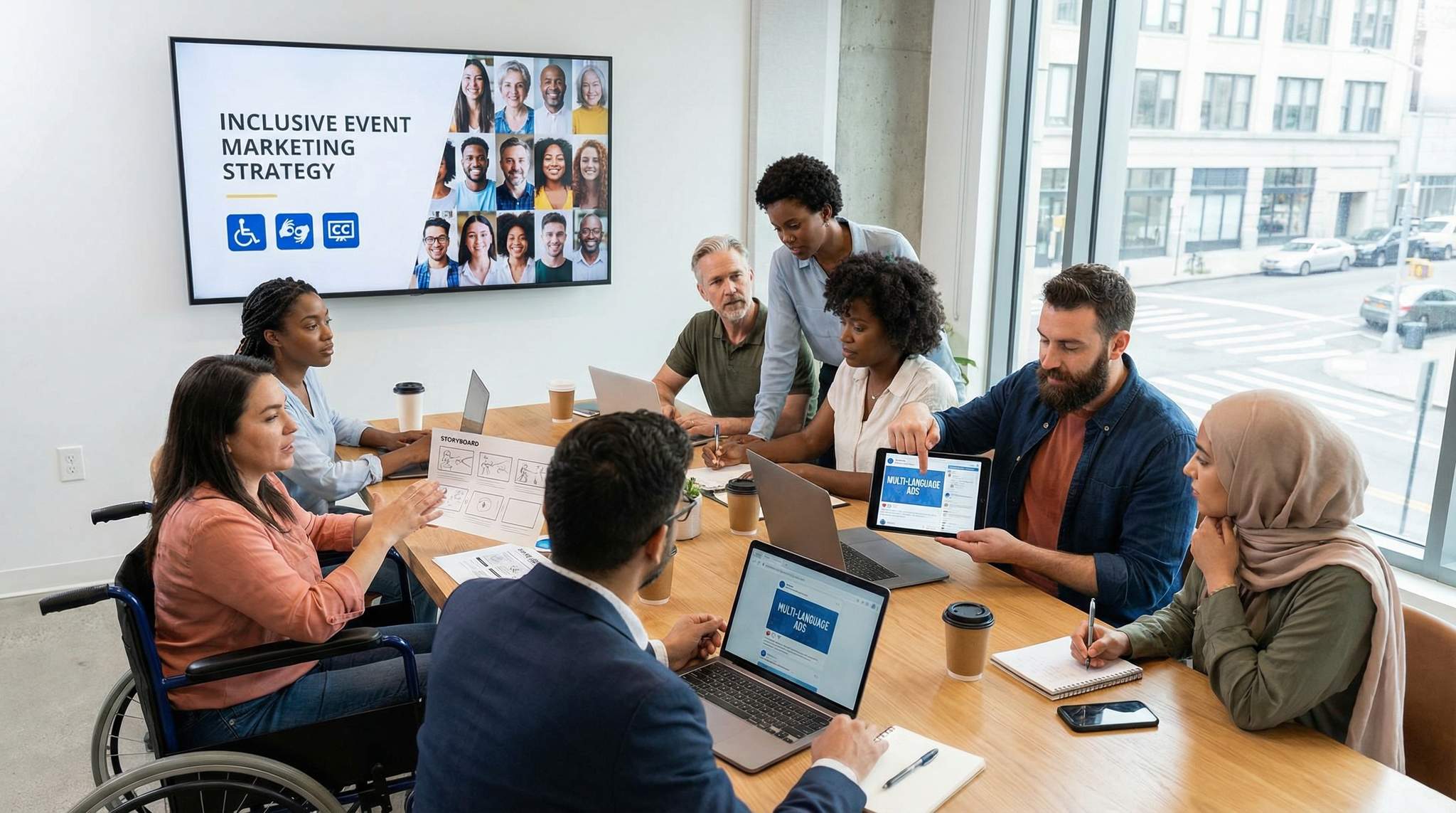
Inclusive event marketing isn’t just a buzzword in 2026 – it’s a business imperative. Modern audiences are incredibly diverse, spanning different cultures, age groups, languages, and abilities. To sell out events now, promoters must ensure their campaigns resonate with all segments of their audience, not just the most obvious ones. That means crafting promotions that welcome everyone, from the imagery and language you use to the channels and technology you employ. Done right, inclusive marketing can attract new attendees, build community goodwill, and ultimately boost ticket sales by engaging people who are too often overlooked.
Event organizers around the world are waking up to this opportunity. They’re using captions on videos, translating ads into multiple languages, featuring diverse people in their visuals, and highlighting accessibility features – all to show potential attendees that “this event is for you.” The payoff can be huge: stronger loyalty, broader reach, and positive word-of-mouth. But inclusive marketing must be authentic and well-informed. It’s about real representation and accessibility, not token gestures. In this comprehensive guide, we’ll explore practical strategies to make your 2026 event marketing inclusive and accessible. You’ll find actionable tips on everything from writing bias-free copy to designing accessible content, plus real examples from events worldwide that broadened their reach through inclusivity.
By the end of this guide, you’ll know how to craft campaigns that speak to diverse cultures, engage different age groups on their preferred platforms, and ensure people of all abilities can interact with your marketing. Let’s dive in and unlock new audiences by making everyone feel welcome at your events.
Why Inclusive Event Marketing Matters in 2026
The Business Case for Inclusive Marketing
Inclusive marketing isn’t just about doing the right thing – it delivers tangible results. When you broaden your event’s appeal to diverse groups, you expand your potential audience dramatically. Consider that globally, roughly 1.3 billion people (16% of the population) experience a significant disability, according to global health data on disability statistics. By making your marketing accessible (and promoting your event’s accommodations), you tap into a huge market that many competitors ignore. In fact, accessibility features can double as marketing assets. For example, when a theater earned a national accessibility certification, it earned positive press coverage and goodwill in its community, demonstrating the value of elevating venue accessibility and inclusion. As one Ticket Fairy venues report put it: there are millions of fans with disabilities who actively seek out accessible events when they know about them, highlighting the importance of going beyond compliance in venue accessibility. In other words, if you advertise your event’s inclusivity, people will respond.
Turn Fans Into Your Marketing Team
Ticket Fairy's built-in referral rewards system incentivizes attendees to share your event, delivering 15-25% sales boosts and 30x ROI vs paid ads.
Inclusivity also helps drive ticket sales by building trust and loyalty. Numerous studies show consumers prefer brands and events that embrace diversity. 61% of Americans say diversity in advertising is important, according to Adobe research, and audiences reward authenticity, a concept explored in guides on inclusive language and representation at festivals. Younger generations especially expect inclusivity: 94% of Gen Z respondents in one Deloitte study want companies to take a stand on social issues, and 90% are more willing to support brands that benefit society, as noted in recent diversity and inclusion marketing statistics. Events that visibly champion inclusivity – whether via diverse lineups or welcoming messaging – can turn those values into competitive advantage. Audiences in 2026 increasingly care about what an event stands for, not just who’s headlining, as one report on key event marketing trends for 2026 noted. Diversity and inclusion “aren’t just buzzwords, they’re expectations” now, which is a core theme when leveraging trends for sold-out events.
Beyond goodwill, inclusive marketing directly boosts engagement and conversions. When people see themselves or their values reflected in your ads, they’re more likely to act. Google’s research found 64% of consumers took some action (like visiting a site or making a purchase) after seeing an ad they felt was diverse or inclusive, according to WordStream’s analysis of inclusion statistics. For instance, highlighting different cultures in an event promo video or using gender-neutral language in an email can make more recipients feel “This is for me” – translating to higher click-through and ticket purchase rates. In short, inclusive campaigns invite more people into the funnel. They also spark word-of-mouth: communities that feel seen will spread the word within their networks. A great example is a UK music festival that publicly committed to a 50% diverse lineup (with half the acts from underrepresented groups) and celebrated this in its marketing. The result? Immense positive press and a notable boost in early ticket registrations after fans saw that commitment, proving the effectiveness of leveraging diversity trends in event marketing.
Ready to Sell Tickets?
Create professional event pages with built-in payment processing, marketing tools, and real-time analytics.
Shifting Audience Expectations in 2026
Audiences today are far more attuned to inclusivity – and quick to call out events that miss the mark. Social media has amplified voices from all backgrounds. If your marketing inadvertently excludes or offends a group, expect backlash that can hurt sales. Conversely, fans enthusiastically support events that make them feel welcome. In 2026, representation equals invitation. When potential attendees see people like themselves in your ads or see that you’ve addressed their needs, it sends a powerful message that they belong at your event.
Importantly, younger consumers view inclusivity as non-negotiable. Gen Z and Millennials value authenticity and inclusiveness in their experiences, a fact emphasized in strategies for segmenting your event marketing strategy and creating social impact with tangible action. Gen Z, in particular, is highly diverse and socially conscious – they notice tokenism versus genuine inclusion. As Deloitte noted, they’re also quick to walk away if a campaign feels performative, which is why inclusive marketing’s promising future depends on sincerity. That means event marketers must weave inclusivity into the fabric of their branding, not just tack it on. For example, simply adding a token minority face in a poster without reflecting deeper inclusion (like diverse staff, accessible venues, etc.) can ring hollow. Today’s fans can “smell” insincerity a mile away.
On the positive side, aligning with evolving expectations can yield fierce loyalty. When people feel an event truly understands and welcomes them, they often become ambassadors for that event. They’ll share your posts, invite their friends from the same community, and return year after year. Many events have seen how inclusive gestures repay themselves many times over. For instance, Glastonbury Festival in the UK has built a reputation as one of the most inclusive big festivals, providing British Sign Language interpreters on stage and a dedicated Deaf zone. This commitment earned praise from Deaf attendees and even viral social media moments of interpreters passionately signing lyrics, as reported in coverage of Glastonbury fans thrilled by sign language interpreters and how they capture the event’s essence. The resulting buzz only reinforced Glastonbury’s image as an event that truly welcomes all – an image that keeps fans coming.
Avoiding PR Pitfalls and Backlash
Failing to consider inclusivity isn’t just a missed opportunity – it can actively hurt your event. Cultural insensitivity or exclusionary messaging can quickly ignite a PR crisis. We’ve seen real-world examples where marketing missteps damaged an event’s reputation. In one case study, a festival ran an ad with an insensitive tagline that many found culturally offensive. The backlash on social media was swift, with organizers accused of being tone-deaf and discriminatory, a scenario analyzed in guides on crisis communication strategies for event marketers. Ticket sales stalled as the controversy brewed. The lesson? Not knowing your audience’s diverse backgrounds – or using careless language – can sink a campaign. It’s far better to double-check your messaging for potential misinterpretations or biases before launch than to run damage control later, as advised in managing event crises in 2026.
Grow Your Social Following With Every Sale
Require social media follows, shares, or playlist adds to unlock presale access or special pricing. Turn every ticket purchase into audience growth.
Inclusivity also matters in on-site decisions that can echo into marketing. For example, if your event lacks basic accessibility (no wheelchair access, no accommodations for dietary restrictions, etc.), word can get out and deter would-be attendees. In 2026, bare-minimum efforts (“we put a ramp, we’re done”) are not enough, according to insights on elevating venue accessibility. Events and venues are expected to go beyond compliance and demonstrate true inclusion in design and service. As a Ticket Fairy venue guide notes, it’s not just about following the law – it’s about marketing to a segment of fans who respond to that information, which is key to going beyond compliance in accessibility. The flip side of that is if you ignore those fans’ needs, they will feel unwelcome and may voice that publicly.
The good news: by learning from past mistakes, you can avoid common pitfalls. We’ll cover several such lessons throughout this article – from using the wrong imagery to neglecting accessibility in digital content. The key is to approach every marketing decision with empathy and a wide lens. Ask yourself: Who might we be unintentionally excluding with this campaign? And better yet: Whom could we include and delight? Keeping those questions front-of-mind will steer you clear of most issues.
Grow Your Events
Leverage referral marketing, social sharing incentives, and audience insights to sell more tickets.
Understanding Your Audience’s Diversity
Research Demographics and Preferences
To market inclusively, you must first understand the full spectrum of people in your potential audience. That means going beyond generic “target audience” definitions and digging into demographic and psychographic data. Seasoned event marketers start by researching the communities their event could attract. Look at your ticketing data, social followers, and website analytics: what ages, genders, languages, and locations are represented? If your event has history, analyze past attendee surveys or feedback to identify who attended and who didn’t (e.g. maybe few older adults came, or a local ethnic community was absent). Identify gaps and opportunities in that data.
Also, consider the wider population of the region or industry your event serves. Are there significant ethnic or language communities in your city that you haven’t engaged? What’s the breakdown of age groups in your fanbase vs. the general public? For example, perhaps your music festival draws mostly 18–30-year-olds, but there’s an untapped audience of 30-somethings or even families that could be reached with the right approach. Or maybe a big percentage of people in your area speak Spanish, Chinese, or Hindi at home – an indicator that multi-language marketing could unlock new attendees.
Use both quantitative and qualitative research. Demographic data (age, gender, ethnicity, language, income, etc.) gives you a broad picture of diversity. Psychographic and behavioral insights (interests, media habits, values) reveal how to reach and resonate with sub-groups. For example, younger fans might be heavy TikTok users, while older ones favor Facebook groups or local radio. Customer surveys and social listening can be very insightful: ask your audience open-ended questions about what they want from your event or if there are any barriers preventing their friends/family from attending. You might learn, for instance, that parents would attend if there were childcare options, or that people with hearing impairments didn’t come because they weren’t sure if they’d be able to enjoy the show. These insights are gold – they show you exactly where more inclusivity is needed.
Segmenting by Culture, Age, and Ability
No single marketing message will appeal equally to a 17-year-old TikTok-loving fan and a 60-year-old seasoned attendee – or to a recent immigrant and a lifelong local. That’s why segmentation is crucial. Rather than blasting one one-size-fits-all campaign, break down your audience into meaningful segments and tailor your approach to each. Segmentation can be by age group, language, location, interests, accessibility needs, and more. This ensures each group gets messages and content that speak to them.
For instance, you might segment promotions by age bracket: Gen Z, Millennials, Gen X, etc. Each has different media habits and triggers. A message that excites Gen Z on TikTok might fall flat with Gen X on email, and vice versa, a concept detailed in segmenting your event marketing strategy for success. Similarly, cultural segmentation could involve creating slightly different ad creatives for different communities. An EDM festival in a multicultural city might run one set of social ads featuring diverse DJs and bilingual text for Spanish-speaking audiences, and another set emphasizing a different aspect for English-speaking audiences – all while keeping the core branding consistent.
Don’t forget ability-based segmentation as well. You could craft specific messaging highlighting accessibility features to audiences known to need them. For example, an email targeted to subscribers who indicated they have a disability (or who purchased accessible tickets in the past) could outline the venue’s new improvements (reserved seating, hearing loops, ADA shuttles, etc.) in detail. A general ad might not go into that depth, but for that segment it’s exactly the info needed to convert them from “maybe” to “going”. As one guide put it, promoting your accessibility isn’t just compliance – it’s marketing to fans who will respond to that information, which is a key takeaway from elevating venue accessibility and inclusion.
Modern digital marketing tools make segmentation easier. Facebook and Google Ads allow targeting by demographics and interests (e.g. showing a “family-friendly” creative to users tagged as parents). Email platforms let you segment lists by age, past attendance, or language preference. Ticket Fairy’s own marketing tools provide audience insights you can use to create segments (like identifying your top 10% of loyal fans vs. first-timers). The work is worth it: personalized, segmented campaigns consistently outperform generic blasts, often yielding higher open rates and conversion, as shown in data on segmenting event marketing strategies. One Ticket Fairy analysis found that segmented email campaigns had 100% more clicks on average than non-segmented ones, proving the value of unlocking marketing power through data strategies.
Creating Inclusive Audience Personas
To truly put yourself in the shoes of diverse audience members, it helps to create audience personas that include inclusivity factors. Personas are fictional profiles that represent key segments of your attendees (e.g., “College Chloe – a 20-year-old student who loves viral content” or “Organizer Omar – a 45-year-old community leader who values cultural heritage events”). When building personas in 2026, go beyond basic demographics. Infuse each persona with details about their values, potential accessibility needs, and cultural background if relevant.
For example, if one of your target segments is Deaf or hard-of-hearing music fans, create a persona like “DJ David – a 30-year-old Deaf electronic music fan.” Outline David’s media habits: maybe he follows sign-language influencers on Instagram and looks for events that offer captioning or interpreters. His pain points might include uncertainty whether he can enjoy a concert fully. Now consider how you’d market to “David”: perhaps via Instagram posts that show an ASL interpreter on your festival stage (so he instantly knows it’s Deaf-friendly) and text that explicitly says “All performances will have live captioning and sign interpretation.” By visualizing David, you ensure your campaign addresses his needs.
Likewise, create personas for different cultural groups if applicable. If your event is in, say, California or London, you might have a “Bilingual Bella – a 25-year-old second-generation Latina who speaks Spanish at home and English at work.” A marketing plan for Bella might include bilingual ads on Spanish-language radio or Facebook, plus visuals showing Latinx attendees having a blast at your event. Another persona could be “Senior Sam – a 65-year-old music lover.” Marketing to Sam might mean highlighting seating and safety, using larger font ads in local newspapers or community centers, and making it easy to call a phone number for info (since not all seniors use social media).
By humanizing segments into personas, you and your team will naturally think more inclusively. It prevents the common pitfall of assuming all your customers are just like you. Instead, you’ll catch things like “Would Sam be able to read this Instagram graphic on his phone?” or “Would Chloe actually bother with a long email?” or “Will David even see this video without captions?” These insights drive more thoughtful, inclusive choices in your campaign.
Engaging Overlooked Communities
Every locale has communities that mainstream event promotions often overlook – it’s your job to change that. Engage directly with community groups to understand how to reach them. For instance, if you realize your city has a vibrant Indian/South Asian community that isn’t attending your food festival, reach out to local South Asian community organizations, Facebook groups, or influencers. Learn what media they consume (maybe a local cultural newsletter or radio program) and consider advertising there. Sometimes a small sponsorship or partnership – like offering a discount through a community association – can introduce your event to hundreds of new people.
The same approach works for engaging LGBTQ+ audiences, military families, expat communities, etc. Show genuine interest: attend their events, or invite community leaders to advise you. Even grassroots tactics can help – posting flyers at ethnic grocery stores or community centers, or getting a mention in a niche community’s WhatsApp group, can have an outsized impact for those audiences. These communities often have tight word-of-mouth networks. If one group feels your event truly welcomes them, they will become a passionate mini–street team on your behalf.
Importantly, tailor your messaging and offer when engaging overlooked communities. Sometimes a barrier is economic – e.g. lower-income groups might respond to special pricing or group rates. Or it might be logistical – e.g. a local disability advocacy group might love your play if you offer a special tour of the venue’s accessibility features beforehand. Meet people where they are. If you remove the friction or doubts that kept them away, they will come.
Crafting Inclusive Marketing Messages
Using Inclusive, Bias-Free Language
Words matter a great deal in inclusive marketing. The language you use in event titles, taglines, social posts, and emails can either make people feel welcome or alienated. In 2026, savvy event marketers audit every line of copy for unintended bias or exclusion. The goal is to use inclusive, respectful language that speaks to a broad audience.
Start with the basics: use gender-neutral terms and avoid unnecessary gendering. For example, instead of “ladies and gentlemen” or “hey guys” in a message to attendees, use a neutral greeting like “Hello everyone” or “Hey friends.” As noted in one festival inclusion guide, this small tweak ensures you’re not implicitly excluding people who don’t fit binary gender terms or common colloquialisms, a practice recommended for inclusive language and representation at family-friendly festivals. Similarly, use terms like “participants” or “attendees” rather than words like “chairman” or “manned booth.” These might seem minor, but they collectively create a tone of inclusivity.
Be mindful of cultural references and slang. A phrase or joke that makes sense to one group might confuse or even offend another. For instance, using a lot of local slang in an international event’s promo could leave global audiences lost. If you’re promoting an event globally, stick to clear, globally understood language in your main materials (you can always add localized flavor in specific regional campaigns). And definitely avoid any idioms or imagery that rely on stereotypes – even if you think it’s playful. An example to avoid: using “spice it up” with a chili pepper graphic to advertise a Latin music night. It might seem fun, but it can come off as reducing a culture to a cliché.
Check for respectful terminology around abilities and identities. Use people-first language: say “attendees with disabilities” not “the disabled attendees.” Avoid negative terms like “wheelchair-bound” (instead, “wheelchair user” or simply mention the person and the context: “uses a wheelchair”). If your event provides accommodations, describe them in a welcoming tone – e.g. “We offer wheelchair-accessible viewing areas so everyone can enjoy the show,” rather than “We have a section for wheelchair-bound fans” (the former highlights inclusion, the latter other-izes). When referring to communities, use the terms they prefer. For instance, use “Deaf” with a capital D if referring to Deaf culture/identity as many Deaf individuals prefer, and avoid outdated terms like “hearing-impaired” unless someone specifically self-identifies that way.
One effective tactic is to create an internal inclusive language guide for your team. Many experienced event marketers compile lists of phrases to use or avoid, tailored to their audience. For example, a family-friendly festival might decide to always say “parents and caregivers” instead of “moms and dads” to recognize diverse family structures, as suggested in tips for inclusive language at family festivals. They might also list out seasonal greetings to rotate (“Happy Holidays” instead of only “Merry Christmas,” etc.) to cover the range of celebrations, ensuring they are inclusive of all family structures. Training your copywriters and social media managers on these guidelines ensures consistency. And don’t hesitate to leverage external resources – major companies and organizations often publish inclusive language guidelines (e.g., Google, Microsoft, or WordPress community guidelines for inclusive events). These can serve as a template to build your own, helping you check for gendered language or exclusionary terms.
Finally, get feedback on your messaging from a diverse set of eyes. Before finalizing copy, run it by team members or advisors of different backgrounds if possible. A phrase that seems fine to you might have a connotation you’re unaware of. For instance, some terms carry historical baggage or double meanings in certain cultures. An informal focus group or simply asking “does this wording resonate with you?” can catch issues early.
This careful approach to language is especially critical for destination festivals that attract international attendees. When collaborating with hospitality partners, promoters often review inclusive marketing travel agency tagline options to ensure the entire attendee journey—from booking flights and hotels to arriving at the venue—feels universally welcoming. A cohesive, bias-free message across all partner channels reinforces your event’s commitment to diversity before the fan even steps foot on site.
Multi-Language Content and Translation
In our interconnected world, offering content in multiple languages can be a game-changer for event marketing. If you expect a significant portion of your audience speaks a language other than the primary language of your event, translating key marketing materials shows great respect and dramatically broadens your reach. Even if your event is local, consider the demographics – for example, translating flyers or Facebook ads into Spanish, Chinese, French, etc., could pull in whole new communities in a diverse city or region.
Start by identifying the most relevant languages. You don’t have to translate everything into 10 tongues – focus on the top one or two that your target attendees use. Data helps here: use ticket buyer data or web traffic by country. If your festival site sees heavy traffic from Latin America, prioritize Spanish (and maybe Portuguese for Brazil). If you’re promoting a conference in Europe, you might provide materials in English plus the local language of the host country, and perhaps one more widely spoken language like French or German, depending on attendee makeup, a strategy discussed in breaking language barriers for international audiences. Also consider local context: in a multicultural city like New York or Sydney, providing bilingual English/Spanish outreach might be effective, or English/Mandarin if there’s a large Chinese-speaking community, ensuring you consider regional languages in your strategy.
When creating multi-language content, it’s crucial to go beyond literal translation – think transcreation and cultural adaptation. Direct translations can sometimes miss the mark or sound awkward (“word-for-word” text often loses nuance). If possible, hire bilingual copywriters or translators who can adapt the message so it feels natural in the target language. They might need to change idioms, use culturally relevant examples, or adjust humor. For instance, a punny slogan in English likely won’t translate well; give your translator the freedom to craft a similar vibe in their language rather than forcing a direct translation.
Also, localize imagery and references. If you’re running ads in different countries or communities, swap out visuals to feature people who reflect that audience. A marketing campaign for East Asian markets might feature Asian attendees in the ad images, whereas a campaign aimed at European audiences might use a different mix. This kind of representation signals that you see and value each audience. One Ticket Fairy case study discussed how simply translating materials and tailoring social media to local norms can determine whether an international expansion flops or thrives, emphasizing the need to adapt your event marketing for different markets and highlighting the payoff of getting localization right. “One size fits all” does not apply across cultures – localized marketing can significantly boost resonance and ticket sales, preventing cultural disconnects from hindering success.
On a practical level, leverage platform features for multi-language content. Facebook has a multilingual post option where you can enter the same post in multiple languages and it auto-displays based on user preferences. Many email services allow you to segment by language or region. For your event website or Ticket Fairy event page, consider adding a language toggle or at least having a PDF/FAQ in other languages attached. Even basic efforts like a “Key Info” page available in other languages (covering event date, time, location, how to buy tickets) can be greatly appreciated by non-native speakers. And don’t neglect signage and on-site materials: if your promotions succeed in drawing a multilingual crowd, ensure that once they arrive, they can navigate comfortably (e.g. having signs or programs in multiple languages), helping to avoid wording that might alienate groups and ensuring guests from diverse language backgrounds feel comfortable.
Executing these multilingual campaigns requires the right technological infrastructure. For instance, when organizers look to implement estrategias de marketing con The Ticket Fairy (marketing strategies with The Ticket Fairy) for Latin American or Spanish-speaking demographics, they leverage the platform’s robust audience segmentation and localized checkout flows. By aligning your ticketing partner’s data tools with your translated ad copy, you can seamlessly track which language variants are driving the highest conversion rates and adjust your ad spend accordingly.
Tone and Cultural Sensitivity in Copy
Writing inclusive copy also means hitting the right tone. You want to be welcoming and upbeat without veering into tokenism or pandering. A good principle is to celebrate diversity without singling people out in a negative way. For example, highlighting that your festival is “for everyone” and showing various groups having fun is positive. But saying something like “Don’t worry, even older folks will have fun at this rave!” is condescending (better to simply emphasize multi-generational appeal through examples and let older attendees infer that they’re included).
Be especially careful with humor and slogans. What’s funny to one group could fall flat elsewhere. Steer clear of any jokes based on stereotypes, obviously. Even positive stereotypes (“Asians are good at tech, so our hackathon will have translators for them!”) are problematic and unnecessary. If you use humor in branding, try to make it universal or self-deprecating about the event itself rather than about any group. For instance, making a joke that “Our marathon’s after-party has so much pizza even the 5K runners stay till the end” pokes fun at the event vibe and is inclusive, whereas a joke targeting “slow runners” or a certain age would not be.
Cultural sensitivity extends to imagery and themes in your campaign. If you’re incorporating elements of a particular culture (say your event has an “Indian culture showcase” or a “Latin fiesta night”), do your homework and show respect. Use appropriate language (correct spellings, proper names of holidays, etc.), and avoid caricature. Working with cultural consultants or community members is ideal here – they can advise on what imagery or phrasing to use or avoid. This helps prevent well-intentioned efforts from becoming offensive. For example, if promoting a Chinese New Year event, ensure your graphics are accurate and not mixing up elements from other Asian cultures, and be mindful of things like colors or animals that have specific meanings.
One key aspect of tone is avoiding an ‘us vs. them’ mentality in copy. Inclusive marketing should never make one group feel othered. Phrases like “finally an event for you people” or “we didn’t forget about the ladies – Tuesday is women’s night!” are patronizing even if intended to be inclusive. It’s better to integrate the inclusion naturally: e.g. “Tuesday night features women DJs and producers from around the world – all are welcome to come dance and support these amazing artists!” This invites everyone while centering the underrepresented group without tokenism.
Authenticity Over Tokenism
Audiences can tell when inclusivity is genuine versus when it’s a superficial checkbox. Authenticity is paramount. This means your inclusive marketing efforts should be backed up by real action and representation in your event. If you advertise your event as diverse and welcoming to all, the experience on the ground needs to match that promise (otherwise people will feel duped and distrust your brand). Ensure your team composition, lineup, and policies also reflect your inclusive values. For instance, if you proudly market that your conference supports women in tech, but then the speaker lineup is 90% men, attendees will notice the disconnect immediately.
When showcasing diversity in ads, do it because those communities are truly part of your event, not just to “appear diverse.” Use real photos of past attendees or performers if possible. If it’s a new event, you can use stock images or staged shots, but be careful: choose images that realistically could be from your event. Don’t just drop in a random photo of say, a person in a wheelchair at a concert, if your venue isn’t actually wheelchair-accessible or you have no plans to accommodate – that’s disingenuous. Instead, first fix the accessibility, then proudly include those images.
A good practice is to extend inclusivity to your planning process. Engage representatives from different audience groups when developing campaigns. For example, involve a sign language user in planning outreach to Deaf audiences, or consult with a youth advisory panel for Gen Z marketing. Their insights will help you be authentic and avoid missteps. Remember the insight from marketing experts: inclusive marketing works best when it’s marketing with communities, not just to them, a concept highlighted in inclusive marketing’s promising future. Co-creation can be powerful. An example might be running a contest for fans to submit poster designs or playlist suggestions from their cultural perspective – incorporating the winners into your promotion not only generates buzz but also ensures authenticity.
Finally, be consistent and continuous in your inclusion efforts. Don’t just do a one-off “diversity campaign” and call it a day. Make inclusive promotion a normal part of every event marketing cycle. And if you do slip up or receive criticism, respond with humility and action. Authentic inclusion is a learning process; audiences appreciate when you listen and improve. Owning up to a mistake (say, forgetting captions on a video and then quickly adding them with an apology) can actually build trust. Long-term commitment speaks louder than short-term pandering. Show that inclusivity isn’t just a theme of the week – it’s embedded in your event brand.
Inclusive Visuals and Media
Representation in Promotional Imagery
We’ve all heard the saying “a picture is worth a thousand words” – in marketing, visuals often speak even louder than text. To connect with diverse audiences, make sure your promotional images and videos represent a wide range of people. When someone sees your event poster, flyer, or Instagram ad, they should be able to picture themselves (or someone like them) in the crowd. If all your imagery shows only one type of person – for instance, all young, white, and able-bodied – it sends a subtle signal about who you expect or welcome at the event. Conversely, showing a mix of races, genders, ages, and abilities in your visuals signals that everyone is invited, a key principle in ensuring accessibility and diversity at festivals.
Experienced event marketers purposely curate their photo galleries and promo videos to include diversity. For example, a festival aftermovie might cut between scenes of friends of different ethnic backgrounds dancing, an older couple enjoying a set, a person in a wheelchair grooving near the stage, and families with kids (if it’s an all-ages event). This montage not only looks like a fuller representation of real life, but it subconsciously tells viewers “people like you attend this festival”, reinforcing the message of inclusive festival environments. Even things like the attire and body types shown matter – featuring only one body type or fashion style can alienate those who don’t fit that mold. Showcasing diversity in style, from hijabs to punk hairdos to everyday jeans-and-tee, can all contribute to a feeling of inclusion.
If you don’t yet have diverse event photos of your own, consider staging a photoshoot or using high-quality stock images that align with your audience. Many stock libraries now have collections focused on diversity and inclusion (just ensure they look authentic and not overly posed). Another idea is to invite a diverse group of fans or volunteers for a “preview day” to take photos and videos of them interacting in the venue or doing activities related to your event. Those images will be more genuine because the people are actually excited to be there and often bring their own flair.
Also think about less obvious representation. Are you including people with disabilities visibly? That could be an image of a Deaf concert-goer near a sign interpreter, a close-up of accessible seating areas with happy attendees, or a gamer who uses adaptive controllers if it’s an esports event. These visuals not only welcome those communities but educate others that your event includes them. For age diversity, include both young and older adults – for example a shot of parents with teens at a comic convention, or seniors enjoying a wine-tasting event. Showcasing multiple genders goes beyond the binary: if possible incorporate visuals that include non-binary or gender-nonconforming folks, or at least avoid every image being very stereotypically “male” or “female” in appearance.
Inclusive Graphic Design and Layout
Visual inclusivity isn’t only about photos of people – it’s also in the design choices of your marketing materials. An often overlooked element is making sure your graphics (posters, flyers, websites) are easy to read for people of all ages and abilities. Good contrast and readable font sizes are a must. Those cool neon-colored festival flyers with tiny text might look edgy, but they can be a nightmare for anyone with low vision or even just middle-aged eyes. Aim for designs that combine style with clarity. Use high contrast between text and background (e.g., dark text on a light background or vice versa – avoid text over busy patterns). Choose legible fonts, especially for key info like dates and ticket URLs; decorative fonts are fine for titles but include a plain font for details.
Consider color choices carefully. Approximately 1 in 12 men (and 1 in 200 women) have some form of color vision deficiency. So if you rely on color-coding (say, a map or schedule where each day is a different color), also add labels or patterns so colorblind attendees can interpret it. There are free simulators that show how your graphics look to those with common colorblindness – use them when designing critical materials.
Multimedia content like videos should also be designed for broad accessibility. For instance, if you’re creating an event trailer or recap video, remember that many people watch videos with sound off (especially on social media) – plus Deaf or hard-of-hearing viewers need captions. Always include captions or subtitles on your promo videos (burned-in captions or an optional subtitle track). Not only does this aid accessibility, but it also improves engagement overall since lots of users are in silent mode while scrolling. Captions should ideally be in the main languages of your target audience if possible (you can even upload multiple caption tracks on platforms like YouTube for different languages).
When producing graphics, incorporate universal design elements. Use icons or pictograms alongside text for key points – e.g., a wheelchair icon next to “Accessible Entrance” on an infographic about the event facilities, or a globe icon indicating “International attendees welcome” next to language options. These small signals can transcend language and be immediately recognizable. Ensure your print materials (posters, brochures) have some tactile or large-print options if catering to those with visual impairments – for example, you might have a simple large-print schedule available at the venue or as a PDF online.
Social Media Imagery and Alt Text
Social media is a visual playground, but it needs to be inclusive too. When posting images or flyers on platforms like Instagram, Facebook, or X (Twitter), make use of the alt text feature to describe images for blind or visually impaired users who use screen readers. For example, if you post a photo of a diverse crowd at your festival with fireworks overhead, the alt text could be: “Crowd of young and old festival-goers of various backgrounds smile and dance under a night sky with fireworks.” This ensures someone who can’t see the image still gets the context and the inclusive representation. Bonus: writing alt text often forces you to consider what message your image sends – if you struggle to describe it without excluding, maybe you need a more inclusive image.
When you share videos on social, if the platform doesn’t auto-caption (or even if it does, because auto-captions can be error-prone for names and slang), add your own captions or at least an accompanying text summary in the post. On Instagram Stories or TikTok, adding text overlays for when someone is speaking in a video will help those who can’t hear the audio as well as keep viewers engaged longer.
Think about the representation in your social feed as a whole. Often, marketers might do one “inclusive post” featuring, say, a person with a disability during a certain awareness month, and then never again. Instead, aim to integrate diversity throughout your content calendar. One day you might spotlight a performer from an underrepresented group, another day share a testimonial from an older attendee, another day do a behind-the-scenes snippet with your sign language interpreter preparing for the show. By rotating through different focuses, you not only keep content fresh but also consistently signal inclusion to all groups.
As you refine your digital presence, implementing dedicated social media platform diversity representation strategies 2026 is essential for algorithmic success. Platforms increasingly reward content that engages broad, diverse user bases. When event promoters ask about the best # para hacer viral un video (hashtags to make a video viral) in international or Spanish-speaking markets, the answer goes beyond just trending tags. True viral discoverability happens when you pair localized hashtags with universally accessible video formats, ensuring your diverse representation reaches the widest possible audience.
Examples of Representation Done Right
It can be helpful to look at examples of inclusive visuals from successful campaigns. Many major festivals and events now prioritize inclusive imagery. For instance, the Olympics and Paralympics marketing often include athletes of different genders, nationalities, and abilities in their posters and ads, reinforcing that it’s a global event for all. Another example: SXSW (South by Southwest), a large conference/festival in Texas, frequently showcases a mix of tech entrepreneurs, artists, and attendees of varied backgrounds in its promotional materials, highlighting the event’s diversity of thought and people. On a smaller scale, a community music festival in New Zealand gained praise for its flyer that featured illustrations of festival-goers including a person with a guide dog, a couple wearing cultural dress, and a group of teens – a simple cartoon that nonetheless conveyed “everyone is welcome here.”
The common thread in these examples is authenticity. The representation aligns with the reality or the intended direction of the event. They are not just stock images pasted in; they feel real and deliberate. Audit your own past promotional materials to see what picture you’ve been painting. If you realize all your past event photos only ever showed one type of attendee, recognize that and aim to broaden it. Sometimes just the act of consciously choosing more diverse visuals is enough to change habits. Make it an explicit part of your design process: e.g., a checklist item like “Does this batch of ads include a range of represented groups?”
Finally, remember that inclusive visuals benefit everyone. They not only attract more attendees but can enrich the brand aesthetic of your event. Diversity is beautiful, and showcasing it often makes marketing collateral more vibrant and interesting. In an era where audiences see thousands of ads, a unique mix of faces and stories in your visuals can also help you stand out from the crowd (why look like every generic promo when you can look like a rich tapestry of your community?). Embrace that richness in your media, and attendees will take notice.
Ensuring Digital Content is Accessible
Captions and Subtitles on Videos
With the explosion of video content in event marketing – from teaser trailers and artist announcements to live-streams and TikTok challenges – ensuring your videos are accessible is critical. Closed captions or subtitles should be a standard practice for virtually all your videos in 2026. This serves multiple purposes: it makes content accessible to Deaf and hard-of-hearing viewers, it aids people who aren’t fluent in the spoken language, and it accommodates the huge chunk of mobile users who watch with sound off by default. Platforms like Facebook, Instagram, and YouTube all allow you to upload caption files or auto-generate captions (which you can then edit for accuracy). It’s worth taking that extra bit of time to correct auto-captions so names (like artist names or venue locations) and slang are right.
For live videos or live streams, consider using a platform or service that supports real-time captioning. Some events hire live captioners or use AI live caption tech during streams so audiences can turn on captions. At in-person events, if you display video content on screens (like introduction videos or sponsor reels), caption them on screen so everyone in the audience can follow along if audio isn’t clear in all areas.
If your event content is in multiple languages, you can provide subtitles in each language as needed. For instance, a Canadian festival might produce an English promo video but add French subtitles to reach Quebec audiences. You could either make separate video versions for each language or use a player that allows language selection for captions. Showing that level of effort says “we want you here” to those language communities.
Aside from spoken audio, don’t forget to describe important sounds in the captions when relevant. If there’s cheering, music, or a significant sound effect that’s part of the story, caption it (e.g. “[crowd cheers]” or “[drumroll]”). This gives a fuller experience to those who can’t hear it. It’s especially important if the excitement or emotion of the piece relies on audio cues.
Alt Text for Images and Graphics
We touched on alt text earlier as part of inclusive visuals, but let’s emphasize how essential it is on the web and in apps. Alt text (alternative text) is the description of an image that screen readers read aloud for visually impaired users. It also shows up if images don’t load, benefiting users on slow connections. For any image you publish – whether on your website, blog, email newsletter, or social media posts – add meaningful alt text.
What’s meaningful? It should convey the content and purpose of the image in context. For example, if your website has a banner image with a crowd and your event logo, alt text might be “Happy diverse crowd at XYZ Festival with the festival logo.” If you post a photo on Twitter of your festival’s new accessibility entrance, alt text could be “Photo of a wheelchair-accessible ramp entrance at the ABC venue, decorated with event signage.” Be specific enough that someone who can’t see it still gets the gist and any important details (like if a performer is in the image, name them in the description).
Don’t use alt text to stuff SEO keywords or leave it blank (unless the image is purely decorative, but even then err on side of description). Accessibility aside, major search engines do factor in alt text for image search ranking – so describing your images can even help people find your event via image searches (“concert wheelchair ramp in [city]” might lead someone to discover your inclusive event, for instance).
If your event has an app or you use any ticketing platform pages, ensure images and icons there also have alt tags or labels. Sometimes event tech might default to unlabeled buttons (like a ticket icon that isn’t labeled for screen readers). Work with your tech providers or use built-in accessibility checkers to label those elements (e.g., label a ticket icon as “Buy Tickets”).
Accessible Website and Ticketing Pages
Your event website or ticket purchase page is a crucial touchpoint – if it’s not accessible, you might lose attendees at the first hurdle. Key considerations:
- Keyboard Navigation: Ensure users can navigate all interactive parts of your site using a keyboard only (some people with motor disabilities or who use screen readers can’t use a mouse or touch effectively). This means checking that menus, links, and forms are reachable and operable via the Tab key and that there are visible focus indicators (like a highlight around the link) so users know where they are.
- Form Accessibility: If you have registration or ticket forms, each field should be clearly labeled (visually and in code for screen readers). Use simple language in instructions. And don’t make required fields impossible for some – e.g., don’t require a phone number via an input that’s not format-flexible, or a captcha that doesn’t have an audio alternative.
- Color and Contrast: Follow Web Content Accessibility Guidelines (WCAG) for text contrast (generally a contrast ratio of at least 4.5:1 for normal text). Many event sites have the event name or menu in a faint color over an image; if that’s your design, add a shadow or overlay to make the text pop for readability.
- Media Alternatives: Provide text alternatives for any media. If you embed a video on your ticket page explaining the event, have a transcript below or a summary of key points for those who can’t watch it.
- Test with Tools: Use free tools like WAVE or Lighthouse (built into Chrome dev tools) to scan your site for accessibility issues. They’ll flag missing alt tags, low contrast, missing form labels, etc., so you can fix them.
Consider an accessibility info section on your site as well. Have a dedicated page or FAQ that describes all the accessibility accommodations and how to use them (e.g., “Our venue has ramp access at the east gate, accessible restrooms near stage 2, assistive listening devices available at the info booth,” etc.). Clearly state who to contact for accommodation requests or questions. Make this info easy to find – ideally linked from your homepage and ticketing page. Guests should never have to hunt for basic information about access or feel uncertain about what accommodations they’ll find, a crucial point emphasized in guides on elevating venue accessibility and inclusion. When people see that you’ve thought through their needs, they’re far more likely to commit to buying a ticket.
Email and Document Accessibility
Don’t forget that your emails, PDFs, and other docs should also be accessible. Many event marketers send PDF schedules, seating charts, or info packets to attendees. Make those PDFs accessible: ensure the text is actual text (not just an image of text), add tags/headings in the PDF for screen navigation, include alt text for any images in the PDF, and use descriptive link text (e.g., not just “Click here” but “Download festival map”). If making a PDF accessible is too technical or time-consuming, at least provide the same info in an HTML webpage or text format as an alternative.
For email newsletters or announcements, the usual rules apply: use a readable font, decent size (at least 14px ideally), and good contrast. Don’t put important info only in an embedded image in the email – if someone’s email client doesn’t display images or if a screen reader can’t parse the image, they’ll miss it. If you do include image banners in email, again use alt text. Also, structure your email with clear headings and bullet points where appropriate so it’s easily scannable (this helps everyone, not just those using assistive tech). And be mindful of emoji usage – a fun emoji or two can add flavor, but screen readers will read them out (e.g., “sparkles” for ?), which can be annoying if overdone or in the middle of sentences.
One more tip: consider offering multiple formats for key information. For example, after someone buys a ticket, you might send a confirmation that includes a link to an accessible web page with all event info (instead of or in addition to a fancy graphic-rich PDF). Giving people choices increases the chance they’ll engage with the content in whatever way works best for them.
By making your digital content accessible, you not only invite those with disabilities to your event, but you also improve the experience for all users. Often, features like captions, simple navigation, and clear design are just good usability practices. Aim for universal design – design that works for the widest range of people without requiring adaptation. It’s a foundational aspect of inclusive marketing in this digital age.
Multi-Channel Outreach for All Audiences
Matching Channels to Audience Segments
Inclusive event marketing goes hand-in-hand with omnichannel marketing – meeting your audience wherever they are. Different demographics favor different communication channels, so your outreach needs to be diversified. That means not investing your entire budget in just Facebook ads or just emails, but crafting a mix: social media, email, SMS, search ads, community forums, maybe even print and radio depending on the audience. The key is to match the right channels to the right segments, so each group gets the message in a place they’re likely to receive it.
For example, if you’re targeting Gen Z and young Millennials, platforms like TikTok, Instagram, YouTube, and Snapchat should be in the mix, as highlighted in strategies for segmenting your event marketing strategy. These generations are highly visual and mobile-first; short video content and influencer partnerships on these platforms can be very effective. Gen Z especially is known for having a short attention span for ads – you need to hook them in a few seconds with something relatable or entertaining, a tactic crucial for engaging younger audiences. So you might run a series of quick TikTok clips showing inclusive moments from your event (like friends of various backgrounds doing a dance challenge at the festival) to appeal to them. Also consider newer or niche platforms where younger communities gather – maybe a trending app or a Discord server (Discord and Reddit can be great to engage niche hobby communities, for instance), which can help in positioning your event brand for success and driving inclusive marketing growth.
For reaching Millennials and Gen X, Facebook and email are still heavy hitters, according to generational marketing insights and comparisons of Millennial vs Gen Z preferences. Many Millennials are active in Facebook Events and Groups, and Gen X (40s/50s) frequently uses Facebook to find local events. An email newsletter with a personalized touch can work well for these ages, who might appreciate more details and storytelling about the event (e.g., a behind-the-scenes story or a long-form artist spotlight). Millennials will read longer posts or emails if relevant, unlike Gen Z which often prefers bite-sized content, a distinction noted in mobile marketing strategies. So you could send an email to 30-somethings highlighting how your event offers meaningful experiences or family-friendly perks, whereas the message to 20-somethings might be shorter, hype-driven, and sent via text or social DMs.
Older audiences (Gen X, Boomers and beyond) might need more traditional channels in the mix. Don’t underestimate local radio, community newspapers, or flyers at physical locations (libraries, coffee shops, senior centers) to reach them. While many Boomers are on Facebook today, many still consume traditional media heavily. If you have a theater show or a community fair, an ad on the local oldies radio station or an insert in the city paper might draw more 60+ attendees than a bombardment of Instagram posts.
Below is a summary of how outreach channels can align with different age groups:
| Audience Segment | Best Platforms & Channels | Effective Approaches |
|---|---|---|
| Gen Z (teens – mid-20s) | TikTok, Instagram, YouTube, Snapchat; Discord & niche online communities |
Short-form video (challenges, Reels); influencer content that feels authentic; texting/WhatsApp for direct updates; emphasis on trends & social causes |
| Millennials (mid-20s – 40s) | Facebook, Instagram; Email newsletters; Twitter (X) for news; Spotify/podcasts |
Storytelling content (blogs, emails) highlighting experiences; Facebook Events & Groups; targeted ads on FB/IG; loyalty or referral programs; podcast sponsorships if relevant |
| Gen X & Boomers (40s+) | Facebook; Email; Local radio & newspapers; Community bulletin boards |
Clear, info-rich content (flyers, website FAQs); Facebook posts & ads (since many are daily users); email with important details; traditional media ads (radio, print) for local events; direct mail for certain communities |
Of course, these are general tendencies – always adjust for the specific context of your event and location. For instance, if you’re marketing a B2B conference or career expo, LinkedIn ads or professional forums might be a key channel even for younger professionals. If you’re targeting a specific ethnic community, ethnic media outlets (like a local Spanish-language radio or a Chinese-language newspaper) could be golden.
The main point is to diversify and tailor. Relying on only one channel will inevitably leave some group out. By casting a wider net and customizing content per channel, you make sure no audience feels ignored. Just be sure to keep consistent branding and core messaging across channels – you want different approaches that all still feel like the same event. An omnichannel strategy, when done right, creates a seamless presence that different demographics can plug into via their preferred medium, a core concept of mastering omnichannel event marketing.
Influencer Partnerships for Diverse Reach
Influencer and ambassador marketing can amplify your inclusive message significantly – if you choose partners that speak to the communities you want to reach. The key is to collaborate with a diverse set of influencers so you tap into multiple fan bases and cultural circles. This doesn’t necessarily mean mega-celebrities; often micro-influencers or community leaders have a more engaged, trustful audience in niche groups.
Start by identifying influencers that align with inclusivity. For instance, there are many content creators who focus on disability advocacy, on multicultural lifestyle, on LGBTQ+ issues, etc., as well as artists and local personalities from various demographics. Partnering with them to promote your event not only reaches their followers but also lends credibility that your event values those fans. For example, if you’re promoting a music festival, you could invite a Deaf YouTuber who reviews concerts to do a piece on how your festival is Deaf-friendly (especially if you indeed have interpreters and captioning – let them showcase it). Or for a gaming convention, you might team up with a female gamer who can speak to how welcoming your event is for women in gaming. These voices carry weight within their circles.
When working with influencers, give them creative freedom to interpret your event through their authentic lens. Audiences will trust their perspective more than a corporate-sounding script. Encourage them to highlight what they find inclusive or exciting about your event. Maybe an influencer is excited that your festival has diverse cuisine options – if that matters to them, it will resonate with followers who share that background or interest.
Also consider ambassador programs that turn passionate fans into micro-influencers. For example, recruit a group of volunteers or superfans from different communities (college ambassadors, neighborhood reps, accessibility ambassadors, etc.). Give them perks like free tickets or merch in exchange for promoting the event in their community networks. This approach was traditionally used in grassroots marketing, but in 2026 it blends with social media as these ambassadors post about the event and personally invite their circles. A diverse ambassador squad can organically spread inclusive messaging. For instance, a wheelchair-using ambassador posting about how excited they are to attend (and how you’ve ensured the venue will accommodate them) is powerful peer testimony to others with similar needs.
One case study: Coachella in recent years has engaged a wide range of influencers – not just music bloggers, but also fashion influencers of different body types and backgrounds, international content creators, and accessibility advocates – to cover the festival. This gave Coachella a broader reach and showed many angles of the event (from style to accessibility at stages) beyond the typical music focus, helping more people envision themselves there. On the smaller scale, a local food festival might invite several local micro-influencers: one from the Hispanic community, one a vegan blogger, one a family mommy blogger, etc., each highlighting how the festival caters to their niche (Latin flavors, vegan options, family activities). Collectively, they communicate that all those niches belong.
Remember to compensate influencers fairly, especially those from underrepresented groups who often get undervalued. If you can’t pay a high fee, consider offering barter deals like VIP experiences, travel, lodging, or co-creating content that benefits them too. And always align on values – brief them on your inclusive mission so it comes through authentically in their content. An influencer’s genuine endorsement that “This event really cares about making everyone feel welcome” is marketing gold.
Grassroots and Community Outreach
High-tech channels aside, old-fashioned grassroots marketing is still extremely effective at reaching specific communities – and it often feels more personal. An inclusive strategy should include on-the-ground efforts to reach people where they live, work, and socialize. This can mean printing event info in multiple languages and distributing flyers in relevant neighborhoods or community centers. For instance, if you want to engage a city’s Chinese community, put up posters in Chinatown shops or partner with a local Chinese community association to share flyers and promo codes, a strategy supported by global marketing trends and insights on adapting event marketing for different markets. Similarly, attend community events that aren’t yours – set up a street team at the Pride parade if you are inviting the LGBTQ+ community, or at a cultural fair if you want those attendees at your event. Face-to-face invitations and word-of-mouth at these venues often carry more trust.
Community partnerships are another powerful tool. Collaborate with cultural organizations, disability advocacy groups, student unions, or other relevant bodies. You might offer group discounts or fundraising opportunities (like “for every ticket your group sells, we donate to your organization”). In exchange, those organizations help promote your event to their members. It’s a win-win: you show support for their cause, and they bring a more diverse crowd to your event. Just ensure the partnership is visible – e.g., mention it in your marketing (“Proudly supporting X Organization”) – so attendees from that community see your goodwill.
Don’t neglect offline media in an inclusive outreach mix. Local radio stations that broadcast in other languages, or community newsletters, can be very targeted. For instance, running a short ad or having an interview on a Spanish-language radio about your upcoming concert can directly reach thousands of Spanish-speaking residents who might not see your English Facebook ads. Community newspapers or church bulletins, etc., are also channels where trust and attention might be higher than fleeting social posts.
Finally, empower word-of-mouth referrals among diverse attendees. Referral programs (like giving a discount or swag to attendees who refer a friend) can organically bring in new people. And when those friends are from the same community, it naturally expands your reach there. Think of it as seeding a few “champions” in each target group and letting them do the talking. Ensure those first few from each community have a great experience (maybe greet them personally, get their feedback). Positive experiences will ripple out as they tell others.
In summary, multi-channel inclusive outreach is about covering all bases: digital, social, influencer, grassroots, and beyond. By blanketing the landscape in a strategic way, you maximize the chance that every potential attendee – young or old, mainstream or niche – hears about your event in a context that speaks to them.
Consistent Messaging Across Channels
While you adapt content for each channel and audience segment, maintaining a consistent inclusive message throughout is vital. All your touchpoints should reinforce the idea that your event welcomes and values everyone. This doesn’t mean using identical slogans everywhere; rather, it means the tone, values, and core invite remain aligned.
For example, your TikTok videos might emphasize fun and belonging with a caption like “No matter who you are, you’ll find your vibe here ??” while your email newsletter might have a paragraph stating “We believe music is universal – our festival is committed to creating an experience where everyone feels they belong.” The wording differs for the medium, but both carry the inclusivity theme. If someone sees multiple promotions (which happens – people might encounter your ad on Instagram, then get an email, then see a flyer), they should get a coherent story, not mixed signals.
Make sure your visual branding and language style also remain consistent. Use a cohesive set of images and graphics representing diversity (as covered earlier) and a unified color scheme & logo across platforms so people mentally connect them. Even if languages differ, your brand identity and values should transcend that. It helps to have an internal brand guide that includes your positioning on inclusivity – for instance, guidelines might note “We always depict a mix of attendees in materials” or “Our tone is positive, welcoming, and respectful in every message.”
Additionally, ensure that team members handling different channels communicate and share learnings. The team running community outreach might hear certain feedback (“The senior center folks were concerned about parking distance”) that should be relayed to the digital team to mention “senior-friendly shuttles available” in online materials. Inclusivity is in the details, and consistency means not dropping the ball on those details on any channel.
Monitoring responses across channels can also tell you if your messaging is consistently understood. If multiple segments echo similar positive feedback (“I love that they mentioned vegetarian options!”) or raise similar questions (“Is there seating available? I couldn’t find info on Facebook but saw it on the website”), you can adjust to fill gaps. The goal is that no matter how someone finds your event – via a tweet, a poster, a friend’s referral – they come away feeling that this event thought about me and people like me. If you can achieve that, your inclusive marketing is truly firing on all cylinders.
Promoting Accessibility and Inclusion in Event Features
Highlighting Accessibility Features in Promotions
If your event has taken steps to be accessible and inclusive, shout about it in your marketing! Too often, events quietly offer accommodations but don’t mention them in promotions – so people who would benefit never even find out. Make accessibility features a selling point just like you would big headliners or venue amenities. For example, if your music festival is providing sign language interpreters and live captioning for performances, mention that in promotional emails and social posts (and include photos of it in action, if available), a practice recommended for making festivals deaf-friendly and inclusive. Not only will Deaf or hard-of-hearing fans take notice and consider attending, but hearing fans also see that you care about inclusion, which boosts overall goodwill.
Similarly, if you have wheelchair-accessible facilities, ADA-compliant viewing platforms, shuttle services, sensory-friendly zones, or any other accommodations, weave those into your messaging. A brief line like “Fully accessible venue – accommodations for wheelchair users, hearing assistance, and more” on a flyer or ad can be effective. On digital channels, you can be more detailed: maybe a blog post or dedicated email outlining “Top 5 Ways We’ve Made [Event Name] Accessible to All.” List items like ramps, accessible restrooms, large-print programs, etc. Optimize this content with keywords because people do search for accessible events. Think about someone Googling “accessible concerts in [city]” – if your page or post has those terms, you could be their top find.
Many events are now creating Accessibility Guides and promoting those. For instance, comic conventions often release a PDF or page specifically for attendees with disabilities, covering everything from where the quiet rooms are to how to request an ASL interpreter for a panel. Promote this guide on your main channels (“Check out our 2026 Accessibility Guide to see how we’re welcoming everyone”). This not only informs but sends a strong signal of your values, potentially encouraging people on the fence to buy tickets because they see you’ve gone the extra mile.
Don’t forget less visible accessibility features too: if you have offerings for neurodivergent attendees (like a sensory chill-out space for those with autism or anxiety, or specific programming for differently-abled folks), highlight those aspects. For example, “We’ll have a sensory-friendly room with comfortable seating and low lighting for anyone who needs a break from the crowds” – that line could be what convinces an autistic music fan or a mother of a child with sensory needs that they can attend your festival.
The bottom line is, if you’ve got it, flaunt it. As the Ticket Fairy venue guide said, these efforts serve as marketing assets as much as they do operational aids, reinforcing the value of elevating venue accessibility and inclusion. Each feature is a talking point: you can pitch them in press releases, get local news to possibly cover your event’s inclusivity angle, and differentiate your event from competitors. Ultimately, it could be the factor that converts an untapped segment of fans into ticket buyers because they finally feel an event has them in mind.
Showcasing Diverse Lineups and Content
Inclusivity in marketing isn’t only about the promotions themselves – it’s also about the product you’re marketing, i.e., your event’s content. If you’ve curated a diverse lineup of artists, speakers, or activities, make that a highlight of your campaign. People from various communities are more likely to attend if they see representation on stage or on panels. For instance, if your music festival features artists from five continents, don’t just bury that in the fine print – celebrate it in your copy: “Featuring artists from Brazil, Nigeria, Japan, the UK and more – a true global showcase!” If your tech conference has 50% women speakers or a special panel of LGBTQ+ leaders, call it out proudly as a selling point.
Not only does this attract those specific groups, but it appeals to the broad audience that values diversity. Many consumers actively seek out events that demonstrate social awareness. A survey noted that 76% of consumers might boycott a brand if they caught it acting against their professed values, which includes diversity, a trend highlighted in key event marketing trends for 2026 – conversely, they’ll gravitate towards those walking the talk. One festival in the UK got early ticket sales momentum partially because they heavily promoted that half their lineup were from underrepresented groups, which generated positive buzz and demonstrated how to leverage diversity for sold-out events.
In your ads and posts, give a platform to those diverse voices. That could mean short video interviews with a few different performers each highlighting their culture or background (“Hi, I’m XYZ from Kenya, I can’t wait to bring Afro-house vibes to this festival crowd!”). Or in content marketing, write articles or spotlights like “Meet the women leading the charge at [Event]” or “How [Event] is celebrating indigenous art”. These pieces both market the event and authentically tell the story of your inclusivity.
If your event includes cultural elements, promote them with respect and context. For example, “Experience a traditional Maori haka performance to open the festival, led by local Maori group [Name], honoring the land and culture” – such a description educates and intrigues potential attendees from outside that culture, while signaling to those within it that it’s done with reverence. Engage the communities of those performers in your promotion as well; they will often amplify it if they feel well-represented.
In cases where your event historically hasn’t had a diverse lineup but you’re improving, be transparent and positive about the shift. For example, “This year we’ve made it a priority to feature new voices – our comedy night lineup is our most diverse ever, bringing fresh perspectives to the stage.” Audiences appreciate sincerity. Just make sure not to position it as saviorism (“we’re giving them a chance”) but rather celebration (“we’re thrilled to showcase their talent”).
Lastly, ensure your marketing collateral (posters, trailers) includes those diverse headliners or content glimpses. If the top of your bill is a mix of genres or a mix of speakers from different backgrounds, reflect that in the visuals and names you highlight. It can pique curiosity (“wow, they booked a K-pop band and a local indie group and a legendary old-school hip-hop artist – that’s different!”). Such variety can draw multifaceted crowds and also encourage attendees to experience something new alongside the familiar, making for a richer event for all.
Engaging Underrepresented Attendees with Offers
To actively encourage attendance from communities that are often underrepresented, consider tailored promotions or offers. Sometimes historical or systemic issues mean certain groups haven’t felt welcome or able to attend events. You can attempt to break down those barriers with targeted incentives.
One approach is special discounts or ticket bundles. For example, if you want to bring more low-income families or youth, you might offer a limited number of discounted youth tickets or family packs (e.g., “Kids under 12 free with adult” or “Student 2-day pass at 50% off with ID”). This is particularly important for equity in events where cost is a big barrier. Some festivals partner with local nonprofits to distribute a set of free or discounted tickets to groups like teens in underserved areas or people with disabilities on fixed incomes.
Another idea is community group rates: “Bring your crew” deals that implicitly can help minority groups attend together. For instance, a Pride event might do “buy 4 get 1 free” to encourage LGBTQ friend groups to come en masse. Or a multicultural expo might coordinate with ethnic associations to get group tickets at a discount, ensuring a strong showing from that culture.
Beyond pricing, think about what ancillary benefits could help. Providing free transportation or shuttles from certain neighborhoods can encourage those who lack cars (often younger and urban attendees) or those who can’t drive (some disabled or older folks). If your survey finds that older potential attendees worry about standing in long lines, maybe you can have a “Seniors Fast Track” entrance and advertise that benefit. Sometimes just explicitly stating “seating available” or “air-conditioned rest areas on site” in promotions can sway those who were uncertain if the event would be too physically demanding.
Consider running inclusive contests or giveaways that engage different communities. For example, a festival could run a “Diverse Voices Video Contest” where fans submit short videos in their native language about why they want to attend – winners get tickets. This not only gives you user-generated content in multiple languages (which you can share as promotion), but it directly involves those communities and gives a few people free entry, which can ripple out as they bring friends.
Also, highlight any first-time initiatives you have for inclusion. If it’s the first year you have, say, gender-neutral bathrooms or a prayer/meditation space for those who need it, mention it in marketing and consider a targeted push to groups who would appreciate it (e.g., advertise in an LGBT newsletter about the bathroom inclusivity, or reach out to religious community centers about the prayer space). These offers and facilities can convert someone from “I’m not sure I’d fit in there” to “I should check this out.”
One gentle note: frame these offers positively (“we want you there!”) rather than as charity. It’s about making the event accessible, not pity or quotas. Language like “We’re excited to welcome everyone – here are some ways we’re making it easier to join us” keeps it upbeat. And when those underrepresented attendees do come, follow through on giving them a great experience, so they become repeat customers and ambassadors for next year.
Case: How Accessibility Boosted Attendance
To illustrate the power of promoting inclusion, let’s look at a hypothetical yet realistic scenario: A mid-sized music venue struggled with attendance from disabled patrons. They decided to invest in better accessibility – installing ramps, a viewing platform, and advertising these changes. They launched a campaign featuring a local artist who uses a wheelchair headlining a show, with marketing materials proudly stating “Fully Accessible Show – Everyone’s Invited!” They reached out to disability rights groups and offered a promo code. The result? That show saw dozens of new attendees with disabilities, many experiencing live music at that venue for the first time. Word spread, and subsequent events saw an uptick in accessible seating requests and ticket sales to those patrons. The venue not only filled more seats but gained loyal new customers who appreciated the welcome, a clear example of going beyond compliance in venue accessibility and elevating inclusion in 2026. The positive PR also attracted media attention, further boosting their reputation.
Another mini-case: A conference noticed few international attendees even though content was relevant globally. They added simultaneous translation and bilingual marketing (English/Spanish) and promoted this in Latin American industry forums. In 2026, they saw a 30% jump in attendees from Spanish-speaking countries, all because those folks finally felt the event was “for them” thanks to the language inclusion. These examples show that when you reduce barriers and then market that fact, new audience segments will respond.
Real-World Success Stories in Inclusive Marketing
Festival Broadens Its Audience with a Diverse Lineup
One real example comes from the Reading and Leeds Festivals in the UK. Traditionally rock-centric, they recognized the need to diversify both in genre and representation. In 2022 and 2023, these festivals actively promoted a commitment to more female and non-binary artists on their stages. They announced goals (like 50/50 gender split by a certain year) and highlighted new diverse headliners in their marketing. Skeptics wondered if it might hurt ticket sales, but the opposite happened – they tapped into new fanbases. When Reading Festival 2023 revealed a lineup including more grime, hip-hop, and women rock acts than ever – and hyped this in press and posters – it drew a younger, more diverse crowd than previous years. Early-bird tickets sold out faster, and social media sentiment was very positive, with many saying they were attending their first Reading because “finally the lineup speaks to me.” This shows how proudly broadcasting diversity can reinvigorate a legacy event.
Deaf-Friendly Concert Series Earns National Praise
A series of concerts in Australia dubbed “Feel the Beat” took inclusivity to heart and reaped rewards. They provided Auslan (Australian Sign Language) interpreters on stage for every performance and made this a key feature in advertising. Flyers and social posts showed interpreters signing next to artists, and they used the tagline “Music for ALL – hear it, see it, feel it.” Deaf communities across different cities got word and showed up in droves – some driving hours to attend an accessible live-music experience. Hearing attendees also loved the interpreters’ expressiveness, making the shows more engaging for everyone. Within a year, “Feel the Beat” grew from small club gigs to large theaters due to demand. It received national media coverage (morning TV shows featured it) praising how it set a new standard for live events. By directly marketing to Deaf audiences – a group often overlooked in concert promotion – the organizers unlocked a loyal new fanbase and set themselves apart in a competitive market.
Multilingual Expo Goes Global
A tech expo in Berlin decided to transform its marketing to be truly multilingual. In 2025, they noticed only 5% of attendees came from outside Germany. For the 2026 edition, they invested in translating their website, ads, and key materials into German, English, and Mandarin (given many tech professionals in Europe speak English, and they wanted to tap into Chinese tech companies too). They also ran targeted social media campaigns in those languages and partnered with a Chinese tech media outlet for promotion. The campaign slogan in English and Mandarin was essentially “Innovate Together, Globally – [ExpoName] Welcomes You.” The result: Attendees from over 30 countries, with particularly large delegations from China and the UK. Attendance overall jumped by 40%. Many foreign visitors said they heard about the expo through the new language-specific ads or media. The expo not only sold more tickets but attracted exhibitors and sponsors who wanted access to the broader audience now present. This success underscores how meeting people in their own language can dramatically broaden an event’s reach, turning a local event into an international one.
Local Venue Wins Over New Demographics
A community performing arts venue in California had a reputation as “that old theater where only classic plays happen.” Their audience was mostly older white patrons, and attendance was dwindling. In 2026, a new marketing director made inclusion a focus. They started programming more varied shows (a gospel choir, a Diwali dance showcase, a bilingual Spanish-English play) and crucially, marketed each show to the relevant communities. They printed flyers in Spanish for the bilingual play and distributed them in Latino neighborhoods, ran ads on a gospel radio station and Black churches for the choir, and partnered with Indian cultural groups to promote the Diwali event. Each of those shows saw a huge turnout from those communities – many people walked into the venue for the first time. Over the year, the venue’s overall attendance increased and the audience became a mosaic of the city’s population. Patrons commented that they appreciated seeing “their culture on stage” and felt invited by the outreach. Financially, the venue bounced back, proving that what some see as “niche” audiences were actually large untapped markets in their city. By aligning programming and promotion inclusively, the venue revitalized its business and community relevance.
These snapshots illustrate a common theme: Inclusive marketing efforts lead to tangible success. Whether it’s increased ticket sales, a stronger brand, or media acclaim, the events that invested in reaching diverse and underserved audiences reaped multiple rewards. They show that it’s not just theory – inclusive event marketing works in practice, across different countries and event types.