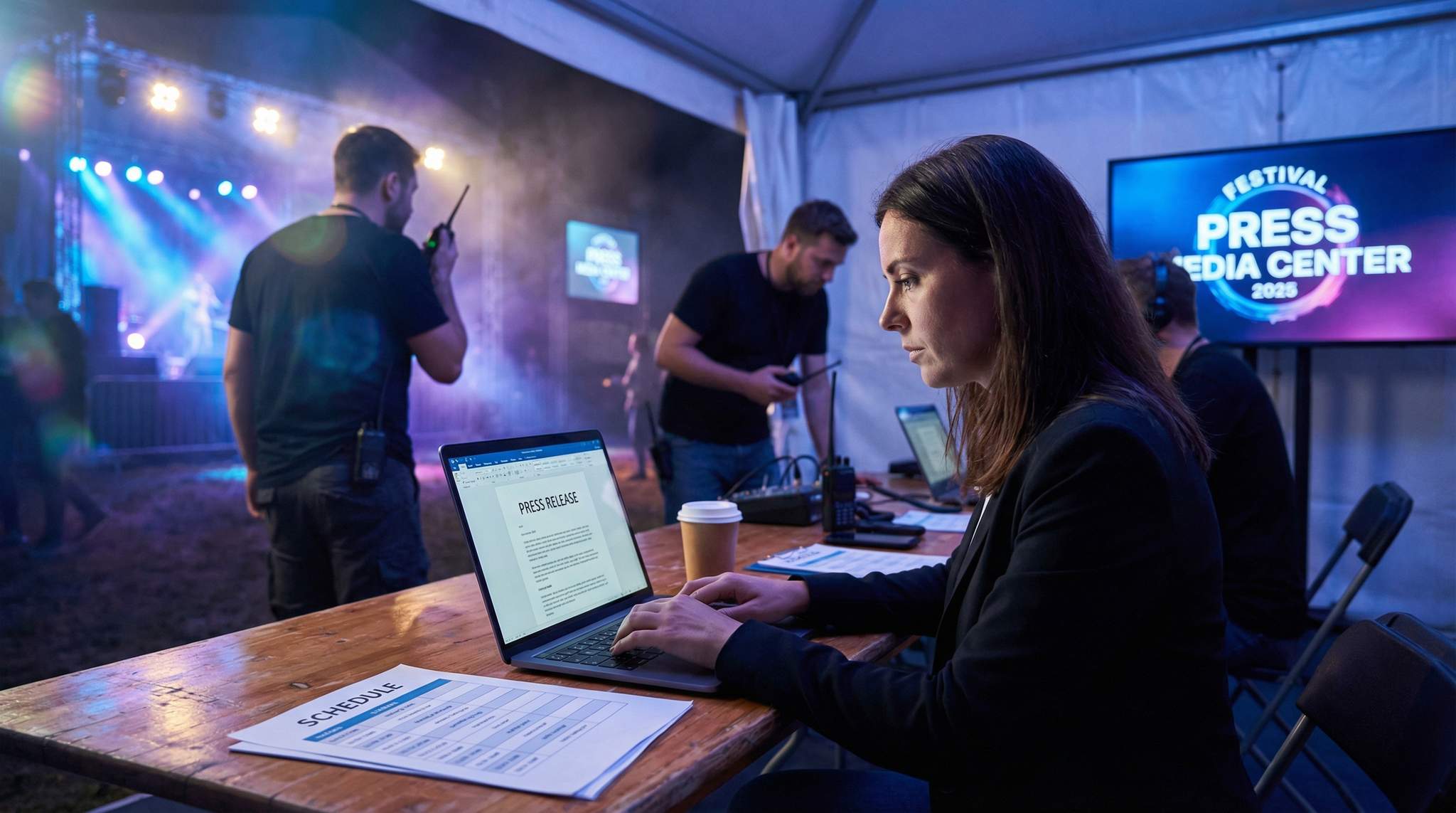
As an event organizer and promoter, you already know how powerful an effective press release can be. In 2025, press releases remain one of the most crucial components of an event marketing strategy, as press releases maintain timeless relevance in modern marketing – even in the era of social media and instant viral videos. While some naysayers might call press releases old-fashioned, a well-crafted, web-optimized event press release is still a cornerstone for generating the right kind of buzz. In fact, press releases are considered credible sources of information, signaling official news that makes the press release a useful tool for media relations and audience trust.
Now, how do you write that perfect press release for your event? This comprehensive guide will walk you through it step by step. We’ll cover how to identify your target audience, craft a compelling headline, write a strong opening paragraph (lead), fill in all the important details in the body, and end with a clear call-to-action. We’ll also share pro tips, common pitfalls to avoid, and strategies to promote your press release for maximum reach.
Press Release Basics: In a nutshell, an effective event press release should:
– Open with a strong headline that captures the essence of your story.
– Present the key event details and a quote in the body to inform and excite readers.
– Close with a call to action that tells readers what to do next (e.g. buy tickets, RSVP).
Sound good? Let’s break down each element of a great event press release.
Grow Your Social Following With Every Sale
Require social media follows, shares, or playlist adds to unlock presale access or special pricing. Turn every ticket purchase into audience growth.
Whether you are launching a boutique club night or a massive multi-day festival, mastering the art of writing a press release for an event is a fundamental skill that directly impacts your bottom line and media footprint. Learning exactly how to write a press release for an event means understanding the delicate balance between promotional excitement and journalistic objectivity. When promoters strike this balance, their announcements are far more likely to be picked up by major publications.
Identify the Target Audience for Your Event Press Release
The first step in creating an effective event press release is to know who you’re targeting. Understanding your audience will help you craft a message that truly resonates. Ask yourself:
– Who would be interested in attending this event? Consider age, interests, location, and communities (music genre fans, tech enthusiasts, etc.).
– Which local media outlets, bloggers, or influencers might share news about this event? Target outlets that cater to your event’s niche or region.
– Who do you want to reach with this press release? Perhaps it’s prospective attendees, sponsors, or the general public in a certain city.
Ready to Sell Tickets?
Create professional event pages with built-in payment processing, marketing tools, and real-time analytics.
Understanding how audience demographics help create effective campaigns allows you to refine your messaging further. To research and pinpoint the right target audience, start with in-depth audience mapping:
- Demographics (age, gender, location): If you use a ticketing platform like Ticket Fairy for event ticketing for past events, these stats are a few clicks away. For example, Ticket Fairy’s dashboard lets you view detailed Demographics and Geographics reports, so you can see if most of your attendees are 18–24 from Sydney, or 25–34 from London.
- Interests and values: What does your audience value or enjoy? Is your event tapping into a hot trend (like e-sports or K-pop fandom) or a niche interest (such as a folk music revival)? Tailor the press release angle to what matters to them.
- Motivations to attend: Why would they come to this event? Are they seeking fun and excitement, a learning experience, or perhaps an immersive escape? Understanding their motivation will shape the tone and content of your release.
- Relevant influencers: Identify influencers or community leaders aligned with your event’s theme. For a music festival, popular local DJs or music bloggers could be key. For a tech conference, look at industry thought leaders. If they’re likely to attend or share info, note them in your outreach plan.
Knowing your target audience guides the entire press release. The tone, the details you highlight, even the distribution outlets you choose will all flow from who you’re trying to reach. For deeper insights on aligning events with the right audiences, learn what most festivals get wrong about audience targeting.
Create a Compelling, Attention-Grabbing Headline
Your headline is arguably the most important part of your press release. It’s the first (and sometimes only) thing people see, so it must grab attention and clearly tell what the press release is about. A great headline can determine whether a journalist or potential attendee reads further.
Here are some tips for crafting a powerful headline:
– Draft the headline last: It might sound counterintuitive, but try writing your headline after you’ve written the press release. Once the whole story is on paper, you’ll have a clearer idea of the most newsworthy angle. This makes it easier to sum up your event in one punchy line.
– Use strong, action-oriented words: Make the headline exciting. Use powerful adjectives and verbs that convey the energy of your event. For example, instead of “Music festival coming to town,” say “Electrifying Music Festival Storms into Downtown.” Words and phrases like ‘electrifying’, ‘bucket-list event’, ‘event-of-the-summer’, and ‘sensational’ create urgency and intrigue.
– Include relevant keywords for SEO: A creative headline is great, but being discoverable is crucial too. Include one or two keywords that people might search for. If you’re promoting Sunshine EDM Festival 2025, include the festival name and maybe the city or genre (e.g., “Sunshine EDM Festival 2025 Brings Electrifying Dance Beats to Melbourne”). This helps your press release appear in search results. Just avoid jargon or acronyms that your audience might not recognize.
– Hint at the “why”: Give a hint of why the event is special. Think about the value your event offers. Does it have a record-breaking lineup, a one-of-a-kind theme, or a charitable mission? If so, slip that into the headline or a subheadline. For example, “New Year’s Gala 2025 Unites World’s Top DJs for Climate Action.”
Smart Promo Codes & Presale Access
Create percentage or flat-rate discount codes with usage limits, date ranges, and ticket type restrictions. Plus unlock codes for private presales.
Pro Tip: Many press releases also use a short subheadline (subtitle) right below the main headline. This one-sentence blurb adds context or a catchy tagline. It can mention a key detail like “Free entry for first 100 attendees” or “Celebrating 10 years of community impact,” which might not fit in the main headline but still hooks the reader.
A strong headline is just the start; you should also master essential pre-event digital strategies to engage audiences.
Grow Your Events
Leverage referral marketing, social sharing incentives, and audience insights to sell more tickets.
Begin with a Strong Opening Paragraph (Your Event Lead)
After the headline, the opening paragraph — known as the lead — is critical. This is where you provide a concise overview of your event and highlight the most newsworthy details. In two to three sentences, answer the fundamentals: who, what, where, when, and why.
Start with the basics. Journalists expect to see the event name, date, and location immediately:
– Dateline: It’s standard to begin with the city and date of the announcement. For example: LOS ANGELES – Jan 15, 2025 – This signals that the press release is official and timely.
– What’s happening: Clearly state what the event is and why it’s worth attention. “The Sunshine EDM Festival 2025 will bring 50 electronic music artists from 20 countries to Melbourne’s iconic Royal Botanic Gardens on March 18–19, 2025.” In one sentence, a reader should know the key facts.
– Big hook or “why”: Include what makes this event special. Is it featuring a Grammy-winning headliner? A charity partnership? Maybe it’s the first event of its kind in the region. Lead with that hook to spark excitement.
For example, a strong lead might be:
NEW YORK – Feb 1, 2025 – The Gotham Tech Expo 2025, featuring keynote speaker Elon Musk and over 100 innovators, opens on July 9 at the Javits Center, showcasing cutting-edge AI gadgets and an interactive robotics zone.
This one sentence hits the who (Gotham Tech Expo, Elon Musk), what (tech expo with AI gadgets and robotics zone), when (Jul 9, 2025), where (Javits Center, NYC), and why it’s special (cutting-edge tech, big-name speaker).
Think about your own event: what will draw your audience in? For music festivals, some fans come just for the opening act, others for the headliner, and many for the whole vibe. So your lead should highlight whatever will excite your crowd the most. If you’ve landed a sought-after performer or a unique venue, put that front and center. If you have international ambitions, knowing how to expand your music event across the world can help you tailor the lead for a global audience.
When drafting a press release for event announcement purposes, remember that this document often serves as the official kickoff for your entire marketing campaign. Whether you are revealing a brand-new boutique festival or announcing a massive stadium tour routing, the announcement release establishes the narrative baseline that all subsequent media coverage will follow. Venue operators and promoters should ensure this initial blast clearly communicates the core value proposition before moving on to secondary announcements like daily lineups or VIP upgrades.
Make sure to also mention how to get tickets or RSVP in the opening if space allows (“Tickets go on sale March 1 on our website”). Remember, the lead should be short, punchy, and informative. Readers skim, and this paragraph should tell them almost everything they must know at a glance. It sets the stage for the details to come in the next sections.
Focus on the Body: Event Details, Quotes, and Highlights
Once you’ve made a strong first impression with your lead, the body of your press release can dive into more details. This section might be a couple of short paragraphs that expand on the who/what/where/when/why and inject some compelling extras that hook readers and the media.
Here’s how to make the body effective:
– Expand on your angle: In Step 1 (audience targeting), you thought about what’s most newsworthy about your event. Make that the focus here. If the biggest selling point is the artist lineup, list a few headline performers or speakers and what makes them notable (“featuring Grammy Award-winner Artist X and a rare reunion of Band Y”). If it’s the theme or cause, describe it (“a festival celebrating sustainable living, with all vendors going zero-waste”). By identifying your unique angle, you give journalists a clear storyline.
– Include a lively quote: A pro tip from experienced event publicists – add at least one quote in the body. It humanizes the press release and provides a soundbite for media to use. You might quote the event organizer, an artist, or a sponsor. For example: “We’re thrilled to bring this one-of-a-kind experience to our city,” said Jane Doe, producer of the festival. “Our goal is to create an immersive wonderland of music and art that attendees will remember for a lifetime.” A good quote conveys enthusiasm and maybe a bit of background or mission.
– Address the target audience directly: Tailor your language to what your audience cares about. If you know your attendees love interactive elements, talk about the hands-on activities or VIP experiences waiting for them. If it’s a business conference and the audience values networking, highlight the networking sessions or VIP mixers. Show that you understand what they want from this event.
– List key participants or attractions: Don’t make readers guess who’s involved. Clearly mention the headline acts, guest speakers, hosts, or any notable partnerships. For instance, if a famous influencer will MC the event or a renowned chef is catering, include that. These details can be the difference between a passerby ignoring the news or deciding, “I have to be there.”
– End the body with a clear CTA: After painting the picture of your event, tell people how to take action. This can be a sentence like “Tickets are available now at [YourEventWebsite]” or “RSVP by May 1 to secure early-bird pricing.” Use action phrases such as “Register now,” “RSVP today,” or “Get tickets”. And link it – make it easy for readers to click to your site or ticket page. For example: “Limited early-bird passes are on sale now,” utilizing the essentials of effective promotion for your event ticketing page to ensure the destination URL is optimized for conversions.
If your announcement centers around a major lineup addition, knowing how to structure a press release for a music artist is vital. When a promoter or venue operator announces a high-profile headliner, the body should highlight the performer’s recent accolades, current tour momentum, and what makes their appearance at your specific venue or festival exclusive. Focus on the business and cultural impact of booking this talent to capture the attention of industry publications and local entertainment editors alike.
By the end of the body section, your reader should have a vivid idea of what to expect at the event and be motivated to act.
Bonus: Don’t Forget Multimedia
Incorporating photos or videos can dramatically boost your press release’s impact. We live in a visual age – and journalists love ready-to-use content. In fact, press releases with multimedia elements get significantly more attention; one study confirms that multimedia content drives significantly more visibility than text-only releases. An eye-catching image or a short highlight video clip can make your announcement far more engaging.
So, attach high-resolution images (like your event flyer, performer photos, or a past event crowd shot) and/or provide a link to a media kit or video teaser. If you’re emailing the press release, you might include a few images in the email or clearly mark where editors can download media from your website or a cloud link.
Do not undersell your event – use visuals to show its excitement. For example, a photo of last year’s packed crowd or a sneak-peek of the stage design can entice journalists and readers alike. If a picture is worth a thousand words, a great press release photo might be worth a thousand ticket sales! To ensure you have high-quality visuals ready, learn how to create and plan stellar content for your event beforehand.
Pro Tip: Always include captions and credits for your images. For instance, “Fans at XYZ Festival 2024 enjoying the headline act (Photo by John Smith)”. This makes it easy for media outlets to use your photos. And ensure you have rights to any images or clips you send out.
How to Write a Media Advisory vs. a Pre-Event Press Release
As you build your communication strategy, it is important to understand the distinction between different types of media alerts. If you are wondering how to write a media advisory compared to a standard press release, the difference lies in timing and format. A media advisory is essentially an invitation for the press to attend your event; it is shorter, heavily bulleted (Who, What, When, Where, Why), and sent just days before the doors open to secure on-site coverage or photo opportunities.
Conversely, learning how to write a pre-event press release involves crafting a full narrative. This document is distributed weeks or months in advance to announce the event’s launch, reveal the lineup, or share ticket sale dates. Both are essential tools for a festival organizer or venue manager looking to maximize earned media throughout the entire event lifecycle.
Include a Boilerplate and Contact Information
As you wrap up the press release, ensure you provide a clear boilerplate and contact info. The boilerplate is a short “About Us” paragraph at the very end. It offers background on your event or organization – essentially anything that adds credibility. For example: “About Sunshine Events: Sunshine Events has organized music festivals across Australia for 15 years, including the award-winning Coastal Jam and Electro Beach. Our mission is to bring communities together through unforgettable experiences.” Keep it factual and use it consistently in all your press releases.
After the boilerplate or just below it, include contact details:
– Media Contact: Who can reporters reach out to for more info or interviews? Provide a name, title, phone number (with country code if you’re aiming internationally), and email address. Example: Media Contact: John Doe, PR Manager – 123-456-7890, [email protected].
– Website and Socials: It’s wise to list the event website and maybe one or two key social media handles. Journalists might look there for more context or images. For instance: Official Site: SunshineFest2025.com | Instagram: @SunshineFest | #SunshineFest2025.
– Sponsors/Partners (if relevant): If a sponsor or partner organization should field inquiries about a specific aspect (like a charity partner for the event cause), you can list their contact. But usually, one primary contact is enough.
Making it easy for journalists to contact you builds trust and increases the chance they’ll cover your story. You’re signaling, “We’re transparent and available for questions.”
Putting It All Together: A Press Release for an Event Example
Understanding the standard press release format for events is crucial before you start drafting. A professionally formatted document signals to journalists that you are an experienced promoter or venue operator who respects their time. The universally accepted layout includes a “FOR IMMEDIATE RELEASE” header, a compelling headline, an optional subheadline, a dateline (City, State – Date), the core body paragraphs (starting with the lead), a boilerplate, and media contact information. Adhering to this specific structure ensures your announcement is easily scannable and ready for publication.
If you are wondering exactly how to format these elements, reviewing a comprehensive press release for an event example can help clarify the structure. Whether you are a festival producer announcing a new multi-day music experience or a venue operator hosting a major industry conference, following a standardized template ensures journalists can quickly extract the facts they need.
Here is a sample template demonstrating how to write a press release for an event effectively:
FOR IMMEDIATE RELEASE
Electrifying ‘Neon Nights’ Music Festival Storms into Downtown Austin This October
The three-day immersive experience will feature over 40 electronic artists, interactive art installations, and a commitment to zero-waste sustainability.AUSTIN, TX – March 20, 2025 – Today, Apex Event Productions announced the launch of the Neon Nights Music Festival, bringing a world-class lineup of electronic dance music to downtown Austin’s Riverside Park from October 10–12, 2025. Headlined by Grammy-nominated DJ duo The Synthetics, the inaugural festival expects to draw over 20,000 attendees daily.
Designed for both dedicated EDM fans and immersive art enthusiasts, Neon Nights will feature three custom-built stages, a VIP networking lounge for industry professionals, and a vendor village highlighting local culinary talent.
“We wanted to create more than just a concert; we are building a fully interactive weekend that celebrates Austin’s vibrant creative culture,” said Sarah Jenkins, Lead Promoter at Apex Event Productions. “By combining top-tier production with a strict zero-waste initiative, we are setting a new standard for large-scale outdoor events in Texas.”
Early-bird weekend passes and VIP hospitality packages go on sale Friday, April 4, 2025, at 10:00 AM CST. For ticket purchases, full lineup details, and vendor applications, visit www.neonnightsfest2025.com.
About Apex Event Productions:
Apex Event Productions is a premier live entertainment company specializing in large-scale music festivals and corporate activations across the Southwest. With over a decade of experience, Apex is dedicated to producing safe, sustainable, and unforgettable live experiences.Media Contact:
David Chen, Director of Public Relations
Apex Event Productions
(555) 123-4567
[email protected]
Using an example press release for an event like the one above provides a clear blueprint. Notice how it seamlessly integrates the dateline, a strong hook, a quote from the organizer, and a clear call-to-action for ticket sales, all while maintaining a professional, objective tone.
While the above template focuses on a large-scale music festival, adapting this sample press release for event announcements in other categories—such as a B2B conference, a charity gala, or a new venue opening—simply requires swapping the core details. A reliable press release sample for event marketing will always retain the standard formatting: the “FOR IMMEDIATE RELEASE” header, a punchy dateline, and a concise boilerplate, regardless of the specific entertainment or business niche.
Proofread, Edit, and Double-Check Everything
Before you hit send (or publish) on your press release, proofread it carefully. Typos, grammatical errors, or factual mistakes can hurt your credibility. They may even cause a journalist to dismiss the release altogether. After all, if an event organizer doesn’t double-check their own press release, how reliable is the event?
Go through your text multiple times. Verify all names and titles are spelled correctly (artists, speakers, venues – double-check every one). Ensure dates and times are right. It can help to read the press release aloud – this often catches awkward phrasing or run-on sentences that you might skip over on screen.
Warning: Be especially careful with the spelling of partner brands, sponsors, and talent names. Misspelling your headline artist’s name or a sponsor company is a big no-no. Not only is it embarrassing, it could jeopardize those relationships. A quick fact-check on every proper noun is worth the effort!
It’s also a good idea to have someone else review it. A fresh pair of eyes might catch something you missed or suggest a clearer way to express a point. In the fast-paced live events world, it’s easy to overlook small details, so build in a little time for an edit by a colleague or friend if possible.
Remember, press releases are typically short and to the point. Many PR professionals recommend staying around 300–500 words as the ideal press release length for the main content of the release. If yours is running much longer, consider trimming unnecessary fluff. Every sentence should serve a purpose – informing or exciting the reader. If it doesn’t, cut it. Being brief also makes it more likely media will actually read and use your release.
Finally, ensure the tone remains objective and professional. A press release is not an ad or an opinion piece. Avoid hype that can’t be backed up. Stick to the facts and make them exciting.
Warning: Always tell the truth in your press release. Don’t promise what you can’t deliver. Overselling can backfire badly. (The infamous Fyre Festival in 2017, for example, put out press materials claiming luxury accommodations and superstar experiences that never materialized, leading to public outrage and legal troubles.) Honesty and accuracy go a long way in building trust with your audience and the press.
Promote Your Press Release for Maximum Reach
Writing a great press release is only half the battle – now you need people to see it! In 2025, a multi-platform promotion strategy is essential to get the most mileage from your announcement.
Start with your own channels:
– Publish on your website or blog: Post the press release in the news or media section of your event website. This gives you a URL to share and helps with SEO (people searching for your event might find this page).
– Share on your event ticketing page: If you have an event page (say, on Ticket Fairy or another ticketing site), add the announcement there as an update. Attendees who visit the page to buy tickets will see the latest news.
– Email and newsletters: Send the press release (or a tailored blurb of it) to your mailing list. Also send it directly to any partners so they can forward it internally or to their audiences. For example, sponsors, venues, or affiliated organizations might include your event news in their newsletters.
Next, leverage media outreach:
– Direct outreach to media: Identify the journalists or editors who might be interested (local entertainment reporters, music bloggers, festival watch websites, etc.). Send them a personalized note with the press release attached or pasted below your signature (never only as an attachment). Highlight why the event would interest their readers. For instance, if you’re pitching a cultural festival to a regional paper, mention the local community angle.
– Press distribution services (optional): If you have the budget and need broad coverage, consider using a newswire service (like PR Newswire, Business Wire, etc.) to distribute your press release. These services can send your news to hundreds of outlets at once. Keep in mind, they can be costly, so weigh the benefits for your particular event.
– Media partnerships: If you have media partners (radio stations, magazines, or websites officially partnered with your event), coordinate with them. They might do an exclusive announcement or a feature story. According to industry experts, truly symbiotic media partnerships can move festival tickets and KPIs. Work together on timing so that your press release and their coverage hit at the same time for maximum impact.
Don’t forget the power of social media:
– Announce on social platforms: Share the big news on all your social channels (Facebook, Instagram, Twitter/X, LinkedIn, TikTok – wherever your audience follows you). You can repurpose the press release into a more casual social media post or a short video announcement. The key is consistency – make sure the core details (date, headliners, etc.) match your press release so there’s no confusion.
– Use an event hashtag: If you haven’t already, create a hashtag for your event and use it in these posts (e.g., #SunshineFest2025). Encourage artists or speakers to share the news on their socials too, using the hashtag. This amplifies reach beyond your immediate followers.
– Engage influencers and creators: Remember those influencers we identified earlier? Now is the time to loop them in. Send them the press release or a media kit and invite them to share or comment. Working with the right creators can convert buzz into ticket sales, as seen in campaigns where creators and influencers actually convert fans into attendees. Consider offering them free passes or an exclusive angle (like a backstage tour) to entice coverage.
Lastly, maximize local and community networks:
– Community forums and groups: Post your announcement in relevant online communities – subreddits for your city or event type, Facebook Groups, local event boards. Tailor the message to not sound overly promotional; share it as “exciting news”.
– Partners & sponsors: Ask sponsors to share the press release on their news pages or social feeds (“We’re proud to sponsor XYZ event…”). If a partner organization has an internal bulletin or external blog, see if they’ll feature your event.
– Follow up tactfully: A week after sending out the press release, you can follow up with key journalists or contacts (unless it’s breaking news that’s time-sensitive). Offer to answer any questions or provide additional interviews with the event team or artists. Sometimes a polite nudge can move your news to the top of their pile.
Pro Tip: If your event has a special angle, create an exclusive experience to entice media coverage. For example, some food festivals invite press to chef’s table preview nights before the public opening. Offering exclusive first-taste events for media coverage can turn unique moments into headline news. Think about what unique slice of your event could warrant a press preview (a behind-the-scenes tour, a Q&A with the headliner, etc.).
Finally, track the results. Set up Google Alerts for your event name or use a media monitoring tool to see which outlets picked up your story. This not only gives you a sense of the press release’s reach, but also helps in building relationships – you can thank journalists who write about your event, which makes them more likely to cover the next one.
Writing an effective event press release and promoting it widely can dramatically increase your event’s visibility. To recap, the keys are:
– Identify your target audience and angle your press release towards what will interest them most.
– Craft a compelling headline and a concise, informative lead paragraph that cover the must-know facts.
– Provide rich details in the body, including quotes and highlights that make your event stand out, and don’t forget a clear call-to-action.
– Add multimedia and polish everything – visuals, contact info, a solid boilerplate, and thorough proofreading for a professional touch.
– Use a multi-platform promotion strategy to share the press release through your website, email, social media, media contacts, and partners, so it reaches the widest audience possible.
An authoritative, engaging press release can yield big results: more media coverage, more awareness, and ultimately more attendees excited for your event. With these steps and tips, you’re well on your way to writing the perfect event press release that showcases your event in the best light. Good luck – and here’s to a sold-out success!
Frequently Asked Questions
How do I write a compelling headline for an event press release?
Craft a powerful headline by writing it last to capture the most newsworthy angle. Use strong, action-oriented words like “electrifying” or “sensational” to create urgency. Include relevant SEO keywords and hint at the event’s unique value proposition, such as a record-breaking lineup or charitable mission, to grab attention immediately.
What information belongs in the opening paragraph of an event press release?
The opening paragraph, or lead, must concisely answer the who, what, where, when, and why of the event in two to three sentences. Start with a dateline and clearly state the event name, date, and location. Highlight the most newsworthy hook, such as a famous speaker or unique theme, to spark immediate interest.
Why is audience mapping necessary for event press releases?
Audience mapping ensures the message resonates by guiding the tone, details, and distribution channels based on demographics and interests. Understanding why attendees would come—whether for fun, learning, or an immersive escape—allows organizers to tailor the press release angle. This targeted approach helps identify relevant media outlets and influencers for effective outreach.
How does multimedia content affect event press release performance?
Incorporating high-resolution images or videos significantly boosts impact, as multimedia content drives nearly 10 times more visibility than text-only releases. Visuals like event flyers, crowd shots, or teaser clips make announcements more engaging for journalists. Always include captions and credits to ensure media outlets can easily use the assets in their coverage.
What details should be included in the body of an event press release?
The body should expand on the event’s unique angle, list key participants like headline acts, and include a lively quote to humanize the story. Address the audience’s specific interests, such as networking or interactive elements, to build excitement. Always conclude this section with a clear call-to-action directing readers to purchase tickets or RSVP.
What are the best ways to promote an event press release?
Maximize reach by publishing the release on event websites, ticketing pages, and social media channels using specific hashtags. Conduct direct outreach to relevant journalists and influencers while leveraging partners and sponsors to share the news. Engaging with online communities and using newswire services can further amplify the announcement to a broader audience.
What is the difference between an event press release and a media advisory?
A pre-event press release provides a comprehensive narrative about your upcoming festival or conference, usually distributed weeks in advance to generate buzz and ticket sales. In contrast, a media advisory acts as a brief, bulleted invitation sent to journalists just days prior, specifically designed to secure on-site press attendance and photo coverage.
How should a promoter write a press release for a music artist?
When announcing a specific headliner, organizers should focus on the performer’s recent industry milestones, tour momentum, and the exclusivity of their appearance at the venue. Highlighting these business and cultural impacts helps capture the attention of both local entertainment editors and broader music industry publications.
What is the standard press release format for events?
The standard press release format for events follows a strict journalistic structure to ensure quick readability. It begins with “FOR IMMEDIATE RELEASE” at the top, followed by a punchy headline and an optional subheadline. The main text starts with a dateline (City, State – Date) leading into the opening paragraph (the lead). Subsequent body paragraphs provide quotes and deeper details, concluding with a clear call-to-action, a boilerplate (about the organizer), and media contact information.
What is a good press release for an event example?
A strong example of an event press release starts with “FOR IMMEDIATE RELEASE,” followed by a catchy headline and a subheadline summarizing the value proposition. The opening dateline (City, State – Date) leads into a concise first paragraph covering the who, what, when, where, and why. The body includes a quote from the promoter or venue manager, specific event highlights, a clear call-to-action for ticket sales, and concludes with a boilerplate and media contact information.
How can I adapt a sample press release for event announcements in different niches?
When using a sample press release for event marketing, the core structure remains identical across niches. Whether you are a venue operator launching a new club night or a promoter organizing a tech conference, you should keep the standard “FOR IMMEDIATE RELEASE” header, dateline, and boilerplate. Simply swap the lead paragraph to highlight your specific industry hook—such as a keynote speaker instead of a headline DJ—and adjust the quotes to reflect your target audience’s interests.
What is the most important rule when writing a press release for an event?
The golden rule when writing a press release for an event is to prioritize newsworthiness over pure promotion. Journalists and editors are looking for a compelling hook—such as a unique venue, a rare artist booking, or a significant community impact—rather than a standard sales pitch. Keep the tone objective, stick to the facts, and provide all necessary details (who, what, when, where, and why) in the opening lead.
When is the best time to distribute a press release for an event announcement?
For a major festival or large-scale conference, distributing your initial press release for an event announcement 12 to 16 weeks before the doors open is ideal. This timeline gives industry journalists and local media ample opportunity to feature your launch in their editorial calendars. For smaller club nights or local venue shows, sending the release four to six weeks in advance is usually sufficient to generate targeted regional buzz and drive early ticket sales.