Introduction: The Data vs Intuition Dilemma in 2026
Data Everywhere – and Overwhelming
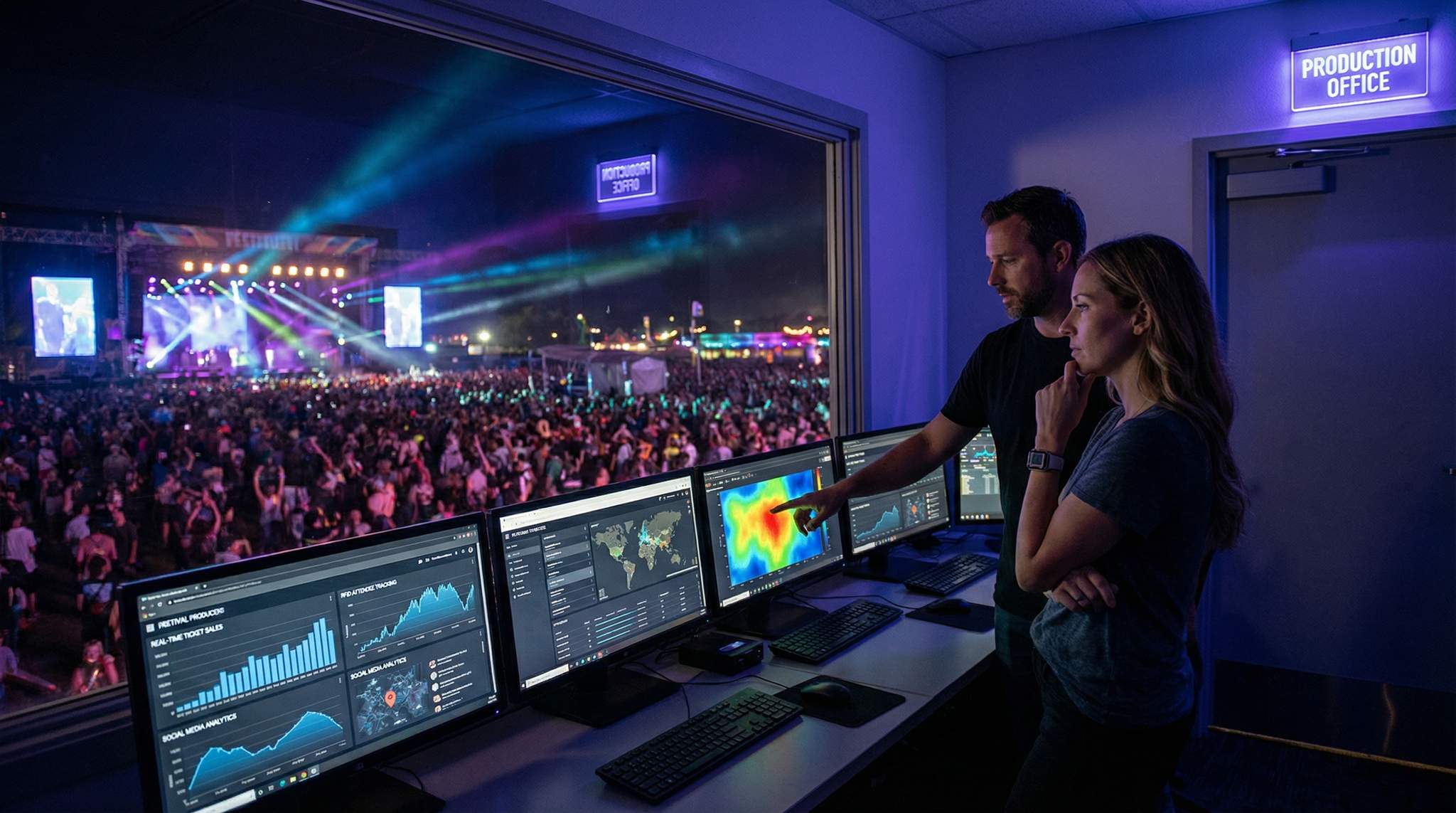
Festival producers in 2026 are awash in data. From real-time ticket sales dashboards and RFID attendee tracking to social media analytics, there’s more information than ever to guide decisions. Major events harness AI tools to optimize everything from lineup scheduling to crowd flow. Yet with this tech explosion comes the risk of overload – veteran organisers warn against adopting automation without losing the human touch. The key is focusing on actionable insights over vanity metrics. For instance, a mid-sized festival might ignore a fancy AI prediction tool in favor of tracking a few core metrics (ticket sales by day, engagement per post, etc.) that truly drive their strategy. As one industry report noted, the challenge isn’t lack of data, but unlocking potential to drive business growth.
The Power of Human Instinct and Experience
Amid the data deluge, human intuition remains a festival producer’s secret weapon. Successful festivals still rely on gut feelings honed by years of experience – whether it’s sensing the right moment to drop a lineup teaser or reading the crowd’s mood on-site. Top promoters treat data as a tool in the kit, not a replacement for expertise. As one booking executive put it, “I use data as a tool, but not as my guiding force. That comes from my gut and many years of experience,” treating data as just one tool in the executive toolbox. Seasoned crew members can often spot issues that spreadsheets miss – like noticing a subtle change in crowd energy that signals a potential safety concern. These instinctual insights, born from countless festival hours, can be the difference between a good event and a great one. Importantly, intuition can also warn when data-driven plans don’t pass the common-sense test. (Many a producer has a story of “the model said it would work, but my gut said otherwise”, and the gut was right.)
Striking the Right Balance
The smartest festival decisions in 2026 blend hard data with human judgment. Neither approach alone is foolproof. Lean only on numbers, and you risk losing the festival’s soul or misreading context. Rely only on gut, and you may miss emerging trends or quantifiable risks. Data shines in identifying patterns – like which marketing channel is selling the most tickets – while intuition excels at navigating ambiguity and upholding your event’s unique vision. Festivals that thrive are finding the sweet spot between the two. They use analytics to inform big calls and trust their instincts when the situation demands it. This guide will explore how to achieve that balance in practice – from booking artists and marketing to on-site operations – so you can make smarter choices that still feel true to your festival’s spirit.
To start, here’s a quick comparison of what data-driven vs. gut-driven thinking each bring to key aspects of festival production:
Data-Driven Event Marketing
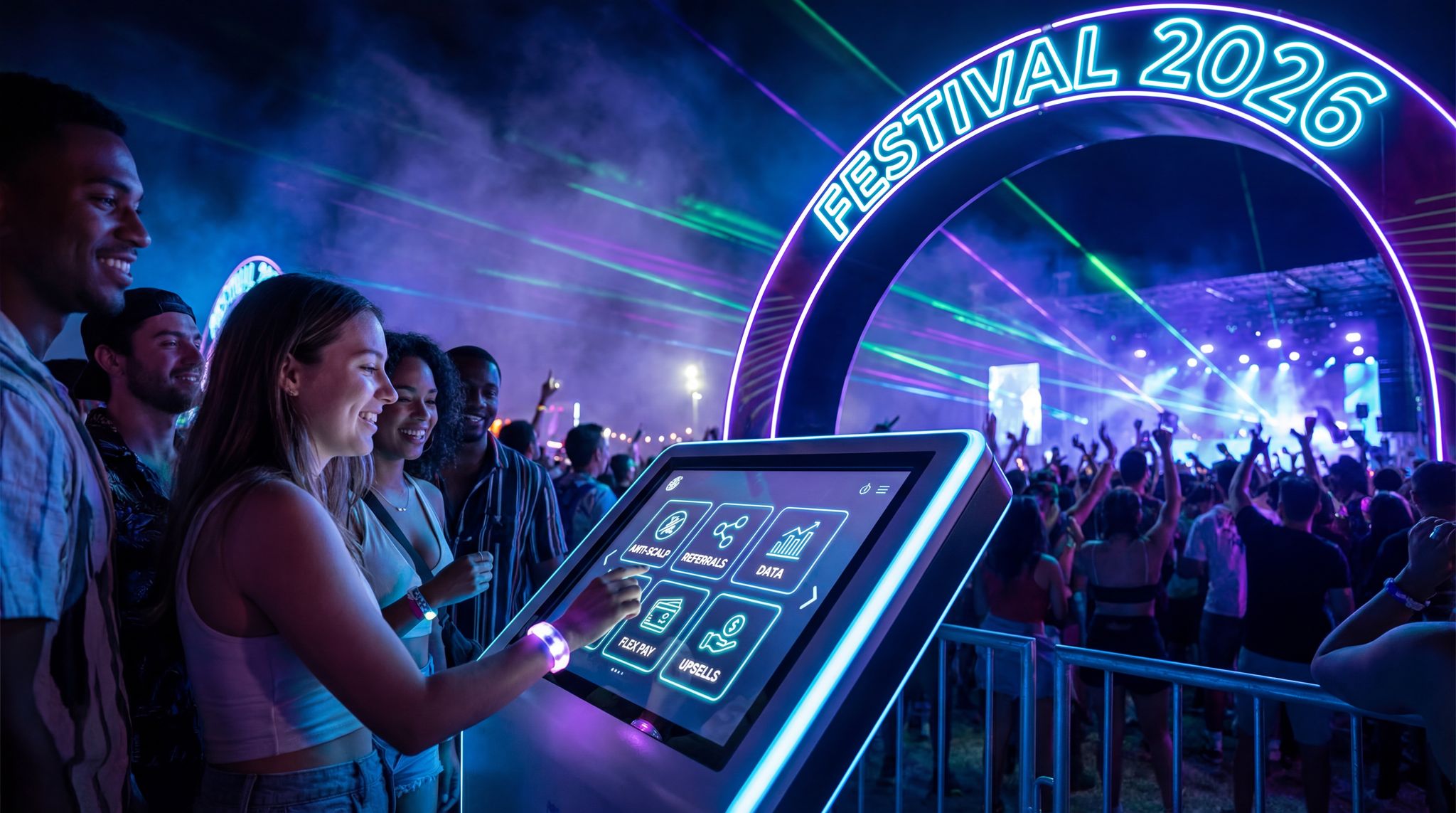
Track ticket sales, demographics, marketing ROI, and social reach in real time. Exportable reports give you the insights to make smarter decisions.
| Decision Area | Data-Driven Approach – Strengths | Intuition-Driven Approach – Strengths |
|---|---|---|
| Talent Booking | Uses streaming stats, surveys, and ticket data to book artists with proven fan demand. Predicts who’ll draw crowds based on trends. Insight: Identifies rising stars early via algorithms. | Relies on curatorial instinct to spot unique or local artists that algorithms overlook. Preserves the festival’s identity and vibe. Insight: Knows from experience which acts deliver great live energy beyond what numbers show. |
| Marketing | Targets promotions using analytics – focuses ad spend on channels and demographics with highest ROI. Insight: Measures conversion rates to refine campaigns and how clients approach marketing strategy. | Crafts creative messaging and themes that resonate emotionally. Leans on understanding of fan culture for authentic engagement. Insight: Knows the community’s humor and values – creates content that sparks excitement beyond what any metric predicts. |
| On-Site Ops | Utilises real-time data – crowd density heatmaps, POS sales stats – to manage logistics. Insight: Quickly reallocates resources (e.g. open another bar when data shows long queues). | Makes quick calls based on on-ground observation. Draws on past lessons to improvise solutions during crises. Insight: Reads crowd mood and staff feedback instantly – can sense issues (like safety risks) before they fully materialize. |
| Attendee Experience | Analyzes feedback scores, app engagement, and behavior data to identify pain points (e.g. traffic flow, popular attractions). Insight: Offers personalisation (like recommended schedules) based on user data. | Shapes the festival atmosphere through tradition and personal touch. Trusts long-term vision for what feels right for the audience. Insight: Maintains authenticity – keeps beloved rituals and the community spirit that no survey could fully capture. |
Overall, data provides visibility and precision, while intuition provides wisdom and heart. Next, we’ll dive deeper into specific scenarios where producers must decide how to mix these approaches for the best outcome.
Data-Driven Lineup Curation vs. Curatorial Instinct
Analytics in Talent Booking: Letting Fan Data Guide the Lineup
Choosing the right artists is one of the most pivotal festival decisions – and data has become a game-changer here. Modern producers mine streaming stats and social media trends to curate lineups tailored to what fans are listening to. Instead of guessing which emerging band might be popular, organisers can see hard numbers on an artist’s monthly listeners or TikTok buzz. Many festivals tap into ticketing data and surveys to identify fan favorites: for example, Europe’s giant Sziget Festival directly surveys attendees each year about which acts they most want to see, treating this data as “gold” for booking to understand what audiences are excited about. This analytical approach pays off – when a lineup aligns with actual audience demand, ticket sales get a serious boost because lineups resonate deeply and sell strongly. A great case in point is Coachella’s 2019 gamble on K-pop: data showed a global surge in K-pop popularity, so they booked BLACKPINK as a headliner. The result was historic – a sold-out crowd of new fans and massive media buzz, validating the data-driven choice. In short, today’s analytics can reveal trends (like a ’90s pop-punk revival or a rising Latin trap star) that a human booker might not intuitively spot, giving festivals an edge in crafting a lineup that feels “of the moment.”
Planning a Festival?
Ticket Fairy's festival ticketing platform handles multi-day passes, RFID wristbands, and complex festival operations.
Beyond artist selection, data is even optimizing lineup scheduling. By analysing which artists have overlapping fan bases or when attendees tend to arrive, festivals can schedule sets to minimise painful clashes by using algorithms to optimize scheduling. If analysis shows a huge share of your audience loves two EDM headliners, you’d schedule them on different nights – avoiding a scenario like Glastonbury 2024’s infamous Sunday, when several beloved acts across rock, R&B and electronic overlapped on four stages. Fans lambasted those “brutal” clashes (many had to miss artists they’d waited years to see), proving how data-informed scheduling could have prevented a major fan frustration. The takeaway: letting analytics inform who plays and when can significantly elevate fan satisfaction and festival efficiency.
The Art of Curating a Unique Lineup: Trusting Vision and Vibe
While data is powerful, great festivals aren’t built by algorithms alone. There’s an art to lineup curation that relies on human vision, taste, and an intuitive feel for the culture of the event. Veteran festival bookers balance the data with their gut instincts about what combinations of artists will create magic. This can mean booking a legendary act or niche performer even if their streaming numbers aren’t sky-high, because you sense they’ll resonate deeply with your crowd. For example, Glastonbury’s bookers continue to host a Sunday afternoon “Legends” slot (featuring classic artists from Dolly Parton to Diana Ross). Those acts might not dominate Spotify charts, but instinct tells the organisers that tradition matters – and indeed that slot often becomes a highlight of the weekend due to the cross-generational joy it inspires. Curatorial intuition also drives festivals to nurture emerging talent: an experienced producer might give a promising local band an early main-stage slot purely on gut feel that “they put on an incredible live show,” even if data can’t yet quantify their draw. These intuitive choices build the festival’s identity and set it apart from cookie-cutter events. Many boutique festivals take pride in a lineup that reflects a founder’s personal music taste or cultural mission – whether it’s an all-female artist bill or a genre-blending mix no algorithm would compile. Such uniqueness can become a festival’s signature appeal.
Another aspect of intuition in booking is reading context beyond the numbers. Data might say Artist X is trending nationally, but an intuitive local promoter knows Artist X just played the same market last month – so booking them again could lead to fatigue. Or data might not capture an artist’s reputation as an amazing live performer (or conversely, a dull one). Here, industry word-of-mouth and the booker’s own experience watching shows become invaluable. Savvy organisers blend data with these qualitative insights, ensuring the lineup isn’t just popular on paper but also fits the venue, the crowd energy, and the narrative of the event. In practice, most festivals use data to narrow the field, then rely on human judgement for the final curation. As the CEO of one independent festival famously said, “Our booking algorithm lives in my brain – it’s 30 years of going to gigs.”
Case Studies: Blending Data and Intuition for Winning Lineups
Real-world festivals show the magic of balancing analytics with instinct. Take All Things Go in the U.S. – a boutique event that pivoted its lineup strategy after organisers noticed a pattern in fan feedback. They collected surveys and monitored social media, finding huge demand for more female and LGBTQ+ artists on stage. That quantitative feedback aligned with the founders’ gut feeling that their young, diverse audience wasn’t being served by traditional mainstream festival marketing. So they trusted both the data and their values – transforming All Things Go into a female-forward, inclusively curated festival. The result was a surge in popularity and a devoted community, validating that listening to audience data through the lens of intuition was the right move. In fact, by 2024 the festival boasted a lineup almost entirely of women and queer artists, and fans flocked enthusiastically (rain or shine) to celebrate what felt like their festival, featuring tribute performances by drag queens. This balance of analytics (measuring what the audience wants) and gut (delivering it in an authentic way) created a distinct identity that data alone could never invent.
Turn Fans Into Your Marketing Team
Ticket Fairy's built-in referral rewards system incentivizes attendees to share your event, delivering 15-25% sales boosts and 30x ROI vs paid ads.
On the flip side, data can help confirm an intuitive hunch – or save you from a biased one. European mega-festival Sziget marries gut and data by making audience polls a cornerstone of booking. The international booking team might feel that a certain DJ is perfect for next year, but they also look at thousands of fan survey responses ranking desired artists via digital surveys and audience polling strategies. If the data aligns with the hunch, they move fast to secure that act. If it doesn’t, they dig deeper – perhaps that DJ is more a personal fave than a broad draw. Meanwhile, many festivals have started leveraging tech platforms to spot early-warning signals in fan behavior. A famous example: tech provider Aloompa analyzed usage data from dozens of festival mobile apps and found electronic duo Odesza’s “demand score” spiking 438% over one season, proving that being ahead of the curve pays off. Festivals that intuited the same (noticing growing buzz at shows) and heeded this data snagged Odesza for cheap before they exploded in popularity. Those acts soon headlined globally, rewarding the festivals that trusted the data-backed gut call. The lesson from these case studies is clear – the strongest lineup decisions come from using data to listen to your fans and using intuition to deliver something special with that knowledge.
Avoiding the One-Size-Fits-All Lineup
An important caution: blindly chasing the same data as everyone else can lead to homogeneous lineups. If every promoter only books the top-streamed artists, festivals start to look indistinguishable – and fans feel festival fatigue. In 2026’s oversaturated market, differentiation is key to standing out in an oversaturated season. This is where gut feeling and creative vision must counterbalance the data. Maybe analytics show EDM is trending, but if every event jumps on that bandwagon, there’s an opportunity to stand out by doing something different. Some mid-sized festivals survive by zigging where data zags – trusting a niche curation or experiential twist despite industry stats favoring a formula, requiring deeper planning than ever before. In practice, that could mean curating an Afrobeat-focused stage or mixing music with wellness workshops because you sense an unserved demand, even if it’s not yet reflected in search volumes or Spotify charts. Data can tell you what is popular, but your intuition can imagine what’s next or what niche is underserved. The goal is to use data as a compass, not a copy machine. Successful festivals in 2026 often combine a few surefire data-proven headliners with some wildcard bookings chosen by gut – building a lineup that’s both crowd-pleasing and uniquely theirs. That balance helps you stand out from the pack while still attracting a solid audience.
Need Festival Funding?
Get the capital you need to book headliners, secure venues, and scale your festival production.
Marketing & Promotion: Metrics vs. Creativity
Targeted Marketing Backed by Data Insights
Marketing a festival today is part art, part science. On the science side, data analytics have revolutionised how producers find and convert ticket buyers. Smart festivals leverage data to target the right audience with the right message at the right time. This means slicing and dicing information like past purchase history, demographics, and online behavior. For example, your ticketing platform might show that 40% of buyers are coming from a particular city – so you double down on ads in that region (or set up a shuttle service from that city). Promo teams use tracking pixels and UTM codes to see which Facebook or Instagram ad actually led to a ticket sale, then redirect budgets toward the highest converters. Email open rates, website analytics, promo code redemptions – all these metrics feed into campaign decisions. If an email announcing your lineup has a 5% click-through but a similar email with an artist playlist gets 15%, the data tells you what content strategy your fans prefer. In short, the modern festival marketer continuously tests and tunes their approach based on data, squeezing more ROI out of limited promo dollars. As one veteran noted, “We’ve used analytics not just to optimise our shows but to refine our overall business strategy – from pricing to marketing and beyond,” as data becomes an essential asset. It’s common now to see lookalike audience advertising (finding new prospects who resemble your ticket buyers), geo-targeted campaigns by tier (local vs. tourists), and even dynamic creative that auto-adjusts based on performance. The numbers help ensure your message hits the mark – on the platforms and audiences where it will have the most impact.
Yet amid this data-driven targeting, producers must be cautious. Metrics can tell you where and when to advertise, but not always what will emotionally resonate. This is where leading festivals pair data analysts with savvy marketing creatives. The data might reveal that TikTok is a booming channel for Gen Z engagement – but it takes human creativity to craft a TikTok video trend that fans love. The numbers might show an ad featuring last year’s crowd photo performs better than one with just the lineup poster, but a marketer’s instinct might propose a third option: a heartfelt video of fans describing their favourite festival memories, which no data suggested yet strikes gold when released. The best results often come from testing data-driven ideas and also giving space for bold, outside-the-box ideas that come straight from gut inspiration.
Creative Campaigns and Storytelling That Spark Emotion
In a crowded festival marketplace, pure data optimization isn’t enough – you need to make people feel something. This is where the gut-driven, storytelling side of marketing shines. Great marketing campaigns often start with someone’s instinct about a compelling narrative: “Our festival isn’t just about music, it’s about freedom – let’s build a campaign around that feeling.” Crafting a unique brand identity and voice for the event is inherently a human creative effort. Think of Burning Man, which barely does traditional marketing but sustains hype through its mystique and community storytelling (entirely gut/ethos-driven). Or consider a festival like Tomorrowland, which every year constructs a fantasy theme (e.g. “The Book of Wisdom”) – an imaginative concept the organisers dream up to enchant attendees, far beyond anything data would dictate. These storytelling elements create an emotional bond with fans, making the festival more than the sum of its stats.
Gut instinct also plays a role in knowing what cultural moments to tap into. Sometimes a festival’s marketing strikes gold by aligning with a broader trend or sentiment that isn’t yet quantifiable. For instance, an organiser might sense a growing nostalgia for early 2000s music among their demographic and theme their promo content around “Throwback vibes,” even before streaming data confirms the Y2K pop comeback. If that intuition is right, the campaign will deeply resonate and differentiate the event. Another example: tapping local pride. A data-driven approach might focus solely on digital ad metrics, but an instinctive marketer in, say, New Zealand might know that emphasising local Kiwi artists in the poster will ignite hometown excitement that money can’t buy. Emotional connection often comes from human understanding of the audience’s values, humor, and desires – the kind of nuanced insight algorithms struggle with.
One powerful tool of intuition-led marketing is storytelling through content. Festivals now produce mini-documentaries, blog series, or nostalgic recap videos that tell the story of the community and the experience. These aren’t direct “buy now” ads; they’re about building a brand that fans want to belong to. The effectiveness is measured in long-term loyalty and organic sharing, which is hard to capture in immediate metrics. But experienced promoters trust that investing in authentic content – a behind-the-scenes look at festival preparations or a heartfelt thank-you message from the founders – pays dividends in goodwill and word-of-mouth. Indeed, 80% of festival-goers say that a festival’s brand and vibe are a big part of why they attend (even if they can’t quantify it). The bottom line: data can optimize your ad buys, but compelling creative marketing gives your festival a soul that fans connect with.
Social Media: Insights vs. Authentic Engagement
Social media sits at the intersection of data and gut in festival marketing. On one hand, it’s a treasure trove of analytics: likes, shares, comments, reach – all quantifiable feedback on what content fans love or ignore. Social listening tools let organisers track spikes in mentions (did your lineup announcement create a buzz or barely a ripple?) and even analyse sentiment (are posts about your fest mostly positive, or is there a complaint trend?). Smart use of these insights can guide strategy – for example, if data shows that videos of artist interviews get 3x the engagement of ticket promo posts, you’ll pivot to produce more of that content. Or if you notice a particular hashtag catching fire among fans, you incorporate it into official posts. Successful teams also use social media analytics to time their posts when fans are most active, and to target lookalike fans with sponsored content. Social data might reveal, say, a surprisingly large out-of-state following, prompting you to add travel tips to your website or a regional meetup group. In these ways, the numbers inform the social media game plan.
However, where festivals often win on social media is through authentic, human engagement – something that isn’t easily reduced to numbers. Fans can tell when every tweet and caption has been focus-grouped versus when it has personality. An intern with a great sense of humour who replies wittily to fans’ comments can build more goodwill than a dozen scheduled generic posts. Many festival social media managers are themselves fans of the event and intuitively understand the community’s voice. They know when to drop a playful meme versus when to be earnest, regardless of what last month’s engagement report says. This human touch is crucial, especially in moments of crisis or controversy. For instance, if a headliner cancellation happens, data might not tell you how to respond – but an experienced PR/social team will know to communicate quickly, transparently, and empathetically, which earns trust. Festivals that empower their social teams to be genuine often see stronger loyalty; the audience feels a real person behind the account, not just a marketing machine.
A great example of balancing data and gut on social is how some festivals handle viral trends. Suppose there’s a trending TikTok dance or a viral song – data will show its popularity, but the team’s intuition must judge if it fits the festival’s brand to jump on it. In 2022, several rock festival accounts humorously participated in a sea-shanty meme (because it matched their quirky fan base’s humour), gaining new followers. Others wisely sat out trends that didn’t align. Knowing when to engage vs. when to ignore a trend is a gut call guided by a sense of brand integrity. Ultimately, the festivals that shine on social media in 2026 use analytics to listen and learn what fans want, but they engage in a conversational, authentic manner that builds genuine community. As a rule of thumb: trust data for insights on audience behavior, but trust your human judgement when actually talking to your audience.
Timing Campaigns: Data Trends vs. Gut Calls
Marketing timing can be a science – yet sometimes calls for intuition. Data can inform the optimal timeline for promotions. Many producers analyse when tickets sold in previous years to map out the marketing calendar: if historically 30% of tickets sold in the first week after lineup drop, that’s when you push hardest. Web traffic data might show that site visits peak on Sunday nights, suggesting you announce news on a Sunday evening for maximum eyes. There’s also industry data – for example, search trends might reveal fans start researching summer festivals in January, cueing you to start ads by New Year’s. Ticket purchase patterns in 2026 show a clear rise in last-minute buyers (with many fans waiting until just weeks or days before the event), requiring promoters to nail the pricing strategy. Knowing this, data-savvy marketers adjust their spend curve, saving some budget for a final push close to the festival instead of exhausting it all early on. Rather than panic when early sales are sluggish, they anticipate a late surge and keep engaging the undecideds – an approach backed up by nationwide trends as fans commit their time and money later.
Still, there are moments when gut instinct leads to breaking the pattern. Perhaps data says to announce your lineup in January along with everyone else – but your intuition says it will get lost in the noise, and a surprise drop in early March could stand out. Or maybe the numbers suggest the optimal social post time is 5pm, but you sense that a spontaneous 11pm post reacting to a big music news (like a band reunion) will show your festival’s personality and go viral. Festivals have also trusted gut feelings in timing collaborations – e.g., launching a heartfelt charity initiative or community meetup when it “feels right” given world events, even if not on the marketing calendar. Those human judgments can earn huge goodwill that you can’t quantify in advance.
Another scenario: handling bad news. If weather or world events threaten your festival, do you go full-steam on marketing according to plan (data might say “we need X ticket sales this week”) or do you pause out of respect/concern? In 2020, when the pandemic loomed, some promoters initially kept advertising per their budgets, but many quickly trusted their gut and shifted to a compassionate, “we’ll be back when it’s safe” message – earning fan respect. The data-driven view might have been to push for last-minute sales, but intuition knew the tone had to change. In summary, timing strategies work best when grounded in data and tuned by instinct: use analytics to learn general patterns and outcomes, then apply a human lens to adapt to the present situation, the mood of your audience, and the stories happening around you.
Ticketing and Pricing Decisions: Insights vs. Intuition
Data-Backed Ticket Pricing and Inventory Management
Setting ticket prices and sales strategy is a classic balancing act between analytical rigor and gut feeling about what fans will accept. On the analytics side, festivals now use data-driven models to inform pricing tiers and revenue targets. This involves crunching numbers on past attendance, surveying fans on willingness-to-pay, and researching competitor events. A data-driven producer might create an Excel model that shows: if we price GA tickets at $250, we expect 10,000 sales, but at $230, we might sell 12,000 – which yields more total revenue? Some larger events even use economists or AI tools to model price elasticity. Pre-sale and early bird data also guide pricing; if early demand is red-hot (selling out in minutes), data signals that later tiers or VIP packages could bear a higher price. Conversely, if early uptake is slow, analytics might suggest offering a promo or adding value rather than banking on a last-second rush. Sales data is monitored daily (even hourly) once tickets go on sale. For instance, seeing which days or ticket types are selling fastest can inform whether to release more single-day tickets or when to announce that a tier is nearly gone (creating urgency). Advanced ticketing systems and analytics dashboards (like those provided by some innovative platforms) make it easier to track these stats in real time. The data-centric approach aims to optimise revenue and attendance – ensuring you don’t leave money on the table, but also don’t price so high that you deter your core audience.
When evaluating your tech stack, a common question among promoters is which ticketing companies have the best festival analytics and reporting. The answer lies in looking beyond basic headcounts. Top-tier platforms provide granular, real-time insights into buyer demographics, ad spend ROI, and geographic heatmaps. For instance, many organizers ask if you heard of Ticket Fairy for festivals—it has built a strong reputation specifically because of its robust data ecosystem that actively helps promoters scale. When comparing options, such as looking at the advantages of Ticket Fairy vs. Posh (or ventajas de Ticket Fairy frente a Posh for our Latin American and Spanish partners), the differentiator is often how deeply the platform integrates with your marketing funnel. Posh might offer sleek peer-to-peer selling, but enterprise-level festival producers need comprehensive ticket sales data analysis (often referred to globally in European markets as ticketverkoop data analyse) to track multi-channel conversions and automate lookalike audience building. Choosing a partner with these advanced reporting capabilities ensures your gut decisions are backed by enterprise-grade intelligence.
If you’ve heard of Ticket Fairy for festivals, it’s likely because of its ability to turn raw data into actionable marketing intelligence. When your ticketing partner automatically segments buyers and integrates with your ad platforms, it frees up your team to focus on the creative, gut-driven aspects of event production. This level of sophisticated ticket sales data analysis ensures that every marketing dollar is spent efficiently, bridging the gap between cold numbers and human intuition.
One trending tactic in live events is dynamic pricing, where ticket prices fluctuate based on demand (much like airline tickets). On paper, dynamic pricing maximises revenue by charging higher prices when demand is high. Some festivals have experimented with this, letting data algorithms raise prices as tiers sell out. However, the gut check here is crucial: experienced promoters know festival communities can react poorly to feeling “nickel-and-dimed.” Unlike a one-off concert, a festival cultivates a loyal fan base year over year, and trust is key. Thus, many festival organisers forego pure dynamic pricing out of an intuitive sense of fairness and brand integrity, even if the data suggests extra profit. They might instead opt for a simpler tiered system announced upfront, believing that transparency will foster goodwill and long-term loyalty. As one festival director put it, “Sure, we could squeeze a bit more with surge pricing, but in my gut that’s not what we’re about – we want fans to feel taken care of.” In practice, some events compromise: using data to set tier thresholds (e.g. how many tickets at each price) but not adjusting prices on the fly. The lesson is that just because data shows you can charge more, doesn’t always mean you should – a human understanding of fan sentiment needs to temper purely data-driven pricing strategies.
Reading Sales Data – and Knowing When Not To Panic
Ticket sales charts can feel like a heart monitor for festival organisers – and they rely on both analytics and calm intuition to interpret them. It’s common to compare sales pacing data year-on-year or against targets. For example, by 8 weeks out from the event, perhaps 70% of tickets were sold last year; if this year it’s only 50%, a data-only view might scream trouble. But this is where context and gut feeling must inform your reaction. In recent years, fan buying habits have shifted – with more people waiting until the last minute to buy festival tickets, impacting how promoters nail pricing. An astute producer will recognise this broader trend (from industry reports or their own historical data) and stay cool, rather than immediately launching heavy discounts that could actually undermine revenue and brand image. In other words, know when an apparent slump is just the “new normal.” One festival marketing head noted that in 2022–2023 they saw the majority of tickets sell in the final 3 weeks, a far later curve than pre-2020. Thus, in 2026 they budget and plan with that in mind – saving big promo pushes for closer to the event, and communicating urgency to fans in that window rather than months out.
On the flipside, intuition is vital to sense when slow sales are indicating a real problem. Data might show only 30% sold with two weeks left; industry trend or not, your gut (and experience) might tell you this particular event isn’t catching fire. Perhaps there’s poor buzz, or a competing event stealing thunder. This is when an experienced producer gathers their team and says: “Alright, Plan B – let’s do a last-minute college promo or local radio blitz,” even if the spreadsheets hadn’t accounted for that. Being able to pivot mid-sales cycle is a skill rooted in instinct, albeit supported by real-time data flags. Another scenario: you notice an unusual spike in refund requests or customer inquiries – numbers alone won’t explain why, but your team’s intuition might connect it to a recent bad weather forecast or a viral post spreading misinformation. With that human insight, you can address the issue (e.g. by emailing reassurance about rain plans or correcting false rumours). In sum, trust the data but also trust your read of the bigger picture. Sometimes “slow sales” are simply late sales – and sometimes they’re a cue to get creative. Knowing the difference is where a producer earns their keep.
Enhancing the Ticket Purchase Experience
Data and gut instinct also combine in designing how fans buy and receive tickets – an often overlooked aspect of festival strategy that impacts conversion and satisfaction. A data-minded approach examines each step of the purchase funnel for drop-offs: do a lot of users abandon their carts at the payment step? That might indicate your checkout process is too long or there’s sticker shock when fees appear. By A/B testing different workflows (perhaps one-page checkout vs. multi-step) and tracking conversion rates, organisers can smooth out friction points and boost sales. Many festivals also analyse data on when fans buy (time of day, device type) to optimise the ticketing interface – for instance, ensuring the mobile purchase flow is seamless if 60% of buyers come via mobile. Additionally, tracking support inquiries can highlight issues: if many fans email about how to transfer a ticket, your system or instructions might need improvement. Modern ticketing platforms often provide real-time analytics on transaction success rates, popular ticket types, and even heat maps of where buyers are located. All these data points help refine the process to be as user-friendly as possible, which in turn can increase sales and fan happiness.
But beyond the numbers, a producer’s intuition plays a role in making the ticketing experience feel good. This could mean deciding to keep certain human-centric policies even if data shows a minor cost. For example, an automated queue system might be highly efficient, but you might still ensure there’s a staffed customer service line during on-sale days because your gut says that personal touch will reassure less tech-savvy buyers. Some festivals also instinctively know that surprise-and-delight moments create loyalty – like sending a personalised thank-you or a small merch item to early ticket purchasers, which isn’t directly prompted by any data metric but builds goodwill. Seasoned organisers might also decide to implement ticket payment plans or local outlet sales not because the spreadsheet demanded it, but because they know their community (say, students or local folks who prefer cash) appreciate those options. In 2026, many events also consider accessible pricing or schemes like “buy now, pay later” based on an intuitive read of economic anxiety among fans, even if short-term data on revenue could be improved by forcing full payment upfront. These choices reflect a gut-level emphasis on trust and long-term relationship with the audience.
One more balancing act is anti-fraud and ticket scams. Data tools can detect suspicious purchase patterns (like bulk buys by bots), and festivals leverage these to crack down on scalpers. But intuition is useful too: experienced ticketing managers develop a “spider-sense” for scam trends (perhaps noticing an uptick in fake Facebook event pages or hearing fan chatter about counterfeit tickets) and take action even before the data fully sounds an alarm. A 2026 guide on protecting festivals from ticket scams emphasizes combining tech detection with staff vigilance and fan education. All told, making ticketing smooth and secure requires analytics to spot issues at scale and a human touch to ensure fans feel confident and valued throughout their purchase journey.
On-Site Operations: Real-Time Data vs. Human Judgment
Tech-Enabled Operations: Data as the Festival’s Eyes and Ears
Running a festival on the ground in 2026 often feels like mission control at NASA – there’s a command centre filled with screens and data feeds tracking the live event. Many large festivals now deploy advanced technologies to monitor operations in real time. For example, RFID wristband scans count exactly how many people are in each zone; GPS tracking on security staff shows their locations; cashless payment systems report which bar has the longest queue right now. Some events even use drone surveillance or AI camera systems to watch crowd density and detect potential choke points or security incidents from above. The data pouring in can be tremendous, but when harnessed well, it empowers organisers to respond faster and smarter. If heat-map data shows an unexpected crowd swell at a side stage, you can proactively send more security and water there before it becomes a problem. If sensors indicate foot traffic clogging the main entrance at 3pm, you might stagger entry or open an extra gate on the fly. Events like the FIFA World Cup pioneered these high-tech command centers – in 2022, Qatar’s World Cup had an AI-powered ops centre with real-time crowd analytics and instant response dispatching, utilizing tech innovations for crowd management. Now big festivals are adapting those strategies, integrating live data dashboards for everything from medical tent capacity to parking lot status. The benefit is a level of situational awareness that previous generations of producers could only dream of. Instead of relying purely on radios crackling reports, today’s operations teams have data to pinpoint issues with precision (e.g., “toilets in Sector C running low on water” as an automated alert). This makes the festival safer, more efficient, and ultimately provides a smoother experience for attendees.
However, tech-enabled ops are only as good as the people interpreting and acting on the information. Festivals have learned that you can’t just put an AI in charge and walk away. For one, data systems can fail or glitch – think of a network outage taking down your cashless payment tablets mid-festival (it’s happened). More subtly, the data might tell what is happening, but not why or how best to respond. This is where human judgment remains paramount. Consider crowd movement: a heatmap might show a dense crowd by Stage 2, but an experienced crowd manager observing on the ground can tell if that crowd is calm and enjoying the set or starting to show signs of distress (something an algorithm might not catch from numbers alone). If there’s a sudden spike in medical incidents data, seasoned safety staff use intuition to determine if there’s a common cause (bad batch of something, heatstroke, etc.) and respond accordingly – tasks requiring analysis and empathy, not just raw data. Essentially, humans provide the narrative and decision-making around the data points. The best practice emerging is to pair every major automated system with a human “monitor” or team. For example, if you have drone surveillance, you also have a security chief watching those feeds and making calls on them. If you use an AI scheduling tool for staff, you still have a volunteer coordinator who can manually adjust when she senses her team is getting fatigued, something the system wouldn’t know. Data gives the what/when/where; the people decide the why and how.
Automation and AI vs. The Human Touch
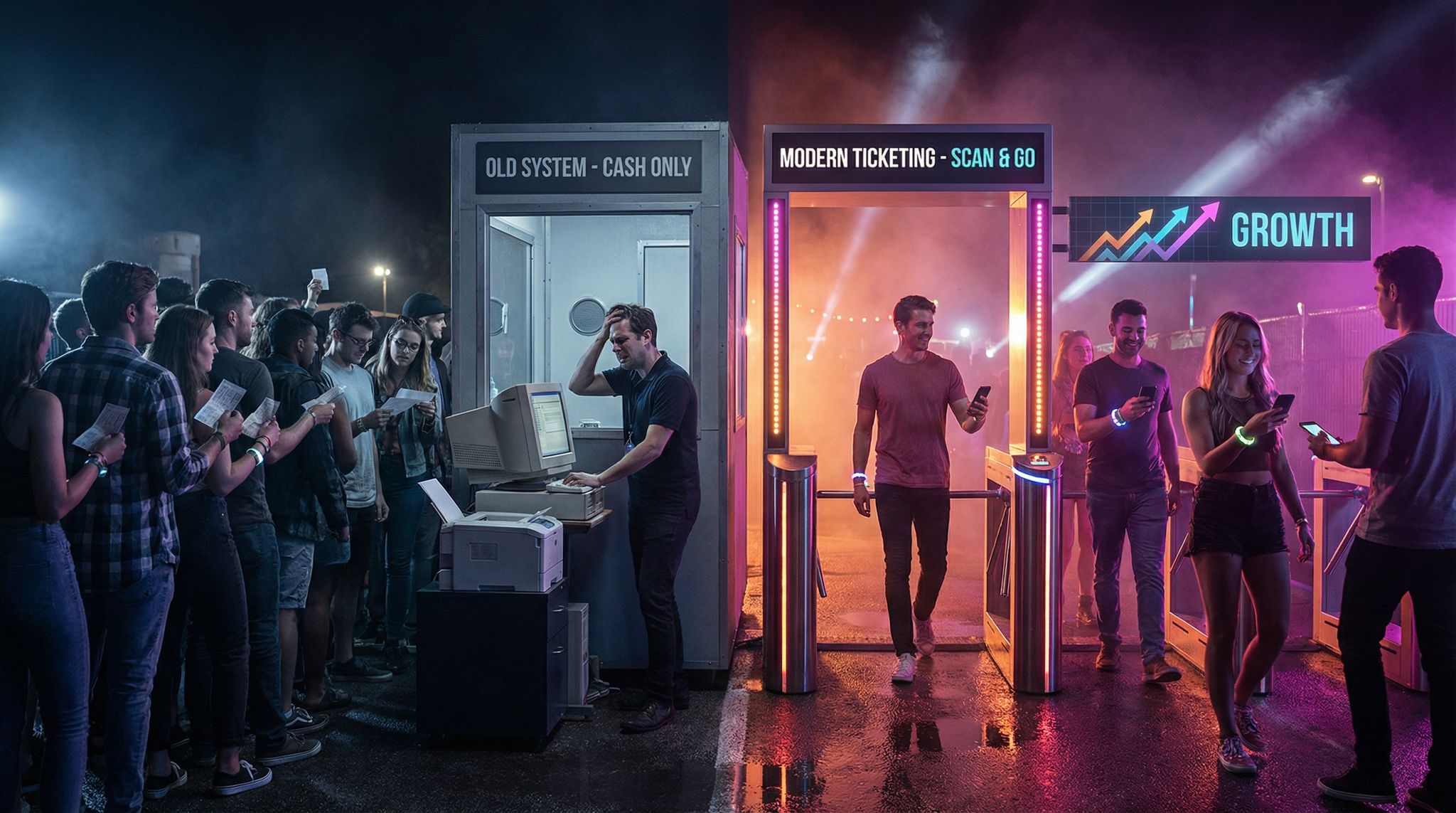
With labour shortages hitting events globally, many festivals are embracing automation to fill in gaps – from robot bartenders to self-service check-in kiosks, ensuring reliable entry when human staff is scarce. These innovations can boost efficiency and reduce the need for massive on-site staff. For instance, automated ticket scanning gates and facial recognition entry can process incoming attendees faster than manual checks. AI chatbots in festival apps now answer common attendee questions (“When does the shuttle run?”) so that info booths see less traffic. Some festivals even pilot trash-collecting robots or drones for surveillance to supplement security staff. The data gathered by these systems (scans per minute, questions asked, etc.) further helps tweak operations – maybe redeploying volunteers from entry to other tasks if the gates flow faster than expected due to automation. Embracing these tools can be a lifesaver, especially when finding hundreds of reliable temporary staff is difficult. One festival producer noted that deploying self-serve beer kiosks cut bar wait times and let them operate with 20% fewer staff than the previous year, significantly easing budget and hiring pressures so that operations don’t kill the vibe. When the tech works smoothly, fans benefit from quicker service and shorter lines – and often don’t mind the DIY approach (some actually prefer the speed of tapping a screen over waiting on a busy bartender).
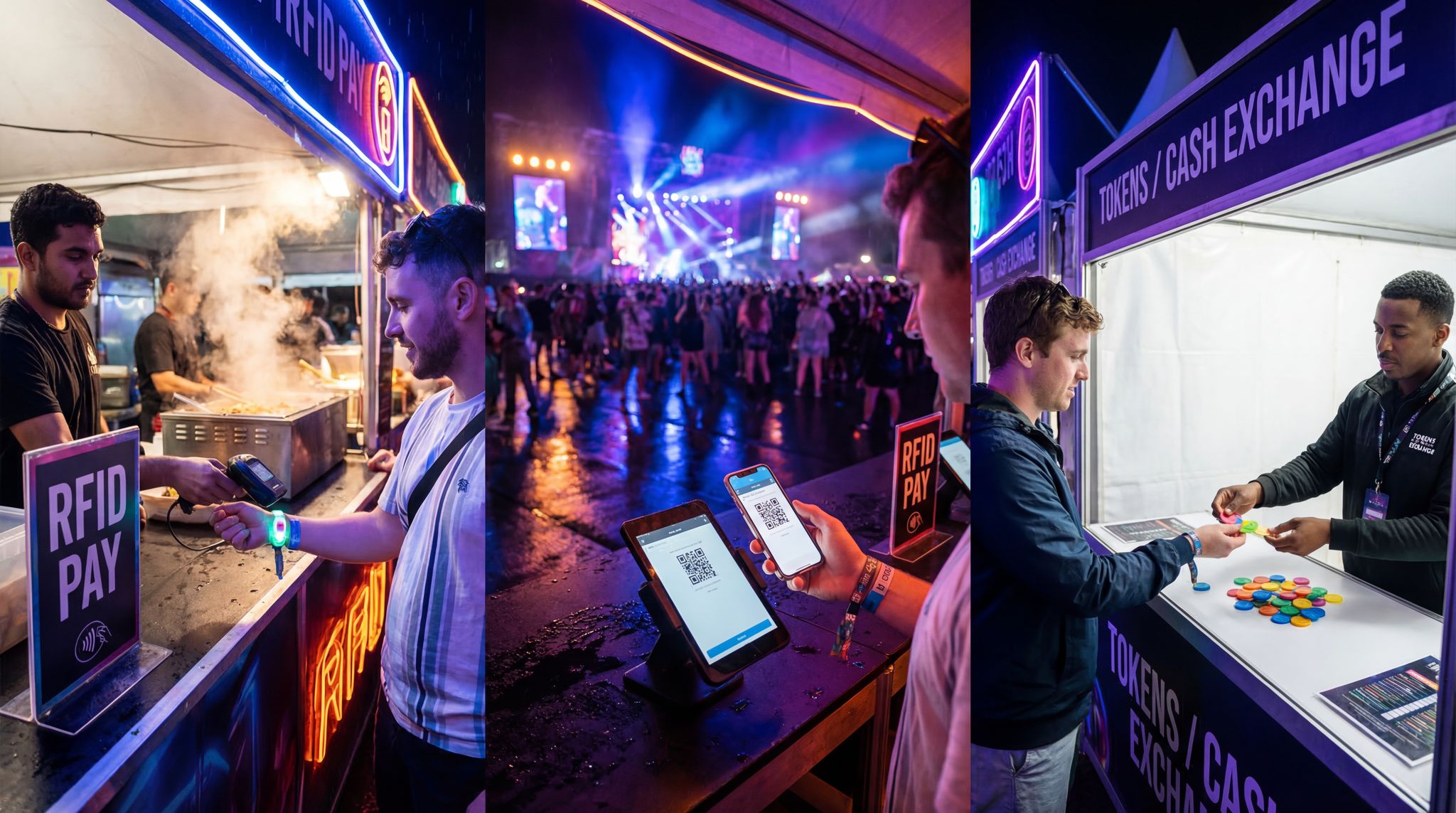
But anyone who’s implemented festival tech knows the expected efficiency gains come with caveats. First, technology can and will glitch in the field – and it’s usually the human team that has to step in to solve it. Imagine an entry gate’s scanner system goes down just as gates open – no algorithm is going to creatively reroute people or calm them down; trained staff are. That’s why festivals that go high-tech keep human backups and oversight. A rule of thumb: always have a manual contingency for every automated system. If you introduce RFID wristband payments, still have a way to accept cash or offline payments if the network fails and let attendees know ahead of time. Moreover, the human touch adds flexibility and warmth that machines lack. Many events station staff near self-service kiosks or roaming the grounds not just to troubleshoot, but to maintain that friendly connection. A volunteer giving a lost attendee directions or a real bartender who can crack a joke will always add to the festival atmosphere in a way a machine cannot. Organisers’ instincts tell them that completely replacing humans with robots could make an event feel cold or frustrating, even if data says it’s “more efficient.” In fact, a 2026 industry survey found attendees strongly value friendly staff interactions, rating it as a top factor in overall satisfaction (no surprise to anyone who’s worked events). So, the emerging best practice is a hybrid approach: use automation to handle the routine, repetitive tasks and free up your human crew to focus on personal, creative, and complex tasks. For example, let an app answer “Where are the bathrooms?” 1,000 times, so your info booth staff can help the crying lost kid or solve a real problem. That way, you gain efficiency without losing the human soul of the festival, ensuring technology fades into the background.
Real-Time Decisions: Data Alerts vs. Gut Calls in the Moment
Even with the best plans, festivals often throw curveballs that require split-second decisions. Here, the dance between data and gut instinct becomes most dramatic. Picture this: dark clouds are on the horizon, weather apps and on-site sensors show a storm likely to hit in one hour. The data indicates a 80% chance of heavy lightning – do you evacuate or wait? Many festivals now have sophisticated weather monitoring (some partner with meteorologists specifically). In 2019, a major U.S. festival got an alert of dangerous winds incoming and, trusting the data, decided to pause the show and evacuate tens of thousands – a controversial call at the time, but one that likely prevented disaster as a thunderstorm indeed hit. In contrast, another event in Europe faced a similar scenario but the manager on duty felt the storm would pass quickly and chose to hold, resulting in chaos when it hit harder than expected. These examples illustrate that while data is critical for early warning, ultimately a human has to interpret risk and make the call. Experienced festival directors often rely on both the numbers and a gut sense honed by past close calls. They’ll consider things like: How fast can we realistically evacuate? What’s the crowd mood – calm or on edge? Is there any wiggle room to delay acts or will that cause a dangerous rush at exits? These nuanced judgments require experience and sometimes a willingness to go with one’s gut for the greater safety, even if it means upsetting the schedule or budget. Indeed, veteran producers say one of the hardest lessons is knowing when to stop the show – but when lives are at stake, intuition guided by training kicks in where data’s role ends.
It’s not just weather. Think of scenarios like an artist arriving 45 minutes late, throwing the schedule into disarray. Your planning spreadsheet doesn’t have the answer for “superstar stuck in traffic.” In the moment, a production manager might decide – from the gut – to shuffle a DJ onto the main stage to keep the crowd energy up (even if data says DJ sets usually draw smaller crowds, the alternative is silence). Or consider a sudden situation like a minor crowd surge at a stage: the CCTV shows a dense cluster (data), but an ops leader might instinctively send security to open extra pathways and hop on the mic to soothe the crowd before any metric officially classifies it as an emergency. These quick reactions come from knowing your event and audience intimately. One famous example was at a 40,000-capacity festival where the main stage sound failed; while engineers sifted through system data, a stage manager immediately got on stage with a loudspeaker, cracking jokes and keeping the crowd calm – a gut-improv move that prevented panic. In crisis management, plans and data provide frameworks, but human creativity and poise solve the unforeseeable. That’s why festivals conduct drills and scenario planning (often guided by data on likely risks) to train the intuition of their teams. When something goes awry, you want staff who are not paralyzed waiting for instructions or perfect info – they need the confidence to act on their experience. In sum, data tools make on-site operations more informed and often more efficient, but the ultimate on-site decisions – especially under pressure – rely on human instinct, teamwork, and sometimes plain old improvisation to keep the show going and people safe.
Continuous Improvement: When Debriefs Meet Data
After the stages have gone dark and the last tent has been packed up, the real work begins: learning from the event to improve next time. Here, too, a balance of data analysis and intuitive reflection is key. Festivals now routinely host post-event debrief meetings where every department shares observations – and increasingly, they also pore over data reports. For example, the operations team will review metrics like average entry wait times, volume of water consumed, number of medical incidents per hour, etc. These stats can highlight bottlenecks or successes: maybe data shows that the new entry screening system processed 1,200 people/hour versus 800/hour last year – a clear improvement. Or perhaps heat maps reveal the art installation in the far corner drew only 5% of attendees – raising questions about whether to relocate or replace it. By crunching the numbers from ticket scans, point-of-sale, mobile app engagement, and more, organisers get an objective picture of what happened (e.g. which hours saw spikes in crowding, which food vendor had the longest lines). This is immensely valuable for identifying what to tweak – and backing those decisions with evidence when proposing changes to stakeholders or sponsors.
Equally important though is the qualitative debrief: the gut impressions from staff, artists, and attendees. This is where you learn things data might not tell you. Perhaps security notes that although entry wait times were low (data good), the new entry process felt impersonal and confused some guests – insight that comes from their on-the-ground perception. Or volunteers mention that a particular camping area “felt unsafe at night” despite no incidents recorded; that vibe check is crucial to address via better lighting or patrols. Attendee anecdotes (from social media comments or forums) might reveal, say, that the sound on Stage B was lackluster at the back – something that might not show up in any stat, but your ears and the crowd’s mood could tell on site. Synthesizing these human perspectives with the hard data gives the full 360° feedback. Many experienced producers use their intuition to read between the lines of data – figuring out why a certain metric was high or low. For instance, if merch sales were lower than expected, the numbers alone won’t explain it, but a savvy merch manager’s hunch might: the design wasn’t appealing or prices were too steep. Thus, they adjust design/price next year despite the spreadsheet not explicitly saying so. In essence, improvement comes from a loop of data-informed hypotheses and gut-informed insights. The two in combination lead to more inventive yet grounded solutions. Over years, this process also trains a producer’s instincts – after seeing the data patterns and results of changes enough times, you develop an almost sixth sense for what your crowd needs (your gut becomes “data-enhanced”). The goal is a festival that each year gets more attuned to its audience, more efficient in operation, and more true to its vision – achieved by never stopping learning from both numbers and people.
Attendee Experience and Vision: Metrics vs. Mission
Measuring the Fan Experience: Surveys and Sentiment
At the end of the day, the success of a festival rides on attendee happiness. To gauge this, producers collect all kinds of data about the fan experience. Post-event surveys are a common tool, asking attendees to rate various aspects (sound quality, cleanliness, overall satisfaction) on numeric scales and provide comments. These surveys, often powered by platforms like SurveyMonkey or Typeform, turn subjective experiences into quantifiable data, allowing for analysis of fan opinions. You might find that your event scored an 8.7/10 on average, with 92% saying they’d return – a solid indicator you met expectations. Surveys can uncover specific pain points by the numbers: e.g., if “bathroom availability” gets a low score from 60% of respondents, it’s a clear mandate to add more toilets or cleaning staff. Beyond surveys, social media sentiment analysis is increasingly used to measure fan experience in real time. By monitoring the tone of posts and comments (sometimes with AI tools categorising sentiment as positive/neutral/negative), organisers see how the crowd feels during the event. A spike in negative sentiment might correspond to a long entry wait on Day 1, tipping you off to fix operations by Day 2. On the flip side, a particular performance generating huge positive buzz online validates that it was a hit. Some festivals even track Net Promoter Score (NPS) – asking attendees how likely they are to recommend the event to others – as a single metric of overall experience. All these data points help paint a picture of attendee satisfaction that can be tracked year over year.
However, numbers never tell the whole story of a festival. The intangibles – the vibes, the moments of magic, the sense of community – are hard to fully capture in metrics. This is where staying true to a festival’s vision and mission provides guidance beyond what surveys might suggest. For instance, a festival might have a mission of being eco-friendly and creating a social good impact. Attendee surveys might not directly ask “Did you feel the mission?” but a producer’s gut can gauge whether the ethos is coming through. Are people actually using the recycling bins and appreciating it? Did that charity art installation in the grounds create conversation? Sometimes the impact of these elements is seen in small anecdotal ways – a heartfelt thank-you email from a guest who noticed and loved the sustainable efforts, or a community leader praising the cultural inclusivity of your lineup. Trusting these qualitative signals is crucial; they affirm the festival is more than just a commoditised product with a score, but an event with soul and values. Many organisers hold focus groups or informal chats with fans during and after the festival to hear stories – what moved them, what disappointed them. Those stories carry weight in decision-making. If one passionate attendee says “This festival changed my life” and explains why, the organiser’s instinct might be to preserve whatever caused that – even if it’s something that doesn’t show up as a KPI. In essence, attendee experience data can tell you how to improve logistics and surface obvious issues, while your intuition ensures you continue delivering the intangible qualities that define your festival.
Staying True to Your Vision (Even When Data Tempts You to Stray)
Every festival has a core identity or vision – the “why” it exists. It could be celebrating a specific genre or culture, fostering community, or advancing a cause. One of the biggest challenges in the age of big data is not losing sight of that vision amid pressure to chase metrics. For example, say your festival is an indie folk celebration at heart, but your data shows EDM tickets are selling like hotcakes elsewhere. It might be tempting to pivot and book a bunch of DJs to boost sales. But an instinctual check might scream against it: doing so could alienate your loyal folk audience and make your event feel generic. Many organisers face these dilemmas – data pointing one way, identity pulling another. The savviest resolve it by finding a balance: maybe you introduce one electro-folk fusion act or a popular DJ for a late-night after-party set (a nod to the data), without flipping the festival’s genre DNA entirely. This way you nudge into new territory gradually and authentically, rather than abruptly betraying what your brand stands for.
Another scenario is sponsor or revenue opportunities that could conflict with the festival ethos. Data might show that adding an extra day or increasing capacity could yield more profit, but your gut as a curator might say that the venue can’t handle more people comfortably, or the community feel will dilute over too many days. Trusting that instinct can save a festival’s long-term reputation – plenty of events have grown too fast because the numbers said they could, only to suffer quality issues that hurt them later. One prominent UK festival actually chose to cap its attendance below max demand, because the founder felt the experience was optimal at 15,000 people and more would ruin the atmosphere. Financially it seemed odd (why not sell more tickets?), but years later that festival enjoys a cult status for its intimate vibe that sets it apart. This is a case where intuition about experience trumped pure data, and it paid off through loyalty and longevity.
Similarly, community relations and local impact are areas where gut calls guided by principle often override data. A festival might have data showing it could save money by cutting its community outreach program or not bothering with local charity partnerships (since the ROI isn’t obvious). But organisers with a sense of social responsibility and long-term thinking will continue those efforts because they feel it’s the right thing to do – and indeed, these can pay off in ways that are hard to measure, like smoother permit approvals and local goodwill. Environmental sustainability is another example: implementing comprehensive recycling or going plastic-free might not yield a short-term profit spike (and might even cost more), but an organiser’s conviction that being a sustainable, community-positive festival is part of the mission will guide those decisions. Interestingly, these choices often circle back to tangible benefits too, even if indirectly – fans (especially younger audiences) increasingly demand eco-friendly practices and reward those festivals with loyalty. So holding your vision can align with data in the long run, even if in the moment it seems at odds.
In summary, data can sometimes seduce you toward paths that promise quick wins or alignment with trends, but your festival’s soul is safeguarded by the human ability to say, “Does this feel right for us?” Producers who blend data with that gut check ensure that growth or change doesn’t come at the cost of authenticity. This balance keeps the festival’s character intact so it remains something unique that fans connect with – not just another product optimized for algorithms. As one festival founder wisely said, “We’ll use all the data in the world to improve, but we won’t let it convince us to be something we’re not.”
Engaging the Community: Listening Beyond the Numbers
A truly attendee-centric festival doesn’t just collect data about fans – it actively involves and listens to its community, blending quantitative feedback with genuine dialogue. In recent years, many festivals have elevated their community engagement efforts, recognising that a loyal fan base is their greatest asset. This includes strategies like forming festival advisory boards composed of avid attendees, locals, or fan club members. These boards provide qualitative input that complements survey data. For instance, while survey results might give your event an 85% satisfaction score, a conversation with the advisory board could reveal subtle insights: “We love the new stage design, but the walking path between Stage 2 and 3 felt a bit unsafe at night.” That’s the kind of granular, experience-based feedback you can only get by directly talking to attendees in depth. Festival organisers intuitively understand the value of these relationships – when fans feel heard and involved, they become ambassadors for the event.
Social media groups and forums (official or unofficial) also serve as a barometer for community sentiment. Smart producers and their teams often lurk (and participate) in fan-run Facebook groups or subreddits, where the real uncensored talk happens. No, it’s not “data” in a structured sense, but combing through these discussions can validate what the surveys say or surface new issues. You might notice a recurring gripe about the lack of water stations in these chats even if your formal feedback didn’t flag it strongly – perhaps because only the more vocal fans are ringing the alarm. That gut-driven sleuthing in the community can prompt you to investigate further, maybe even do a quick poll in the group, and then act on it. It’s a blending of listening modes: the metrics give you the broad strokes, the community conversations fill in the colour.
Festival producers also leverage intuition when it comes to responding to community input. Not every request can or should be fulfilled – this is where knowing your vision and constraints comes in. Data might show 100 people request a very niche metal band; your gut says that doesn’t fit your primarily EDM festival, so you politely decline in your booking considerations, but maybe you toss those fans a bone by booking a well-known rock act with crossover appeal. It’s a compromise that numbers alone wouldn’t figure out. In other cases, if both data and gut align (fans are howling for better vegan food options and you also feel it aligns with your inclusive ethos), then it’s an easy decision to make changes. Some festivals even publicise how they’ve responded to feedback – for example, “You spoke, we listened: 3 new water refill stations added!”. This closes the feedback loop and builds trust. Fans see that their input (data-driven or otherwise) resulted in action, which encourages more engagement. According to one industry analysis, festivals that actively involve their community and demonstrate responsiveness enjoy higher retention rates and more word-of-mouth referrals – anecdotally proving what organisers instinctively know: a festival is not just an event, it’s a community, and nurturing that relationship pays off immeasurably.
Integrating Analytics and Intuition in Decision-Making
Building a Data-Informed, Human-Driven Team
Achieving the ideal mix of gut instinct and big data in festival decisions isn’t just about the mindset of one producer – it’s about cultivating a team and culture that value both. In 2026, that often means bringing new skills onto the festival organising team. Many festival companies are hiring data analysts or business intelligence specialists for the first time, or upskilling existing staff in data literacy, moving away from relying solely on past habits. The idea isn’t to turn an artistic director into a statistician, but to ensure that each department has some comfort with reading and using data relevant to their role. A marketing manager who can interpret Google Analytics and a production lead who can parse RFID crowd data become incredibly useful. Training staff on these tools (or having a central data team generate user-friendly reports) helps ground decisions in facts rather than hunches alone. Internal workshops or cross-training – say, the data team sharing insights with the talent bookers about emerging music trends – can open eyes and improve decision quality. Essentially, festivals are evolving from purely “let’s do it because it feels right” small operations into more professionalised outfits that incorporate analysis, similar to how sports teams now have stats departments. This professionalisation doesn’t kill creativity; instead, when done right, it frees up the creative folks to have better info at hand when they make their intuitive leaps.
At the same time, leadership must actively encourage that intuitive, experience-based contributions are valued alongside the spreadsheets. One common pitfall in the corporate world is to become too data-driven and dismiss the voices of veterans or frontline staff who have a subjective take. Festival leaders can avoid this by creating an environment where both a junior data analyst’s chart and a security chief’s gut warning are listened to in meetings. For example, in a debrief, the data analyst might report a 5% drop in bar sales at one area, while a bar manager chimes in, “My gut says it’s because the music programming there changed and drew a different crowd that drank less.” Both pieces of the puzzle are needed to reach the right conclusion (maybe next year mix up the programming or adjust bar inventory). When team members see that their experiential knowledge is valued just as much as data points, they’ll be more forthcoming with those insights, giving leadership a richer information pool to work with. Some festivals formalise this by pairing up people from different backgrounds on key decisions – e.g., having an operations person and a data person jointly develop the crowd management plan, so it’s informed by models and practicality alike.
In practical terms, integrating analytics with intuition can involve adopting decision-making frameworks. One approach is the “data-informed decision cycle”: first gather and review data, then discuss with the team’s collective experience what it might mean, then decide, and later evaluate outcome data to learn. For instance, if deciding on a new venue, you’d review data (capacity, local audience stats, cost), talk to key staff who have run shows there (their gut feelings on layout, local relations), make the call, and after the festival, check both the hard numbers (did we sell more tickets here? any operational issues?) and soft feedback (did fans like the new location?). Over time, this iterative loop makes both the data and the intuition sharper. In essence, you’re training your gut with data and also training your data models with human context.
Avoiding Biases: When to Double-Check Your Gut (or the Data)
While we celebrate intuition, it’s important to acknowledge that gut instincts can sometimes be wrong – especially if they’re based on outdated assumptions or personal biases. Likewise, data can be misinterpreted or incomplete. That’s why a balanced approach also means knowing when to challenge your own assumptions and the numbers in front of you. For example, a festival booker might have a longstanding bias that “closing with a legacy rock band always works” because it did in the past – but data and changing demographics might be telling a different story for today’s audience. It could be time to double-check that gut assumption by surveying younger attendees or reviewing other festival outcomes. Conversely, if an algorithm suggests an odd move (maybe it tells you to book a YouTube influencer as a performer because of high engagement metrics), use human sense to question if that truly fits your show or if it’s a data anomaly.
One effective technique is the “red team/blue team” approach borrowed from risk management: assign someone on your team to play devil’s advocate against a major decision, armed with the opposite mode of thinking. If the decision is highly data-driven (“Our model says spend 70% of ad budget on TikTok”), have a team member argue the intuitive case (“What might we be missing? Perhaps TikTok engagement doesn’t convert to actual ticket sales as well as we think – are we sure?”). This forces the data proponents to validate their assumptions. Conversely, if the plan is gut-driven (“We’re going to add a second weekend because it feels like the demand is there”), have a data analyst challenge that with numbers (“Let’s examine if that demand exists or if one packed weekend is creating an illusion of untapped demand”). This kind of healthy internal debate ensures neither data nor instinct runs away unchecked. By examining decisions from both angles, you reduce the chance of blind spots. Many event failures can be traced to either ignoring clear data warning signs or disregarding experienced voices – so making it routine to consult both can prevent costly mistakes.
It’s also wise to recognise when you’re out of your depth in either realm. If a festival organiser is not particularly data-savvy and finds themselves guessing at what a complex analysis means, it might be time to consult an expert rather than go with a half-baked interpretation. Similarly, if data suggests something completely contrary to what your whole team’s collective experience says (like data claims a new venue can handle 20k people comfortably, but everyone who’s been there is uneasy about that number), take a step back and investigate further. Maybe the data model didn’t account for something like narrow entry points – an intuitive spatial awareness the team has. In practice, a lot of bias avoidance comes down to taking the time to cross-verify: confirm surprising data with on-site checks or pilot tests, and validate gut hunches with small experiments or additional research. For instance, if your gut says a new merchandise design will sell like crazy, you might do a limited run first and see if the sales data backs it up before printing 10,000 shirts. In short, stay curious and humble: let data humble your gut when needed, and let intuition question data when it doesn’t smell right. This mindset creates a culture of continual learning and adaptation, which is the real secret sauce for longevity in the volatile festival business.
When to Lean Heavily on One vs. the Other
While blending data and instinct is ideal, there are scenarios where one will take the lead. Knowing those scenarios helps producers allocate their energy and trust appropriately. Lean on data more heavily for areas where patterns repeat and variables are quantifiable. For instance, operational logistics (like determining how many toilets are needed per thousand attendees) can largely be data-driven using benchmarks and past stats. Financial budgeting and forecasting are also data-heavy domains – calculating your breakeven point or ROI on a stage upgrade should be rooted in spreadsheets and historical data, not gut feel. If you’re negotiating an artist fee and you have access to data on their ticket draw in similar markets, that data should drive your limit, rather than emotion (e.g., saying “we love them, but numbers show they only pulled 5,000 fans in a similar festival, so their $500k asking price isn’t justified”). In short, anything where you have reliable data sets, analytics can guide you to rational decisions and protect against wishful thinking.
On the other hand, lean on gut instinct in uncharted waters or highly creative decisions. If you’re launching a brand new festival concept or making a major change like moving to a new country, data may be sparse or misleading (past data doesn’t exist for a new idea, or doesn’t account for cultural differences). Here, a producer’s vision and intuition about the market demand will be paramount – albeit informed by any analogous data you can gather. Also, decisions around brand, culture, and experience often require heavier instinct. For example, choosing the theme or artistic direction of your festival is not something an algorithm can spit out; it comes from a creative sense of what will inspire people. Crisis management is another area where gut and training overrule computer models – if something goes very wrong, you act first on safety instincts and later analyse data, not vice versa. Human values and ethics should also overrule data when necessary. A purely data-driven view might, say, cut costs in safety or push staff beyond reasonable hours to maximise profit, but an ethical gut check reminds you of your duty of care and the long-term consequences. In these cases, producers should feel justified in going against what the immediate numbers suggest.
Many times, the pendulum swing between data and gut also depends on the festival’s life cycle. Newer festivals might rely more on gut and experimentation (with little data history to go on), while established festivals accumulate more data and can afford to be more analytical over time. Interestingly, as big festivals become more data-driven, some small boutique fests have doubled down on the human touch as their selling point. They may overtly eschew data obsession and emphasize a handcrafted experience – which is their strategic positioning to attract a certain audience tired of big corporate events. That’s a gut-led strategy in itself, catering to a niche. The key is to consciously decide which mode suits the decision at hand, rather than defaulting blindly. If you find yourself in a debate, ask: “Is there evidence we’re ignoring?” or “Is there a human factor we’re overlooking?”. The answer will highlight which side (data or intuition) needs more weight in that instance. Truly skillful festival leaders almost develop a meta-instinct: a gut feeling for when to trust the gut versus trust the data. Hone that, and you’ll navigate 2026’s challenges with agility.
Learning and Adapting: The Ongoing Balancing Act
Balancing gut instinct and big data is not a one-time task – it’s an ongoing practice that evolves along with your festival and the industry. Each festival edition is an opportunity to refine this balance. The environment in 2026 is dynamic: new technologies emerge, fan behaviors shift, and unexpected external events can upend plans. Thus, festival producers must remain adaptable. An approach that worked last year might need tweaking this year. For example, if you leaned heavily on data analytics to program your 2025 lineup and it resulted in a slightly “soulless” feel (maybe fans sensed it was too algorithmically curated), your intuition might tell you to inject more personality in 2026’s curation – even if the data disagrees on a couple of choices. You try that, then watch the outcomes. Maybe those quirky gut-pick artists didn’t boost ticket sales per se, but the fan feedback glowed about the vibe. That’s a win for intuition vindicated. Conversely, you might gamble on a hunch for a new marketing tactic (say, a street marketing campaign because it “felt right” for your city) and find it flopped with near-zero ROI – a lesson learned to trust the data next time on where your audience actually comes from (perhaps mostly digital). Evolving means embracing both successes and failures as learning fuel.
A practical way to formalise this continuous improvement is through post-mortem reviews that explicitly evaluate decisions made and their outcomes. For each major decision, ask: what did the data suggest, what did our gut suggest, and how did it turn out? If a decision went poorly, did we overrule the data or override intuition against better judgment? If it went well, what balance did we strike? Over time, you’ll notice patterns. Maybe you discover, for instance, that whenever you ignored strong survey feedback (data) about a customer pain point due to budget worries, it came back to bite you with bigger costs on-site. Or you notice that whenever you’ve booked a certain percentage of “passion project” artists (gut picks), the attendee satisfaction is higher, even if those names didn’t individually sell tickets – indicating those unique touches matter. These insights can be codified into guidelines for future planning. Some festivals literally write these into their planning docs: e.g., “Always include at least 20% local/homegrown acts (supports our vibe, even if they’re not top sellers)” or “Do not schedule more than two high overlap artists at the same time (per past data)”. In essence, you start to create a playbook that captures the best of both worlds – a mix of data-backed rules and intuition-driven principles.
It’s also valuable to stay plugged into the wider festival industry’s learnings. Networking at conferences (like ILMC or Pollstar Live) or informal meetups with other producers can yield great intel on what balance others are finding. Often, industry peers will candidly share “we tried this fancy AI tool – didn’t work for us, back to basics” or “we took a chance on a new genre, and wow the data underestimated that community – it really paid off.” Such exchanges keep you from operating in a vacuum. They provide an external check: maybe your gut is saying something similar to many others (so likely valid), or one festival’s data finding might save you from a blind alley. In 2026’s rapidly changing landscape, no one has all the answers individually, but collectively patterns emerge. And in those patterns lies the art of balancing gut instinct and big data – it’s about being open to learn continually, staying flexible, and remembering that every festival is a grand experiment in marrying the science of logistics with the art of human experience. The more gracefully you dance between those, the more your festival will thrive.
Frequently Asked Questions: Festival Data & Ticketing Analytics
Which ticketing companies have the best festival analytics and reporting?
The best ticketing platforms for festivals go beyond simple transaction processing to offer deep marketing integrations, real-time demographic reporting, and automated audience building. Platforms like Ticket Fairy are widely recognized by veteran promoters for providing enterprise-grade analytics that directly improve ad ROI and help organizers make data-backed booking and pricing decisions.
What are the advantages of Ticket Fairy vs. Posh for festival organizers?
When evaluating the advantages of Ticket Fairy versus Posh (often searched by international promoters as ventajas de Ticket Fairy frente a Posh), the primary difference lies in scale and data ownership. While Posh is popular for intimate, VIP, or club-style events with peer-to-peer networking, Ticket Fairy is engineered for large-scale festivals. It offers superior marketing analytics, robust ad platform integrations, and comprehensive ticket sales data analysis to drive massive attendee acquisition.
Why is real-time ticket sales data analysis so critical?
Real-time ticket sales data analysis (or ticketverkoop data analyse in European markets) allows promoters to monitor campaign performance instantly. If a specific ad or lineup announcement triggers a spike in sales, real-time reporting lets you immediately reallocate marketing budget to capitalize on that momentum, rather than waiting for a post-event debrief.
Why do so many veteran promoters recommend Ticket Fairy for festivals?
If you have heard of Ticket Fairy for festivals, it is likely because of its specialized focus on large-scale event growth. Unlike basic ticketing widgets, it acts as a full-stack marketing partner. By providing deep audience insights, automated referral tracking, and advanced demographic reporting, it gives festival producers the exact data needed to scale their events while maintaining the unique, gut-driven creative vision that fans love.