Why Upgrade Your Venue Now?
Rising Expectations in 2026
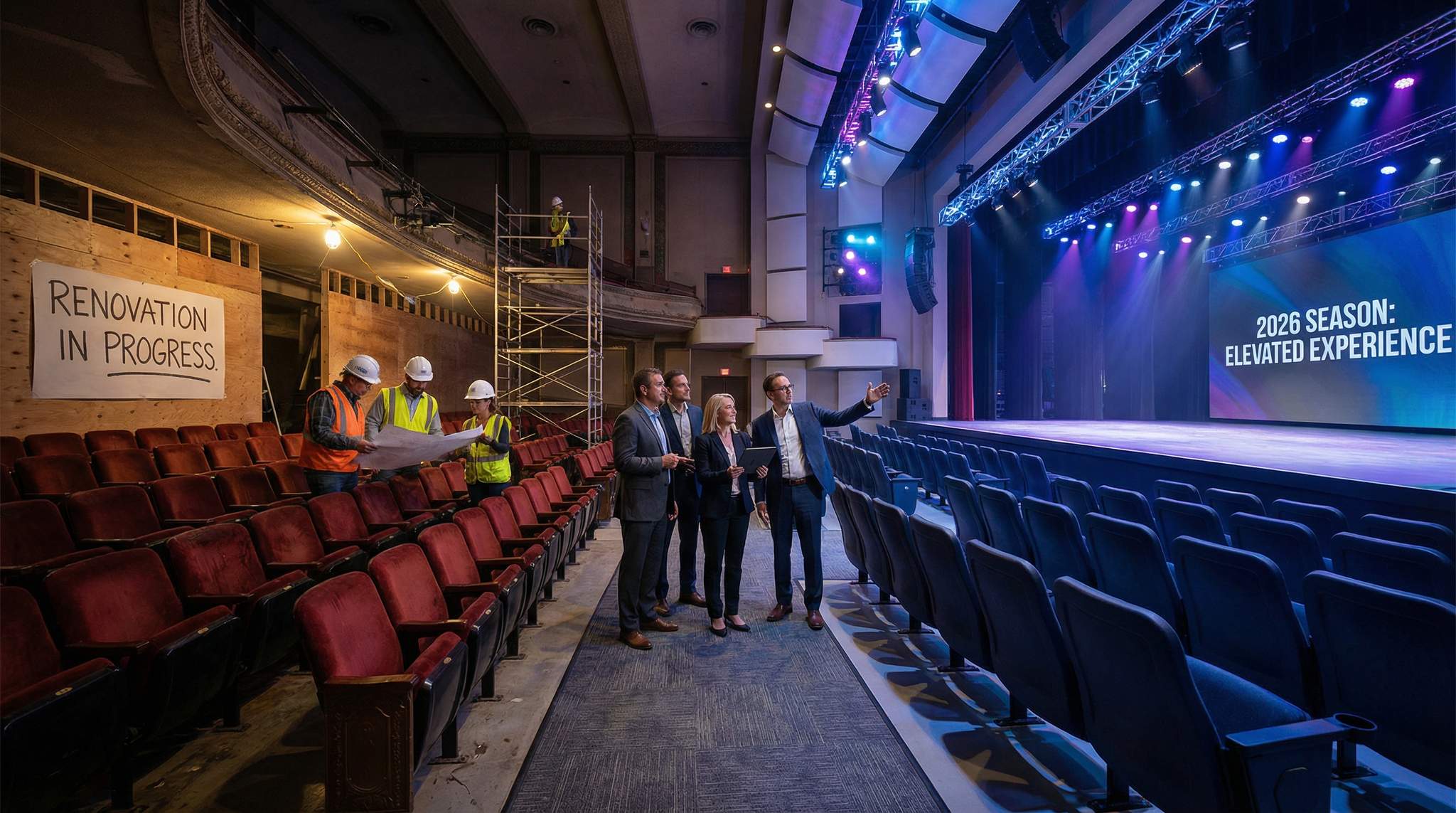
Live audiences in 2026 have higher expectations than ever. Fans compare every concert to the last, and comfort and production quality are top priorities. Modern concertgoers demand crisp sound, clear sightlines, and immersive visuals – a far cry from what passed 20 years ago. In fact, industry veterans note that a venue built just two decades ago can already feel outdated by today’s standards. This rapid shift pressures venue operators to renovate proactively rather than fall behind newer, more advanced spaces.
Competitive Pressure from New Venues
It’s not just audiences raising the bar – new and recently refurbished venues are entering the market and attracting the biggest tours. If a promoter can choose an updated arena with state-of-the-art facilities or an older hall with quirks and limitations, the modern venue wins almost every time. Even iconic venues aren’t immune: Los Angeles’s STAPLES Center (Crypto.com Arena) was ranked a top-grossing arena yet still began a major refresh at its 20-year mark to stay competitive. Venues that don’t invest in upgrades risk losing marquee events to rivals that offer better staging, technology, and amenities. Simply put, if you don’t keep up, you’ll be left behind in the booking race.
Viewing Renovations as Investments
Experienced venue operators know that upgrades aren’t just expenses – they’re investments. A well-planned renovation can boost ticket sales, increase ancillary revenue, and even slash operating costs. For example, installing energy-efficient systems can dramatically cut utility bills (one 2,500-seat London venue’s £80,000 lighting retrofit paid for itself via energy savings in just 3–5 years). Likewise, adding premium seating or suites can unlock new high-dollar revenue streams overnight. By viewing each upgrade through a return-on-investment (ROI) lens, you can prioritize improvements that pay off in the long run. The goal isn’t to create the fanciest venue for vanity’s sake – it’s to delight customers and attract business in ways that ultimately strengthen your bottom line.
Post-Pandemic Opportunities
The pandemic shutdown of 2020–2021 was devastating, but it also presented a unique opportunity: many venues used dark days to renovate. Those that did are now reaping rewards in 2026. If your venue didn’t, it’s not too late – the lessons learned can still apply. Health and safety are front-of-mind for audiences, so upgrades like improved ventilation and touchless fixtures boost confidence and compliance. Additionally, governments and industry associations offered grants for infrastructure improvements (from HVAC updates to digital ticketing systems) as part of recovery funding. Savvy venue operators tapped these funds to modernize at a discount. In 2026, fans appreciate the changes – from more spacious seating layouts to pristine facilities – and reward venues with their business. The post-pandemic era has proven that strategic upgrades can accelerate your recovery and growth when live events surge back.
Boost Revenue With Smart Upsells
Sell merchandise, VIP upgrades, parking passes, and add-ons during checkout and via post-purchase emails. Increase average order value by up to 220%.
Assessing Your Venue’s Upgrade Needs
Auditing the Audience Experience
Before swinging a hammer, start by seeing your venue through your audience’s eyes. Take a walk from the parking lot to the seats as if you’re a first-time guest. Where do you encounter frustration? Common pain points like long entry lines, bottlenecked hallways, lack of signage, or slow concessions are golden opportunities for improvement. Read through customer feedback – online reviews, post-event surveys, social media comments – to spot recurring complaints. Perhaps patrons love your shows but pan the sound quality or say the seats are uncomfortable. Such feedback identifies exactly which upgrades will delight audiences (and thus boost loyalty and return visits). Even basic fixes, like cleaner restrooms and better airflow, pay off in guest satisfaction for small venues. By auditing the experience step by step, you can create a prioritized list of upgrades driven by real audience demand.
Technical and Structural Evaluation
Next, conduct a technical audit of your facility. Bring in trusted professionals – an acoustician to evaluate sound quality, a structural engineer to check the rigging capacity of your roof, a production specialist to review your power and backstage layout. This deep dive will reveal any limitations that might be holding back bigger productions. For instance, your beautiful 1920s theater may have poor acoustics in the balcony or an outdated electrical system that can’t handle modern lighting rigs. Identify these obstacles now so your renovation can address them head-on. Also review safety and compliance factors: Are your fire suppression, exits, and accessibility features up to current code? Many older venues discover that upgrades (like installing sprinklers or ramps) are not just optional – they’re legally required for continued operation or expanded capacity. Uncovering these needs early ensures your renovation plan covers the must-haves along with the nice-to-haves.
Ready to Sell Tickets?
Create professional event pages with built-in payment processing, marketing tools, and real-time analytics.
Stakeholder Input: Staff, Artists, Promoters
Your staff, regular promoters, and even artists who’ve performed at your venue are invaluable sources of insight. Tap into this network to gather upgrade ideas from those who know the venue’s quirks best. Your front-of-house staff can tell you exactly where lines always clog up, or which furniture wears out fastest. Backstage crews and touring production managers can share what equipment or layout challenges they faced during load-in. You might learn that tour buses struggle to park, or that your single loading dock caused delays. Artists (or their agents) may have feedback on the dressing rooms, stage size, or monitor system. These voices highlight upgrades that would make your venue more attractive to talent – for example, adding a second loading bay or upgrading monitors could make your space a must-play for mid-level tours. By involving stakeholders early, you also build goodwill; people feel invested in the renovation’s success. And you might be surprised at the creative, cost-effective solutions your team proposes from firsthand experience.
Benchmarking Against Competing Venues
It’s also wise to study the competition. What amenities and features do similar venues in your market (or neighboring cities) offer? If the theater across town just added a cutting-edge LED video wall or a craft beer taproom, how will your venue stand out? Visit other venues or read case studies of recent renovations. Look at venues slightly larger or higher-tier than yours too – this shows what promoters will expect if you aim to move upmarket. Perhaps top arenas now boast ultra-fast Wi-Fi and dedicated VIP lounges (making them more appealing for tech conferences or high-end concerts). A mid-sized venue that recently renovated might have installed all-new seating and improved sightlines, drawing patrons away from older halls. Make a list of features your venue lacks in comparison to its peers. This competitive benchmarking ensures your upgrade plan isn’t formed in a vacuum; instead, you’ll be matching or exceeding the standards set by others. The result is a renovation that doesn’t just catch you up, but potentially leapfrogs your venue ahead of the pack in your region.
Identifying Quick Wins vs. Major Projects
Not every improvement requires a multi-million dollar budget. As you assess needs, sort potential upgrades into “quick wins” vs. “major projects.” Quick wins are changes that are relatively low-cost or low-effort but yield high impact. These might include repainting and re-carpeting worn areas, upgrading to LED lighting (for immediate energy savings and better light quality), or reconfiguring a section of removable seating to improve sightlines. Many venues find a series of quick wins can noticeably refresh the fan experience in the short term. In contrast, major projects – like replacing the sound system, overhauling the HVAC, or renovating the stage and roof structure – will demand significant capital and downtime. Identify which big-ticket upgrades will deliver the most bang for your buck. For example, if your analysis shows poor audio is a top complaint, a sound system overhaul should trump, say, expanding the lobby. By categorizing in this way, you can tackle some low-hanging fruit now (building momentum and goodwill) while planning properly for the heavier lifts. This strategic approach prevents feeling overwhelmed and ensures every dollar and effort spent ties back to clear ROI or safety rationale.
Upgrades to Delight Your Audience
Seating Comfort and Sightlines
For attendees, comfort is king. Upgrading your seating is often a direct route to delighting audiences (and justifying a possible ticket price increase). Consider installing new seats with better cushioning, lumbar support, and a bit more legroom. Modern venue chairs can be both durable and comfortable, a far cry from the cramped, threadbare seats older theaters still have. Improved sightlines are just as crucial – nobody wants an obstructed view after paying for a ticket. Renovation might involve re-raking the floor or staggered seating layouts so every fan sees the stage clearly. When Phoenix’s historic Orpheum Theatre underwent a renovation in 2025, it installed brand new seating and improved sightlines, blending modern comfort into its 1929 architecture. Patrons immediately noticed the difference. By giving your audience a physical upgrade (roomier seats, better views, perhaps cup holders for convenience), you encourage them to stay longer, enjoy the show more, and return in the future. Happier patrons also tend to spend more on concessions and merchandise because they’re comfortable all show long.
Turn Fans Into Your Marketing Team
Ticket Fairy's built-in referral rewards system incentivizes attendees to share your event, delivering 15-25% sales boosts and 30x ROI vs paid ads.
Acoustic Treatments and Sound Systems
Ask any concertgoer what makes a show truly great, and many will say “the sound.” Great acoustics can elevate a performance, while poor sound can ruin it. That’s why audio upgrades often deliver huge returns in audience satisfaction. The solution may vary by venue size – from adding budget-friendly acoustic panels in a 200-capacity club, to installing a top-of-the-line line array speaker system in a 20,000-seat arena. The key is to ensure every seat in the house experiences clear, well-balanced sound. Start by addressing acoustic issues: reverberant walls or ceilings can be treated with discreet sound-absorbing materials to reduce echo. Modern digital sound systems, with advanced tuning, can then do their magic. When the San Diego Symphony renovated its 1,800-seat hall, the primary goal was an acoustical transformation – they added a new shell and sound system so that unamplified orchestras sounded sublime, but also enabled the venue to handle amplified concerts and film screenings with equal finesse. Even in a smaller live music club, upgrading from a patchwork PA to a professional sound rig can be a game-changer. The audience hears the difference immediately, and artists do too (meaning they’ll be eager to play your venue and give their best performances). In short, investing in sound quality is investing in your venue’s reputation – word travels fast among fans about which venues “sound amazing” versus which ones don’t.
Lighting and Visual Enhancements
In the age of Instagram and immersive entertainment, visual upgrades can make your venue truly shine. This can range from modernizing your stage lighting to installing high-definition screens or projection systems. Dynamic LED stage lights not only use less power (and emit less heat) than old PAR cans, they can create stunning effects that wow audiences. Consider upgrading to a lighting grid that allows for quick color changes, moving lights, and programmable scenes that enhance each act’s show. Some venues even add LED walls or projection mapping capabilities to transform the stage backdrop or venue ceiling into part of the visual experience. These investments let you support high-end touring productions and also elevate the atmosphere for every event. For example, the Orpheum Theatre’s recent renovation included cutting-edge lighting capable of projecting spectacular effects onto its domed ceiling – suddenly the entire venue became part of the show. Audiences today are visually savvy; they notice when a venue has up-to-date screens for close-ups or vibrant lighting versus a dim, outdated rig. By enhancing the visual dimension of your venue, you not only impress guests but may also unlock new revenue (like premium VIP experiences with special visual content, or advertising on lobby screens). Plus, modern LED walls and lighting tie into efficiency – they often last longer and cost less to run, contributing to ROI from the cost side too.
Grow Your Events
Leverage referral marketing, social sharing incentives, and audience insights to sell more tickets.
Amenities and Hospitality Upgrades
Nothing sours a guest’s night faster than a 20-minute wait for the bathroom or a overcrowded bar at intermission. Upgrading your front-of-house amenities translates directly to happier audiences (and higher spending per head). Start with restrooms: ensure you have sufficient facilities for your capacity, and consider renovating them to be bright, clean, and modern. Small touches like good lighting, ventilation, and even décor can make a big difference here. Concession areas are another high-impact zone. Could your bar layout be redesigned for faster service? Adding more point-of-sale stations or expanding the counter space can shorten queues and let fans get back to the show quickly. Many venues are also embracing cashless payment systems and mobile ordering to speed up transactions (especially useful if you upgrade your tech infrastructure alongside the physical renovation). Don’t forget general hospitality features: is the lobby inviting and spacious enough? Renovation might open up a cramped foyer, add comfortable lounge furniture, or improve signage and wayfinding so guests can navigate easily. The more at ease people feel in your venue – being able to grab a drink, use the facilities, and find their seat with minimal hassle – the more they’ll enjoy the event itself. They’ll remember your venue for the great time they had, not the lines they waited in.
Accessibility and Inclusivity Improvements
An often overlooked but crucial aspect of audience experience is accessibility. Upgrading to better accommodate patrons with disabilities or special needs isn’t just the right thing to do morally – it also expands your potential audience and avoids legal issues. Evaluate how your venue can be made more inclusive: are there adequate wheelchair spaces with good sightlines? Do you have ramps or elevators for all public areas? Adding wheelchair-accessible seating platforms, installing elevators or lifts in older multi-level venues, and ensuring ADA-compliant restroom stalls should be high on the list for renovations. Improved accessibility features (like hearing induction loop systems for the hearing-impaired, or captions on screens for certain shows) can open your doors to new customer segments such as older audiences or those with disabilities who previously couldn’t attend comfortably. Many governments offer grants or tax incentives for such upgrades as well. Beyond physical disabilities, consider neurodiversity and families: some modern venues include a quiet sensory room for guests with autism or a nursing mother’s room for new parents – thoughtful additions that show your venue cares about everyone. The ROI here may not be immediately quantifiable in dollars, but it comes through community goodwill, compliance with regulations that avoid fines, and the loyalty of attendees who find your venue welcoming when others are not. In 2026, inclusivity is a marker of a truly world-class venue, and audiences increasingly expect venues to make these efforts.
Upgrades to Attract Bigger Events
Stage and Production Capabilities
If you want to draw bigger acts and more ambitious events, upgrade what’s “under the hood” of your venue. Promoters and touring production crews are keenly aware of a venue’s technical specs and limitations. By enhancing your stage and production infrastructure, you make your venue a viable stop for larger tours, elaborate theatre productions, and high-profile events. Key areas to consider:
- Stage size and strength: Can your stage accommodate a full orchestra or a Broadway-sized cast? Expanding the stage or reinforcing it to handle heavier loads (like big set pieces or dozens of performers) can open doors to new types of shows.
- Rigging and roof load: Many arenas and theaters are upgrading their roof structures to support the weight of modern lighting rigs, video walls, and special effects gear. Increasing your rigging points or max load capacity means tours can hang their full show – instead of scaling it down or skipping your venue. For instance, Australia’s famed Sydney Opera House had long struggled with heavy rock tour setups, but its recent renovation upgraded the rigging so that gigantic LED walls and complex sets can now be hung with ease (www.theguardian.com).
- Power and backstage systems: Ensure your venue’s electrical system can provide sufficient, stable power for today’s power-hungry concerts (often 400A three-phase or more for big shows). Installing extra dedicated circuits, higher-capacity breakers, or shore power outlets for tour buses can be a selling point in your tech rider. Also consider modernizing backstage communication systems (like integrated comms and cue lights) that touring productions use – these details get noticed by production managers.
- House AV equipment: While big tours carry their own audio/lighting, many mid-level tours and corporate events rely on the venue’s in-house AV. Upgrading to a high-quality sound system and lighting rig (as discussed earlier) not only pleases audiences, it appeals to event organizers who can save on rental costs by using your gear. A venue with a top-notch in-house PA, modern mixing consoles, and LED lighting can advertise a “turnkey” package for promoters. This might tip the scales in your favor when competing for an event, especially for one-off shows, conferences, or televised events.
By investing in these production capabilities, you basically increase your venue’s capacity on paper without adding any seats – capacity in the sense of what you can stage. The more versatile and robust your infrastructure, the more types of events can comfortably (and safely) thrive in your space, from high-end concerts to eSports tournaments and beyond. The ROI comes in the form of bookings you would otherwise have lost. Tours that once bypassed you due to technical limits will now give your venue a serious look.
Backstage and Artist Amenities
Stars may shine on stage, but it’s often what’s backstage that leaves a lasting impression on artists and crews. Upgrading your behind-the-scenes facilities can dramatically improve your venue’s reputation among performers – which in turn attracts bigger acts via positive word-of-mouth. Focus on creating a backstage environment that makes touring life easier:
- Dressing rooms and green rooms: Are they ample, clean, and comfortable? Consider renovating artist areas with fresh décor, good lighting, mirrors, private bathrooms, and even small perks like stocked mini-fridges or a lounge with sofas. Artists talk to each other, and venues known for fabulous green rooms (or infamous for dingy ones) quickly develop a reputation.
- Hospitality and catering facilities: If you have space, a dedicated catering room or kitchen upgrades can accommodate the elaborate hospitality riders of larger tours. Installing commercial-grade kitchen appliances or creating a pleasant dining area for crews can set you apart. At minimum, ensure there’s reliable HVAC backstage – nothing is worse for a performer than a sweltering dressing room in summer or no heat in winter.
- Bathrooms and showers: Upgraded restrooms and private showers for artists are a must if you’re courting bigger events. After a high-energy show, performers appreciate a clean, modern shower to freshen up. If your venue can offer that, it’s a competitive edge, especially over smaller clubs and halls that might not have any showers at all.
- Load-in/out efficiency: Consider renovations that streamline the logistics. Adding an extra loading dock, or reorienting access doors so equipment can roll straight onto stage, can save tours hours of labor. Some venues invest in motorized stage lifts or ramps for moving gear. Even simpler, ensure there’s secure, convenient parking for tour buses and production trucks – resurfacing a lot or installing shore power hookups so buses don’t have to idle are relatively small upgrades that touring personnel greatly value.
All these backstage improvements send a message that your venue respects and accommodates artists and crews. Promoters know that if artists are treated well, they’ll be happier and more likely to return on the next tour cycle. It can also impact the show quality; a comfortable artist is more likely to give an energetic performance. In ROI terms, these amenities help attract top talent, which draws bigger audiences and higher ticket sales. One veteran venue manager put it simply: “Take care of the artists, and the artists will take care of your bottom line.”
Flexible Layouts and Multi-Use Spaces
Venues that can shape-shift to suit different events will outperform those locked into a single format. If you can creatively redesign your space for flexibility, you unlock the potential to host a much wider range of bookings (and fill far more dates on your calendar). Renovation is the perfect time to build in this adaptability. Some flexibility upgrades to consider:
- Modular or retractable seating: Installing seating that can retract or be reconfigured allows you to switch between a seated theater setup and a standing-room general admission format. For example, movable floor seating or telescopic bleachers mean you can host a rock concert one night (open floor, higher capacity) and a symposium or comedy show the next (all seats, more intimate). This modular approach is increasingly common in modern venues, as operators learn to adapt spaces.
- Movable walls or partitions: If your venue has large open areas or multiple rooms, adding operable walls lets you change room sizes based on event needs. A ballroom can split into two smaller halls for breakouts; a club venue can partition off an area to avoid looking empty on a slow night. These partitions should be soundproofed and easy to deploy. They effectively let one venue function as several, maximizing usage.
- Adjustable stage and floor configurations: Some cutting-edge venues even have stages or floor sections on lifts, allowing the stage to be repositioned (center, side, thrust) or floor levels to change (flat floor vs. tiered). While high-tech, these features give enormous flexibility in staging different types of performances and seating arrangements.
- Multi-purpose amenities: Design upgrades so that spaces can serve multiple purposes. A VIP lounge might double as a meeting rental space on off-nights. A rehearsal room could be equipped to also host small VIP performances or podcasts. The more ways you can monetize each square foot, the better the ROI.
The payoff for flexibility is increased utilization. A concert-only hall might host 80–100 events a year, but a multi-use venue can double that by filling off-nights with esports tournaments, corporate events, banquets, comedy shows – you name it (www.ticketfairy.com). Each extra event means revenue from rentals, tickets, F&B, and merch that you’d otherwise miss out on. London’s famous O2 Arena, for instance, can configure its space to fit events of all sizes and hosts well over 200 events annually, keeping its calendar (and cash registers) buzzing. Even if your venue is smaller, the principle holds: a adaptable mid-size venue might add 20-30 bookings a year thanks to flexible design, which could translate to hundreds of thousands in additional income. In an era where every dark night is a lost opportunity, flexibility is a renovation investment that clearly pays dividends.
Technology Integration and Smart Venue Infrastructure
To attract cutting-edge events (and younger, tech-savvy audiences), plan to integrate modern technology throughout your renovation. Event organizers increasingly look for venues that can support high-tech productions and enhanced fan experiences. Consider the following tech upgrades as part of your plan:
- High-speed connectivity: Ensure your venue has robust Wi-Fi and cellular coverage. Conferences, esports competitions, and interactive fan experiences depend on connectivity. Installing a state-of-the-art distributed antenna system (DAS) or Wi-Fi 6 network during renovations will appeal to tech-heavy events. It also opens opportunities for secondary revenue (like offering sponsored Wi-Fi or capturing data from a venue app).
- Streaming and broadcast capability: Outfitting your venue with fiber optic cabling, convenient camera positions, and a control room for video feed enable you to host live-streamed events or television tapings with ease. In 2026, many events have hybrid components (live + virtual), and a venue that is “broadcast-ready” can attract those clients. For example, a mid-size theatre that upgrades its lighting and installs mounting points for cameras might host a Netflix comedy special or an esports tournament live-stream, whereas before it wouldn’t be considered.
- Smart building systems: Renovations are the ideal time to embed smart infrastructure like IoT sensors and automation to reduce energy draw, as many venues now install. These might not be visible perks to event planners, but they improve your efficiency and reliability (which promoters do care about). Smart HVAC and lighting systems can keep climate and ambiance perfect while reducing costs – making it cheaper to run events. Sensors can monitor crowd density to help you manage ingress/egress in real time, which is a selling point for events where safety is paramount. Investing in a modern building management system allows you to control everything from a central dashboard, often with AI-driven optimizations. A venue that rarely has technical glitches, stays comfortable, and can showcase its sustainability and efficiency gains will earn respect from clients.
- Digital amenities for fans: Technology upgrades can also directly enhance the fan experience – and promoters notice that, since it affects ticket sales. This includes things like giant video boards or ribbon screens (common in arenas) for engaging the crowd, interactive kiosks or AR experiences in the lobby, or cashless point-of-sale systems for quicker service. If your renovation budget allows, consider adding digital signage that can be skinned for each event, or even experiential tech like augmented reality features (e.g. an AR app that lets fans view 3D effects when pointed at the stage). These extras can set your venue apart for event organizers seeking an innovative venue partner.
By weaving technology into your renovation, you essentially future-proof your venue. It signals to event producers that your venue is forward-thinking and capable of handling the productions of tomorrow (not just yesterday). The ROI comes from attracting high-profile, high-margin events and from operational savings and data insights that help improve each show. Just be sure to also budget for training your staff on any new tech systems – the best sound system or scoreboard is only as good as the team running it. With solid training (perhaps even vendor certification programs during the installation phase), your crew can maximize the benefits of the new tech and ensure every event runs smoothly, impressing clients and audiences alike.
Budgeting and Funding Your Renovation
Crafting a Realistic Renovation Budget
One of the first steps in planning for upgrades is to develop a detailed and realistic budget. Seasoned venue managers recommend breaking the project into categories (e.g. structural work, interior finishes, technology, etc.) and researching costs for each in your region. Get quotes from contractors and vendors early – prices can vary widely and supply chain issues in 2026 still affect things like electronics and construction materials. Once you have baseline estimates, build in a contingency of at least 10–15%. Renovation surprises are almost guaranteed, especially in older buildings (you might open a wall and find outdated wiring or discover asbestos that needs abatement). A contingency ensures you’re financially prepared to handle it without derailing the project. It’s also wise to prioritize your wish list into “must-haves” and “nice-to-haves.” This way, if costs come in higher than expected, you can trim lower-priority items or postpone them to a future phase. Remember, cutting costs smartly is about value engineering – finding cheaper solutions or phasing, not simply slashing quality. A well-crafted budget is both your roadmap and your guardrail: it tells you where you’re going financially and keeps you from veering off into overspending on things that won’t deliver ROI.
To illustrate how you might allocate funds, here’s an example breakdown for a mid-sized venue planning a $1 million renovation:
| Budget Category | Allocation | Example Items |
|---|---|---|
| Audience Experience Upgrades | 40% – $400,000 | New seating ($200k), acoustic panels ($100k), upgraded restrooms ($100k) |
| Backstage & Production Upgrades | 25% – $250,000 | Reinforced rigging grid ($150k), lighting & sound equipment ($100k) |
| Technology & Infrastructure | 15% – $150,000 | HVAC improvements ($80k), high-speed Wi-Fi and IT ($70k) |
| Design, Permits & Fees | 10% – $100,000 | Architect/design fees ($60k), permits/inspections ($40k) |
| Contingency Reserve | 10% – $100,000 | Buffer for unforeseen costs (structural fixes, delays, etc.) |
Example of a $1M renovation budget allocation – your specific plan will vary, but always include design/permit costs and a healthy contingency.
This breakdown will differ based on your venue’s needs (a historic theater might spend more on structural preservation, a new build-out might allocate more to technology). The key is to ensure each budget line ties to an upgrade that has a purpose – whether it’s revenue-boosting, cost-saving, or legally required. By budgeting methodically, you can approach stakeholders and funders with confidence, showing that you’ve done your homework and planned for a successful project.
Projecting ROI: Revenue Boosts and Cost Savings
Renovations should ultimately earn or save your venue money. Before green-lighting projects, do the math on how an upgrade will pay off. Some returns are straightforward to calculate, while others are indirect but still persuasive:
- Increased ticket sales or capacity: If you’re adding seats or improving sightlines, you might be able to sell more tickets or charge a higher price. For instance, replacing bench seating with individual seats could justify a premium, or reconfiguring a floor could allow 100 extra standing patrons. Multiply those additions by the number of events per year to estimate added annual revenue.
- New events attracted: Think in terms of incremental bookings. Upgrading production capabilities might attract 5–10 more touring shows yearly that previously would skip you. Use realistic figures – perhaps each extra concert grosses $50k, of which you net a certain portion. Or if a new corporate rental area could host 20 events a year at $5k each, that’s $100k new revenue. These numbers add weight to your ROI argument.
- Ancillary spend uptick: Better amenities often mean higher per capita spending. If bar and merch lines are shorter and more patrons can be served at peak times, you may increase average F&B sales per head. Even a $1 increase per attendee, multiplied by tens of thousands of patrons annually, is significant. Likewise, VIP upgrades (like suites or clubs) open high-margin revenue streams – e.g. selling annual suite leases or premium experience packages for concerts.
- Sponsorship and branding: A renovated venue can attract new sponsorship deals. Perhaps a tech company wants to sponsor your new LED screen or a local brewery sponsors a revamped bar area. These partnerships can offset renovation costs or provide steady income. (In Paris, the Accor Arena’s overhaul was partially funded by naming rights – Accor pays over €4 million per year, a deal made viable by the venue’s modern appeal and expanded capacity, as Europe’s largest hotel operator stepped in.)
- Cost savings: Not all ROI is revenue; some is reducing expenses. If you install all LED lighting and high-efficiency HVAC, calculate the drop in electricity usage and translate that to dollars saved per year. As noted earlier, a venue that invested £80k in LEDs saw a payback in ~4 years just from a lower power bill. Automation and smart systems can save on labor costs or prevent equipment damage (for example, an IoT leak detector might avert a flood that would cost thousands in repairs).
When presenting ROI projections, be conservative and evidence-based. Use industry benchmarks or case studies where possible (e.g., “After XYZ Arena added seats and suites, their annual gross revenue increased by 15% according to Pollstar reports”). Acknowledge intangible returns too: enhanced reputation, better reviews, and future-proofing are real benefits even if they don’t fit neatly in a spreadsheet. The goal is to demonstrate that the renovation is a strategic investment with a clear return, not a vanity project. This will help get buy-in from owners, boards, or funders who ultimately control the purse strings.
Exploring Funding and Financing Options
Once you know what you need and what it will roughly cost, the big question is how to pay for it. Venue renovations often require a mix of funding sources. Here are several avenues to explore:
- Operational savings and reserves: If your venue has been profitable, hopefully you’ve set aside some reserves for capital improvements. Using cash on hand avoids debt. Many venues also diverted operational expenses (when closed during COVID) into renovation work – essentially reinvesting what would have been spent on events into the building itself. Examine your budget for where you might tighten belts (see smart cost management strategies for venues) and redirect funds to upgrades.
- Bank loans or lines of credit: Taking on debt for a renovation can make sense if you’ve projected solid ROI to pay it back. Approach lenders with your business case and financials; be prepared to show how additional revenue from upgrades will service the loan. Keep in mind interest costs in your ROI calculations and ensure you have a cushion for loan payments even if some of the ROI takes time to materialize.
- Government grants and programs: Research if local or national governments have grants for cultural venues, historic preservation, energy efficiency, or post-pandemic revitalization. For example, the U.K.’s Cultural Recovery Fund and similar programs worldwide have provided money for venue improvements. Even smaller grants (for installing solar panels or improving accessibility) can cover specific parts of your project. These often require applications and matching funds, so start early.
- Sponsorships and naming rights: As mentioned, bringing in a corporate sponsor can underwrite a big chunk of the cost. You could offer naming rights to the entire venue (if appropriate) or for sub-spaces: VIP lounges, stages, or even the auditorium itself are commonly sponsored post-renovation. In exchange for a multi-year fee, the sponsor gets branding and association with your upgraded venue. Just be careful to choose partners that align with your brand and audience (e.g., a family-oriented performing arts center might not want a hard liquor brand on the main theater name, but maybe on the bar area instead).
- Community fundraising & public support: Don’t underestimate public support, especially for beloved local venues. Crowdfunding campaigns, benefit concerts, or “buy a seat” programs (where donors get their name on a plaque on a new seat for a contribution) can rally the community. While these might not raise millions, they can close funding gaps and demonstrate to other funders that the community values the venue. Additionally, some venues form nonprofit arms or tap into charitable foundations for arts funding.
Often, a hybrid approach is optimal – for example, using some cash reserves, a bank loan, and a city grant together to cover the budget. The more diverse your funding sources, the more secure the project (if one source falls through, you have backups). Just be mindful of the strings attached to each source, like interest payments, sponsor obligations, or grant usage rules. And maintain transparency with stakeholders about how the renovation is financed; this builds trust that you’re a responsible steward for the venue’s future.
Prioritizing Projects and Phasing Upgrades
With limited resources, few venues can do everything at once. Effective planning means prioritizing the upgrades that matter most and possibly phasing the rest over several years. Here are how to approach it:
- Rank by impact and urgency: Identify which upgrades will most immediately improve revenue or safety. Anything posing a safety risk or code compliance issue is top priority (e.g., “must-fix” structural or electrical problems). Next, quick ROI-generators like those “quick wins” (low cost, high impact) should be high on the list. Improvements tied to major new revenue (say, adding a VIP section that’s already in demand) might outrank cosmetic upgrades that are nice but not game-changing.
- Separate needs vs. wants: It’s easy to get carried away with grand plans (the allure of a fancy chandelier or a costly art installation). Discipline yourself to distinguish core needs from luxury add-ons. This doesn’t mean you can’t include creative elements, but ensure the basics – sound, lighting, seating, bathrooms, etc. – are funded before allocating budget to aesthetic flourishes. An upgraded lobby mural won’t boost ROI if the sound system is still poor or the roof leaks.
- Phase the project if necessary: If the total wish list is beyond current means, create a multi-phase master plan. For example: Phase 1 (next year) focuses on front-of-house improvements and sound; Phase 2 (two years later) tackles backstage and production upgrades; Phase 3 (down the line) expands the building or adds new additions. This way you can start reaping benefits from Phase 1 to help justify and even fund Phase 2, and so on. A phased approach also helps minimize downtime (you handle one section at a time – more on that in the next section).
- Stay flexible: Leave room in your plans to adapt. Perhaps once you complete one upgrade, new needs or new technologies emerge that change your priorities. Or an external factor, like a city initiative or a major event coming to town, could influence what should be done first. Revisit your priority list periodically and adjust as needed. Just guard against endlessly deferring the less “sexy” projects – those often come back to bite you (like that old HVAC or roof that wasn’t glamorous enough for Phase 1 might fail unexpectedly). Seasoned operators stress balancing visible audience improvements with critical behind-the-scenes fixes in each phase.
By thoughtfully prioritizing, you ensure that each dollar is spent where it matters most. Stakeholders will appreciate seeing a clear rationale: you’re focusing on what will deliver maximum ROI or risk reduction. This builds confidence that the renovation plan is not just a wish list, but a strategic roadmap for the venue’s future.
Scheduling Renovations to Minimize Downtime
Timing Is Everything: Choosing the Right Window
One of the trickiest parts of venue upgrades is figuring out when to do the work. After all, “downtime” means lost revenue from dark nights. The goal is to schedule renovations to minimize the impact on your event calendar. Start by looking at your historical booking patterns: identify your off-season or slowest months. Many indoor concert venues see a dip in summer when outdoor festivals dominate, whereas an open-air venue obviously can’t do construction in winter if that’s the only time it hosts events. Align your renovation with these lulls. For example, if January and February are typically slow, that might be your golden window to shut down for improvements. Some venues bundle upgrades into a single “dark month” each year for maintenance – extending one of those into a longer closure for a major renovation can be efficient, as seen in recent venue projects. It’s also wise to give yourself padding on either side of the planned construction window. Don’t book a huge event the very day after contractors are supposed to finish – delays happen. Buffer in a few weeks in case work overruns or initial tests reveal issues. Communicate early with promoters about your renovation period so they can plan around it; most will appreciate the heads-up and might work with you to route big tours right before or after your closure. By carefully choosing the timing, you send the message that you value your event partners and have a plan to come back better than ever without leaving them in the lurch.
Phasing Work to Stay Partially Open
If a long full-venue closure isn’t feasible, consider a phased renovation approach that lets you remain partially operational. This is like performing open-heart surgery while the patient is awake, but with careful planning it can succeed. For instance, you might renovate one part of the venue at a time: balcony level this summer, orchestra level the next. Some theaters have replaced seating section by section, doing upstairs one year and downstairs the next, allowing events to continue in the meantime at reduced capacity. In a multi-room venue, you could stagger: renovate the secondary hall first while keeping the main room open, then swap. If you have multiple venues in a complex, rotate closures. The key to phasing is ensuring each part can function independently in terms of entrances, exits, and safety while the other is under construction – work closely with your contractors and fire marshal on those logistics. Also, phasing often extends the total project timeline (since you’re doing smaller chunks at a time), but it spreads out the downtime pain. Map out a phase schedule that aligns with your slow periods across two or more years if needed. This way, you might only sacrifice a portion of revenue each year rather than all of it in one go. Many large arenas use phased renovations (e.g., renovating suites and concourses over two off-seasons rather than closing entirely for half a year). The downside is the project drags on longer, but the upside is staying connected with your audience and clients continuously. Just be sure to maintain a great experience in the parts of the venue that remain open – no one wants to attend a show next to a construction zone. Isolate noise, dust, and keep the guest areas visually appealing even as work happens elsewhere out of sight.
Communication and Contingency Plans
Transparent communication is your ally when undergoing renovations. Once your schedule is set, communicate clearly with all stakeholders: staff, promoters, ticket holders, and the general public. Announce your renovation plans well in advance. For regular clients like promoters or resident companies, have one-on-one discussions about how you’ll accommodate them either before or after the closure. You might even collaborate on solutions – e.g., a theater company that uses your venue every spring might shift their dates or temporarily move to a partner venue while you renovate, with assurances they’ll be first back in the door when you reopen. For ticket buyers, publicize the closure dates and, importantly, the exciting improvements to come. Use your mailing lists and social media to drum up enthusiasm: “We’re going dark in July and August to bring you a brand new sound experience and seating – stay tuned for a grand re-opening!” This turns a potentially disappointing “venue closed” message into a positive story about investment in the fan experience.
Despite best-laid plans, be prepared with contingency arrangements. What if construction runs long or an unexpected issue forces a section of the venue to stay closed? Have a Plan B for any events that might be affected. This could mean securing a backup venue for a handful of shows, or being ready to refund/reschedule if absolutely necessary. It’s wise to keep an open dialogue with a few friendly venues in your area – competitors or not – so that in a pinch you might relocate an event rather than cancel it outright. While that scenario is not ideal, having a contingency could save relationships and revenue in a worst-case scenario. Additionally, ensure your insurance covers any losses from construction delays or business interruption, just in case. Communicate your contingencies to stakeholders as well; they’ll feel more secure knowing you’ve thought through the what-ifs. Ultimately, everyone understands that renovations are temporary. By being honest, proactive, and customer-focused in your communication, you’ll maintain goodwill and excitement throughout the process.
Making the Most of Downtime
When you do have downtime – whether partial or full – use it wisely beyond just the construction itself. This is a perfect period to tackle other projects that are hard to do when events are ongoing, like deep cleaning every nook and cranny, updating your ticketing or IT systems, or conducting extensive staff training. Many venue operators treat a renovation shutdown as a time for staff development: training the team on new equipment, cross-training employees for versatility, or bringing in experts for customer service refreshers. It keeps staff engaged (preventing them from drifting away during a closure) and ensures everyone is ready to shine at the re-opening. You can also generate content during the renovation to keep public interest alive – post behind-the-scenes photos or videos of the changes (“sneak peek of our new sound system going in!”). This marketing can create anticipation that pays off in renewed interest once you reopen. Some venues even hold hard-hat tours or live streams for VIPs and members to see progress, making them feel like part of the journey.
Also, consider hosting alternative events off-site if feasible. For example, if you partner with a local bar or smaller venue, you might co-produce a few “popup” concerts or club nights to keep your brand active while your building is closed. This not only keeps your regular audience engaged, but it’s a gesture to support artists who might have lost a play due to your closure. It says: “We’re still here, just improving our home – come party with us in the meantime!” Such efforts can even attract media attention, framing your venue as creatively overcoming the challenges of renovation downtime. In short, don’t let the downtime truly be “down.” Stay active behind the scenes and in the community, so that when your upgraded venue is ready to relaunch, you haven’t missed a beat – in fact, you’ve set the stage for a triumphant return.
Grand Reopening Strategy
Speaking of return: plan your grand reopening as an event in itself. This is your chance to showcase all the upgrades and regain any momentum lost during construction. Start lining up a killer opening night (or weekend) well in advance – perhaps a marquee artist or a special event that will draw attention. Venues often book a high-profile hometown hero or a big charity gala as the first event post-renovation, to get positive press and community goodwill. Coordinate with your marketing team to launch a “New and Improved!” campaign highlighting the key upgrades: e.g., “Experience our new world-class sound” or “Now fully air-conditioned and more comfortable than ever!” Emphasize how the changes benefit the audience and performers alike.
Consider offering venue tours or open house days around the reopening. Longtime patrons might love a chance to see the renovations up close in daylight, guided by a staff member who can point out improvements. It’s an opportunity to educate your audience on how much thought and care went into elevating their experience (and they’ll notice things they might not in a dark concert). You can also invite local officials, media, and partners to a ribbon-cutting ceremony. Publicize any data if available – “We invested $5 million in upgrades to enhance fan experience,” or “Upgrades will enable 50 more events a year” – such statements underscore the venue’s importance to the local economy and culture.
The grand reopening is not the finish line of renovation; it’s the starting line of a new chapter for your venue. Executing it with flair and hospitality will help recoup goodwill and dollars quickly. Aim to sell out those first few events to demonstrate demand. Offer promotions or loyalty rewards to lure back anyone who hasn’t visited since before the renovation. And importantly, be ready to gather feedback again – despite all planning, the real test is when patrons and performers use the new facilities. Listen to any critiques (“The new foyer layout is confusing” or “Love the sound but the bass might be a tad loud in the balcony”) and fine-tune accordingly. Continuous improvement didn’t stop with the ribbon cutting. But if you’ve done your homework and executed well, the grand reopening will be more than just a great night – it will be a launchpad to stronger business and a glowing reputation for years to come.
Executing the Renovation Successfully
Thorough Planning and Design Development
The execution phase will make or break your renovation ROI, so it pays to sweat the details in planning before any construction begins. Once you’ve decided what to upgrade, invest time in a proper design process with professionals who understand venues. Hire architects, theatre consultants, and acoustic experts as needed – their specialized knowledge can prevent costly mistakes. For example, a designer familiar with live entertainment spaces will ensure your new seating layout optimizes sightlines and ADA access, or that your sound booth is ideally positioned. During design, involve key staff (technical director, head of operations, etc.) to give input on functionality. These are the folks who know where that extra storage closet is needed, or how widening a door by a few inches could drastically improve load-in flow. Utilize modern tools like 3D modeling or even digital twin simulations to visualize changes. Some venues use virtual models to simulate crowd flow or sightlines from every seat before finalizing plans – catching issues on a computer is far cheaper than after you’ve built something.
As plans firm up, sequence the work intelligently. Contractors should develop a construction schedule that accounts for dependencies (you can’t install new speakers before the wiring is run, etc.). Insist on regular coordination meetings between trades (electrical, plumbing, AV installers, etc.) during planning so nothing is overlooked in the schedule. If you’re phasing construction, plan how each phase transitions to the next – for instance, if Phase 1 rewires half the building, ensure Phase 2 picks up seamlessly and that temporary provisions are in place to keep the venue operational in between. A well-thought-out design and phasing plan is like a choreography; it keeps everyone – designers, builders, venue management – dancing in step and minimizes surprises once the music starts.
Navigating Permits and Regulations
Even the most exciting renovation ideas must comply with the realities of building codes, permits, and regulations. Early in your execution planning, identify all the regulatory requirements your project will trigger. This often means engaging with local government: building department, fire marshal, health and safety authorities, and any historical preservation agencies if your venue is landmarked. If you’re altering occupancy (adding seats or changing layouts), you’ll likely need updated occupancy certificates. Structural changes or system upgrades usually require building permits and inspections at various stages. The permitting process can be slow, so start applications early and build the expected timelines into your schedule. It’s wise to have a code consultant or experienced architect to liaise with officials – they speak the same language and can smooth out issues.
Compliance isn’t just paperwork; it’s safety and due diligence. Bringing an older venue up to code might mean added costs like installing fire alarms or sprinklers throughout, upgrading electrical panels for code compliance, or adding more emergency exits if capacity increases. Those improvements, while not always glamorous, are invaluable – they protect your patrons and staff, and shield you from liability. Plus, venues that meet or exceed safety standards give peace of mind to event organizers (no one wants their event in a fire-trap or to worry about permits mid-show). There’s also accessibility law to heed (ADA in the U.S., similar regulations elsewhere): if your renovation is significant, you may be required to fix any non-compliant features for disabled access. Budget and plan for these necessities. Cutting corners here is not an option; any attempt to sidestep permit rules or inspections can lead to expensive shutdowns and legal headaches later. Instead, approach regulators as partners in making your venue better. For instance, many fire marshals are happy to advise on safe crowd management layout, and their input during planning can save you from last-minute reworks to pass inspection. Overall, embracing the regulatory process ensures that when you reopen, you can do so with full confidence and all the proper sign-offs – a fully legal, safe, and occupiable venue.
Selecting Reliable Contractors and Vendors
Your renovation is only as good as the team executing it. This means choosing contractors, subcontractors, and vendors with the right expertise and reliability is paramount. When bidding out the project, don’t just look at the bottom-line price – weigh the contractors’ track records with similar venues or projects. A firm that built a dozen theaters likely understands acoustic treatments and rigging needs better than a general contractor who mostly does office buildings. Check references: speak with other venue managers who’ve worked with them. Were they on schedule and communicative? How did they handle surprises or changes? Also ensure your contractors are financially stable and properly insured; the last thing you need is a work stoppage because a company went under or a liability issue mid-project.
When it comes to specialized systems (like lighting, sound, seating installation), involve vendors or integrators who are leaders in the venue industry. Often it’s beneficial to go with known brands for critical equipment – for example, quality seating manufacturers or pro audio companies – because they offer warranties, support, and proven durability. Cutting corners with unknown suppliers might save a few bucks now but cost more in maintenance or replacement down the road. Use a competitive bidding process to keep costs fair, but make sure each bidder is quoting comparable quality. If one AV quote is half the price of others, dig into whether the equipment specified is of equal performance.
Once selected, contract clearly and manage actively. Set detailed deliverables, timelines, and penalties/incentives for hitting or missing deadlines. Consider hiring an independent project manager or owner’s representative if you don’t have a dedicated person on your team – someone who acts in the venue’s interest to oversee daily progress, coordinate between contractors, and report to you. Regular site meetings (weekly or even daily during crunch time) with all key contractors present can catch coordination issues early. Foster a collaborative relationship: let contractors know the unique aspects of working in your venue (like noise restrictions if any neighbors, or the absolute must-hit date of your reopening show). They should feel invested in the venue’s success, not just their piece of the puzzle. By assembling a qualified, well-managed team, you greatly increase the likelihood that your renovation will come in on-time, on-budget, and up to the quality standards you expect.
Staying on Schedule and Budget
Once hammers start swinging, it’s vital to monitor progress closely against your plan. Even with great contractors, delays and cost overruns can sneak in if not vigilantly managed. Keep an updated project timeline visible and require contractors to update their portion status regularly — if the electrical installation falls a week behind, have a mitigation meeting immediately to see if they can work overtime or resequence tasks to catch up. It’s often said in construction that time is money, and it’s true; a delay can cascade (painters can’t start until the drywall is up, etc.), potentially endangering your reopening date which has revenue implications if shows must be canceled. As the venue operator, you or your project manager should serve as the “conductor” of this renovation orchestra – ensuring each part comes in on cue.
Budget tracking is equally important. Set up a system to track all expenditures against the budget line items. Require sign-off for any change orders (when the project scope changes or unforeseen work is added). Change orders are a notorious budget buster — sometimes they’re unavoidable, but you want to approve them only when truly necessary and with an eye on the contingency fund. If you do dip into contingency, adjust other areas to compensate if possible, so you don’t overrun the total. Keep stakeholders informed on budget status; surprises at the end are not appreciated. By being transparent (“We had to spend $20k more on roof reinforcement, but we saved $15k by choosing a different flooring, so we’re net $5k over in construction, which we can absorb”), you build trust.
It’s wise to also plan for soft openings or buffer time once construction is “done.” Factor in a few weeks for testing systems, training staff on new equipment, and decorating/cleaning the new spaces thoroughly. That time is a margin in case of schedule slippage too. Do a complete walkthrough with your contractors as the project nears completion – create a punch list of any defects or unfinished items and get agreement on when they’ll be resolved. Often final 5% of details can drag; hold final payment until everything is truly finished to spec. By staying hawk-eyed on schedule and budget and maintaining productive pressure on everyone involved, you increase the odds that your project concludes as a success story rather than a cautionary tale.
Testing and Fine-Tuning New Systems
When the dust settles on construction, a critical phase begins: testing everything. Treat your upgraded venue like a new piece of gear that needs calibration. Before inviting the public back, run all your systems through their paces. For instance, fire up the new sound system and have your engineers walk the room, listening for any dead spots or rattling panels that need adjustment (it’s easier to EQ or strap down a loose air duct now than during a live show). Do a full lighting focus and test every fixture, dimmer, and lighting cue if you have pre-programmed scenes; this ensures no wiring issues or faulty lights. If you’ve installed movable seating or walls, practice reconfiguring them with the staff – how long does it really take to retract those seats or move that partition? You might discover you need an extra crew member or a modified procedure to do it efficiently.
Safety systems must be verified in partnership with authorities: schedule a fire alarm test with the fire department present, so they can certify it. Test emergency lights by cutting power. Walk the egress routes under low-light conditions to ensure new exit signage is visible and nothing blocks the path. It can be helpful to simulate an event scenario – have staff or even friends act as “patrons” to test crowd flow through your renovated lobby, restrooms, etc. This can reveal, say, a door that creates a bottleneck or a confusing sign that needs replacement. In one instance, a theater that added a new elevator did a dry run with a wheelchair user to ensure the promised accessibility was truly delivered without hiccups.
Additionally, fine-tune with professionals: invite an acoustician to take final measurements in your new space and adjust any tunings or panel placements. Have your IT team do stress tests on the new Wi-Fi or digital ticketing system (if you overhauled tech) – perhaps simulate a high load of mobile check-ins to ensure the network holds up. Many venues hold a soft-opening event specifically to test operations – perhaps a free concert for friends/family or a low-stakes community event before the sold-out grand opening. Use that as a learning opportunity: gather patron feedback, watch how the new concessions workflow operates under pressure, listen to real applause in the room and how the acoustics respond. These final tweaks and training moments are crucial so that when you do open for real, it all feels like a well-oiled machine. The goal is not just new facilities, but a better venue experience delivered flawlessly from day one. Testing and fine-tuning ensure you can confidently say all the kinks were worked out and the promised improvements truly shine.
Post-Renovation Maintenance and Upkeep
After successfully renovating, it’s tempting to rest on your laurels. But to protect your investment, you need to shift into a proactive maintenance mode immediately. All the shiny new components – whether it’s a roof, seats, sound system, or HVAC – will only stay in peak condition with proper care. Put in place updated maintenance schedules based on manufacturer recommendations. For example, your new HVAC might need filter changes more often due to higher capacity, or your fancy moving lights will need periodic cleaning and re-calibration. Train your facilities team on the specifics of any new materials (that stylish new floor might require a different cleaning agent to avoid damage, the retractable seating might need lubrication on a set schedule, etc.). It’s wise to have some of your contractors or vendors provide maintenance training or a cheat-sheet before they sign off.
Also, build a culture of upkeep: make it everyone’s responsibility to sustain the venue’s improved state. Your front-of-house staff should take pride in enforcing the no-drinks-in-the-balcony rule if that helps preserve new seats, for instance. Similarly, an annual deep cleaning and inspection regime will catch wear and tear before it escalates. Consider a “warranty walkthrough” with key vendors at the 6-month or 1-year mark – many contracts allow for fixes of any defect found in that period. Use that! If a section of carpet is fraying or a moving wall isn’t as smooth, have them address it while under warranty.
From an operational standpoint, monitor the ROI metrics you projected. Are you seeing the anticipated boost in ticket sales or rental inquiries? How about energy bills – are they trending down thanks to your LED and HVAC investments? Share these wins with your stakeholders: “We reduced electricity costs by 30% post-renovation” or “We booked 15 more events in six months due to our new capabilities.” This helps reinforce that the renovation was money well spent and could bolster support for future projects. And if some ROI targets aren’t yet met, analyze why – perhaps a more aggressive marketing push is needed to showcase the new features, or maybe an aspect of the upgrade isn’t being fully utilized (for example, if you built a VIP lounge but haven’t developed a solid VIP program, now’s the time to do so). The renovation’s success isn’t just in the construction, but in how you leverage it operationally going forward. With vigilant maintenance and smart operations, the upgrades will continue delivering value year after year, truly elevating your venue to new heights.
Case Studies: Renovations That Paid Off
Historic Theater Revived for Modern Audiences
Many historic venues face the challenge of preserving their charm while embracing modernity. A great example is the Orpheum Theatre in Phoenix, a 96-year-old venue that recently underwent a $5 million renovation. The city carefully balanced old and new – they retained the theater’s gorgeous 1929 Spanish Baroque architecture but installed cutting-edge tech like a surround-sound system and dynamic LED lighting. They even put in new seating designed to blend with the historical aesthetic. The payoff was immediate: the Orpheum can now host the same high-end productions as contemporary halls, with spectacular light shows on its domed ceiling and crystal-clear audio enveloping the ornate space. Audiences have been wowed by the improved comfort and experience (“as impressive as any modern venue,” one reviewer noted), and the theatre has seen an uptick in sold-out shows. By investing in smart upgrades, this nearly century-old gem secured its future – it’s now competitive in a market full of newer performing arts centers, all while staying true to its heritage. The Orpheum’s operator noted that not only are touring shows giving them a fresh look, but community pride in the venue has swelled after the restoration. It’s a case where strategic renovation delivered ROI in both revenue and goodwill.
Arena Overhaul Unlocks Premium Revenue
Large arenas from the 1990s or 2000s are hitting that age where upgrades are crucial. One striking case is the transformation of Paris’s Bercy Arena into the Accor Arena. Originally built in 1984, Bercy was renovated and rebranded in 2015 to modernize facilities and expand capacity. A key move was massively increasing premium hospitality options: the number of corporate suites jumped from 18 to 53 during the renovation. Those 35 new luxury suites, along with club seats and revamped concourses, created huge new revenue streams from corporate clients and high-end patrons. The arena also improved seating and sightlines, raising capacity to around 20,300, putting it on par with peer venues like The O2 in London. The results have been stellar – after reopening, Accor Arena’s event calendar filled with top international tours that might have previously skipped Paris or chosen newer venues. The arena’s management struck a €4+ million per year naming rights deal as well, directly attributing to the upgraded status of the venue. In polls and rankings, Accor Arena is now consistently among Europe’s top-grossing venues. The renovation clearly paid off by elevating an aging arena into a world-class, premium venue that appeals to both event-goers willing to spend on VIP experiences and promoters seeking a large, modern arena for big productions.
Concert Hall Modernization Attracts New Events
Even renowned concert halls can benefit greatly from a well-planned upgrade. Consider the example of the Sydney Opera House Concert Hall in Australia – an iconic venue that completed a two-year, $150 million refurbishment in 2022. The focus was on solving acoustic issues and outdated stage machinery in this 50-year-old hall. By installing a state-of-the-art acoustic enhancement system and new mechanized stage equipment, the Opera House effectively removed prior limitations. Acts that previously had to be turned away due to technical constraints can now be hosted with the push of a button. For instance, electronic artists or rock bands that use massive LED walls and heavy bass rigs are no longer a problem – the upgraded rigging and sound capabilities can support them effortlessly. The ROI here came in the form of an expanded program: since reopening, the Concert Hall has seen a surge in contemporary music bookings, adding to its already busy classical schedule. Audiences and performers alike have praised the vastly improved acoustics – the Sydney Symphony’s concertmaster called the new sound “better than anything we dared imagine”. With more shows (and more diverse ones) on the calendar, plus greater audience satisfaction, the Opera House has solidified its status as a must-play venue for all genres. Importantly, the project also improved accessibility and comfort (new seating, better air conditioning, lifts for access), ensuring this iconic hall is not just architecturally stunning but functionally top-notch for the next generation of events.
Small Venue, Big Upgrade Impact
Renovation ROI isn’t just for giant venues – small clubs and theaters often see outsized benefits from even modest upgrades. Take a hypothetical but typical scenario: a 300-capacity indie music club invests around $30,000 to upgrade its sound system and add better ventilation and AC. The immediate effect is that fans notice the difference – shows sound great and the room is no longer unbearably hot in summer. This leads to more positive word-of-mouth and repeat attendance. Bands who used to complain about the sound now love playing there, and they tell other touring acts, who then actively seek bookings at the club. The venue finds it can book slightly bigger artists (who might have skipped it before) because the production quality meets their standards. Additionally, with the improved comfort, patrons stick around longer and the bar’s sales per head increase. Within a year or two, that $30k upgrade can pay for itself through higher ticket sales and bar revenue on busier show nights. We’ve seen real-world examples of this: one small UK grassroots venue upgraded their PA and lighting and reported a double-digit percentage increase in attendance as the local scene rallied around the “new and improved” space. Even basic amenity upgrades like adding extra toilets and fixing dingy bathrooms have shown results – put simply, when people don’t dread using the facilities, they’re more likely to spend the whole evening (and spend money) at the venue, a key factor for DIY and alternative venues. The lesson is clear: for smaller venues with thin margins, targeted improvements to the audience experience can yield major returns in loyalty and local buzz, which translates to financial stability.
Outdoor Venue Weather-Proofs for Success
Outdoor venues and amphitheaters also gain from smart upgrades, particularly to mitigate weather risks. A great illustration is the Miller Outdoor Theatre in Houston, a municipal amphitheater that kicked off a suite of upgrades heading into 2026. One of their first projects was a new plaza and drainage system to combat frequent flooding issues on the property. While drainage isn’t a glamorous upgrade, it has huge ROI in avoiding show cancellations and improving attendee comfort (no one wants muddy puddles underfoot during a concert). By investing in weather-proofing infrastructure – better drainage, a sturdier stage cover, high-volume fans for cooling, etc. – outdoor venues can host events more reliably even in heat, rain, or humidity. Fewer rain-outs or weather delays mean more consistent revenue and less risk for promoters booking shows. Miller Theatre’s management noted that these improvements were essential as part of their centennial campaign to keep the venue welcoming and safe for all, as noted by the Theatre’s Board. Additionally, they reassessed priorities to reflect changing audience habits, realizing that comfort upgrades like shading and accessible pathways were vital to justify costs, de Vasco tells Axios. Post-upgrade, Miller Theatre can accommodate its crowds more comfortably and recover faster after storms, allowing shows to go on “rain or shine.” The community responded positively, with local attendance staying strong and sponsors appreciating the venue’s commitment to a quality experience. It shows that for outdoor venues, tackling the elements through renovation is key to maximizing usage (hence revenue) and keeping audiences and artists happy.