Introduction: A Wellness Revolution in Festival Culture
From Fringe to Main Stage
Not long ago, yoga tents and meditation circles were niche offerings on the fringes of music festivals. Fast-forward to 2026, and wellness has moved front-and-center in festival planning. Major events from California to Singapore are weaving mental health and mindfulness into the core fabric of the attendee experience. This “wellness revolution” reflects shifting audience values – today’s festival-goers crave more than music and lights; they seek balance, care, and meaning. Organisers report that offering wellness activities enhances the overall vibe, creating a more connected and positive community on-site. In fact, at Stagecoach Festival in California, a wellness day event saw attendance swell from just 50 people to over 300 once attendees discovered the benefits, as reported by Uproxx regarding wellness at music festivals. The appetite for mindful moments is clearly growing, turning what was once a fringe perk into a mainstream expectation.
Post-Pandemic Priorities and Mental Well-Being
Events in the post-pandemic era have a renewed focus on mental health. After the collective stress of recent years, fans are more open about anxiety, burnout, and the need for self-care – even at festivals. Producers have taken note. It’s now common to see festivals promote on-site wellness programs as proudly as their headliners. The reasoning is simple: a happier, healthier crowd is a safer crowd. Massive gatherings can be overwhelming – with loud music, packed crowds, and sensory overload triggering anxiety or panic for some attendees. As discussed in recent articles on mental health care and recovery spaces at festivals, forward-thinking festival organisers recognise that caring for fans’ mental well-being is just as crucial as providing medical aid or security, ensuring attendee well-being at large-scale events. By prioritizing wellness, festivals not only do the right thing ethically, they also reduce safety incidents. One study of event welfare noted that minor issues are far less likely to escalate into major emergencies when prioritizing mental health support infrastructure. In short, mental health support isn’t just an altruistic add-on – it’s becoming a core component of risk management and attendee service.
A New Expectation from Attendees
Today’s festival audiences – especially Gen Z and Millennials – largely embrace mindfulness and mental health in their daily lives. They practice yoga, use meditation apps, and value brands that care about wellness. So it’s natural they expect the same from festival experiences. Surveys show many young attendees actively seek out events that offer healthier food, chill-out zones, or substance-free spaces. Festivals that respond to these expectations can gain a competitive edge in a crowded market. Industry veterans have observed that integrating wellness boosts attendee satisfaction and can even improve ticket sales through positive word-of-mouth. For example, UK festivals that added dedicated calm areas and inclusive wellness initiatives reported higher ratings in post-event surveys for attendee well-being, highlighting the value of accessibility and wellbeing initiatives and creating inclusive environments that support mental health. Embracing wellness also dovetails with other inclusion efforts – the goal is for every guest, regardless of background or needs, to feel safe and cared for at the event. Just as creating safe and welcoming festival spaces for diverse attendees fosters belonging, prioritizing mental health helps ensure no one is left struggling in the crowd.
Why Mental Health & Mindfulness Matter at Festivals
High-Stress Environment, High Need for Care
A festival is an immersive escape – but it can also be a pressure cooker of stimuli. Thumping bass, strobing lights, massive crowds and late-night revelry all elevate adrenaline and stress. Even die-hard festival fans occasionally find themselves overwhelmed by the intensity. It’s no surprise that anxiety, panic attacks, and sensory overload are among the most common medical incidents at large events, necessitating dedicated mental health care and recovery spaces. Traditionally, these issues were underserved – an attendee having a panic attack might end up at the medical tent or escorted out by security, neither of which truly addresses the root problem. By providing mental health resources (like a quiet refuge or on-site counselors), festivals can diffuse issues early. An attendee who experiences anxiety can be guided to a calm “chill-out” space to decompress, rather than the situation spiraling into a hospital visit or security incident, emphasizing the need for prioritizing mental health safety protocols. This proactive care keeps the event safer for everyone. Seasoned producers compare it to offering water stations in the heat – it’s a basic necessity when you understand the environment. In the words of welfare advocates, psychological care at festivals should be treated “the same as first aid or security” – an essential, not an afterthought, as noted in discussions on crisis management during large events.
Turn Fans Into Your Marketing Team
Ticket Fairy's built-in referral rewards system incentivizes attendees to share your event, delivering 15-25% sales boosts and 30x ROI vs paid ads.
Benefits for Safety and Community
Emphasizing well-being isn’t just about avoiding crises; it actively improves the festival experience. When attendees feel looked after, they relax more and engage deeper with the event. A calm, quiet tent can prevent an anxious moment from ruining someone’s day – allowing them to return to the music feeling refreshed. Peer support teams roving the grounds can gently assist attendees who look disoriented or distressed, heading off potential accidents. For instance, Insomniac Events (organisers of EDC) deploy the renowned Ground Control team – easily spotted in purple shirts – to roam their festivals and aid anyone in need. These trained peers offer water, earplugs, or a reassuring conversation, and long-time producers credit Ground Control with a marked decrease in serious incidents at massive EDM events, proving the effectiveness of peer support teams like Ground Control. Beyond safety, such measures boost community spirit. Fans notice when an event genuinely cares. Festivals that go the extra mile – like providing a “sanctuary tent” with empathetic volunteers – often see that goodwill come back in the form of loyal attendees and a positive reputation. A caring atmosphere can also foster more kindness among festival-goers themselves; when people see staff and volunteers modeling compassion, they tend to look out for each other more, creating a virtuous cycle of support.
Meeting Evolving Audience Expectations
In 2026, fan expectations have evolved. It’s no longer enough to book great artists and have Instagrammable stages – attendees also judge festivals by the comfort and support they provide. According to industry analysis, improving basic attendee comfort (adequate water, shade, seating, etc.) and well-being amenities yields outsized gains in perceived value, a crucial factor when ensuring your festival delivers value despite rising costs. People are more likely to return (and pay rising ticket prices) if they feel the experience was worth it not just in entertainment, but in how it treated them as humans. This is especially true for multi-day festivals, where exhaustion can accumulate. Forward-thinking festival producers consult data and feedback to decide which wellness services to add. Many have found that relatively small investments – like a quiet lounge or morning exercise class – can dramatically improve overall satisfaction scores. There’s also a public relations benefit: festivals with wellness and mental health programs often receive praise in media for creating a safer, more inclusive atmosphere. In an era when mental health is a hot topic, these festivals position themselves as responsible and modern. The bottom line: caring for attendee well-being isn’t just kindness – it’s savvy business and integral to a top-tier attendee experience.
Planning a Festival?
Ticket Fairy's festival ticketing platform handles multi-day passes, RFID wristbands, and complex festival operations.
Yoga and Movement Sessions: Bringing Balance
Morning Yoga to Start the Day
It’s 8 AM on the festival grounds. The sun is rising, and instead of only hearing snores or early crack-of-dawn soundchecks, you might also hear a gentle “om” emanating from a group of festival-goers in tree pose. Morning yoga sessions have become a staple at many events, especially those with camping. The idea is simple: help attendees stretch out, energize, and center themselves for the day ahead. Bonnaroo in Tennessee famously offers “Yoga-Roo” classes each morning, with free all-levels yoga on the grass for anyone who wants to join, promoting the idea to take care of your neighbor at Bonnaroo. No mat required – the organisers even pitch it as “our grass is your grass”. These sessions are often led by professional instructors and can attract a few dozen to hundreds of participants, depending on the festival’s size. Even urban festivals without camping have started partnering with local yoga studios to host pre-festival yoga meetups in nearby parks or on the festival lawn before gates officially open. The benefits are twofold: attendees get a refreshing start (sweating out yesterday’s party) and festivals get calmer, happier guests who are physically warmed-up for a long day of dancing.
Dance, Movement and Fitness Workshops
Beyond yoga, festivals are diversifying into all kinds of movement workshops. It’s a natural extension – if people love dancing for hours, why not offer other fun ways to move their bodies mindfully? Some events organise morning stretch or aerobics classes, group runs around the venue, or even hula-hooping and ecstatic dance sessions. At several Australian festivals, for example, you might find a 5K “fun run” around the campsite or a mass dance cardio session led by a fitness influencer before the music starts. Tomorrowland in Belgium takes fitness to another level: in its DreamVille campground, the festival has a dedicated Recovery Area complete with a gym and even group classes like cardio boxing and high-energy workouts, allowing fans to discover DreamVille chill-out areas. This might sound surprising at a EDM festival, but thousands of attendees actually partake in these activities to “recover from the madness” of the night before. The key is to meet your audience’s interest – a laid-back folk festival might host gentle nature hikes or tai chi, while a high-energy event can offer something more intense like a morning Zumba or kickboxing class. Many festivals also incorporate local culture into movement sessions: for instance, New Zealand’s Splore Festival has hosted M?ori haka workshops (a traditional group dance) as a way to engage with indigenous culture while getting bodies moving. These movement programs inject daytime hours with fresh energy and give attendees more value (and stories to tell) than just the main stage acts.
Practical Tips for Integrating Yoga & Movement
Introducing yoga or fitness programming into a festival is quite achievable, even on a modest budget. Here are some practical tips seasoned organisers recommend:
– Schedule thoughtfully: Plan active sessions for the morning when attendees have more energy (and before the main stages kick off). A vigorous vinyasa at 9 AM followed by a calming cooldown by 10 AM works well when balancing mindful experiences with operational challenges. Avoid scheduling wellness activities that conflict with headline performances – you want fans to feel they can do both.
– Pick the right location: Use a flat, spacious area slightly removed from loud stages. If it’s outdoors, ensure there’s some shade or bring a small PA for the instructor if near noise. Being mindful of sound bleed is crucial; keep volumes low during wellness mornings so late-sleepers or neighboring campsites aren’t disturbed, a key consideration for wellness mornings at boutique festivals.
– Provide basic equipment: Ideally, offer yoga mats or encourage attendees to bring their own. Having a stack of mats or even towels available is welcoming (some festivals partner with a yoga brand or local studio to supply these). Always have water stations nearby – hydration is vital, especially under the morning sun after a long night.
– Use qualified instructors: Work with experienced yoga teachers, trainers, or practitioners who can cater to all levels. They should emphasize that everyone is welcome and offer modifications for beginners, using inclusive language for yoga activities. A friendly, inclusive teaching style ensures novices aren’t intimidated.
– Promote it: Let attendees know in advance about these sessions. Include wellness activities in the festival’s app schedule and consider sending a pre-event email like, “Pack a yoga mat – we’re hosting daily sunrise yoga!” to promote wellness activities in advance. On-site, clear signage to the yoga area (and announcements via social or app notifications) will boost participation.
By thoughtfully adding yoga and movement workshops, festivals can help attendees start each day with a healthy mindset. As a bonus, these activities often generate great social media content – picture a field of people doing sun salutations in front of a scenic stage – showcasing the festival’s holistic atmosphere to the world.
Mindfulness and Meditation: Finding Calm Amidst the Chaos
Dedicated Meditation Spaces and “Chill-Out” Lounges
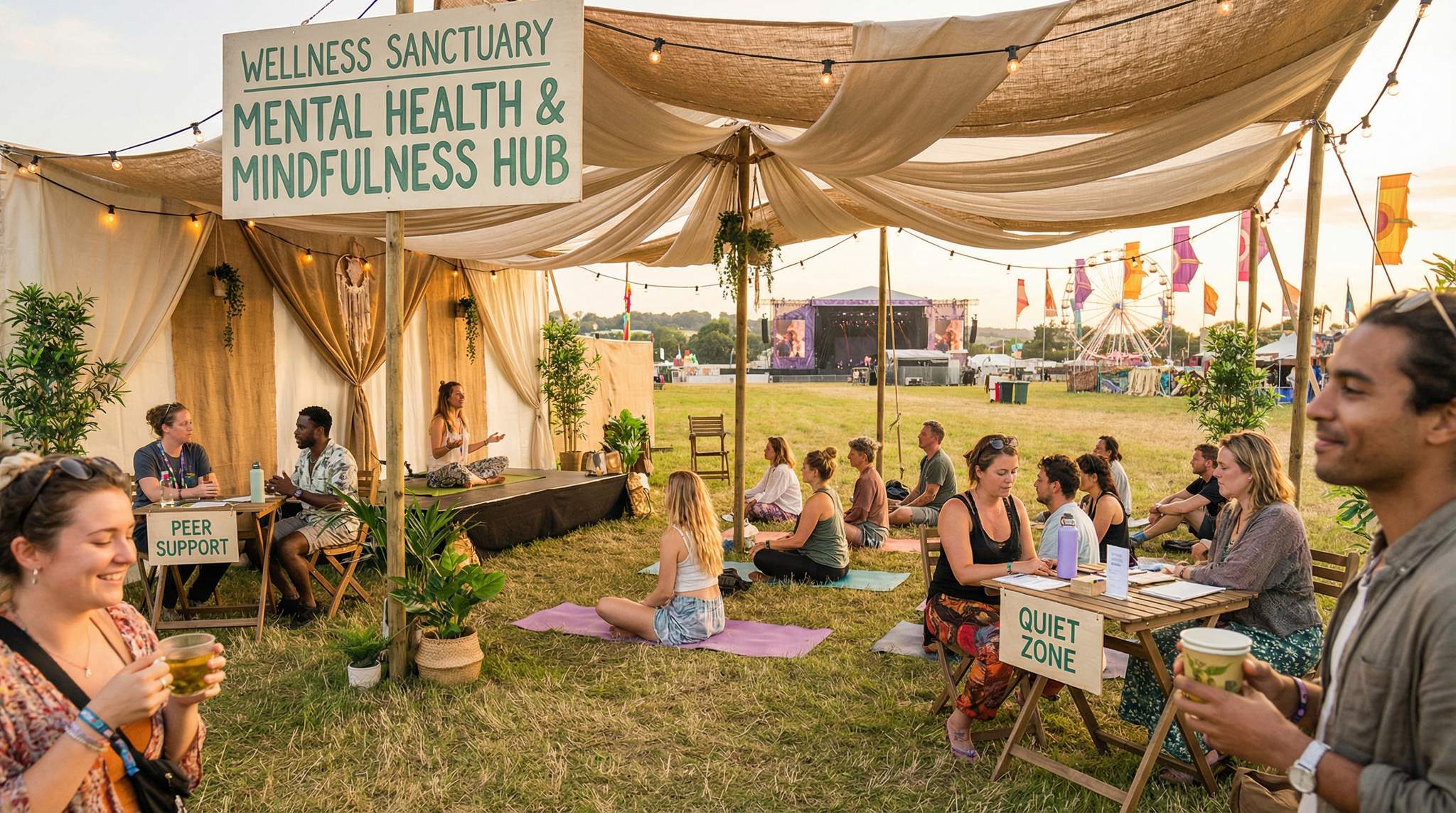
In the whirlwind of a festival, providing a pocket of peace and quiet can make a world of difference. That’s why many events now set up dedicated meditation spaces or chill-out lounges tucked away from the main thoroughfares. These are typically low-sensory areas designed for relaxation, contemplation, or even a quick nap. Key features include dim lighting, comfortable seating (think cushions, bean bags, hammocks), gentle ambient music or nature sounds, and minimal distractions. For example, Glastonbury Festival in the UK has its famous Healing Field in the Green Fields area – a tranquil zone offering yoga, meditation, and massage far from the roar of the Pyramid Stage, serving as a prime example of accessibility and wellbeing initiatives at festivals. They even introduced a Sensory Calm Space in one of their campsites, complete with soft furnishings and sensory-friendly activities, as a retreat for attendees with autism, anxiety, or anyone needing respite, helping to create inclusive environments for all guests. These kinds of calm corners are becoming standard. In 2023, Awakenings Summer Festival in the Netherlands (known for pounding techno music) launched a “low-stimulus” care space for overstimulated fans, proving that mental health care trends extend globally. Developed with a disability advocacy group, it offers noise-cancelling headphones, soothing visuals, and a staff member to assist anyone who comes in looking overwhelmed. The message is clear: no matter how wild the party gets, there’s always a place to catch your breath. Even outside of festivals, major concert venues have begun adopting this approach – during Taylor Swift’s recent stadium tour in Australia, arenas set up quiet sensory rooms for fans who needed a break from the intense noise and crowds. By providing dedicated chill-out areas, events ensure that attendees can reset and re-enter the fray feeling grounded rather than frazzled.
Grow Your Social Following With Every Sale
Require social media follows, shares, or playlist adds to unlock presale access or special pricing. Turn every ticket purchase into audience growth.
Guided Meditation and Mindfulness Sessions
Another way festivals are embracing mindfulness is by actually putting it on the schedule of activities. It’s increasingly common to see time slots for guided meditations, breathing workshops, or mindfulness exercises listed alongside artist performance times. Some festivals will invite meditation teachers or mindfulness coaches to lead group sessions during afternoon lulls or early evening as a transition into nighttime shows. These might be 15-30 minute guided journeys where hundreds of people sit together, focus on their breath, and collectively let go of tension. The impact can be magical – a brief pause in the festivities where the only sound is quiet guidance and the rustle of the wind, followed by a crowd emerging with calmer minds and open hearts. Lightning in a Bottle (USA) and Boom Festival (Portugal) are known for incorporating mass meditation and sound healing sessions, often in beautifully decorated tents or sacred spaces on-site. Even multi-genre music festivals like Bonnaroo have experimented with group meditation experiences at their stages, sometimes led by artists or special guests. And at niche wellness-forward festivals – such as Envision (Costa Rica) or Wanderlust festivals – meditation and breathwork are headline attractions on par with the music. The trend is spreading to mainstream events: Coachella’s art and culture programming, for instance, has included morning sound baths and mindfulness workshops in some recent editions (often sponsored by wellness brands). By scheduling guided meditations, festivals give attendees permission to slow down and be in the moment. It’s a counterbalance to the sensory overload, and paradoxically, it can make the high-energy moments that follow even more enjoyable, because people aren’t running on empty.
Tips for Incorporating Mindfulness Moments
Bringing meditation or mindfulness into an event might seem challenging, but veteran producers have developed strategies to make it work smoothly:
– Create the right atmosphere: Set up a dedicated space for meditation that feels insulated from the festival chaos. This could be a tent, yurt, or small indoor room on the grounds. Keep it quiet, low-lit, and comfortable. Instruct staff to minimize chatter in this zone – even small details like keeping radios on low volume and having signage asking for quiet can maintain a serene vibe, ensuring noise is kept to a minimum in wellness zones.
– Use experienced facilitators: If offering guided sessions, bring in a qualified meditation teacher or mindfulness facilitator. They know how to handle a group in a festival setting – for example, using inclusive language (“feel free to close your eyes or soften your gaze…”) so everyone feels comfortable, utilizing inclusive language during guided sessions. Experienced guides also adapt if, say, a loud cheer from a distant stage intrudes – they might incorporate it playfully rather than letting it disrupt the session.
– Timing is everything: Schedule mindfulness sessions at opportune moments. Early afternoon (when the sun is high and people are seeking shade) or early evening before the night’s excitement kicks in can be ideal. Avoid the peak excitement periods. Also, keep sessions relatively short – 15 to 20 minutes can be plenty for novices at a festival. You can always offer multiple short sessions so more people can drop in throughout the day.
– Encourage participation without pressure: Advertise these sessions as open to all, no experience needed. Many attendees may be trying meditation for the first time. Make the description welcoming: e.g. “Join us for a Stress Relief Meditation – a simple, guided relaxation to recharge you for the night ahead.” Emphasize it’s an opportunity, not an obligation, so those who do join come willingly and get the most out of it.
– Provide simple takeaways: A nice touch is to have small cards or flyers at the meditation space with basic mindfulness tips (or a link/QR to a festival wellness webpage). This way participants can take a bit of that calm wisdom home. Some festivals even offer free eye masks or earplugs at the meditation tent, signaling “we care about your rest.” These little gestures can leave a big impression.
Need Festival Funding?
Get the capital you need to book headliners, secure venues, and scale your festival production.
By threading mindfulness into the event, festivals empower attendees to care for their mental state amidst all the excitement. As one festival wellness coordinator put it, “We give people moments to pause, and as a result they enjoy the big moments even more.” The balance of energy and calm not only prevents burnout but often creates some of the most unforgettable festival memories – those spine-tingling minutes of collective stillness in an otherwise kinetic weekend.
Sober Social Spaces: Inclusive Fun Without Substances
Alcohol-Free Zones and “Dry” Bars
For decades, alcohol (and other substances) have been ingrained in festival culture – to the point where those who choose not to drink might feel out of place. But that’s changing fast. An important part of the wellness trend is the rise of sober social spaces at festivals: areas where no alcohol is served or allowed, and everyone can have fun without intoxication. Many festivals now designate certain zones or tents as alcohol-free, often featuring alternative beverages like craft mocktails, kombucha, or just a good cup of coffee. These “dry bars” or zero-proof cocktail lounges give attendees who are sober (whether for recovery, religious reasons, or just personal choice) a place to relax and party without peer pressure. For example, at some UK festivals, organisers have set up alcohol-free chill-out tents with DJs spinning mellow tunes and bars serving only zero-proof drinks – creating a nightlife vibe minus the booze. Event veterans stress that it’s key to make these spaces cool and inviting, not an afterthought. The décor, music, and menu should be just as enticing as any beer garden. By clearly marking out alcohol-free zones and offering creative zero-proof cocktails (think virgin mojitos, spicy “mock-aritas”, CBD-infused sodas, etc.), festivals signal that sober attendees are 100% welcome and will have a great time. The benefits go beyond inclusion – having a popular dry hangout can indirectly reduce risky drinking across the event, as even drinkers might pop in for a tasty non-alcoholic beverage between beers. It’s all about providing choice and balance.
Supportive Communities and Sober Meetups
Sober spaces at festivals often evolve into supportive mini-communities. Attendees who might have felt isolated in the predominantly drinking-oriented crowd can connect with like-minded people and form new friendships. Some festivals facilitate this by hosting sober meetups or recovery group meetings on-site. For instance, there are festivals known to quietly host Alcoholics Anonymous (AA) or Narcotics Anonymous circles each day – typically early morning – for those in recovery who want to check in and share support before enjoying the music. These aren’t usually advertised on the main lineup, but word gets around through forums or festival info boards. Even for those not in formal recovery, simply having a table in the sober tent where people can chat, play board games, or enjoy live acoustic music can create a fun social scene. At Burning Man, which is a unique case, entire camps are dedicated to being substance-free (such as Camp “Anonymous” on the playa) offering 12-step meetings and alcohol-free social hours. Mainstream festivals are following suit. In 2024, Stagecoach Festival (the massive country music fest in California) debuted the “Recovery Rodeo” – a daytime alcohol-free party near the festival grounds, complete with wellness activities. Attendees at Recovery Rodeo could plunge into ice-cold tubs, recharge with IV vitamin drips, and sip on alcohol-free beers and juices, as described in coverage of wellness music festivals and recovery rodeos. According to its organizers, the event’s popularity proved that moderation is on the rise and not inhibiting the fun at all, with guest attendance swelling significantly. By its second year, hundreds were choosing the sober social option, illustrating that given the chance, many festival-goers appreciate having a vibrant space that doesn’t revolve around drinking.
Tips for Creating Sober Friendly Environments
For festival producers looking to integrate sober-friendly features, here are some pointers drawn from successful implementations:
– Designate an appealing space: Don’t hide the sober area; place it in a conveniently accessible spot (near a stage or central hub, but perhaps slightly off to avoid drunk spillover). Make it visually inviting with comfy seating, nice lighting, and clear signage like “All Welcome – Alcohol-Free Zone.” The goal is to remove any stigma and frame it as just another cool hangout.
– Offer quality alternatives: Stock the bar with interesting zero-proof drinks. Beyond soda and water, consider mocktail recipes, alcohol-free beer or wine (an industry that’s booming), herbal elixirs, or even a barista corner for fancy coffee and tea. Having a signature alcohol-free cocktail named after the festival is a fun touch. These options ensure that those not drinking still get to enjoy a “special” beverage in hand.
– Train staff and volunteers: Make sure everyone (security, bartenders, etc.) understands the purpose of the sober space. Staff should be friendly and non-judgmental, creating a welcoming atmosphere. If someone arrives with a drink, politely inform them it’s a dry zone and direct them to finish it outside – maintaining the integrity of the space.
– Promote it as part of the experience: Include mention of the sober zone in your program or app so people know it’s there. Sometimes a large portion of attendees who might use it simply aren’t aware it exists. By highlighting it (e.g., “Visit our Zero-Proof Lounge for craft mocktails and chill vibes”), you normalize it. You can even incorporate it into family-friendly festival strategies when marketing – many parents or older attendees also appreciate alcohol-free havens.
– Consider partnerships: Some festivals partner with organizations like DanceSafe or local sober activism groups to host the space. Others secure sponsorship from wellness brands or non-alcoholic beverage companies to fund it. This not only offloads costs but adds credibility (for example, a sponsorship from a trendy mocktail brand can draw curious drinkers into the alcohol-free bar to sample products).
By crafting spaces where sobriety is just another enjoyable option, festivals broaden their appeal and show genuine care for attendees’ comfort. It’s about meeting people where they are – whether someone is sober for life or just pacing themselves that day. And the result is often a more inclusive, relaxed crowd. As one festival director put it, “We’ve seen tough-looking rock fans wander into our sober tent for a free coffee, and end up staying for the friendly conversation. It’s broken down barriers we didn’t even realize were there.” In the end, providing a fun time for all – drinkers and non-drinkers alike – raises the positive energy across the entire event.
On-Site Counseling and Emotional Support
Quiet “Sanctuary” Tents and Recovery Areas
Even with all the preventive wellness measures, festivals know that some attendees will still face emotional or mental health crises during the event. The question is: when that happens, is there a safe refuge readily available? Increasingly, the answer is yes. Festivals large and small are setting up sanctuary tents, sometimes simply called the Welfare Tent, the Safe Haven, or the Sanctuary. These are staffed spaces where anyone struggling with anxiety, confusion, a bad psychedelic experience, or any emotional distress can go for help. The atmosphere is calm and private – usually partitioned areas or cozy tents with cushions and cots. For example, Boom Festival in Portugal runs the Kosmicare tent, a pioneering project offering compassionate care for those having difficult drug experiences or overwhelming moments. Trained volunteers and health professionals at Kosmicare sit with attendees one-on-one, providing reassurance, hydration, and if needed, referrals to medical care. Similarly, at Burning Man in the U.S., the Zendo Project (run by a nonprofit) has been hosted on-playa for years, creating a space where anyone having a psychedelic crisis can be guided through it safely by a sober, trained sitter. The concept has spread: many U.K. festivals now have what are informally known as “trip tents” or welfare tents for exactly these purposes, establishing sanctuary tents at camping festivals. But it’s not only for drug-related issues – anyone feeling mentally overwhelmed can seek solace there. The idea is to treat psychological distress with the same urgency and care as a physical injury. By doing so, festivals have dramatically reduced unnecessary hospital transports and other severe incidents. Longtime organisers note that having a sanctuary tent “takes the burden off” medical and security teams, who might otherwise be dealing with panicked or disoriented individuals, noting that PsyCare volunteers take the burden off medical teams. Instead, those attendees get gentle care from people dedicated to that task, resulting in better outcomes for all involved.
Peer Support Teams on Patrol
In addition to fixed locations like tents, many festivals employ mobile peer support teams to cover the entire venue. We mentioned Insomniac’s Ground Control earlier – that’s a prime example. These teams are essentially festival angels: staff or volunteers who walk around looking out for attendees who may need help. They’re trained to spot signs of trouble, whether it’s someone looking lost and dehydrated at 3 AM, or sitting alone in tears, or showing signs of a possible panic attack. They carry basic supplies (water, electrolytes, radio to call for medical if needed) and, most importantly, they know how to approach and communicate kindly. A typical interaction might be: “Hey, I noticed you look a bit uncomfortable, is everything okay? Want some water or to sit down somewhere quieter?” This kind of compassionate outreach can nip issues in the bud. Festivals like Electric Daisy Carnival (EDC) and Ultra have made these teams a fixture, and their success has inspired others worldwide, following the model of Ground Control teams at Insomniac events. In the UK and Europe, you’ll find volunteer groups like Festival Welfare Services or PsyCare doing similar work – sometimes roaming, sometimes operating from a central hub, often both. They coordinate closely with festival control centers. For instance, if security encounters an attendee who’s not a danger but clearly having a breakdown, they’ll radio the welfare team to come take over and escort that person to the sanctuary tent rather than an enforcement area. Importantly, peer support teams guide distressed attendees. This integration of peer support into overall operations is key. It ensures that whether a distressed attendee encounters a medic, a guard, or a steward first, they’ll quickly be connected to someone equipped to handle emotional crises. From a producer’s standpoint, investing in these welfare teams has a high payoff: it reduces medical emergencies, law enforcement involvement, and negative experiences, all in one go.
Professional Mental Health Resources
While peer support covers a lot of ground, some festivals are even bringing in professional mental health services. This can take a few forms. One is partnering with mental health nonprofits or clinics to have licensed counselors or psychologists on-site or on-call. For example, the Country Music Association’s CMA Fest in Nashville announced it would offer free on-site counseling sessions in 2025 for artists, crew, and staff via a program called All Access, as CMA Fest offers mental health services. That initiative is focused on the people working the festival, but it reflects a larger trend of destigmatizing therapy in event settings. For attendees, a few festivals have experimented with “pop-up therapy” booths or mobile mental health vans where folks can drop in for a brief confidential chat with a professional. While not common yet, it’s likely we’ll see more of this in the future as public openness to counseling grows. More prevalent is the presence of outreach organizations: for instance, UK’s Samaritans (a crisis hotline charity) often have a stall at major festivals, making their volunteers available for anyone who wants to talk or get mental health info. Some festivals distribute cards or flyers with mental health crisis text line numbers and resources at the gates or info stands. Even smaller gestures, like having a couple of licensed therapists on the volunteer crew (not to provide full therapy sessions, but to lend expertise and handle tougher cases in the welfare tent), have been implemented at boutique wellness festivals. Organisers note that having mental health professionals involved lends additional credibility and ensures that if a serious situation arises (e.g., someone expressing intent to self-harm), it can be handled with the appropriate clinical response. The presence of professionals is also reassuring for attendees – it sends a signal that “It’s okay not to be okay here, we have people you can talk to.” In combination with peer teams, quiet spaces, and overall staff training, these resources form a robust safety net for the psyche.
Training Staff and Volunteers in Mental Health First Aid
A powerful actionable step every festival can take is to train the team in Mental Health First Aid (MHFA). Just as physical first aid teaches how to stabilize someone until medics arrive, MHFA teaches staff how to recognize and respond to signs of mental distress or substance crises. Many event producers now include mental health response units in their emergency action plans, and they ensure that key security personnel, supervisors, and volunteer leads go through MHFA training beforehand. This training covers skills like active listening, de-escalation, and how to encourage professional help if needed. According to experts, having even a handful of MHFA-trained crew on-site can dramatically improve outcomes for attendees in crisis by implementing Mental Health First Aid at festivals. They become the go-to people if a situation arises. For example, if a stagehand notices an attendee hyperventilating and crying near the sound booth, an MHFA-trained staffer would know to approach calmly, introduce themselves, and use grounding techniques to help reduce the person’s panic while guiding them to the welfare area. By contrast, an untrained staffer might inadvertently say or do something that escalates the panic (however well-meaning). Training also helps staff cope with these situations emotionally, reducing burnout. Festival planners can coordinate this by partnering with local mental health organizations or hiring certified trainers to run workshops for their crew ahead of the event. Some large festivals even have mandatory mental health briefing sessions for all volunteers during orientation, covering basic do’s and don’ts, and distributing a one-page quick guide. The investment in training signals to everyone – crew and attendees alike – that the festival is serious about safety in mind as well as body. And it pays off: experienced organisers often observe that their team feels more confident and empowered when they know how to handle things like an anxiety attack or psychotic episode until the proper help is in place, effectively training your team to support attendees in crisis. In the end, training the team in these skills fosters a culture of compassion and competence, making the festival a genuinely safer space.
Implementing Wellness at Any Scale
Tailoring Programs to Festival Size
Wellness and mental health initiatives are scalable – they aren’t just for massive events with big budgets. The key is to tailor the approach to the size and nature of your festival. A local boutique festival of 2,000 people might not need a large dedicated wellness village, but it could set aside a small quiet room and host one yoga class each morning. A 100,000-person mega-festival, on the other hand, may establish an entire Wellness Zone with multiple tents and a full schedule of classes, workshops, and services. The table below outlines how wellness programs can be adapted based on festival scale:
| Factor | Small Festival (under 5,000 attendees) | Large Festival (50,000+ attendees) |
|---|---|---|
| Wellness Programming | A few simple additions: e.g. one daily yoga or stretching session, a single quiet tent for meditation or decompression. Leverage multi-use spaces (the yoga tent by morning can be a chill lounge by night). | Comprehensive offerings: dedicated wellness area with multiple parallel activities (yoga, pilates, meditation, art therapy, etc.) scheduled throughout the day. Separate zones for high-energy fitness vs. low-key relaxation. |
| Mental Health Support | A small welfare tent with basic comforts (water, shade, first aid) staffed by a handful of volunteers who have empathy or MHFA training. Partner with a local community group or counselor who can be on-call if a serious issue arises. | Formal welfare operations: multiple sanctuary tents or quiet rooms across the site, a team of dozens of trained peer support volunteers on shifts, integrated communications with security/medical. Possibly on-site psychologists or an NGO partnership for professional support. |
| Staffing & Training | Cross-train existing staff/volunteers to wear “multiple hats.” For example, your info booth staff might also double as the calm space attendants. Provide a simple training briefing on listening and de-escalation. | Specialist teams in place: dedicated wellness coordinator on the production team, volunteer managers for the welfare crew, and required mental health first aid training for security and key crew. Separate roles for medical vs. mental health vs. customer service, working in tandem. |
| Budget & Resources | Minimal cost approach: use available resources (a borrowed tent, volunteer yoga instructor from the community, donated water and snacks for the chill-out area). Wellness might be < 1% of the budget but yields high goodwill. Consider local sponsors (gym, health food store) to support these features. | Defined budget line for Attendee Wellness (often a few percent of total budget). Funds to rent furnishings for lounges, hire instructors and wellness staff, and equip welfare tents (cots, supplies, radios). Seek larger sponsorships from wellness brands, insurance companies, or tech firms interested in positive social impact to offset costs. |
| Promotion & Communication | Word-of-mouth and local outreach: highlight wellness additions on the website and flyers (“New this year: Morning Yoga — BYO mat!”). Encourage artists or MCs to mention the wellness tent on stage to raise awareness during the event. | Marketing integration: showcase wellness programs in pre-event materials and aftermovies to differentiate the festival. Use the festival app to send push notifications about wellness activities (“Sound bath starting in 15 minutes at the Zen Den”). Clearly signpost all wellness locations on festival maps and signage towers. |
Whether big or small, the principles remain the same: provide moments of relief, tools for self-care, and compassionate help for those who need it. Even a modest effort can have outsized impact. One organizer of a 3,000-person indie festival shared that just having a “Comfort Tent” with some bean bags, earplugs, and a volunteer mom-figure sitting there made attendees feel cared for – and it was often empty (which was fine), but people told them just knowing it was there was comforting. On the flip side, large festivals that pour resources into wellness are finding it can scale effectively. Coachella, for instance, now offers a range of health-related amenities (free water refills everywhere, a “Tranquility” tent with shade and soothing music, yoga sessions in the campground, etc.), and they promote these in their app as proudly as a stage lineup. The takeaway: start where you can, and grow from there. It’s okay to begin with one or two wellness elements and expand annually as you see the response. Attendees will appreciate any sincere effort.
Partnering with Wellness Experts and Sponsors
Festival producers don’t have to become yoga gurus or psychologists overnight – there’s a wide world of experts out there eager to help bring wellness to events. Many festivals have successfully partnered with local gyms, yoga studios, or wellness collectives to co-create programming. For example, a festival in Mexico teamed up with a well-known local meditation center to run its mindfulness tent – the center provided teachers and materials, and in return the festival gave them branding and space to promote their workshops. This kind of partnership can lend authenticity (experts do what they do best) and lighten the load on the festival staff. Similarly, mental health nonprofits or advocacy groups are often very willing to collaborate. A festival might invite an organization like Mind (a mental health charity) or a crisis hotline team to have a stall on-site, offering resources and friendly chats for anyone interested. These groups typically provide their services for free as part of their outreach mission, so it’s a win-win: attendees get support and info, the nonprofit reaches a demographic that might need them, and the festival adds a crucial service at no great cost.
Sponsorship is another avenue: as wellness at festivals becomes trendy, brands in the health, fitness, and lifestyle sectors see an opportunity. We’ve seen nutrition shake companies sponsoring recovery smoothie bars, athletic apparel brands hosting morning workouts on the main stage lawn, and meditation app companies setting up phone charging stations that double as guided meditation kiosks. Unlike alcohol or energy drink sponsorships of the past, these wellness partnerships tend to focus on feeling good rather than just partying hard. When approaching sponsors, festival organizers can pitch the high engagement and goodwill these programs get. For instance, a water filtration brand might underwrite the festival’s hydration stations plus a “hydration lounge” with misting fans where people can cool down mindfully. Or a tech company interested in mental health might sponsor the welfare tent, helping cover the cost of counselors in exchange for discreet signage (“Calm Corner presented by [TechCo] – Supporting Mental Wellness”). Sponsors are increasingly interested in these authentic integrations because they align with corporate social responsibility and generate positive PR. However, a note of caution from veteran producers: choose partners that fit the festival’s ethos. Attendees can sense if something is just a marketing ploy. Aim for sponsors who genuinely care about wellness (and ideally have some expertise or value to contribute), so the collaboration comes off as enhancing the attendee experience, not just advertising. Done right, partnerships can significantly amplify a festival’s wellness offerings without proportionally amplifying the budget.
Overcoming Challenges and Skepticism
Integrating wellness and mental health support into a festival isn’t always smooth sailing. There can be challenges and even skepticism to navigate. One common concern is uptake – “What if we build it and no one comes?” Festival directors might worry that scheduling a meditation class could flop if the crowd isn’t into it. Experience shows that placement and promotion are key. Often, once attendees know an offering exists and see a few others participating, momentum builds. Using fun approaches helps too (e.g., a DJ-led meditation that combines chill music with guided relaxation can draw in the curious who might not attend a silent meditation). It’s also worth noting that even seemingly underused wellness resources can be life-savers for the few who do need them. You might have hundreds walk by the calm tent without a glance, but for that one person who’s on the verge of a breakdown and slips inside, it’s invaluable. So measuring success isn’t just about headcount; it’s about impact.
Another hurdle can be getting buy-in from all stakeholders. Sometimes security teams or old-school production crew might initially dismiss wellness initiatives as fluff or not “real” festival business. It helps to present data and case studies. For example, show how festivals with robust welfare teams have fewer ambulance calls, or how offering free water and shade reduced heat stroke cases by X%. Emphasize that wellness features support the whole operation: they prevent problems, protect the festival’s image, and enhance attendee loyalty. It’s not just a nicety – it’s risk reduction and brand building. Highlighting fan feedback can turn doubters into supporters. Quotes like “The meditation lounge was a godsend during the afternoon heat – thank you!” or “I felt safe knowing there was a sanctuary if I needed it” speak volumes. Sharing these with the team reinforces why these efforts matter.
Logistically, challenges like space and budget allocation can usually be managed with creative solutions. If space is tight, think multi-purpose: the info booth can double as a safe space point if staff are trained, or an existing tent (like a workshop tent) can host morning wellness then convert to other uses later. If budget is lean, remember many wellness activities are relatively low cost (yoga just needs an instructor and some mats; a chill room mainly needs simple furnishings). You can also start small and scale up each year as you demonstrate success. Many festivals began with one volunteer-led wellness tent and, after seeing positive response, expanded to full programs in subsequent editions.
Ultimately, the minor challenges are far outweighed by the benefits of a healthier, happier crowd. As one festival operations manager said after implementing a new wellness program, “At first a few of us were skeptical, but by the end of the weekend, we had crew members asking if they could take shifts in the zen tent because they loved the energy there. It ended up helping not just attendees but our team too.” With planning, partnerships, and a bit of passion, adding mental health and mindfulness to a festival can be one of the most rewarding innovations – turning the event from just a party into a genuine community experience.
The Payoff: Enhancing Community, Safety & Satisfaction
Building a Stronger Festival Community
When festivals invest in attendee well-being, they often notice a transformative effect on the event’s culture and community. Attendees who feel cared for tend to pay that forward – they become more caring toward others, which creates a virtuous cycle of positivity. Wellness activities like group yoga or meditation also serve as social mixers in a way; people meet and bond over these shared experiences, forging friendships that last beyond the festival. The presence of support teams and inclusive spaces signals that the festival values each individual, fostering a sense of belonging. Over time, this can significantly strengthen a festival’s community identity. Consider California’s Lightning in a Bottle – it started as a boutique music and arts fest and, by heavily incorporating wellness (yoga, healing workshops, intentional community gatherings), it cultivated an almost family-like atmosphere among attendees. Now LIB’s crowd is known for being welcoming, peaceful, and engaged, which in turn attracts more like-minded attendees. It’s a self-reinforcing dynamic. Moreover, when tough situations do occur (for example, someone is lost or in trouble), attendees who have absorbed the caring vibe are more likely to step up and help – they’ve seen the festival staff model these values. In essence, prioritizing mental health and mindfulness helps shape a festival culture of empathy and support, which is priceless. It turns a mass of tens of thousands of strangers into something that feels more like a community.
Tangible Safety Improvements
The introduction of wellness and mental health measures has also yielded tangible safety benefits. Festivals that have added chill-out zones, sober areas, and welfare teams consistently report reductions in medical incidents, security interventions, and attendee complaints. One reason is that potential issues are addressed earlier and more gently – before they become emergencies. For example, at events where a “safe space” was available, organisers saw fewer calls to onsite paramedics for anxiety or hyperventilation, since many such cases could be managed in the welfare tent without clinical intervention. Similarly, many festivals note that with the advent of prominent harm reduction services (like those offered by Zendo or PsyCare), there were fewer instances of attendees ending up in dangerous situations due to bad trips. Statistics from certain electronic music festivals have even shown a drop in drug-related hospital transports after implementing on-site drug checking and mental health support, demonstrating a direct correlation between prioritizing mental health and risk mitigation. Crowd dynamics improve too: a well-rested, hydrated, calm crowd is less prone to aggression or misbehavior. It’s no wonder that insurance companies and local authorities have started looking favorably on festivals with robust wellbeing strategies – some organisers have managed to negotiate lower insurance premiums or smoother permit approvals by presenting their mental health and safety plans in detail. The festival becomes not only a happier place, but a more controlled and resilient event that is better equipped to handle any curveballs. From a safety planning perspective, wellness programs are like fortifying the foundations of a house: often invisible in the final picture, but critically strengthening the whole structure.
Boosting Attendee Satisfaction and Loyalty
At the end of the day, a festival’s success is measured by how its attendees feel about the experience. This is where wellness integration truly shines. Attendee satisfaction surveys from various festivals have started including questions about wellness, and the responses illustrate how valued these additions are. Fans routinely mention things like “the free yoga class was an awesome bonus,” “having a place to escape the crowd for a bit made the festival enjoyable instead of exhausting,” or “it was great to have healthy food and alcohol-free options – it made me want to come back next year.” These programs contribute significantly to the perceived value of the ticket. Even if a participant doesn’t personally use every amenity, knowing they’re available adds to peace of mind. In a competitive festival market (and amidst rising ticket prices), delivering visible care and extras can set an event apart as “worth it” to consumers. There’s also a PR ripple effect: festivals known for looking after their fans earn a loyal following and lots of word-of-mouth recommendation. People talk about these things on fan forums and social media – “XYZ Festival actually has an on-site spa and mental health counselors, it’s such a different and awesome experience!” – which draws in new attendees who maybe were on the fence about festival-going. By building a reputation for mindful, attendee-centric experience design, a festival can future-proof itself in a way. Attendees are more likely to stick with you through ups and downs if they feel a personal connection and trust that you have their best interests at heart. As an organiser, that loyalty is gold: it means better pre-sales, more organic promotion, and a community that defends and supports the event. In essence, the ROI on wellness is measured in goodwill, which translates to long-term success.
Sponsor and Stakeholder Benefits
It’s not just attendees taking notice – sponsors and other stakeholders appreciate the wellness revolution too. Brands increasingly want to associate with events that have positive, healthy images. A festival with mindfulness and mental health in the mix is far more attractive to a tech giant or local government sponsor focused on community well-being than an old stereotype of a drug-fueled rave. Thus, festivals have found it easier to court non-traditional sponsors (like healthcare providers, lifestyle brands, even government tourism boards) by showcasing their wellness and safety initiatives. Some events have secured grants or public funding for these very programs; for example, city councils have been known to support festival harm-reduction services because they align with public health goals, reflecting a societal shift towards wellness festivals. Internally, staff and artists also feel the benefits. A happier crowd tends to be easier to manage, which means crew have less stress and emergencies to deal with. Artists often appreciate when festivals promote wellness, as it usually means better hospitality for them too (who wouldn’t prefer a festival that offers artists a quiet lounge and healthy catering, for instance?). All these factors contribute to a virtuous cycle: a festival that prioritizes wellbeing tends to attract quality partnerships, dedicated staff, and enthusiastic artists, further elevating the event’s profile.
Conclusion: Mindfulness as a Festival Mainstay
The trend of integrating mental health and mindfulness into festivals isn’t a passing fad – it represents an evolutionary step in festival culture. Just as festivals embraced sustainability and accessibility in recent decades, they are now embracing wellness as a core element of the experience. We can expect that in the near future, a festival without a yoga class, a chill-out zone, or some kind of welfare team may feel behind the times. Attendees will come to assume these features, much as they assume there will be food vendors and first aid tents. This is a profound shift from the old “anything goes” ethos of festivals past to a more balanced ethos: “cutting loose, but also caring for ourselves and each other.” And rather than detracting from the fun, all signs indicate it makes the fun more sustainable and inclusive. People can party hard and have avenues to recharge – those two aspects are not in opposition.
For festival producers, the wellness revolution is an opportunity to differentiate and improve their events. It opens up new creative possibilities (imagine designing a beautiful zen garden area, or collaborating with artists on immersive healing installations). It also reinforces the notion that festivals are about community and shared experience, not just performance. By nurturing attendees’ well-being, you’re essentially saying “You matter here,” which might be the most powerful message of all. In a world where mental health challenges are common, providing even a weekend oasis of support can have a lasting positive impact on individuals. The emails and messages festivals receive after implementing these programs are telling – attendees thanking them for the safe space to overcome a panic episode, or for the yoga that inspired a lifestyle change, or simply for acknowledging that festivals can be overwhelming and doing something about it.
As we head deeper into the 2020s, expect wellness programming to be as standard as the main stage itself. The exact mix will vary – one festival might have an entire wellness village, another might integrate mindful moments into performances (e.g., artists leading a brief crowd breathing exercise). But the direction is clear: the best festivals of the future aim to leave attendees not drained and deafened, but renewed and uplifted. They are places where one can dance wildly at night and meditate at dawn, forge new connections and also find solitude under an oak tree, celebrate life in all its intensity while also honoring the need for rest and reflection. This holistic approach truly captures why people love festivals – it’s about feeling alive and connected, to music, to others, and to oneself.
By embracing mental health and mindfulness, festival producers can craft experiences that resonate more deeply and stand out in a crowded market. They’ll be contributing to a healthier live music scene and happier audiences. And ultimately, that is good for business, good for society, and good for the soul. The wellness revolution is here – and it’s making festivals better than ever.